Cosmograph Daytona
The 6264 is the black-bezel Cosmograph Daytona with pump pushers and the high-beat Valjoux 727. It carries on the 6241 and was made beside the steel-bezel 6262 from about 1970 to 1971, with some accounts running it to 1972. With the 6262 it was the last Daytona with pump pushers; the screw-down 6263 and 6265 are usually said to have followed, though the 6263 is also dated from 1969 and was made beside it. Cases are 37 mm in steel, 14k or 18k yellow gold. Most listings in the records carry an exotic Paul Newman dial. Collectors look first at the dial (the gold lemon dial is the best known), then the bezel insert, the caseback stamp and the case-number engraving.
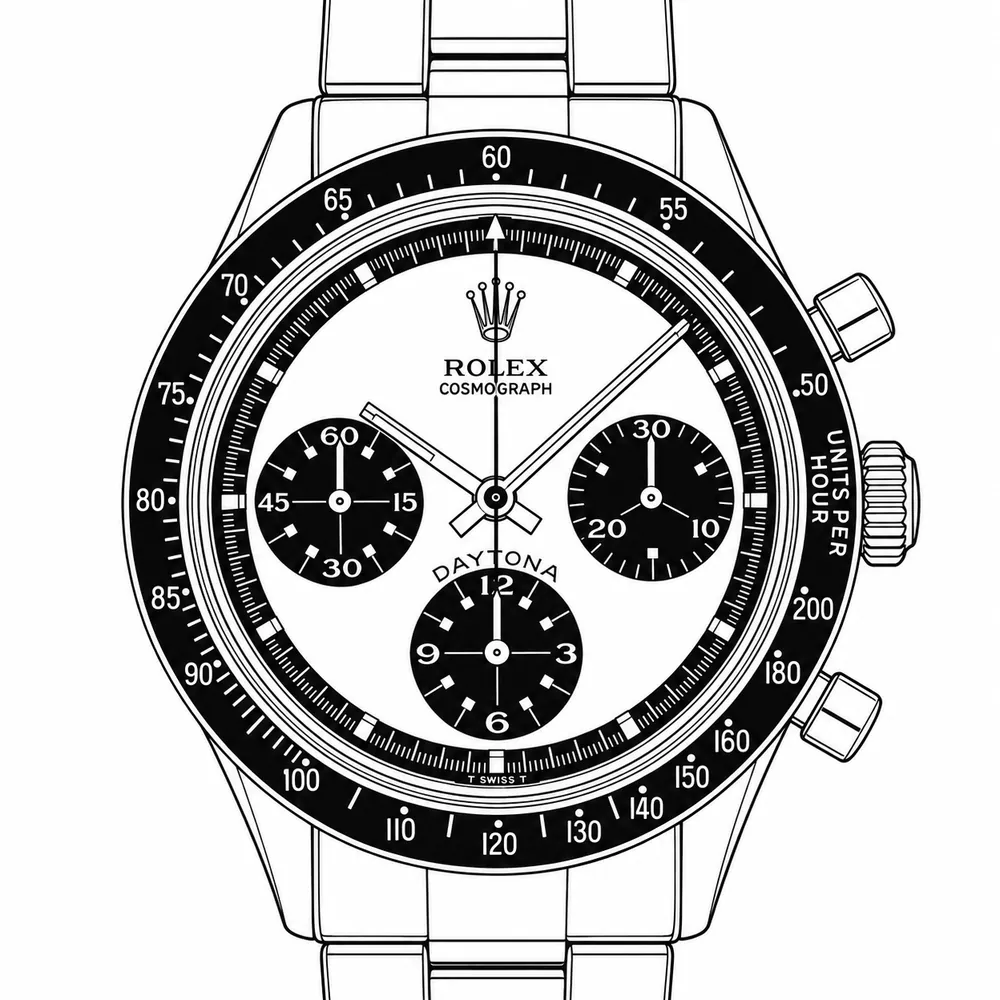
- Made
- 1970–1971dates approximate
- Seen in the library
- 1970–1971by case numbers
- Case
- 37 mm · steel (57%), gold (43%)as sellers state
- Movement
- Calibre 727hand-wound
- On record
- 70 listings172 photographs · 16 holders
Components
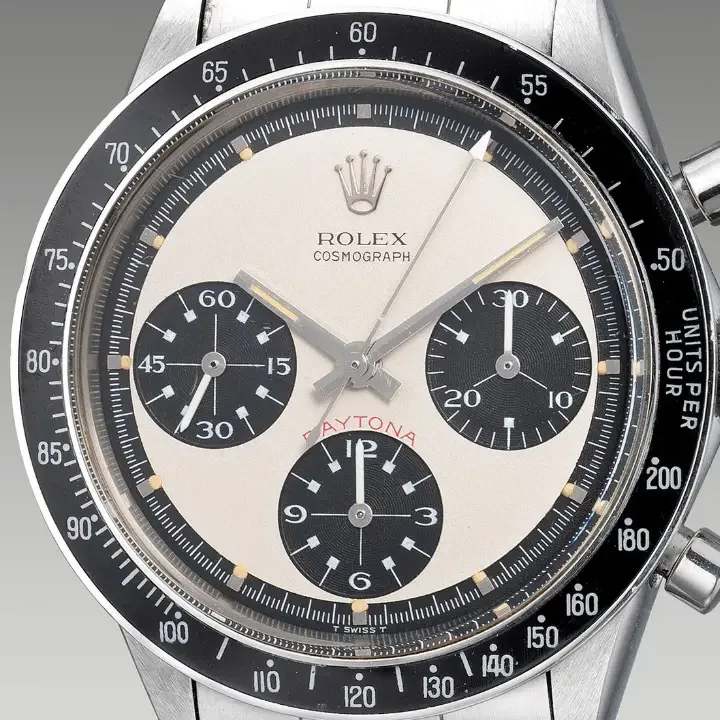
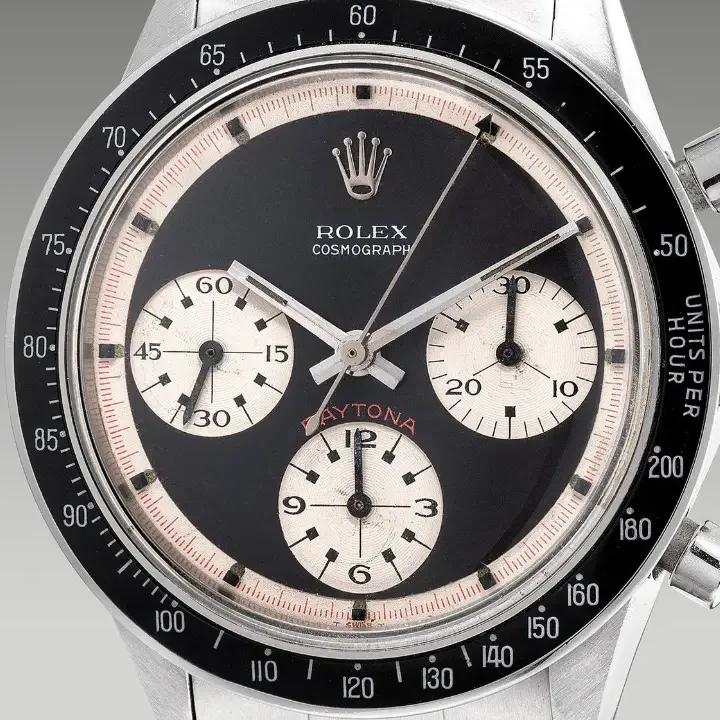
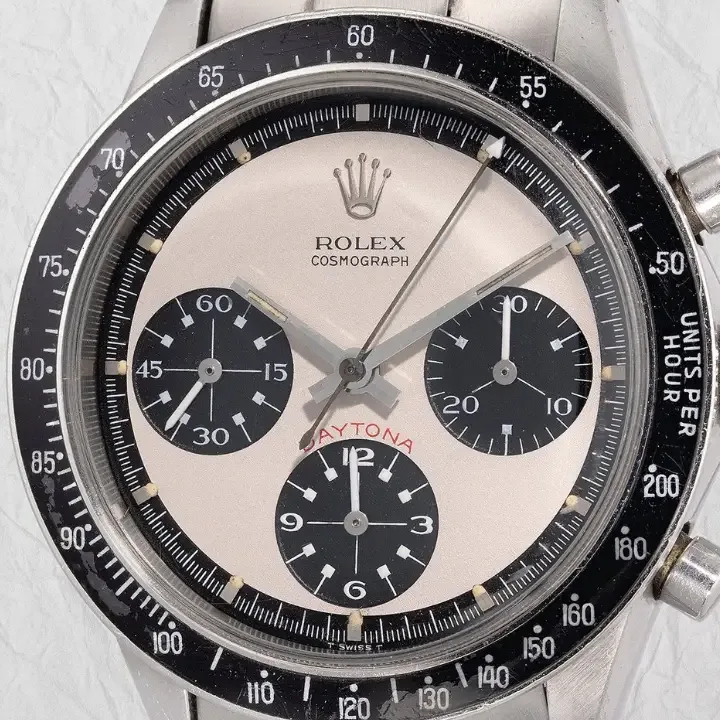
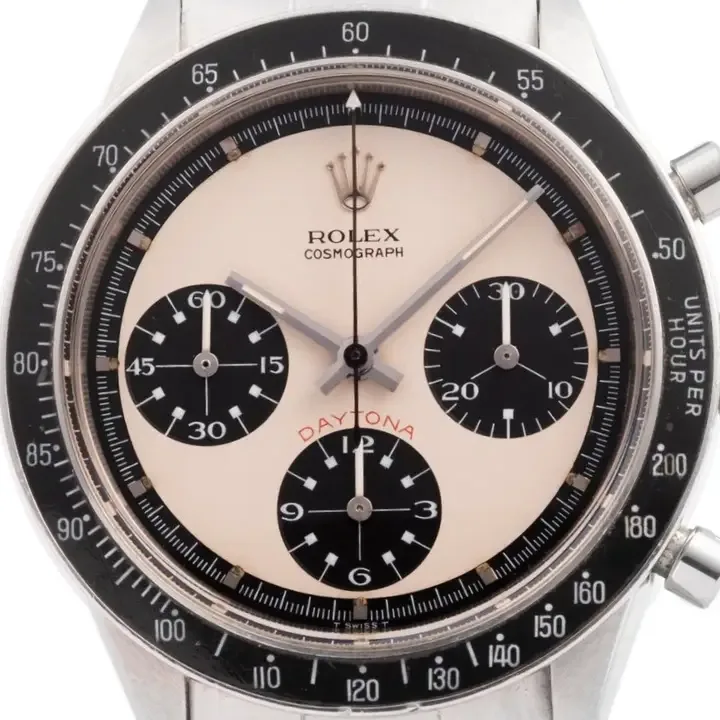
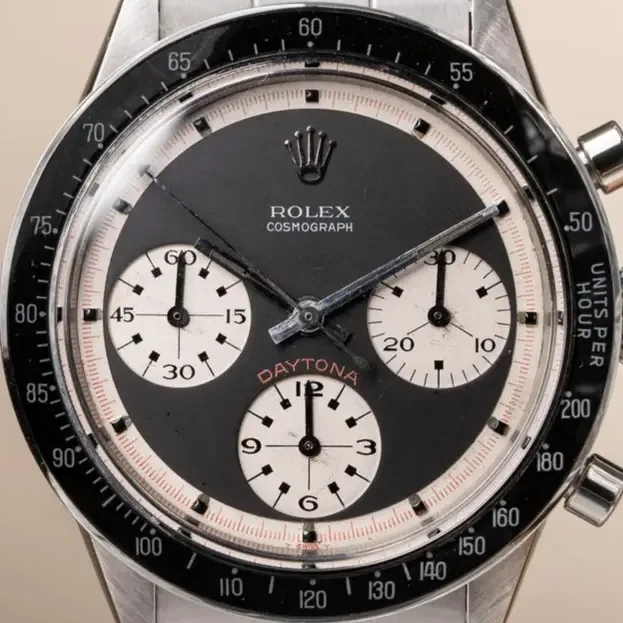
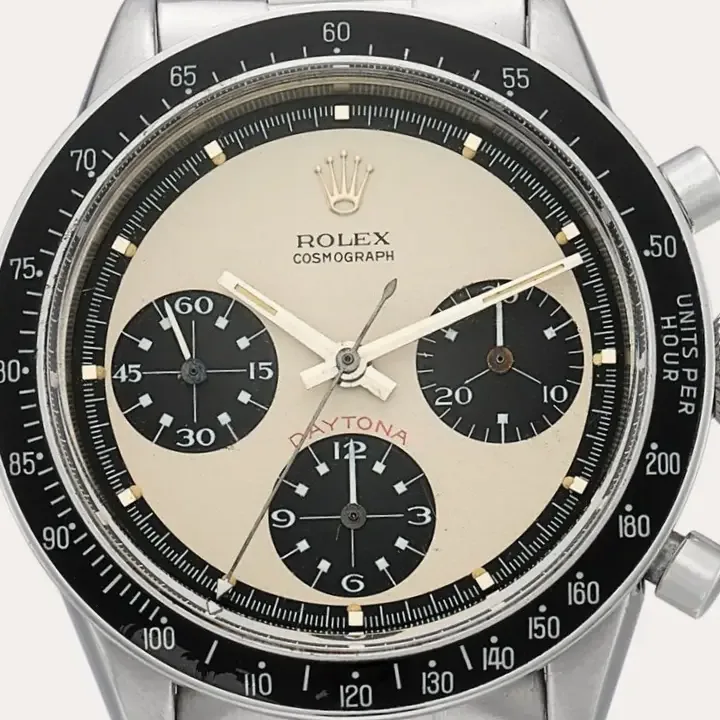
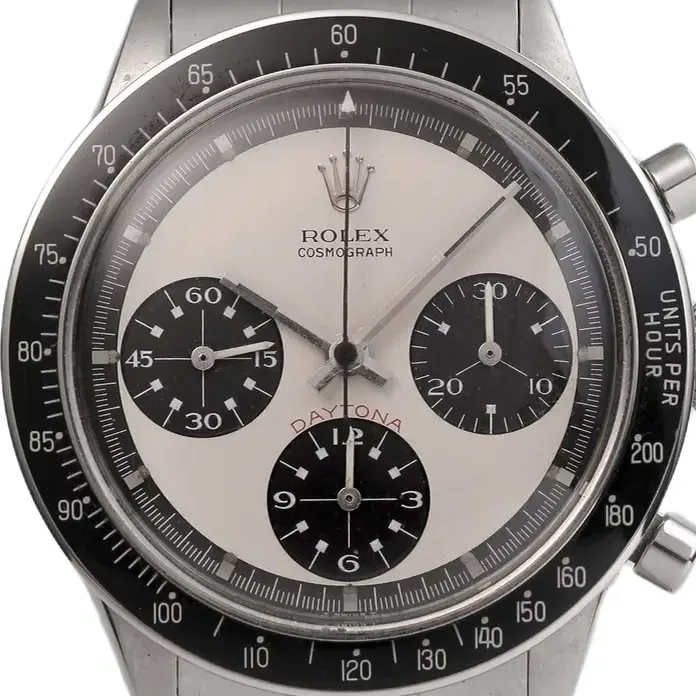
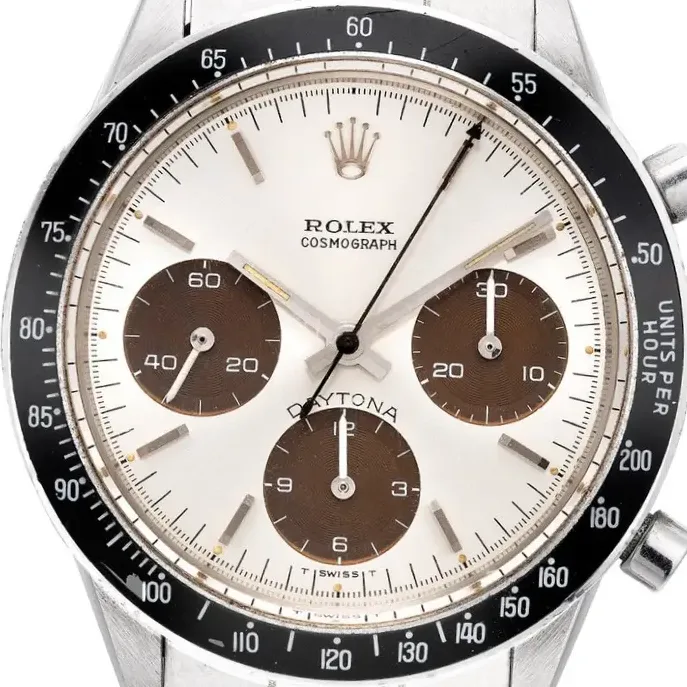
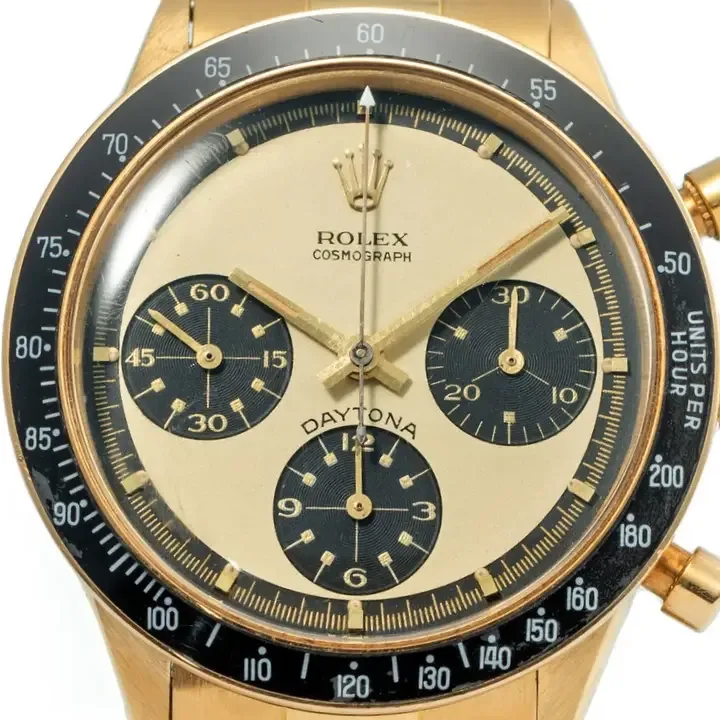
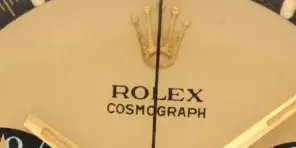
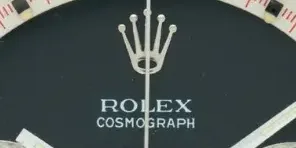
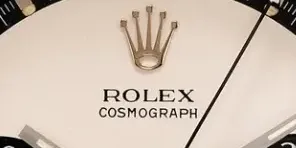
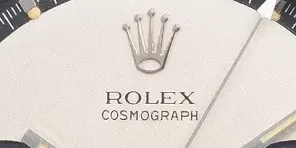
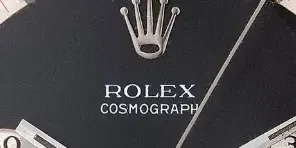
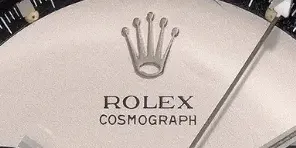
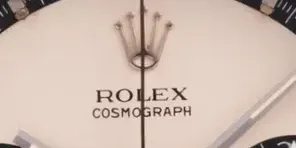
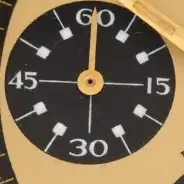
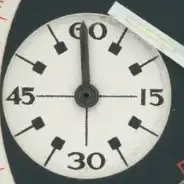
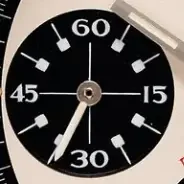
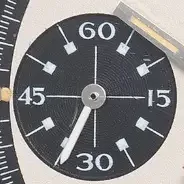
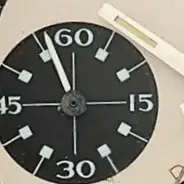
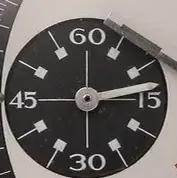
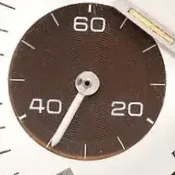
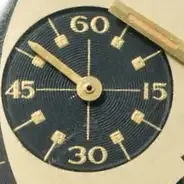
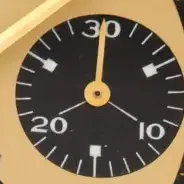
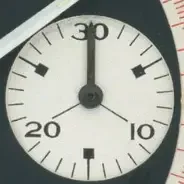
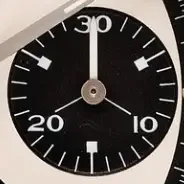
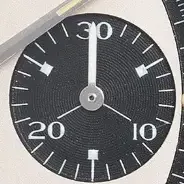
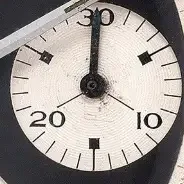
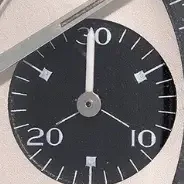
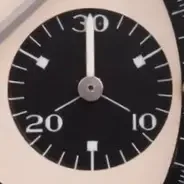
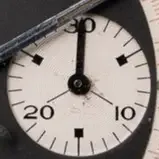
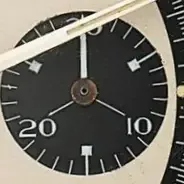
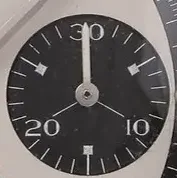
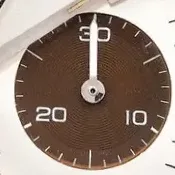
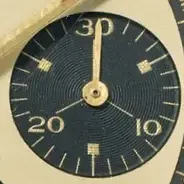
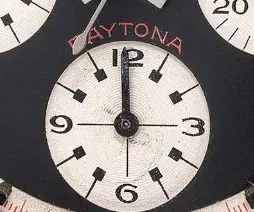
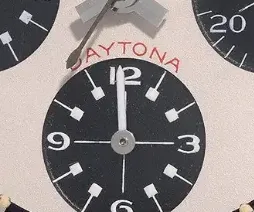
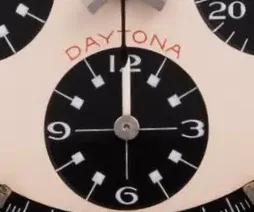
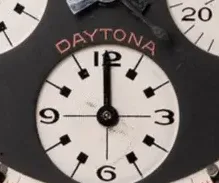
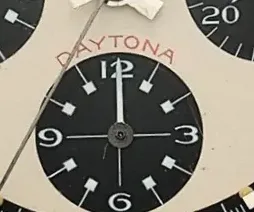
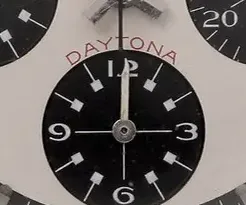
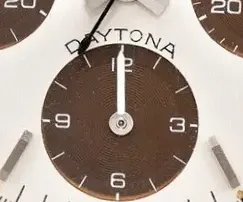
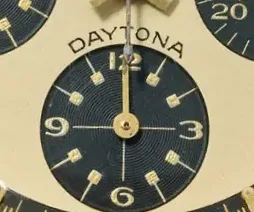
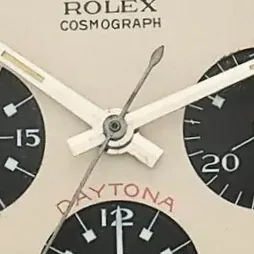
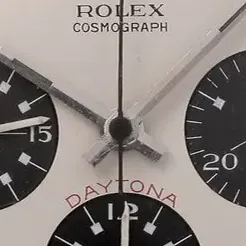
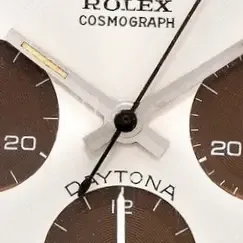
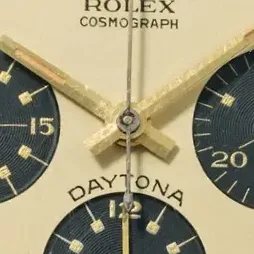
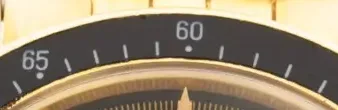
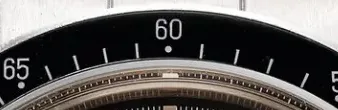
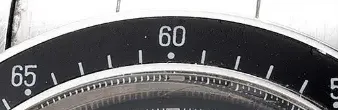
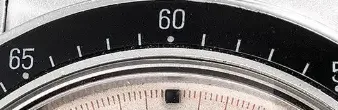
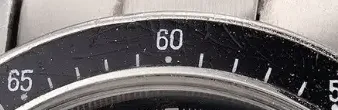
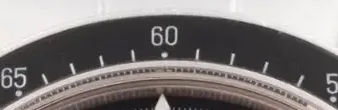
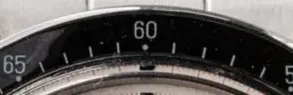
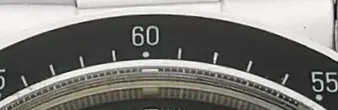
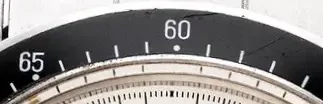
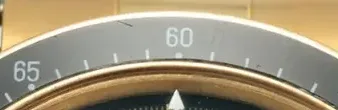
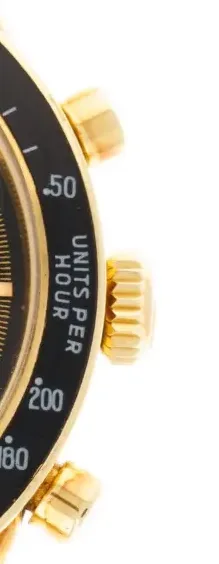
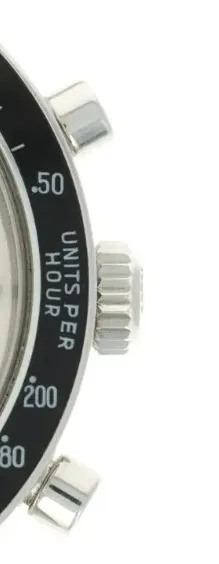
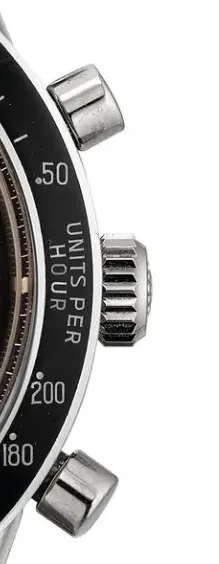
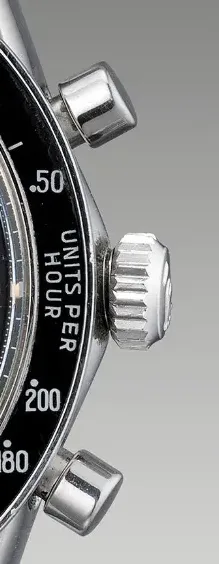
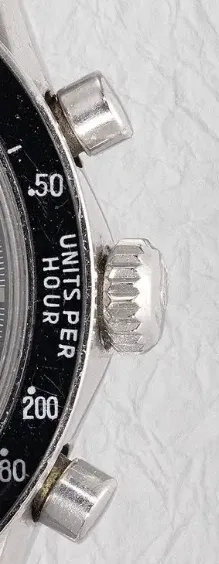
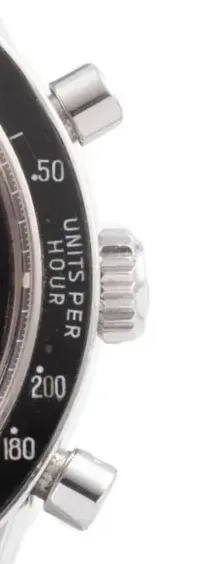
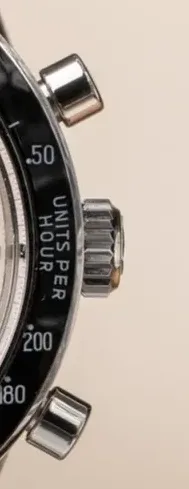
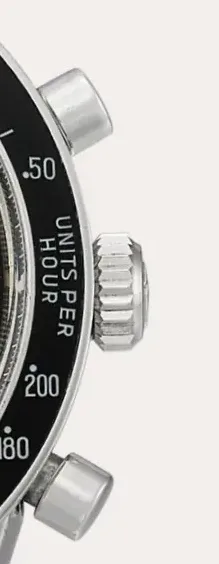
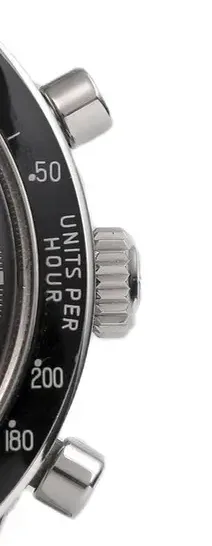
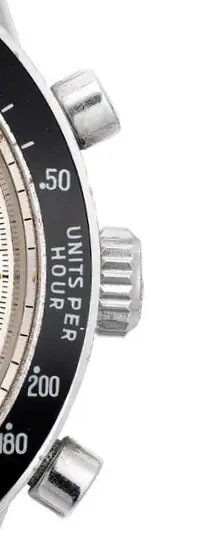
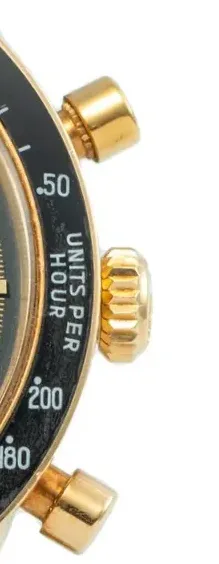
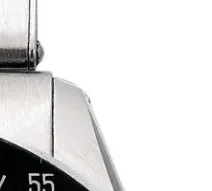
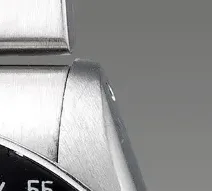
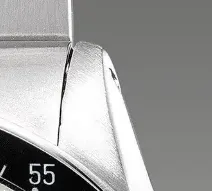
12 watches, oldest first, each straightened and cut the same way so that one row shows one component across them all. Chosen from 172 photographs on file for sharpness and for a face typical of the reference. A year marked c. is one its holder gives only roughly. Each picture is a detail cut from a listing photograph. Select the small mark in its corner for its year, its holder, a link to the listing it came from, and a way to report it.
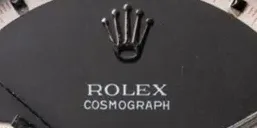
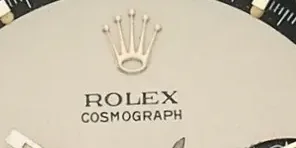

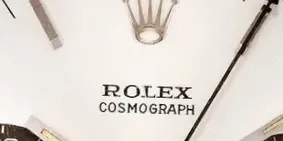
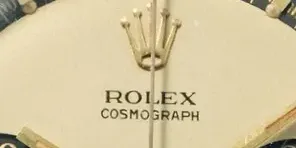
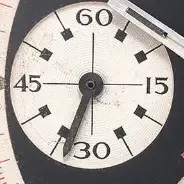
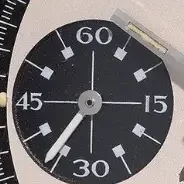
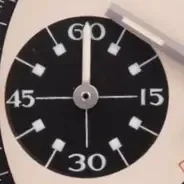
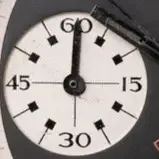
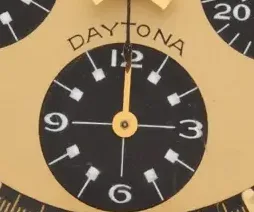
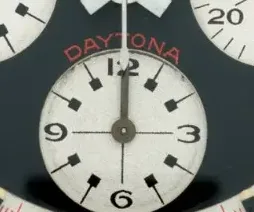
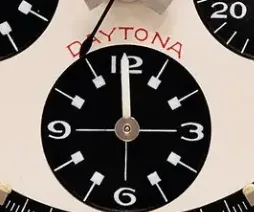
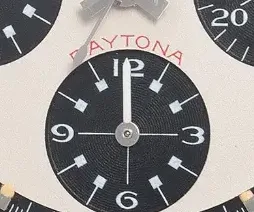
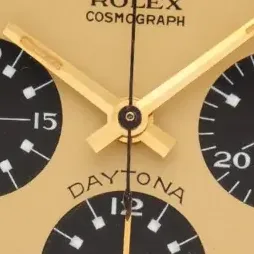
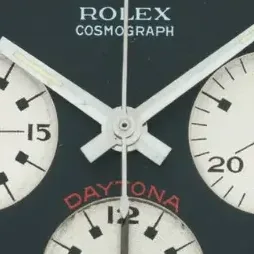
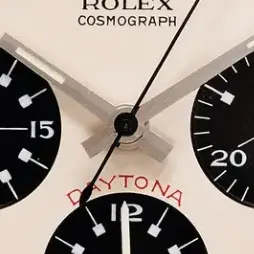
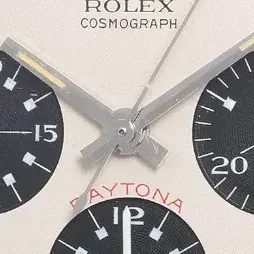
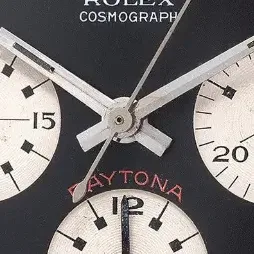
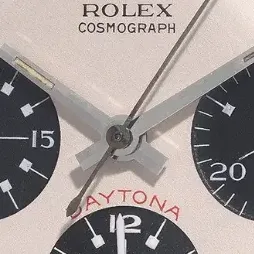
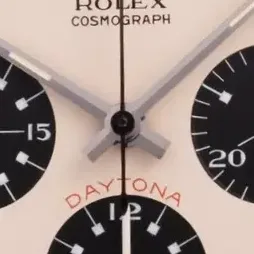
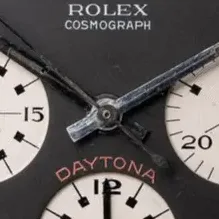





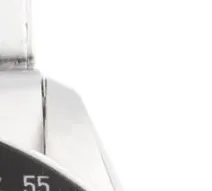
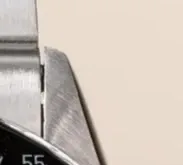
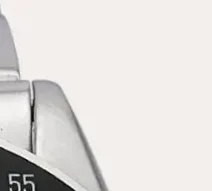
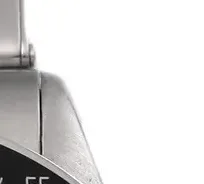
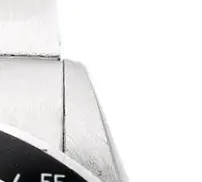
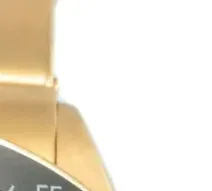


Chronology
Case numbers in the records fall in 1970 and 1971; written accounts give 1969 or 1970 to 1971 or 1972.
Specification
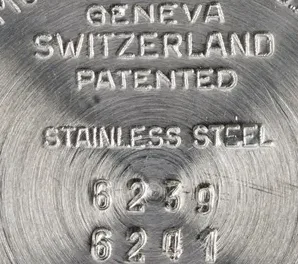
| Case | 37 mm; stainless steel, 14k yellow gold or 18k yellow gold; inside caseback commonly stamped 6241 or 6239 |
| Bezel | Black acrylic insert with tachymeter scale reading to 200 units per hour, on a metal ring |
| Pushers | Smooth pump chronograph pushers at 2 and 4 o'clock |
| Crown | Screw-down winding crown; Twinlock named on a few |
| Dial layout | 30-minute counter at 3, running seconds at 9, 12-hour counter at 6, in a contrasting colour |
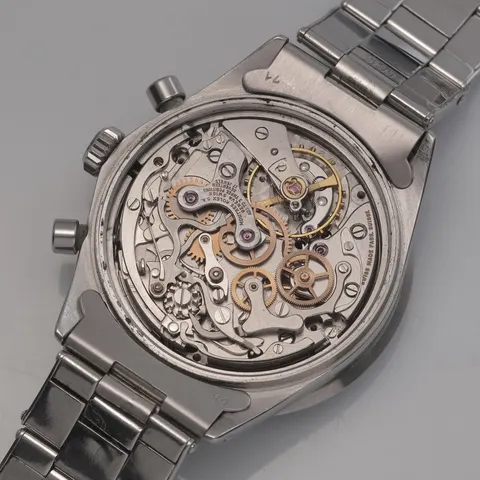
| Movement | Valjoux 727 hand-wound chronograph, 21,600 vibrations per hour |
| Bracelet | Three-link Oyster, most often named as the folded-link 7835; riveted bracelets and leather straps are also seen |
Dial 11 described
Most listings in the records carry an exotic Paul Newman dial, so the 6264 is mainly a Paul Newman reference. Steel watches have black or white bases, and gold watches cream, champagne, lemon or black. The dial text, the minute track and the sub-dial numerals separate the types.
Standard dial
Silver or black dials with sub-dials in the opposite tone, as on the 6262. The standard dial is the one that is plain to the edge, often with a brushed sheen, and its sub-dial digits are blocky. A few have the Daytona name in red, and these differ in print from the later JPS Cherry service dials.
- dial colour runs to the edge
- blocky sub-dial digits
Paul Newman exotic dial
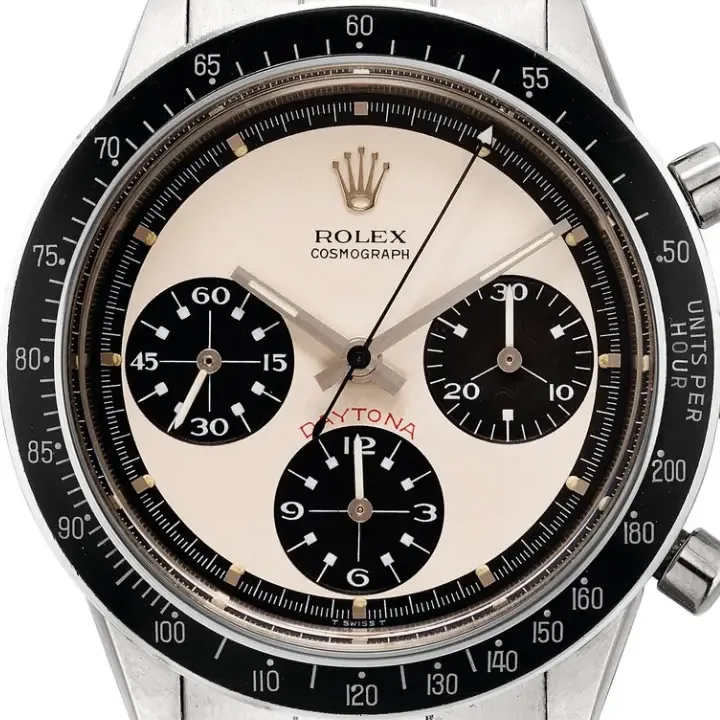
The exotic dial has a contrasting seconds chapter ring, sub-dial markers like square lollipops, and stylised digits with varying strokes and curves. The hour markers are small half-cubes: topped with glossy black paint on a black dial, mirror-polished on a light one. The seconds ring is stepped down from the main field, and the sub-dial grooves, about twenty-six, run nearly to the edge. There is no lume at 12, and the Singer name is impressed on the back, with the hour markers set by a single clean foot. Sellers call most watches in the records exotic or Paul Newman.
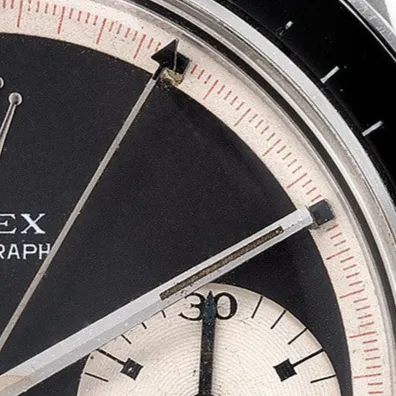

- stepped seconds ring
- half-cube hour markers
- 26 grooves in the sub-dials
- no lume at 12
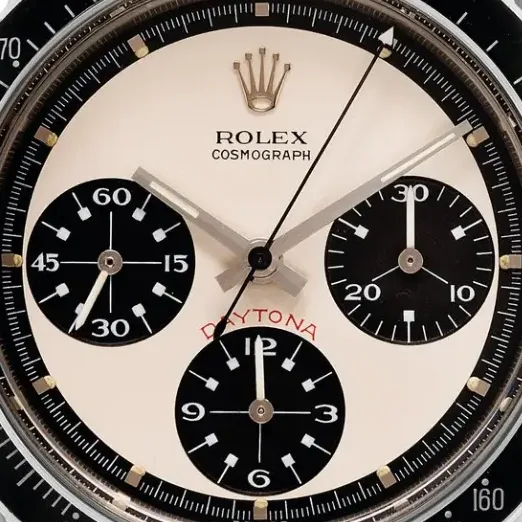

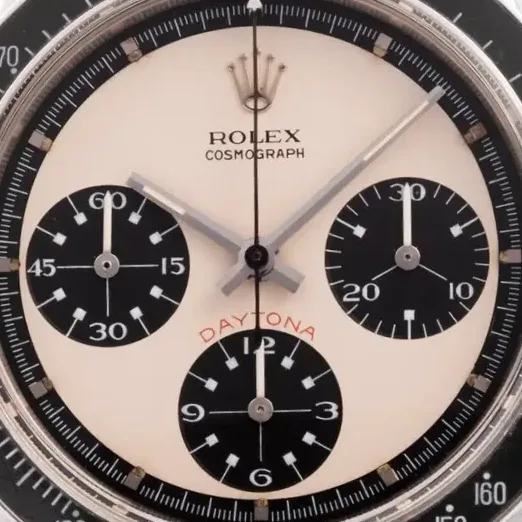

Paul Newman details on the sub-dials
On the running-seconds sub-dial the five at 15 has a longer, fin-like tail and a fatter belly than the five at 45; on the 30-minute counter the 3 of 30 has a stretched lower limb; and the sub-dial centres are slightly off-centre by a fraction of a millimetre. The radial lines of the sub-dials climb the rising edge. The 2 of 20 on the 30-minute counter is of a newer shape from the late 1960s on, though some dials keep the old one.
- fatter five at 15
- long lower stroke on the 3 of 30
- radial lines climbing the sub-dial edge
Flat T Swiss T
The T Swiss T mark at the foot of the dial has a flatter word Swiss on 6262 and 6264 dials; on 6239 and 6241 dials the word has a peaked middle. Dial swapping means the test is not always consistent.
- flat Swiss in T Swiss T
Lemon dial
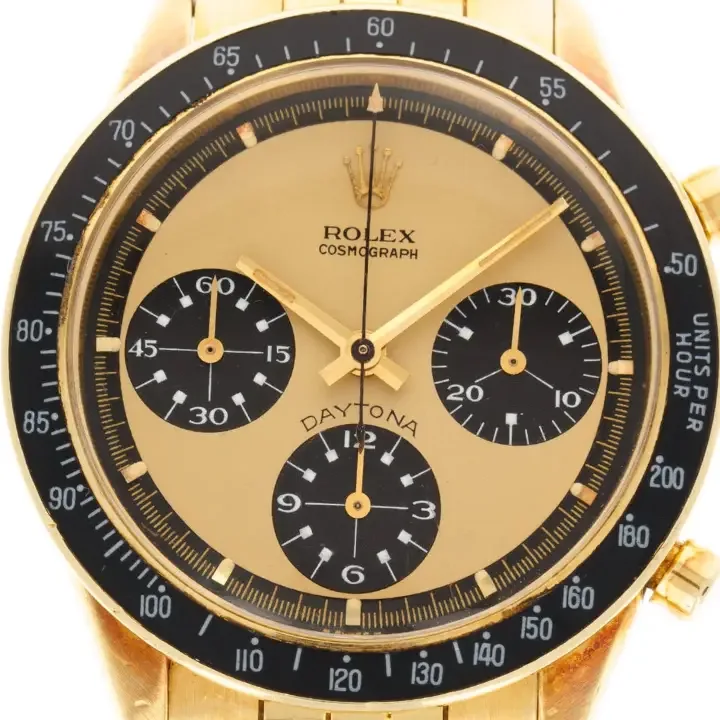
The best-known dial in gold. A lemon grené base, just off cream and matte, carries white Art Deco numerals on black sub-dials, with the Daytona name printed at 6 and no Oyster. Among pump-pusher Daytonas it is found only on the 6264, in an 18k batch with case numbers around 2357xxx, and fewer than fifteen are known; three screw-down 6263s carry a lemon dial with Oyster. The colour of the sub-dial numerals separates it from the cream-and-black gold dials.
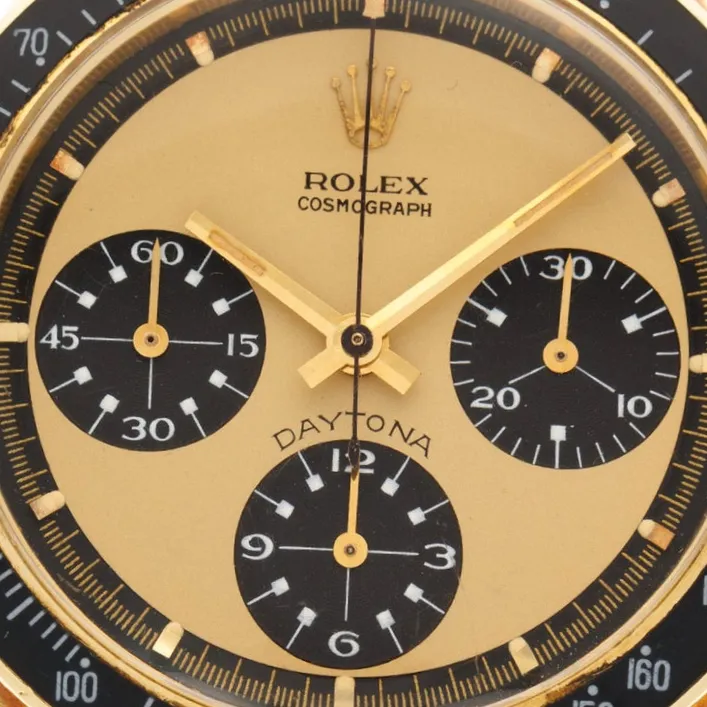

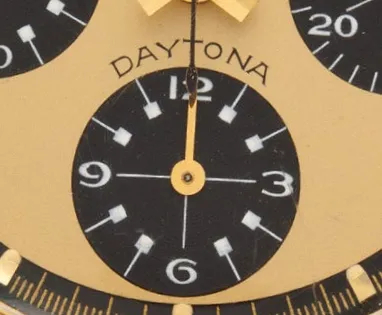

- lemon grené base
12 listings on record under the name.
Gold Paul Newman dial, cream and black
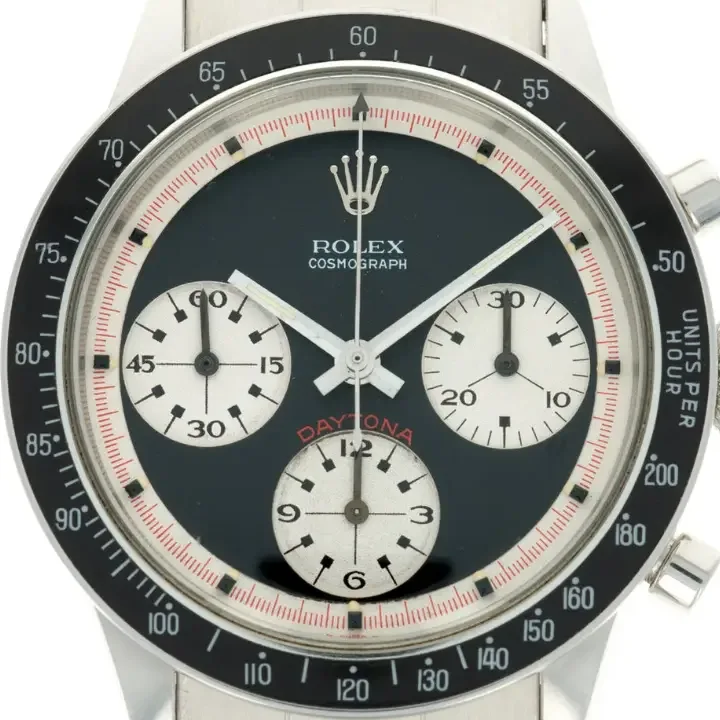
Gold exotic dials come in two forms: a black main dial with cream chapter ring and cream sub-dials, or a cream main dial with a black chapter ring and black sub-dials. Almost all gold Paul Newman watches have pump pushers. Some have the sub-dial print in white rather than gilt, which reads more clearly.
- black or cream base with reversed chapter ring
25 listings on record under the name.
John Player Special dial
A gold dial with black and gold tones, named after the colours of a racing sponsor, with metallic-looking sub-dials and track. One account holds that only one type of JPS dial is correct for the 2.8 million case-number range: one with a flat T Swiss T and the graphics of the lemon dial.
- metallic gold sub-dials and minute track
- flat T Swiss T
Cherry dial
A dial with a red Daytona above the six o'clock counter. The standard Cherry print, on a plain non-exotic dial, is found on 6262 and 6264; sellers describe it on 14k gold watches with case numbers near 2.8 million. A later Paul Newman-layout variant, called JPS Cherry, was made as a replacement (service) dial, by one account in 1995, with unfinished dials in boxes at the dial maker. It is told from the standard print by a Rolex E whose bottom arm is longer than the top, an odd gap between the A and Y of Daytona, and a Daytona set closer to the counter at the D than at the A.
- red Daytona above the six o'clock counter
- Daytona print evenly spaced from the counter
Tiffany & Co. dial
A dial signed Tiffany & Co. as well as Rolex, which sellers describe on a small number of watches. The literature does not date it or tie it to a metal on the 6264; a Tiffany-signed dial is described there on a 6239.
- Tiffany & Co. print on the dial
Gilt print
Sellers describe gilt text on the dials of some watches; the literature notes gilt as the commoner sub-register print against the white print seen on a gold example.
- gilt text
Tropical dial
Sub-dials and the minute track that have aged to brown, from tobacco and chestnut to milk-chocolate tones, on steel and gold watches alike. Sellers call a number of watches tropical.
- brown sub-dials
- brown minute track
Bezel 1 described
The bezel is a metal ring holding a black acrylic insert with a tachymeter scale. The insert separates the 6264 from the metal-bezel 6262.
Black insert, tachymeter to 200
The insert is black with a tachymeter scale to 200 units per hour. On the 6264 the 2 of 200 is a finer, more angular digit than the thicker, squarer 2 on the 6241 insert. Sellers often call it Mark 1; fake Mk 1 bezels are known.
- thin angular 2 in 200
Case 5 described
The 37 mm case follows the late 6241, with pump pushers. Gold watches come in 14k and 18k, and the batches are told apart by case numbers and engraving.
Pump pusher case
Smooth pushers at 2 and 4 o'clock, pressed without unscrewing. The 6264 and 6262 are the last Daytonas to have them. Sellers note a few as screw-down, which is not right for the reference.
- smooth un-knurled pushers
Batches and case-number typefaces
Eight batches are described: the first in 18k gold, the last in 14k, the six between in steel. Case numbers in the first gold batch run from 2357347 to about 2357480, and the last batch is in the 2.8 million range. Two engraving typefaces, called A and B, occur between the lugs, with the first gold batch and the first steel batch in B and the fourth batch in A; one account calls A the wide one and B the narrow, another calls B the more extended. A batch uses one typeface throughout.
- wide or narrow digits between the lugs
Gold cases
18k gold is found on the European market and 14k on the US market. Sellers describe the 18k more often than the 14k, and gold watches make up a sizeable part of the records.
- Helvetia hallmark with C town mark
- gold caseback
Caseback stamps
Sellers' descriptions give the inside of the caseback as stamped 6241, 6239, or both, sometimes with C.R.S. for the case maker. These are marks of earlier models; the literature does not say how a stamp should be read for the 6264.
- 6241 or 6239 inside the caseback
Case maker hallmarks
The Helvetia head stamp for 18k gold carries a letter C, the case maker's town mark, instead of G for Geneva, since the case maker was not in Geneva. A Helvetia mark with C is also seen on the lug.
- Helvetia head with letter C
Crown and pushers 1 described
The winding crown is a screw-down type, with Twinlock named on some watches.
Screw-down crown
A screw-down crown. Some sellers call it Twinlock.
- Twinlock marking
Movement 1 described
The 6264 has the Valjoux 727, replacing the 722-1 of the 6241.
Valjoux 727
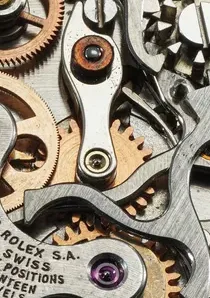
A hand-wound chronograph beating 21,600 vibrations per hour, up from 18,000. It is based on the Valjoux 72. On the first gold batch the Y-shaped chronograph bridge carries five lines of text; bridges differ between calibres 722-1 and 727 and between batches. Sellers name 727 on nearly all watches that state a calibre.
- Y-shaped chronograph bridge
Bracelet 2 described
The bracelet is the three-link Oyster. Sellers most often name the 7835, a folded-link bracelet, and some name the riveted 7205; riveted links are described more often than folded ones.
Oyster 7835
A three-link Oyster named by many sellers as the 7835, a folded-link bracelet. Sellers describe riveted links more often than folded ones, which fits the riveted 7205 better than the 7835. End links 271, 57 and 71 are named.
- 7835 clasp code
- folded links
Bracelet 7205
A bracelet coded 7205, named by some sellers, with end link 71.
- 7205 clasp
Box and papers 1 described
Some watches are offered with boxes, papers and warranty cards.
Box, guarantee and service papers
Sellers mention a box or papers on some watches, and a few list service papers or an original warranty.
- box
- guarantee card
- service papers
Originality
- Dials: a dial may be a replacement or a re-print, and Paul Newman dials have been faked; the stepped seconds ring, the Singer stamp and the clean riveting of the hour markers are the checks.
- Bezel: a fake Mk 1 insert can be fitted; the digits of the 200 and the finish are what to compare.
- Case numbers: engravings should fit the batch; a number from a gold batch on a steel watch is wrong.
- Polishing: it thins the lugs and is the likeliest cause of notches by the pushers, though notches vary on original cases too.
- Dials and cases: dials have been moved between watches and case numbers faked, and such watches have been offered at auction; the dial should suit the case number's batch and metal.
Names
- Paul Newman. The exotic dial layout is named after the actor who wore one on an earlier Daytona.
- Lemon. The lemon-coloured base of the gold dial with white sub-dial numerals.
- John Player Special. The black and gold colours resemble those of a racing sponsor of the 1970s.
- Cherry. A red Daytona print above the six o'clock counter.
- Panda. A white dial with dark sub-dials.
Where accounts differ
Points on which the published literature and the library's own records do not agree, or on which the literature contradicts itself.
- Production dates. One account gives 1970 to 1971, another 1970 to 1972, and another speaks of a three-year run from the late 1960s. The records' case numbers are in 1970 and 1971 only, though sellers state years from 1968.
- Lemon dials. The number of known lemon-dial 6264 watches is put at fewer than twelve, fewer than fifteen and fourteen to fifteen depending on the account; the same account also gives a different case-number range for them.
- The screw-down-pusher references. One account has the 6263 and 6265 introduced in 1971. Another shows a 6263 of about 1969, other published accounts of the 6263 date it from 1969, and in the library's records 6263 case numbers begin near 2.08M, below the first 6264.
- Arrival of the 6241. One account dates the 6241 from 1965. Its earliest case numbers in the library's records are of 1966, the year other published accounts give for it.
- Case-number typefaces. One article describes Typeface A as wide and Typeface B as narrow and puts the first gold batch in B; a later article by the same author calls Typeface B the more extended one.
Back and movement
From listings of this reference, each confirmed by eye to show what it is filed under. A picture on which a person's name or a personal engraving can be read is not shown. From most holders a detail from the middle of the photograph is shown; the mark in its corner gives its holder and a link to the listing.
Caseback
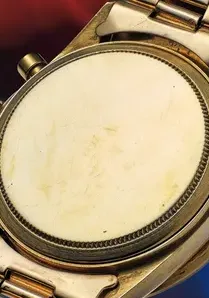

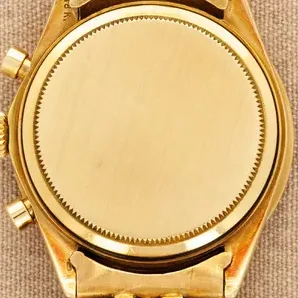

Inside the caseback

Movement

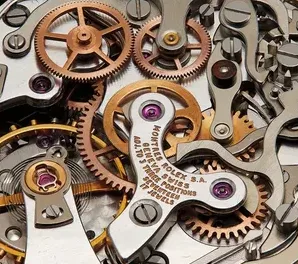


In the records
Counted from 70 listings at 16 holders between 10 November 2013 and 14 November 2026. These are what sellers and auction houses state, not measurements.
Case metal
| Steel | 33 | |
| Gold, any colour | 25 | |
| Yellow | 15 | |
| Colour not stated | 10 |
A listing that says "gold" or "18K gold" names no colour: it is counted under "colour not stated", not as yellow gold.
Dial colour
| Champagne | 6 | |
| Black | 6 | |
| White | 6 | |
| Yellow | 1 | |
| Blue | 1 | |
| Gold | 1 | |
| Brown | 1 | |
| Silver | 1 |
Case size
| 37 mm | 29 | |
| 38 mm | 15 |
Calibre named
| 727 | 43 |
Bracelet or strap
| Oyster bracelet | 31 | |
| Metal bracelet, kind not stated | 11 | |
| Leather strap | 4 | |
| Jubilee bracelet | 1 |
Each table counts the listings that state the thing, in the seller's own terms. A size, metal, colour or calibre that cannot belong to this reference is a seller's slip or a listing filed under the wrong number.