Cosmograph Daytona in yellow gold (Zenith Daytona)
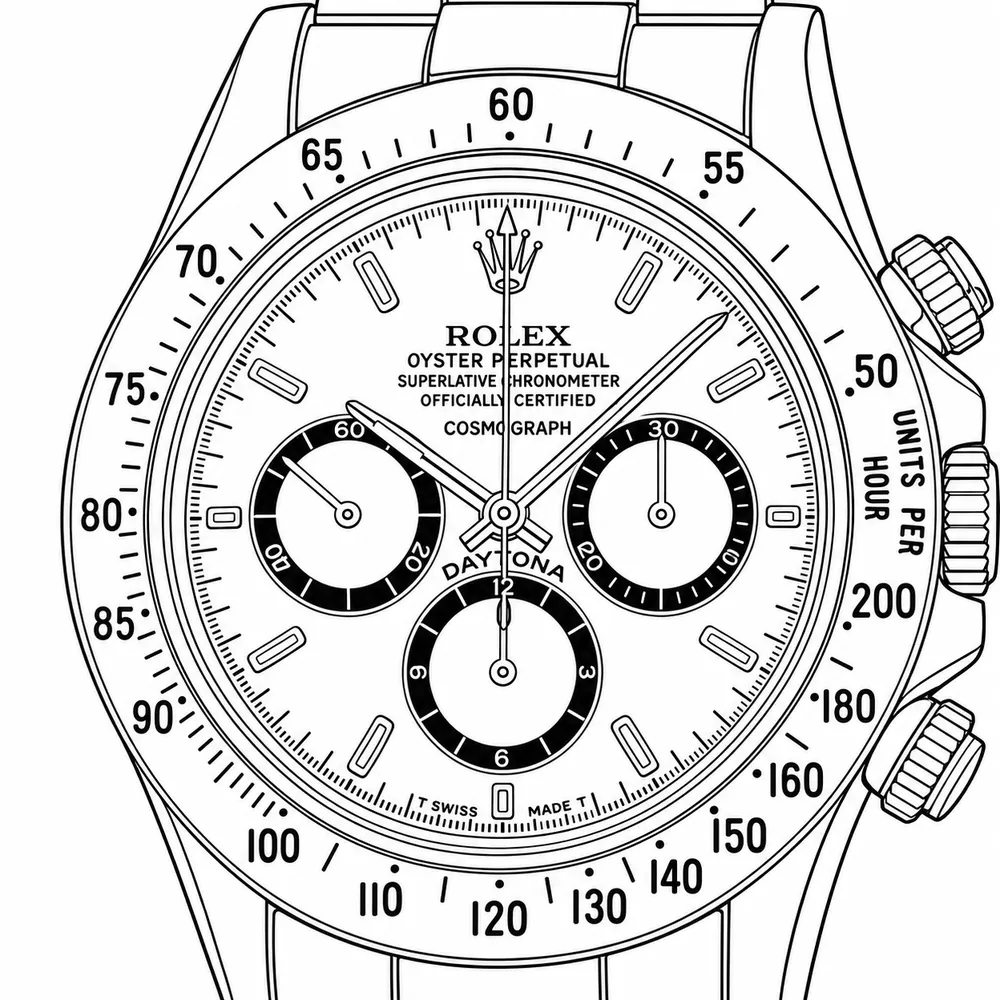
The 18 ct yellow gold version of the first self-winding Daytona, launched in 1988 alongside the steel 16520 and the two-tone 16523 and made until about 2000. It shares their 40 mm case with crown guards, sapphire crystal and calibre 4030, the Rolex-modified Zenith El Primero, but has a solid gold case, bezel and Oyster bracelet. Dials were black, white or champagne, often with diamond-set markers, and a small number are gem-set or hard-stone. The dial changed in the same steps as the steel watch: floating Cosmograph, four-line, inverted six and later layouts, and the bezel changed in parallel. Collectors look at dial type and bezel match, case polish and bracelet stretch first.
- Made
- 1988–2000dates approximate
- Seen in the library
- 1988–2000nine in ten in 1988–1999 · by case numbers
- Case
- 40 mm · goldas sellers state
- Movement
- Calibre 4030automatic
- On record
- 452 listings1,418 photographs · 48 holders
Components
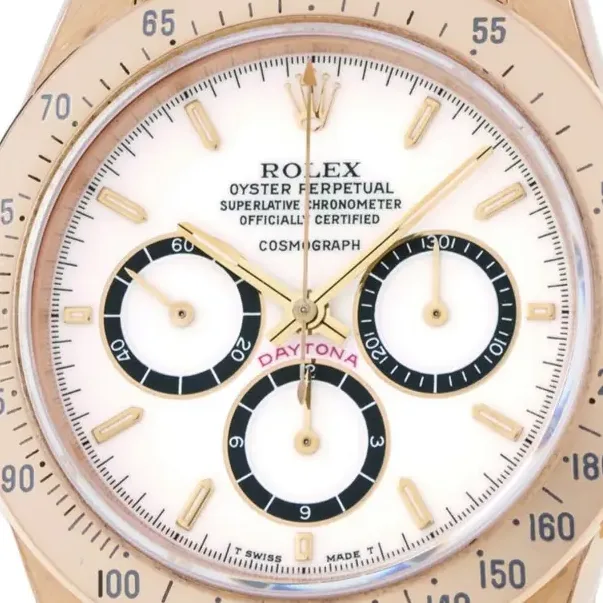
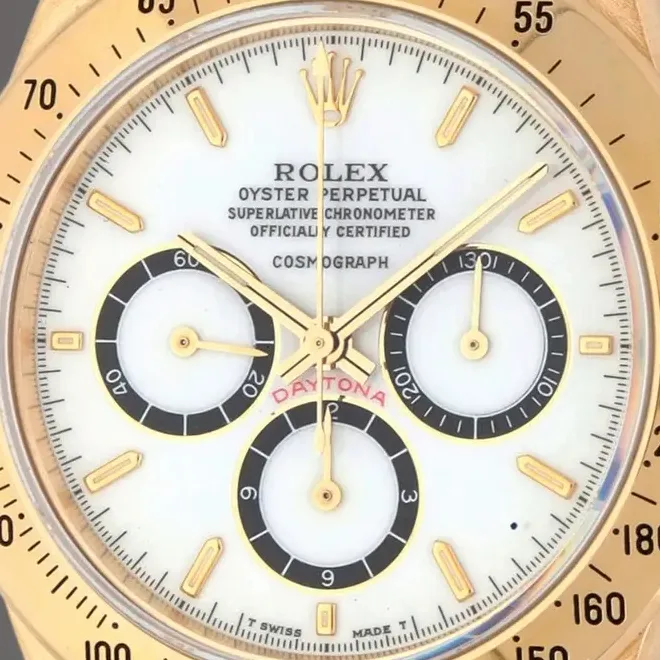
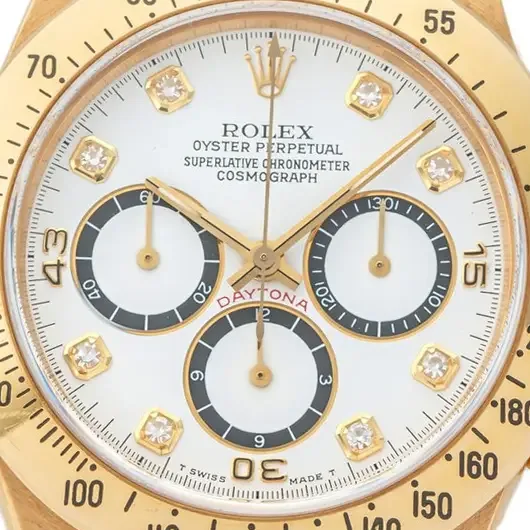
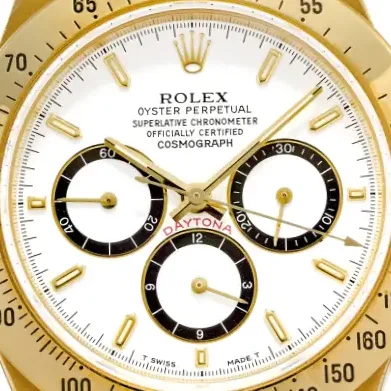
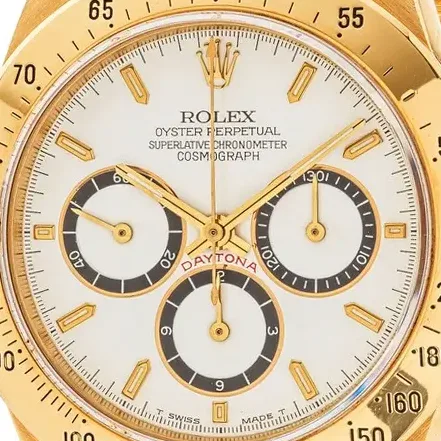
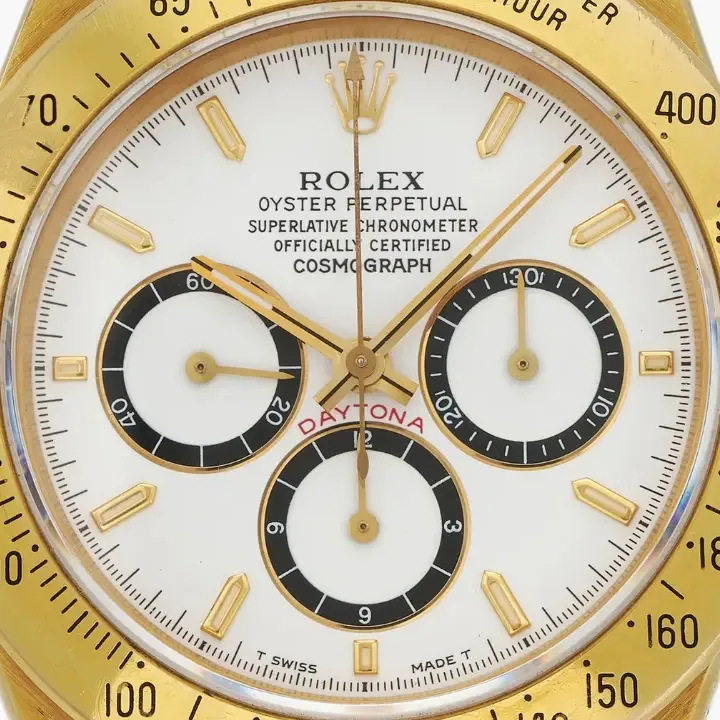
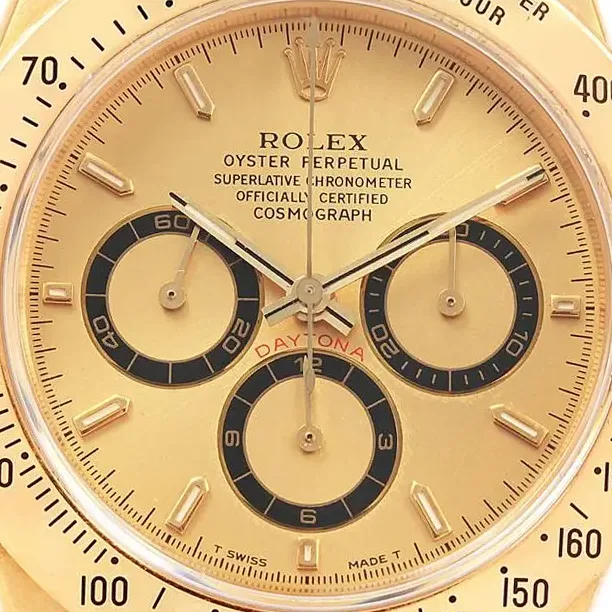
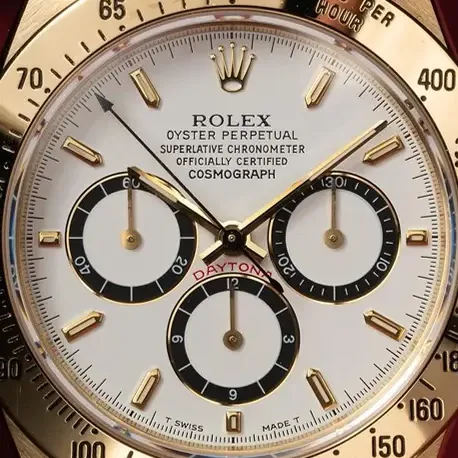
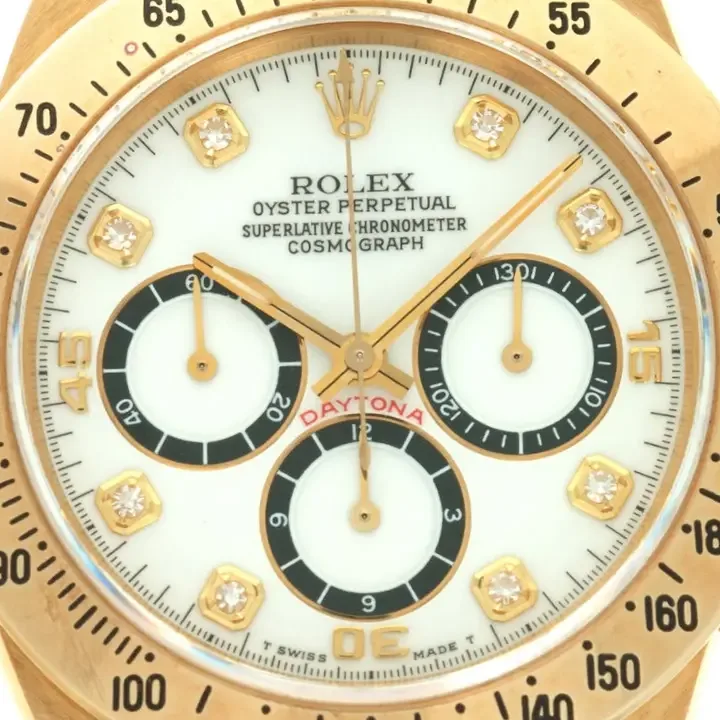
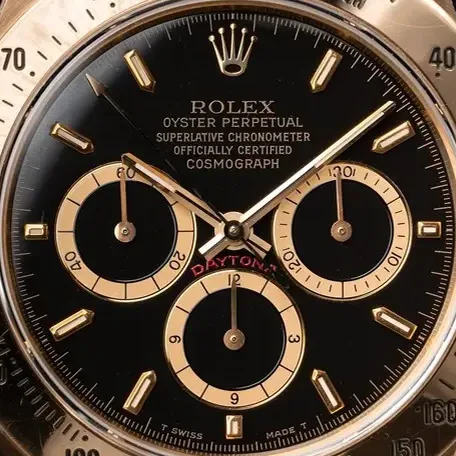
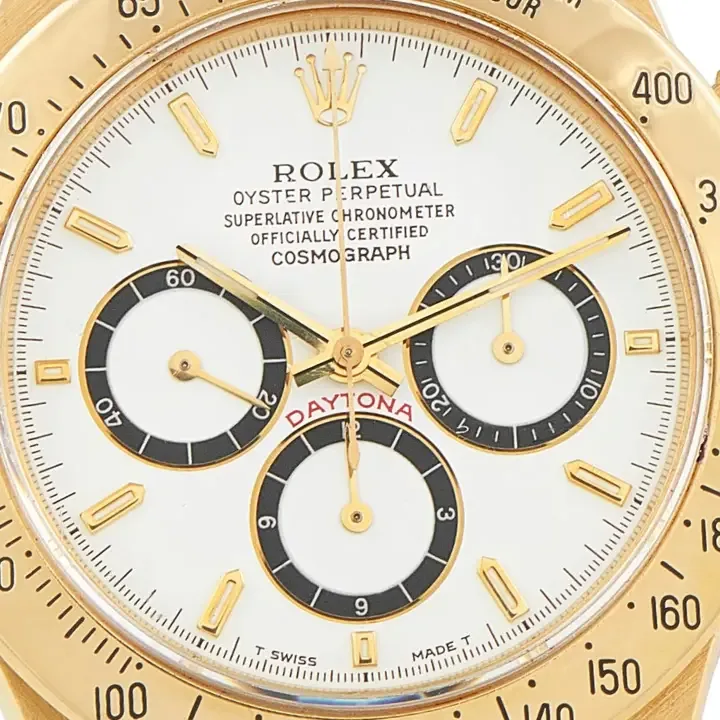
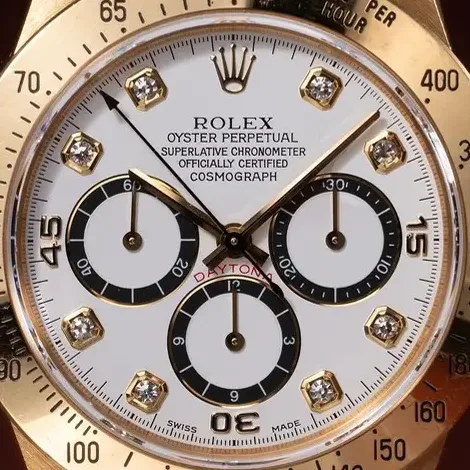
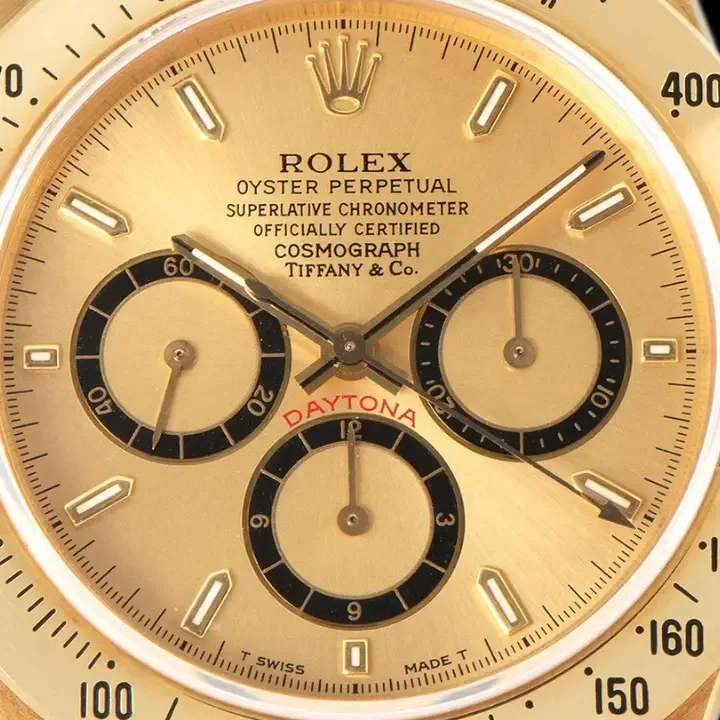
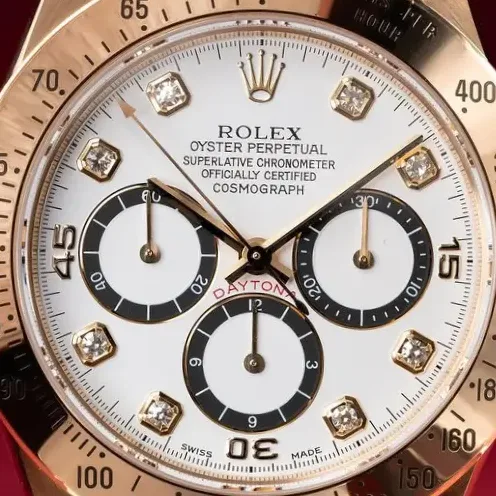
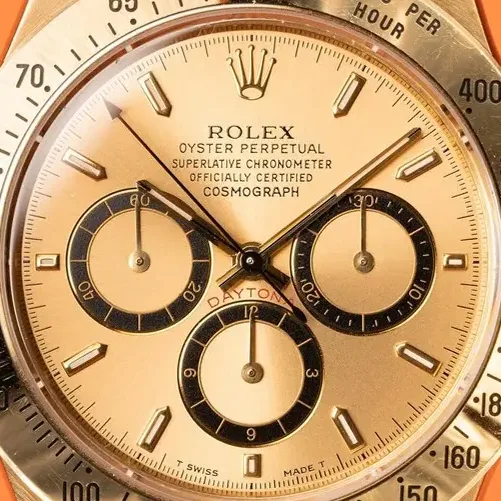
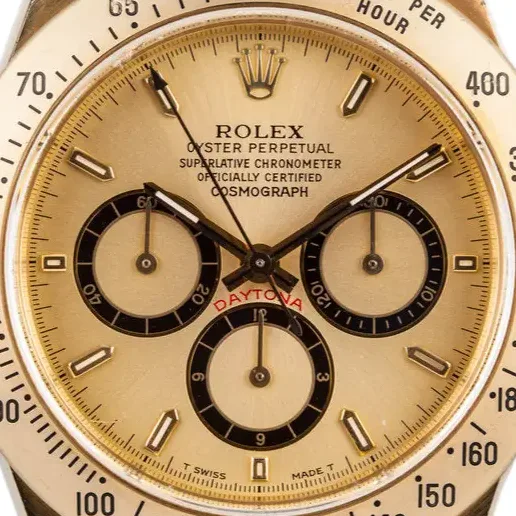
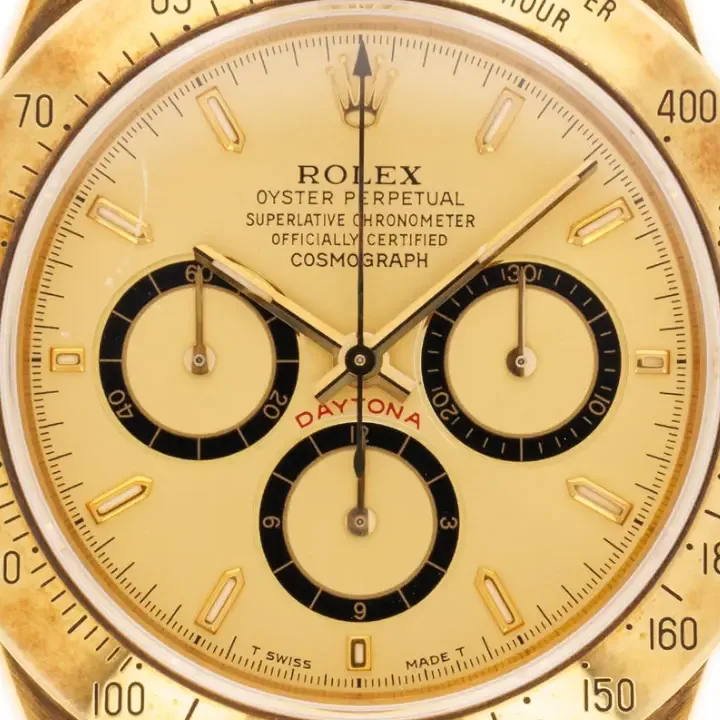
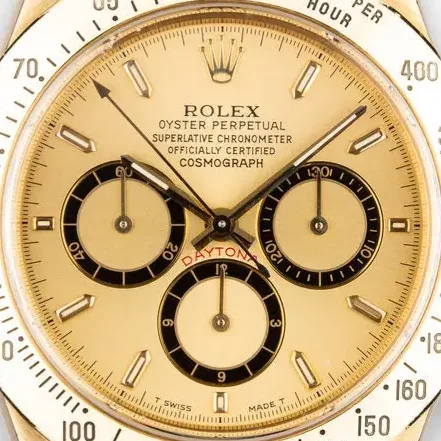
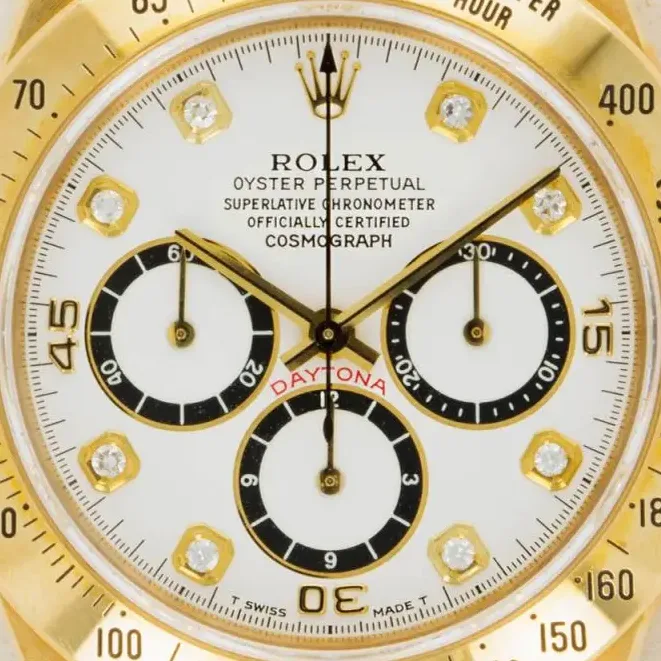
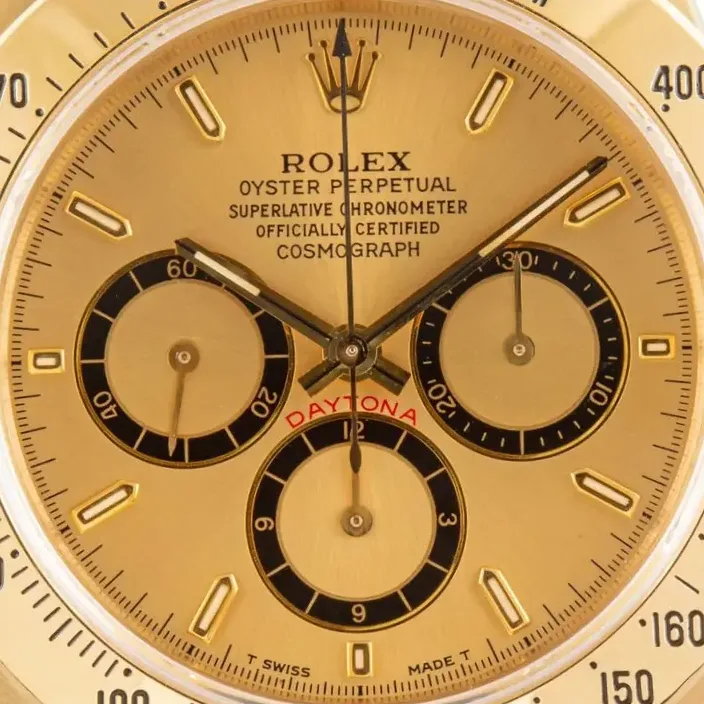
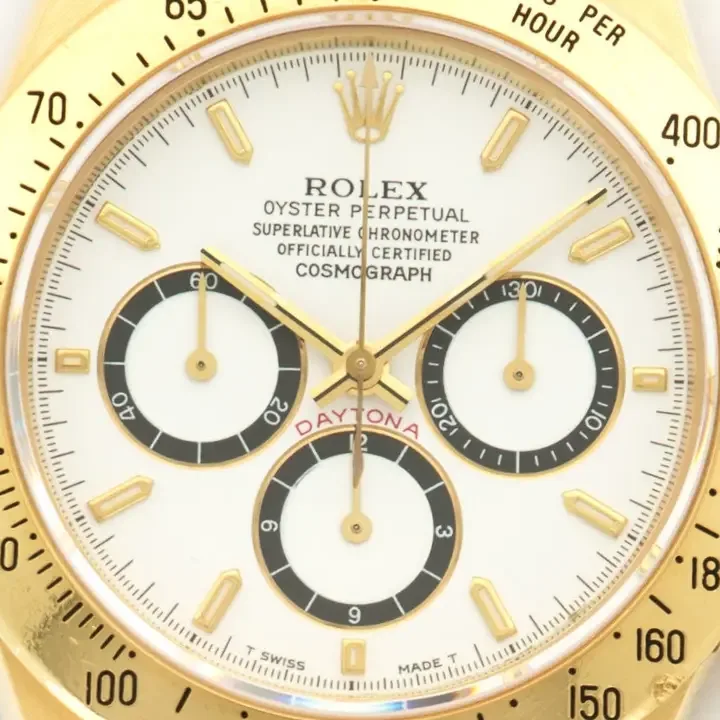
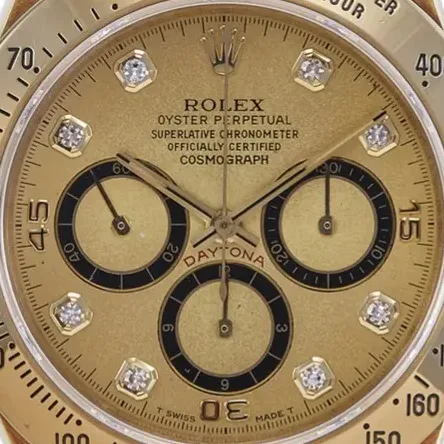
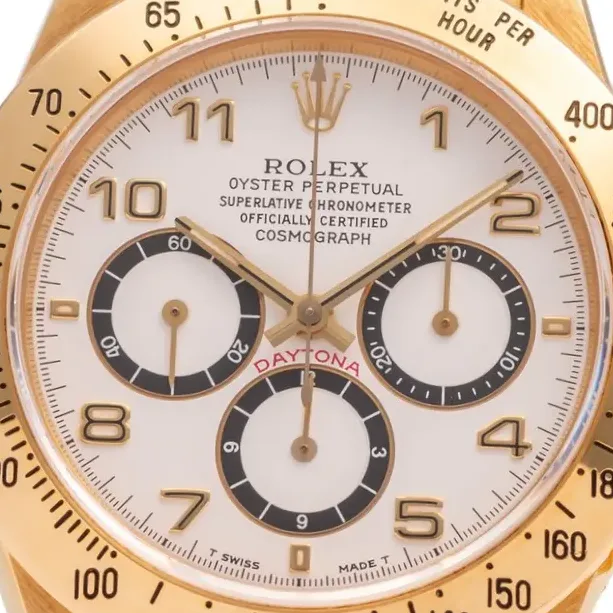
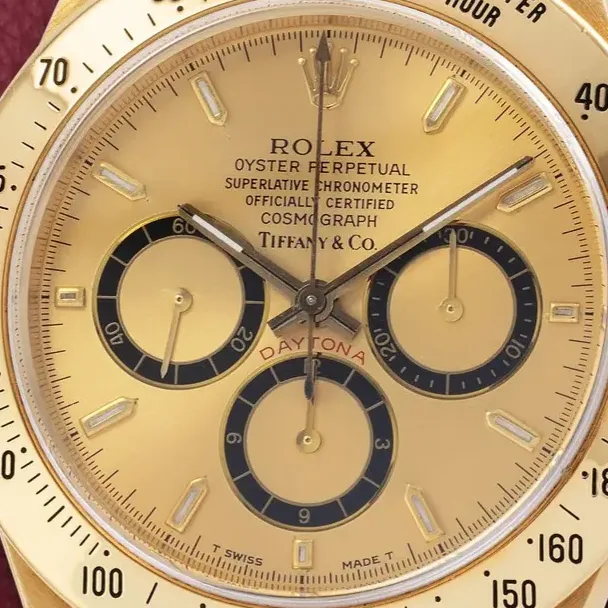
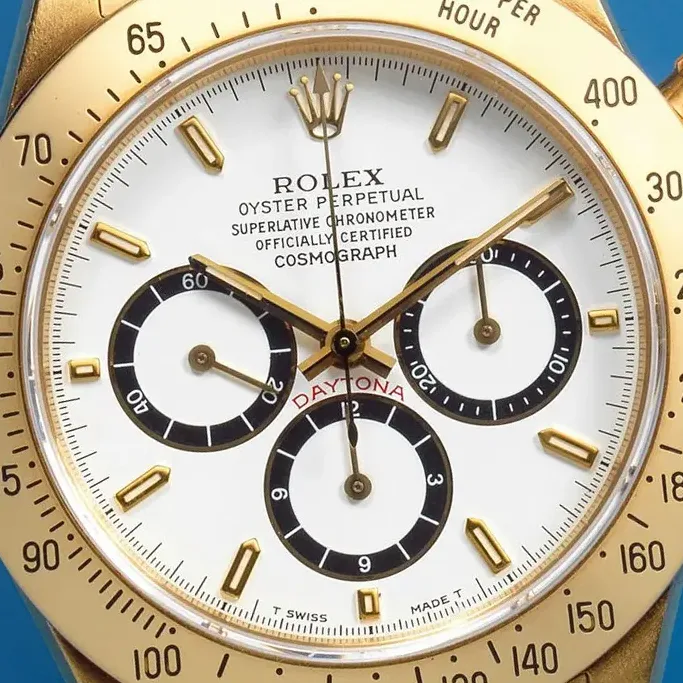
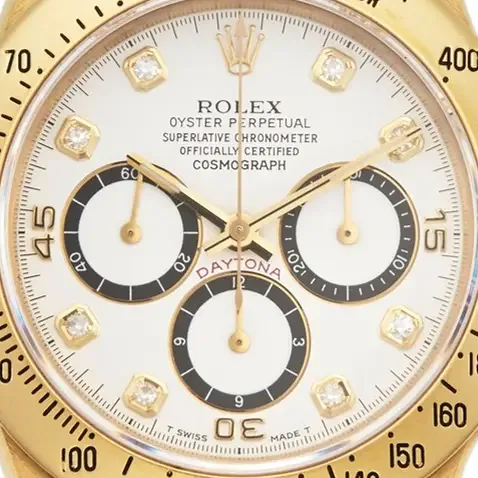
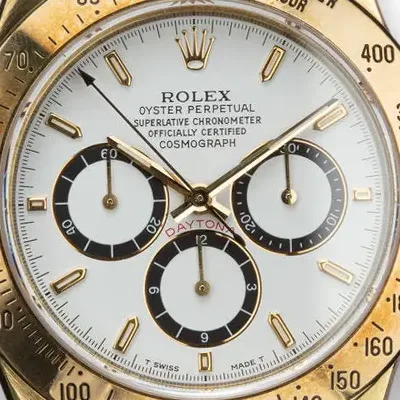
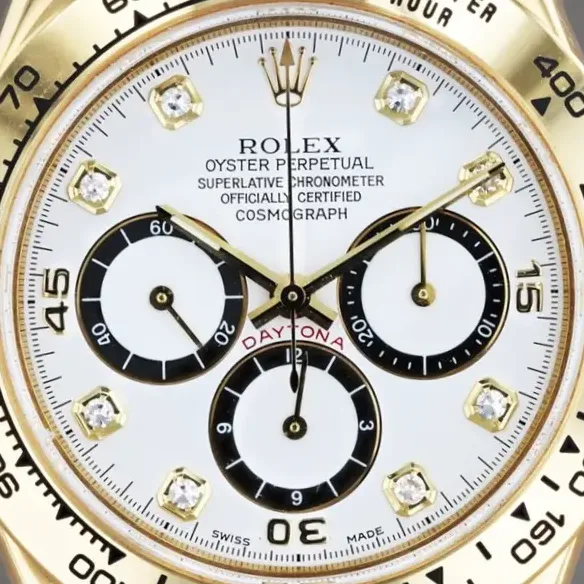
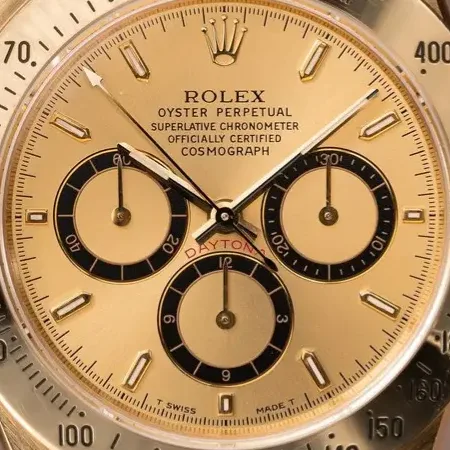
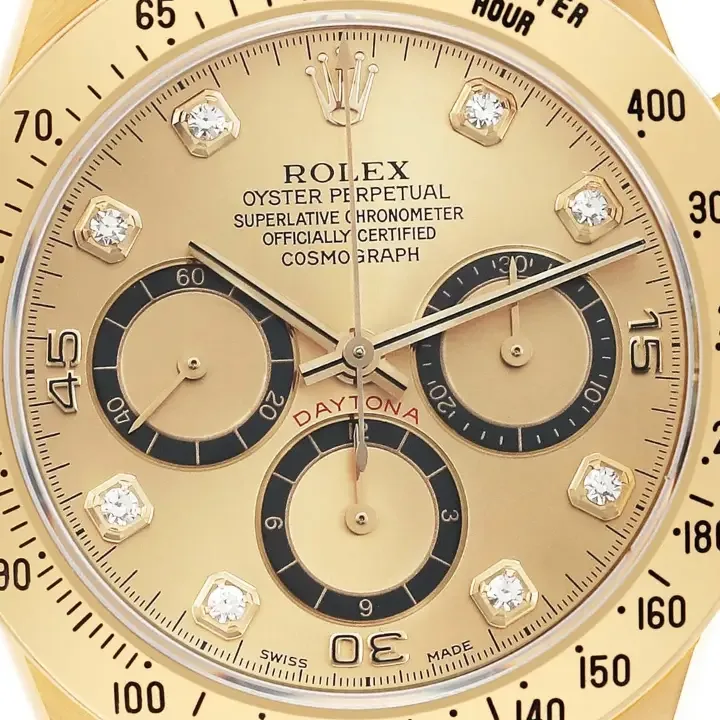
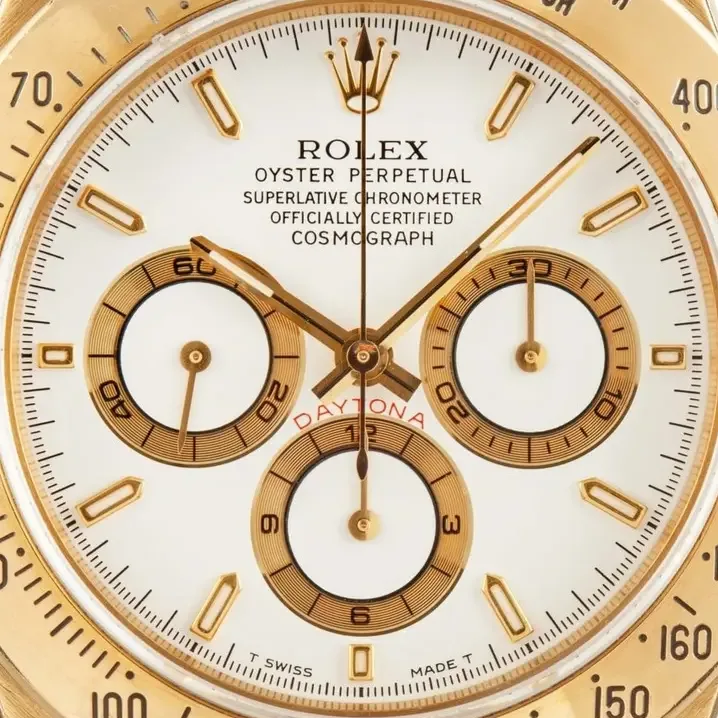
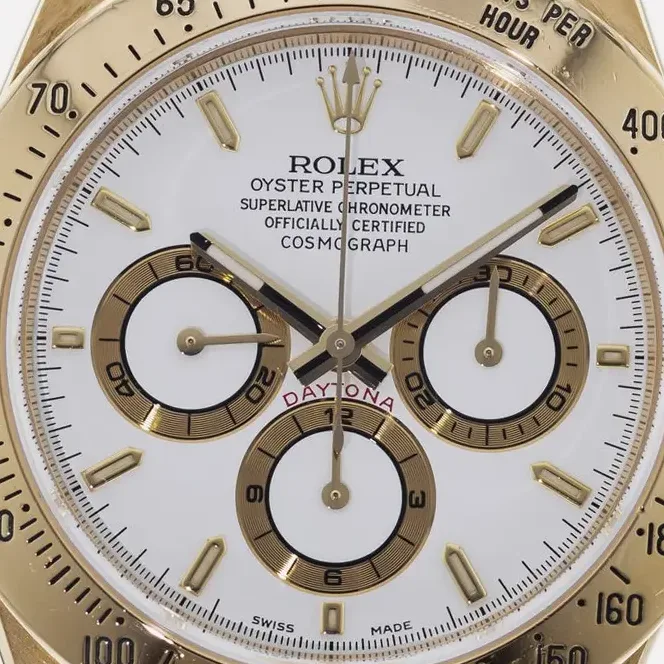
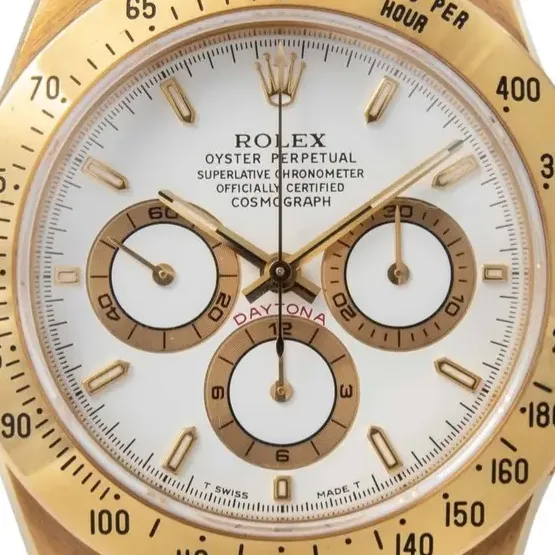
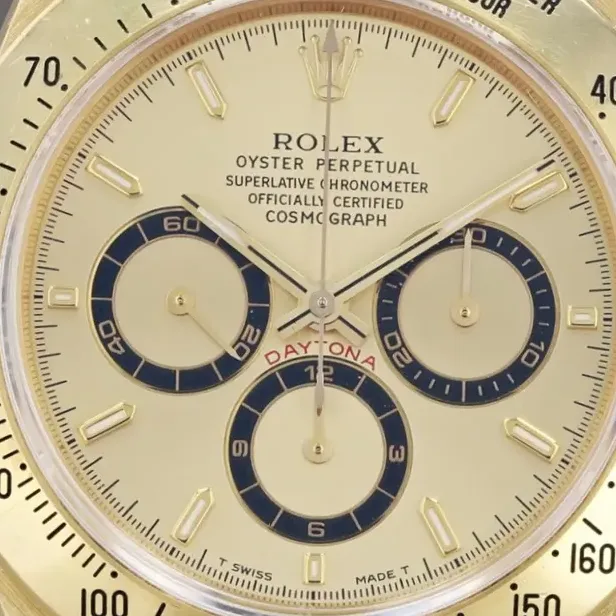
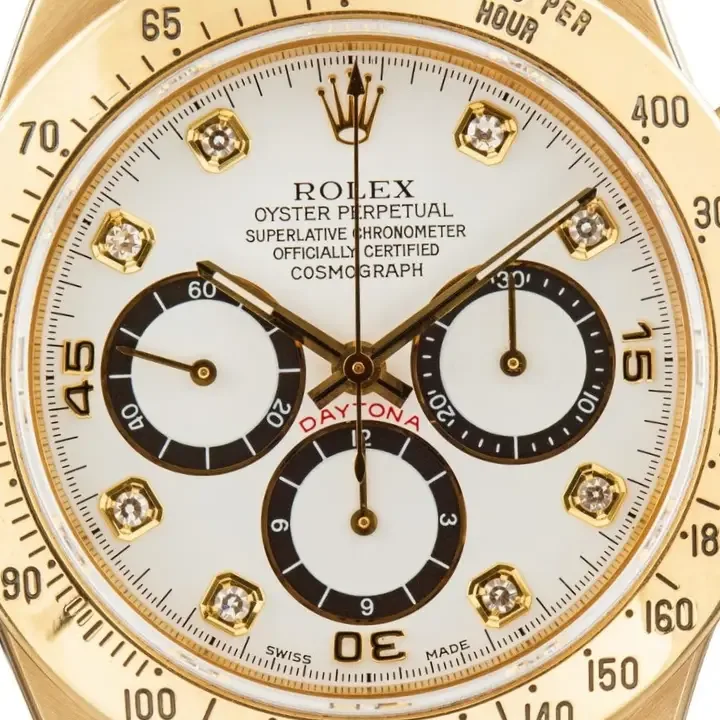
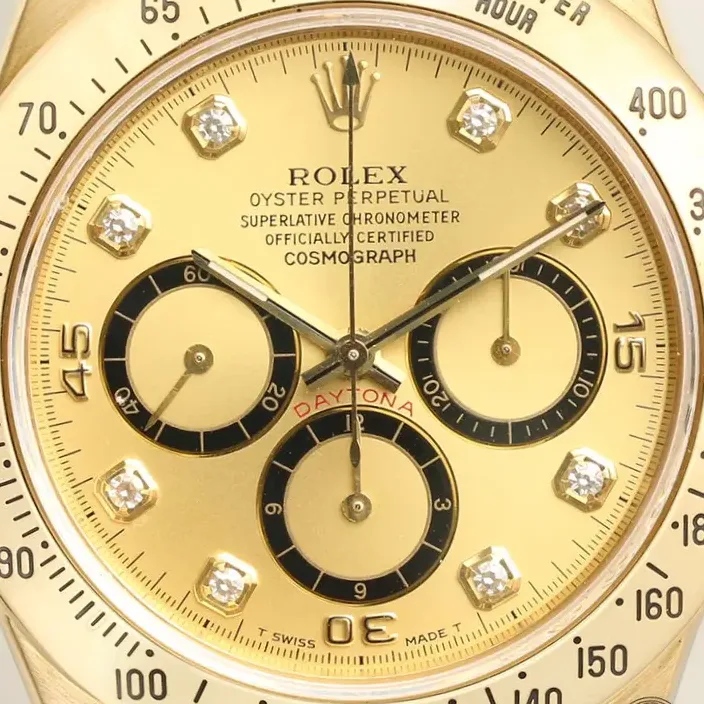
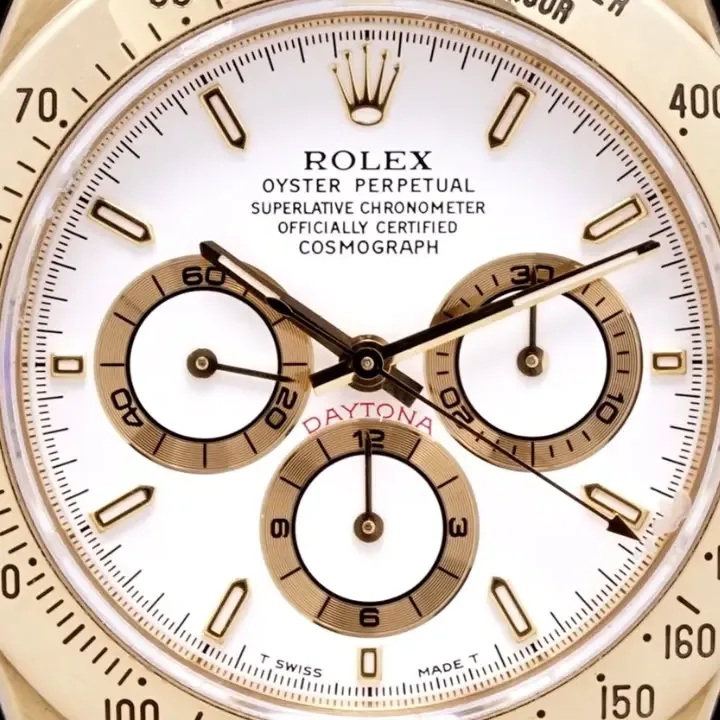
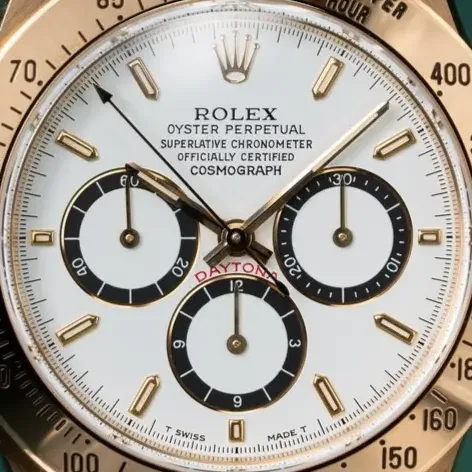
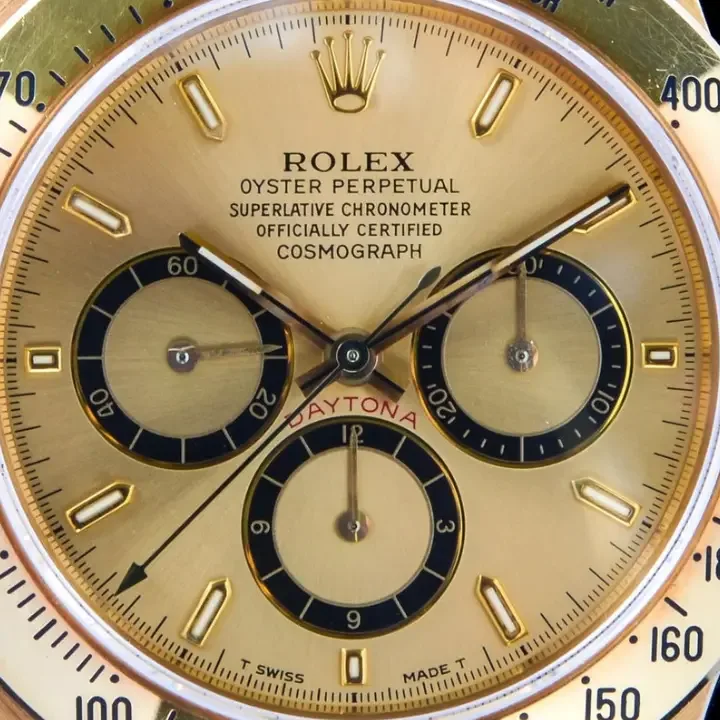
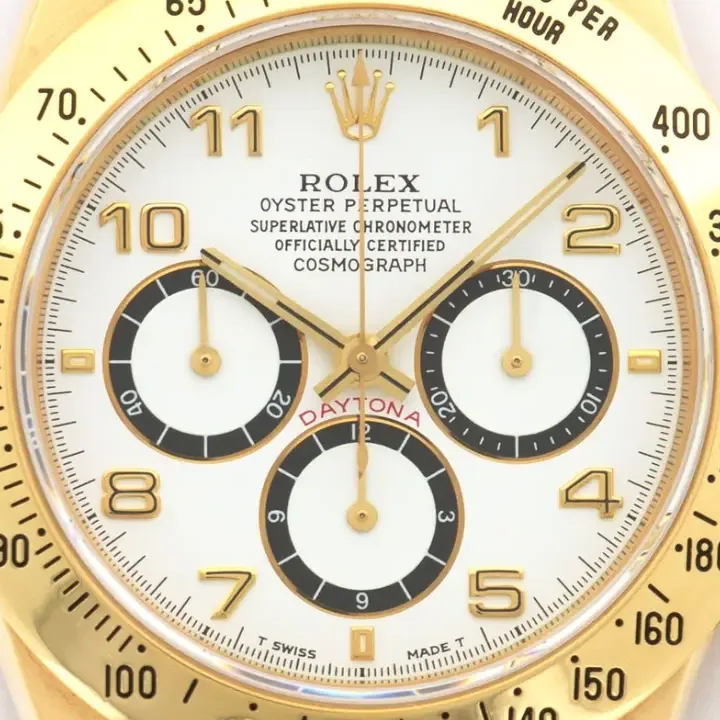
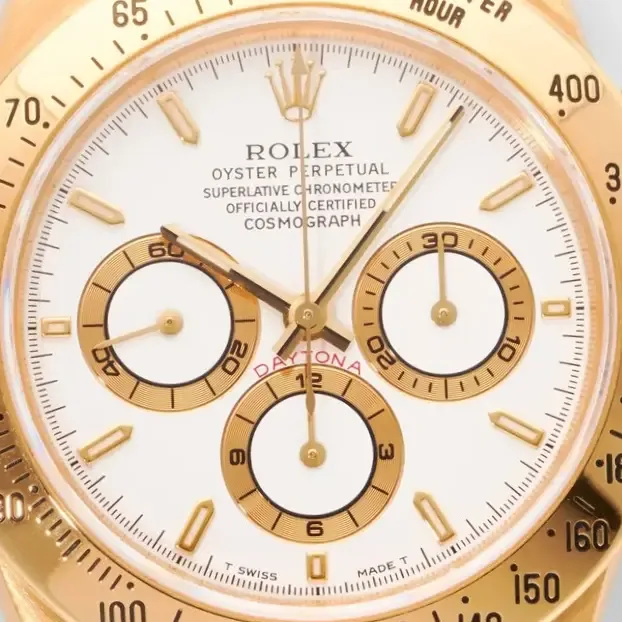
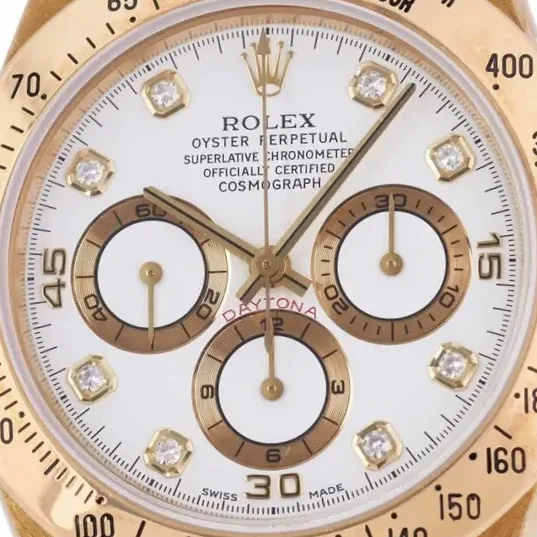
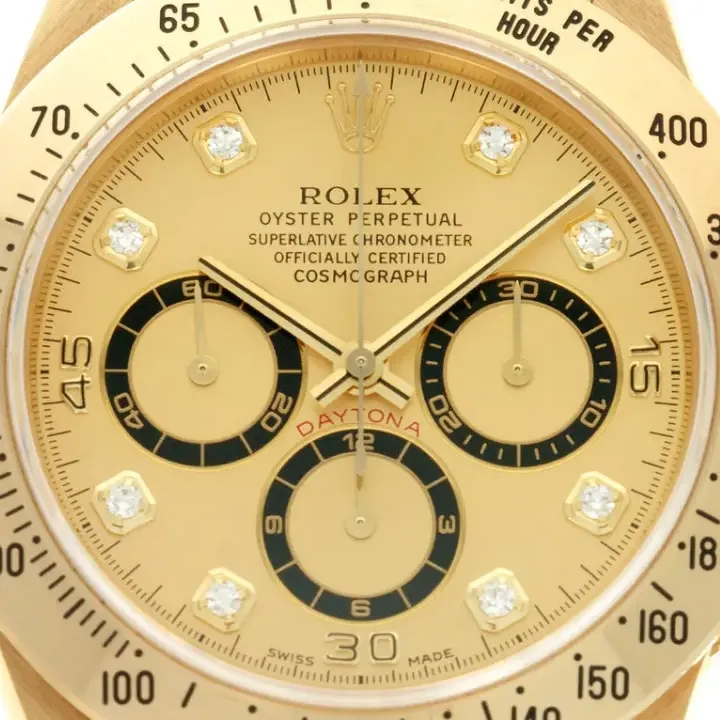
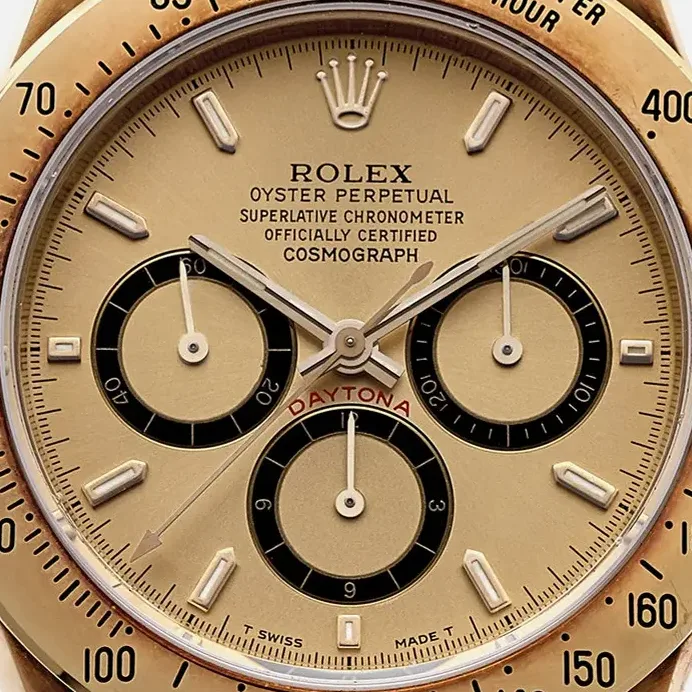
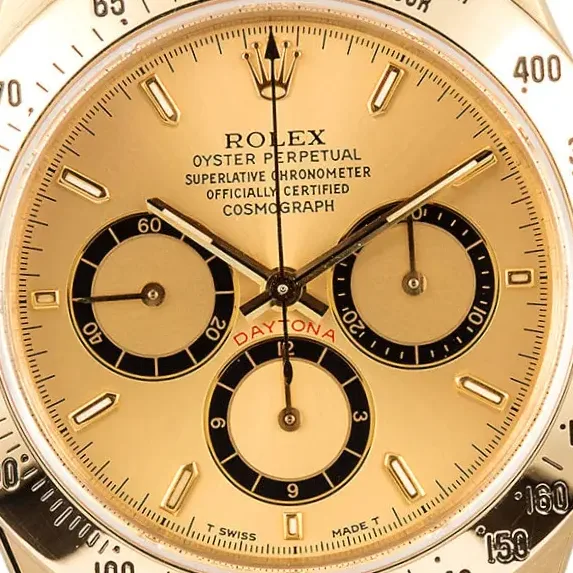
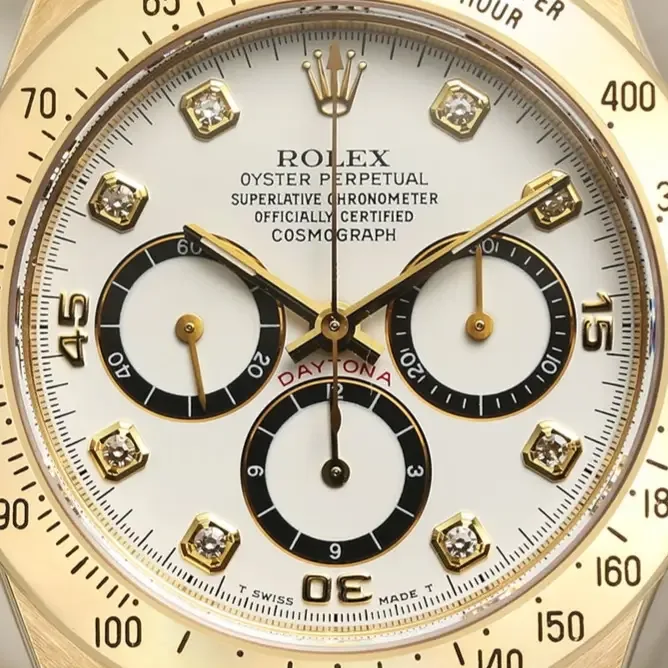
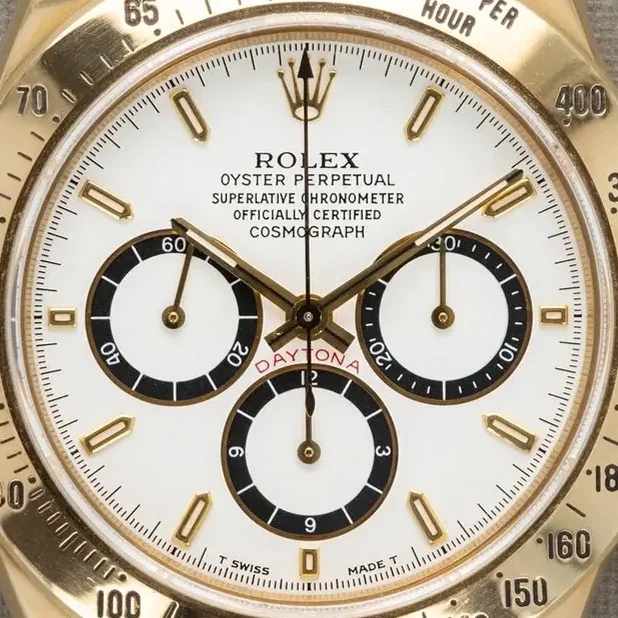
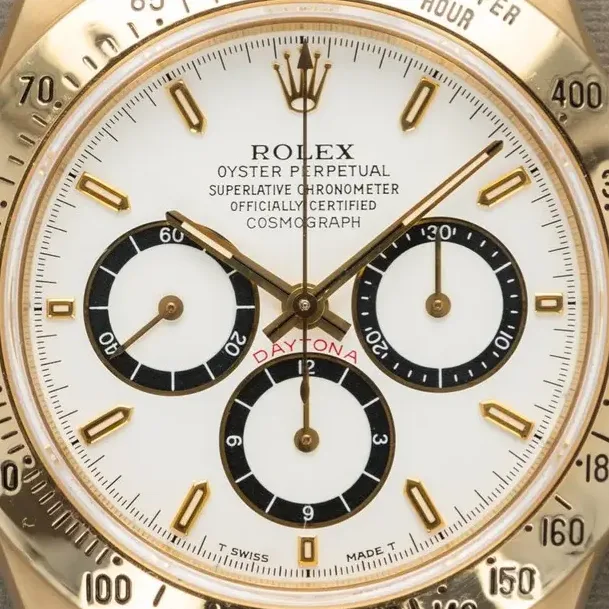
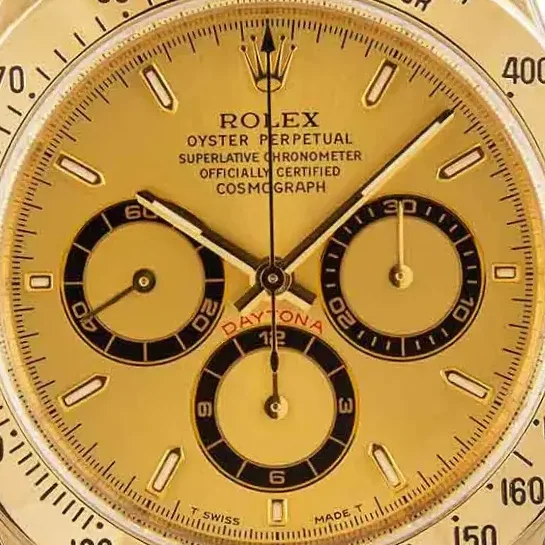
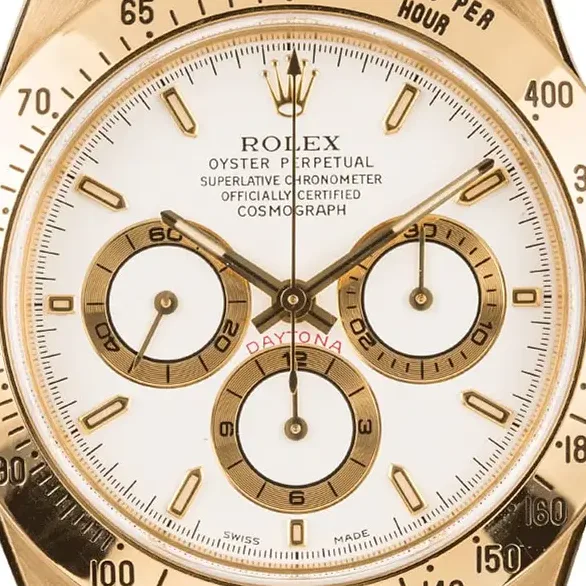
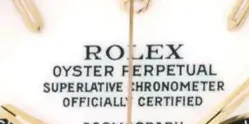
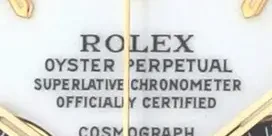
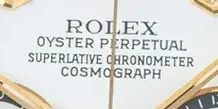
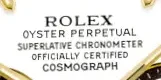
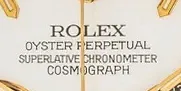
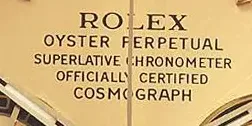
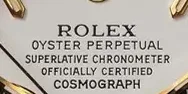
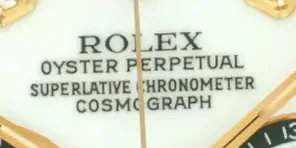
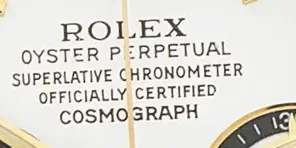
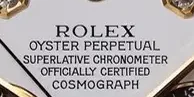
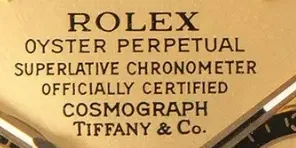
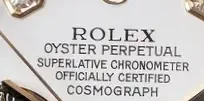
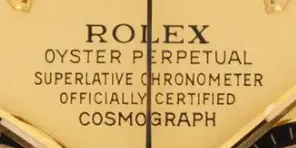
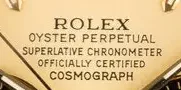
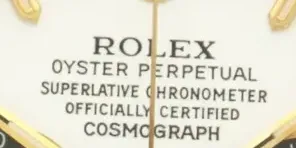
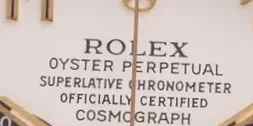
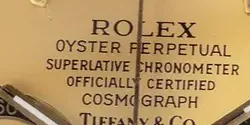
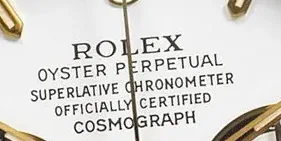
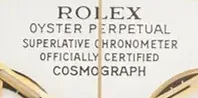
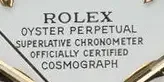
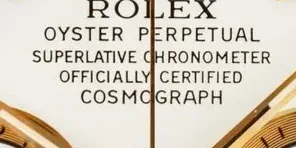
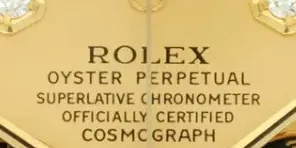
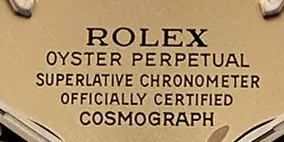
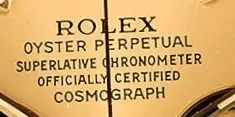
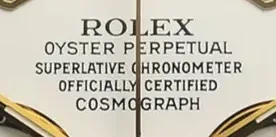
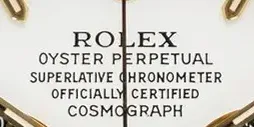
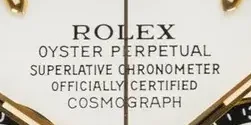
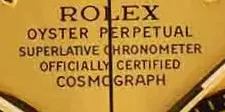
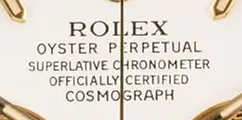
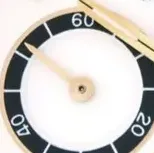
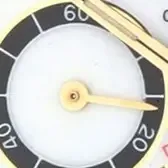
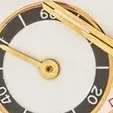
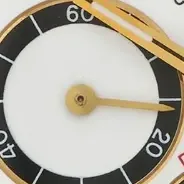
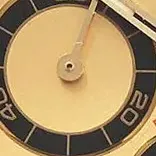
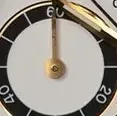
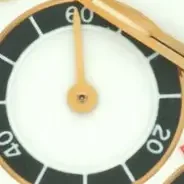
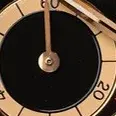
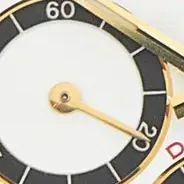
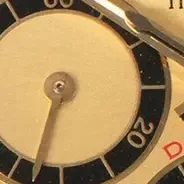
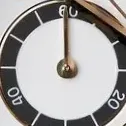
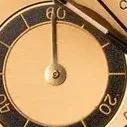
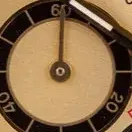
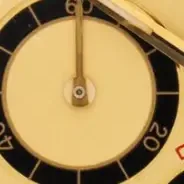
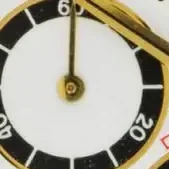
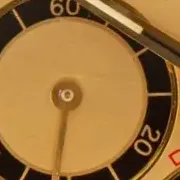
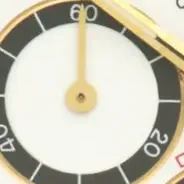
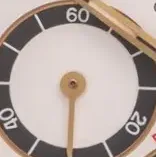
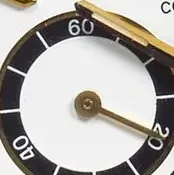
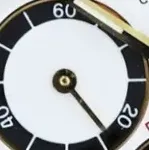
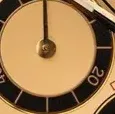
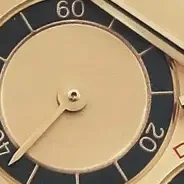
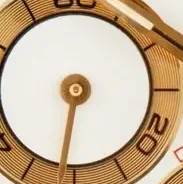
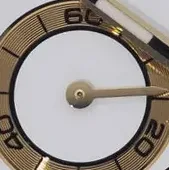
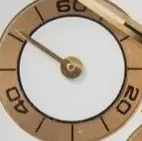
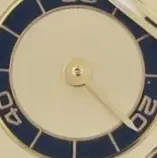
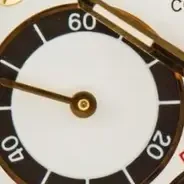
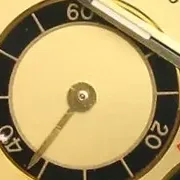
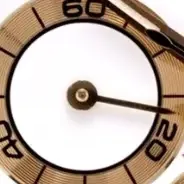
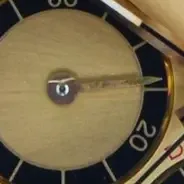
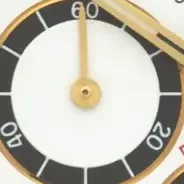
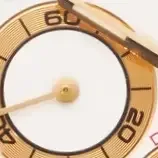
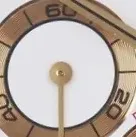
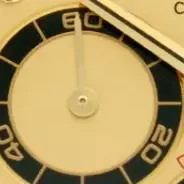
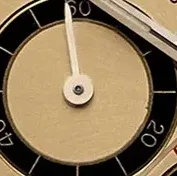
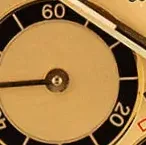
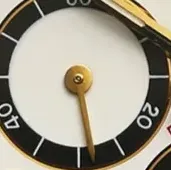
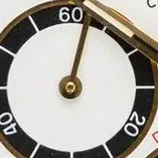
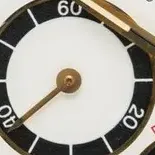
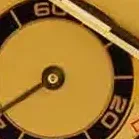
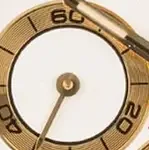
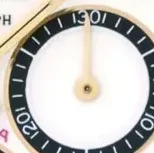
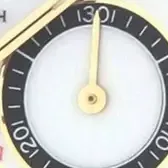
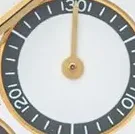
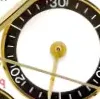
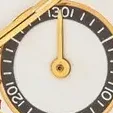
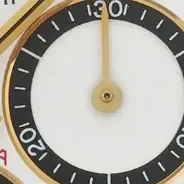
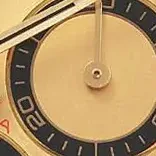
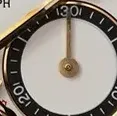
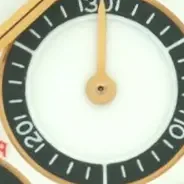
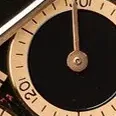
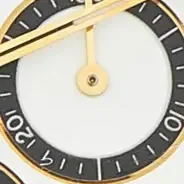
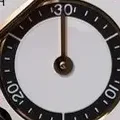
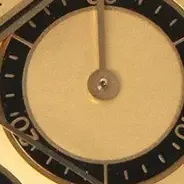
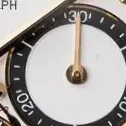
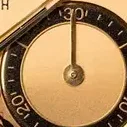
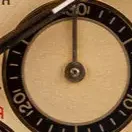
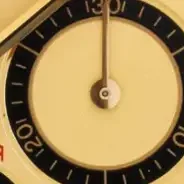
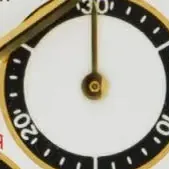
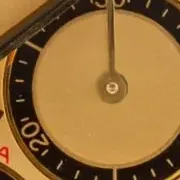
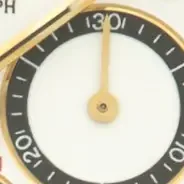
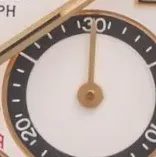
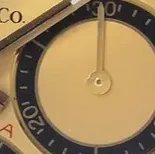
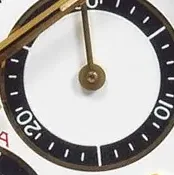
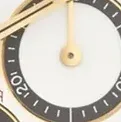
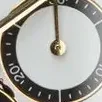
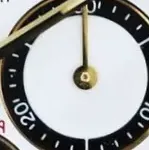
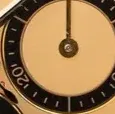
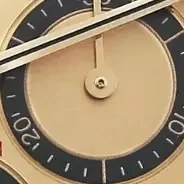
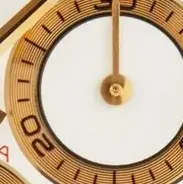
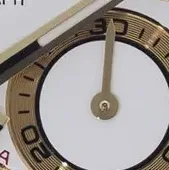
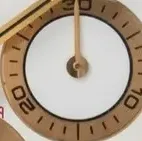
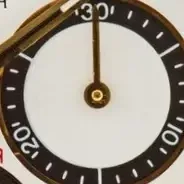
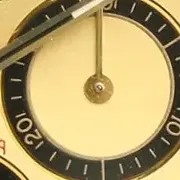
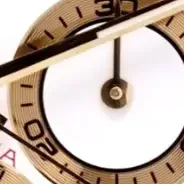
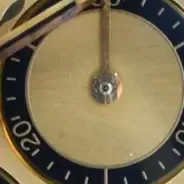
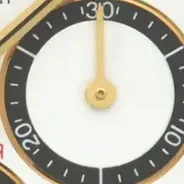
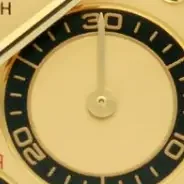
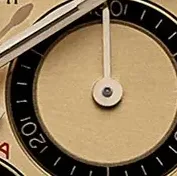
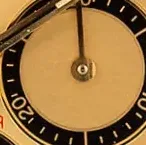
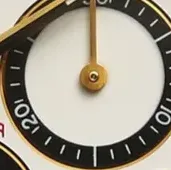
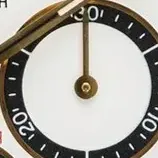
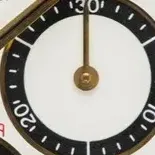
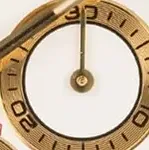
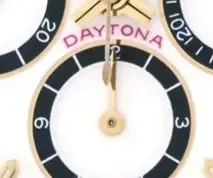
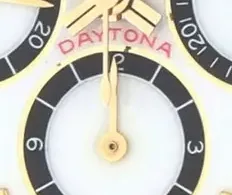
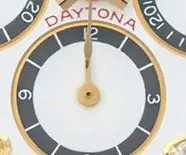
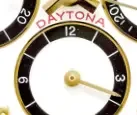
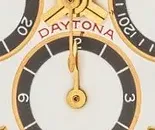
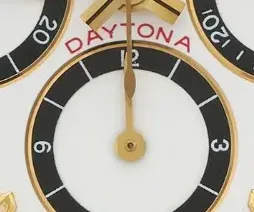
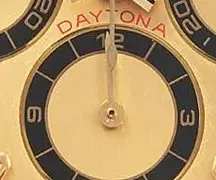
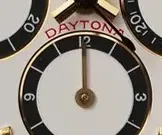
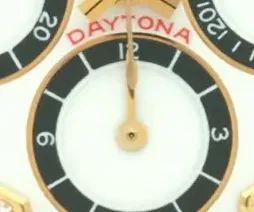
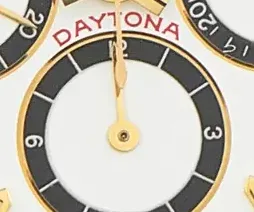
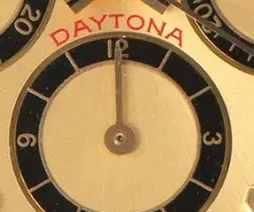
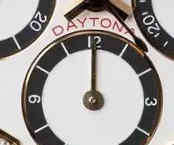
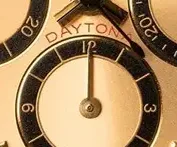
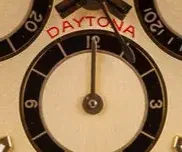
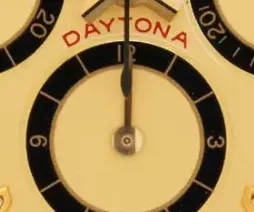
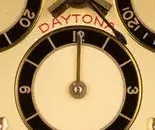
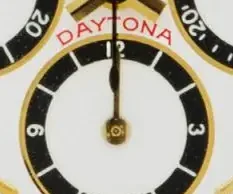
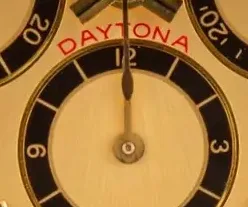
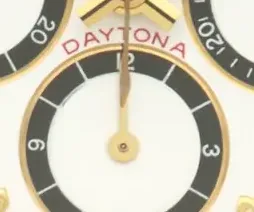
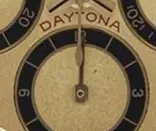
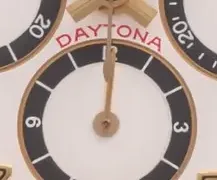
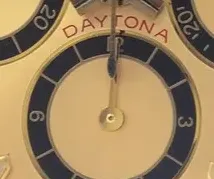
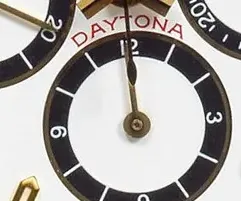
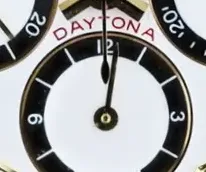
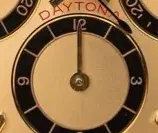
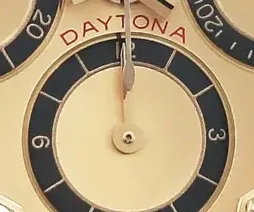
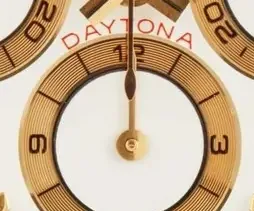
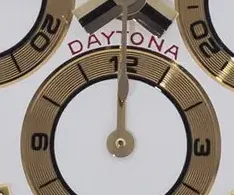
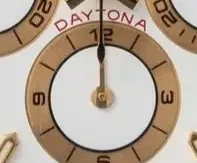
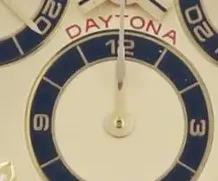
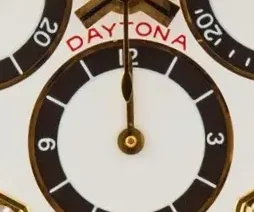
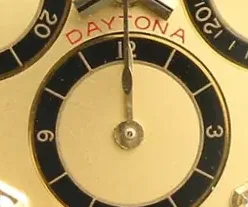
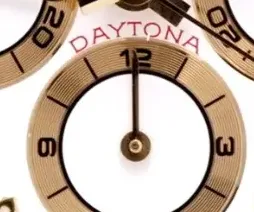
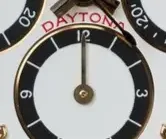
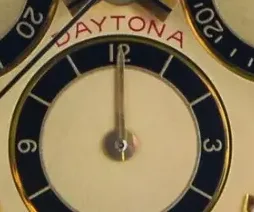
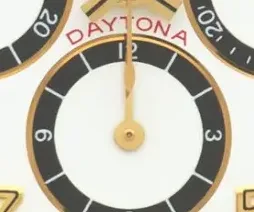
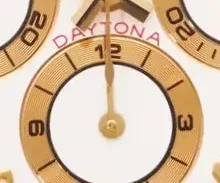
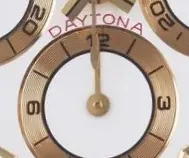
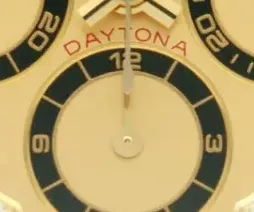
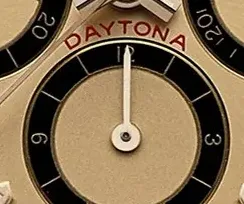
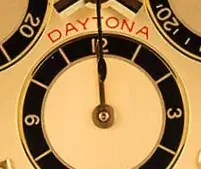
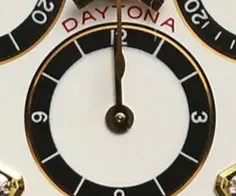
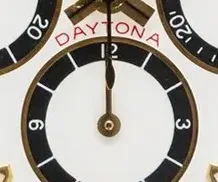
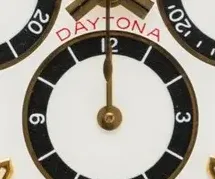
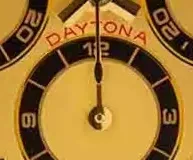
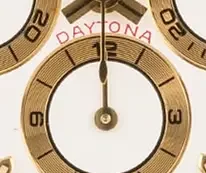
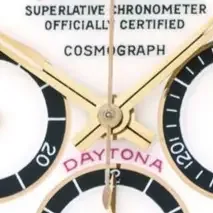
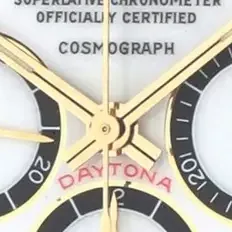
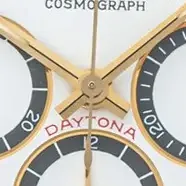
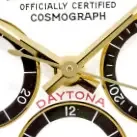
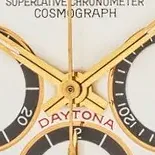
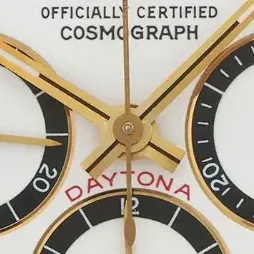
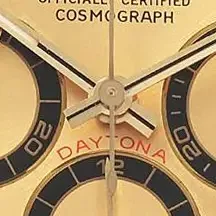
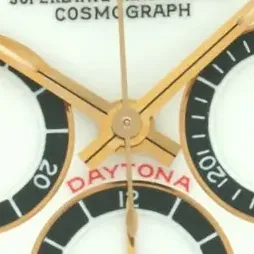
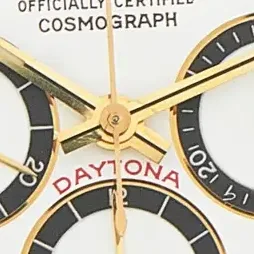
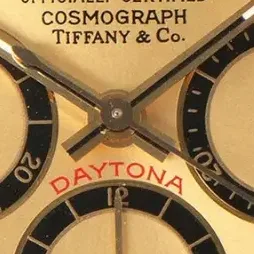
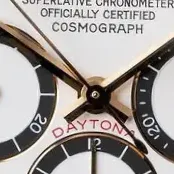
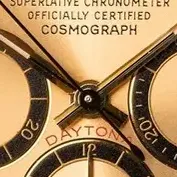
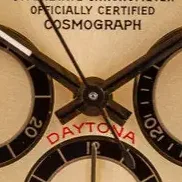
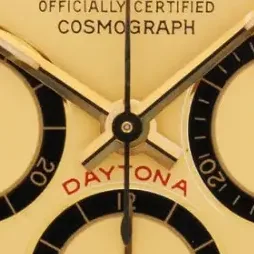
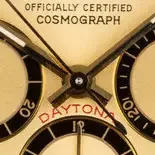
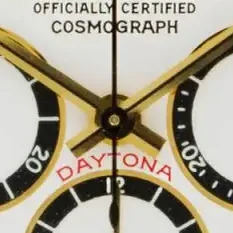
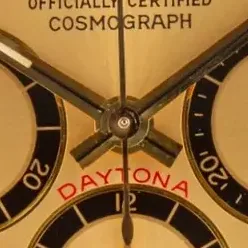
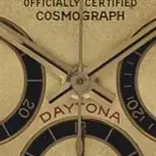
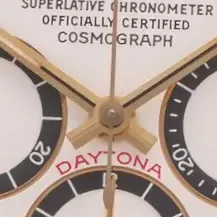
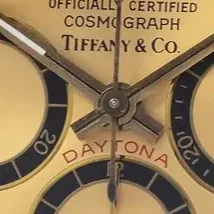
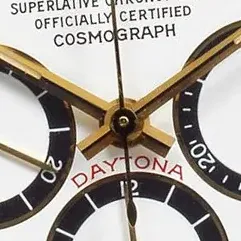
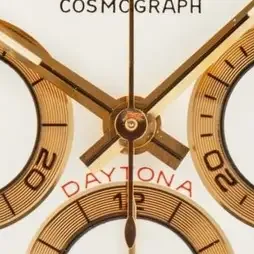
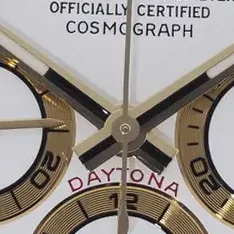
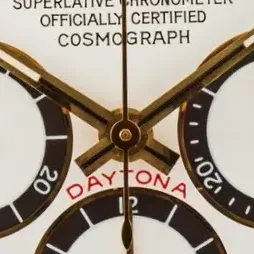
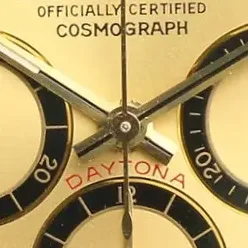
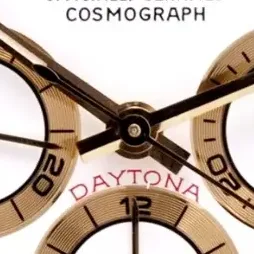
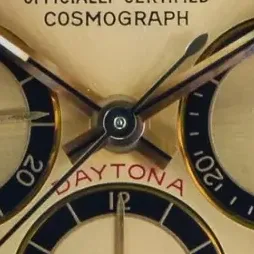
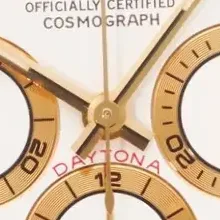
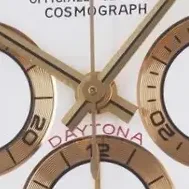
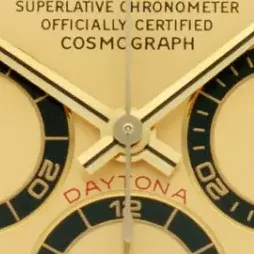
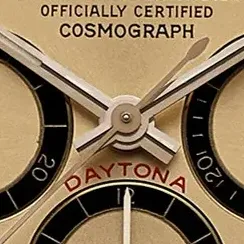
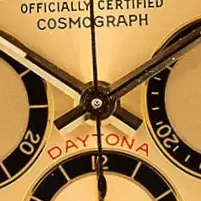
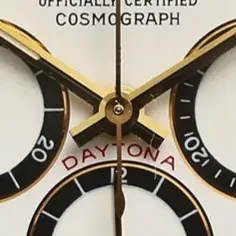
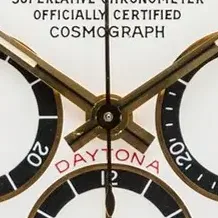
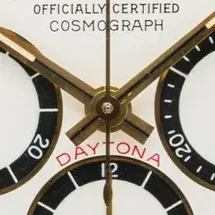
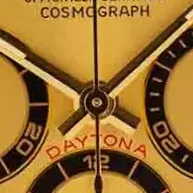
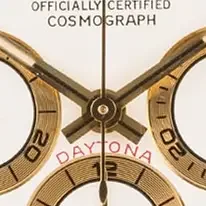
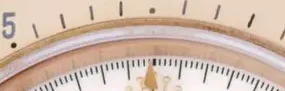
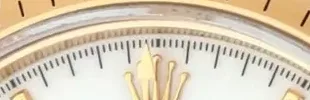
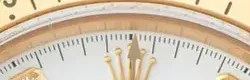
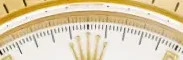
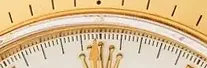
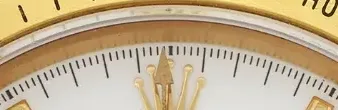
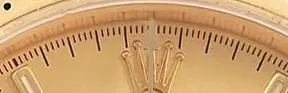
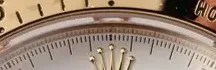
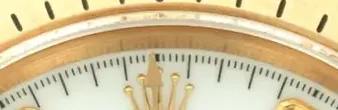
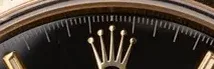
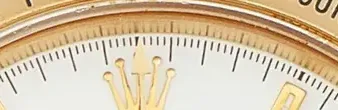
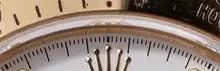
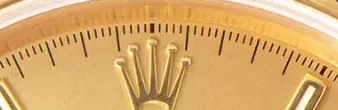
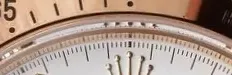
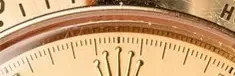
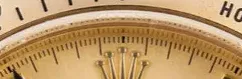
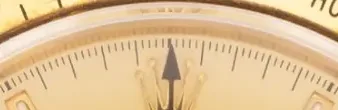
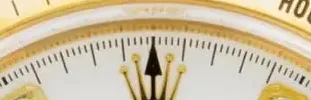
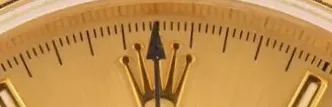
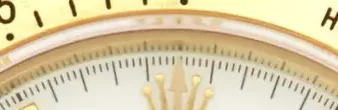
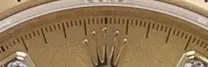
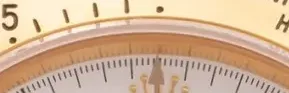
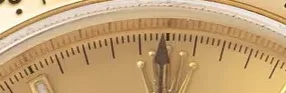
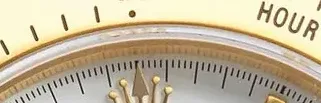
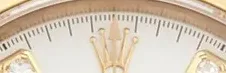
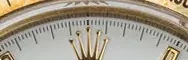
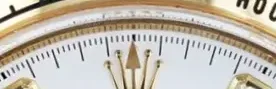
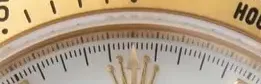
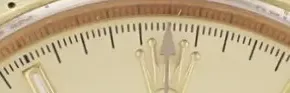
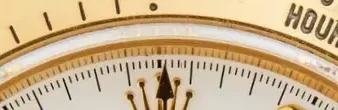
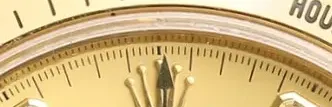
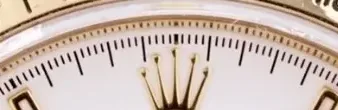
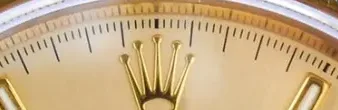
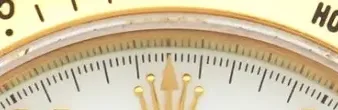
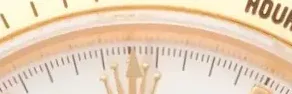
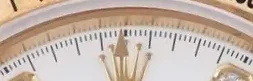
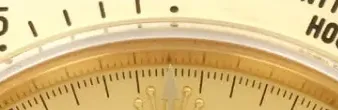
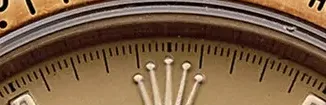
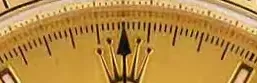
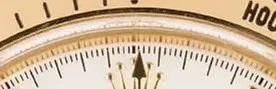
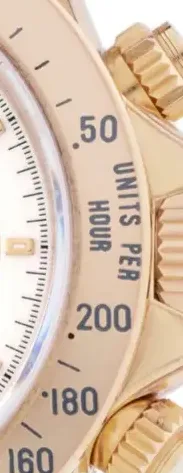
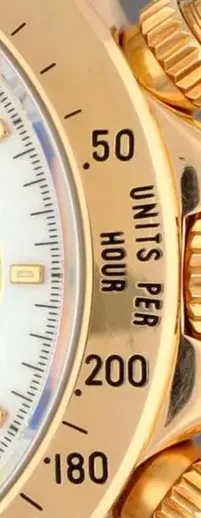
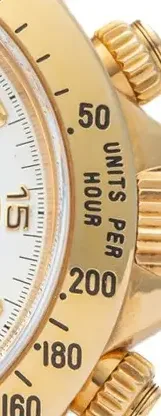
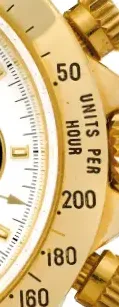
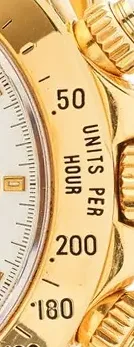
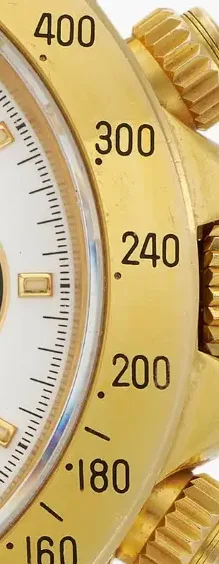
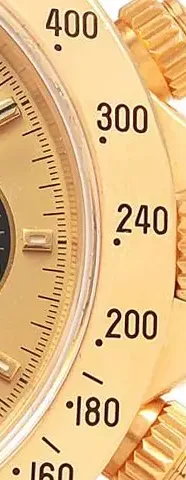
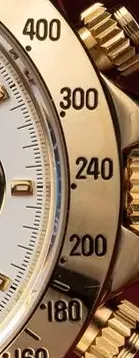
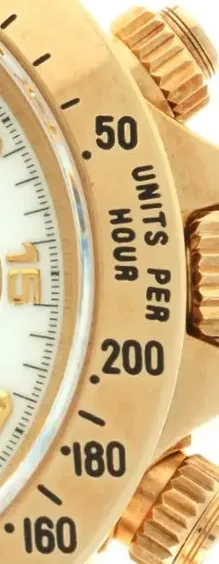
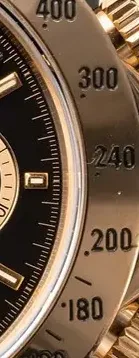
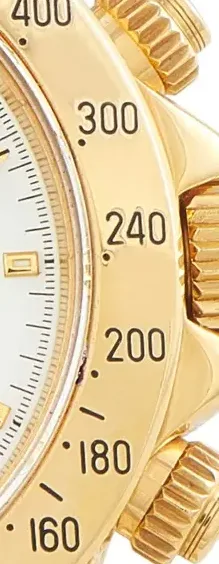
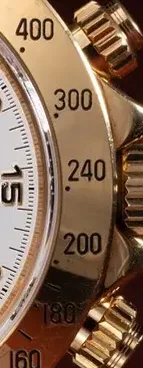
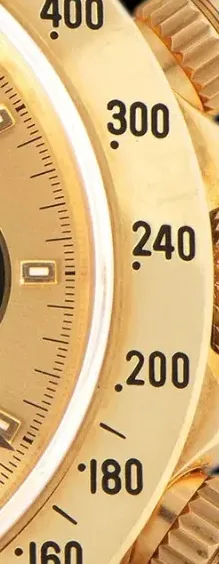
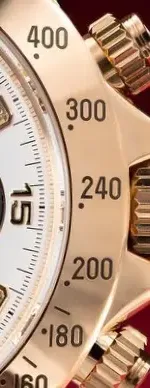
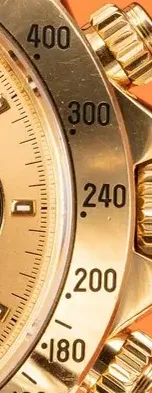
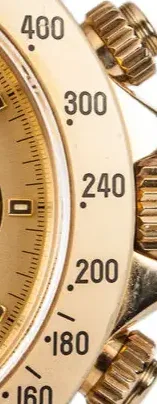
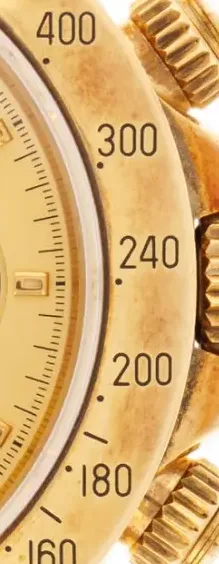
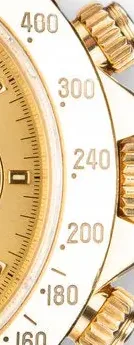
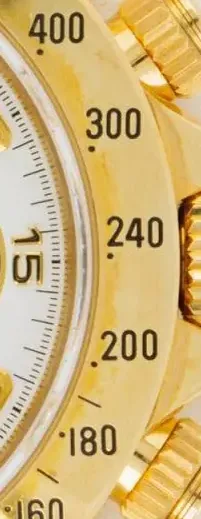
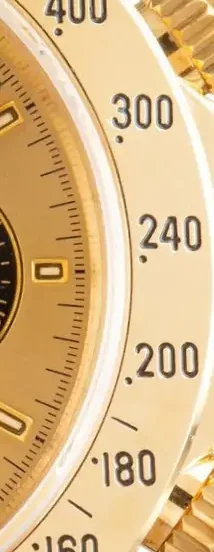
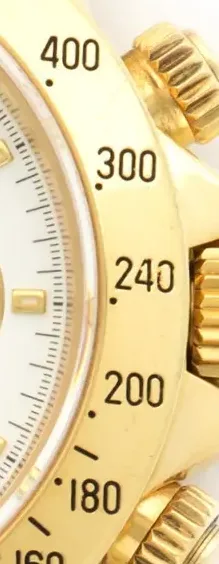
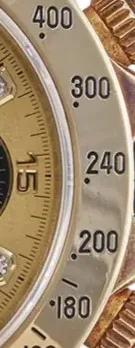
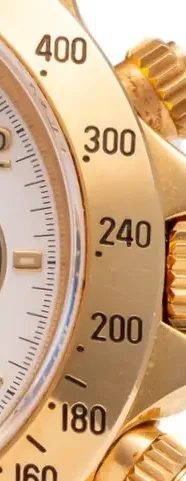
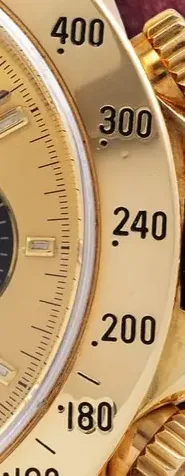
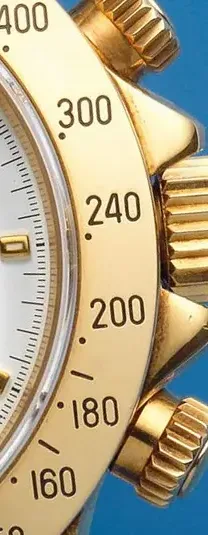
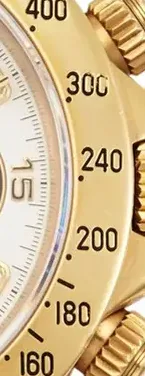
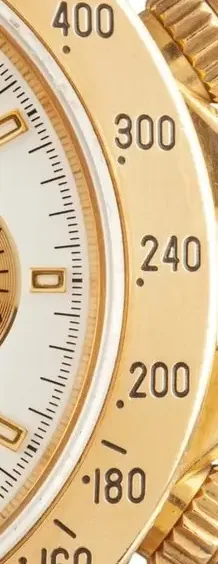
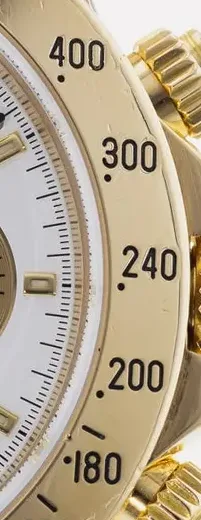
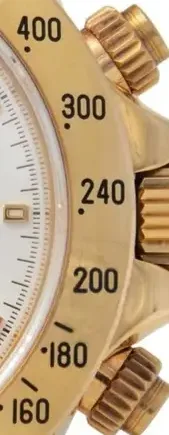
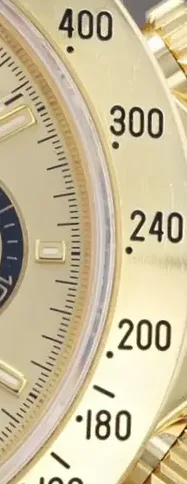
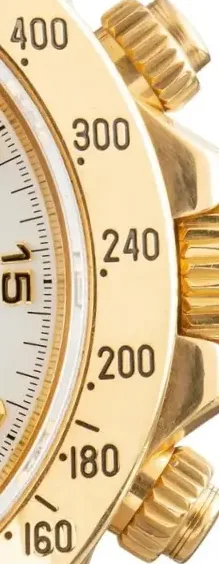
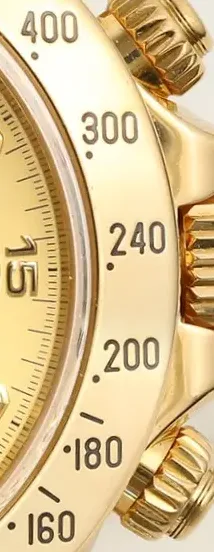
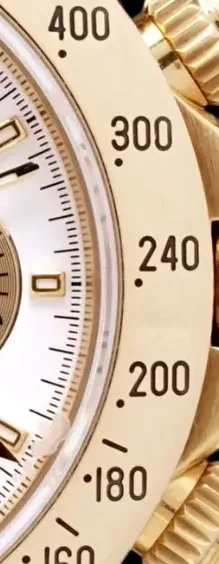
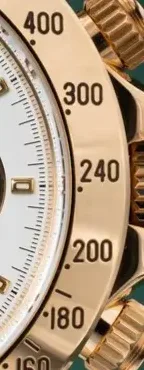
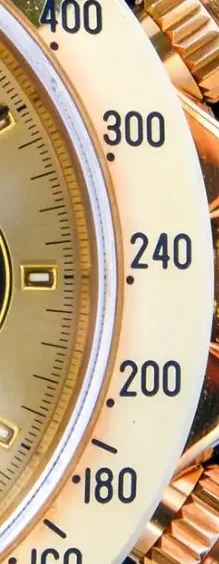
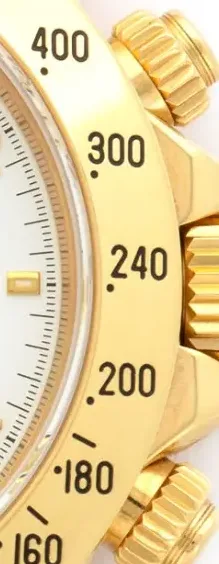
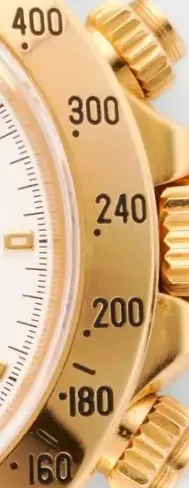
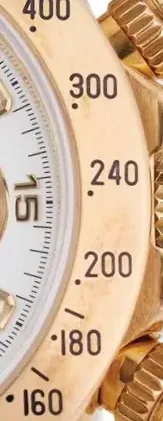
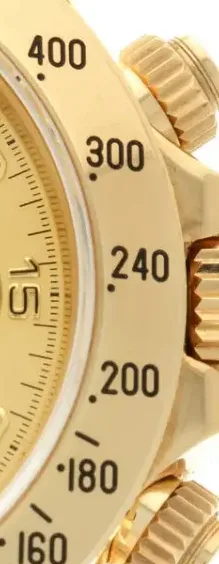
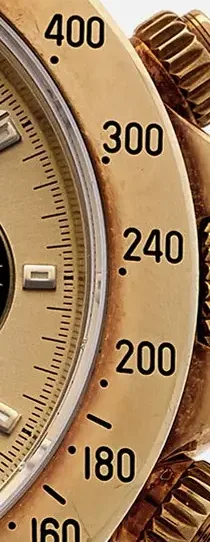
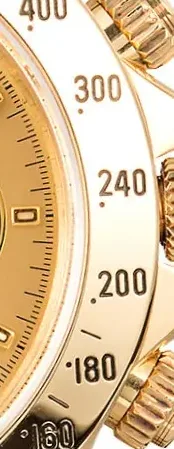
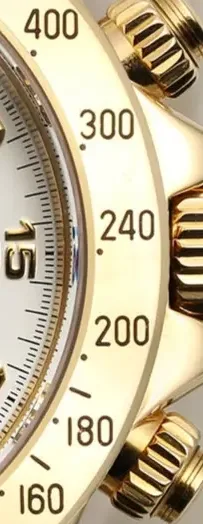
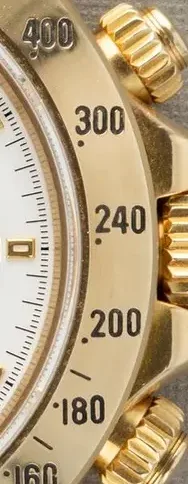
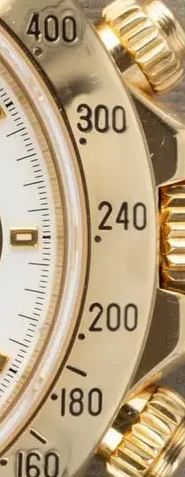
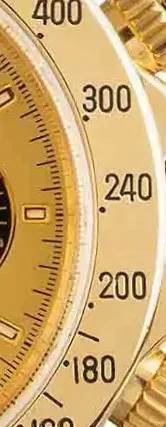
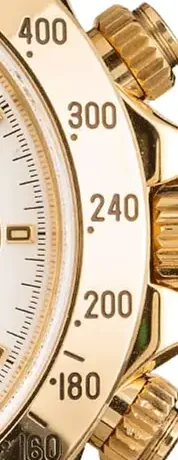
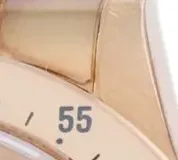
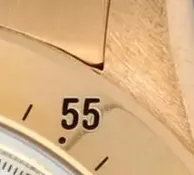
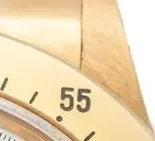
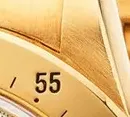
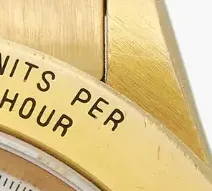
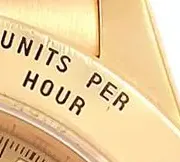
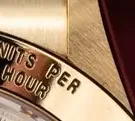
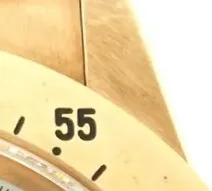
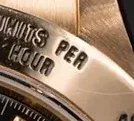
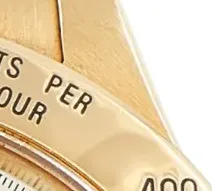
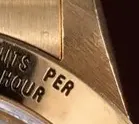
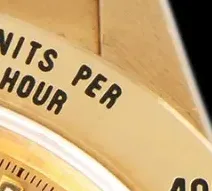
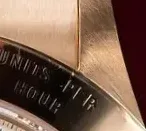
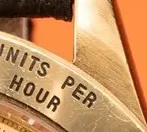
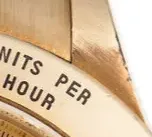
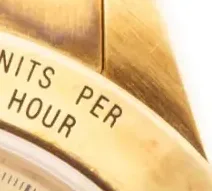
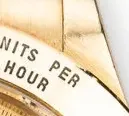
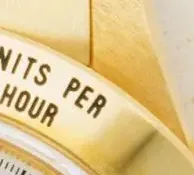
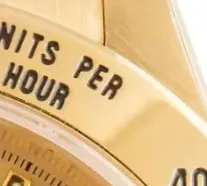
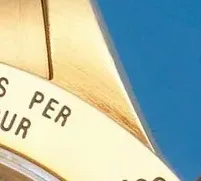
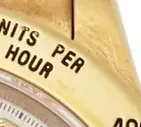
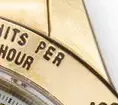
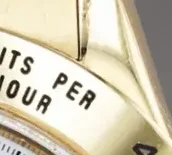
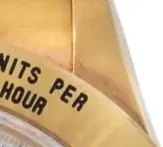
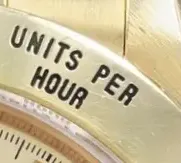
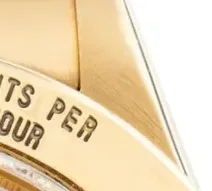
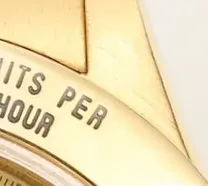
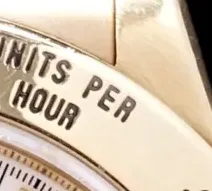
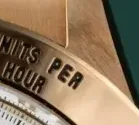
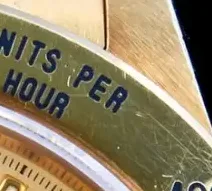
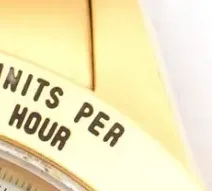
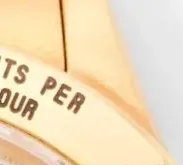
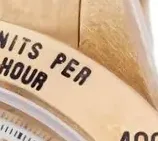
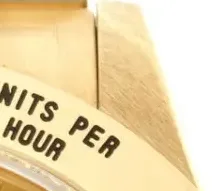
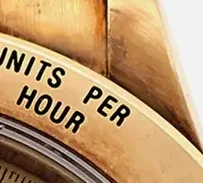
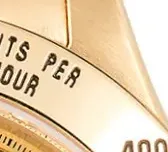
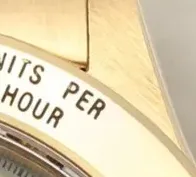
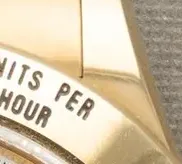
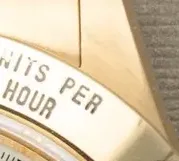
50 watches, oldest first, each straightened and cut the same way so that one row shows one component across them all. Chosen from 1,418 photographs on file for sharpness and for a face typical of the reference. A year marked c. is one its holder gives only roughly. Each picture is a detail cut from a listing photograph. Select the small mark in its corner for its year, its holder, a link to the listing it came from, and a way to report it.












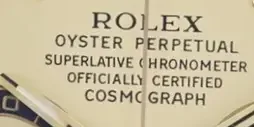
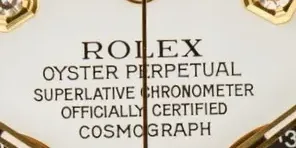
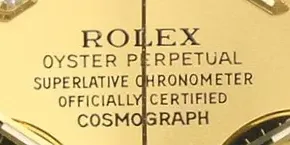

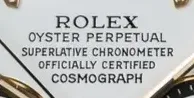







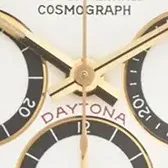
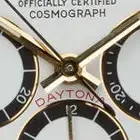
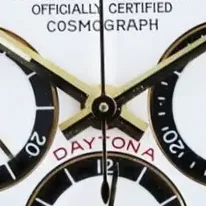
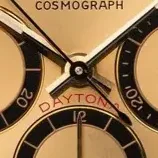





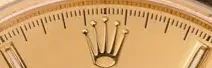
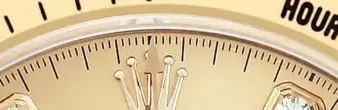
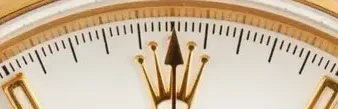
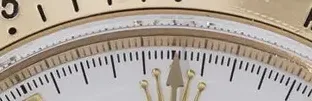
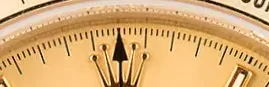
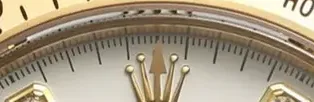
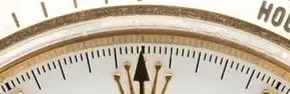
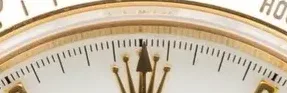

Chronology
Launch in 1988 and replacement in 2000 are stated throughout; watches dated by case number in the library's records run mostly from 1988 to 1999.
Every dated variant: what is written, and what the records show
For the reference the marks are every dated watch; for a variant, the watches a seller names as that variant, so a variant sellers do not name has none.
The reference's own marks are dated by case number. A variant's marks use the year each seller states, so a variant can show watches in a year where the row for the reference shows fewer, or none.
Specification
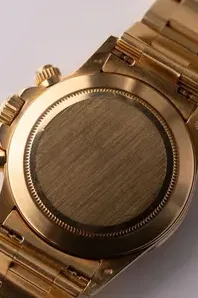
| Case | 40 mm 18 ct yellow gold Oyster case, about 13 mm thick, with crown guards and a solid screw-down back |
| Crystal | Flat sapphire |
| Bezel | Fixed yellow gold bezel with engraved tachymeter scale |
| Dial | Black, white or champagne; applied gold markers, gold-toned register rings; diamond-set versions were a standard retailer option |
| Movement | Rolex calibre 4030, self-winding chronograph derived from the Zenith El Primero, 28,800 vibrations an hour, roughly 50 to 54 hours of power reserve |
| Registers | Running seconds at 9, with a 30-minute counter at 3 and a 12-hour counter at 6 |
| Crown and pushers | Triplock screw-down crown; screw-down chronograph pushers |
| Bracelet | Solid 18 ct yellow gold Oyster bracelet with folding clasp; hollow end links until about 1999, solid end links after |
| Water resistance | 100 metres |
Dial 10 described
Gold watches follow the steel dial sequence but come in black, white and champagne with gold register rings, and in diamond, gem and hard-stone versions. Early dials are tied to bezel type and serial, so a mismatch between them is one thing to check first.
Mark 1, Floating Cosmograph
case numbers R, into L
Cosmograph sits low, as a bridge between the registers, apart from the four lines above, leaving a gap beneath OFFICIALLY CERTIFIED. It was made for around a year. The six in the lower register is printed inverted, and the minute counter has four dashes. Leftover floating dials turn up on L-serial watches fitted with the newer bezel, which is correct for the watch. Dated watches that sellers describe this way fall mostly between 1988 and 1989; those are the years of the watches so described, which is not a stated span of production.
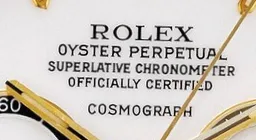
- long serifs on the text
- inverted six
- 4 dashes in minute counter
36 listings on record under the name.
Porcelain dial
case numbers R
A rarer white version of the floating dial. It is lacquer under a polished layer with no porcelain in it, which makes the text seem to float above the surface, and the serifs on the five lines are further stressed. Only white dials of this period are called porcelain. It belongs with the 200 bezel.
- warm milky white
- lettering with depth
- 200 bezel
Four-line dial
case numbers R and L
Only four lines of text, OFFICIALLY CERTIFIED being left out, which makes the dial more open. Most accounts have Cosmograph joined to the rest of the text on this dial; one describes it as floating. It is mostly white and was paired with the 50 to 200 bezel. It is not known on watches made from 1990. It was dropped for reasons that are not given, though the amount of printing may have been a burden to the dial maker. Advertisements still showed it in 1990.
- four lines of text
- no OFFICIALLY CERTIFIED line
- 200 bezel
Mark 3
The full text returns with OFFICIALLY CERTIFIED restored, and Cosmograph sits in the main block. The inverted six and four-dash minute counter stay.
- OFFICIALLY CERTIFIED present
- inverted six
- four dashes
Mark 4
The six is upright, register lettering is wider and bold, the minute counter has three dashes, and the serifs on the main five lines are gone. Some sellers still apply the inverted six to watches of this period, so a Mark 3 dial dated by the seller may not match.
- upright six
- bold register numerals
- three-dash counter
- sans-serif main text
Mark 5
case numbers U to P
A late dial, with a dial change in the middle of 1998. It keeps the sans-serif text and bold registers. Some surplus Mark 4 dials still signed T SWISS T were fitted with Luminova. P-serial Zenith Daytonas are few; roughly two or three hundred are believed made.
- SWISS at six o'clock
- bold registers
Colours and register finish
Dials are white with black registers, later with champagne registers; black with champagne registers; or champagne throughout, the champagne dials being a gold-on-gold look. Dials with a retailer's name exist, including Tiffany & Co.
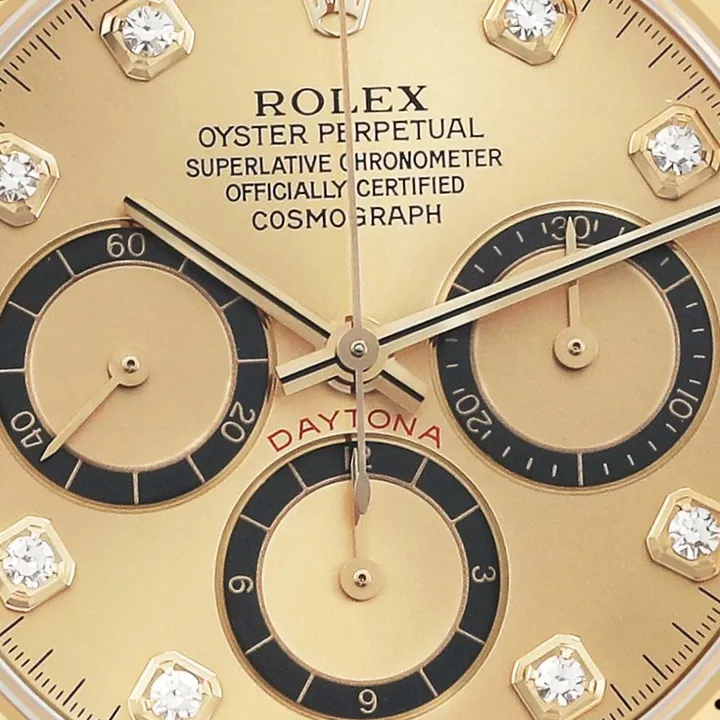
- champagne registers on white
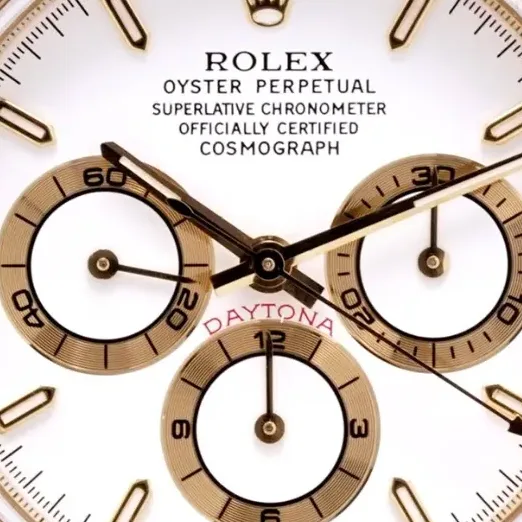
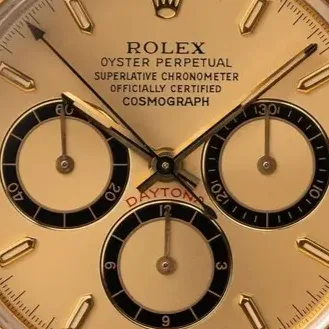
Diamond-set markers
Both gold and two-tone Daytonas could be had from retailers with diamond-set hour markers as a standard option.
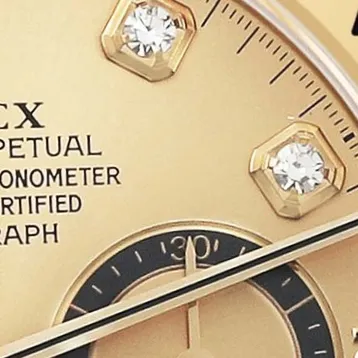
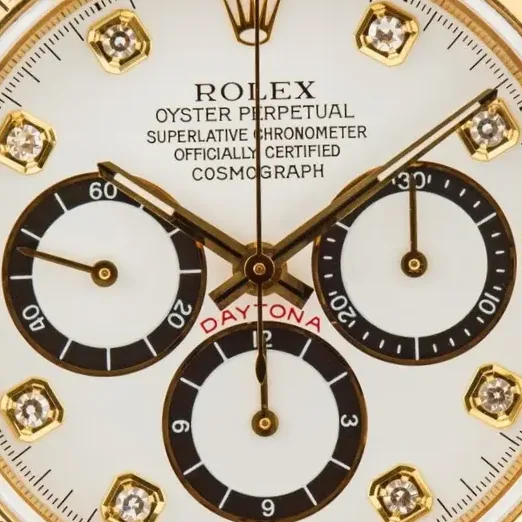
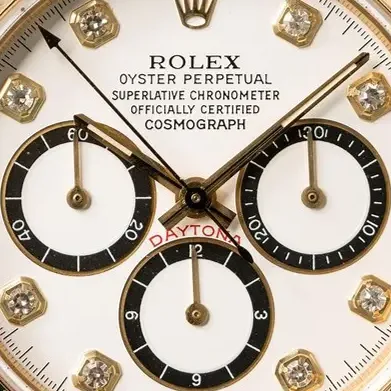
EMRO full pave
A fully paved yellow gold dial with emerald markers (code EMRO), applied Arabic numerals at 15, 30 and 45, a small ROLEX plaque below the gold coronet, and sunken registers with concentric circles.
- emerald hour markers
- pave dial
- Arabic 15 30 45
Hard-stone and coloured dials
A yellow gold 16528 with a lapis lazuli dial and diamond markers, catalogued as dating from 1996, was offered as a possible test dial. Red dials in yellow gold and the blue 'Chairman' dial are recorded as great rarities.
- lapis lazuli dial
- red dial
- blue Chairman dial
Luminous material 2 described
Tritium early, Luminova later.
Tritium
Dials carry T SWISS T at six o'clock, the marking required for tritium. Tritium use was outlawed in 1998.
- T SWISS T
Luminova
case numbers U to P
Dials signed only SWISS were made for Luminova and are original to 1998 to 1999; their lume glows light green. Dials reading SWISS MADE point to a later Super-LumiNova replacement, and a blue glow to Chromalight from 2008. Hands and hour markers of tritium watches are often replaced this way.
- SWISS only
- swiss made means replacement
Subregisters 2 described
The layout is fixed. Details of print change with the dial.
Seconds at nine
Running seconds at nine o'clock marks the Zenith watches; later in-house watches put it at six.
- seconds at 9
Inverted six
The six in the lower register is printed upside down until about 1993, when it was turned upright.
- upside-down six
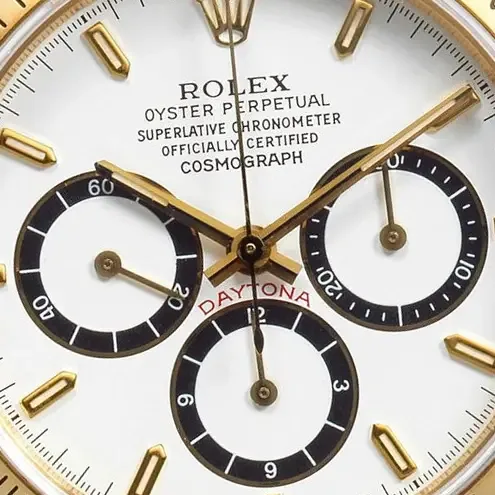
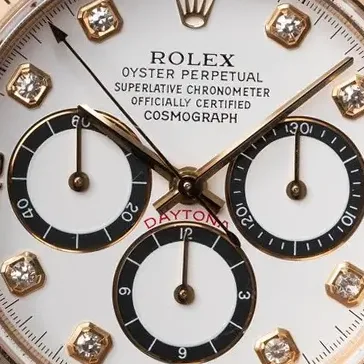
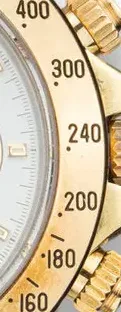
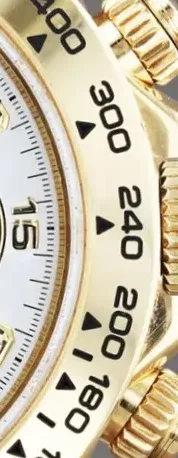
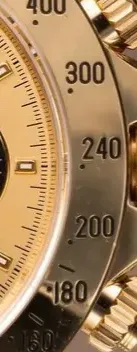
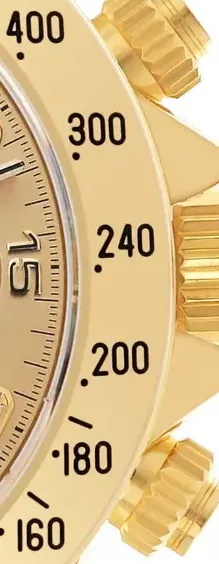
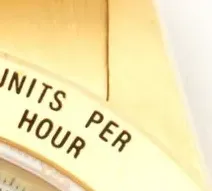
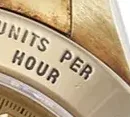
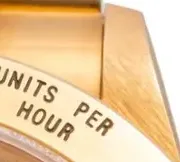
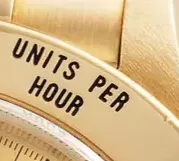
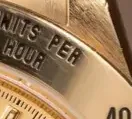
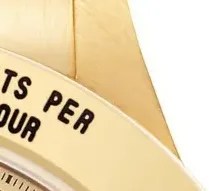
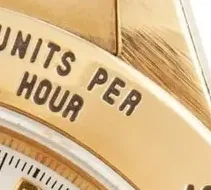
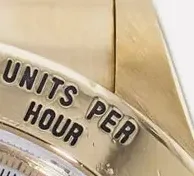
Bezel 4 described
Bezel marks follow the serial, which is why a mismatch with the dial is worth noticing. Rolex changed the graduation and lettering several times.
Mark 1, 200 bezel
case numbers R
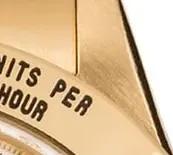
Graduated 50 to 200 with UNITS PER HOUR at three o'clock. It belongs with the floating and four-line dials.
- scale ends at 200
- units text at 3
400 to 60 bezel
case numbers L onward
Graduated 400 to 60 with UNITS PER HOUR at one o'clock. Between roughly L25 and L5 serials it also carries readings at 225 and 250.
- scale to 400
- 225 and 250 readings in the L series
200, 240, 300 bezel
Later bezels omit 225 and 250 and read 200, 240 and 300.
- no 225 or 250 marks
A and P serial gold bezel
case numbers A and P
The precious metal models alone changed again: wider spacing of the word UNITS and an underlining arrow with triangles in black inlay. This is the form of the modern Daytona bezel.
- underlining arrow
- triangles in black
Case 3 described
Solid 18 ct gold in the 40 mm case with crown guards. Condition of the gold matters more than for steel.
Gold case
Brushed lug tops with polished flanks and bezel. Gold polishes easily, and over-polished watches have rounded lugs and weak hallmarks. The case is rated to 100 m, a rating that came with the sapphire crystal.
- sharp hallmarks
- full lug thickness
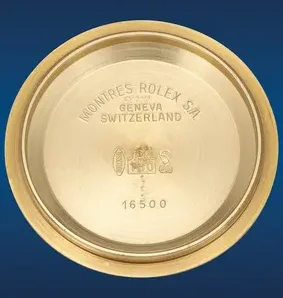
Inside caseback stamped 16500
Some early watches, sellers say, have 16500 stamped inside the caseback instead of 16528.
- 16500 inside the back
Engraved caseback
case numbers R
One R-serial watch of about 1989, floating dial and 200 bezel, is engraved on the back 'A Angelo da Ayrton 1978'; the date refers to when the recipient first met the driver, not when the watch was made.
- engraving on the case back
Crown and pushers 1 described
Screw-down crown and pushers.
Triplock and screw-down pushers
Triplock winding crown between guards, with screw-down chronograph pushers that must be unscrewed before use.
Crystal 1 described
Flat sapphire in place of acrylic.
Flat sapphire
Sapphire replaced the acrylic crystal of the earlier hand-wound Daytonas and doubled the depth rating to 100 m.
Movement 1 described
Calibre 4030 throughout.
Calibre 4030
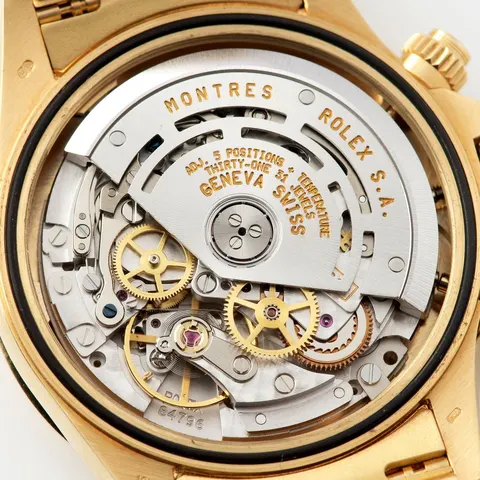
A 31-jewel chronograph adapted from the El Primero 3019 PHC, which had run at 36,000 vibrations an hour. Rolex removed the date, fitted a Breguet overcoil and a large free-sprung balance on its Microstella system and lowered the beat to 28,800. Power reserve is given as about 50 to 54 hours. Service costs more than for a time-only Rolex.
Bracelet 3 described
Gold Oyster bracelet. The earliest clasps lack a flip-lock, and solid end links replace hollow ones late in the run.
Early clasp
Many of the earliest watches have a clasp without flip-lock, which sellers describe as blade-style; a flip-lock clasp followed a little later. The early clasp is uncommon today, since many of these bracelets were replaced at service.
- clasp without flip-lock
Hollow end links
Hollow end links with stamped clasp blades, replaced by solid end links in 1999. Sellers cite end links coded 103 on watches dated 1988 to 1992.
- hollow end links
- stamped clasp blades
Solid end links
Solid end links were fitted to make the bracelet sturdier for daily wear.
- solid end links
Originality
- Bezels are often changed at service; check that the bezel marks fit the serial and the dial.
- Hands and hour markers on tritium watches are often replaced with Luminova or Super-LumiNova; the signature at six o'clock gives the tell.
- A gold case is easily over-polished; check lug shape and hallmarks.
- Gold bracelets stretch with age and are costly to put right.
- Gold Daytonas on leather straps with fixed short end links are separate references (16518 and 16519), not 16528s.
- Early bracelets with a clasp lacking a flip-lock were often replaced at service, so a very early watch may carry a later bracelet.
Names
- Zenith Daytona. The movement derives from the Zenith El Primero.
- Floating Cosmograph. Cosmograph is printed apart from the other dial text.
- Four-Line Daytona. The dial has four lines of text instead of five.
- Inverted 6. The lower register's six is printed upside down.
- Chairman. A blue-dial Daytona said to have been given to Rolex executives.
Where accounts differ
Points on which the published literature and the library's own records do not agree, or on which the literature contradicts itself.
- End of production. The guides give production to 2000, and one refers to P-serial watches of 2000. Watches dated by case number in the library's records run mostly from 1988 to 1999.
- Four-line dial. Accounts split on the second dial, the one without OFFICIALLY CERTIFIED. One calls this four-line dial of about 1988 to 1989 floating throughout, and has Cosmograph rejoin the main block only on the next dial. Others have Cosmograph moved up to join the rest of the text on it.
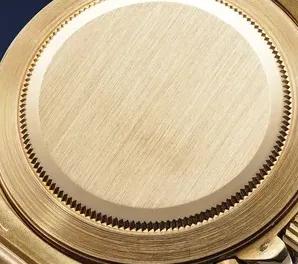
Back and movement
From listings of this reference, each confirmed by eye to show what it is filed under. A picture on which a person's name or a personal engraving can be read is not shown. From most holders a detail from the middle of the photograph is shown; the mark in its corner gives its holder and a link to the listing.
Caseback
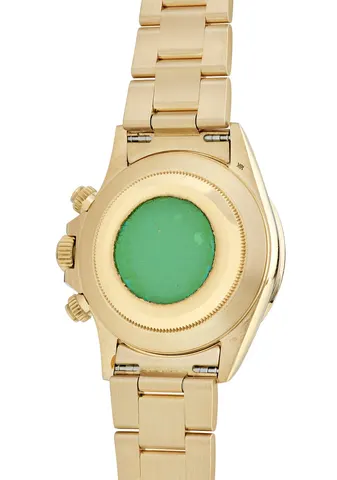
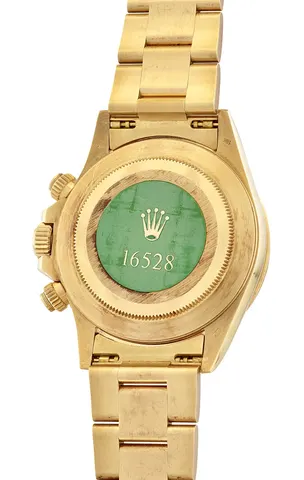
Inside the caseback
Movement
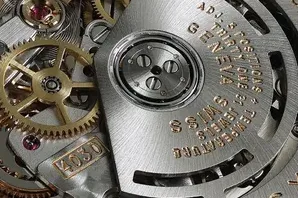
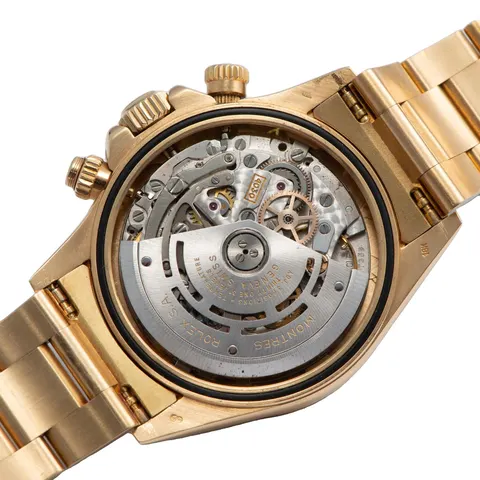


Catalogue versions 1 listed
The full numbers under which holders list this reference, with what their listings say of each. Each has a page of its own.
| Version | Metal | Dial | Years seen | Records |
|---|---|---|---|---|
| 16528G | Yellow gold | Black | 1989–1999 | 4 |
In the records
Counted from 452 listings at 48 holders between 15 November 2010 and 14 November 2026. These are what sellers and auction houses state, not measurements.
Fainter bars are the 7 outside the main run of 1988–1999 (the middle nine-tenths): the latest is 2000. They are early and late examples, and now and then a number misread.
At the holders that record papers on every watch, 26% of their 31 listings of this reference come with papers; at those that record the box on every watch, 72% of 40 come with a box. "Papers" is whatever the holder counts as papers, and can include service papers.
Case metal
| Gold, any colour | 251 | |
| Yellow | 191 | |
| Colour not stated | 60 |
A listing that says "gold" or "18K gold" names no colour: it is counted under "colour not stated", not as yellow gold.
Dial colour
| Black | 112 | |
| White | 65 | |
| Champagne | 49 | |
| Blue | 5 | |
| Gold | 4 | |
| Mother of pearl | 3 | |
| Green | 2 | |
| Mother-of-pearl | 2 |
Case size
| 40 mm | 171 | |
| 39 mm | 36 | |
| 38 mm | 9 |
Calibre named
| 4030 | 119 | |
| 400 | 4 |
Bracelet or strap
| Oyster bracelet | 261 | |
| Metal bracelet, kind not stated | 54 | |
| Leather strap | 1 |
Each table counts the listings that state the thing, in the seller's own terms. A size, metal, colour or calibre that cannot belong to this reference is a seller's slip or a listing filed under the wrong number.