Cosmograph Daytona (screw-down pushers, black acrylic bezel)
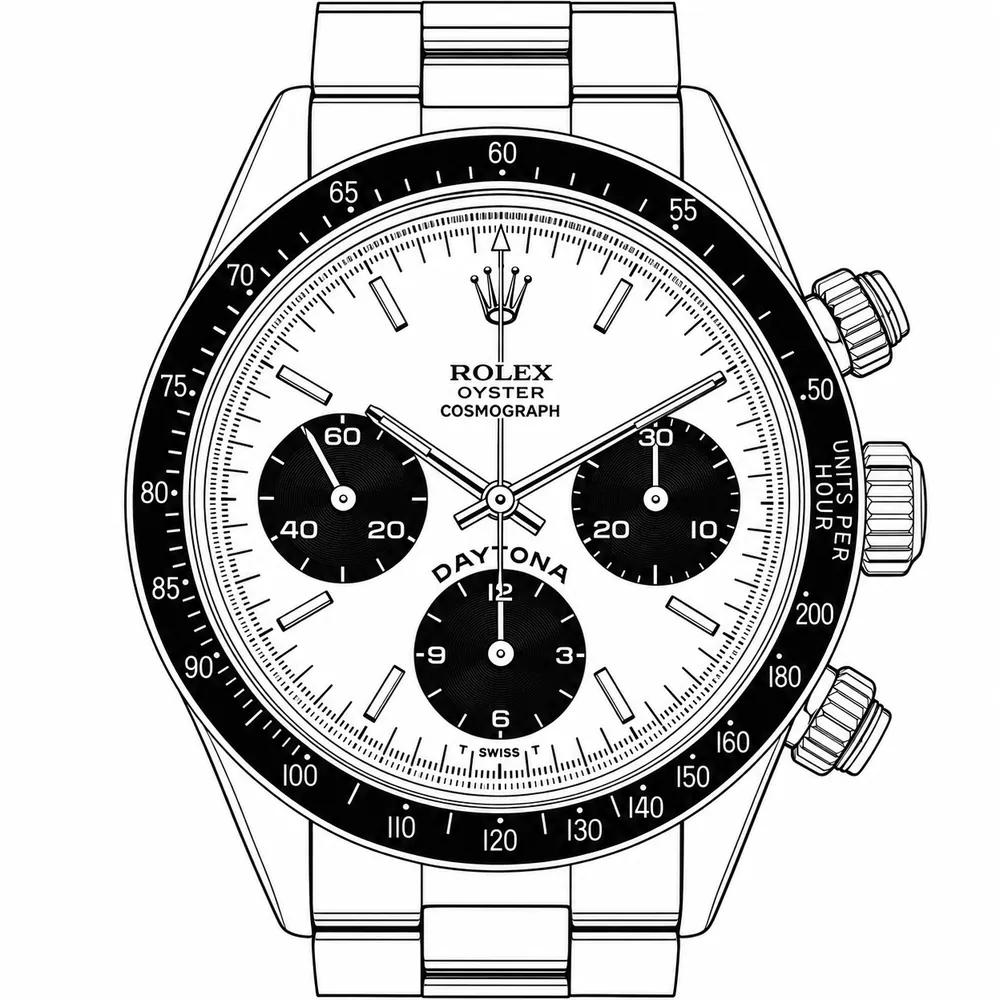
The 6263 is the hand-wound Rolex Daytona with screw-down chronograph pushers, the Valjoux 727 and a black acrylic bezel, made in steel and in 14k and 18k yellow gold. It appeared at the turn of the 1970s and stayed in production until the late 1980s, when automatic Daytonas replaced it. It is the twin of the 6265, which differs only in its steel bezel. The dials run from early Cosmograph-only and Paul Newman exotic types through the Sigma and the red-lettered Big Red; collectors read dial text, fonts, case number and caseback together.
- Made
- 1969–1988dates approximate
- Seen in the library
- 1969–1988nine in ten in 1969–1986 · by case numbers
- Case
- steel (82%), gold (16%)as sellers state
- Movement
- Calibre 727hand-wound
- On record
- 769 listings2,046 photographs · 44 holders
Components
52 watches, oldest first, each straightened and cut the same way so that one row shows one component across them all. Chosen from 2,046 photographs on file for sharpness and for a face typical of the reference. A year marked c. is one its holder gives only roughly. Each picture is a detail cut from a listing photograph. Select the small mark in its corner for its year, its holder, a link to the listing it came from, and a way to report it.
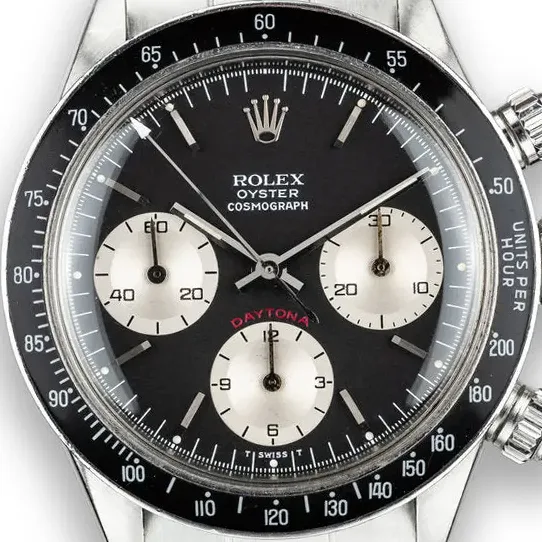
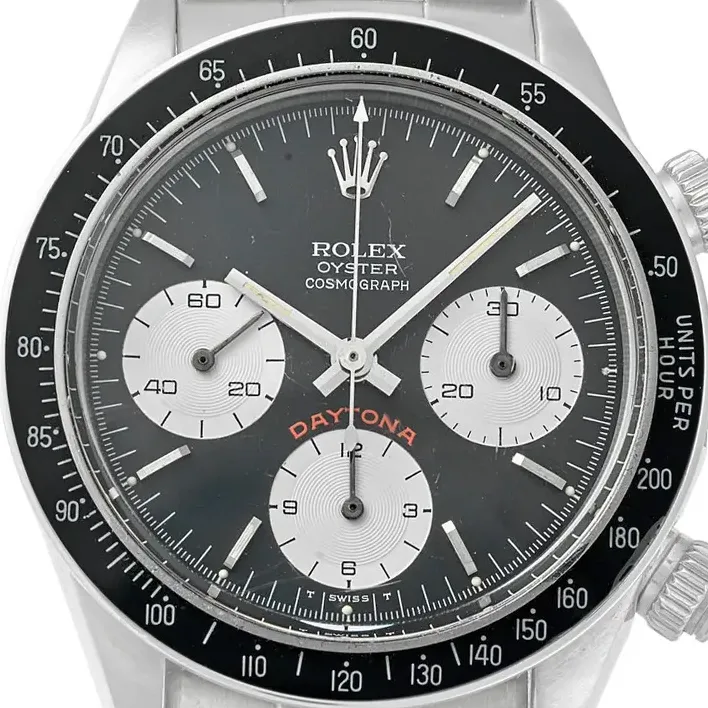
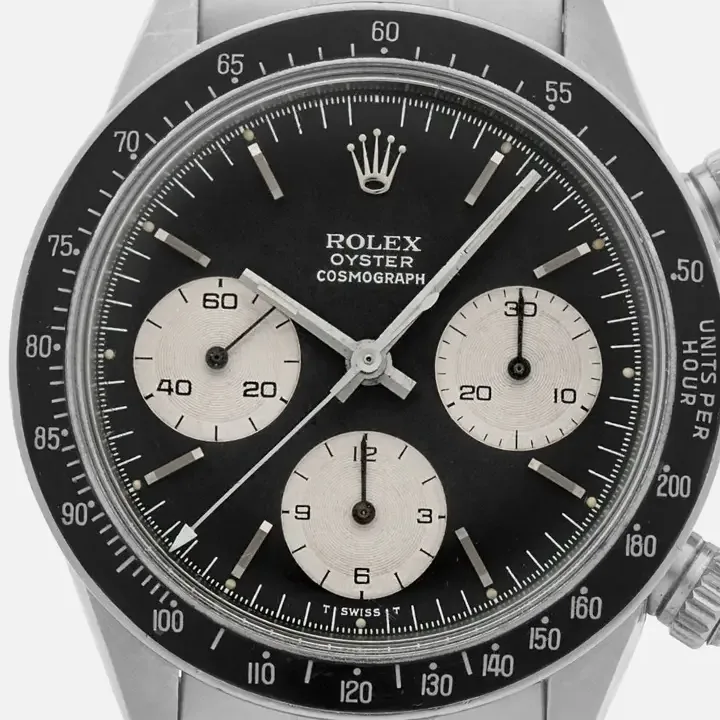
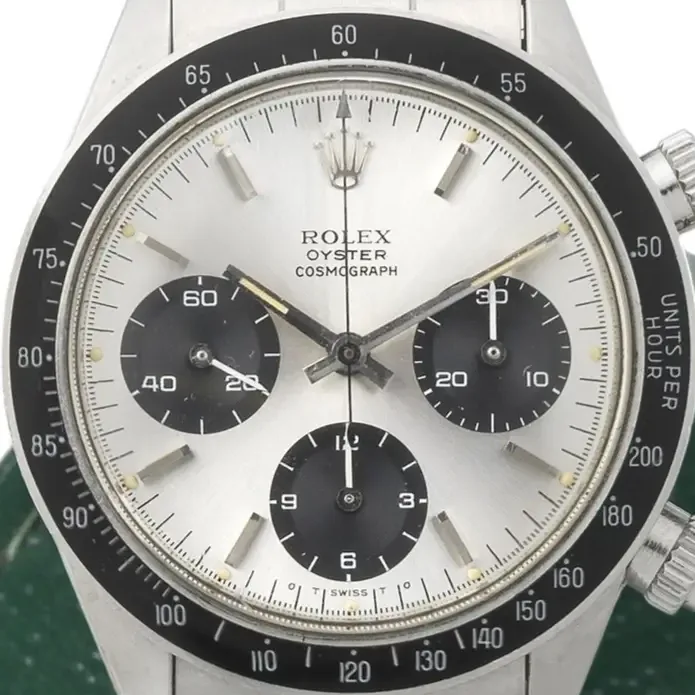
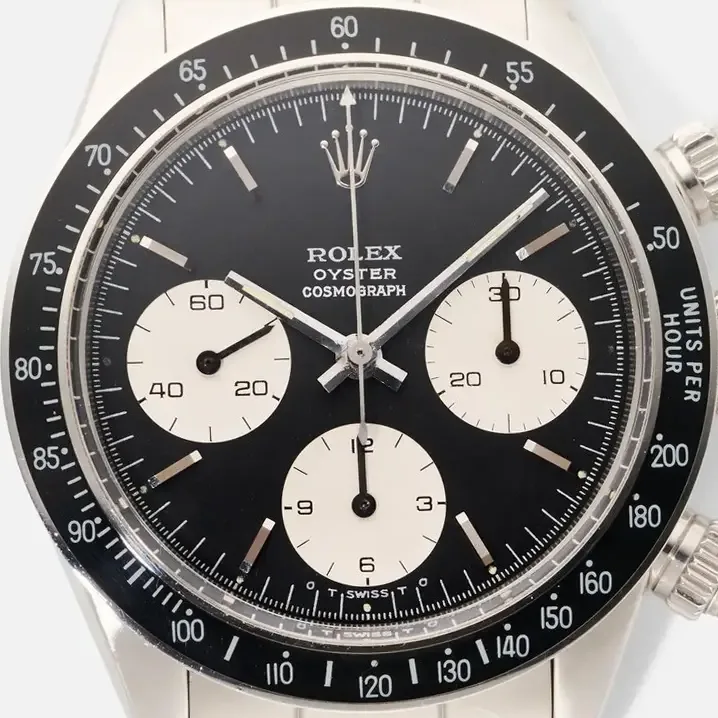
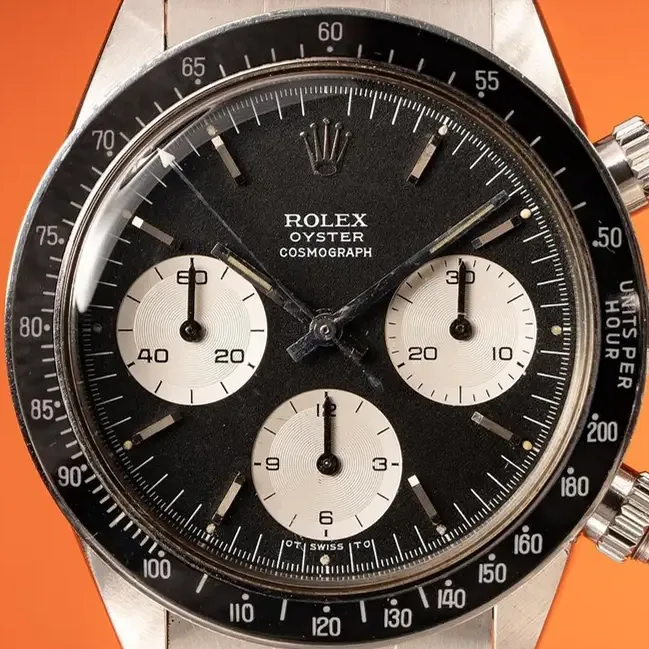
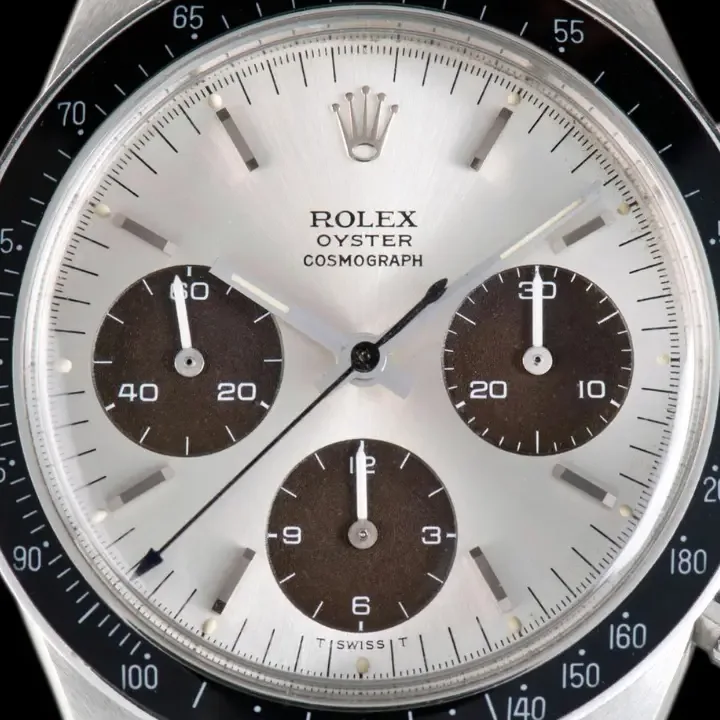
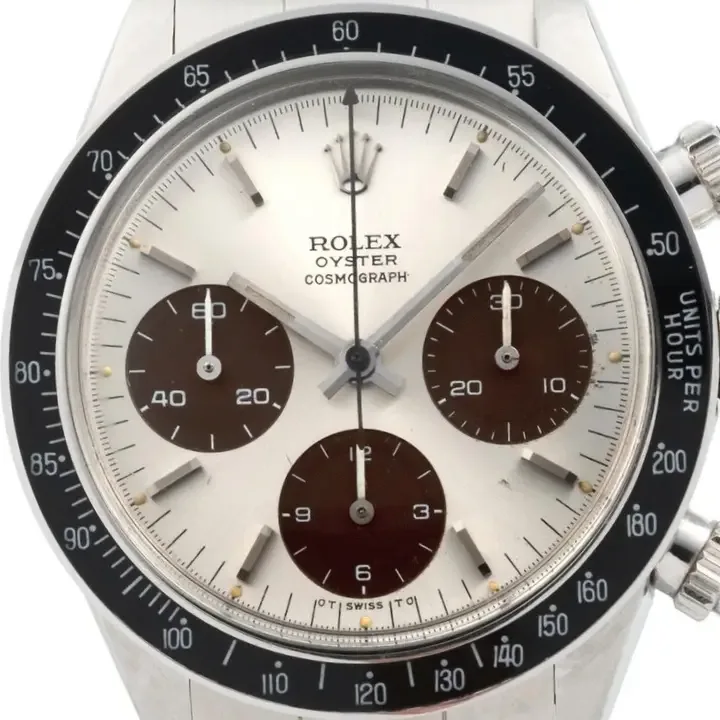
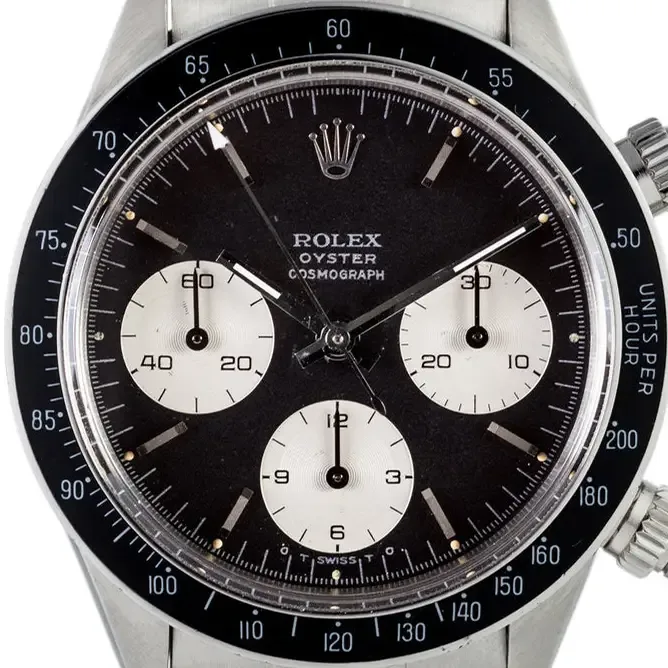
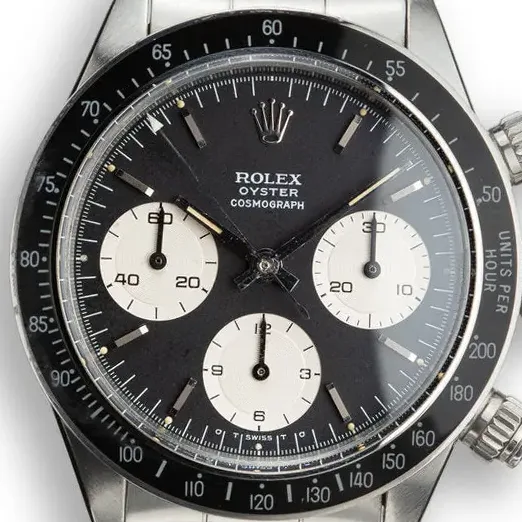
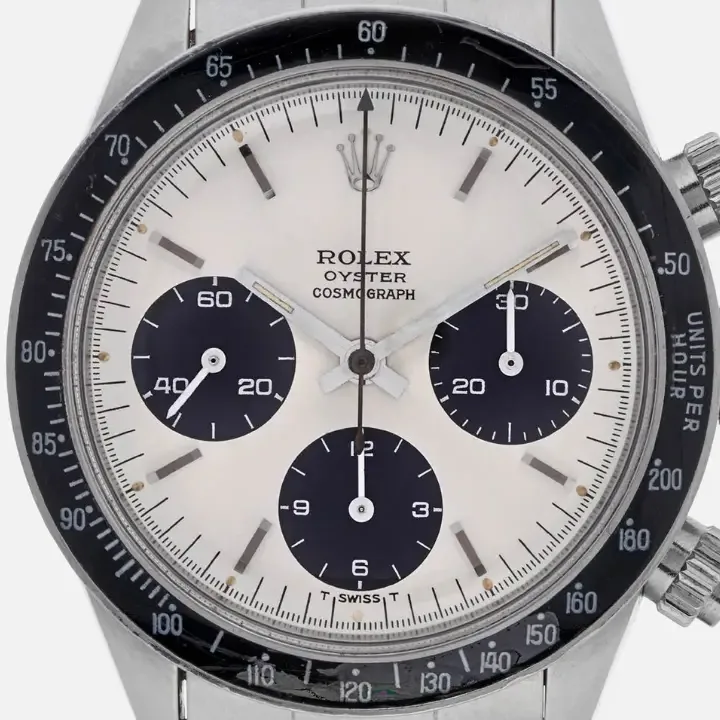
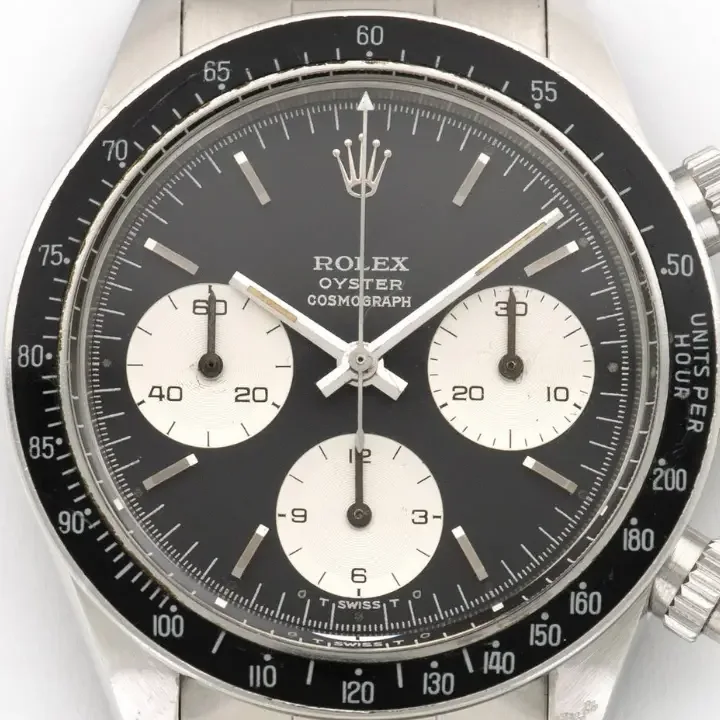
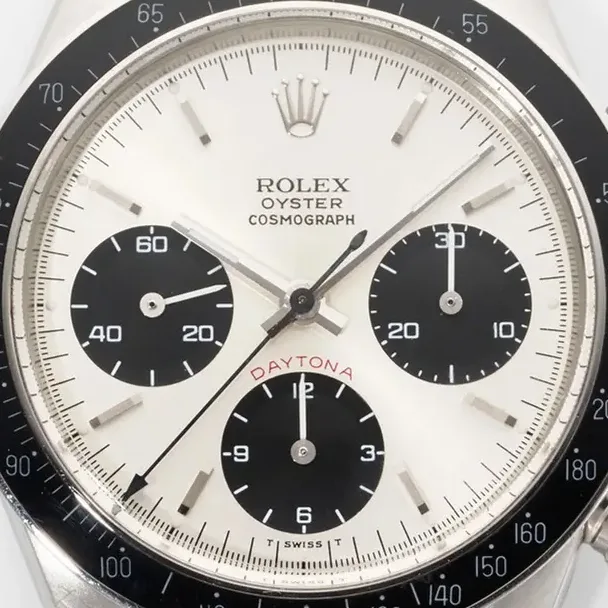
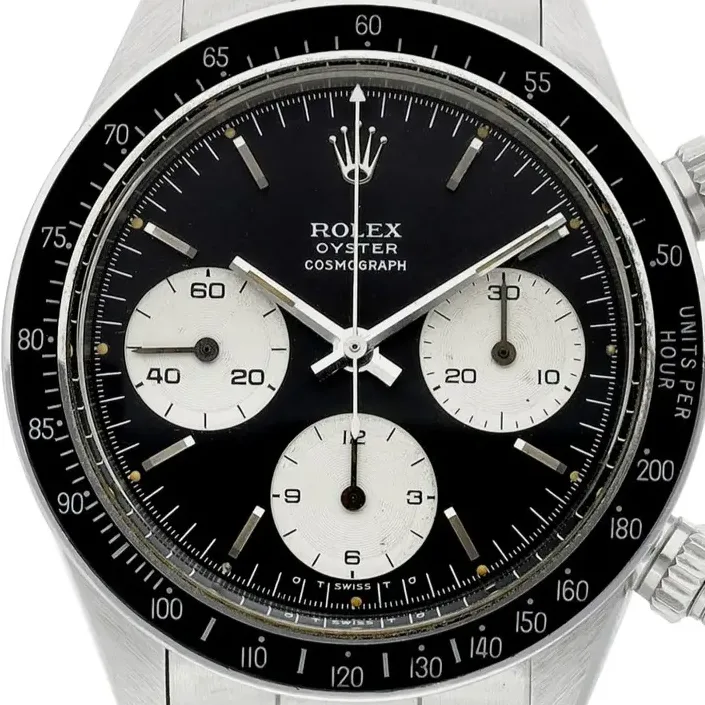
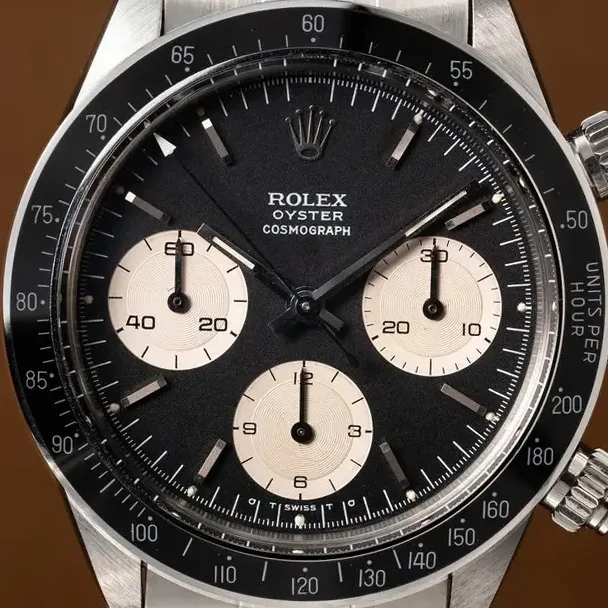
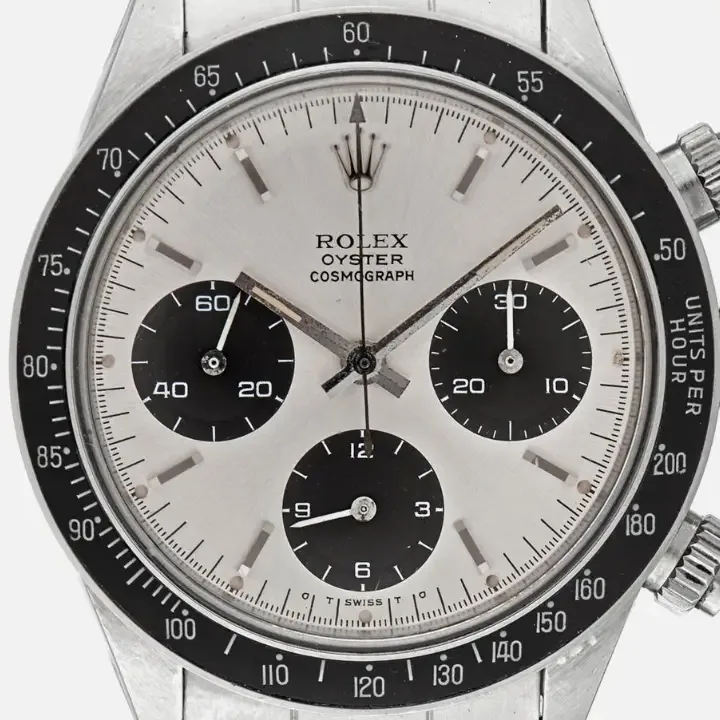
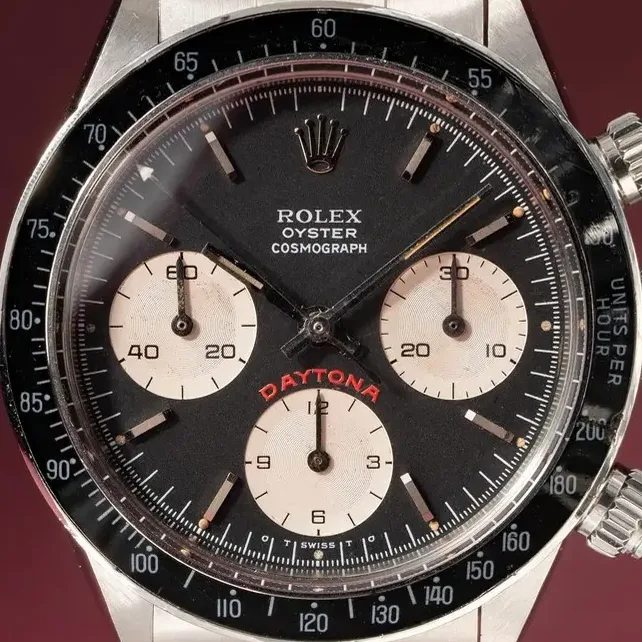
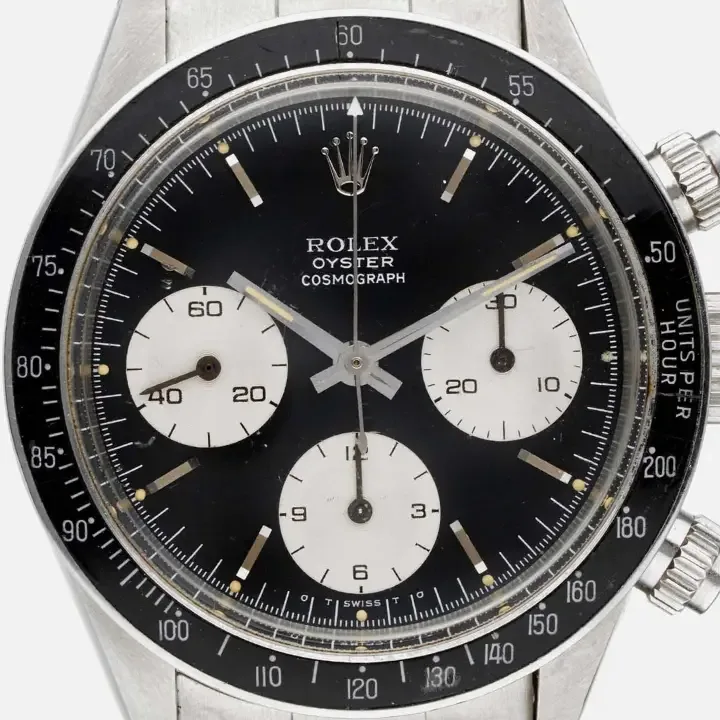
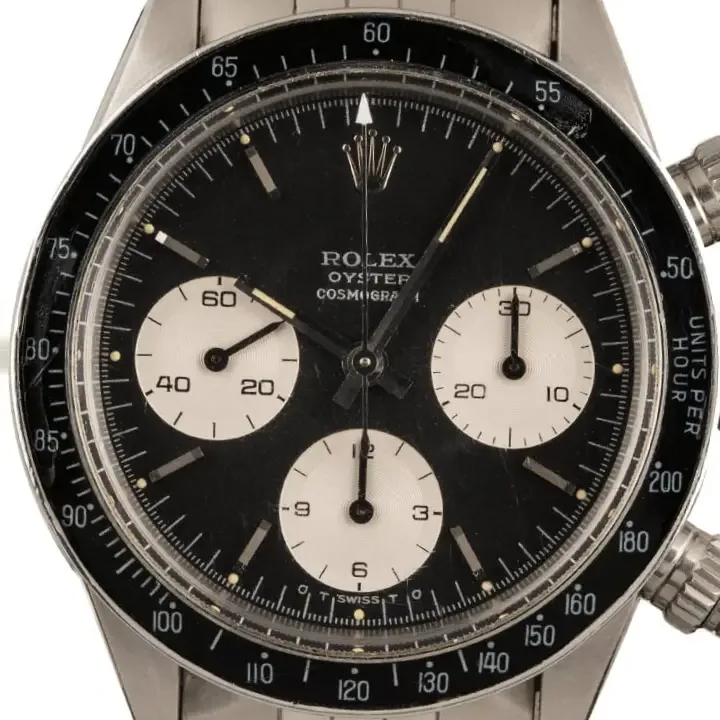
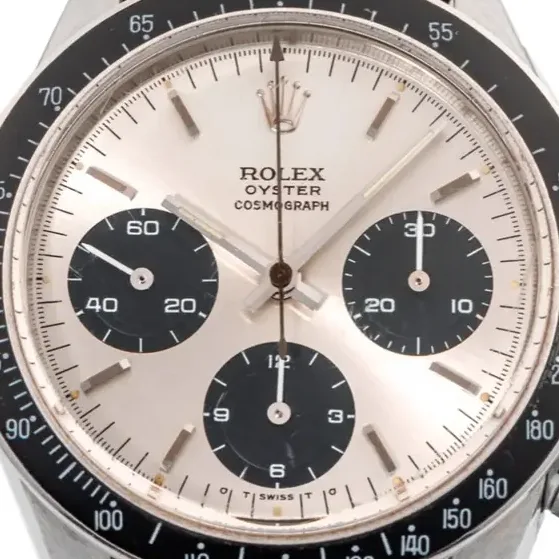
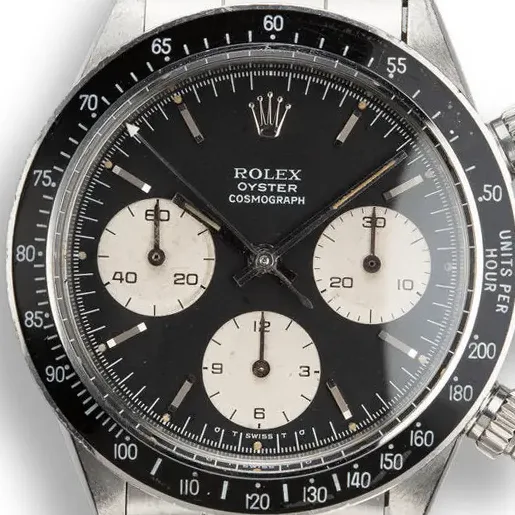
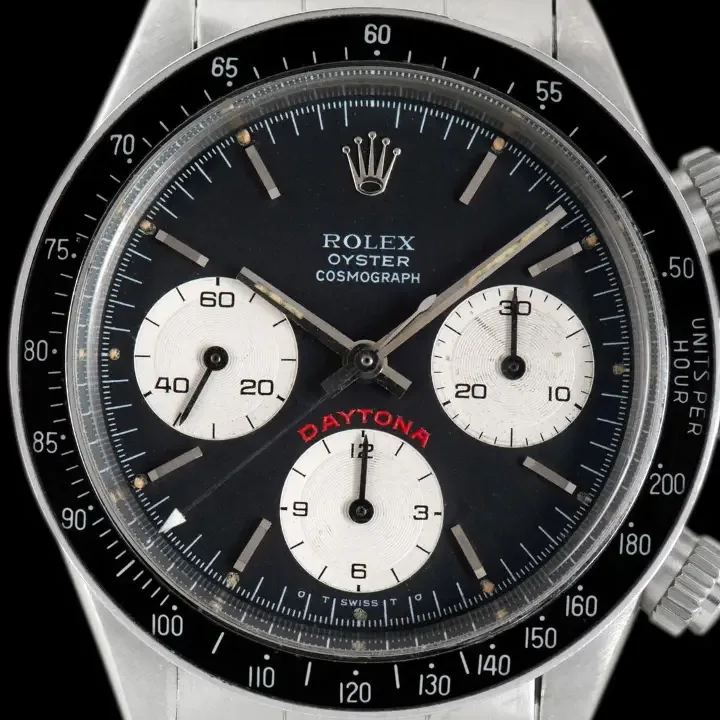
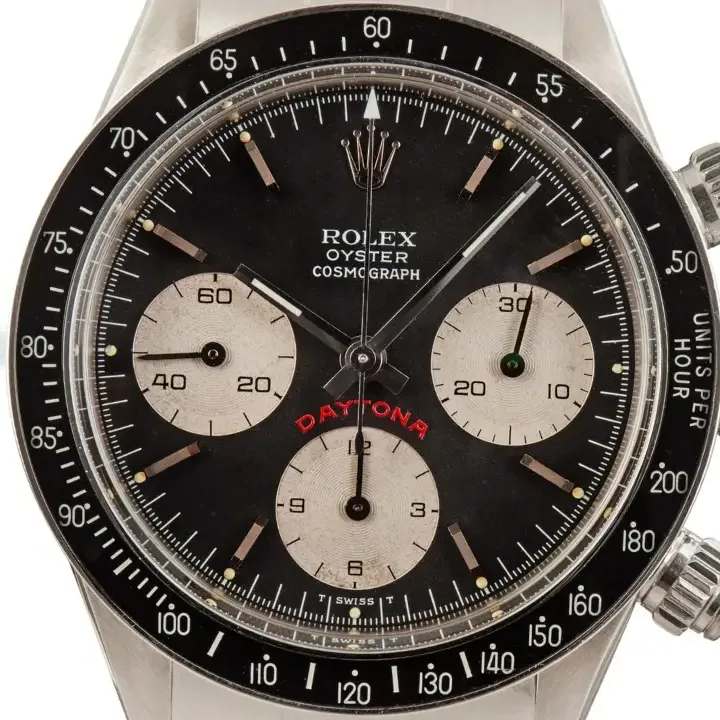
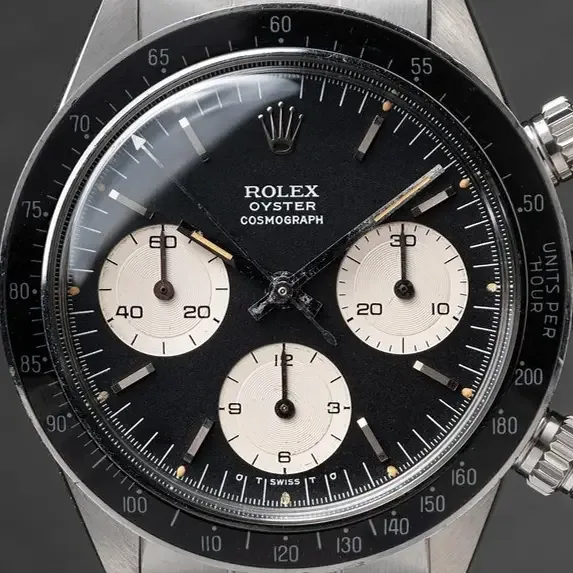
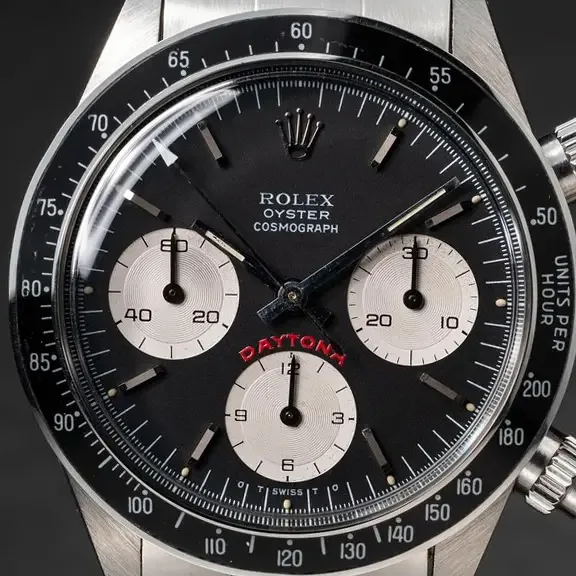
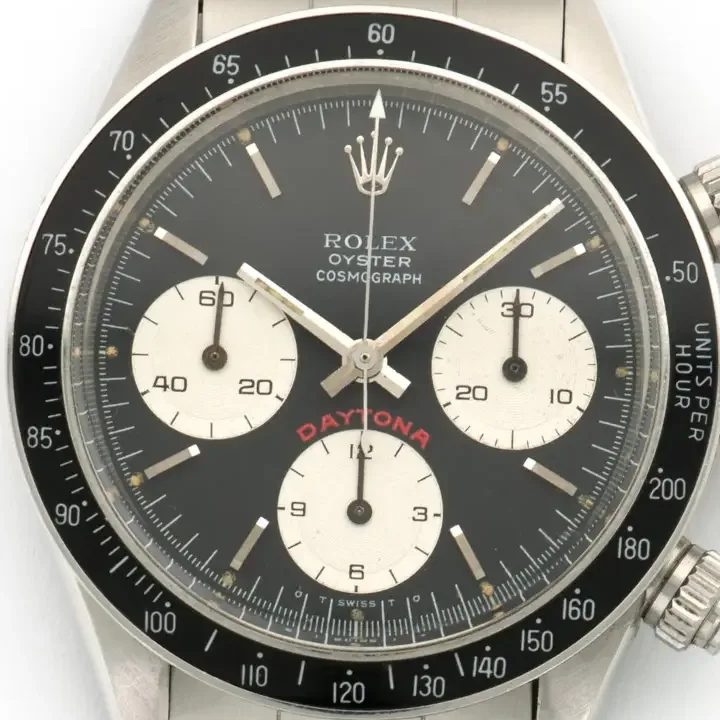
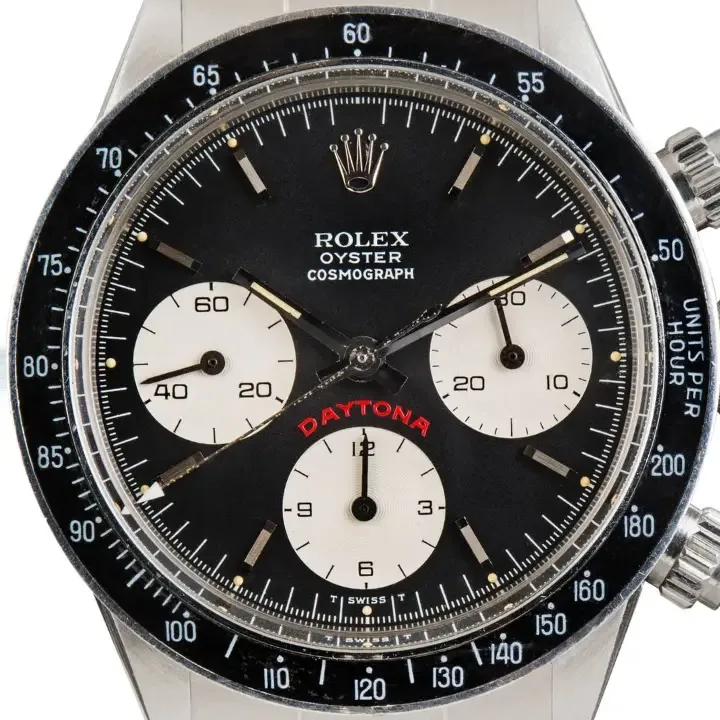
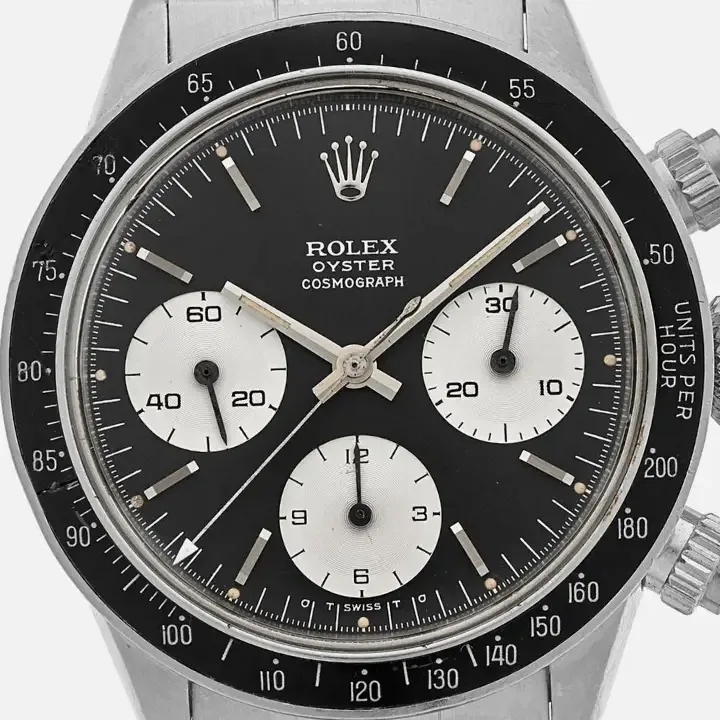
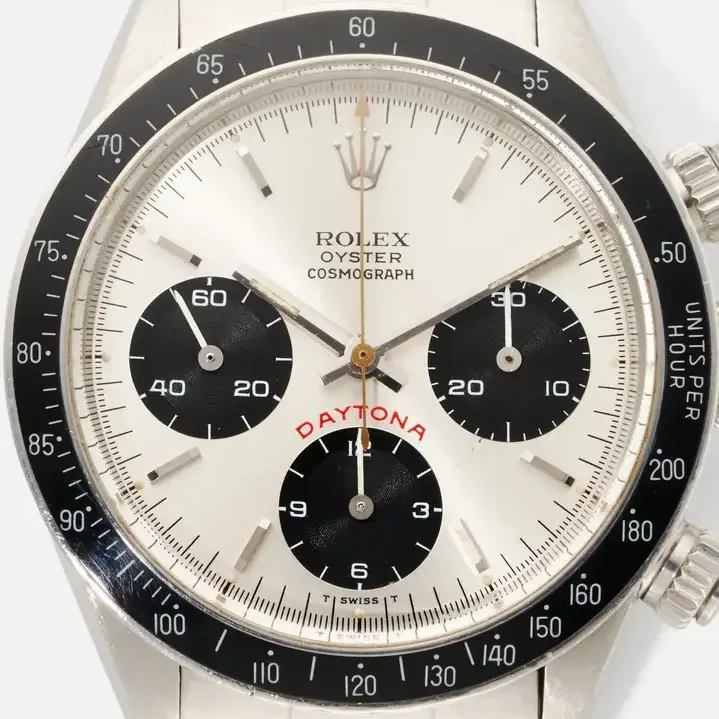
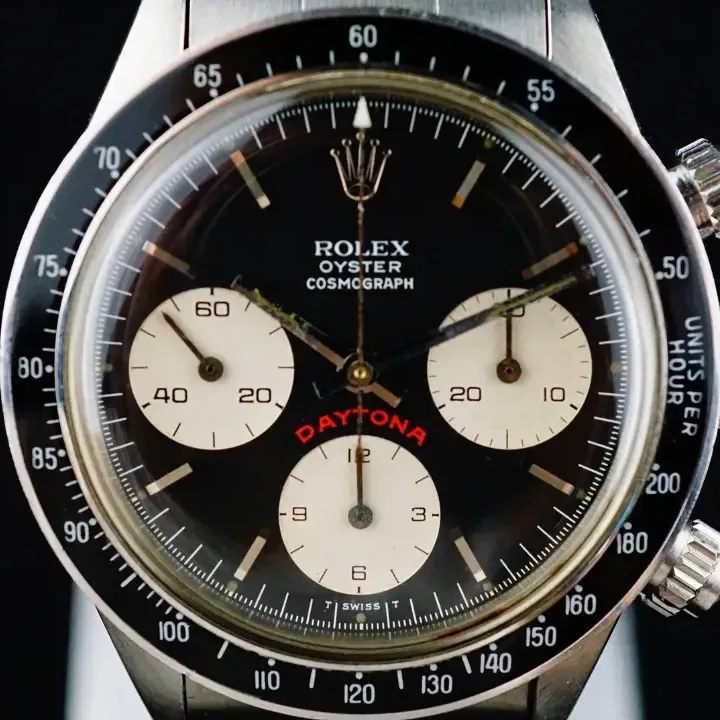
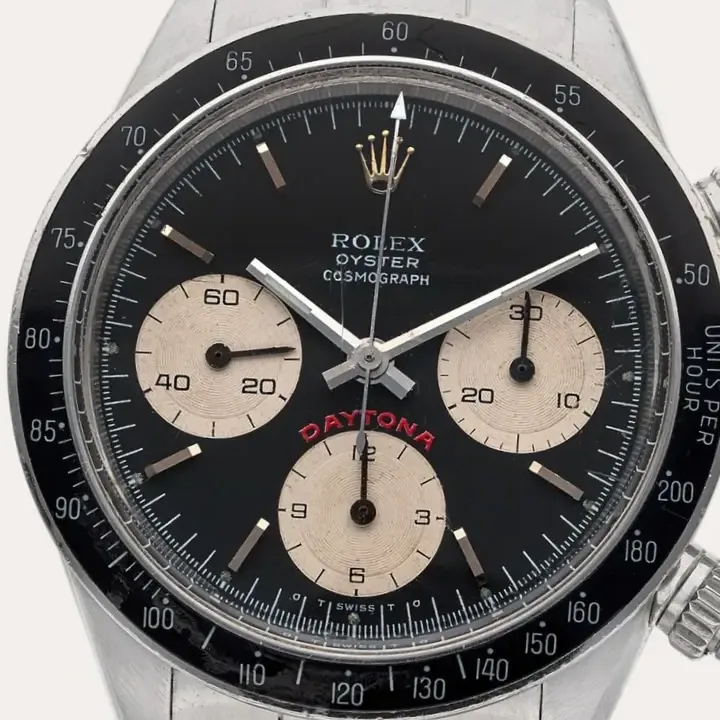
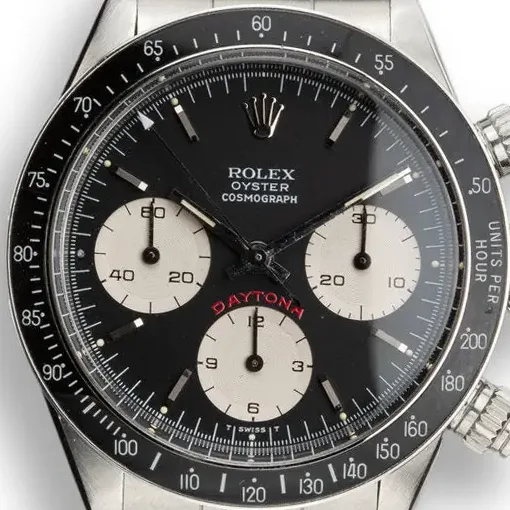
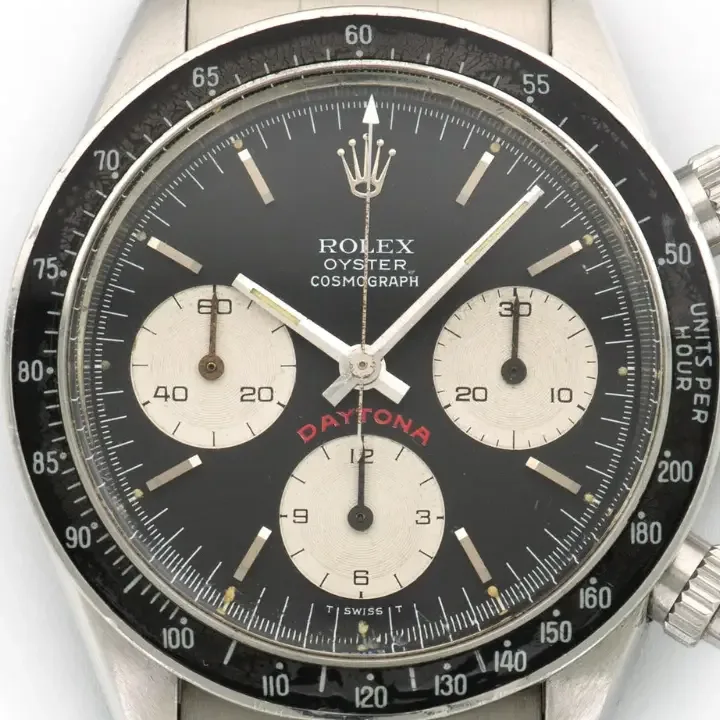
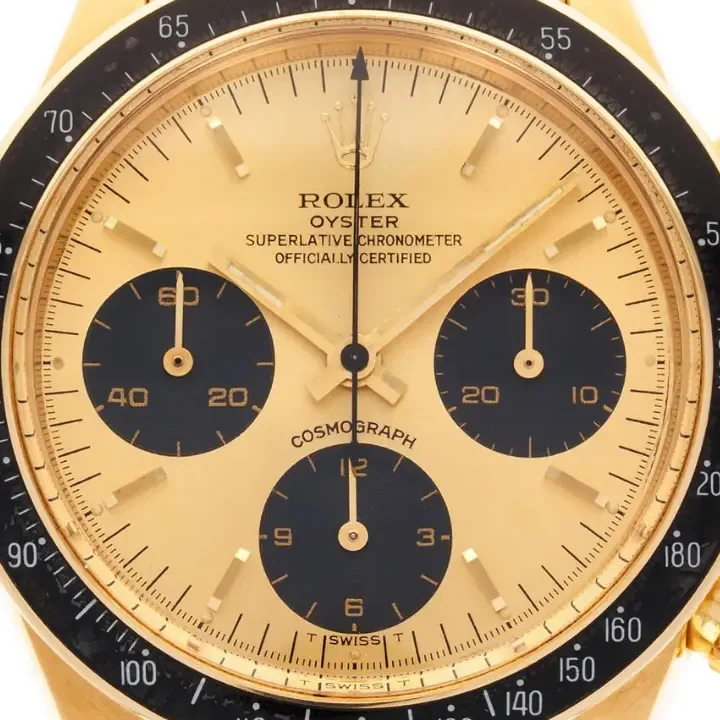
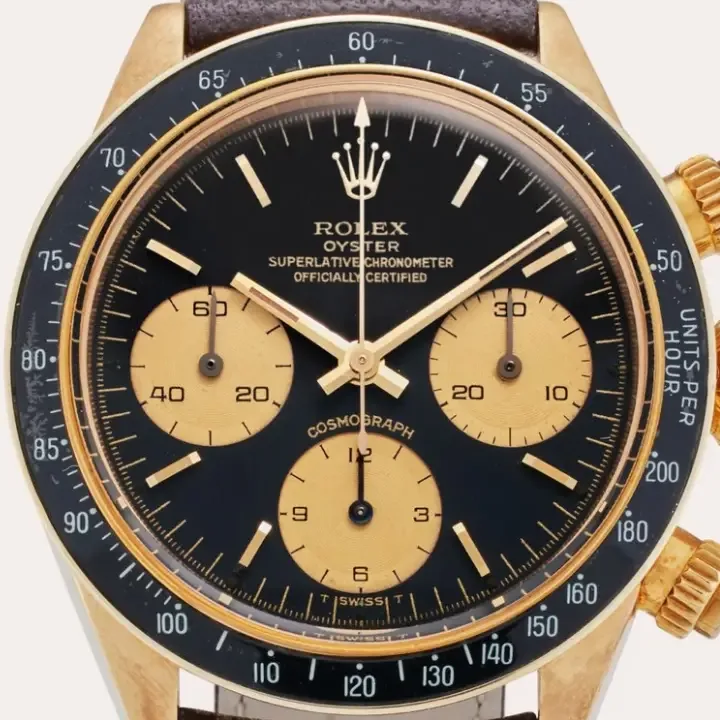
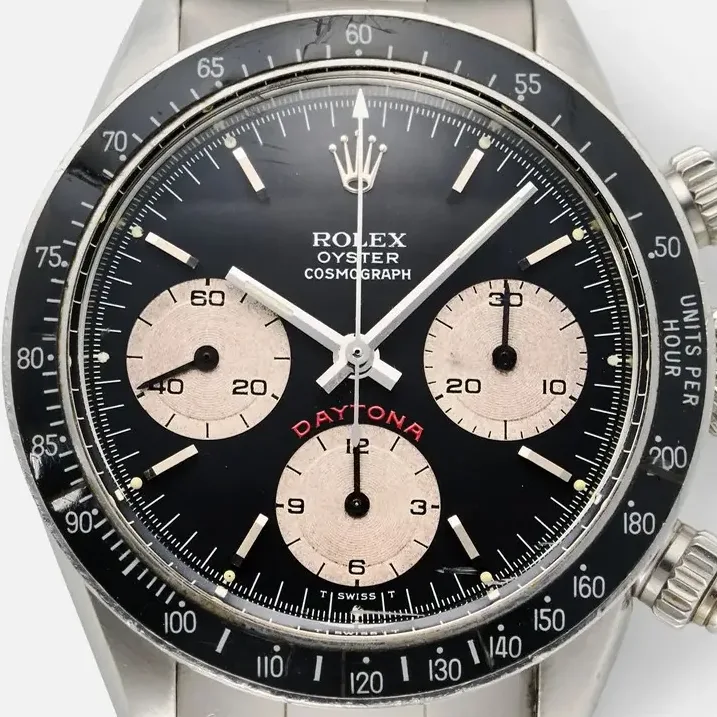
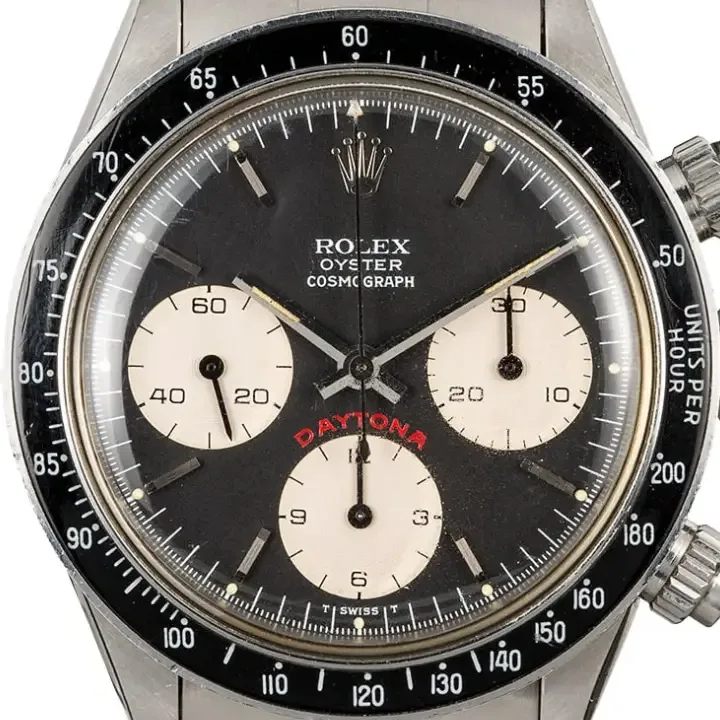
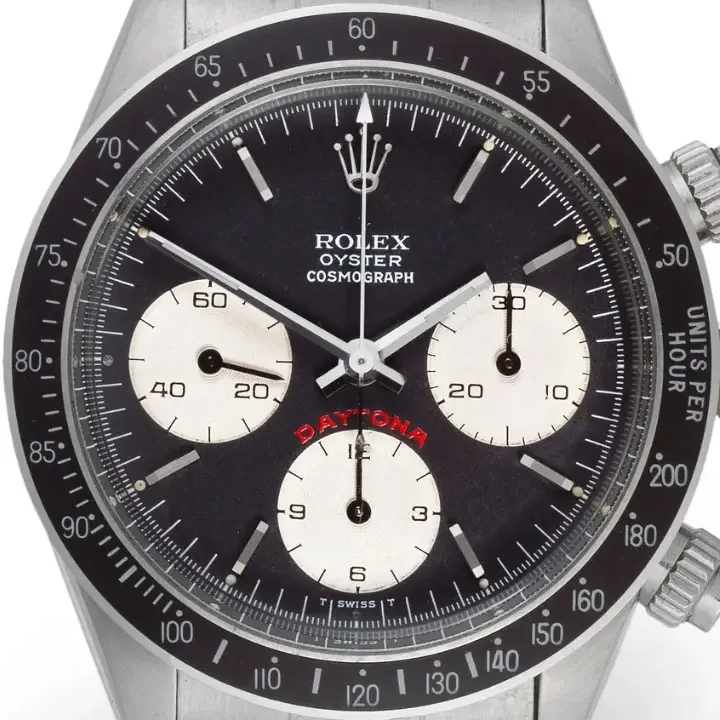
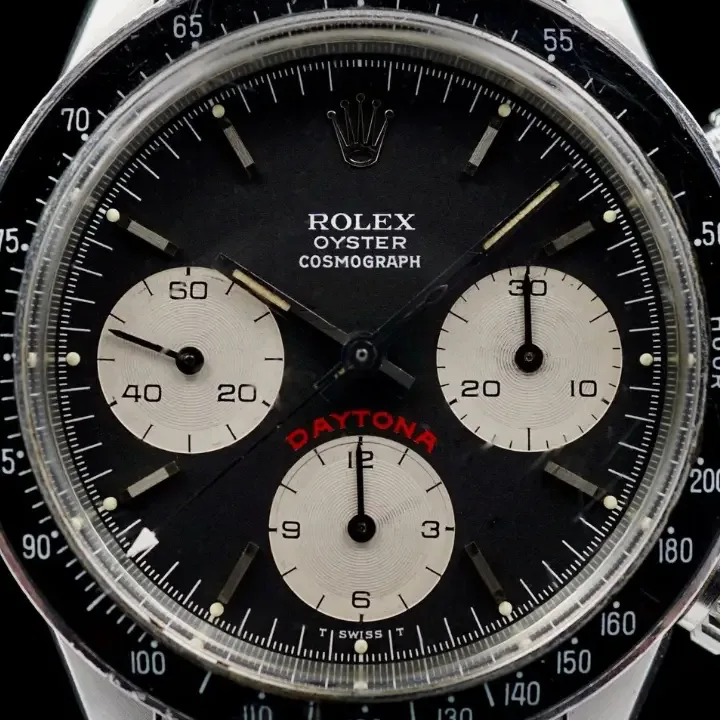
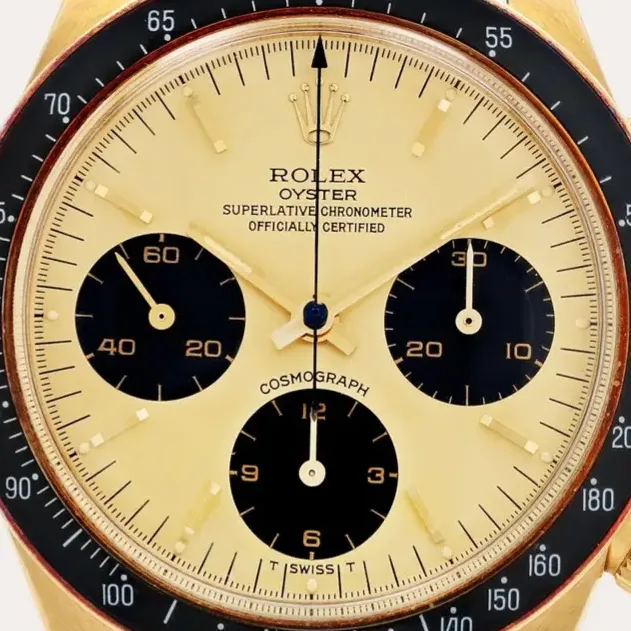
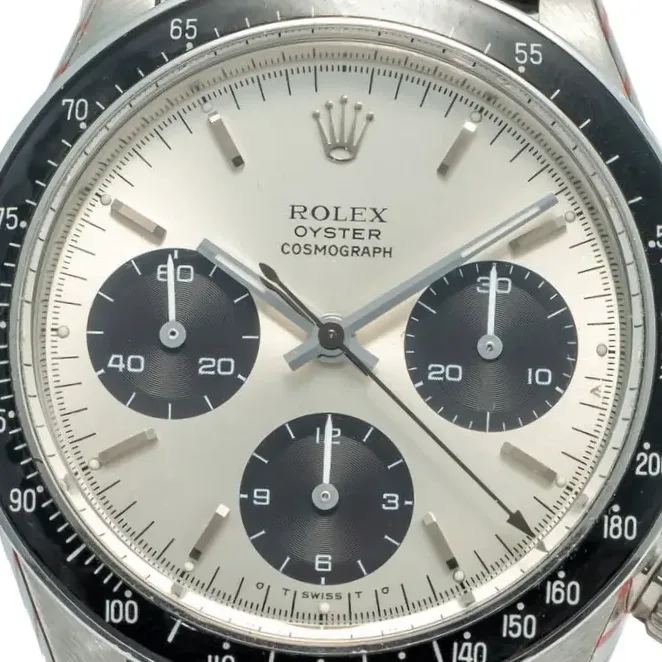
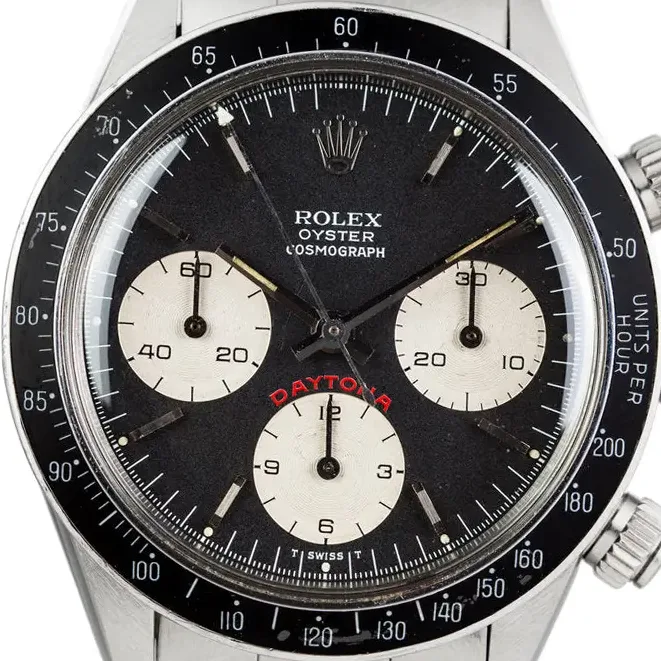
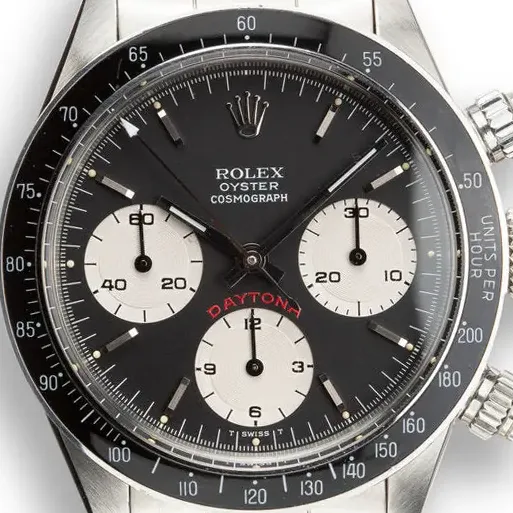
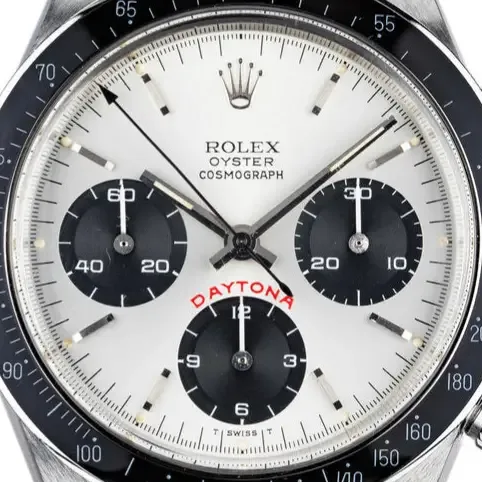
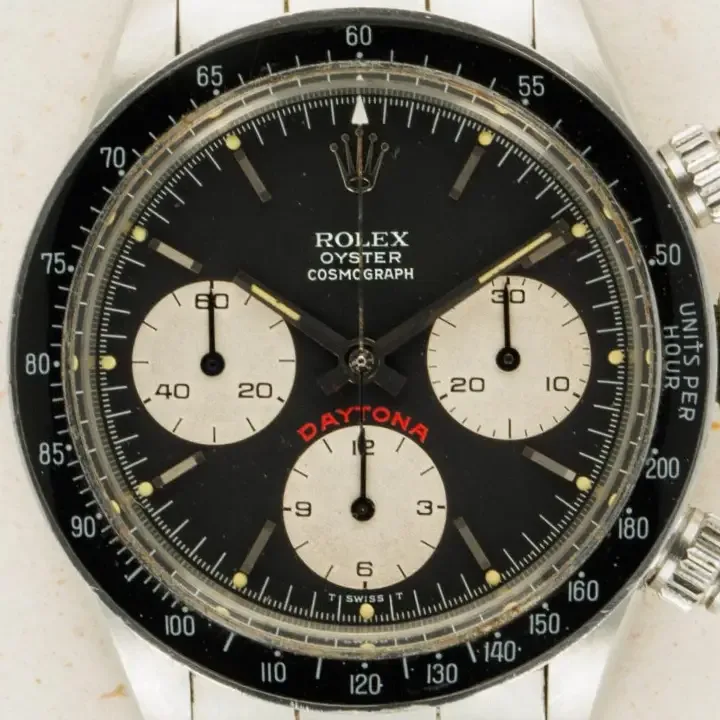
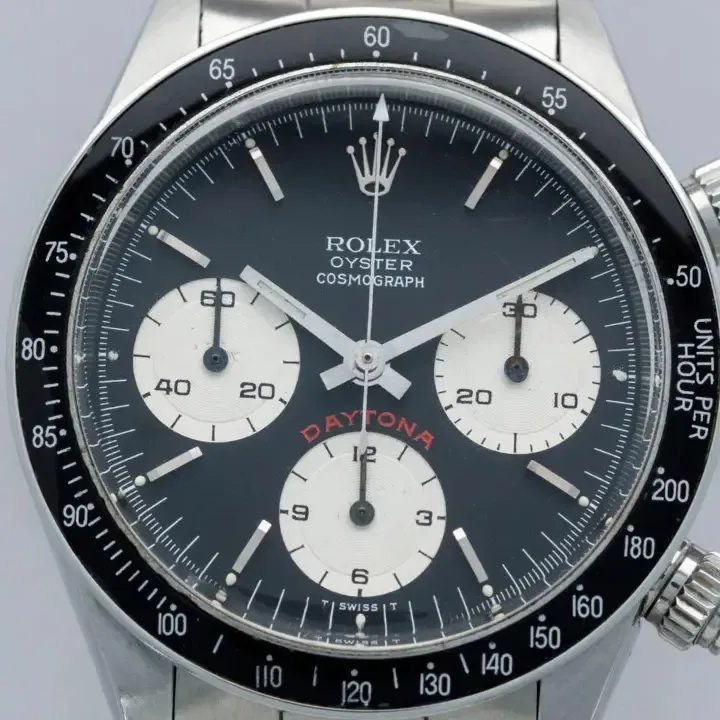
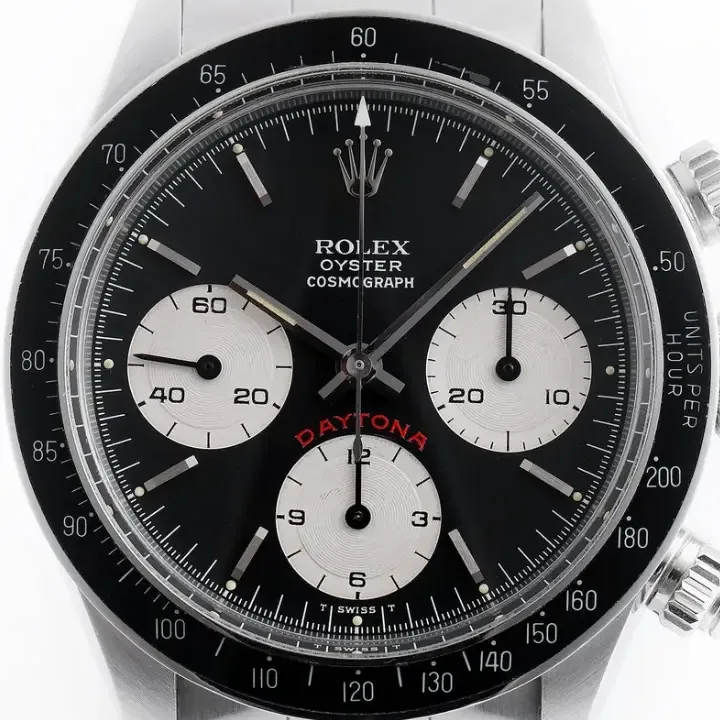
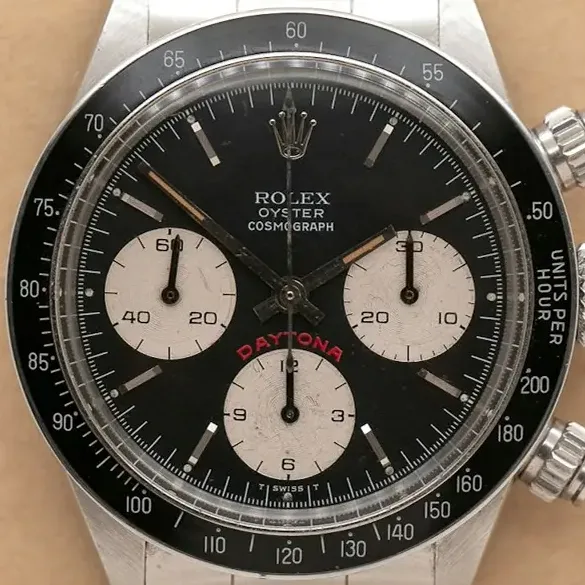
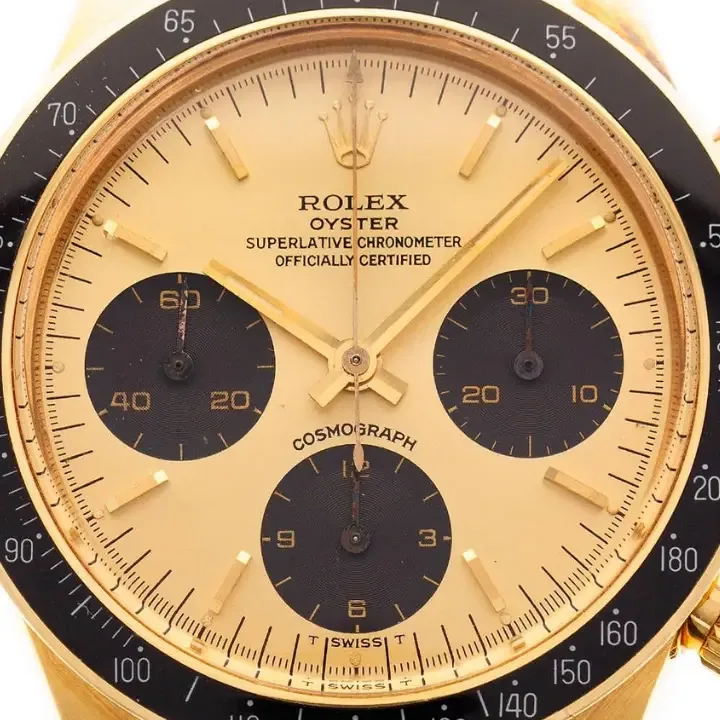
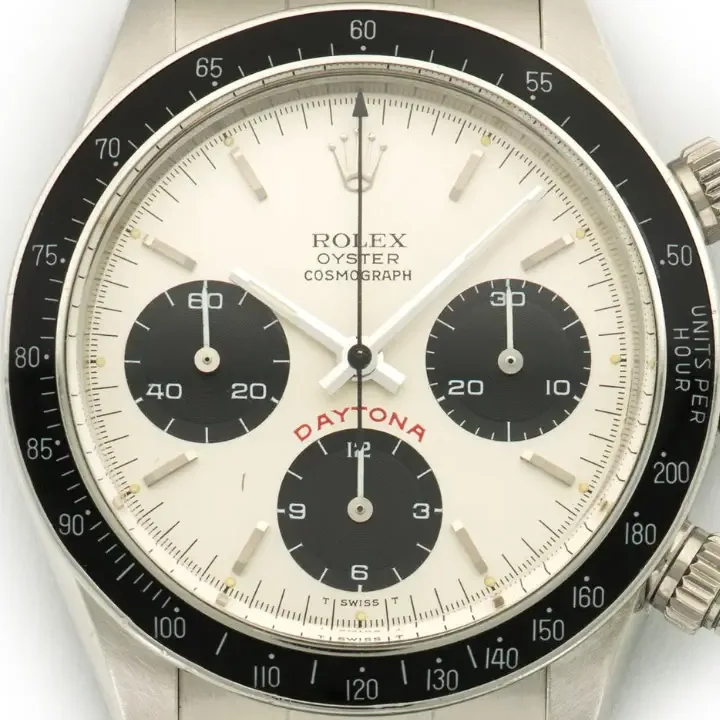
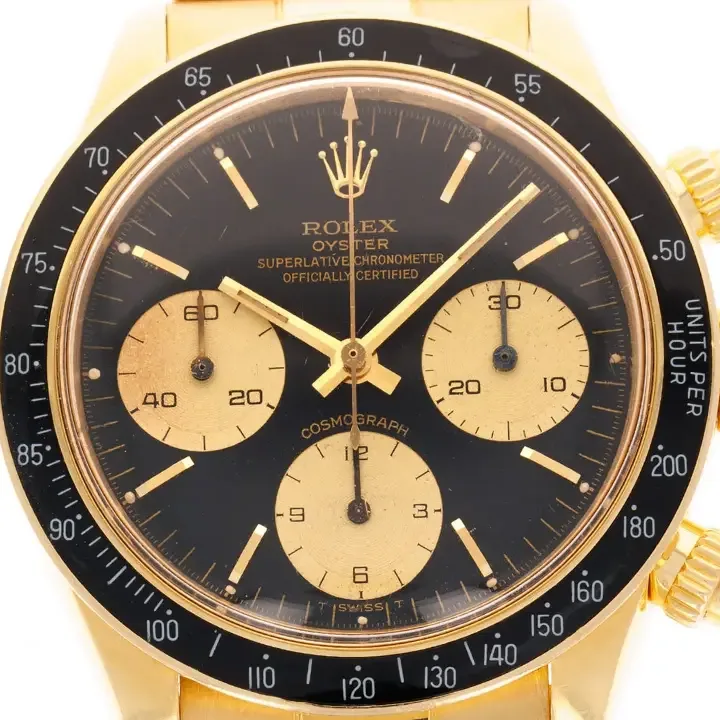
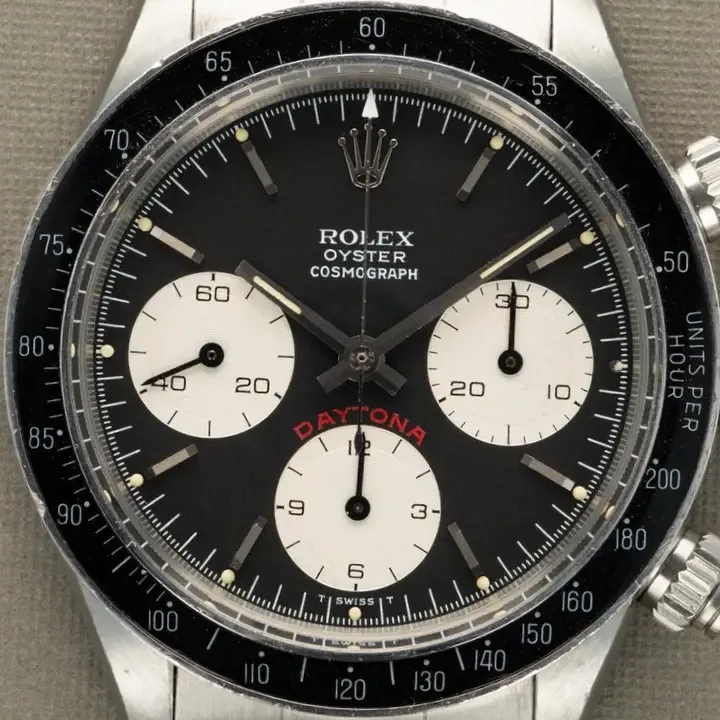
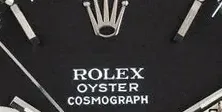
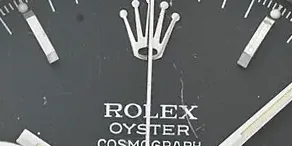
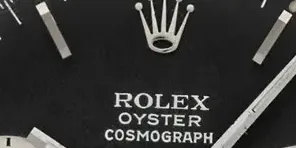
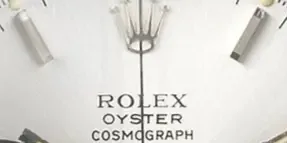
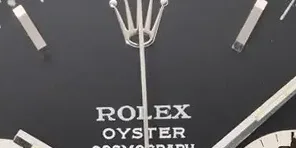
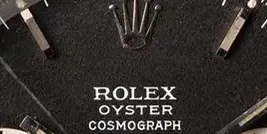

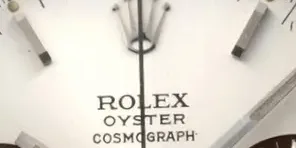
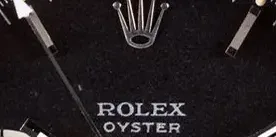
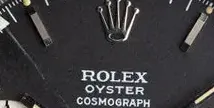
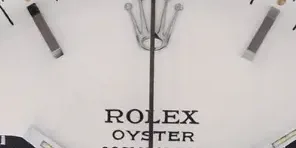
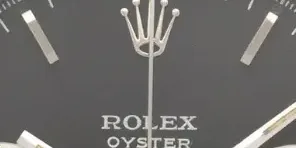
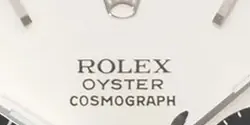
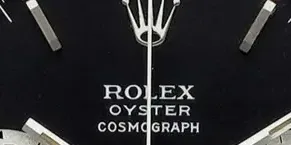
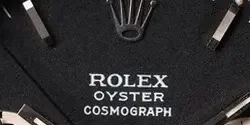
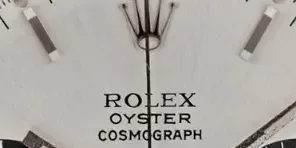
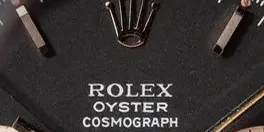
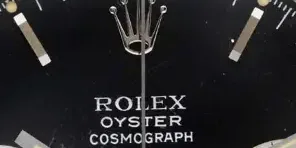
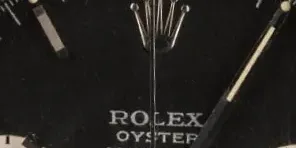
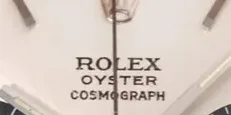
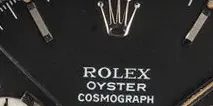
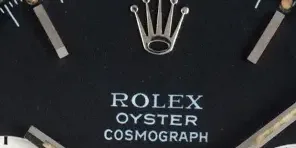
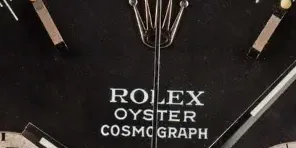
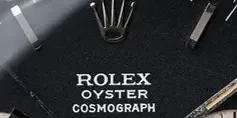
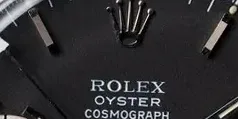
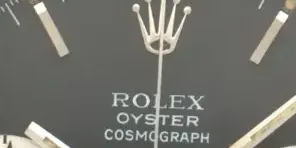
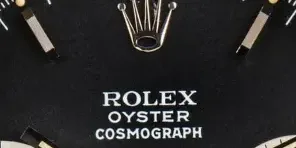
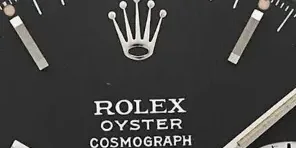

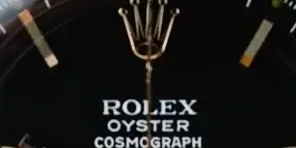
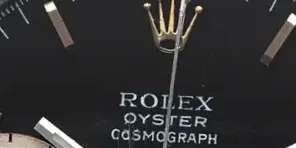
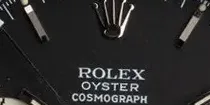
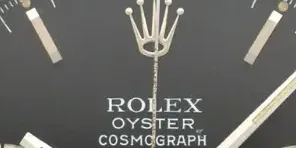

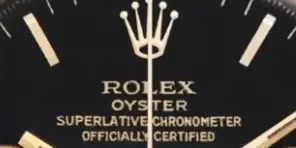
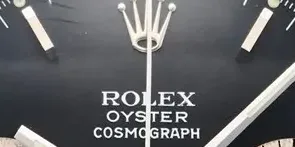
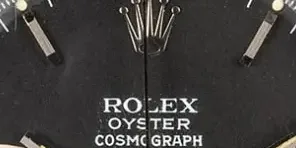
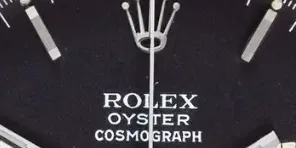
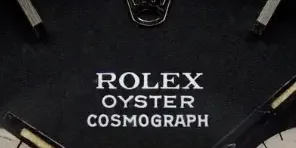
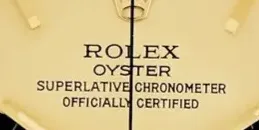
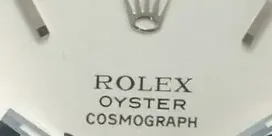
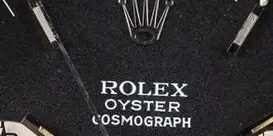
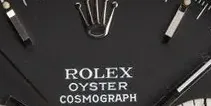
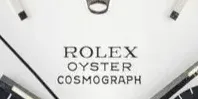
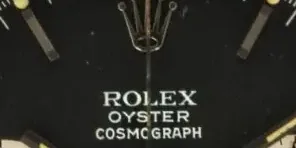
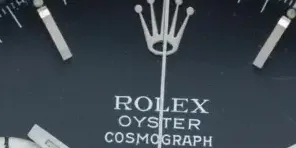
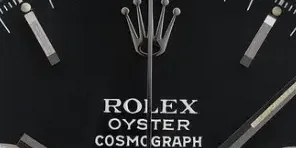
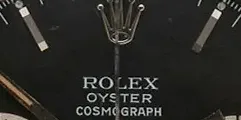

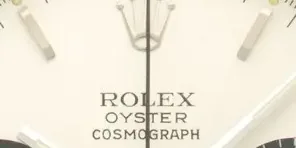
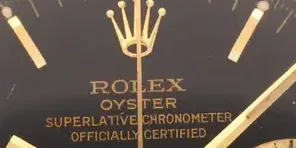
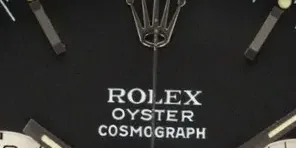
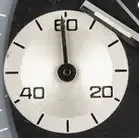
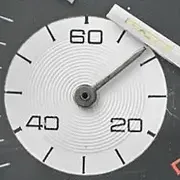
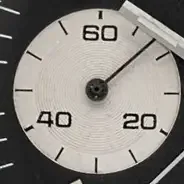
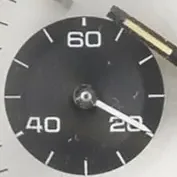
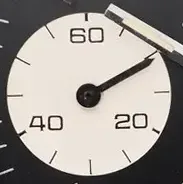
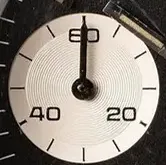
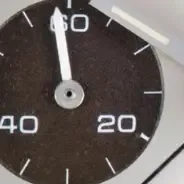
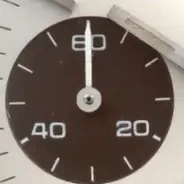
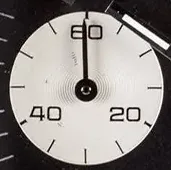
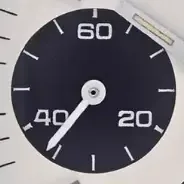
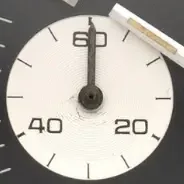
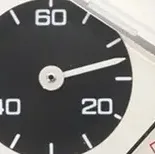
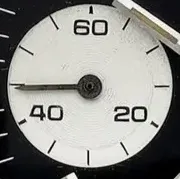
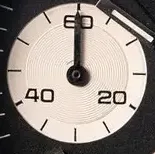
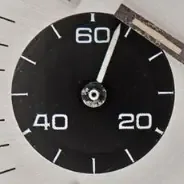
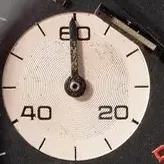
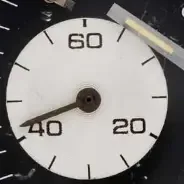
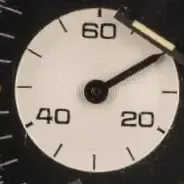
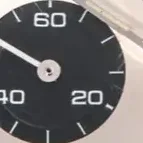
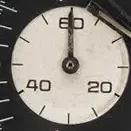
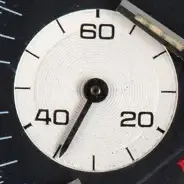
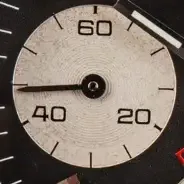
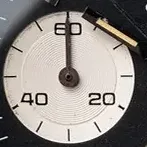
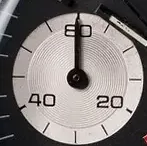

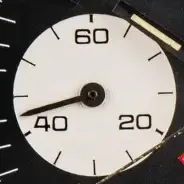
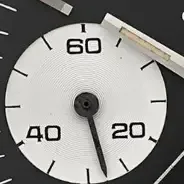
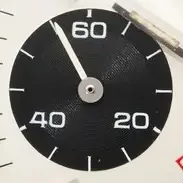
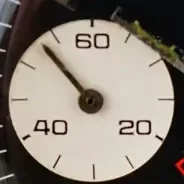
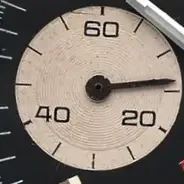
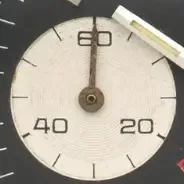

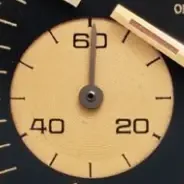
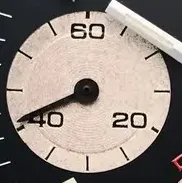
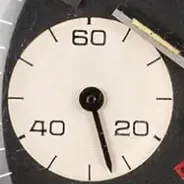
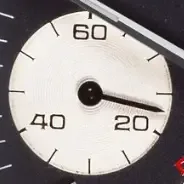
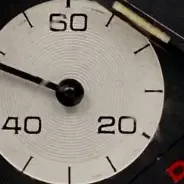
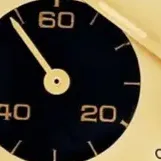
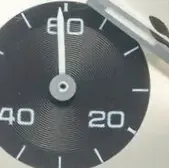
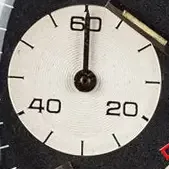
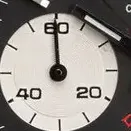
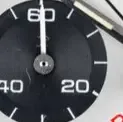
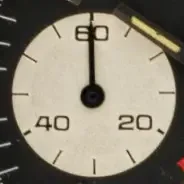
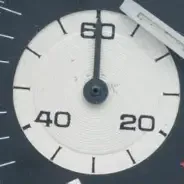
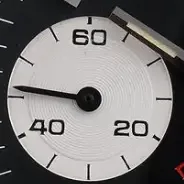
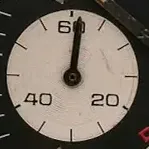
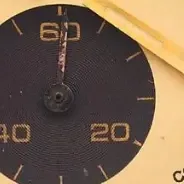
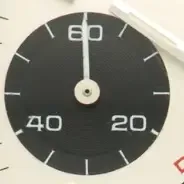
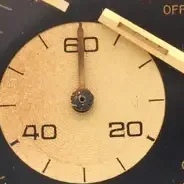
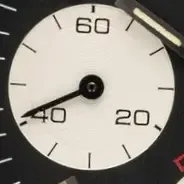
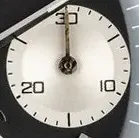
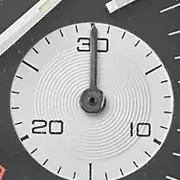
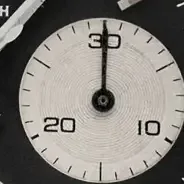
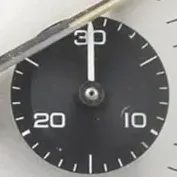
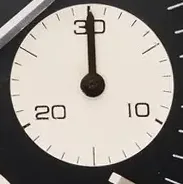
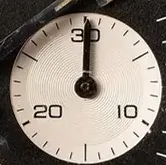
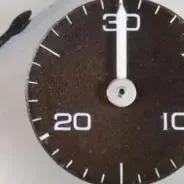
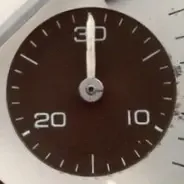
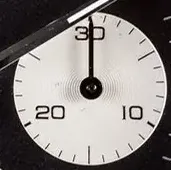
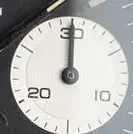
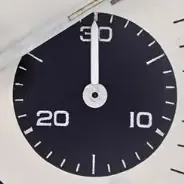
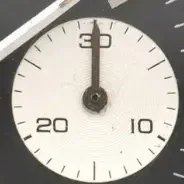
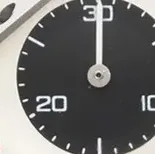
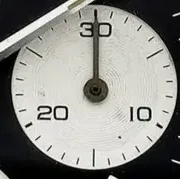
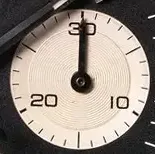
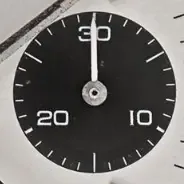
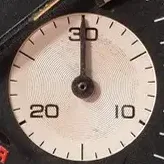
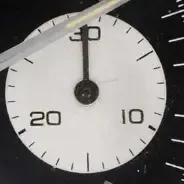
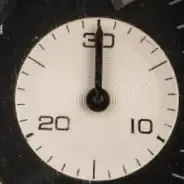
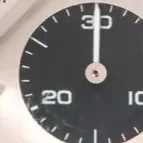
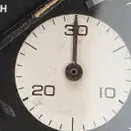
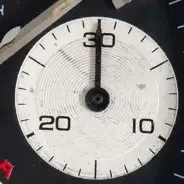
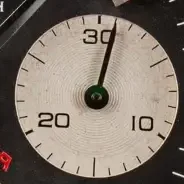
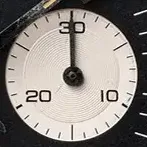
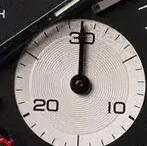
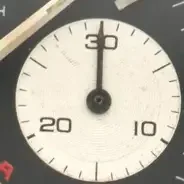
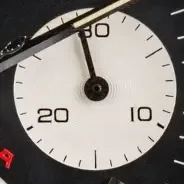
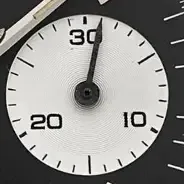
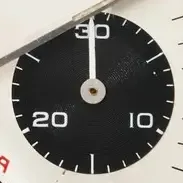
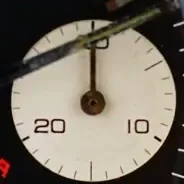
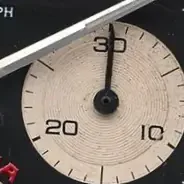
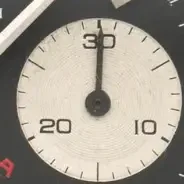
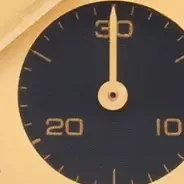
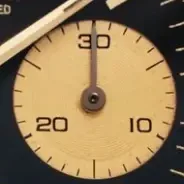
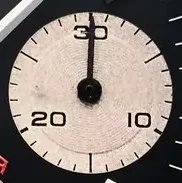
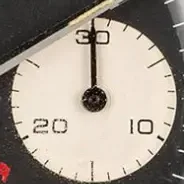
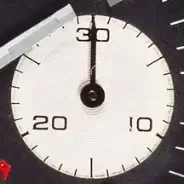
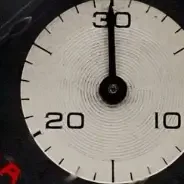
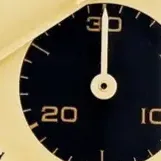

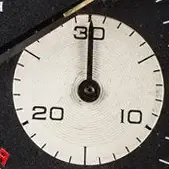
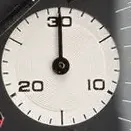
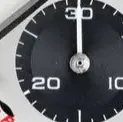
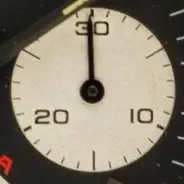
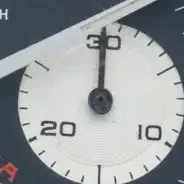
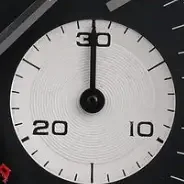
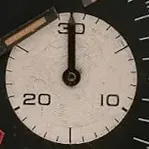
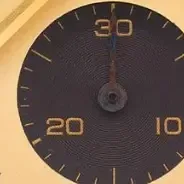
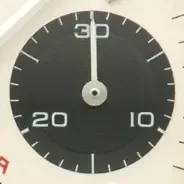
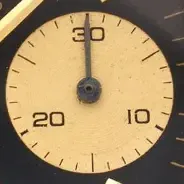
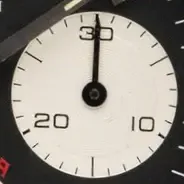
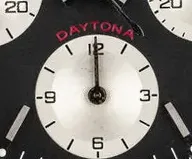
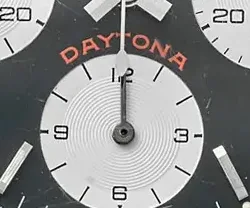
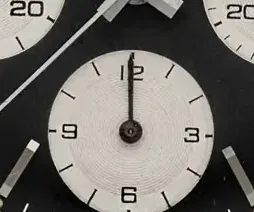
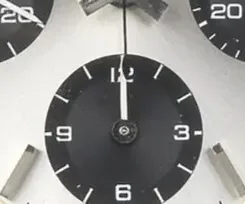
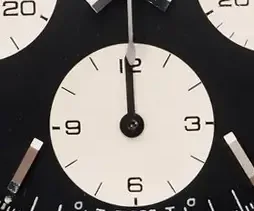
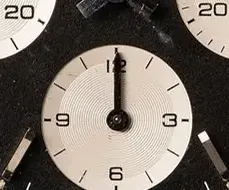
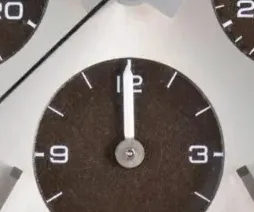
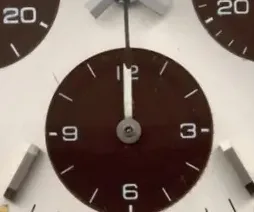
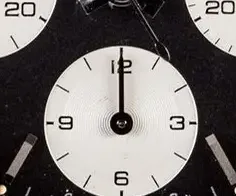
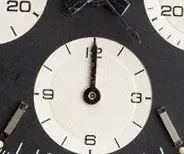
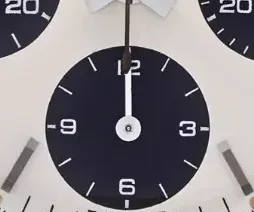
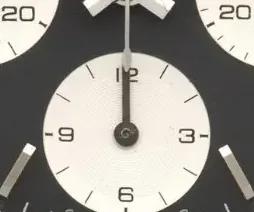
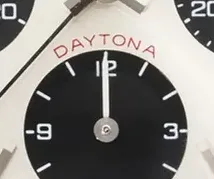
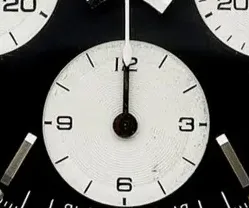
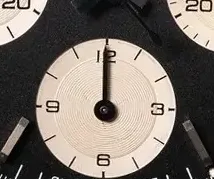
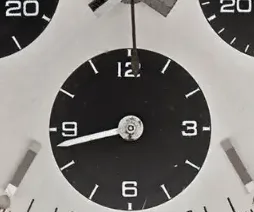
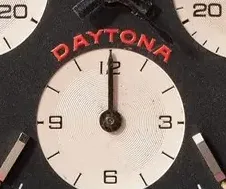
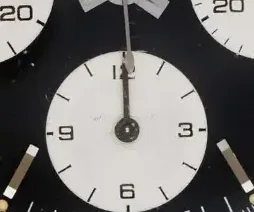
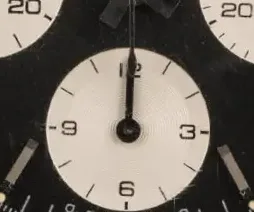
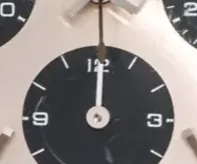
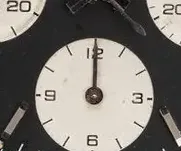
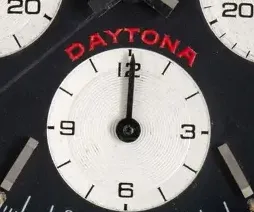
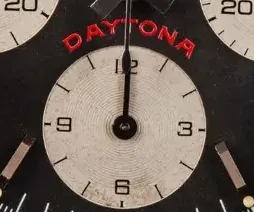
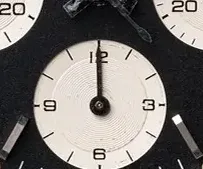
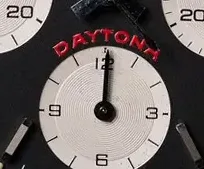
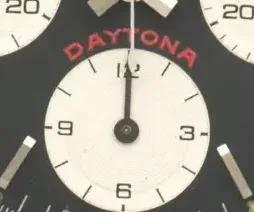
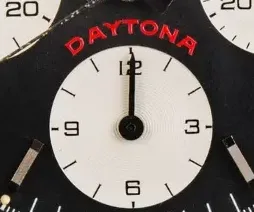
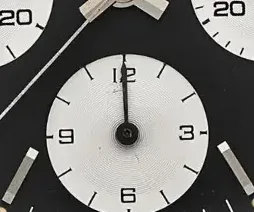
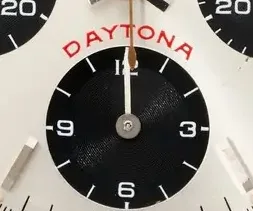
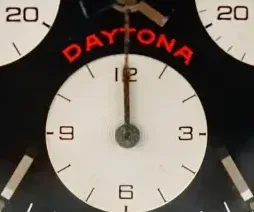
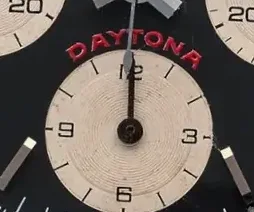
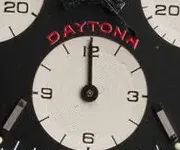
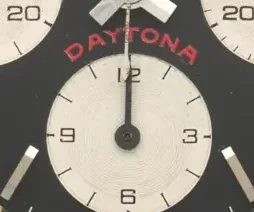
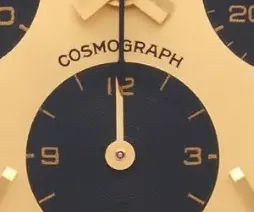
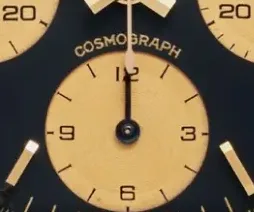
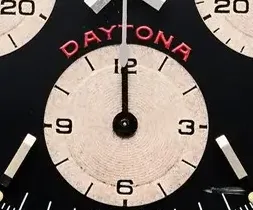
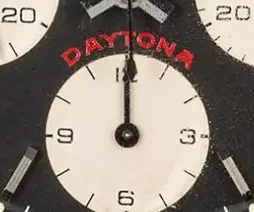
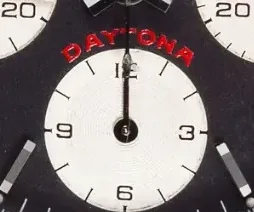
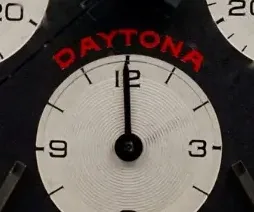
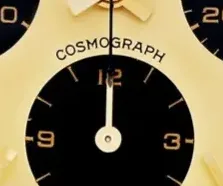

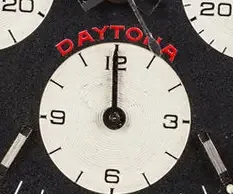
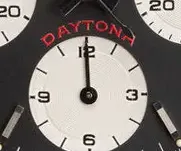
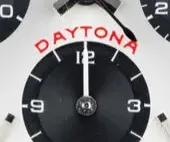
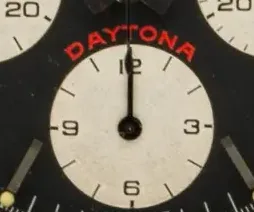
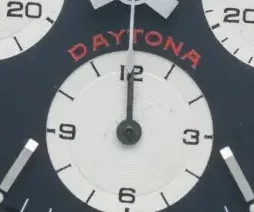
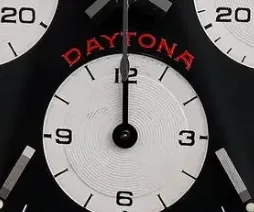
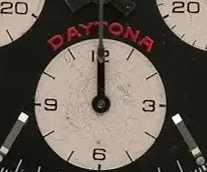
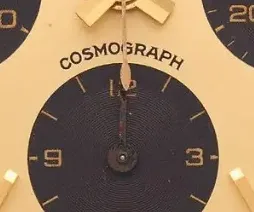
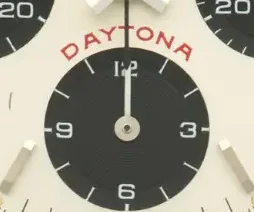
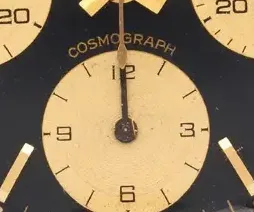
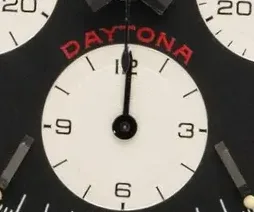
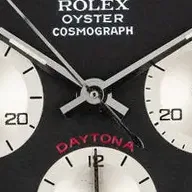
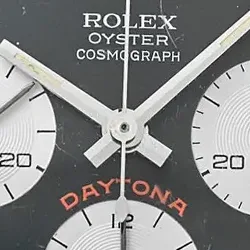
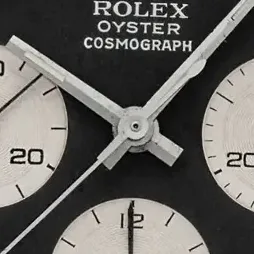
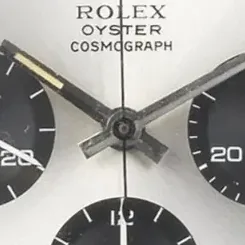
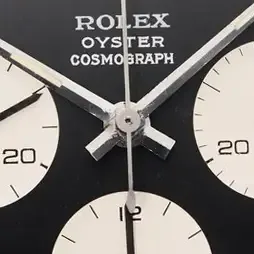
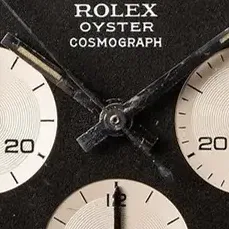
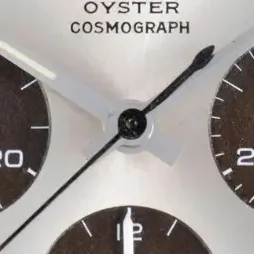
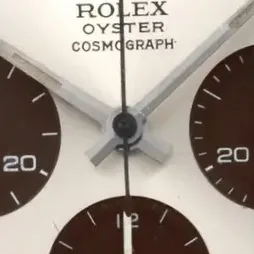
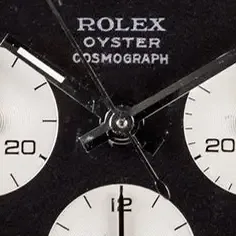
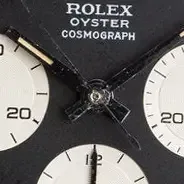
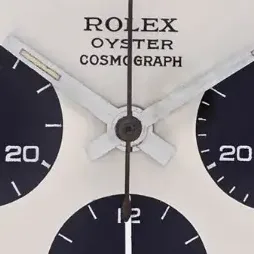
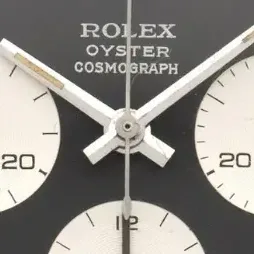
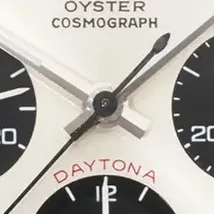
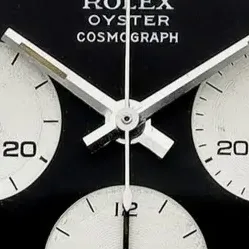
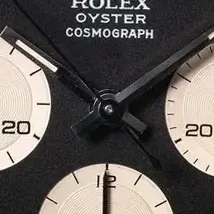
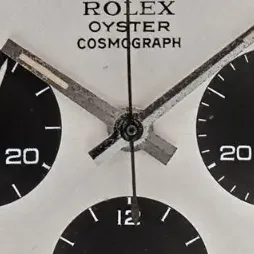
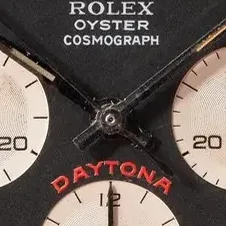
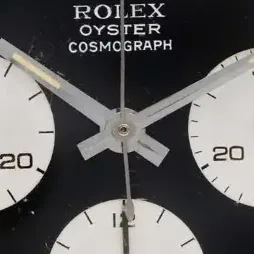
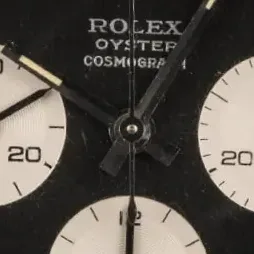
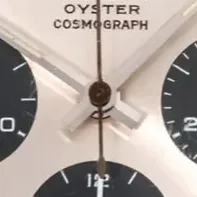
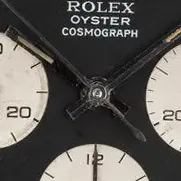
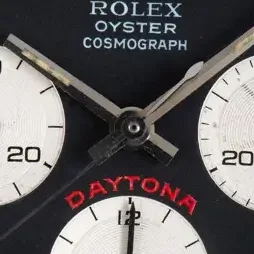
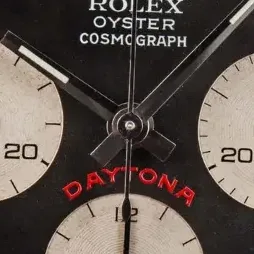
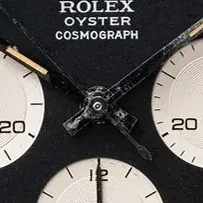
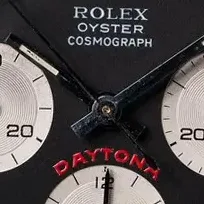
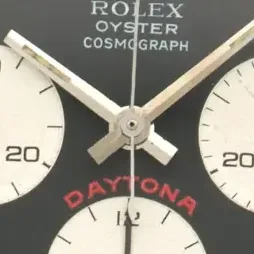
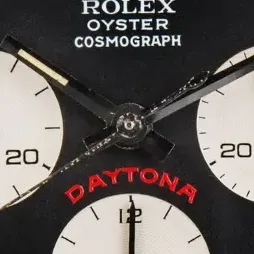
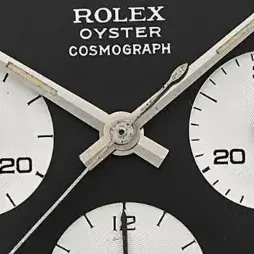
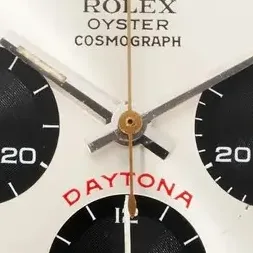
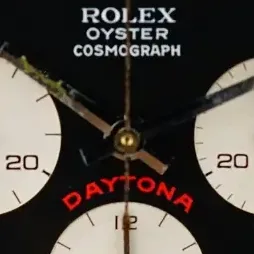
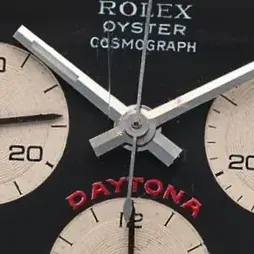
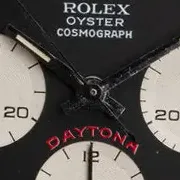
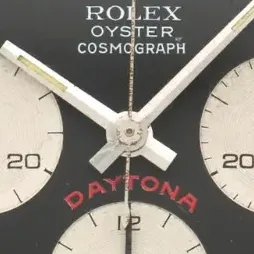
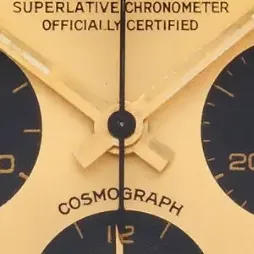
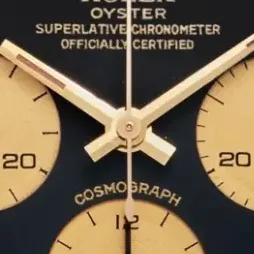
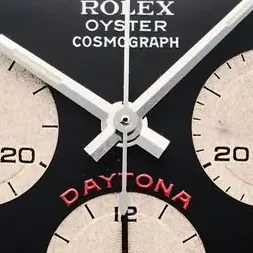
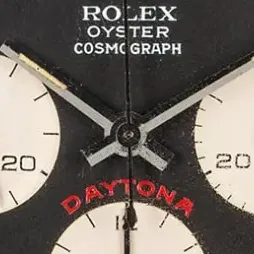
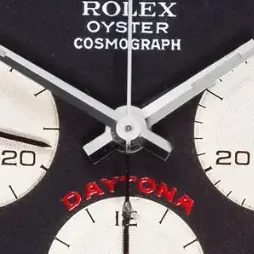
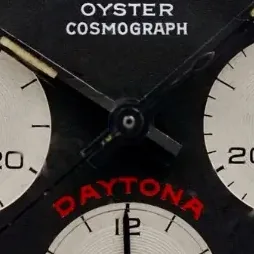
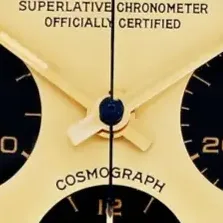
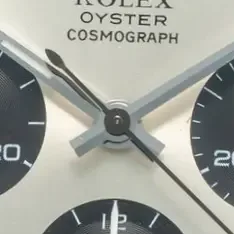
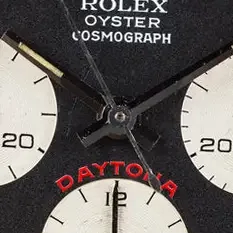
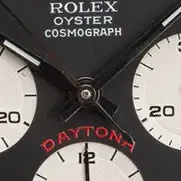
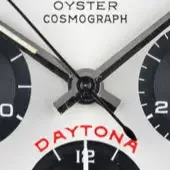
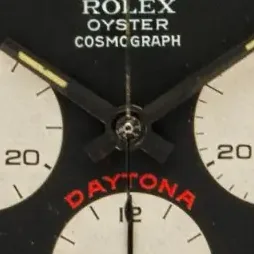
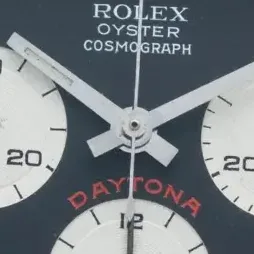
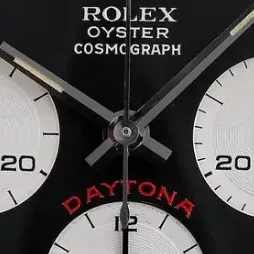
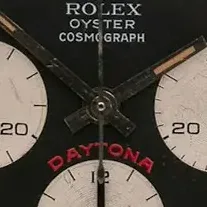
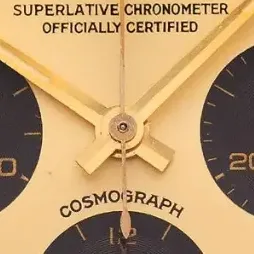
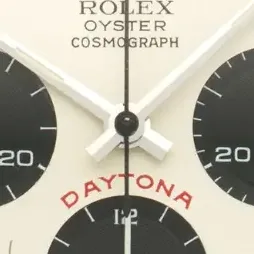
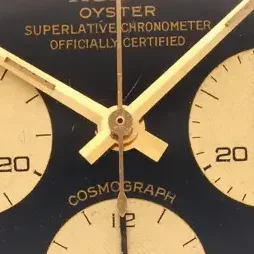
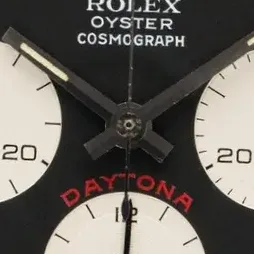
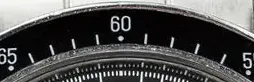
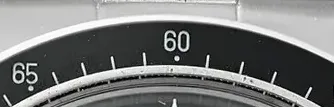
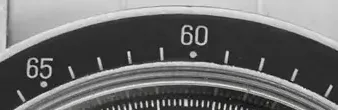
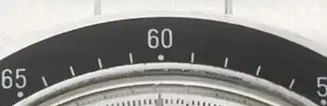
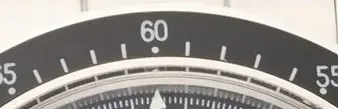
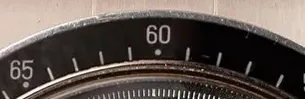
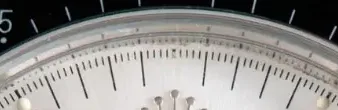
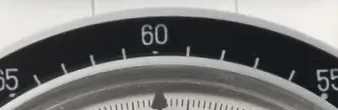
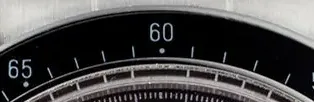


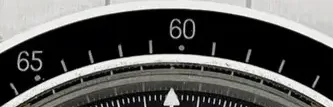
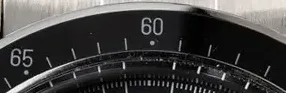
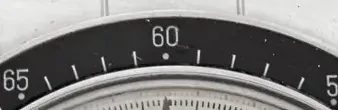
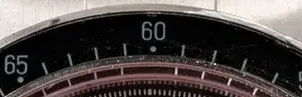
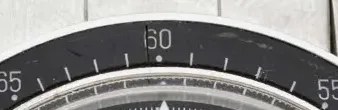
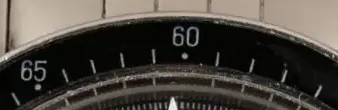
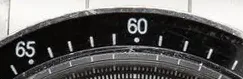

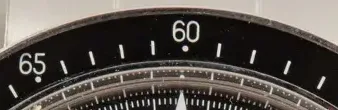
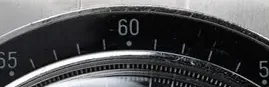
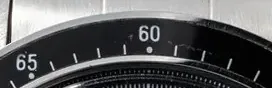

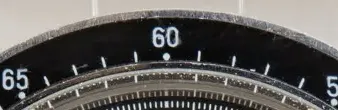
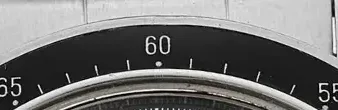
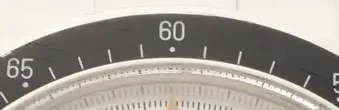
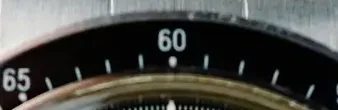
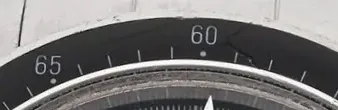
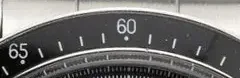

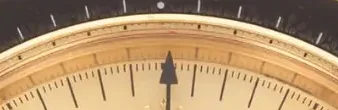
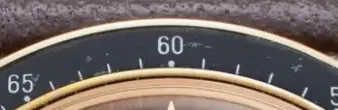
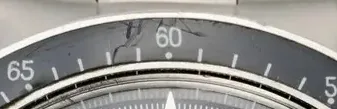
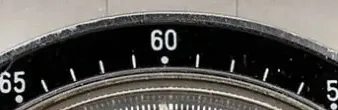
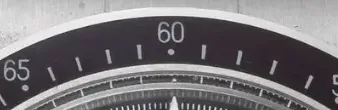
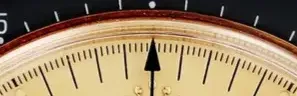
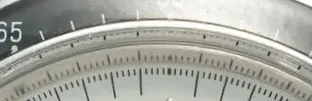
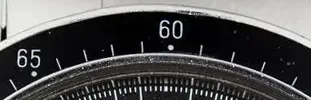
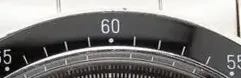
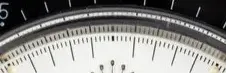
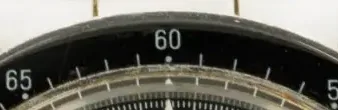
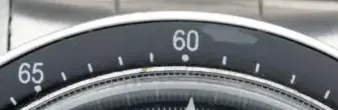
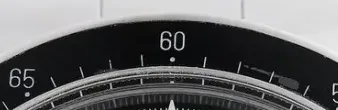
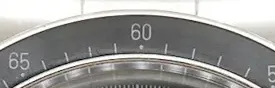
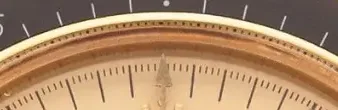

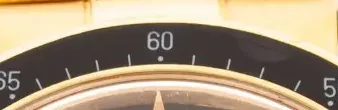

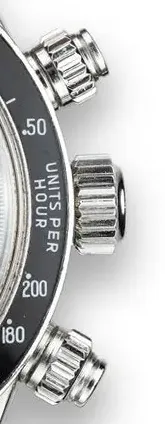
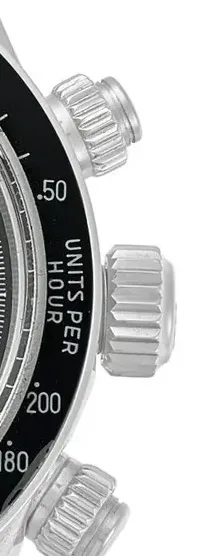
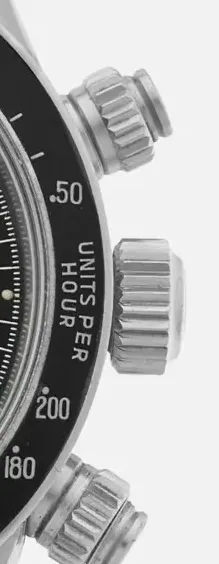
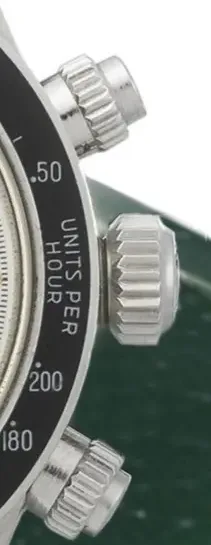
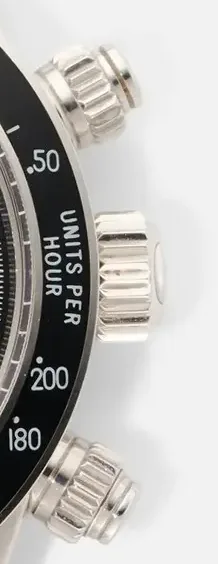
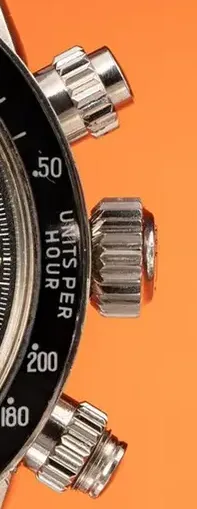
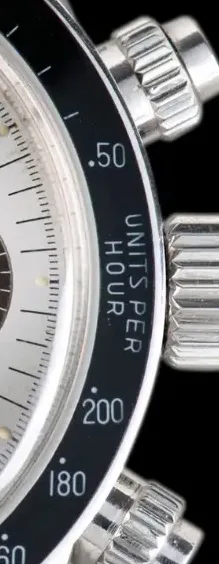
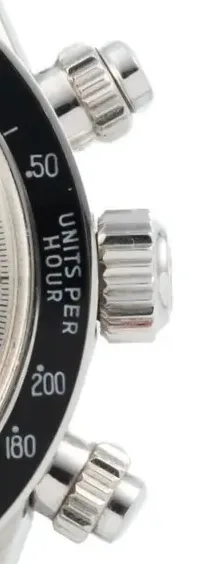
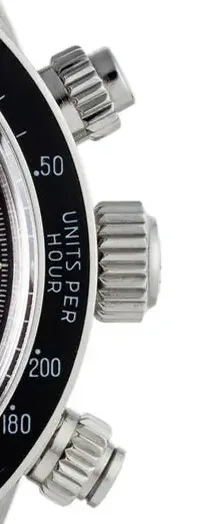
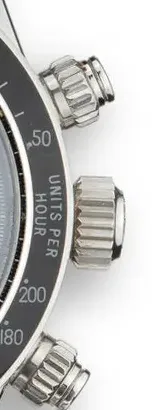
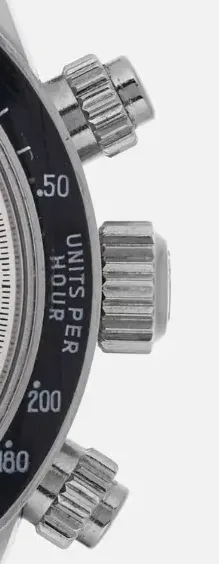
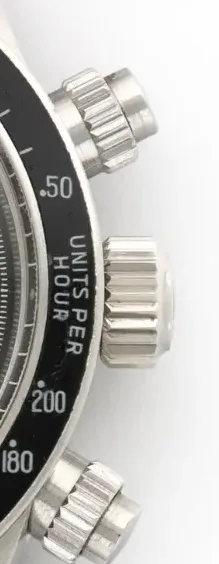
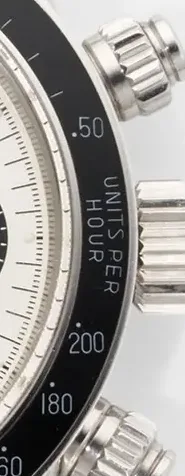
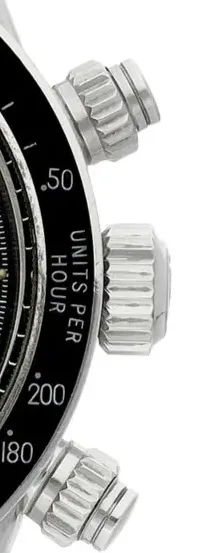
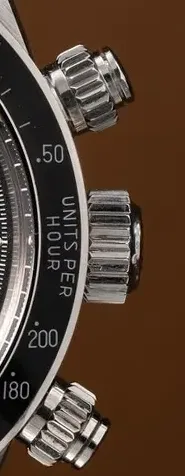
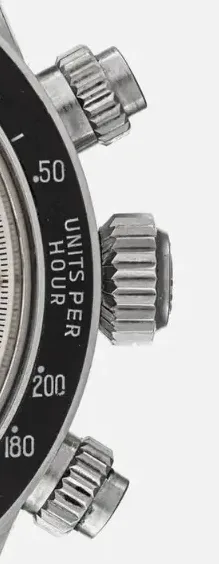
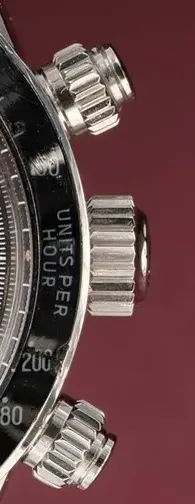
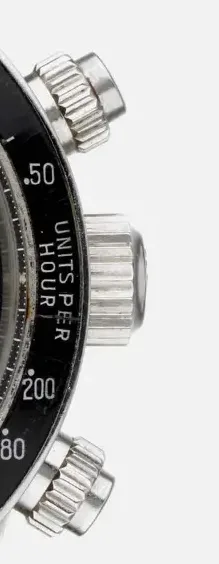
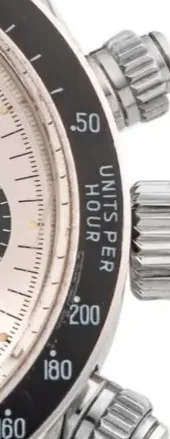
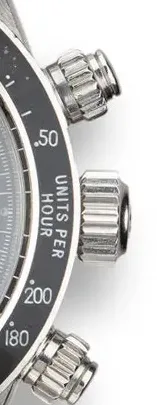
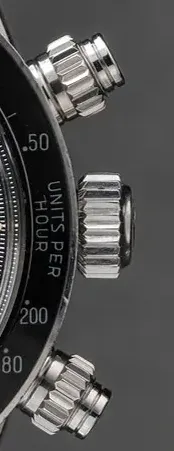
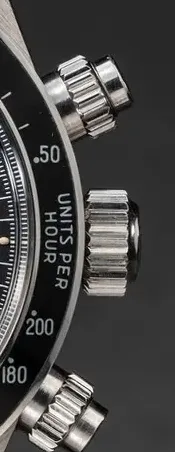
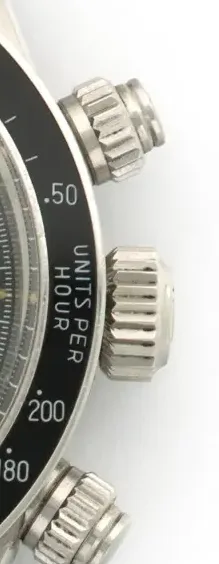
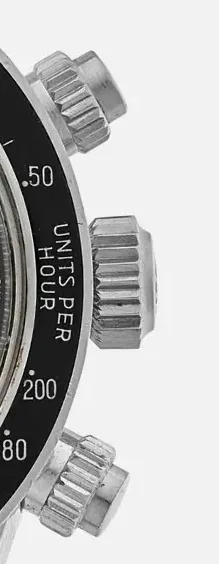
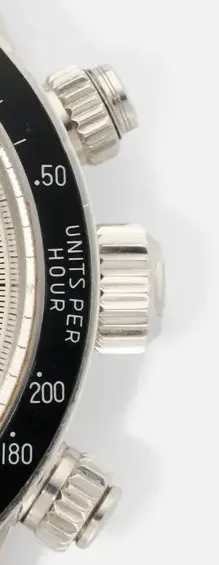
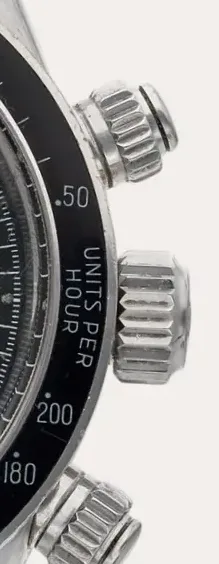
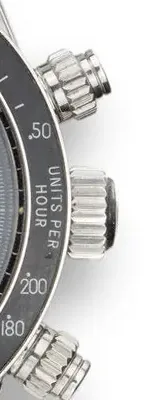
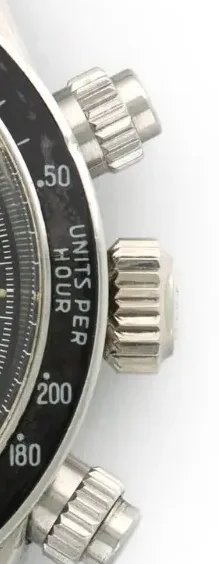
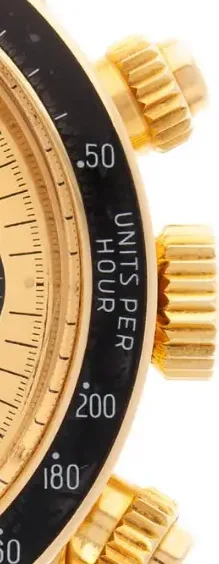
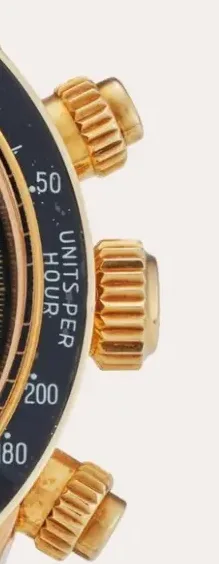
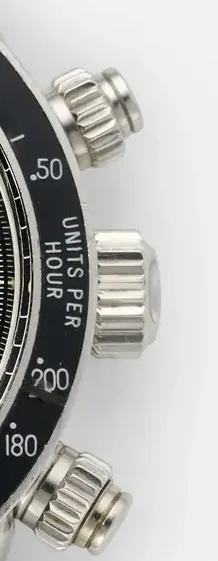
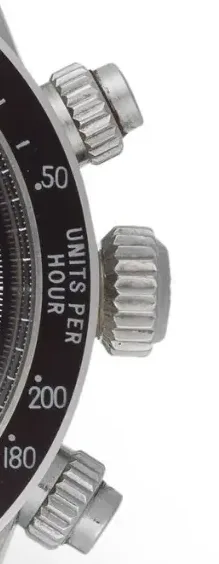
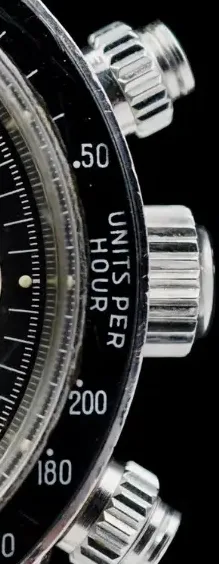
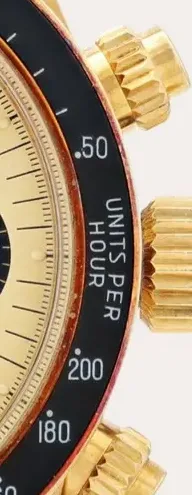
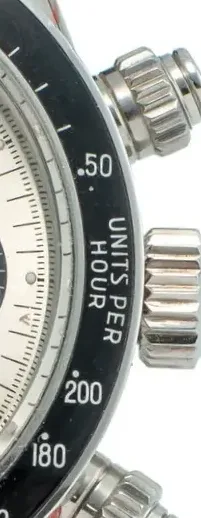
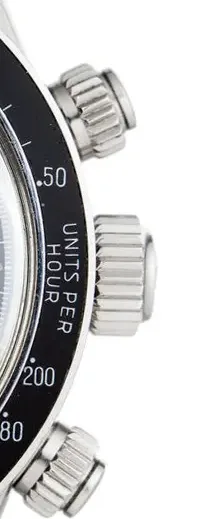
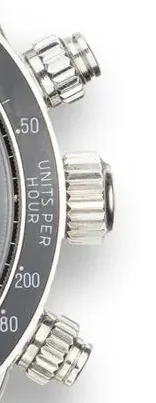
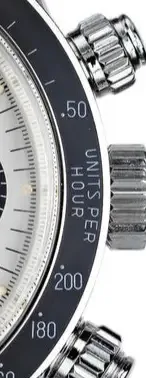
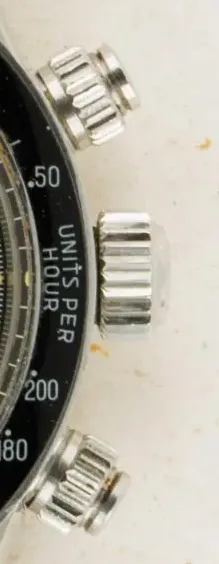
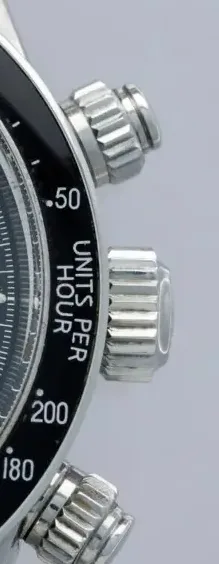
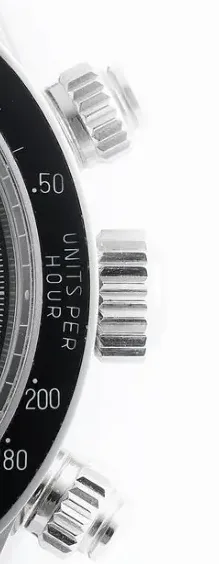
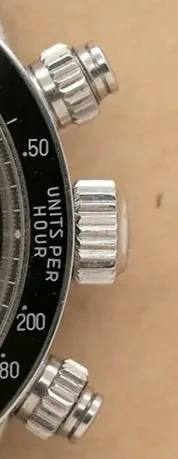
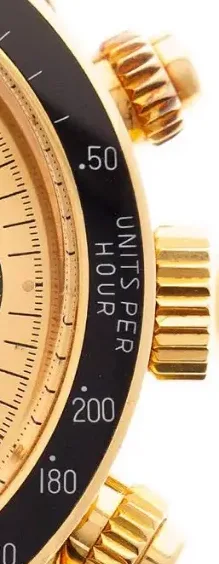
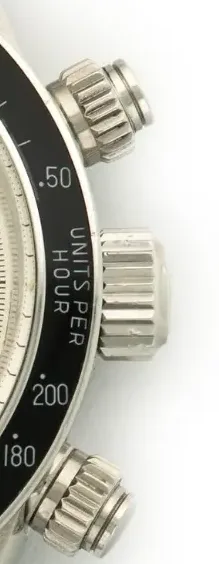
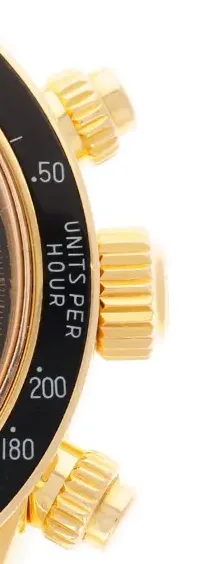
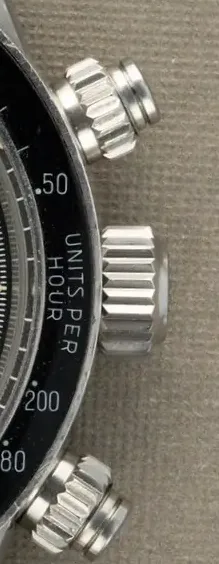
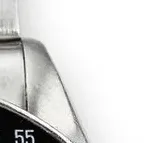
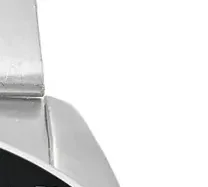
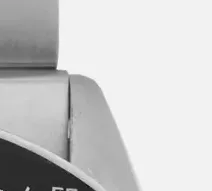
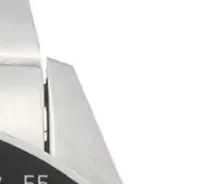

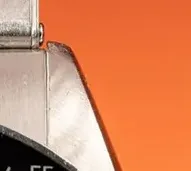
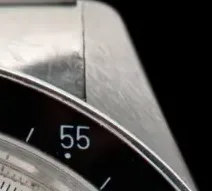
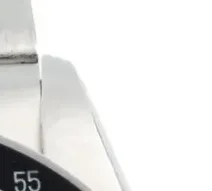
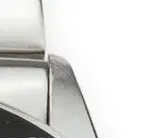
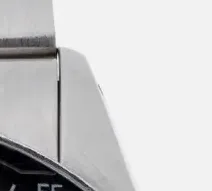

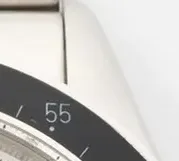
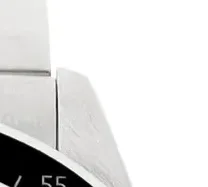
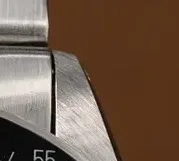
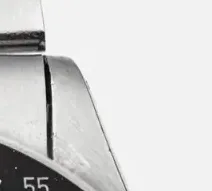
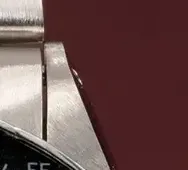
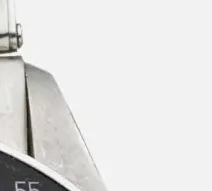
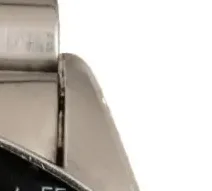
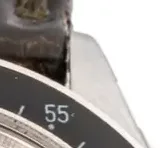
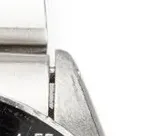
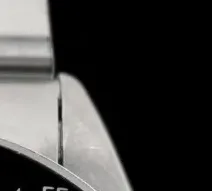
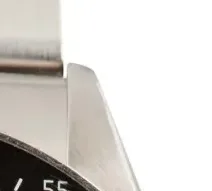
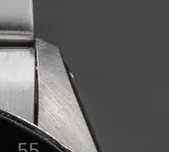
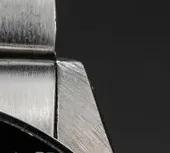

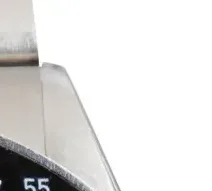
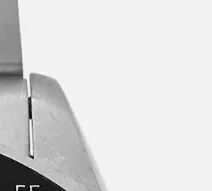




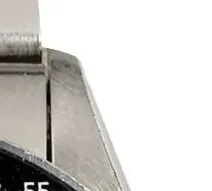
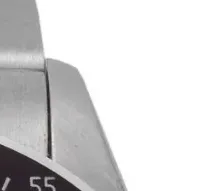
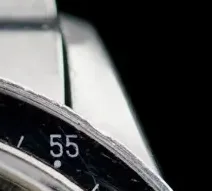
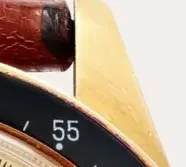
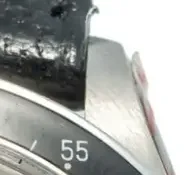
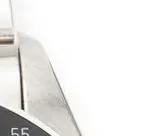
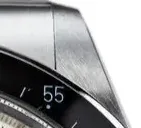


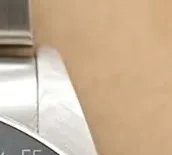
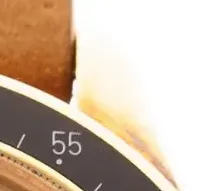


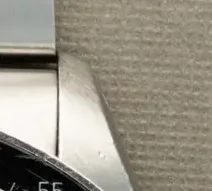


Illustrated history of the 6263: every change set out with close-up photographs of dated watches.
Chronology
Guides give starts from 1969 to 1971 and ends of 1987 or 1988; case numbers in the library's records run from 1969 to 1988, with most watches between 1971 and 1987.
Every dated variant: what is written, and what the records show
For the reference the marks are every dated watch; for a variant, the watches a seller names as that variant, so a variant sellers do not name has none.
The reference's own marks are dated by case number. A variant's marks use the year each seller states, so a variant can show watches in a year where the row for the reference shows fewer, or none.
Specification
| Case | 37 mm (sellers often write 38 mm), about 13 mm thick including the crystal; steel, 14k yellow gold (American market) and 18k yellow gold; no crown guards; screw-down caseback; 19 mm lug width |
| Crystal | Domed or box-shaped acrylic |
| Bezel | Black acrylic insert with white printed tachymeter scale calibrated to 200 units per hour |
| Pushers and crown | Screw-down chronograph pushers, with fine vertical ridging matching the crown; Oyster Twinlock 700 crown, later Triplock 700 |
| Movement | Hand-wound Valjoux-based Rolex Cal. 727, 17 jewels, 21,600 vibrations per hour, 48-hour reserve |
| Bracelet | Oyster, first riveted or folded, later solid links; steel watches commonly on 78350 with 571 or 557 end links; gold watches on gold bracelets, some 14k on a Jubilee |
| Water resistance | 50 m on 1970s watches; some accounts give 100 m, with a doubling to 100 m put in the early 1980s |
Dial 20 described
6263 dials begin with Cosmograph-only and exotic types, take on the Daytona name around 1975 and end with the red-lettered Big Red and service dials. Steel watches carry black or silver dials and gold ones black, champagne or gold. Fonts and the lettering of the lower line identify the early types.
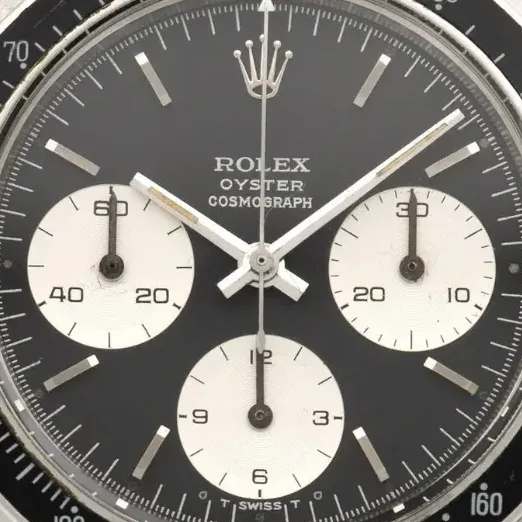
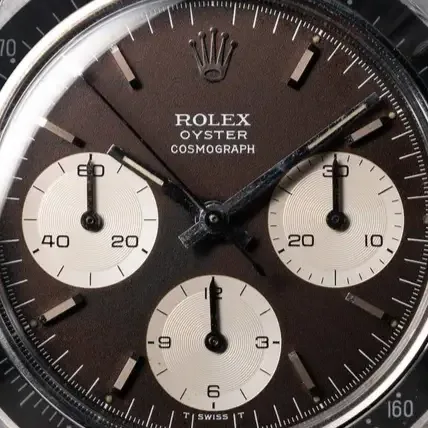
Cosmograph only, no Daytona
Early dials show Cosmograph below the Rolex logo, with Oyster, and no Daytona word. The Daytona name had first been printed on four-digit dials from 1965 but became standard only much later; on the 6263 it is put at about 1975. Some 6263s carry no Daytona name at all, and among those that do, the size of the lettering varies.
- Cosmograph under the Rolex name
- no Daytona text
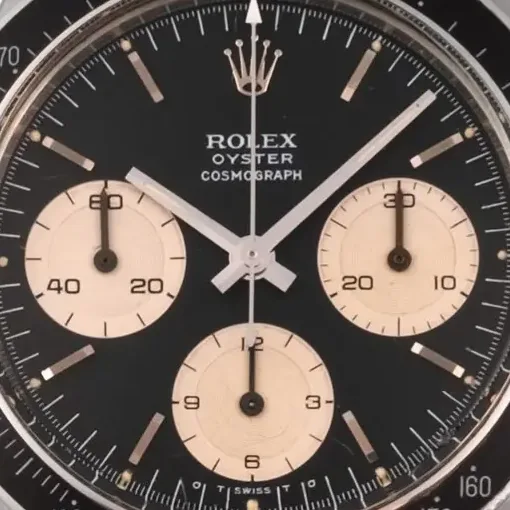



Paul Newman exotic
case numbers 2.08M to early 3M
Art Deco numerals and square-ended hash marks on the registers, running-seconds numerals 15, 30, 45 and 60 on the 9 o'clock register instead of 20, 40 and 60, and registers in a contrasting colour. Colourways are white with black registers and black with white; yellow gold watches pair black and champagne. The black dial is the rarer. Registers carry two colours on white dials and three on black. A true exotic dial is fitted by Rolex. The type is usually dated 1969 to 1971, and placed from about case number 2.08M up into the early 3M range; case numbers around 3.0M are elsewhere put at about 1972, so the last may be a little later. Few were wanted when new.
- Art Deco register numerals
- square-ended hash marks
- contrasting registers
Panda (Paul Newman)
case numbers to early 3M
White dial, black registers, and a black bezel to finish the panda effect; the dial reads OYSTER with no red Daytona. Mark 2 pandas run up to the early 3M case numbers. They differ from the Baby Panda of the 6262 and 6264 in lacking red Daytona text. Dated watches that sellers describe this way fall mostly between 1969 and 1973; those are the years of the watches so described, which is not a stated span of production.
- white dial, black registers
- OYSTER, no Daytona
Rolex Oyster Cosmograph, Oyster Sotto
case numbers 2.08M upward
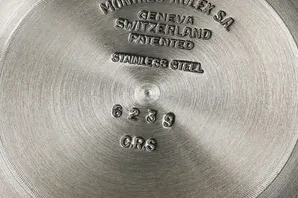
The black-dial Newman with the dial reading Rolex Oyster Cosmograph, abbreviated ROC or RCO, with Oyster set beneath Cosmograph at 12 o'clock. Unlike the panda it carries red Daytona above the 6 o'clock register. The dial signals the Oyster case; the gold 6262 and 6264 of the time read only Rolex Cosmograph. One 1969 example is stamped 6239 inside the caseback.
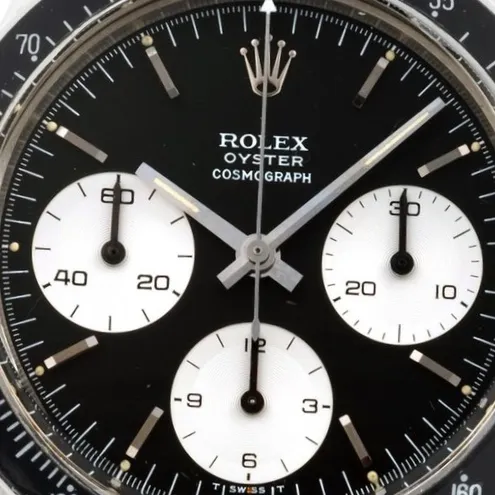

- Oyster beneath Cosmograph
- red Daytona
94 listings on record under the name.
ROC Mark 1
case numbers 2.08M
The Mark 1 ROC dial has the older ROLEX lettering of the 6239 and 6241; it turns up often around 2.08M. On all three Mark 1 variants the words OYSTER and COSMOGRAPH share one font. Dated watches that sellers describe this way fall mostly between 1969 and 1971; those are the years of the watches so described, which is not a stated span of production.
- ROLEX in the 6239/6241 font
ROC Mark 1.75
case numbers 2.2M to 2.6M
A fourth white ROC Newman type between Mark 1 or 1.5 and Mark 2: ROLEX in a different face, the R has a downward serif on its leg, the E a longer arm, and the X leans slightly. Six are documented on 6263s, four around the 2.2M range and two around 2.6M, with one more on a 6265 at 2.8M. Marks 1.5 and 1.75 are transitions towards Mark 2.
- R with downward serif on the leg
- long-armed E
- slightly italic X
ROC Mark 2
ROLEX in a blockier, more silvery face, shared with the black Newman dials of the 6262 and 6264. Some Mark 2 dials print the ROC text slightly lower; these come mostly near the end of exotic dial production.
- blocky silvery ROLEX font
- ROC text set low
Lemon Paul Newman (gold)
case numbers 2.33M
An 18k gold 6263 with Oyster on the dial and an intense saturated yellow dial, distinct from the usual cream or champagne, with white print and engine-turned registers. Only three are publicly known, all with case numbers in the 2,330,xxx range; the first came to public notice at auction in 2013 and was long thought not to exist. Almost all gold exotic watches have pump pushers, and these are the only known ones with screw-down pushers. Accounts differ on its year; one calls it a 1969 watch.
- vivid yellow dial
- 18k gold case
- screw-down pushers
- black bezel
Sigma
case numbers 3.0M to 5.5M
Two small Greek sigma letters flank T SWISS MADE T beneath the 6 o'clock marker, showing solid gold hour markers: white gold on silver dials, yellow gold on champagne. Published accounts place it loosely in the 1970s, with the first sigma dials at about case number 3.0M, put at 1972. Sellers describe it on watches with case numbers from about 3.0M to about 5.5M; those are the numbers of the watches so described, not a span of production.
- sigma letters either side of T SWISS MADE T
- solid gold markers
Big Red
Bold red Daytona lettering arched above the 6 o'clock register on a black or silver steel dial with contrasting registers, giving a black, red and white dial. It came with the 6263 and 6265 generation, in large (Big Red) or small (Small Red) lettering. Sellers name it mostly on watches of 1978 to 1983; those are the years of the watches so described, not a span of production.
- extra-large red Daytona above the 6 o'clock register
Small Red
The same red lettering in a smaller size; the font size varies from dial to dial.
- small red Daytona text
Big Red Floating
The Daytona print is set further from the 6 o'clock register than on other Big Red dials. A 'Floating' small-red dial with case number 5503766 was judged a service dial. Sellers describe 'Floating Cosmograph' on a few 1976 to 1977 watches.
- Daytona text away from the register
Big Red Sigma
Dials combining red Daytona and sigma letters are described as especially rare.
- red Daytona and sigma letters
Big Eyes
case numbers 3M
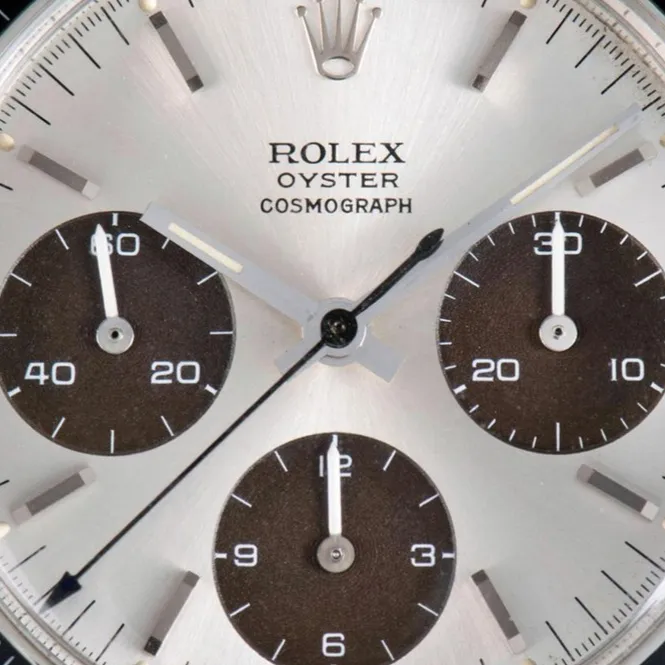
Slightly larger registers, from a thicker rim on the outer edge of the concentric circles, found mainly in the 3M case-number range. The Daytona name is omitted: either they were test dials for the 6263 and 6265 or the large registers left no room. Telltale details are low-set ROLEX OYSTER COSMOGRAPH text in a heavy-serifed face with a particular R, and a T SWISS T line almost touching the bottom of the 6 o'clock register. Registers can turn brown, from chocolate to aubergine.
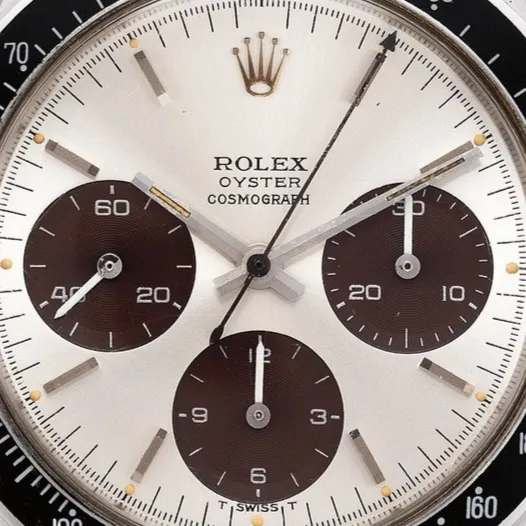

- thicker ring round the registers
- no Daytona text
4 listings on record under the name.
Tropical
case numbers 2.75M to 3.50M
A brown dial belongs mostly to one stretch of case numbers, 2.75M to 3.50M, where sellers call about a third of the watches tropical. Dated watches that sellers describe this way fall mostly between 1971 and 1974; those are the years of the watches so described, which is not a stated span of production.

Albino
An all-silver single-colour dial reading Rolex Oyster Cosmograph with no tachymeter scale; three are known, each with a different hand set. One account treats them as assembled watches with a 6238-era service dial transplanted from the late 1990s on, though auction houses have sold them as Albino. They carry thin tapered register hands rather than the wider straight hands correct for the 6263.
- all-silver dial
- no tachymeter scale
- thin tapered register hands
SCOC
Only gold 6263 and 6265 watches carried Superlative Chronometer Officially Certified on the dial, with chronometer papers titled Attestation de Chronometre Officiel.
- Oyster SCOC Cosmograph text on gold
Retailer and issue dials
Dials are known signed Tiffany & Co., with the Omani Khanjar emblem, and with the UAE 'Desert Eagle' emblem; sellers describe a small number of each. Watches made for the Peruvian air force are marked on the caseback, not the dial. Some listings counted as UAE only carry an auction notice about import duty.
- Tiffany & Co. signature
- Khanjar emblem
- UAE eagle emblem
T Swiss T lettering
On Newman dials the T SWISS T line changed three times: wide and rising towards the centre (6239 and 6241), narrower but still rising, then narrow with equal-height letters, called flat (6262 and 6264). Early dials show the rising 'pyramid' form. A dial with the wrong style for its case number is suspect.
- pyramid or flat T SWISS T
Service dials
Later service dials carry a small red Daytona above the 6 o'clock register. On period dials the hour markers are neatly attached; markers whose pins have been ground down, or are painted thinly and flat, indicate a later-made dial. Dated watches that sellers describe this way fall mostly between 1978 and 1983; those are the years of the watches so described, which is not a stated span of production.
- ground-down marker pins
- thin flat paint on markers
Luminous material 1 described
Tritium is the original luminous material.
Tritium
Original plots age to an even warm tone, and on correct gold Newman dials to cream; a mix of bright white and cream plots hints at replaced hands or dial parts. Sellers note tritium on many watches, and a few as relumed or with Luminova.
- even cream tritium patina
Hands 1 described
The literature gives little on hands for the standard watch.
Albino hands
Albino examples carry thin tapered register hands from the 6238 era, with the register hands sitting high; each of the three known has a different hand set.
- thin tapered register hands
Subregisters 2 described
Three registers at 3, 6 and 9 o'clock count 12-hour, running-seconds and 30-minute time, with no date window.
Register layout
Standard 6263 registers are at 3, 6 and 9 o'clock, with no date.
- three registers
Big Eyes brown registers
case numbers 3M
On Big Eyes dials the registers can turn from deep chocolate to aubergine.
- brown registers
Bezel 1 described
The 6263 has a black acrylic insert; its twin the 6265 differs only in its engraved steel bezel.
Black acrylic bezel
A fixed black plastic (bakelite) insert with a white printed tachymeter scale to 200 units per hour; it is fragile and often replaced, and makes the watch look slightly larger than the metal-bezel versions. Sellers record a Mark 1, Mark 2 and Mark 3 insert, naming Mark 1 mostly on watches of 1970 to 1975 and Mark 3 on watches of 1978 to 1984; those are the years of the watches so described, not spans of production. Sellers also record a number of service replacements.
- black insert, white scale
- 200 units per hour
Case 4 described
A 37 mm case with short lugs and no crown guards, in steel and gold.
Steel
The usual metal; slightly larger than the 6240 case.
14k yellow gold
Made for the American market.
18k yellow gold
Sellers state 18k mostly for 1978 to 1985.
Caseback stamps
case numbers 4.018M and 4.049M
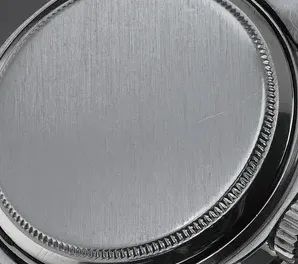
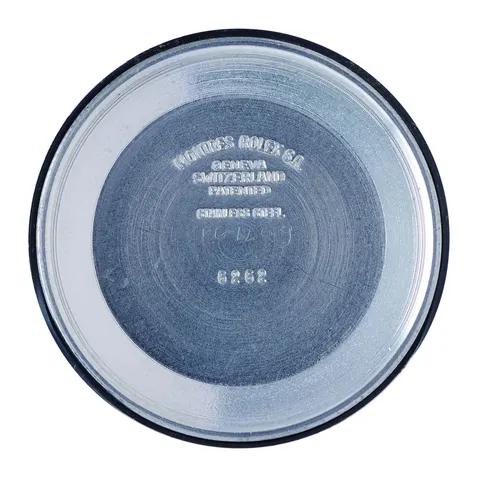
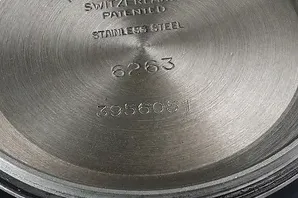
Early 6263 and 6265 casebacks often carry another reference number, such as 6239 or 6262, since Rolex used up its stock of old casebacks; in the library's records this is the usual case on early watches, and the 6263's own number becomes the rule only in the later case-number ranges. The stamp alone therefore proves little. Markings of the type seen on a gold 6263 with a 3.3M number appeared only in the 5M range. Peruvian air force watches have Fuerza Aerea del Peru engraved outside and the case number inside, in batches around 4,018,000 and 4,049,000.
- 6239 or 6262 stamped inside caseback
- FAP engraving
Crown and pushers 4 described
Screw-down pushers are the defining change from the pump-pusher Daytonas and bring Oyster onto the dial. They first appeared on the 6240, and the 6263 has an evolved form.
Screw-down Mark 0 pushers
Early finely knurled pushers of the 6240 and early 6263 are steel with deeper knurling when correct for a 1971 case number. Dated watches that sellers describe this way fall mostly between 1969 and 1971; those are the years of the watches so described, which is not a stated span of production.
- fine deep knurling
Screw-down pushers
Fine vertical ridges that match the crown; smooth or flattened ridges mean replaced pushers.
- vertical ridging matching the crown
Twinlock 700 crown
The crown is the Oyster Twinlock 700, a large 700-series crown.
Triplock 700 crown
Replaced the Twinlock later in the run. Dated watches that sellers describe this way fall mostly between 1978 and 1983; those are the years of the watches so described, which is not a stated span of production.
Crystal 1 described
Acrylic, domed or box-shaped.
Acrylic
Domed or box-shaped acrylic; the few sapphire crystals sellers mention are replacements.
- domed acrylic
Movement 1 described
Valjoux 727 throughout, replacing the 722.
Cal. 727
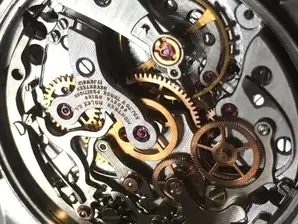
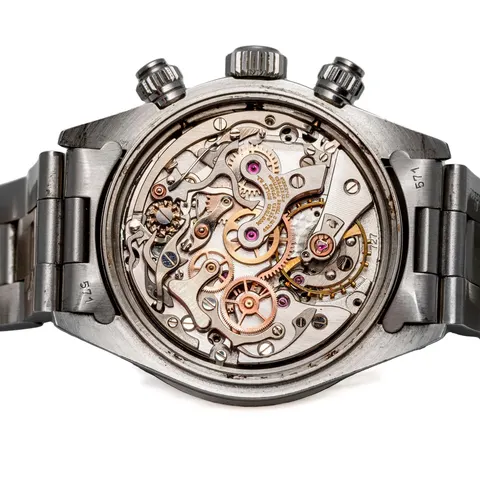
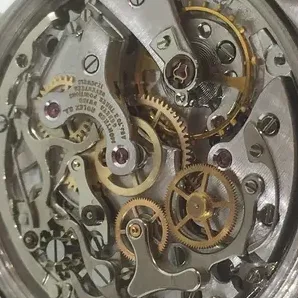
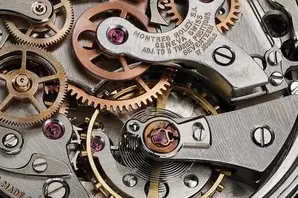
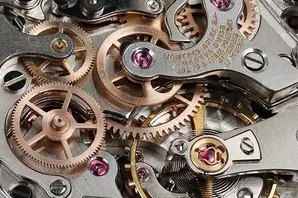
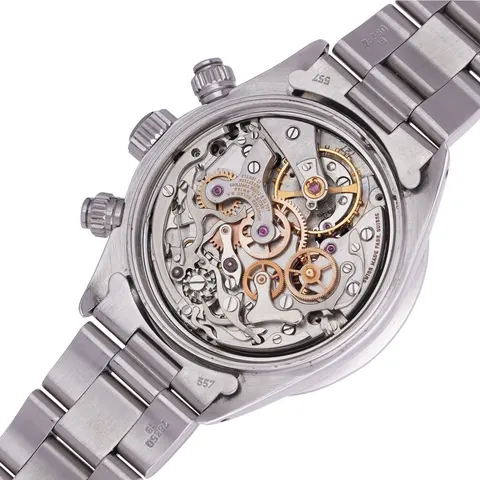
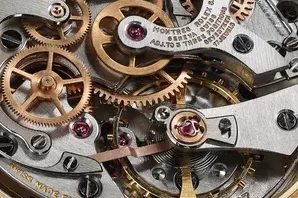
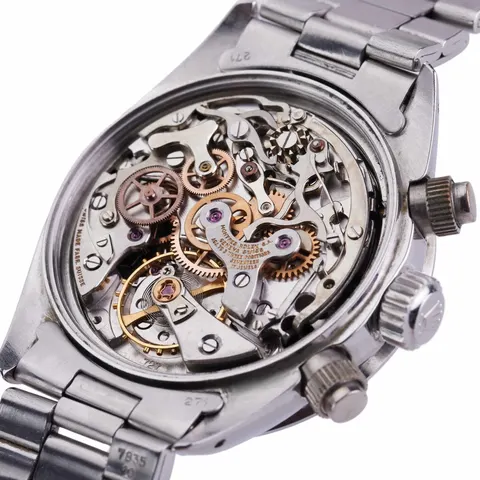
A hand-wound development of the Valjoux 72, 17 jewels, 21,600 vph, 48-hour reserve, replacing the 722 at 18,000 vph. All vintage Daytona movements share a two-screw adjustable jumper for the minute recorder; a jumper that cannot be adjusted belongs to an older Valjoux 72. A Y3 stamp on the main plate points to a later Valjoux 726 or 730 plate, not an original 727.
- two-screw jumper
Bracelet 3 described
Bracelets moved from riveted and folded to solid links.
Oyster riveted and folded
Earlier watches on riveted or folded Oyster bracelets. Sellers describe 7835 bracelets with 271 end links on watches of 1971 to 1972; those are the years of the watches so described, not a span of production.
Oyster 78350
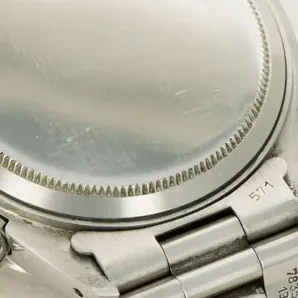
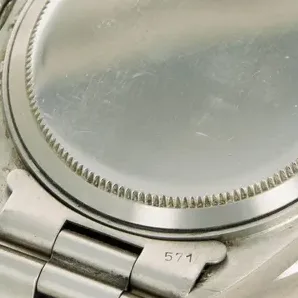
The 78350 Oyster, usually described as a solid-link bracelet, though one account calls it folded and gives 557 end links; others give 571 end links. Sellers name 571 end links mostly on watches of 1976 to 1981; those are the years of the watches so described, not a span of production. One 1989 clasp stamp N4 sits on a three-link bracelet with 13 links.
- 78350
- 571 end links
Gold and Jubilee
Gold watches have matching gold bracelets; some 14k American examples have a Jubilee-style one, and sellers record a few Jubilees. Dated watches that sellers describe this way fall mostly between 1972 and 1976; those are the years of the watches so described, which is not a stated span of production.
Originality
- Pushers should show fine vertical ridging matching the crown; smooth or flat ridges mean replacement.
- Acrylic bezel inserts are fragile and often replaced; sellers record a number of service replacements.
- A mix of bright white and cream lume plots hints that hands or dial parts were replaced.
- Newman dials swapped from other watches show in the wrong T SWISS T style or ROLEX font for the case number, in missing seconds-ring steps and in ground-down marker pins.
- Caseback stamps and bracelet clasp date codes need checking against the case number.
- The Y3 mark on a main plate, or a non-adjustable minute jumper, means a movement part is not original.
Names
- Big Red. Large red Daytona lettering above the 6 o'clock register.
- Paul Newman. Exotic dial type, named by dealers in the 1980s.
- Panda. White dial with black registers.
- Sigma. Greek sigma letters beside T SWISS MADE T.
- Albino. All-silver single-colour dial.
- Big Eyes. Enlarged registers.
- Oyster Sotto. Oyster printed beneath Cosmograph.
Where accounts differ
Points on which the published literature and the library's own records do not agree, or on which the literature contradicts itself.
- Years of production. Several accounts put the introduction in 1969 and one gives 1969 to 1988; others give 1971 to 1987 or 1988, one has the new references arriving in 1970 to 1971, and one marks the reference discontinued in 1987. Case numbers in the library's records begin in 1969 and reach 1988.
- Water resistance. One account puts the 6263 at 50 m, another at 100 m, and one says the figure doubled in the early 1980s.
- Bezel material. One article gives a stainless steel tachymeter bezel on the black and silver versions; every other account gives black acrylic, and the steel bezel belongs to the 6265.
- First screw-down pushers. One article says the 6263 was the first Daytona with screw-down pushers, against the many accounts placing them first on the 6240.
- Sigma dates. One account dates sigma dials from about 1970 to the close of the decade; another puts the first at about case number 3.0M, in 1972. The library's records confine them to case numbers of about 3.0M to 5.5M.
- End of the Paul Newman dials. One account dates Paul Newman dials on the 6263 to about 1969 to 1971 and also places them from about case number 2.08M into the early 3M range; another account puts case numbers around 3.0M at 1972, and the library's serial charts differ by a year or more over this stretch.
- The 78350 bracelet. One account calls the 78350 on steel 6263s a folded-link bracelet with 557 end links; other accounts describe the 78350 as solid-link and pair it with 571 end links.
Back and movement
From listings of this reference, each confirmed by eye to show what it is filed under. A picture on which a person's name or a personal engraving can be read is not shown. From most holders a detail from the middle of the photograph is shown; the mark in its corner gives its holder and a link to the listing.
Caseback



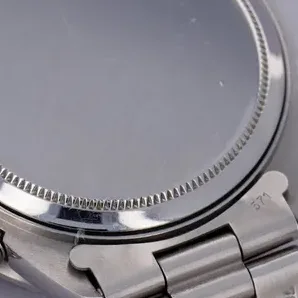

Inside the caseback



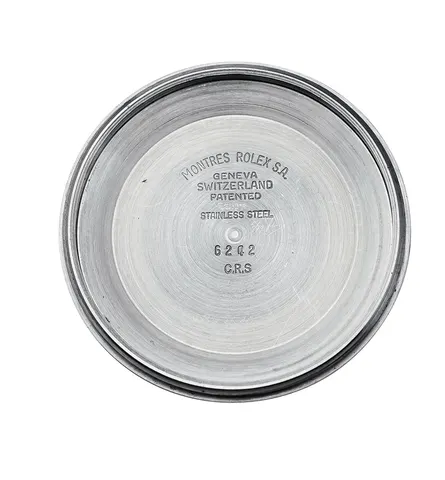

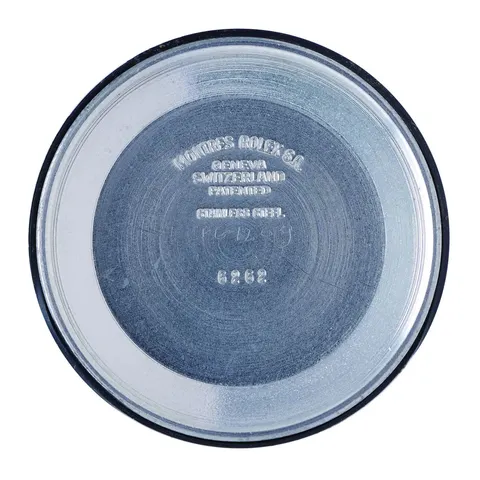

Movement








Catalogue versions 2 listed
The full numbers under which holders list this reference, with what their listings say of each. Each has a page of its own.
| Version | Metal | Dial | Years seen | Records |
|---|---|---|---|---|
| 6263/0 | Steel | Black | 1972–1976 | 3 |
| 6263/8 | Gold | 1979 | 3 |
In the records
Counted from 769 listings at 44 holders between 12 October 2006 and 14 November 2026. These are what sellers and auction houses state, not measurements.
Fainter bars are the 13 outside the main run of 1969–1986 (the middle nine-tenths): the latest is 1988. They are early and late examples, and now and then a number misread.
At the holders that record papers on every watch, 38% of their 21 listings of this reference come with papers; at those that record the box on every watch, 36% of 31 come with a box. "Papers" is whatever the holder counts as papers, and can include service papers.
1 listing dated long after the reference ended is set aside and not counted here: a year that late belongs to a later watch sold under the old number, or to a listing filed under the wrong one.
Case metal
| Steel | 445 | |
| Gold, any colour | 88 | |
| Yellow | 58 | |
| Colour not stated | 30 | |
| Silver | 8 |
A listing that says "gold" or "18K gold" names no colour: it is counted under "colour not stated", not as yellow gold.
Dial colour
| Black | 145 | |
| Silver | 99 | |
| Champagne | 25 | |
| Brown | 11 | |
| Red | 8 | |
| White | 7 | |
| Gold | 4 | |
| Cream | 1 |
Case size
| 37 mm | 198 | |
| 38 mm | 181 | |
| 36 mm | 9 |
Calibre named
| 727 | 374 | |
| 722 | 7 | |
| 2824 | 2 |
Bracelet or strap
| Oyster bracelet | 334 | |
| Metal bracelet, kind not stated | 67 | |
| Leather strap | 21 | |
| Jubilee bracelet | 10 | |
| Strap, kind not stated | 1 |
Each table counts the listings that state the thing, in the seller's own terms. A size, metal, colour or calibre that cannot belong to this reference is a seller's slip or a listing filed under the wrong number.