Submariner (small crown, no date)
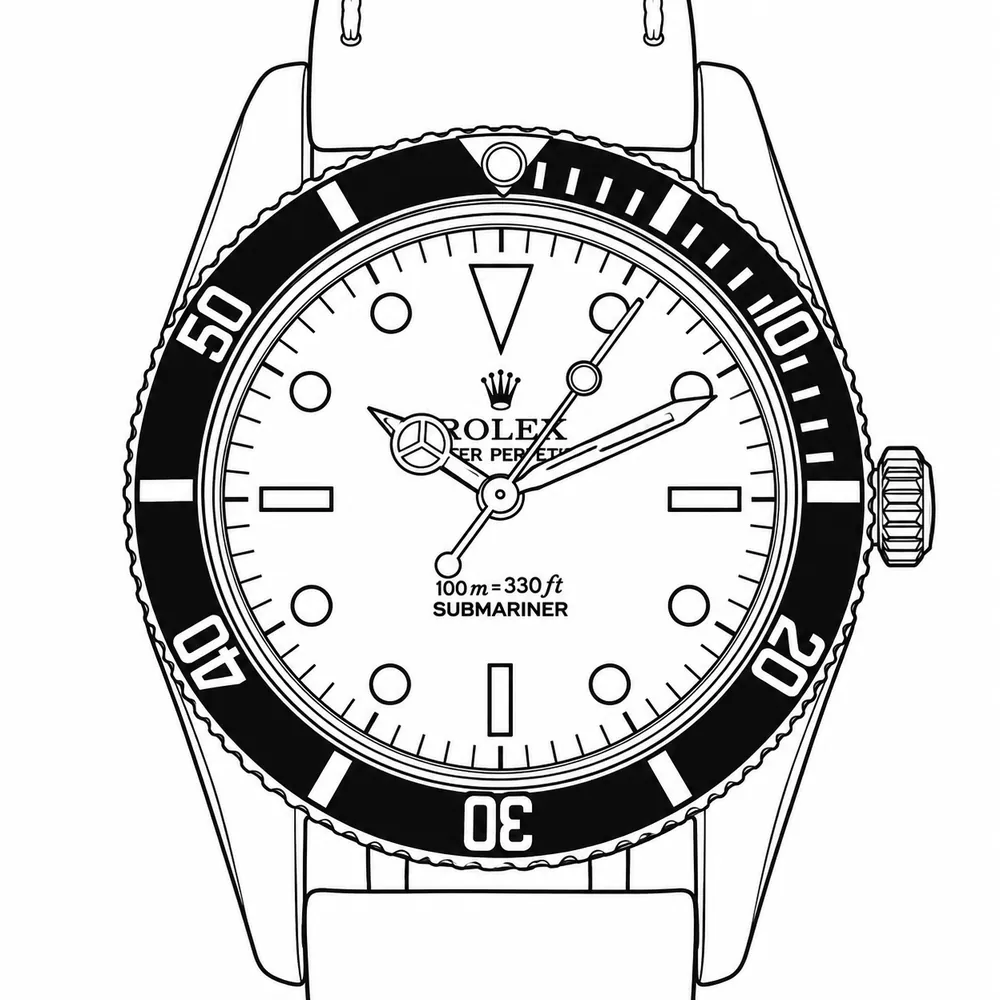
The 5508 is the last of the small-crown Submariners without crown guards. It came in at the end of 1957 or in 1958, after the 6536, and ran to about 1962. It has a steel Oyster case of roughly 37.5 to 38 mm, a 6 mm crown, a 100 metre rating, a gilt gloss dial, Mercedes hands and a riveted bracelet. It came out with the new Caliber 1530, as did the 5510, which one account calls the first Submariner with that movement, and it was the first with quarter-hour graduations on the bezel. It was overlapped by the big-crown 5510 and then replaced by the guarded, 40 mm 5512. Collectors look first at the dial print, the luminous material, the bezel insert and the bracelet.
- Made
- 1958–1962dates approximate
- Seen in the library
- 1958–1962by case numbers
- Case
- steel (99%)as sellers state
- Movement
- Calibre 1530automatic
- On record
- 187 listings659 photographs · 37 holders
Components
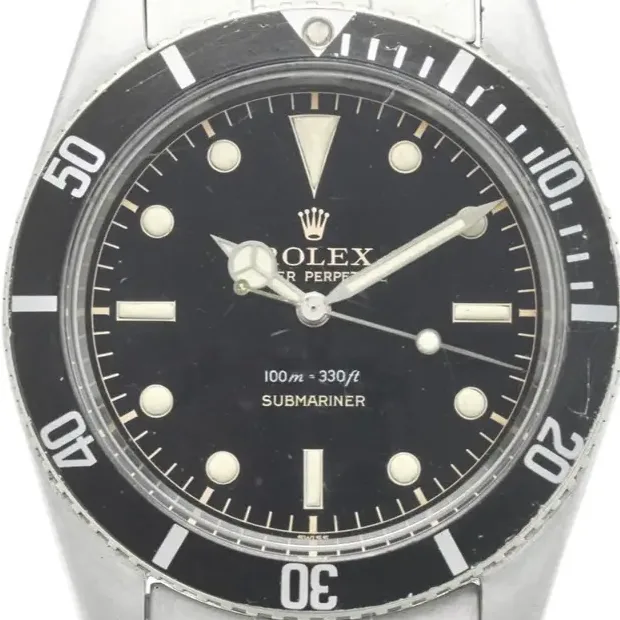
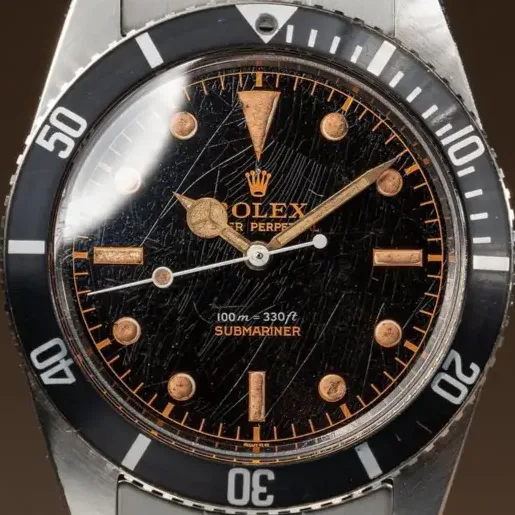
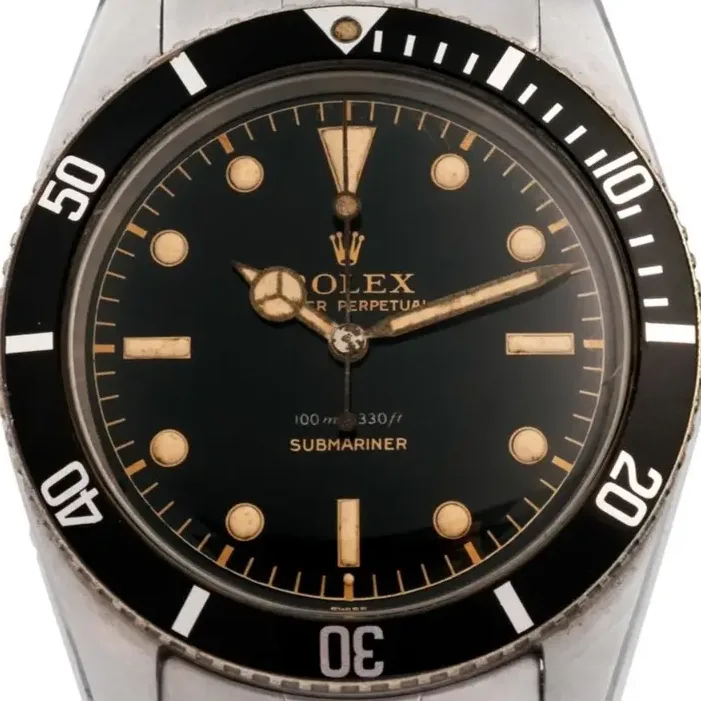
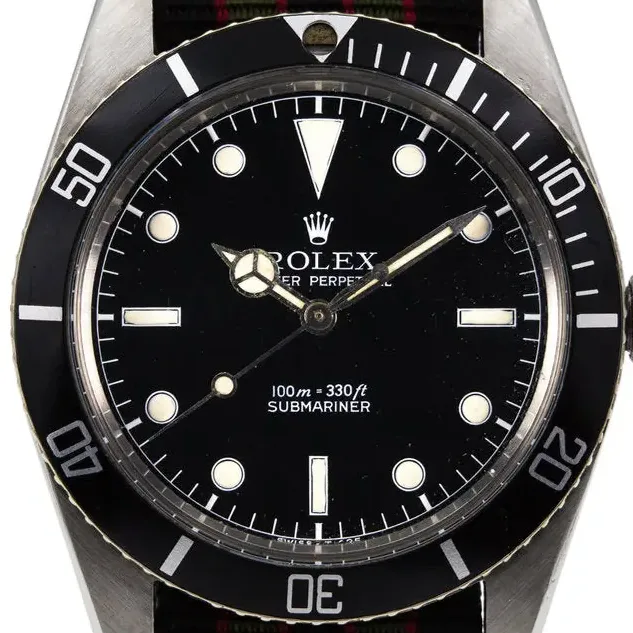
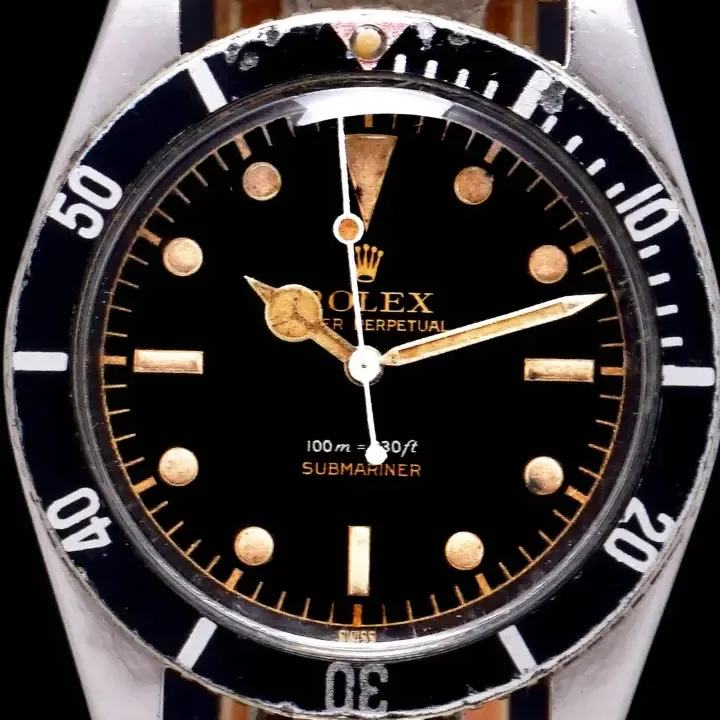
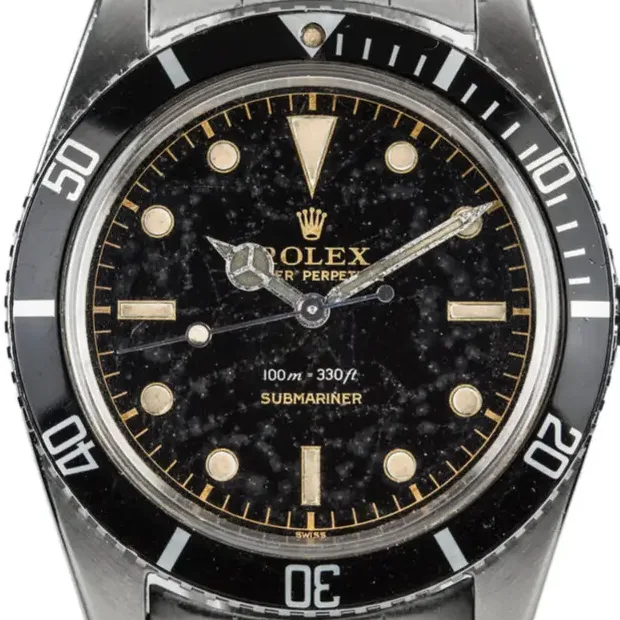
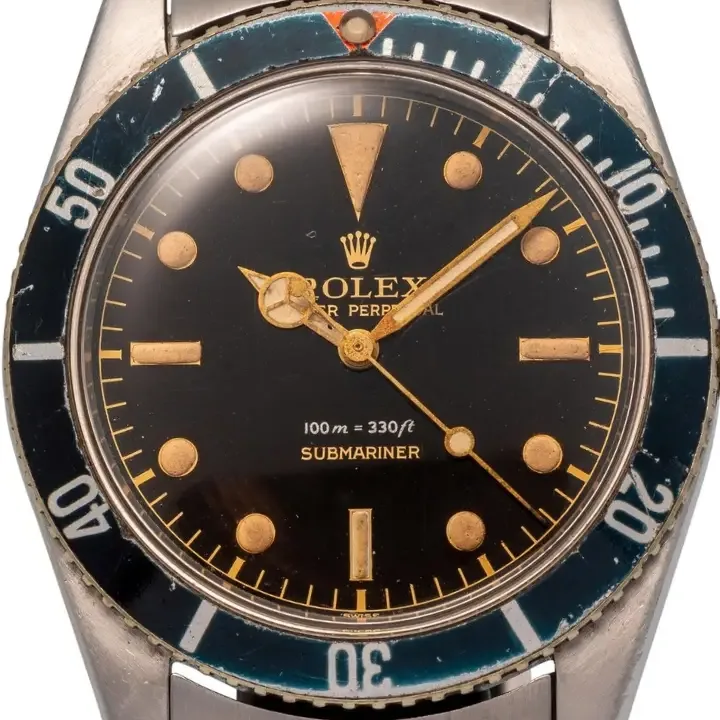
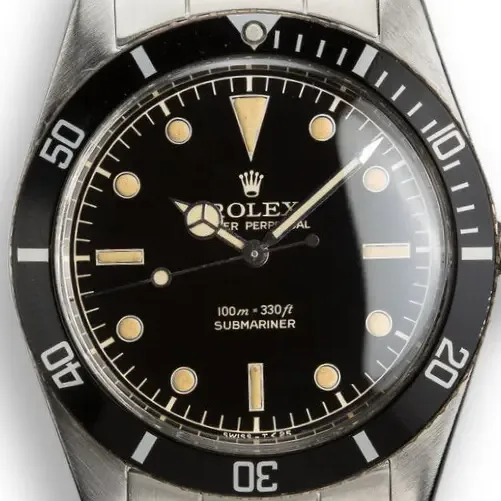
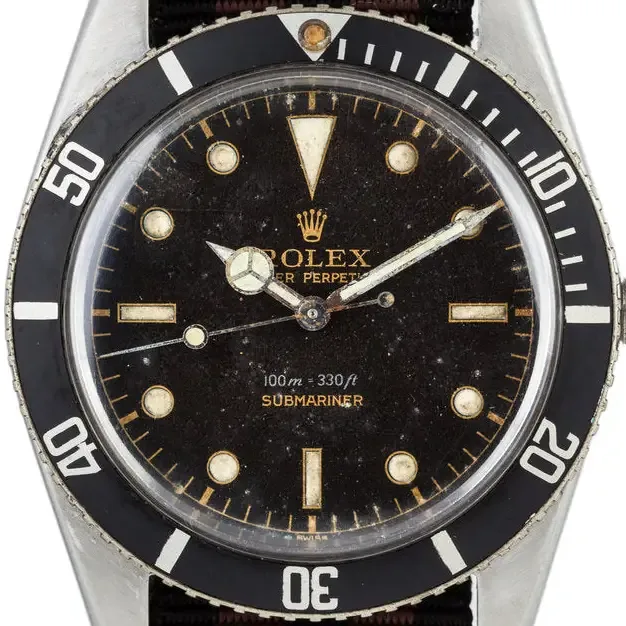
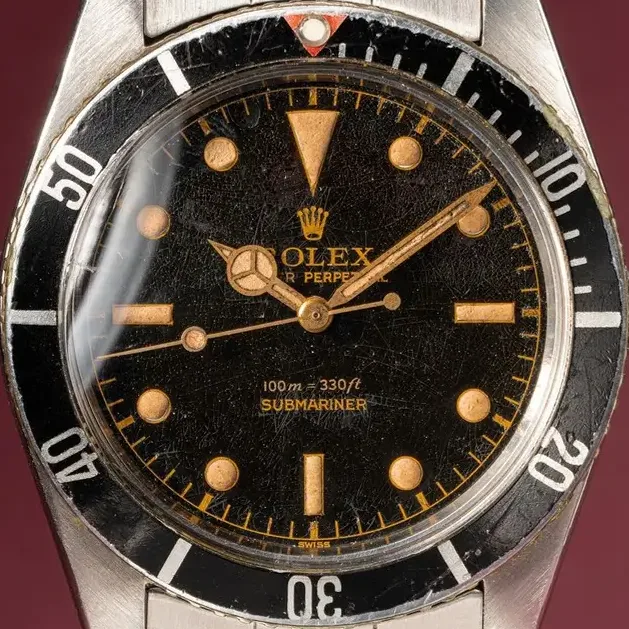
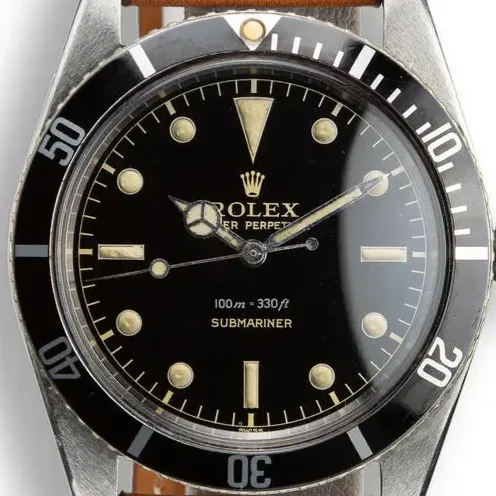
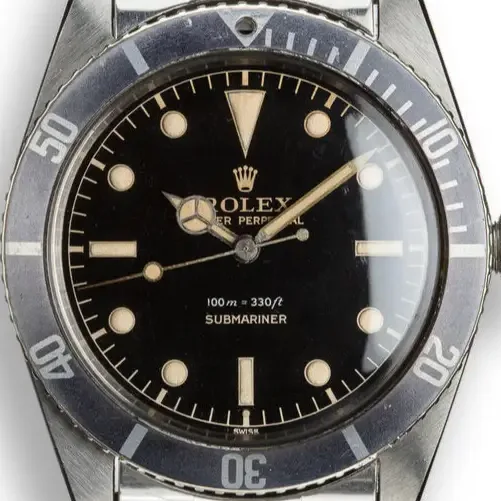
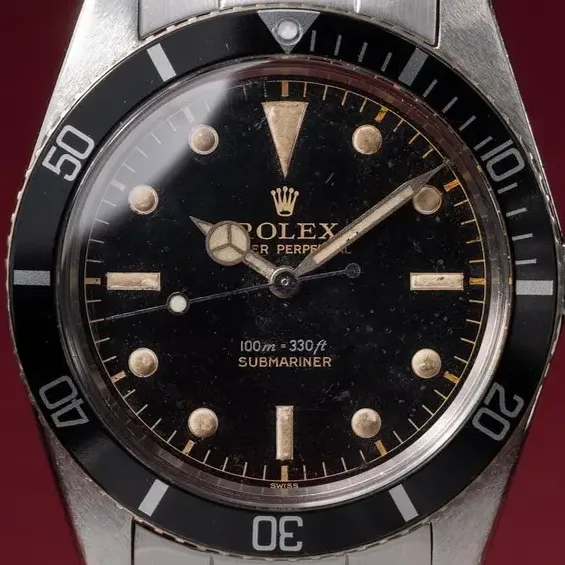
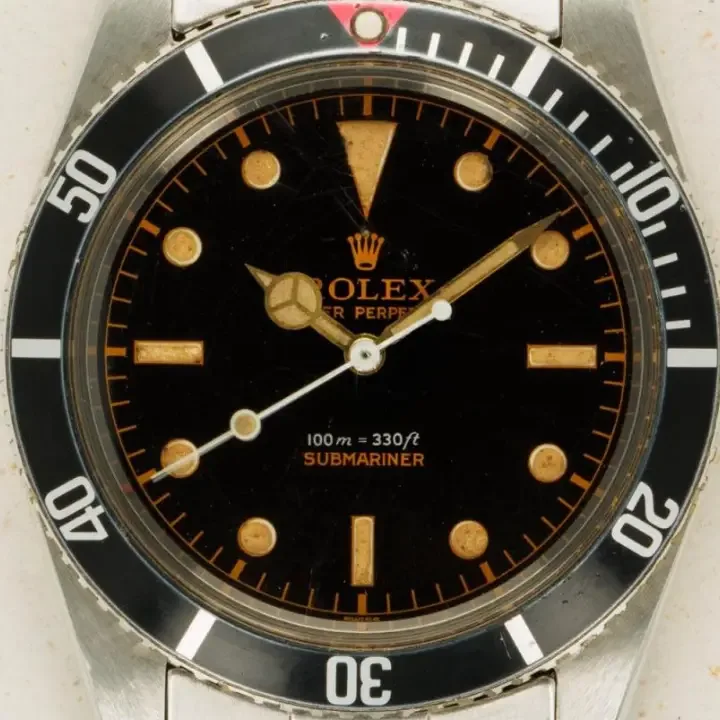
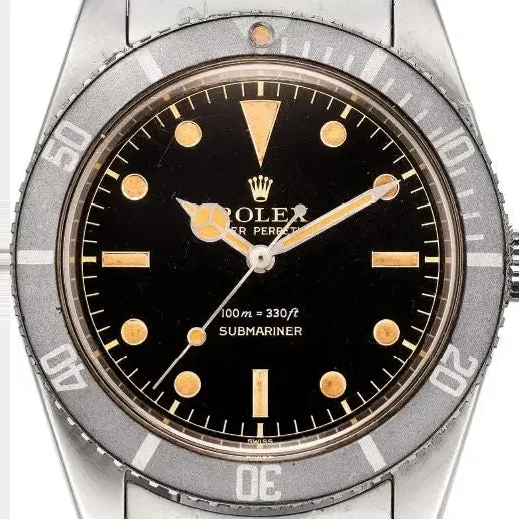
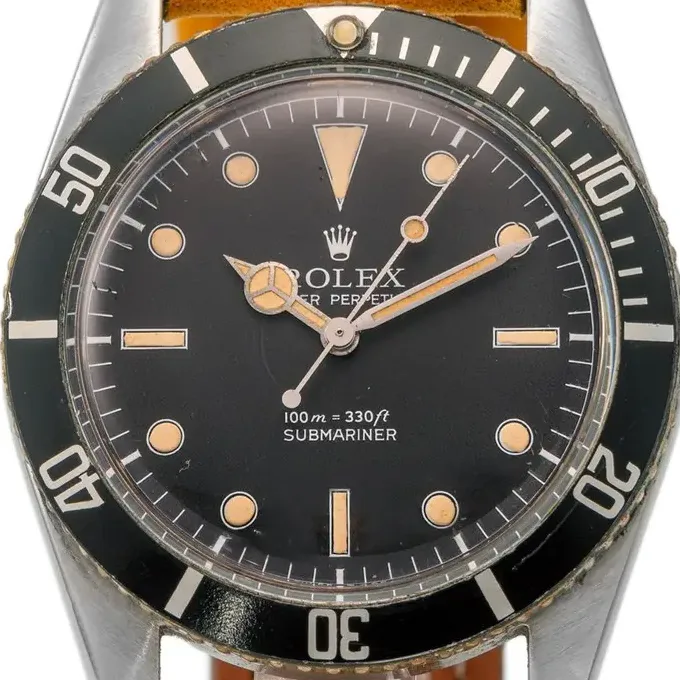
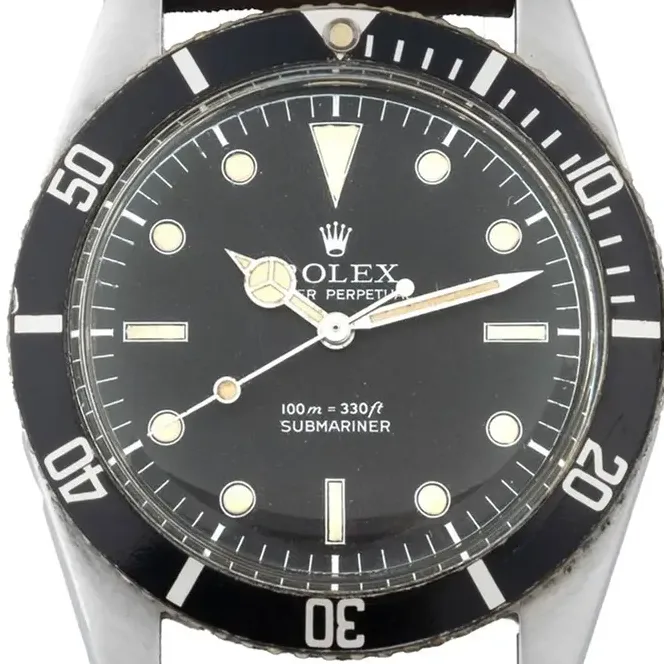
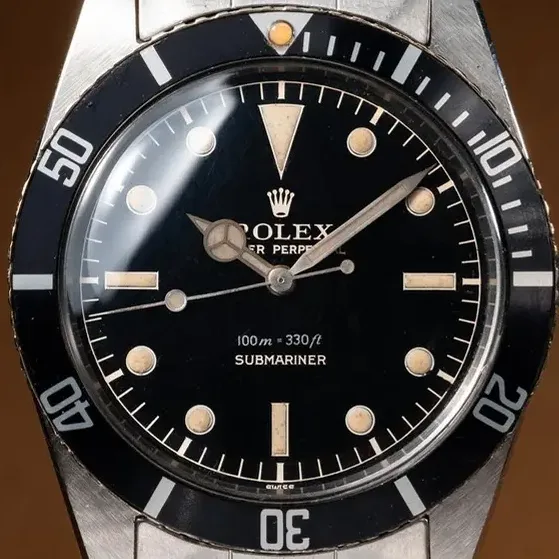
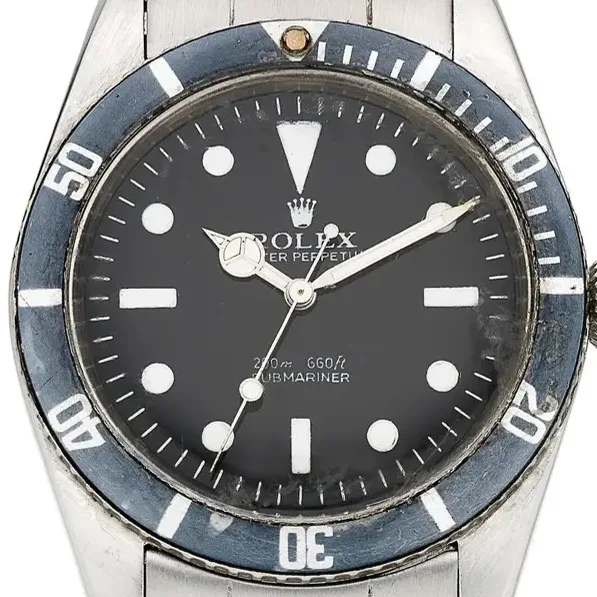
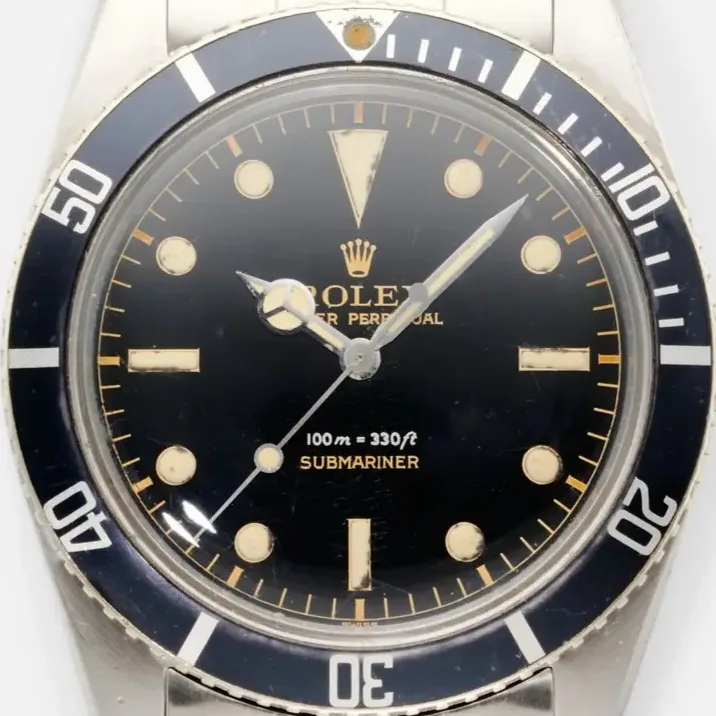
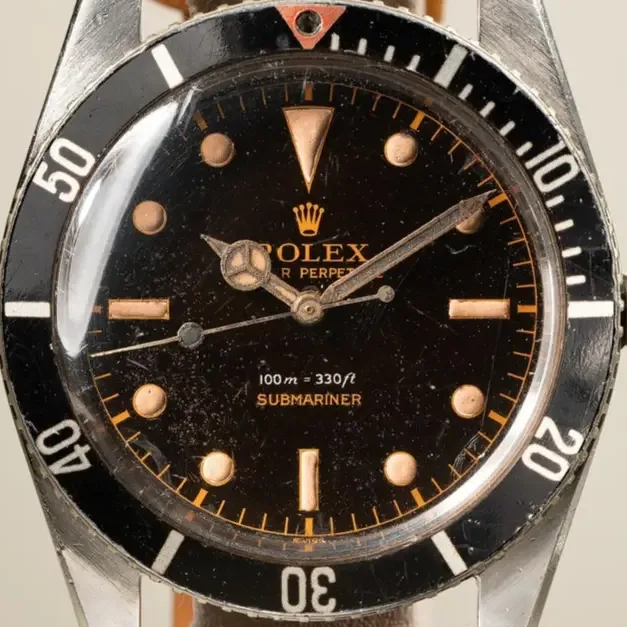
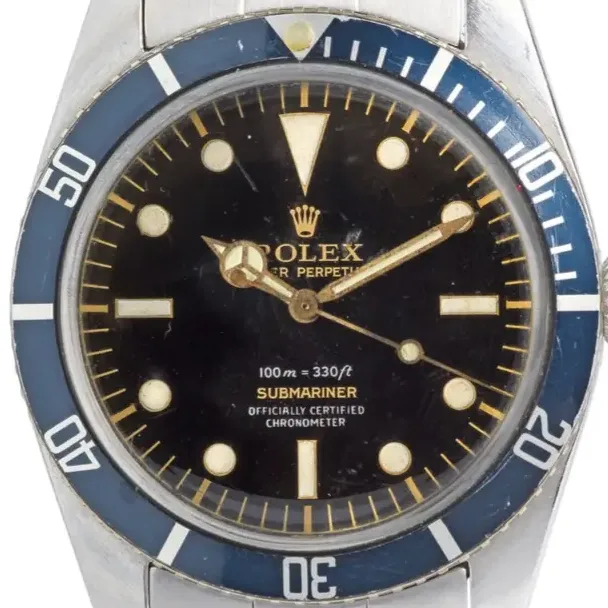
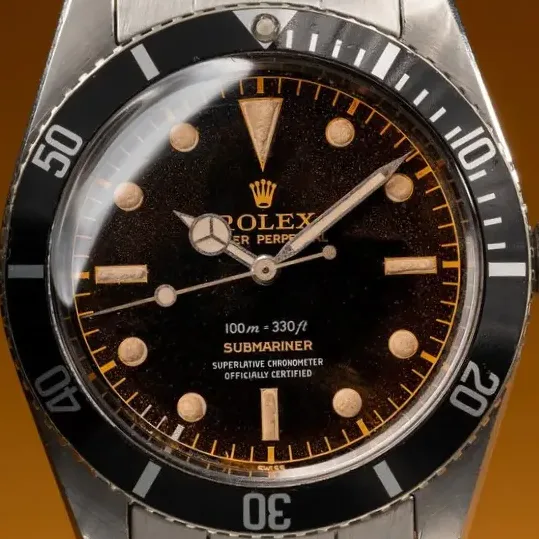
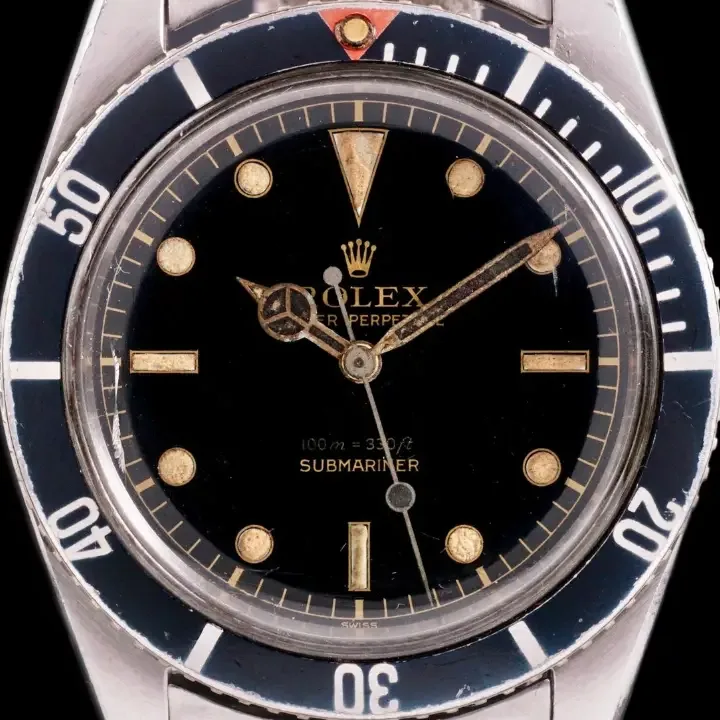
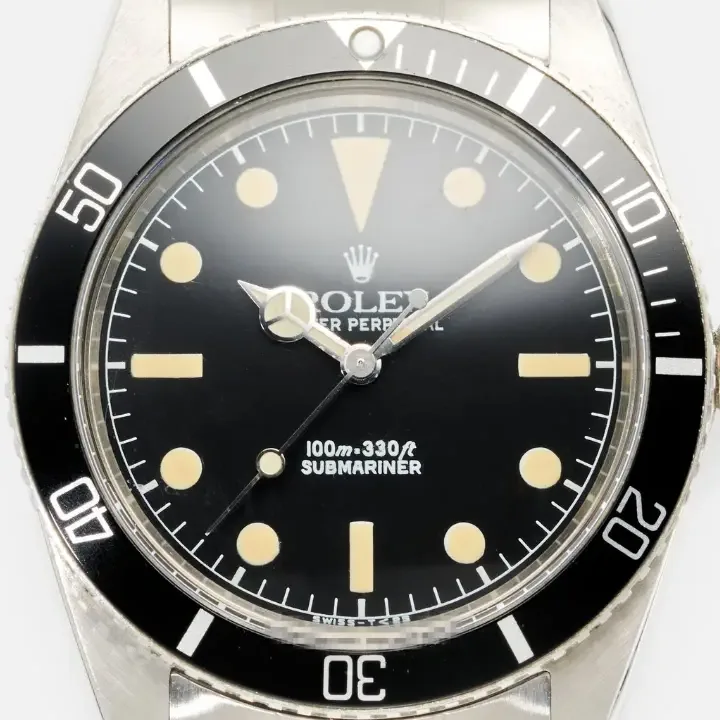
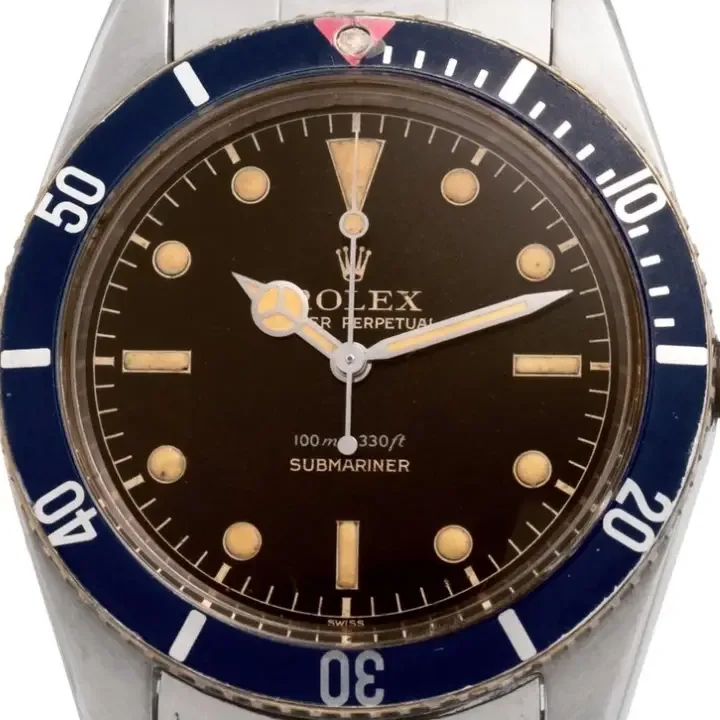
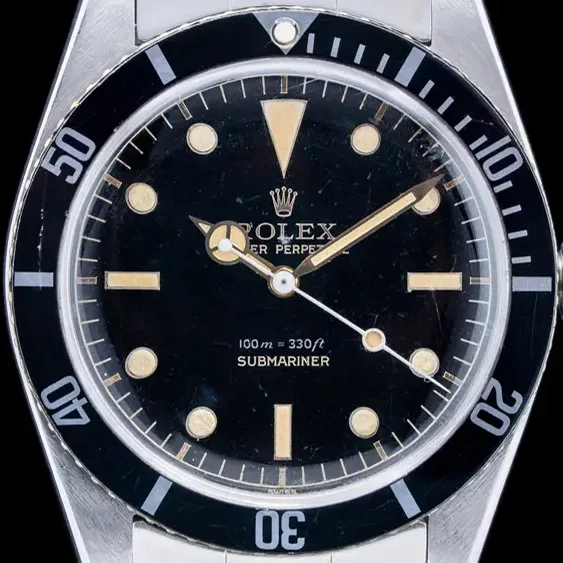
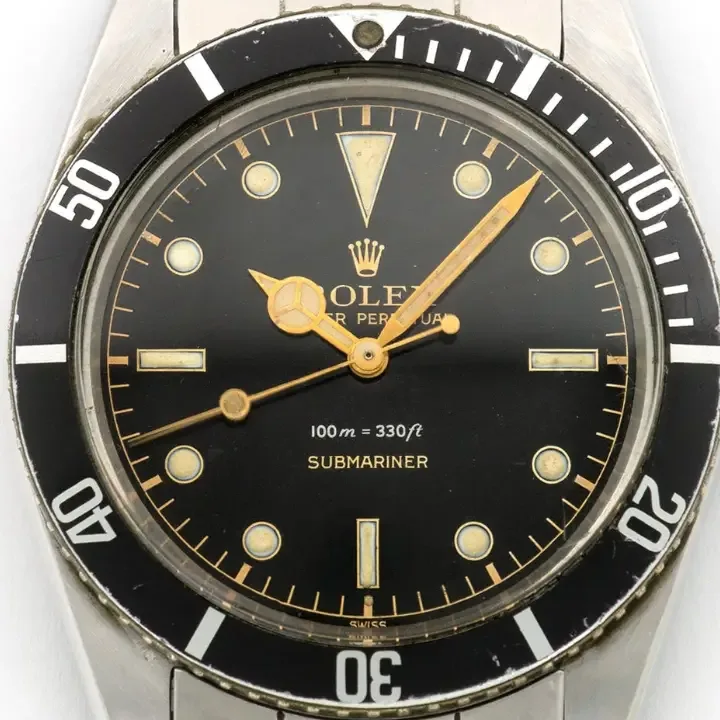
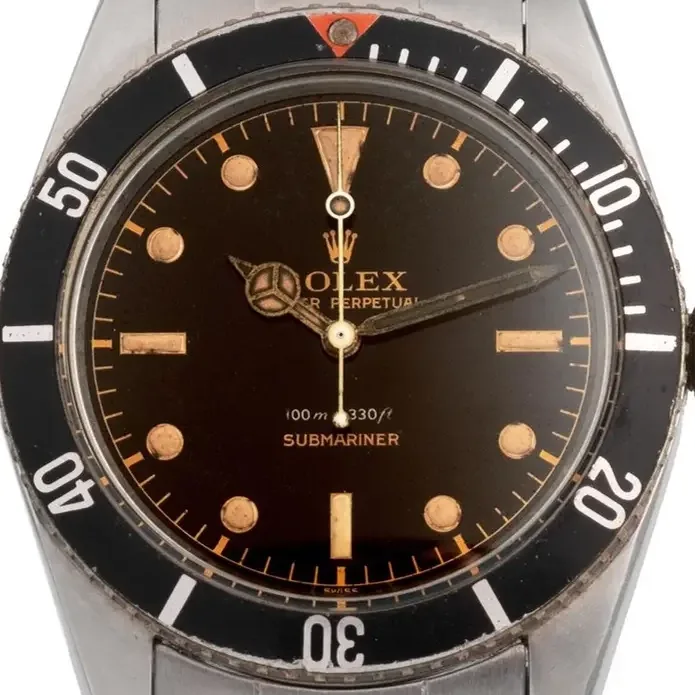
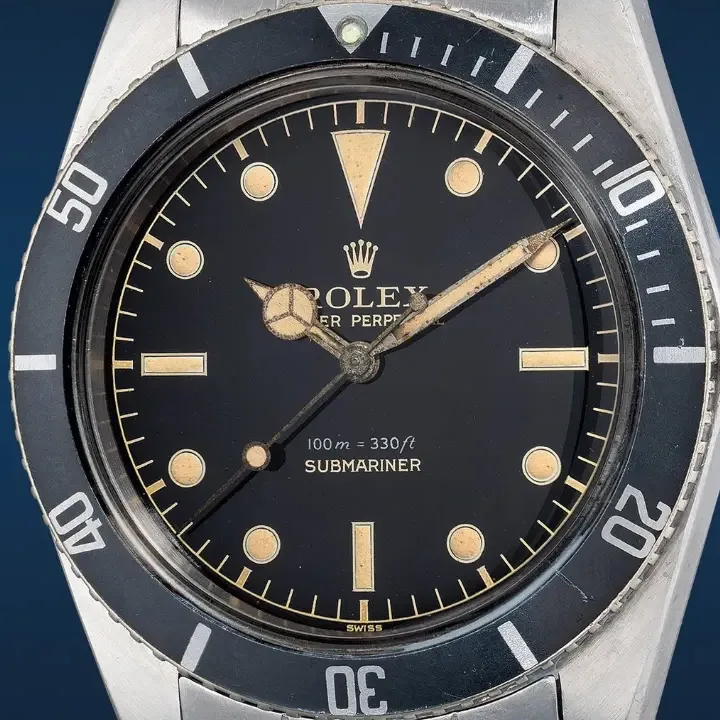
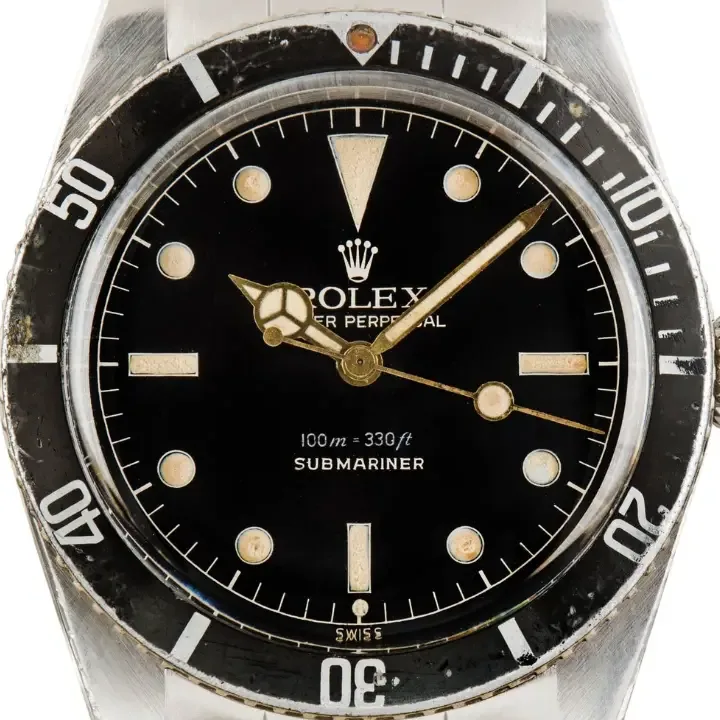
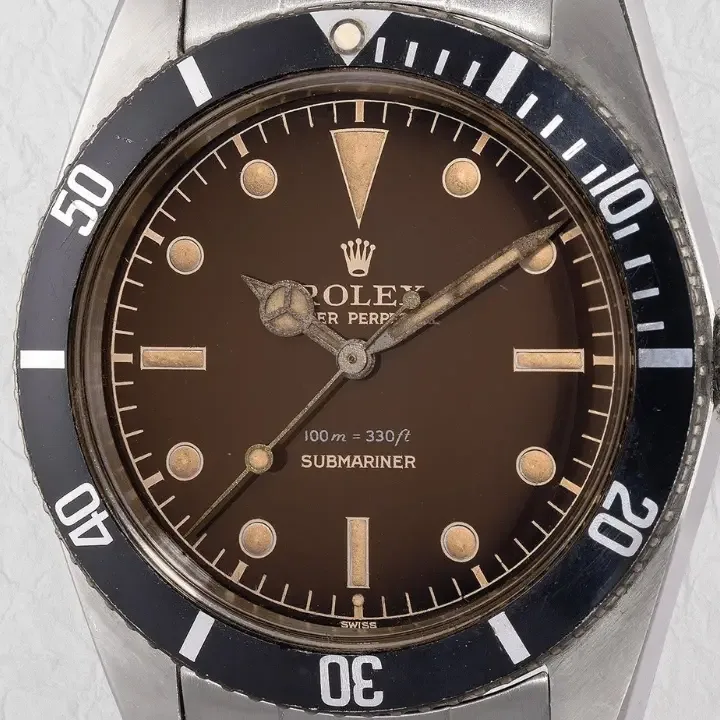
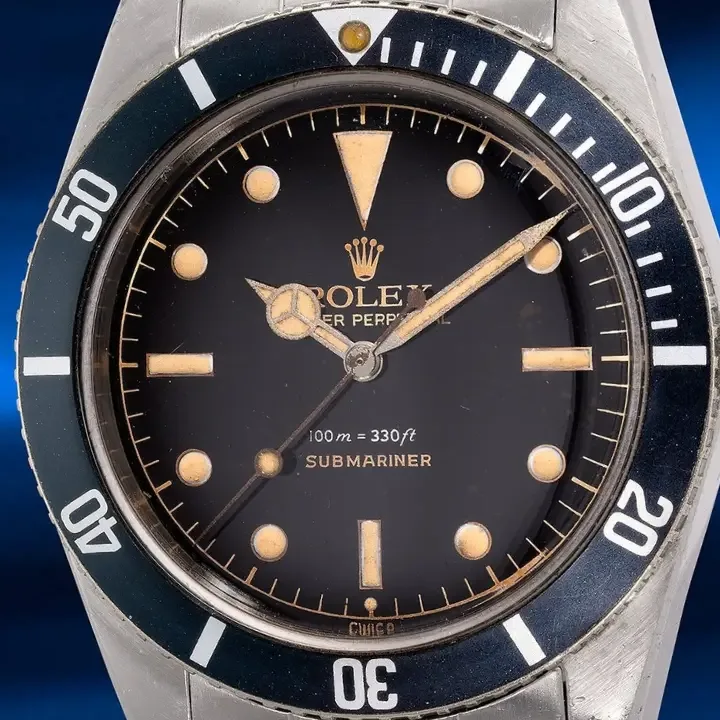
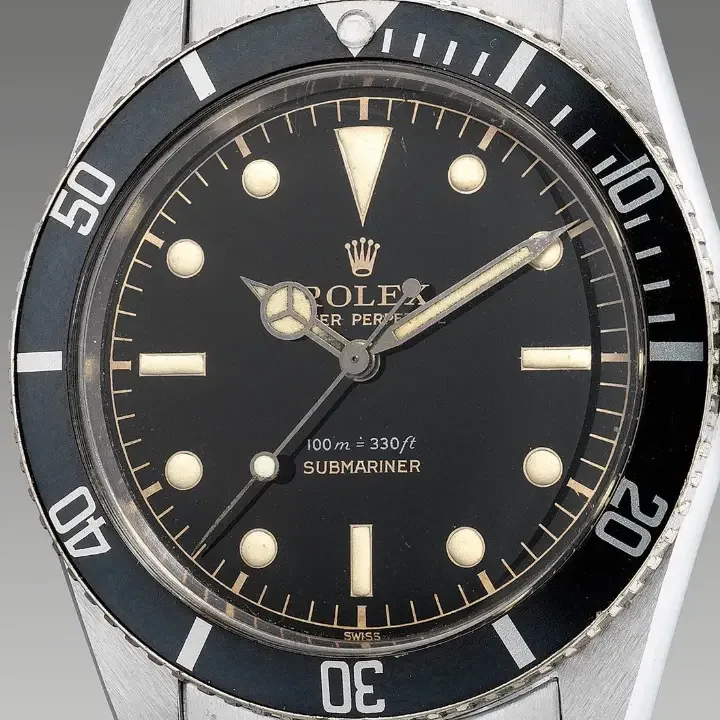
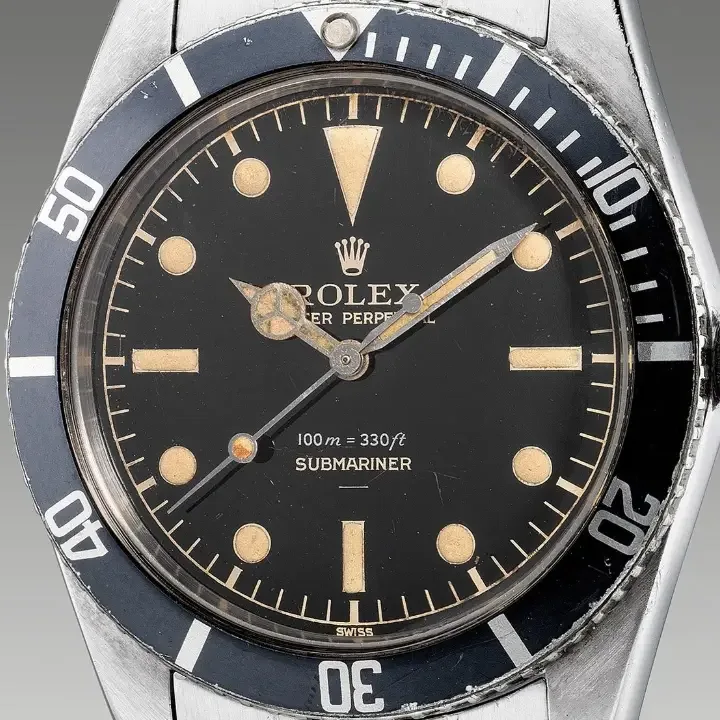
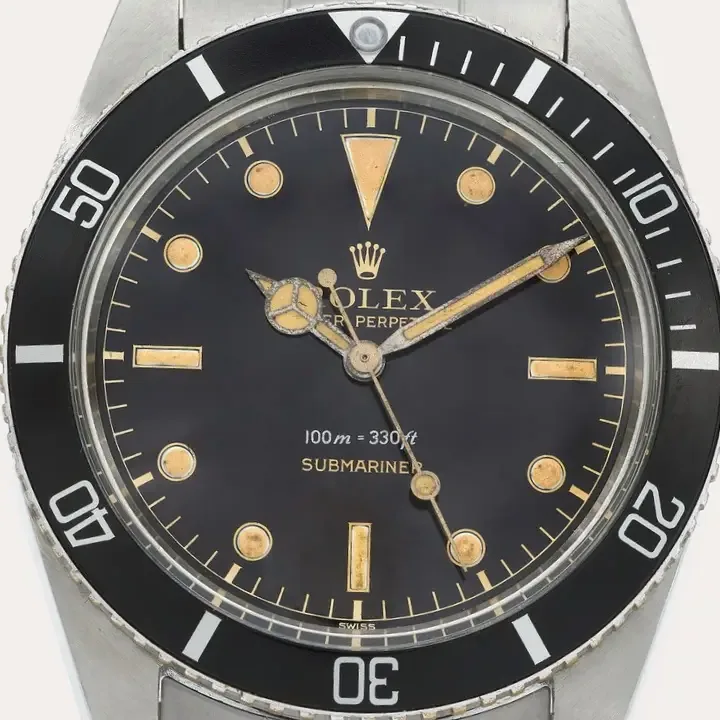
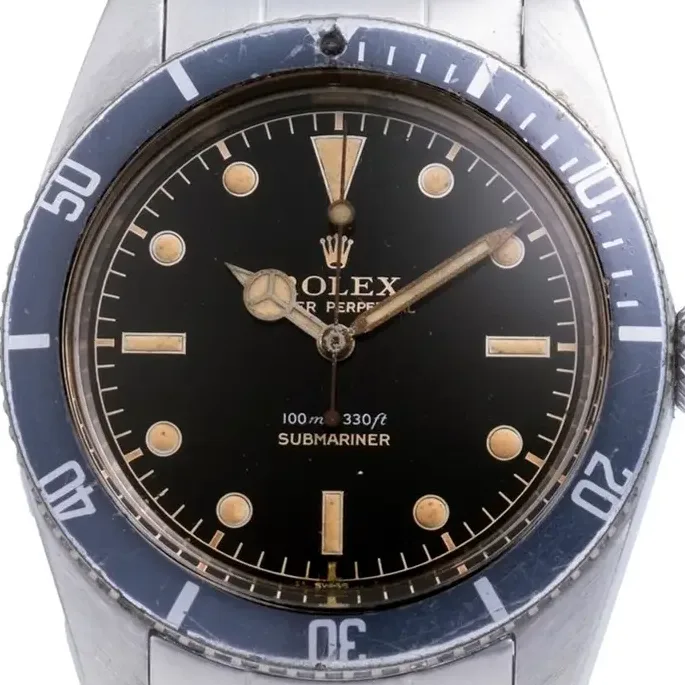
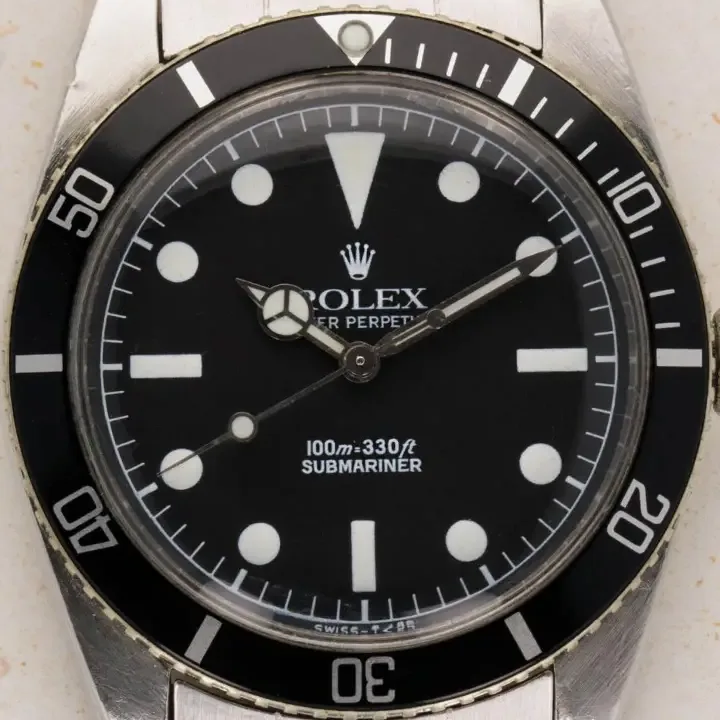
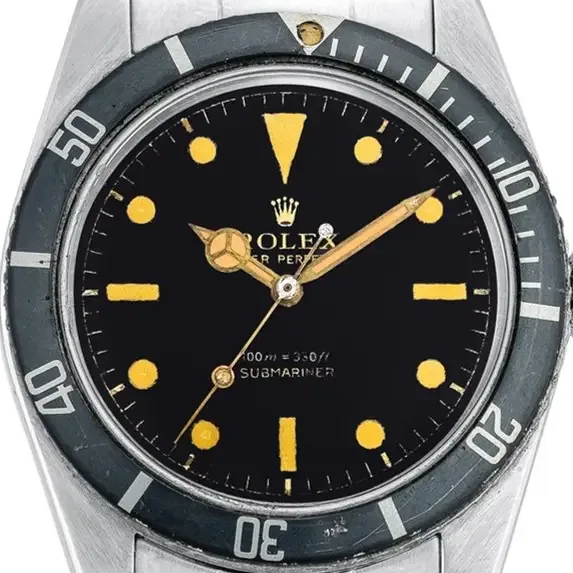
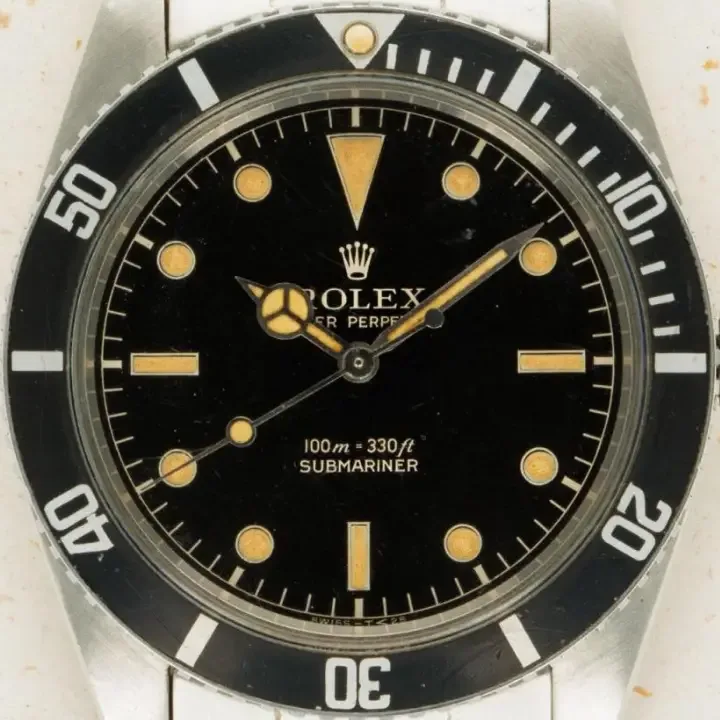
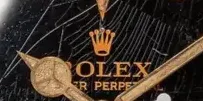
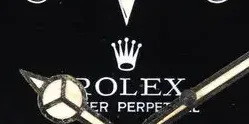
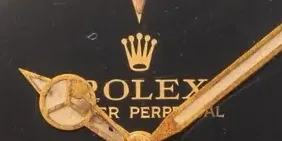
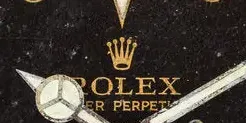
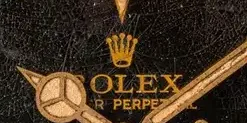
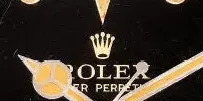
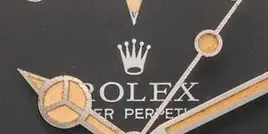
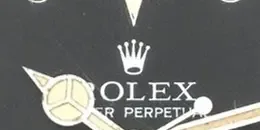
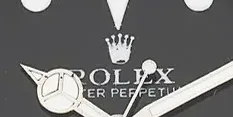
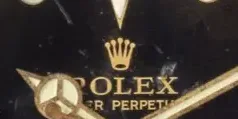
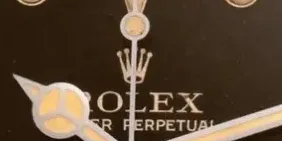
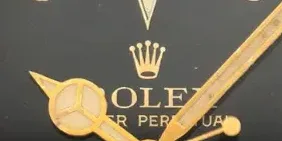
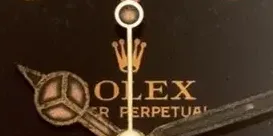
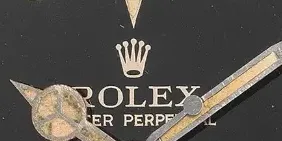
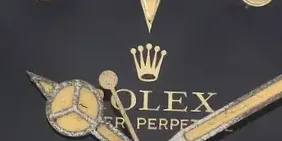
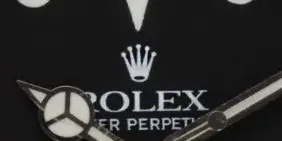
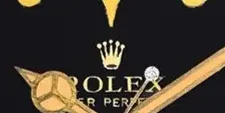
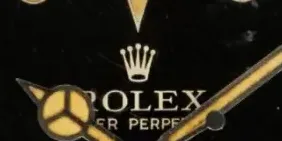
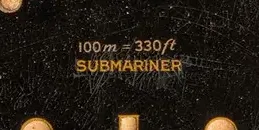
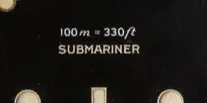
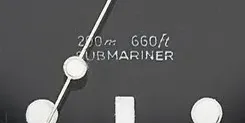
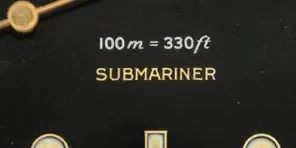
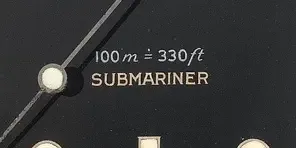
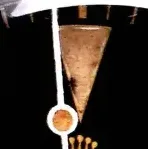
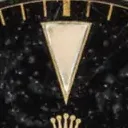
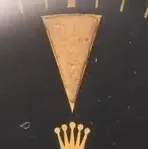
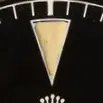
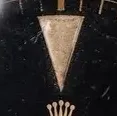
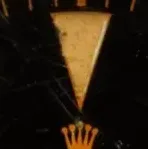
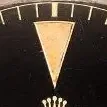
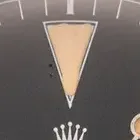
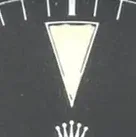
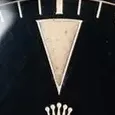
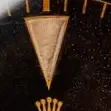
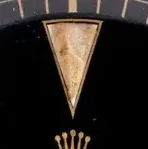
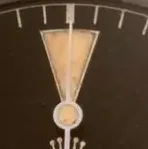
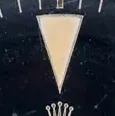
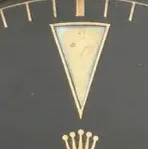
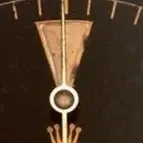
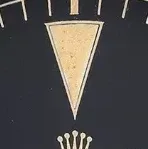
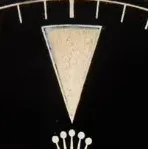
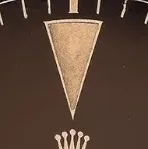
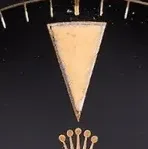
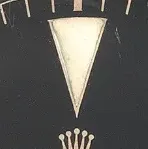
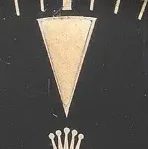
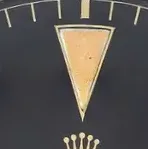
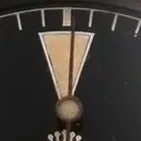
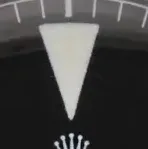
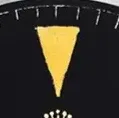
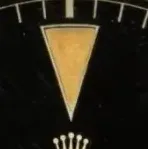
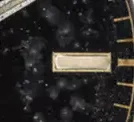
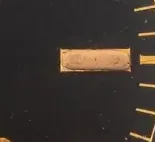
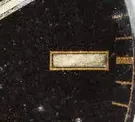
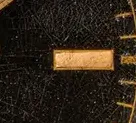
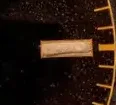
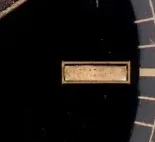
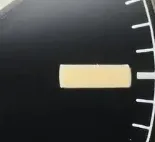
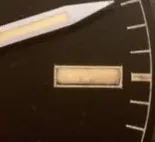
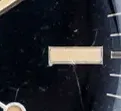
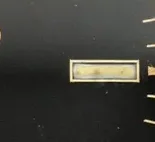
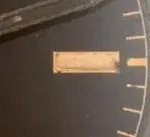
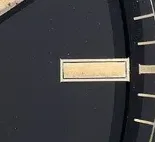
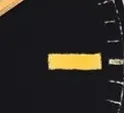
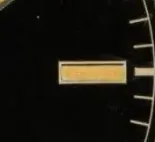
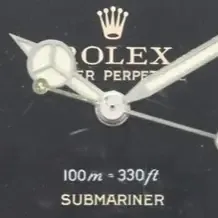
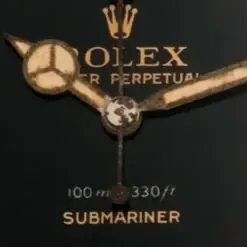
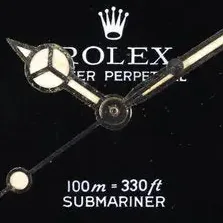
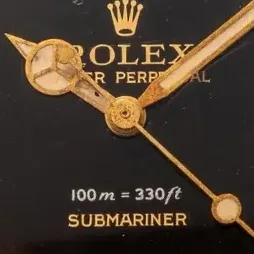
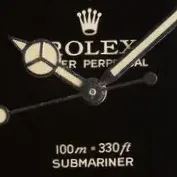
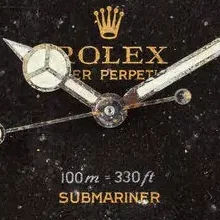
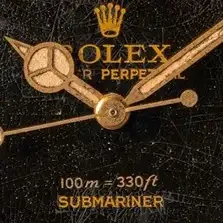
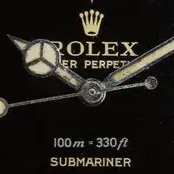
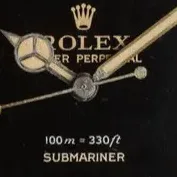
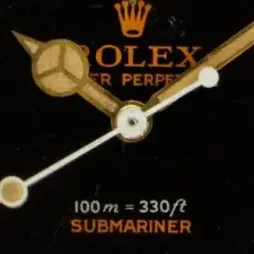
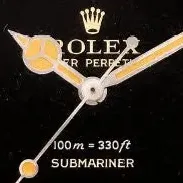
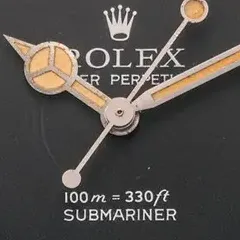
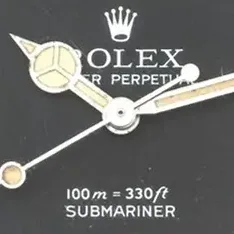
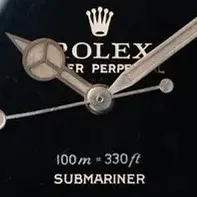
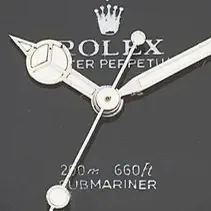
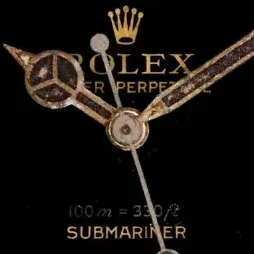
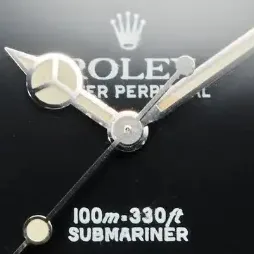
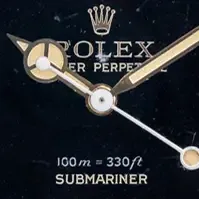
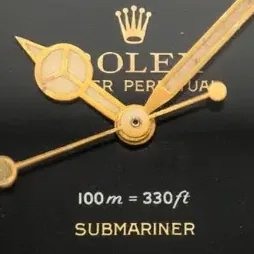
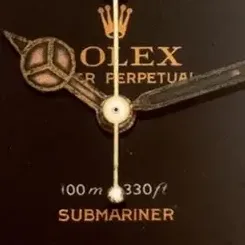
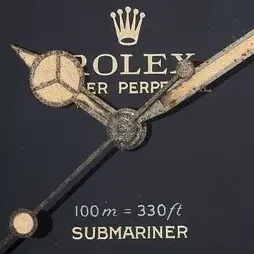
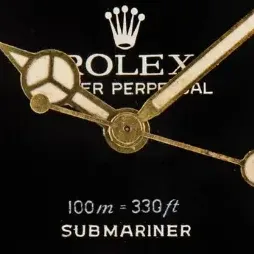
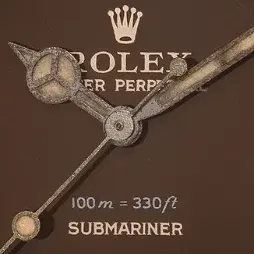
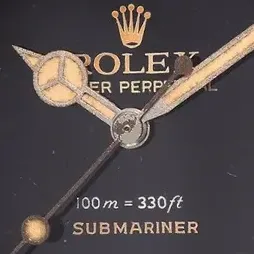
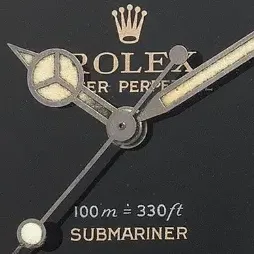
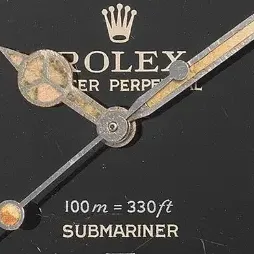
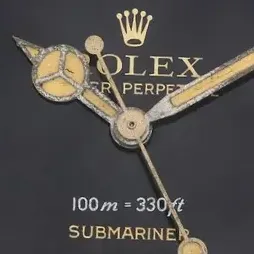
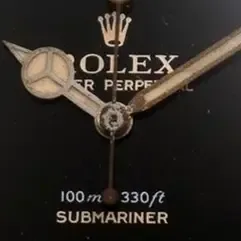
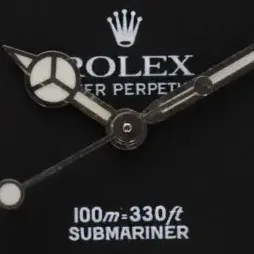
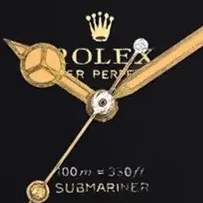
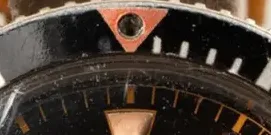
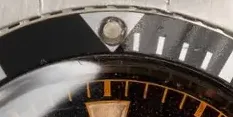
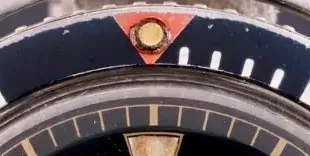
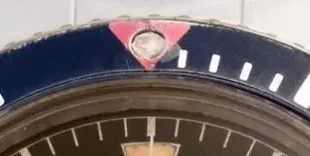
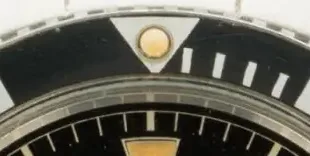
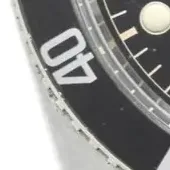
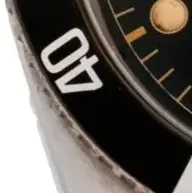
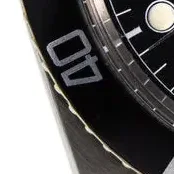
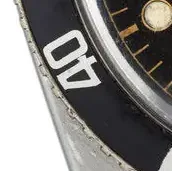
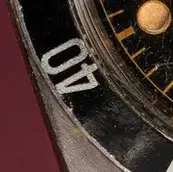
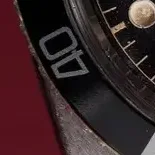
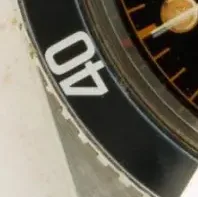
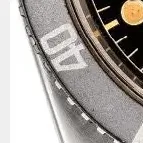
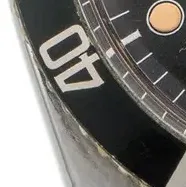
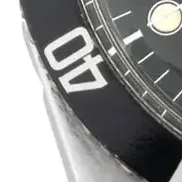
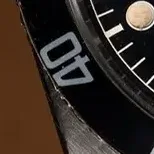
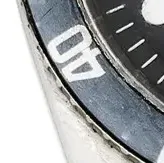
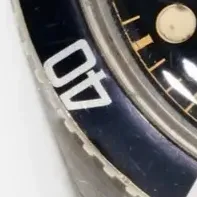
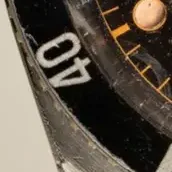
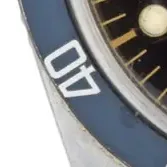
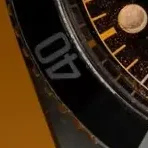
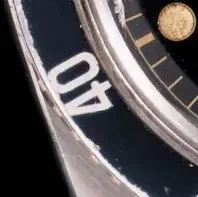
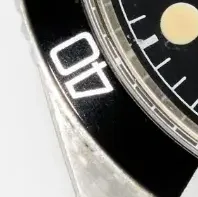
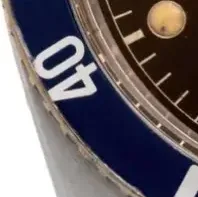
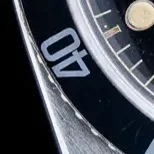
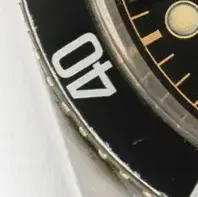
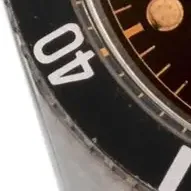
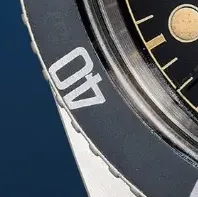
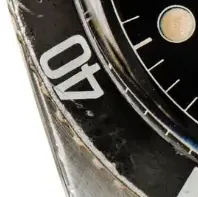
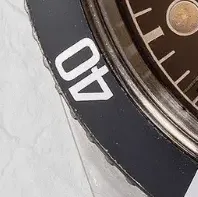
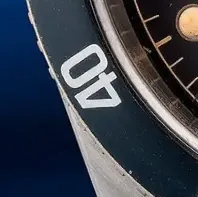
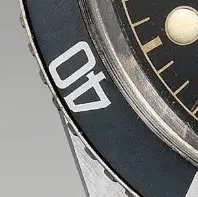
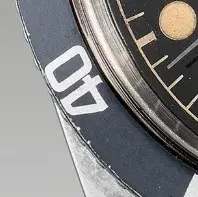
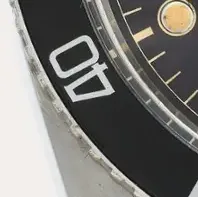
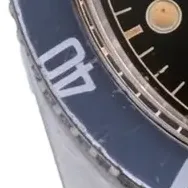
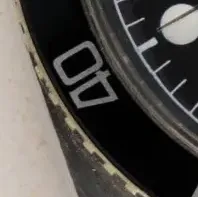
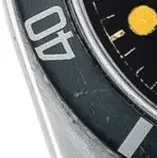
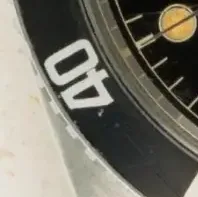
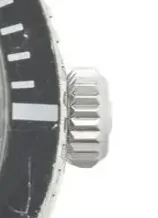
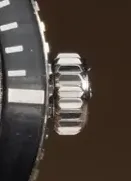
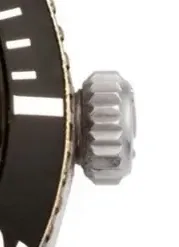
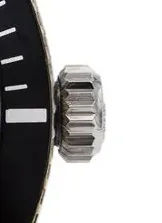
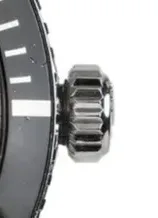
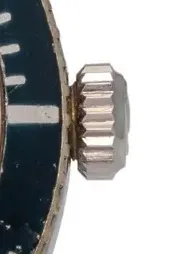
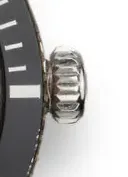
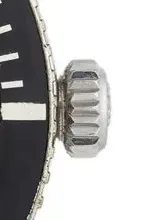
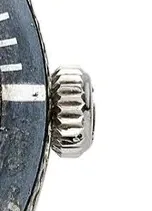
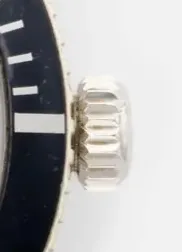
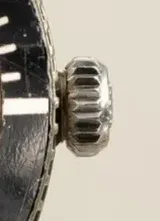
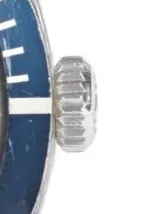
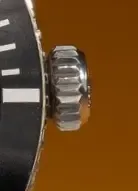
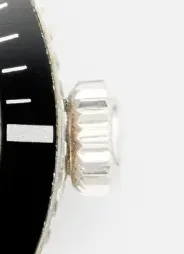
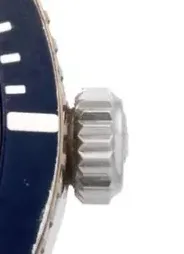
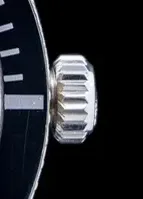
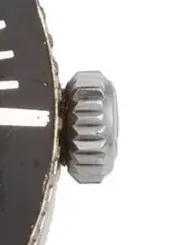
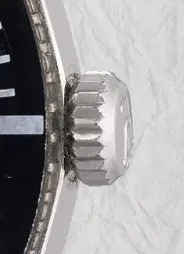
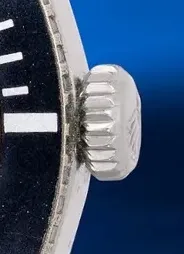
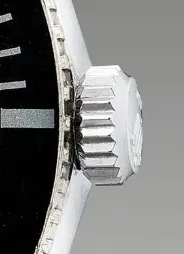
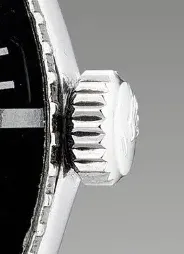
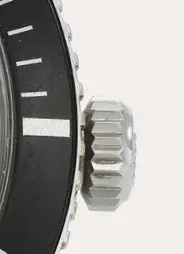
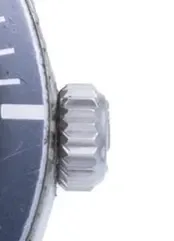
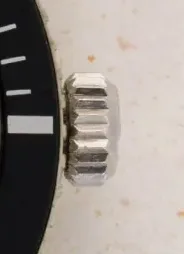
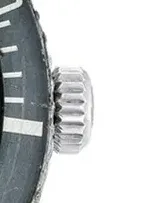
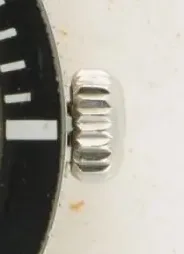
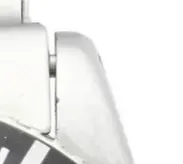
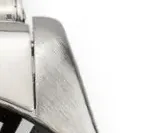
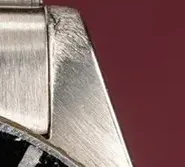
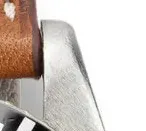
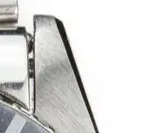
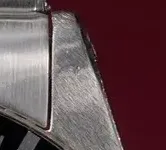
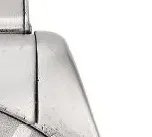
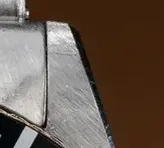
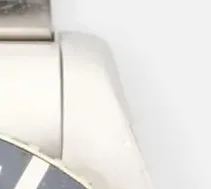
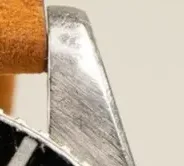
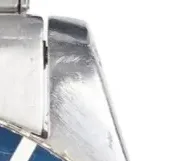
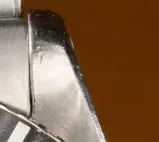
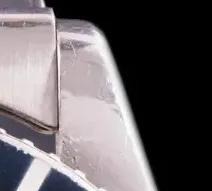
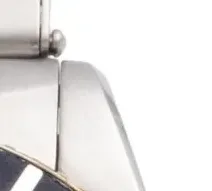
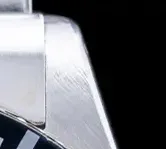
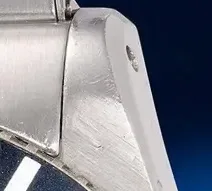
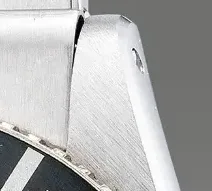
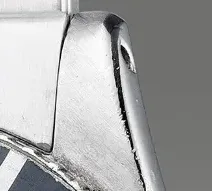
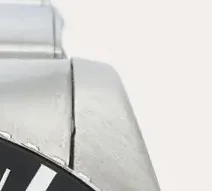
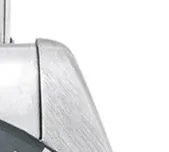
40 watches, oldest first, each straightened and cut the same way so that one row shows one component across them all. Chosen from 659 photographs on file for sharpness and for a face typical of the reference. A year marked c. is one its holder gives only roughly. Each picture is a detail cut from a listing photograph. Select the small mark in its corner for its year, its holder, a link to the listing it came from, and a way to report it.

























































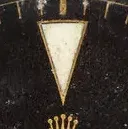
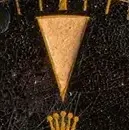
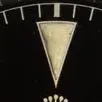
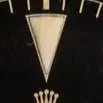





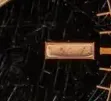
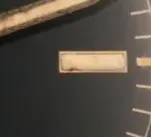
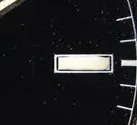
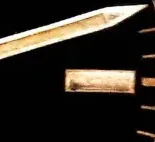



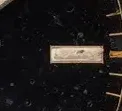
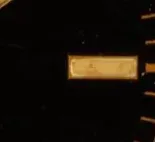
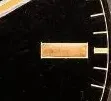
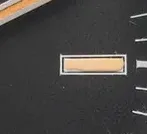
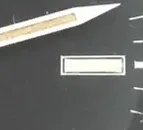
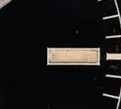


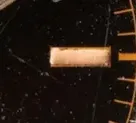
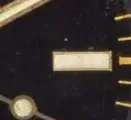
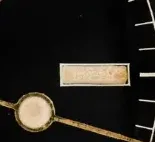
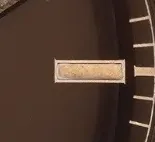
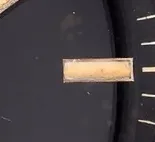
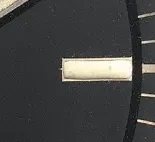
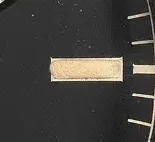
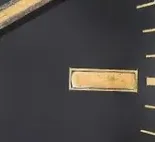
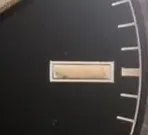
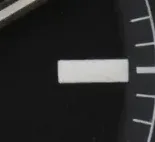














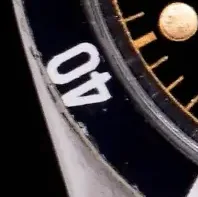
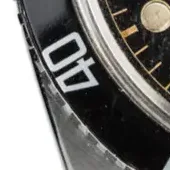
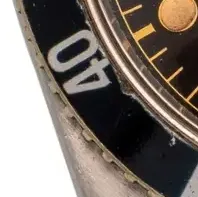
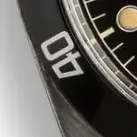




















Chronology
Launch is put at the end of 1957 or in 1958 and the end at 1961 or 1962.
Every dated variant: what is written, and what the records show
For the reference the marks are every dated watch; for a variant, the watches a seller names as that variant, so a variant sellers do not name has none.
The reference's own marks are dated by case number. A variant's marks use the year each seller states, so a variant can show watches in a year where the row for the reference shows fewer, or none.
Specification
| Case | Steel Oyster case, about 37.5 to 38 mm across, 46.9 mm lug to lug and 12.6 mm thick, no crown guards, flat screw-down back |
| Crown | 6 mm small crown, unguarded |
| Crystal | Softly domed acrylic; the number 16 crystal, shared with the 6536-1 |
| Bezel | Black aluminium, rotates both ways, 60-minute scale with graduations for the first 15 minutes, then alternating numerals and sticks |
| Dial | Black gloss with gilt print, chapter ring, round and baton hour markers with an inverted triangle at 12, time-only |
| Movement | Caliber 1530 automatic, 18,000 vibrations an hour, no hacking and no hand-winding; jewel count given as 17 or 25 |
| Bracelet | Riveted Oyster bracelet on 80 end links, reference 7206 from 1962 |
| Water resistance | 100 metres (330 feet) |
Dial 6 described
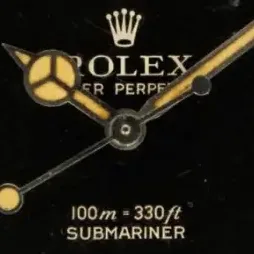
All dials are gloss black with gilt print and a chapter ring, and carry only two lines of text above 6 o'clock in the usual case. Differences lie in the colour of the depth line and the 6 o'clock marker, in the lume marking, and in the rare four-line certified dial. Dials that have lost pigment turn brown. Many surviving dials are service replacements. Some listings describe a COMEX dial, but the COMEX Submariners belong to later references of the 1970s.
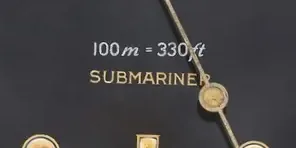
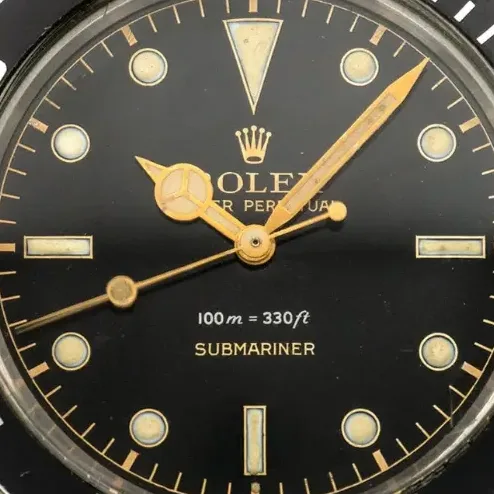
Gilt gloss, two lines
The standard layout: glossy black ground, gold-coloured print, a chapter ring and only a short run of text beneath the hands. On some survivors the black layer has cracked into fine lines.
- gloss black with gold print
- chapter ring
- two lines of text under the centre

Silver depth line
The depth rating is printed in silver while the rest of the print is gilt, giving two-colour text; the 6 o'clock marker matches the dial colour. A 1959 example has the same print as a 6536-1 of that year.
- depth rating in silver
- remaining text gold
Tropical
A dial whose black layer has lost pigment so the brass shows through, shifting to brown and changing with the light. No two are alike. Humidity is suspected as a cause; the true cause and the time it takes are unknown. They were treated as defective and were often replaced at service, so well-kept ones are scarce.
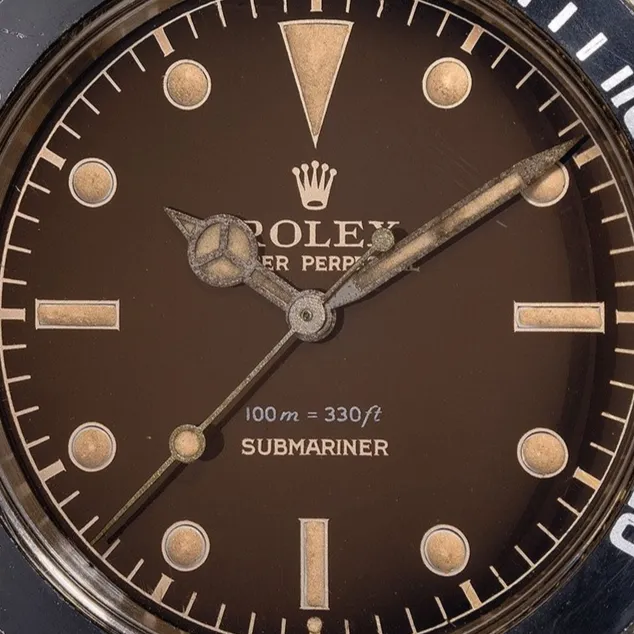

- colour changes with light angle
11 listings on record under the name.
Exclamation
A small dot of luminous material sits under the 6 o'clock baton, so the marker reads like an exclamation point. It was used in the final run and was soon followed by the printed SWISS T<25 marking. It is usually said to signal tritium and so lower radiation; another account ties it to a reduced radium content. Sellers describe this dial mostly on watches whose case numbers fall in 1962.
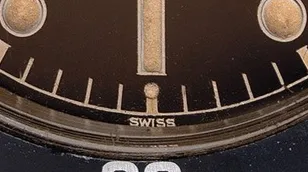

20 listings on record under the name.
Swiss T<25
About a year after the exclamation dials, Rolex moved to the industry-standard SWISS T<25 marking for tritium, around the time the 5508 went out of production. Sellers also describe T<25, SWISS-only and underlined dials on this reference.
- T<25 under 6 o'clock
Four-line Superlative Chronometer
case numbers 763,4xx (example)
A few dials carry four lines above 6 o'clock, adding Superlative Chronometer Officially Certified. The wording shows the movement passed official chronometer testing. Few 1530 movements were so tested.
- four lines of text above 6 o'clock
Luminous material 2 described
Early watches use radium. Rolex lowered the radium concentration towards the end of the run and began using tritium from 1959. Radium is ochre and glows in speckles under UV; tritium is yellower with a green tinge and glows evenly.
Radium
The usual material on the earliest watches. It ages to a golden-brown patina on markers and hands, still shows speckled UV glow and has a high Geiger reading.
- orange ochre plots
- speckled UV glow
Tritium
Hand-applied, with an even, bright UV glow that fades soon after the light is removed. Early tritium was not marked on the dial; the exclamation dot and then T<25 came later. One watch of the last run of 1962 appears to carry a dial and hands made about 1959. Sellers describe tritium mostly on watches whose case numbers fall from 1958 to 1962.
- yellow-green lume
- even UV glow
Hands 1 described
The 5508 settled on Mercedes hands, in place of the pencil hands tried on the 6204 and 6205. They are flat on top, called gilt hands, and the seconds hand is slightly long and can graze the chapter ring.
Gilt Mercedes hands
Gold-plated alloy at first, later chrome or lightly gold plated steel that can oxidise to a matte, rust-like look matching the dial print. On one chrome-handed 1959 watch the seconds hand is not painted white.
- Mercedes hands
- flat-topped
- seconds tip reaches chapter ring
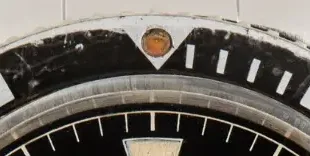
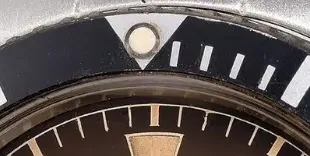
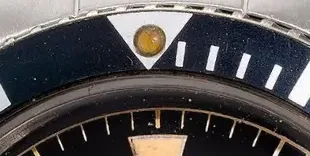
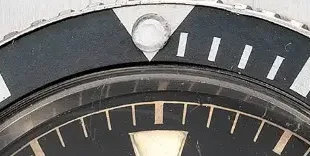
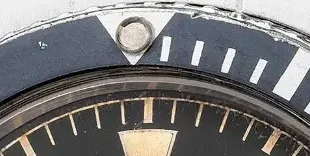
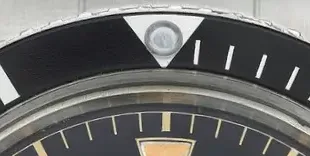
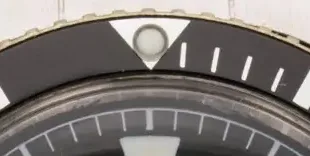
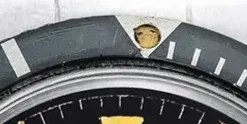
Bezel 3 described
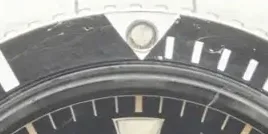
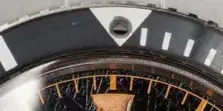
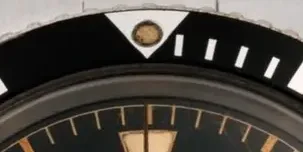
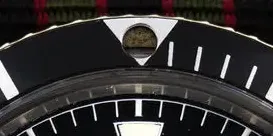
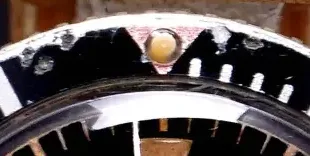
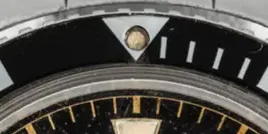
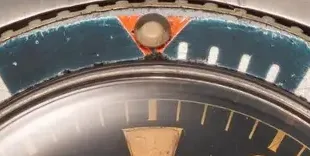
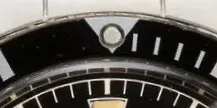
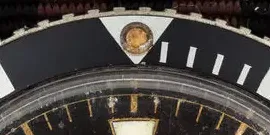
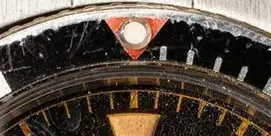
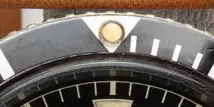
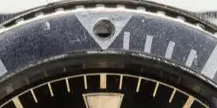
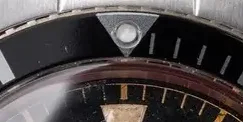
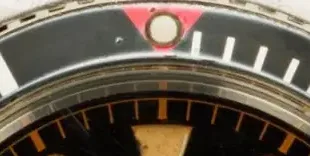
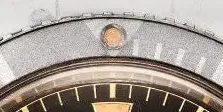
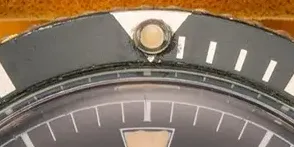
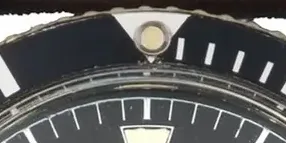
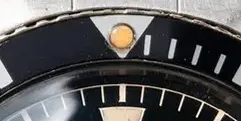
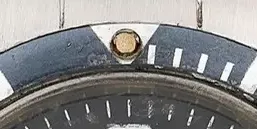
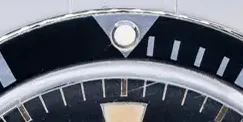
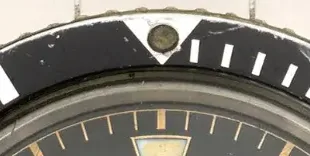
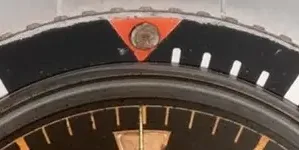
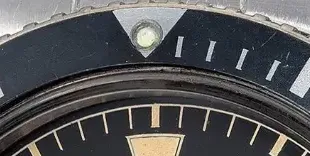
The 5508 bezel is black aluminium, turns both ways and has quarter-hour hashes, then alternating numerals and sticks every five minutes. The pearl protects the luminous dot. Many are service replacements and the original would have been brassed at the edges.
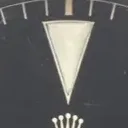
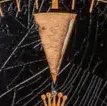
Red triangle
The first bezel insert has a red inverted triangle at zero, as on the 6538 and 6536. It adds hash marks and a protective pearl.
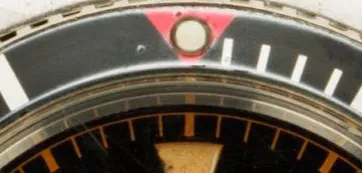

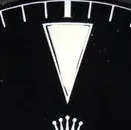
Silver triangle
Later in the run the triangle is silver-coloured.
- silver triangle
Long 5 / fat font
A Mark 1 long-5 insert is recorded on one watch whose red-triangle original was replaced early in its life; it has faded to blue-grey. A fat-font insert is also described on a 5508. Some watches show a ghost (faded) bezel.
- long 5
- thick numerals
Case 1 described
A slim, slab-sided steel case with long lugs and facets. It is the last 38 mm case, with no shoulders to guard the crown. It is thinner than the big-crown cases.
Unguarded small-crown case
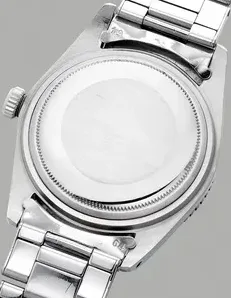
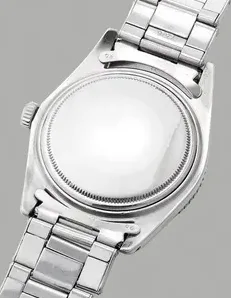
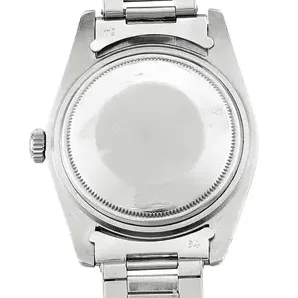
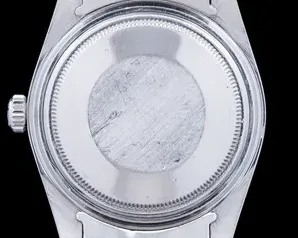
About 37.5 mm wide, 12.6 mm thick, with a flat caseback. The reference number is stamped inside the back with a date code, which can differ from the year the serial shows; one example is stamped III.58 but its serial range indicates 1959.
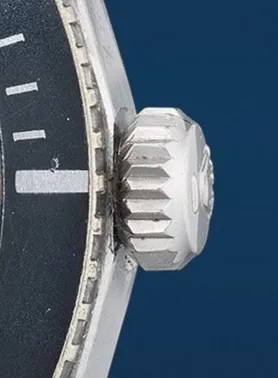

- thin case
- date code inside back
36 listings on record under the name.
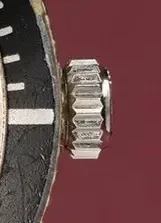
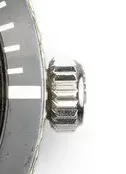
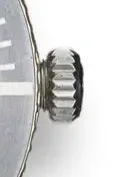
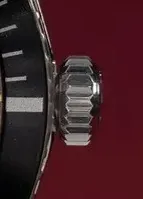
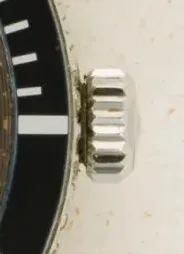
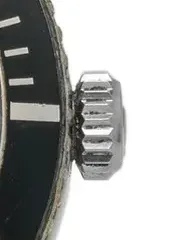
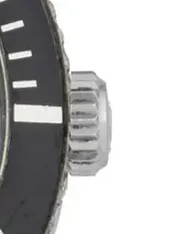
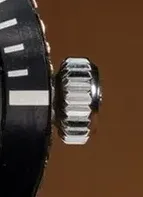
Crown 1 described
The crown is 6 mm and unguarded, smaller than the 8 mm of the big-crown references. Service crowns are common.
Twinlock crown
Original crowns carry the plain Rolex coronet. A dash beneath the coronet marks a double-lock or service replacement crown. Triple-lock followed later.
- plain coronet
- dash under coronet = replacement
Crystal 1 described
A domed acrylic crystal.
Acrylic dome
The number 16 crystal also fits the 6536-1. It is softly domed and runs into the case profile.
Movement 1 described
The 5508 is tied to the Caliber 1530, a butterfly-rotor automatic that replaced the 1030. The literature is split on its jewel count.
Caliber 1530
A nickel-finished lever automatic with a rotor of butterfly shape and kif-style shock protection, running at 18,000 vibrations an hour, made from 1957 to 1965. It does not hack or hand-wind. Very few were sent for chronometer testing. A few listings name the 1030, the calibre of earlier Submariners.
- butterfly rotor
Bracelet 4 described
Riveted Oyster bracelets, folded in the early years and solid by 1962, made by Gay Freres, with a US-made hollow rivet alternative by C&I. Original bracelets are scarce.
Tiny logo clasp
Replaced in 1958.
Small and big logo clasps
Both introduced in 1958. The big logo clasp stopped in 1960; the small logo was standard to 1969.
- logo size on clasp
Riveted 7206, 80 end links
Solid rivet links from Gay Freres with 7206 stamped on the underside of a link from 1962 and 80 end links. Sellers also cite reference 6636 on some watches, and the 78360, a bracelet of the 1980s, which can only be a later fit.
- 7206 stamp
- 80 end links
C&I hollow rivet
US-made, hollow rivets, unmarked end links and a lighter gauge than Swiss bracelets.
- unmarked end links
- light gauge
Originality
- Dials, hands and bezels were replaced at service; sellers describe service dials, service hands and relumed hands.
- Rolex service replaced missing or worn bezel inserts, so a later-style insert, such as the Mark 1 long-5 seen on one watch, may not be original.
- A crown with a dash under the coronet is a service replacement for the plain-coronet original.
- Bright polished silver hands have proved to be service replacements on at least one watch; original hands were gold-plated at first and later chrome or lightly gold-plated steel, which has usually dulled to a matte finish.
- Original riveted bracelets were often lost, and the thin pressed clasp can warp with age.
Names
- Small Crown. The crown is 6 mm, against 8 mm on the big-crown models.
- NCG. It has no crown guards.
- James Bond Submariner. The name was first given to the small-crown Submariners, the 5508 among them, and to the big-crown 6538; the watch in Dr No was later identified as a big-crown model.
- Exclamation dial. A lume dot sits under the 6 o'clock marker.
- Gilt. Gold-coloured print on a gloss black dial.
Where accounts differ
Points on which the published literature and the library's own records do not agree, or on which the literature contradicts itself.
- Chronometer text on the dial. One guide says the 5508 never had the Superlative Chronometer wording because few 1530s went for testing, and another credits the reference as the first certified Submariner. A third shows a four-line dial in the last batch.
- Jewel count. One guide gives the 1530 as a 25-jewel movement; another gives 17.
- Production span. One account puts production at 1957 to 1961 and others at 1958 to 1962.
- Lume on the last watches. One account has Rolex using tritium from 1959, with all the final 1962 dials in tritium and the exclamation dot marking it. Another ties the exclamation dial to lower radium levels, and two others describe radium, in a lower concentration, to the end of the run.
- First Submariner with calibre 1530. One account names the 5510 as the first Submariner fitted with Caliber 1530. Accounts of the small-crown 5508 bring that reference out with the new 1530 as well, and one launches it at the end of 1957, beside the big-crown models. None compares the two, so which carried the movement first is not settled.
Back and movement
From listings of this reference, each confirmed by eye to show what it is filed under. A picture on which a person's name or a personal engraving can be read is not shown. From most holders a detail from the middle of the photograph is shown; the mark in its corner gives its holder and a link to the listing.
Caseback




Movement
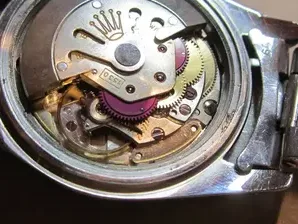

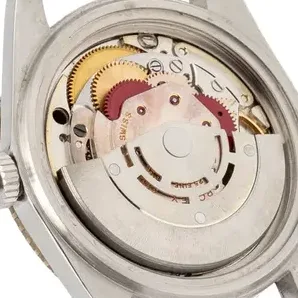

In the records
Counted from 187 listings at 37 holders between 26 June 1997 and 14 November 2026. These are what sellers and auction houses state, not measurements.
Fainter bars are the 5 outside the main run of 1958–1962 (the middle nine-tenths): the earliest is 1955 and the latest 1965. They are early and late examples, and now and then a number misread. The head of the page gives 1958–1962: the years that listings from two holders bear out.
At the holders that record papers on every watch, 9% of their 11 listings of this reference come with papers; at those that record the box on every watch, 36% of 11 come with a box. "Papers" is whatever the holder counts as papers, and can include service papers.
1 listing dated long after the reference ended is set aside and not counted here: a year that late belongs to a later watch sold under the old number, or to a listing filed under the wrong one.
Case metal
| Steel | 119 | |
| Silver | 1 |
Dial colour
| Black | 44 | |
| Brown | 8 | |
| Red | 3 | |
| Silver | 1 |
Case size
| 37 mm | 41 | |
| 38 mm | 36 | |
| 40 mm | 3 |
Calibre named
| 1530 | 81 | |
| 1030 | 3 | |
| 1560 | 2 | |
| 1520 | 2 |
Bracelet or strap
| Oyster bracelet | 44 | |
| Metal bracelet, kind not stated | 27 | |
| Leather strap | 5 | |
| Fabric strap | 2 | |
| Strap, kind not stated | 1 |
Each table counts the listings that state the thing, in the seller's own terms. A size, metal, colour or calibre that cannot belong to this reference is a seller's slip or a listing filed under the wrong number.