Submariner Date
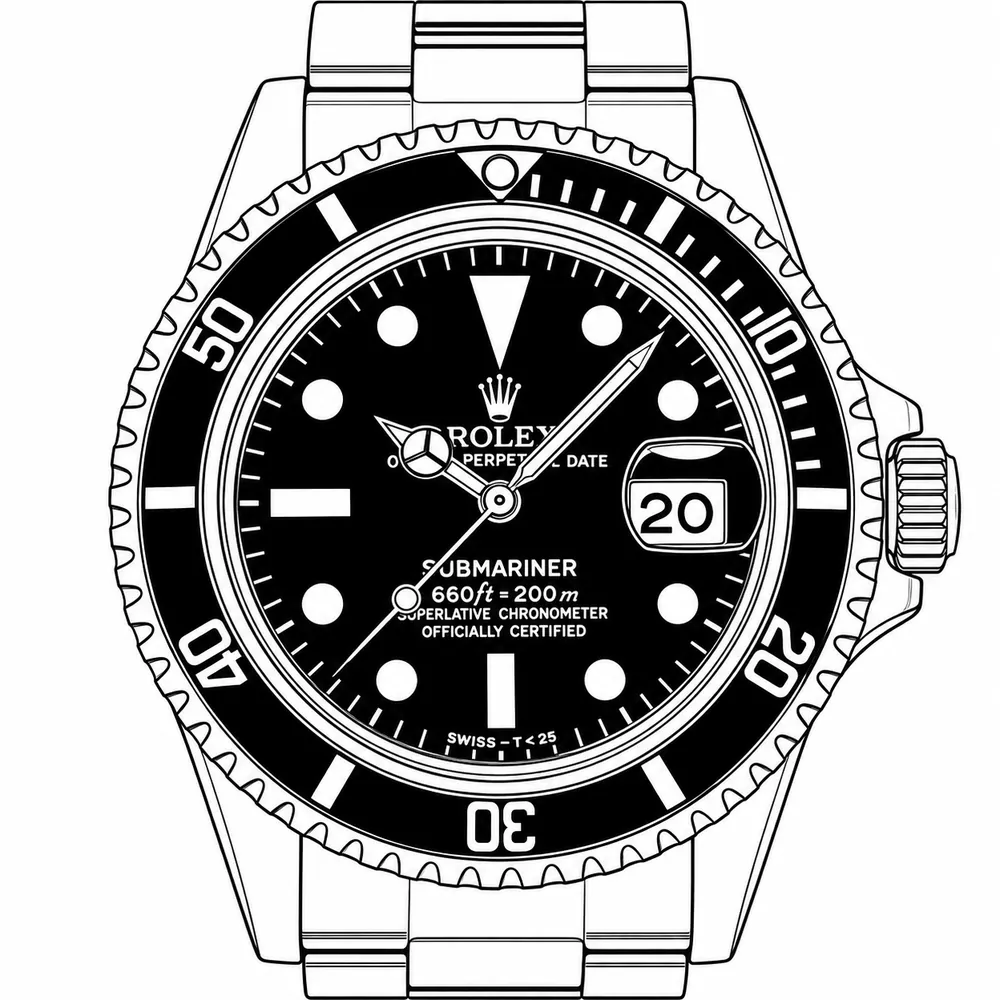
The 1680 is the first Submariner with a date window and cyclops, and the only date model with an acrylic crystal and a bidirectional bezel. It was made from about 1967 (some place it a year earlier, others in 1969) to 1979 in steel (1680/0) and in solid 18k yellow gold (1680/8), the first gold Submariner. Its calibre 1575 is the date version of the 1570. The dial is its best-known feature: the word Submariner is printed in red until about 1975 (the Red Sub), then in white, and the depth line, the sixes and the placement of letters divide the dials into numbered Marks. It was replaced by the 16800 with sapphire crystal and a new movement. Collectors check the dial against the case number, then the insert, crystal, crown and bracelet.
- Made
- 1967–1979dates approximate
- Seen in the library
- 1969–1981nine in ten in 1969–1979 · by case numbers
- Case
- 40 mm · steel (86%), gold (14%)as sellers state
- Movement
- Calibre 1575automatic
- On record
- 1,895 listings6,145 photographs · 67 holders
Components
47 watches, oldest first, each straightened and cut the same way so that one row shows one component across them all. Chosen from 6,145 photographs on file for sharpness and for a face typical of the reference. A year marked c. is one its holder gives only roughly. Each picture is a detail cut from a listing photograph. Select the small mark in its corner for its year, its holder, a link to the listing it came from, and a way to report it.
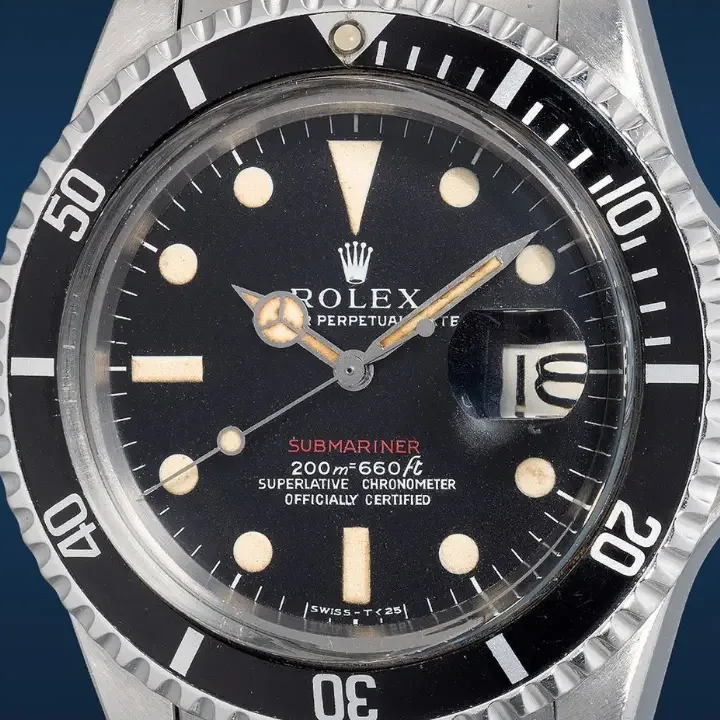
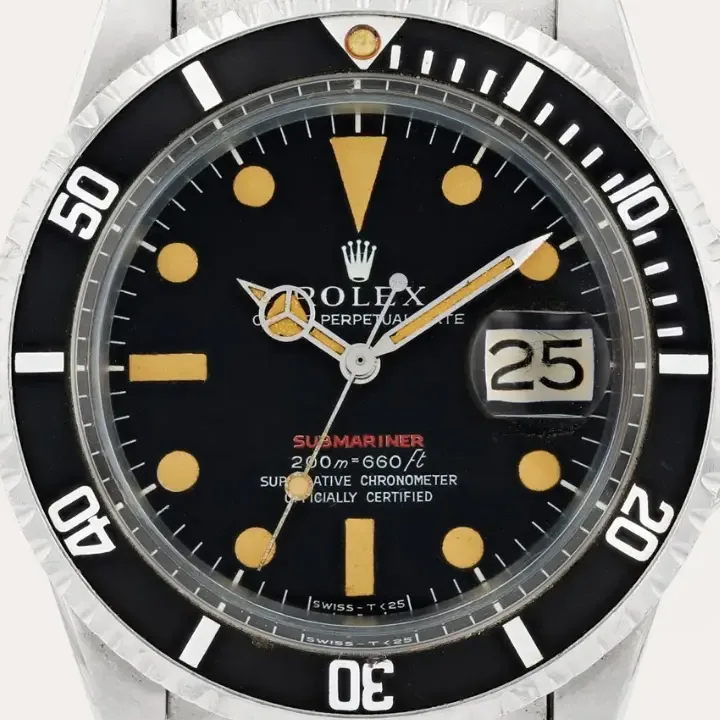
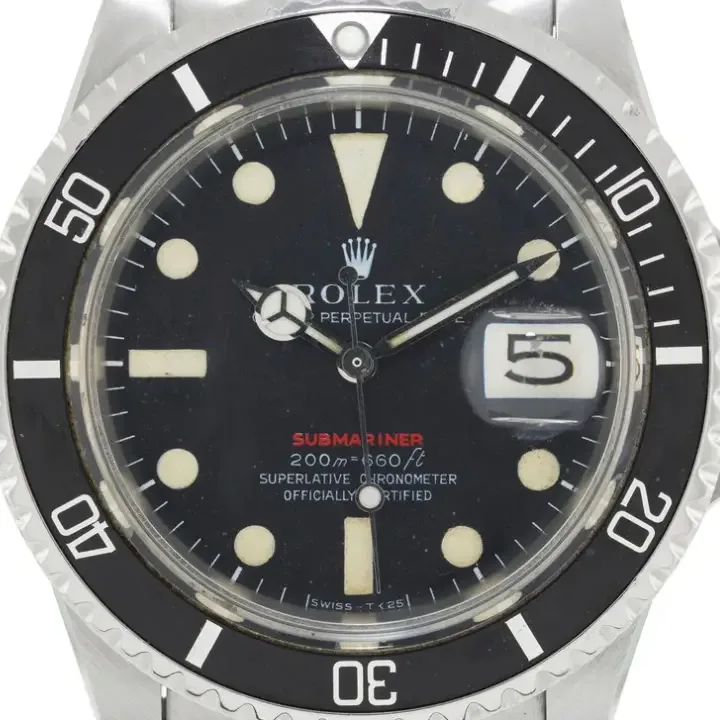
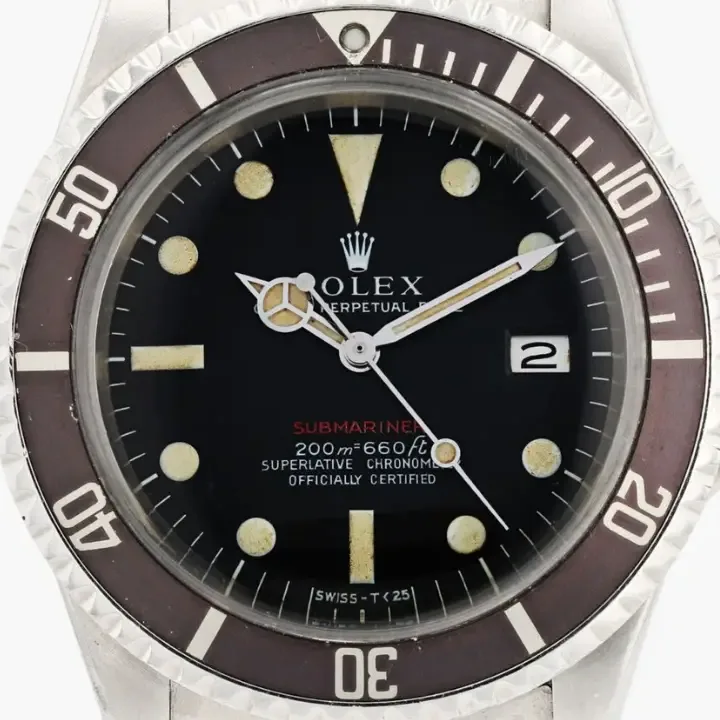
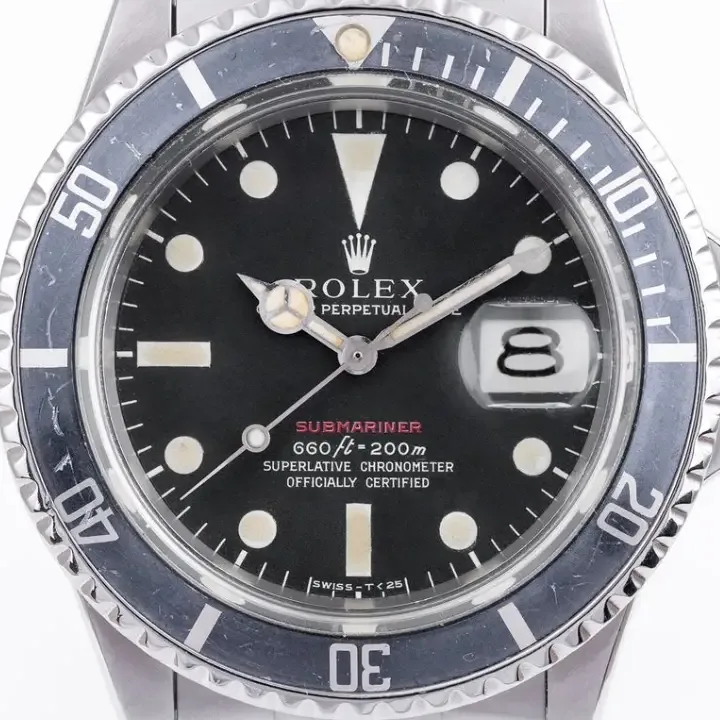
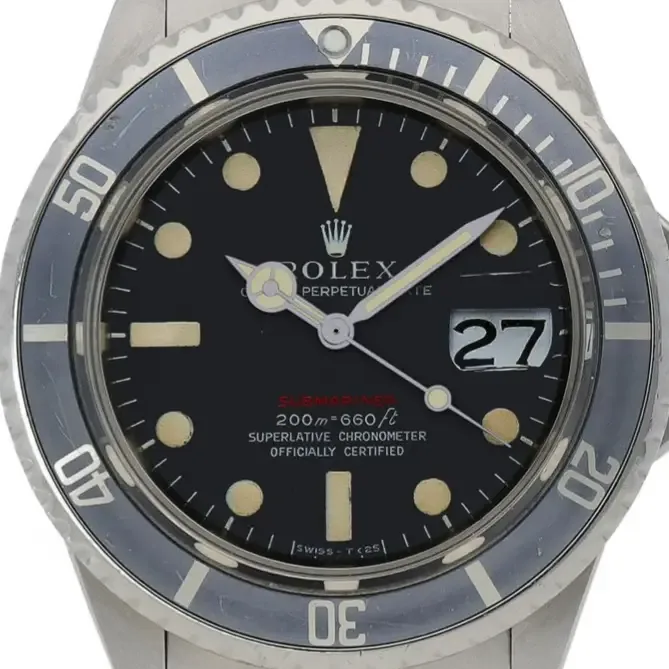
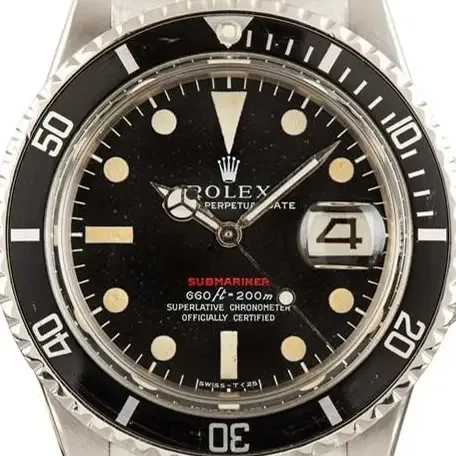
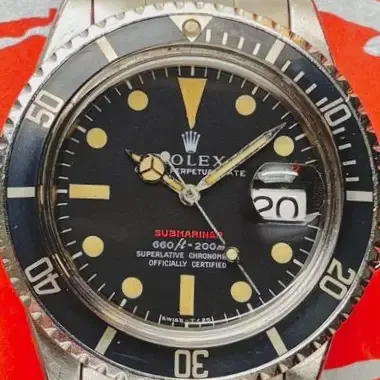
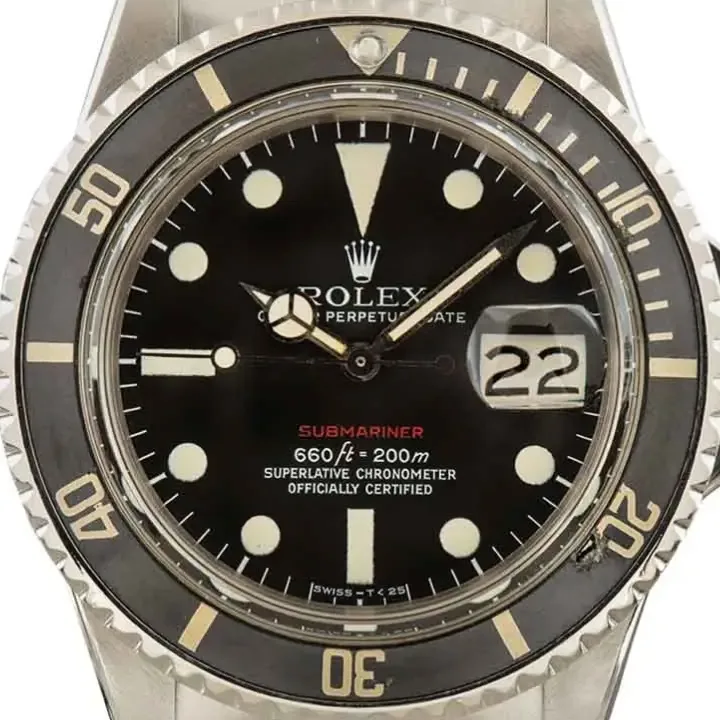
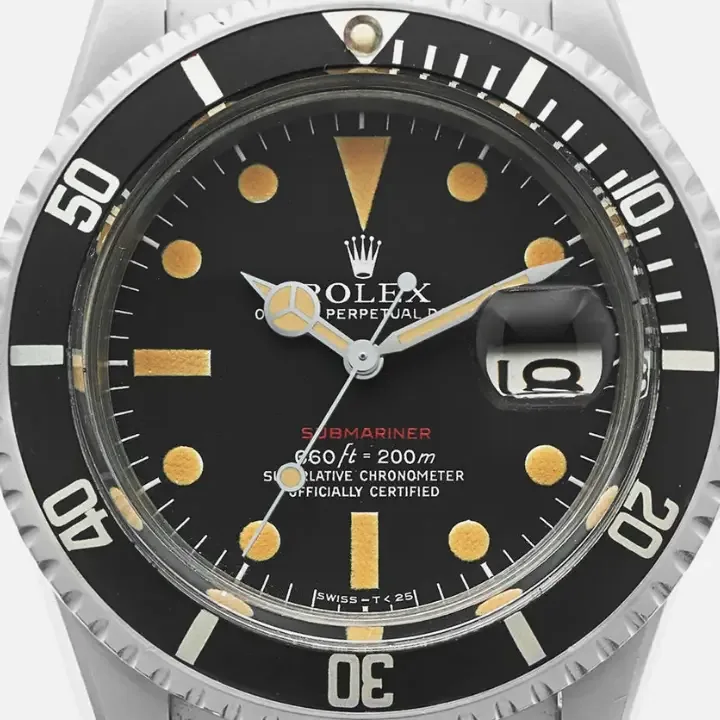
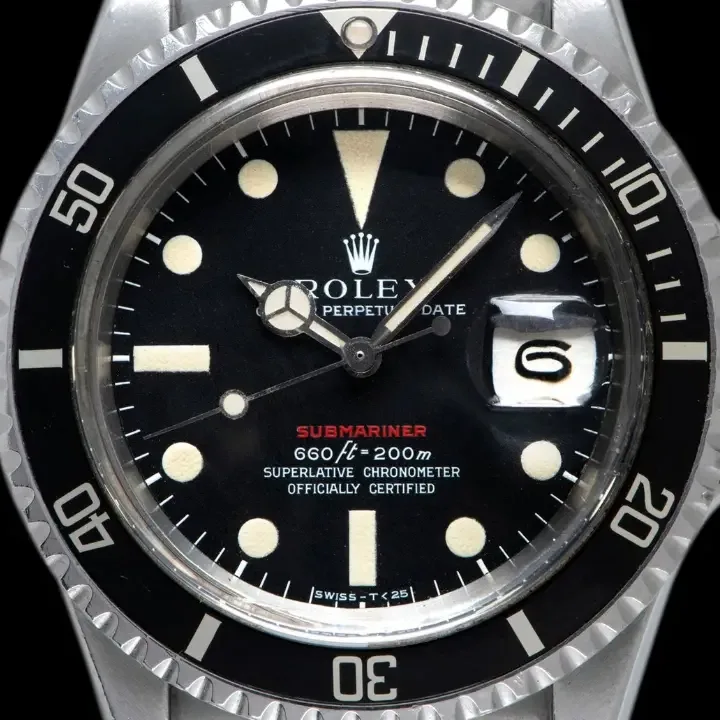
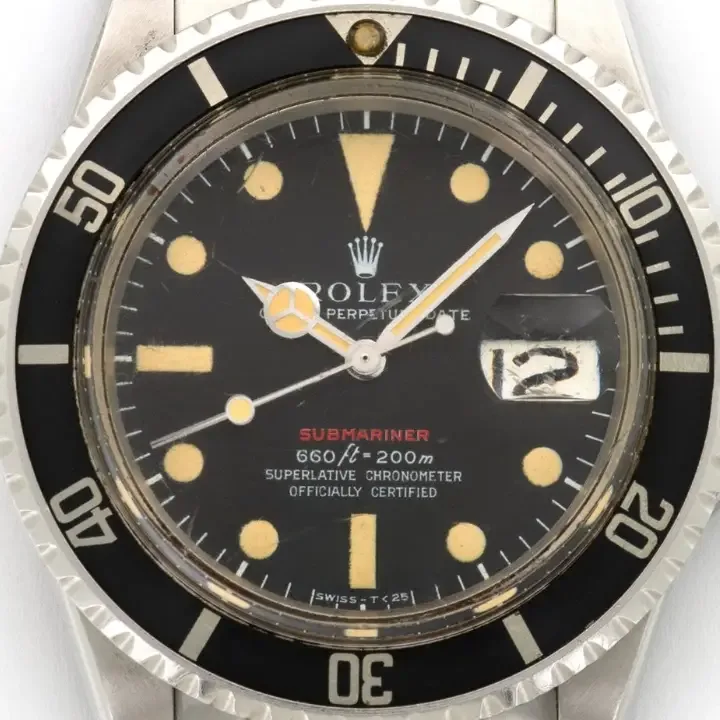
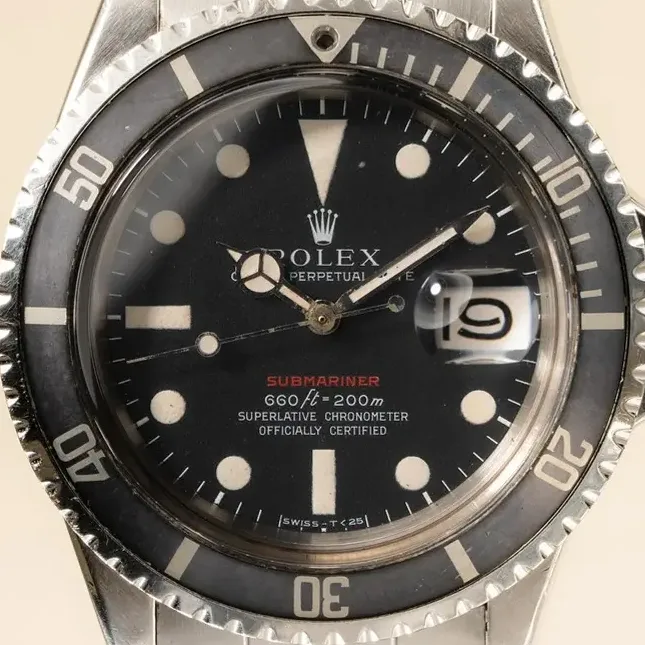
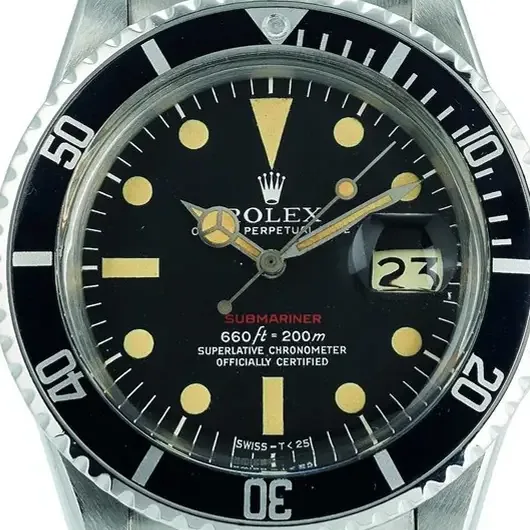
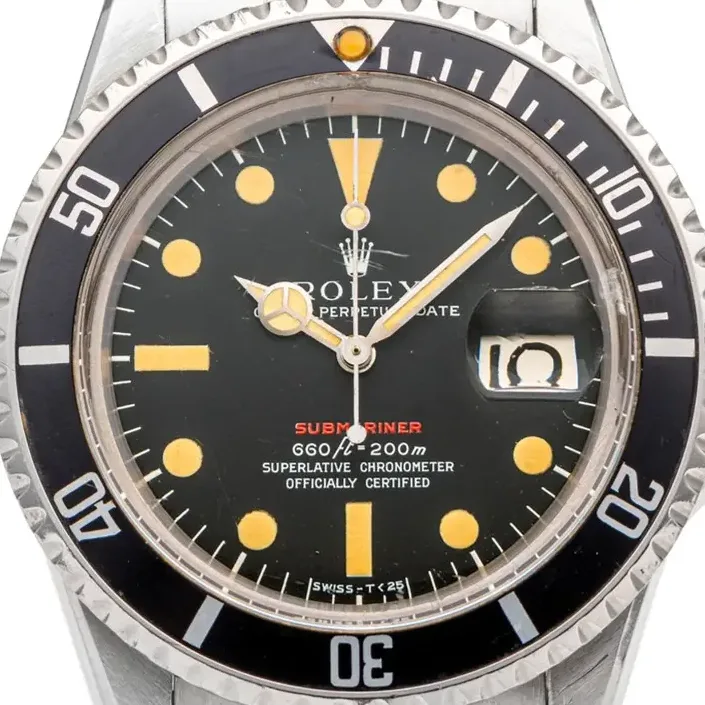
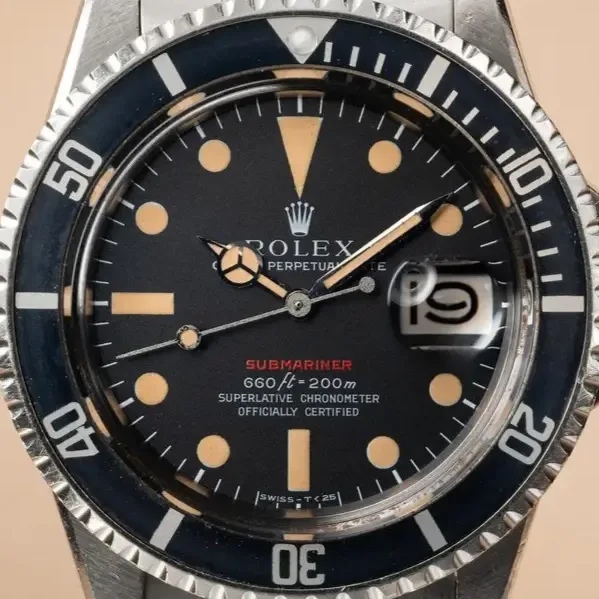
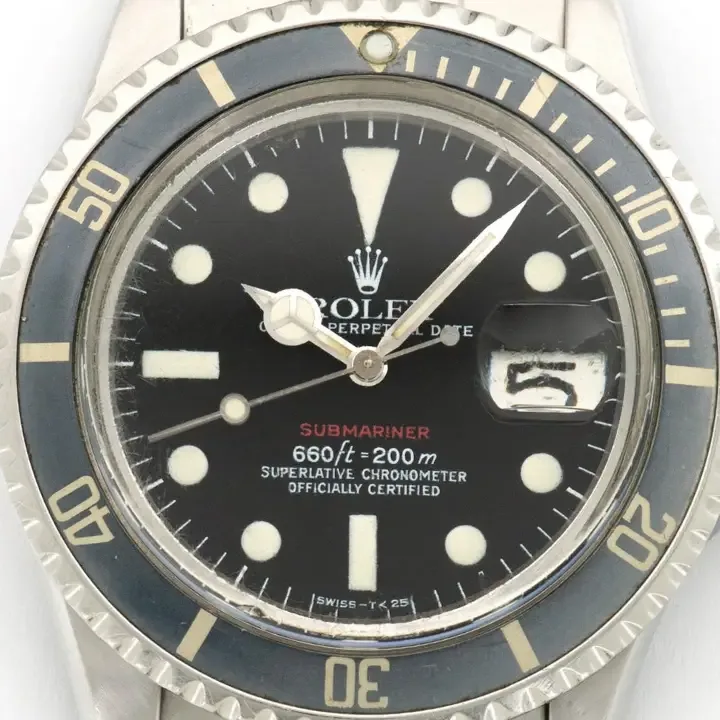
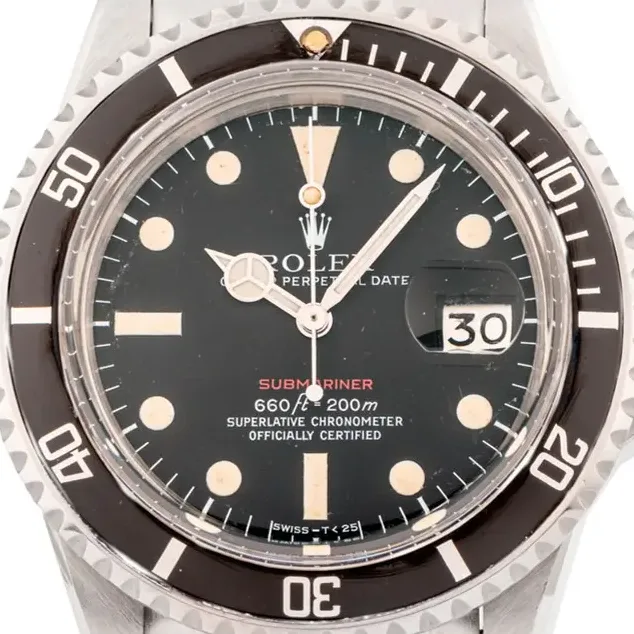
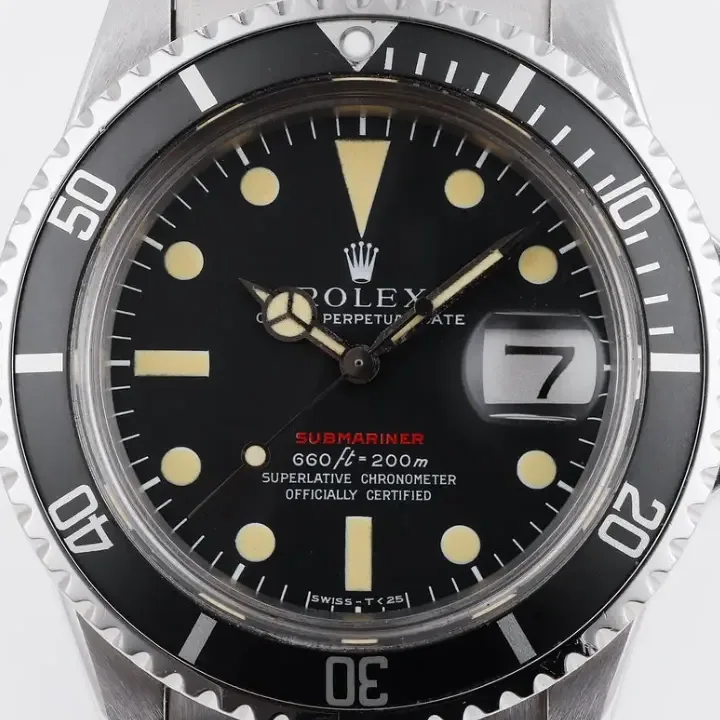
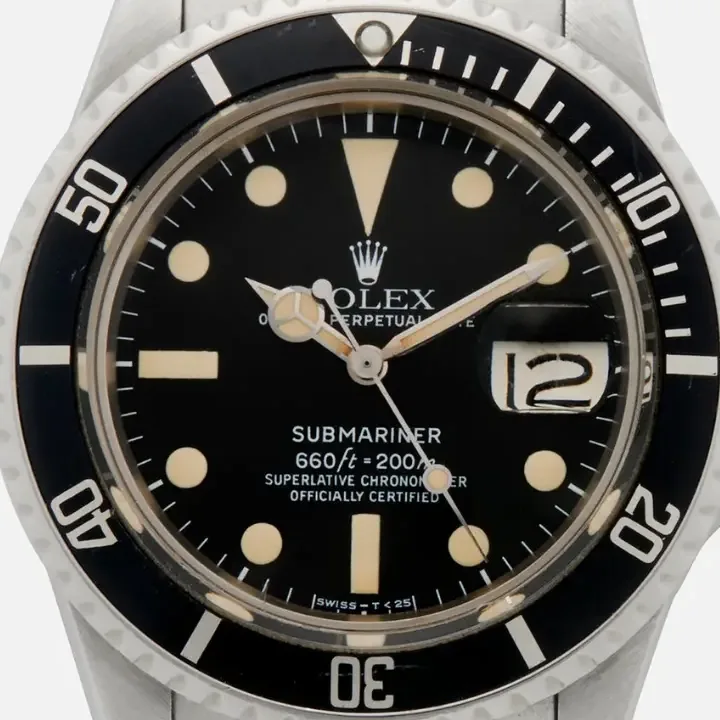
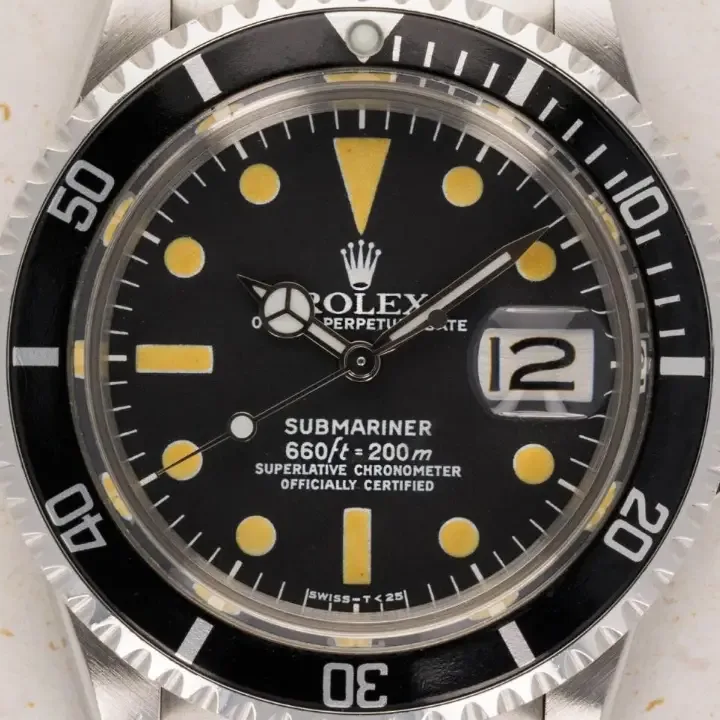
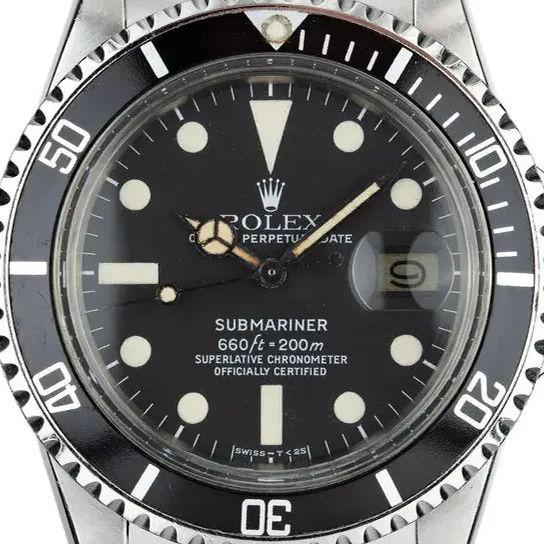
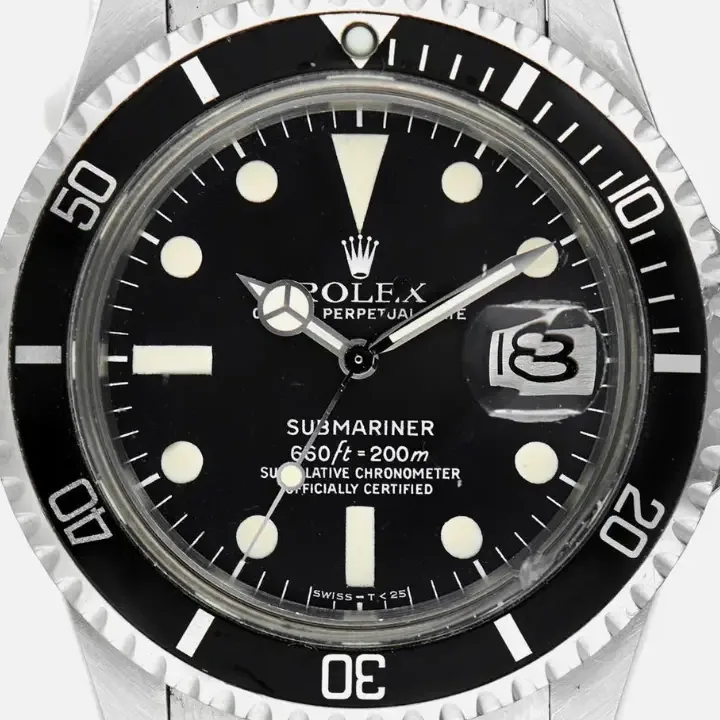
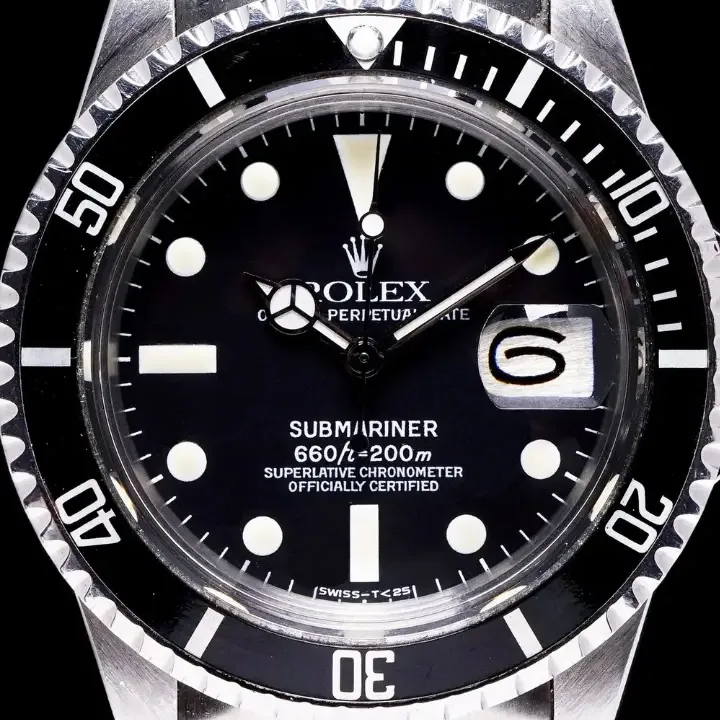
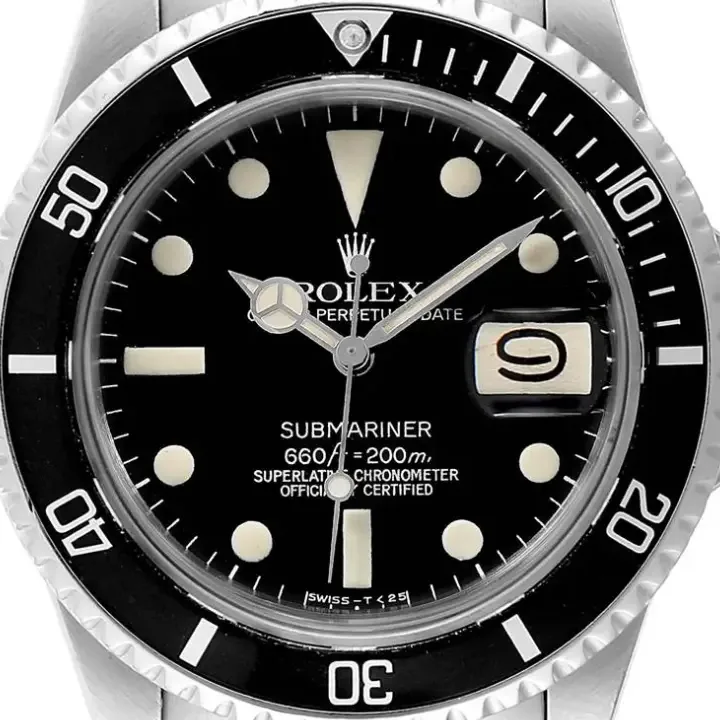
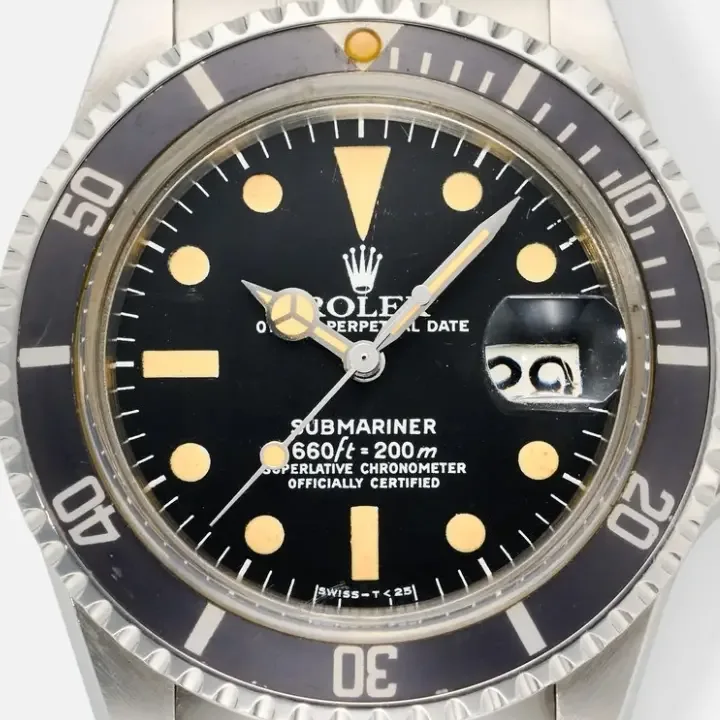
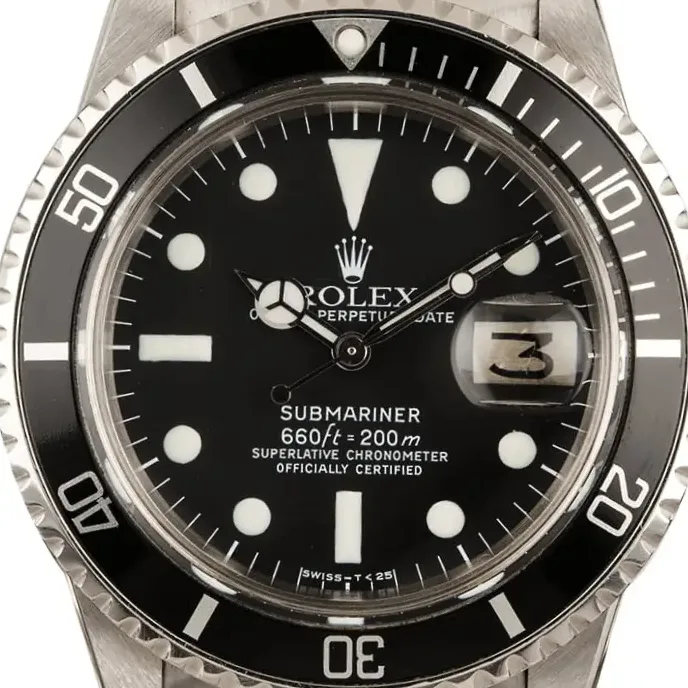
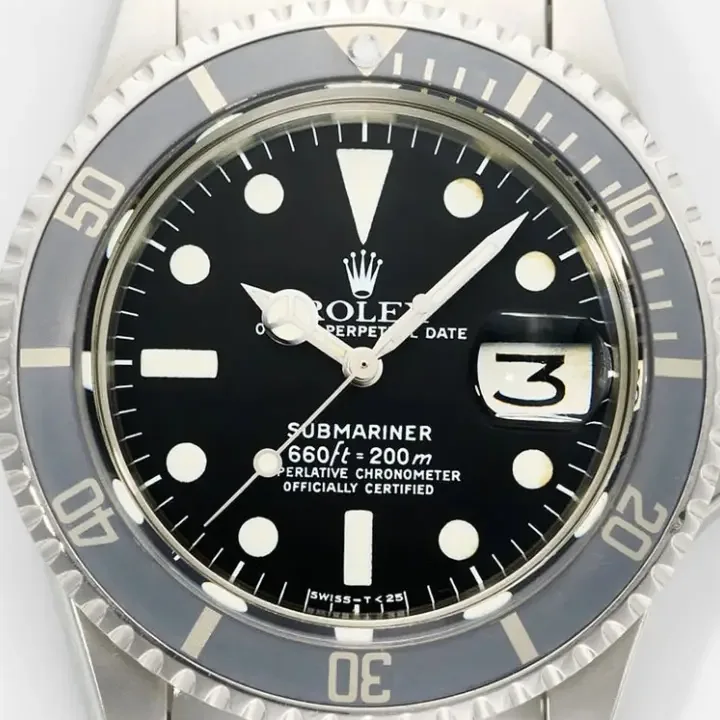
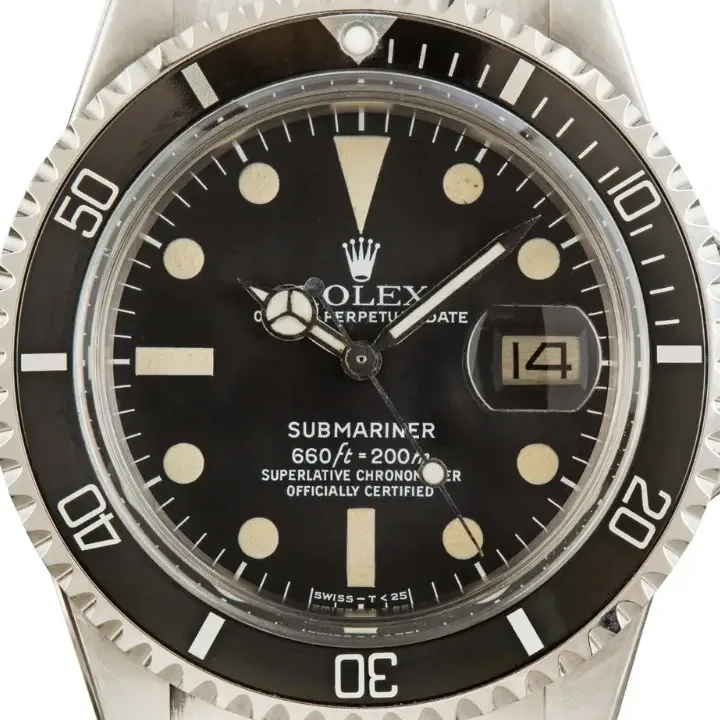
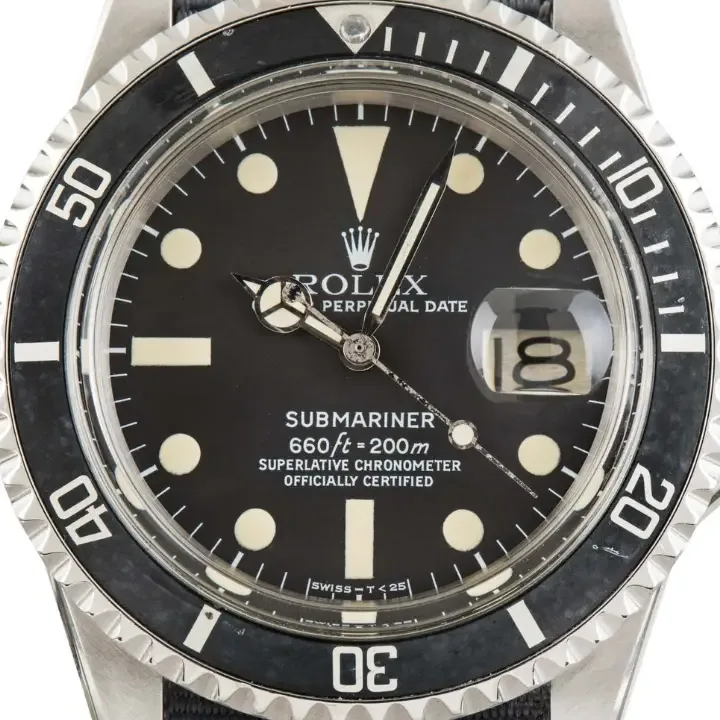
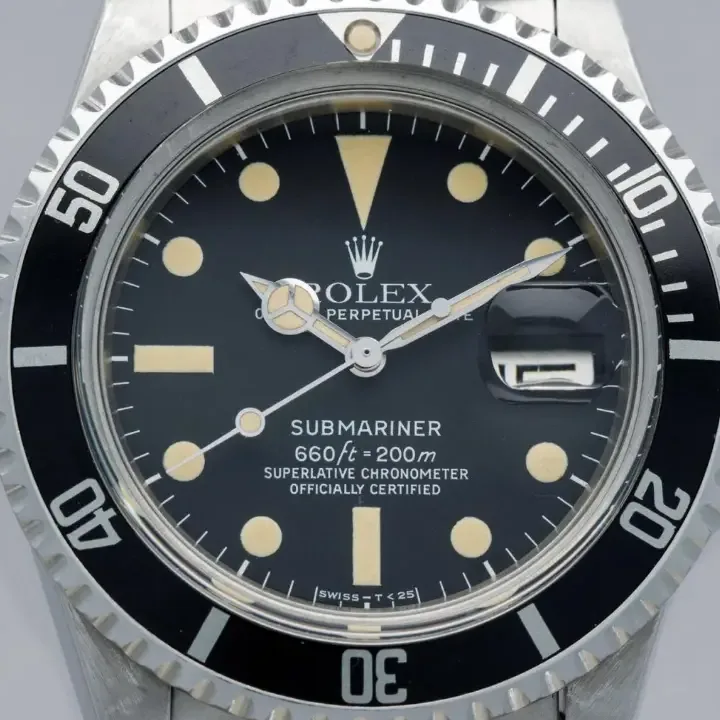
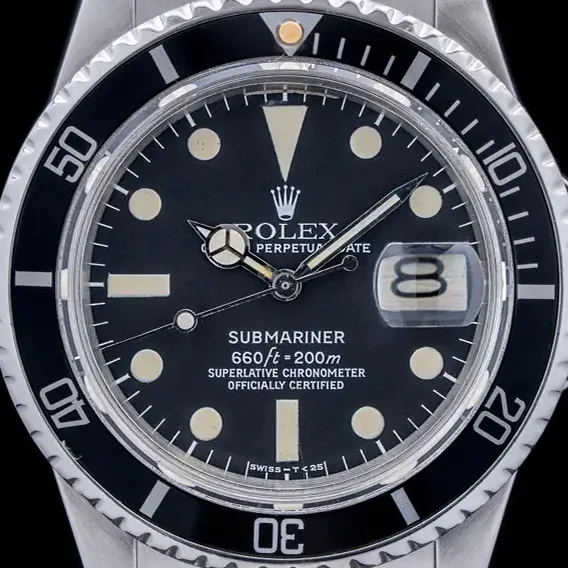
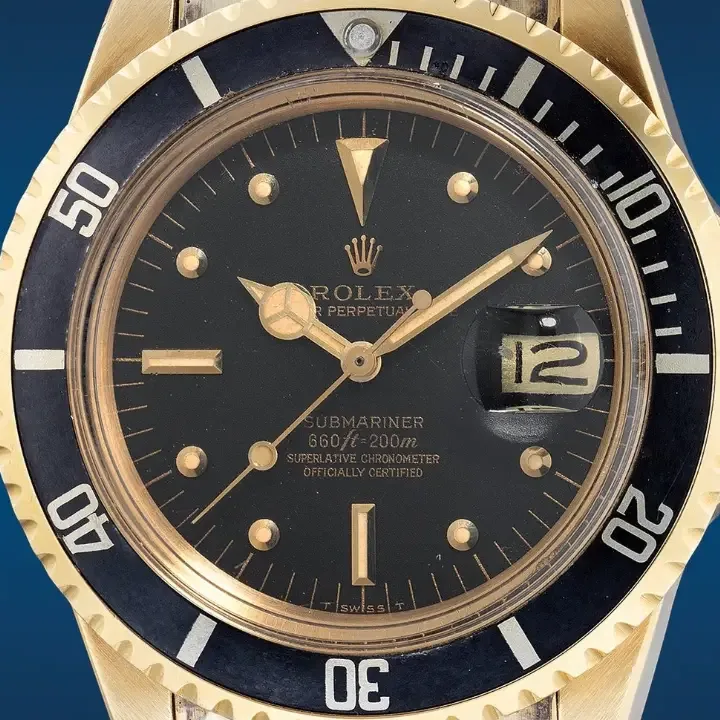
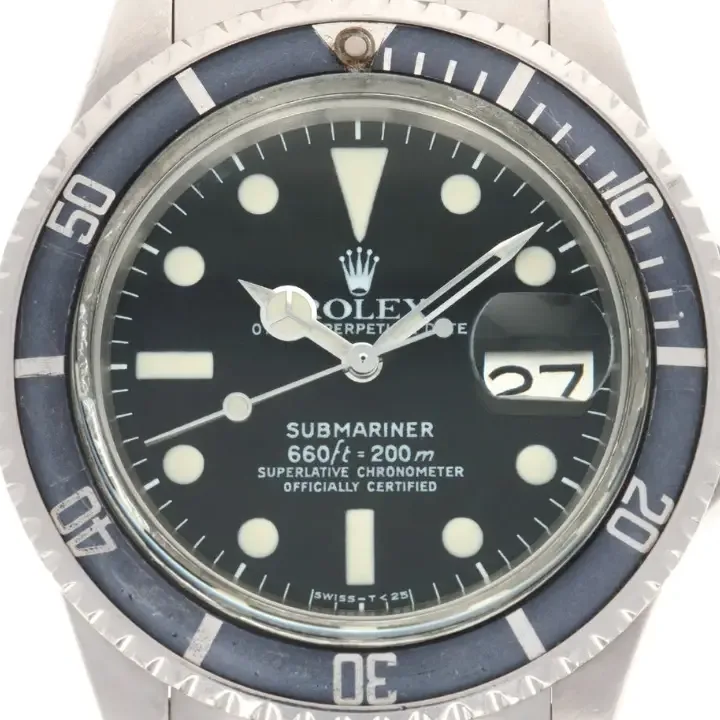
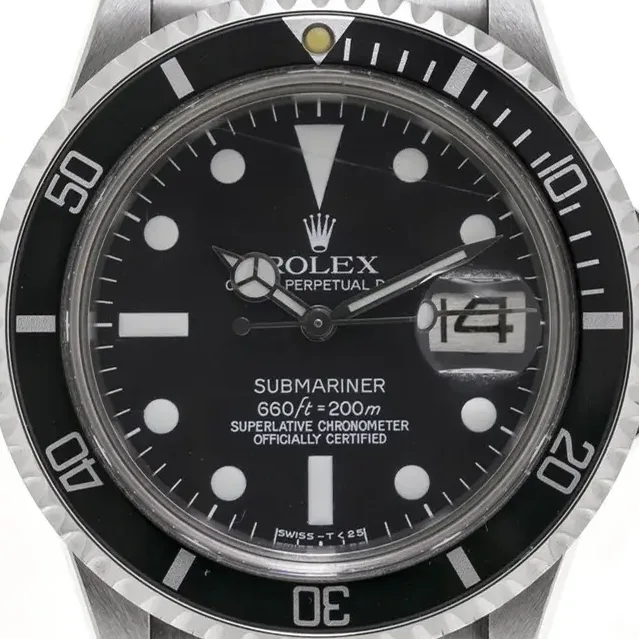
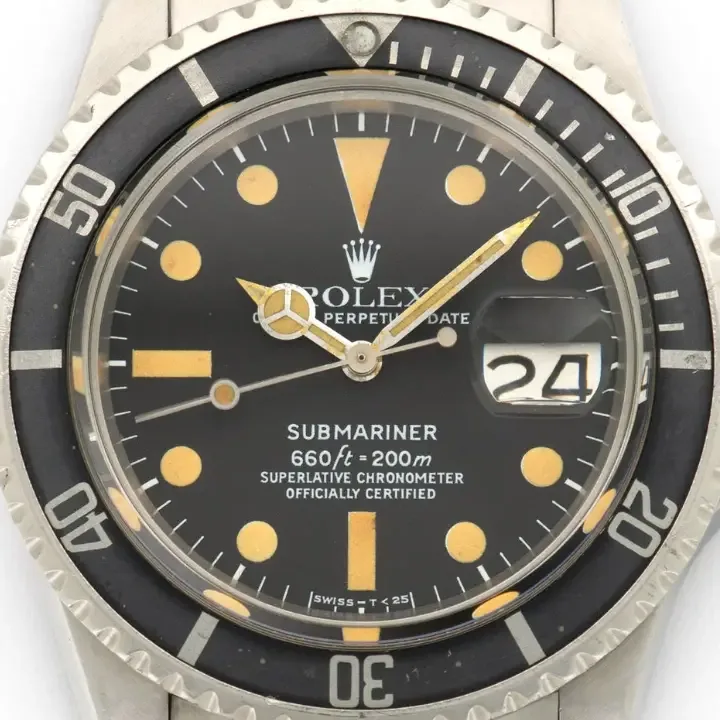
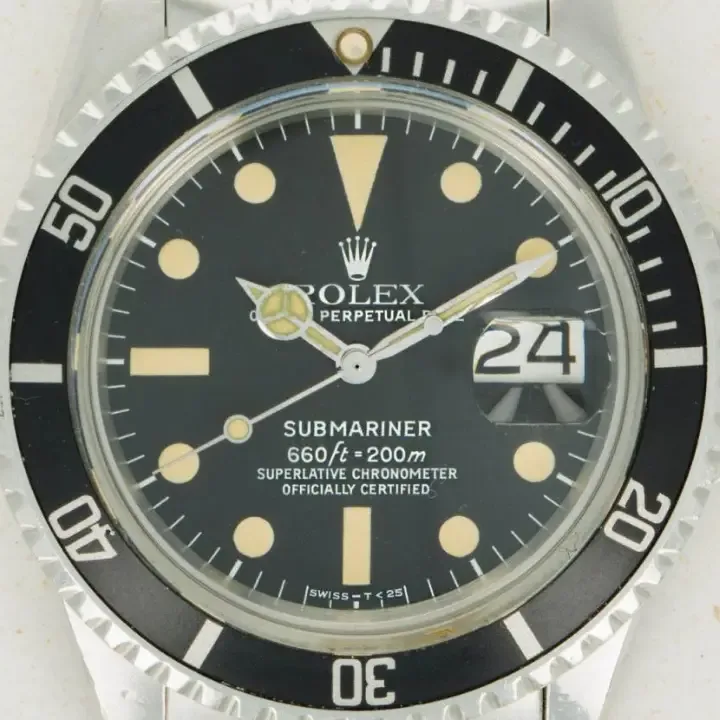
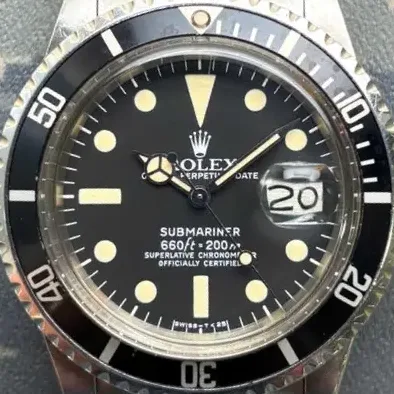
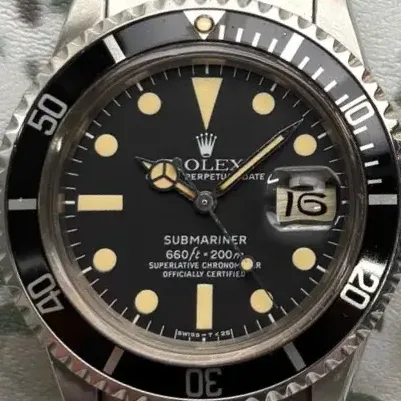
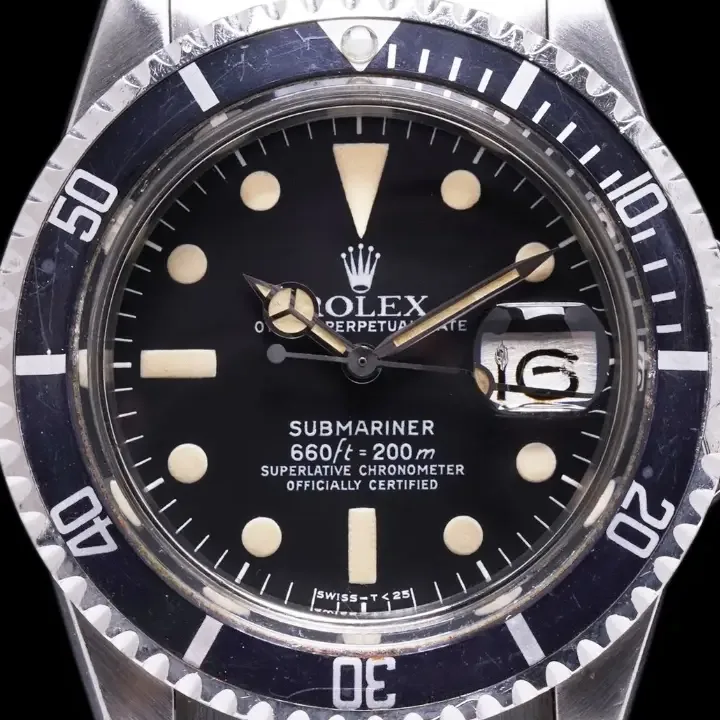
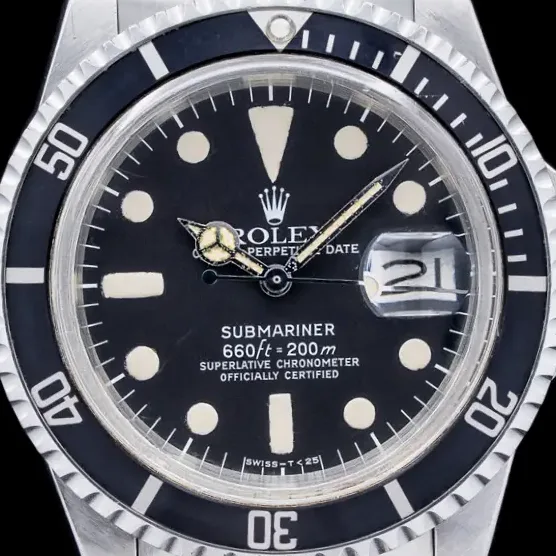
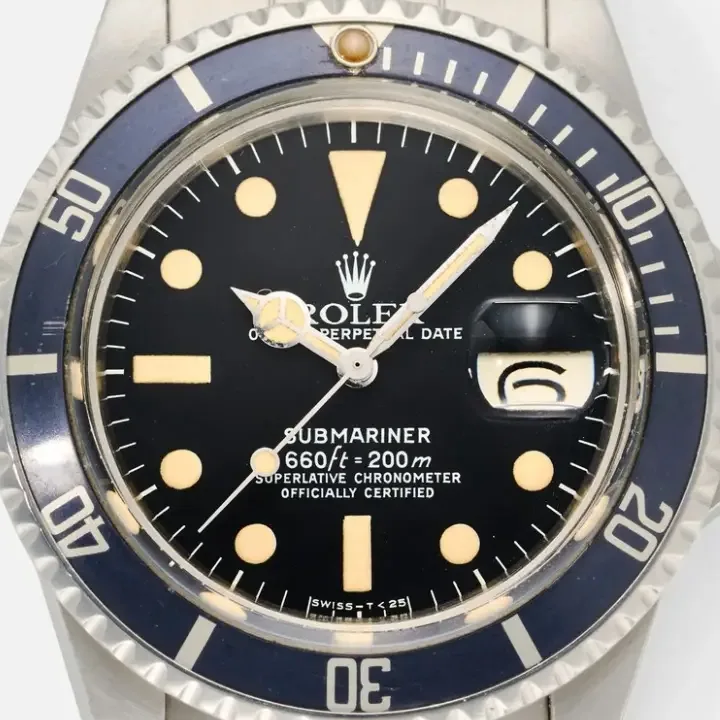
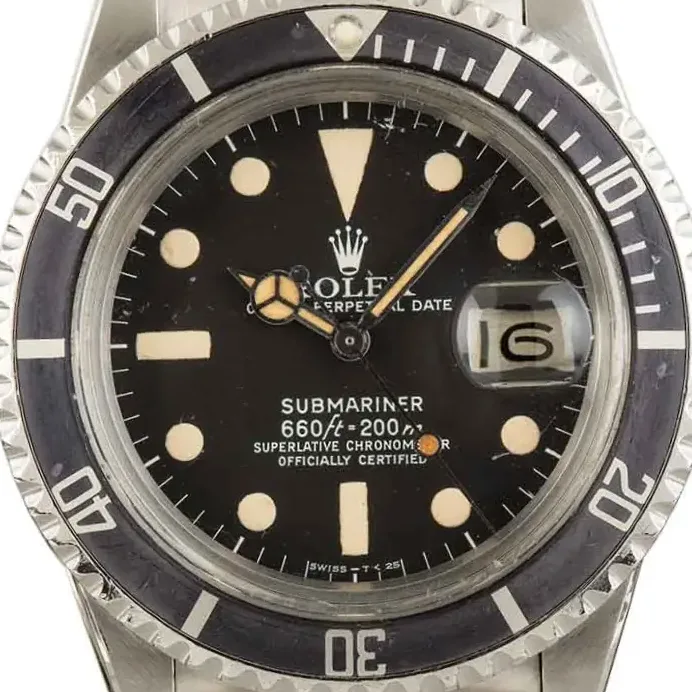
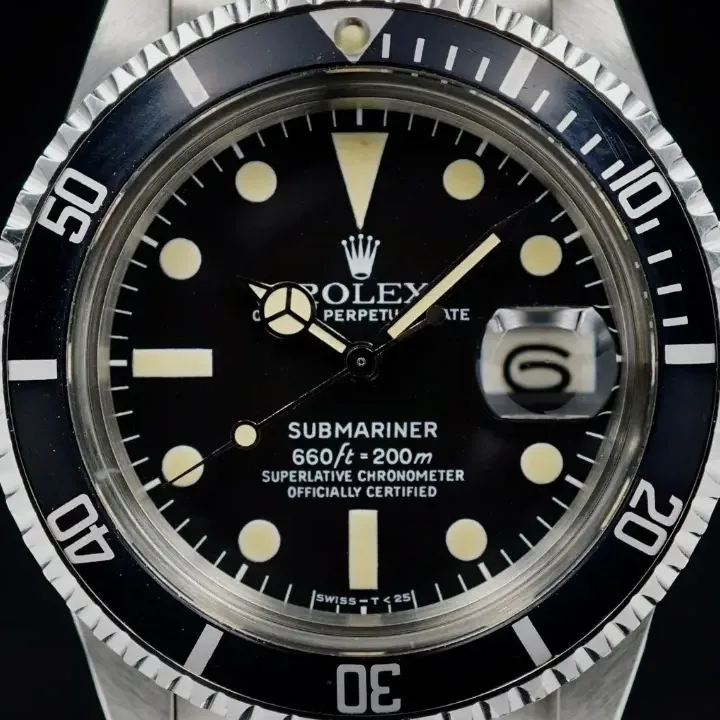
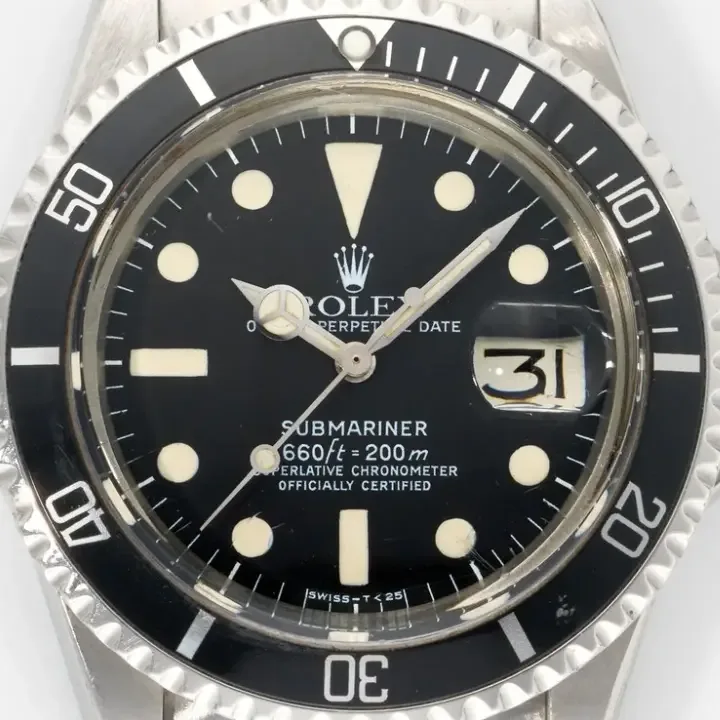
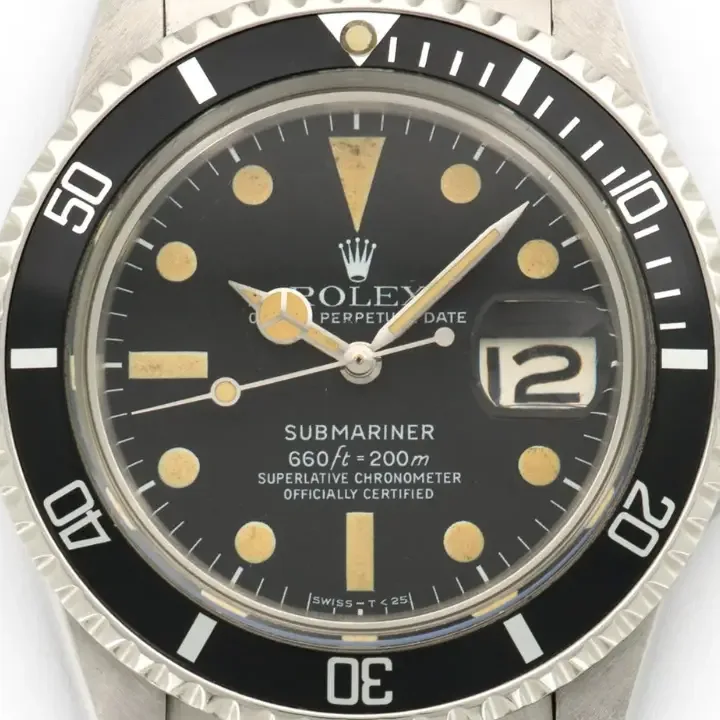
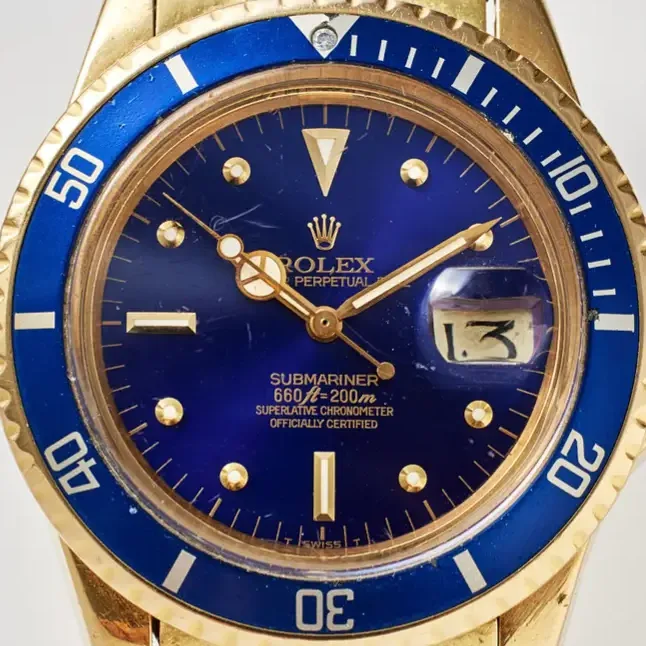
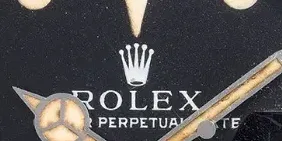
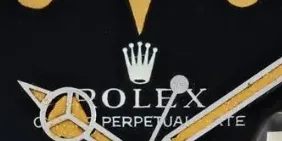
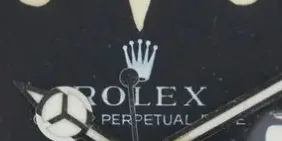

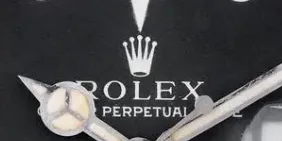


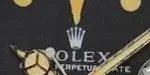




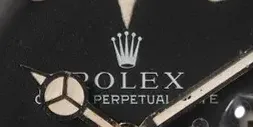



















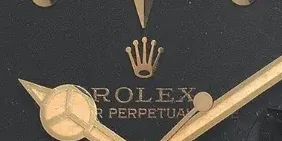




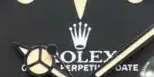
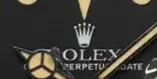

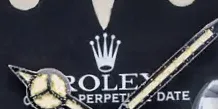
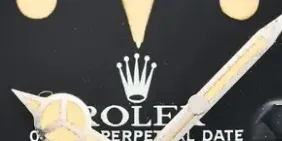
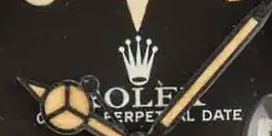




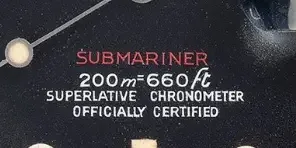
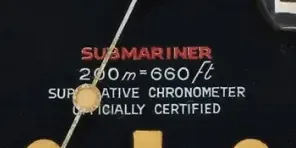
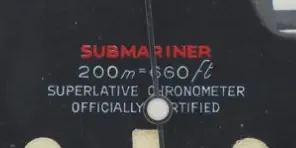

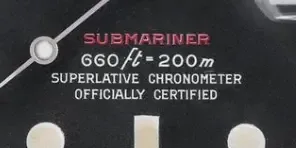


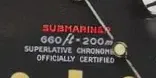

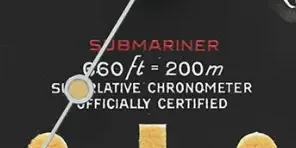


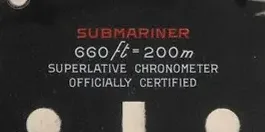

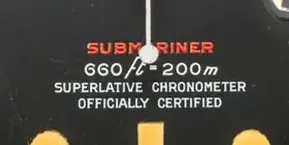
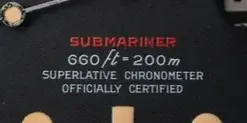

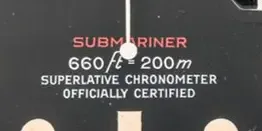



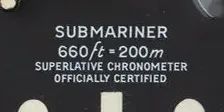

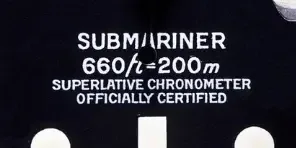
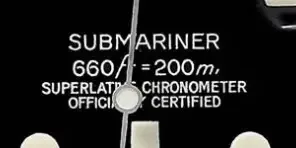

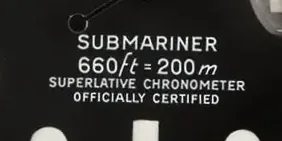
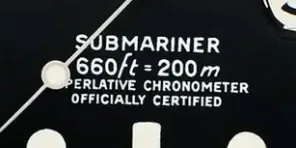
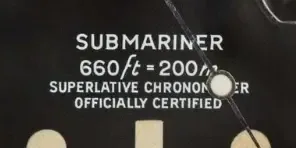
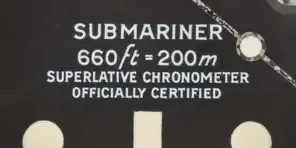

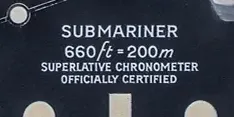
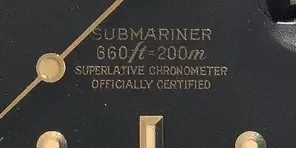
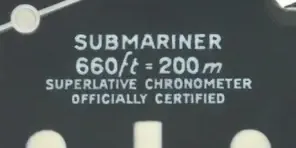
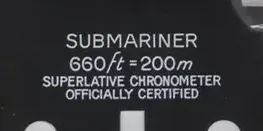

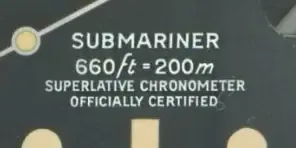
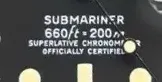
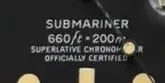

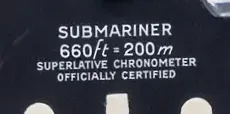
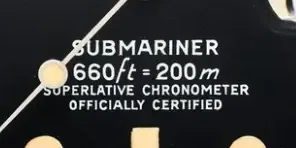
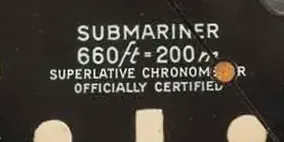
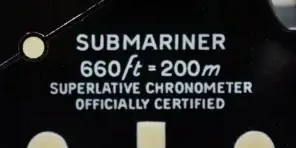


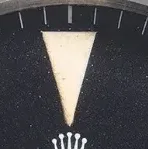
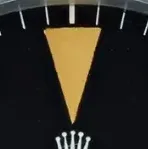
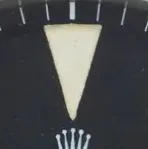
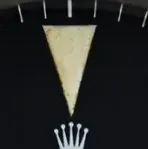
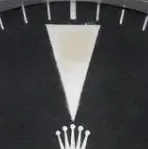
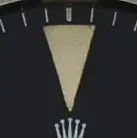


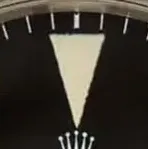
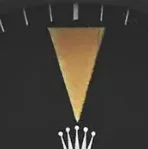
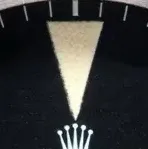
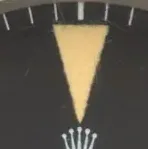
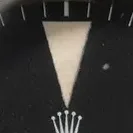
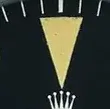
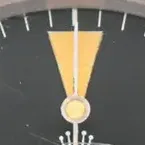
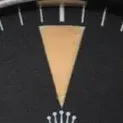
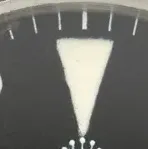
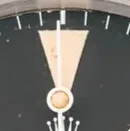
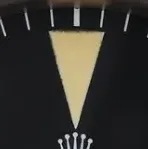
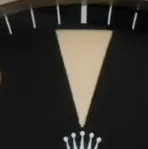
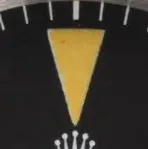
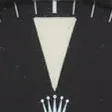
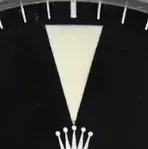

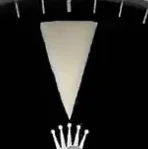
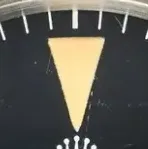
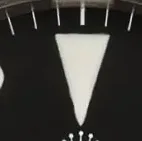
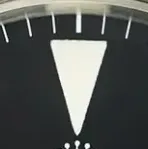
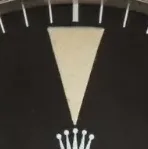
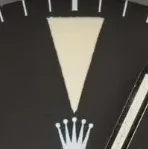
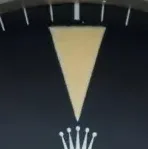
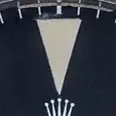
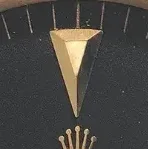

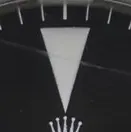
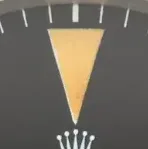
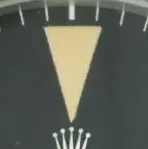


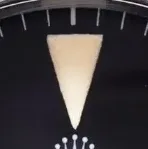
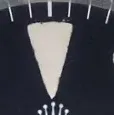
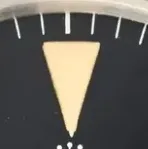
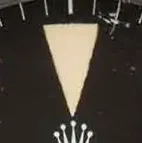

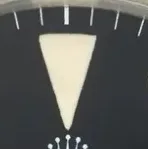
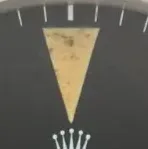

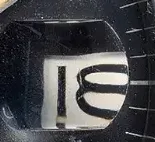
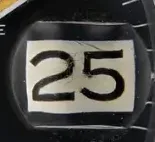
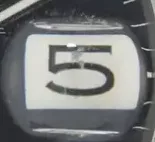
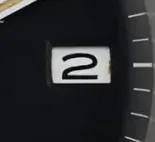
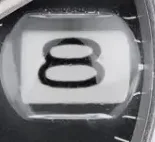
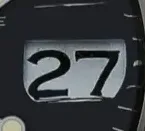


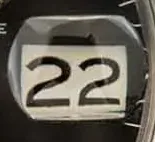
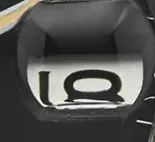
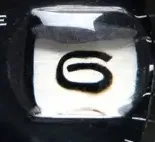
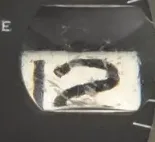
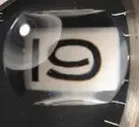
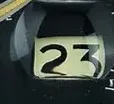
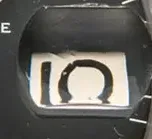
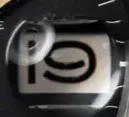
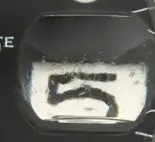
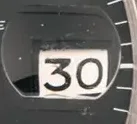
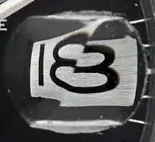
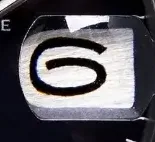
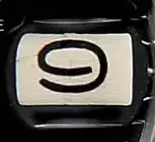
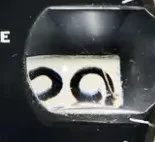
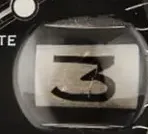
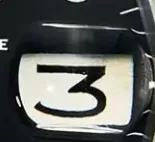
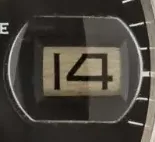
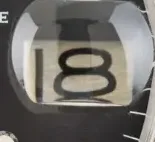

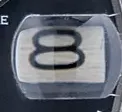
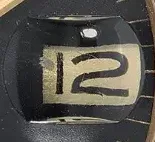
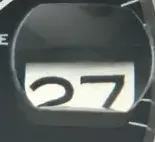
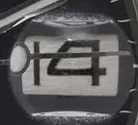
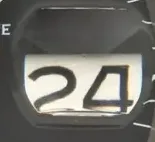
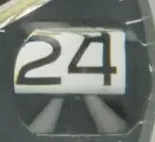


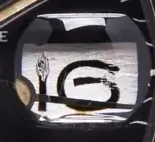
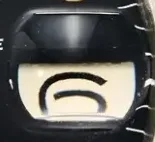
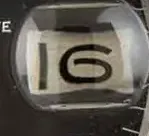
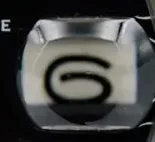
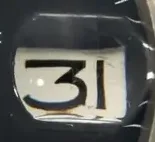
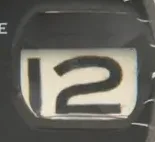
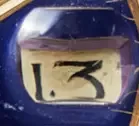
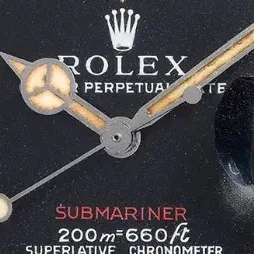
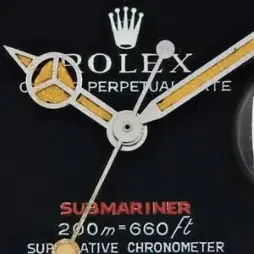
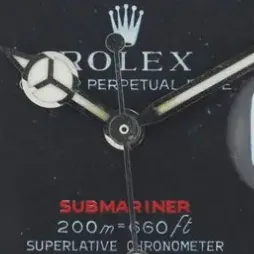
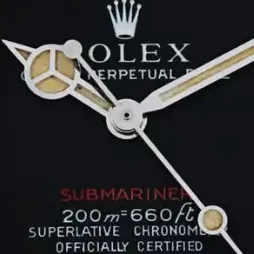
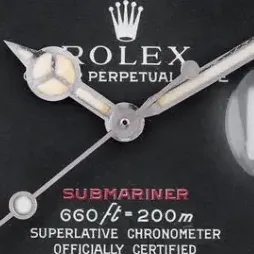

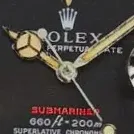
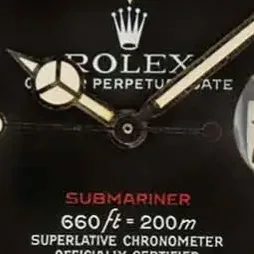
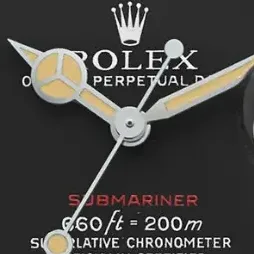
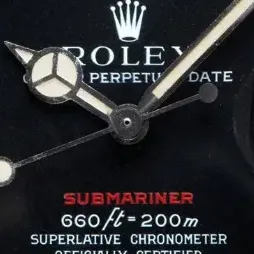
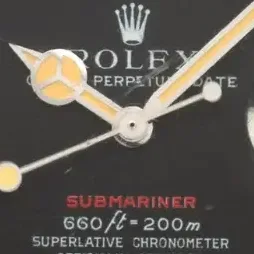
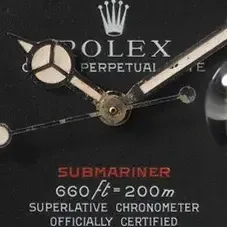
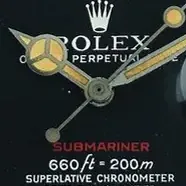
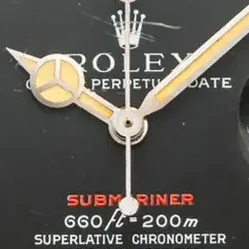
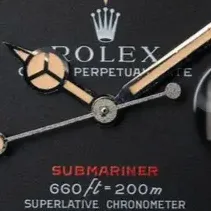
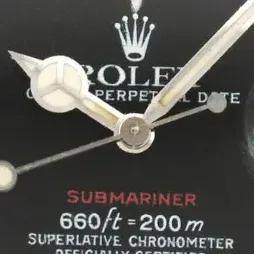
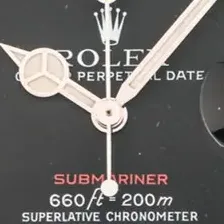
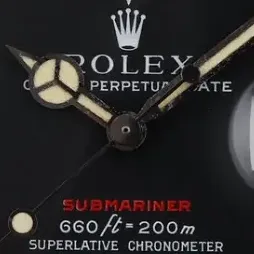
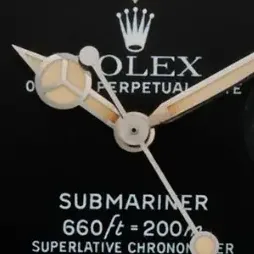
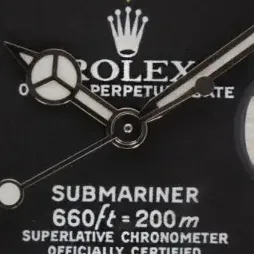
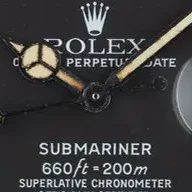
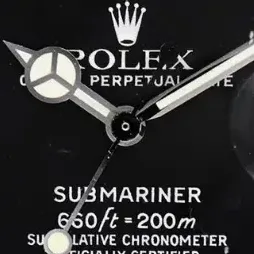

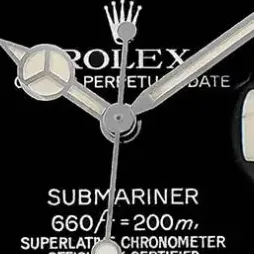
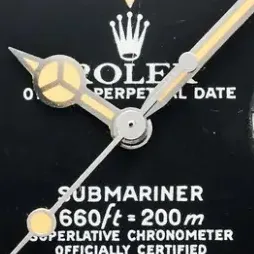
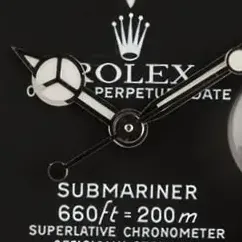
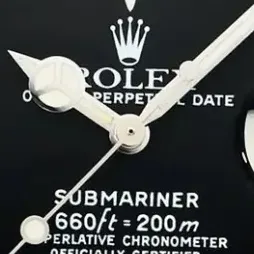
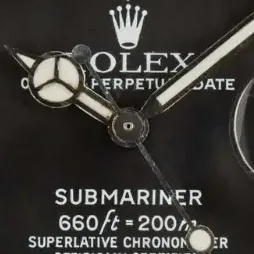
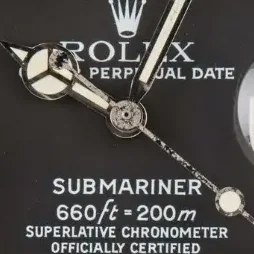
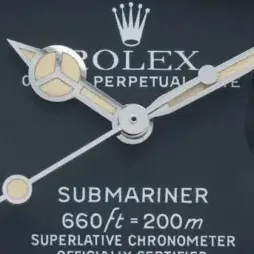
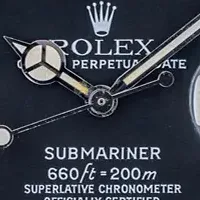
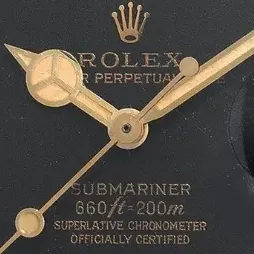
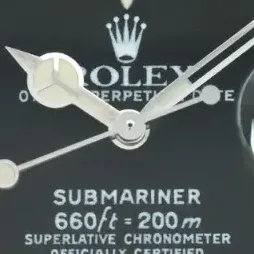
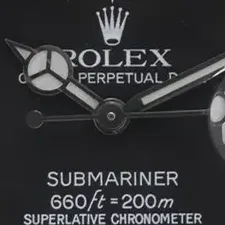
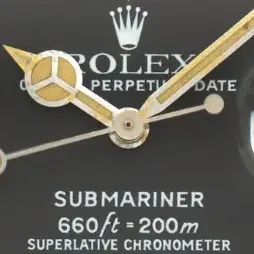
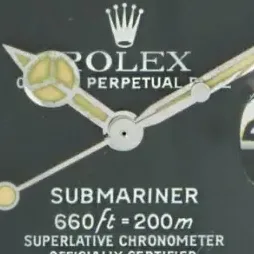
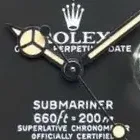

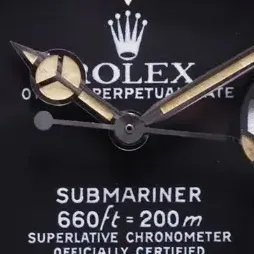
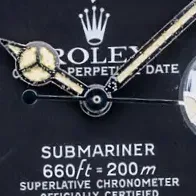
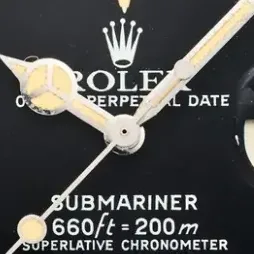
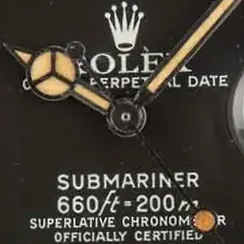
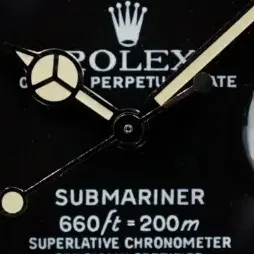
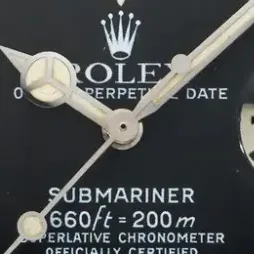
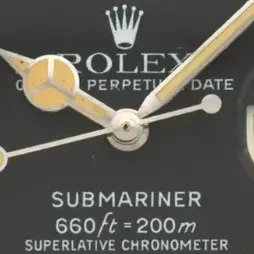
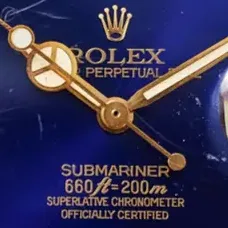
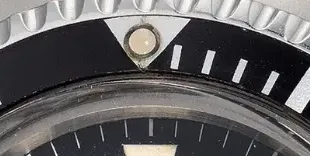
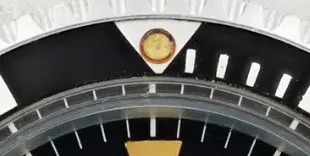
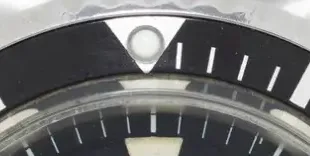
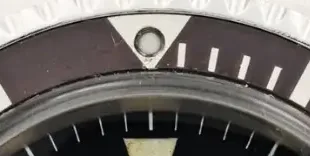
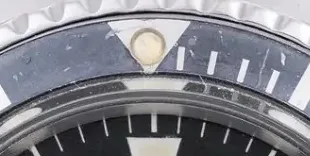
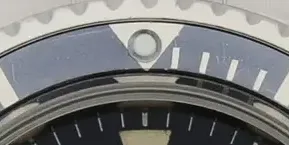
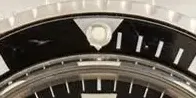

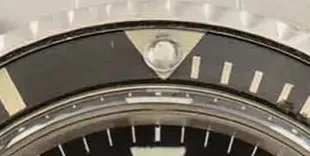
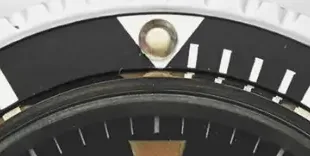
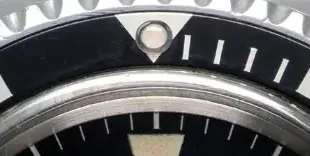
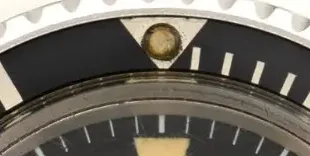


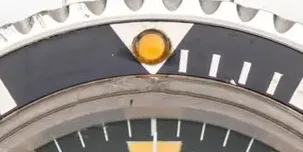
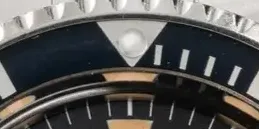


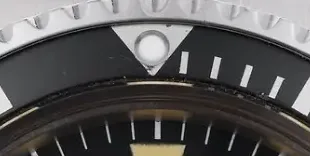
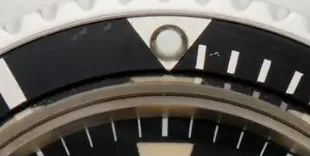
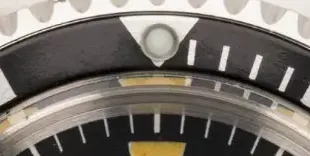
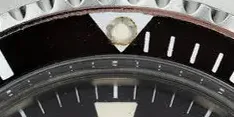
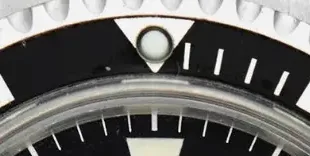
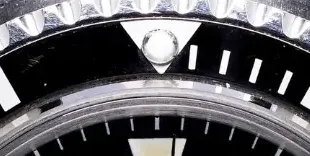
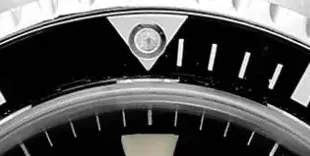




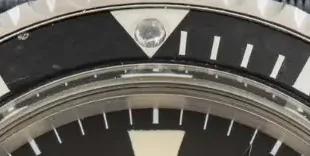
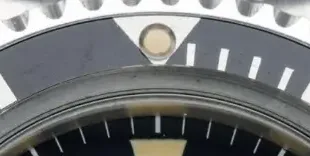
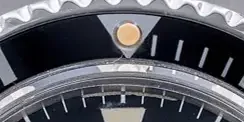
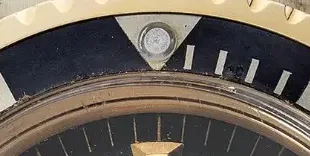

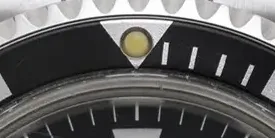
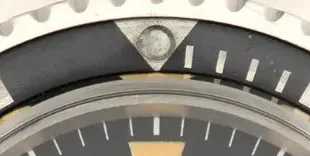

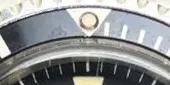
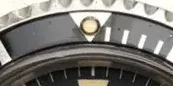
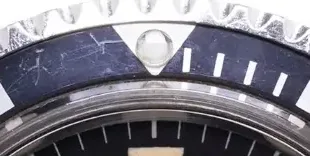
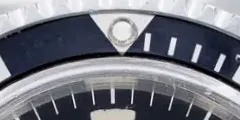
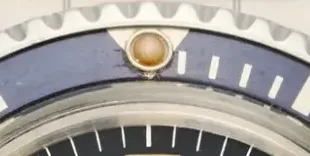
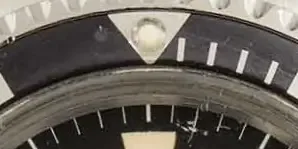
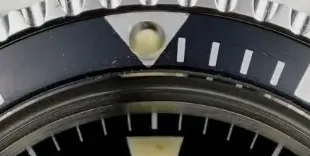


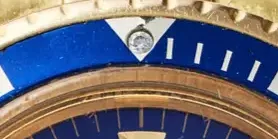
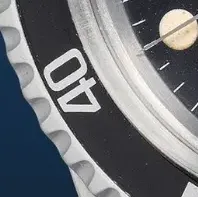
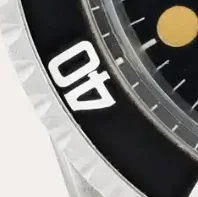
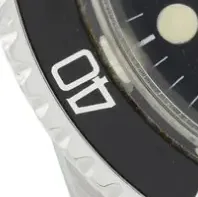
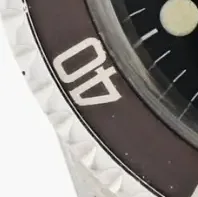
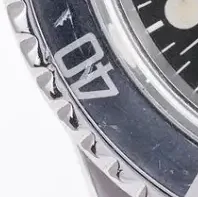
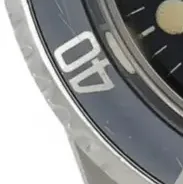
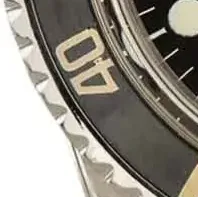
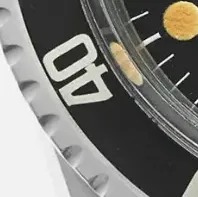
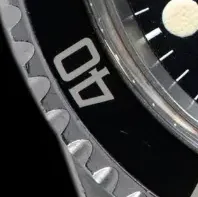
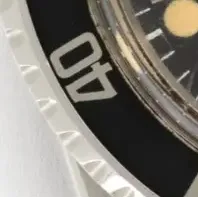
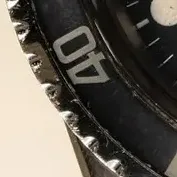
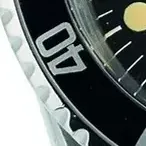
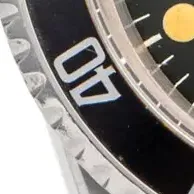
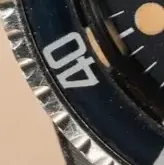
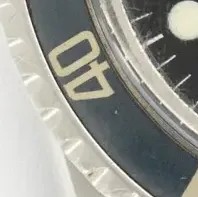
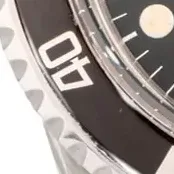
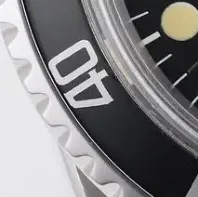
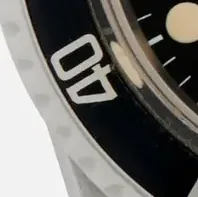
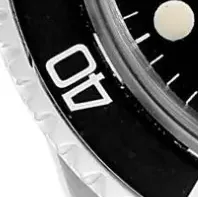
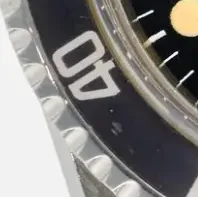
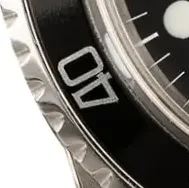
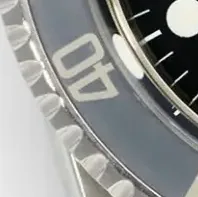
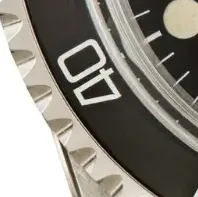
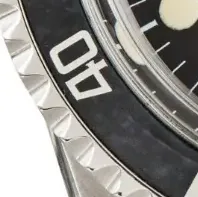
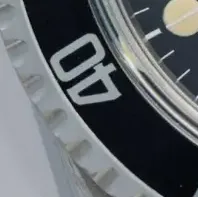
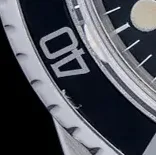
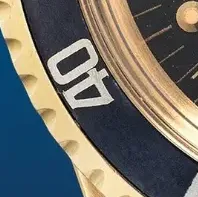
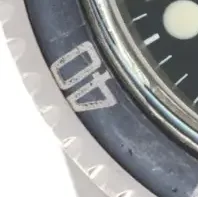
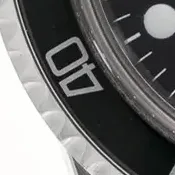
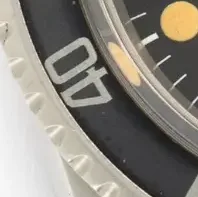
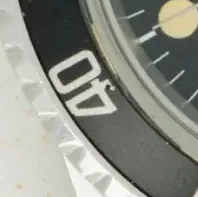
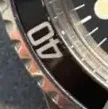
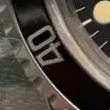
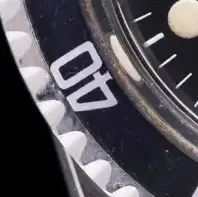
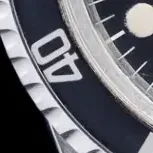
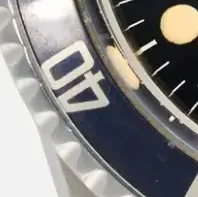
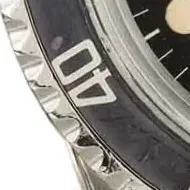
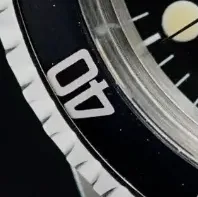
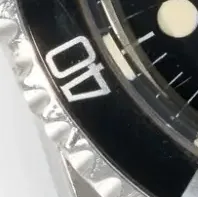
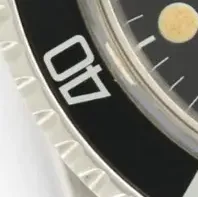
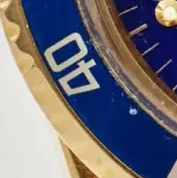
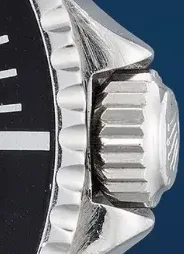
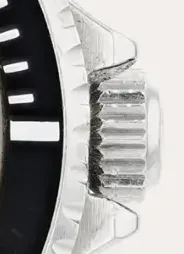
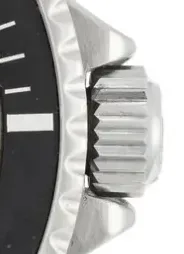
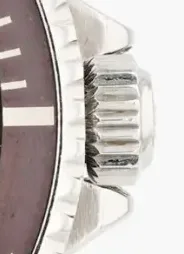
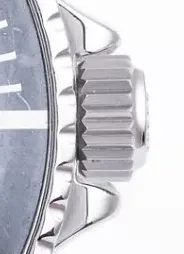
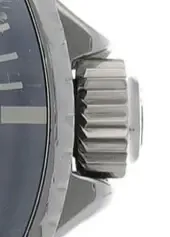
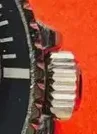
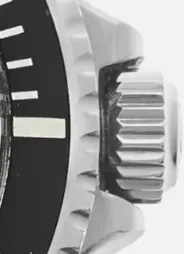
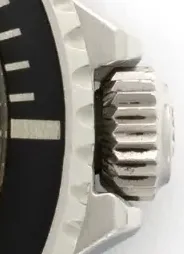
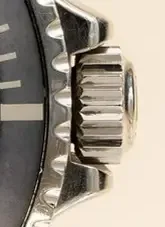
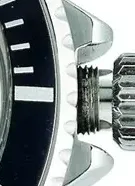
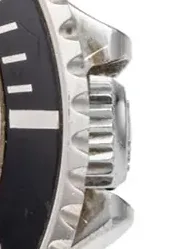
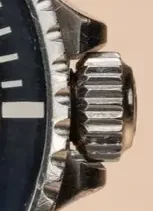
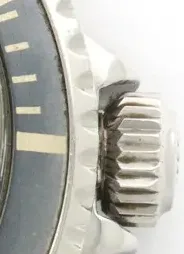
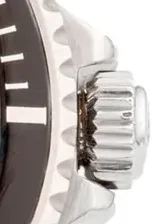
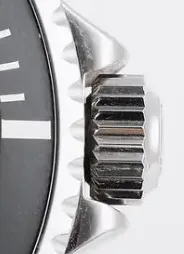
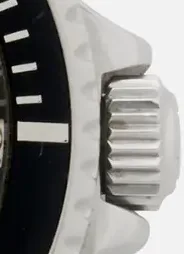
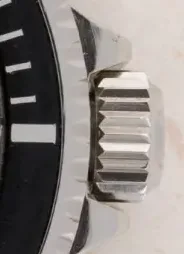
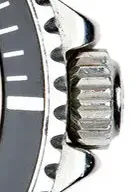
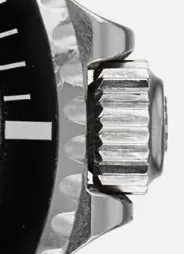
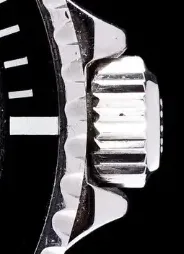
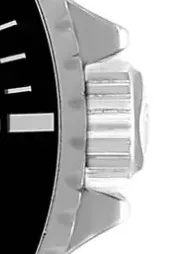
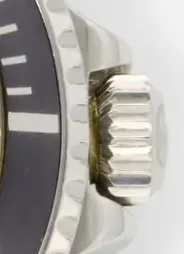
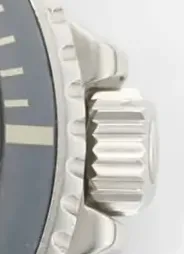
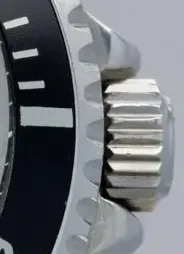
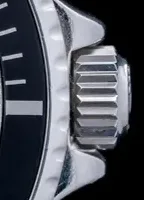
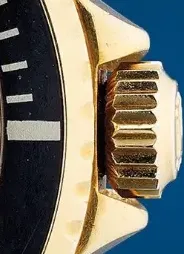
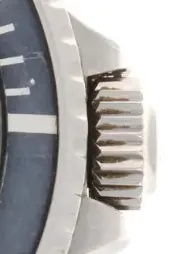
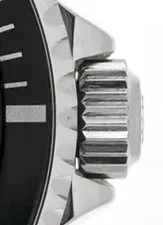
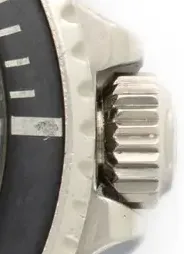
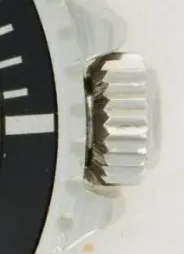
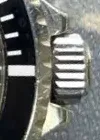
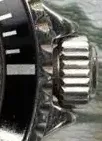
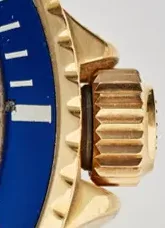
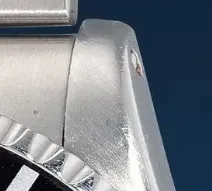

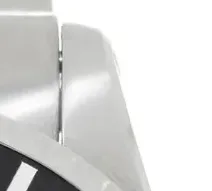

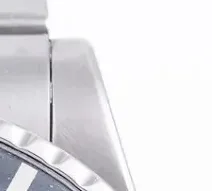
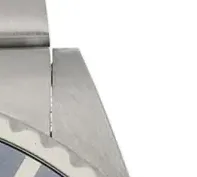


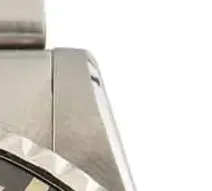

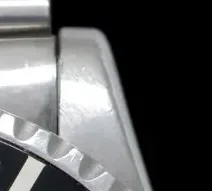

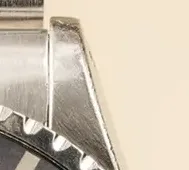
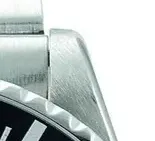
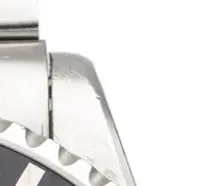
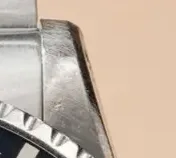



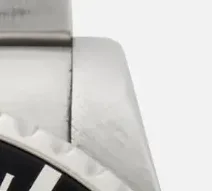
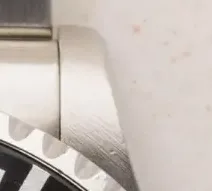
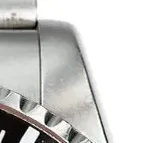


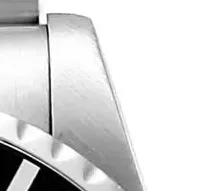

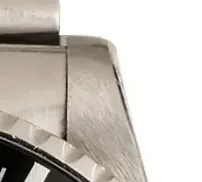


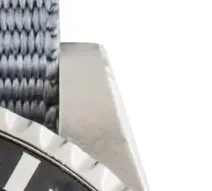

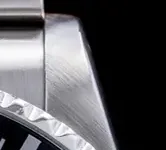
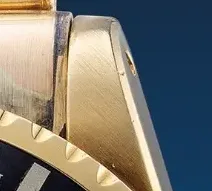

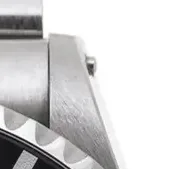



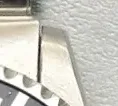
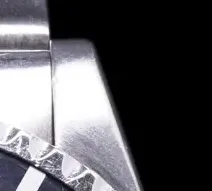
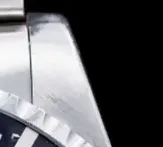

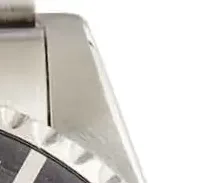
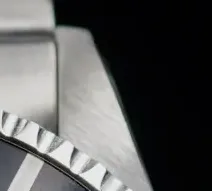


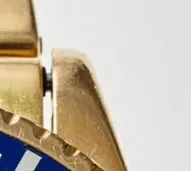
Illustrated history of the 1680: every change set out with close-up photographs of dated watches.
Chronology
Published starts run from 1966 to 1969, most often 1967, and ends from 1977 to 1980; case numbers in the library's records run from 1969 to 1979, with a few watches in 1980 and 1981.
Every dated variant: what is written, and what the records show
For the reference the marks are every dated watch; for a variant, the watches a seller names as that variant, so a variant sellers do not name has none.
The reference's own marks are dated by case number. A variant's marks use the year each seller states, so a variant can show watches in a year where the row for the reference shows fewer, or none. 2 dated listings fall outside this scale and are not drawn.
Specification
| Case | 40 mm steel Oyster case, about 12 to 13 mm thick, with thin lugs and a tapered side; solid 18k yellow gold as 1680/8; screw-down back |
| Crystal | Tall domed or box-shaped acrylic, the Top Hat, standing about 3 mm above the case, with a cyclops giving about 2.5x magnification |
| Bezel | Bidirectional 60-minute bezel with an anodised aluminium insert in black (blue on some gold watches) |
| Dial | Matte black, with depth rating above six, luminous plots, Mercedes hands and tritium lume; red or white Submariner text |
| Movement | Calibre 1575, automatic, 19,800 vph, 48-hour reserve, instant date change without quickset, rotor bridge stamped 1570; hacking added early in the 1970s |
| Bracelet | Three-link Oyster: 7206 riveted, 9315 folded, 93150 solid; gold watches on 9290/8 |
| Water resistance | 200 metres / 660 feet |
Dial 17 described
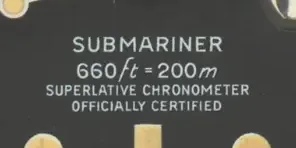
The 1680 dial is matte black with the depth rating above six o'clock. Its history is the story of the Submariner text: red from the start until about 1975, white after. The Red Sub dials are numbered Mark I to VI, three metres first and three feet first, plus a later service dial; the white dials form a separate series of three. The Marks are collectors' labels, not Rolex's, and their date ranges overlap and vary between sources.
Mark I (metres first)
case numbers about 2.07M to 2.2M
The opening dial, by Singer, is in a compressed heavy typeface: red Submariner laid over white, closed sixes in the depth line, and an f in ft whose hook curls over the t. Case numbers about 2.07M to 2.2M.
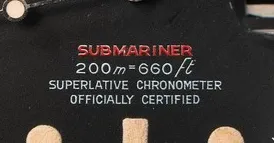
- closed 6s
- long curve on f
- serif-like font
89 listings on record under the name.
Mark II (metres first)
case numbers about 2.2M to 2.45M
Red over a white base with a thinner font, open sixes and an f that does not reach as far over the t; the Submariner line is slightly shorter than the depth line. Made by Singer. First appears 1969 or 1970 beside Mark III.
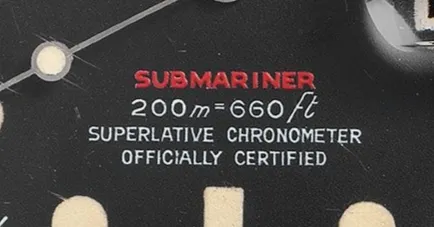
- thin font
- open 6s
47 listings on record under the name.
Mark III (metres first)
case numbers about 2.2M to 2.45M
Almost the same as Mark II, but the red text is printed directly on the dial with no white base, the f is shorter and the curve of the t tighter. The only metres-first dial without the white base. Singer.
- red print without white base
- shorter f
Mark IV (feet first)
case numbers about 2.45M to 3.1M
The first feet-first dial, appearing near the end of 1970 and used for several years. Red over a white base, clearly open sixes, thicker font, and the cross-strokes of the f and t slightly misaligned. Singer.
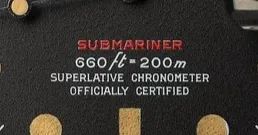
- open 6s
- misaligned f and t bars
191 listings on record under the name.
Mark V (feet first)
case numbers about 2.45M to 3.3M
Introduced with Mark IV but used longer: no white base under the red text, only a barely open six, and the f and t bars aligned. Made by Beyeler.
- feet first
- no white base
- barely open 6s
- aligned bars
Mark VI (feet first)
case numbers about 3.3M to 4.0M
The last tritium Red Sub dial: feet first, red print direct on the dial, fully closed sixes, a rounder S in Superlative and a font without serifs. Lemrich made it.
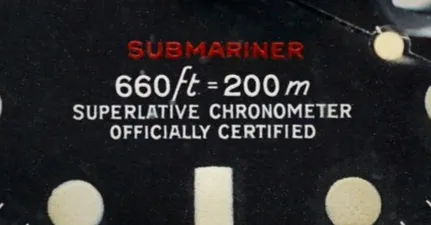
- closed 6s
- rounder S
- no serifs
49 listings on record under the name.
Service dial (Mark VIII)
A red-script service dial with Luminova lume and only SWISS under the six marker, where the factory dials say Swiss-T<25. It was never fitted at the factory. Its start is put variously at after the mid-1970s or after the 1990s.
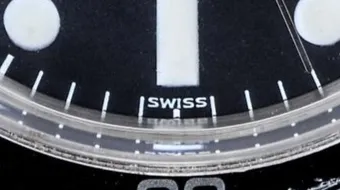
- Luminova
- brighter glow
15 listings on record under the name.
Mark 0 prototype
Two extremely rare metres-first dials have no minute track; one is marked Swiss Made at six with a circle where the track would be.
- no minute track
Tropical Red Sub
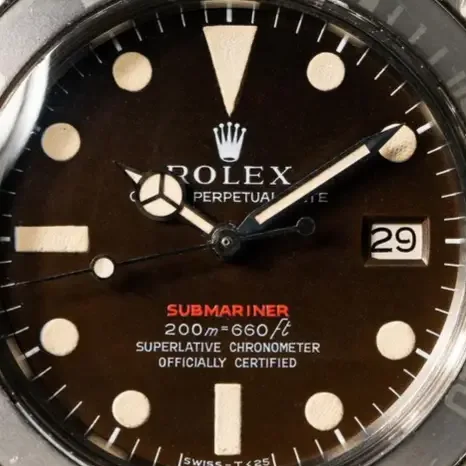
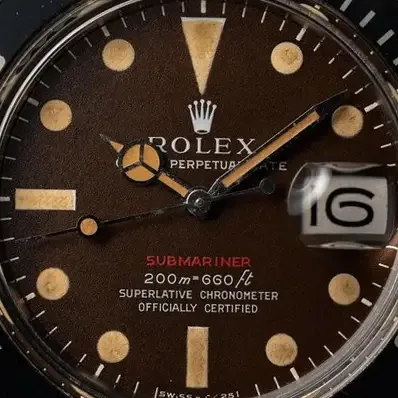
A paint fault turned a very small number of early dials, mostly Mark II or III, to chocolate brown.
- matte chocolate brown
Red Submariner (Red Sub)
case numbers to about 4.0M
The Submariner line is red, the only Submariner reference with red text, from the start to about 1975 or up to case number about 4.0M. Dates given elsewhere run from 1966 to 1973 and to 1977.
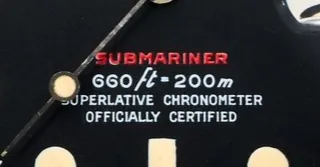
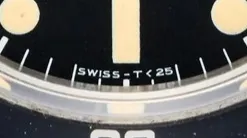
581 listings on record under the name.
White Submariner (Mark VII)
case numbers about 4.0M to 7M
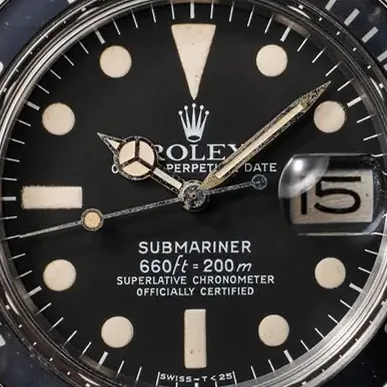
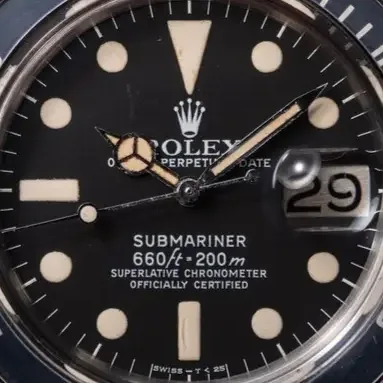
All-white text from about 1975 to the end of the run, all feet first, with tritium. Three white Marks exist and their order in time is not fixed: Mark 1 and 3 can appear at high or low numbers. Three service dials exist for the type.
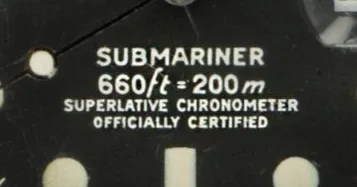
White Mark I
The SUBMARINER line is as wide as the depth line, the L of Rolex is centred beneath the coronet and the sixes are closed.
- Submariner line same width as depth line
- centred L
- closed 6s
White Mark II
The SUBMARINER line is longer than the depth line, the L is shifted left and the sixes are open, visible only with a loupe.
- longer Submariner line
- L shifted left
- open 6s
White Mark III
Closed sixes as on Mark I with the L slightly left of centre.
- closed 6s
- L off centre
Nipple dial (1680/8)
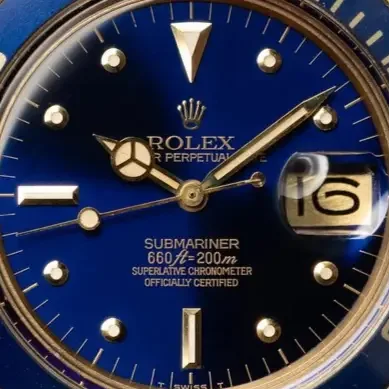
The gold 1680/8 has a matte black lacquer dial with applied raised gold indexes with lume in the centre, unlike the printed dots and batons of the steel watch. The earliest are metres first; later feet first; a deep blue version also exists. Nipple markers stayed on solid-gold and two-tone Submariners to the mid-1980s, and blue dials can fade to purple, gold or grey.
- applied gold indexes with lume centre
- blue version
Tiffany and COMEX
Tiffany-signed and COMEX-marked versions of the 1680/0 exist.
- Tiffany & Co. on dial
- COMEX on dial
Khanjar dial
A dial with the Khanjar emblem of Oman, signed on a block of watches. Dated watches that sellers describe this way fall mostly between 1973 and 1976; those are the years of the watches so described, which is not a stated span of production.
- Khanjar emblem
Luminous material 2 described
Lume is tritium. Aged white-print dials and hands can take a warm vanilla tone, and a 1978 example is described with lume gone a lemony custard colour.
Aged tritium
Even warm vanilla or lemony tone on plots and hands; hands and plots should match.
- vanilla or custard colour
Relumed
Sellers describe many watches as relumed, and a good number as having relumed hands.
Hands 1 described
Mercedes hands with lume, matched to the plots.
Mercedes hands
Original hands carry lume matching the plots; service hands differ.
- Mercedes hour hand
Bezel 8 described
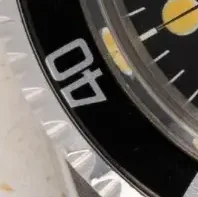
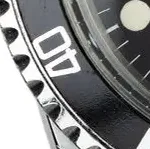
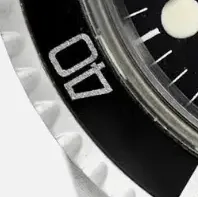
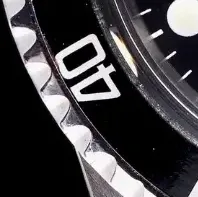
The 1680 is the last Submariner with a bidirectional bezel. Factory inserts are anodised aluminium whose minute-scale numerals are heavy (fat font). Many faded to grey, blue or ghost tones, and thinner-font replacements are service parts. Marks are collectors' labels and the sources number them differently.
Long 5
Rare early insert on metres-first dials to 1969 or 1970, with a longer drop on the 5 of 50, fat serif numerals and a triangular space in the 4.
- long 5
- fat serif numerals
Mark 1 Kissing 40
The 4 touches the 0 in 40; the first insert, about 1967 to 1970.
- 4 and 0 touch
Mark 2
The 5 of 50 drops lower than usual and the 4 has a triangular counter.
- long 5
- triangular 4
Mark 3
Resembles Mark 1 except that 4 and 0 are separated and the numerals have faint serifs, with a triangular hole in the 4 and fat font. Used on feet-first Red Subs and white 1680s to the late 1970s; some purists call it the only correct one for a White Sub.
- gap between 4 and 0
- triangular 4
- fat font
Mark 3 Bis
A fat serif insert with a trapezoid hole in the 4 that may appear on late-1979 White Subs; whether it is period-correct is disputed.
- trapezoid 4 hole
Mark 4
Really a 3.5: like Mark 3 with thinner numerals.
- thinner numerals
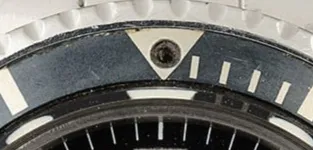
Fat font and ghost
Fat-font inserts are original; sellers describe many fat-font and faded inserts and some ghost ones. Faded grey or navy ghost inserts are prized and original ones are kept above service thin font.
- thick numerals
27 listings on record under the name.
Gold watch insert
The 1680/8 usually has gold numerals on black or blue; the very first had silver numerals like the steel; the pearl has a ring on later inserts and a larger ring outside the triangle on replacements.
- gold numerals
- pearl ring
Case 6 described
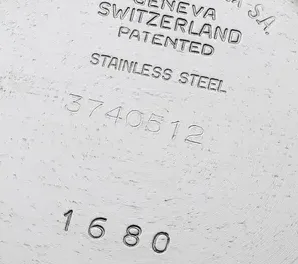
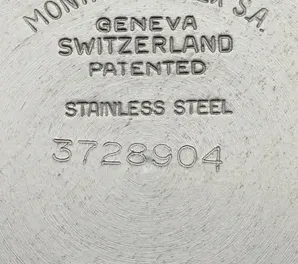
The steel case is 40 mm and thinner and more tapered than modern Submariners. Cases up to 1969 are lower than 1970s cases and match those of the 5512 and 5513; later ones are slightly thicker. Casebacks of 1967 to 1972 carry a quarter and year stamp inside and later ones only the reference. A good case still has its chamfers and thick bevelled lugs and has not been over-polished.
Caseback date code
Stamped inside with 1680 and the quarter and year. The codes sellers quote run from II 69 to IV 72; none is seen after 1972, and service backs carry no date.
- date code II 69 to IV 72
Pierced lugs
The lugs are drilled through for the spring bars, as on Rolex Oyster cases until about the mid-1990s.
- drilled lug holes
Service case range
case numbers about 4.4M to 5M
Cases numbered about 4.4M to 5M are described as service parts; the range is indicative and disputed.
Fuerza Aerea del Peru
Some 1680s went to the Peruvian air force: standard dial, caseback engraved Fuerza Aerea del Peru in sans-serif capitals with black enamel, sometimes a shallow military code. Only 700 to 800 watches of all models went.
- engraved caseback with black enamel
Gold 1680/8
Solid 18k yellow gold, the first gold Submariner, with several dial and bezel variants. Gold output is unknown but is guessed at a few thousand at most; the figure of 5,765 gold against 111,226 steel appears in one published book.
- gold case
White gold prototype
Reportedly three white gold 1680s were made in the 1970s outside the catalogue, two of them with blue dials. The known one dates about 1973 from its feet-first dial and has a white gold President bracelet, unengraved lugs and a bezel with only two notches and alternating raised numerals and fluting.
- white gold case
- two-notch bezel
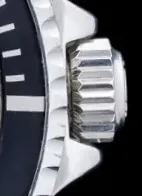
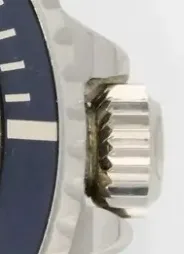
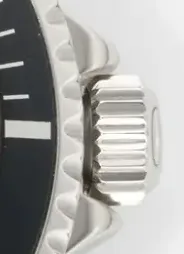
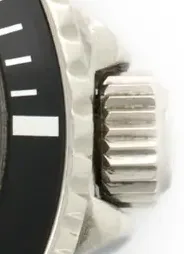
Crown 3 described
Twinlock early, Triplock later.
Twinlock 24-700
Seven millimetres, no dots under the coronet, short tube, no outer gasket.
- no dots under coronet
Triplock 24-701 and 24-702
Three dots under the coronet, longer tube, no outer gasket. Triplock is seen from about 1972 to 1974; earlier watches may have been upgraded at service.
- three dots under coronet
Triplock 24-703
A second-series crown with an outer gasket, from the early 1980s, found on a 1680 only as a service replacement.
- outer gasket on tube
Crystal 1 described
Among date Submariners the 1680 alone combines acrylic with a bidirectional bezel.
Top Hat acrylic
Tall, nearly vertical-sided crystal about 3 mm above the case, with square edges at first and small bevels later; the stepped 127 or 25-127 family. The height lets the leading edge chip easily, and original or new-old-stock lenses are hard to find. Some sellers describe a sapphire or superdome replacement.
- tall stepped acrylic
- slight bevel at edge
- strong cyclops
Date 1 described
Date wheel at 3 with cyclops; no quickset.
Date wheel
Factory wheels are brushed metallic silver with open sixes and nines except a closed 6 in 26. Service wheels are a non-metallic silver or white, and every six and nine is open.
- brushed silver
- closed 6 on 26
Movement 2 described
Only the 1575 was used. Most sellers name it 1570, the number engraved on its bridge.
Calibre 1575
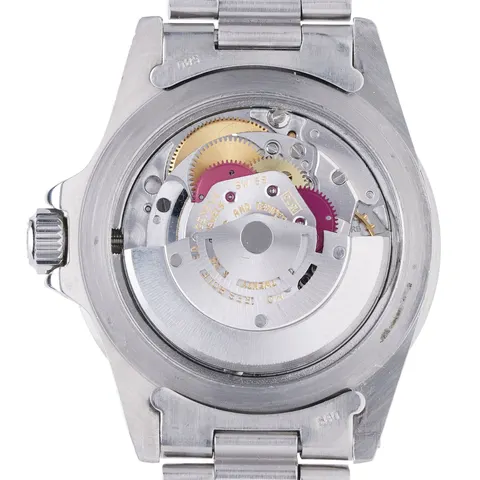
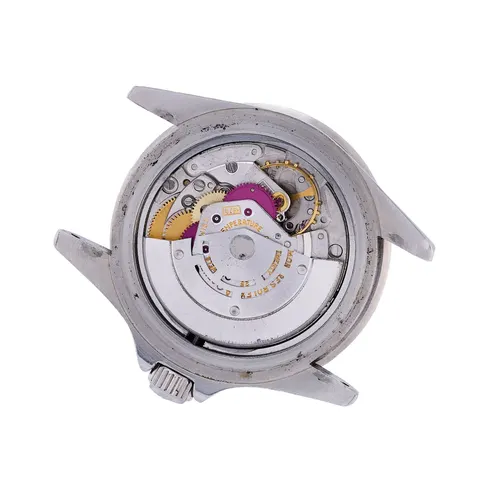
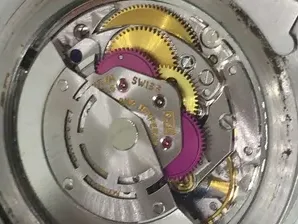
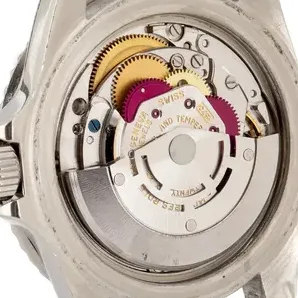
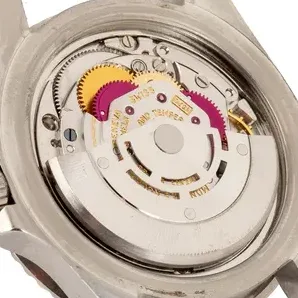
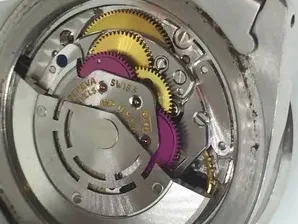
Third-generation 15xx derived from the 1530 and effectively the 1570 with a date wheel; 19,800 vph, 48-hour reserve, free-sprung balance with Microstella regulation, instant date change but no quickset. The rotor bridge is always stamped 1570, which is correct.
- 1570 on rotor bridge
Hacking
Early 1575s in metres-first red dials lack hacking; it was added in 1971 or 1972, with exceptions in the 1970-71 transition.
- seconds hand stops when crown pulled
Bracelet 6 described
All 1680 bracelets are three-link Oyster. Clasps are stamped with a date code: quarter over year to 1975, then letters. Some Marks and bracelets are swapped at service.
7206 riveted
Riveted steel Oyster with 80 end pieces, fitted to the first watches.
- riveted links
- 80 end links
9315 folded
Folded links with 280 or 380 end links and 9315 stamped by the end piece; correct for the Red Sub. The diver extension clasp is stamped Pat Pend, then Patented, and Pateted in a first run of 1970 to 1972.
- 9315 stamp
- 280 or 380 end links
- Pateted clasp
93150 solid
Solid links with 580 end links, fitted to White Subs; clasp letters VA 1976, VB 1977, VC 1978, VD 1979. Also found on late Red Subs or as a service replacement.
- solid links
- 580 end links
Riveted USA
A USA-made riveted bracelet with no reference, no extension, unstamped end pieces and only a clasp date mark.
- no extension
7836 folded
The folded 7836 of the Explorer II and GMT-Master, with 280 or 380 ends and no diver extension.
- no diver extension
Gold 9290/8
Yellow-gold Oyster for the 1680/8; early clasps date-stamped to the end of 1972 with raised crown and fliplock, later ones from about 4M with an impressed crown and 92908.
- raised crown clasp
Box and papers 1 described
Full sets include purchase and service invoices, booklets, guarantee papers, hang tags, boxes, service pouch, anchor and caseback stickers.
Papers and tags
Sellers describe service papers, punched guarantees and a few chronometer certificates.
- anchor and hang tags
Originality
- Red dials were often swapped for white ones at service, so a white dial on a low case number is suspect.
- A dial should be original to the case-number range; a replaced dial cuts value on a Red Sub.
- Inserts were replaced at service by thinner-font ones.
- Bracelets, hands and dials are the usual service parts.
- The Top Hat crystal is a common replacement because it chips; sapphire is a mismatch.
- Triplock crowns may be upgrades on an early watch.
- A service date wheel has all sixes and nines open.
Names
- Red Sub. Submariner is printed in red.
- White Sub. The late text is all white.
- Top Hat. The tall acrylic crystal.
- Nipple dial. Raised gold markers on the 1680/8.
Where accounts differ
Points on which the published literature and the library's own records do not agree, or on which the literature contradicts itself.
- Start of production. Most guides date the first watches to 1967; one gives 1966 to 1977, another says some accounts put the first case numbers in 1966, and two date the debut to 1969. The dated watches in the library's records begin in 1969: the earliest Mark I dials are on case numbers from about 2.07M, which the records place in 1969, and the earliest inside-caseback date code reported is II 69.
- End of production. One guide ends production in 1977 and others in 1979 or 1980. Dated case numbers run to 1979, with a few watches in 1980 and 1981.
- Red to white changeover. Dates for the end of the red text run from 1973 to 1977; most say 1975 and one gives 1974.
- Tropical dials. One guide calls brown 1680 dials very rare, from Mark II and III. The library's records show sellers calling about half of the watches numbered 2.20M to 2.50M tropical, against a small share elsewhere.
- Date calibre. One account attributes the first date Submariner to a 1965 calibre 1565; the 1680 uses the 1575, and sellers name 1570 or 1575 apart from a handful of slips.
Back and movement
From listings of this reference, each confirmed by eye to show what it is filed under. A picture on which a person's name or a personal engraving can be read is not shown. From most holders a detail from the middle of the photograph is shown; the mark in its corner gives its holder and a link to the listing.
Caseback
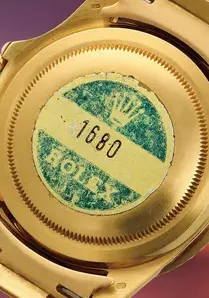
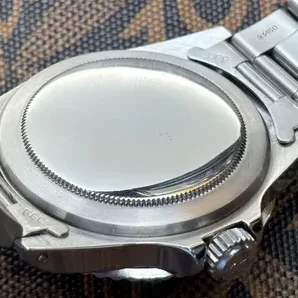
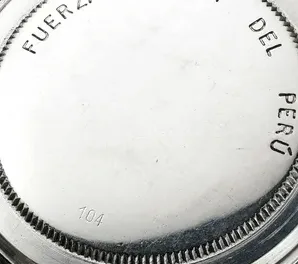
Inside the caseback
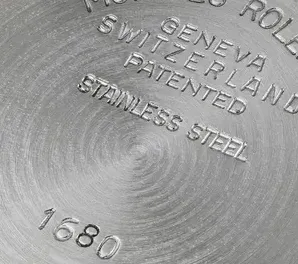


Movement






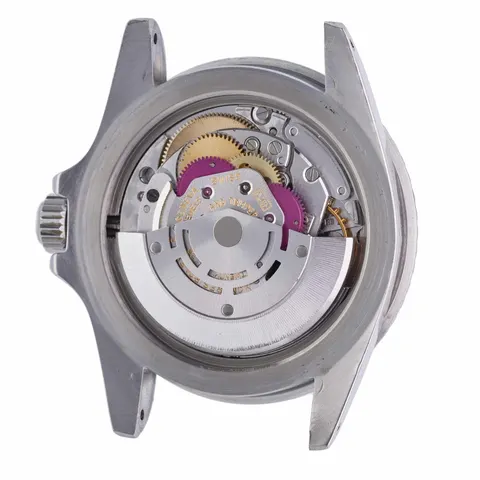

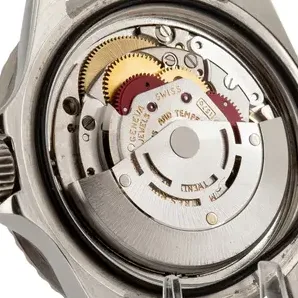

Catalogue versions 1 listed
The full numbers under which holders list this reference, with what their listings say of each. Each has a page of its own.
| Version | Metal | Dial | Years seen | Records |
|---|---|---|---|---|
| 1680/8 | Yellow gold | Black or blue | 1969–1978 | 19 |
In the records
Counted from 1,895 listings at 67 holders between 26 April 2007 and 14 November 2026. These are what sellers and auction houses state, not measurements.
Fainter bars are the 3 outside the main run of 1969–1979 (the middle nine-tenths): the latest is 1981. They are early and late examples, and now and then a number misread.
At the holders that record papers on every watch, 22% of their 92 listings of this reference come with papers; at those that record the box on every watch, 40% of 203 come with a box. "Papers" is whatever the holder counts as papers, and can include service papers.
Case metal
| Steel | 724 | |
| Gold, any colour | 119 | |
| Yellow | 79 | |
| White | 2 | |
| Colour not stated | 38 |
A listing that says "gold" or "18K gold" names no colour: it is counted under "colour not stated", not as yellow gold.
Dial colour
| Black | 597 | |
| Brown | 62 | |
| Blue | 34 | |
| Red | 19 | |
| Cream | 12 | |
| White | 6 | |
| Purple | 4 | |
| Gold | 3 |
Case size
| 40 mm | 564 | |
| 39 mm | 105 | |
| 42 mm | 17 |
Calibre named
| 1570 | 491 | |
| 1575 | 43 | |
| 1520 | 4 | |
| 1530 | 3 |
Bracelet or strap
| Oyster bracelet | 676 | |
| Metal bracelet, kind not stated | 105 | |
| Leather strap | 44 | |
| Fabric strap | 9 | |
| President bracelet | 8 |
Each table counts the listings that state the thing, in the seller's own terms. A size, metal, colour or calibre that cannot belong to this reference is a seller's slip or a listing filed under the wrong number.