Speedmaster (second generation, straight-lug)
The CK2998 is the second-generation Speedmaster, introduced in 1959 to replace the CK2915. It kept the symmetrical straight-lug case and calibre 321 but added a black anodised aluminium bezel in place of the steel one and alpha hands in place of broad arrows. It was made until 1962, or 1963 in some accounts, with a few of the last delivered in 1963, and its role was then taken by the 105.002 and 105.003 under a new numbering system. Wally Schirra wore his own CK2998-4 on the Sigma 7 flight of 3 October 1962, the Mercury-Atlas 8 mission, the first Omega in space. The reference came in numbered variants, -1 to -6, -61 and -62, that differ mainly in hands, bezel and dial. Collectors look first at the hands, the seconds hand, the bezel scale and the dial lettering.
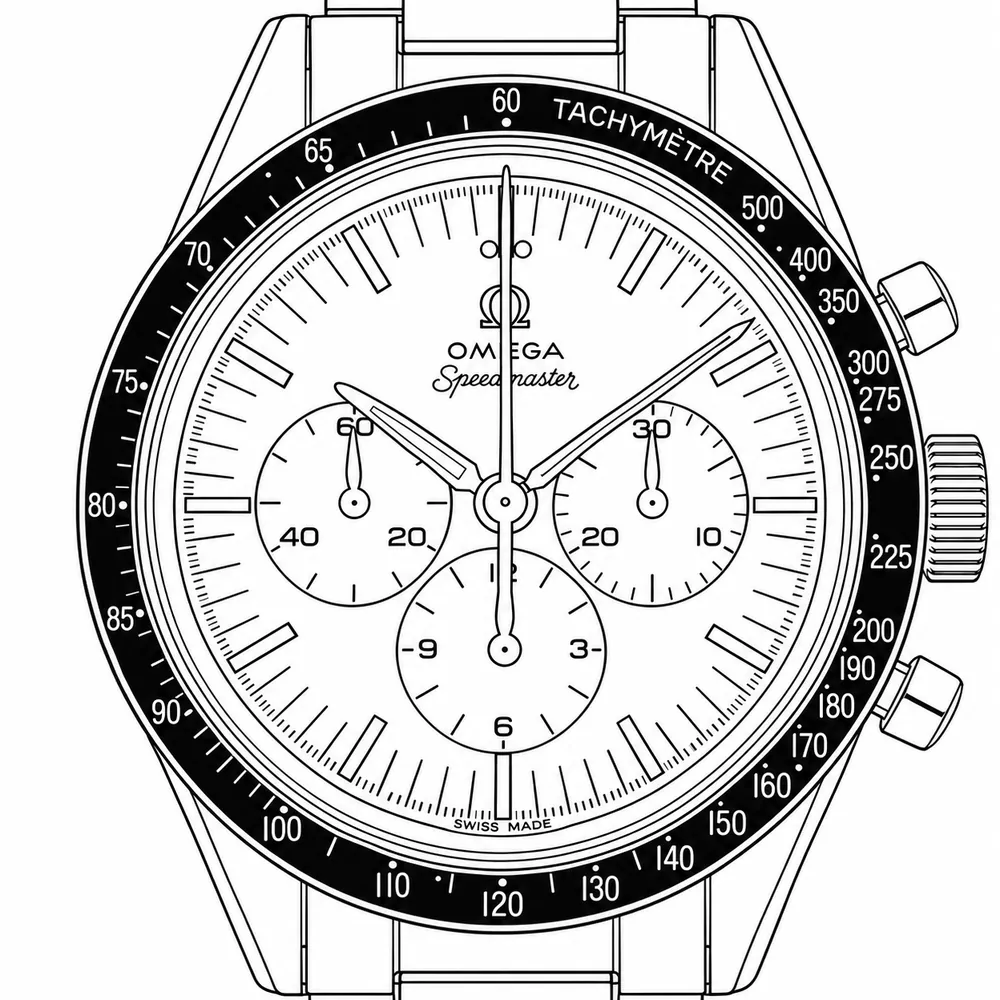
- Made
- 1959–1962dates approximate
- Seen in the library
- 1958–1963by years sellers state
- Case
- 40 mm · steelas sellers state
- Movement
- Calibre 321hand-wound
- On record
- 24 listings70 photographs · 11 holders
Components
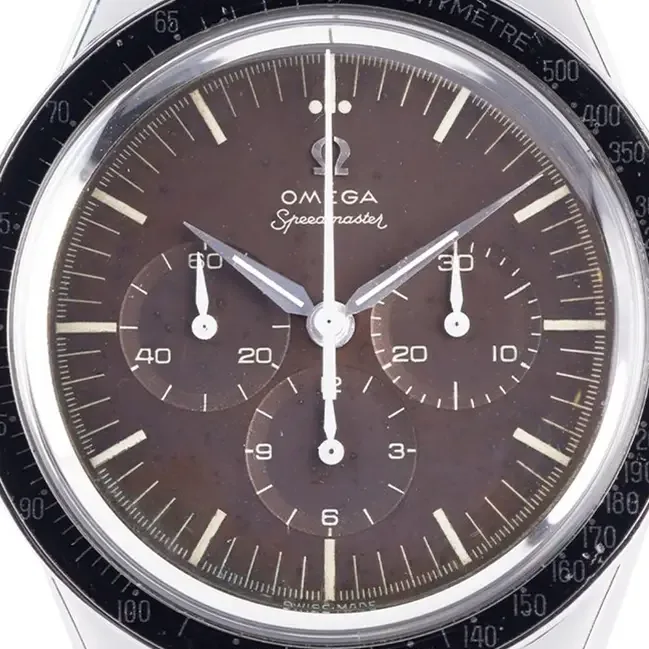
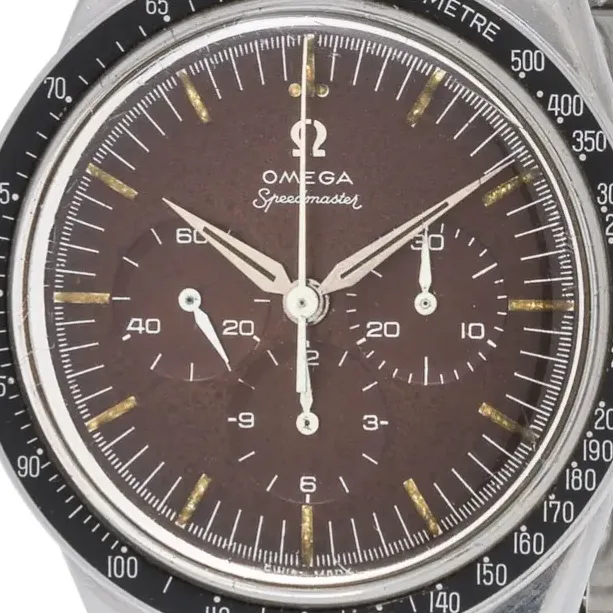
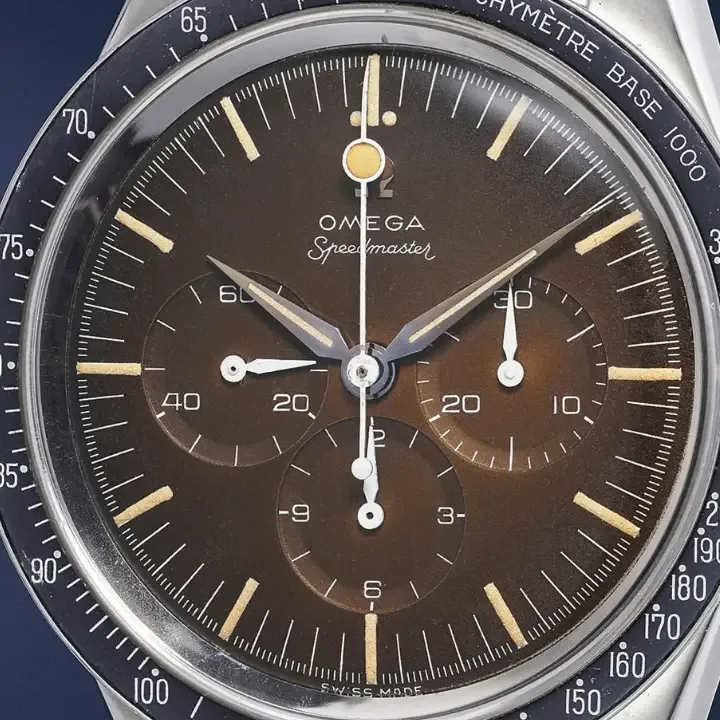
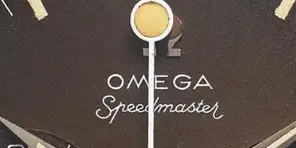
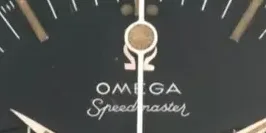
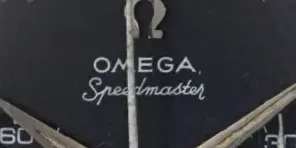
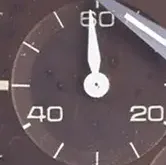
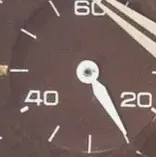
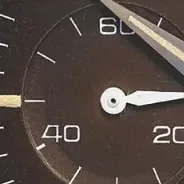
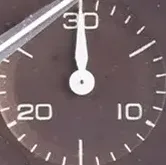
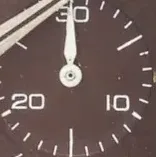
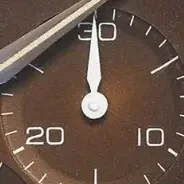
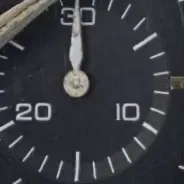
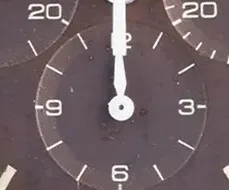
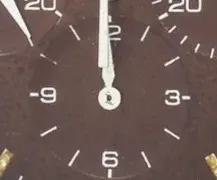
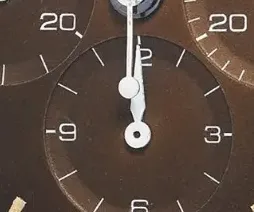
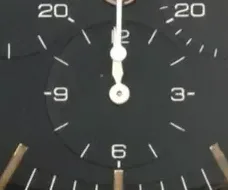
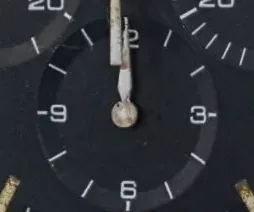
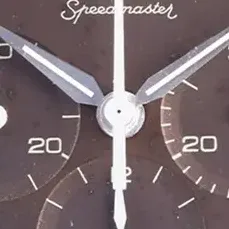
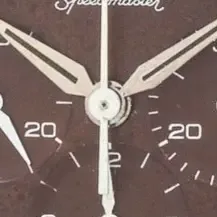
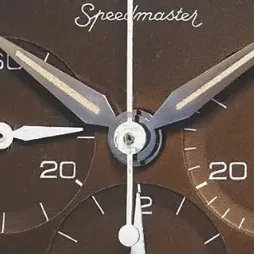
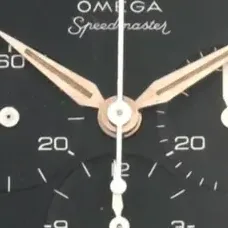
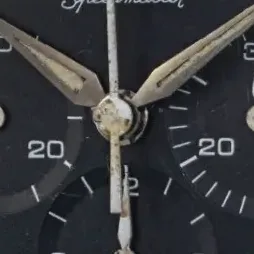
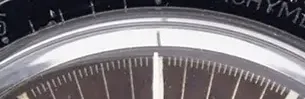
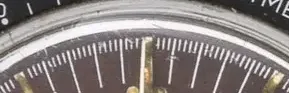
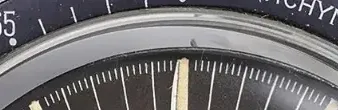
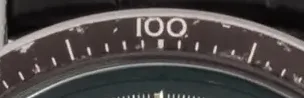
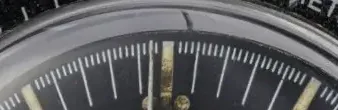
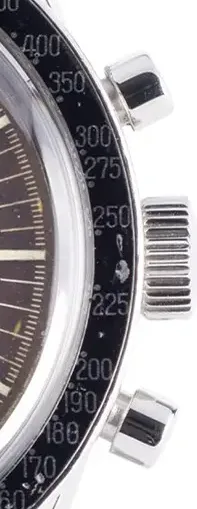
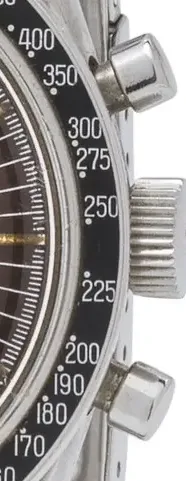
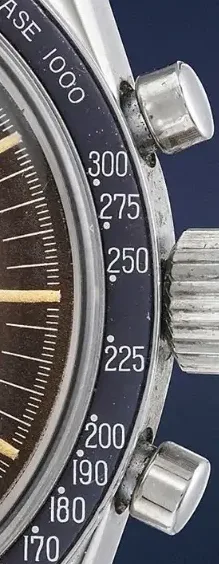
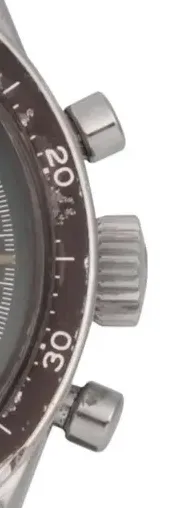
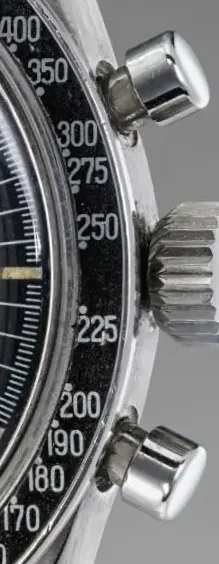
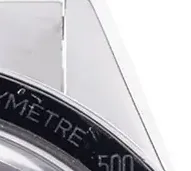
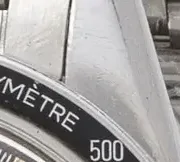
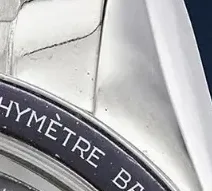
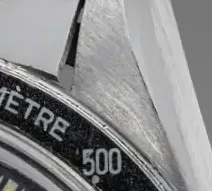
5 watches, oldest first, each straightened and cut the same way so that one row shows one component across them all. Chosen from 70 photographs on file for sharpness and for a face typical of the reference. A year marked c. is one its holder gives only roughly. Each picture is a detail cut from a listing photograph. Select the small mark in its corner for its year, its holder, a link to the listing it came from, and a way to report it.
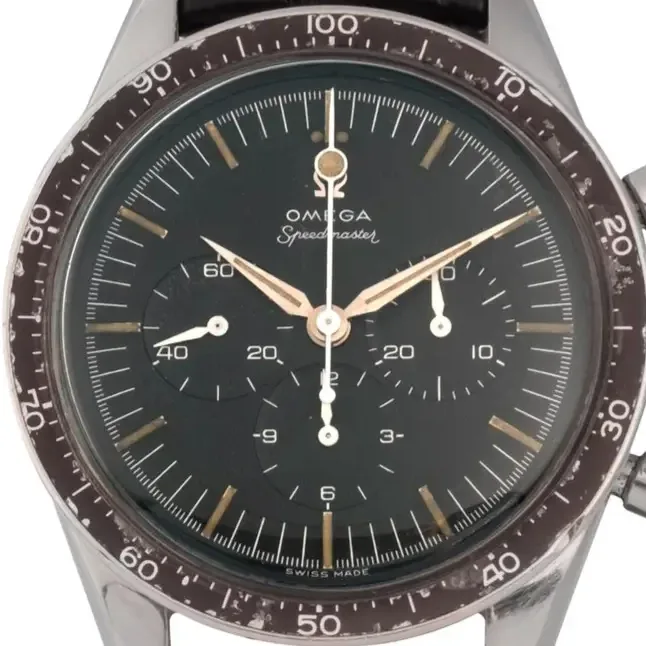
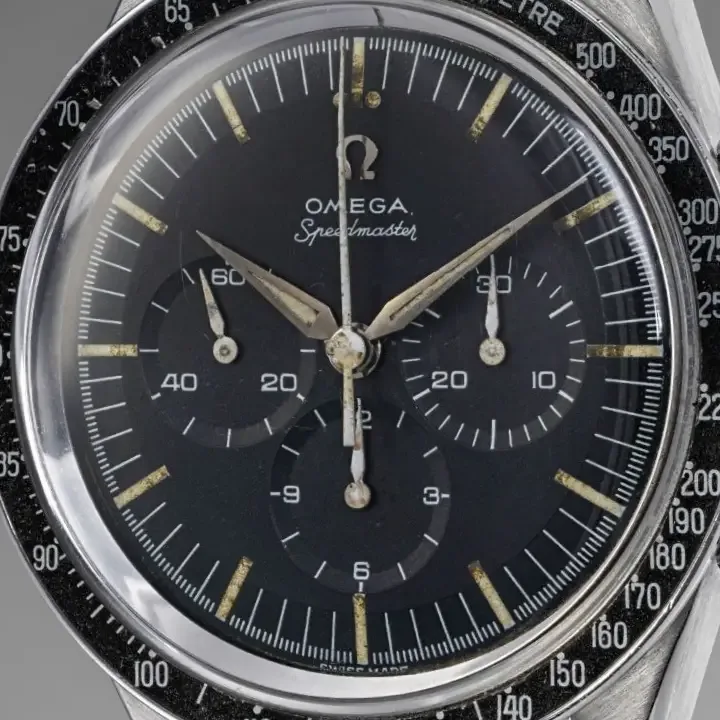
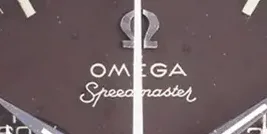
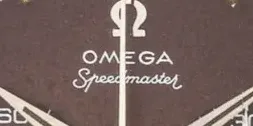





Chronology
Production runs from 1959 to 1962 with a few watches delivered in 1963, though the records contain listings stated as 1957 and 1958.
Every dated variant: what is written, and what the records show
For the reference the marks are every dated watch; for a variant, the watches a seller names as that variant, so a variant sellers do not name has none.
Specification
| Case | Stainless steel, straight lugs, symmetrical, with no guards on the crown or pushers; about 39.5 mm across by one measure (accounts run from 38 to 40 mm), 19 mm between the lugs, double-step back with an engraved seahorse |
| Bezel | Black anodised aluminium insert with a tachymeter scale, Base 1000 on the earliest watches and Base 500 on later ones (the scale other accounts call Tachymetre 500, with a dot over the 90) |
| Dial | Matt black dial with applied logo, tall markers, stepped subregisters and SWISS MADE below the minute track; domed on the -1 and -2, stepped from the -3 |
| Hands | Metal alpha hour and minute hands; a straight baton, a lollipop or, on the last sub-references, a spear-tipped chronograph seconds hand; subregister hands as alpha or white batons |
| Crown and pushers | Fine-toothed crown with a wide Omega logo and pump pushers |
| Movement | Calibre 321 column-wheel chronograph, Lemania 2310 base |
| Bracelet | Steel 7912 bracelet, a forerunner of the 1039, with flexible spring links |
Reference 9 described
The reference carries a hyphen and number from -1 to -6 and also -61 and -62. These mark small updates in hands, bezel or dial, and Omega built watches from parts in stock, so a given suffix can show another set of parts and still be original. Later tributes carry the name but are not copies.
CK2998-1
The first of the series, introduced in 1959. It has the Base 1000 bezel and early dial, and the earliest ones had a slim straight seconds hand. Many survive with tropical dials.
- Base 1000 bezel
3 listings on record under the name.
CK2998-2
A variant of the first run. Watches described under this suffix are dated 1960; that is the year of the watches so described, not a span of production. A tropical dial is recorded.
- long r in Speedmaster on dial
CK2998-3
A variant known from watches dated 1960 and 1961; those are the years of the watches so described, not a span of production. Sellers describe some watches under this suffix as made for the Peruvian Air Force.
CK2998-4
One account dates it 1961 to 1962; another describes a -4 whose movement number points to 1960. The watch described has alpha hour and minute hands, white baton hands on the subregisters, a 7912 bracelet and a Base 500 bezel. About half of the -4 watches have alpha subregister hands instead, and other hand sets are known on watches that are still original. This is the sub-reference Wally Schirra wore in space.
- alpha hour and minute hands
- white baton subregister hands
- Base 500 bezel
CK2998-5
A variant known from watches that sellers date from about 1960 to 1962; those are the years of the watches so described, not a span of production. Sellers describe some watches under this suffix as made for the Peruvian Air Force.
CK2998-6
A variant known from watches that sellers date from about 1960 to 1963, mostly 1961 and 1962; those are the years of the watches so described, not a span of production.
CK2998-61 and -62
Late suffixes that share the dial of the -4, -3, -5 and -6. Sellers describe a -61 as having military provenance.
First Omega in Space (2012)
A numbered, unlimited tribute reproducing the case size of 39.7 mm, with a dial that has no step (one account calls it flat, another domed), polished alpha hands, a white non-luminous seconds hand and calibre 1861. It is not a copy of the original.
- single-step caseback with raised seahorse
- sapphire crystal
Blue and pulsometer tributes (2016, 2018)
Two limited editions of 2,998 pieces with panda dials, a ceramic bezel, alpha hands and calibre 1861. The 2016 edition is blue with a lollipop seconds hand and a Base 1000 tachymeter scale. The 2018 edition has a pulsometer bezel graduated to 30 pulsations and a red seconds hand. Neither copies a dial that existed in the 1960s, and some dealers date the blue edition 2017.
- blue ceramic bezel
- pulsometer scale to 30
- panda dial
Dial 3 described
The dial is matt black, with an applied logo, tall markers and stepped subregisters. The -1 and -2 have a domed dial; a stepped dial follows from the -3 and is shared by the -3 to -6, -61 and -62 sub-references. The word Professional never appears. Tropical dials turned brown are common.
Stepped dial (from the -3)
A black dial with a step around the minute track, applied Omega logo, stepped subregisters with longer markers and SWISS MADE below the minute track. It is found from the -3 and is the dial of the -4, also used on the -3, -5, -6, -61 and -62.
- step around the minute track
- applied logo
- tall markers
- stepped subregisters
Tropical dial
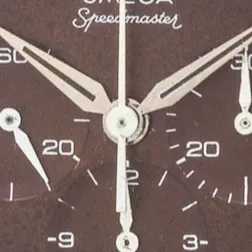
A black dial that has aged to dark, chocolate or rusty brown. Several auction watches of the -1 and -2 show this, and sellers name it in titles.
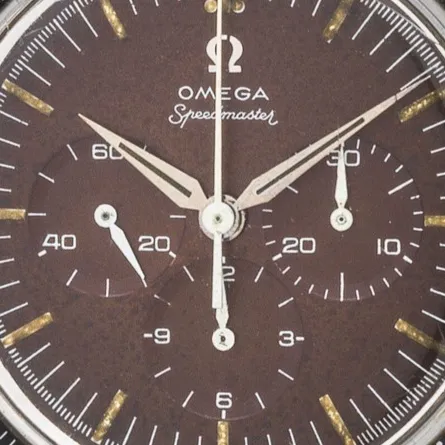

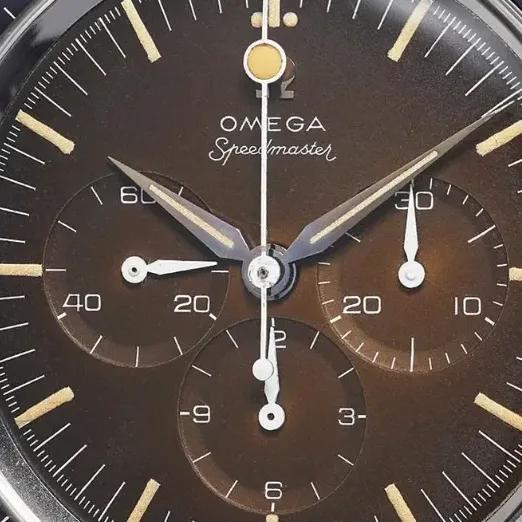

Domed dial (-1 and -2)
The first two sub-references have a domed dial without the step, with the applied logo and short markers on the subregisters. A long r in Speedmaster instead of a short r marks the dial of a -1 or -2, though it may appear on later watches.
- no step around the minute track
- short markers on the subregisters
- long r in Speedmaster
Hands 3 described
The generation has alpha hour and minute hands in metal, replacing the broad arrow of the CK2915 and coming before the white batons. Subregister hands and the seconds hand vary by suffix.
Alpha hands
Metal alpha hour and minute hands. Subregister hands are either three white alpha hands or a set of white batons, as on Schirra's watch.
- alpha hands
- white batons on counters
Straight seconds hand
A slim baton chronograph seconds hand with no luminous material. It is on the first 2998-1 and is the commonest type across the series; the -6, -61 and -62 have a spear-tipped hand instead.
- slim straight hand
Lollipop seconds hand
A chronograph seconds hand with a large luminous dot at its tip, found mostly on the early sub-references; accounts call it uncommon to very rare.
- luminous dot at tip
Bezel 3 described
The CK2998 introduced the black anodised aluminium insert that replaced the steel bezel. The tachymeter scale reads Base 1000 on the earliest watches and Base 500 later.
Base 1000
The earliest insert, original on the -1 and -2, with Base 1000 at the top right of the scale. Many were later replaced with Base 500 inserts.
- Base 1000 at top right
Base 500
The later insert, as on Schirra's CK2998-4. It is the scale also called Tachymetre 500, with a dot over the 90, and is usual from the -3.
- Base 500
Pulsometer insert
The pulsometer was offered as an insert from the early 1960s and was graduated for 15 pulsations. Originals are hard to find.
- pulsometer scale to 15
Case 2 described
The case is straight-lugged and symmetrical with no crown guards and unprotected pushers. Its width is quoted from 38 to 40 mm, with 19 mm between lugs.
Straight-lug case
A symmetrical case of about 39.5 mm, slightly bigger than the CK2915 (38.6 mm in the literature), with unprotected pushers of the pump type.
- flat symmetrical lugs
- unprotected pushers
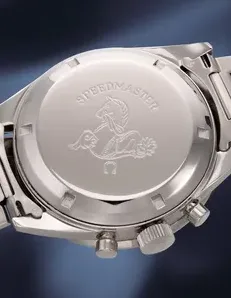
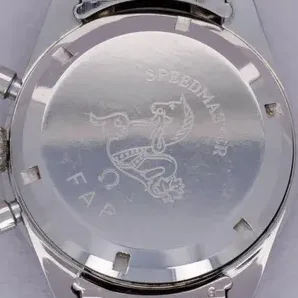
Double-step caseback
A solid back with a double step and an engraved seahorse.
- engraved seahorse
- two steps
Crown and pushers 1 described
The -4 has a fine-toothed crown with a wide Omega logo, and pump pushers.
Fine-toothed crown, wide logo
A crown with fine teeth and a wide Omega logo, with pump pushers, as on the -4.
- fine teeth
- wide logo
Movement 2 described
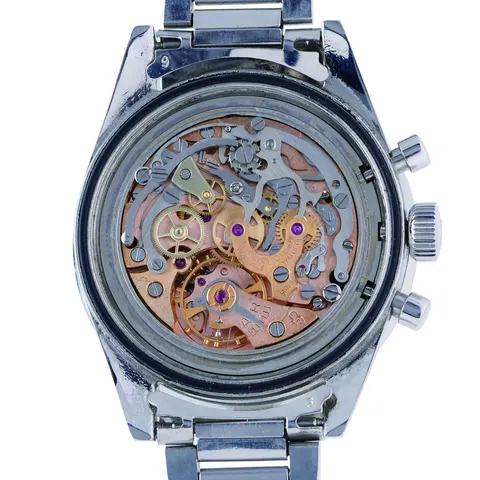
Calibre 321 was used in the Speedmaster from 1957 to 1968 and is a column-wheel chronograph based on the Lemania 2310. The number engraved in the movement gives the year of making, which can be much earlier than the date of delivery.
Calibre 321
Hand-wound column-wheel chronograph. The serial was engraved at or just before assembly, and an extract of the archives gives the delivery date.
- serial engraved in movement
Calibre 1861 and 3861 (tributes)
The 2012 to 2020 tribute and the 2016 and 2018 limited editions use the cam-operated 1861 at 21,600 vibrations an hour. The 2024 edition uses the Co-Axial Master Chronometer 3861.
- rhodium-plated 1861
Bracelet 1 described
The usual bracelet is the steel 7912, a forerunner of the 1039.
7912 bracelet
A steel bracelet that predates the 1039, with flexible links on metal springs. One example is stamped 4/62, giving month and year, and is considered right for the -4.
- flexible spring links
- 4/62 stamp
Box and papers 1 described
Archive extracts and delivery details are known for several watches.
Extract and provenance
An extract of the archives gives a watch's delivery details, which can fall long after the movement was made. Sellers describe some watches as made for the Peruvian Air Force and others as having military provenance or a letter from the first owner.
- extract of the archives
- original box
Originality
- Bezel inserts are often replaced; a Base 500 insert on a -1 or -2 is usually a later replacement for the Base 1000, though it is correct on later suffixes.
- Hand sets vary by suffix and stock use, so one set does not prove a replacement.
- Dials are checked for the long or short r in Speedmaster against the suffix.
- Bracelets were often swapped, and the original 7912 is fragile.
- Cases and crowns vary, so the case style and fine-toothed wide-logo crown should fit the suffix.
Names
- First Omega in Space. Wally Schirra wore his own CK2998 on the Sigma 7 flight of 3 October 1962.
- Tropical. The black dial turns chocolate or rusty brown with age.
Where accounts differ
Points on which the published literature and the library's own records do not agree, or on which the literature contradicts itself.
- Start of production. Published accounts place the introduction in 1959, while two seller listings describe watches as made in 1957 and 1958.
- Case size. Quoted sizes run from 38 to 40 mm, with a figure of 39.5 mm for the -4, while most sellers state 40 mm.
- Dial of the -1 and -2. One account describes the dial of the reference simply as stepped. Another says the -1 and -2 had domed dials and the step dial came with the -3, and a -1 offered for sale is described as having a dial without a step.
- End of production. Some accounts end production in 1962, one of them with a few of the last watches delivered in 1963. Two others give 1959 to 1963 for the reference, one counting its eight sub-references through 1963.
- The 2998-4: dates and subregister hands. One account dates the -4 to 1961 and 1962 and describes it with white baton subregister hands, allowing that other sets are original. Another shows a -4 whose movement number points to 1960. On the subregister hands, one account gives the -4 alpha hands, one says batons begin to appear on it, and one divides it about half and half.
Back and movement
From listings of this reference, each confirmed by eye to show what it is filed under. A picture on which a person's name or a personal engraving can be read is not shown. From most holders a detail from the middle of the photograph is shown; the mark in its corner gives its holder and a link to the listing.
Caseback


Movement

Catalogue versions 5 listed
The full numbers under which holders list this reference, with what their listings say of each. Each has a page of its own.
| Version | Metal | Dial | Years seen | Records |
|---|---|---|---|---|
| CK2998-1 | Steel | Brown | 1958–1960 | 4 |
| CK2998-2 | Steel | Brown | 1960 | 3 |
| CK2998-3 | Steel | Black | 1960–1961 | 3 |
| CK2998-61 thin | 1961–1962 | 2 | ||
| CK2998-5 thin | Steel | 1962 | 1 |
In the records
Counted from 24 listings at 11 holders between 13 May 2018 and 14 November 2026. These are what sellers and auction houses state, not measurements.
The head of the page gives 1958–1963: the years that listings from two holders bear out.
3 listings dated long after the reference ended are set aside and not counted here: a year that late belongs to a later watch sold under the old number, or to a listing filed under the wrong one.
Case metal
| Steel | 17 |
Dial colour
| Black | 4 | |
| Brown | 4 | |
| White | 1 |
Case size
| 40 mm | 10 | |
| 39 mm | 3 |
Calibre named
| 321 | 9 |
Bracelet or strap
| Metal bracelet, kind not stated | 11 | |
| Leather strap | 2 | |
| Rubber strap | 1 |
Each table counts the listings that state the thing, in the seller's own terms. A size, metal, colour or calibre that cannot belong to this reference is a seller's slip or a listing filed under the wrong number.