Speedmaster (CK 2998)
The 2998 is the second generation of the Speedmaster, launched in 1959 to follow the 2915. It is a hand-wound steel chronograph with Calibre 321, straight lugs, a black tachymeter bezel and alpha-shaped hour and minute hands throughout the series; the early sub-references also have alpha-shaped sub-register hands. It was made as eight sub-references, -1 to -6, -61 and -62, whose differences are small: the bezel script, the dial lettering, the chronograph seconds hand and the sub-register hands. It was followed by the 105.002 and 105.003, still with the symmetrical case, and by the crown-guarded 105.012. A 2998 was worn in space on the Mercury-Atlas 8 flight of October 1962, in the capsule Sigma 7. Collectors check how much of the watch is original, since bezels, hands and dials are often replaced.
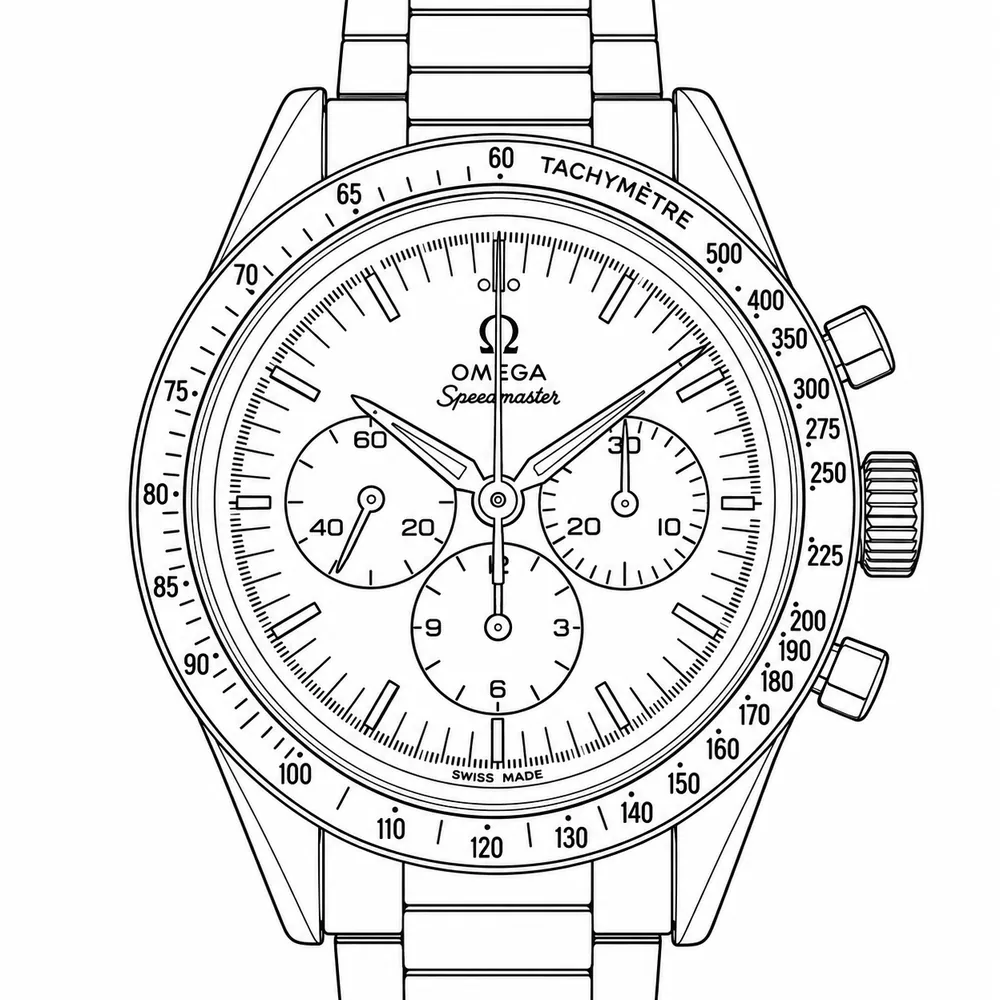
- Made
- 1959–1962dates approximate
- Seen in the library
- 1959–1962by years sellers state
- Case
- 40 mm · steelas sellers state
- Movement
- Calibre 321hand-wound
- On record
- 90 listings197 photographs · 26 holders
Components
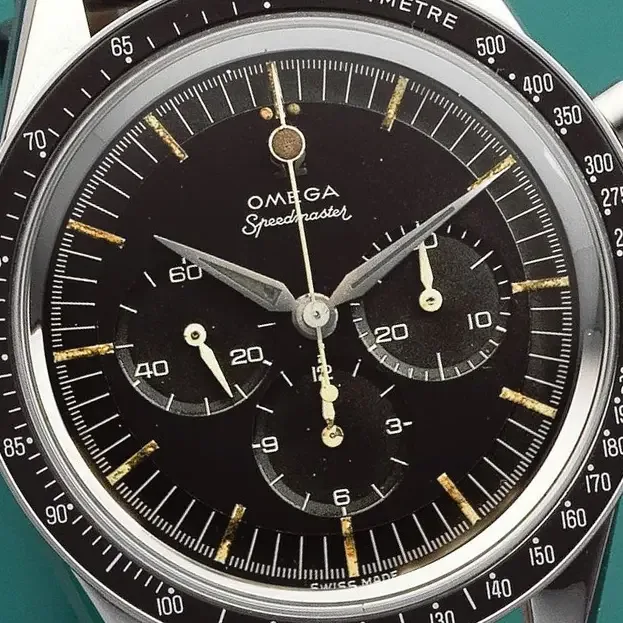
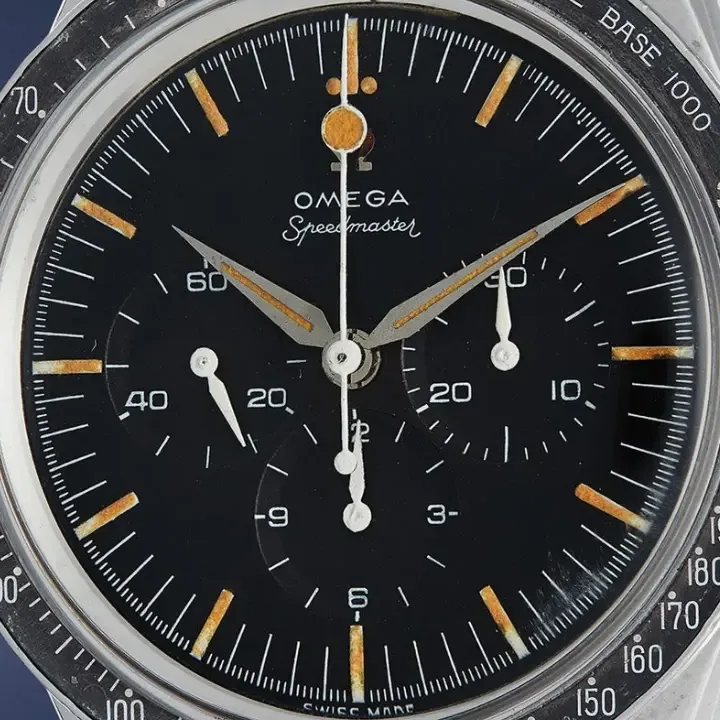
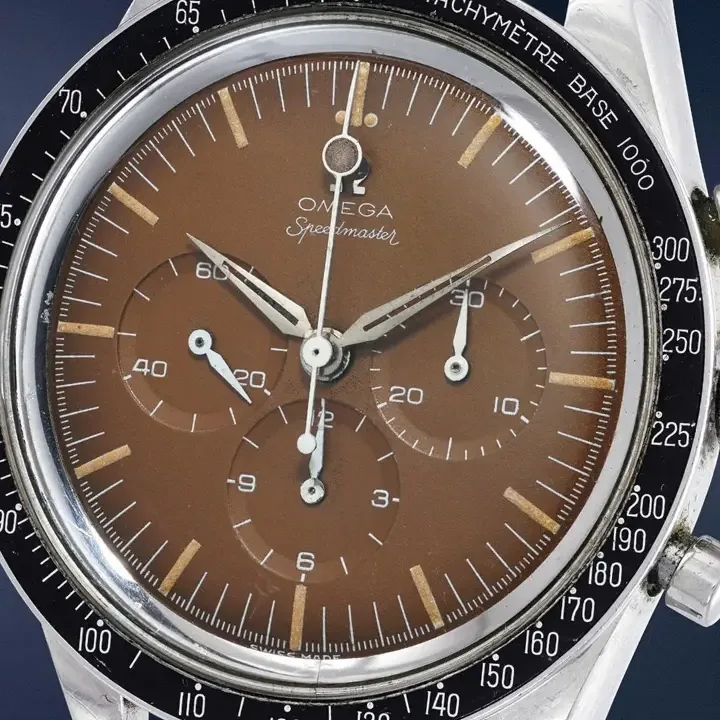
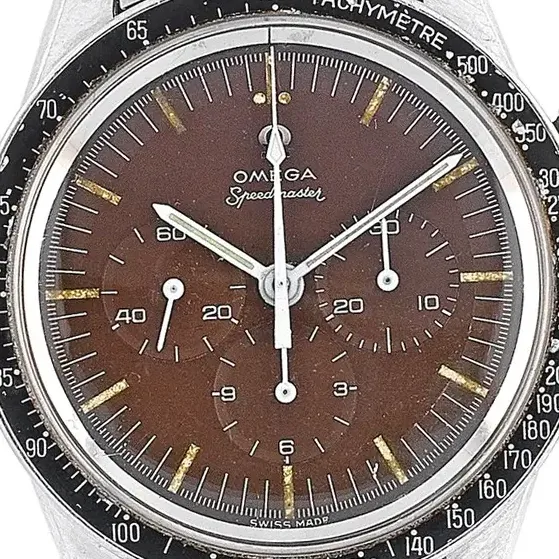
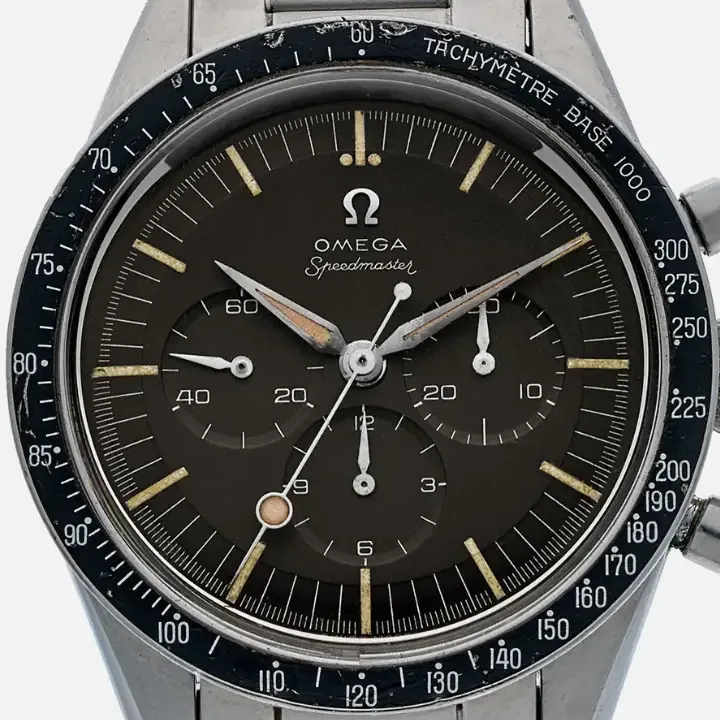
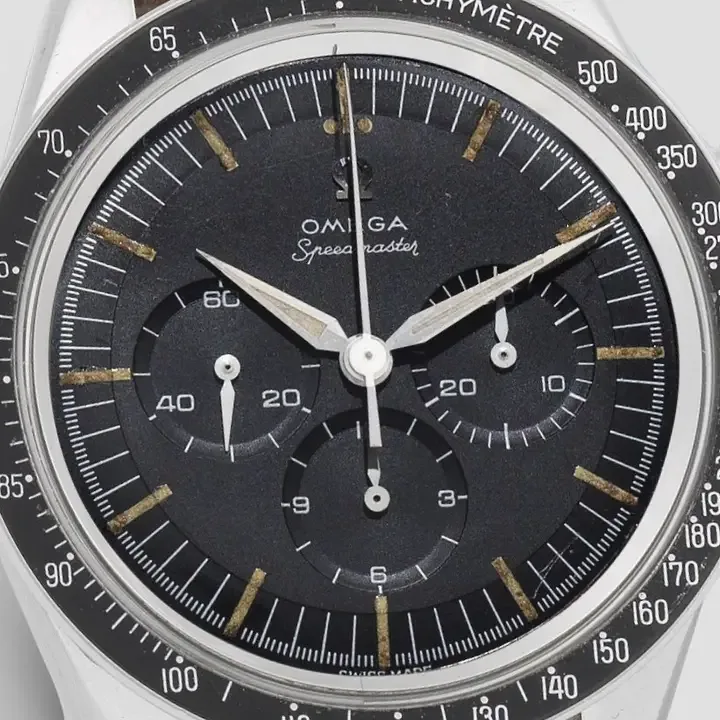
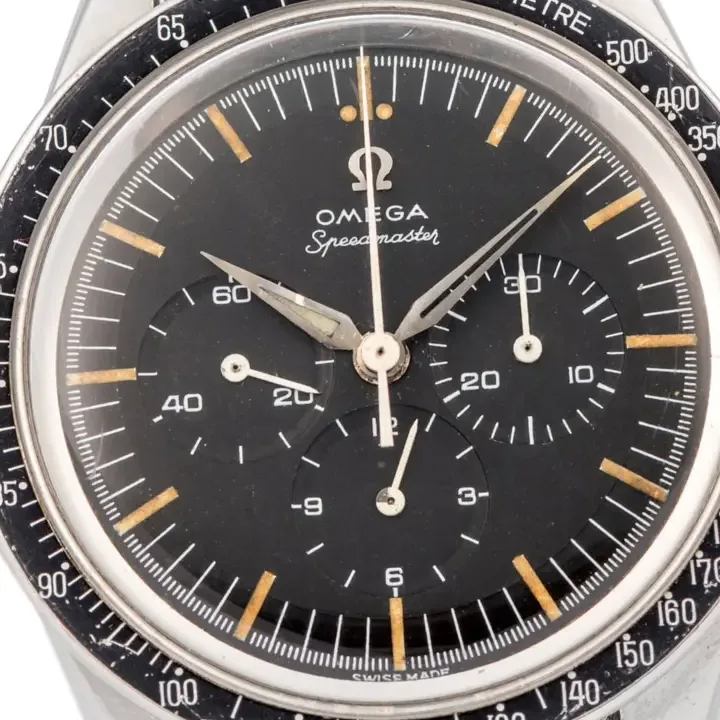
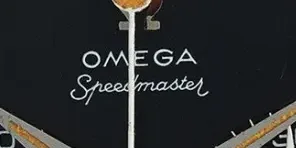
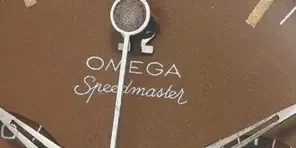
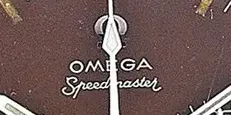
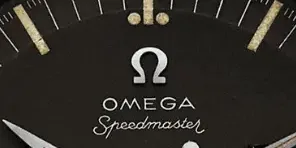
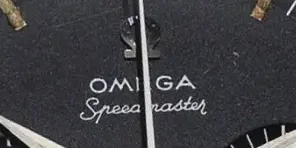
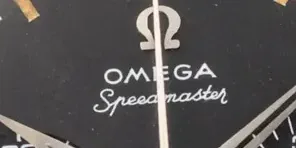
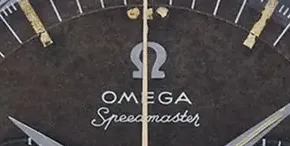
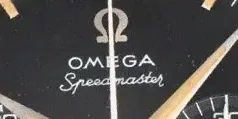
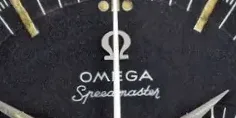
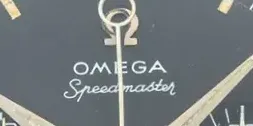
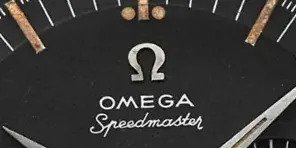
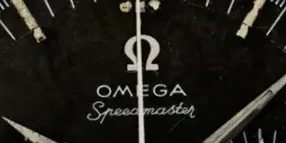
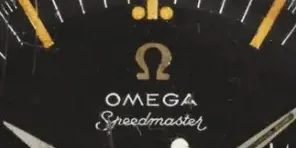
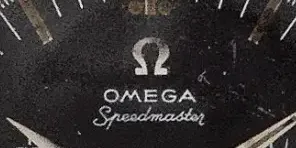
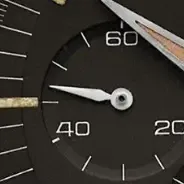
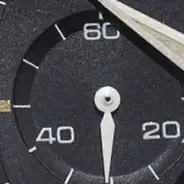
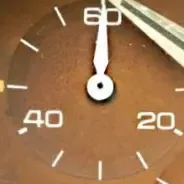
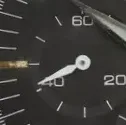
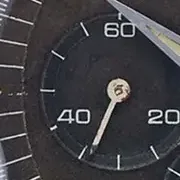
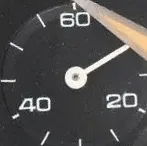
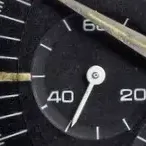
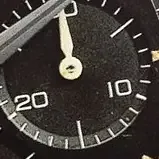
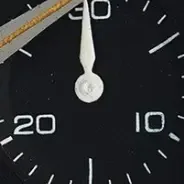
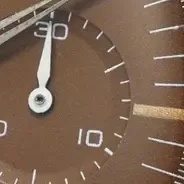
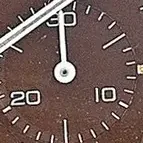
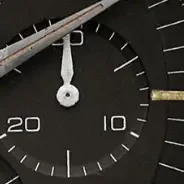
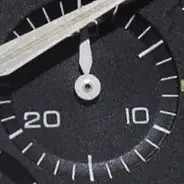
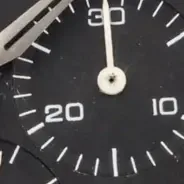
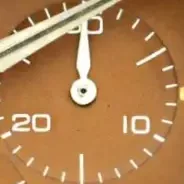
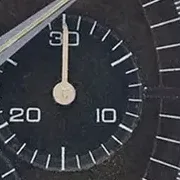
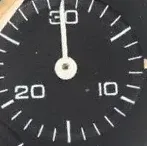
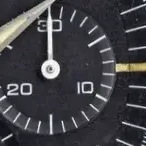
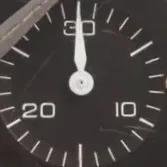
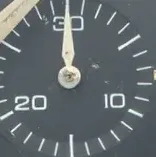
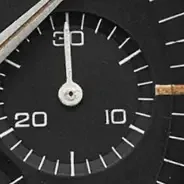
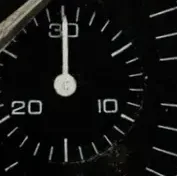
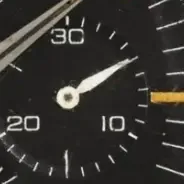
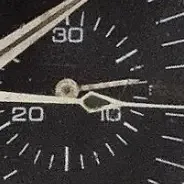
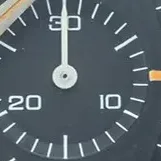
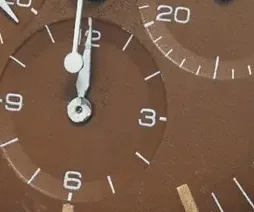
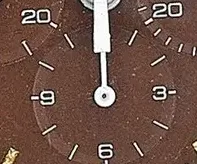
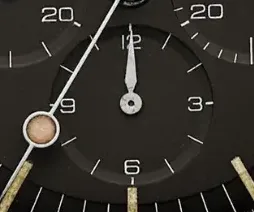
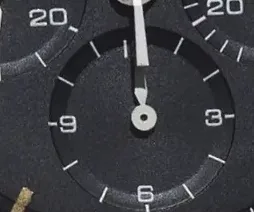
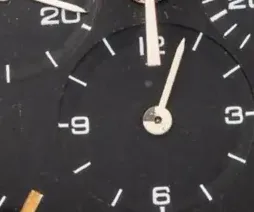
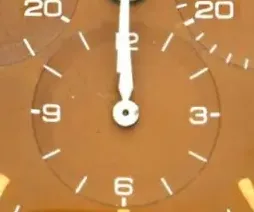
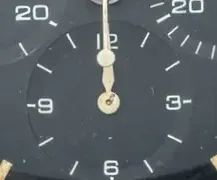
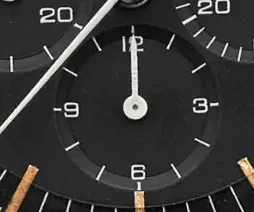
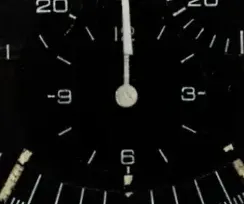
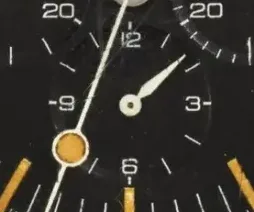
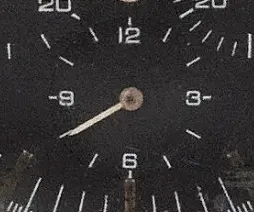
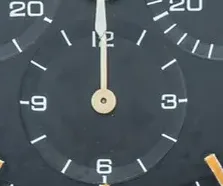
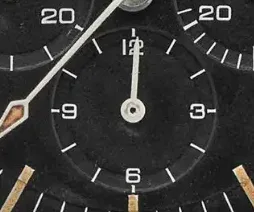
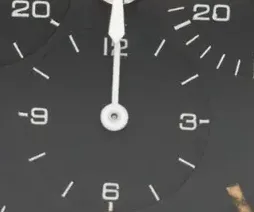
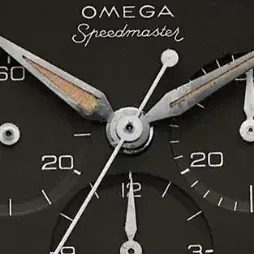
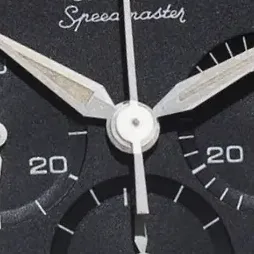
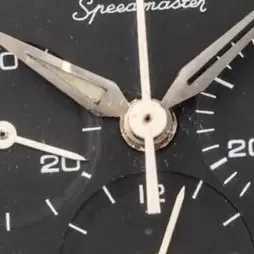
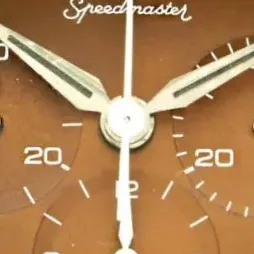
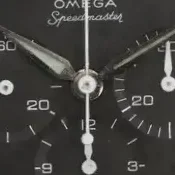
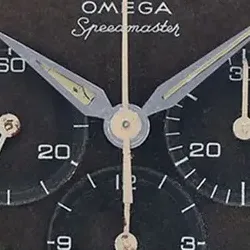
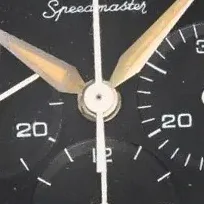
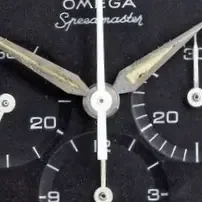
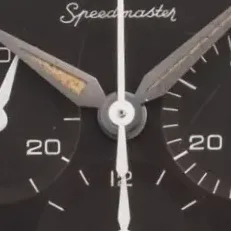
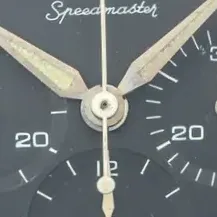
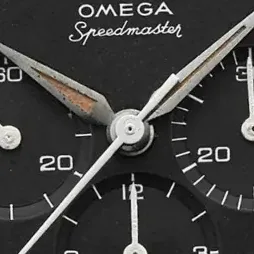
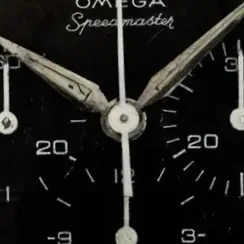
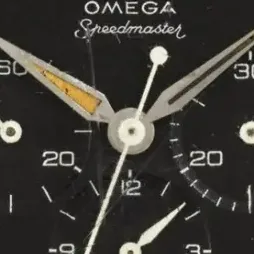
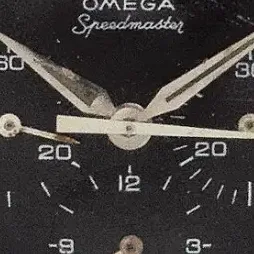
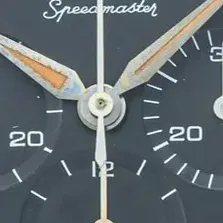
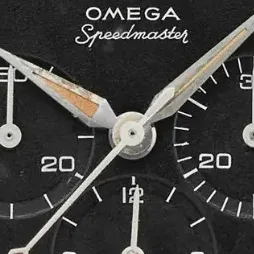
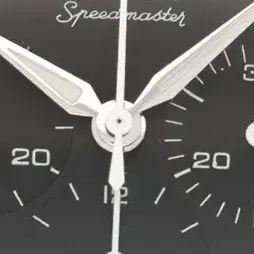
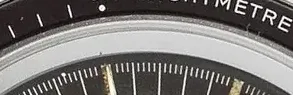
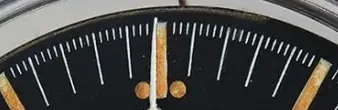
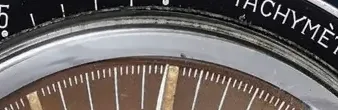
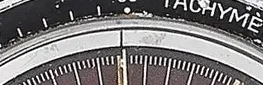
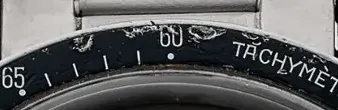
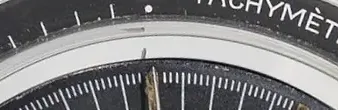
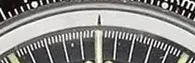
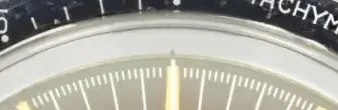
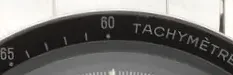
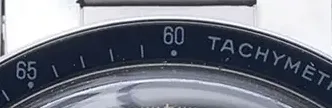
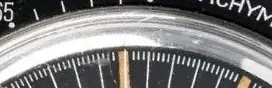
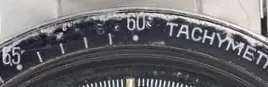
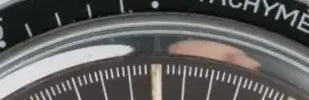
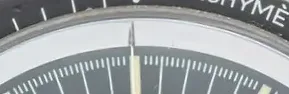
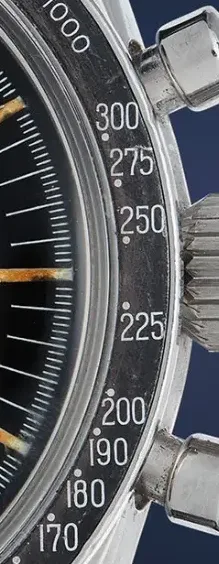
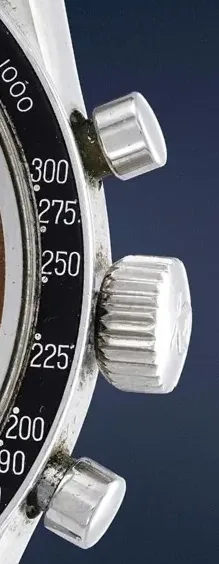
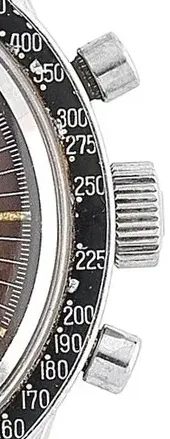
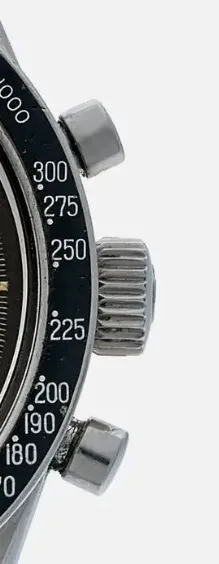
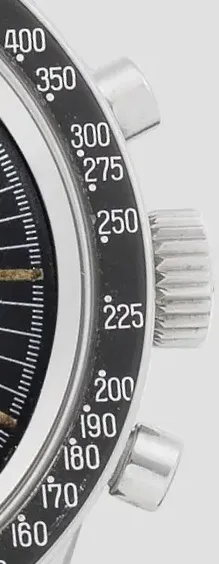
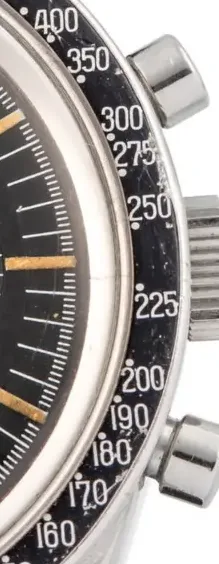
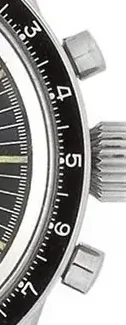
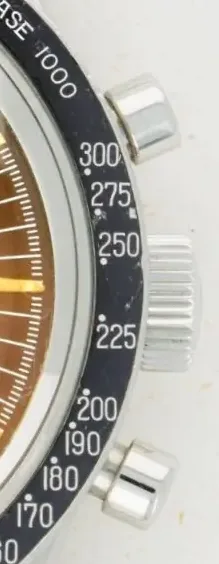
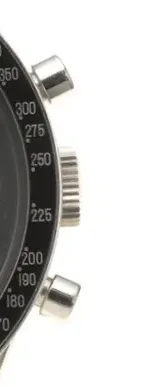
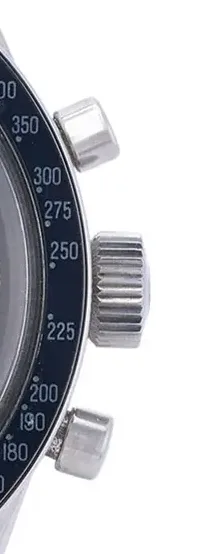
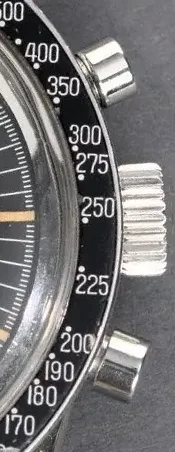
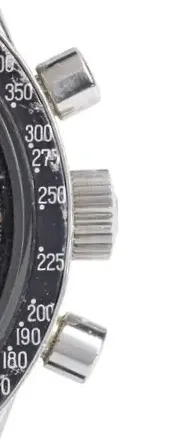
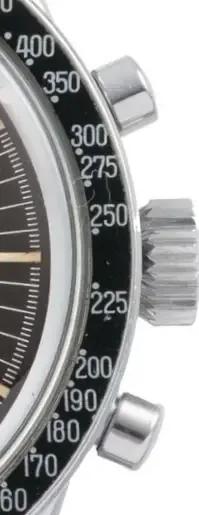
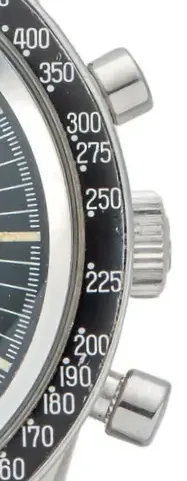
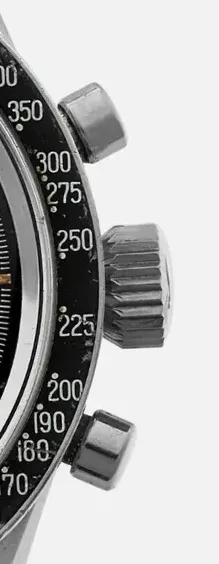
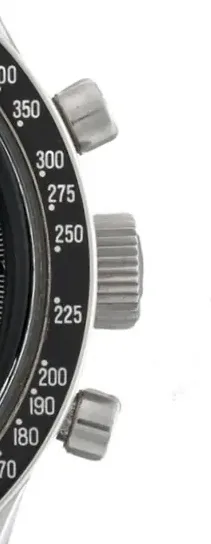
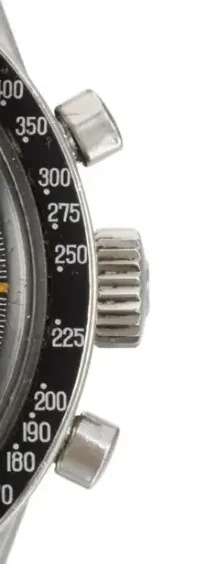
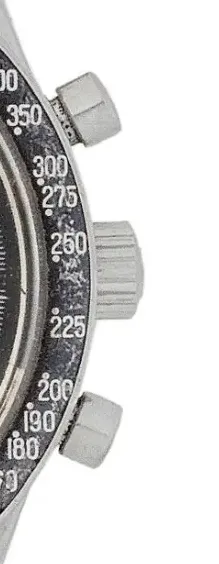
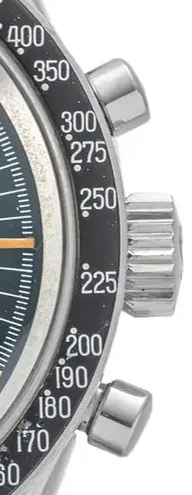
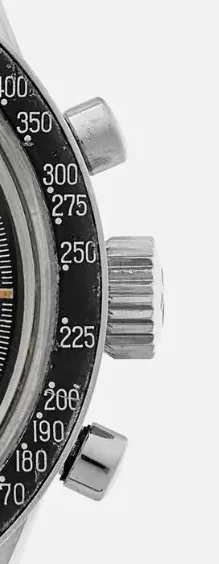
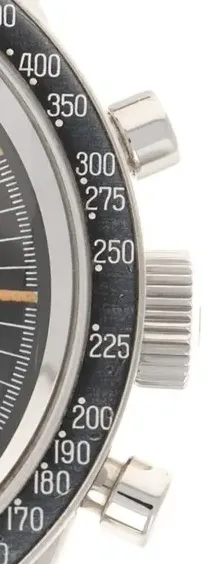
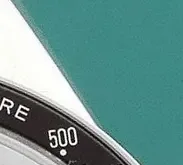
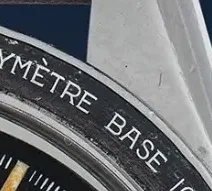
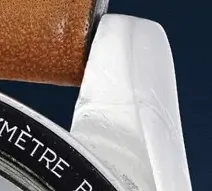
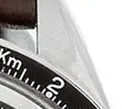
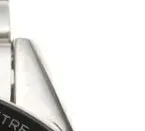
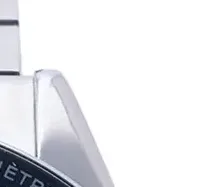
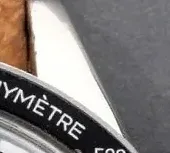
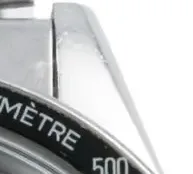
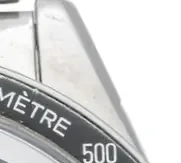
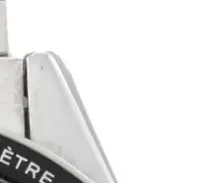
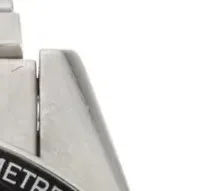
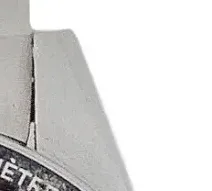
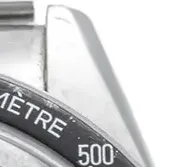
22 watches, oldest first, each straightened and cut the same way so that one row shows one component across them all. Chosen from 197 photographs on file for sharpness and for a face typical of the reference. A year marked c. is one its holder gives only roughly. Each picture is a detail cut from a listing photograph. Select the small mark in its corner for its year, its holder, a link to the listing it came from, and a way to report it.
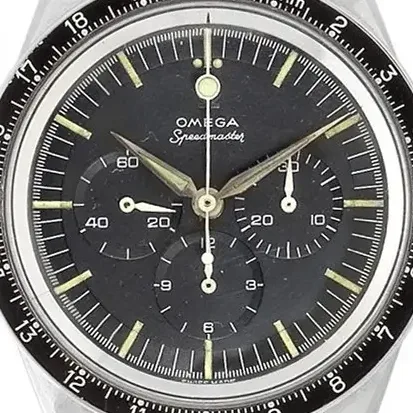
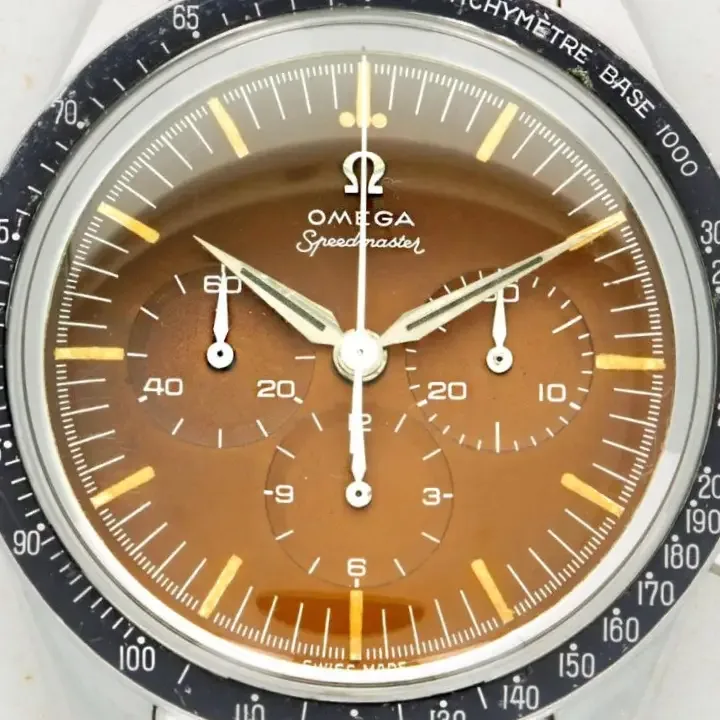
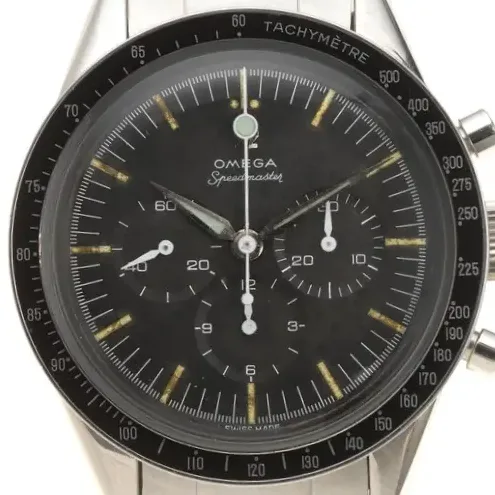
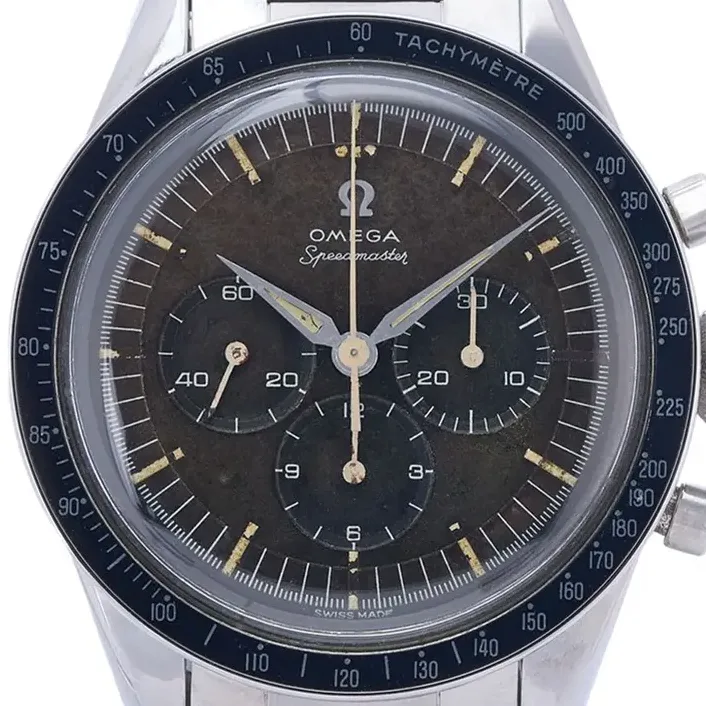
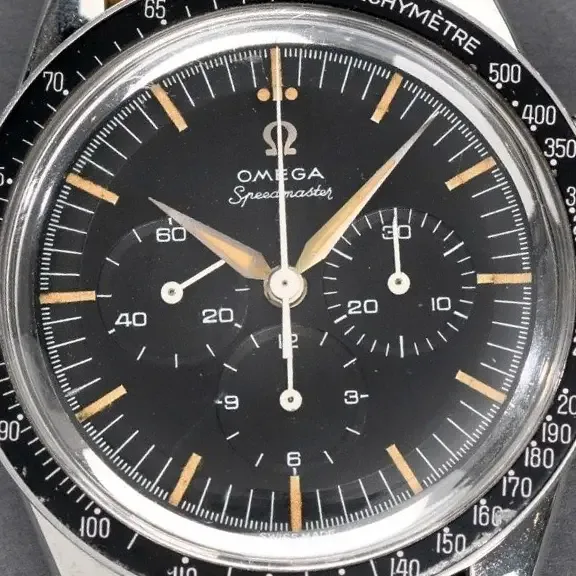
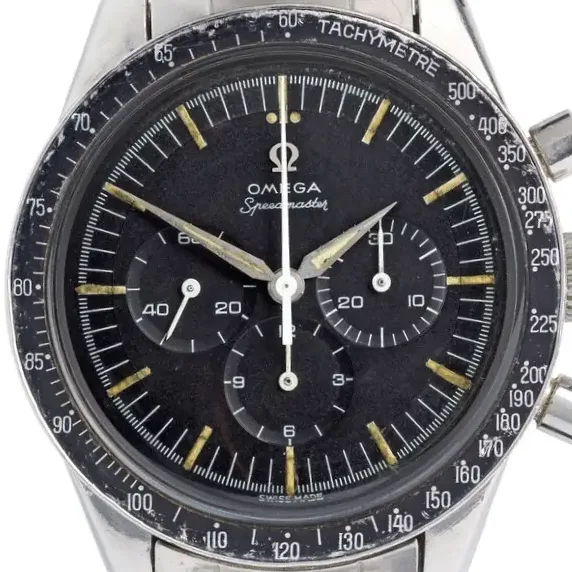
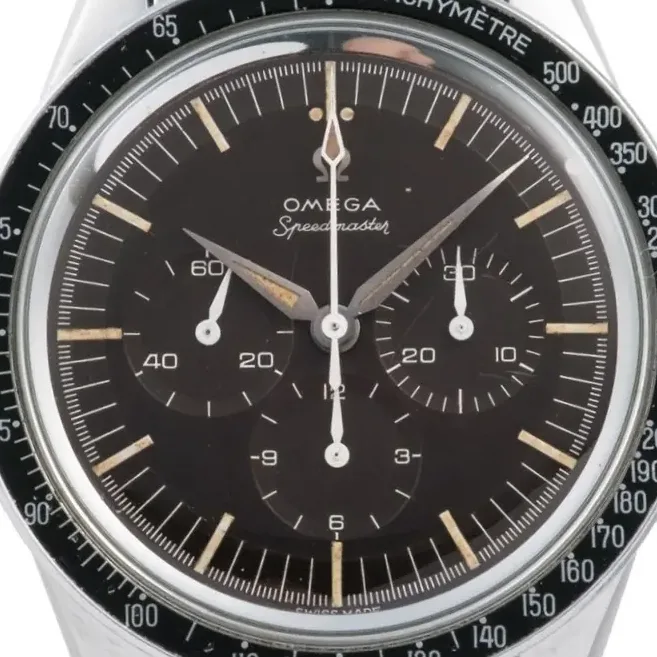
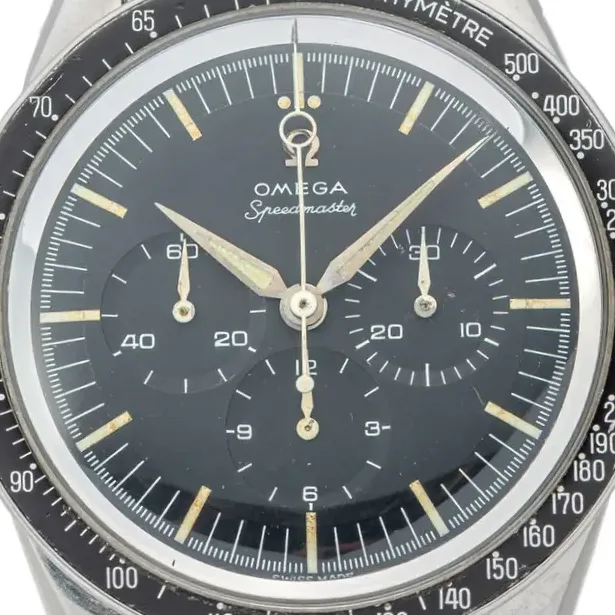
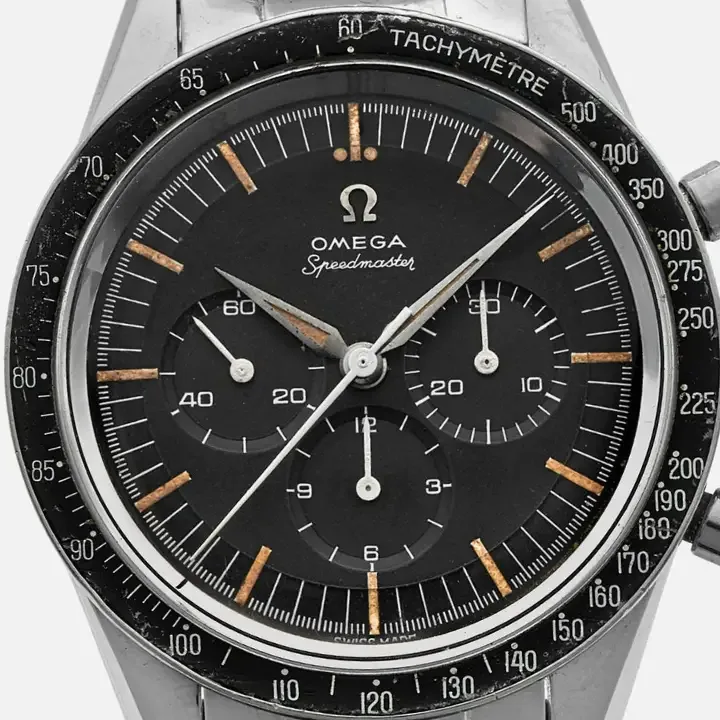
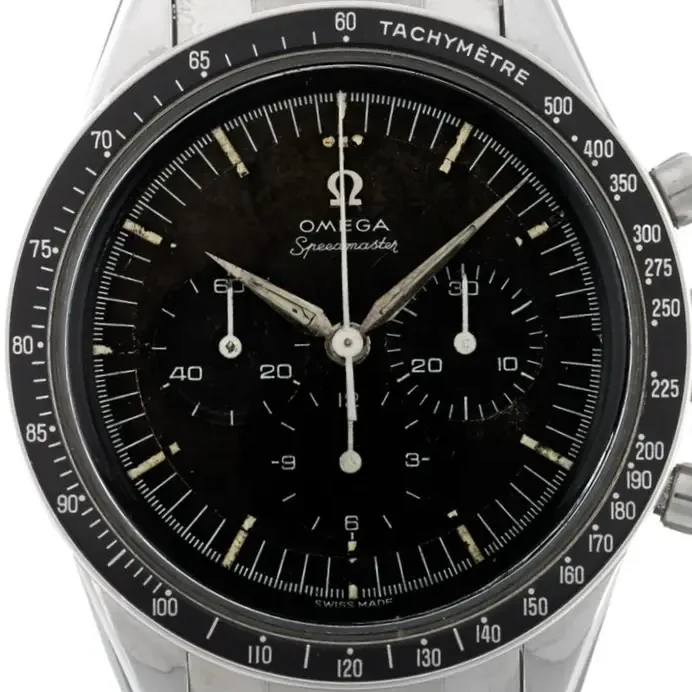
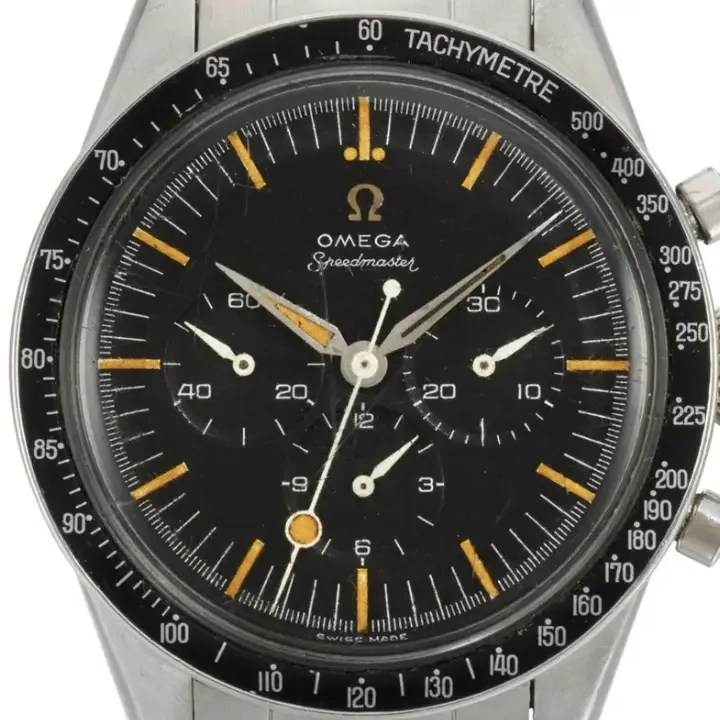
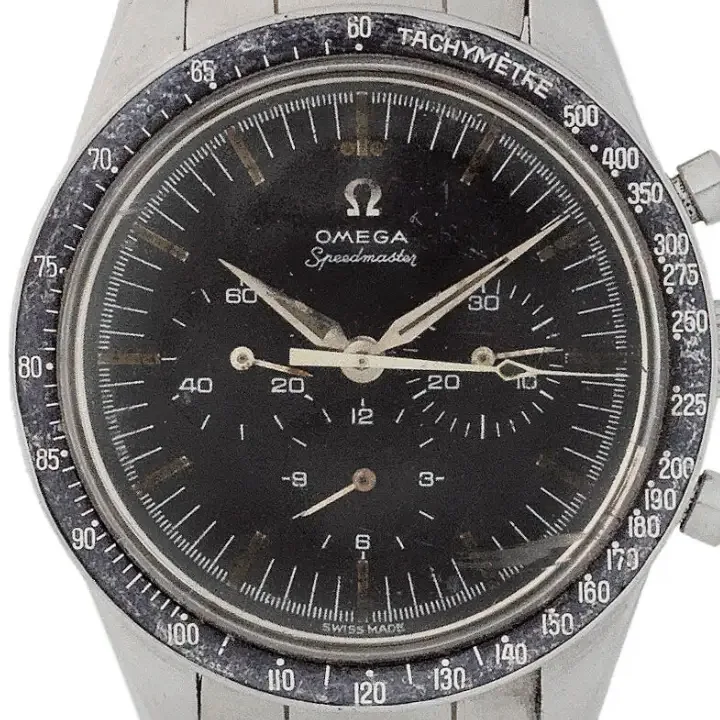
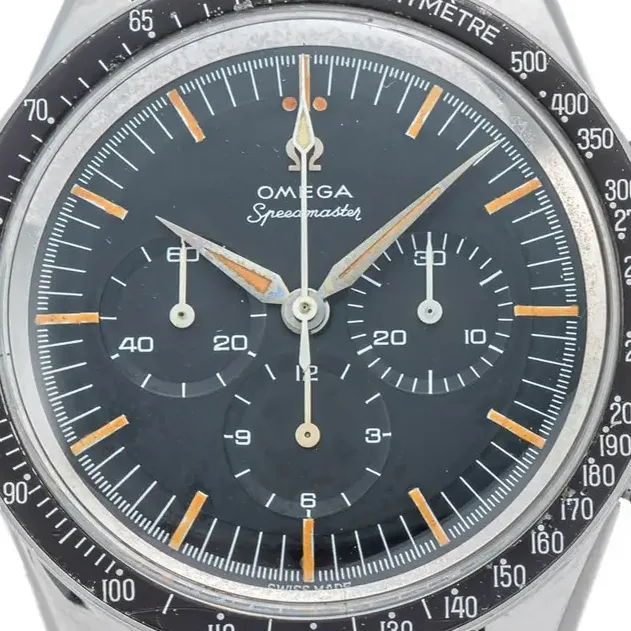
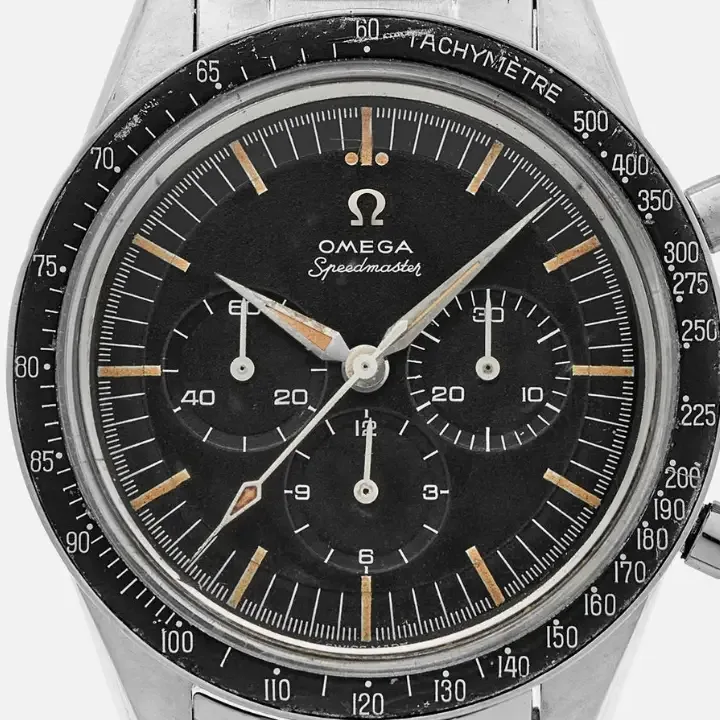
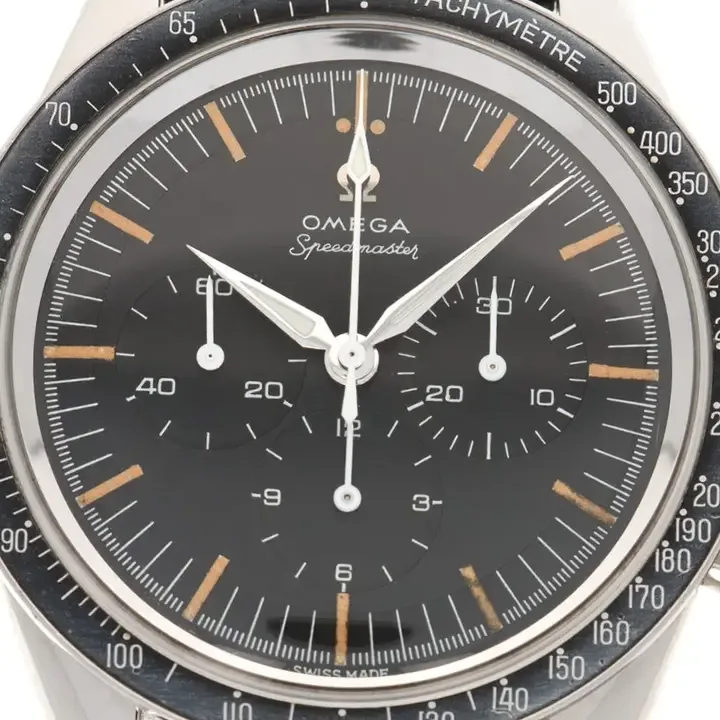






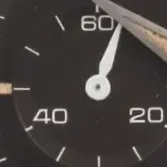

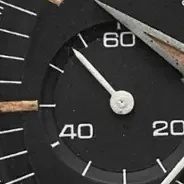
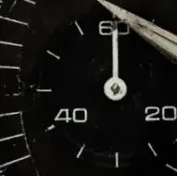
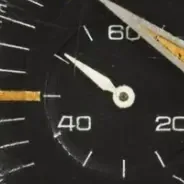
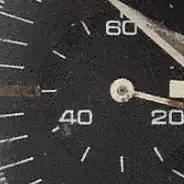
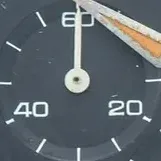
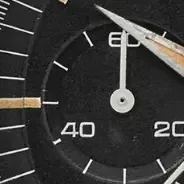
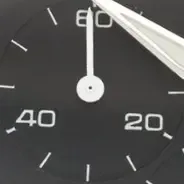
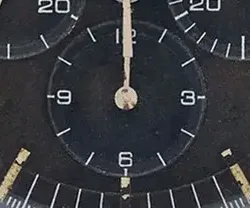
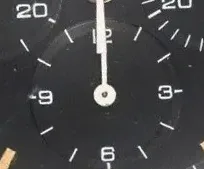
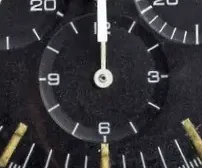
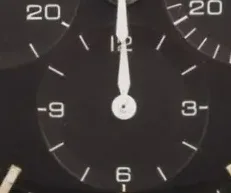
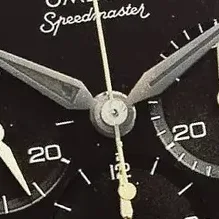
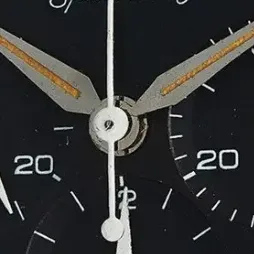
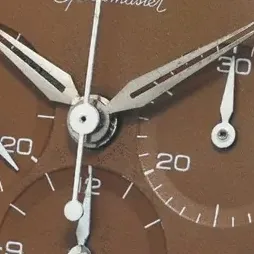
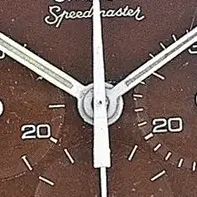

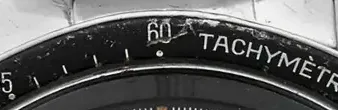
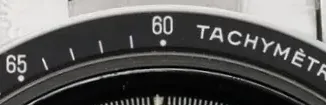
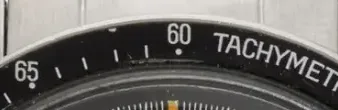
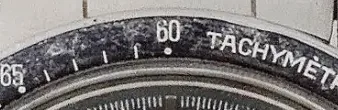
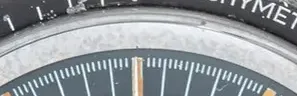
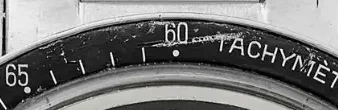
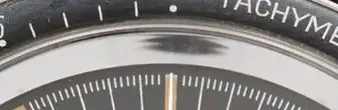
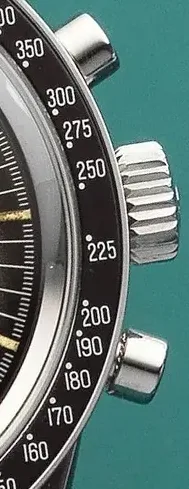



Chronology
Accounts split on the end: about as many give 1959 to 1962 as give 1959 to 1963. The end is kept at 1962, marked approximate; nearly all the years sellers state in the library's records fall between 1959 and 1962, and Omega's own sub-reference changes did not follow strictly in sequence.
Every dated variant: what is written, and what the records show
For the reference the marks are every dated watch; for a variant, the watches a seller names as that variant, so a variant sellers do not name has none.
Specification
| Case | Steel, 38 to 40 mm depending on who measures, straight lugs without crown guards, symmetrical; double-step caseback with the Speedmaster seahorse |
| Crystal | Plexiglass |
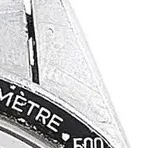
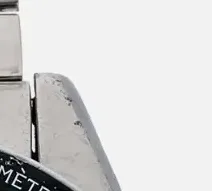
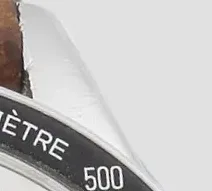
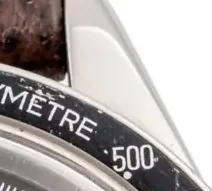
| Bezel | Black insert with tachymeter scale: 'Base 1000' on early watches, then 'Tachymetre 500' (dot over ninety) |
| Dial | Black, or brown when tropical, with applied Omega logo, three registers, long hour markers; radium lume; no 'Professional' line |
| Hands | Alpha hour and minute hands; straight, lollipop or spear chronograph seconds hand; alpha or stick sub-register hands by sub-reference |
| Pushers and crown | Pushers about 4 x 3 mm; crown about 7 mm |
| Movement | Calibre 321, hand-wound column-wheel chronograph, with a symmetrical clutch bridge |
| Bracelet | Steel Omega bracelets, among them references 7077 and 7912; sellers also list a 1035; some sold on straps |
Reference 9 described
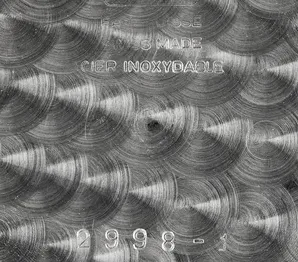
The 2998 comes in eight sub-references. The reference is engraved inside the back, which settles the sub-reference the watch started with. The differences are small, and the later suffixes -61 and -62 mark years. Omega did not change everything at once, so one watch can carry features from two neighbouring sub-references and still be correct.
2998-1
The first. Black Base 1000 bezel, alpha hour and minute hands, alpha sub-register hands, a domed dial with short sub-register markers and, most often, the early oval-O dial. A straight chronograph hand is more usual than a lollipop. The first of the series, from 1959.
- Base 1000 bezel
- alpha hands throughout
- domed dial
- oval O in Omega
2998-2
Close to the -1: Base 1000 bezel, alpha hands and a domed dial with the early lettering. Lollipop seconds hands are commonest here. A few have the Tachymetre 500 bezel.
- Base 1000 bezel
- lollipop seconds hand
2998-3
Changes to the Tachymetre 500 bezel and the step dial with longer sub-register markers; the later round-O lettering is usual but a very few keep the early dial. Alpha sub-register hands remain.
- Tachymetre 500 bezel
- step dial
- round O lettering
2998-4
Tachymetre 500 bezel and round-O dial, a straight chronograph hand and a split between alpha and stick sub-register hands, roughly half and half. One account dates the -4 to 1961 and 1962; another describes one whose movement number points to 1960. Published accounts give the watch Schirra wore in space as a -4.
- half alpha, half stick sub-register hands
- straight seconds hand
2998-5
Stick sub-register hands, the round-O dial and the Tachymetre 500 bezel. A spear chronograph hand first appears here beside the straight hand; one account allows only a few -5 watches with it.
- stick sub-register hands
- Tachymetre 500 bezel
2998-6
Same set as the -5 with a spear chronograph hand always, alpha hour and minute hands, stick sub-register hands.
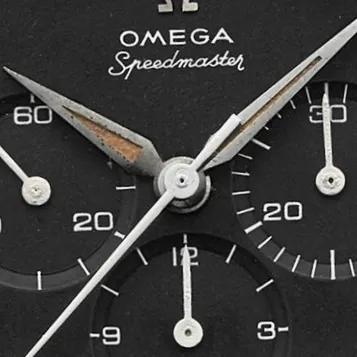
- spear chronograph hand
9 listings on record under the name.
2998-61
The suffix marks the year, 1961. Spear chronograph hand and stick sub-register hands; a Tachymetre 500 bezel with the numerals cut off at the rim, possibly a few with the earlier bezel.
- numerals cut at the bezel rim
2998-62
The suffix marks the year, 1962. Same make-up as the -61 and identical to the 105.002, which has a version with all-baton hands. It marks the change in Omega's numbering from short numbers to the dotted six-figure system.
- numerals cut at the bezel rim
- spear seconds hand
Tribute editions
The 'First Omega in Space' edition of 2012 has straight lugs, alpha hands, a straight chronograph hand and a dial with long markers and no step, which one account calls domed and another flat. A later CK2998 limited edition has the straight lugs, alpha hands, a Base 1000 scale and a lollipop hand, but a dark blue ceramic bezel and a panda dial. Neither is the same watch as the original.
Dial 3 described
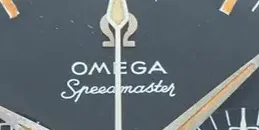
The dial is black, with a brown tropical version, an applied Omega logo, a three-register layout and no 'Professional' line. Hour markers are long, reaching the edge of the chapter ring, and none has tritium. Two lettering styles and two dial profiles run through the series. The back of one -4 dial, seen during a restoration, carries the name of the dial maker Singer.
Early dial: domed, thin lettering, oval O
Thin OMEGA with a flat oval O and G, a long tail on the r in Speedmaster, and short sub-register markers on a domed dial. On the -1 and -2, and rarely the -3. The oval O is the most distinctive feature of the -1, though later -1 watches may have a round one.
- oval O and G
- long-tailed r
- short sub-register markers
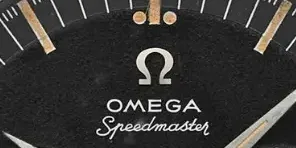
Later dial: step, thicker lettering, rounder O
Rounder O and G and a thicker typeface, a short r tail and a step profile with longer sub-register markers. Used from the -3 onward, and often used as a replacement dial.
- round O
- short r tail
- stepped sub-register ring
Tropical (brown)
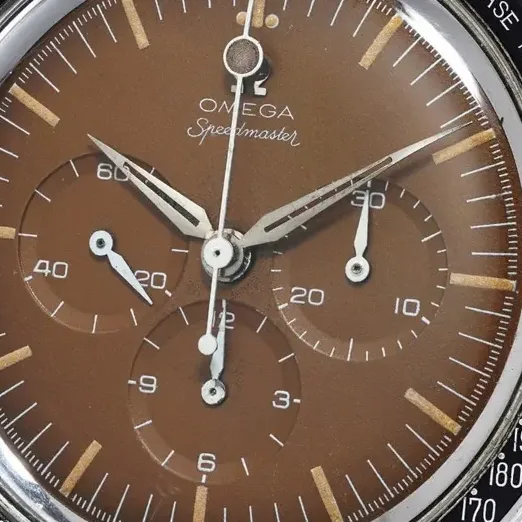
Radium dials that have turned from black to chocolate or brown. Sellers describe tropical dials on -1, -2 and -4 watches, among others. The browning is uneven in some cases.
- chocolate to brown tone
- even or patchy ageing

Luminous material 1 described
Dials and hands carry radium; the Speedmaster of this period has no tritium.
Radium lume
Radium on the markers and hands, which has aged to an orange or 'pumpkin' tone. Hands are often relumed, so lume tone can differ between hands.
- orange or pumpkin lume
- mismatch between hands after service
Hands 4 described
Hour and minute hands are alpha-shaped (a triangular style) on the 2998, replacing the broad arrow of the 2915. The hour hand is shorter than on the late 2915-3. The chronograph seconds hand and the sub-register hands both changed within the series.
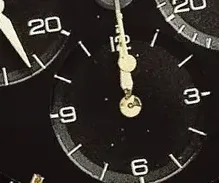
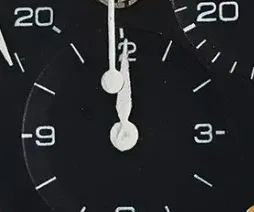
Alpha hour and minute hands
Triangular alpha hands, carried across the series; the last reference born with them is the 105.002.
- alpha shape
- short hour hand
Straight chronograph seconds hand
A plain hand without a lume plot, the commonest type on the series.
- no lume plot on the seconds hand
Lollipop chronograph seconds hand
A hand with a large, round lume plot. It is found mostly on the early sub-references; accounts call it uncommon to very rare. Early production used parts freely, so it has been seen on several dashes and cannot be proved original from the hand alone.
- big round lume plot on the seconds hand
Spear chronograph seconds hand
A spear-tip hand, standard from the -6 and possibly on a few -5, and used until a square-end spear was introduced around 1967. On earlier sub-references it is a likely replacement.
- spear tip
Subregisters 3 described
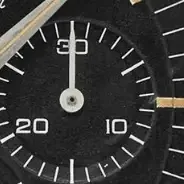
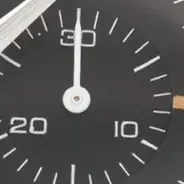
Three registers; the sub-register hands and markers changed from the -3 to the -5.
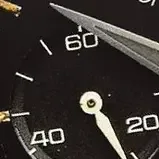
Alpha or leaf sub-register hands
Painted white and the same shape as the hour and minute hands (they were silver on the 2915); the shape is also called dauphine. Original on the -1 to -3 and on about half of the -4. Many have been refitted later.
- white alpha-shaped sub-hands
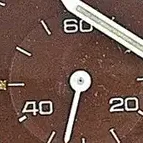
Stick sub-register hands
White baton hands, on about half of the -4 and on every sub-reference from the -5 onward, and the later standard. They are often fitted to earlier watches as replacements.
- white baton sub-hands
Sub-register markers
Short markers on the domed dials of the -1 and -2; longer markers from the -3 on step dials.
Bezel 4 described
The bezel is a black insert with a white tachymeter scale. It is the part most often replaced, since the black paint wears. A bezel that matches none of these is from another reference or aftermarket.
Base 1000
The first tachymeter script. Original on the -1 and -2. It is hard to find a spare, which makes it a point of value.
- BASE 1000 script
Tachymetre 500, dot over 90
The usual bezel from the -3, with short marks of half the bezel width. Called DON for the dot over ninety; also named Base 500 in some accounts. Some have aged to green.
- Tachymetre 500
- dot over 90
- short marks
Tachymetre 500, numerals cut off
The bezel of the -61 and -62, with numerals cut off at the rim; a few -61 may keep the earlier DON.
- numerals cut at the edge
Long-marked replacement
A Tachymetre 500 bezel with long marks reaching two-thirds of the bezel width; it is a replacement and was not original to the reference.
- long marks
Case 1 described
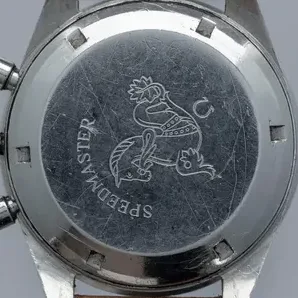
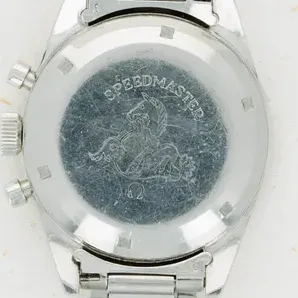
A symmetrical steel case with straight lugs and no crown guards. The caseback is a double-step design with the Speedmaster seahorse and carries the reference engraved inside. Diameter is given as 38 or 39 mm by guides and sellers more often say 39 or 40.
Straight-lug case
The case of the first four Speedmaster references. Pushers are about 4 x 3 mm; replacement pushers of 4 mm outer diameter are made. Cases with crowns of the 'Mercedes' pattern are sold, and an original flat-foot crown is mentioned.
- straight lugs
- double-step back
- seahorse and Speedmaster text
Crystal 1 described
Plexiglass crystal
The watches have a plastic crystal; one example had a cracked crystal replaced.
Movement 1 described
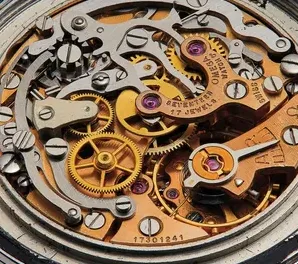
All use the hand-wound column-wheel Calibre 321, which is based on a Lemania chronograph.
Calibre 321
Hand-wound chronograph, the same in every sub-reference. It has a symmetrical clutch bridge; an asymmetric one would be a replacement part or a mixed watch.
- symmetrical clutch bridge
Bracelet 1 described
Steel bracelet
Examples are listed on a 7077 bracelet dated 1961, a flat-link 7912, semi-expanding bracelets, and one bracelet stamped 1960. Of the listings in the records that say how the watch is fitted, about a quarter are on straps.
- date stamp on the bracelet
Box and papers 1 described
Extract, box and papers
Original box, warranty card and booklets are very rarely found complete. An extract from the maker's archive records the original delivery country. Some watches were issued to a national air force.
- extract from archives
- box and booklets
Originality
- Bezels are the most often replaced part because the black paint wears; a Base 1000 bezel is a particular point of value.
- Hands are frequently replaced: spear chronograph hands and stick sub-register hands are common additions, and relumed hands show a different tone.
- Later dials, including 'Professional' dials from the 105.012 or 145.012, have been fitted since the movement is the same.
- An asymmetric clutch bridge in the 321 points to a replacement part.
- Original pushers are often lost or replaced.
Names
- Pre-Moon. It predates the Professional watches that went to the moon.
- Pre-Professional. The dial has no 'Professional' line.
- DON. The dot over ninety in the Tachymetre 500 scale.
- Lollipop. The chronograph seconds hand with a large round lume plot.
- Tropical. A dial turned brown with age.
Where accounts differ
Points on which the published literature and the library's own records do not agree, or on which the literature contradicts itself.
- End of production. Two accounts give 1959 to 1962 for the reference and two give 1959 to 1963, one of the latter counting the eight sub-references through 1963. Nearly all the years sellers state in the library's records run from 1959 to 1962, which does not settle the question.
- Case diameter. One guide gives 38 mm and another 39 mm. Sellers in the library's records most often give 40 mm, nearly as often 39 mm, and rarely 38 mm.
- Oval O in the Omega logo. One guide says all 2998s use the wide oval O; another says the oval O may still appear on the -1, should no longer appear on the -2, and has become round by the -5.
- Where the Base 1000 bezel stops. One guide has it on the -1 and -2 only; another has it swapped for the Tachymetre 500 bezel at the -3. Both agree on -3, but one mentions a few -2 with the later bezel.
- Lollipop hand. One guide gives the lollipop hand to the first three sub-references; another finds it mainly on the -2 and only rarely on the -1 and -3, and a third says it appears on several dashes.
- Overlap with the 105.002. One guide says the 105.002 and 2998-62 overlap for months in 1962 and the 105.003 replaces them in 1963; another dates the 105.002 to 1962 to 1964 and says some 2998-62 were made after it.
- The 2998-4: dates and subregister hands. One account dates the -4 to 1961 and 1962 and describes it with white baton subregister hands, allowing that other sets are original. Another shows a -4 whose movement number points to 1960. On the subregister hands, one account gives the -4 alpha hands, one says batons begin to appear on it, and one divides it about half and half.
Back and movement
From listings of this reference, each confirmed by eye to show what it is filed under. A picture on which a person's name or a personal engraving can be read is not shown. From most holders a detail from the middle of the photograph is shown; the mark in its corner gives its holder and a link to the listing.
Caseback


Inside the caseback

Movement

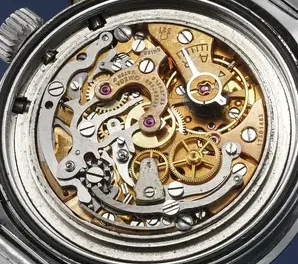

Catalogue versions 7 listed
The full numbers under which holders list this reference, with what their listings say of each. Each has a page of its own.
| Version | Metal | Dial | Years seen | Records |
|---|---|---|---|---|
| 2998-1 | Steel | Brown | 1959–1960 | 21 |
| 2998-4 | Steel | Brown or black | 1960–1962 | 14 |
| 2998-3 | Steel | Black | 1959–1961 | 8 |
| 2998-2 | Steel | Black | 1959–1962 | 7 |
| 2998-5 | Steel | 1960–1962 | 7 | |
| 2998-61 | Steel | 1961–1962 | 6 | |
| 2998-62 | Steel | Black | 1962 | 6 |
In the records
Counted from 90 listings at 26 holders between 22 May 2012 and 14 November 2026. These are what sellers and auction houses state, not measurements.
The fainter bar is the one listing outside the main run of 1959–1962 (the middle nine-tenths): the latest is 1969. It is an early or late example, or a seller's slip. The head of the page gives 1959–1962: the years that listings from two holders bear out.
4 listings dated long after the reference ended are set aside and not counted here: a year that late belongs to a later watch sold under the old number, or to a listing filed under the wrong one.
Case metal
| Steel | 58 |
Dial colour
| Black | 19 | |
| Brown | 11 |
Case size
| 40 mm | 29 | |
| 39 mm | 24 | |
| 38 mm | 2 |
Calibre named
| 321 | 52 | |
| 1861 | 2 |
Bracelet or strap
| Metal bracelet, kind not stated | 34 | |
| Leather strap | 12 |
Each table counts the listings that state the thing, in the seller's own terms. A size, metal, colour or calibre that cannot belong to this reference is a seller's slip or a listing filed under the wrong number.