GMT-Master (steel and gold)
The 16753 is the two-tone GMT-Master in steel and yellow gold, made from the end of the 1970s to 1988. It sits between the steel 16750 and the solid-gold 16758 and follows the 1675/3. It keeps the slim 40 mm case, acrylic crystal and aluminium bezel insert of the older 1675 but takes the higher-beat calibre 3075 with a quickset date, which is why it is called a transitional model. Dials came in black or brown, with matching inserts; the brown version is the one known as Root Beer. Collectors look first at the dial (raised nipple markers or later flat plots, and how the brown has aged), the colour and state of the insert, and whether the hands, crown and centre links are all original.
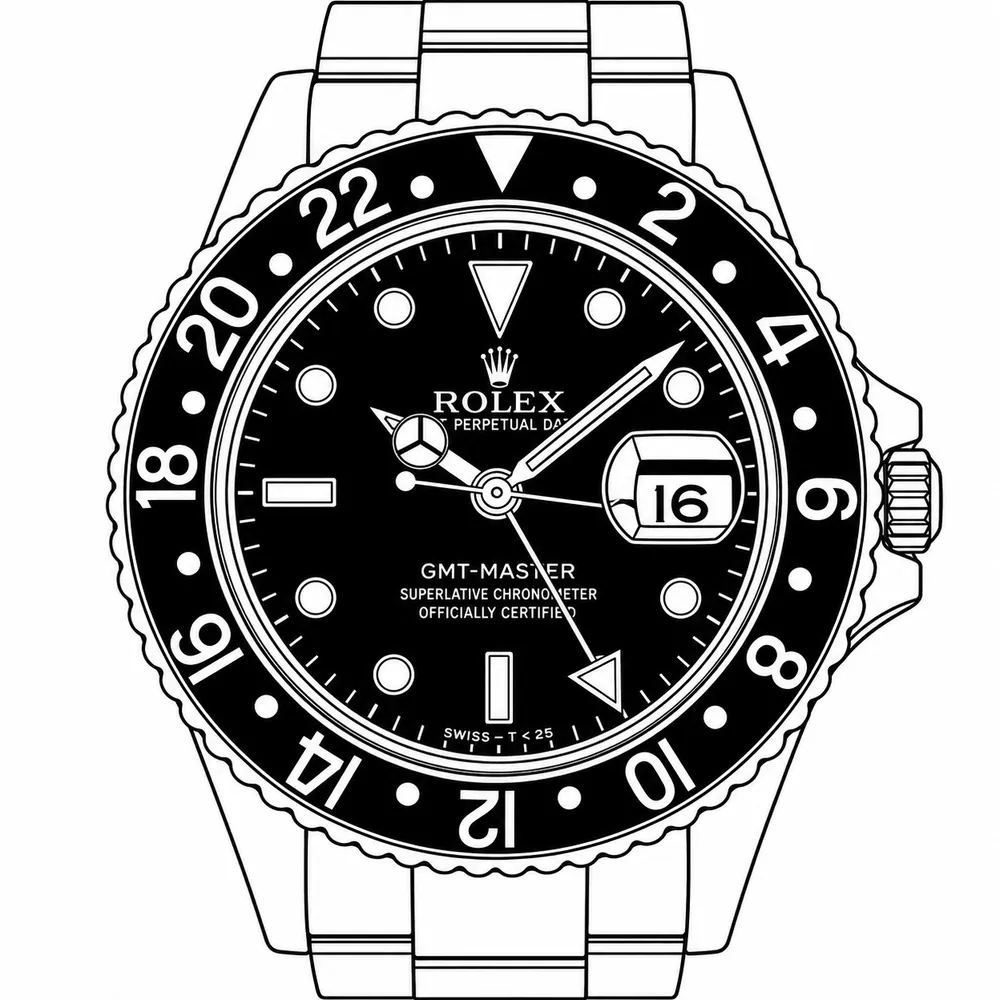
- Made
- 1979–1988dates approximate
- Seen in the library
- 1979–1988nine in ten in 1979–1987 · by case numbers
- Case
- 40 mm · steel and gold (62%), steel (34%)as sellers state
- Movement
- Calibre 3075automatic
- On record
- 335 listings887 photographs · 42 holders
Components
43 watches, oldest first, each straightened and cut the same way so that one row shows one component across them all. Chosen from 887 photographs on file for sharpness and for a face typical of the reference. A year marked c. is one its holder gives only roughly. Each picture is a detail cut from a listing photograph. Select the small mark in its corner for its year, its holder, a link to the listing it came from, and a way to report it.
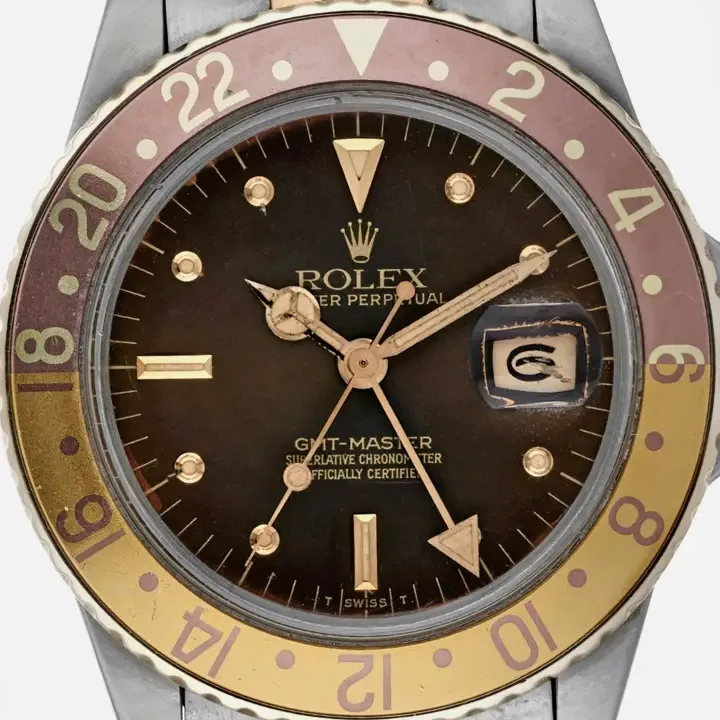
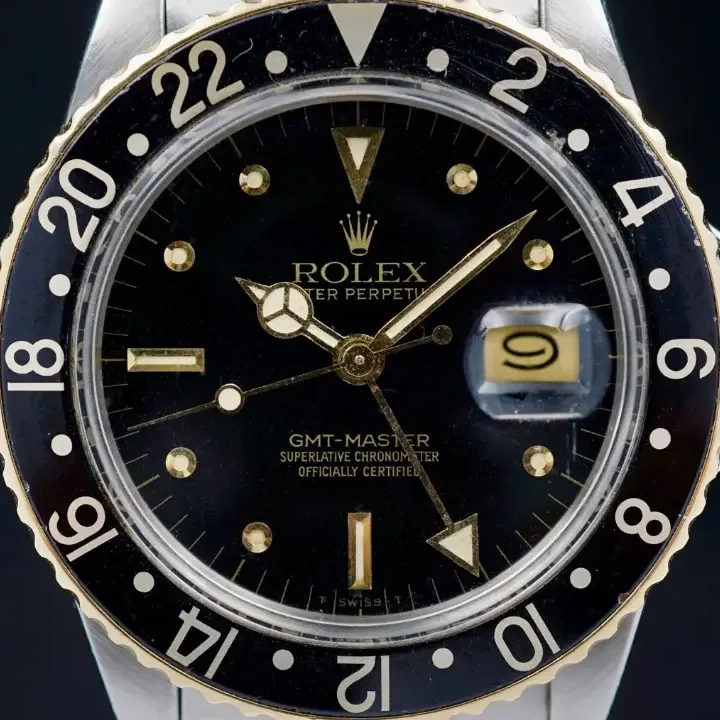
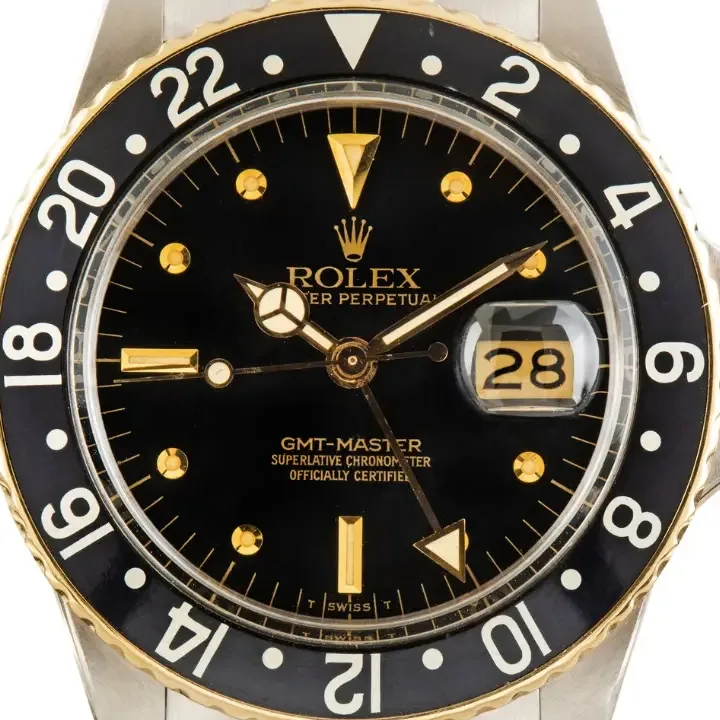
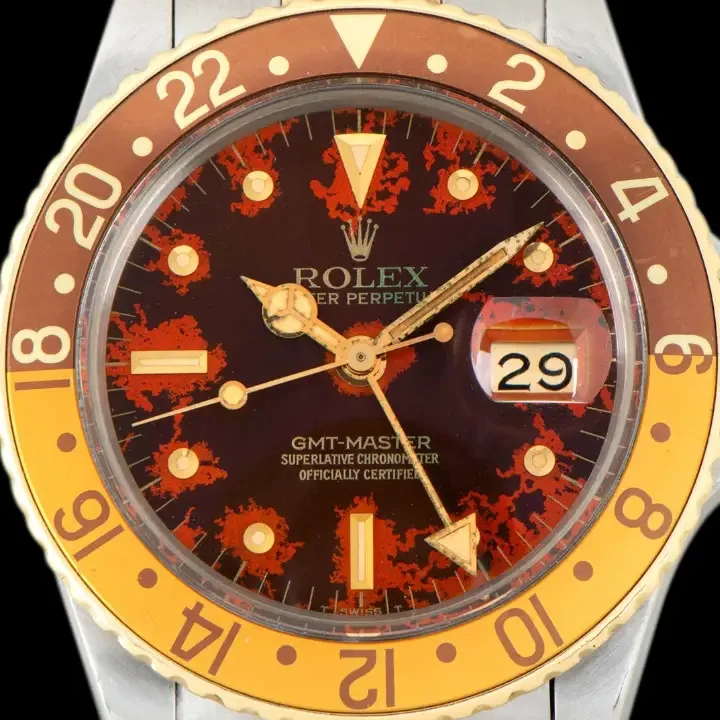
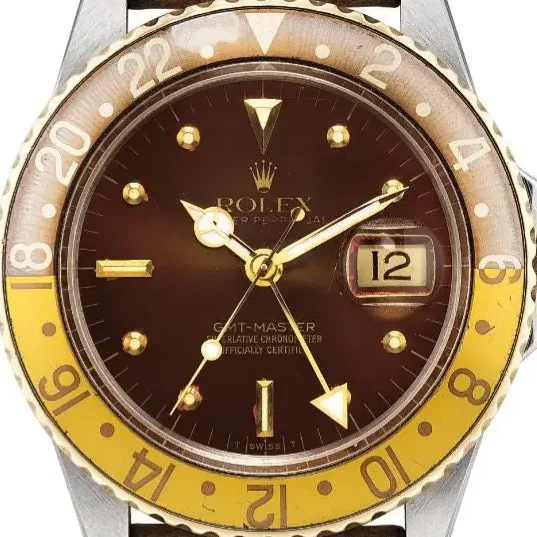
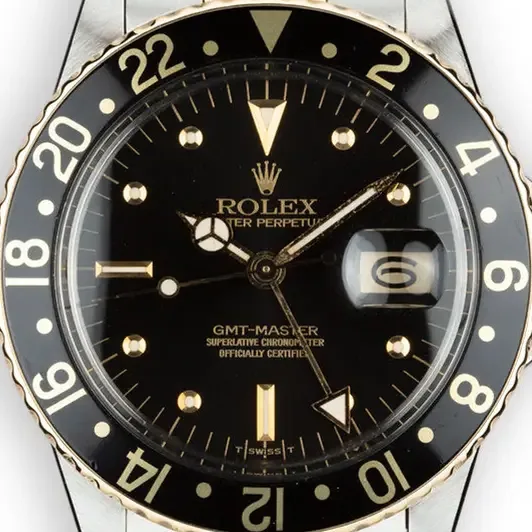
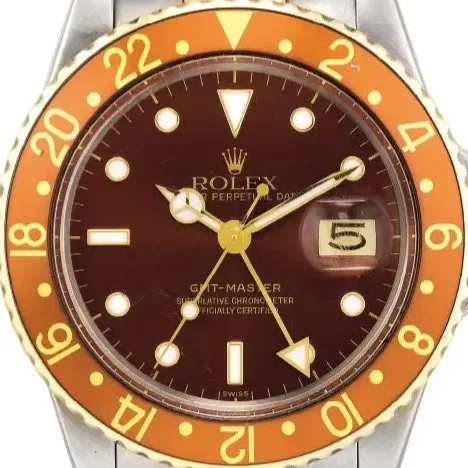
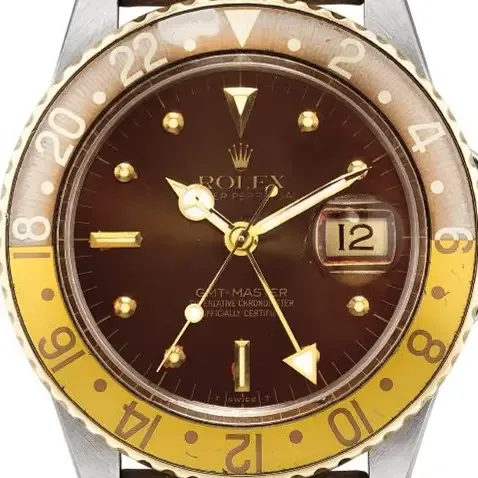
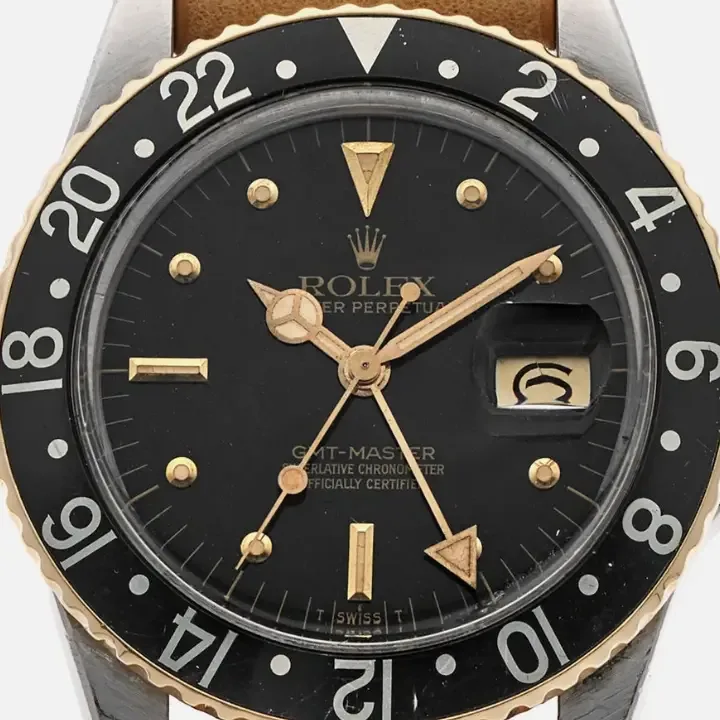
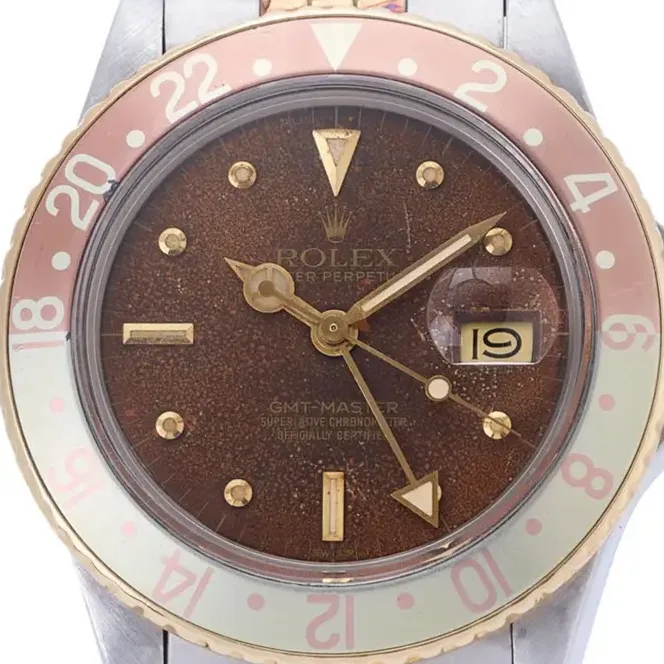
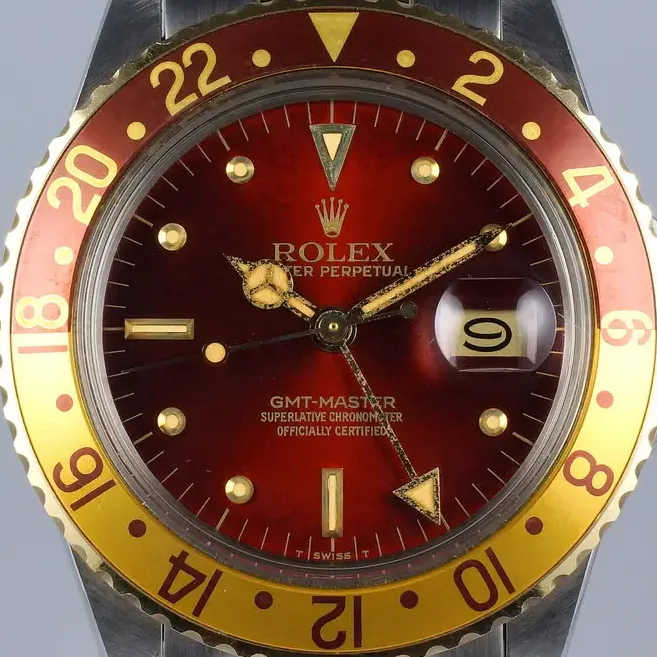
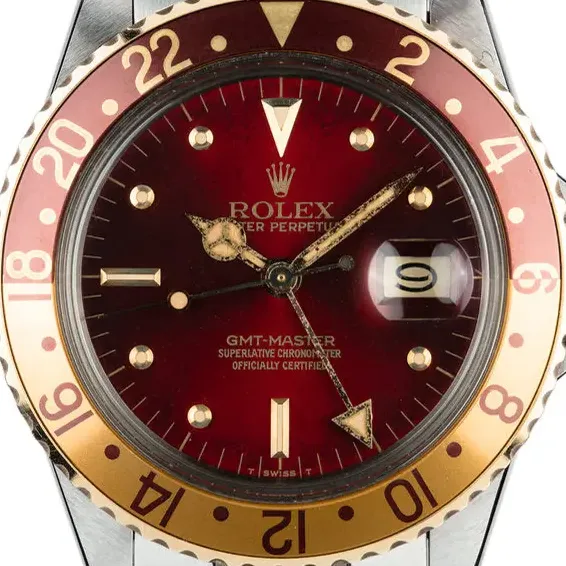
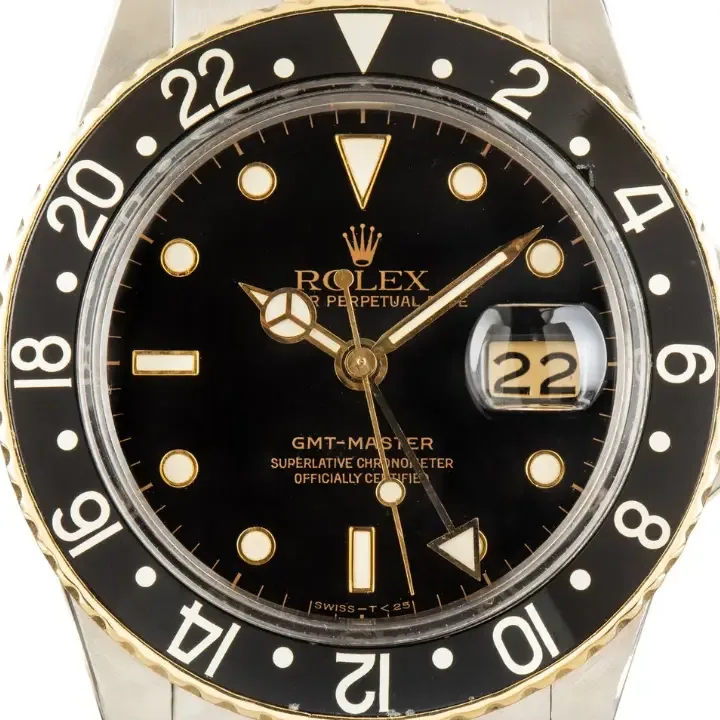
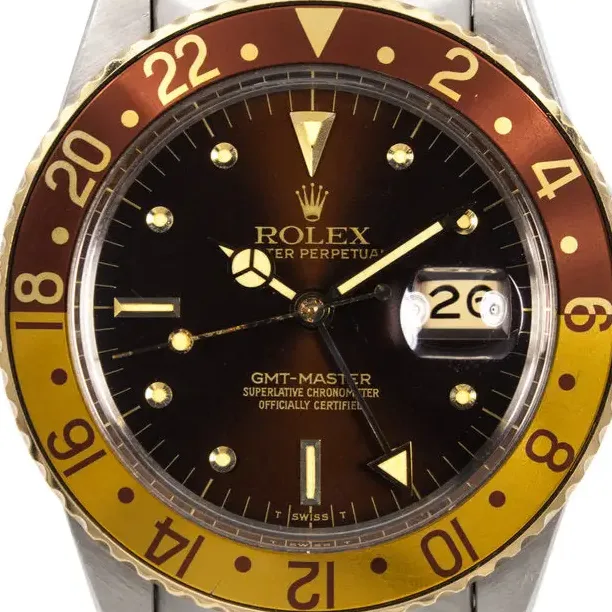
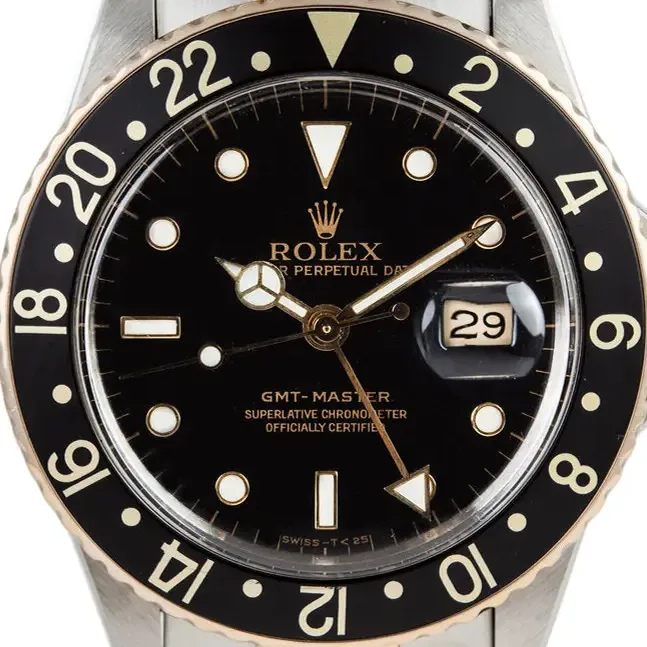
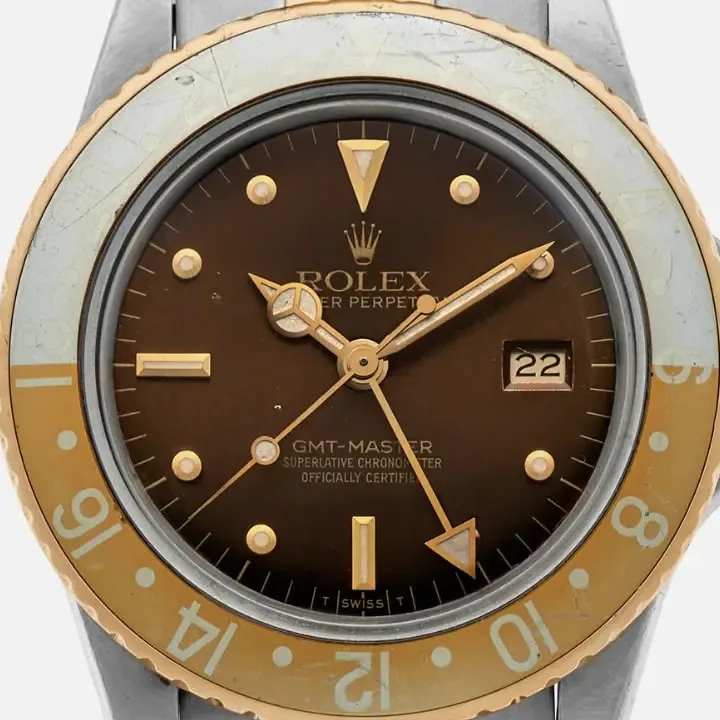
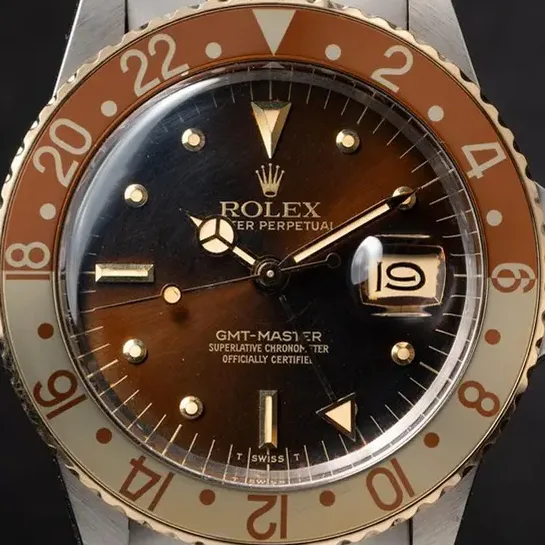
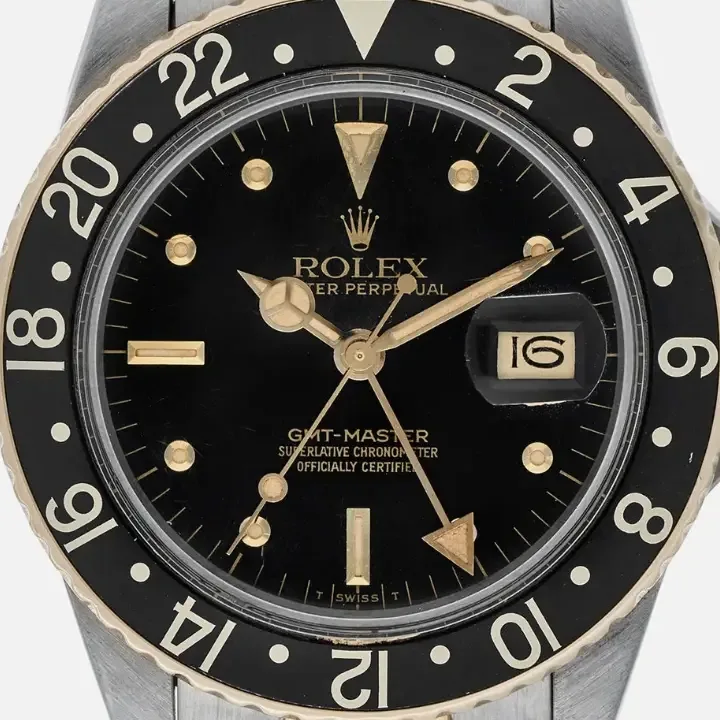
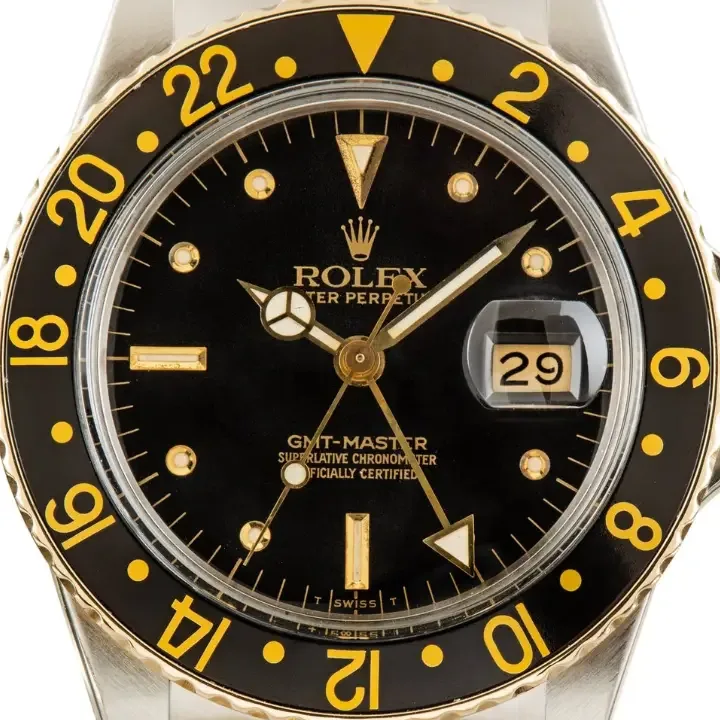
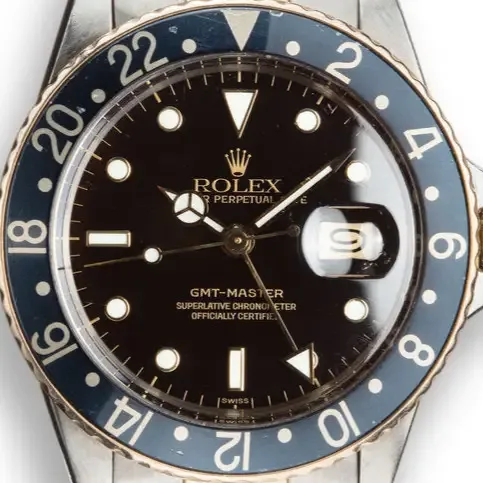
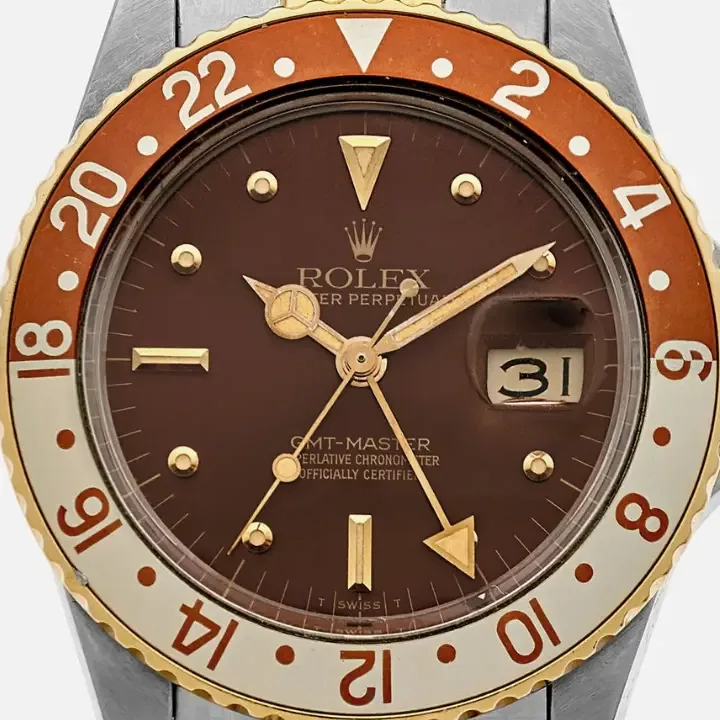
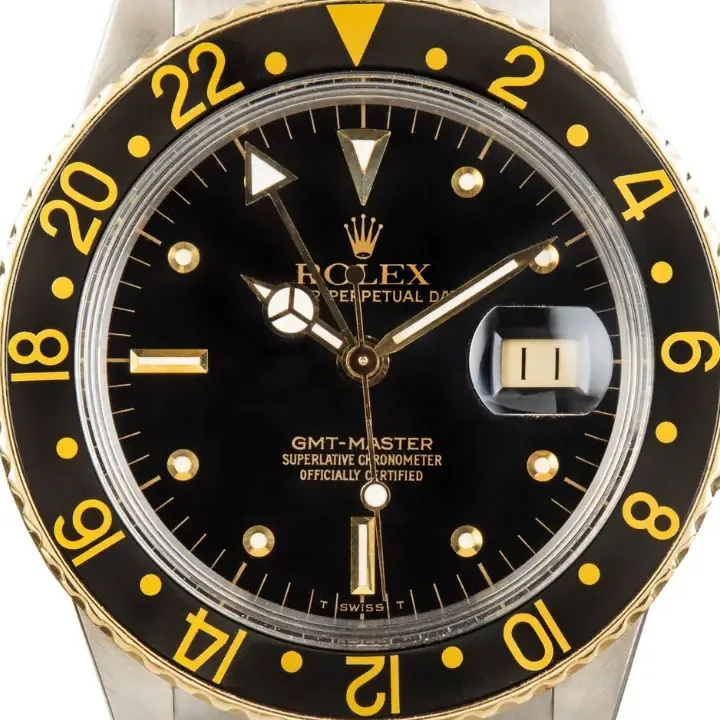
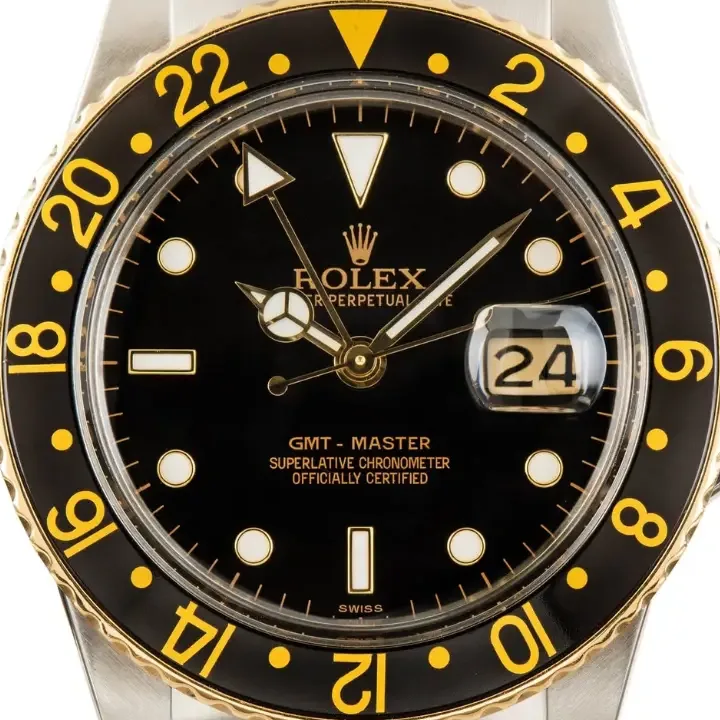
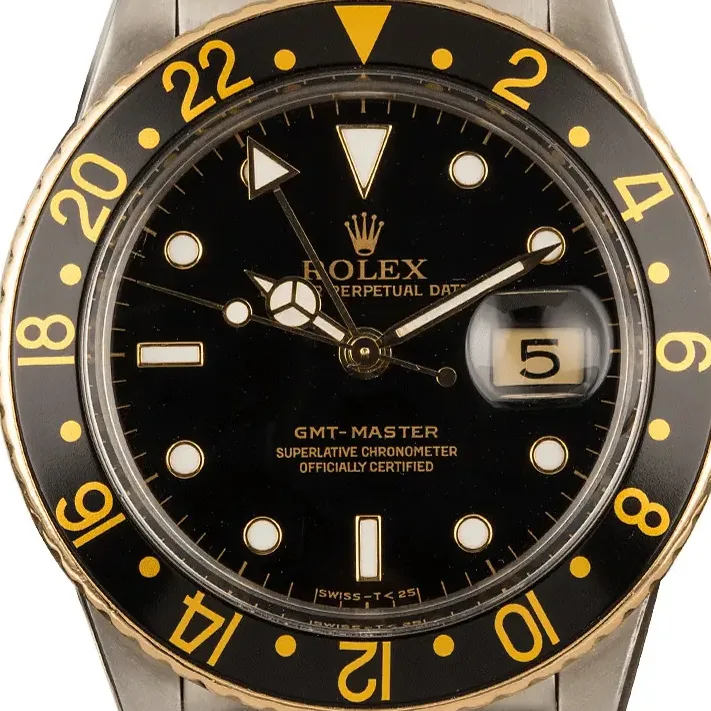
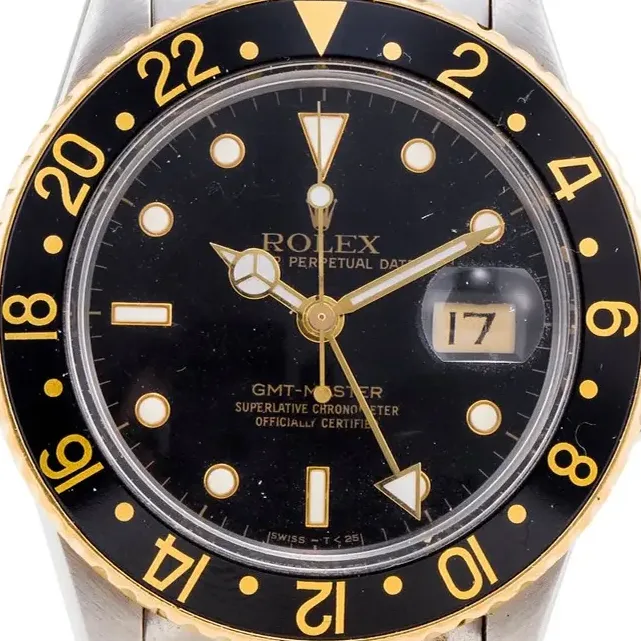
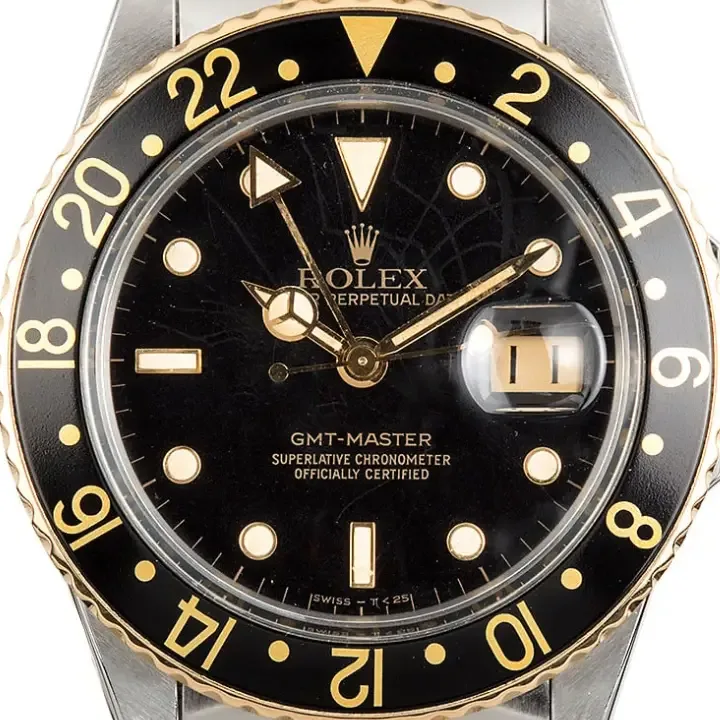
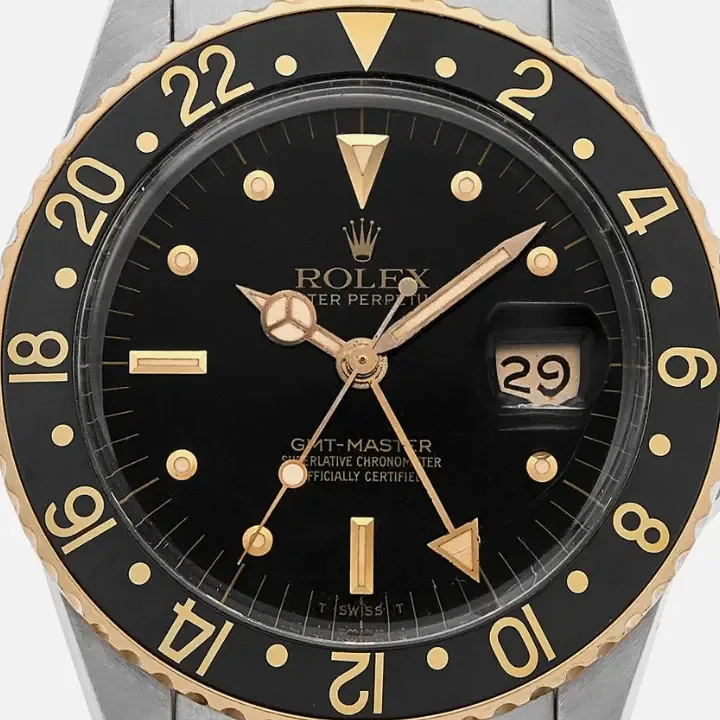
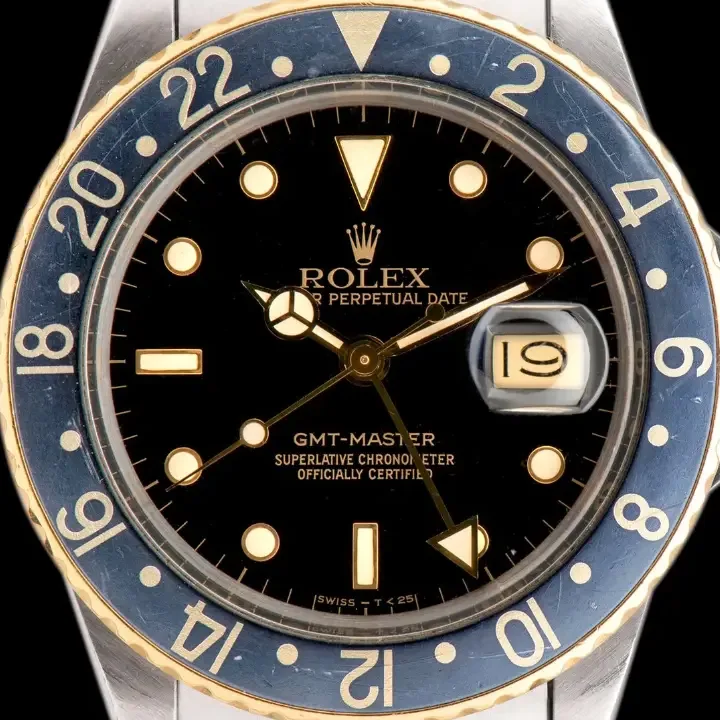
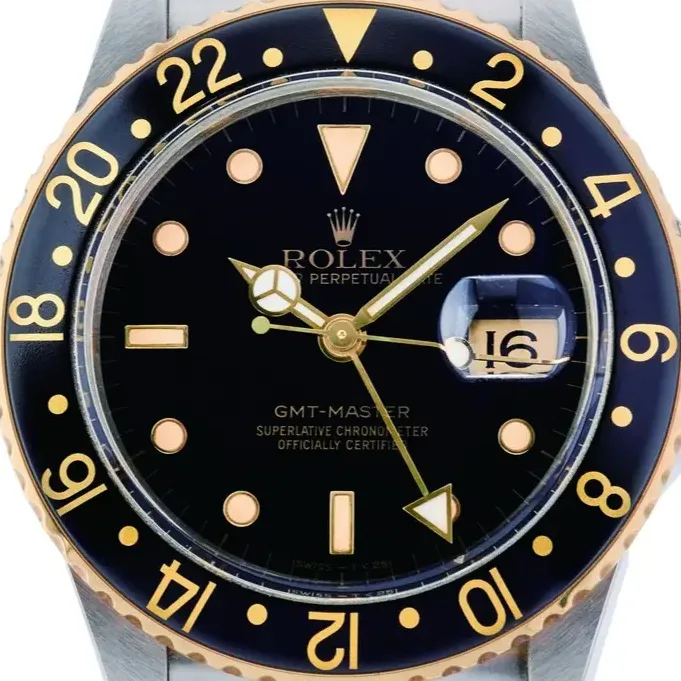
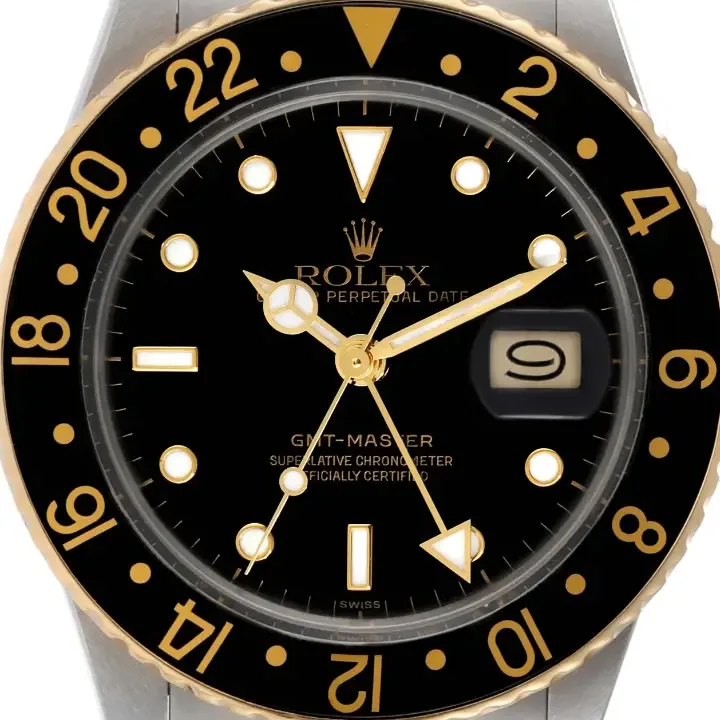
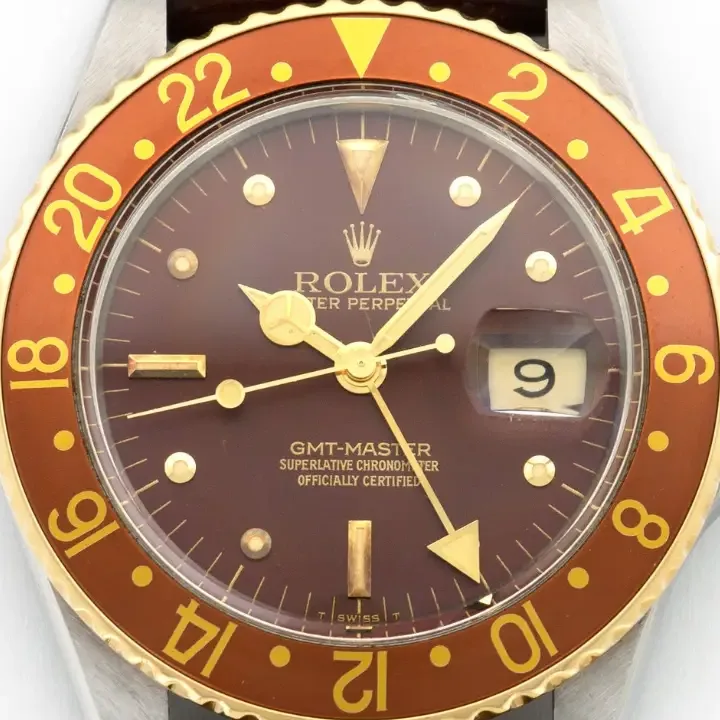
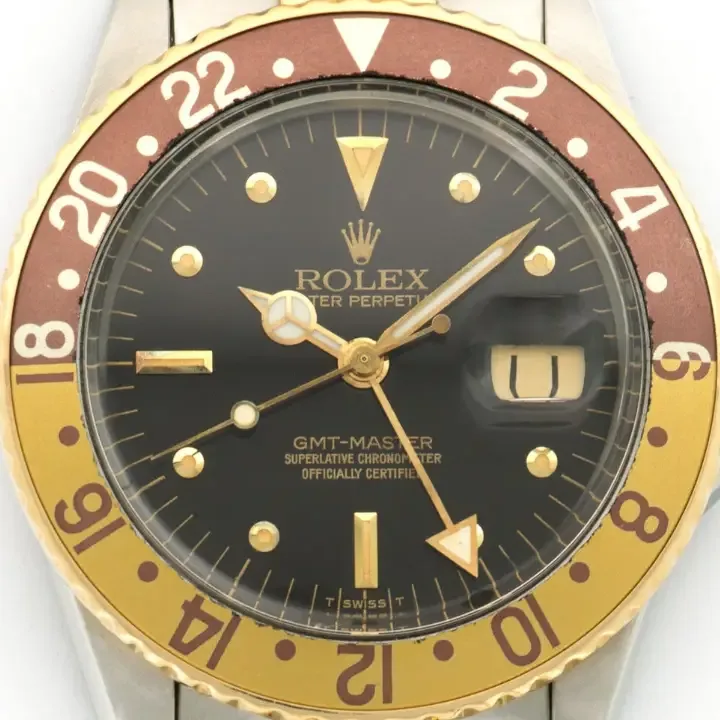
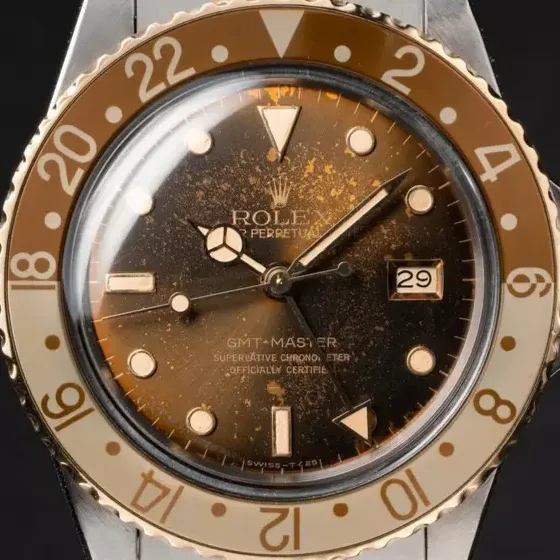
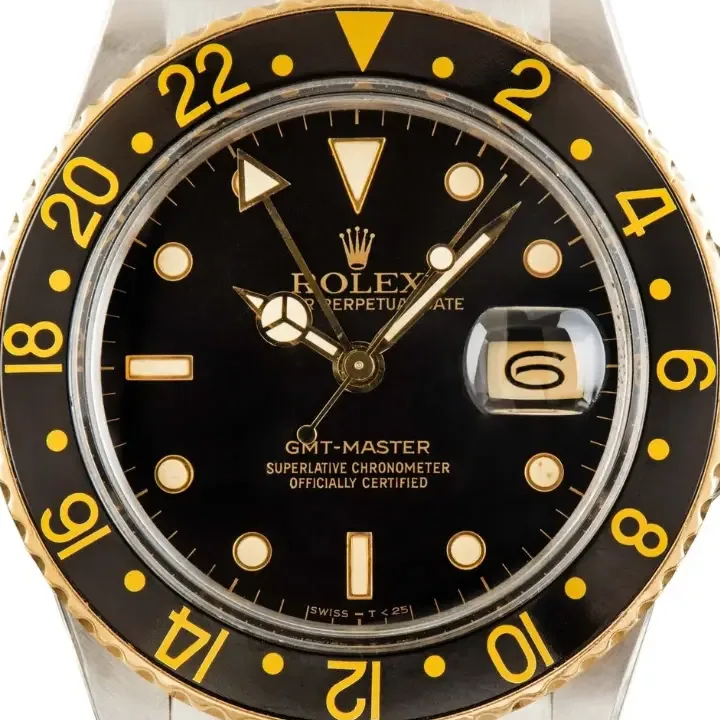
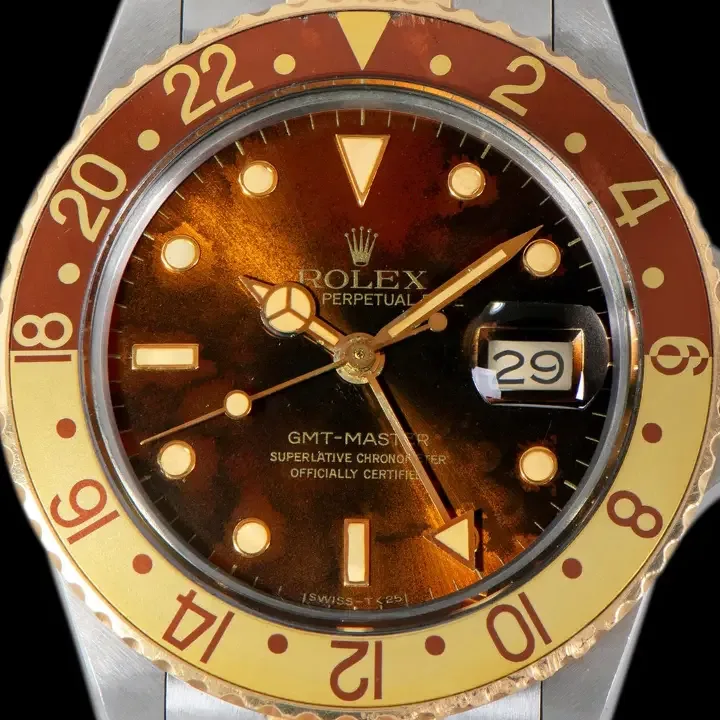
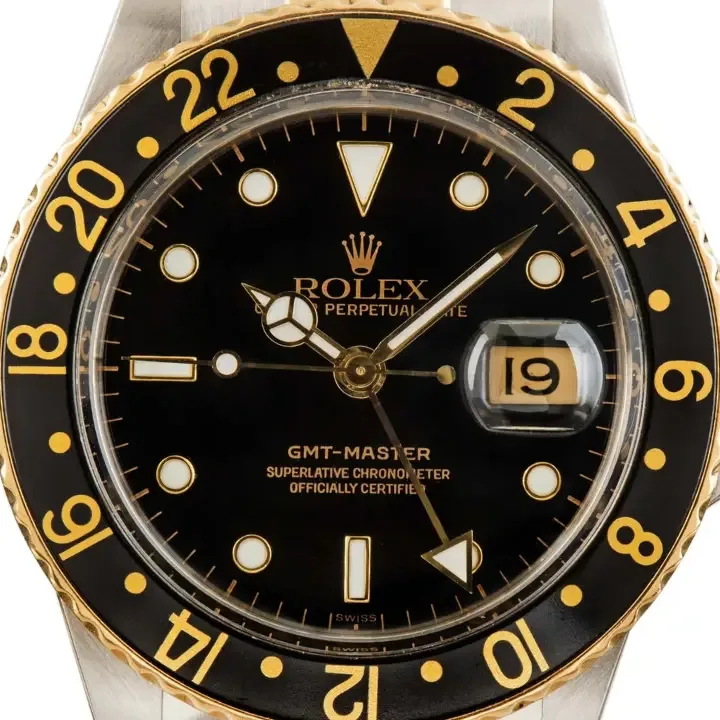
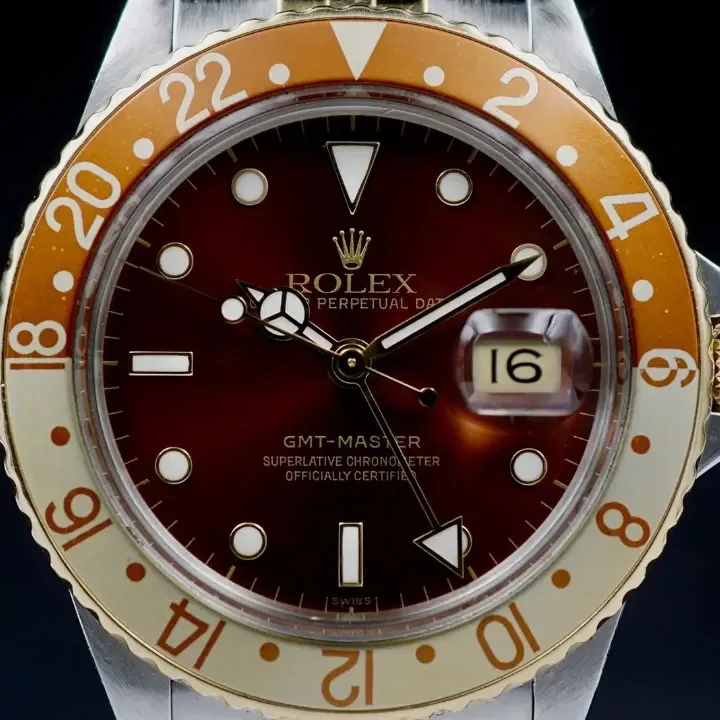
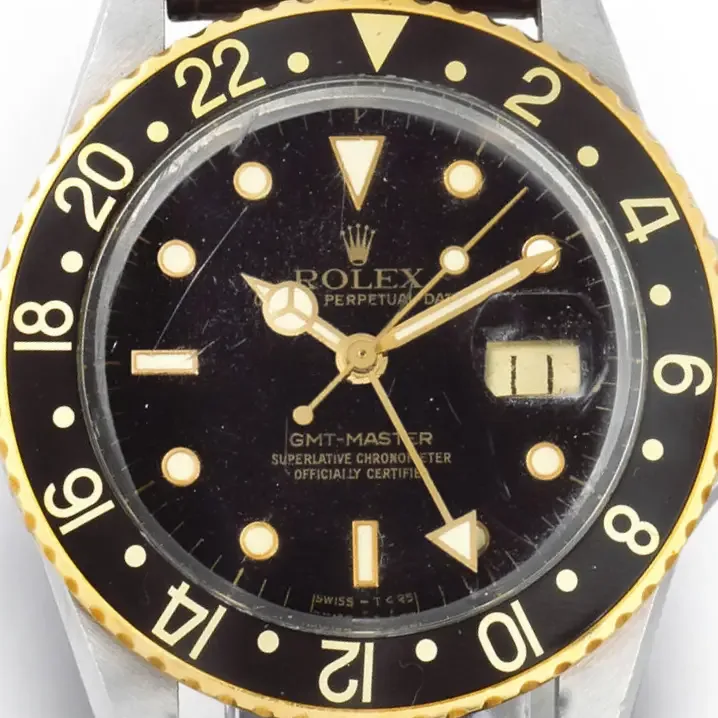
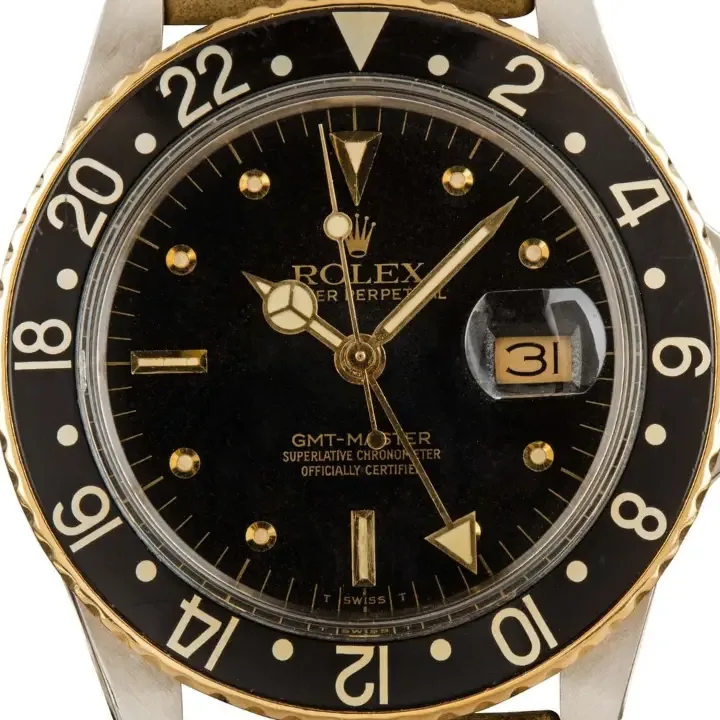
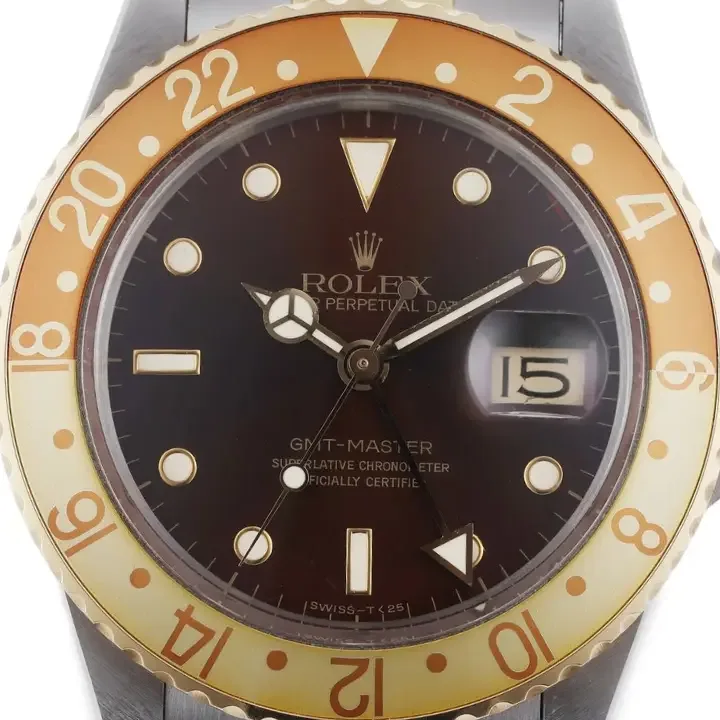
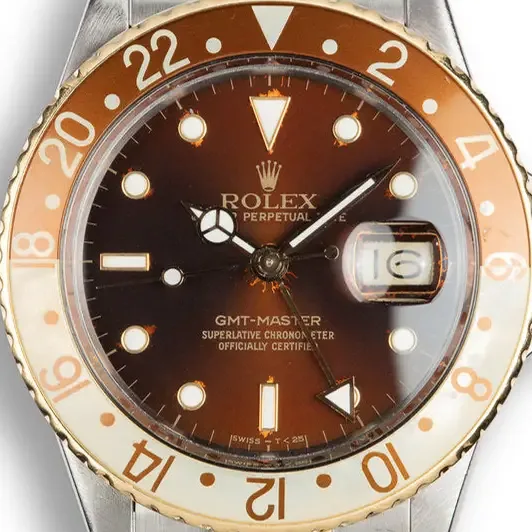
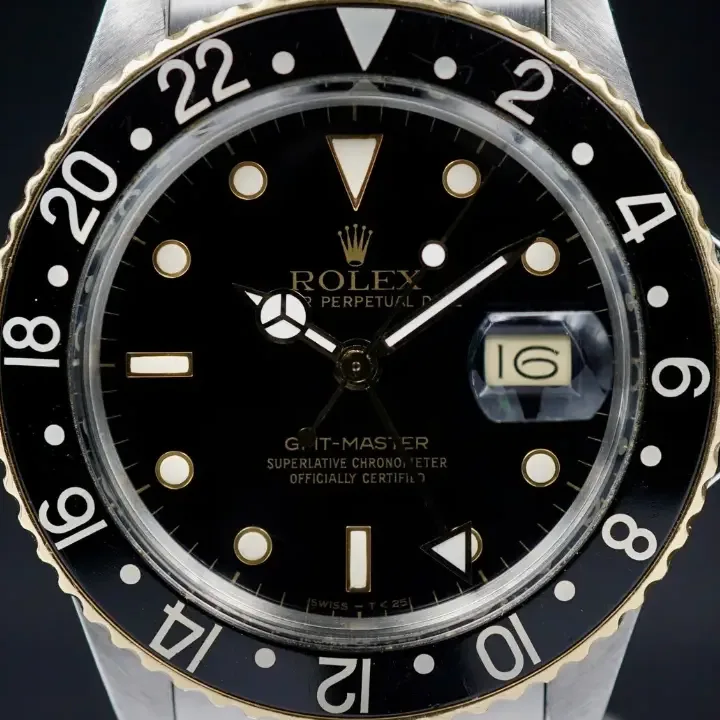
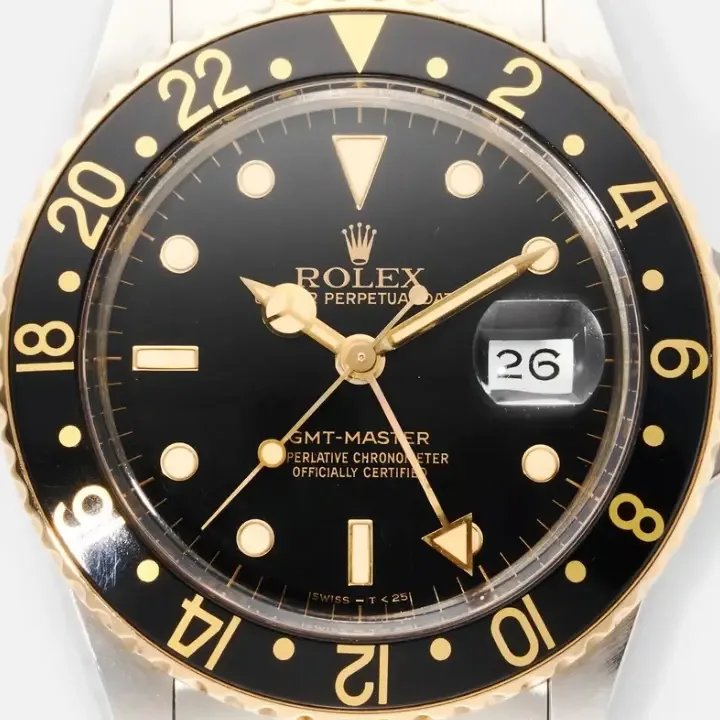






























































































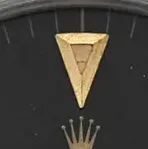

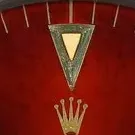




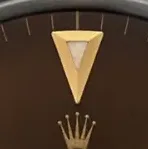
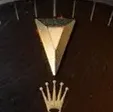
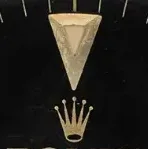
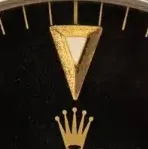


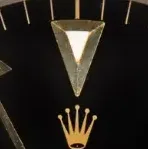



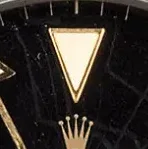
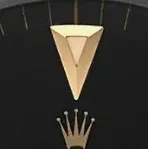
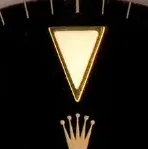


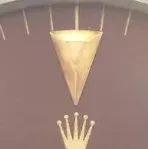






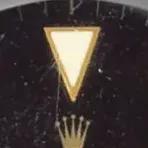
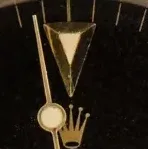






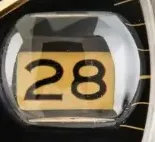
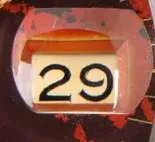
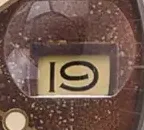


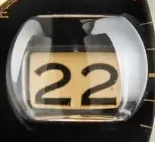
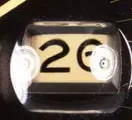
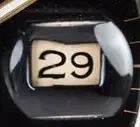
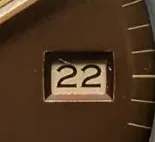

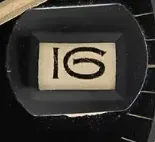
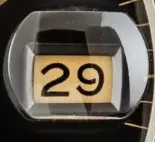

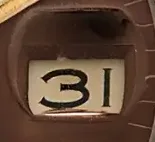

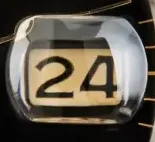
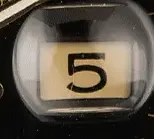
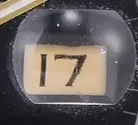
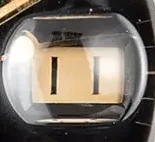
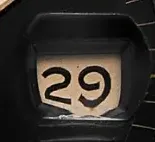
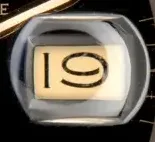


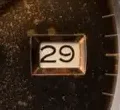
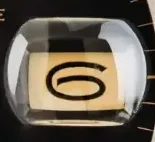
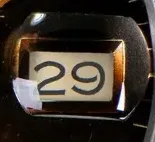
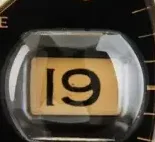
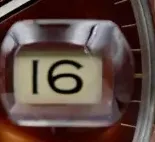
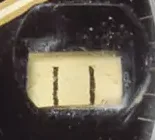
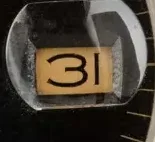

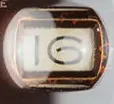
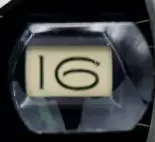
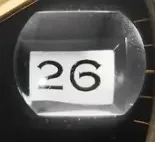
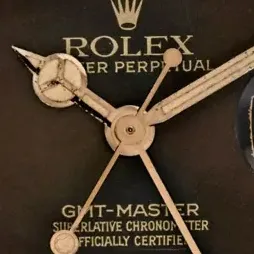








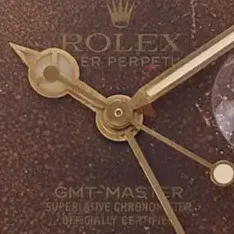









































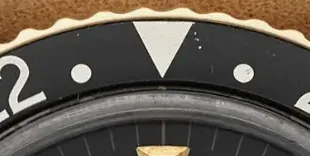

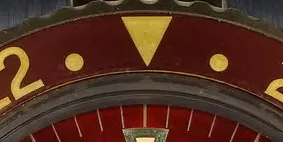
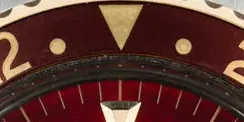


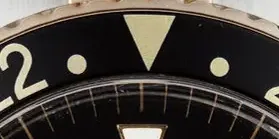


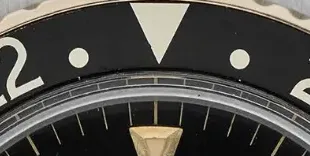






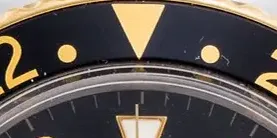
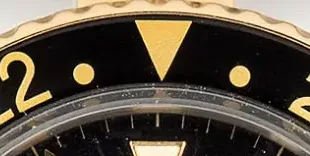

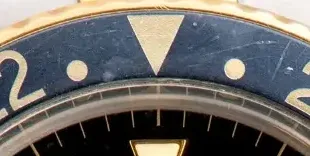










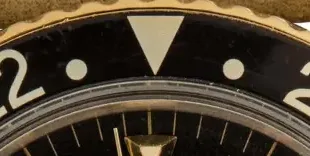




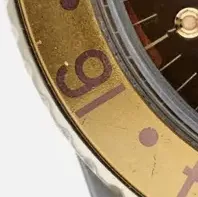
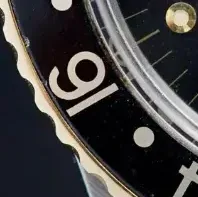
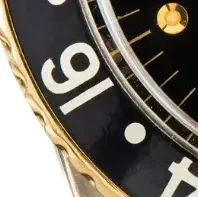




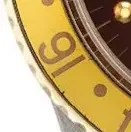
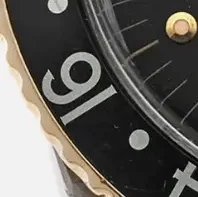
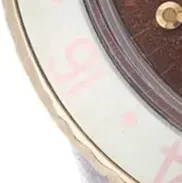

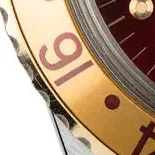
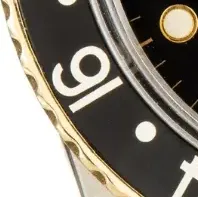
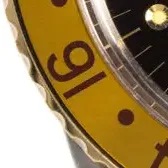
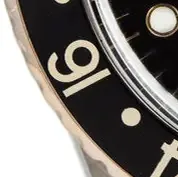
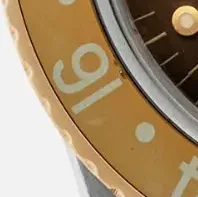
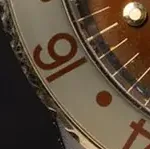
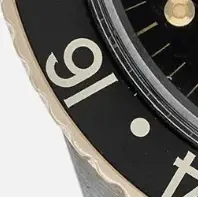
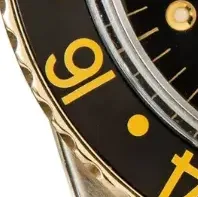

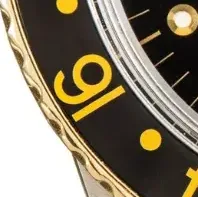
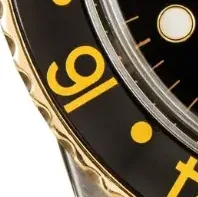
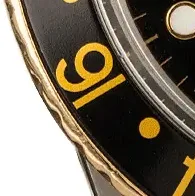
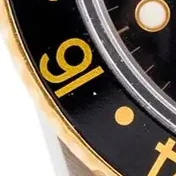
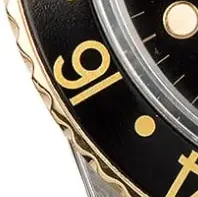
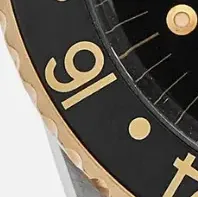



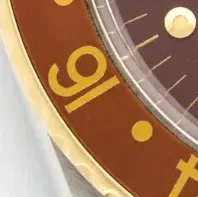

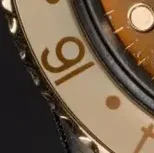
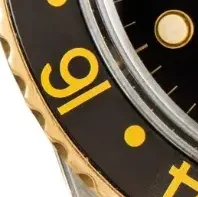
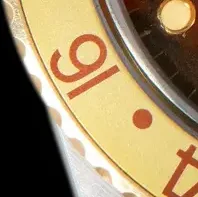
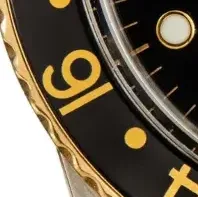

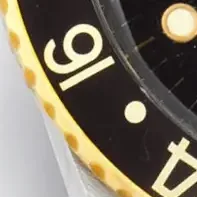
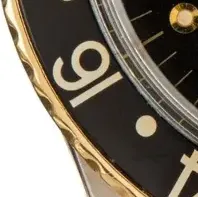



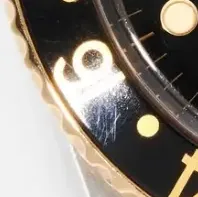
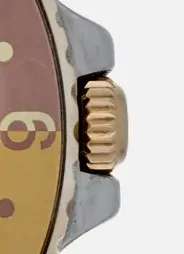
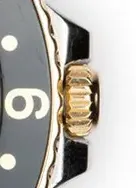
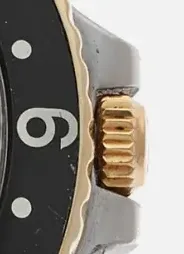

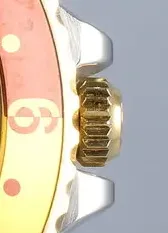
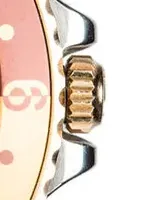
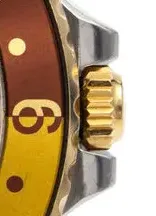
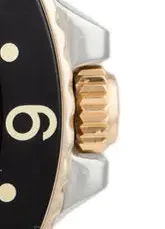


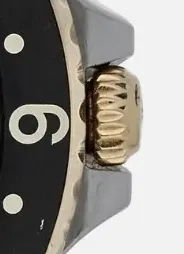
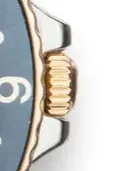
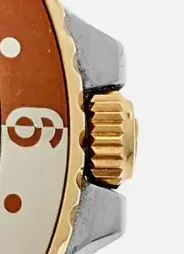
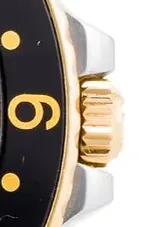
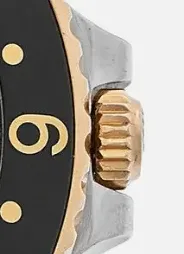
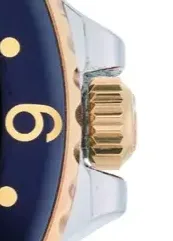



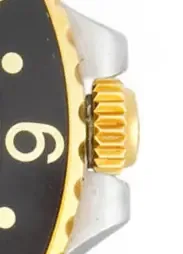
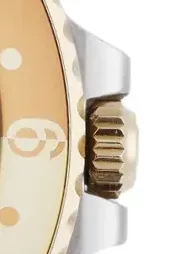
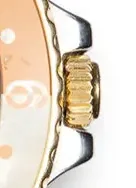
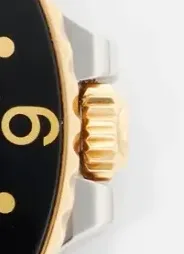




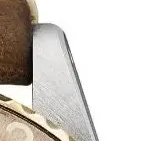
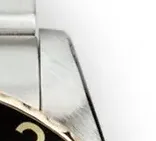




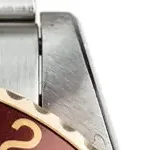

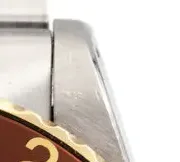


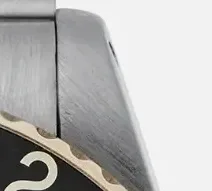


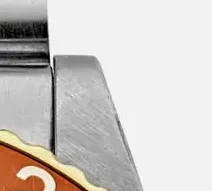


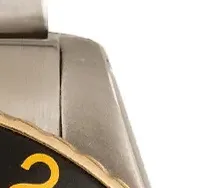

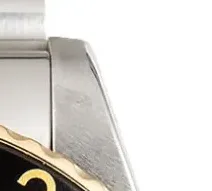
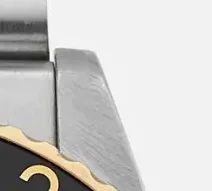












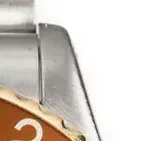
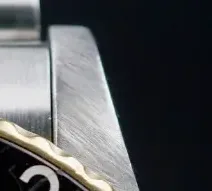



Illustrated history of the 16753: every change set out with close-up photographs of dated watches.
Chronology
Case numbers in the archive run from 1979 to 1988, while published dates for the start range from about 1970 to 1981 and the end falls around 1988, when the 16713 and 16700 arrived.
Every dated variant: what is written, and what the records show
For the reference the marks are every dated watch; for a variant, the watches a seller names as that variant, so a variant sellers do not name has none.
The reference's own marks are dated by case number. A variant's marks use the year each seller states, so a variant can show watches in a year where the row for the reference shows fewer, or none. 2 dated listings fall outside this scale and are not drawn.
Specification
| Case | 40 mm steel and yellow gold Oyster case with crown guards; gold bezel and crown; some dealers list 39 mm |
| Crystal | Domed acrylic with cyclops over the date; some later watches carry a sapphire crystal after service |
| Bezel | 24-hour rotating bezel, steel and yellow gold, with a brown, brown-and-cream (tan) or black aluminium insert |
| Dial | Black or brown, with gold hour markers and gold hands; tritium lume |
| Movement | Calibre 3075, automatic, 28,800 bph (8 beats a second), hacking seconds, quickset date |
| Bracelet | Jubilee (five-link) or Oyster (three-link) with polished yellow-gold centre links and steel outer links |
| Water resistance | 100 metres / 330 feet |
Dial 8 described
The 16753 was offered with a black or a brown dial, each with gold markers. Early dials have raised gold nipple markers and the crown logo is printed. The nipple dial later gave way to plain hour plots: one account dates this to 1984 and describes a sunburst brown dial, another puts it by the mid-1980s and calls the new dial maxi. Brown dials age unevenly and are the subject of most nicknames and condition notes.
Nipple dial
Thick, high gold hour markers, faceted and slightly cone-shaped, with a gold rim. Most brown-dial watches and many black-dial ones carry them. The matte brown nipple dial is replaced by a sunburst dial with ordinary plots around 1984.
- thick raised gold indexes
- slightly cone-shaped markers
- matte brown surface
Printed crown logo
On the transitional five-digit watches the crown above the signature is stamped or printed on the dial. The earlier four-digit version has an applied gold coronet.
- flat printed crown, not applied
Brown dial, tropical
The brown dial is metallic and runs from near black to rusty red depending on the light. Many flake or turn reddish and are sold as tropical; one with a reddish-brown marbled patina is listed as a volcanic dial.
- metallic brown that changes with light
- reddish flaking or marbling
Black dial
A black dial with a black insert is the other standard combination. Black dials account for slightly more of the archive watches than brown.
- black dial with black insert
Sunburst dial with plots
The sunburst brown dial with plain hour plots replaces the matte nipple dial in 1984.
- sunburst brown
- flat hour plots
Maxi dial
By the mid-1980s the applied nipple indices are replaced by a maxi dial; the date is given loosely.
- larger lume plots
Serti dial
A champagne dial with diamond and ruby markers is offered on the GMT-Master from 1984.
- champagne dial
- diamond and ruby markers
Service dial
Later service dials carry ordinary ring-shaped markers in place of nipples and are the usual replacement. An original dial and hands are valued above even genuine service parts, but where the originals have decayed badly, with blistered varnish and corroded hands, genuine service parts are judged the better choice.
- ring-shaped markers
Luminous material 1 described
Lume is tritium on the hour markers and hands.
Tritium
Tritium remains on the 16753.
- tritium on markers and hands
Hands 1 described
The handset is gold throughout.
All-gold Mercedes hands
Gold Mercedes-style hour and minute hands with a gold GMT hand and no red on it, giving a dressier look than the 1675.
- gold hands
- no red GMT hand
Bezel 2 described
The bezel is steel and gold with an aluminium insert. Black-dial watches take a black insert with gold numerals; brown-dial watches take a brown insert.
Black insert
A solid black aluminium insert with gold numerals, paired with the black dial.
- black insert with gold numerals
Root Beer insert
A two-tone tan and brown insert split in the middle, or all brown and cream. Early inserts were all brown. All Root Beer inserts are aluminium, in brown, brown and silver, or brown and yellow. Faded inserts are common, and one aged to blue-green and bronze.
- tan and brown halves
- all brown (early)
- faded or blue-green ageing
Case 2 described
The case is the 40 mm slim Oyster case of the 1675 with crown guards, in steel with 18k yellow gold on the bezel.
Steel and gold
Steel case with yellow gold bezel, crown, and centre links. Frequent servicing has often led to replaced parts and heavily polished cases, so unpolished examples are hard to find.
- yellow gold bezel and crown on a steel case
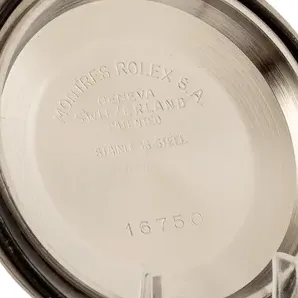
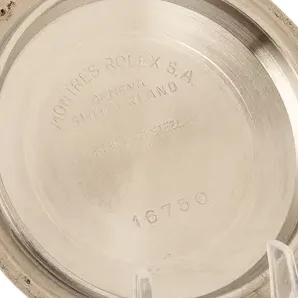
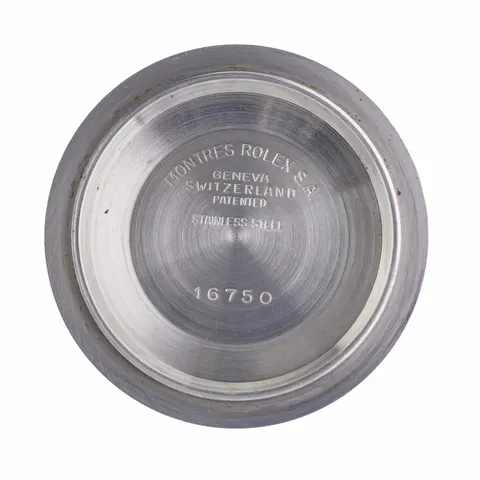
Caseback stamped 16750
Some watches have the inside caseback stamped with 16750, the steel reference, although the case is the two-tone 16753.
- 16750 stamped inside the caseback
Crown 1 described
The crown is small and gold.
Gold crown
A small gold crown, matched to the gold of the bezel and centre links.
- small gold crown
Crystal 1 described
The reference keeps an acrylic crystal.
Acrylic with cyclops
A domed acrylic crystal with a cyclops over the date at 3 o'clock, as on the 1675. Some sellers describe a sapphire crystal, which would be a later replacement.
- domed acrylic
- cyclops
Date 1 described
A date window at 3 o'clock with a cyclops magnifier.
Quickset date
The date is set quickly from the crown's second position, a new feature compared with the 1575.
- date window at 3 o'clock
Movement 1 described
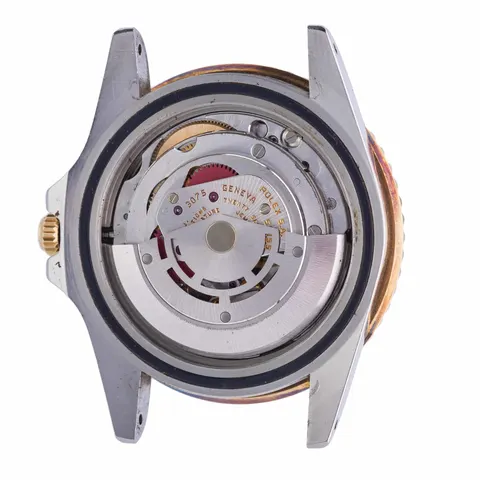
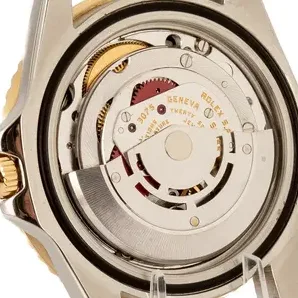
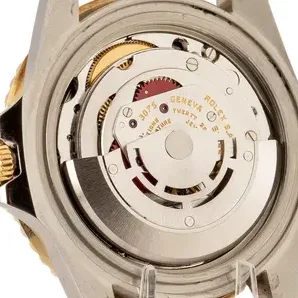
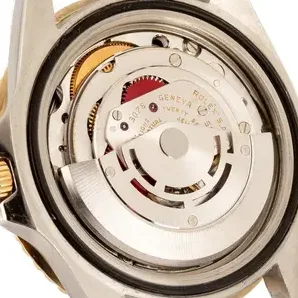
The 16753 uses a calibre of the 3000 series, the first in the GMT-Master.
Calibre 3075
Replaces the 1575, raising the beat from 19,800 to 28,800 bph, with hacking seconds and a quickset date; the hour hand follows beneath the 24-hour hand. With the older case, acrylic and dial it makes the 16753 a true transitional.
- 28,800 bph
- hacking seconds
Bracelet 2 described
The bracelet is Jubilee or Oyster, always with yellow gold centre links. A hollow end link held by a retaining flap can only be taken out through drilled lug holes; sellers cite end links 450 and 480.
Jubilee
Five-link Jubilee with polished yellow gold centre links and steel outer links. Dealers cite 62523 and 62523H; one example carries a steel clasp.
- gold centre links
- 62523 or 62523H clasp
Oyster
Three-link Oyster with polished yellow gold centre links and steel outer links.
- three-link bracelet with gold centre links
Box and papers 1 described
Sellers describe a few watches as retailed by Tiffany & Co., which the literature does not describe.
Papers and service papers
Sellers describe service papers and punched guarantees on some watches. An original dial and hands are preferred over even genuine Rolex service parts, which Rolex supplies sparingly.
- punched guarantee
- service papers
Originality
- Dials are commonly replaced; a service dial shows ring-shaped markers instead of nipples.
- Hands are often replaced by service hands; an original dial and hands are valued above even genuine service parts.
- Inserts fade, and many have been replaced over years of servicing.
- Cases are frequently polished, softening the bevels on the lugs.
Names
- Root Beer. Named from the brown of the dial and bezel insert.
- Tiger Eye. The two-colour bezel resembles the stone; also written Tiger Auge in German and Eye of the Tiger.
- Clint Eastwood. The actor wore one in the 1982 film Firefox.
- Nipple dial. The raised conical gold hour markers.
Where accounts differ
Points on which the published literature and the library's own records do not agree, or on which the literature contradicts itself.
- Start of production. One published account puts the introduction in the early 1970s; another gives 1981 to 1988, and a third says it was made until about 1988. The library's case numbers begin in 1979.
- Origin of Root Beer. One account derives the Root Beer name from the dial colour, another from the bezel colour.
Back and movement
From listings of this reference, each confirmed by eye to show what it is filed under. A picture on which a person's name or a personal engraving can be read is not shown. From most holders a detail from the middle of the photograph is shown; the mark in its corner gives its holder and a link to the listing.
Caseback
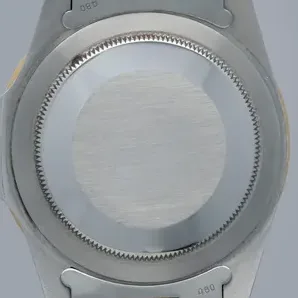

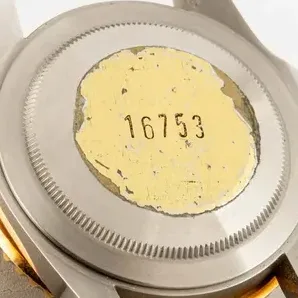



Inside the caseback



Movement




Catalogue versions 1 listed
The full numbers under which holders list this reference, with what their listings say of each. Each has a page of its own.
| Version | Metal | Dial | Years seen | Records |
|---|---|---|---|---|
| 16753F | Steel and gold | 1979–1984 | 4 |
In the records
Counted from 335 listings at 42 holders between 9 June 2010 and 14 November 2026. These are what sellers and auction houses state, not measurements.
Fainter bars are the 2 outside the main run of 1979–1987 (the middle nine-tenths): the latest is 1988. They are early and late examples, and now and then a number misread.
At the holders that record papers on every watch, 16% of their 19 listings of this reference come with papers; at those that record the box on every watch, 61% of 69 come with a box. "Papers" is whatever the holder counts as papers, and can include service papers.
1 listing dated long after the reference ended is set aside and not counted here: a year that late belongs to a later watch sold under the old number, or to a listing filed under the wrong one.
Case metal
| Steel and gold | 104 | |
| Steel | 57 | |
| Gold, any colour | 5 | |
| Yellow | 3 | |
| Colour not stated | 2 | |
| Bronze | 1 |
A listing that says "gold" or "18K gold" names no colour: it is counted under "colour not stated", not as yellow gold.
Dial colour
| Black | 62 | |
| Brown | 56 | |
| Champagne | 4 | |
| Red | 3 | |
| Gold | 1 |
Case size
| 40 mm | 136 | |
| 39 mm | 18 | |
| 42 mm | 3 |
Calibre named
| 3075 | 91 | |
| 3065 | 8 | |
| 3035 | 3 | |
| 3055 | 2 |
Bracelet or strap
| Jubilee bracelet | 83 | |
| Oyster bracelet | 36 | |
| Leather strap | 9 | |
| Metal bracelet, kind not stated | 8 | |
| Strap, kind not stated | 2 |
Each table counts the listings that state the thing, in the seller's own terms. A size, metal, colour or calibre that cannot belong to this reference is a seller's slip or a listing filed under the wrong number.