GMT-Master II
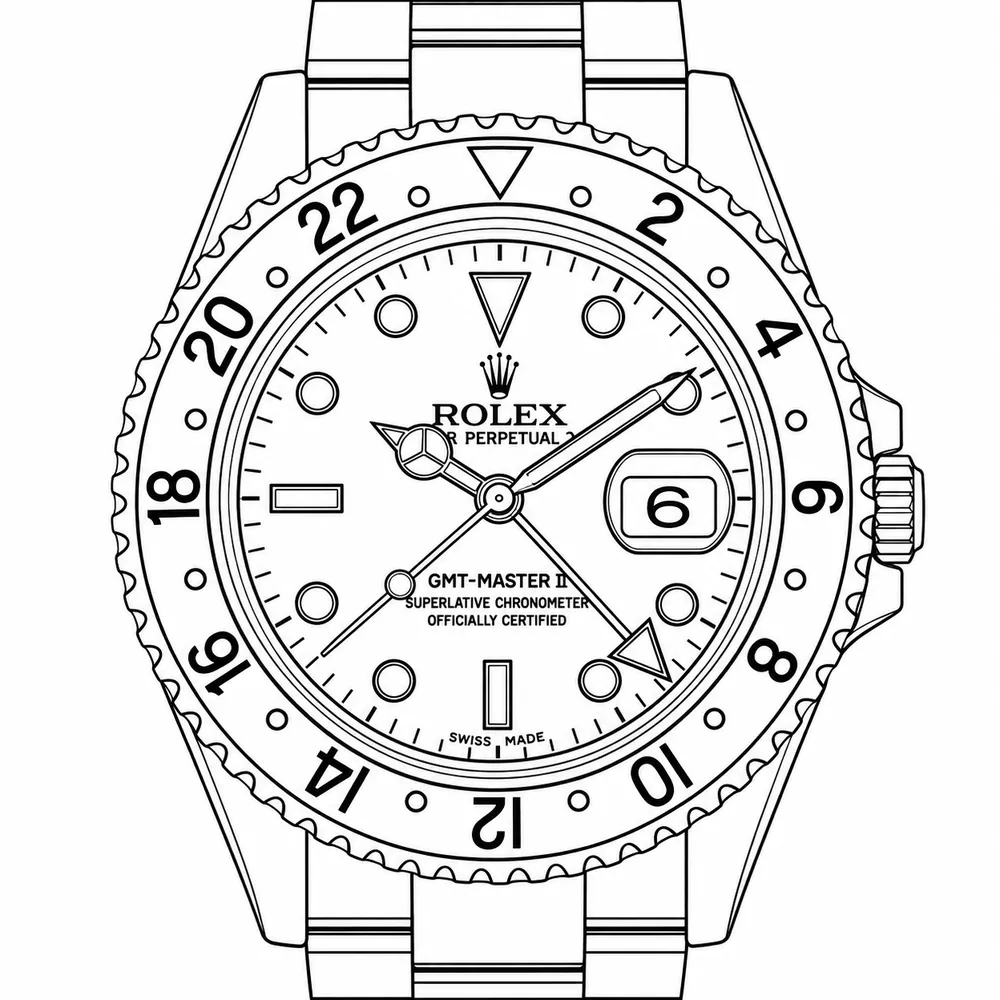
The 16710 is the steel GMT-Master II made from 1989 to 2007, the second of its line after the thicker 16760. It has a 40 mm case, a bidirectional aluminium bezel insert in red and blue, red and black, or all black, a sapphire crystal and the calibre 3185, with a local hour hand that jumps in one-hour steps independently of the 24-hour hand. It was sold on an Oyster or a Jubilee bracelet. Across its long run the lume changed from tritium to Luminova and Super-LumiNova, solid end links and a case without lug holes arrived, and the last watches took the calibre 3186. The ceramic-bezel 116710 replaced it, and for a time at the end the two were made side by side. Collectors look first at bezel colour and numeral type, the text at the foot of the dial, lume, end links, case type and bracelet.
- Made
- 1989–2007dates approximate
- Seen in the library
- 1988–2009nine in ten in 1991–2006 · by case numbers
- Case
- 40 mm · steelas sellers state
- Movement
- Calibre 3185, 3186automatic
- On record
- 2,391 listings7,692 photographs · 64 holders
Components
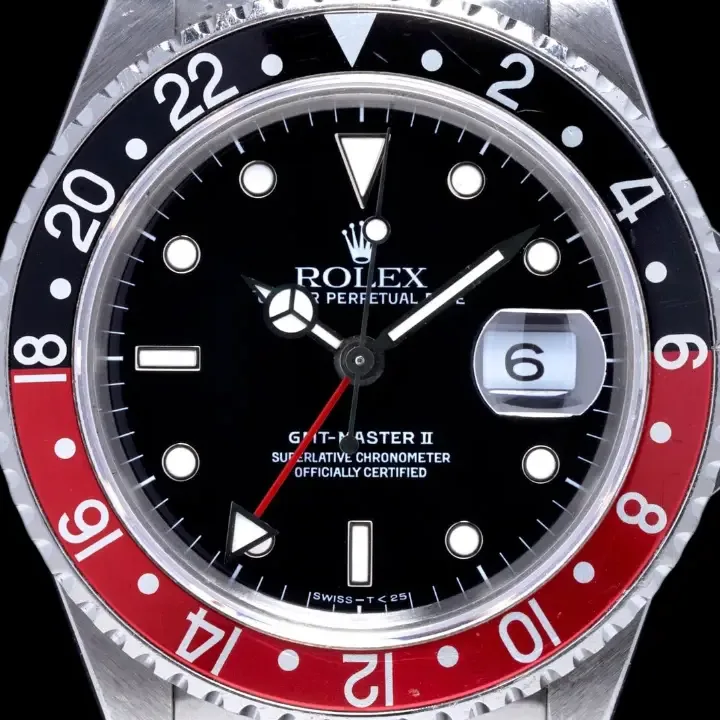
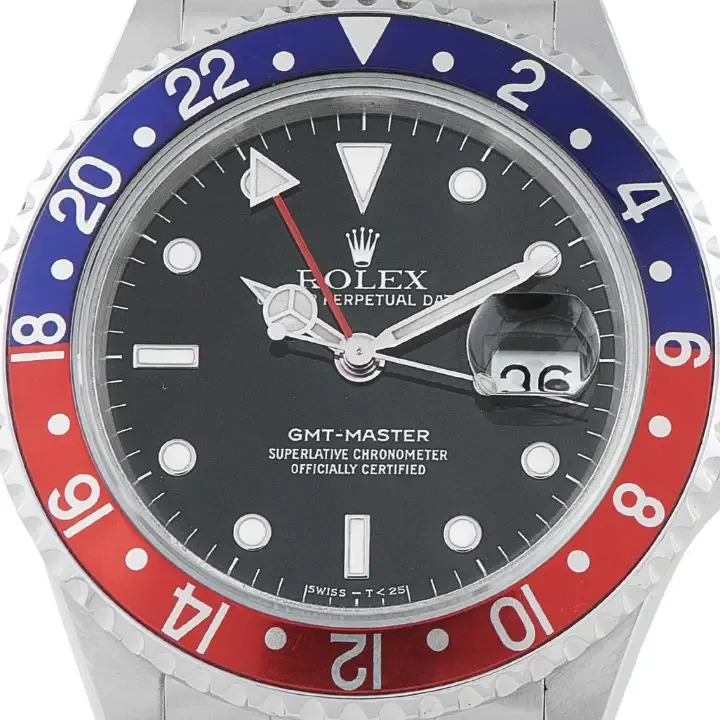
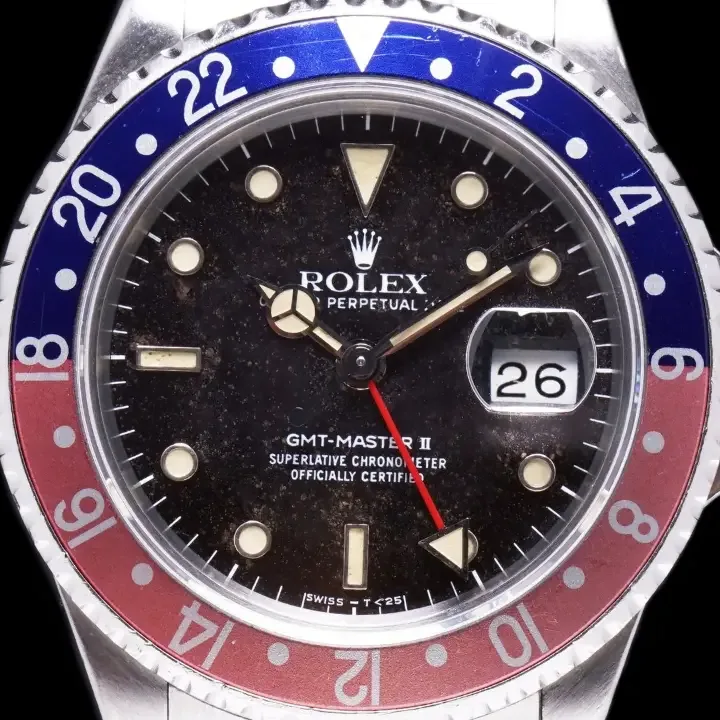
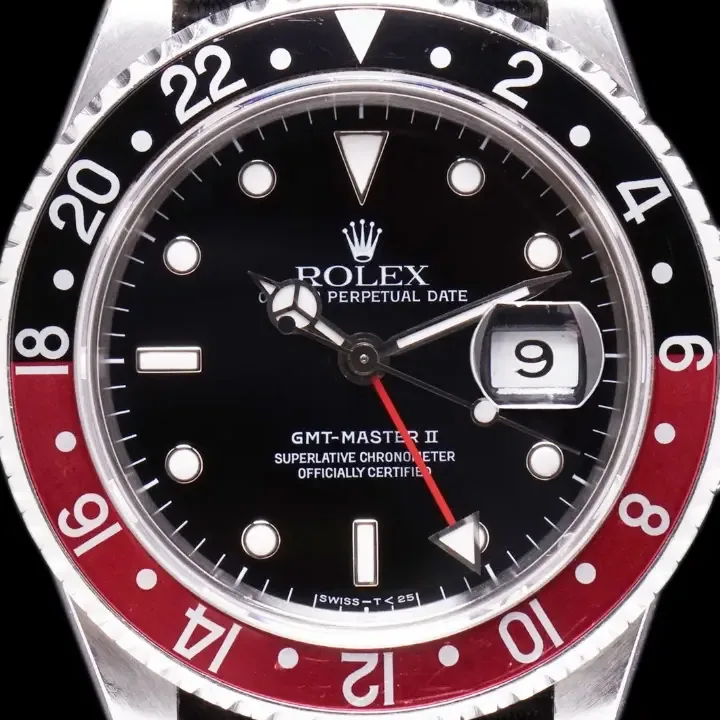
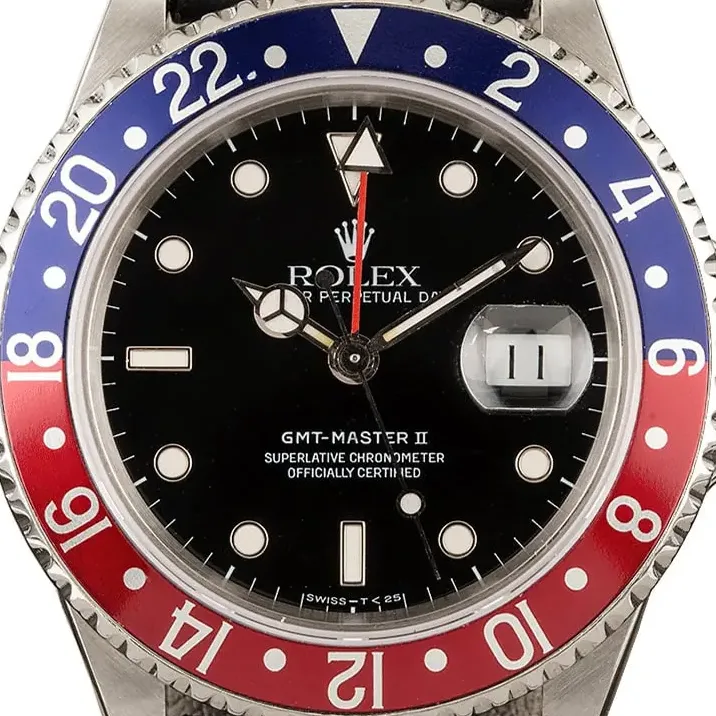
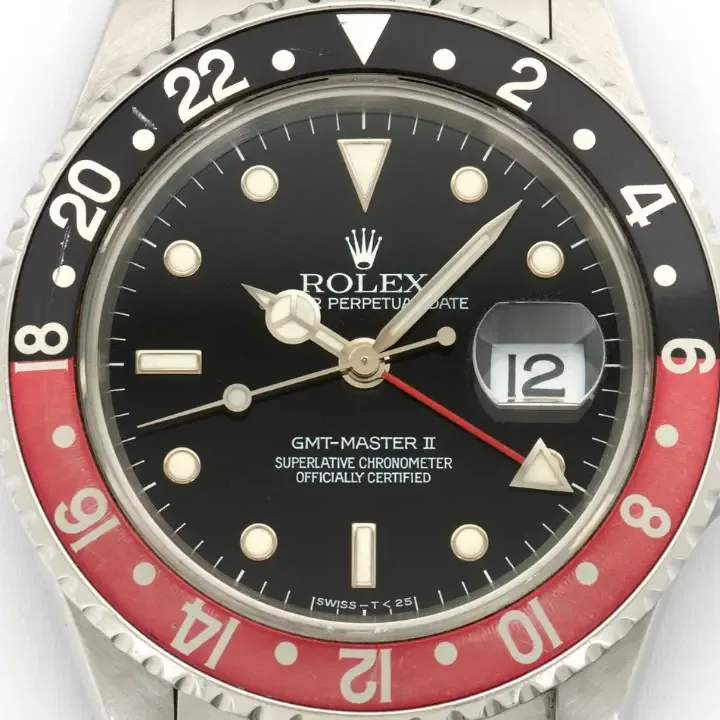
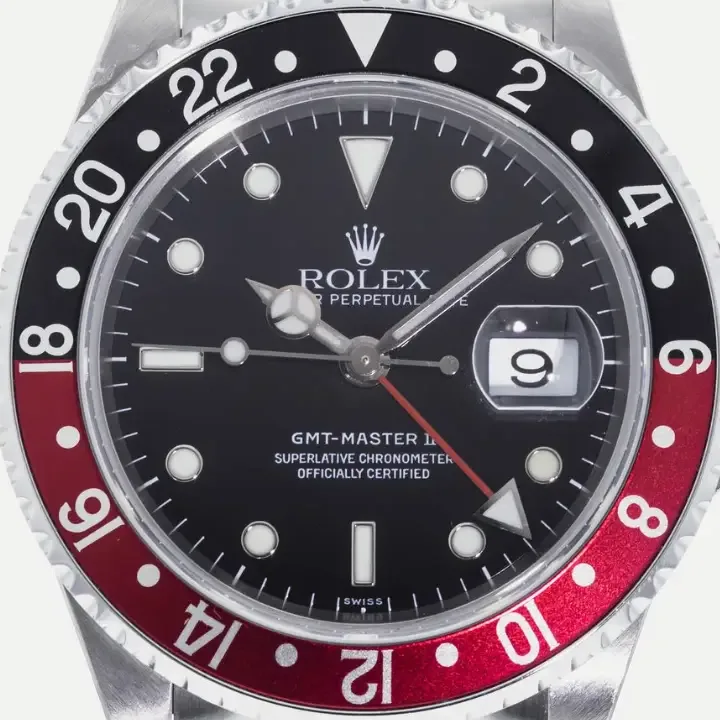
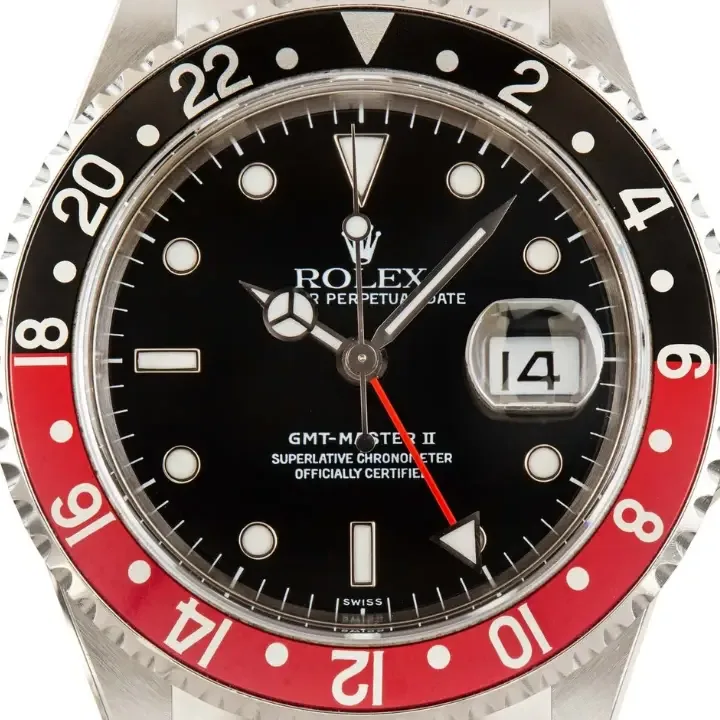
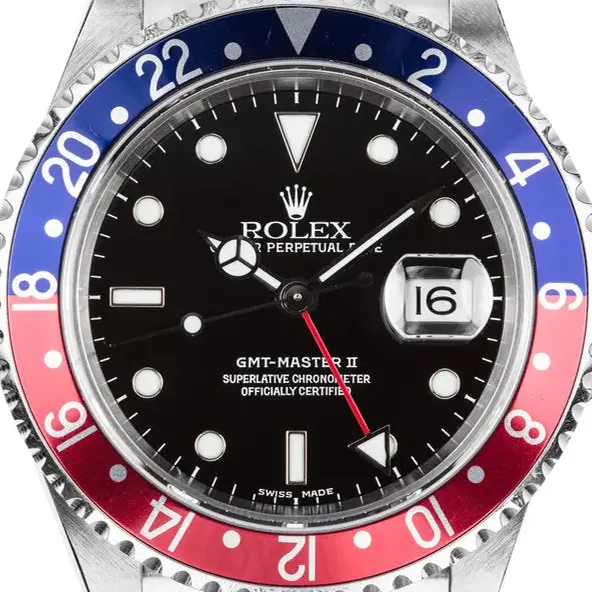
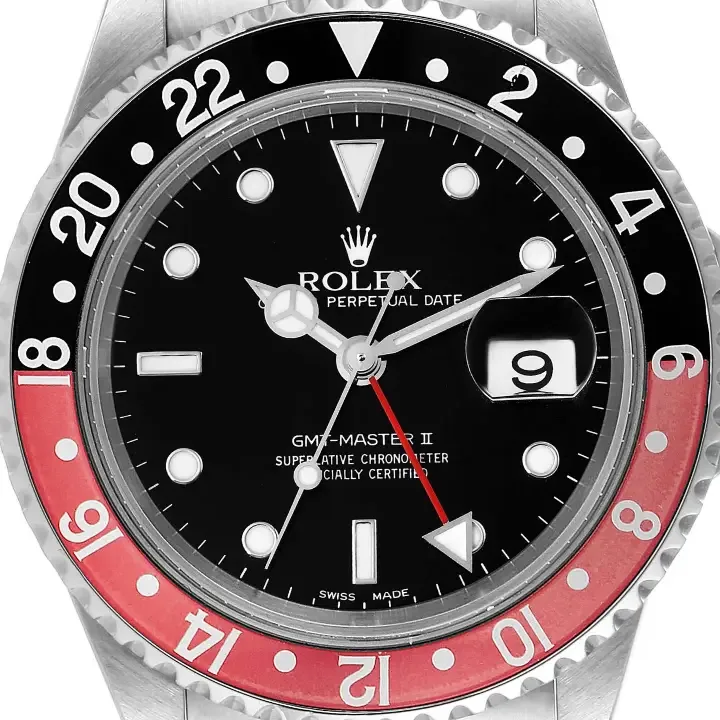
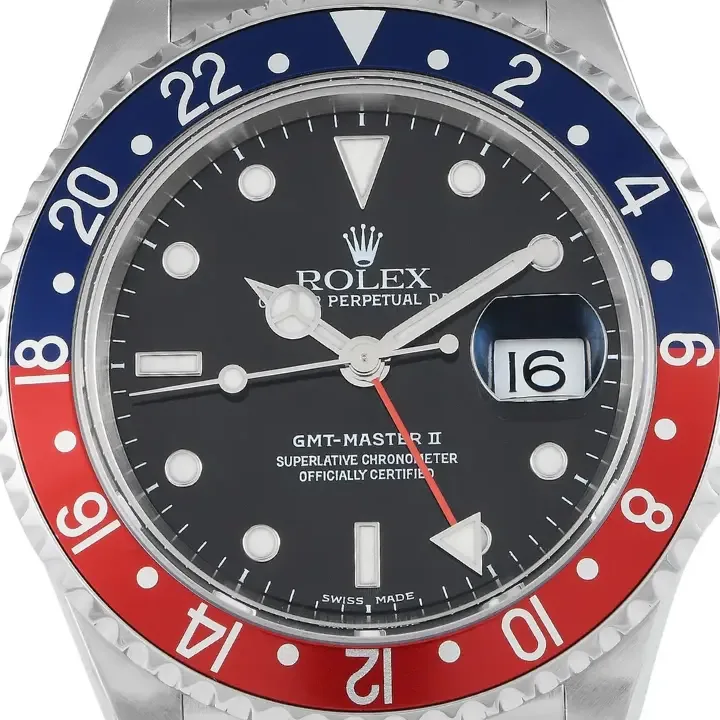
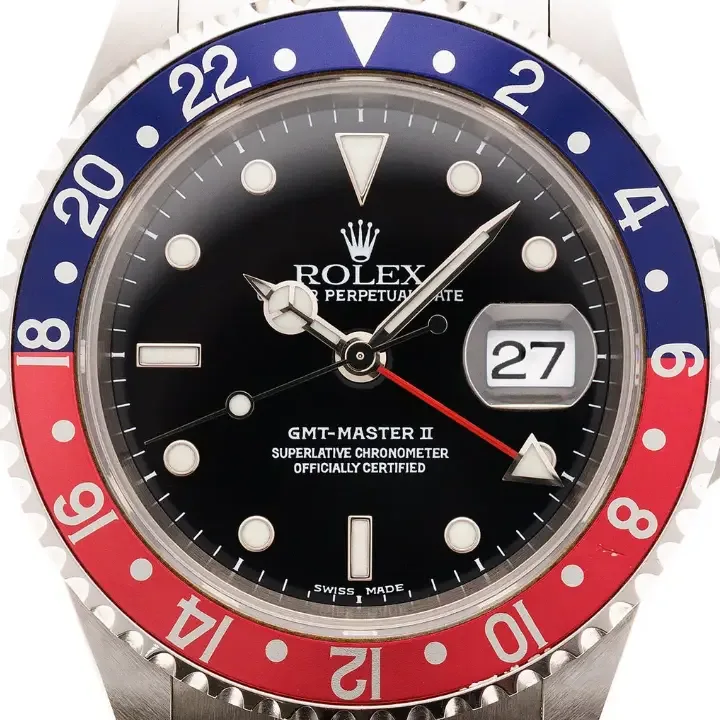
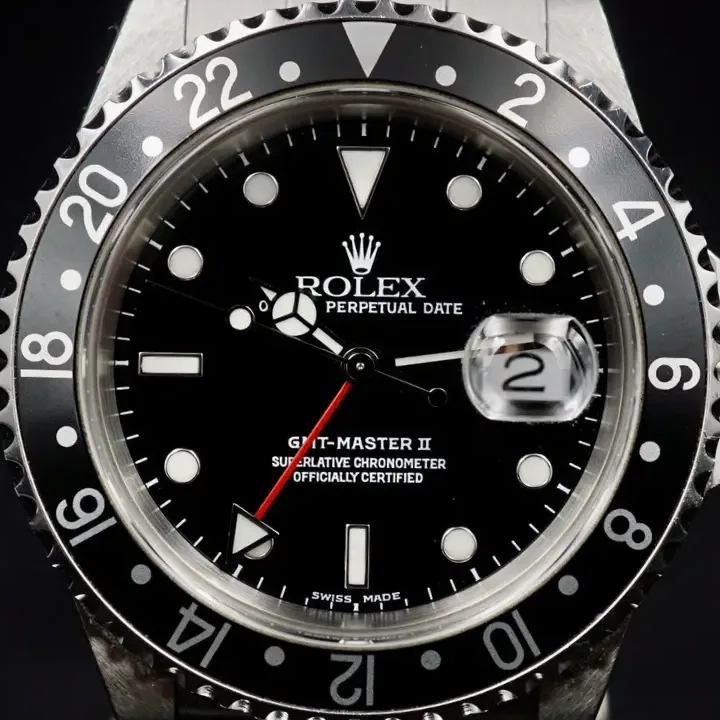
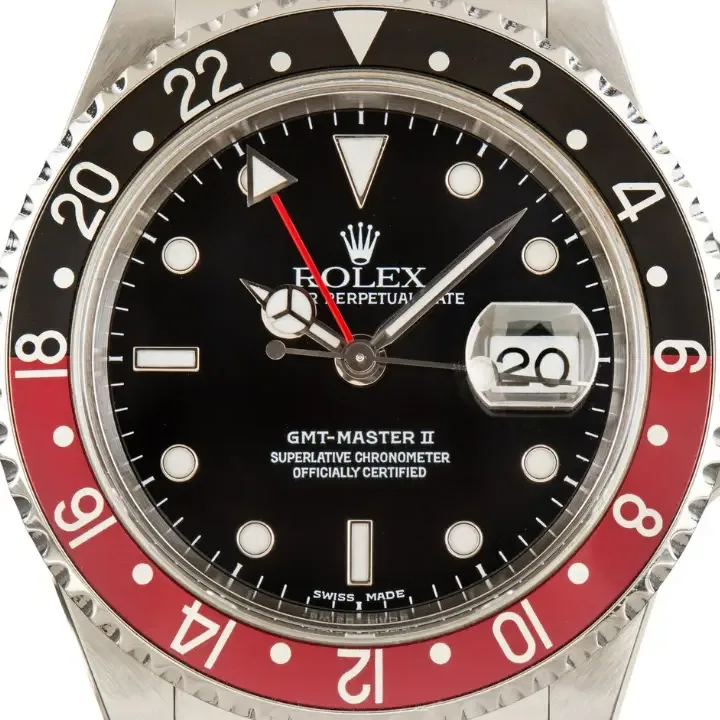
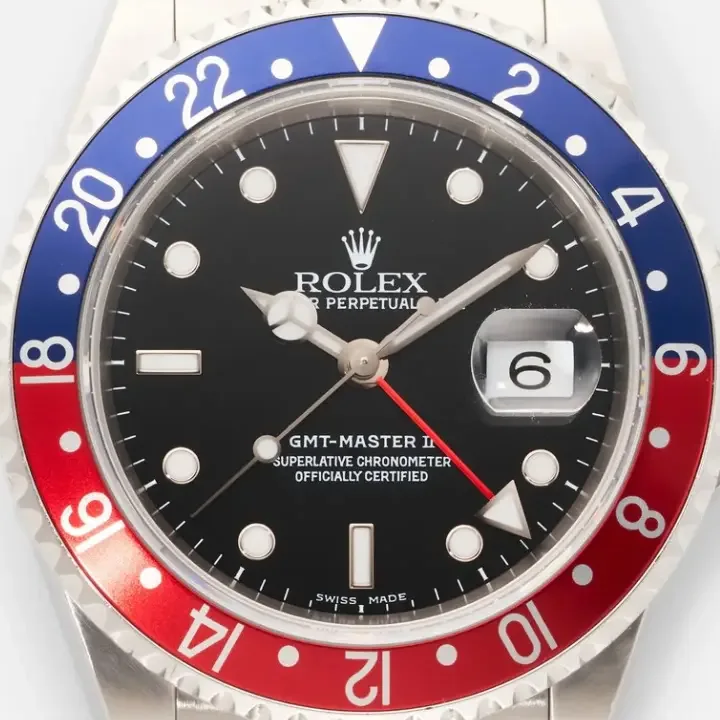
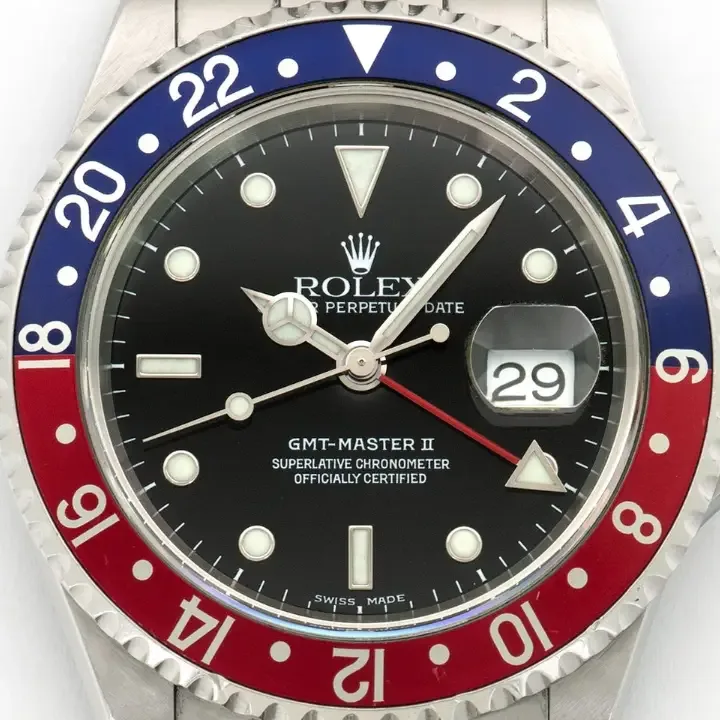
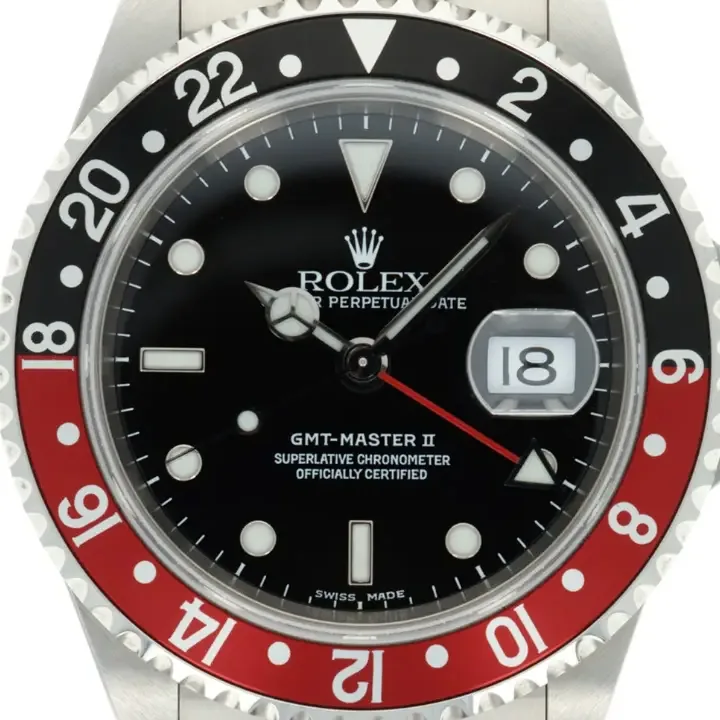
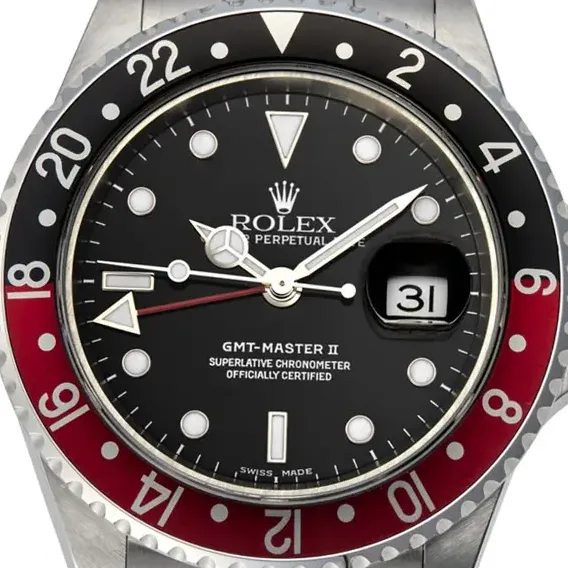
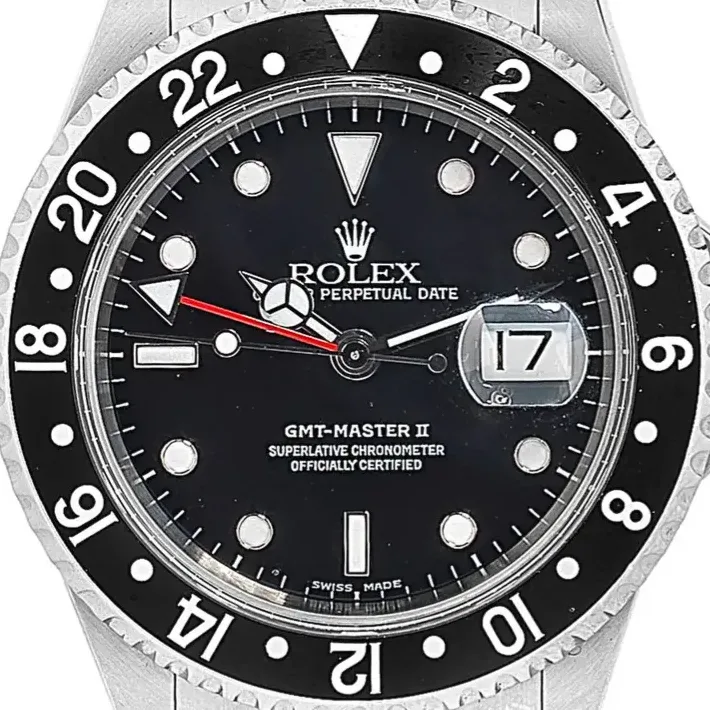
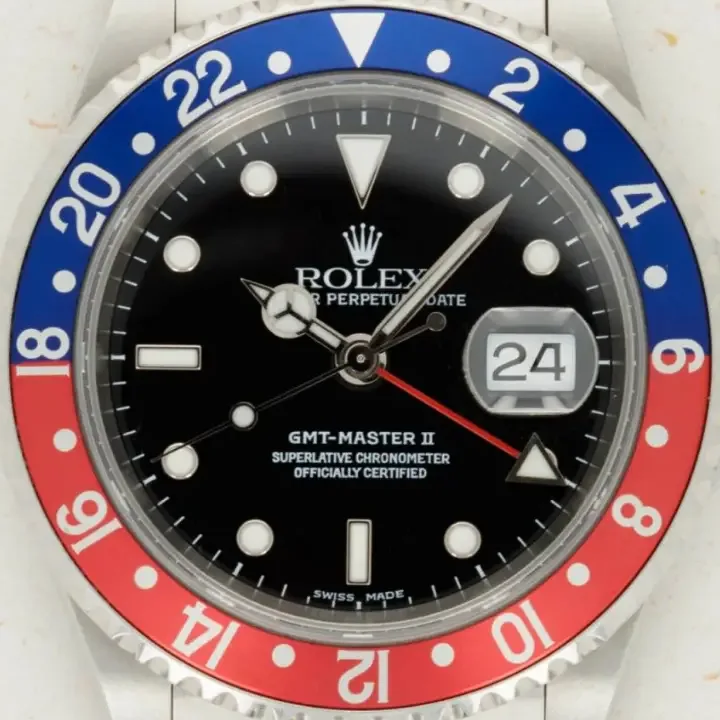
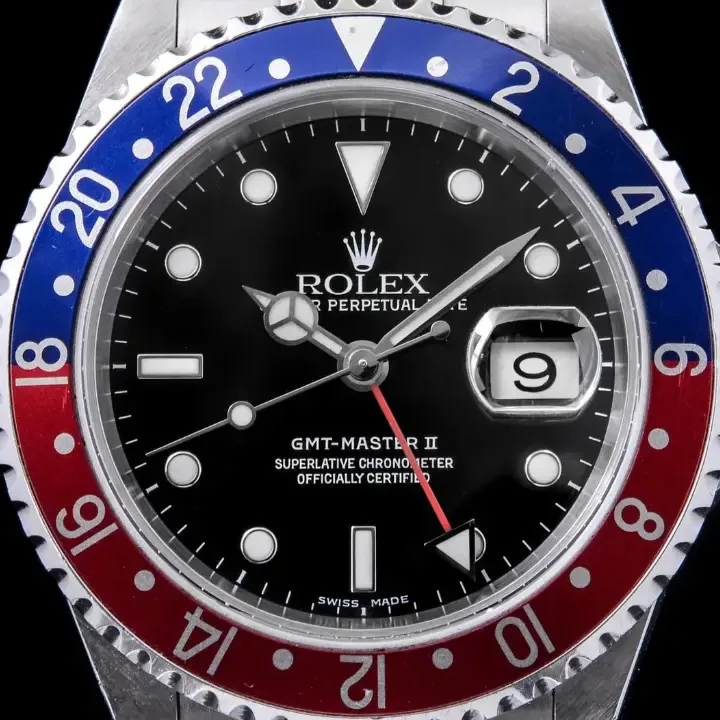
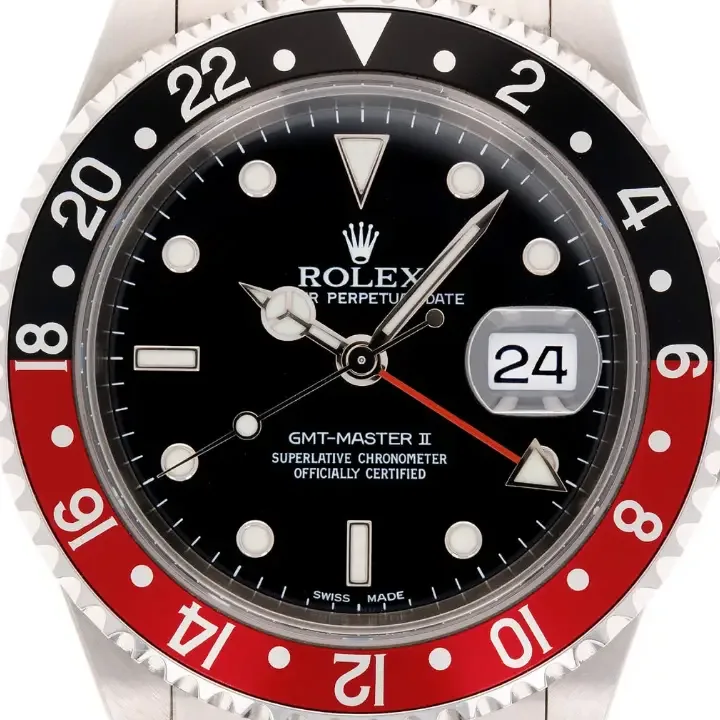
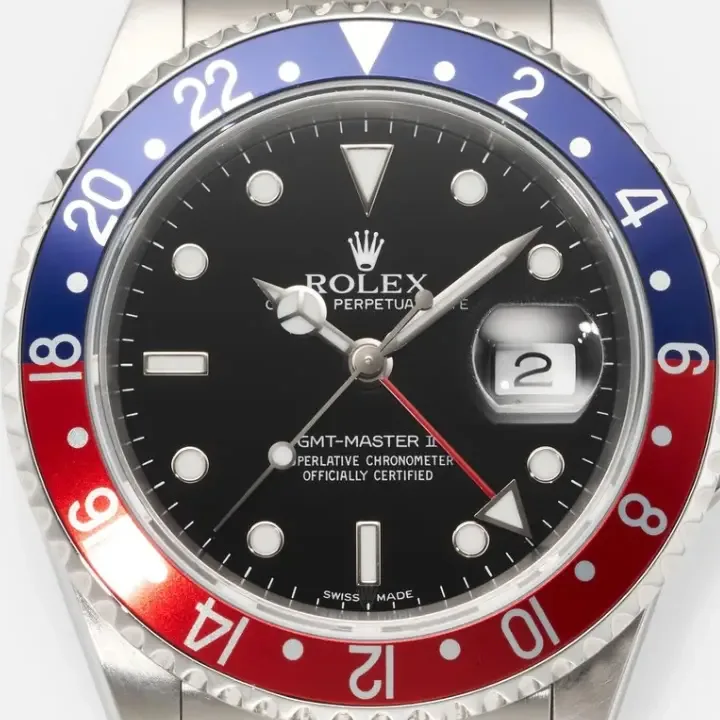
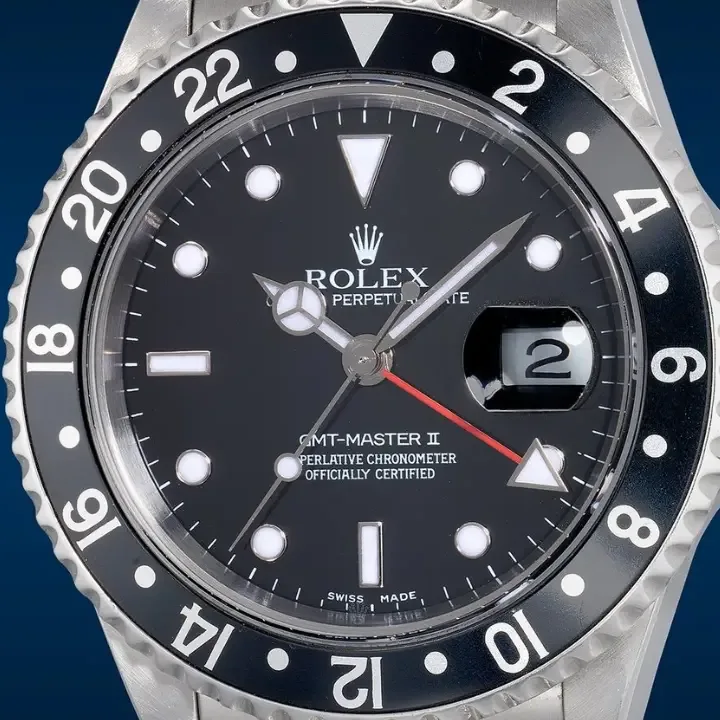
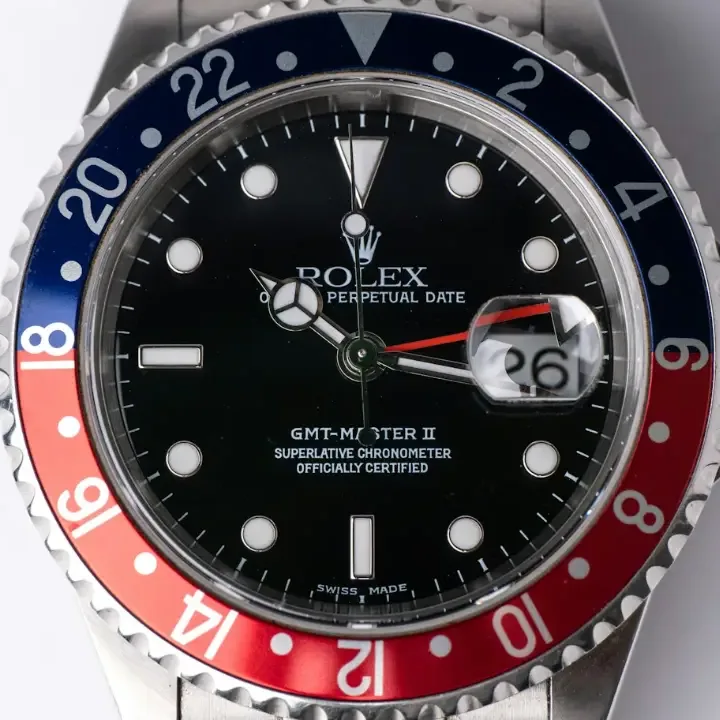
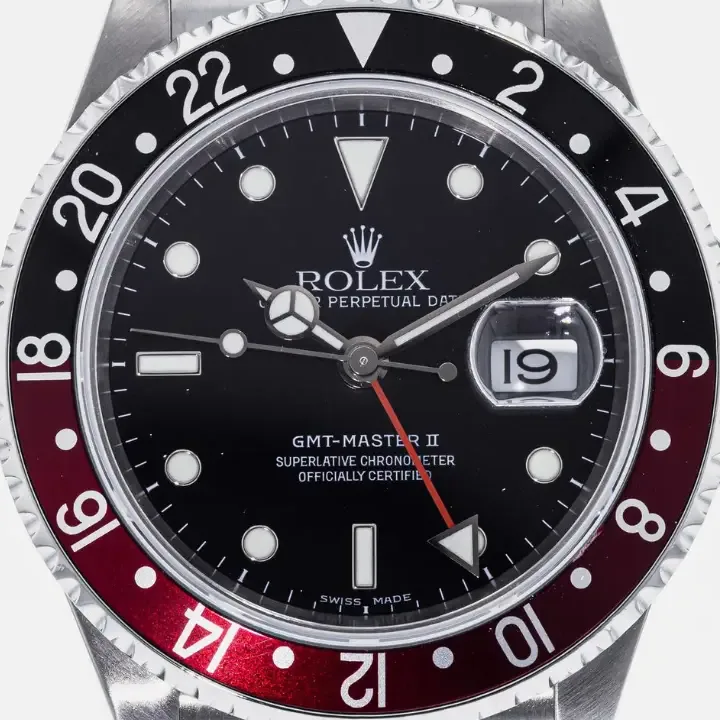
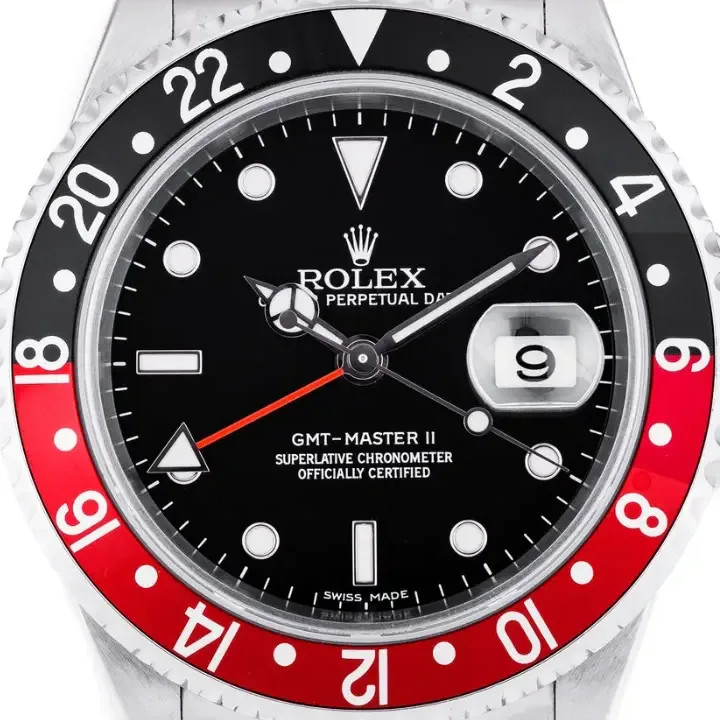
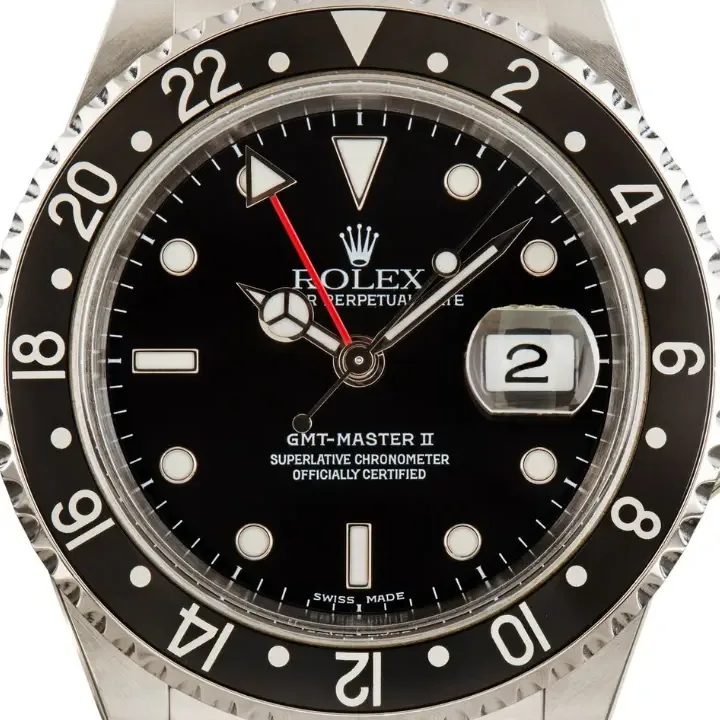
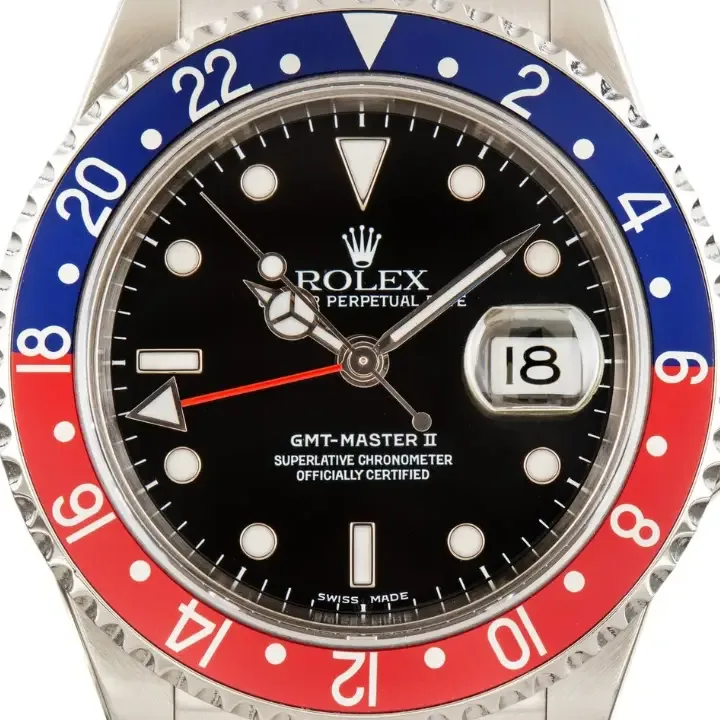
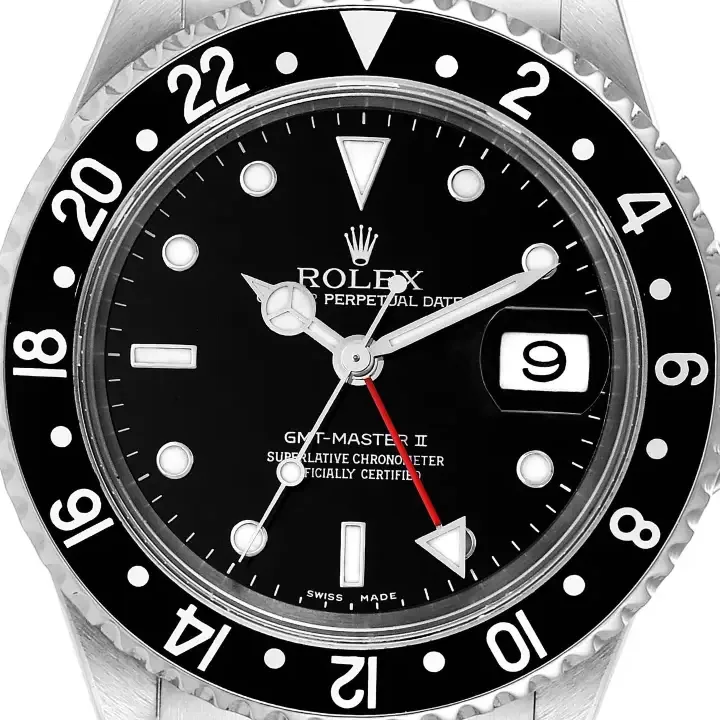
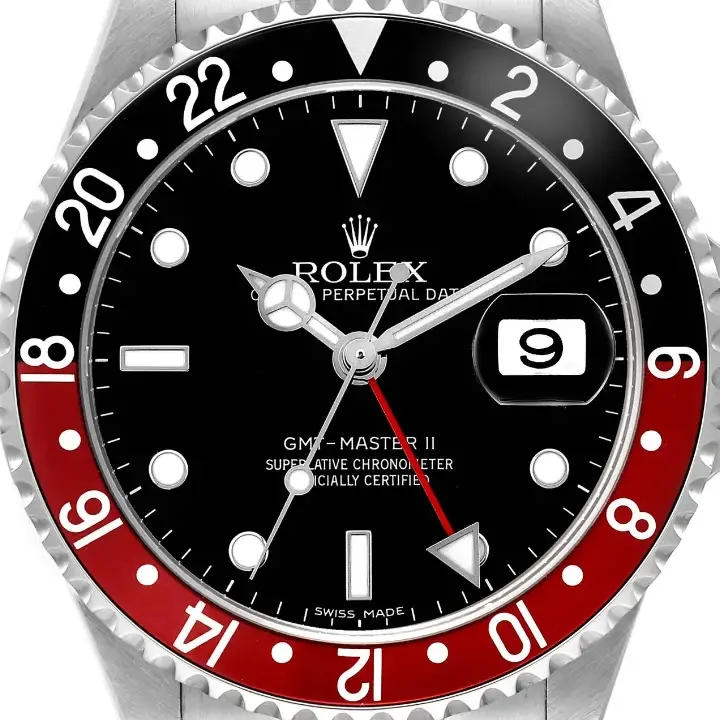
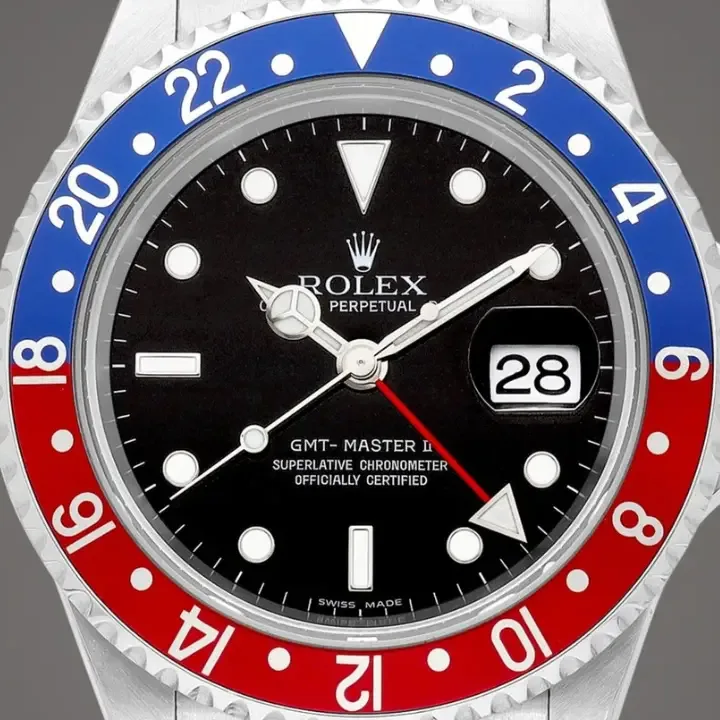
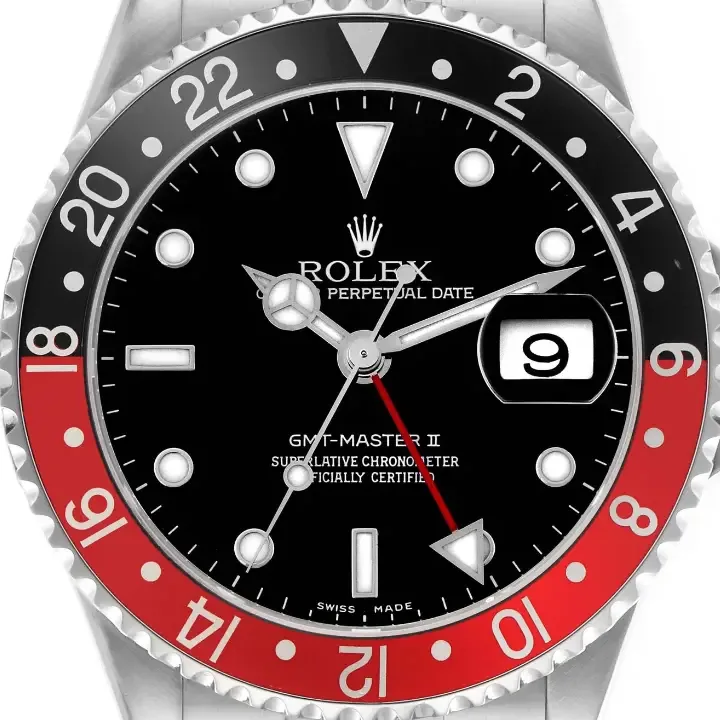
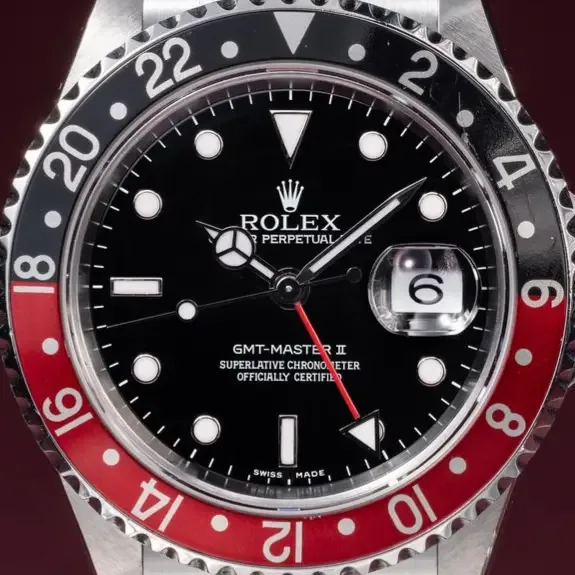
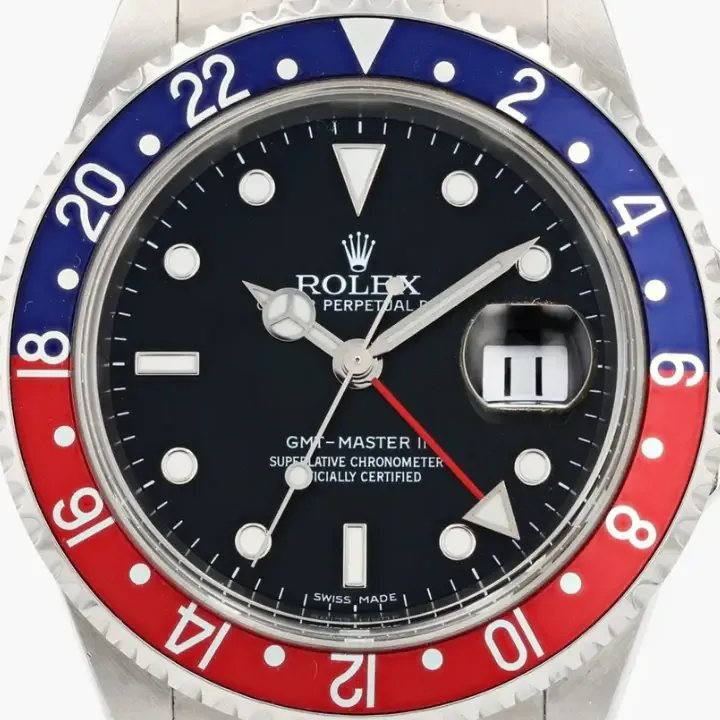
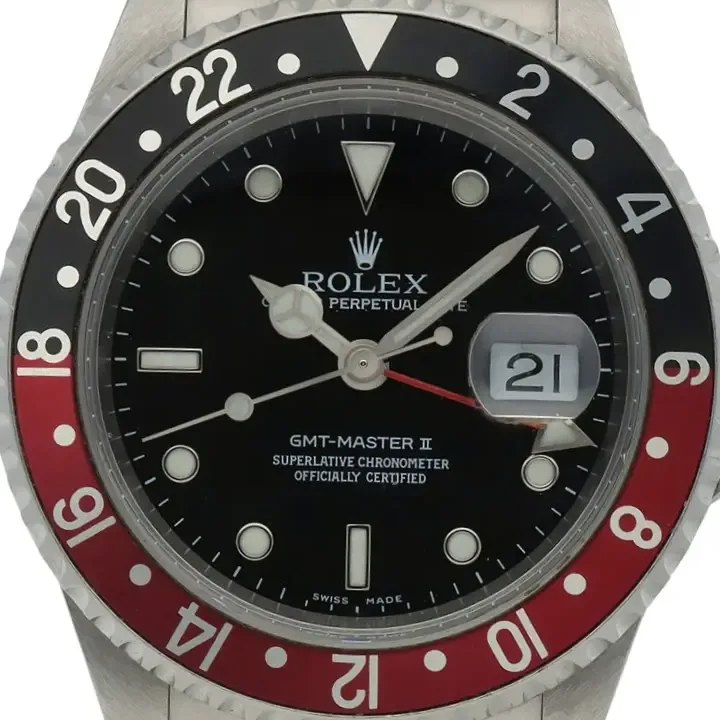
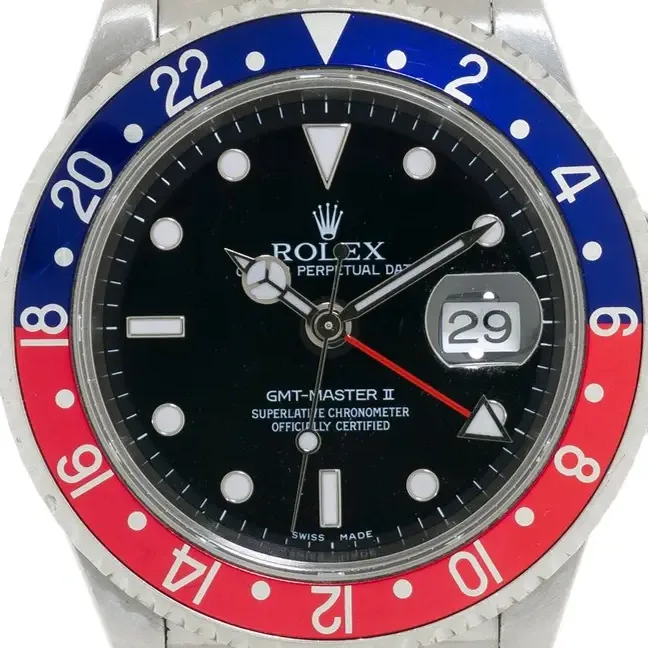
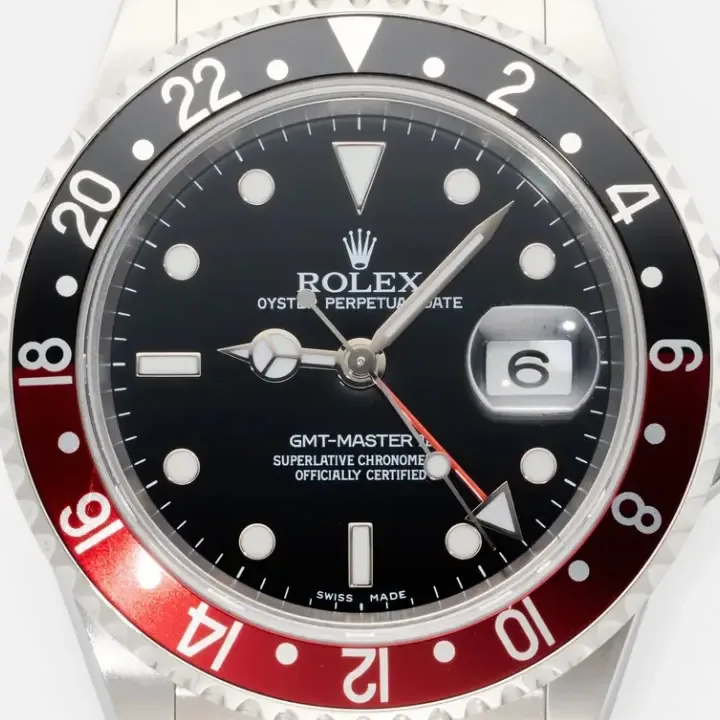
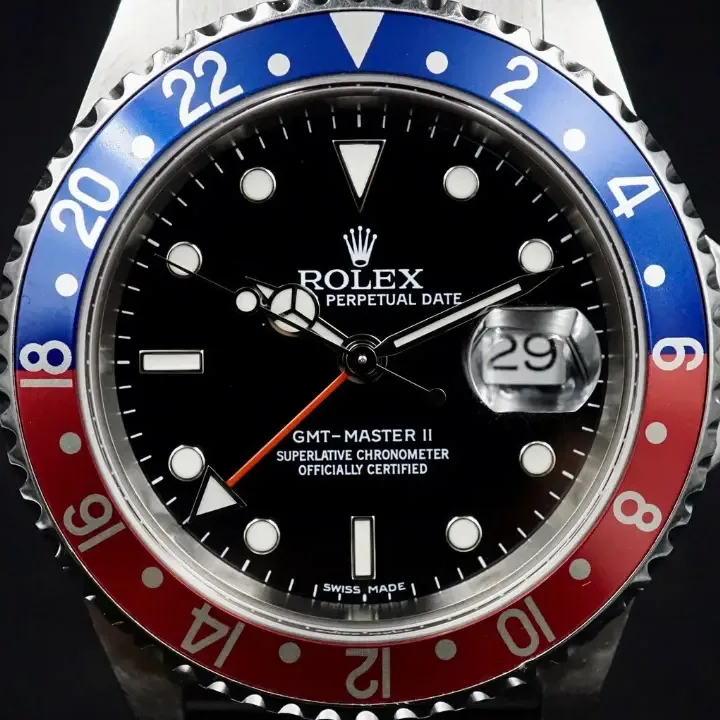
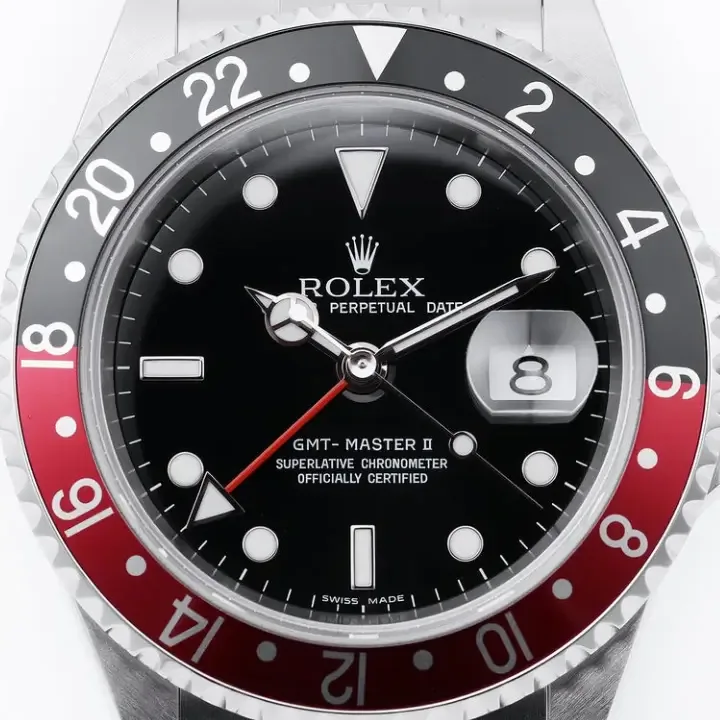
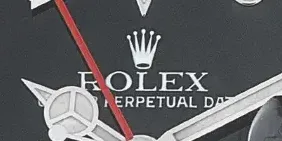
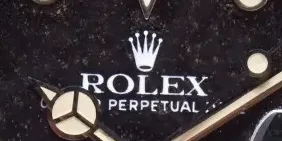
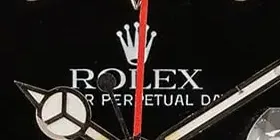
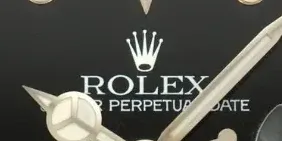
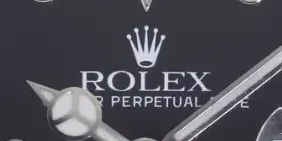
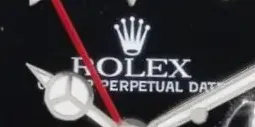
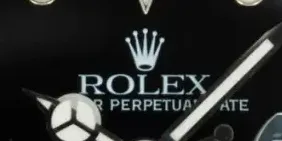
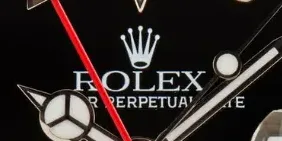
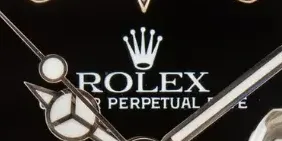
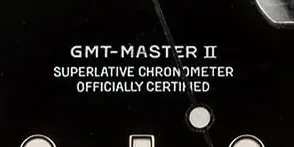
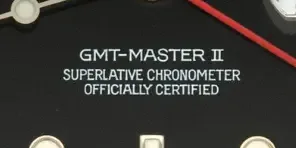
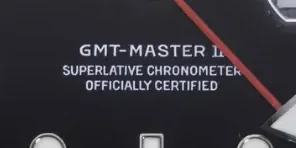
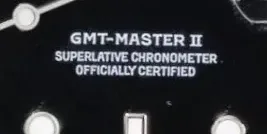
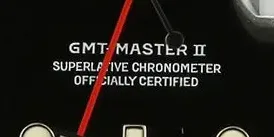
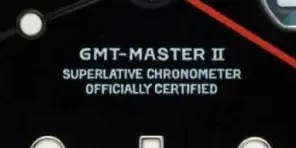
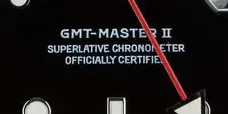
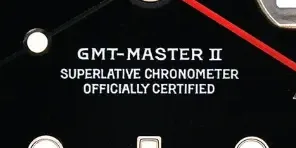
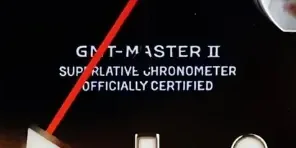
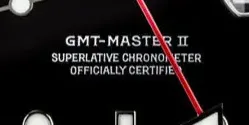
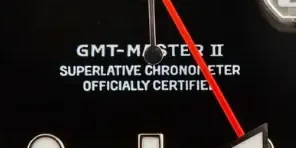
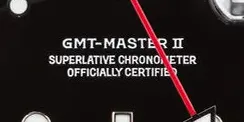
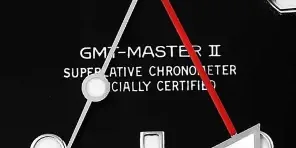
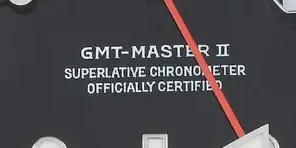
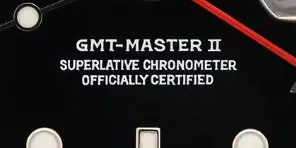
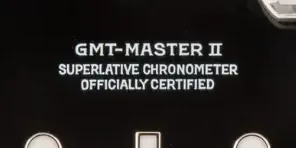
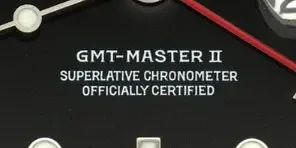
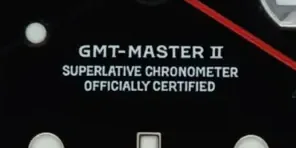
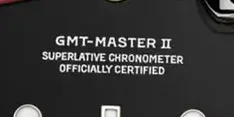
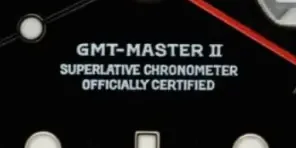
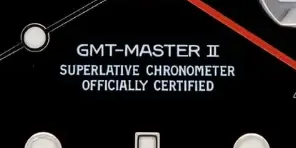
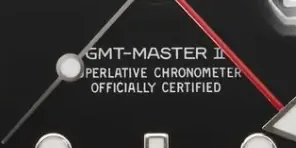
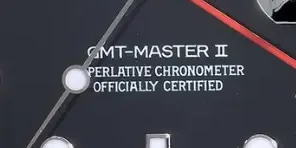
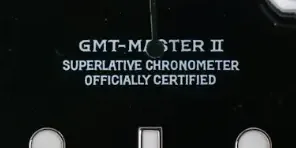
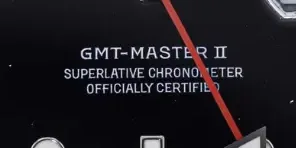
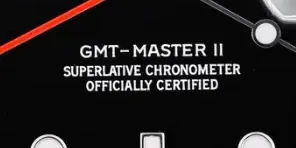
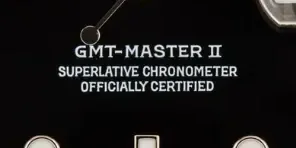
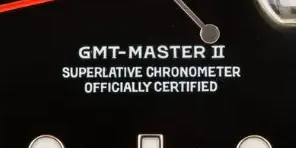
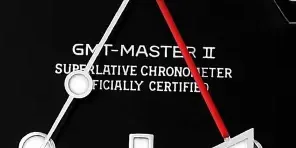
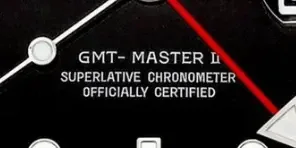
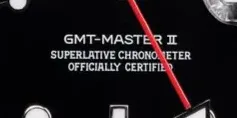
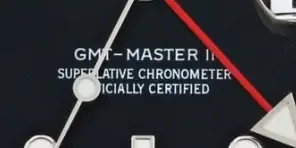
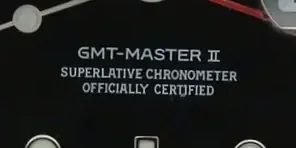
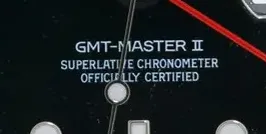
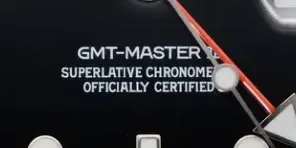
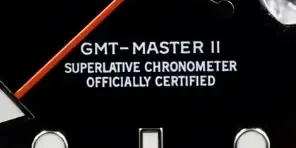
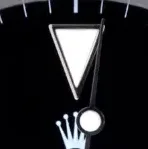
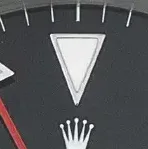
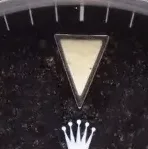
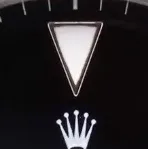
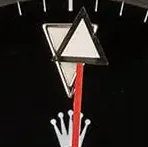
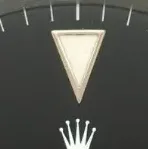
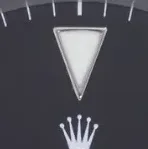
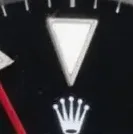
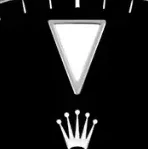
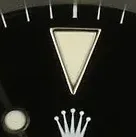
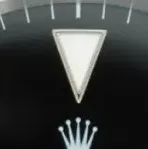
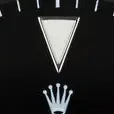
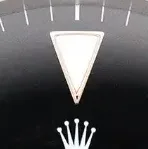
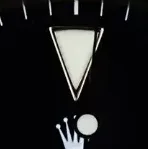
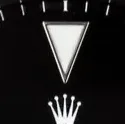
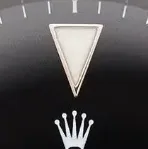
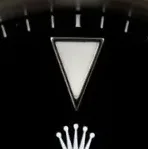
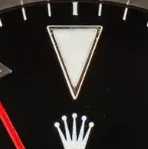
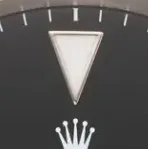
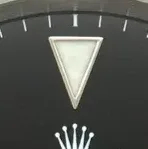
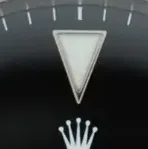
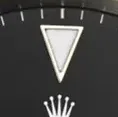
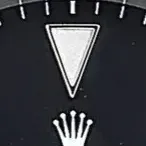
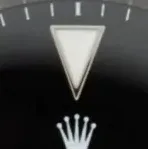
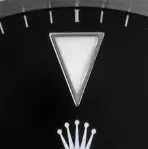
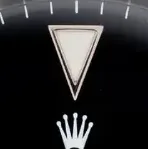
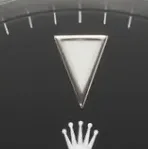
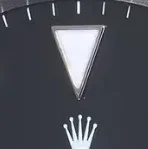
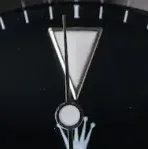
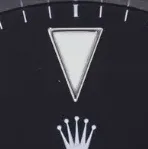
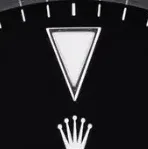
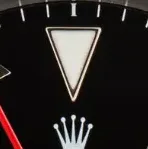
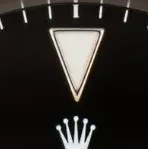
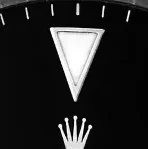
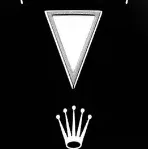
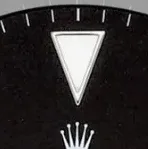
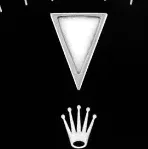
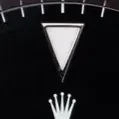
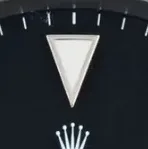
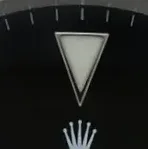
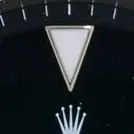
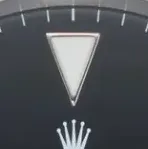
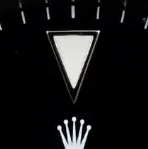
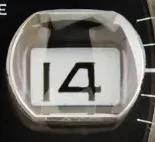
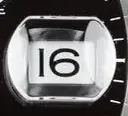
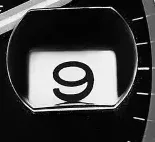
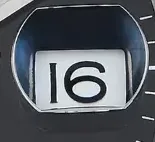
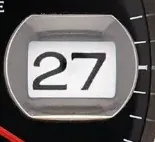
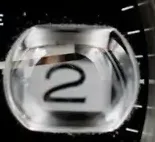
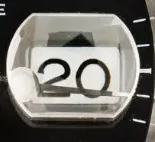
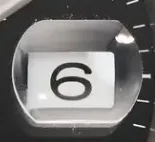
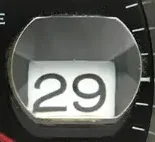
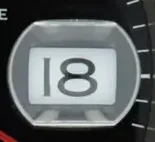
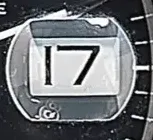
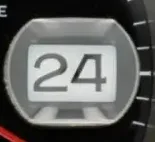
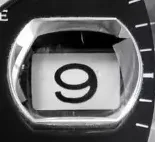
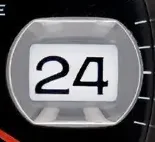
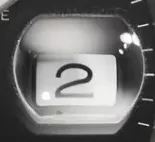
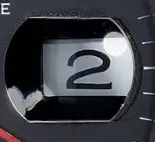
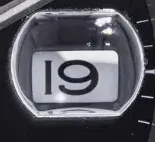
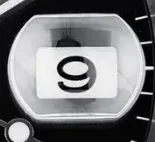
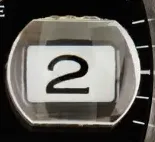
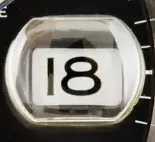
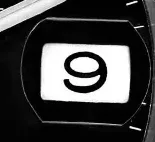
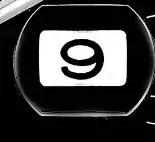
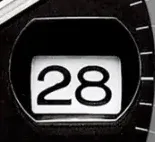
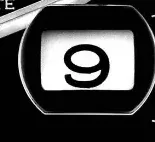
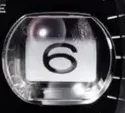
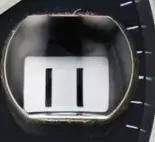
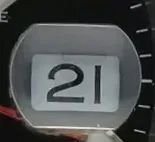
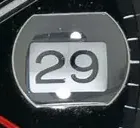
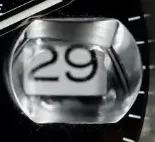
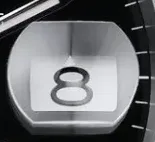
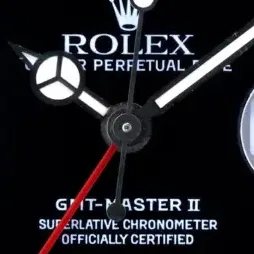
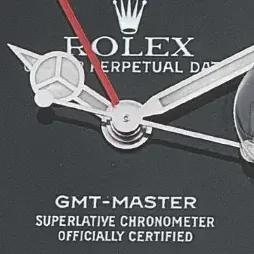
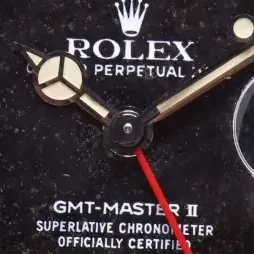
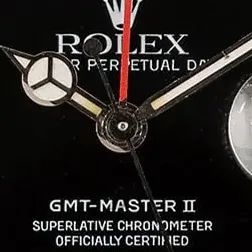
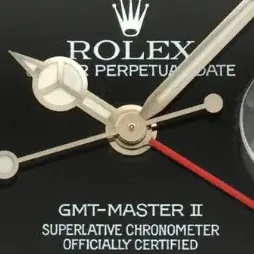
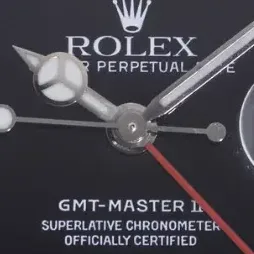
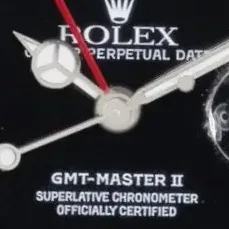
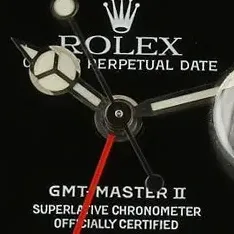
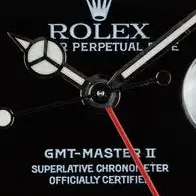
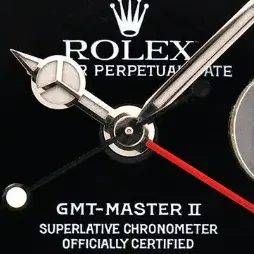
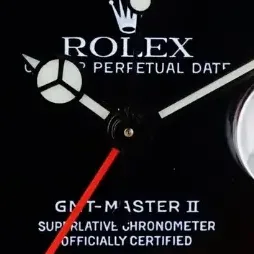
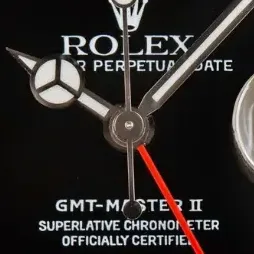
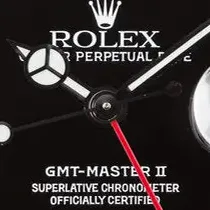
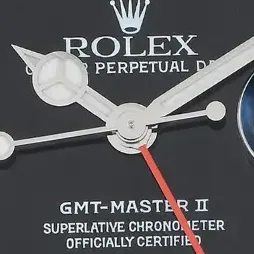
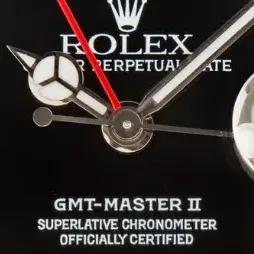
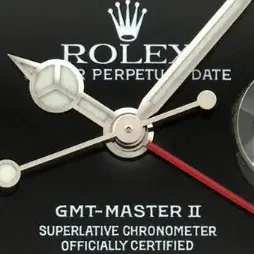
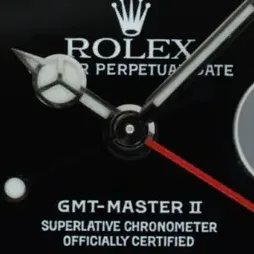
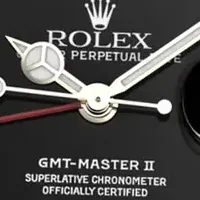
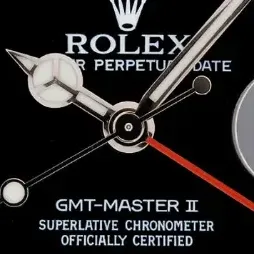
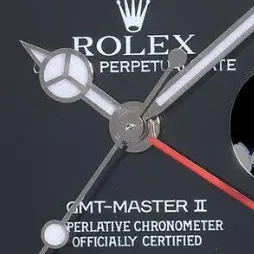
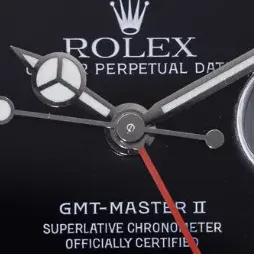
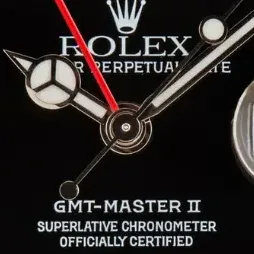
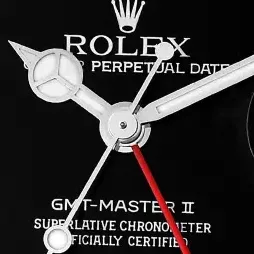
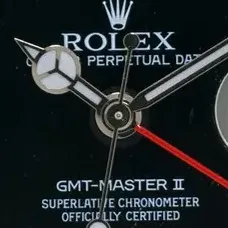
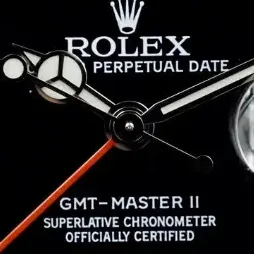
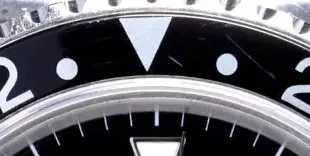
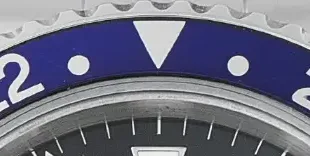
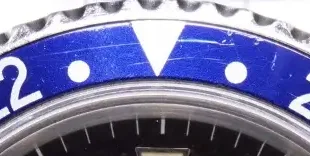
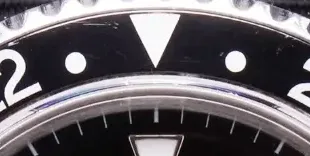
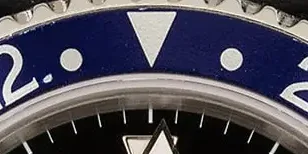
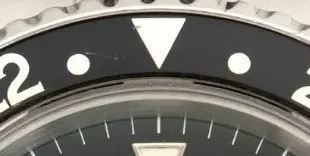
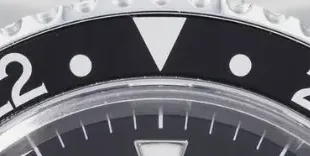
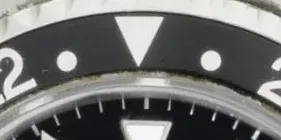
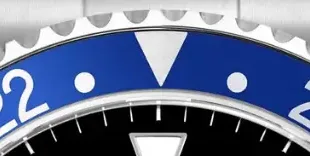
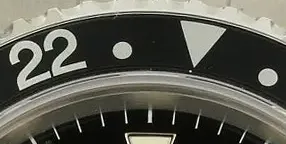
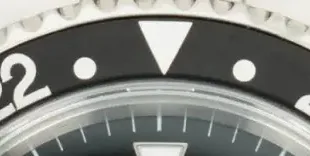
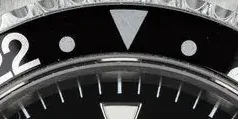
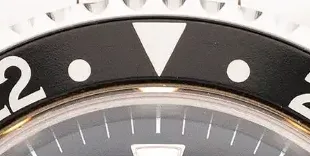
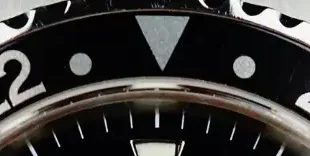
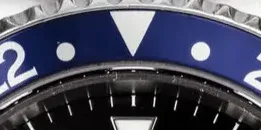
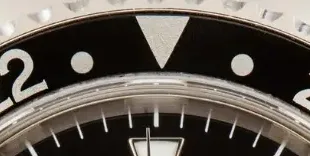
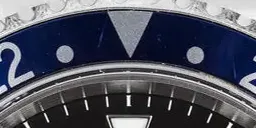
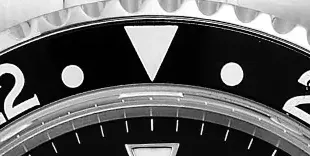
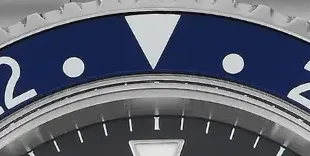
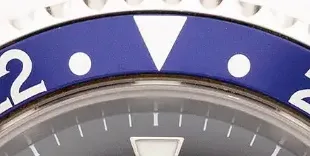
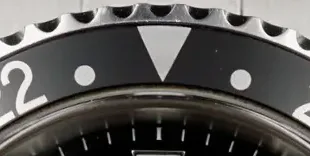
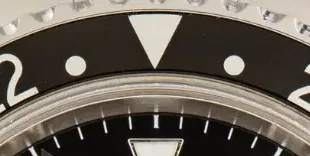
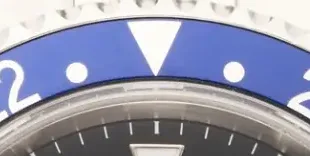
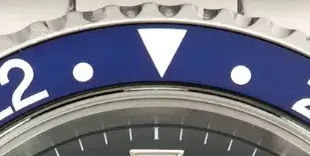
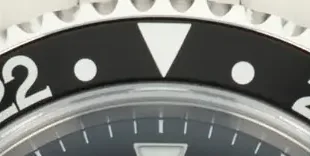
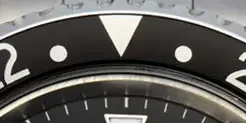
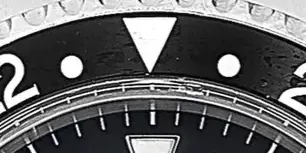
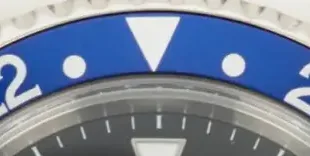
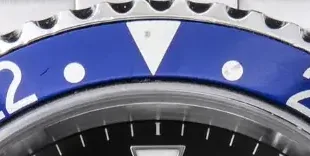
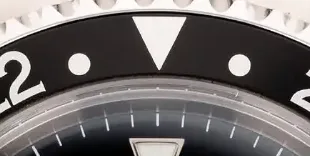
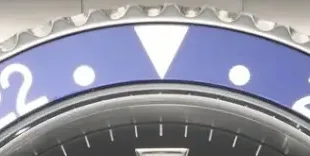
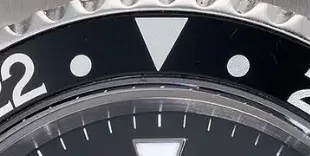
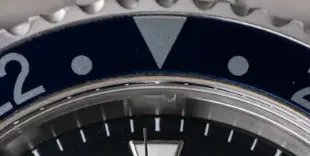
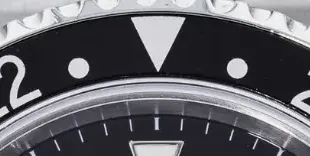
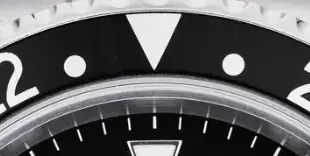
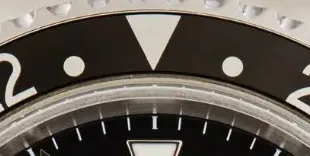
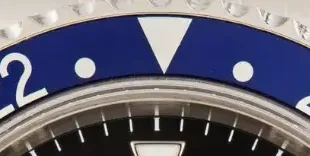
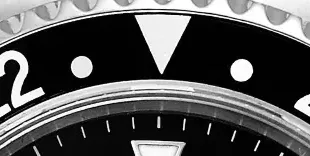
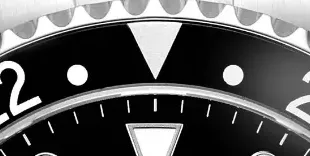
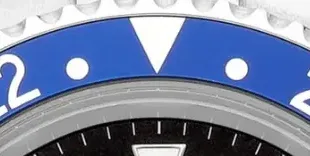
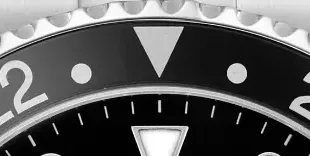
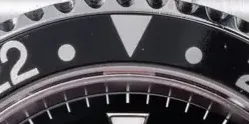
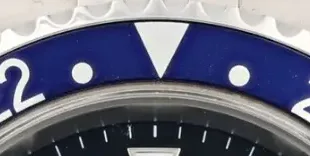
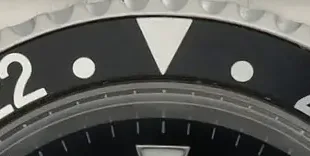
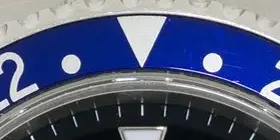
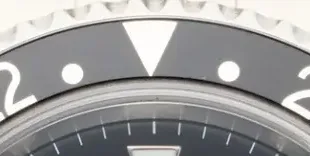
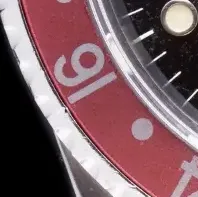
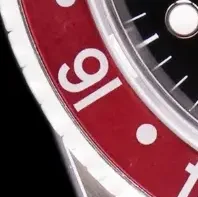
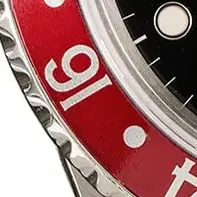
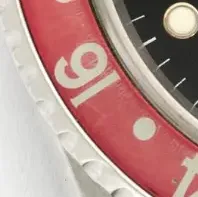
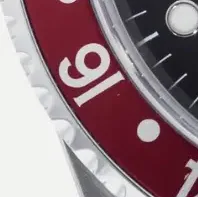
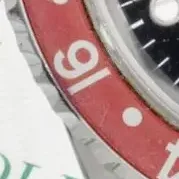
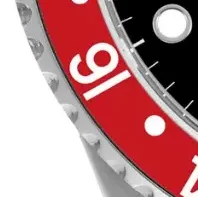
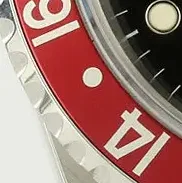
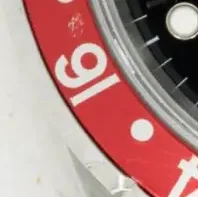
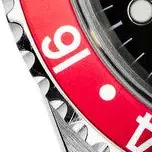
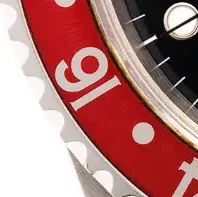
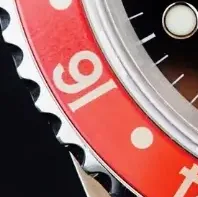
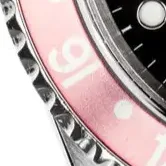
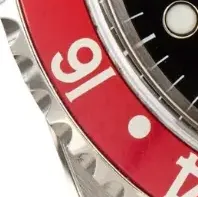
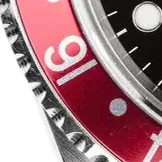
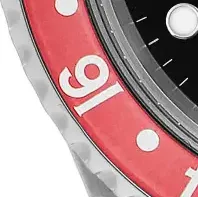
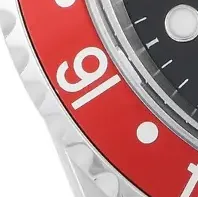
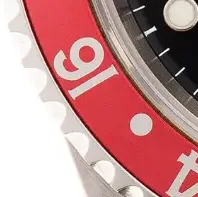
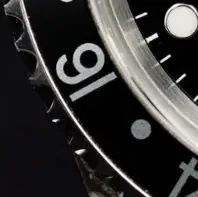
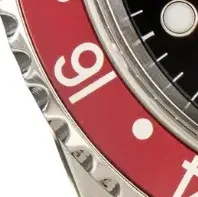
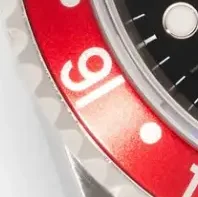
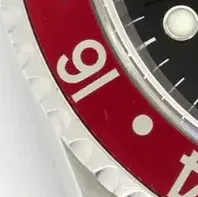
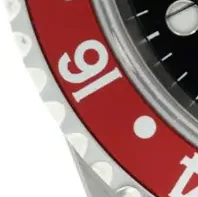
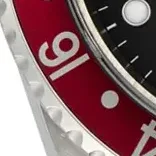
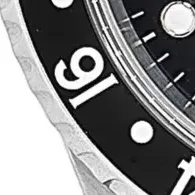
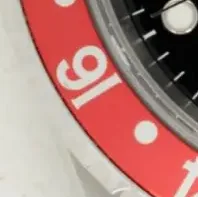
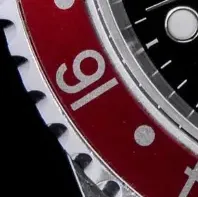
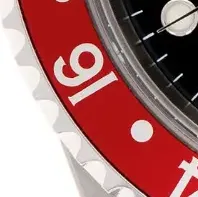
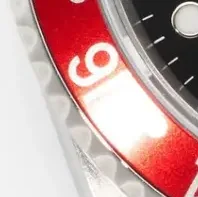
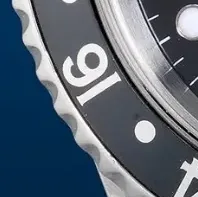
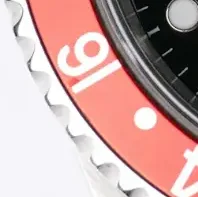
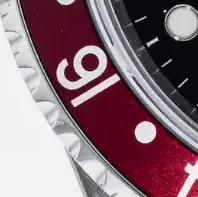
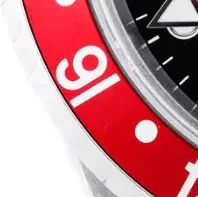
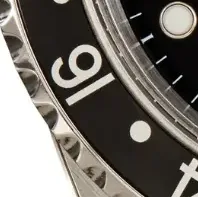
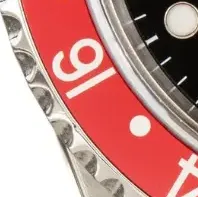
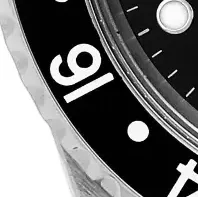
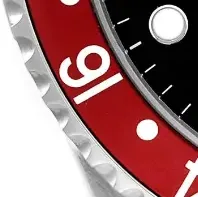
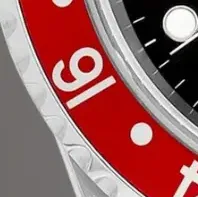
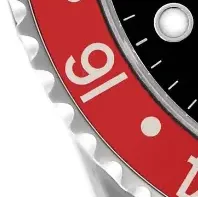
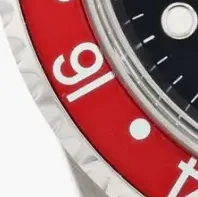
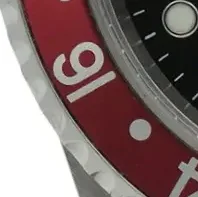
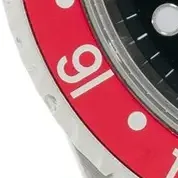
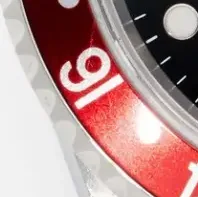
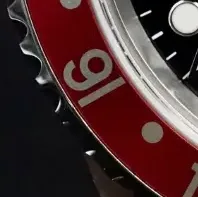
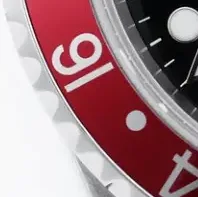
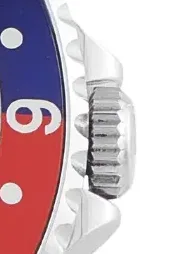
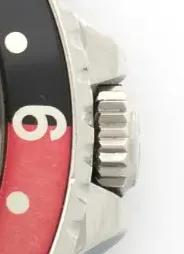
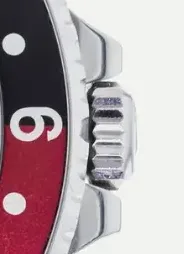
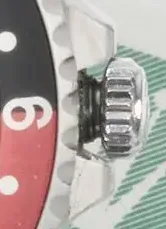
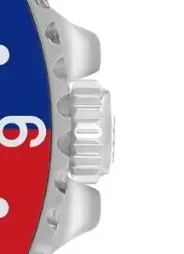
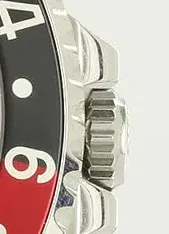
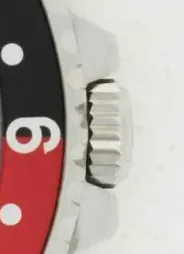
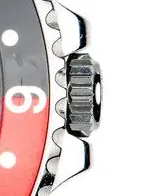
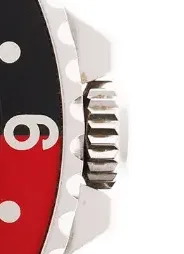
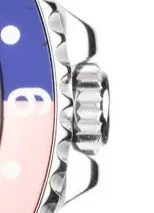
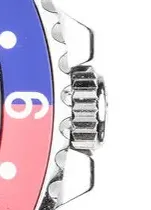
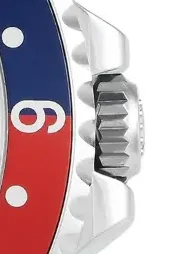
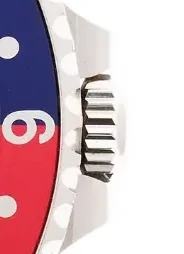
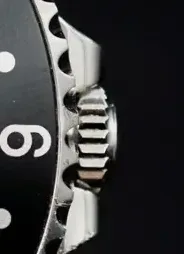
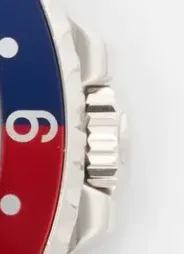
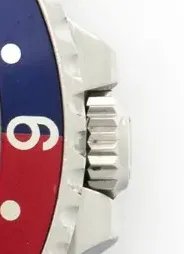
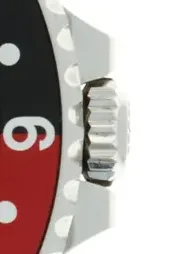
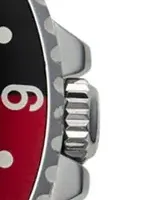
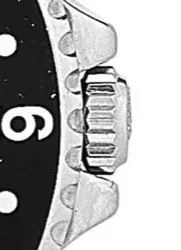
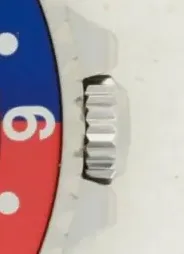
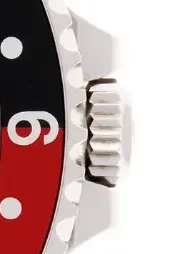
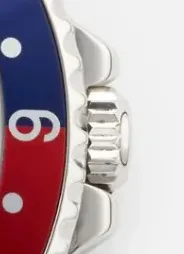
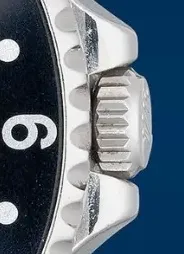
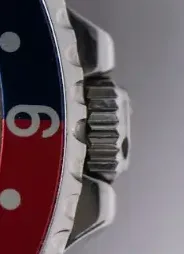
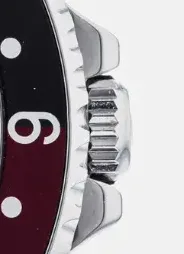
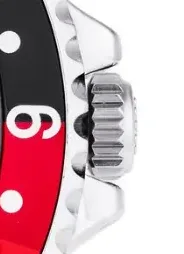
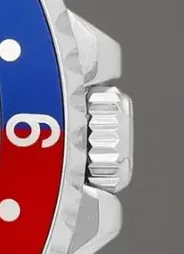
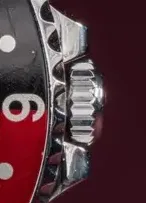
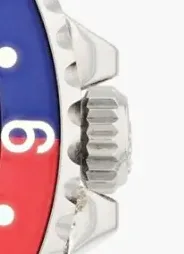
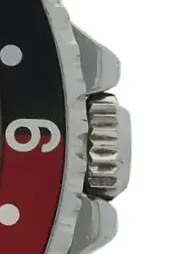
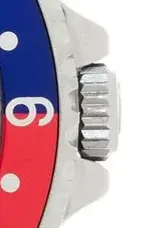
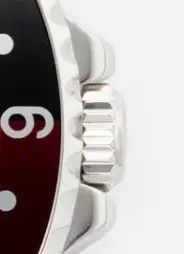
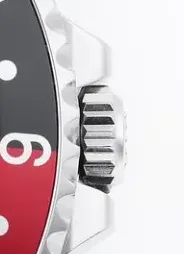
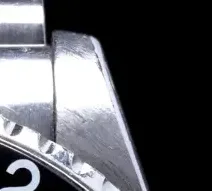
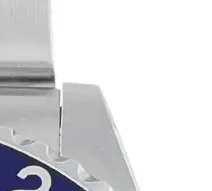
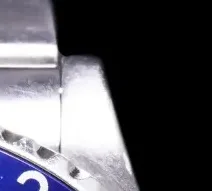
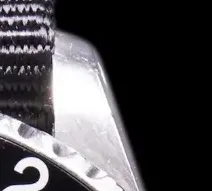
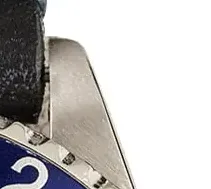
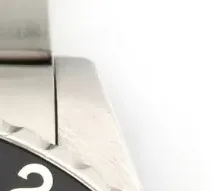
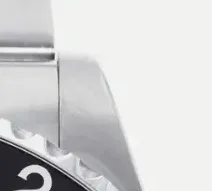
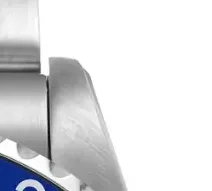
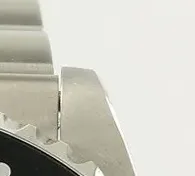
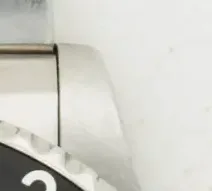
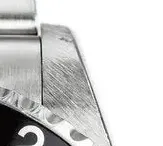
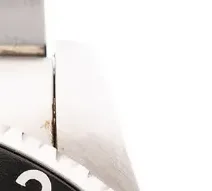
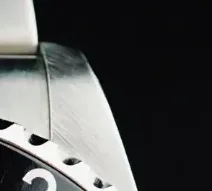
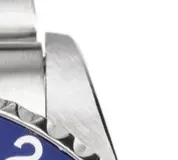
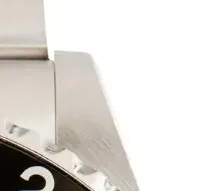
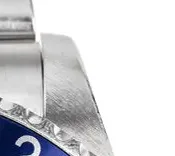
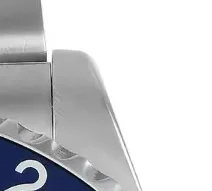
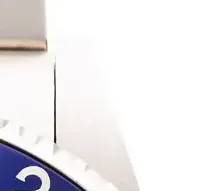
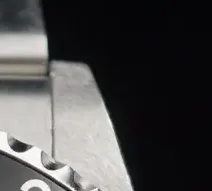
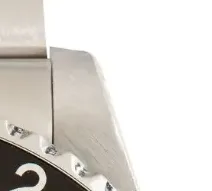
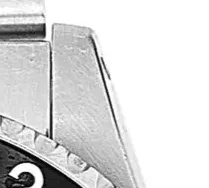
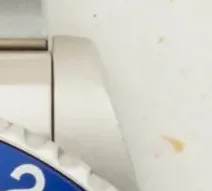
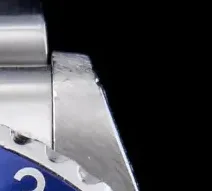
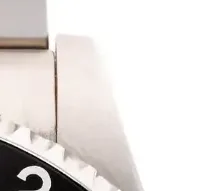
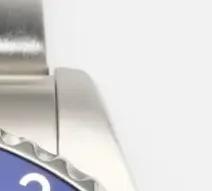
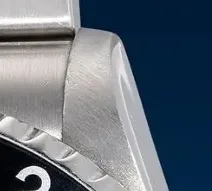
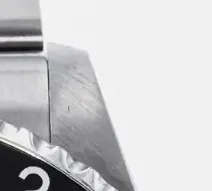
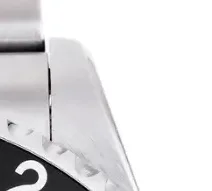
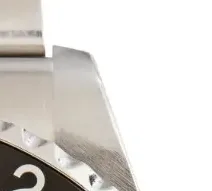
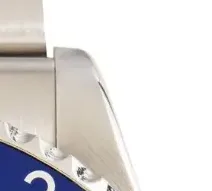
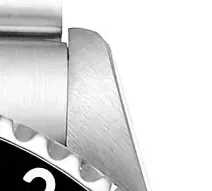
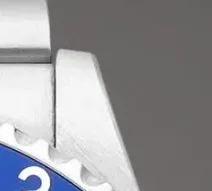
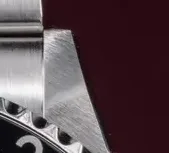
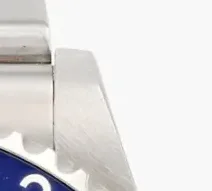
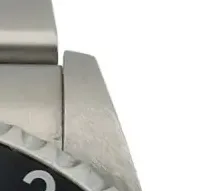
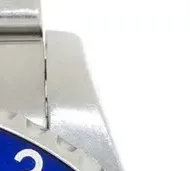
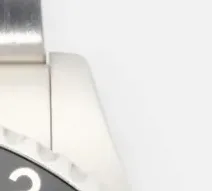
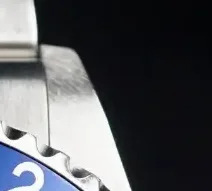
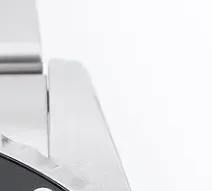
48 watches, oldest first, each straightened and cut the same way so that one row shows one component across them all. Chosen from 7,692 photographs on file for sharpness and for a face typical of the reference. A year marked c. is one its holder gives only roughly. Each picture is a detail cut from a listing photograph. Select the small mark in its corner for its year, its holder, a link to the listing it came from, and a way to report it.
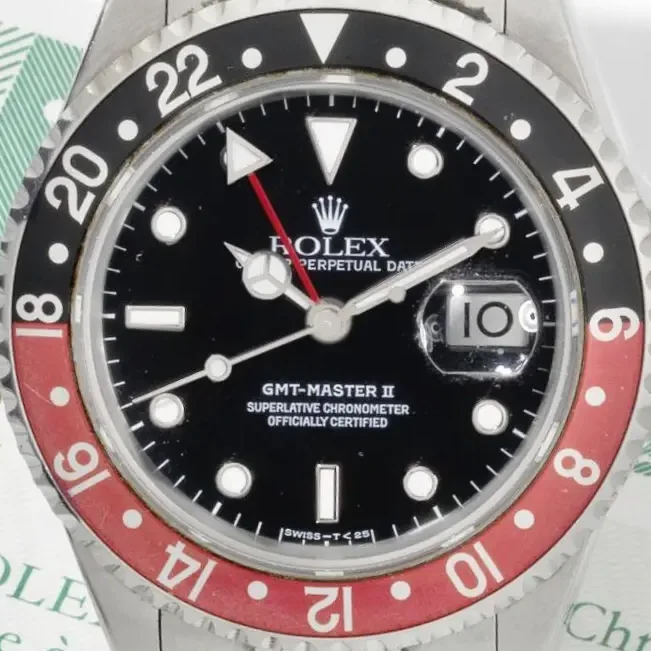
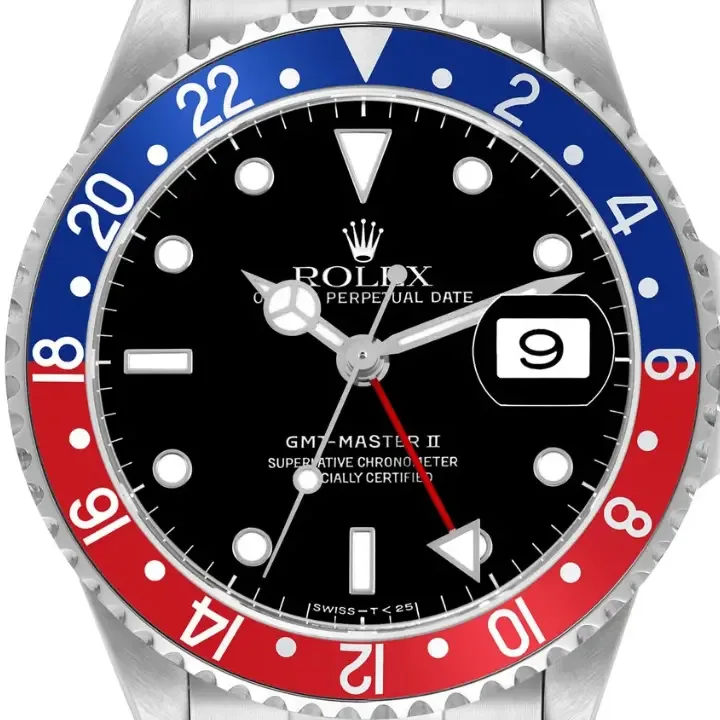
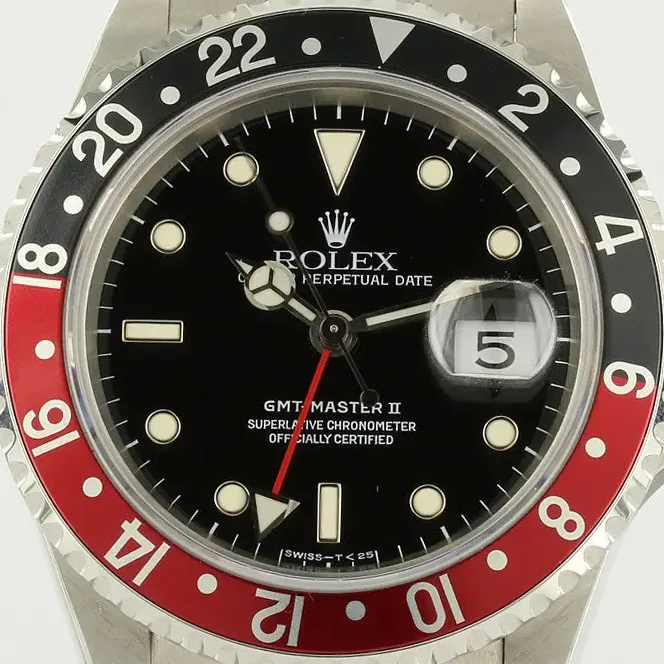
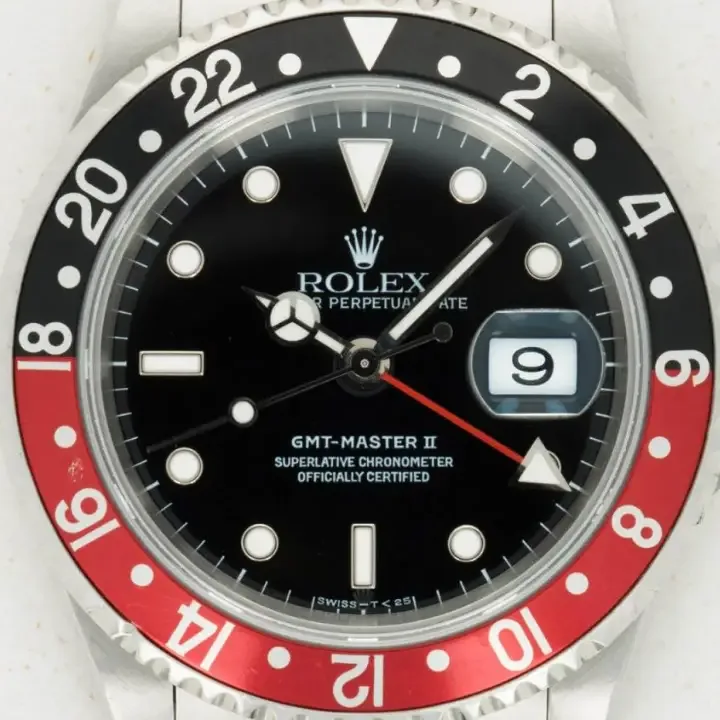
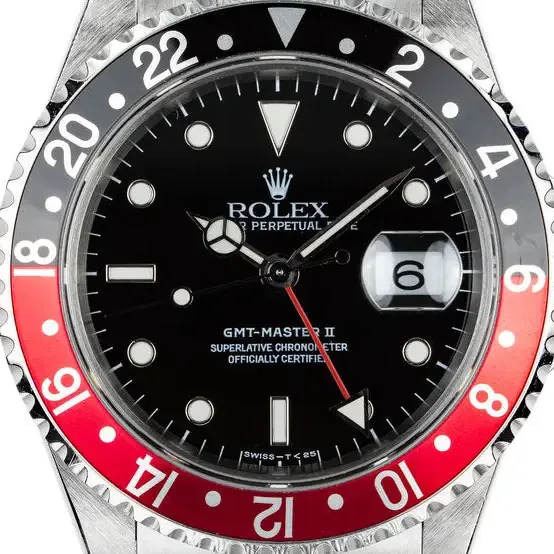
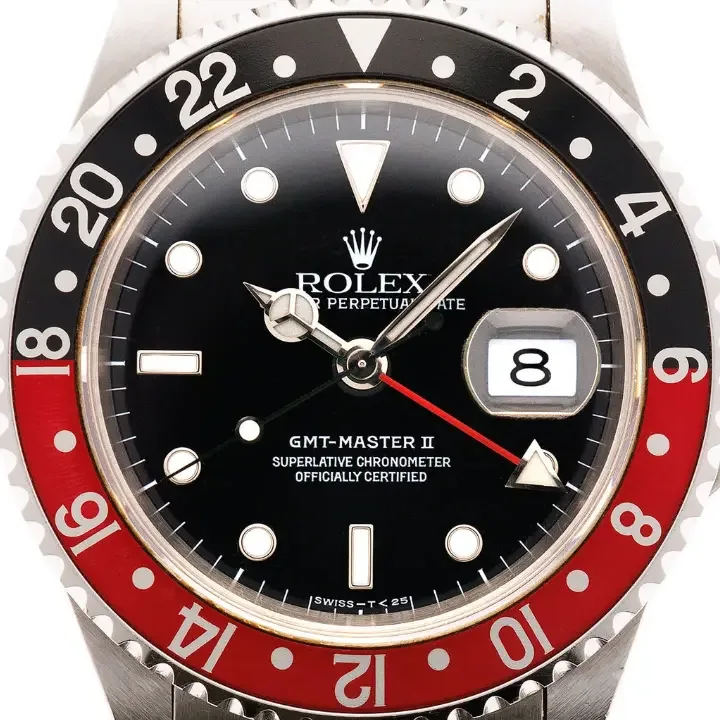
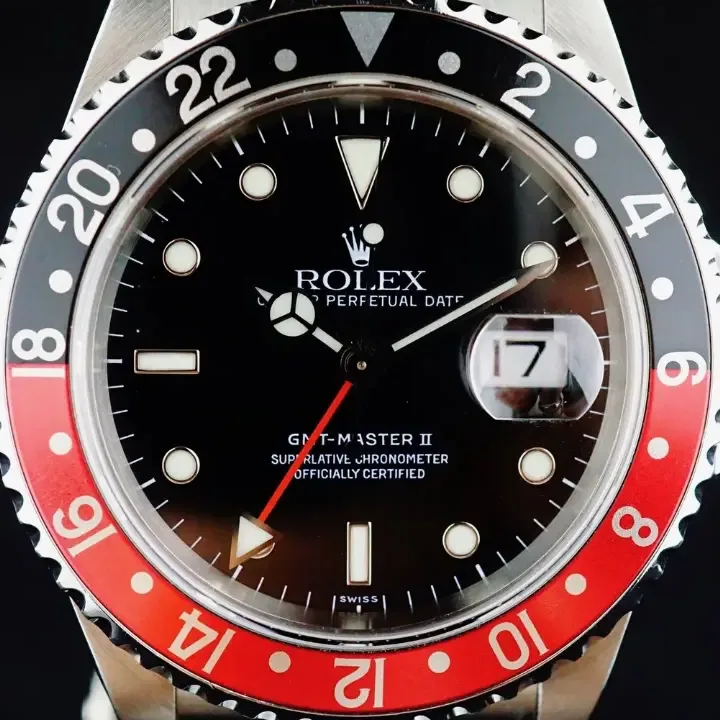
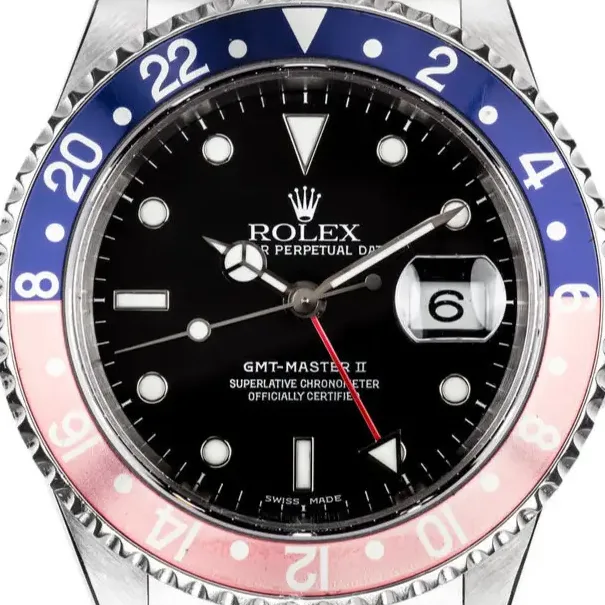








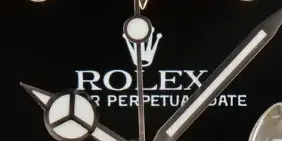





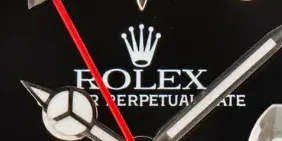







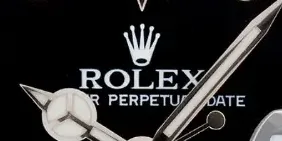
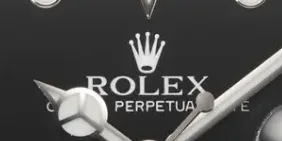









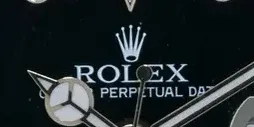




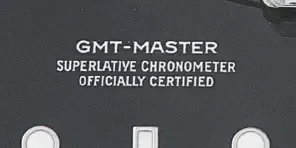
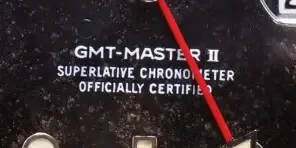
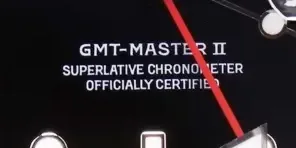







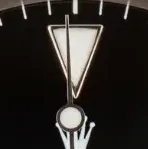
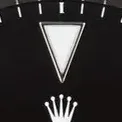
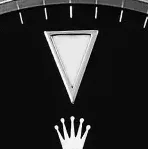
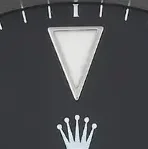
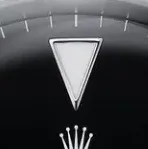
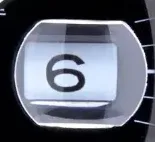
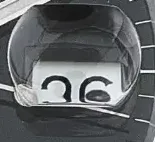
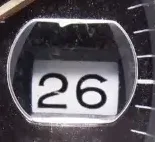
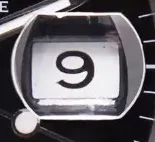
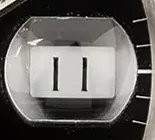
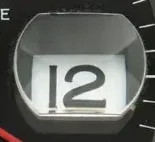
















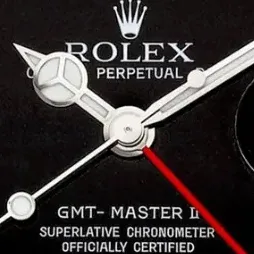

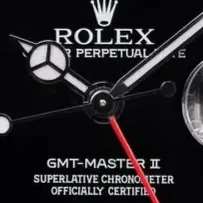
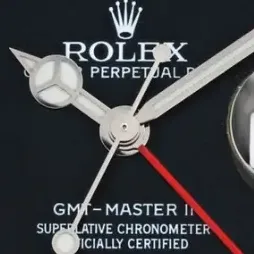
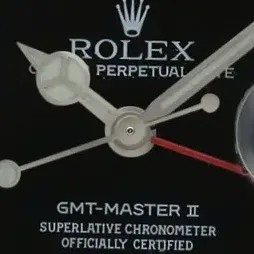


Chronology
The stated span is 1989 to 2007, with one account giving 1988 for the start and one 2007 or 2008 for the end. The library's case numbers show the last 16710s made alongside the first 116710s.
Every dated variant: what is written, and what the records show
For the reference the marks are every dated watch; for a variant, the watches a seller names as that variant, so a variant sellers do not name has none.
The reference's own marks are dated by case number. A variant's marks use the year each seller states, so a variant can show watches in a year where the row for the reference shows fewer, or none. 5 dated listings fall outside this scale and are not drawn.
Specification
| Case | 40 mm steel Oyster case, about 12 mm thick and 47 mm lug to lug, with a screw-down back; lighter than a Submariner, with slimmer lugs and crown guards than the 16760 |
| Crystal | Flat sapphire with a cyclops over the date; a laser-etched coronet at six o'clock from about 2003 |
| Bezel | Bidirectional, 120 clicks, aluminium insert with a 24-hour scale: red and blue, red and black, or all black |
| Dial | Gloss black with white-gold surrounds to the applied markers; Mercedes hands and a red arrow-tipped 24-hour hand |
| Movement | Calibre 3185, later 3186; automatic, 28,800 vibrations an hour, 48 to 50 hours' reserve, chronometer-certified; independent 24-hour hand, with the local hour hand jumping in one-hour steps |
| Date | Cyclops at three; the date is advanced by jumping the local hour hand past midnight, with no quickset date position |
| Crown | Screw-down Twinlock crown, smaller than the later Triplock |
| Bracelet | Three-link Oyster (78360 without a safety catch, 78790 with one) or five-link Jubilee (62510H, with a 50 stamped on the top link); hollow end links to about 2000, solid after on the Oyster; hollow centre links; stamped clasp |
| Water resistance | 100 m |
Reference 2 described
The reference carries a T on cases without lug holes, and one account gives letter codes for the bezel colours.
16710T
The T suffix is used for cases without lug holes, from the late Y serials of 2003 to the end of production. The 1989 to 2002 watches are the plain 16710.
- solid lug walls
Bezel letter codes A, B and N
One account gives the last letter of the reference as a bezel code: A for Coke, B for Pepsi and N for all black. No other account gives these, and the library's sellers write other suffixes, mainly LN, BLRO and B. Treat the codes as unconfirmed.
- suffix letter on a listing
Dial 9 described
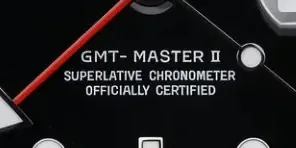
The dial is gloss black with white-gold surrounds to the applied markers, and has little variety. The changes are in the text at the foot, which follows the lume, in the shape of the II in GMT-Master II, and in some signed dials. A dial with stick or rectangular markers appears in the last years.
Tritium dial, SWISS - T<25
The earliest dials read SWISS - T<25 at six, with tritium plots that age to cream or custard and can show strong patina on hands and markers. Tritium runs to about 1997 or 1998.
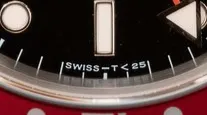
- patinated plots and hands
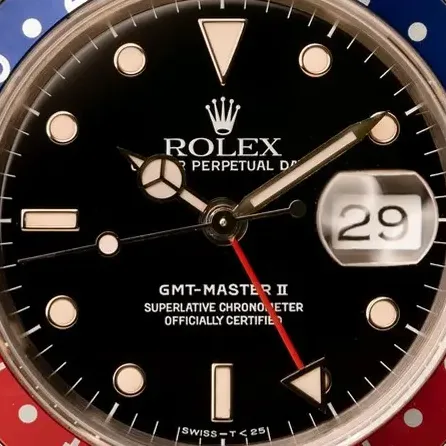
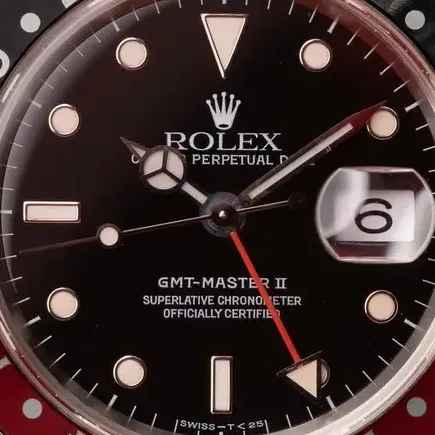
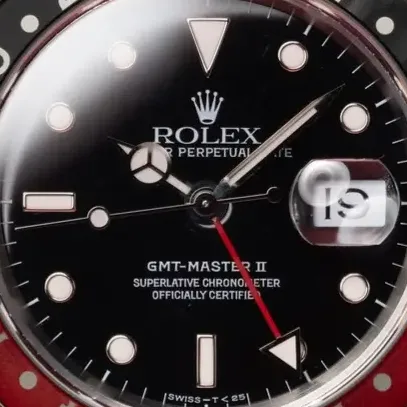
Luminova on a T<25 dial
A transitional dial that carries Luminova under the old SWISS - T<25 text, put at 1998. A seller's listing uses the name Tritinova for it.
- T<25 text on a Luminova dial
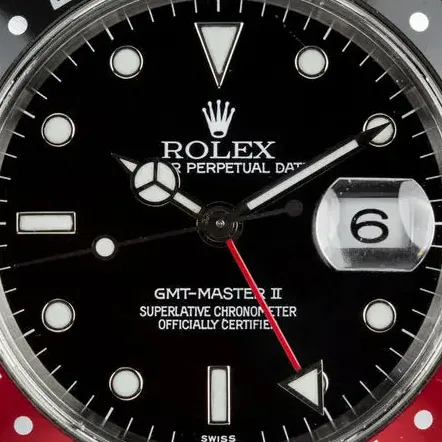
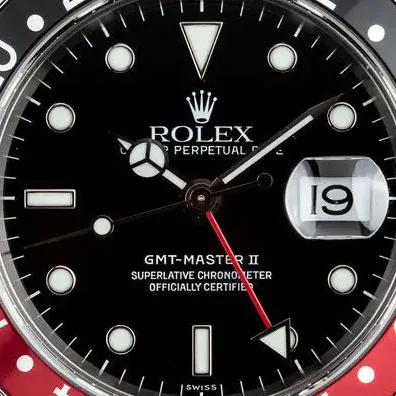
SWISS only dial
Dials read SWISS alone, from 1998 or 1999 to about 2000 or 2001, and were replaced by SWISS MADE after about two years. They are said to carry Luminova, though one account holds that all of them are Super-LumiNova.
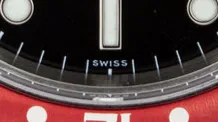
SWISS MADE tritium dial
One account lists a short-lived SWISS MADE dial with tritium among the transition-period variants. No dates or other detail are given.
- SWISS MADE text with cream plots
SWISS MADE dial
Super-LumiNova dials read SWISS MADE at the foot, from 2000 or 2001 to the end of the reference, and stay bright.
- SWISS MADE at six
Straight II ('error') dial
The II in GMT-Master II has no serifs and looks like two straight bars. Several batches were made and some went out as service dials. It is fairly uncommon, and is a typeface variation, though some sellers call it an error dial. The II appears in several forms. Other dials with misaligned coronets or unusual type are also called error dials.
- II without serifs
Stick or rectangular marker dial
Late dials with stick-like or rectangular markers, found on the last watches of 2006 and 2007, some of which have the calibre 3186. A listing dates one to 2008.
- rectangular markers
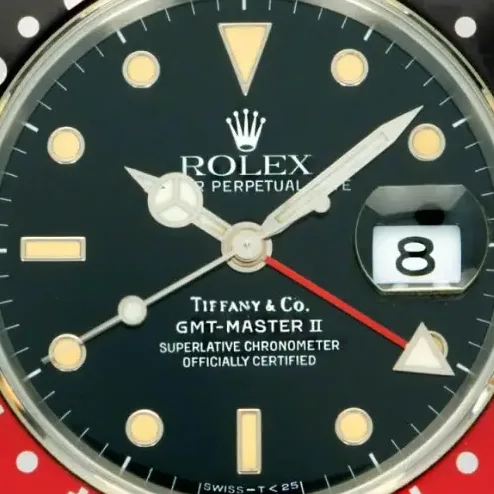
Tiffany & Co. dial
Retailer-signed dials are named by sellers on a small number of watches, mostly dated 1990 and 1991. That is when they were sold, not a production span; the literature does not describe them.
- Tiffany & Co. on the dial
Khanjar (Oman) dial
Dials with the Khanjar emblem of Oman are named by sellers on a few watches dated 2003 to 2006, and one auction lot is a watch made for the Sultan with an engraved caseback. The literature does not describe them.
- Khanjar emblem on the dial
Luminous material 3 described
The lume went from tritium to Luminova to Super-LumiNova, each shown by the text at six o'clock, though one account holds that all non-tritium dials are Super-LumiNova.
Tritium
With SWISS - T<25 dials. The plots and hands age to cream and strong patina, and the lume no longer glows. To about 1997 or 1998.
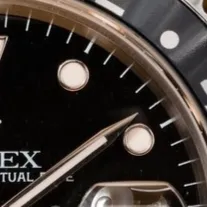
35 listings on record under the name.
Luminova
With SWISS dials, from 1998 or 1999 to 2000, and on the transitional T<25 dial of 1998. It is disputed whether this is a separate material.
Super-LumiNova
With SWISS MADE dials, from 2000. It gives a brighter, longer-lasting green glow than tritium and does not patinate.
- SWISS MADE at the foot
Hands 1 described
Mercedes hands with a red arrow-tipped 24-hour hand. The 24-hour hand is the only colour on an all-black bezel watch.
Mercedes hands with red arrow 24-hour hand
The local hour hand is the Mercedes style with lume fill, and the 24-hour hand has a red arrow tip. Patina on early tritium hands is part of the look; relumed or service hands show against an original dial.

- red arrow 24-hour hand
534 listings on record under the name.
Bezel 6 described
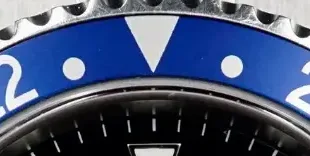
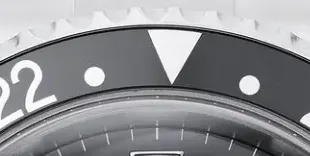
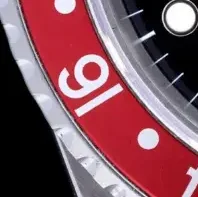
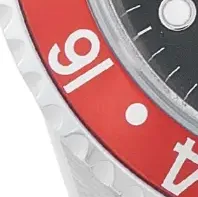
The 120-click bidirectional insert is aluminium in three colourways: red and blue, red and black and all black. It fades with age and sun, and swaps are common; some watches left the factory with a black bezel and later gained a red-and-blue one. The numerals appear in serif and in sans-serif or block forms.
Coke, red and black
The 16710 was the last steel GMT to carry a Coke insert, other than off-catalogue examples. The 16760 before it was the only earlier steel GMT-Master II with this colourway.
- red and black insert
Pepsi, red and blue
The most popular colourway, with only a small premium over the others. The surface of the insert is matte, not glossy.
- red and blue insert
- matte surface
All-black insert
A plain black insert, with the red arrow hand as the only colour.
- black insert
Serif numerals
Earlier inserts have serifs on the numerals. Later inserts, on watches from about late 2002, have sans-serif or block numerals. A replacement may carry a different font from the original.
- serifed numerals on the early insert
Sans-serif or block numerals
The later numeral style, found on the no-holes watches from the Y serials of about 2003 onward.
- plain block numerals
Faded insert
Pepsi and Coke inserts fade and change colour with age; this is treated as character by some collectors.
- faded colours
Case 2 described
The case is slimmer than that of the 16760, with a slimmer lug, crown guard and minute hand, and lighter than a Submariner's, with a thinner crystal. The lugs are drilled on the early cases and solid from about 2003.
Drilled lug holes
Cases with holes through the lugs, from the start of the reference to about 2002. The bracelet end links on these watches are stamped, folded steel in the early years.
- holes through the lug sides
No lug holes
Cases with solid lugs begin with the late Y serials in 2003; the reference then carries a T. They pair with solid end links and with the sans-serif insert.
- solid lug walls
Crown 1 described
A small screw-down Twinlock crown with crown guards.
Twinlock crown
Smaller than the Triplock crown of the following generation.
Crystal 1 described
Flat sapphire with a cyclops over the date, thinner than on a Submariner.
Laser-etched crown
A tiny crown is etched in the crystal at six o'clock, from about 2003.
- tiny crown at six o'clock
Date 1 described
The date shows the local date and has no quickset of its own.
Hour-hand date setting
The date is advanced by jumping the local hour hand past midnight, so the hour hand is what is quickset. One account states a quickset date function for the 3185, against this.
- no separate date position on the crown
Movement 2 described
The calibre 3185 was the movement for almost the whole run, slimmer than the 3085 of the 16760. The 3186 came at the very end. Both beat at 28,800 vibrations an hour.
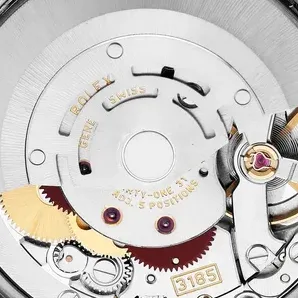
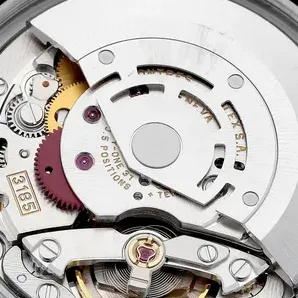
Calibre 3185
Chronometer-certified, with an independent 24-hour hand and a local hour hand that jumps in one-hour steps, about 48 to 50 hours' reserve. It is also said to hack. The 24-hour hand wiggles a little when set, which is the way to tell it from the 3186.
- 3185 on the movement
- 24-hour hand wiggles when set
Calibre 3186
A blue Parachrom hairspring and a smoother hour-hand jump, with the wiggle of the 24-hour hand gone. Fitted to the last watches, from 2006 or 2007 and given as late Z and M serials. The 3186 commands a small premium, though condition counts for more.
- 3186 on the movement
Bracelet 5 described
The bracelet is Oyster or Jubilee. Early Oyster bracelets have hollow end links and a plain clasp; from about 2000 they have solid end links and a clasp with a safety catch. The centre links stay hollow and brushed. The clasp is smaller than a Submariner's and has no wetsuit extension.
78360 Oyster
Hollow end links, code 501B, a simple clasp without a safety catch. It is the most common Oyster bracelet on the reference.
- hollow end links
- plain folding clasp
78790 Oyster with safety catch
The same bracelet with a Fliplock-style safety catch added to the clasp, with hollow end links at first and solid ones later. The number is also written 78390.
- safety catch on the clasp
Solid end link Oyster
Solid end links, the centre link running to the case edge, from 2000. They add lug-to-lug length and make the bracelet stiffer and less rattly. The code is also written 78390A, and the bracelet was often used as a service replacement.
- no gap at the end link
Jubilee 62510H
A 20 mm five-link Jubilee, with a 50 stamped on the back of the top link and centre spring-bar retainers 0.2 mm larger than the standard one. It is described as available with hollow end links and the plain clasp, and remained unchanged after 2000. A no-holes case needs 502T end links.
- 50 stamped on the top link
93150 Oyster with extension
The Submariner bracelet with diver's extension was a factory option for the 16710 before the later bracelets, but was seldom chosen.
- Submariner-style clasp and extension
Box and papers 1 described
The papers changed near the end of the run.
Credit-card certificate
A plastic card certificate in place of the paper guarantee from the Z serials, about 2007. Earlier watches have a punched guarantee.
- plastic card certificate
Originality
- Bezel inserts are often swapped and a replacement may carry a different numeral font; some watches began with a black insert and gained a red-and-blue one later, and nothing on the papers records the original colour.
- Dials and hands are sometimes service replacements, so lume type and foot text should fit the year; service dials include the straight-II type.
- The hollow-centre-link bracelet stretches with wear. Solid end links arrived about 2000, while the case still had lug holes, so they are a later fitting only on a watch made before then.
- Polished cases lose the bevel on the lugs.
- A Jubilee fitted to a no-holes case needs 502T end links.
Names
- Pepsi. The red and blue insert.
- Coke. The red and black insert.
- Fat Lady. The thicker 16760 it replaced, also called Sophia Loren.
- Error dial. A seller's name for the straight-II or misaligned-coronet dial.
- Tritinova. A seller's name for a dial with Luminova under the tritium-era text.
- Stick dial. The late dial with stick or rectangular markers.
Where accounts differ
Points on which the published literature and the library's own records do not agree, or on which the literature contradicts itself.
- Start of production. One guide gives 1988 for the launch of the 16710; the others give 1989.
- Date setting. One guide says the 3185 has a quickset date; the other guides, one on the same site, say the date is set by jumping the hour hand. A small number of sellers name a quickset.
- First Coke bezel. One guide credits the 16710 with the first Coke insert; the others place it on the 16760.
- Luminova stage. Most guides place a Luminova period at about 1998 to 2000 and tie it to SWISS only dials; one holds that all non-tritium dials are Super-LumiNova and that the Luminova story has no basis. Sellers name Luminova more often than Super-LumiNova.
- Late claims on bracelet and movement. One account says the 3185 has a Parachrom hairspring and that later 16710s had the Easylink extension; another page on the same site and the other guides place Parachrom with the 3186 and Easylink with the 116710 generation.
- Bracelet numbers. One guide writes the Oyster bracelet numbers as 78390 and 78390A, where the others give 78790; the sources agree on the order, hollow end links then solid.
- End of production. The guides end production in 2007, one giving 2007 or 2008. In the library's records 16710 case numbers run on past the point where the 116710's begin, and a few date from 2008.
Back and movement
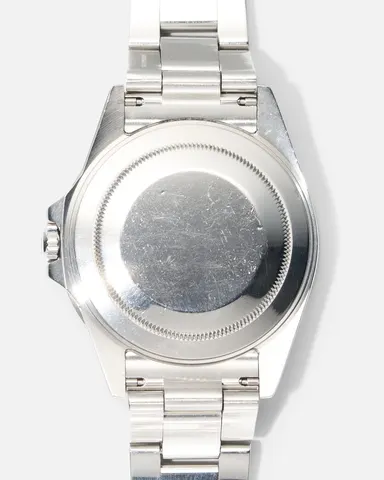
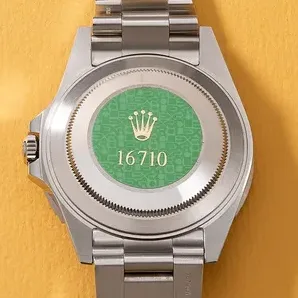
From listings of this reference, each confirmed by eye to show what it is filed under. A picture on which a person's name or a personal engraving can be read is not shown. From most holders a detail from the middle of the photograph is shown; the mark in its corner gives its holder and a link to the listing.
Caseback
Movement


Catalogue versions 3 listed
The full numbers under which holders list this reference, with what their listings say of each. Each has a page of its own.
| Version | Metal | Dial | Years seen | Records |
|---|---|---|---|---|
| 16710T | Steel | Black | 2003–2007 | 35 |
| 16710BLRO | Steel | Black | 2000–2007 | 10 |
| 16710LN | Steel | Black | 2001–2010 | 7 |
In the records
Counted from 2,391 listings at 64 holders between 10 June 2009 and 14 November 2026. These are what sellers and auction houses state, not measurements.
Fainter bars are the 103 outside the main run of 1991–2006 (the middle nine-tenths): the earliest is 1988 and the latest 2009. They are early and late examples, and now and then a number misread.
At the holders that record papers on every watch, 45% of their 651 listings of this reference come with papers; at those that record the box on every watch, 87% of 786 come with a box. "Papers" is whatever the holder counts as papers, and can include service papers.
Case metal
| Steel | 1,176 |
Dial colour
| Black | 1,351 | |
| Red | 13 | |
| Blue | 12 | |
| Cream | 3 | |
| Brown | 1 |
Case size
| 40 mm | 1,133 | |
| 39 mm | 10 | |
| 42 mm | 3 |
Calibre named
| 3185 | 255 | |
| 3186 | 9 | |
| 3175 | 4 |
Bracelet or strap
| Oyster bracelet | 1,253 | |
| Metal bracelet, kind not stated | 125 | |
| Jubilee bracelet | 28 | |
| Strap, kind not stated | 1 | |
| Leather strap | 1 |
Each table counts the listings that state the thing, in the seller's own terms. A size, metal, colour or calibre that cannot belong to this reference is a seller's slip or a listing filed under the wrong number.