GMT-Master
The 16750 is the GMT-Master that followed the 1675, made from about 1979 to 1988 in steel, with the 16753 in two-tone and the 16758 in gold beside it. It kept the 1675's look, a 40 mm case, an aluminium bezel insert, a domed acrylic crystal and Mercedes hands, but changed the inside: calibre 3075 at 28,800 vibrations an hour with a quickset date and hacking seconds, and water resistance raised from 50 to 100 m. Dials began matte and turned to gloss with white-gold surrounds in the mid-1980s, and some of those cracked. Collectors look first at the dial, the bezel insert and the hands.
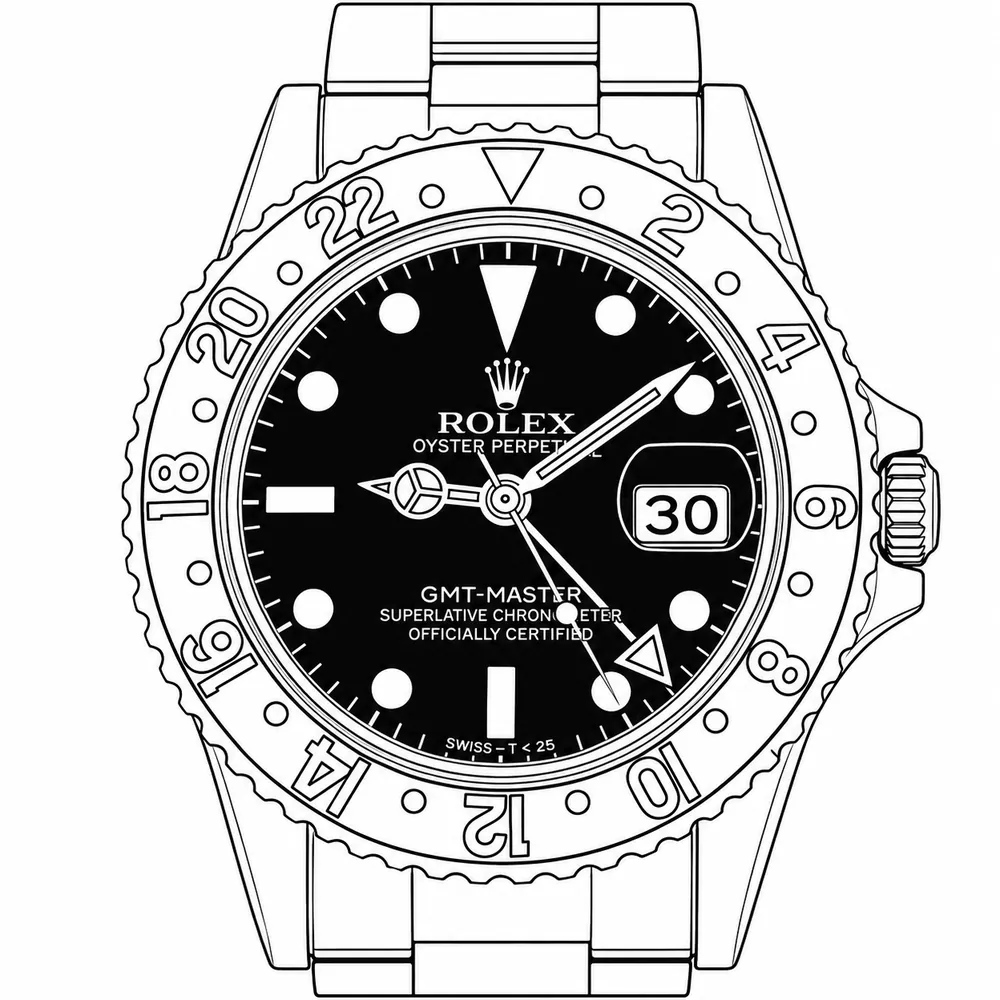
- Made
- 1979–1988dates approximate
- Seen in the library
- 1979–1988nine in ten in 1980–1988 · by case numbers
- Case
- 40 mm · steel (99%)as sellers state
- Movement
- Calibre 3075automatic
- On record
- 718 listings2,201 photographs · 61 holders
Components
49 watches, oldest first, each straightened and cut the same way so that one row shows one component across them all. Chosen from 2,201 photographs on file for sharpness and for a face typical of the reference. A year marked c. is one its holder gives only roughly. Each picture is a detail cut from a listing photograph. Select the small mark in its corner for its year, its holder, a link to the listing it came from, and a way to report it.
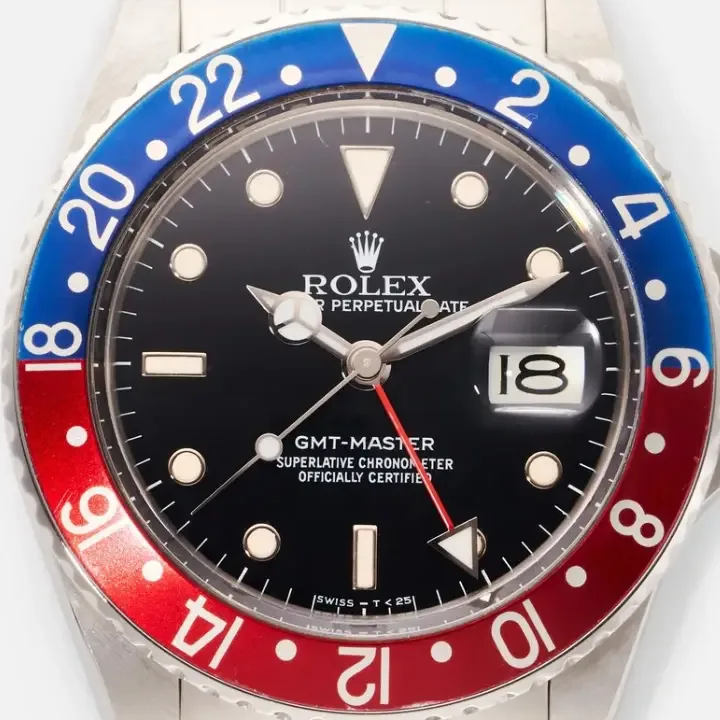
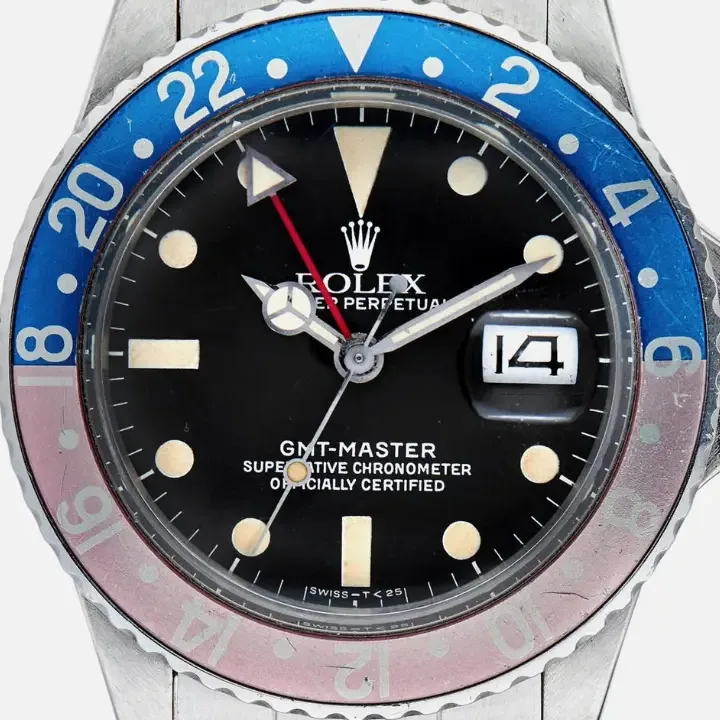
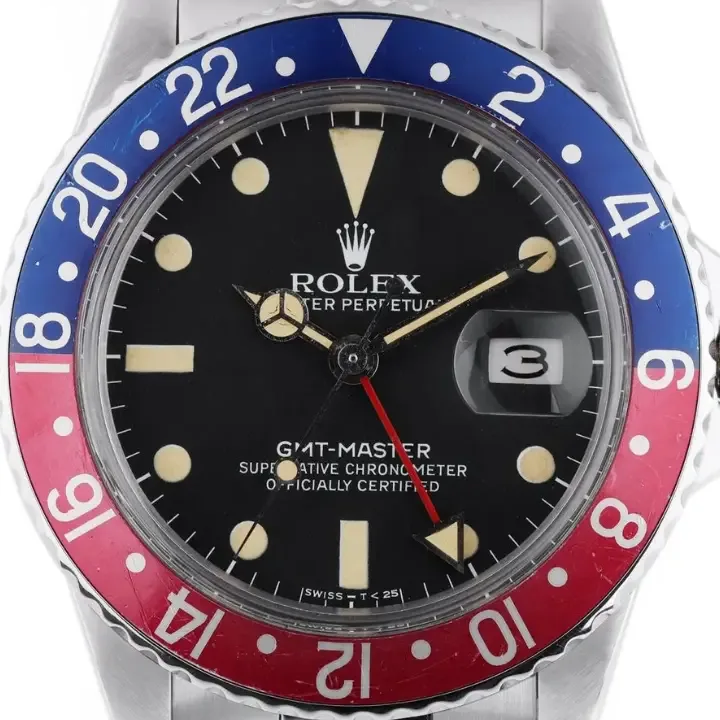
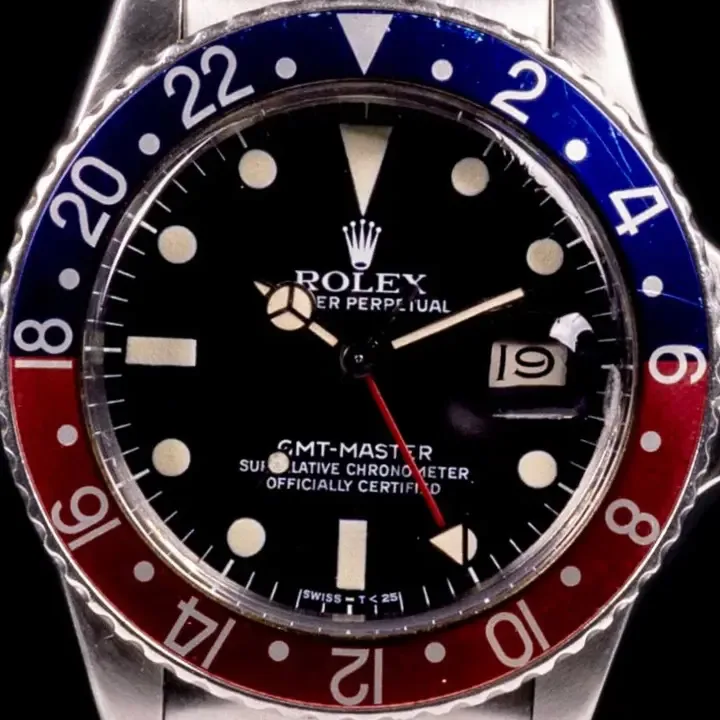
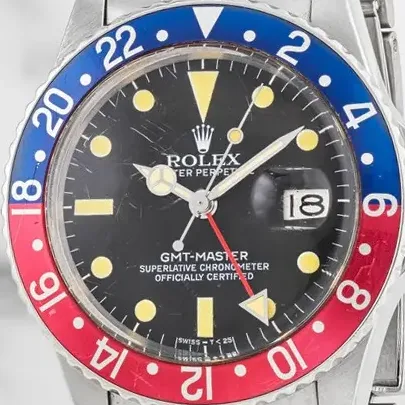
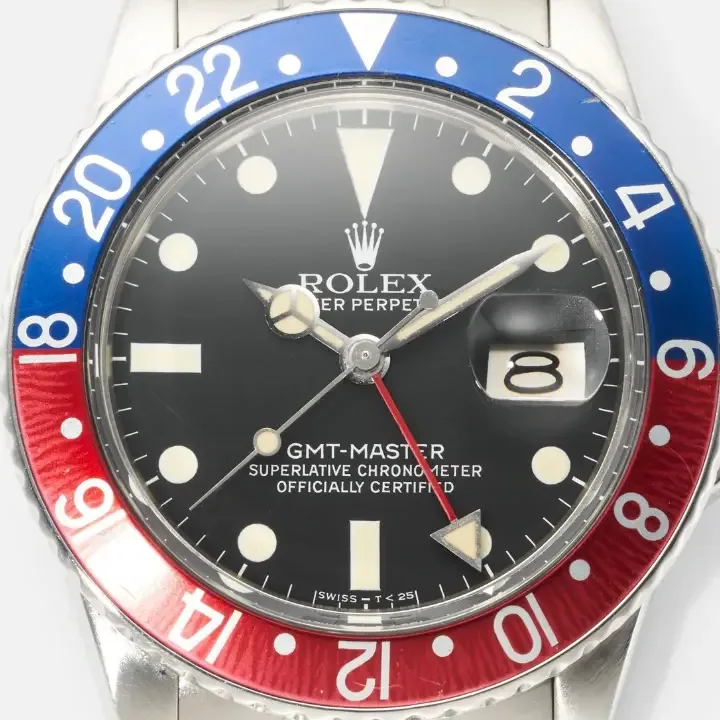
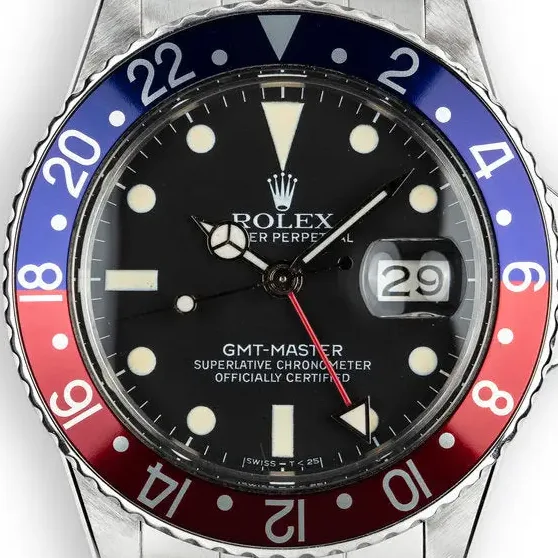
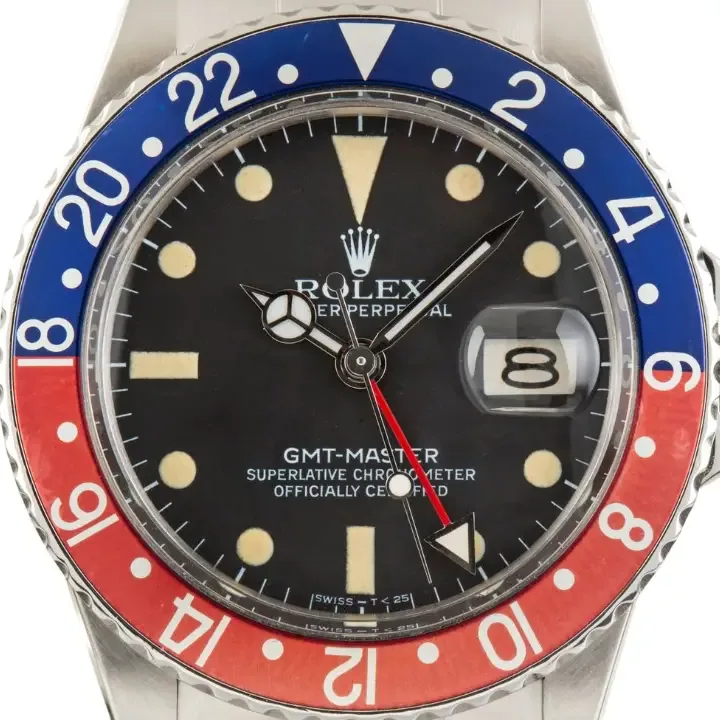
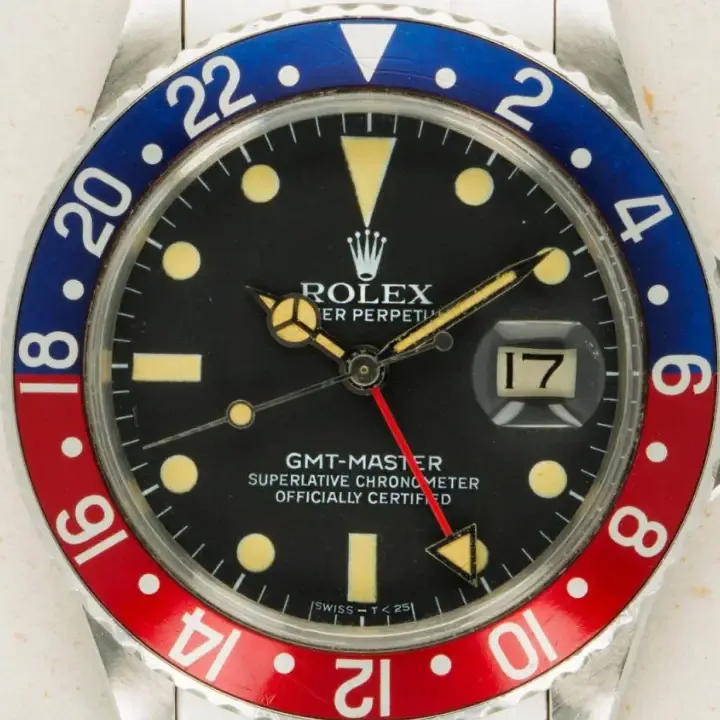
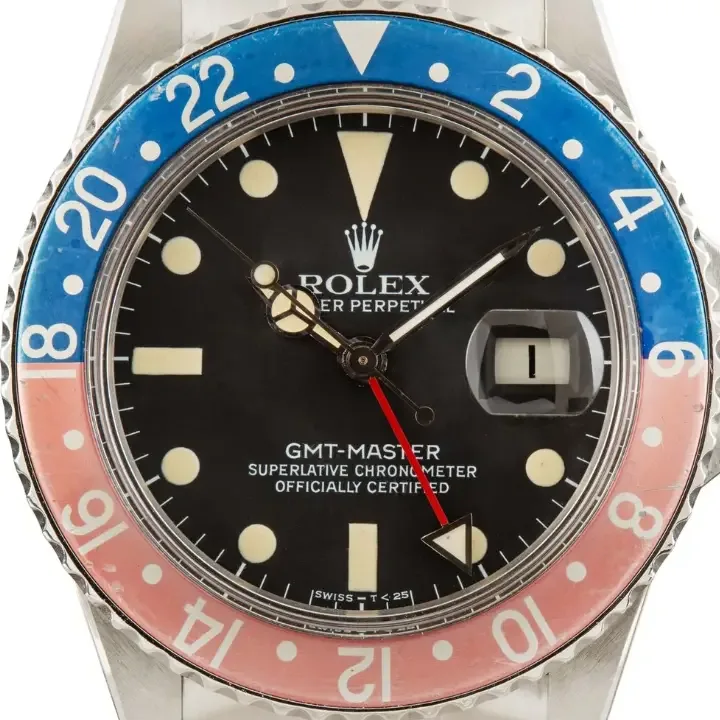
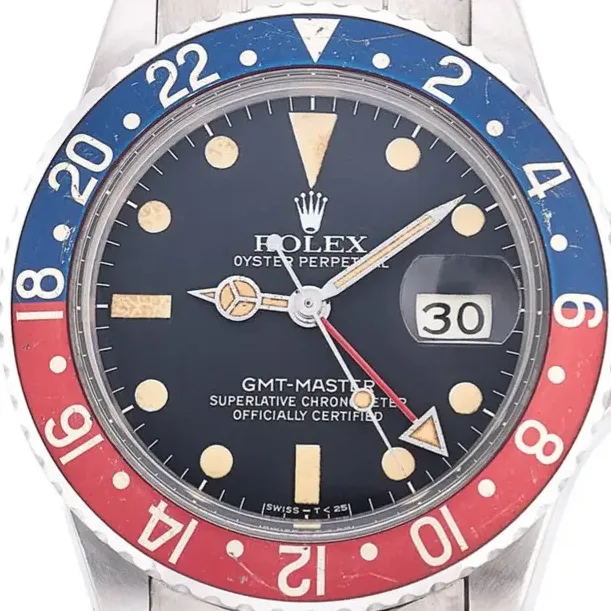
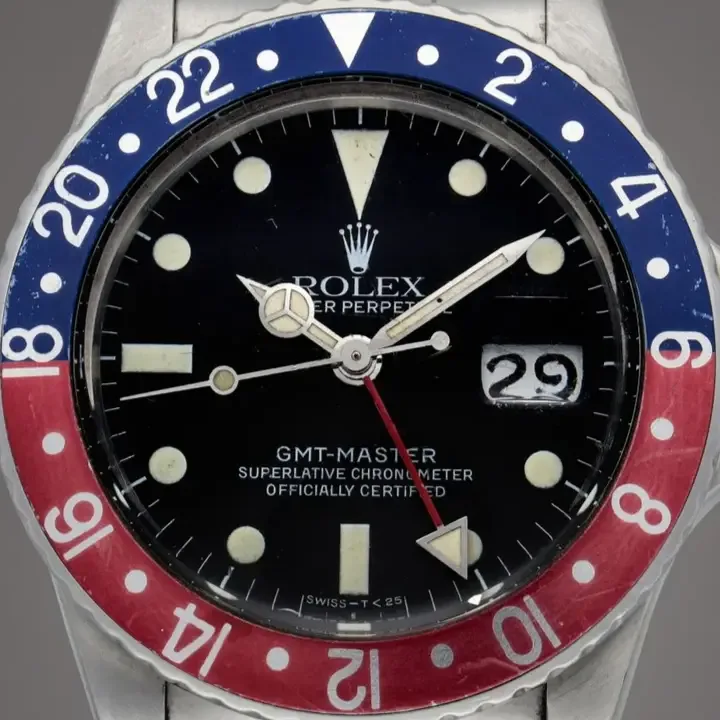
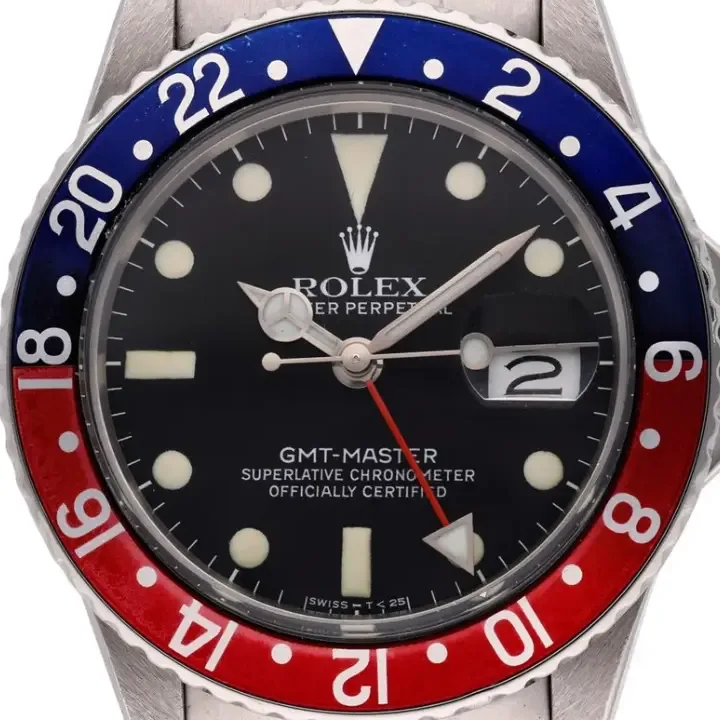
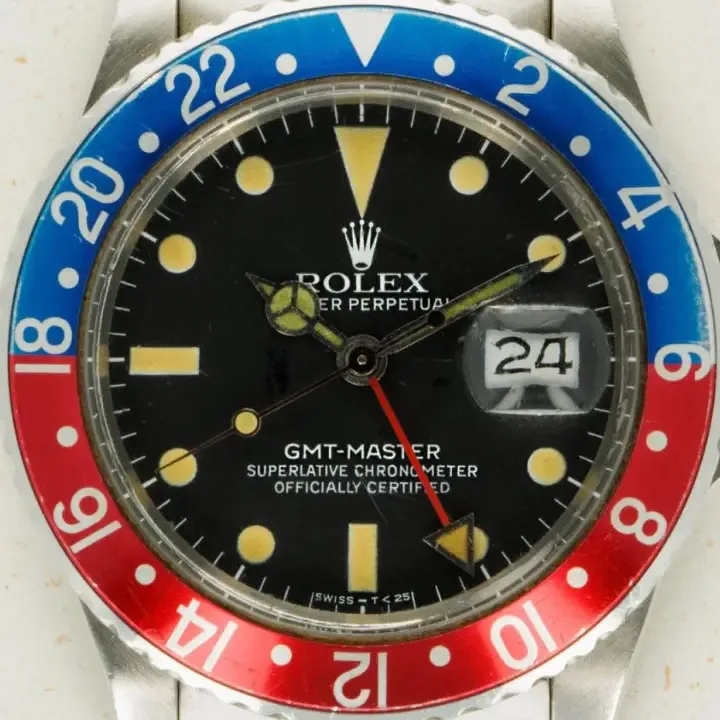
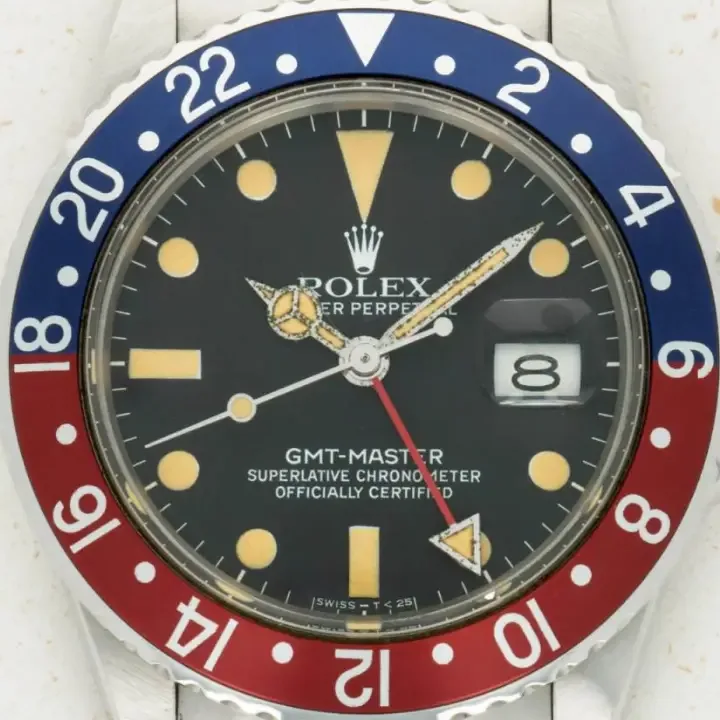
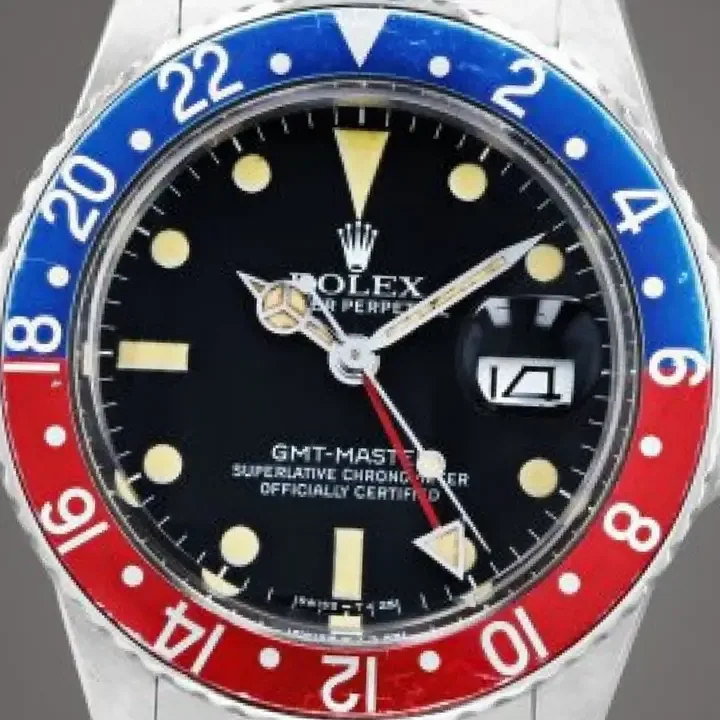
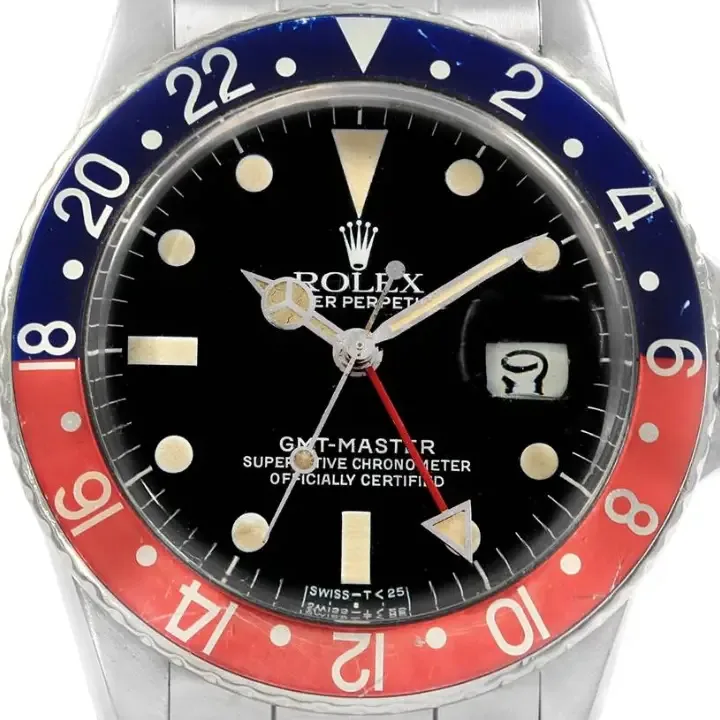
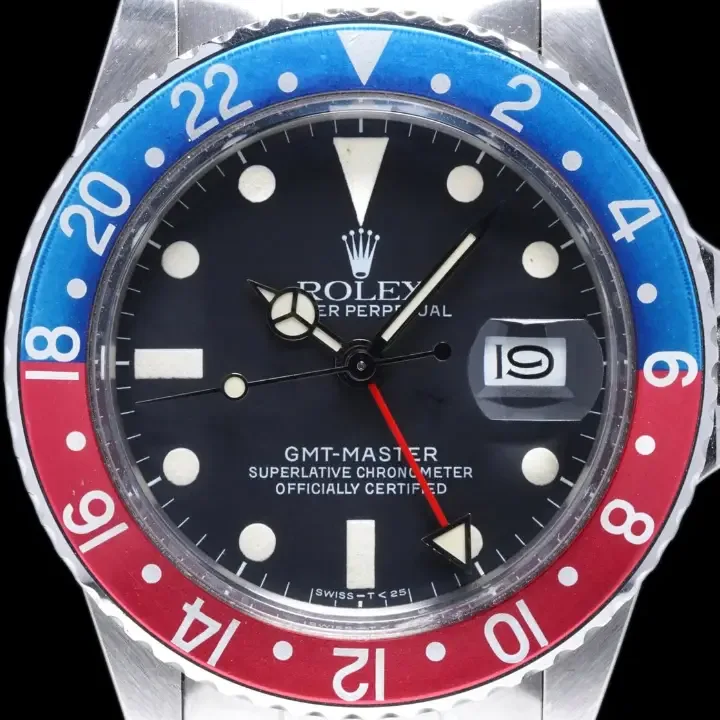
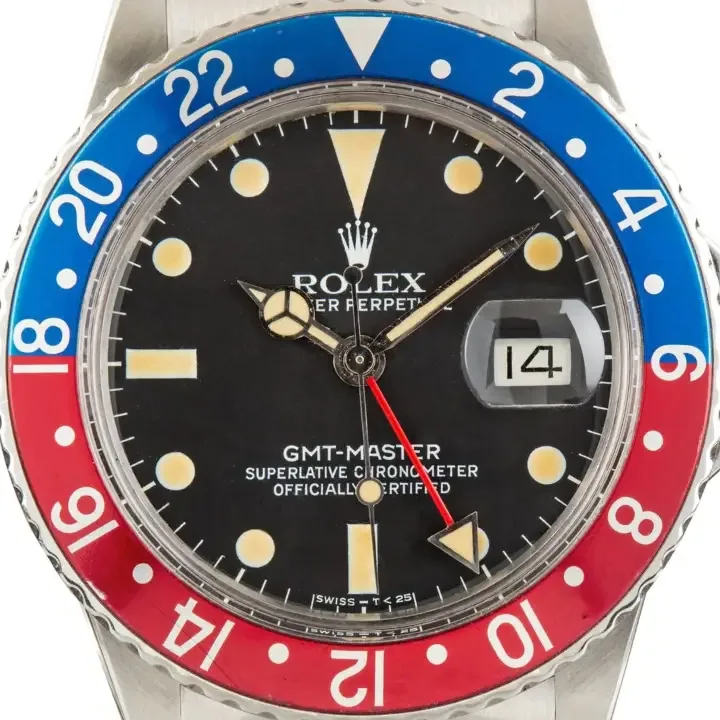
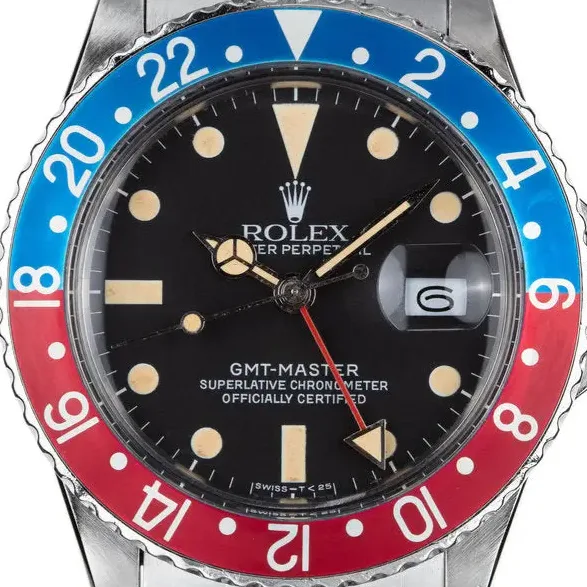
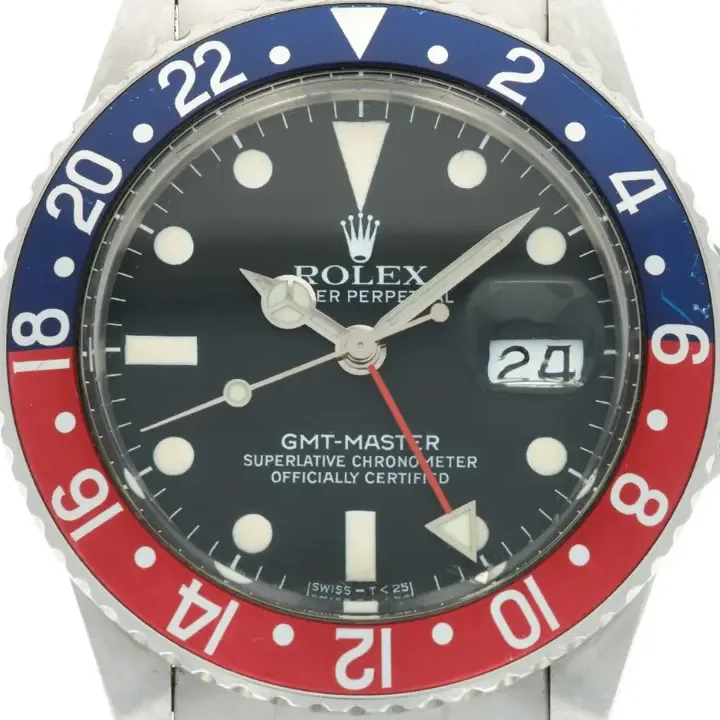
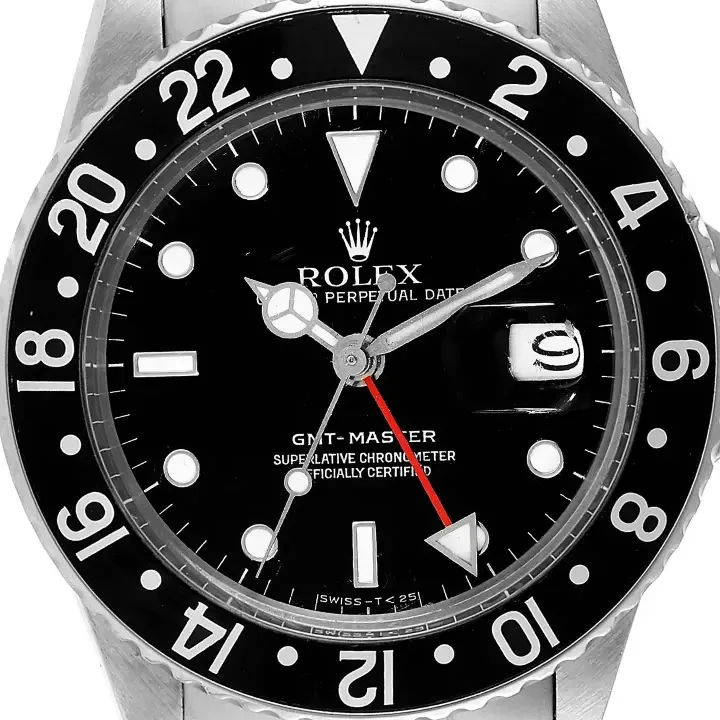
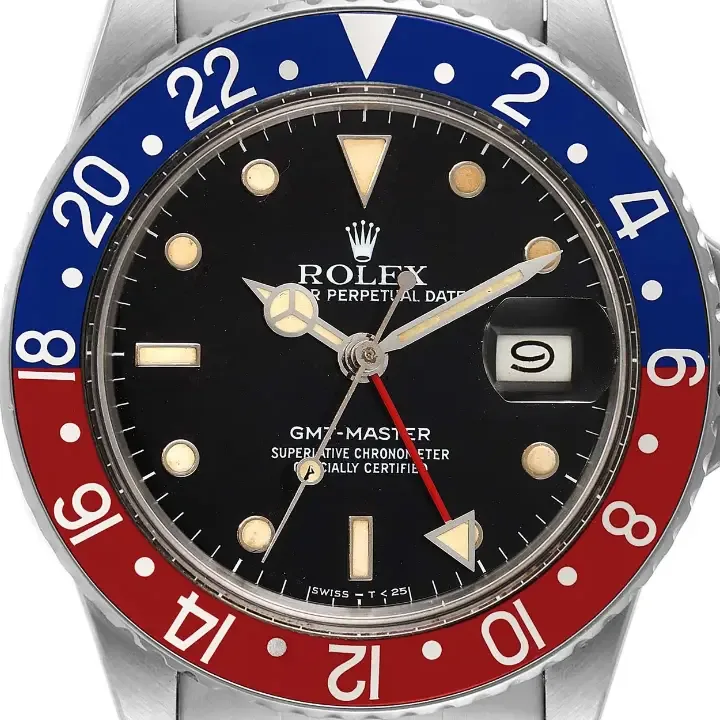
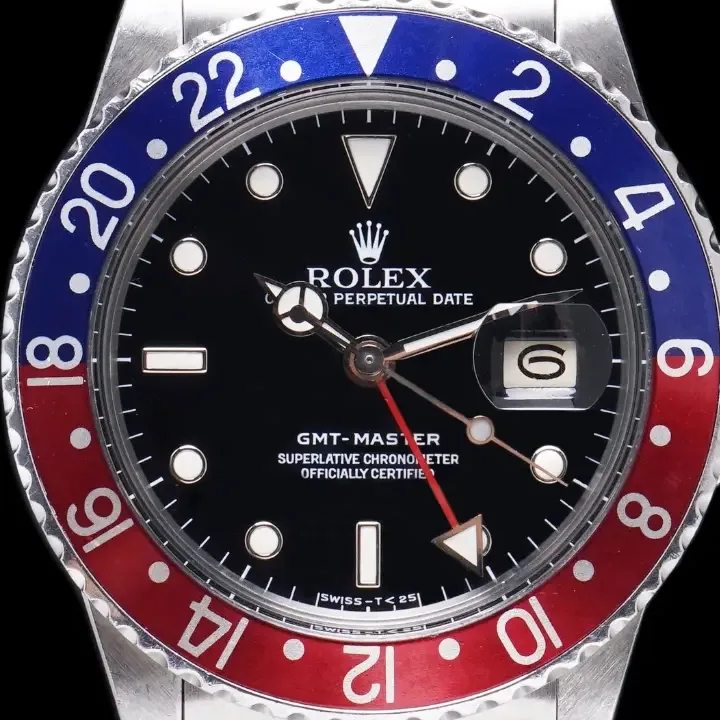
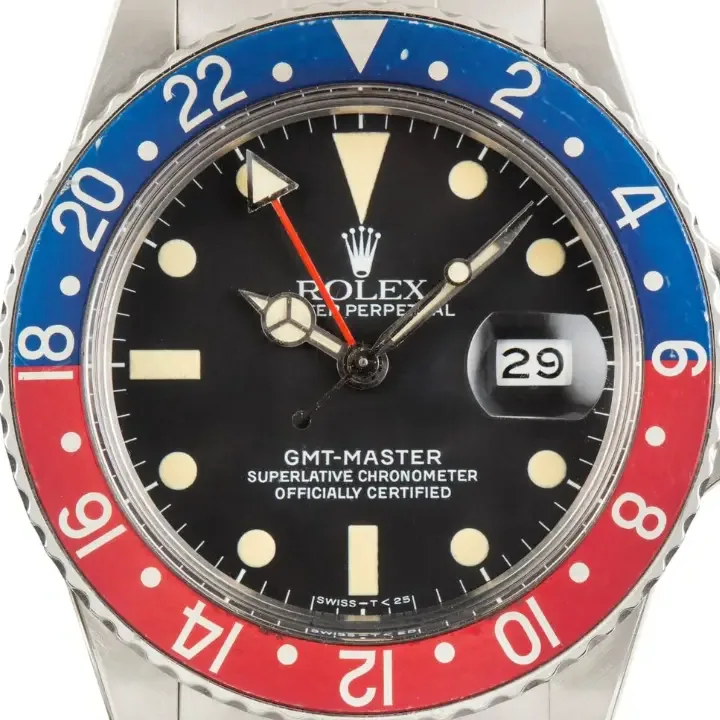
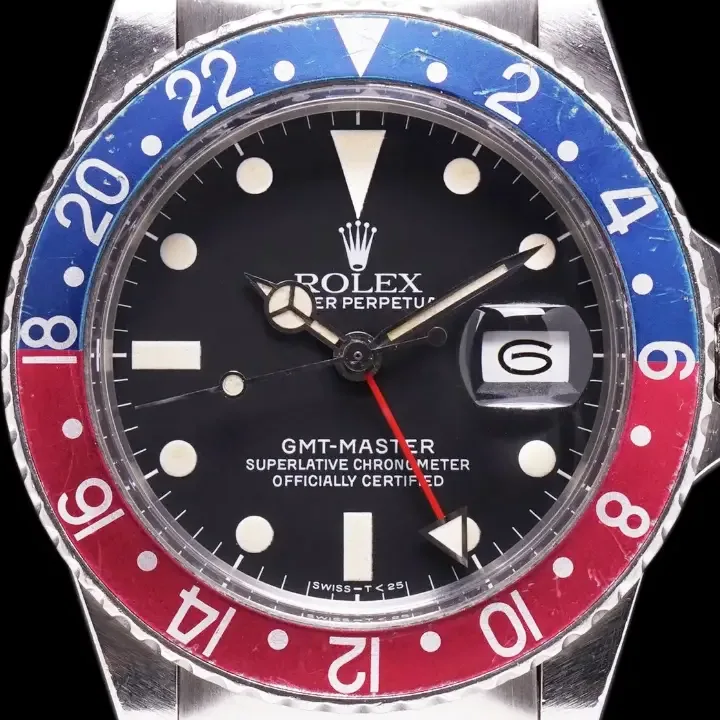
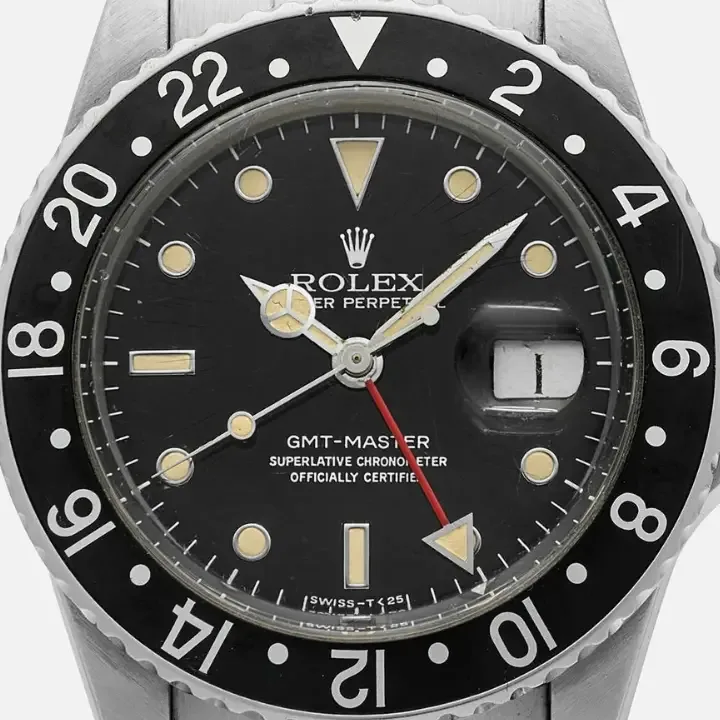
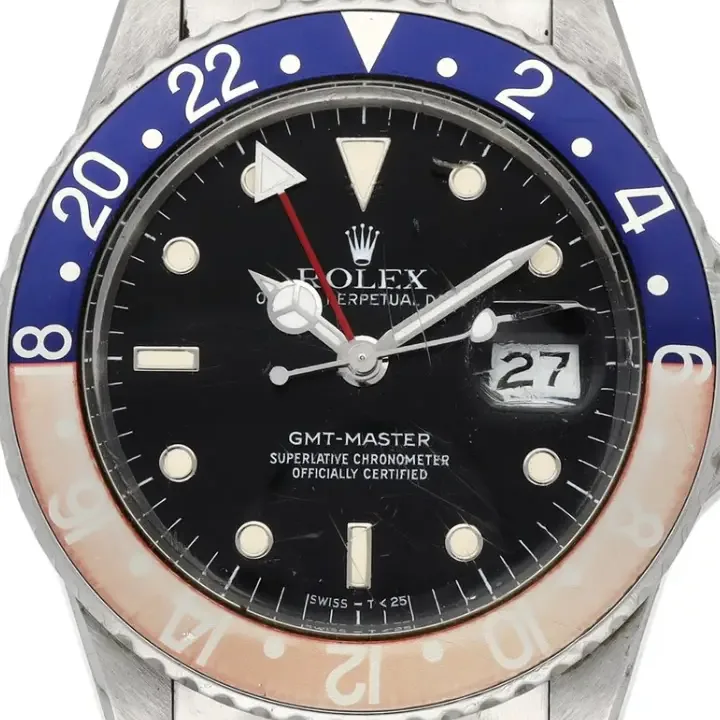
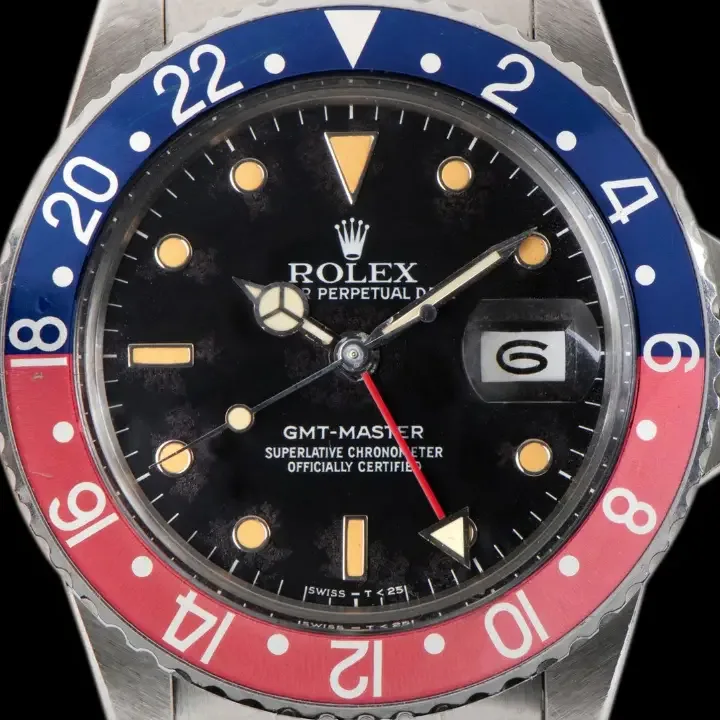
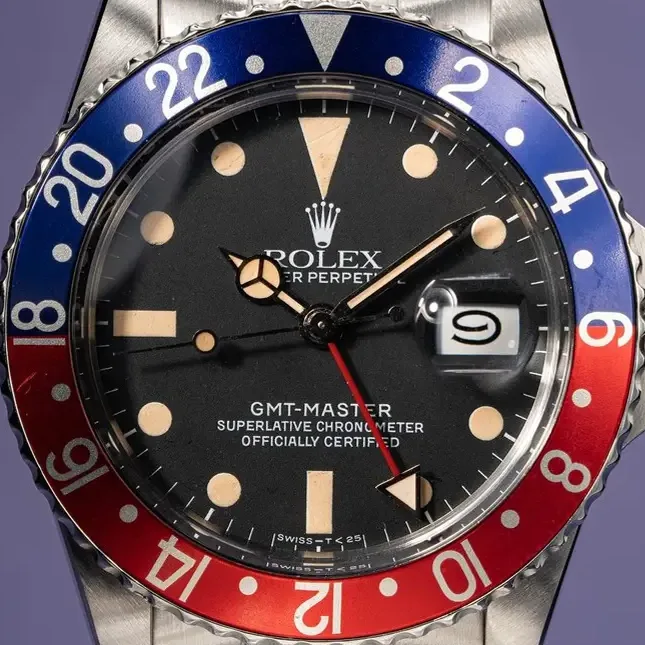
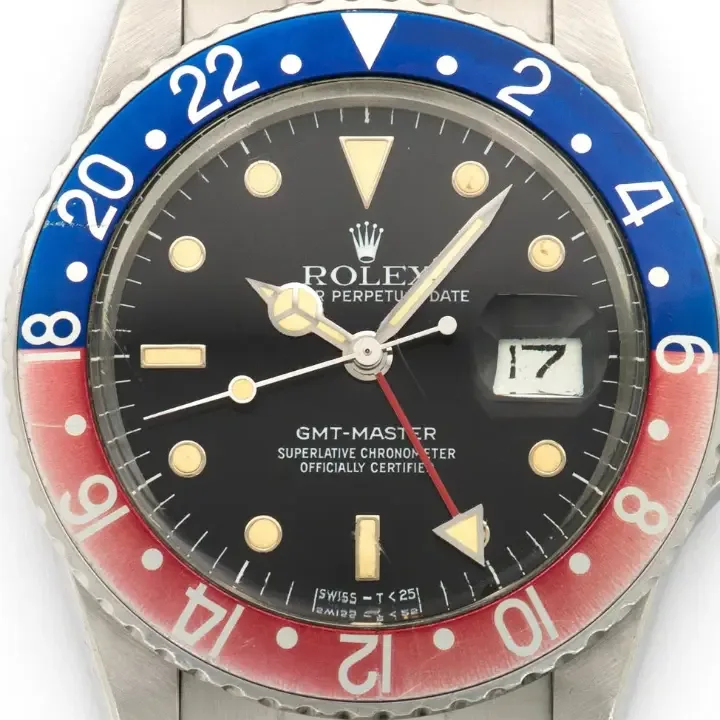
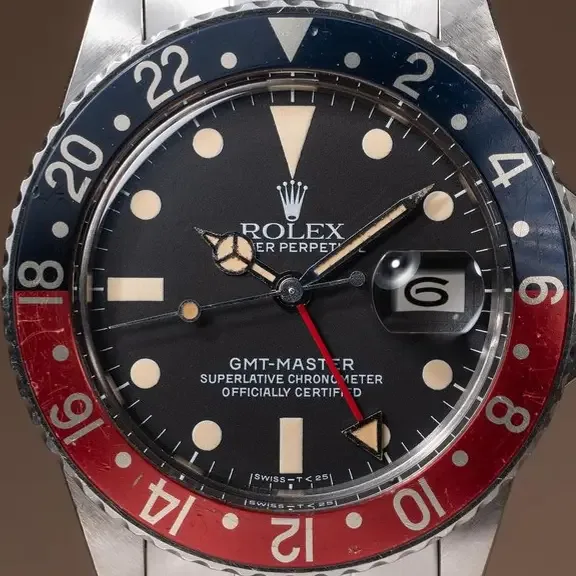
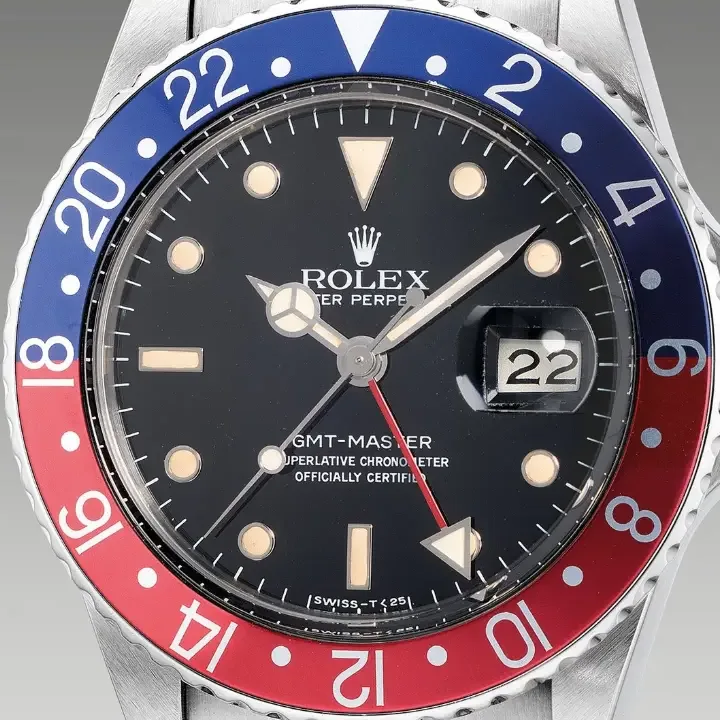
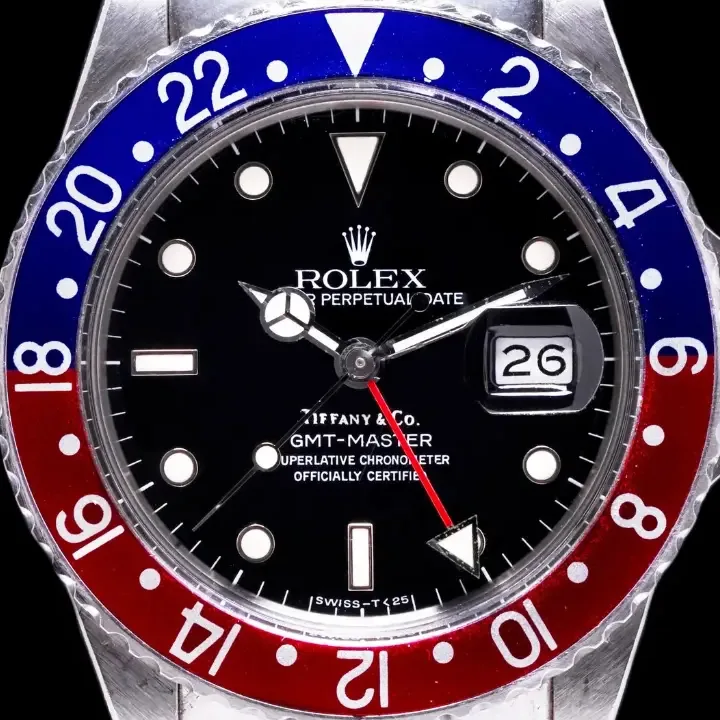
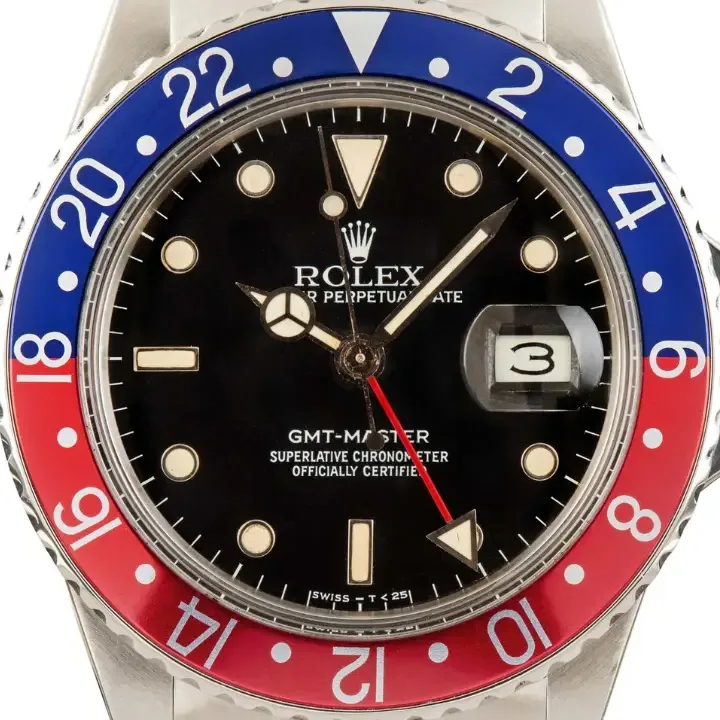
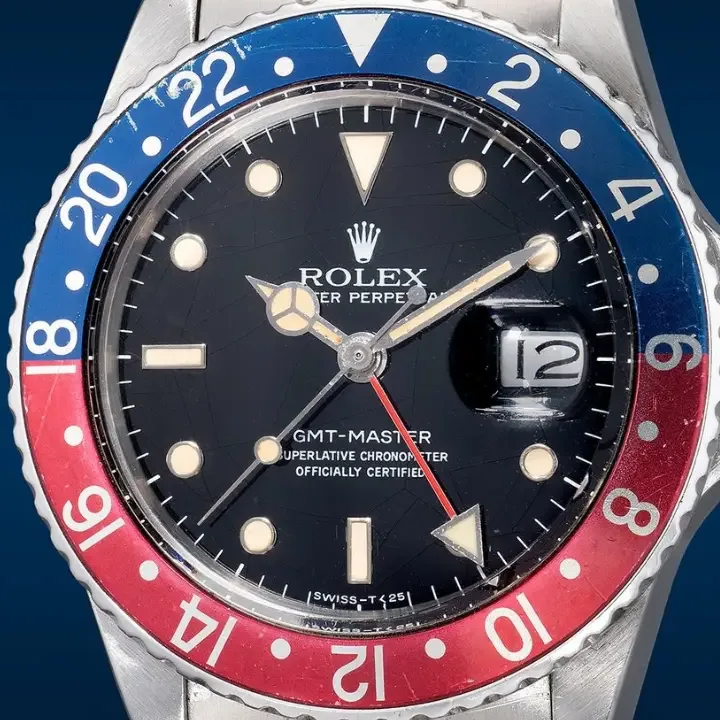
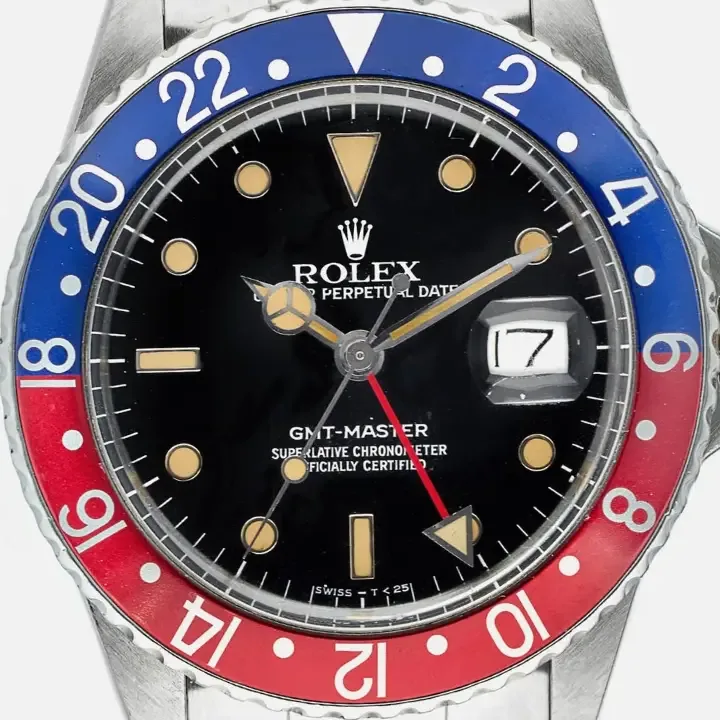
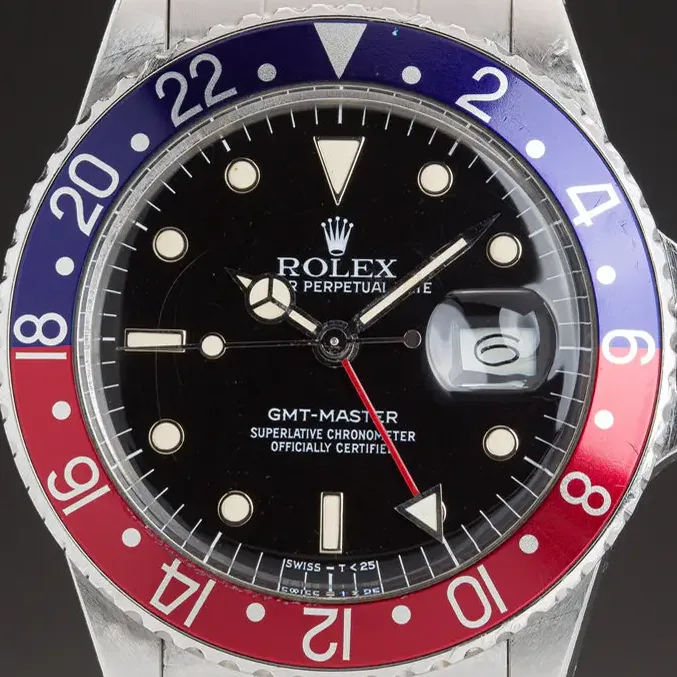
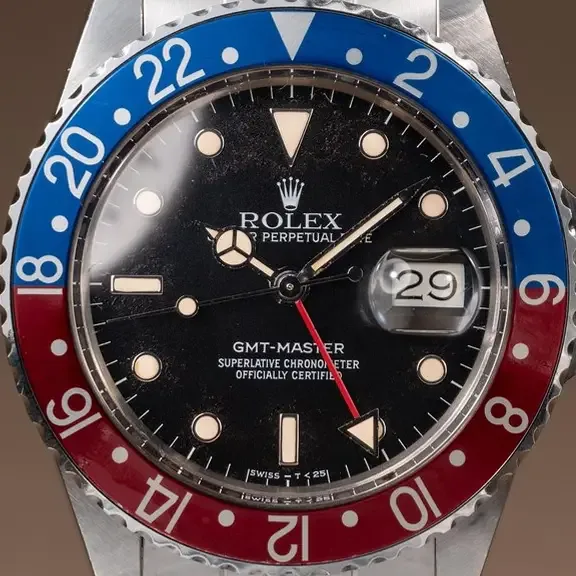
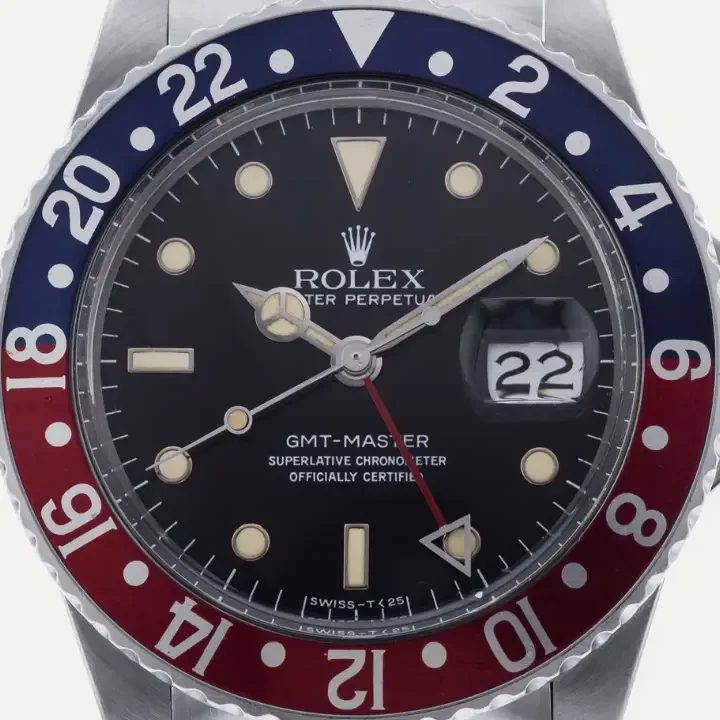
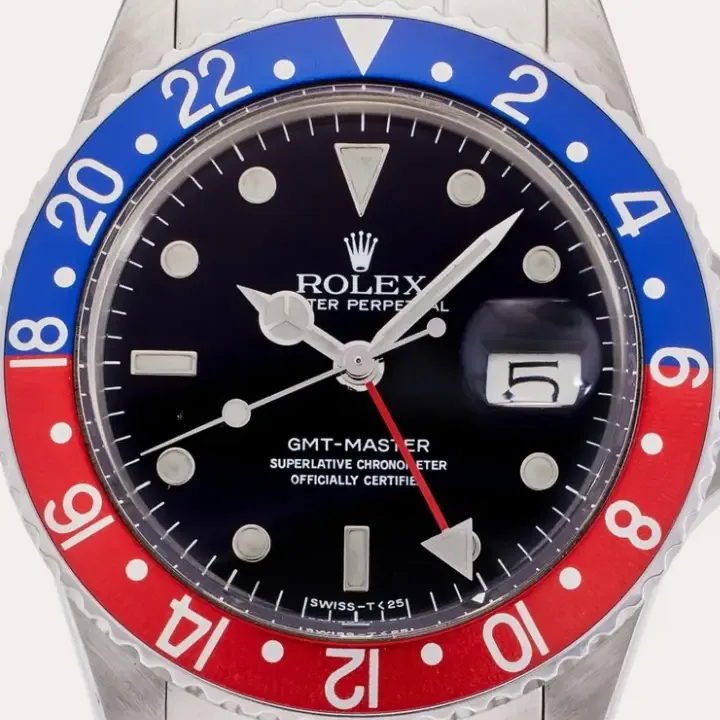
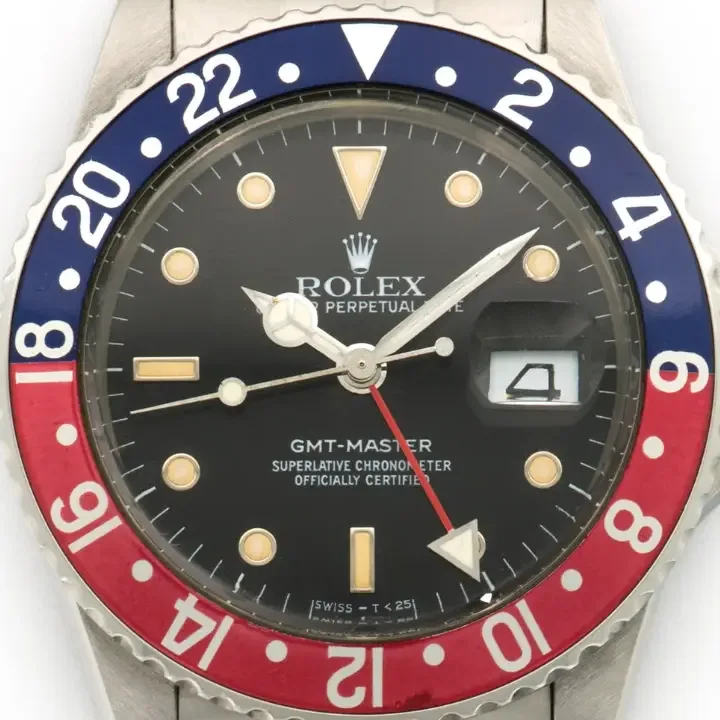
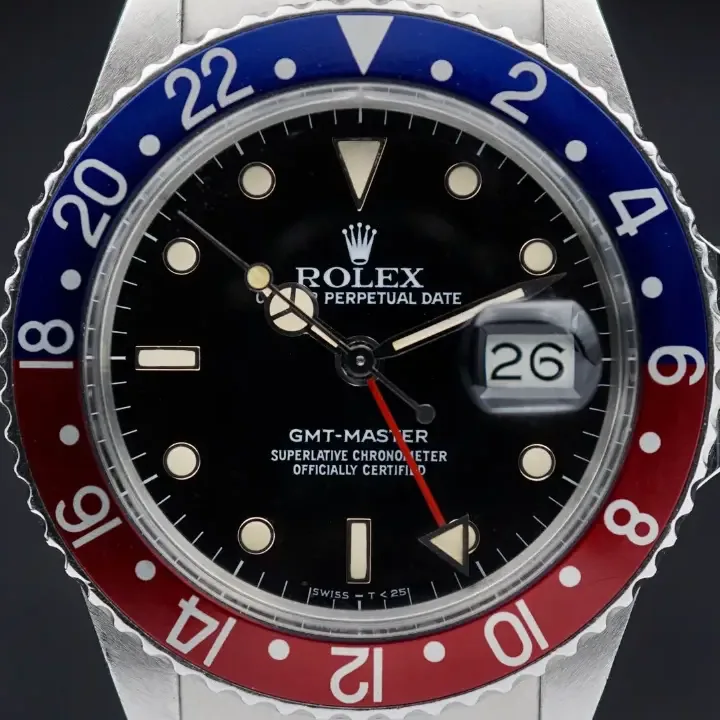
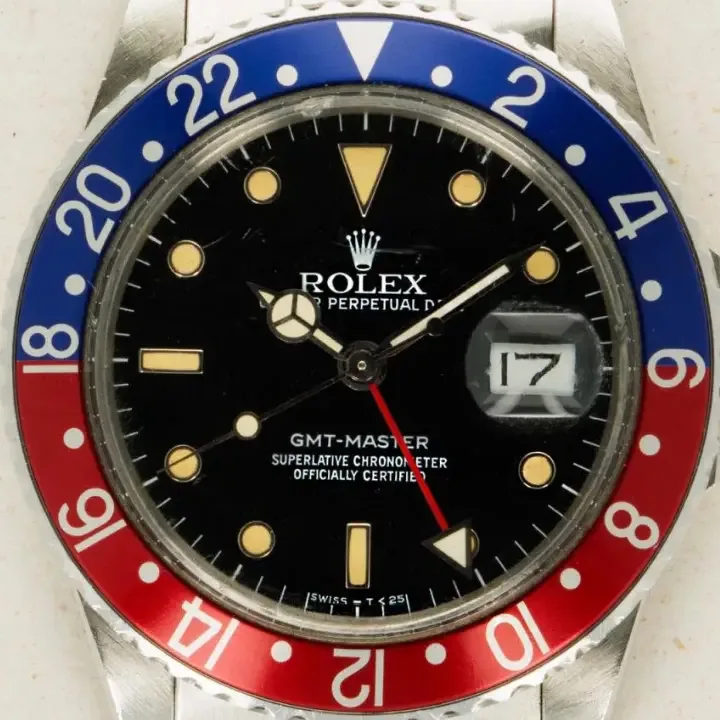
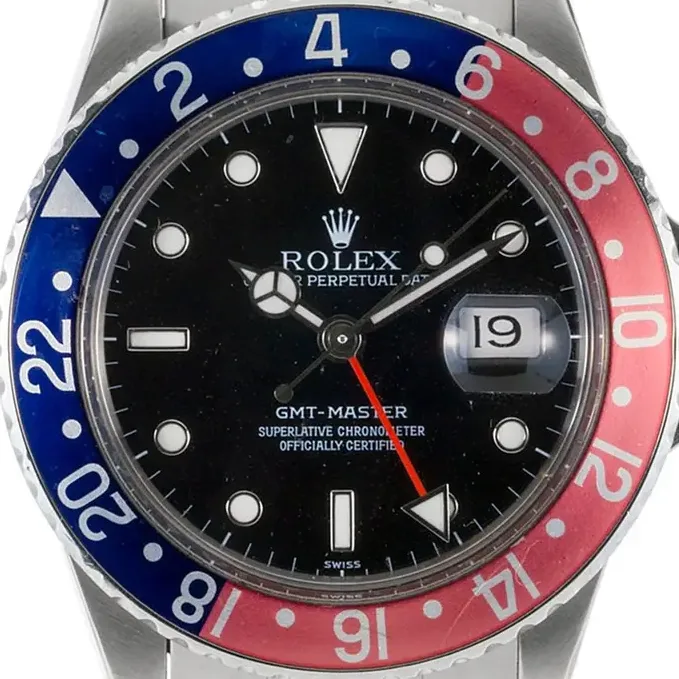
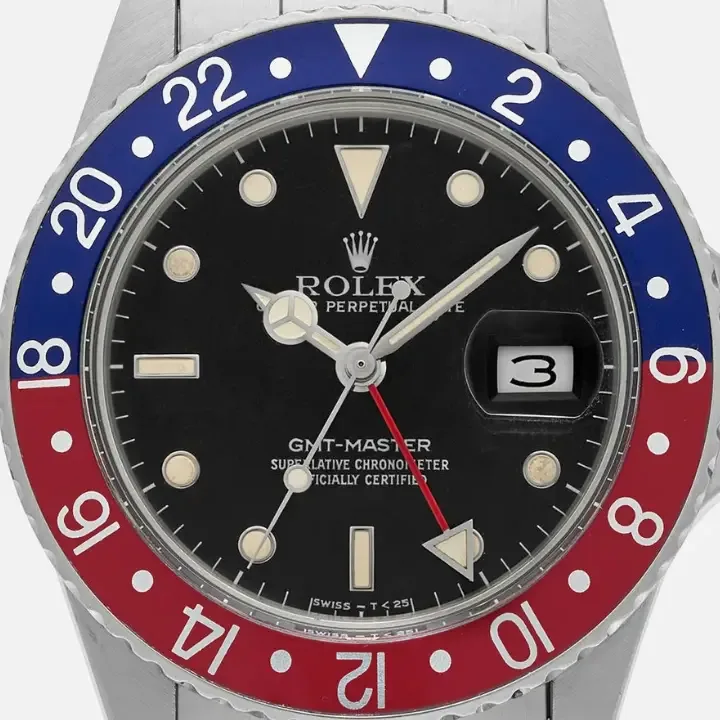
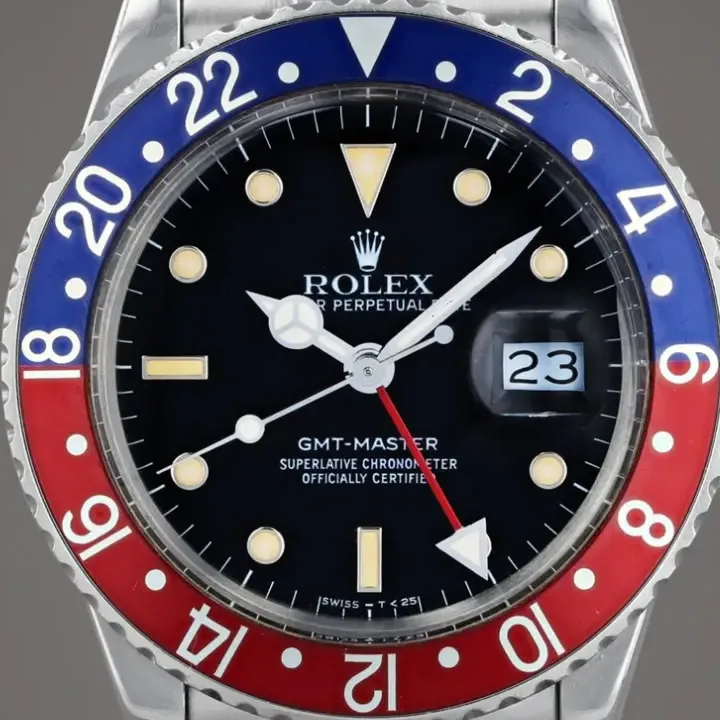
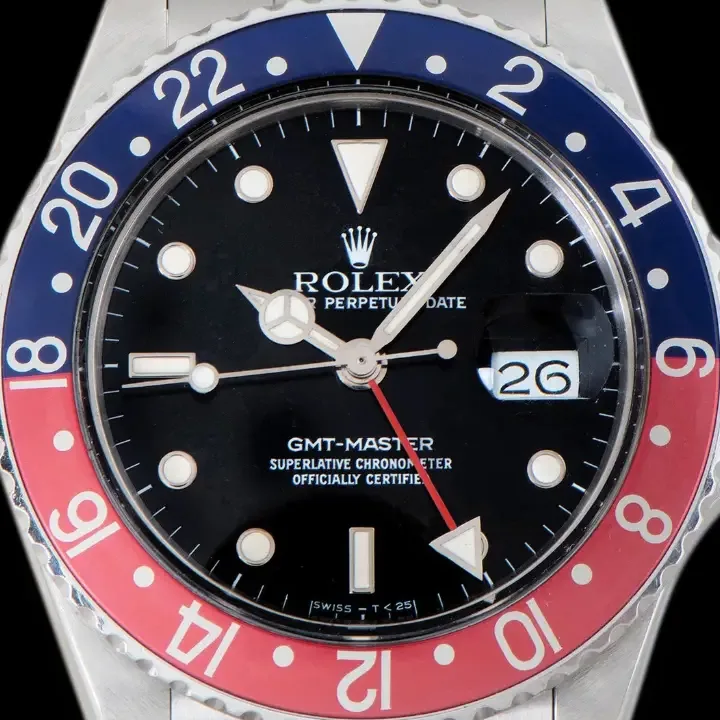
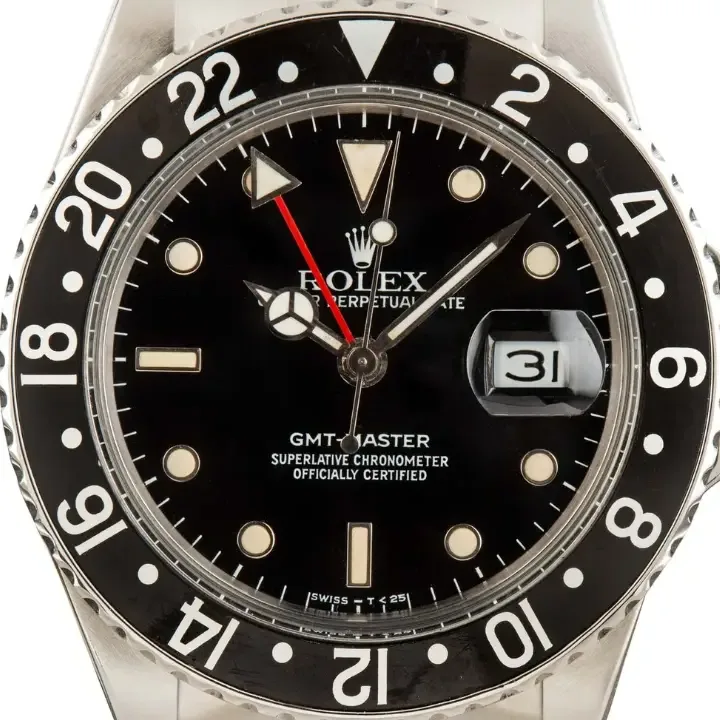
























































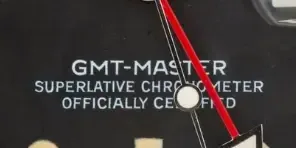
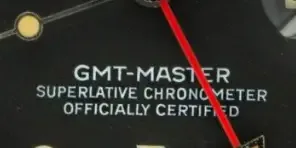


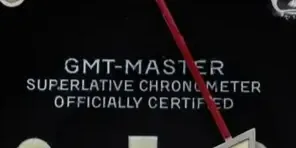
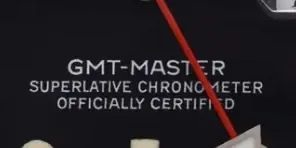




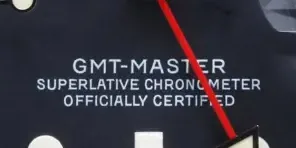




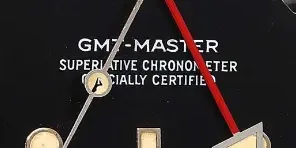



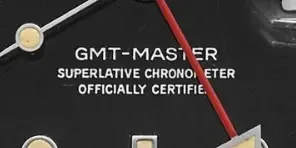


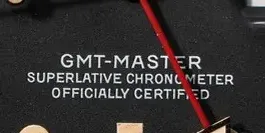







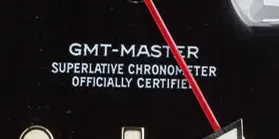
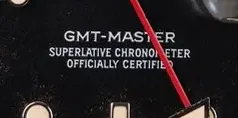

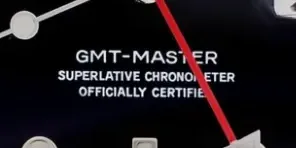
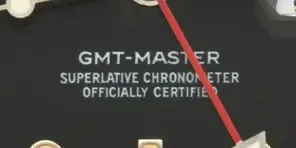



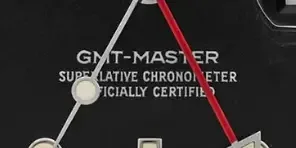

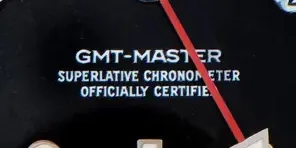


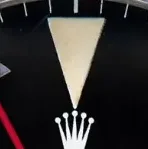
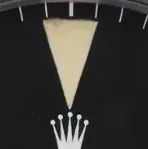
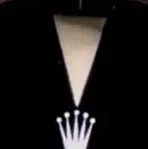


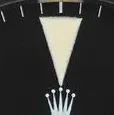
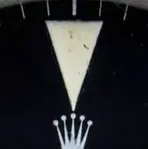
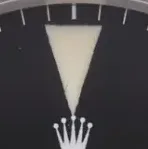
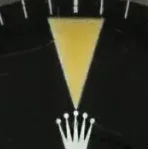
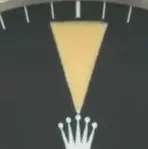
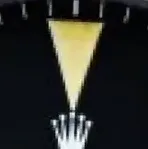
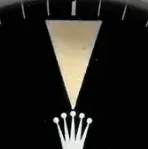
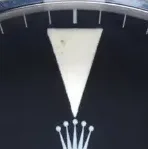
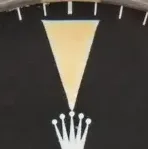
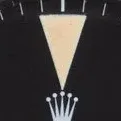

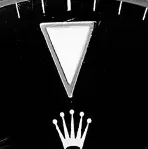
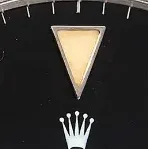

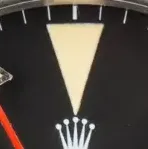

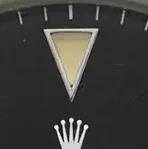
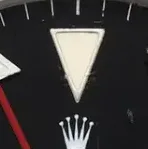
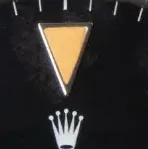
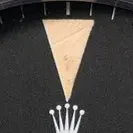
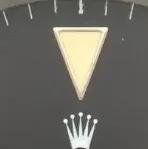
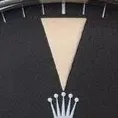
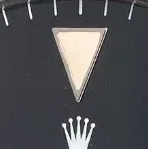
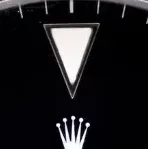
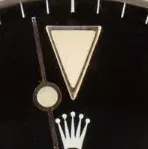
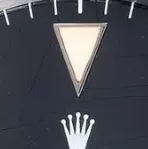
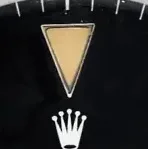
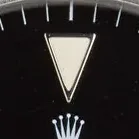
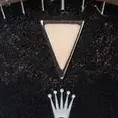




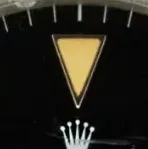
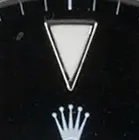
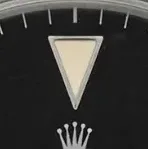

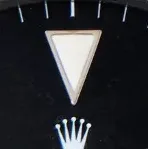

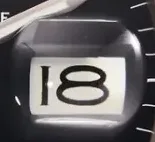
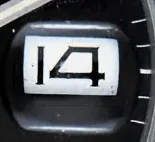

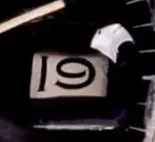

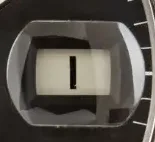
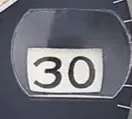
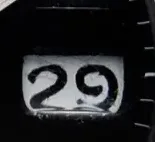
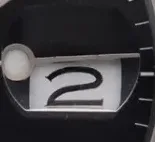
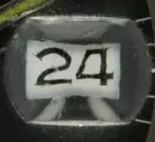
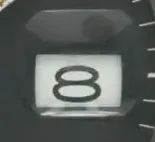
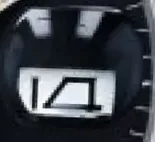
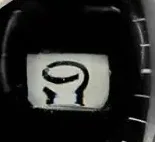
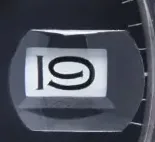
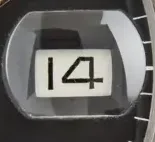

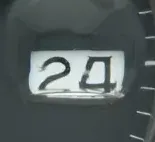

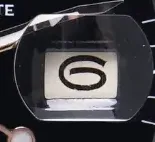
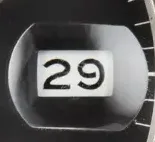


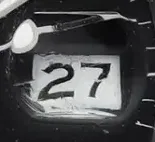
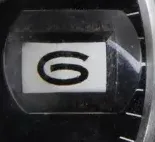
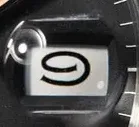
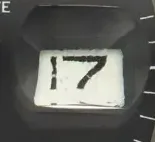
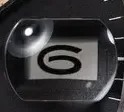
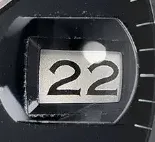
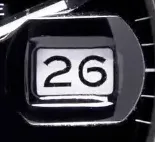
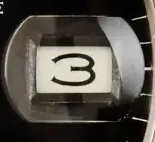
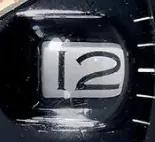
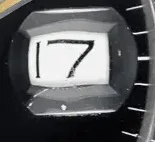

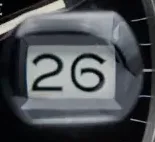
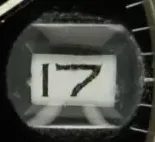
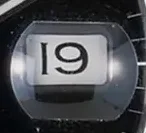
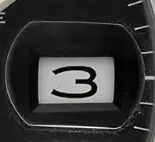
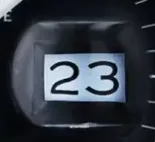
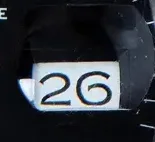
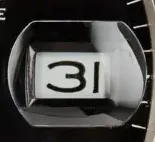

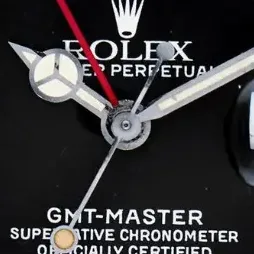
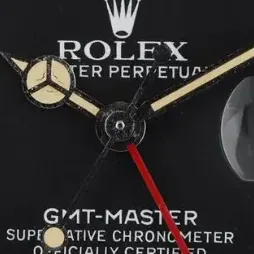
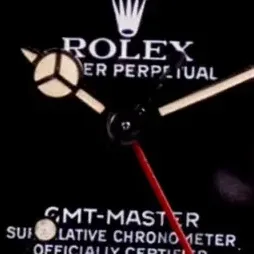
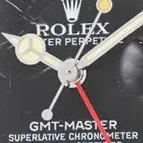
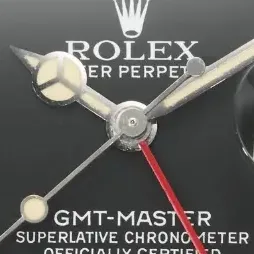
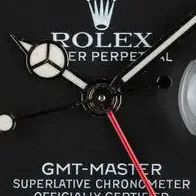
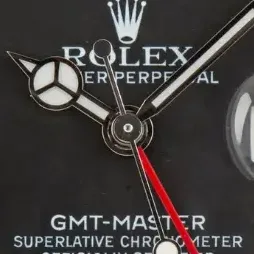
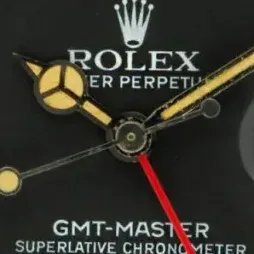
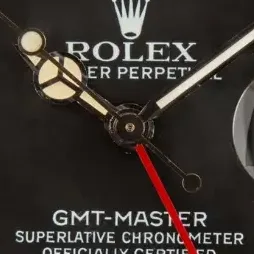
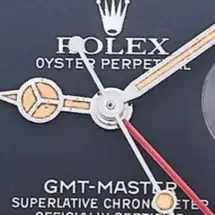
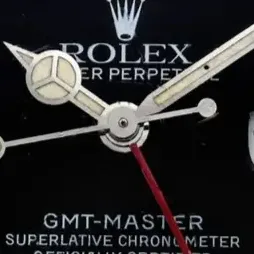
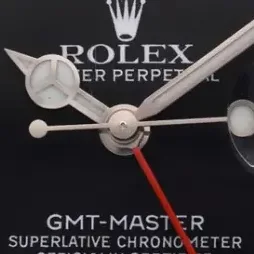
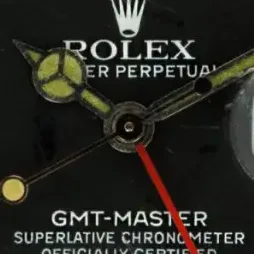
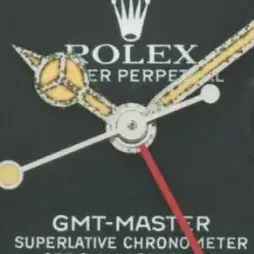
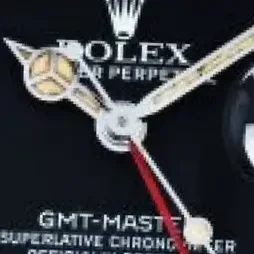
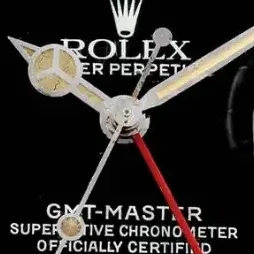
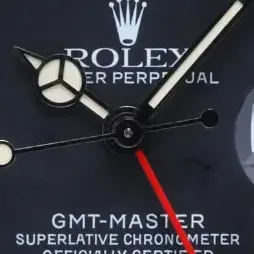
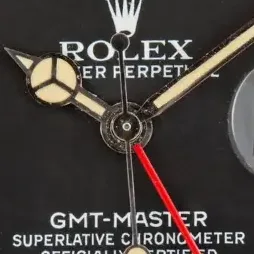
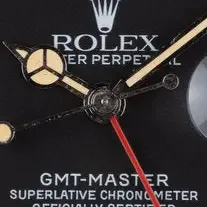

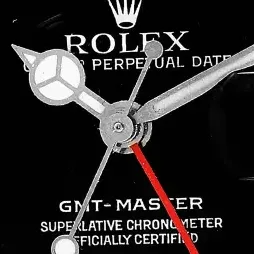

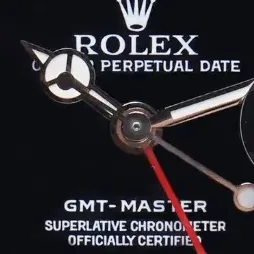
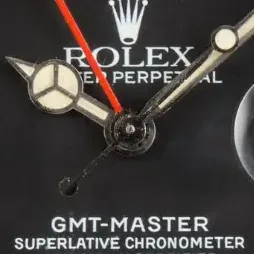
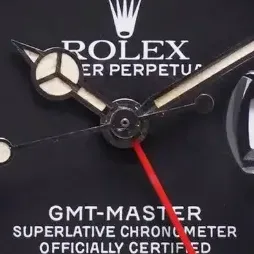


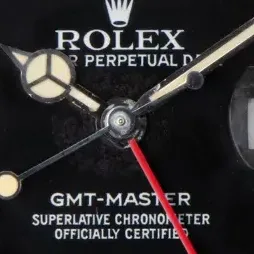
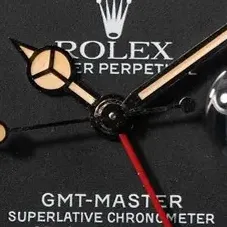

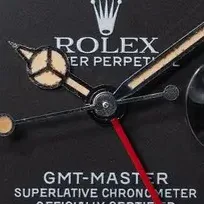
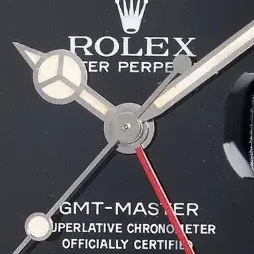

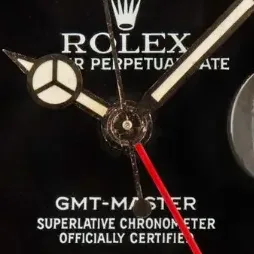


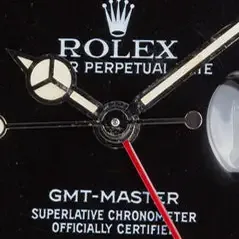
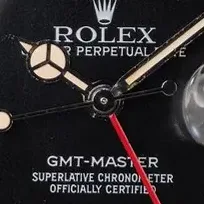






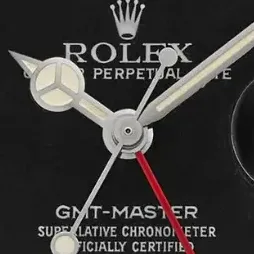

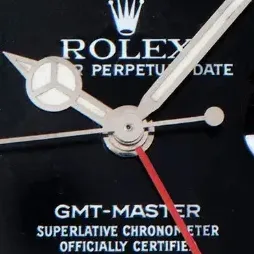
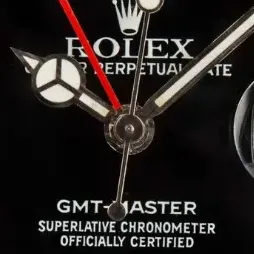

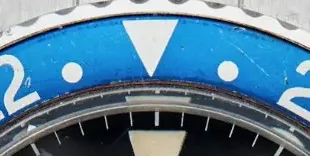
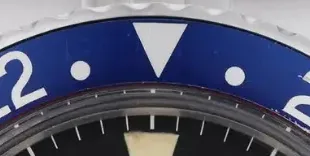
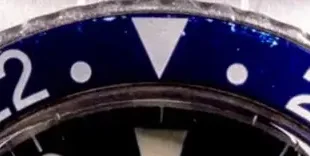
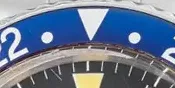






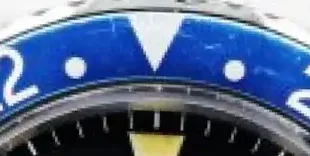


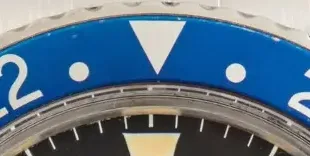
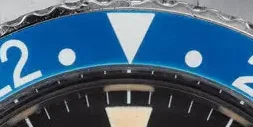

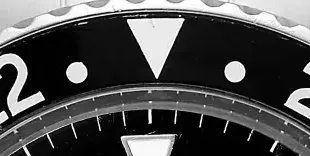
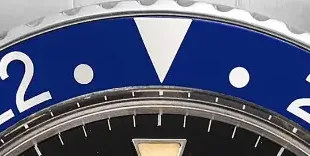
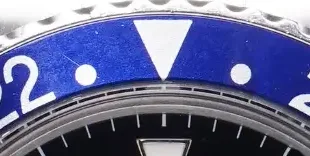

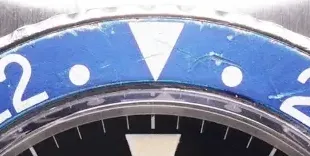
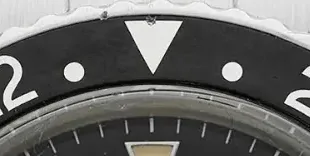


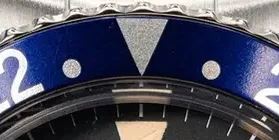
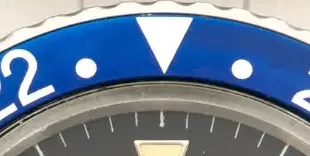
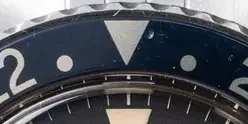


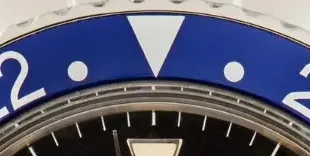

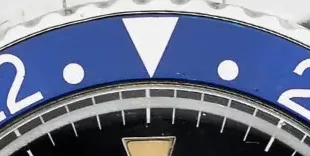
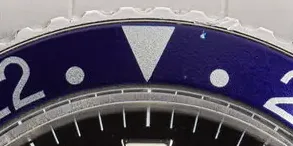

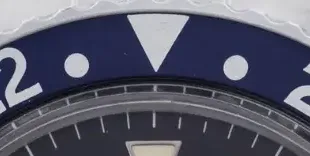




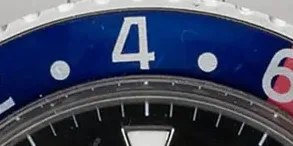


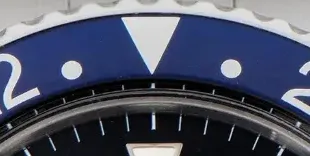
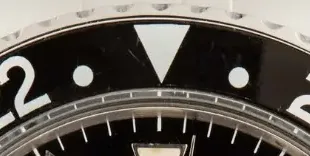
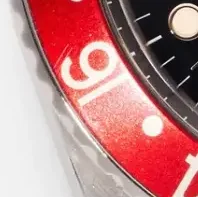
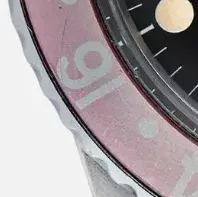
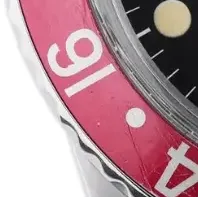
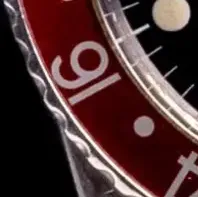
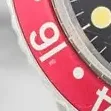
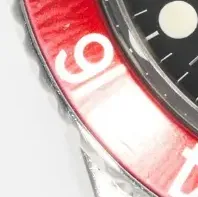
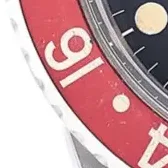
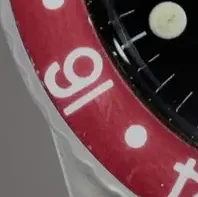
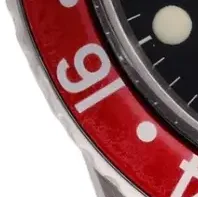
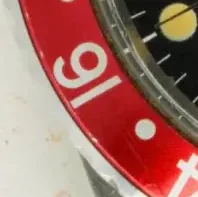

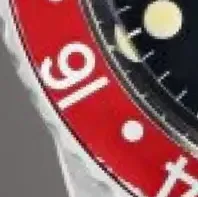
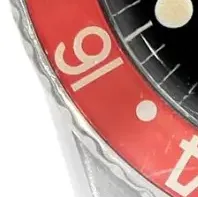
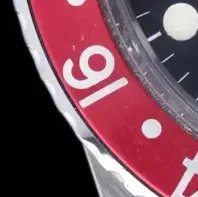
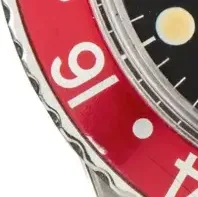
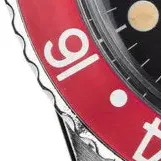
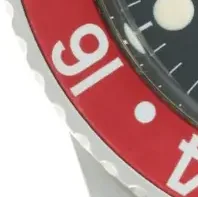
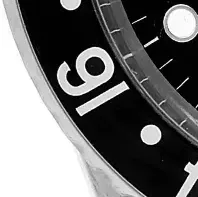
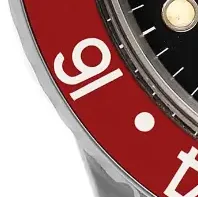
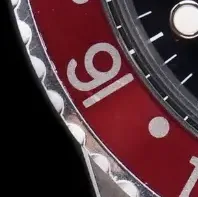
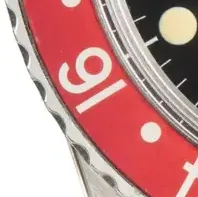
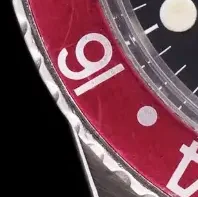
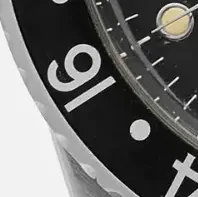

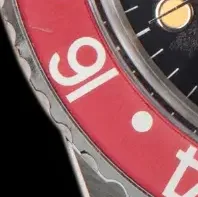
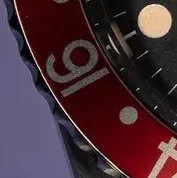
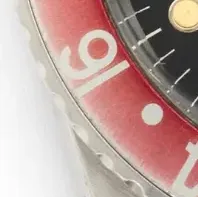
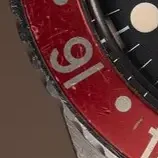
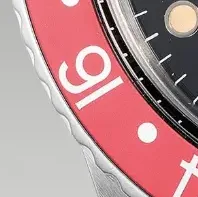
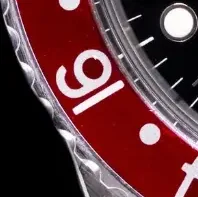
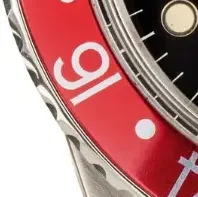
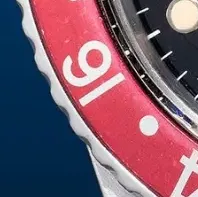
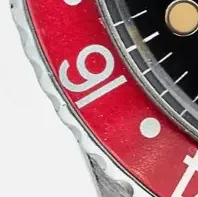
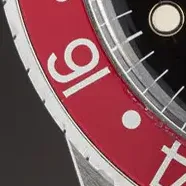
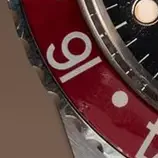
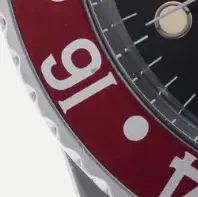
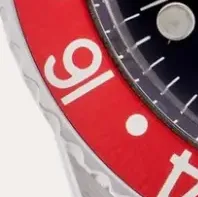
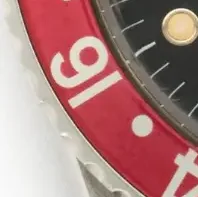
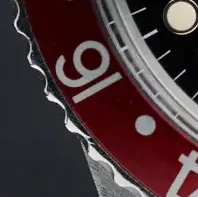
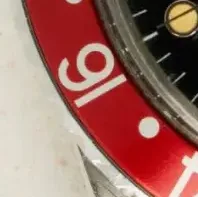
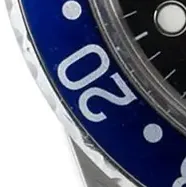
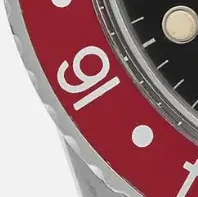
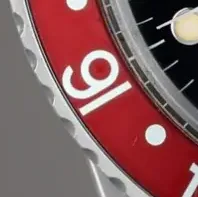
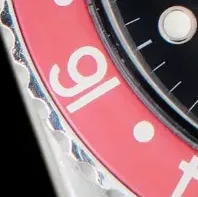
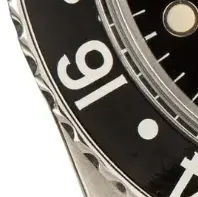

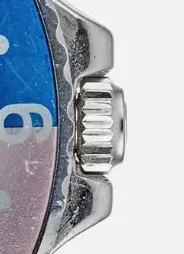
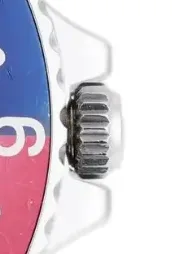

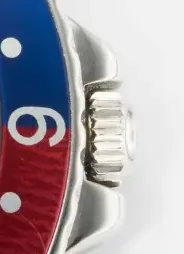
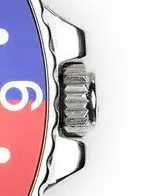
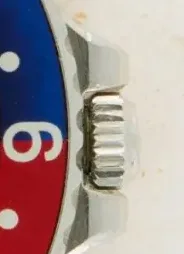

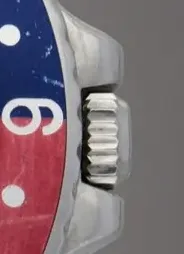
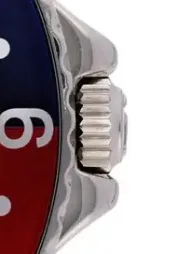
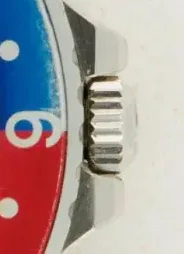
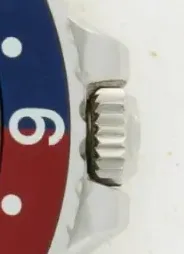
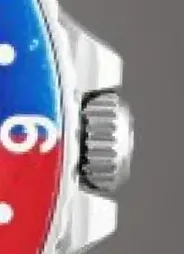
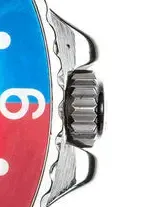
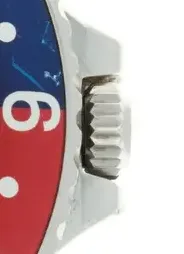
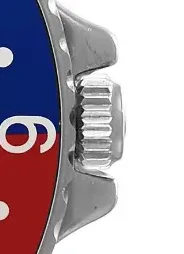
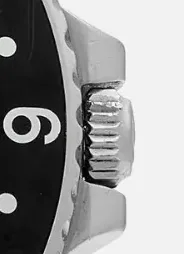
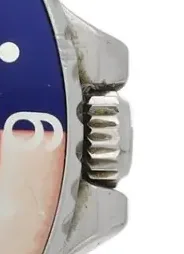
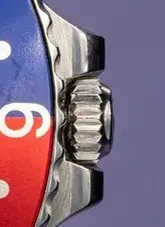
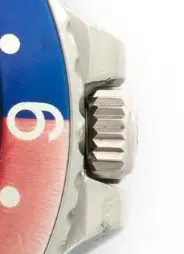
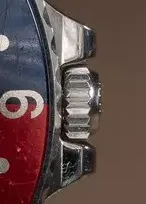
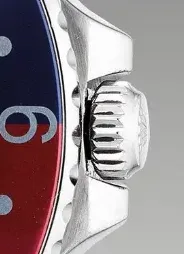
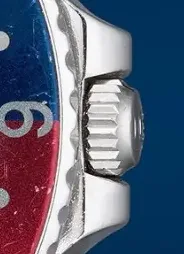
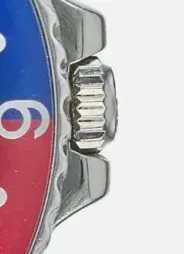
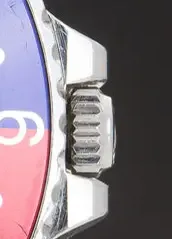
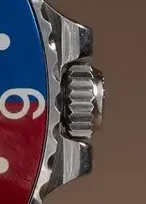
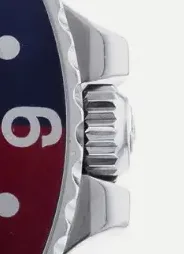

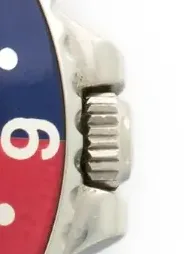
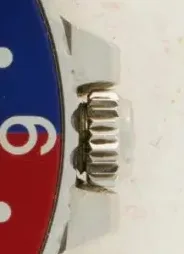
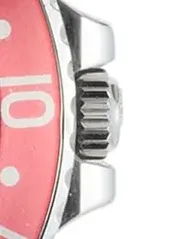
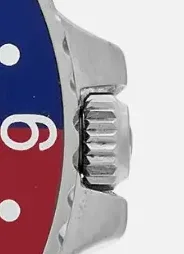
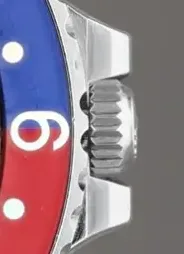

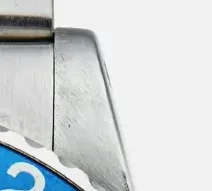

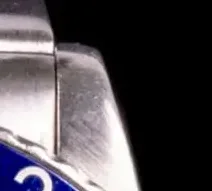


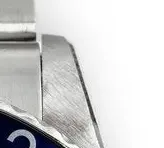











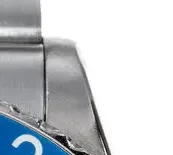

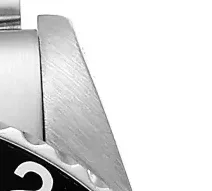
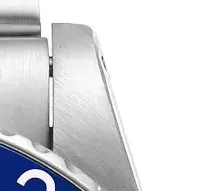



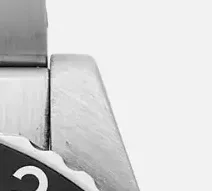
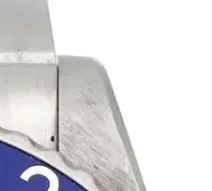

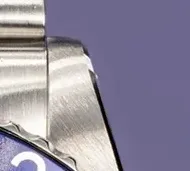

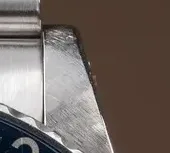
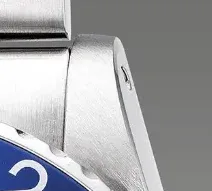

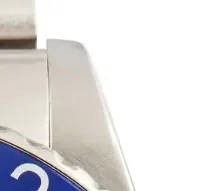

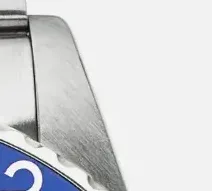

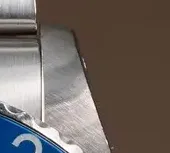









Illustrated history of the 16750: every change set out with close-up photographs of dated watches.
Chronology
Accounts begin the reference in 1979, 1980 or 1981 and end it in 1988; case numbers in the records give watches from 1979 to 1988 and one numbered in 1991.
Every dated variant: what is written, and what the records show
For the reference the marks are every dated watch; for a variant, the watches a seller names as that variant, so a variant sellers do not name has none.
The reference's own marks are dated by case number. A variant's marks use the year each seller states, so a variant can show watches in a year where the row for the reference shows fewer, or none.
Specification
| Case | 40 mm steel Oyster case, about 14 mm thick, screw-down crown; sellers list 39 mm on a few |
| Crystal | Domed acrylic; sapphire is fitted to the gold 16758, and sellers name it on a few steel watches, which will be later fittings |
| Bezel | Rotating 24-hour bezel with an aluminium insert, red and blue (Pepsi) or all black |
| Dial | Matte black with painted tritium markers, then glossy black with white-gold-surround applied indices |
| Hands | Mercedes hour hand; the GMT hand sits on top of the hour hand, where on the 1675 it lay nearest the dial |
| Movement | Self-winding calibre 3075, 27 jewels, Breguet hairspring, 28,800 vibrations an hour, about 48 hours' reserve, quickset date and hacking seconds |
| Bracelet | 3-link Oyster or 5-link Jubilee; the 78360 Oyster is cited |
| Water resistance | 100 m (330 ft), double the 1675 |
Dial 6 described
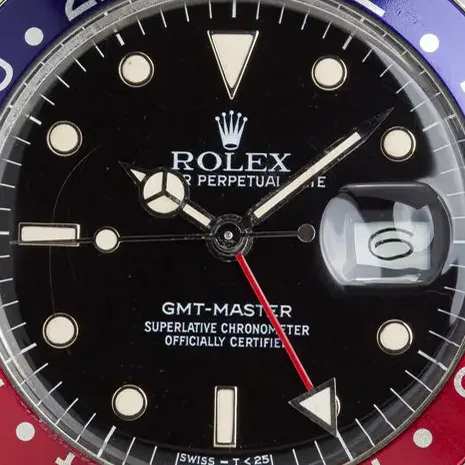
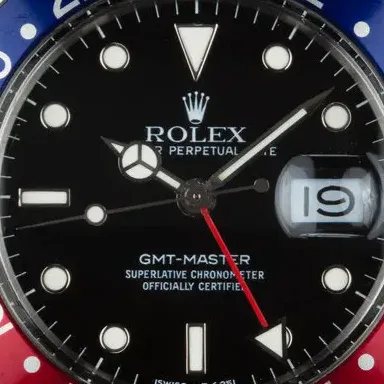
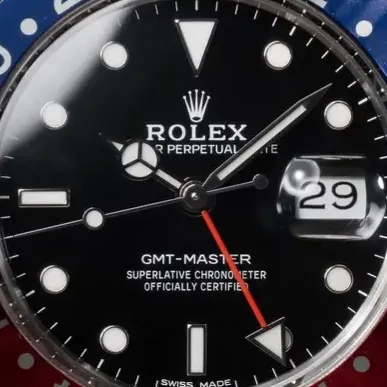
The first dials are matte black with painted tritium markers and are close to the 1675's. From about 1984 or 1985 they are glossy black with white-gold-surround applied indices. Original matte dials are scarce because many were swapped for gloss at service.
Matte
case numbers to about 8.4M
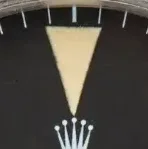
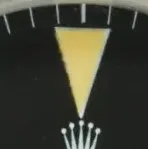
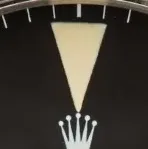
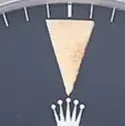
Matte black with painted tritium markers and no applied surrounds, on cases up to about 8.4M. It is close to the 1675's dial, differing only slightly in the printed crown and in the fine alignment of the lettering; matte dials share an unusually tall, elongated coronet. Matte dials with a Pepsi bezel are the transitional watches. Sellers name matte on more watches than gloss, mostly dated 1981 to 1984.
- painted markers Confirmed by eye on a watch of 1981; the photograph is not shown here. See the listing at swisswatchexpo.com
- tall coronet
Gloss with white-gold surrounds
case numbers from about 8.2M
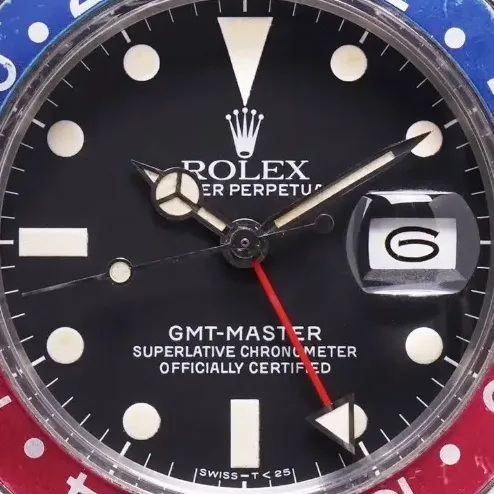
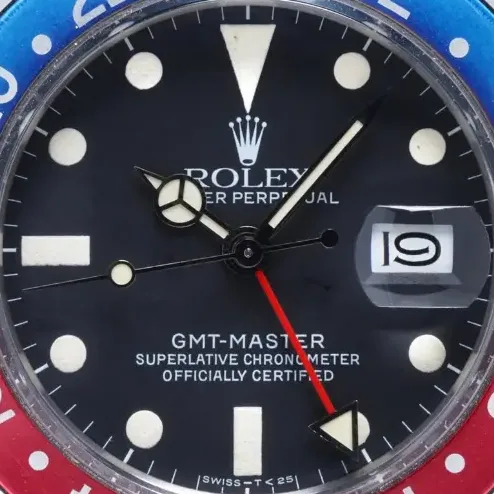
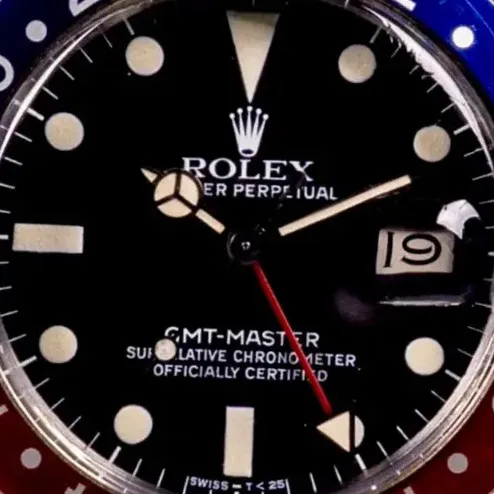
Glossy lacquer black with applied indices in white-gold surrounds, from about 1984 or 1985. Many matte dials were replaced with these at service, and the library's records find gloss dials common some 200,000 case numbers before the 8.4M given in the literature for the end of matte. Sellers name gloss on many watches, mostly dated 1983 to 1985.
- applied indices in white-gold frames
Spider dial
case numbers 8.2M to 8.8M
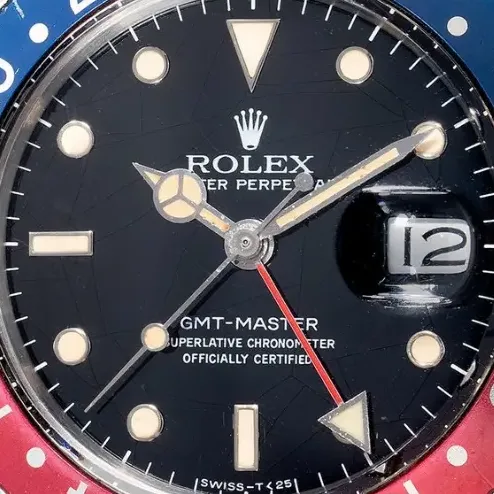
Fine cracks in the gloss lacquer of mid-1980s dials, called crazing, which affect the gloss and not the white text and show best tilted in bright light. Rolex replaced the lacquer fairly quickly and replaced many spider dials at service.
- hairline cracks
- text unaffected
Retailer and other signatures
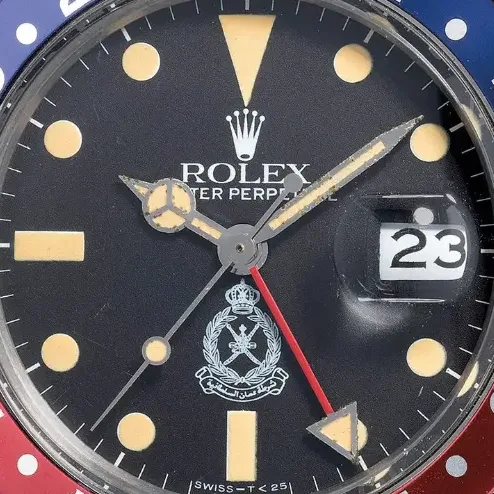
Tiffany & Co. is named as retailer on a few watches, mostly of 1983 to 1985, and the emblem of the Royal Omani Police (Khanjar) on a few of 1983. Dated watches that sellers describe this way fall mostly between 1983 and 1985; those are the years of the watches so described, which is not a stated span of production.
Gold dials
On the 16758 the early dials have nipple indices and the later ones flat markers set in gold surrounds. Most 16758 watches have a black dial with a black insert, some a brown dial with a brown insert. The 16758 can also have a Serti dial with diamond markers and a ruby or sapphire at 6, 9 and 12.
- nipple indices early
- flat gold-surround markers later
No Date dial
Sellers describe some dials, mostly early gloss dials with white-gold surrounds, as No Date dials: the print reads Oyster Perpetual with no Date after it. The literature does not describe them. The few blue, white and cream dials in the records come from listing wording, not from dials of those colours.
- no Date after Oyster Perpetual
Luminous material 2 described
Tritium throughout, with later service lume.
Tritium
The luminous material on dial and hands, named by sellers far more often than any other.
- tritium plots
Service lume
Luminova and Super-LumiNova are named by sellers on a few watches, and relumed dials or hands on a few dozen.
Hands 3 described
Mercedes hands, with a changed stacking order of the centre hands.
GMT hand above the hour hand
With the quickset movement the GMT hand sits above the hour hand, while on the 1675 it sits lowest, next to the dial. This is the quickest way to tell the two apart.
- GMT hand over the hour hand
Mercedes hands
Sellers name them on watches mostly dated 1982 to 1986; those are the years of the watches so described, not a span of production. Tritium hands can corrode, which often led to replacement with non-tritium hands; sellers record replaced or relumed hands on some watches.
- ring in the hour hand
Also sold under this name and confirmed by eye, the photograph not shown here: 1981 · the listing at swisswatchexpo.com, 1988 · the listing at swisswatchexpo.com.
Lollipop seconds
Named on a few watches, mostly dated 1981 to 1986; those are the years of the watches so described, which is not a stated span of production.
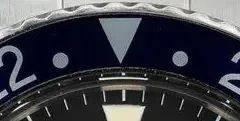
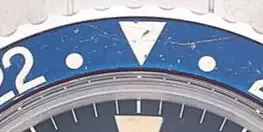
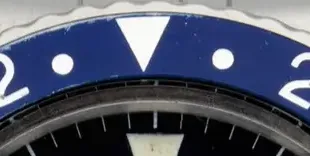
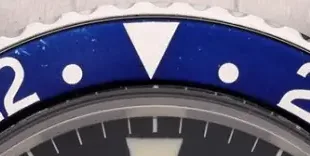
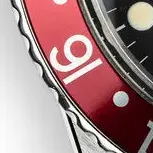
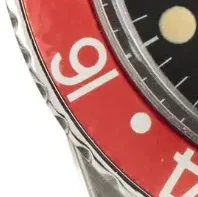
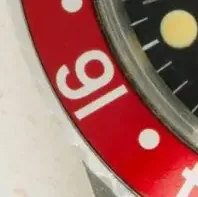
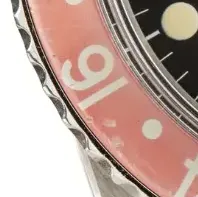
Bezel 4 described
Aluminium inserts, red and blue or all black.
Pepsi
The red and blue insert, the one sellers name most often, mostly on watches dated 1982 to 1985. Large fattish numerals are valued.
- red and blue insert
Black
An all-black insert, like that of a contemporary steel Submariner.
- all-black insert
Fat font and red-back
Sellers name a fat font on a few inserts, black as well as Pepsi, mostly on watches dated 1982 to 1984, and a red-back insert on rather more, mostly of 1983 and 1984. The literature remarks on fat numerals without dating them. Those are the years of the watches so described, not a span of production.
Brown (gold watches)
The gold 16758 has a brown insert on its brown-dial watches.
Case 2 described
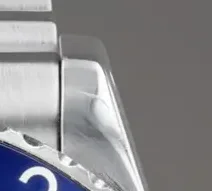
A 40 mm case about 14 mm thick, slightly larger than the original GMT-Master.
Steel case
Lugs thick with bevels and drilled holes on unpolished watches; sellers describe rather more cases as unpolished than as polished, and some as lightly polished. A 1986 case numbered 91885xx is described in the literature as one of the last of the reference, though the library's records hold higher numbers and letter-prefix cases dated 1988.
- bevelled lugs
Two-tone and gold
The 16753 is the two-tone gold and steel version and the 16758 the full yellow gold one.
- two-tone
- yellow gold
Crystal 2 described
Domed acrylic on the steel and two-tone watches.
Acrylic
Domed acrylic, the crystal sellers name most often.
- domed acrylic
Sapphire
Synthetic sapphire on the gold 16758; sellers name it on a few dozen steel watches, which will be later fittings. Sapphire arrives on the 16760 in 1982.
Date 1 described
Quickset date, set at the first crown position.
Quickset date
Sellers name it as a single quickset. A few describe a date wheel with open 6 and 9.
- date set with the crown
Movement 1 described
The first GMT-Master with a 3000-series movement.
Calibre 3075
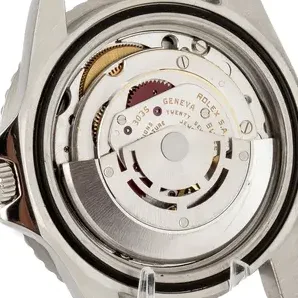
27 jewels, Breguet hairspring, KIF shock absorber, 28,800 vibrations an hour (against 19,800 for the 1575), quickset date, hacking seconds carried over from the 1575, and a 48-hour reserve. Nearly every seller who names a calibre names this one; a stock description repeated in some listings names calibre 3035 instead, in error.
- 28,800 vph
- hacking seconds
Bracelet 3 described
Oyster on 3 links or Jubilee on 5.
Oyster 78360
The Oyster reference sellers name most often, mostly on watches dated 1982 to 1985, usually with 580 end links and less often 550.
- 3-link Oyster
Jubilee
Named on fewer watches than the Oyster; sellers cite 62510H more often than 62510.
- 5-link Jubilee
93150
Named by sellers on some watches. Dated watches that sellers describe this way fall mostly between 1979 and 1984; those are the years of the watches so described, which is not a stated span of production.
Box and papers 1 described
Service papers and guarantees, as sellers describe them.
Papers
Sellers name service papers on some watches and a punched guarantee on others. Dated watches that sellers describe this way fall mostly between 1982 and 1985; those are the years of the watches so described, which is not a stated span of production.
Originality
- Matte dials are often replaced with gloss at service; an original matte dial is scarce.
- Tritium hands corrode and are often replaced with non-tritium ones.
- Spider dials were replaced at service by Rolex.
Names
- Pepsi. The red and blue bezel insert.
- Spider dial. Cracks in the lacquer.
Where accounts differ
Points on which the published literature and the library's own records do not agree, or on which the literature contradicts itself.
- Start of production. Pages give 1979, 1980 or 1981, and one account gives 1980 and 1981 in different sections. Case numbers in the records give watches in both 1979 and 1980.
- Matte to gloss. One account puts the end of matte dials at about 8.4M. In the records gloss dials are 37% of those read between 8.2M and 8.3M and 67% between 8.3M and 8.5M.
- Beat rate of the 1675. Two accounts give the 1675 as 19,600 vibrations an hour, others 19,800.
- Crystal. Most accounts say the steel 16750 has acrylic; one lists a later sapphire option. Sellers name sapphire on some steel watches.
Back and movement
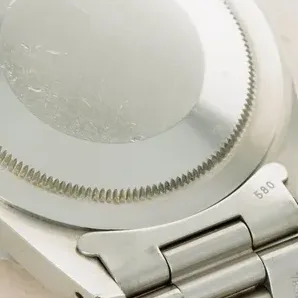
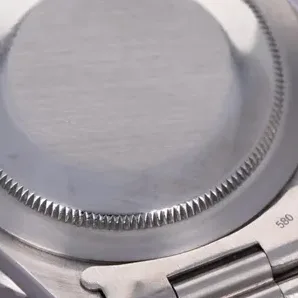
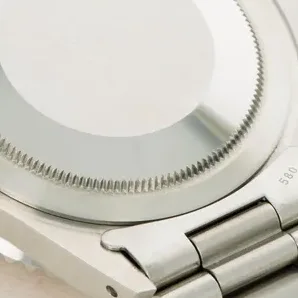
From listings of this reference, each confirmed by eye to show what it is filed under. A picture on which a person's name or a personal engraving can be read is not shown. From most holders a detail from the middle of the photograph is shown; the mark in its corner gives its holder and a link to the listing.
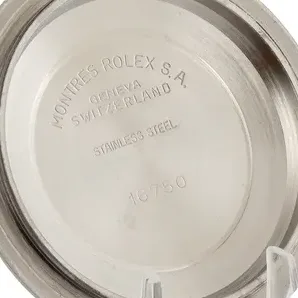
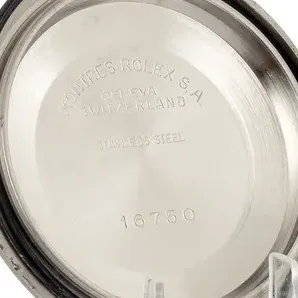
Caseback
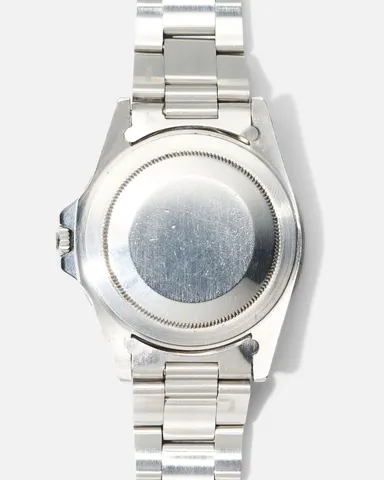
Inside the caseback
Movement
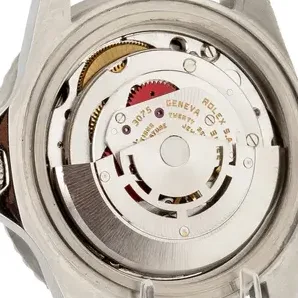
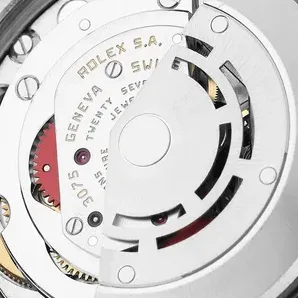
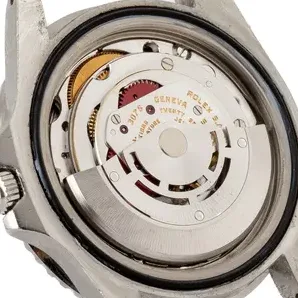


In the records
Counted from 718 listings at 61 holders between 15 December 2009 and 14 November 2026. These are what sellers and auction houses state, not measurements.
Fainter bars are the 10 outside the main run of 1980–1988 (the middle nine-tenths): the earliest is 1979 and the latest 1991. They are early and late examples, and now and then a number misread. The head of the page gives 1979–1988: the years that listings from two holders bear out.
At the holders that record papers on every watch, 28% of their 50 listings of this reference come with papers; at those that record the box on every watch, 56% of 103 come with a box. "Papers" is whatever the holder counts as papers, and can include service papers.
6 listings dated long after the reference ended are set aside and not counted here: a year that late belongs to a later watch sold under the old number, or to a listing filed under the wrong one.
Case metal
| Steel | 279 | |
| Steel and gold | 2 |
Dial colour
| Black | 230 | |
| Blue | 5 | |
| White | 4 | |
| Cream | 3 | |
| Orange | 1 |
Case size
| 40 mm | 220 | |
| 39 mm | 38 | |
| 42 mm | 5 |
Calibre named
| 3075 | 202 | |
| 3035 | 9 | |
| 3065 | 3 | |
| 1570 | 3 |
Bracelet or strap
| Oyster bracelet | 188 | |
| Jubilee bracelet | 51 | |
| Metal bracelet, kind not stated | 28 | |
| Fabric strap | 2 | |
| Leather strap | 1 |
Each table counts the listings that state the thing, in the seller's own terms. A size, metal, colour or calibre that cannot belong to this reference is a seller's slip or a listing filed under the wrong number.