Perpetual Calendar Chronograph
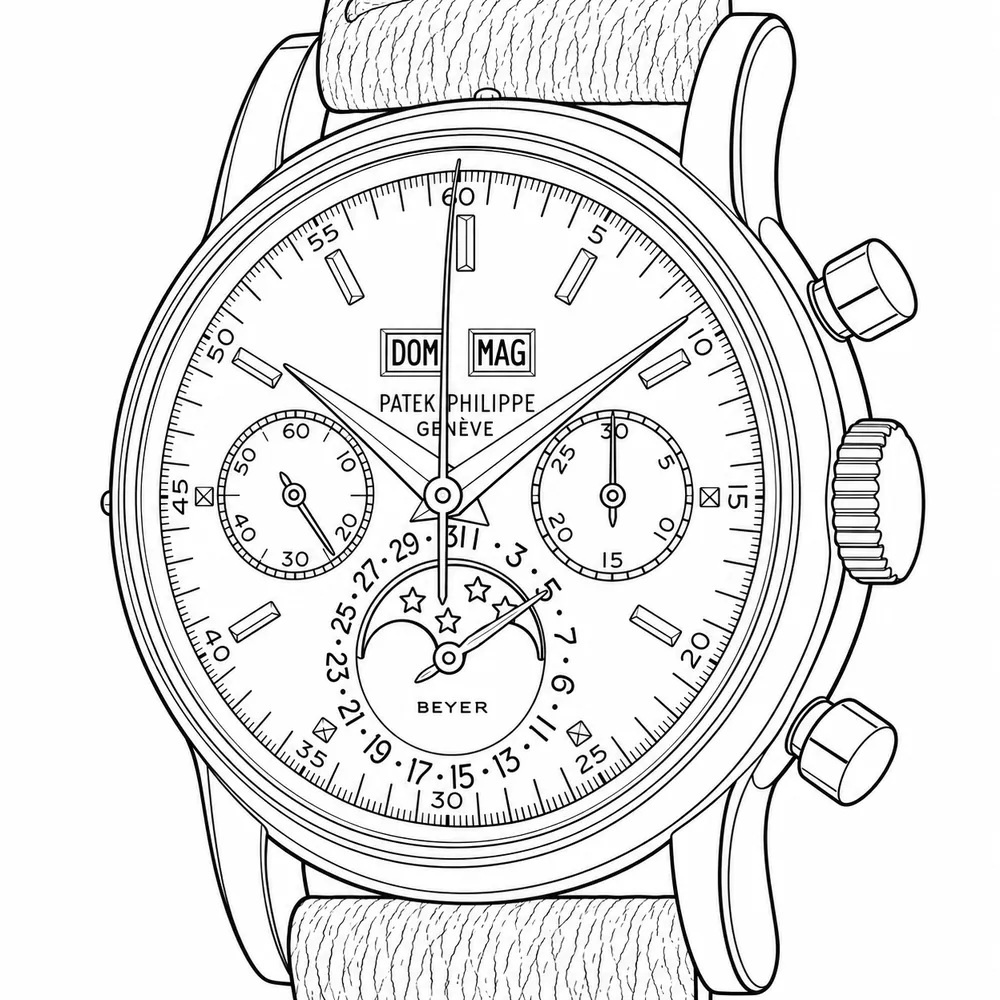
The second series-made perpetual calendar chronograph wristwatch from Patek Philippe, the successor to the 1518 and itself replaced by the 3970. About 349 were made between 1950 or 1951 and 1985, fewer than ten a year, in yellow and pink gold, with two in platinum. It keeps the 1518 dial layout and the Valjoux-based hand-wound calibre 13, in a larger case of 36 to 37.5 mm. Collectors divide it into four series by pushers, hour markers, tachymeter scale and crystal: rectangular pushers first, round pushers from the second series, no tachymeter from the third, and a sapphire crystal in the fourth.
- Made
- 1950–1985dates approximate
- Seen in the library
- 1950–1986nine in ten in 1951–1984 · by years sellers state
- Case
- 38 mm · gold (99%)as sellers state
- Movement
- Calibre 13-130hand-wound
- On record
- 107 listings314 photographs · 8 holders
Components
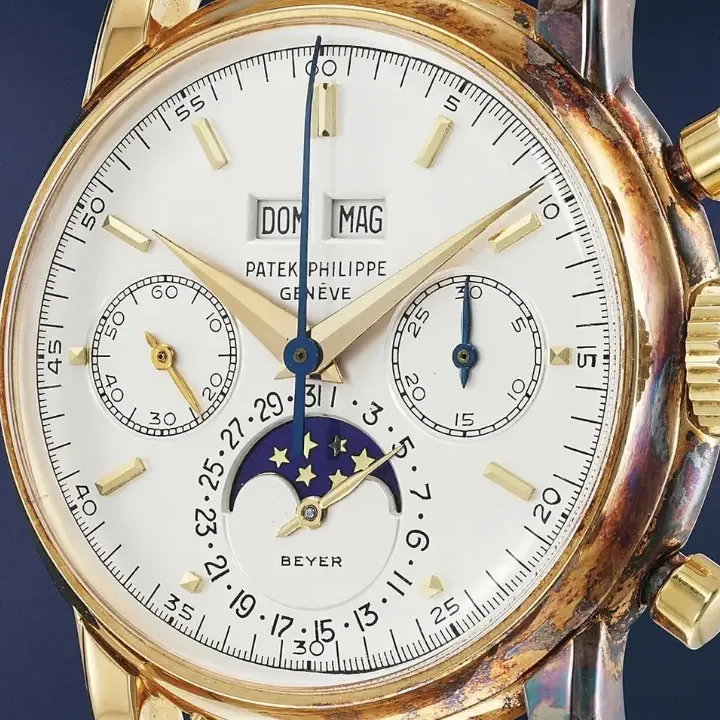
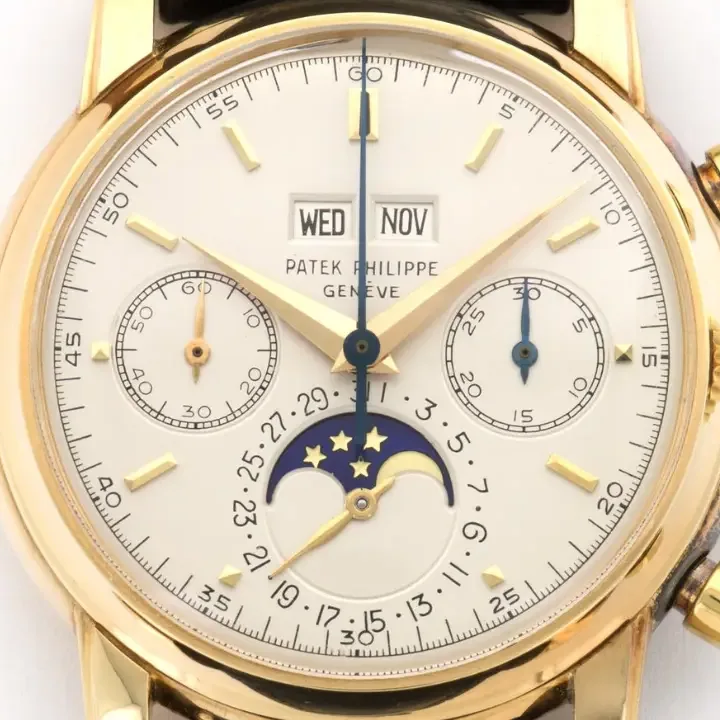
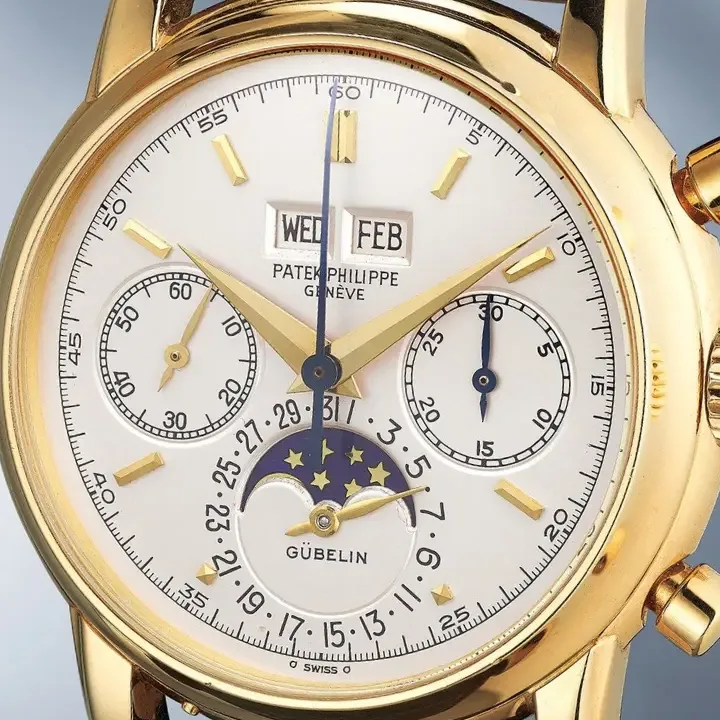
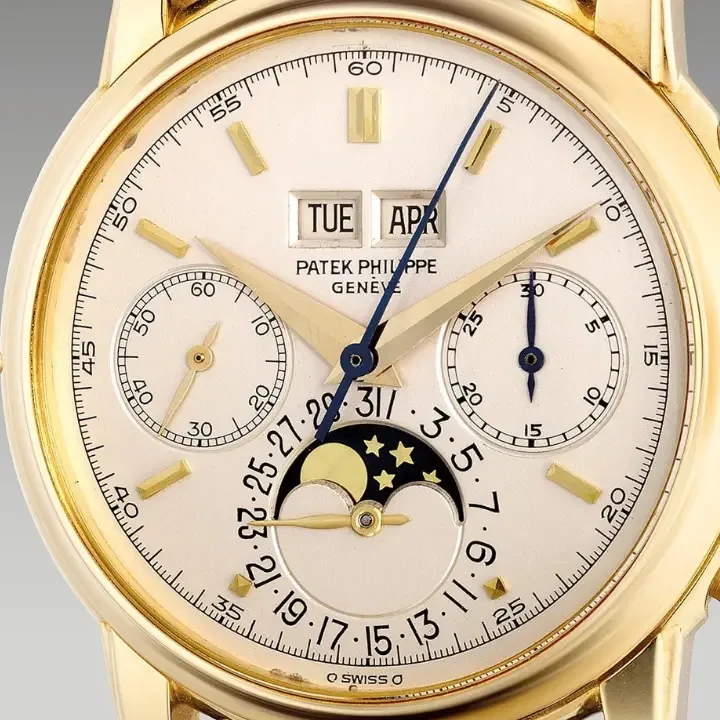
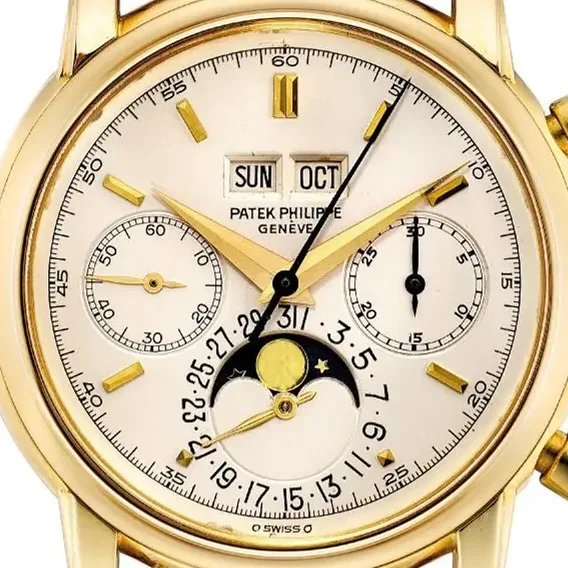
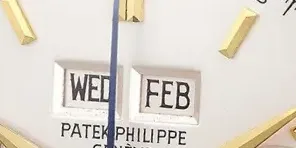
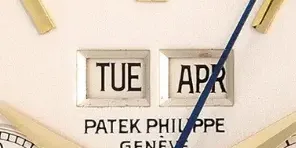
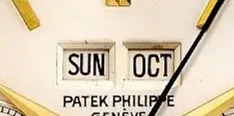
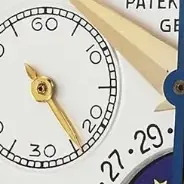
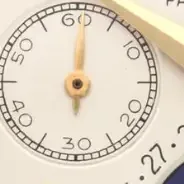
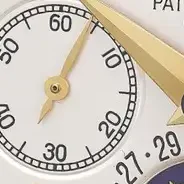
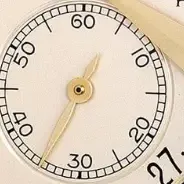
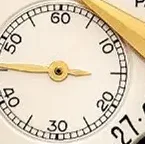
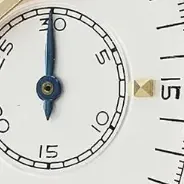
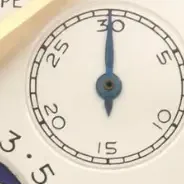
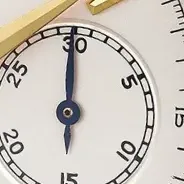
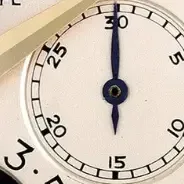
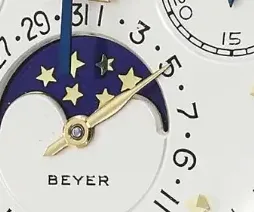
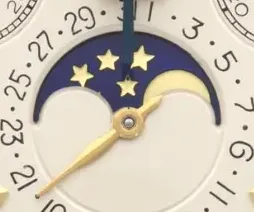
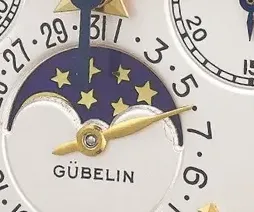
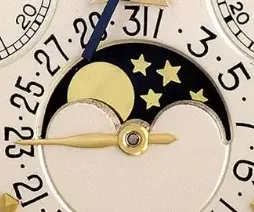
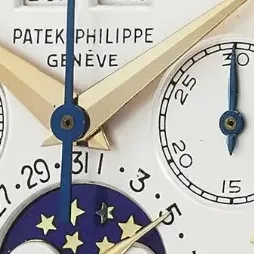
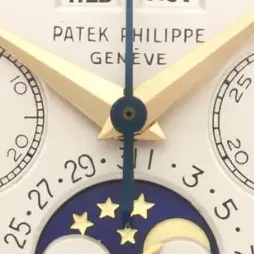
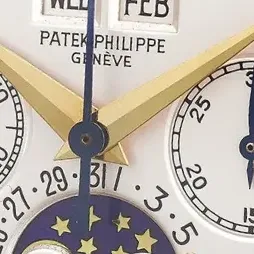
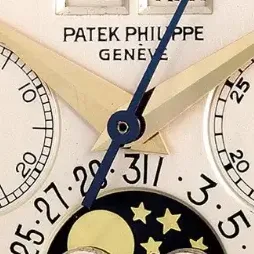
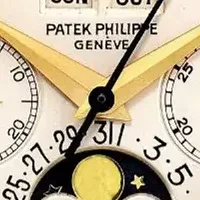
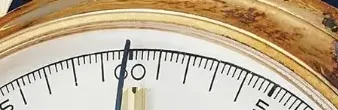
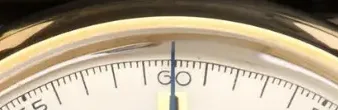
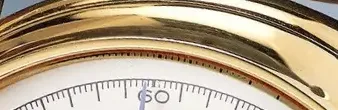
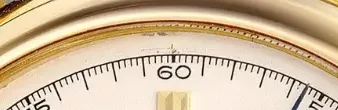
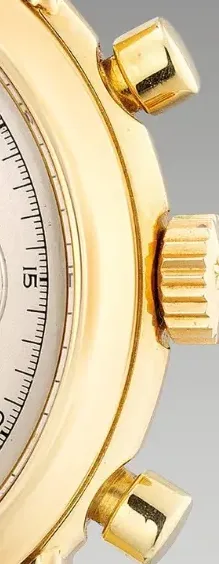
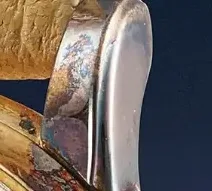
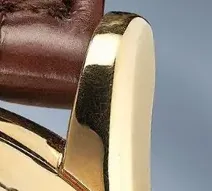
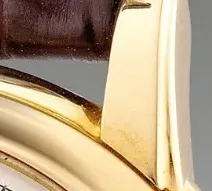
5 watches, oldest first, each straightened and cut the same way so that one row shows one component across them all. Chosen from 314 photographs on file for sharpness and for a face typical of the reference. A year marked c. is one its holder gives only roughly. Each picture is a detail cut from a listing photograph. Select the small mark in its corner for its year, its holder, a link to the listing it came from, and a way to report it.






Chronology
Published accounts give 1950 or 1951 as the start and 1985 or 1986 as the end; the series overlap, so their dates are loose.
Every dated variant: what is written, and what the records show
For the reference the marks are every dated watch; for a variant, the watches a seller names as that variant, so a variant sellers do not name has none.
Specification
| Case | Round yellow or pink gold case, 36 to 37.5 mm depending on case maker, stepped lugs, concave bezel |
| Metals | Yellow gold (most), pink gold (a few dozen), platinum (two, both fourth series); white gold rumoured but not recorded |
| Crystal | Acrylic in the first three series, flat sapphire in the fourth |
| Dial | Silvered, with day and month apertures under 12, running seconds at 9, 30-minute counter at 3, moon phase and date at 6 |
| Movement | Hand-wound calibre 13-130, a Valjoux 13-ligne calibre 23 base with perpetual calendar module; 18,000 vibrations an hour in one account, 18,800 in another |
| Pushers | Rectangular in the first series, round in the later series |
| Strap | Leather strap on most; a few on gold bracelets |
| Production | About 349 watches, fewer than ten a year |
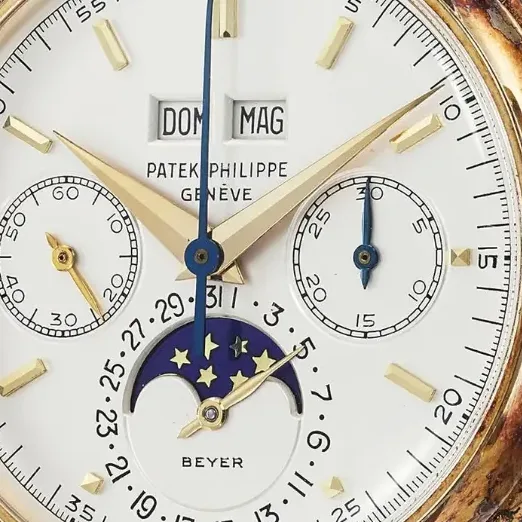
Dial 6 described
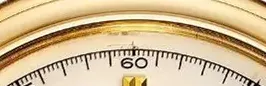
All 2499 dials follow the 1518 layout: day and month windows under 12 o'clock, running seconds at 9, a 30-minute chronograph counter at 3, and the moon phase and date at 6, with a railway track for minutes and fifths of a second. Collectors read the series from the hour markers, the tachymeter scale and the track around the date. Dials were enamelled or engraved at first and printed from the 1970s.
First series, dial A
Applied gold Arabic numerals, a tachymeter scale in kilometres or miles, and a chemin de fer date ring bounded on the outside, as on early 1518 dials.
- applied Arabic numerals
- tachymeter scale
- closed date ring
First series, dial B
Applied gold Arabic numerals and a tachymeter scale, without the closed date ring; the date display is open and merges into the seconds track. Open date displays also occur on some second-series dials. A few first-series dials have faceted baton markers instead of numerals.
- open date ring
- Arabic numerals
Second series dial
Arabic numerals or applied baton markers, with the tachymeter scale kept and round pushers. In the second series the date ring may be open as on the first.
- batons or Arabic numerals
- tachymeter scale
Third series dial
The tachymeter scale is removed, the minute and second track is redrawn, and baton markers take the place of the Arabic numerals for the hours. This is the most common series. Engraved dials give way to printed ones from the 1970s.
- no tachymeter
- baton hour markers
- round pushers
Fourth series dial
Like the third, with faceted baton markers as standard, no tachymeter, a neater joining of the date scale and the outer track at 6, a larger date numeral typeface, and the 30 mark dropped from the outer track for space. The reference is 2499/100.
- larger date numerals
- no 30 marker
- faceted batons
Retailer-signed dials
Double-signed dials are known: a unique first-series watch signed for Asprey, a second-series watch signed Gobbi Milano (the only one of nine known pink gold second-series watches with a retailer name), a second series with Tiffany stamped dial on a bracelet, and a yellow gold Tiffany-signed watch.
- a retailer's name on the dial as well as the Patek signature

Hands 2 described
The hands change with the dials.
Gold dauphine hands
Gold dauphine hands go with baton markers. They are recorded on a second-series watch of 1960, and sellers describe them on third and fourth series watches as well.
- dauphine hands
Luminous hands
Some watches have luminous hands, and one has a transitional dial with luminous markers.
Bezel
The bezel is concave, with a more sharply curved profile than the 1518.
Case 4 described
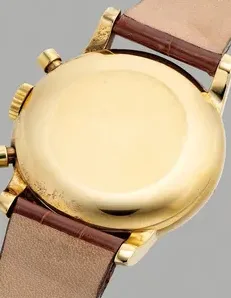
The case changed supplier twice, which gives the clearest dating marks. Round cases with stepped, elongated lugs, a concave bezel, and a larger crown than the 1518.
Vichet case
Made by Emile Vichet, key number 9, for the first two years. 36 mm to 36.2 mm, flat caseback, claw-like lugs that curve sharply down, so the watch stands on the tips of the lugs. About ten yellow gold and four pink gold cases, found with rectangular pushers; a few Vichet cases with round pushers exist in the second series.
- flat back
- claw lugs
- 36 mm
Wenger case
Made by Wenger, key number 1, from about 1953 until 1982, in 37.5 mm, with softer lug curves and a domed caseback. Perhaps 30 yellow gold cases for the first series. Two watches signed Serpico y Laino dated 1952 have Wenger cases while Vichet cases were still being used.
- 37.5 mm
- domed back
- less drooping lugs
Ateliers Reunis case
From 1982 Patek Philippe made the cases itself after taking over the Geneva case maker Ateliers Reunis, key number 28, until 1985.
- in-house case
Platinum watches
Two platinum 2499s were made in 1985 for the fourth series, one for the maker's own collection and one sold at auction.
- platinum case
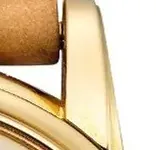
Crown and pushers 2 described
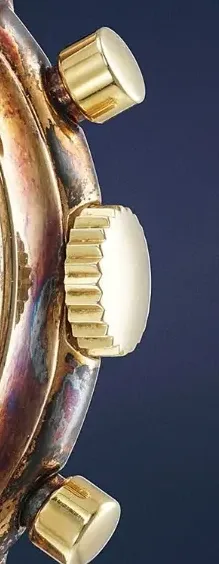
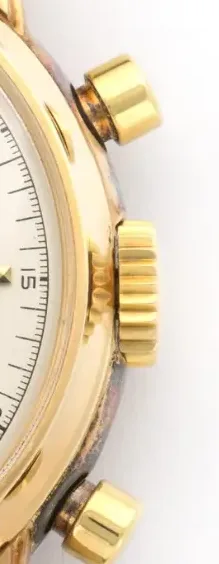
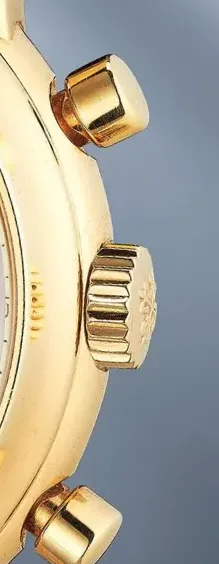
The crown is larger than on the 1518. The reset pusher sits farther from the crown than the start-stop pusher, which shows more clearly with the later round pushers.
Rectangular pushers
Rectangular chronograph pushers, as on the 1518, mark the first series. They return on the later 5970.
- rectangular pushers
Round pushers
Round pushers replace the rectangular from the second series and remain to the end of production. They suit water resistance better.
- round pushers
Crystal 2 described
Acrylic crystals until the late 1970s, then sapphire.
Acrylic crystal
All first to third series watches have acrylic crystals.
- acrylic
Sapphire crystal
A flat sapphire crystal marks the fourth series, 2499/100.
- sapphire
Movement 1 described
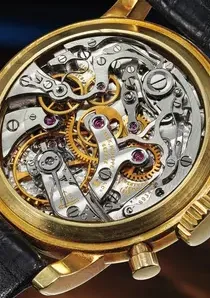
The 2499 kept the 1518 movement throughout, a Valjoux 13-ligne column-wheel calibre 23 with a perpetual calendar module from Victorin Piguet, heavily reworked by Patek. It was replaced by a Lemania-based calibre in the 3970.
Calibre 13-130
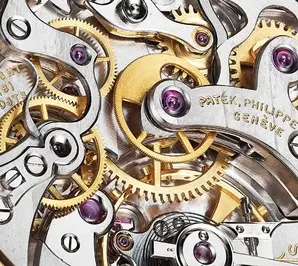
Hand-wound, the Valjoux base with extra bridges for the escape wheel, fourth wheel and driving wheel, a swan's neck spring on the index, a reshaped chronograph bridge with the column wheel capped, and a redesigned clutch lever. The seconds track is marked in fifths; the rate is given as 18,000 vibrations an hour in one account and 18,800 in another. Geneva Seal and signed Patek Philippe Geneve.
- Geneva Seal
- column wheel
Bracelet 1 described
Most watches were sold on leather straps.
Strap and buckle
Most were sold on a leather strap. One well-recorded watch keeps its original yellow gold crown, pushers and pin buckle, on an alligator strap.
- gold pin buckle
Originality
- Dials were restored or replaced on some watches; auction descriptions record restored silvered and black dials, so a dial that looks too fresh deserves a check against the archive extract.
- Engraved dials from the earlier series differ from printed ones of the 1970s; a printed dial on an early watch should be questioned.
- First-series watches, with rectangular pushers, are easily mistaken for the 1518, so the case maker's key mark and the pusher shape should match the series.
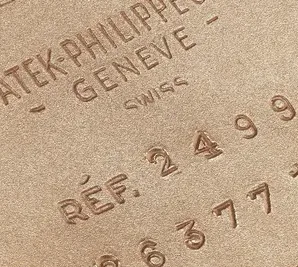
- An archive extract and a Vichet or Wenger key stamp in the caseback help confirm the series.
Names
- Two-four-nine-nine. The reference number spoken as digits.
- Pink First Series. First-series watches in pink gold, of which very few exist.
- 2499/100. The fourth series was given its own reference, 2499/100.
Where accounts differ
Points on which the published literature and the library's own records do not agree, or on which the literature contradicts itself.
- Dates of the series. One guide dates the first series to 1950 to 1960, the second to about 1953 to 1960 and the third to about 1958 to 1978; another gives the second as 1955 to 1964 and the third from 1960; a third has the first series running only about five years. The fourth series is 1978 to 1985 or 1986 throughout.
- Start of production. Some accounts begin production in 1950; others give 1951 as the year the first watches were made.
- Beat rate of the movement. One guide gives the calibre as running at 18,800 vibrations an hour; another gives 18,000, which fits the fifth-of-a-second graduation on the seconds track.
- Number of first series watches. One guide says about 40 first-series watches were made, another fewer than 50.
- White gold. One account lists white gold among the metals; another says white gold watches are only rumoured, never offered or catalogued. The library's records show none.
Back and movement
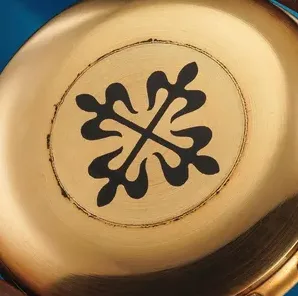
From listings of this reference, each confirmed by eye to show what it is filed under. A picture on which a person's name or a personal engraving can be read is not shown. From most holders a detail from the middle of the photograph is shown; the mark in its corner gives its holder and a link to the listing.
Caseback


Inside the caseback

Movement


Catalogue versions 1 listed
The full numbers under which holders list this reference, with what their listings say of each. Each has a page of its own.
| Version | Metal | Dial | Years seen | Records |
|---|---|---|---|---|
| 2499/100J thin | Gold | Silver | 1981 | 1 |
In the records
Counted from 107 listings at 8 holders between 16 October 2005 and 13 November 2026. These are what sellers and auction houses state, not measurements.
Fainter bars are the 6 outside the main run of 1951–1984 (the middle nine-tenths): the earliest is 1943 and the latest 1986. They are early and late examples, and now and then a seller's slip. The head of the page gives 1950–1986: the years that listings from two holders bear out.
1 listing dated long after the reference ended is set aside and not counted here: a year that late belongs to a later watch sold under the old number, or to a listing filed under the wrong one.
Case metal
| Gold, any colour | 102 | |
| Yellow | 48 | |
| Pink | 10 | |
| Colour not stated | 44 | |
| Silver | 1 |
A listing that says "gold" or "18K gold" names no colour: it is counted under "colour not stated", not as yellow gold.
Dial colour
| Silver | 18 | |
| Red | 3 | |
| Champagne | 1 | |
| Gold | 1 | |
| Black | 1 |
Case size
| 38 mm | 56 | |
| 36 mm | 4 | |
| 37 mm | 1 |
Calibre named
| 13-130 | 9 |
Bracelet or strap
| Leather strap | 49 | |
| Strap, kind not stated | 2 | |
| Metal bracelet, kind not stated | 2 |
Each table counts the listings that state the thing, in the seller's own terms. A size, metal, colour or calibre that cannot belong to this reference is a seller's slip or a listing filed under the wrong number.