Perpetual Calendar
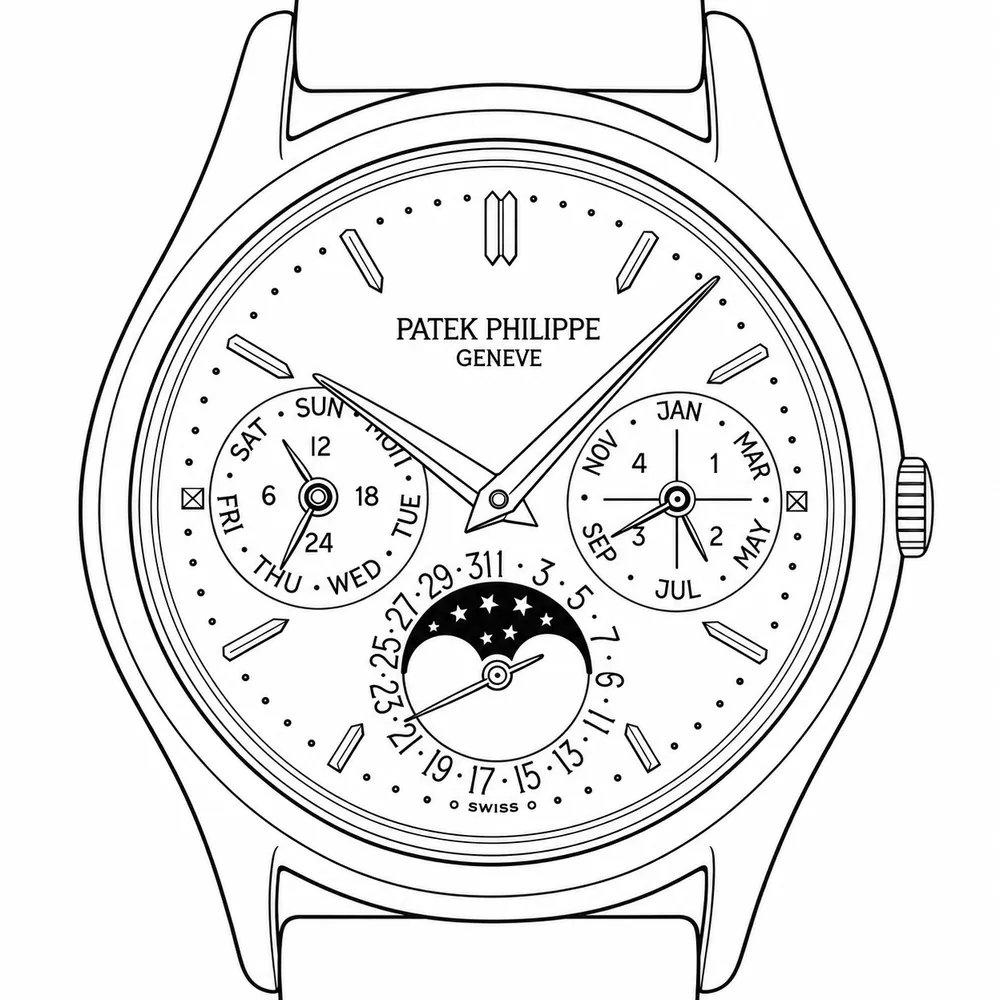
The 3940 is Patek Philippe's automatic perpetual calendar wristwatch with moon phase, 24-hour and leap-year indications, made from 1985 to 2007 in a 36 mm case. It was introduced a year ahead of the 3970 chronograph and was the first perpetual calendar made in numbers as part of the main collection, succeeding the 3448 and 3450. It runs on the ultra-thin calibre 240 Q with a 22-carat micro-rotor. It was made in yellow gold, then rose gold, white gold and platinum. Collectors divide it into series by sub-dial form, the accent on GENÈVE, the leap-year divider, the position of the sigma mark, hallmark placement and case back. The 5140 replaced it in the catalogue.
- Made
- 1985–2007dates approximate
- Seen in the library
- 1985–2015nine in ten in 1986–2006 · by years sellers state
- Case
- 36 mm · gold (84%), platinum (16%)as sellers state
- Movement
- Calibre 240, 240Qautomatic
- On record
- 303 listings764 photographs · 37 holders
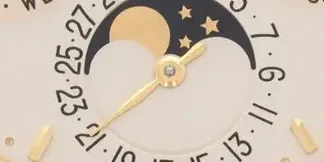
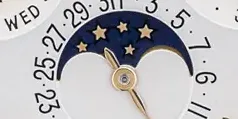
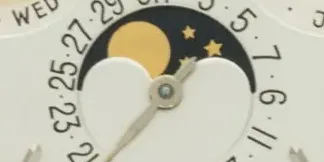
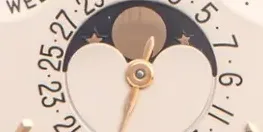
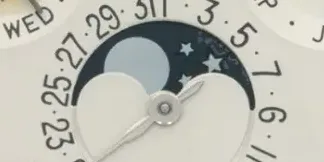
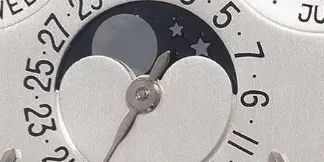
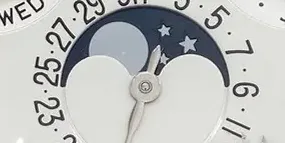
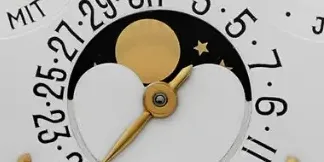
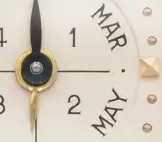
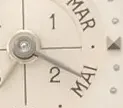
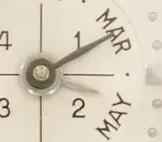
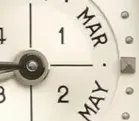
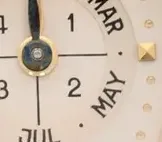
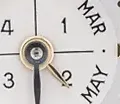
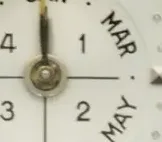
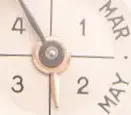
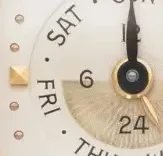
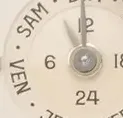
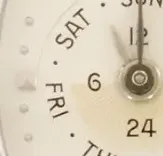
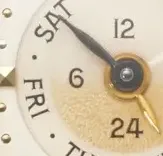
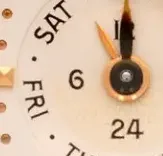
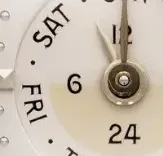
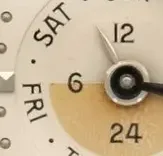
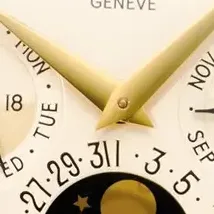
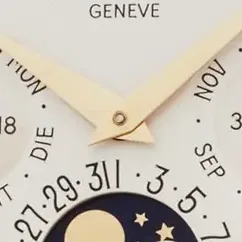
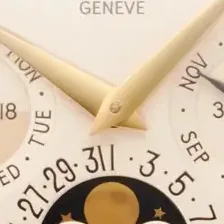
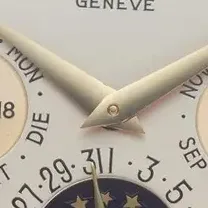
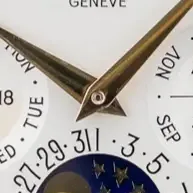
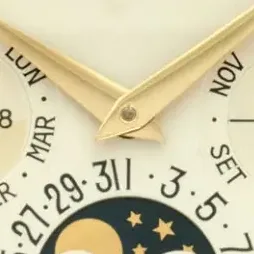
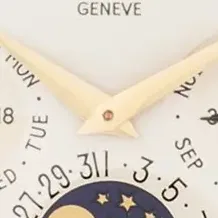
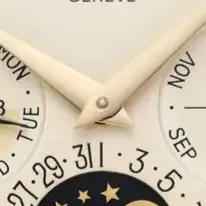
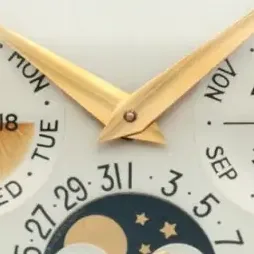
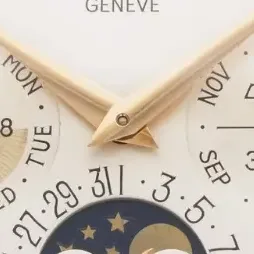
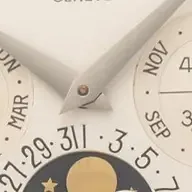
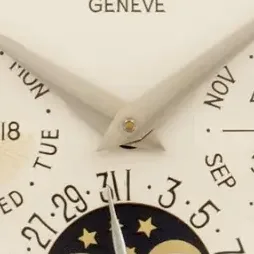
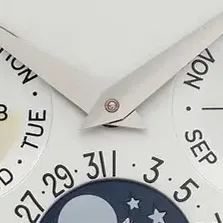
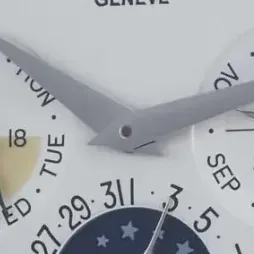
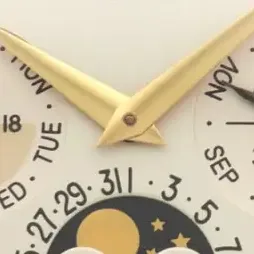
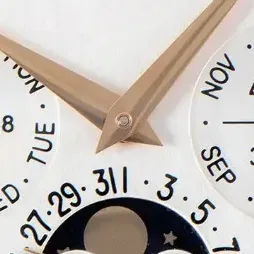
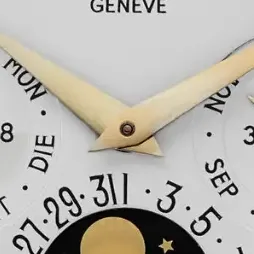
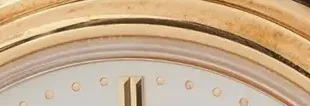
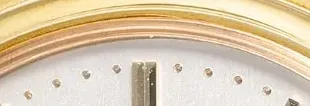
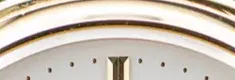
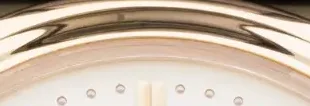
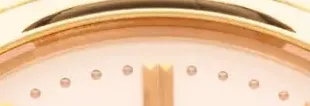
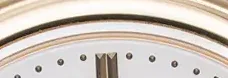
Components
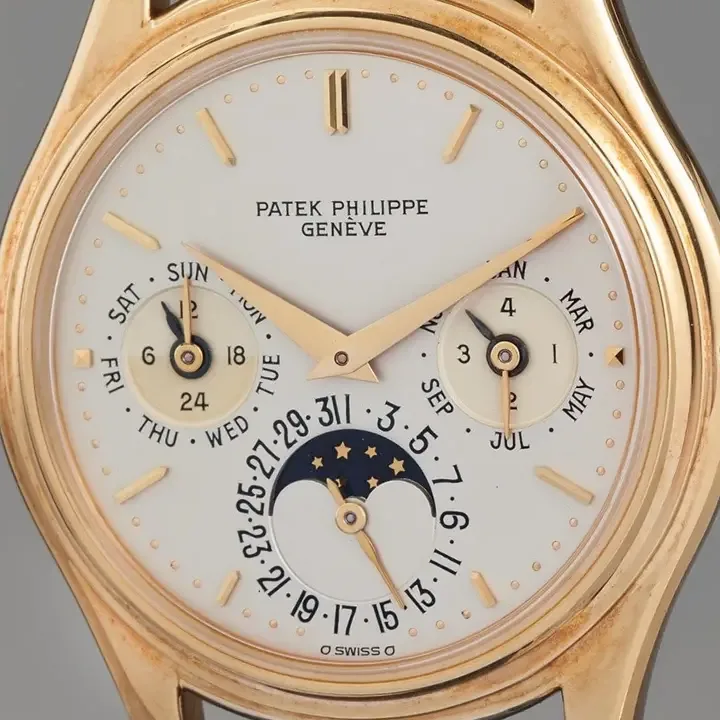
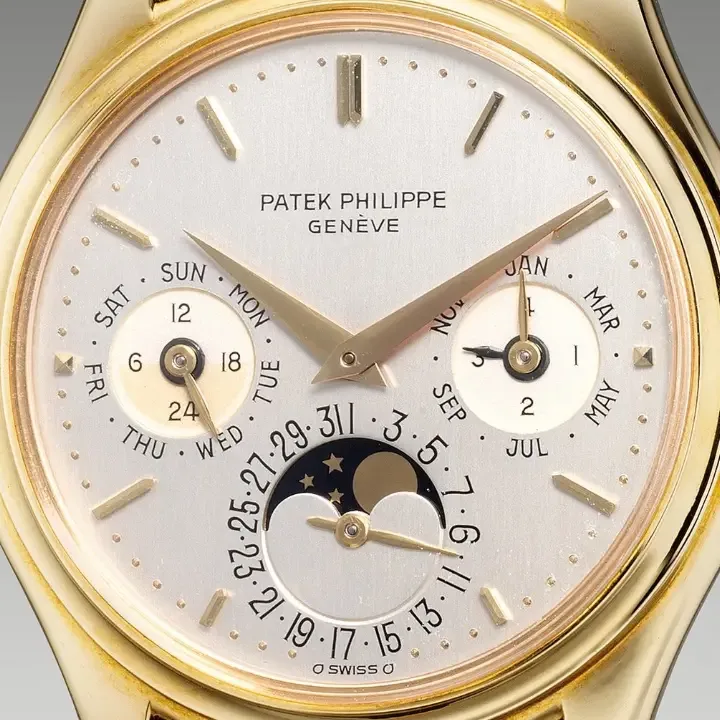
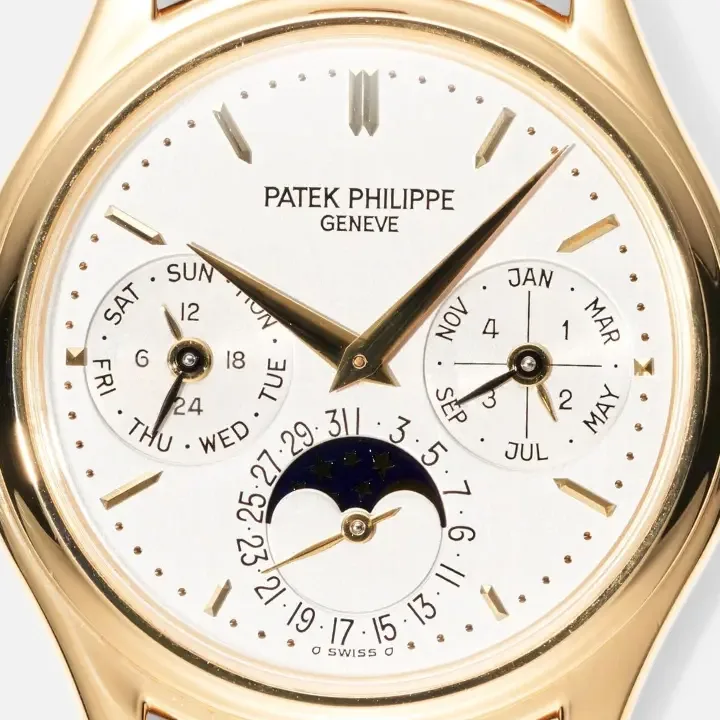
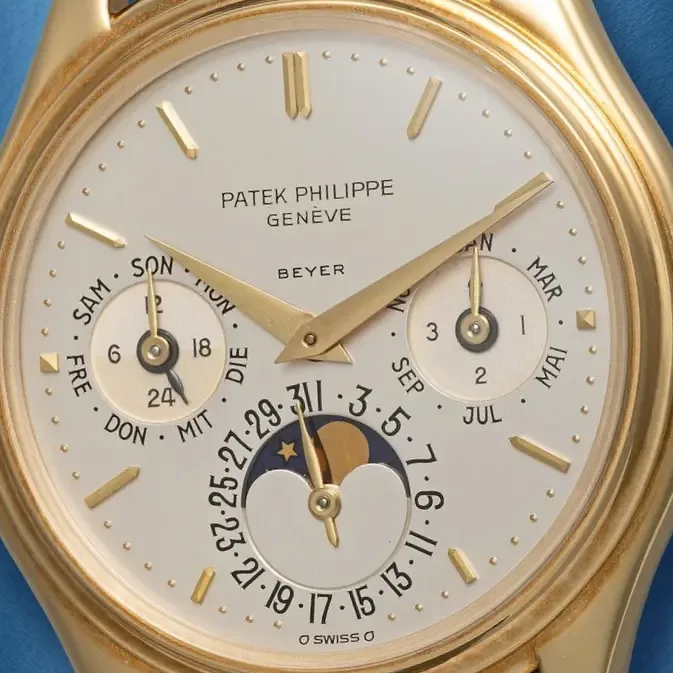
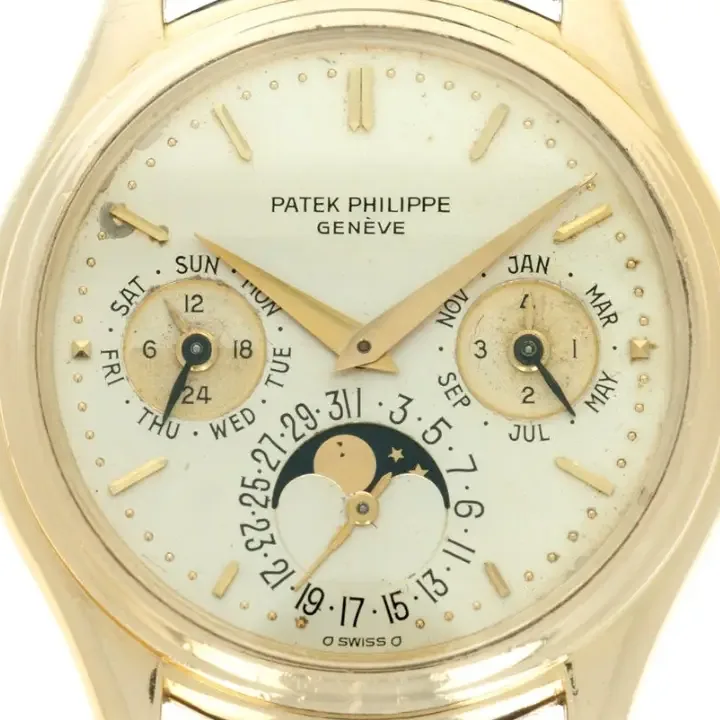
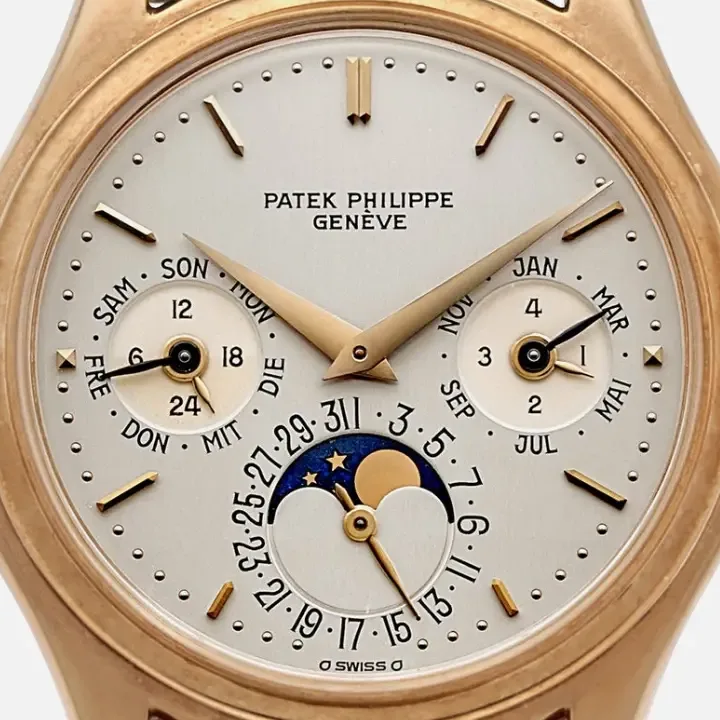
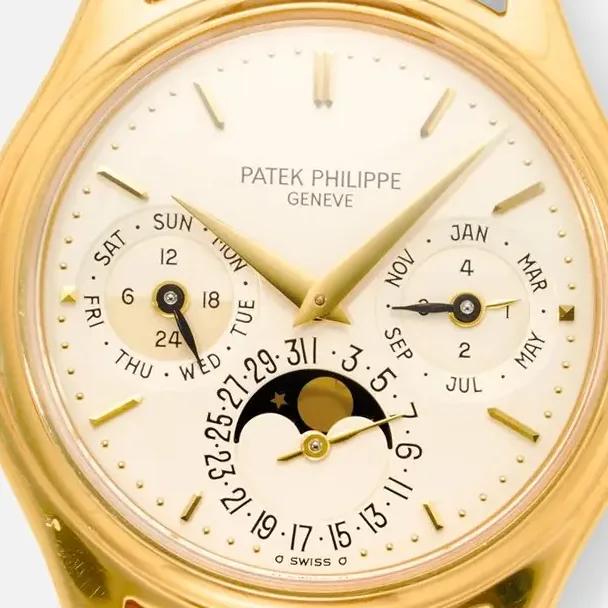
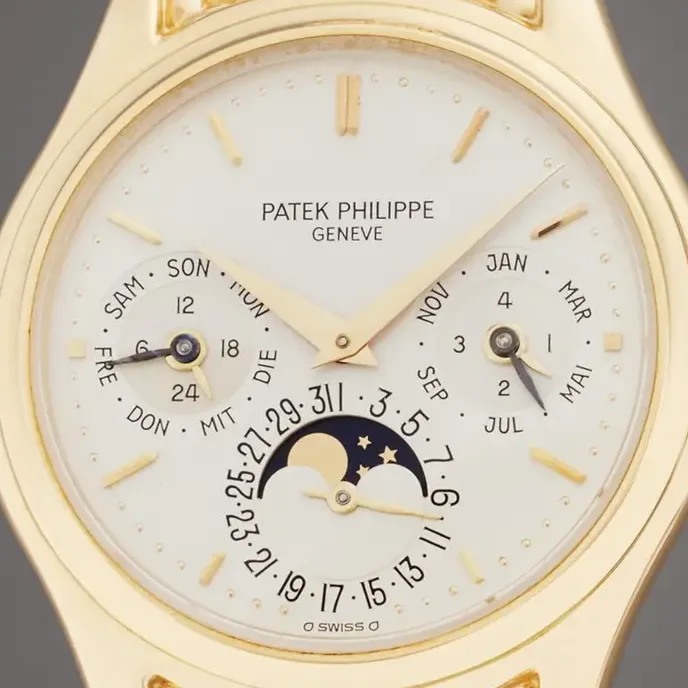
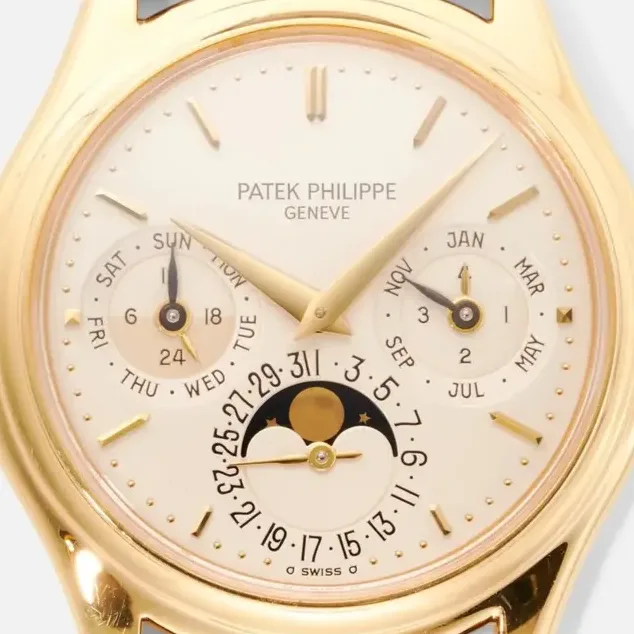
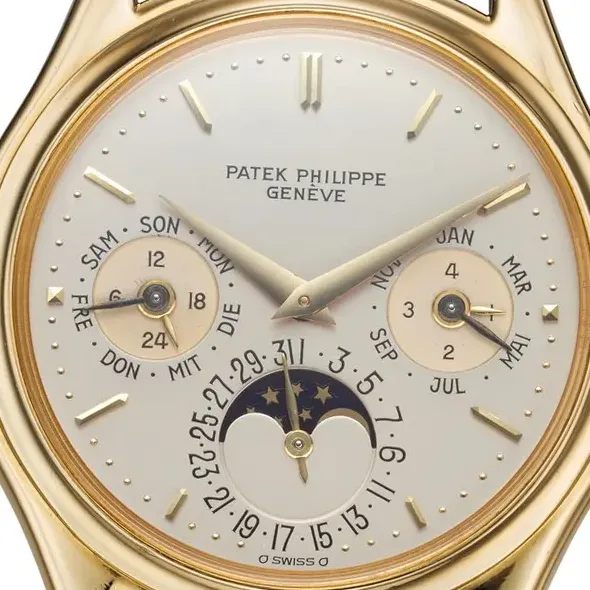
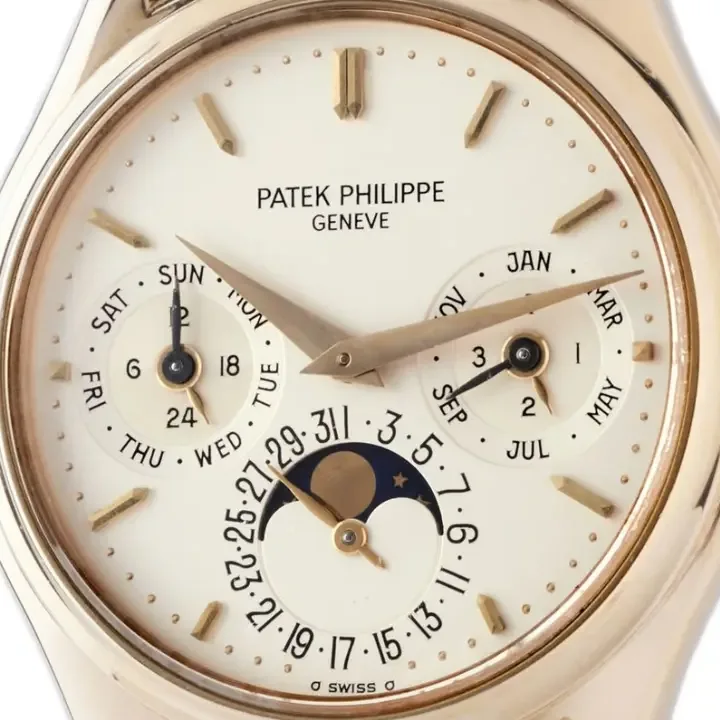
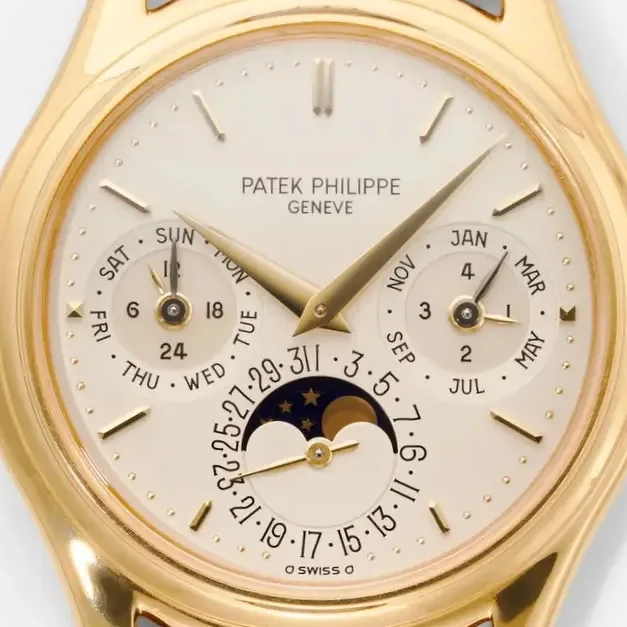
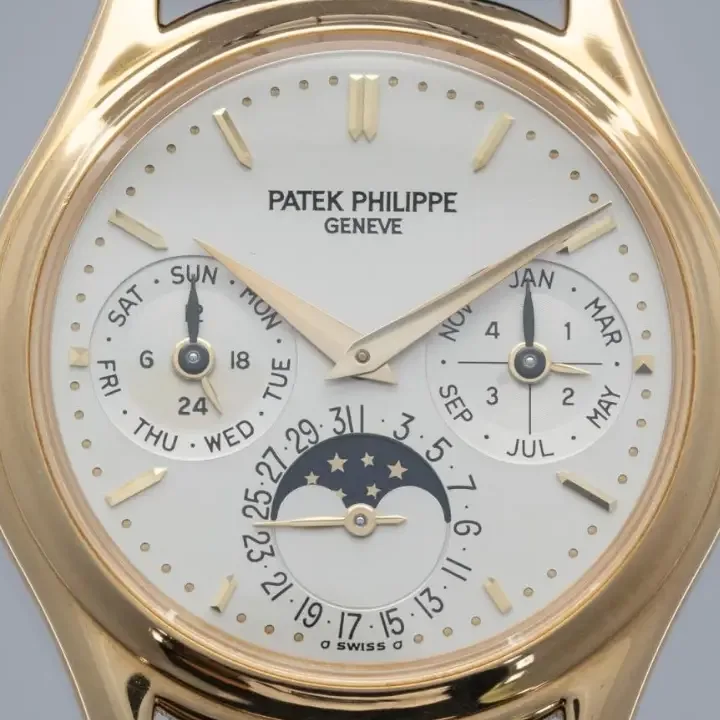
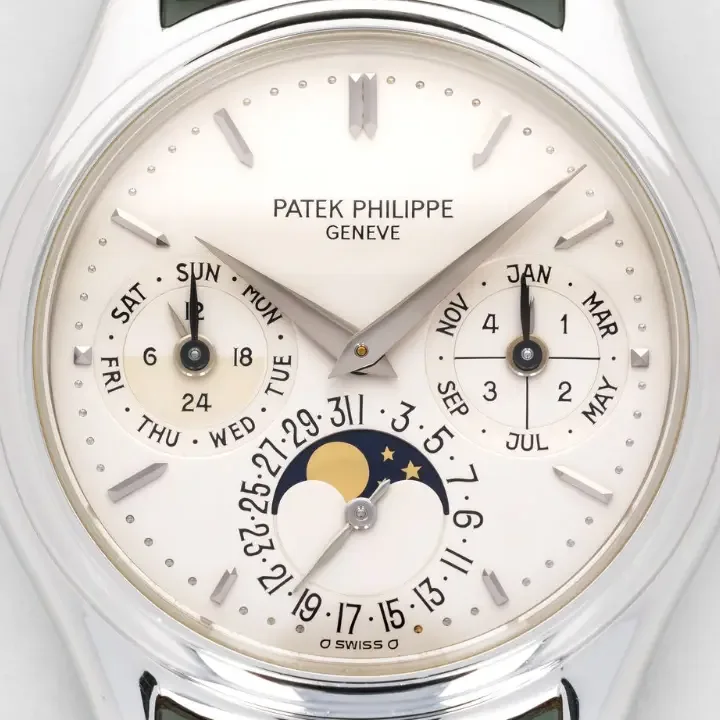
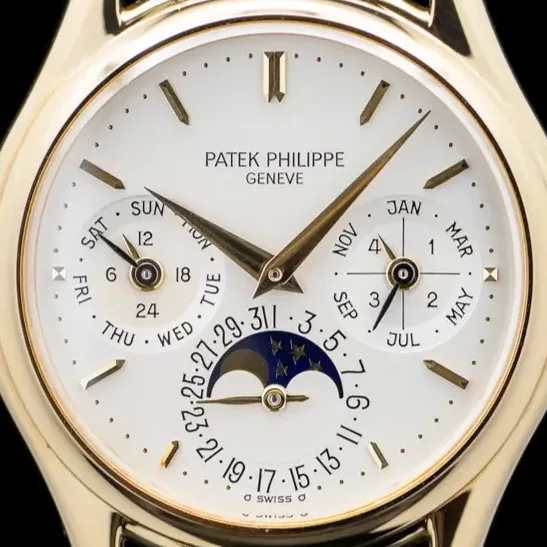
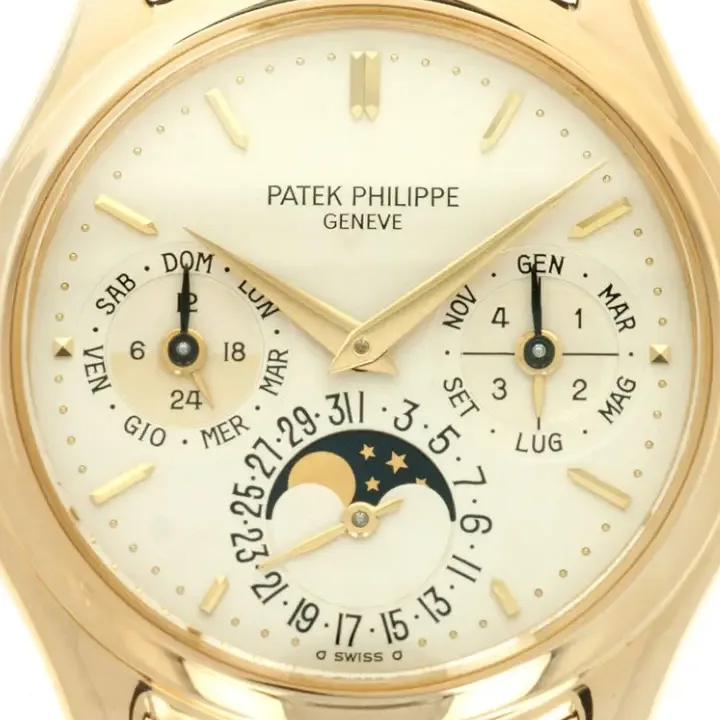
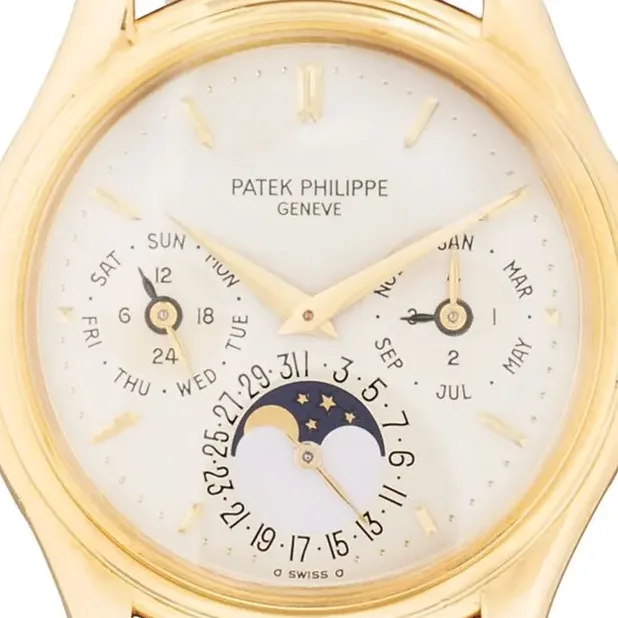
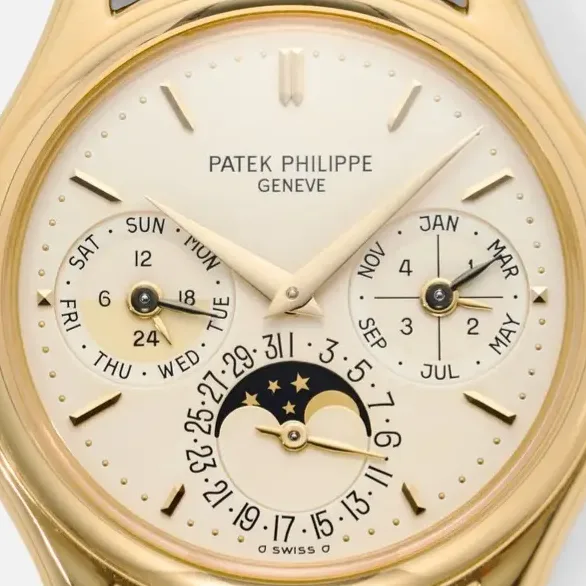
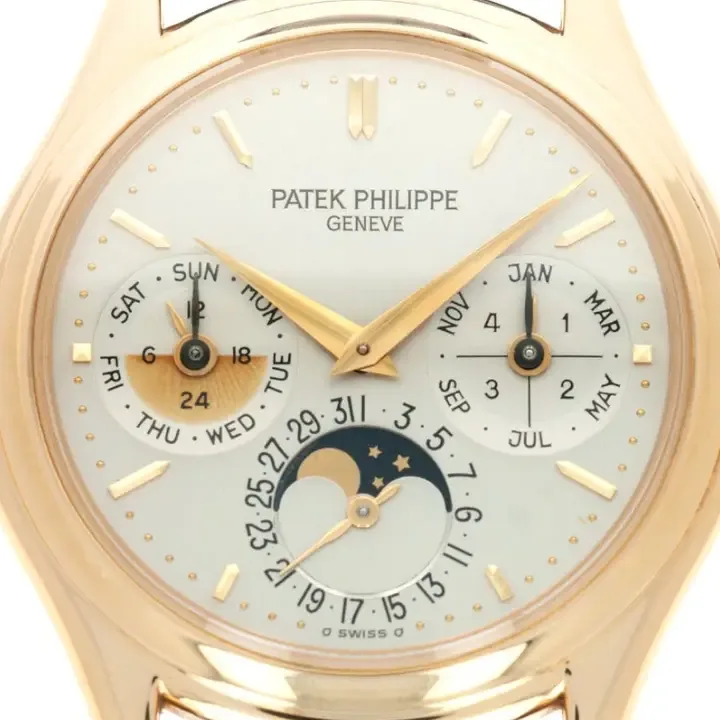
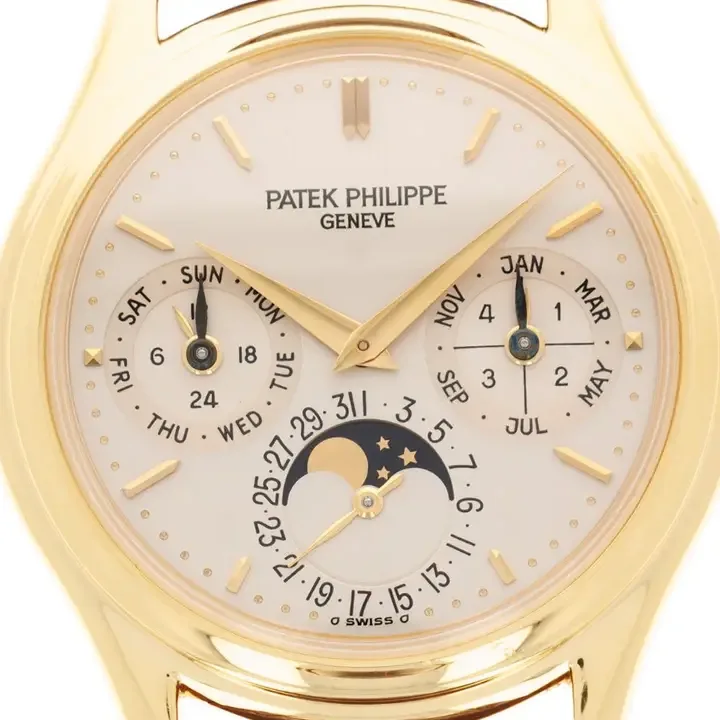
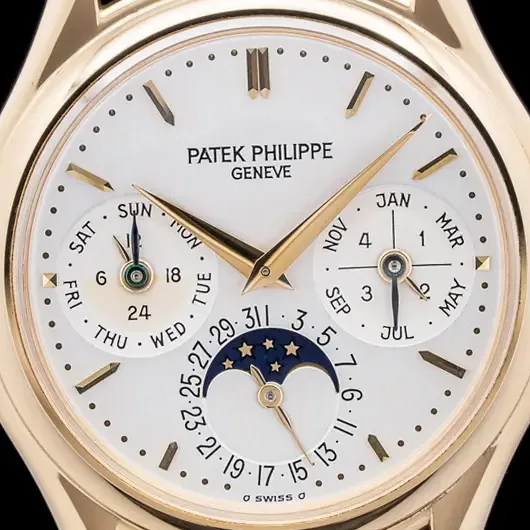
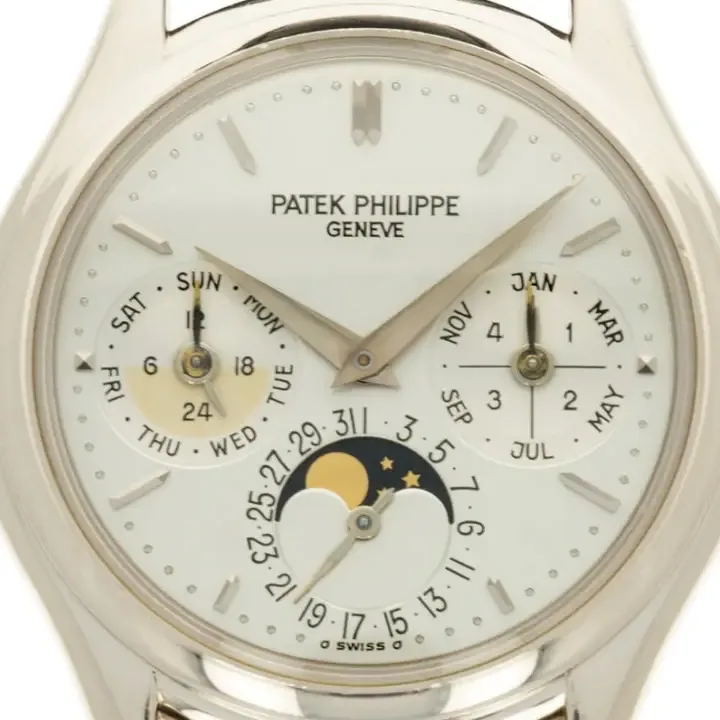
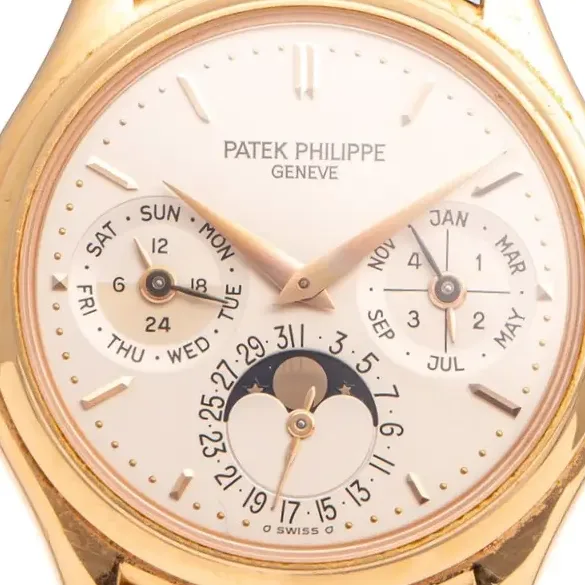
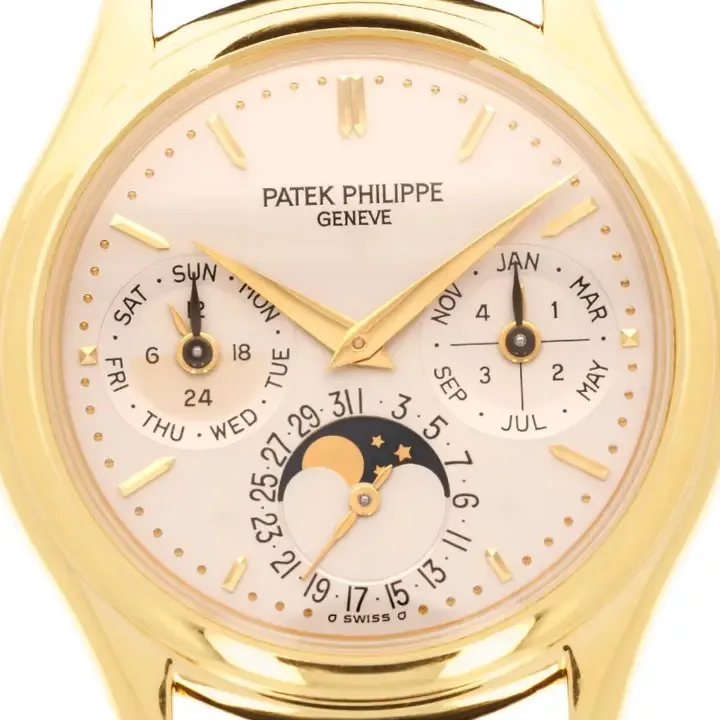
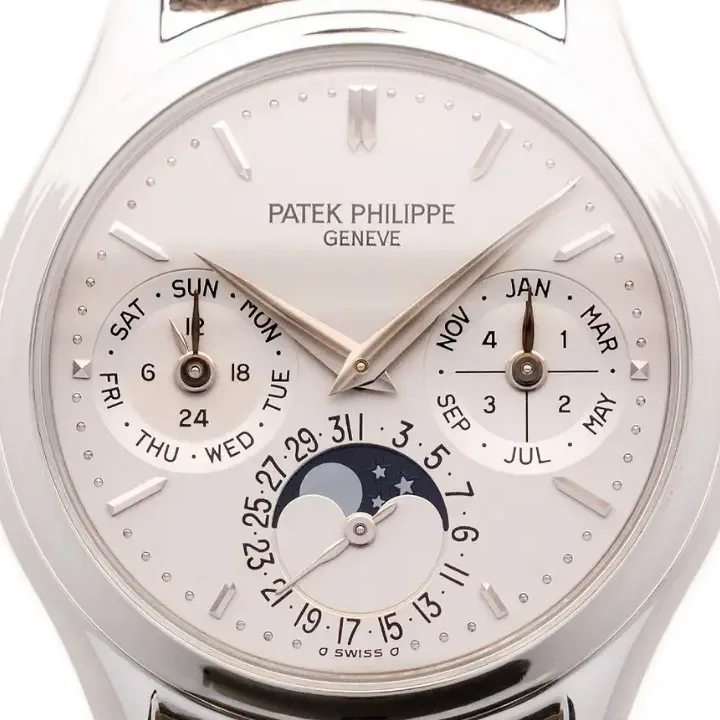
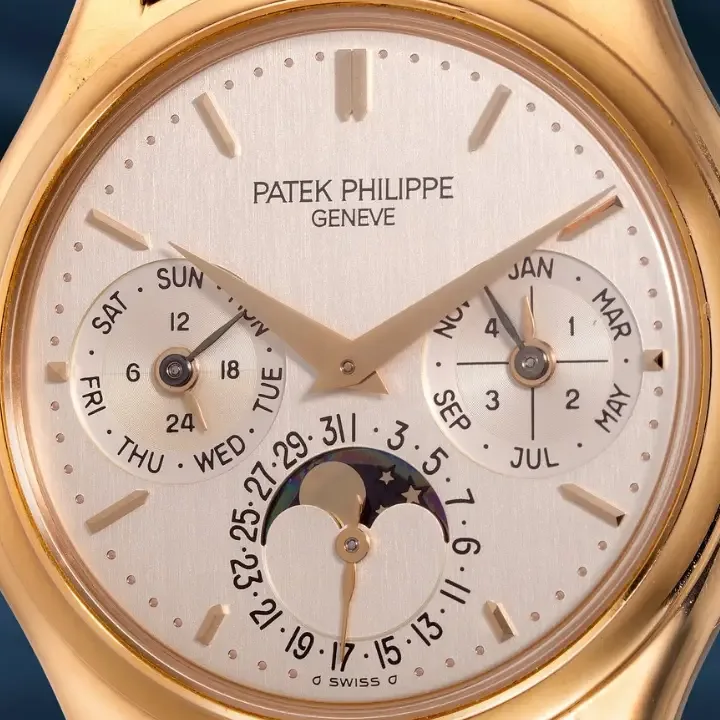
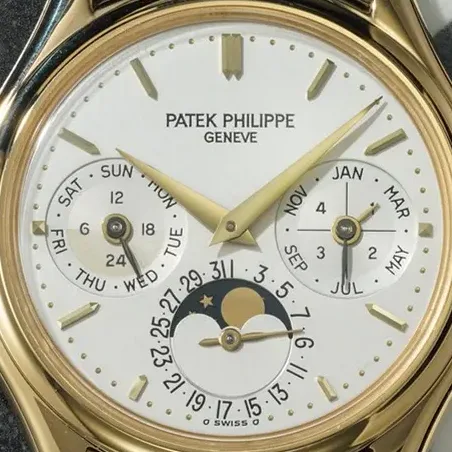
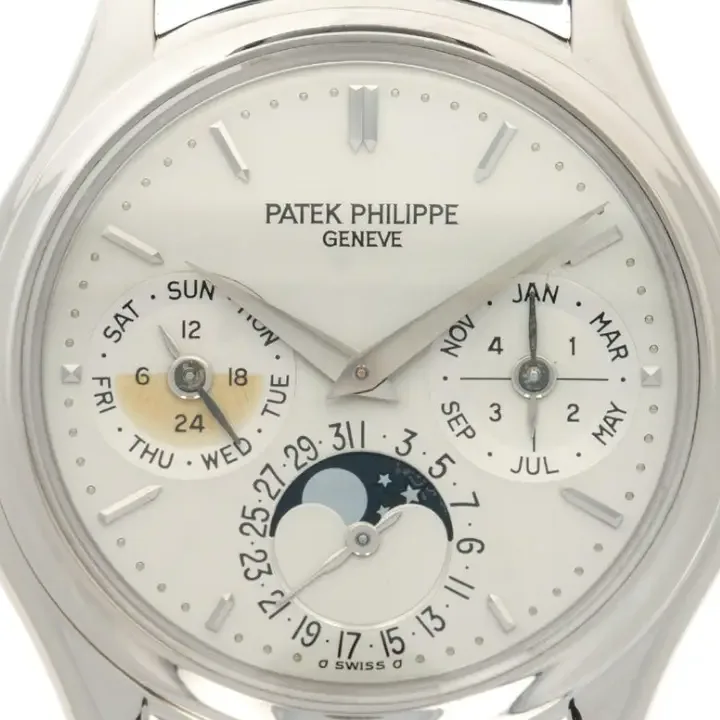
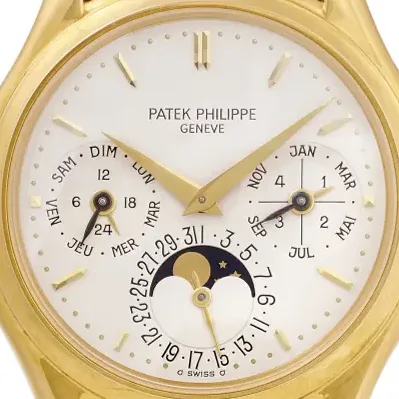
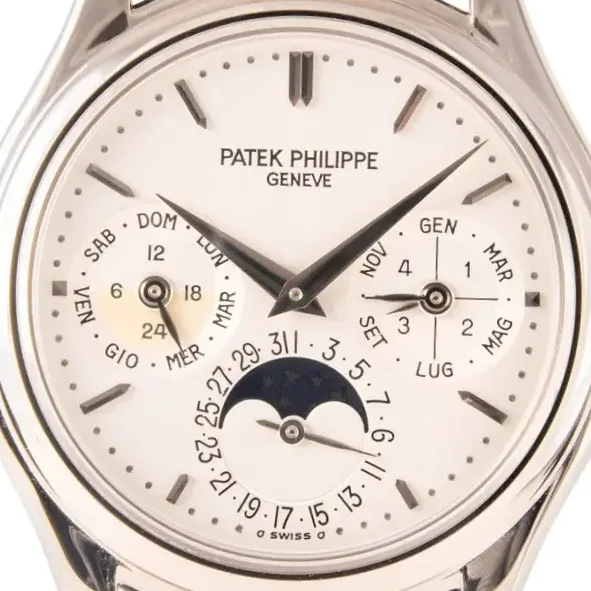
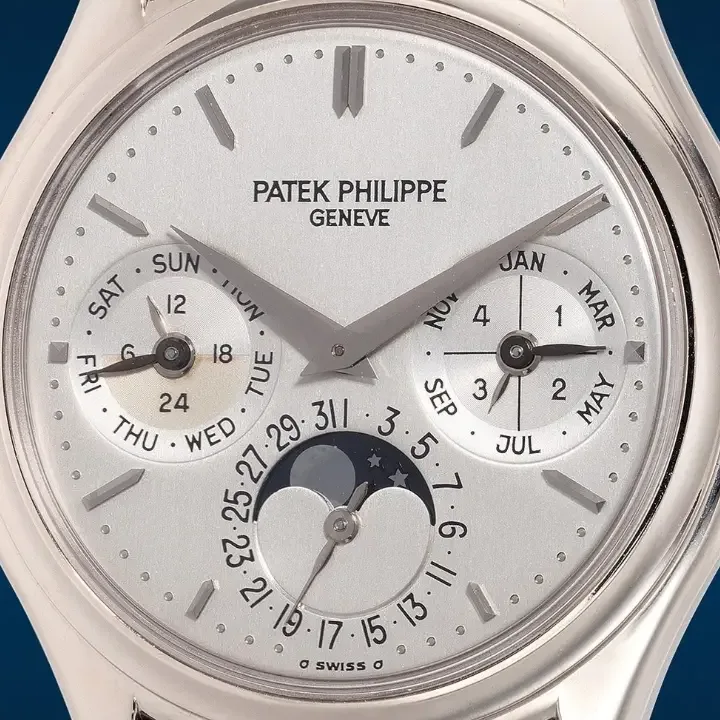
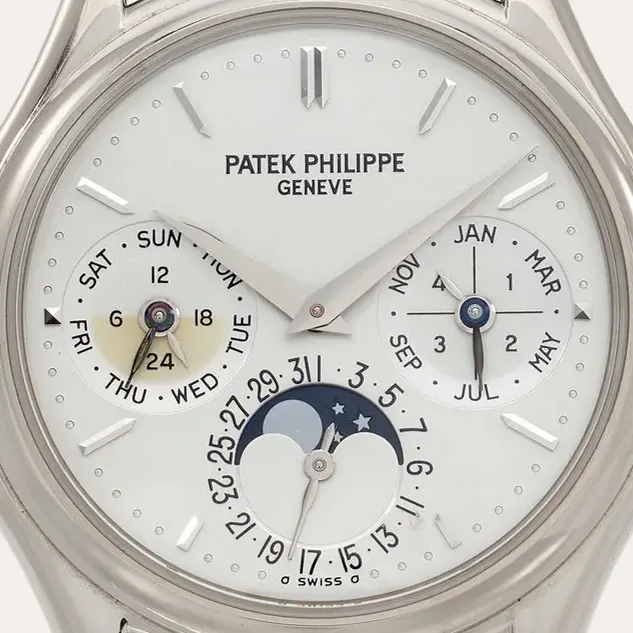
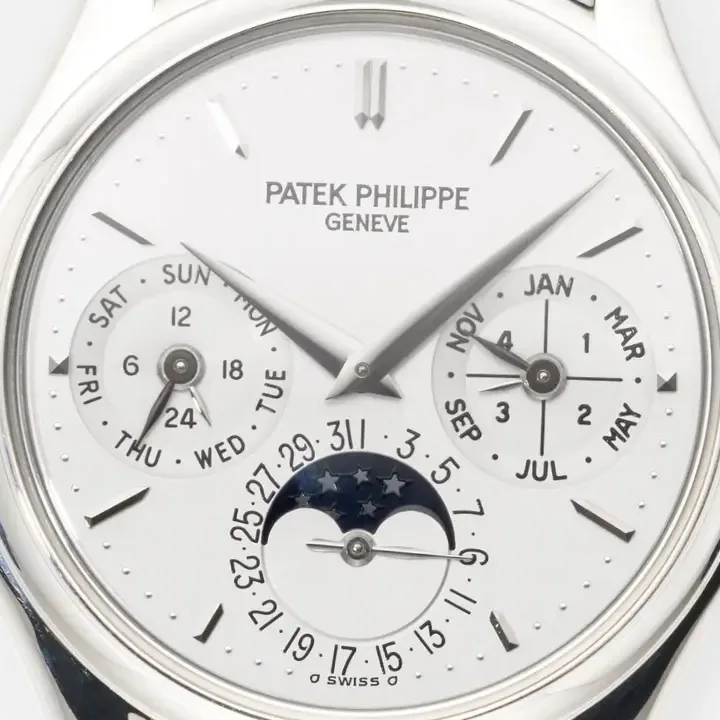
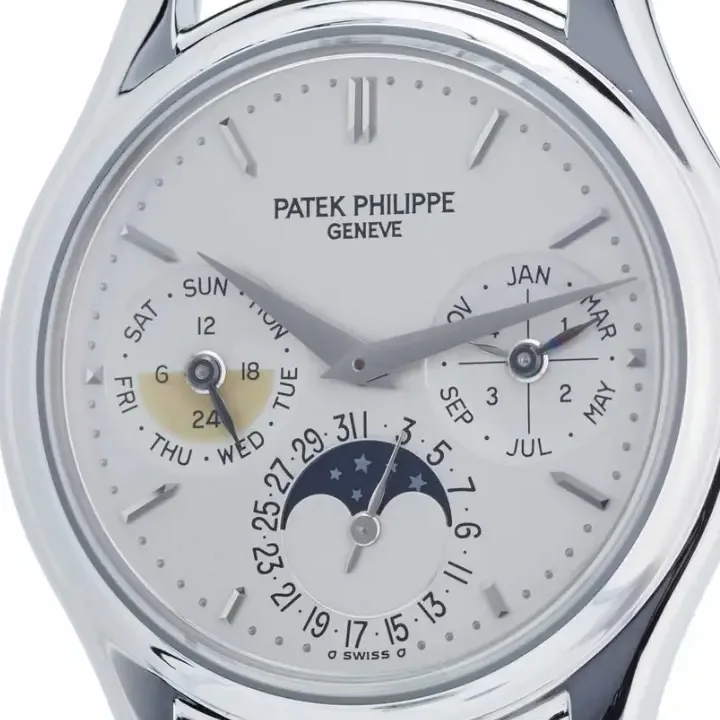
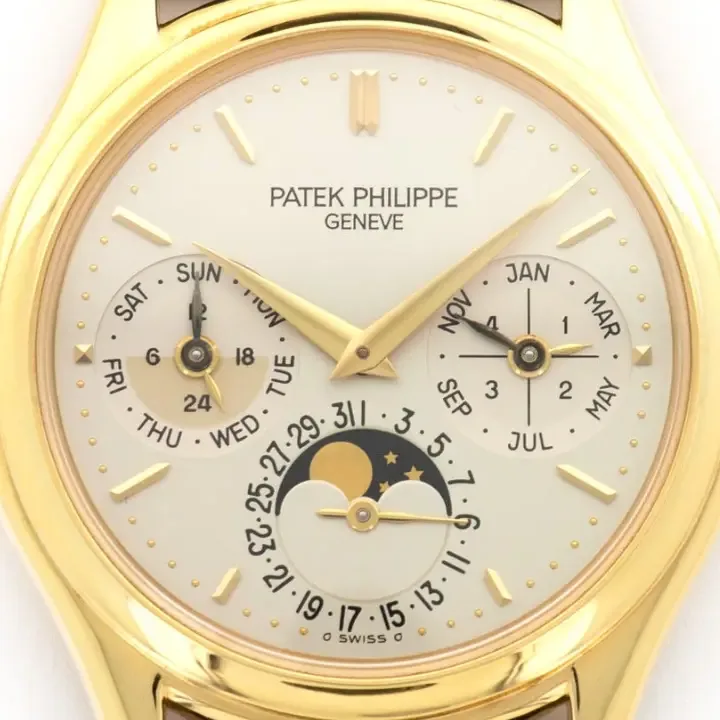
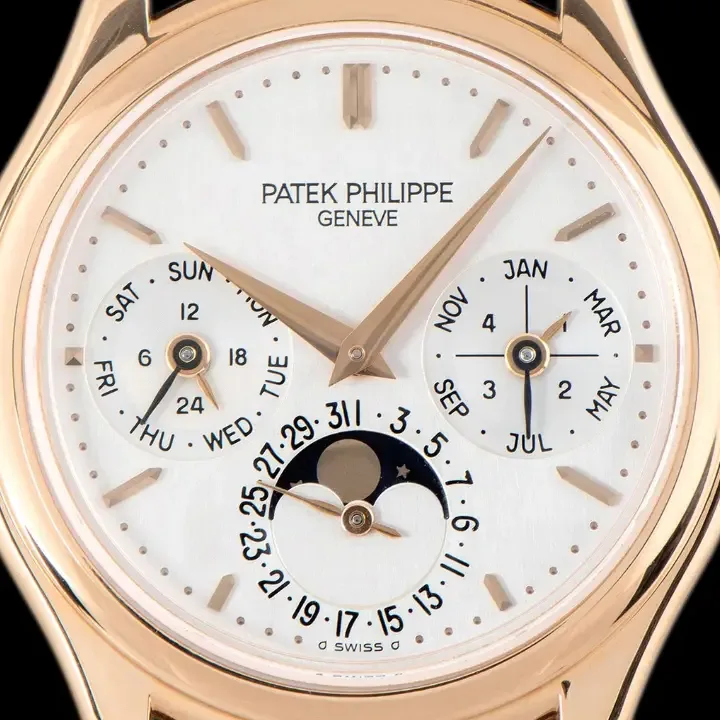
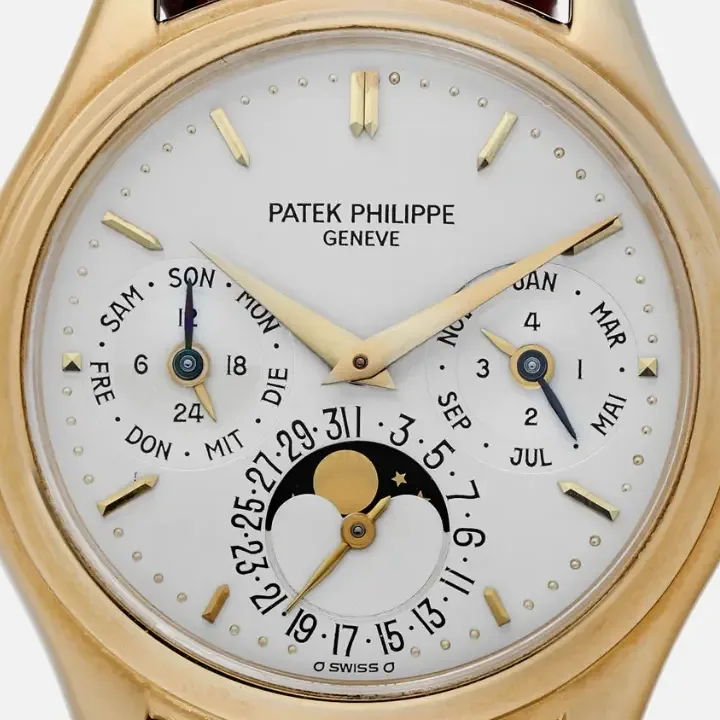
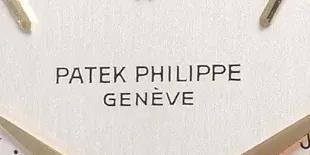
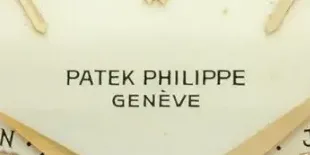
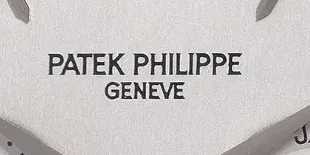
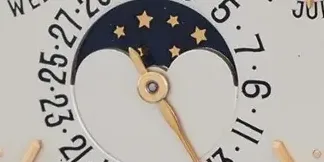
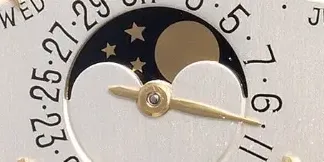
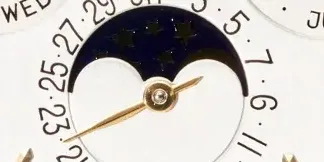
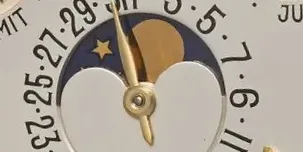
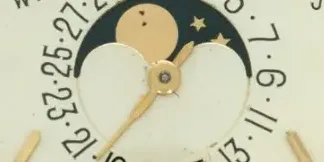
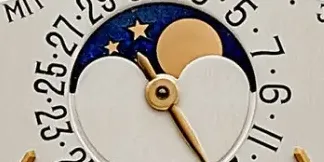
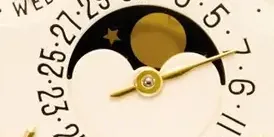
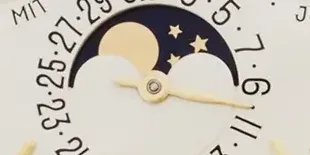
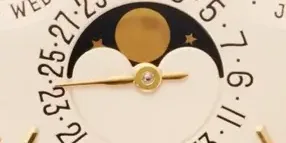
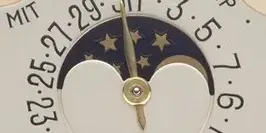
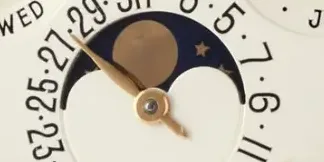
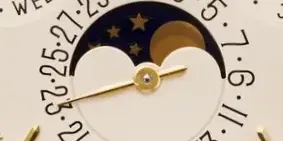
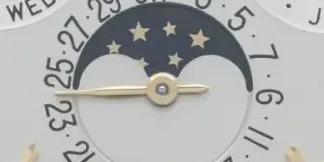
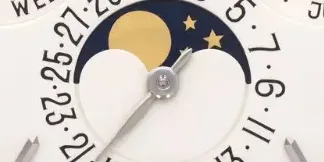
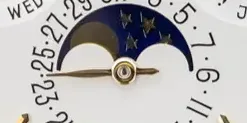
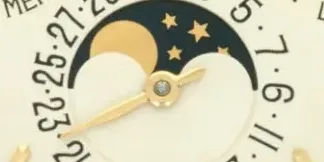
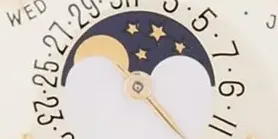
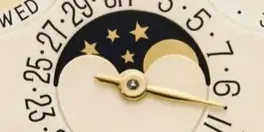
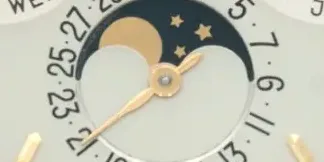
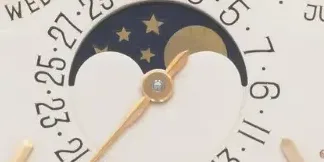
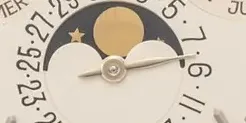
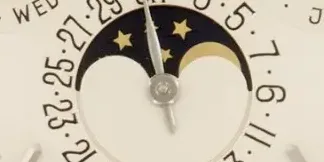
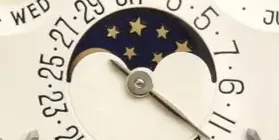
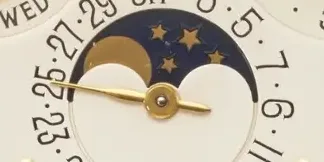
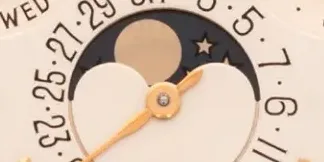
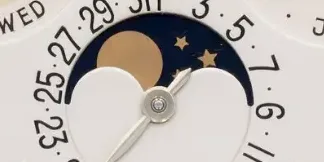
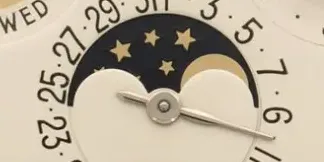
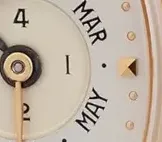
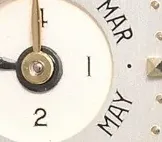
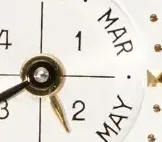
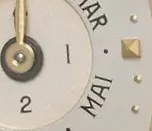
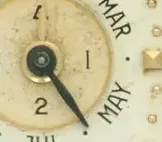
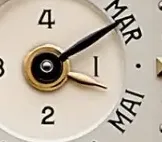
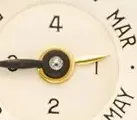
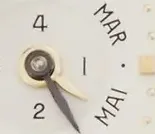
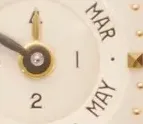
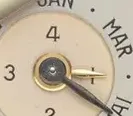
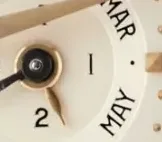
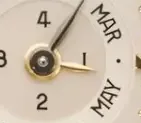
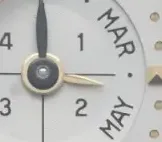
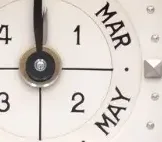
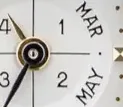
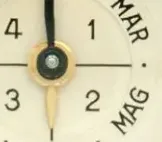
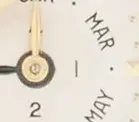
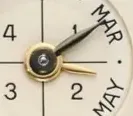
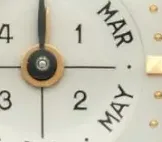
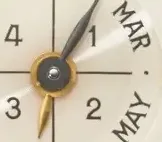
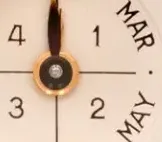
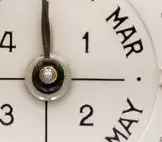
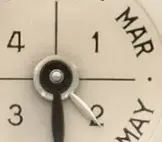
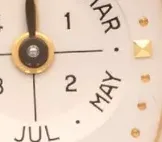
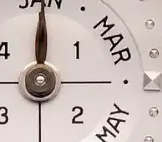
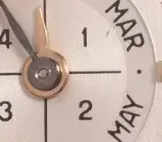
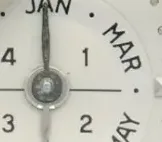
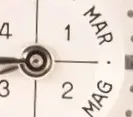
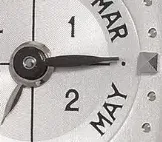
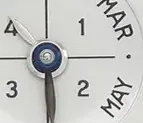
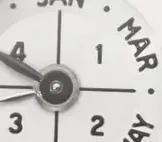
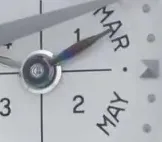
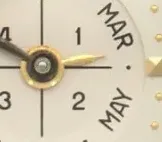
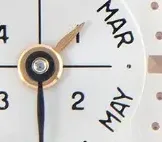
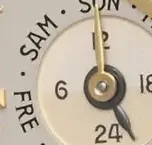
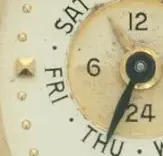
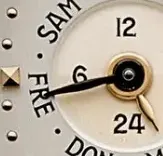
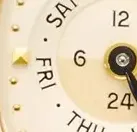
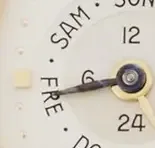
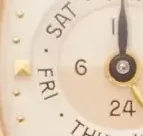
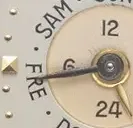
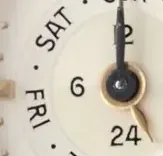
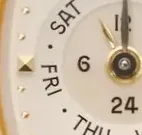
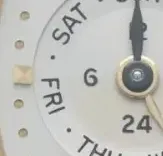
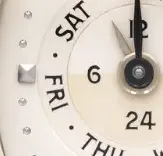
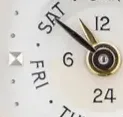
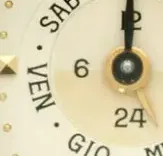
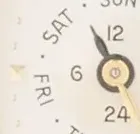
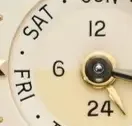
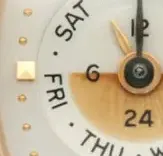
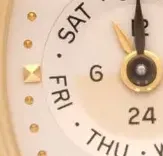
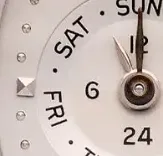
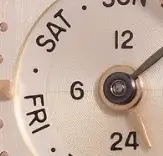
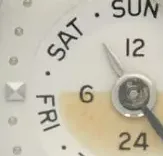
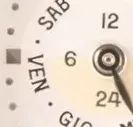
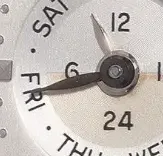
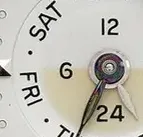
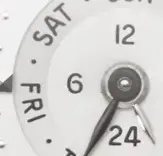
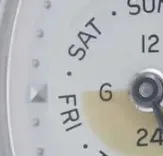
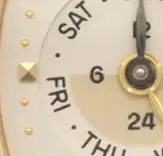
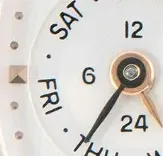
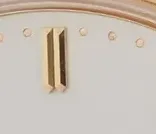
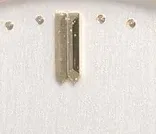
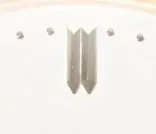
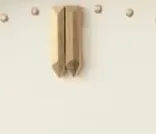
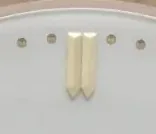
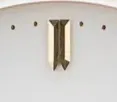
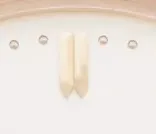
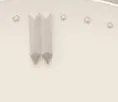
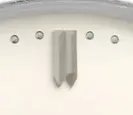
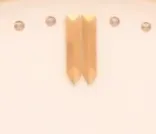
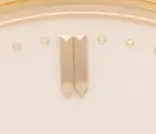
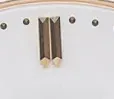
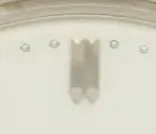
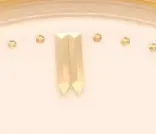
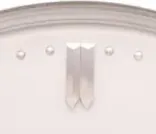
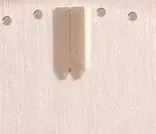
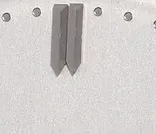
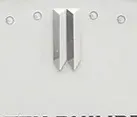
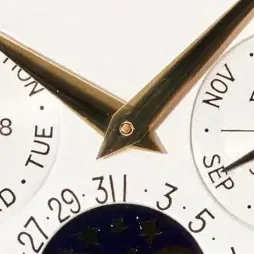
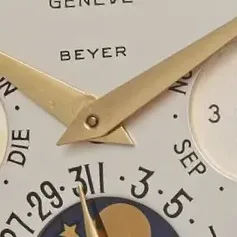
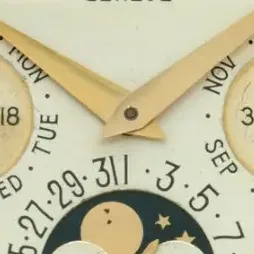
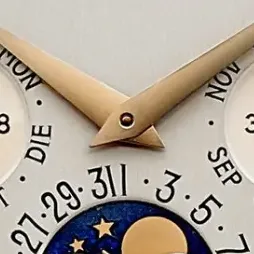
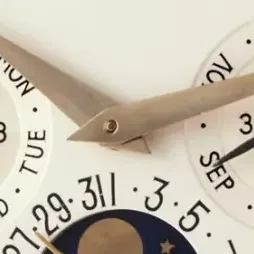
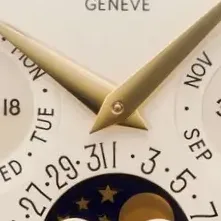
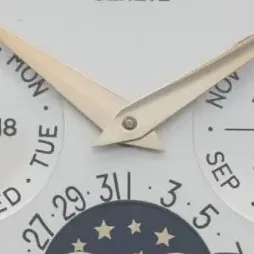
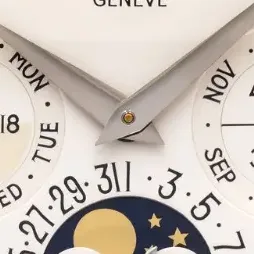
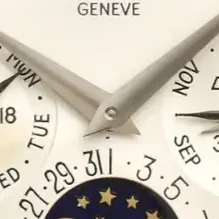
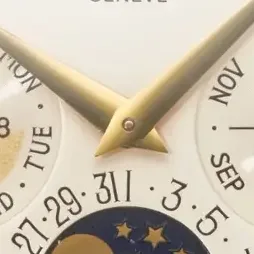
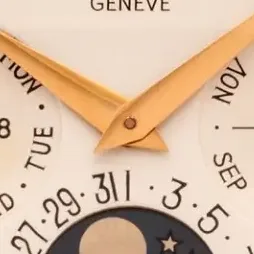
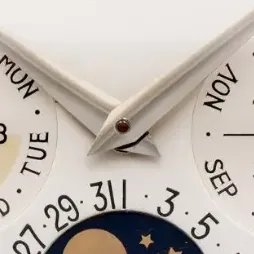
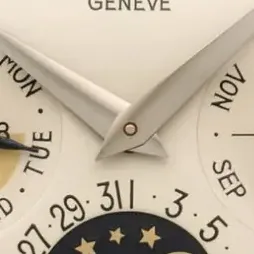
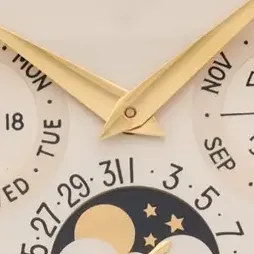
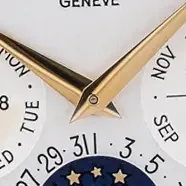
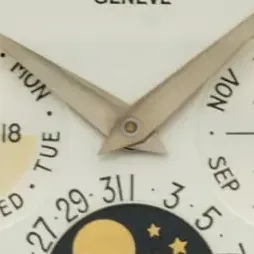
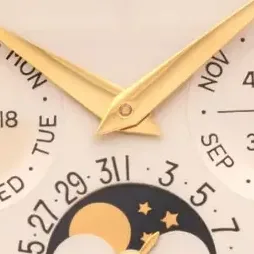
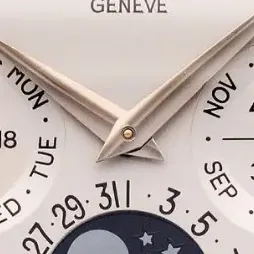
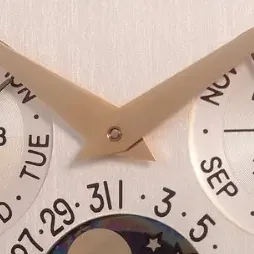
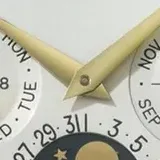
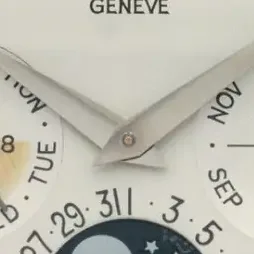
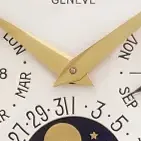
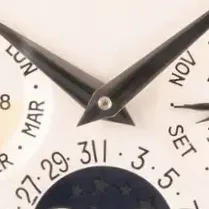
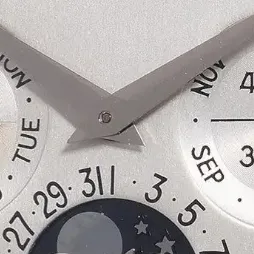
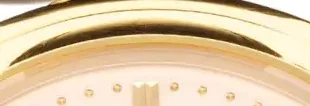
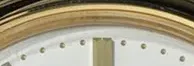
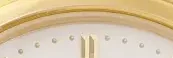
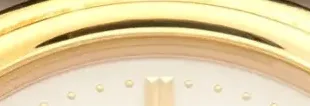
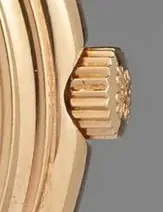
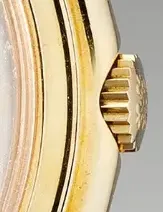
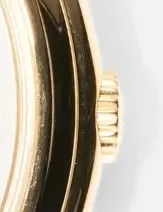
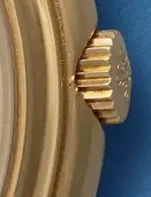
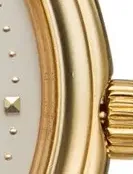
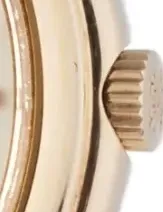
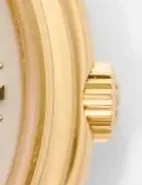
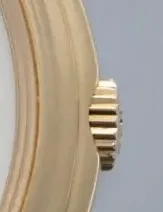
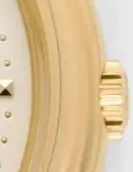
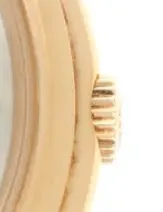
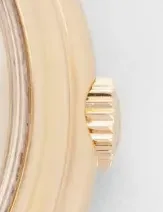
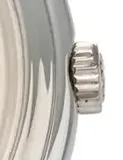
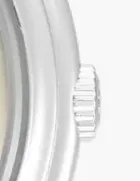
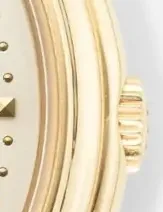
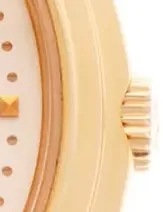
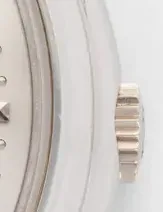
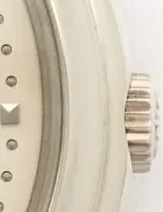
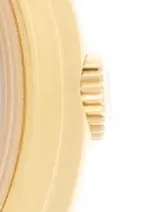
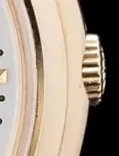
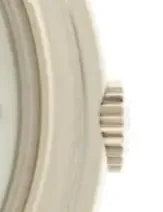
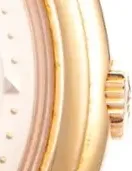
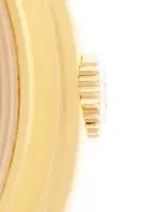
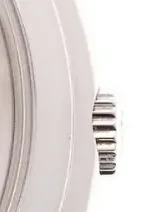
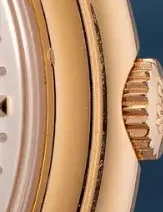
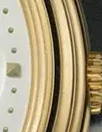
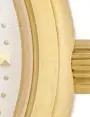
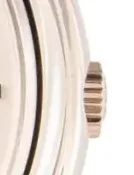
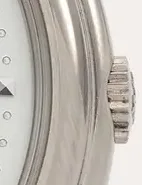
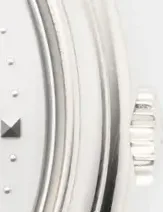
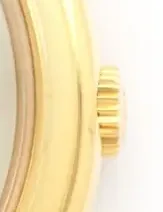
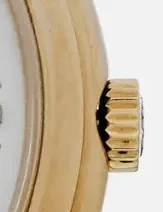
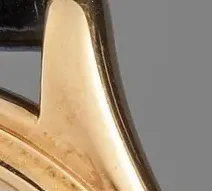
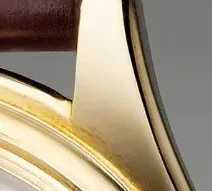
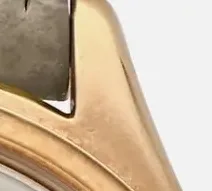
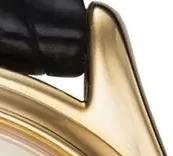
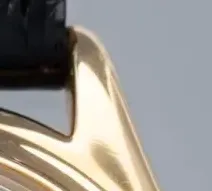
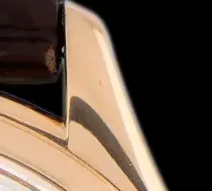
45 watches, oldest first, each straightened and cut the same way so that one row shows one component across them all. Chosen from 764 photographs on file for sharpness and for a face typical of the reference. A year marked c. is one its holder gives only roughly. Each picture is a detail cut from a listing photograph. Select the small mark in its corner for its year, its holder, a link to the listing it came from, and a way to report it.
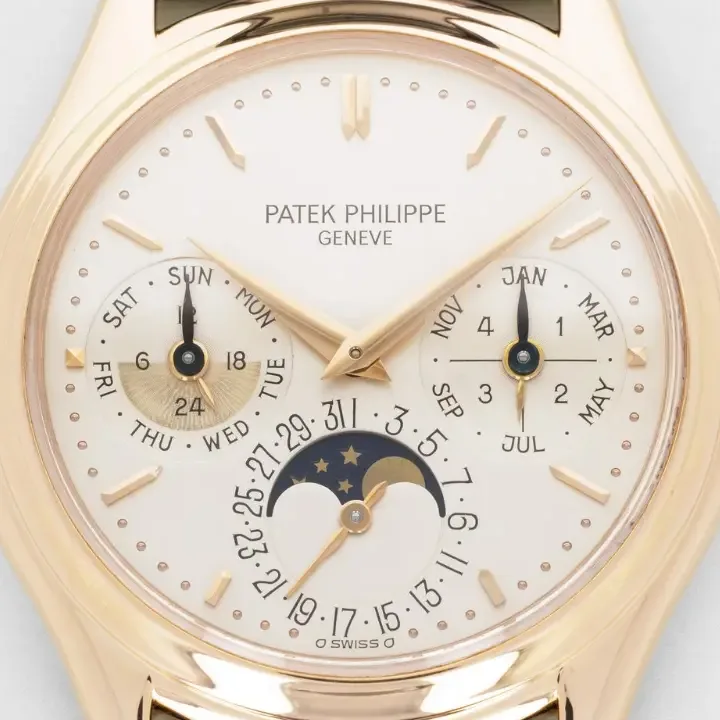
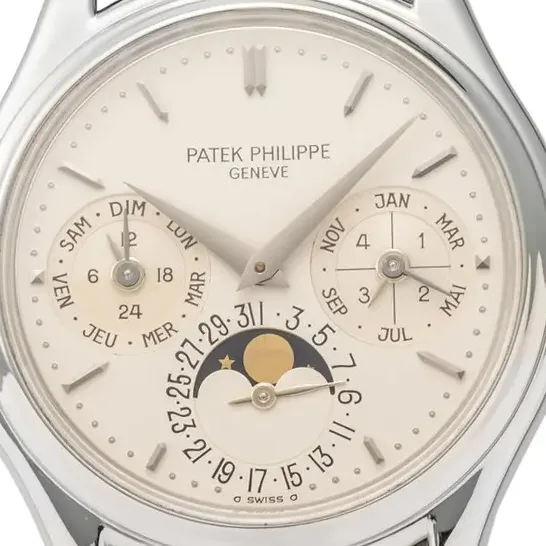
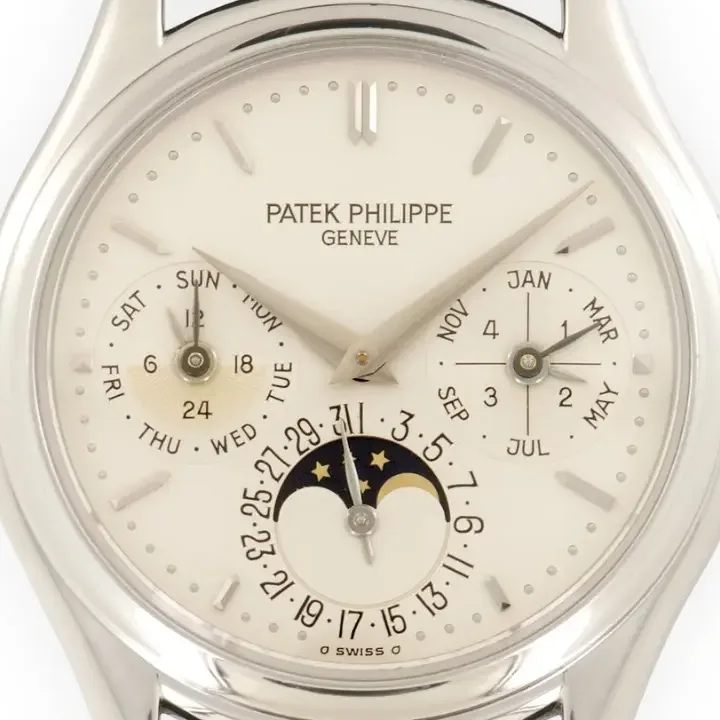
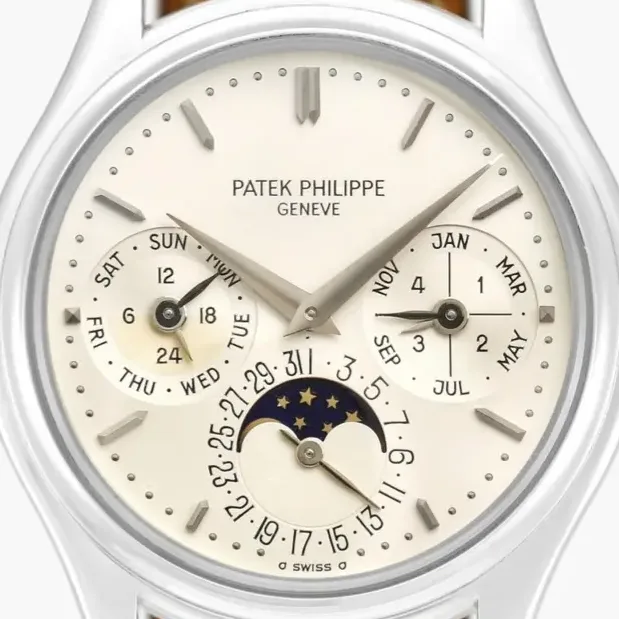
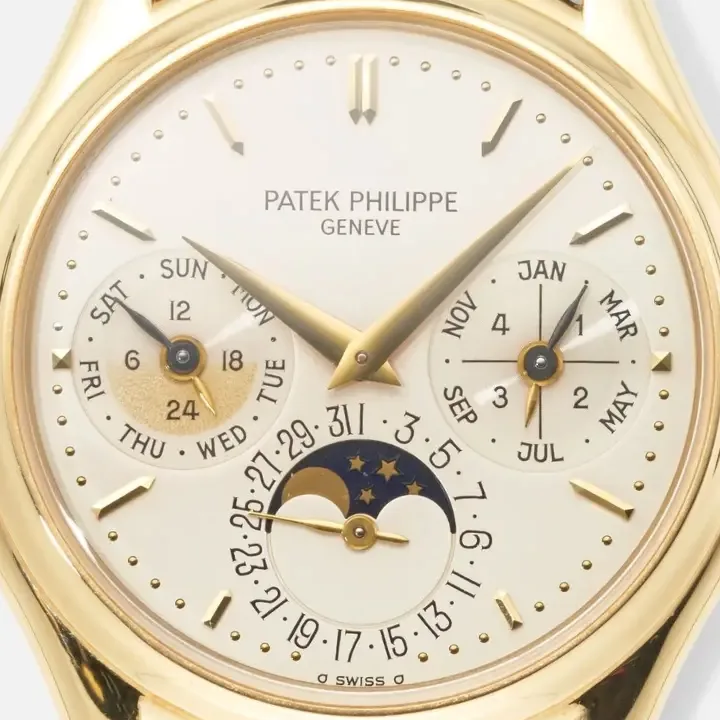
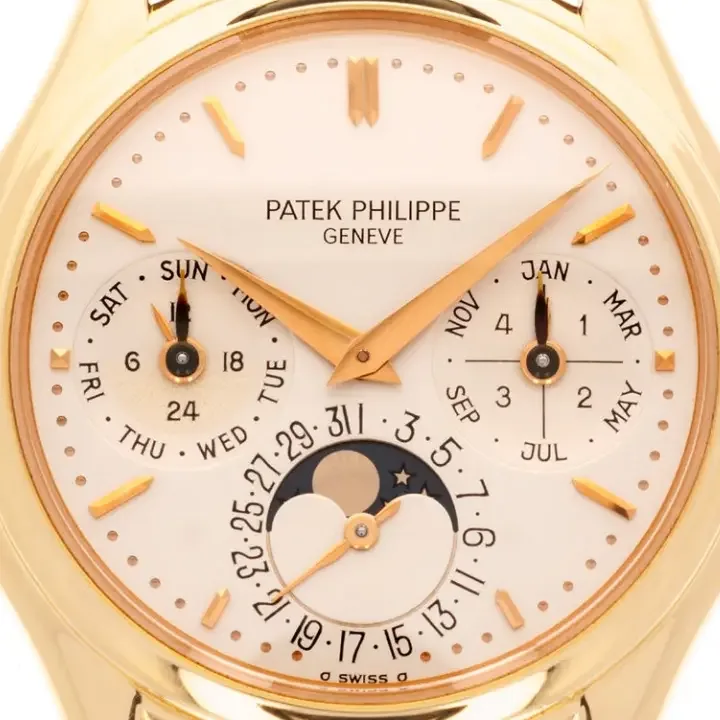
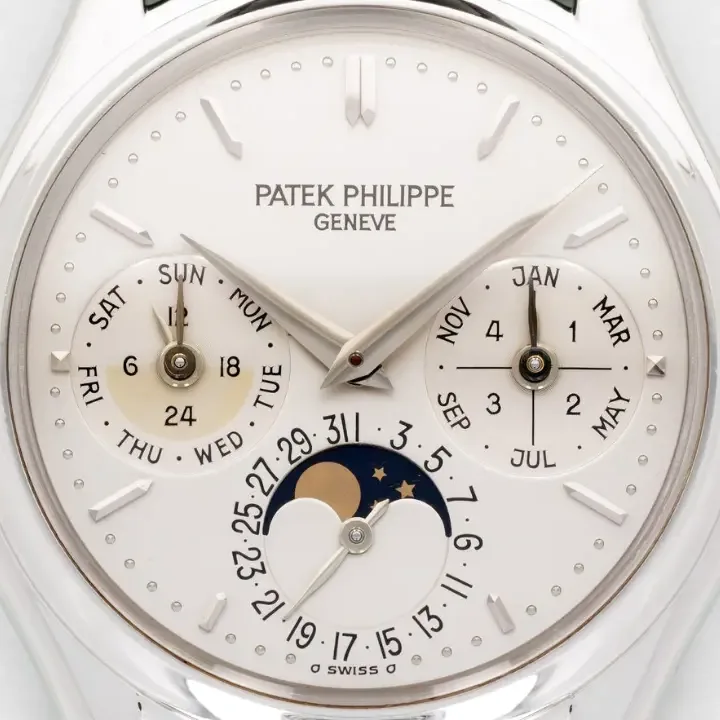
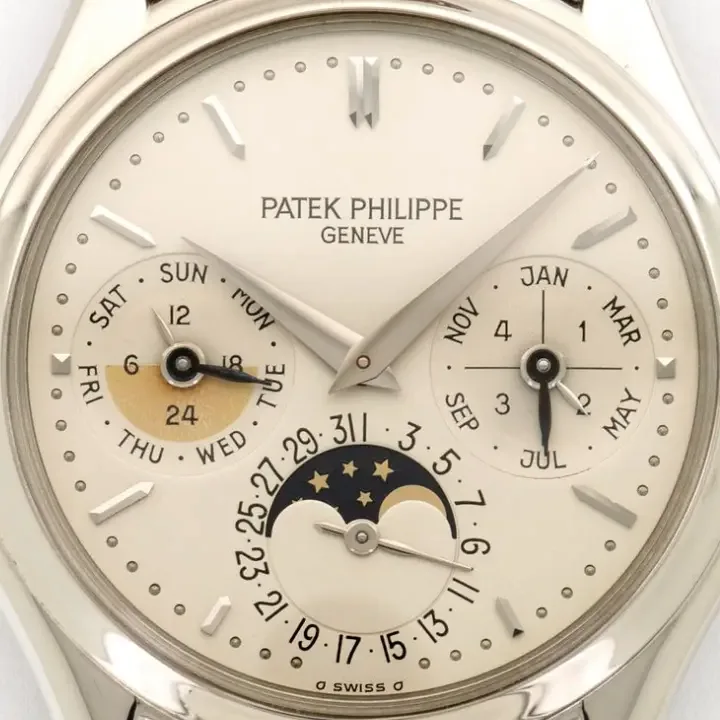












































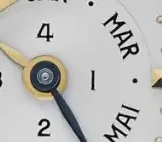
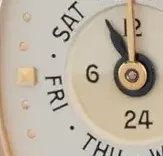
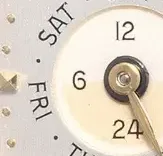
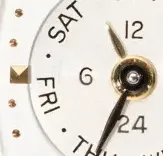
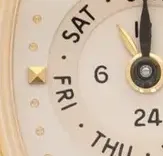
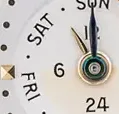
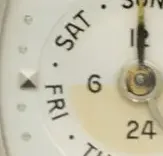
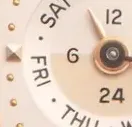





















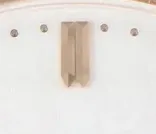
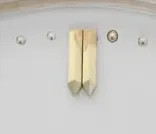
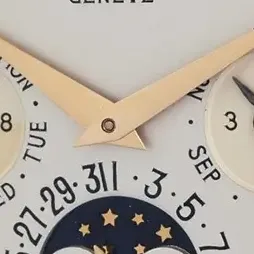
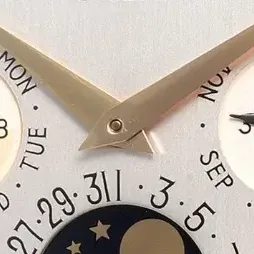




































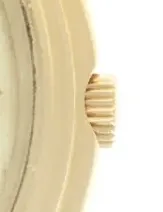
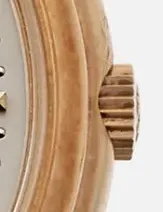
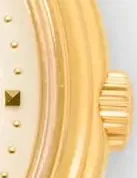

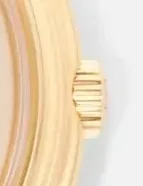







































Chronology
The first twenty-five pieces were delivered in May 1985 and standard production is put at 1985 to 2007; the series boundaries are given as approximate years and the series count is not agreed.
Every dated variant: what is written, and what the records show
For the reference the marks are every dated watch; for a variant, the watches a seller names as that variant, so a variant sellers do not name has none.
9 dated listings fall outside this scale and are not drawn.
Specification
| Case | 36 mm round case, about 8.5 to 9 mm thick, in 18 ct yellow, rose or white gold, or platinum; quick-set correctors at 6, 9 and 12 o'clock; stylus supplied to set the calendar |
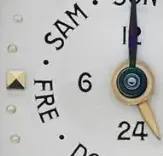
| Dial | Applied pointed baton hour markers with a dotted outer minute track; three sub-dials at 3, 6 and 9 o'clock: month and leap year at 3, date and moon phase at 6, day and 24-hour at 9 |
| Movement | Automatic calibre 240 Q (later numbered 240/114), 27.6 mm across, 2.53 mm high for the base calibre and 3.75 mm with the perpetual calendar; off-centre 22 ct gold micro-rotor sunk into the plate; 21,600 vibrations per hour; about 48 hours of power reserve; Geneva Seal |
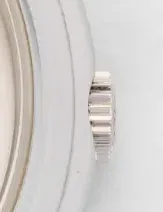
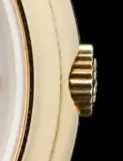
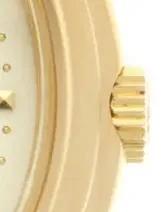
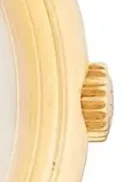
| Crown | Engraved with the Calatrava cross |
| Case back | Solid gold back on the first series; sapphire display back from the second series; platinum cases always have a solid back |
| Strap and clasp | Leather strap on a pin buckle at first, later a deployant clasp |
| Supplied with | Wooden box and outer presentation box, calendar stylus and Certificate of Origin |
Dial 18 described
The dial is the main way to date a 3940. Early dials have sunken sub-dials at 3 and 9, the second series bevels them, and later dials add a cross divider to the leap-year counter and then raise the sigma mark. Dials were made by Stern, with a second maker supplying some early ones. Dials were printed in German, English, Italian and French, and some carry retailer names. Collectors count either three series or four; the labels below give both.
First series, sunken sub-dials
numbers 770.001 to about 770.700
The sub-dials at 3 and 9 are small cylindrical recesses with a grained finish at the bottom; the day and month sit on the main dial surface while the day/night and leap-year indications sit inside the recesses. The signature is small and short, the sub-dials use a serif font, and GENÈVE carries a grave accent on the second E, except on the early Singer-made dial. The sigma mark sits below the outer minute track. The dials were harder to make than the later bevelled ones, which is offered as a reason for the small output.
- small cylindrical recessed sub-dials at 3 and 9
- grave accent on GENÈVE
- short, small signature
- sigma below the outer track
- serif sub-dial figures
Opaline dial
The usual dial: lightly brushed white or silvered opaline. It was the only dial offered in white gold and platinum on the first series, and is the usual dial in all metals thereafter.
- lightly brushed silvered or white surface
Gold dial
Offered on first-series yellow-gold watches, and on a small number of early second-series watches; the archive papers call it doré. It is the least common first-series dial and is more often seen with a retailer signature than without one.
- gold or champagne surface
- retailer signature often present
Beyer 225th anniversary dial
numbers 770.001 to 770.025
The first twenty-five watches, in yellow gold with a gold dial, carry BEYER at 12 o'clock under the Patek Philippe name and the series number below the moon phase at 6. Numbers 1 to 15 have a German calendar and 16 to 25 an English one. The case back is hand-engraved with the movement number and a line for Beyer's 225th anniversary, 1760 to 1985, and the box has an engraved plaque. Number 1 went to Theodor Beyer and number 2 was sold on 9 July 1985 to a collector; the two now sit in the Beyer museum and the Patek Philippe Museum respectively. One account gives the dial colour as salmon-toned gold. Some regular-production watches also have an unnumbered Beyer dial.
- BEYER under the Patek Philippe signature at 12
- series number at 6 o'clock
- engraved anniversary case back
Three early first-series dials (two Stern, one Singer)
Early first-series watches are found with three dial types. Stern made two: a short-E type, in which the middle bar of the E in the logo is shorter than the others, and a long-E type, both with the accent on GENÈVE and a sigma, SWISS, sigma mark below 6. A second maker, Singer, made a dial with no accent on GENEVE and a dotted SWISS mark between the sigmas. The Singer sub-dial cut-out slopes, where the Stern one is close to vertical, and the colour indication at 9 is present only on Stern dials. A Singer-type dial is recorded in an auction listing of 1990 with movement 770.241.
- middle bar of the E shorter than the top and bottom bars
- SWISS with dots between the sigmas
- sloped sub-dial cut-out
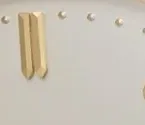
Long gold pointers
The pointers in the 3 and 9 sub-dials are long and gold on the earliest production dials, on both Stern and Singer types. They are common in 1985, seen in 1986 and much less likely in 1987.
- long gold pointers in the 3 and 9 sub-dials
Second series early, bevelled sub-dials
numbers about 770.701 to 771.500 (or to 772.500)
The sub-dials at 3 and 9 are bevelled, so the day and month sit on the slope, giving the look of larger counters and a busier dial. The signature is slightly larger and sits slightly higher, in a plainer font without serifs; GENEVE has lost its accent. The sub-dial font stays as before and the sigma stays below the outer track. Mostly opaline, with a few gold dials. The start is put at 1987 or 1988 and the end at 1989 or 1990.
- bevelled slope at 3 and 9
- no accent on GENEVE
- leap-year counter without a cross divider
Second series late, cross divider
numbers about 771.500 (or 772.500) onwards
A cross divider across the leap-year indicator at 3 o'clock separates the late from the early second series. It is often mistaken for the next series; it still has serif sub-dial figures (the 5s nearly closed, a particular J in Jan) and the sigma below the outer track. Hallmarks began to appear on the lugs at 5 and 7 late in this period.
- cross divider on the leap-year indicator
- serif sub-dial figures
- sigma below the outer track
Third series (or fourth), inline sigma
movements from about 3,120,000
Looks like the late second series, but the sigma mark now sits in line with the outer minute track and the sub-dials use a modern sans-serif font (compare the 5, 7, 9 and the J), appearing first at 6 and then at 3 and 9. The cross divider stays. Under a four-series count it is the fourth and begins at 1995 or 1996; under a three-series count it is the third.
- sigma level with the minute track
- sans-serif sub-dial figures
- cross divider
Italian calendar
Dials were made in English, German and Italian throughout; German weekday names such as Die for Dienstag appear on Beyer watches. The Italian dial is the only one reported with a closed 6 in the left 24-hour sub-counter, and an early-series Italian dial has a 4 with a longer head. Italian is described as rare.
- Italian weekday and month names
- closed 6 in the 24-hour sub-counter
French calendar
Very rare. A single first-series white-gold watch with French indications is known. Spanish dials are rumoured but unconfirmed.
- French weekday and month names
Retailer signatures
Besides Beyer there are a few Tiffany & Co. and Gübelin signed dials, probably fewer than the Beyer ones. On first-series watches the retailer name is at 12 under the Patek Philippe signature; on later ones it is at 6 inside the moon-phase indicator. Gübelin is known in both places. A 1989 Tiffany advertisement shows an unsigned early second series, so not every watch sold by the retailer carries its name.
- retailer name at 12 o'clock or inside the moon phase at 6
Moon phase
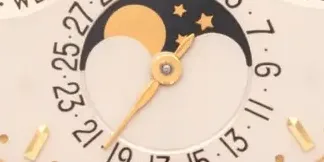
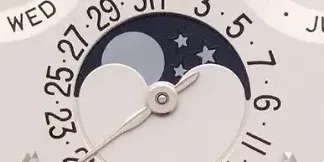
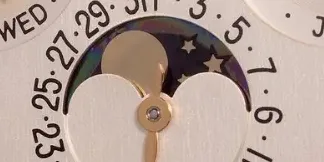
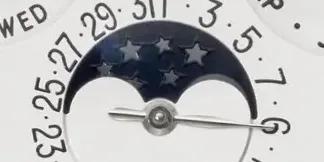
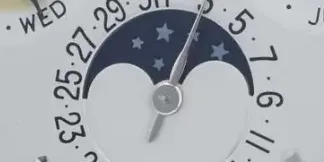
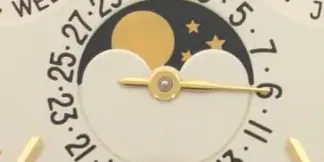
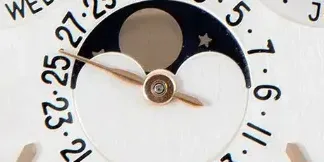
The moon and stars are yellow gold on all metals, but a few late white-gold and platinum watches have a silver moon and stars. The first hundred movements (to about 770.100) have a large-star disc with the star nearly touching the moon and rounded star tips, apparently glass; from 770.101 a small-star disc, apparently acrylic or lacquer, is fitted. The large-star disc looks like that of the 3448 and 3450. The moon disc on the 3940 is sapphire, not enamel.
- large star almost touching the moon, up to about 770.100
- silver moon and stars on some late white metals
Two-tone 24-hour sub-dial
The lower, night half of the 24-hour sub-dial at 9 is darker than the day half. One view is that this was applied deliberately in the dial-making process; the colour has aged unevenly, from light brown to deep purple, in all metals and series.
- darker lower half of the 24-hour sub-dial
X leap-year divider
Very rare: a leap-year indicator divided by an X instead of the usual cross. The first known example is on the wrist of Philippe Stern, in yellow gold with a German dial; a white-gold Italian example is also known. It may be a prototype or a transitional dial from the second series. One account places Stern's watch in the third series. Nothing further is known.
- X rather than + across the leap-year indicator
White Roman numeral porcelain dial
Lacquered porcelain with painted black Roman numerals and a painted outer minute track in five-minute steps; the sub-counters have the largest figures, the leap-year indicator has the cross divider and the word SWISS stands alone with no sigmas. Made in small numbers in rose gold, white gold and platinum (platinum the rarest) alongside the second and third series, with black or blued, or matte grey, javelin hands. Some were supplied with both a Roman and a baton dial.
- black Roman numerals on white porcelain
- javelin hands
- SWISS without sigmas
Saatchi (London exhibition) edition
Made for the exhibition at the Saatchi Gallery in London marking the 175th anniversary: a new-old-stock 3940 case, with dials in colours not used before in the series: blue for platinum, brown for yellow gold and salmon for white gold, in the 5140 layout. The signature is larger and thicker and some numbers (27, 15, 17) are squashed. Fewer than twenty per metal are estimated; others speculate from five to the mid-twenties for the white-gold salmon dial. A Geneva Seal movement is thought to be fitted.
- salmon, blue or brown dial
- thick signature
- 5140-style layout
3940P-027 blue PVD dial
A platinum new-old-stock case and movement with a gold dial treated with blue PVD, in the 5140 dial style fitted to the smaller 3940 case: variable-size date figures, larger days and months, small pyramid appliqués at 3, 5, 7 and 9 and a white gold ring around the moon phase. Leaf hands replace the dauphine hands of the standard watches. The case is 36 by 9 mm with a solid platinum back, a small flat crown and no small diamond between the lower lugs. Probably around five exist, and perhaps fewer.
- blue starburst dial
- leaf hands
- applied pyramids at 3, 5, 7, 9
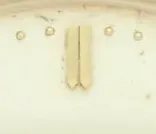
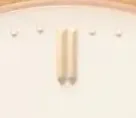
Hands 3 described
Standard hands are dauphine in the baton-dial watches; other forms belong to special dials.
Dauphine hands
The hands on the original 3940 variants are dauphine in form.
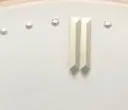
Javelin hands
Black or blued, or matte grey, javelin hands go with the Roman numeral porcelain dial.
- javelin-shaped hands on the Roman dial
Leaf hands
Leaf hands are used on the 3940P-027 blue-dial piece.
Case 8 described
One case design runs through the whole reference, but hallmark positions, the case back and the case-maker's mark changed over time.
Hallmarks on the case side
Gold cases are stamped 750 at 10 o'clock and the Helvetia head at 8 o'clock, opposite the crown; platinum cases have 950 at 10 and the chamois head at 8. Polishing can nearly remove them.
- 750 at 10 and Helvetia at 8
- 950 and chamois head on platinum
Hallmarks on side and lugs
A transition: marks on the side and also on the lugs at 5 and 7 o'clock, shown late in the second series and in the next.
- marks on lugs at 5 and 7 as well as the side
Hallmarks on all four lugs
The side mark is dropped and all four lugs are stamped; one account puts the third-series change at 1995 and another at about 2004.
- stamps on the backs of all four lugs
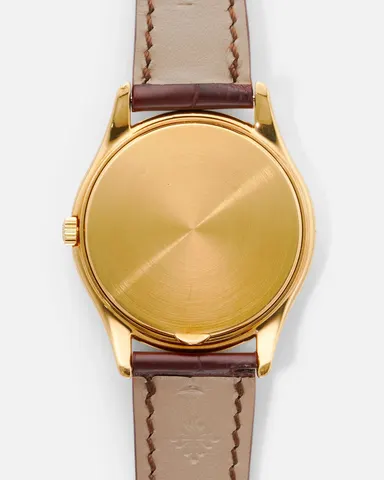
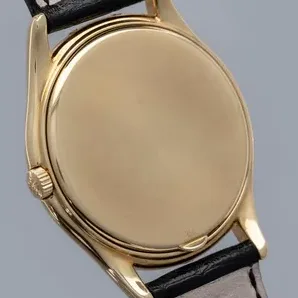
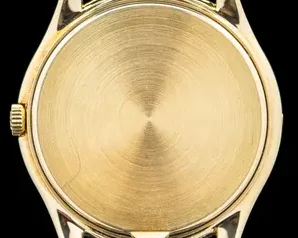
Solid gold case back
The first series had a solid back only. Platinum watches were always made with solid backs. A few first-series watches have a display back, either asked for at the time or fitted later.
- solid gold back
Sapphire display back
Introduced in the second series after demand to see the movement. At first a customer ordered one or the other, and late in the second series both backs were supplied, usually with the display back fitted and the solid back in the box, in yellow, rose and white gold.
- sapphire back showing the micro-rotor
Reference 3941
The same watch with a display back, made as a separate reference alongside the early 3940, with first-series and later dials, and folded into the 3940 when both backs became standard; discontinued in 1990. Published counts of known examples run from about thirty-five to just over forty-five.
- 3941 reference
Case-maker marks 115 and 357
Early gold case backs carry a hammer mark, with or without handle, and the number 115, the mark of Favre & Perret. Later cases are stamped 357, the mark of Calame & Cie. Platinum cases were not made by the 115 maker.
- 115 or 357 in the case back stamps
Metals
Yellow gold throughout and at launch the only metal; rose gold from the late second series into the third, thought to be about a fifth of output from the second series; white gold and platinum across all series, with one white-gold and one platinum first series known. White metals are much the rarest, especially early.
Crown 1 described
The crown is the same throughout.
Calatrava cross crown
The crown is engraved with the Calatrava cross.
- Calatrava cross on the crown
Movement 2 described
Calibre 240 Q is built on the calibre 240, an automatic ultra-thin movement with a micro-rotor that had been used for about eight years in time-only watches before the 3940.
Calibre 240 Q
770.001 onwards, in the numbering used before 240/114
Off-centre 22 ct gold micro-rotor set into the plate, one-way winding without reversers, polished gears, 21,600 vibrations per hour and about 48 hours of reserve. First-series movements run from 770.001 to about 770.700. The early second series follows from about 770.701, ending at about 771.500 in one account and about 772.500 in another, and the same numbering then continues until the change to 240/114. The rotor of early second-series watches carries a 22K stamp. The movement carries the Geneva Seal.
- 22K stamp on the gold rotor
Calibre 240/114
numbers about 3,120,000 onwards
New numbering from the later series, from about movement 3,120,000. The gold rotor of these watches is stamped with the Calatrava cross.
- 240/114 on the movement
- Calatrava cross on the rotor
Bracelet 5 described
Most watches were sold on leather straps with a buckle; metal bracelets are very few.
Early pin buckle
Conventional design with PP & Co and 750 engraved; first two series.
- PP & Co and 750 engraving
Angular pin buckle
More angular and pronounced; from the third series until the deployant clasp.
Deployant clasps
Three forms: an ellipse-shaped hollow buckle, then an oval one with the Calatrava cross, then a rounder one with the cross, almost like the current clasp. From 1997 all are thought to have this clasp.
- ellipse-shaped clasp
- oval clasp with Calatrava cross
- round clasp with cross
Grains-of-rice bracelet
A removable yellow-gold bracelet signed Patek Philippe, with a JPE stamp on the clasp believed to be the mark of Jean-Pierre Ecoffey.
- JPE stamp
Flat-link bracelet
A flat-link Patek Philippe bracelet is known on one yellow-gold first series, with a leather strap and pin buckle beside it, and white gold has appeared on a slightly different one. The reference 3945, the same watch with an integrated bracelet, was made at the same time.
Box and papers 1 described
The original outfit is documented.
Box, stylus and papers
A wooden box inside an outer presentation box, a stylus for the calendar correctors and the Certificate of Origin; from the second series, a second case back, at first on request and later as standard. A Vintage Collection 3940P-027 is recorded with a dark wood and cream leather winder box.
- wooden box
- stylus
- certificate of origin
Originality
- Dials were reprinted by the factory at some point; a reprint has larger type, no accent on GENEVE, different calendar figures (the 7 especially) and different alignment of GENEVE under the signature. A missing accent alone proves nothing on a first series, since the early Singer-made dial never had one.
- Polishing weakens case hallmarks, which can almost vanish.
- A solid back and a display back can both be found with a watch; check which was fitted and whether a second came in the box.
- A late second series is often taken for the next series; check the sigma position and the sub-dial font before accepting the label.
- The pin buckle and the deployant clasp each changed form during production, so the buckle or clasp on a watch can be compared with the series of its dial.
- The darker 24-hour half-dial colour is part of the dial, but ageing varies widely.
Names
- Doré. The gold-coloured dial, so named in the archive papers.
- X. The leap-year divider drawn as an X in place of a cross.
- Saatchi / London edition. The 2015 anniversary edition made for the exhibition in London.
Where accounts differ
Points on which the published literature and the library's own records do not agree, or on which the literature contradicts itself.
- Number of series. One guide divides production into four series, with the cross divider starting a third series and the inline sigma a fourth; two others use three, with the early and late second series split by the cross divider. The features are the same; only the labels differ.
- First-series output. The first series is given as fewer than a thousand watches by one guide, about 700 by another, and 1,300 to 1,500 by a third; the same guide puts total output at 7,000 to 8,000.
- End of production. Published accounts end production in 2007, but almost all the years sellers state in the library's listings fall before 2007; the few later ones are isolated.
- Reference 3941. One account says the 3941 was created while the first series was in production and gives no start year; a study of known examples puts it at 1986 to 1990 and counts just over forty-five surviving, against the thirty to thirty-five more usually quoted.
Back and movement
From listings of this reference, each confirmed by eye to show what it is filed under. A picture on which a person's name or a personal engraving can be read is not shown. From most holders a detail from the middle of the photograph is shown; the mark in its corner gives its holder and a link to the listing.
Caseback
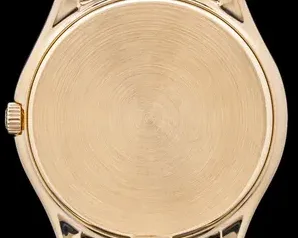


Catalogue versions 5 listed
The full numbers under which holders list this reference, with what their listings say of each. Each has a page of its own.
| Version | Metal | Dial | Years seen | Records |
|---|---|---|---|---|
| 3940J | Yellow gold | Silver | 1986–2005 | 70 |
| 3940P | Platinum | Silver | 1992–2014 | 30 |
| 3940G | White gold | Silver | 1987–2016 | 22 |
| 3940-017R thin | Pink gold | 2005 | 1 | |
| 3940/1 thin | Gold | 1986 | 1 |
In the records
Counted from 303 listings at 37 holders between 31 January 2007 and 14 November 2026. These are what sellers and auction houses state, not measurements.
Fainter bars are the 13 outside the main run of 1986–2006 (the middle nine-tenths): the earliest is 1985 and the latest 2015. They are early and late examples, and now and then a seller's slip. Not on the scale: 2016 (1), 2018 (1), 2020 (2). A year more than ten from all the rest is usually a model name or a founding date, not the year of the watch.
At the holders that record papers on every watch, 61% of their 18 listings of this reference come with papers; at those that record the box on every watch, 75% of 16 come with a box. "Papers" is whatever the holder counts as papers, and can include service papers.
Case metal
| Gold, any colour | 196 | |
| Yellow | 83 | |
| White | 34 | |
| Pink | 27 | |
| Colour not stated | 52 | |
| Platinum | 38 |
A listing that says "gold" or "18K gold" names no colour: it is counted under "colour not stated", not as yellow gold.
Dial colour
| Silver | 94 | |
| White | 10 | |
| Champagne | 8 | |
| Gold | 3 | |
| Black | 2 | |
| Salmon | 2 | |
| Blue | 1 |
Case size
| 36 mm | 170 | |
| 35 mm | 2 | |
| 34 mm | 1 |
Calibre named
| 240 | 94 | |
| 240Q | 57 | |
| 240-114 | 10 |
Bracelet or strap
| Leather strap | 93 | |
| Strap, kind not stated | 15 | |
| Metal bracelet, kind not stated | 9 | |
| Rubber strap | 1 |
Each table counts the listings that state the thing, in the seller's own terms. A size, metal, colour or calibre that cannot belong to this reference is a seller's slip or a listing filed under the wrong number.