Perpetual Calendar with centre seconds
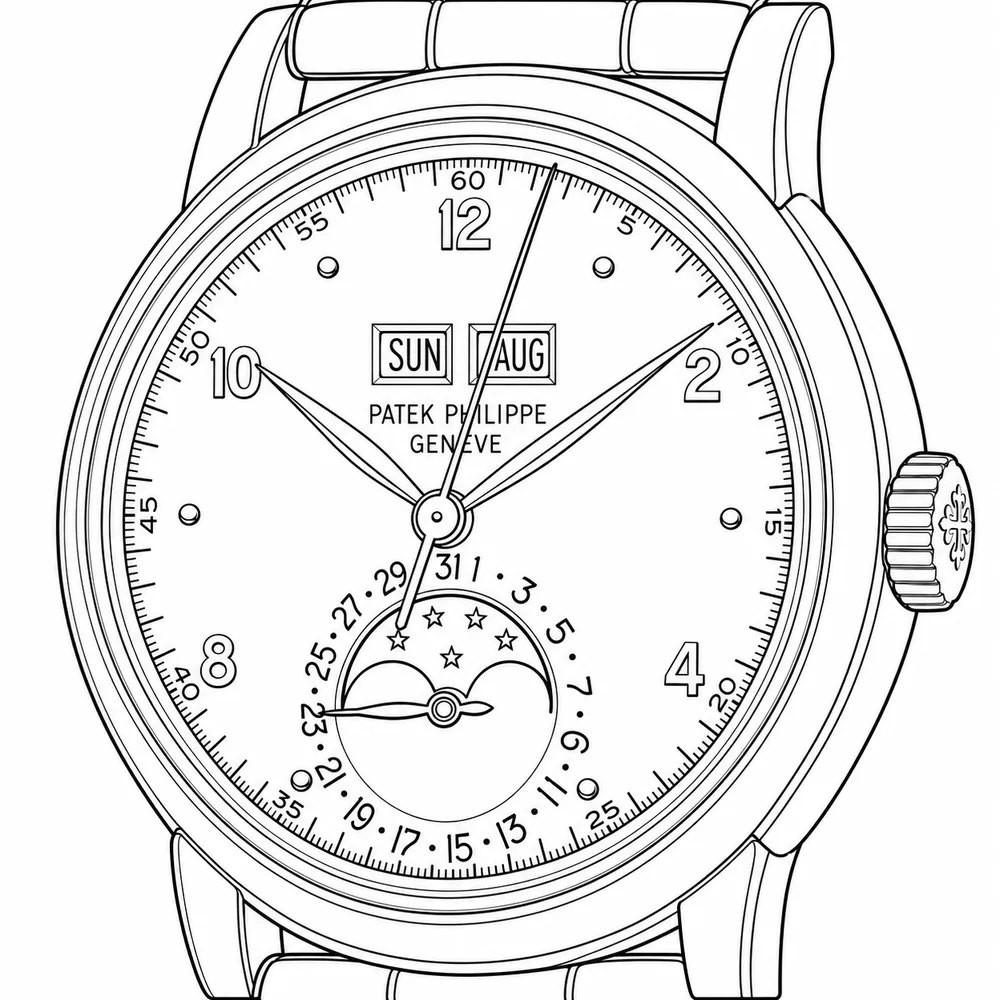
The 2497 is a hand-wound perpetual calendar with moon phases, launched in 1951 as the first Patek Philippe perpetual calendar wristwatch made in series with a sweep seconds hand. It followed the 1526 and was made alongside the 2499 chronograph and the waterproof 2438-1, which shares its movement base. A total of 179 movements went to the 2497 and 2438-1 together, about two-thirds of them to the 2497. It has a large case with stepped lugs and caliber 27 SC, and the dials fall into two series. Most are in yellow gold; pink gold is uncommon and white gold and platinum are very rare.
- Made
- 1951–1963dates approximate
- Seen in the library
- 1951–1956nine in ten in 1951–1955 · by years sellers state
- Case
- 37 mm · goldas sellers state
- Movement
- Calibre 27SChand-wound
- On record
- 40 listings77 photographs · 5 holders
Components
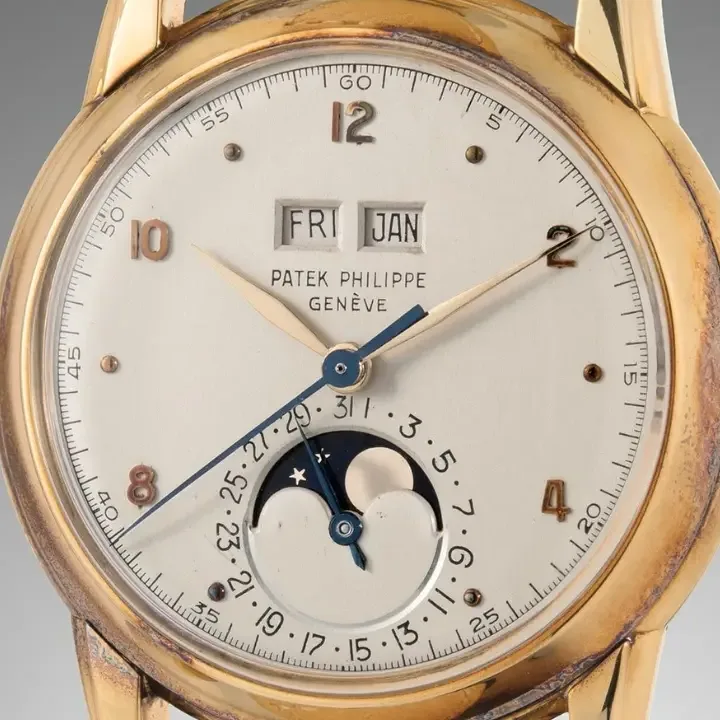
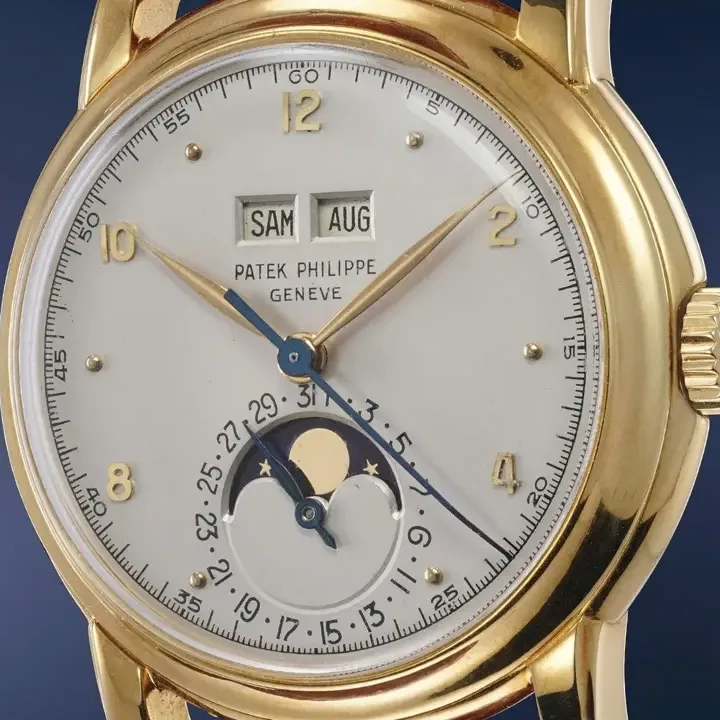
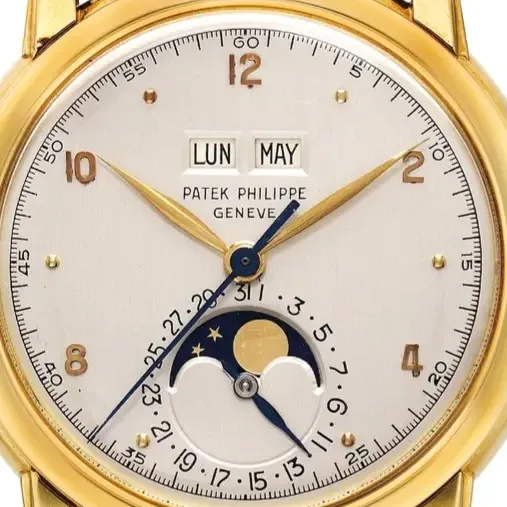
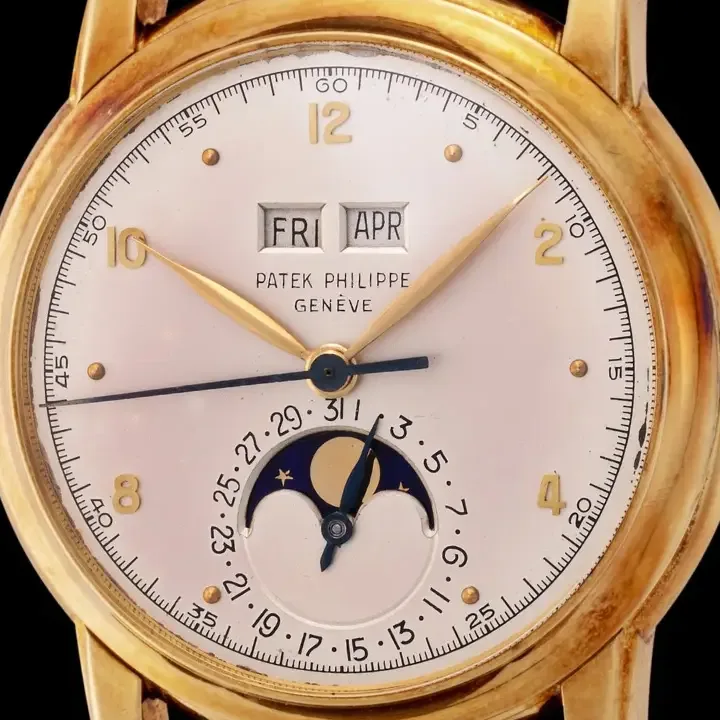
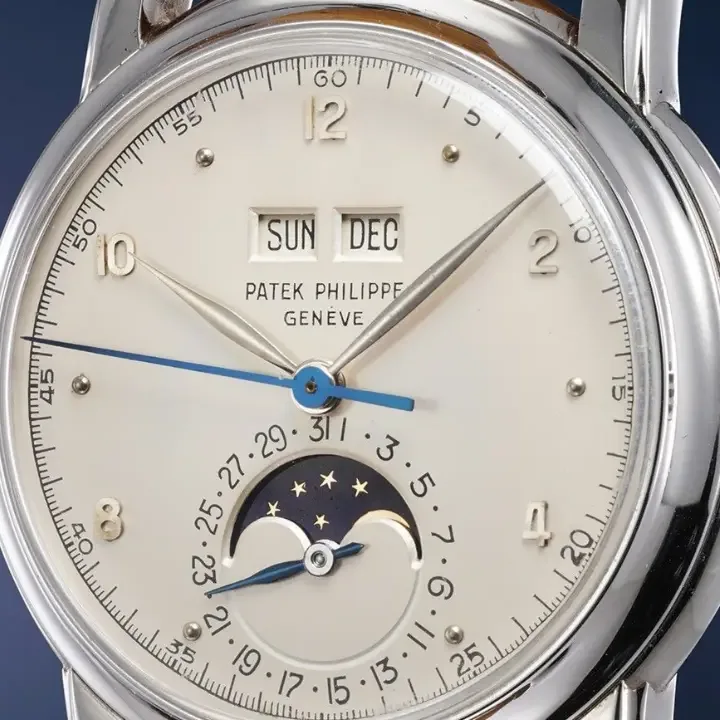
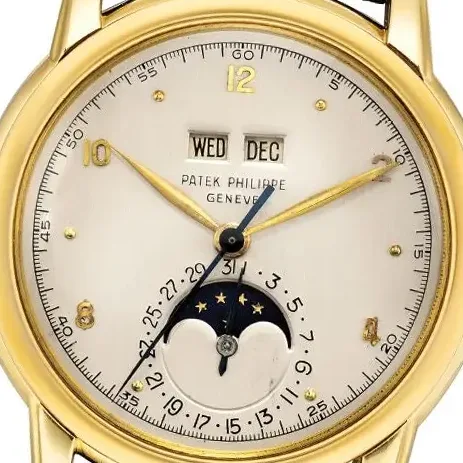
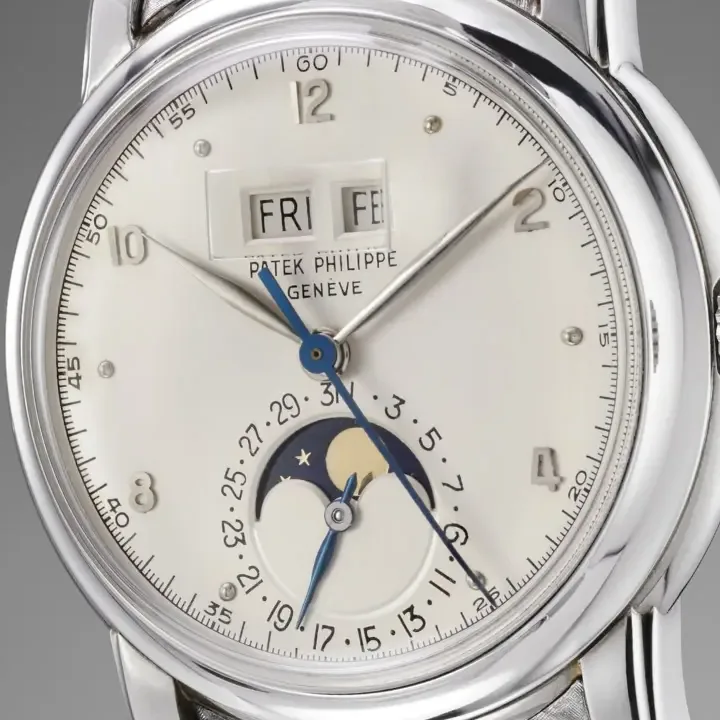
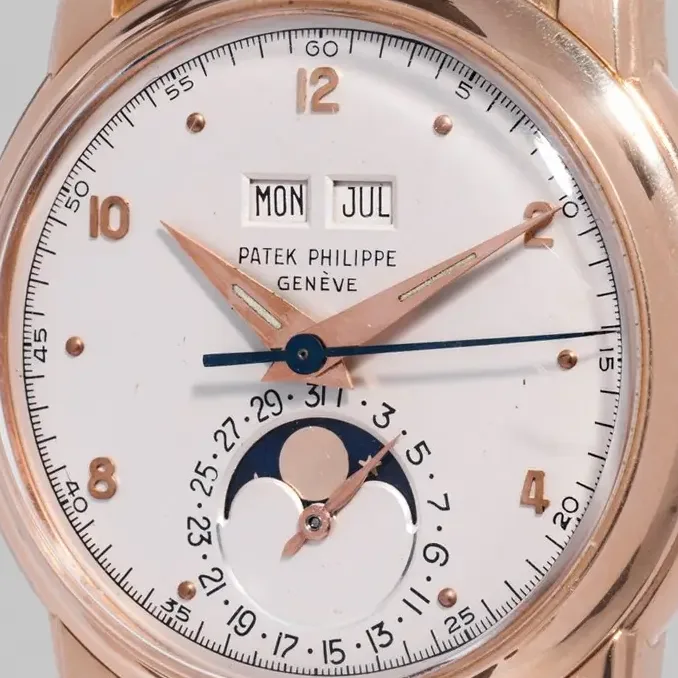
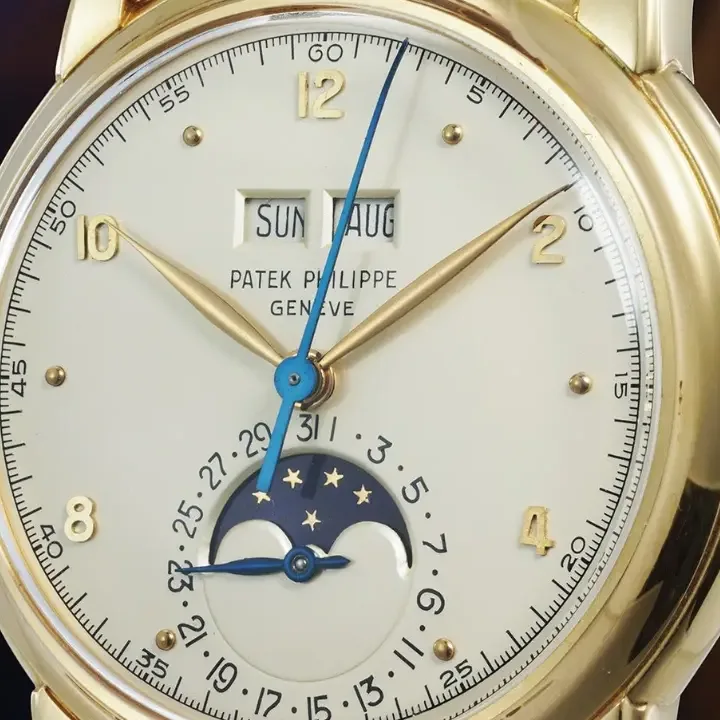
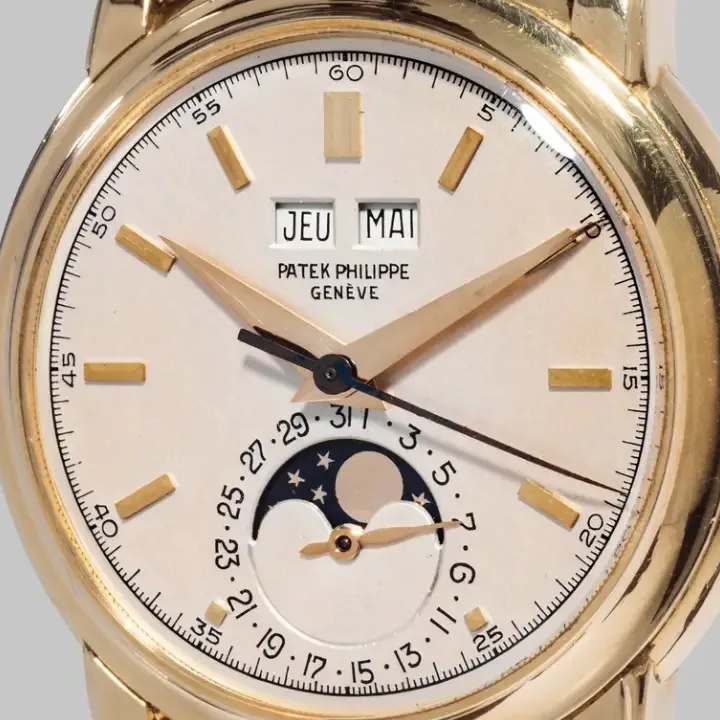
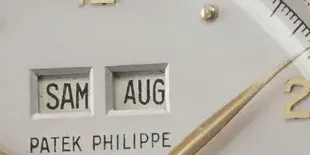
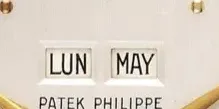
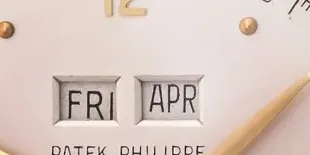
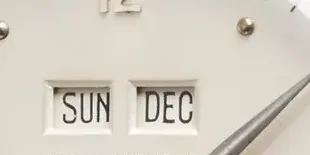
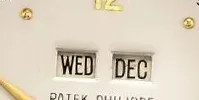
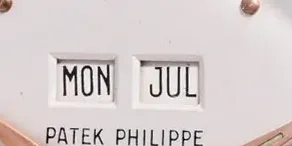
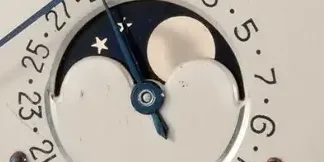
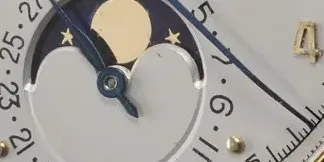
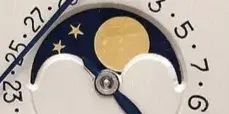
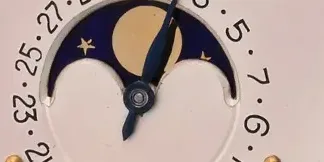
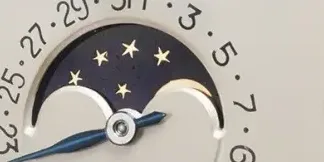
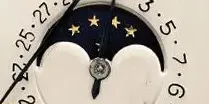
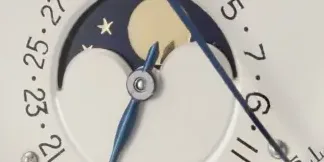
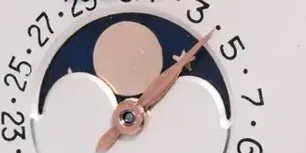
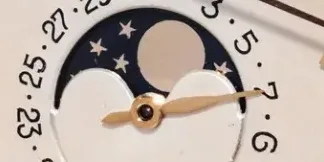
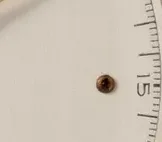
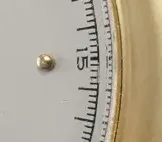
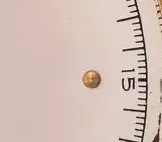
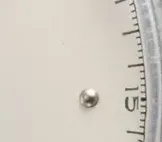
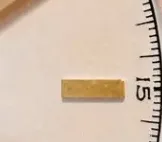
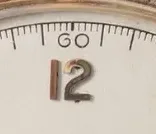
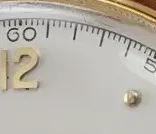
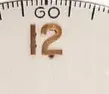
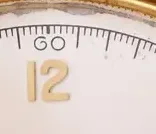
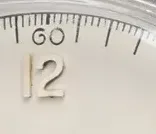
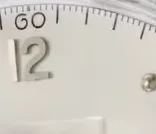
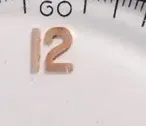
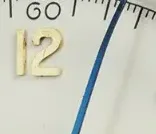
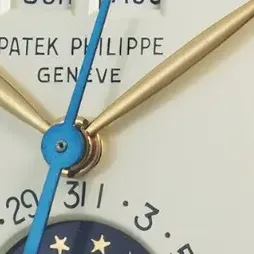
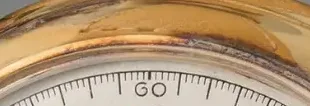
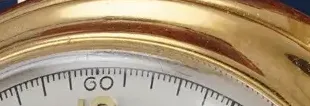
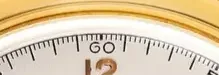
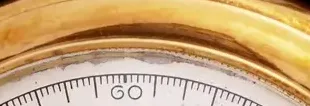
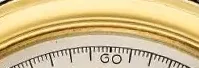
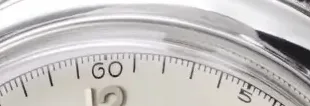
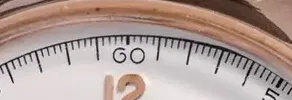
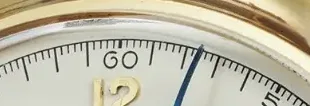
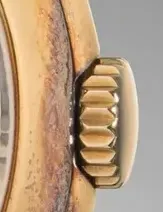
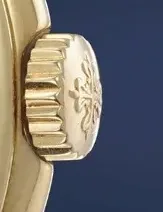
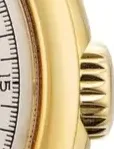
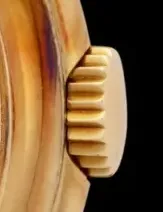
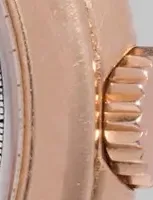
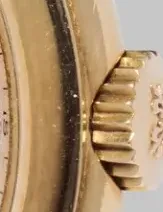
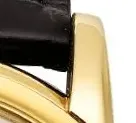
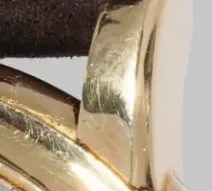
10 watches, oldest first, each straightened and cut the same way so that one row shows one component across them all. Chosen from 77 photographs on file for sharpness and for a face typical of the reference. A year marked c. is one its holder gives only roughly. Each picture is a detail cut from a listing photograph. Select the small mark in its corner for its year, its holder, a link to the listing it came from, and a way to report it.








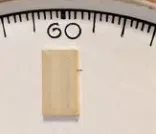
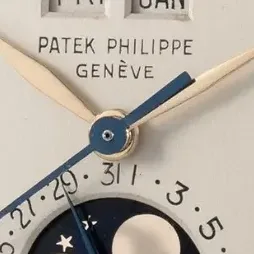
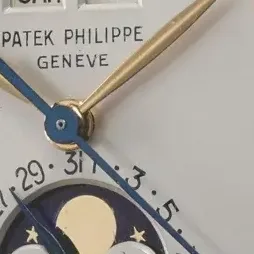
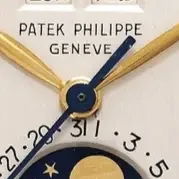
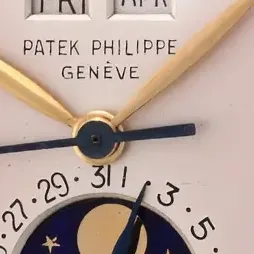
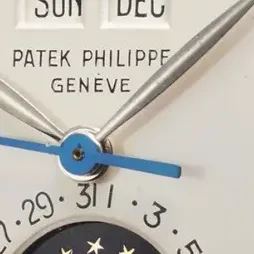
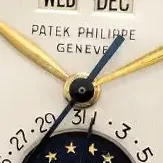
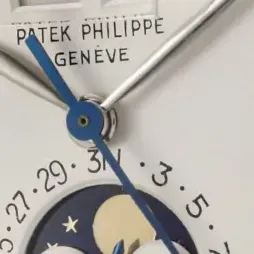

















Chronology
Launch in 1951 is stated; production is put at twelve or thirteen years, with one watch known to have been sold in 1963.
Every dated variant: what is written, and what the records show
For the reference the marks are every dated watch; for a variant, the watches a seller names as that variant, so a variant sellers do not name has none.
Specification
| Case | Gold case of about 37 mm with stepped lugs, from one of two case makers; a Patek record gives 36.6 mm for one watch |
| Dial | Day and month apertures, moon phase, larger date at six, centre seconds with a seconds track around the edge |
| Hands | Feuille hands on the first series, dauphine hands on the second; blued steel centre seconds and date hands |
| Movement | Hand-wound caliber 27 SC (QP), straight-line lever escapement, compensation balance, Breguet spring |
| Production | 179 movements shared with the 2438-1, about two-thirds for the 2497 |
| Metals | Mostly yellow gold; pink gold uncommon, with published figures from about ten known to a few dozen; three in white gold; two in platinum |
Dial 7 described
The dials are divided into two series. Because the small seconds at six was dropped for a centre seconds hand, the date is larger and easier to read, the circle around it was removed for the first time, and a long seconds track runs around the edge. The first series has alternating dots and Arabic numerals; the second has hour markers as batons.
First series: Arabic numerals and lens-shaped markers
numbers 888.000 to 888.099
Small Arabic numerals alternate with lens-shaped applied indices as hour markers, with feuille hands very like those of the 1526. It is found on movements with numbers between 888,000 and 888,099.
- alternating dots and Arabic numerals
- feuille hands
Second series: pointed baton markers
numbers from 888.100
From movement number 888,100 the hour markers are baton-shaped with pointed ends, called bullets or pointed batons. All second-series dials have dauphine hands, though another account gives sword hands.
- applied baton markers with pointed ends
- dauphine hands
Second series, Mk 2: rectangular batons
A form of the second series in which the batons lose their pointed ends and become plain rectangles. Accounts differ on its standing: one says it cannot be tied to a range of movement numbers and may be a service dial, while auction descriptions treat it as a regular second-series type beside the pointed batons.
- rectangular baton hour markers
Black gilt dial with luminous numerals
A black dial with gilt printing and luminous Arabic numerals, with radium paste inside a gilt outline. The hands are white luminous in new gold frames, and the date and centre seconds hands are gold rather than blued steel. Only one other original black-dial 2497 is confirmed. The watch was delivered in October 1954. It carries an emperor's crest engraved on the case back, believed to be by the maker.
- black dial with gilt printing
- luminous numerals
- gold date and seconds hands
- engraved crest on caseback
Retailer-signed dial (Gumbiner)
A yellow gold watch of 1953 with a Wenger case, sold by a Manhattan retailer whose name is on the dial. It is the only known 2497 with that signature.
- retailer's name printed on the dial
Retailer-signed dial (Gubelin)
Sellers describe a yellow gold 2497 retailed by Gubelin, with a stated year of 1951. The literature gives no detail.
Spanish-language calendar
One watch is described by sellers with a Spanish calendar. The literature gives no detail.
Hands 3 described
The first series has feuille hands, the second dauphine hands. The centre seconds and date hands are blued steel.
Feuille hands
On the first series, leaf-shaped hands similar to those of the 1526, with blued steel centre seconds and date hands.
- leaf-shaped hands
Dauphine hands
On the second series, dauphine hands with batons.
- dauphine hands
Gold-framed luminous hands
The 1954 black-dial watch has white luminous hands inside gold frames, and gold date and seconds hands instead of blued steel.
- luminous hands in gold frames
Case 4 described
A large case for its time, with stepped lugs, clearly wider than the Calatrava-shaped perpetual calendars of the 1940s: one account puts the gain in diameter at about 20 per cent, while auction descriptions give 34 mm for the 1526 against 37.5 mm for the 2497. Two makers supplied cases.
Emile Vichet case
The case of the earliest watches. It has a flat back and long lugs that curve down more steeply. Accounts differ on its size: one puts it at 37.7 mm, 0.7 mm larger than the Wenger, while auction descriptions call the Wenger the larger of the two.
- flat caseback
- longer, more steeply downturned lugs
Eduard Wenger case
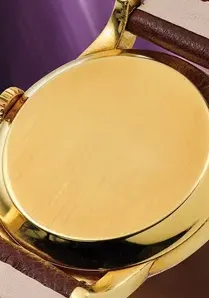
The maker of most 2497 cases. The Wenger case has a domed back and shorter lugs, and auction descriptions give it the larger diameter, though one account makes it 0.7 mm smaller than the Vichet. The maker's key number 1 is stamped inside the back. All known 2438-1 cases are Wenger.
- domed caseback
- shorter lugs
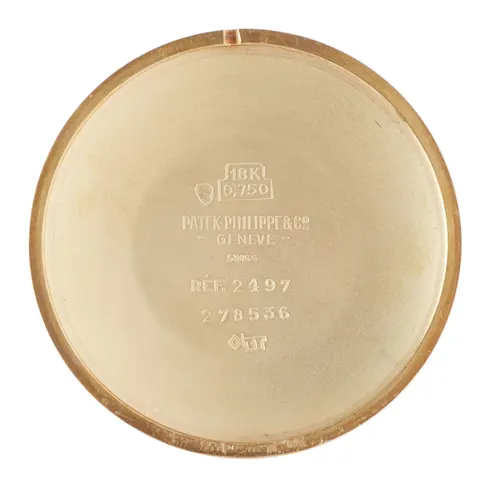
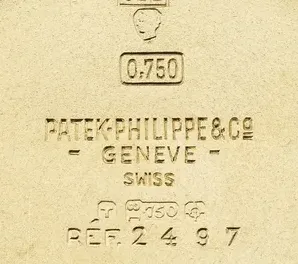
- key number 1 inside the caseback
Pink gold, white gold and platinum
Most 2497s are yellow gold. Pink gold is uncommon, though accounts differ on how uncommon: one speaks of a few dozen, while others count only ten or eleven known. White gold is known in three watches and platinum in two. One white gold watch comes on its original white gold bracelet by a Geneva maker.
- white gold or platinum case
Waterproof screw back (2438-1)
The 2438-1 is the same watch in a waterproof case with a screwed back. It was made in small numbers, estimated at under 70, mostly in yellow gold, with fewer than ten in pink gold.
- screwed caseback
Movement 1 described
The perpetual calendar is built on the manual-wind caliber 27 SC.
Caliber 27 SC (27 SCQ, 27 SC QP)
The new base calibre brought centre seconds as standard on the perpetual calendar, in place of the small seconds of earlier ones. It is hand-wound, with a straight-line lever escapement, compensation balance and Breguet spring. Known numbers start at 888,000. Records list it as 27 or 27SC.
Originality
- Gold cases with stepped lugs are sensitive to later polishing, which changes the symmetry and contours; the depth of the stamps shows how much case material remains.
- The enamelled lettering on the dial generally survives cleaning well, but small dial details affect how a watch is judged.
- A dial and case from different decades is possible: one exhibited rose gold watch pairs a 1952 case with a 1964 dial that has baton markers and no outer seconds track. Maker's records show when each was made.
- Accounts differ on whether the rectangular-baton dials left the factory with the watch or are service replacements.
Names
- Secondi al Centro. Sellers use the Italian phrase for the centre seconds hand that sets it apart from earlier perpetual calendars.
Where accounts differ
Points on which the published literature and the library's own records do not agree, or on which the literature contradicts itself.
- Years of production. One article puts production at 1950 to 1963, while another gives the launch as 1951. Sellers' stated years in the records run from 1951 to 1956, with one listing at 1972.
- Hands of the second series. One account describes the second series as having sword hands. Two other accounts give dauphine hands.
- Number in pink gold. One account says pink gold was used for only a few dozen 2497s; a Phillips catalogue counts fewer than a dozen known, either ten or eleven.
- Case sizes. One account gives the Vichet case as 37.7 mm, 0.7 mm larger than the Wenger, and puts the new generation of perpetual calendar cases at about 20 per cent larger in diameter than the Calatrava-shaped cases of the 1940s. Phillips catalogues describe the Wenger case as the larger, with a rounded back and shorter lugs, and give 34 mm for the 1526 against 37.5 mm for the 2497.
- Introduction of the 2438-1. One account says the 2438-1 was introduced alongside the 2497 in 1951. Phillips catalogues say it came shortly after, the 2497 being introduced slightly earlier, and another treats it as a further development of the 2497.
- Rectangular-baton dials. One account says the rectangular-baton dial cannot be tied to a range of movement numbers and may be a service part. A Phillips catalogue lists it as one of two regular second-series types: A with faceted rectangular markers, B with pointed ones.
Back and movement
From listings of this reference, each confirmed by eye to show what it is filed under. A picture on which a person's name or a personal engraving can be read is not shown. From most holders a detail from the middle of the photograph is shown; the mark in its corner gives its holder and a link to the listing.
Caseback

Inside the caseback


Catalogue versions 1 listed
The full numbers under which holders list this reference, with what their listings say of each. Each has a page of its own.
| Version | Metal | Dial | Years seen | Records |
|---|---|---|---|---|
| 2497R thin | Pink gold | 1953 | 1 |
In the records
Counted from 40 listings at 5 holders between 16 December 2011 and 13 November 2026. These are what sellers and auction houses state, not measurements.
The fainter bar is the one listing outside the main run of 1951–1955 (the middle nine-tenths): the latest is 1956. It is an early or late example, or a seller's slip. Not on the scale: 1972 (1). A year more than ten from all the rest is usually a model name or a founding date, not the year of the watch.
Case metal
| Gold, any colour | 40 | |
| Yellow | 14 | |
| Pink | 6 | |
| White | 3 | |
| Colour not stated | 17 |
A listing that says "gold" or "18K gold" names no colour: it is counted under "colour not stated", not as yellow gold.
Dial colour
| Silver | 7 | |
| Black | 1 |
Case size
| 37 mm | 22 | |
| 38 mm | 2 | |
| 36 mm | 1 |
Calibre named
| 27SC | 15 |
Bracelet or strap
| Leather strap | 14 | |
| Metal bracelet, kind not stated | 4 |
Each table counts the listings that state the thing, in the seller's own terms. A size, metal, colour or calibre that cannot belong to this reference is a seller's slip or a listing filed under the wrong number.