Autavia (compressor case)
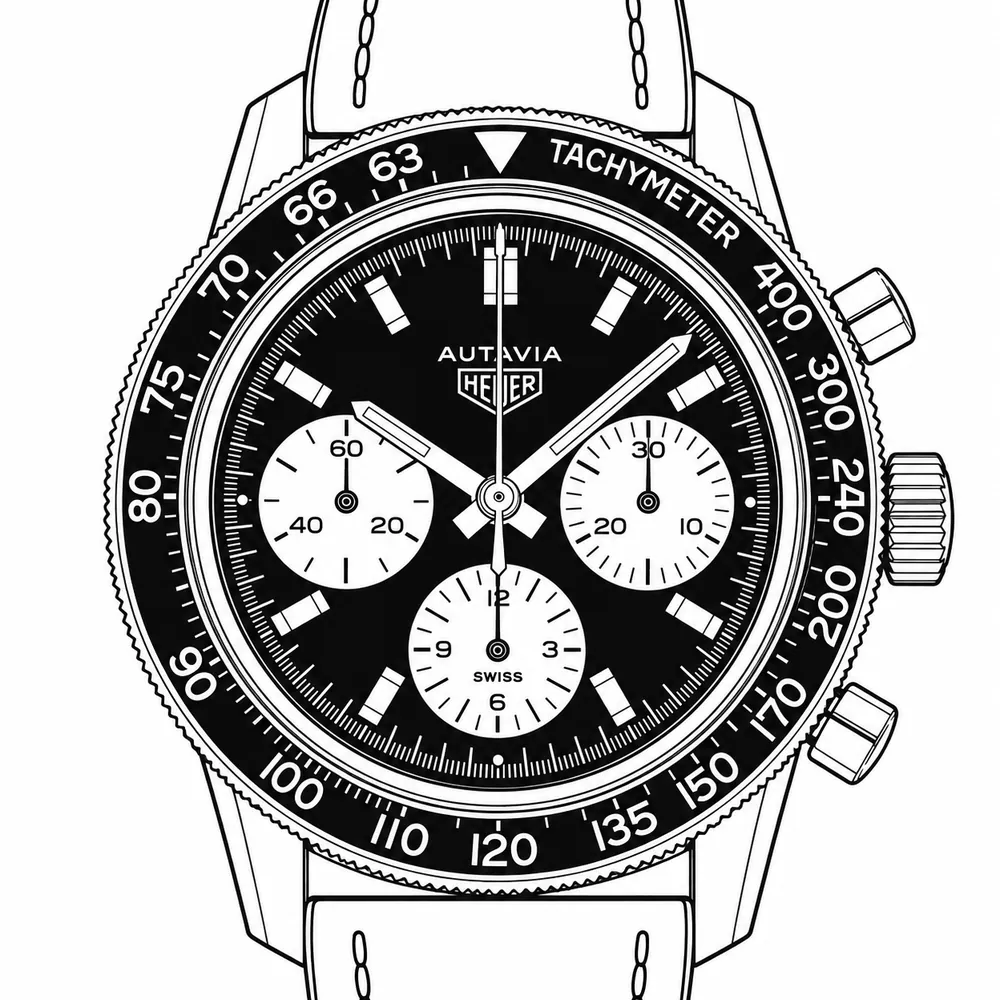
The 2446C is the three-register Autavia in the snap-back compressor case that replaced the screw-back 2446 in 1968. It is a larger watch, about 40 to 41 mm across the bezel, with a hand-wound Valjoux 72 and a rotating bezel in hours, minutes and hours, or tachymeter form. It was made in two executions, the second from about 1970 with red accents and black-striped markers, and it also carried the dual-time GMT and the Abercrombie & Fitch Seafarer tide chronograph. It was superseded in the early 1970s by the cushion-cased automatic Autavias. Collectors look first at whether bezel, hands, dial and case belong together.
- Made
- 1968–1972dates approximate
- Seen in the library
- 1968–1972by years sellers state
- Case
- 40 mm · steelas sellers state
- Movement
- Calibre 72, 724hand-wound
- On record
- 79 listings175 photographs · 24 holders
Components
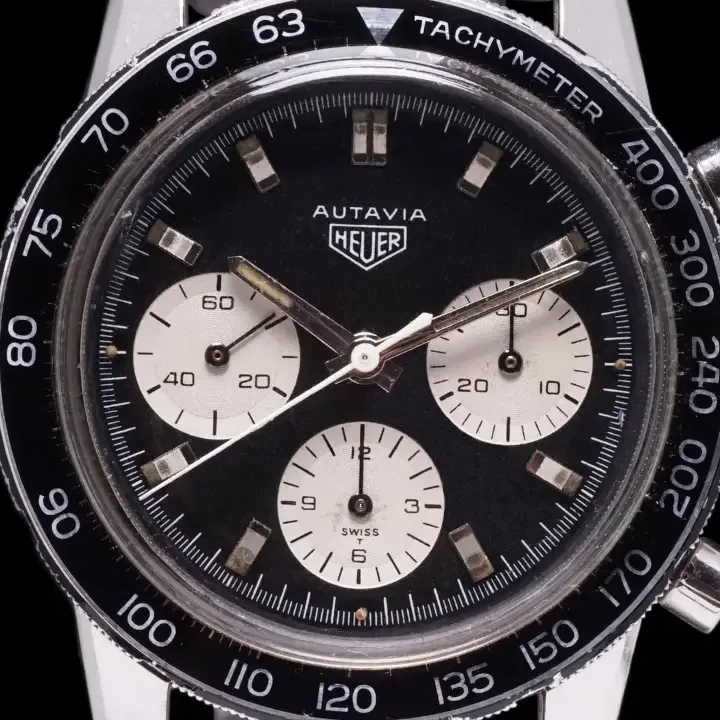
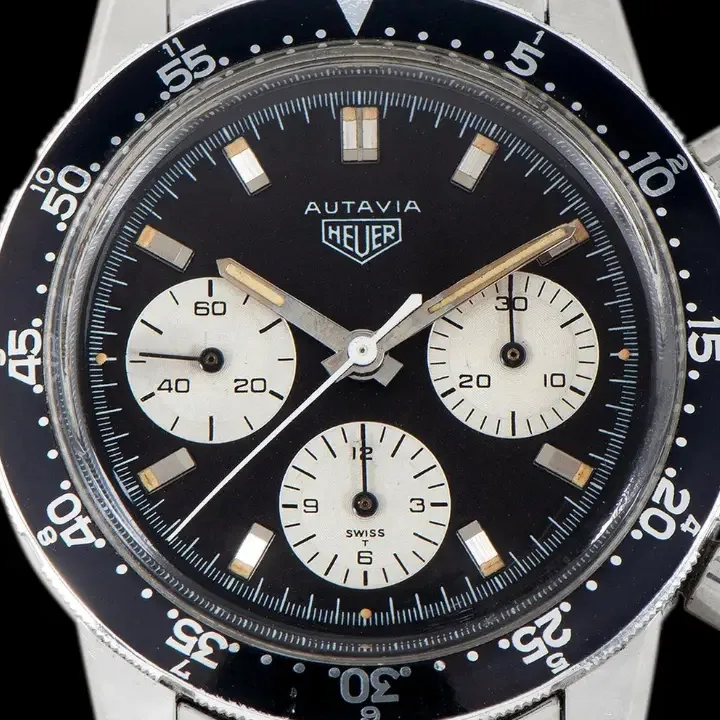
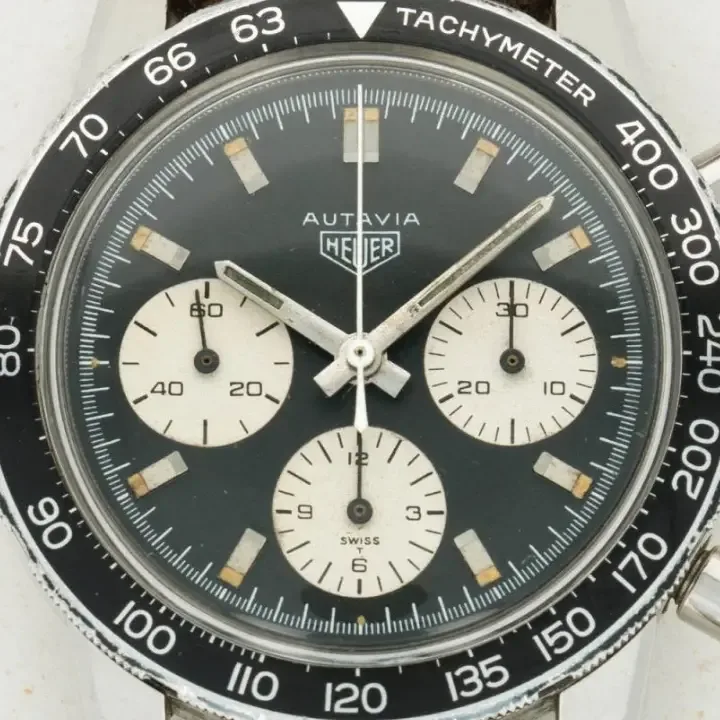
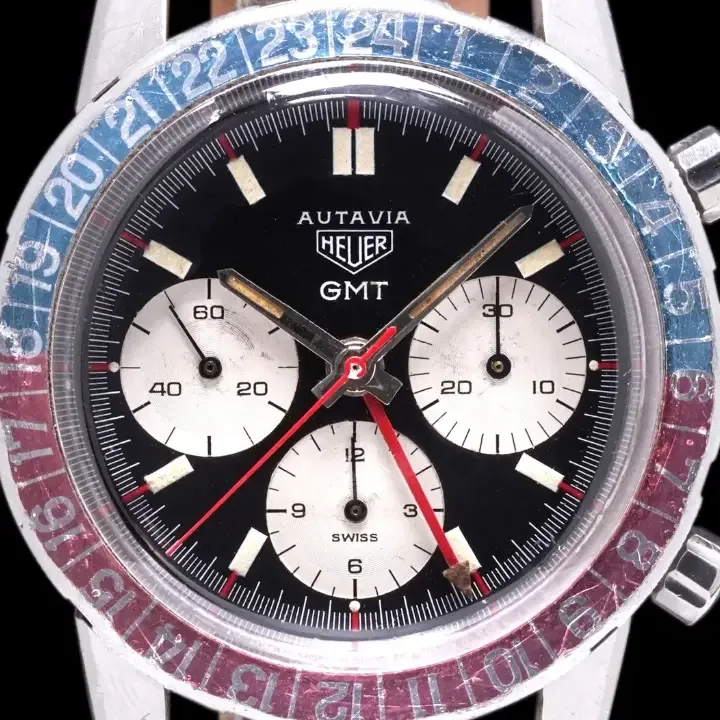
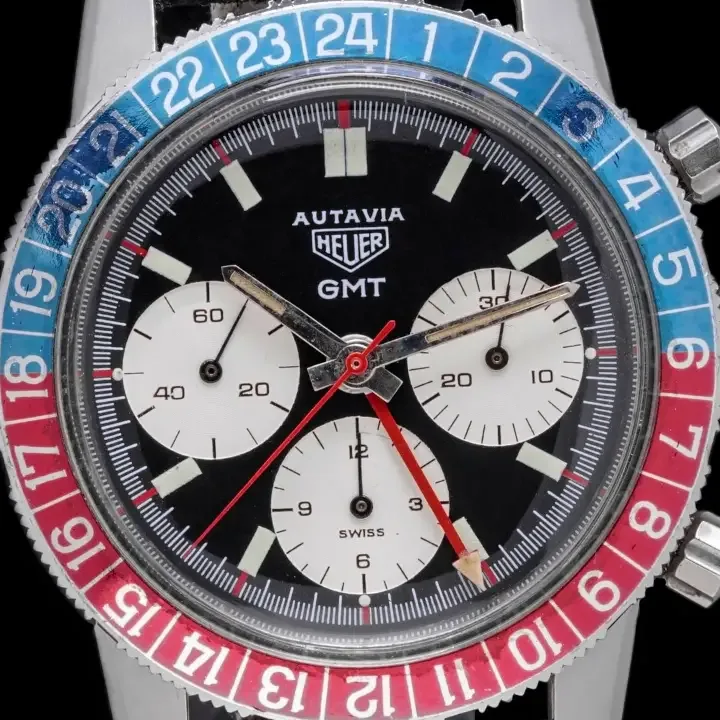
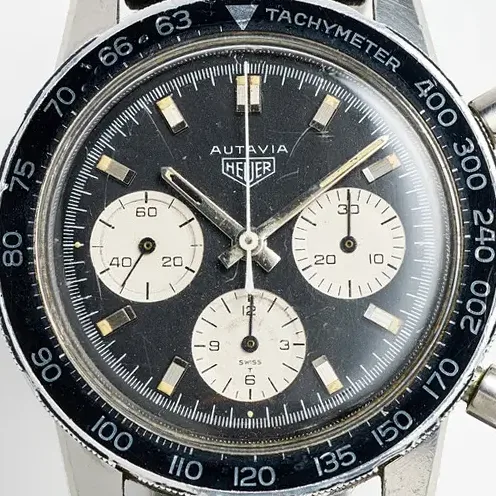
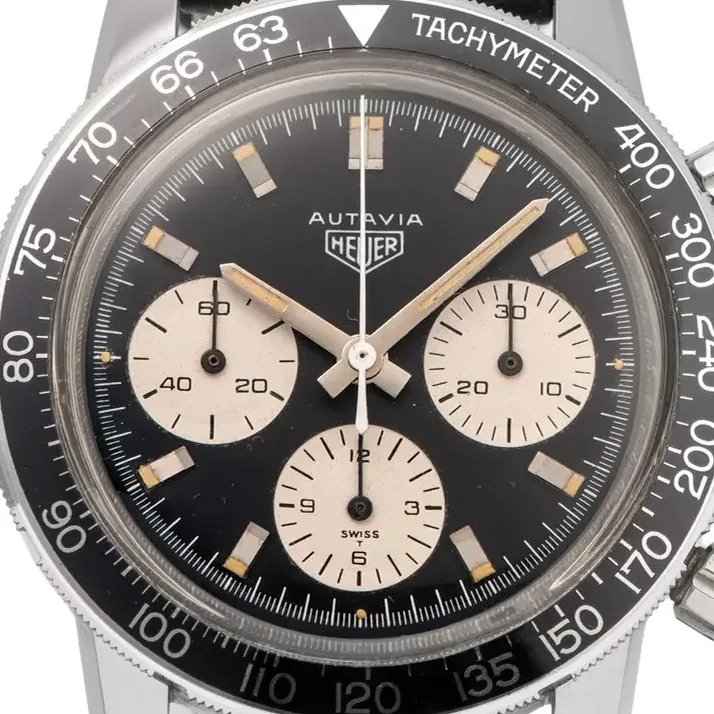
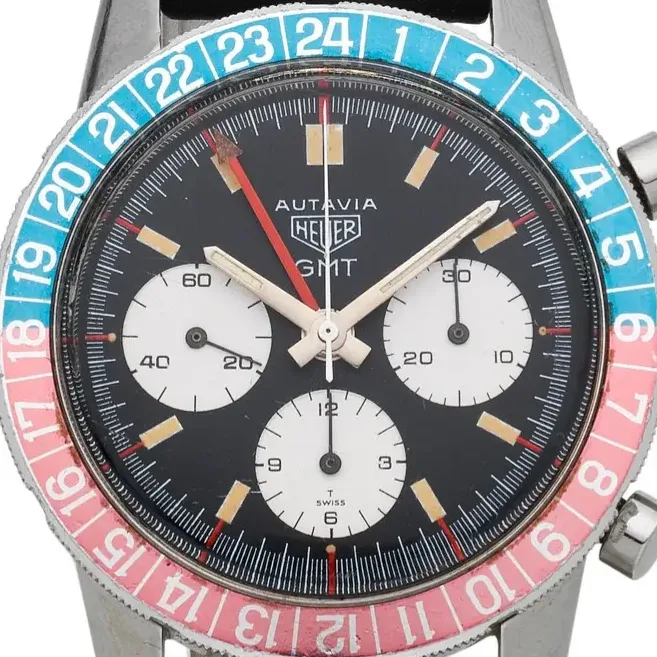
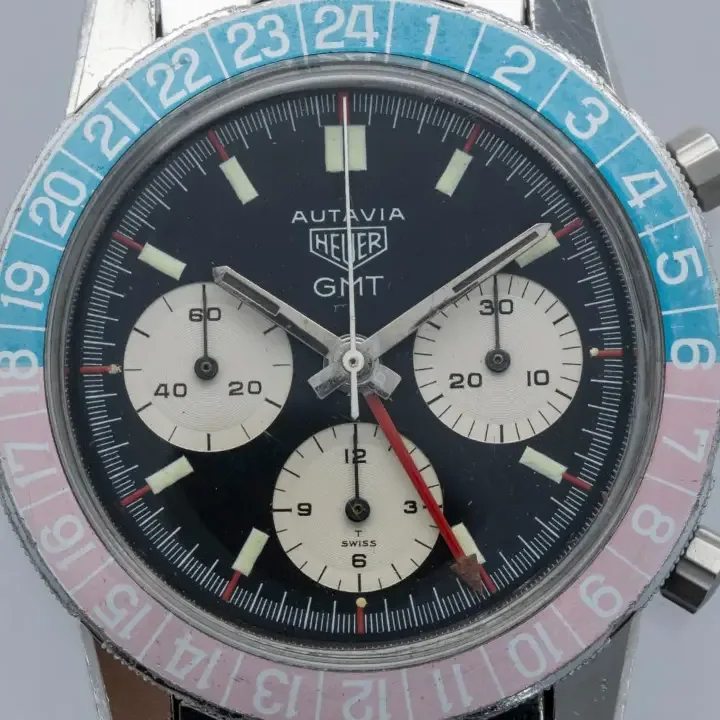
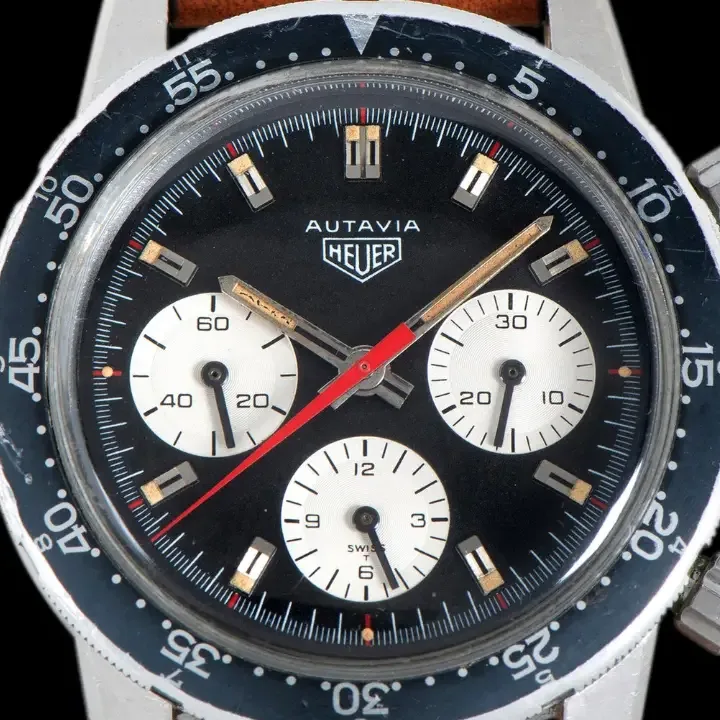
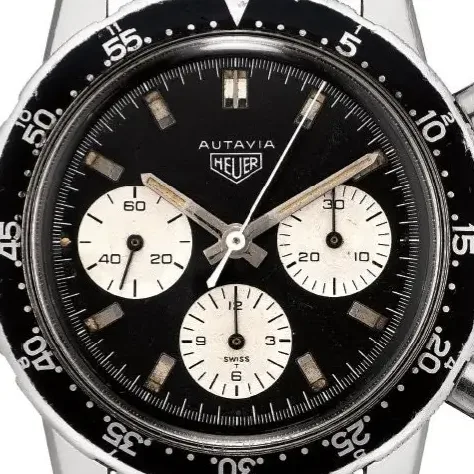
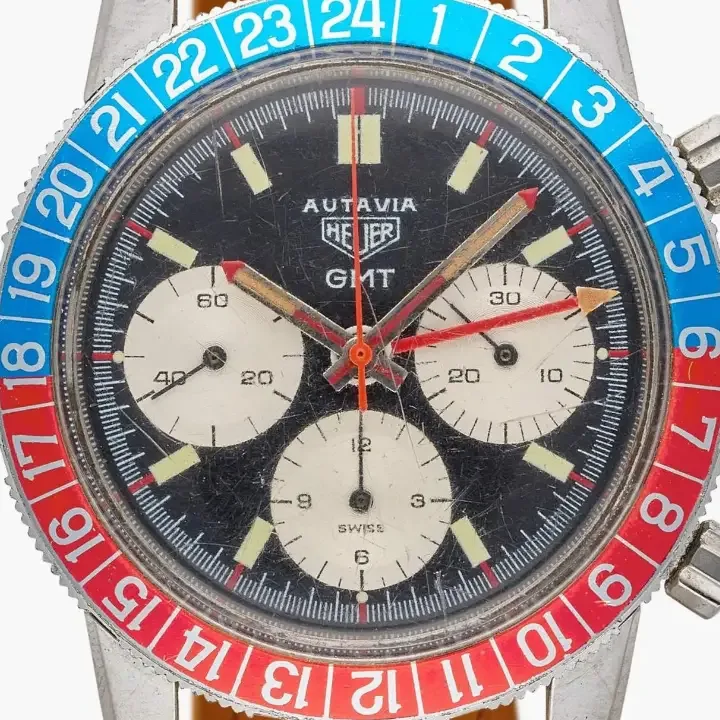
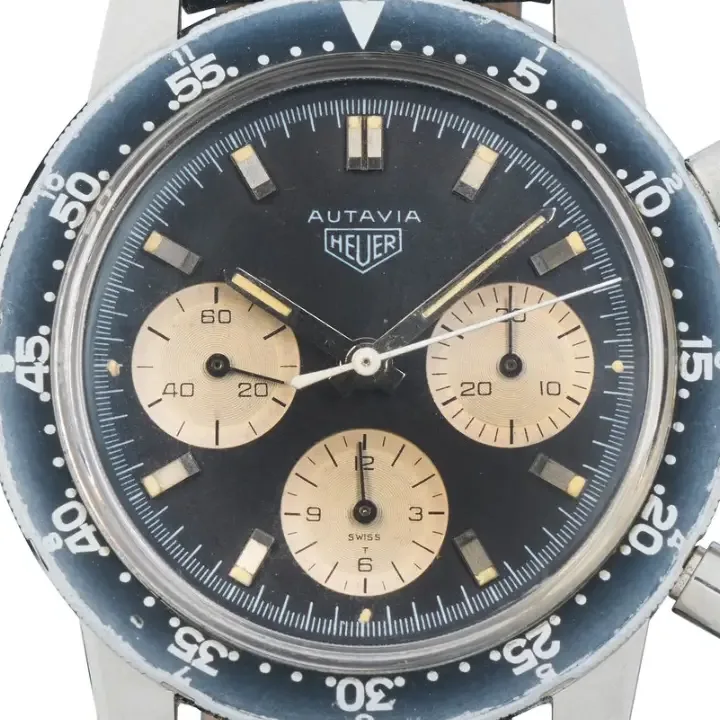
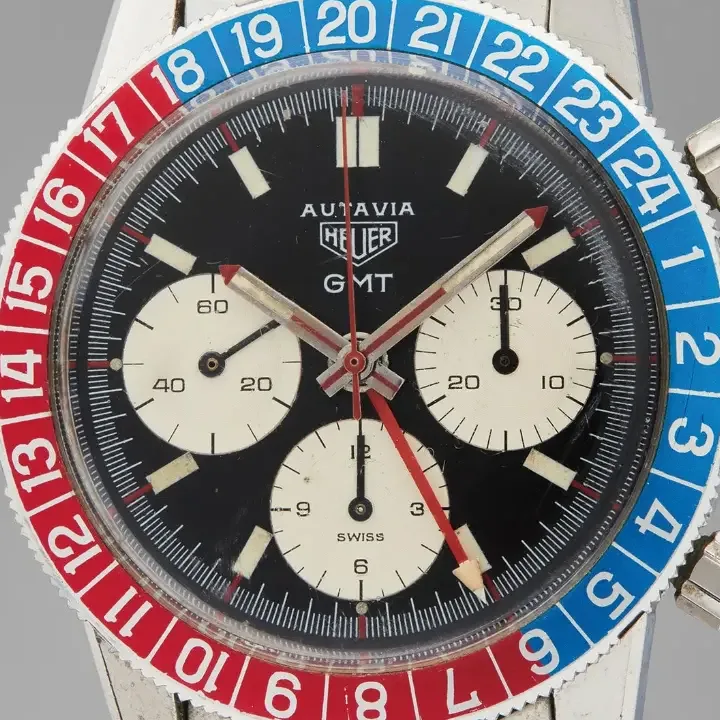
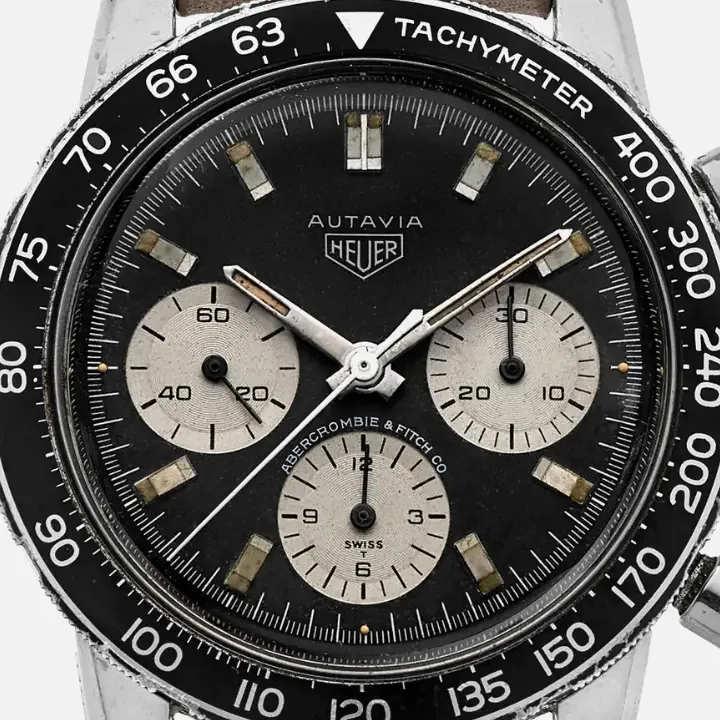
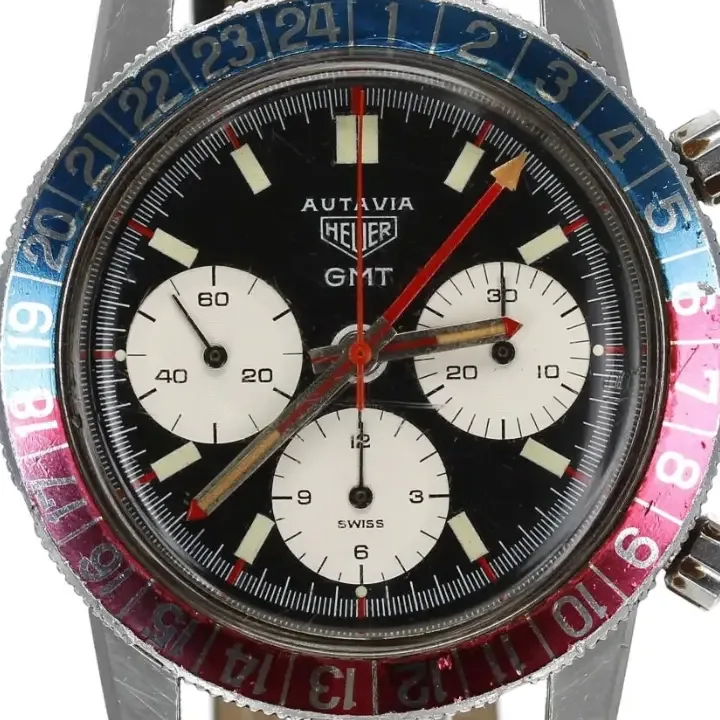
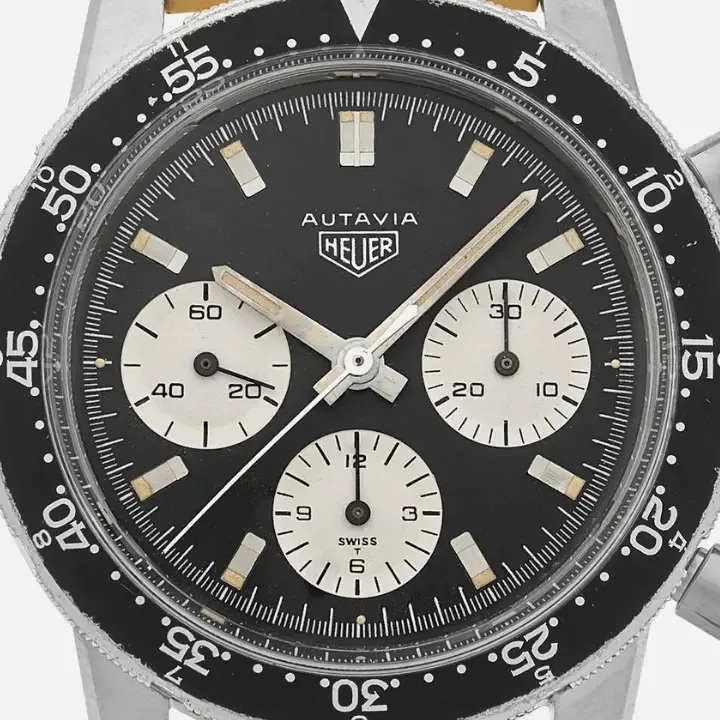
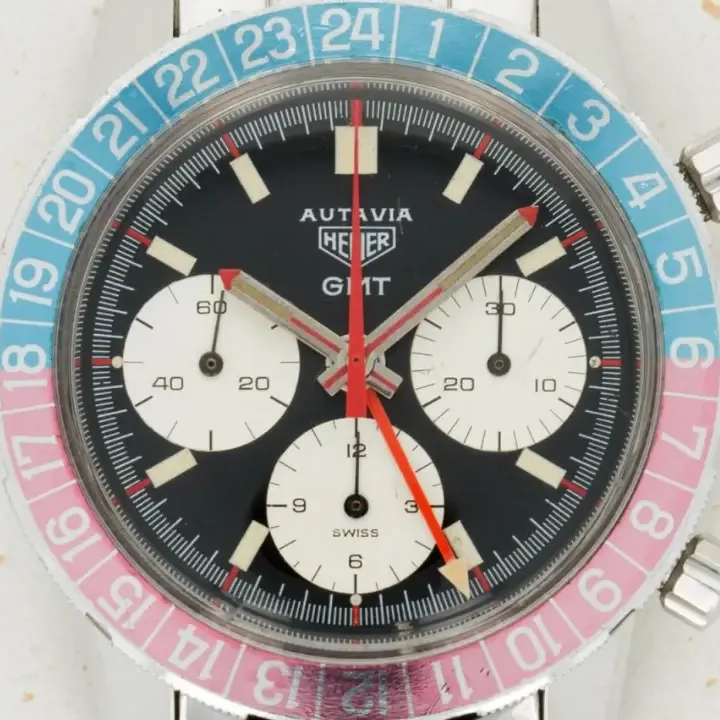
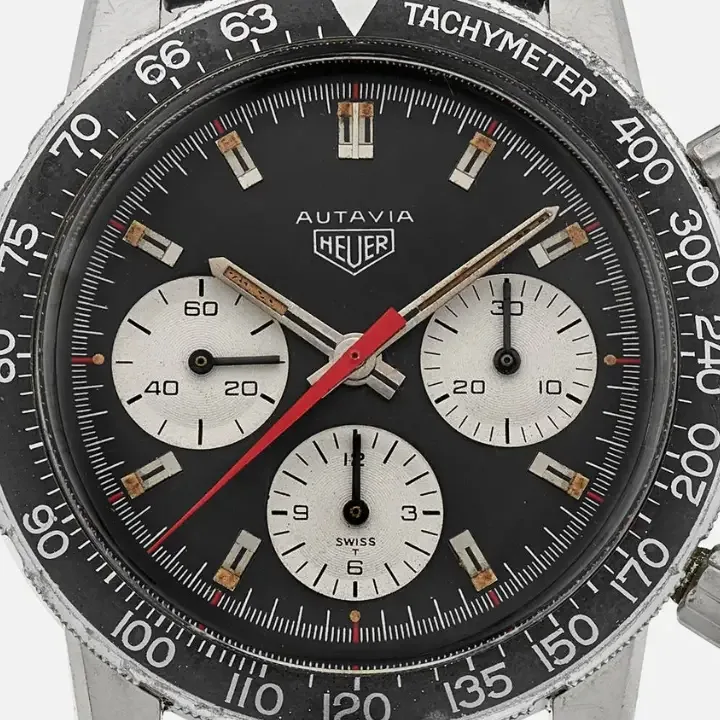
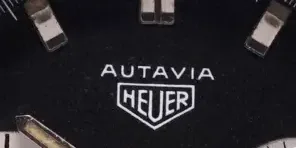
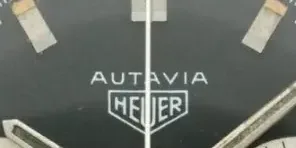
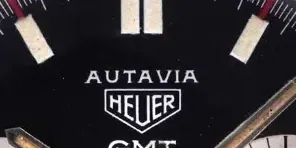
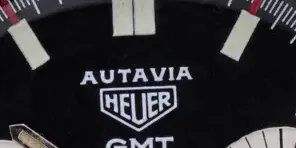
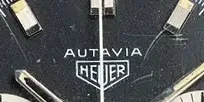
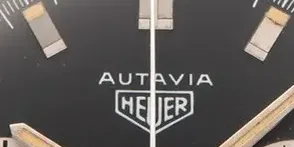
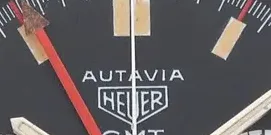
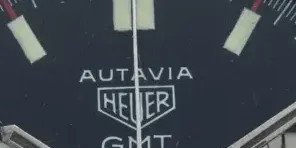
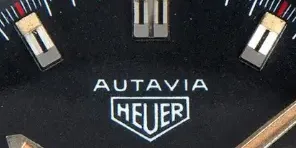
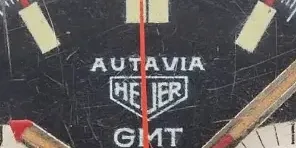
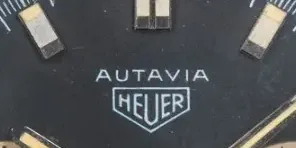
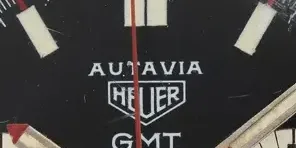
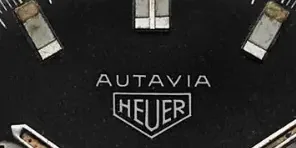
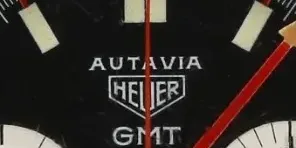
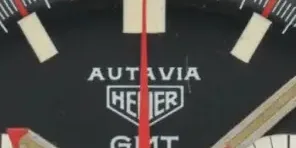
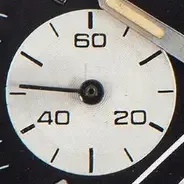
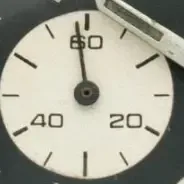
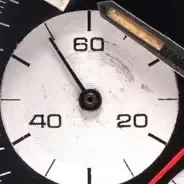
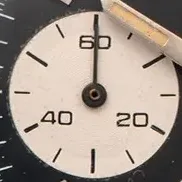
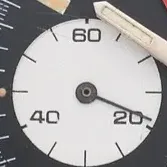
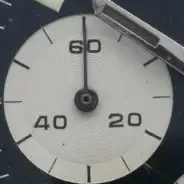
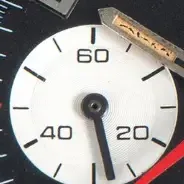
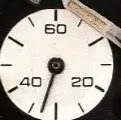
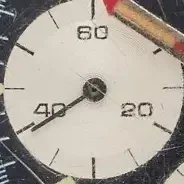
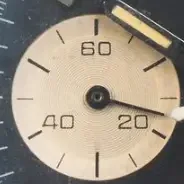
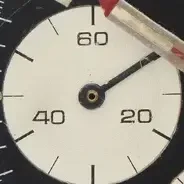
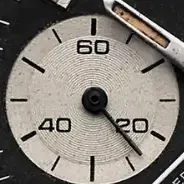
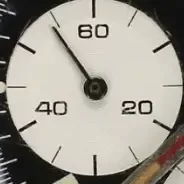
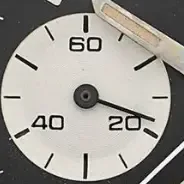
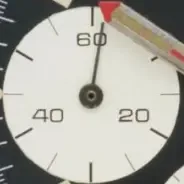
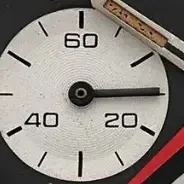
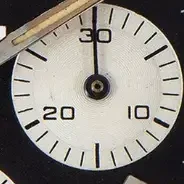
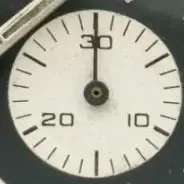
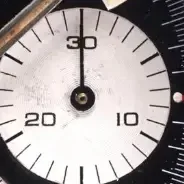
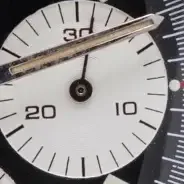
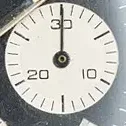
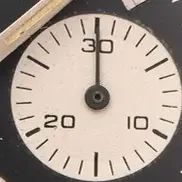
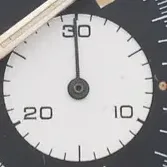
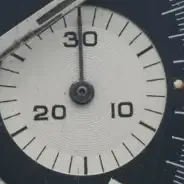
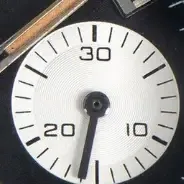
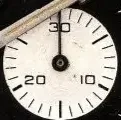
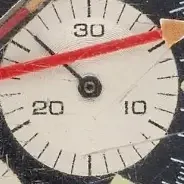
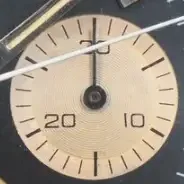
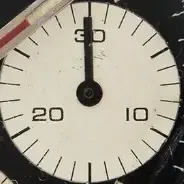
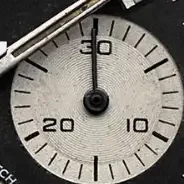
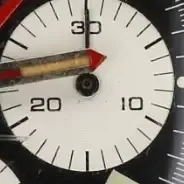
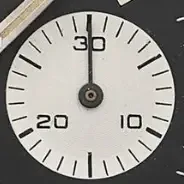
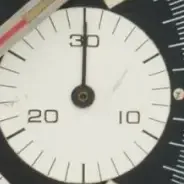
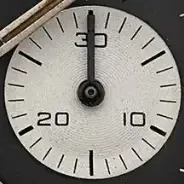
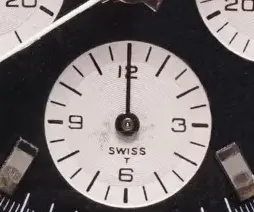
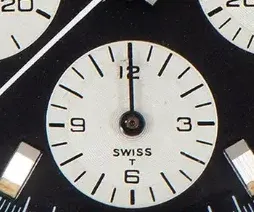
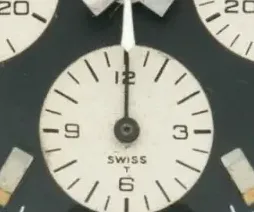
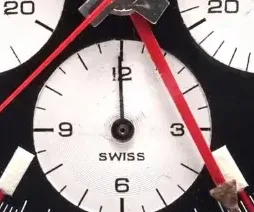
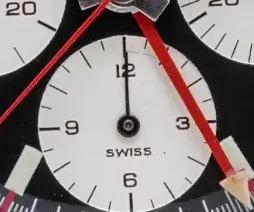
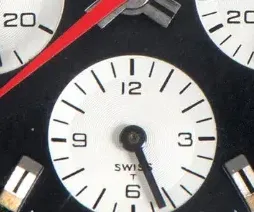
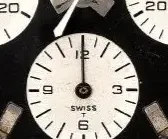
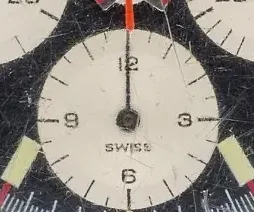
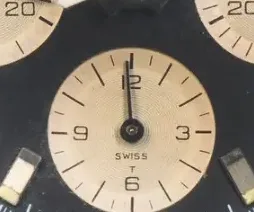
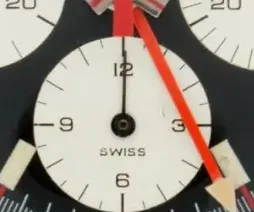
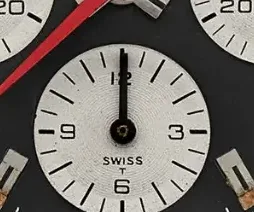
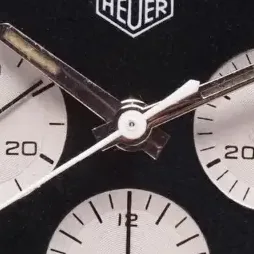
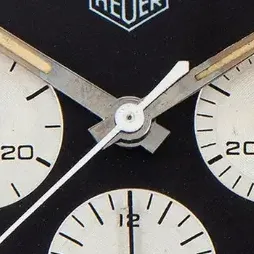
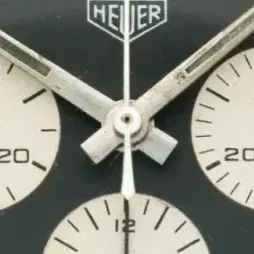
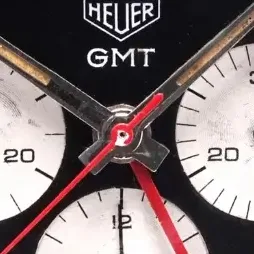
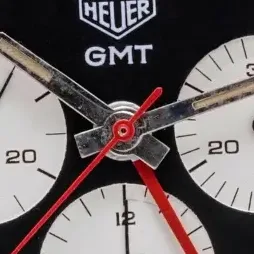
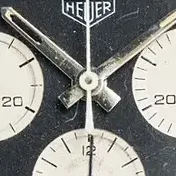
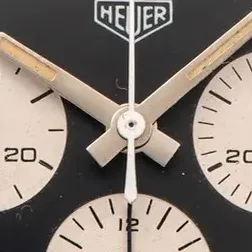
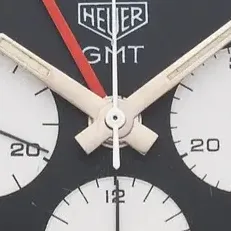
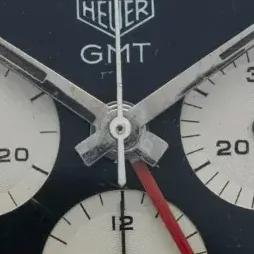
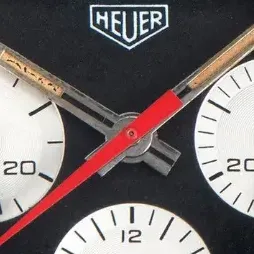
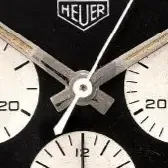
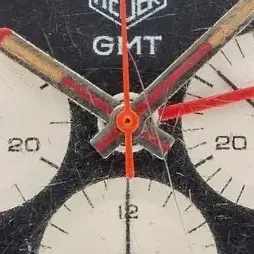
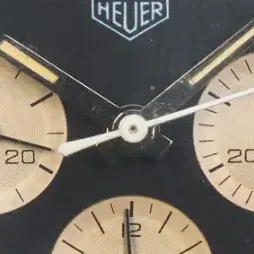
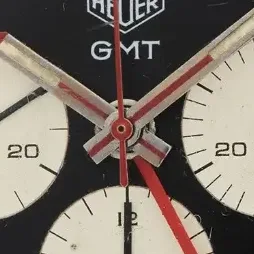
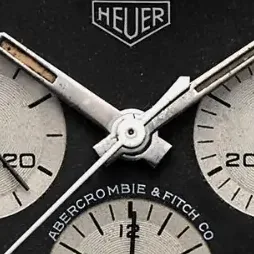
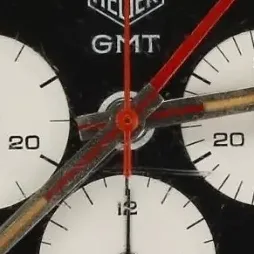
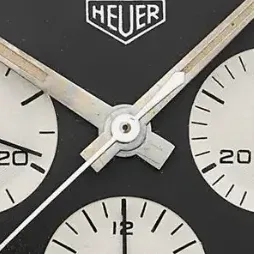
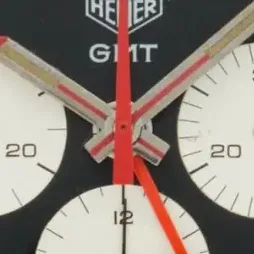
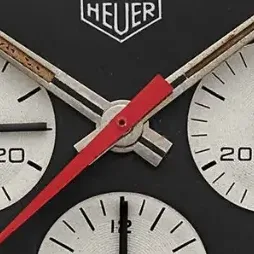
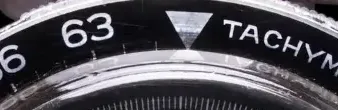
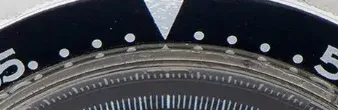
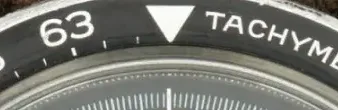
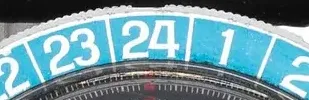
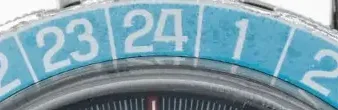
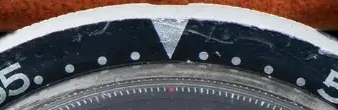
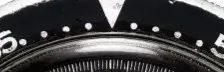
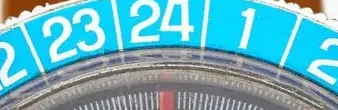
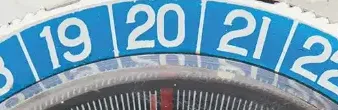
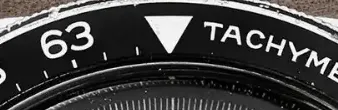
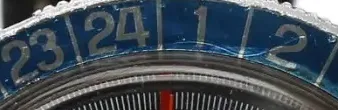
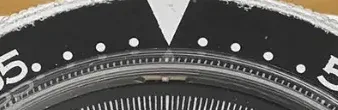
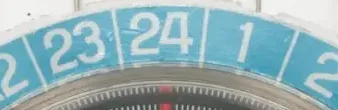
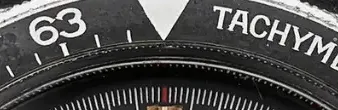
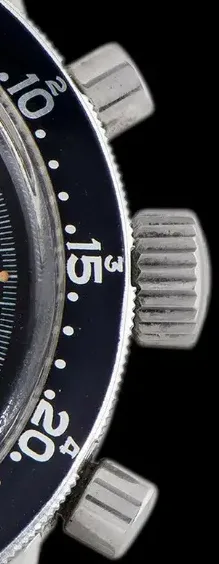
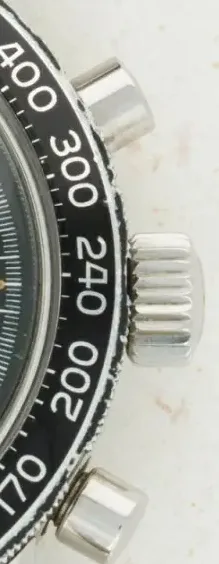
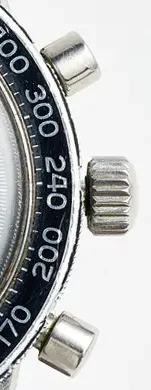
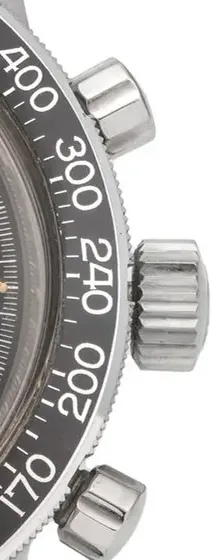
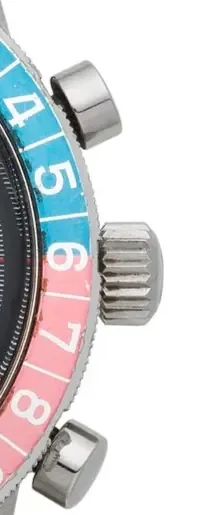
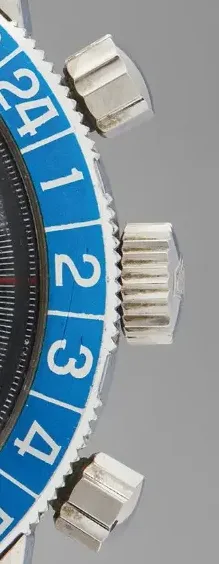
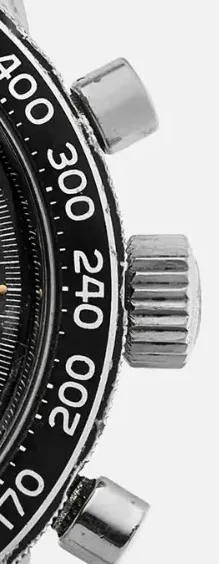
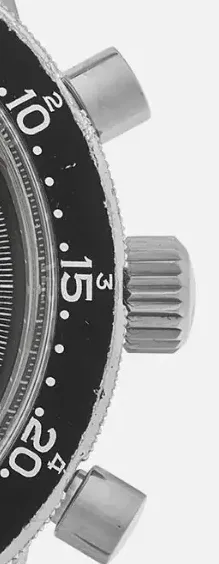
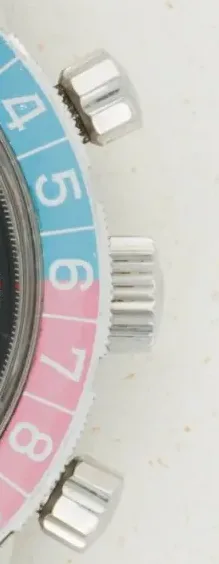
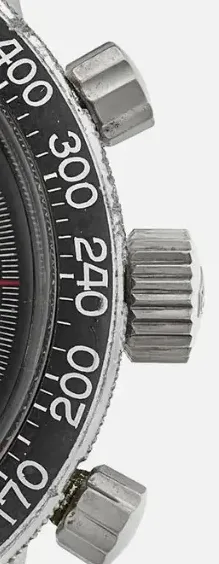
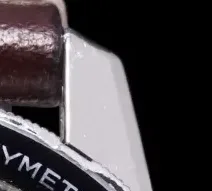
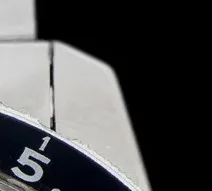
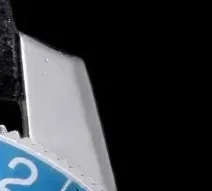
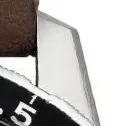
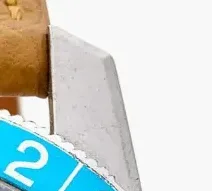
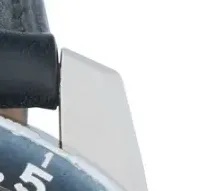
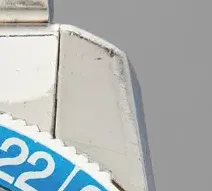
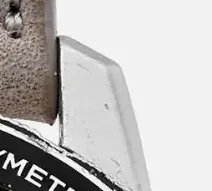
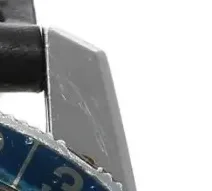
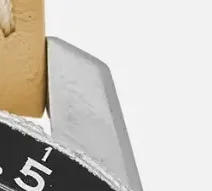
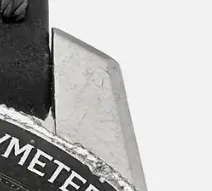
19 watches, oldest first, each straightened and cut the same way so that one row shows one component across them all. Chosen from 175 photographs on file for sharpness and for a face typical of the reference. A year marked c. is one its holder gives only roughly. Each picture is a detail cut from a listing photograph. Select the small mark in its corner for its year, its holder, a link to the listing it came from, and a way to report it.






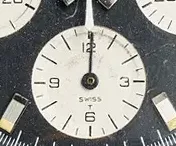
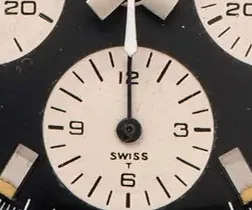
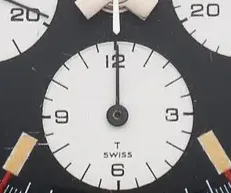
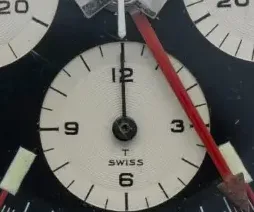







Chronology
The compressor case is introduced in 1968 and the last standard version is put at about 1971 to 1972; Seafarer versions run on to the mid-1970s.
Every dated variant: what is written, and what the records show
For the reference the marks are every dated watch; for a variant, the watches a seller names as that variant, so a variant sellers do not name has none.
Specification
| Case | Polished steel snap-back compressor case, about 40.5 mm across the bezel, the two case executions having bezels of the same outer diameter; about 14.3 mm thick in the second case; 20 mm between the lugs; about 44.8 mm across including the crown |
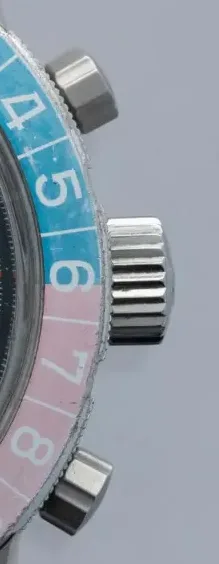
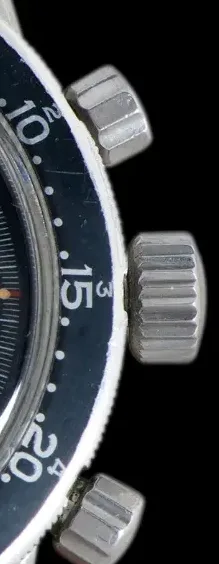
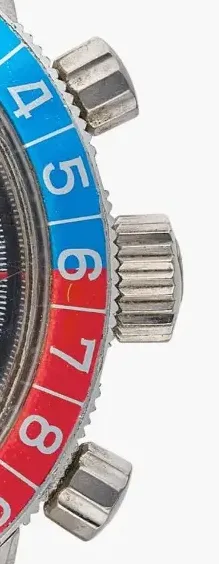
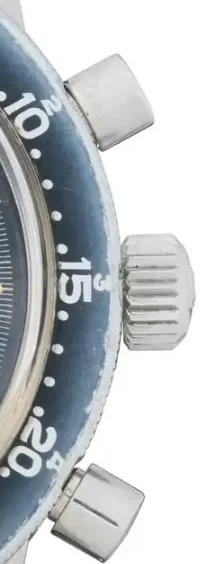
| Bezel | Rotating bezel in a single piece of aluminium with no insert and serrated edge; hours, minutes and hours, or tachymeter; red and blue 24-hour version on the GMT |
| Dial | Black with white registers on the standard watch; silver with black registers on the SN; black with white registers on the GMT |
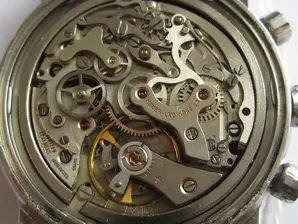
| Movement | Valjoux 72, hand-wound; Valjoux 724 in the GMT; modified Valjoux 721 in the Seafarer |
| Pushers and crown | Plain pushers on early watches, fluted on later ones; large crown signed Heuer |
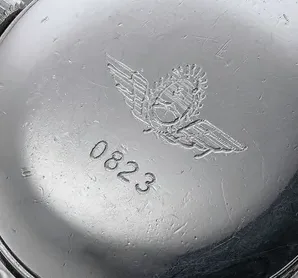
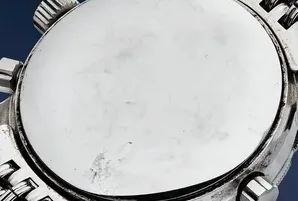
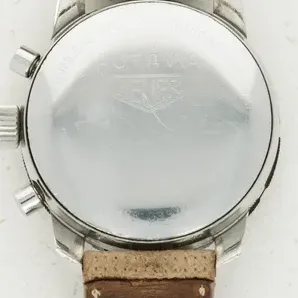
| Caseback | Snap-back; the first case's back is engraved with the same guaranteed-waterproof-to-330-feet wording as the screw-back Autavias, the second case's back is plain; small circles at the rim show where to open it |
| Water resistance | Stated as 100 metres |
| Bracelet | Gay Freres rice-bead bracelet, or strap |
Dial 7 described
The standard dial is black with white registers. The first execution has plain silver markers with lume plots and the second adds black stripes and red accents. The GMT and the Seafarer have their own dials. The silver SN dials never went into production, and the watches that carry them were probably completed outside the factory. On the GMT, the earlier dial is matt, its Autavia, Heuer and GMT lettering lighter and with less serif, its register print heavier; the later dial is smooth, with more serif to that lettering and finer print in the registers.
First execution NS
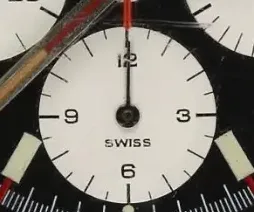
Black dial with white registers of standard size and plain silver markers with tritium plots. The hands are polished steel with lume inserts and the chronograph hand is white.
- plain markers without stripes
- white chronograph hand
Second execution
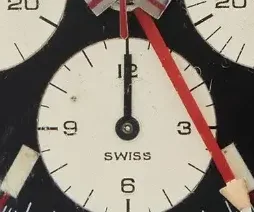
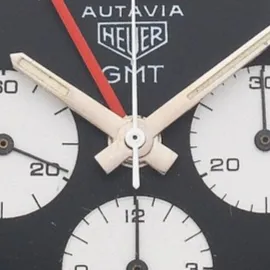
Markers have black stripes with red marks beside them, and the hands match, with black inserts. The chronograph hand is wide and red. The red, black and fluted-pusher scheme links these watches to the later cushion-case Viceroy colours.
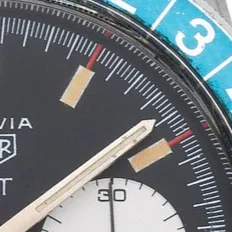

- black-striped markers
7 listings on record under the name.
Silver dial SN
A silver dial with black registers, signed Swiss, plain silver markers with tritium plots and polished steel hands. It appears to have been an early trial for the American market that never went into production; about ten silver-dialled watches in 2446C or 7763C cases are known, completed with parts from other watches. Hands should match the markers; the best-regarded example has plain hands without inserts, white register needles and an hours bezel.
- silver dial with black registers
GMT first execution
numbers 111xxx to 140xxx and some 190xxx
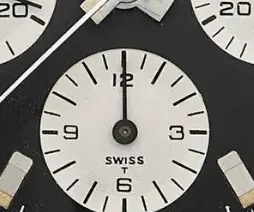
Black dial with smaller, flat registers and a small T above Swiss in the hours register, tritium lume markers, a white chronograph hand and a red GMT hand. The first GMT is on a screw-back case, then moves to this one.
- plain polished hands without red
- T above Swiss in the hours register
GMT second execution
numbers 140xxx and 190xxx
Larger registers with a sloping bevel to the inner ridges; the dial is otherwise almost the same. The plainest change is the hands, which gain a red stripe beside the lume and red triangular tips, with a red chronograph hand; on the GMT they are seen from about case number 196xxx. Most later dials have no T and a larger Swiss.
- red-striped hands with red tips
- larger registers
- no T on most later dials
Seafarer first execution
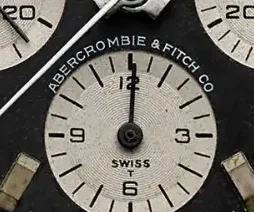
The Abercrombie & Fitch Seafarer in this case has its first black dial, which is very dark grey or anthracite, with a tide dial, polished steel matchstick hands with lume inserts and fluted pushers. The same watch was sold by Heuer as the Mareographe, which sellers describe with a grey dial, and by Orvis as the Solunagraph.
- tide dial at 9
- anthracite dial
Seafarer second execution
White painted hands with larger lume areas, in the style of the Bundeswehr chronographs, a blue tide area split into light and dark blue, and concentric lines in two white segments. The minutes and hours bezel of the earlier Seafarers gives way to a tachymeter marked from 41 to 120. This is the last Seafarer, which ended in the mid-1970s.
- white painted hands
- tachymeter 41 to 120
Hands 4 described
Heuer matched the hands to the markers, so plain markers take plain polished hands and striped markers take hands with black inserts. Hands changed with each execution.
Polished steel with lume inserts
The matchstick hands carried over from the screw-back series, with a white chronograph hand. Used on the first execution and the first GMTs.
- thin steel hands with lume
Black-insert hands
Used on the second execution with the striped markers, with a red chronograph hand.
- black stripe in the hand
Red-striped GMT hands
numbers from about 196xxx
Steel hands with a red stripe and lume inserts and red triangular tips, and a red chronograph hand. They first appear on the 2446C GMT at around case number 196xxx, then on the automatic 1163 GMT near 203xxx and the Viceroy near 224xxx.
- red tip on hour and minute hands
Seafarer white hands
Painted white with large lume areas, modelled on the Bundeswehr chronographs.
- white painted hands
Subregisters 2 described
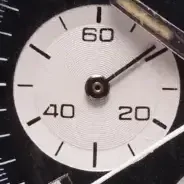
Register size and construction separate the early and later GMT dials and were changed once.
Smaller flat registers
Sunken registers that are almost flat, with less defined circular ridges and heavier print.
- almost flat registers
Larger stepped registers
Larger registers with a smooth sloping bevel to the inner ridges and finer print.
- bevelled ridges
Bezel 4 described
The bezel is a single aluminium piece with no insert. It was redesigned so that owners could change it, because many first-case bezels were damaged in attempted swaps.
First case bezel
A thinner rim, a larger inner diameter and finer teeth, and a tighter spring that made removal difficult. It will not fit a second case. Offered in hours, minutes and hours, or tachymeter.
- thin outer rim
- fine teeth
Second case bezel
A wider rim, a different holding spring and a smaller flange, easy to change; the teeth may be larger or smaller. The same crystal fits both.
- wider rim
GMT bezel
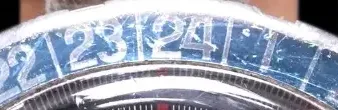
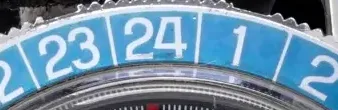
Red and blue with 24 numerals, the night hours 19 to 5 on blue and the day hours 6 to 18 on red.
- red and blue 24-hour bezel
Seafarer tachymeter bezel
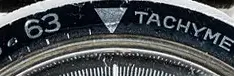
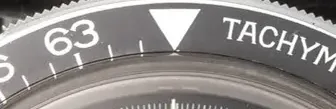
Scale from 41 to 120 units per hour on the last Seafarer and Orvis Solunagraph, replacing the minutes and hours bezel.
- 41 to 120 scale
Case 2 described
The compressor case is a snap-back design, larger and deeper than the screw-back, with wider lugs. Two cases are recognised, which look alike but are built differently.
First execution case
Bezel about 40.5 mm across, with an engraved caseback, smooth pushers and a thinner bezel rim. The C in the reference stands for compressor.
- engraved back
- smooth pushers
Second execution case
Its bezel has the same outer diameter as the first case's; the case is about 14.3 mm thick, and 20 mm between the lugs is given for the last version. The back is plain with no engraving, the pushers are fluted, and the circles marking where to insert the opening tool have a different arc.
- plain polished back
- fluted pushers
Crown and pushers 1 described
Crowns are large and signed.
Signed Heuer crown
A large crown signed Heuer, which adds to the overall width of about 44.8 mm; the Argentine Air Force issue has a large signed crown and large fluted pushers.
- Heuer-signed crown
Movement 3 described
The standard watch has the Valjoux 72.
Valjoux 72
Hand-wound, in the standard three-register watch.
Valjoux 724
Dual-time movement of the GMT, carried over from the screw-back GMT.
Modified Valjoux 721
The tide chronograph movement in the Seafarer, Mareographe and Solunagraph; the bridge is signed in Heuer's name here rather than the retailer's.
- tide-disc movement
Bracelet 1 described
One bracelet is named as correct.
Gay Freres rice-bead bracelet
The correct metal bracelet, hard to find. Watches are also seen on jubilee bracelets, NATO straps and leather.
- beads-of-rice links
Originality
- Bezels are often swapped, and a Solunagraph bezel on an Autavia is wrong; a bezel from one case type will not fit the other.
- Hands should match the markers: red-tipped GMT hands on a plain-marker dial are a mismatch.
- Silver SN watches are frequently built from separate parts, using bezels and hands from other watches, and black needles on the registers make them hard to read.
- The first case has an engraved back and the second a plain one, but Heuer changed parts at different times as old stock ran out, so early and late details on one watch are not by themselves a sign of a swapped part.
- Hands are sometimes relumed or retouched.
Names
- NS. Black dial with white registers, the usual shorthand for the standard dial.
- SN. Silver dial with black registers.
- Seafarer. The Abercrombie & Fitch tide chronograph.
- Mareographe. The same tide chronograph under Heuer's own name.
- Solunagraph. The same watch retailed by Orvis.
- Reverse Panda. Sellers' term for the black dial with white registers.
Where accounts differ
Points on which the published literature and the library's own records do not agree, or on which the literature contradicts itself.
- Start date. The guides place the case change in 1968, but one listing is stated by a seller as 1965, which is before the compressor case existed.
- Seafarer reference for the cases before. One guide gives the earlier Seafarer cases as 2443, while another says a catalogue shows the second series was sold as 2447 SF and that the earlier reference was a mistake.
Back and movement
From listings of this reference, each confirmed by eye to show what it is filed under. A picture on which a person's name or a personal engraving can be read is not shown. From most holders a detail from the middle of the photograph is shown; the mark in its corner gives its holder and a link to the listing.
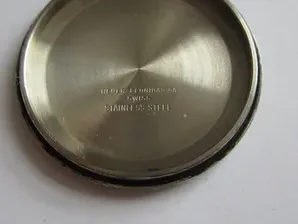
Caseback



Inside the caseback

Movement

Catalogue versions 2 listed
The full numbers under which holders list this reference, with what their listings say of each. Each has a page of its own.
| Version | Metal | Dial | Years seen | Records |
|---|---|---|---|---|
| 2446C/145129 thin | 1 | |||
| 2446C/145879 thin | 1 |
In the records
Counted from 79 listings at 24 holders between 16 December 2015 and 14 November 2026. These are what sellers and auction houses state, not measurements.
Fainter bars are the 3 outside the main run of 1968–1972 (the middle nine-tenths): the earliest is 1960 and the latest 1974. They are early and late examples, and now and then a seller's slip. The head of the page gives 1968–1972: the years that listings from two holders bear out.
Case metal
| Steel | 37 |
Dial colour
| Black | 16 | |
| Grey | 1 | |
| Silver | 1 |
Case size
| 40 mm | 33 | |
| 41 mm | 3 |
Calibre named
| 72 | 16 | |
| 724 | 8 | |
| 72C | 5 | |
| 721 | 3 |
Bracelet or strap
| Metal bracelet, kind not stated | 11 | |
| Leather strap | 8 | |
| Strap, kind not stated | 2 |
Each table counts the listings that state the thing, in the seller's own terms. A size, metal, colour or calibre that cannot belong to this reference is a seller's slip or a listing filed under the wrong number.