Diver 150 m, Japan-market Turtle (calibre 6306)
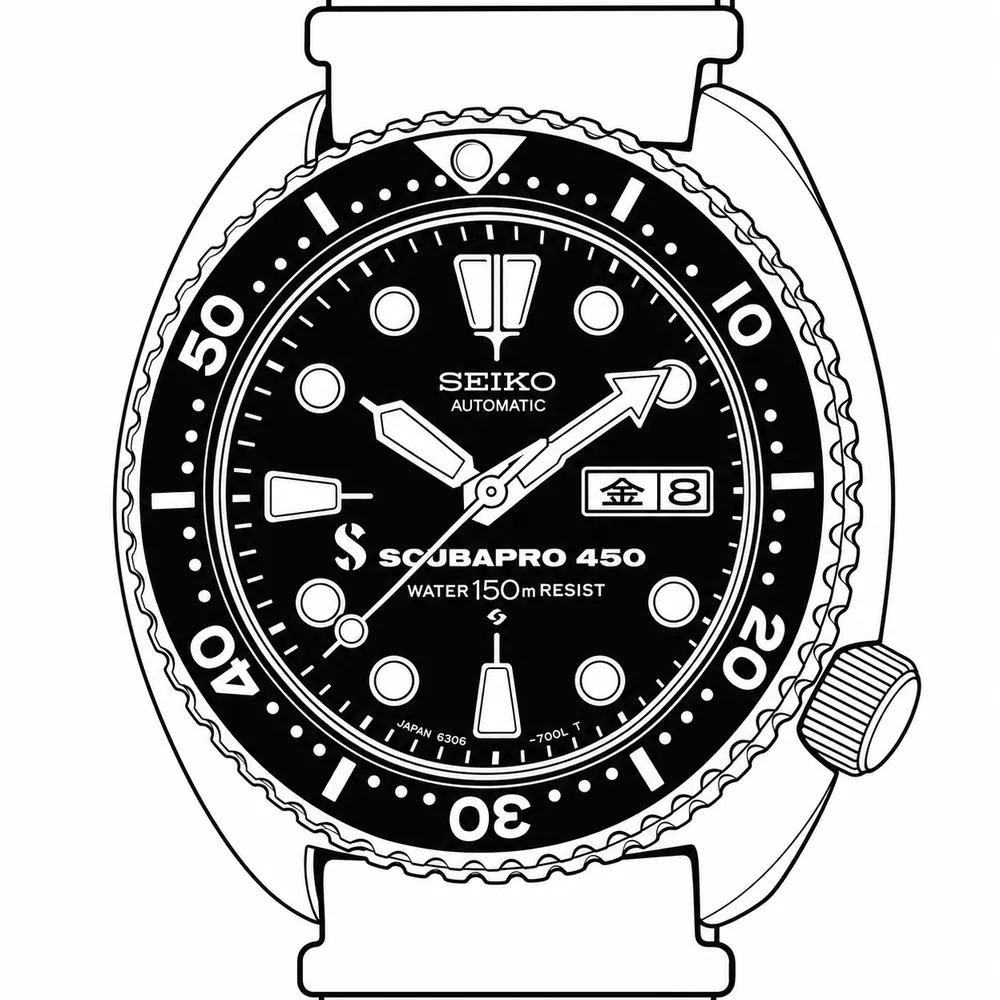
6306 names a Seiko movement family rather than a single watch: a 21-jewel automatic with day, date and hacking seconds, made by Suwa Seikosha from 1976 for the Japanese market. It is best known in the 150 m diver with the cushion case and crown at four o'clock, later nicknamed the Turtle, which carries the case codes 6306-7000 and 6306-7001. The export version of the same diver used the 17-jewel 6309 without hacking. The 6306 also ran in other Seiko cases, listed under the case codes 6306-5000 to 6306-8060. The Scubapro 450 and MSST expedition dials are printings on the same 6306-7001 watch. Collectors look at dial, bezel and hands first, since replacements are common.
- Made
- from 1976dates approximate
- Seen in the library
- 1975–1979by years sellers state
- Case
- steelas sellers state
- Movement
- Calibre 6306Aautomatic
- On record
- 40 listings35 photographs · 8 holders
Components
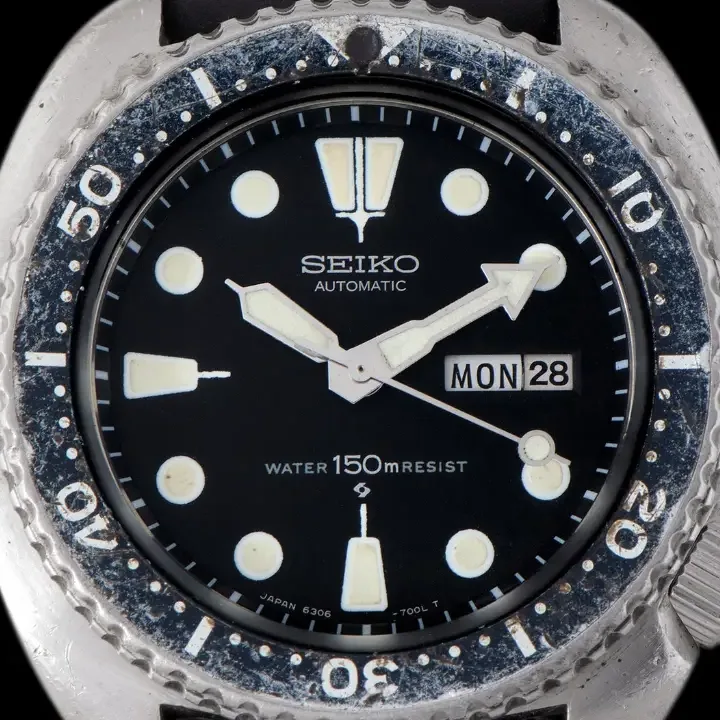
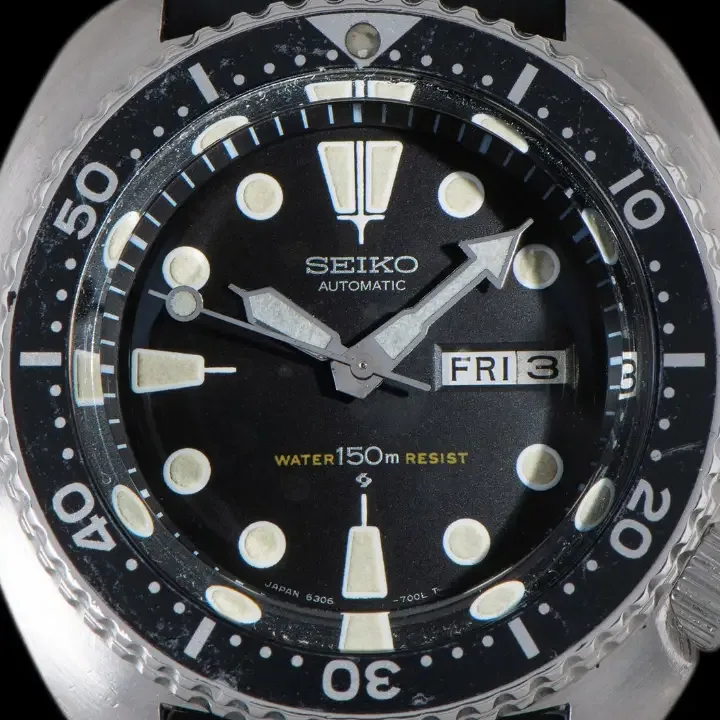
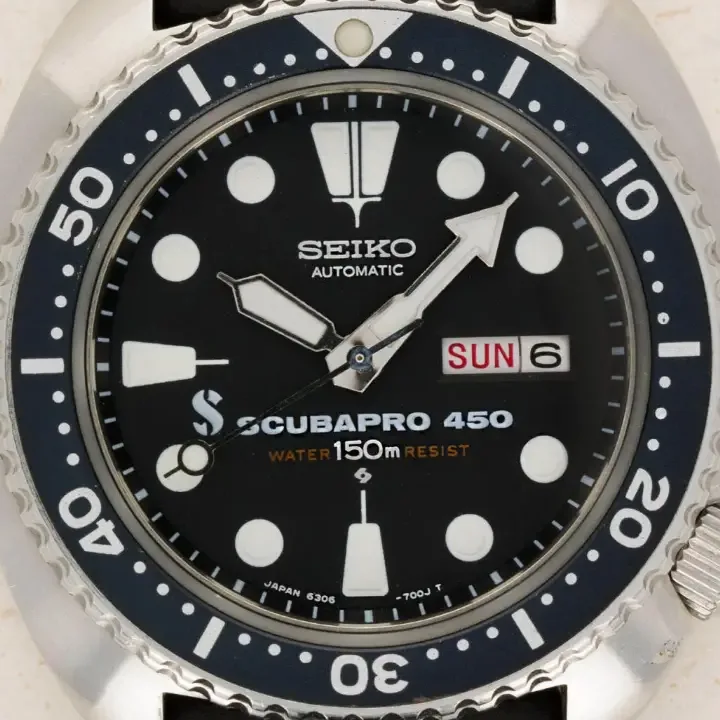
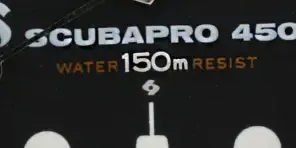
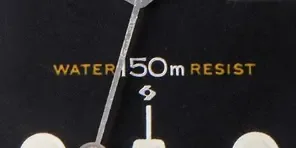
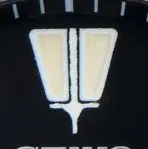
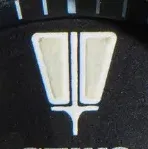
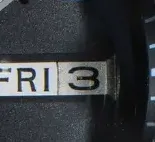
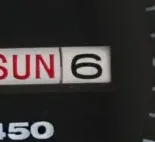
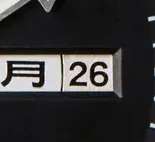
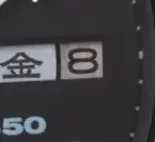
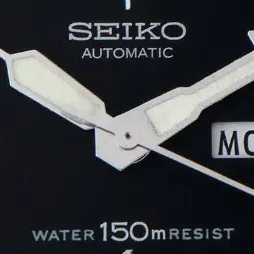
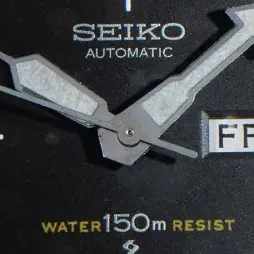
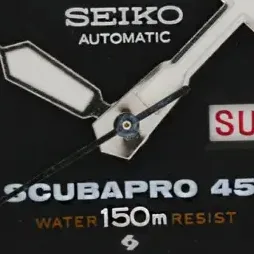
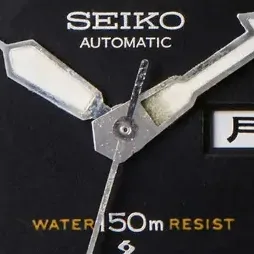
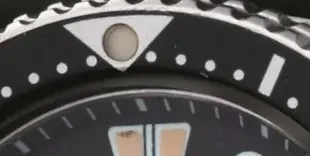
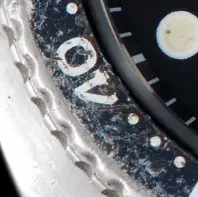
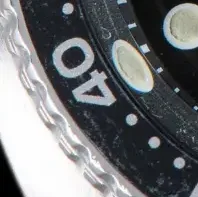
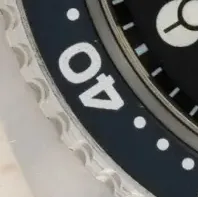
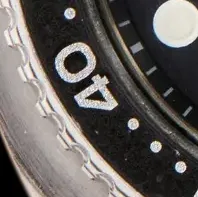
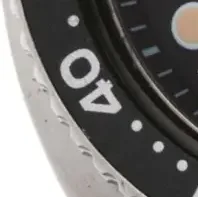
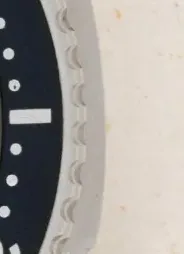
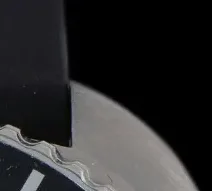
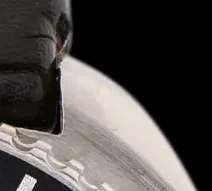
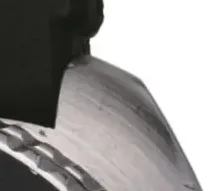
5 watches, oldest first, each straightened and cut the same way so that one row shows one component across them all. Chosen from 35 photographs on file for sharpness and for a face typical of the reference. A year marked c. is one its holder gives only roughly. Each picture is a detail cut from a listing photograph. Select the small mark in its corner for its year, its holder, a link to the listing it came from, and a way to report it.














Chronology
The calibre appeared in June 1976 and the diver followed that August; the literature gives no firm end date, only that a May 1979 watch sits a little over halfway through the production lifetime.
Every dated variant: what is written, and what the records show
For the reference the marks are every dated watch; for a variant, the watches a seller names as that variant, so a variant sellers do not name has none.
Specification
| Case | Stainless steel cushion case, about 45 mm across, 48 mm long and 13 mm thick, 22 mm between the lugs; screw-down crown at four o'clock set into a recess, so no crown guards |
| Crystal | Flat bevelled Hardlex (mineral) crystal |
| Bezel | Rotating 60-click bidirectional bezel with a sprung ball bearing; deeper, grippier turning ring with two rows of squared knurling |
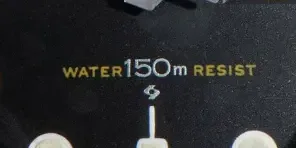
| Dial | Matte black printed dial; water resistance to 150 m printed in gold and white |
| Movement | Calibre 6306A, automatic with no hand winding, 21 jewels, 21,600 beats per hour, hacking seconds, day and date; Diafix shock settings on the third and escape wheels |
| Day wheel | English and Japanese kanji |
| Water resistance | 150 m |
| Strap | 22 mm; introduced with a polyurethane strap |
Reference 3 described
The number 6306 is a movement, used in several Seiko watches, so the case code after it is what identifies the watch. The diver in question was sold in Japan only as YCS018 and exists in two early case codes. Further 6306 case codes belong to other Seiko watches that share the movement.
6306-7000
The first case code of the Japan-only diver, shown in the August 1976 Seiko News as YCS018. It was soon updated to the 6306-7001 version.
- 6306-7000 on the caseback
6306-7001
The updated case code that replaced 6306-7000 and carries the rest of the production, including the Scubapro 450 and MSST watches. Examples are dated to 1976, 1978 and 1979 by their casebacks.
- 6306-7001 on the caseback
- month and year of manufacture stamped on the caseback
Other 6306 case codes
The calibre is also listed in watches with the case codes 6306-5000, 5001, 6001 and 7010, the 8000 to 8060 codes in steps of ten, and 806A. These are not the 150 m diver: the calibre first ran in the Seiko 5 Actus Silver Wave range, and sellers offer 6306-7010, 6306-8000, 8010, 8030 and 8040 watches as Actus or Silver Wave models, often with textured dials, and a 6306-5000 as an Actus bracelet watch.
Dial 4 described
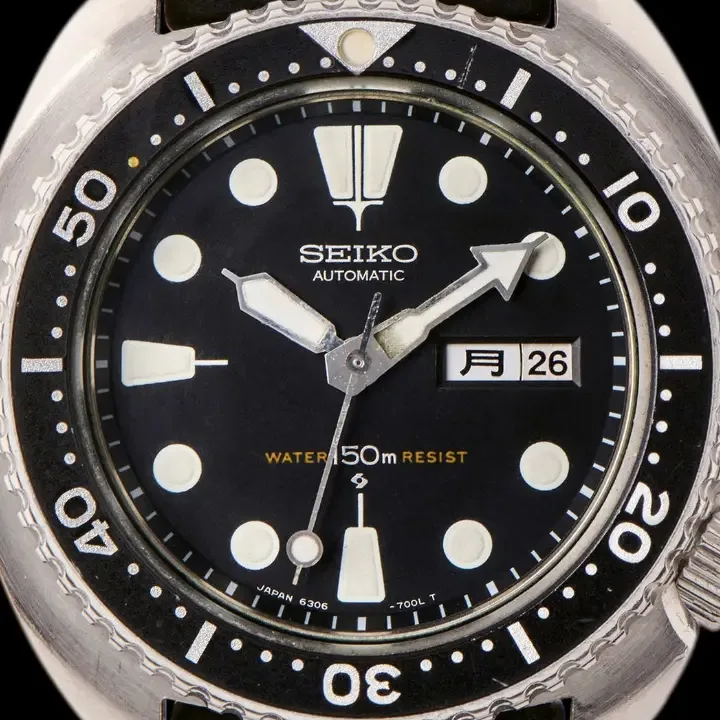
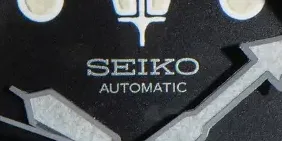
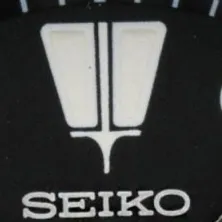
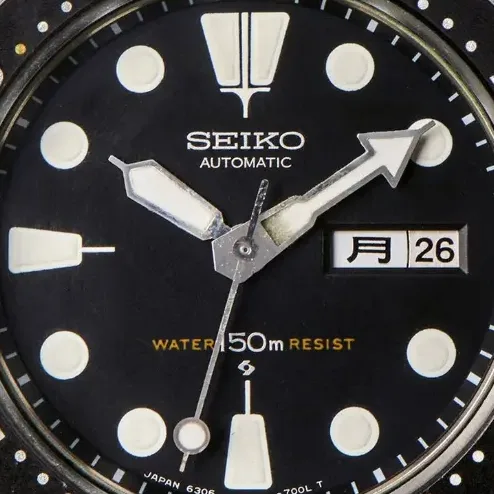
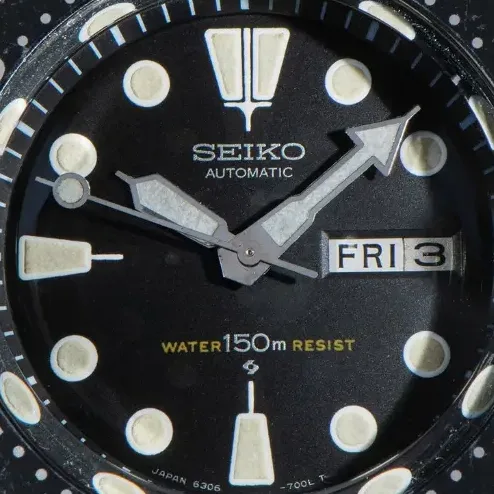
The diver has a matte black printed dial in place of the embossed dial of the 6105 it succeeded. The 12 o'clock marker is sword-shaped, six and nine have bell-shaped markers and the other hours are round, with lume in the plots. The dial prints water resistance to 150 m in gold and white. The variants below differ only in what is printed.
Standard dial
Matte black, sword marker at 12, bell markers at 6 and 9, round markers elsewhere, with the 150 m water resistance wording in gold and white. Lume plots on well-kept examples have aged to a cream or honey colour. A number such as 94 printed on the back of the dial can indicate the month of manufacture: 94 suggested April 1979 in one watch.
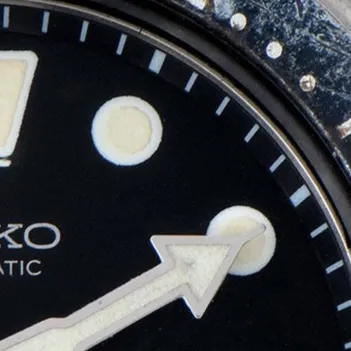
- bell markers at 6 and 9
- water resistance 150 m in gold and white


Scubapro 450
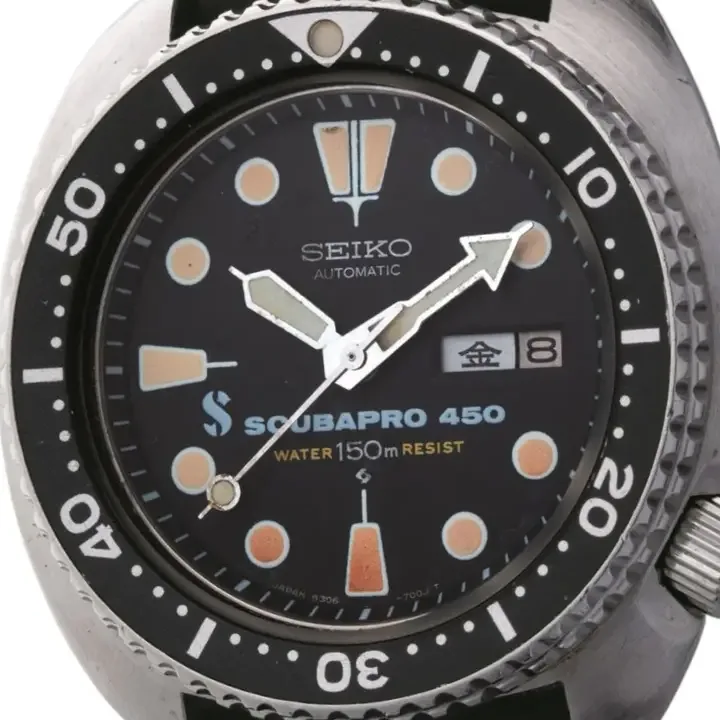
A collaboration with Scubapro, a maker of recreational diving equipment, on the 6306-7001 case. The only difference from a standard watch appears to be the dial printing. It is described as rare, with a couple of hundred rumoured to exist, and a considerable share of those on the market are ordinary 6306-7001 watches with a reprinted dial.
- Scubapro logo printed straight, not crooked
- bezel numerals not overly thick
MSST1978-79
Made for the Antarctic expedition of the McMurdo Sound Sediment and Tectonic Study in the 1978-79 season. It uses the 6306-7001 case, and only the dial printing differs.
- MSST1978-79 on the dial
MSST1979-80
The same expedition watch for the 1979-80 season, again a 6306-7001 with a different dial printing.
- MSST1979-80 on the dial
Luminous material 1 described
The literature speaks of lume only as it ages and as it is replaced.
Aged original lume
On original dials the hour plots turn creamy or honey-coloured with age and the lume is even. Hand lume can fail before dial lume: on one 1979 watch the minute hand had degraded while the hour hand had not. Lume that is bright on hands but spent on the dial points to a replaced hand set.
- even honeyed plots
- new lume on an old dial reads as relumed
Hands 1 described
The literature describes the hands only in passing, and the seconds hand carries a lollipop tip.
Original hands
A flat style of hour and minute hands with lume, and a lollipop seconds hand. Edge polishing and sloppy lume work suggest aftermarket or relumed hands. Replacement Seiko hands may look more rounded and shiny than the originals, and their fresh lume does not match an aged dial.
- lollipop seconds hand
- edge polishing as a sign of aftermarket hands
Bezel 1 described
The bezel has a 60-click bidirectional action with a sprung ball bearing and a deeper, grippier turning ring than the 6105 had.
Original bezel
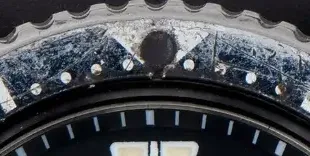
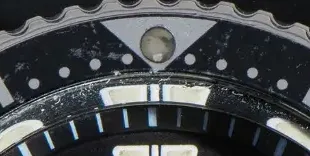
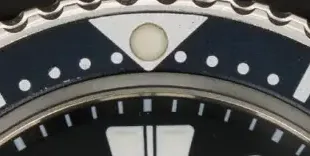
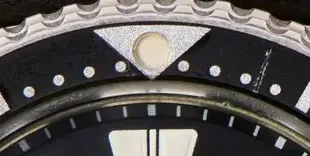
A slightly inward-sloping turning ring with two rows of squared knurling and a printed insert. The click ball is held by crimping, which can fail with age. An aftermarket insert shows in a serif on the numeral 1, which the original lacks, and in numerals that are too thick.
- no serif on the 1
- slim numerals
- two rows of squared knurling
Case 1 described
The case was drawn as a more rounded cushion than the 6105's, and keeps the crown at four o'clock. A recess around the crown removes the need for crown guards.
Cushion case
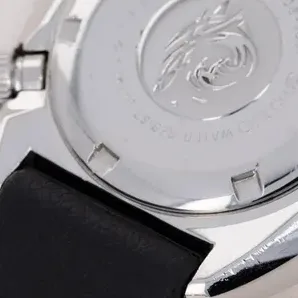
Stainless steel, about 45 mm wide, 48 mm lug to lug and 13 mm thick, with 22 mm lugs. The case flows evenly on either side of the crown, and the shape gave the watch its later nickname. The caseback has a frosted ground behind the tsunami logo, which wear polishes smooth, and it carries the month and year of manufacture.
- frosted background to the tsunami logo
- manufacture date on the caseback
Crown 2 described
A screw-down crown replaced the locking crown of the 6105.
Large-spline crown
An early watch with an August 1976 caseback has large splines on the crown. The splines became finer later in production.
- coarse splines on the crown
Finer-spline crown
Later production has finer splines. The crown seal is the usual failure point and a fresh seal sits tight over the tube.
- fine splines
Crystal 1 described
A flat bevelled Hardlex crystal replaced the double-domed glass of the 6105.
Flat bevelled Hardlex
Flat with a bevelled edge. A flat sapphire has been used as a replacement.
- flat bevelled crystal
Date 1 described
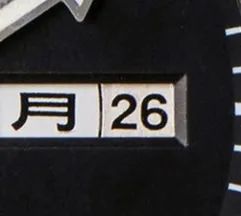
The Japan-market watch has a day wheel in English and kanji.
English and kanji day wheel
All 6306 watches have this day wheel, with the day in English or Japanese kanji. Most 6309 export watches have an international wheel instead.

4 listings on record under the name.
Movement 1 described
The 6306 is the higher-grade partner of the 6309 in the 63 family.
Calibre 6306A
A 21-jewel automatic at 21,600 beats per hour with day, date and hacking seconds, built by Suwa Seikosha. It winds only through the rotor, since the crown cannot wind it. A hacking lever acts on the balance, and Diafix cap jewels with springs protect the third and escape wheels; the fourth wheel has a jewelled bearing. The automatic work uses a push-fit plastic retaining plate, where the 6105 had a screwed metal one.
- Diafix cap jewels
- hacking lever
Originality
- Hands are commonly replaced or relumed, and fresh lume beside spent dial lume shows it.
- Bezels and inserts are frequently aftermarket; a serif on the 1 or heavy numerals give them away.
- Dials on Scubapro 450 watches are often reprinted onto ordinary 6306-7001 watches; a crooked logo is one sign.
- Crown seals fail with age, so a fresh seal is common at service; a replaced seal fits tightly over the tube.
- Casebacks opened carelessly show slipped opener marks, and an unmarked back suggests the watch was little opened.
Names
- Turtle. The cushion case resembles a turtle shell seen from above.
- JDM. Sellers use it for the Japan-market 6306 with its kanji day wheel.
Where accounts differ
Points on which the published literature and the library's own records do not agree, or on which the literature contradicts itself.
- First catalogue appearance. The diver is usually said to appear first in volume 1 of the 1977 Japanese catalogue, taking the place of the YAH028; another account has the 6306-7000/1 first appearing in the 1976 edition of the domestic catalogue.
Back and movement
From listings of this reference, each confirmed by eye to show what it is filed under. A picture on which a person's name or a personal engraving can be read is not shown. From most holders a detail from the middle of the photograph is shown; the mark in its corner gives its holder and a link to the listing.
Caseback

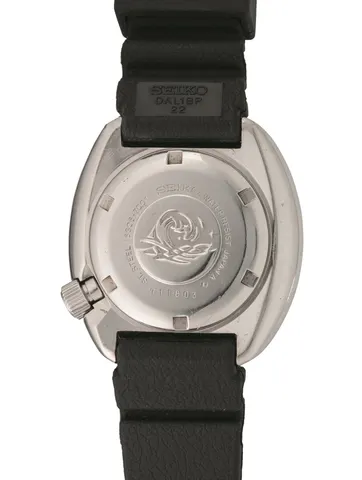

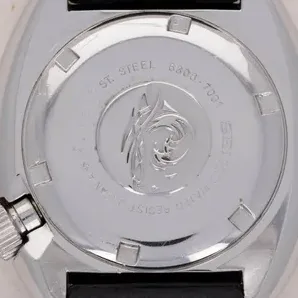

Movement
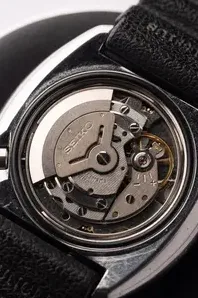

Catalogue versions 3 listed
The full numbers under which holders list this reference, with what their listings say of each. Each has a page of its own.
| Version | Metal | Dial | Years seen | Records |
|---|---|---|---|---|
| 6306-7001 | Steel | Black | 1978–1979 | 7 |
| 6306-5000 thin | Steel | Silver | 1 | |
| 6306-7000 thin | 1976 | 1 |
In the records
Counted from 40 listings at 8 holders between 25 August 2020 and 14 November 2026. These are what sellers and auction houses state, not measurements.
Case metal
| Steel | 3 |
Dial colour
| Red | 4 | |
| White | 3 | |
| Black | 1 | |
| Brown | 1 | |
| Silver | 1 |
Case size
| 44 mm | 1 | |
| 45 mm | 1 | |
| 43 mm | 1 |
Calibre named
| 6306 | 8 | |
| 6306A | 2 |
Each table counts the listings that state the thing, in the seller's own terms. A size, metal, colour or calibre that cannot belong to this reference is a seller's slip or a listing filed under the wrong number.