Professional Diver 300m Hi-Beat / Tuna
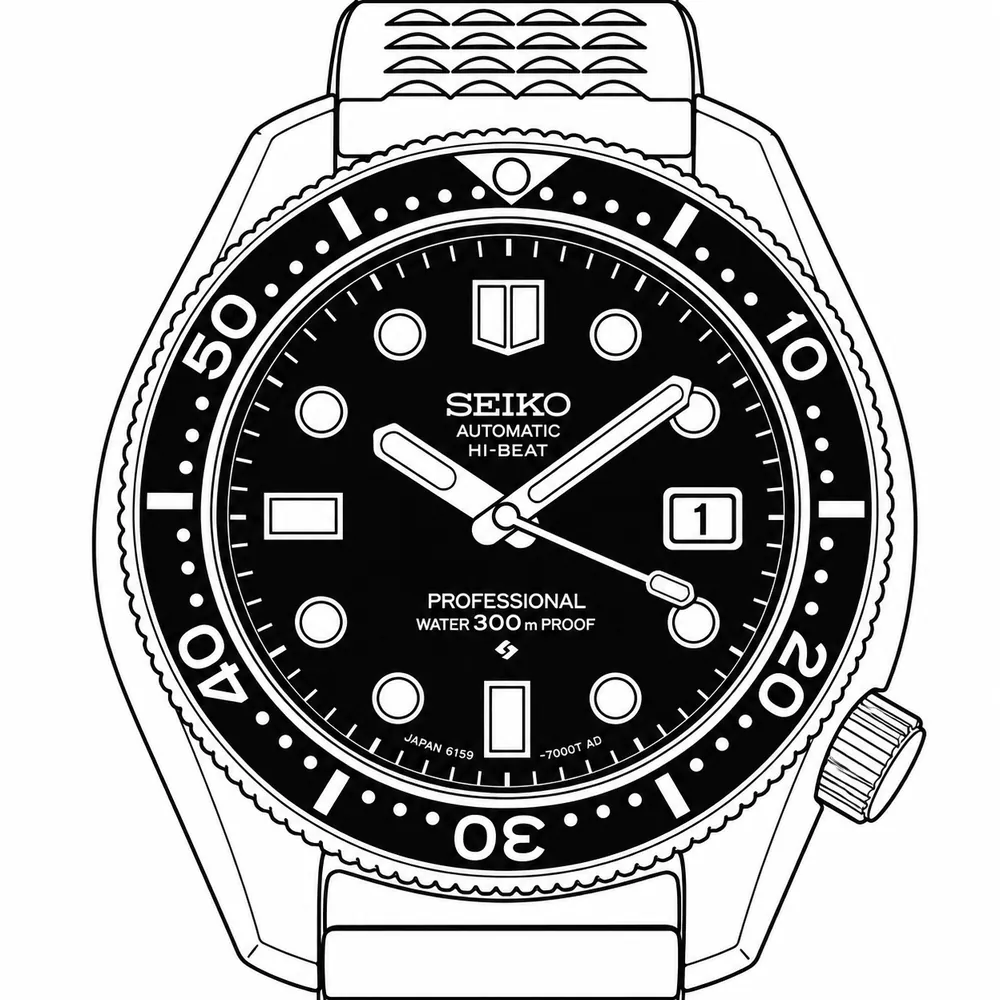
The 6159 is the calibre and case family behind two quite different Seiko divers. The 6159-7000 of 1968 and its -7001 successor of 1969 are steel monobloc 300 metre divers with a 36,000 beats-per-hour automatic movement, and were the first Seiko dive watches sold as the Professional line. The 6159-7010 of 1975, with a titanium case, screwed-on titanium shroud and 600 metre rating, is the original 'Tuna can', also sold as the -7019 outside Japan. Production ended in early 1979. Collectors look first at the dial wording, the caseback, the crystal and crown, and the condition of the sealed mainspring barrel.
- Made
- 1968–1979dates approximate
- Seen in the library
- 1968–1975by years sellers state
- Case
- steel (71%)as sellers state
- Movement
- Calibre 6159Aautomatic
- On record
- 11 listings21 photographs · 7 holders
Components
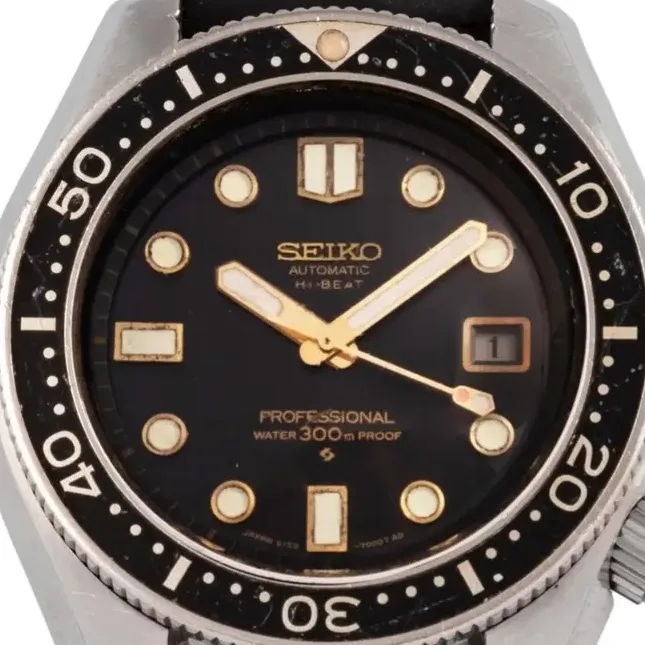
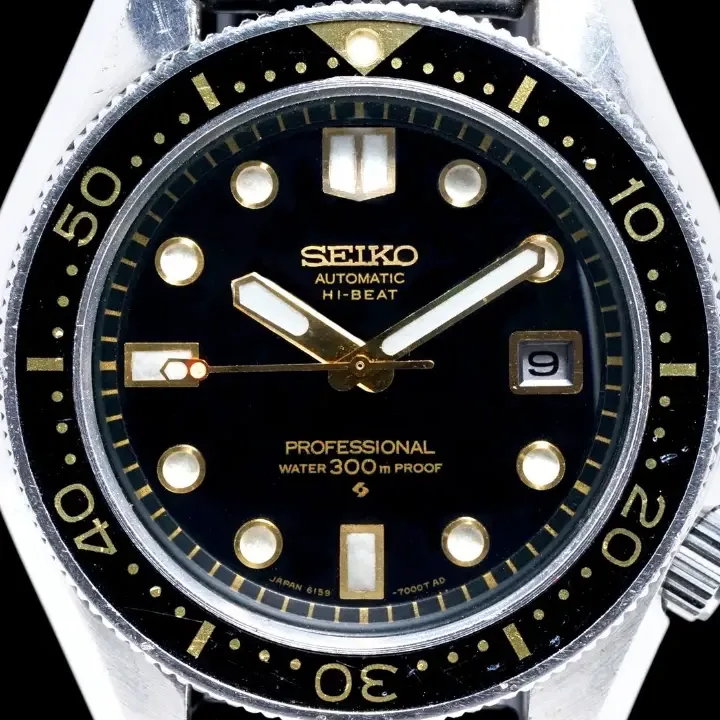
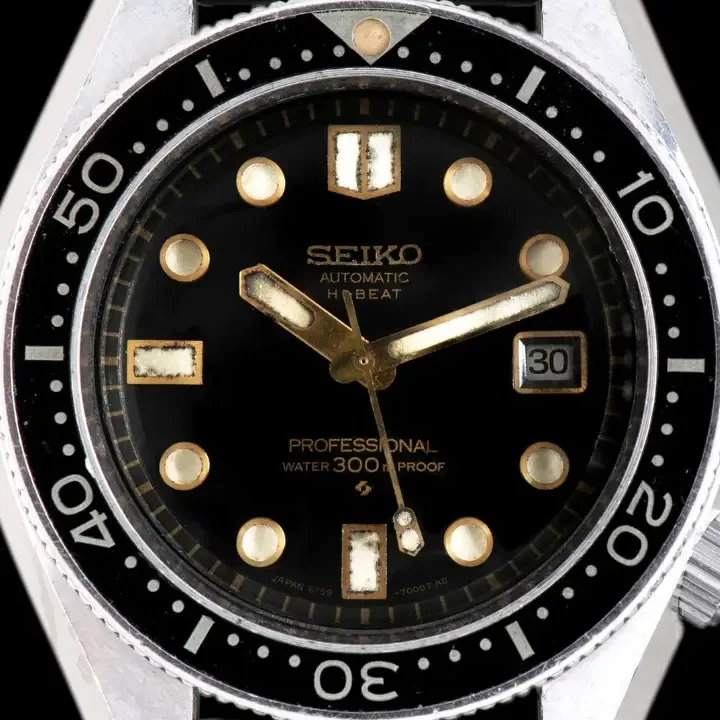
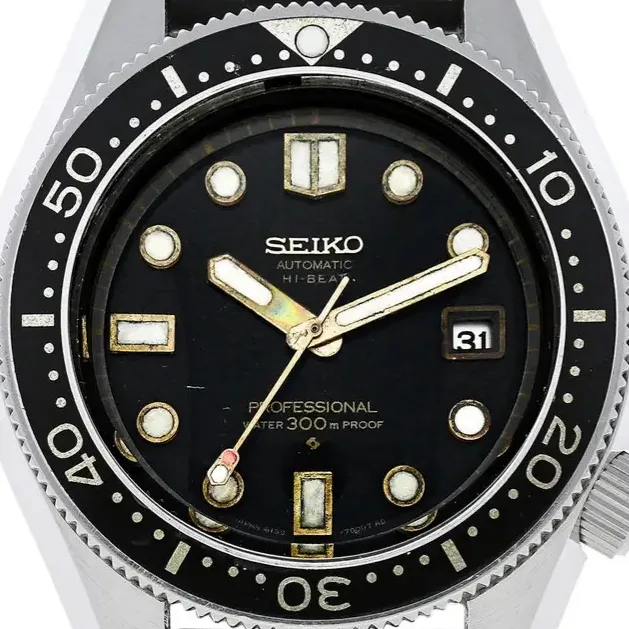
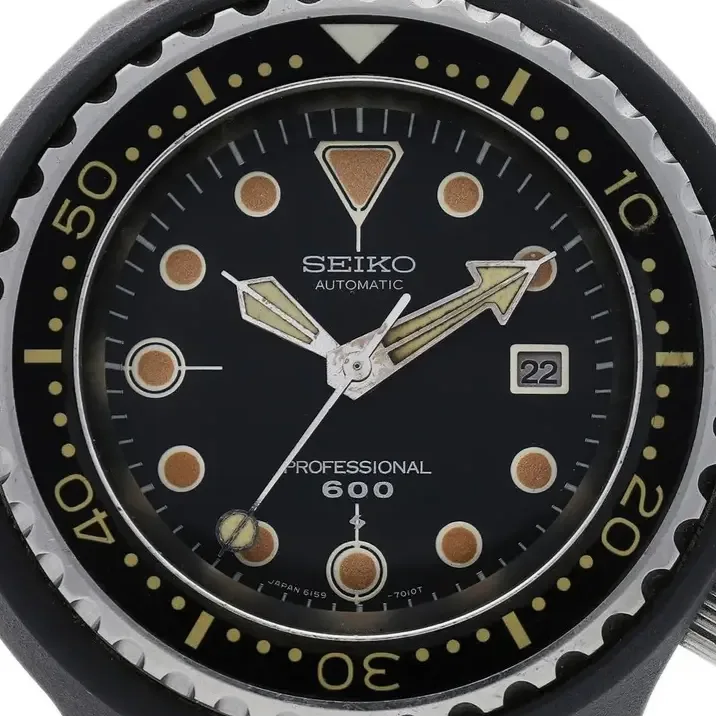
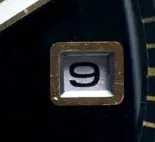
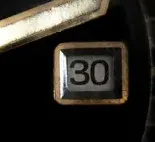
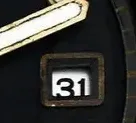
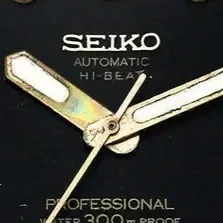
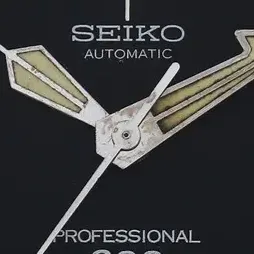
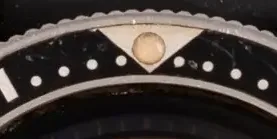
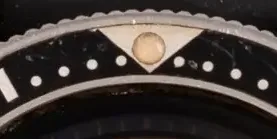
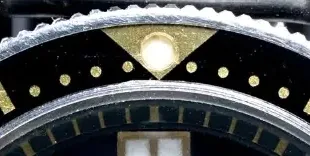
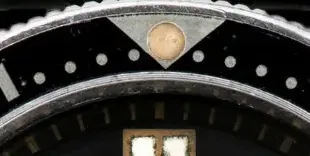
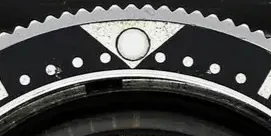
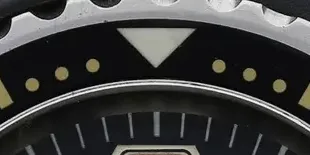
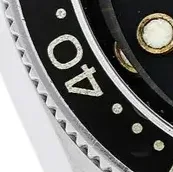
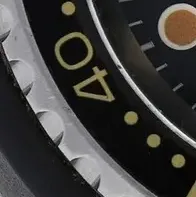
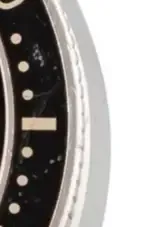
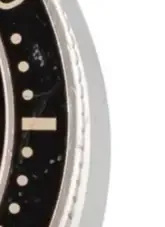
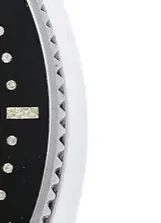
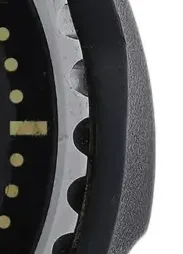
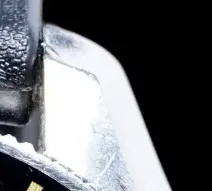
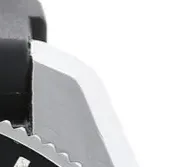
6 watches, oldest first, each straightened and cut the same way so that one row shows one component across them all. Chosen from 21 photographs on file for sharpness and for a face typical of the reference. A year marked c. is one its holder gives only roughly. Each picture is a detail cut from a listing photograph. Select the small mark in its corner for its year, its holder, a link to the listing it came from, and a way to report it.























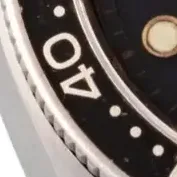
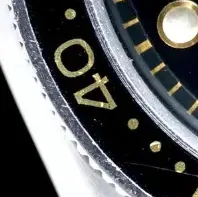
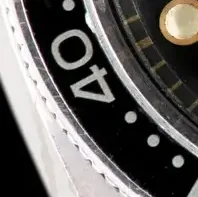




Chronology
Published accounts date the -7000 to 1968, the -7001 to 1969 and the -7010 to 1975 through early 1979; sellers' stated years agree, and watches carry a month-and-year production stamp on the case.
Every dated variant: what is written, and what the records show
For the reference the marks are every dated watch; for a variant, the watches a seller names as that variant, so a variant sellers do not name has none.
Specification
| Case | Steel monobloc (one-piece) case, front-loading, 300 m rating, 44 mm wide, about 50 mm lug to lug, 19 mm lugs and about 14 mm high for the -7000 and -7001; the -7010 is a titanium monobloc with screwed-on shroud, about 50.5 mm wide and 600 m rated |
| Crystal | Hardlex mineral crystal held by a wedge-type locking ring beneath the bezel; the -7010 uses an L-shaped single-piece gasket |
| Bezel | Rotating 60-minute bezel with click ball; bidirectional on the -7000; the -7010 bezel turns bidirectionally with 60 clicks and is reached through two openings in the shroud |
| Movement | Calibre 6159, automatic, 36,000 beats per hour, 25 jewels, hand winding, hacking and quickset date; sealed barrel marked 'Do Not Open'. Two versions, 6159A and 6159B, are described |
| Crown | Screw-down crown at 4 o'clock; crowns and crystals differ from the earlier 6215 and between the -7000 and -7001 |
| Strap | Rubber: waffle strap on the first 1968 watches, 'chocolate bar' strap from early 1969; the -7010 came on a vented rubber strap |
| Water resistance | 300 m (-7000, -7001); 600 m with no helium release valve (-7010) |
Reference 4 described
Later watches carry the 6159 design forward.
SBDX003
A historical release of 500 pieces with golden markers, hands and dial text.
SBDX011 Emperor Tuna
An automatic Tuna in PVD titanium of almost 52 mm with 1000 m rating, 8L35 movement and sapphire crystal.
SBDX012
A reissue for the divers' 50th anniversary, fitted with the 8L35 movement.
SLA025 / SBEX007
A 1500-piece recreation of the 1968 watch, 44.8 mm, 15.7 mm high, 8L55 movement at 36,000 bph with 55-hour reserve, dual-dome sapphire and a printed rather than applied logo. Dial text is reduced to Automatic Hi-Beat and Professional 300m, the seconds hand lacks the extended tip of earlier reissues and the bezel is unidirectional with a black aluminium insert and gold numerals.
- limited edition of 1500
Dial 5 described
Dials of the 1968 and 1969 watches are matte black gilt dials with applied markers and an applied logo, closely related to the 6215 but with revised markers. The -7010 Tuna has a deeply set, simple dial with a lollipop seconds hand. Small differences in wording and in the depth figure separate the variants.
6159-7000 dial
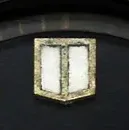
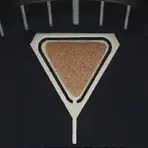
The first 6159 dial keeps the layout of the 6215 but changes the indices: the 12 o'clock marker is divided in two and the markers at 6 and 9 become elongated rectangles instead of squares. The luminous material is a white compound, not the warm tritium of the earlier watch, so the lume looks bright under the Hardlex crystal. It was the first Seiko diver to carry the word Professional on the dial.
- split 12 o'clock marker
- long rectangles at 6 and 9
- white lume
6159-7001 dial
The 1969 dial follows the -7000 closely; the revisions of the -7001 lie mainly in seals, crystal and caseback rather than in the print. Seconds hands carry a red stop-light dot.
'Resist' service dial
A dial reading Resist rather than Proof is found on the 6159, and is understood to be a service dial fitted when a watch came in for repair. Some suggest it would have become the production dial if the line had continued into 1970, because import rules required a change from Proof to Resist. It is regarded by collectors as a recognisable variant.
- Resist in place of Proof
6159-7010 dial without 'm'
The earliest -7010 dials show the 600 depth figure without the letter m for metres. They are the scarcer version and are described as an early-1975 execution. Like the later dials, they carry the Suwa mark of the factory, as does the caseback.
- depth figure with no m
6159-7010 dial with 'm'
Later Tuna dials add the m after the depth figure. The layout is otherwise the same: a deep-set dial, simple markers, a nicely detailed date window and a lollipop seconds hand.
- m after depth figure
Hands 2 described
The 1968 hands are slightly heavier than those of the 6215, with the hour and minute hands altered to some degree. The Tuna uses a lollipop seconds hand.
6159-7000 hands
Hour and minute hands are chunkier than on the 6215 and carry white lume in gilt frames. The seconds hand has a red stop-light dot.
- thicker hour and minute hands
- gilt frames around lume
Tuna hands
The Tuna has simple hour and minute hands and a lollipop seconds hand, sized to match the markers.
- lollipop seconds hand
Bezel 2 described
The 6159 bezel is a rotating 60-minute insert on a click-ball system. The insert cannot be removed and realigned on the 6159-7001 as it can on other Seiko divers.
6159-7000 / -7001 bezel
A bidirectional bezel with a retaining spring, a design like that of the 62MAS, and a click ball as used on the 6105. The 7001 insert cannot be taken off without destroying it, and on a number of watches the click ball was removed so that the triangle lines up with 12 o'clock; such bezels do not click.
- bidirectional bezel with click ball
Tuna bezel and shroud
A bidirectional bezel with 60 clicks is turned through two openings in the screwed-on titanium shroud. The shroud is ceramic-coated titanium and is easily scratched. Chipped shrouds and missing or stripped shroud screws are faults to look for.
- screwed shroud
- two bezel openings
Case 3 described
The -7000 and -7001 share a steel monobloc case with the movement loaded from the dial side, so there is no removable caseback. The Tuna is a different design in titanium.
6159-7000 case
A steel monobloc case with a flat back, the case design derived from the 6215-7000 with improved sealing around the crystal. It is about 44 mm wide with about 50 mm lug to lug and 19 mm lugs. Collectors tend to prefer this cleaner back.
- flat caseback
6159-7001 case
The same size of case with an inscribed ring on the back that makes it look like a conventional caseback, although it is not one. The production month and year, for example March or July 1969, is stamped on the back.
- ring on caseback
6159-7010 Tuna case
The first Seiko titanium case, about 50.5 mm wide, with integrated lugs, a screwed-on shroud and a tsunami motif on the back. It has no helium valve because the one-piece case and screw-down crystal retention stop the crystal blowing out. It is stamped with a production date (April 1976 on one example) and is marketed as the -7019 outside Japan.
- tsunami caseback
- Suwa mark
Crown 1 described
Crowns of the 6159 are screw-down at 4 o'clock and are not interchangeable with those of the 6215.
6159 crown
Crowns and crystals differ between the 6215 and the two 6159 steel watches, so parts cannot be freely swapped, and crowns can strip. The Tuna crown is large and screws in firmly.
- screw-down crown at 4 o'clock
Crystal 1 described
The crystals are Hardlex mineral and are held by a wedge-type ring, an improvement on the threaded ring of the 6215.
Hardlex crystal
A thick Hardlex crystal. On the -7001 it is held by a locking ring turned about 60 degrees clockwise in three slots to compress the seal; on the -7010 a notched locking ring beneath the bezel and shroud holds it. Seals and crystal differ between the -7000 and -7001, and crystals are hard to find.
- Hardlex
- wedge locking ring
Movement 2 described
Calibre 6159 is a 36,000 bph hand-winding, hacking automatic with quickset date.
Calibre 6159A
The earlier version: the rotor bearing is pegged and screwed on. It is a 25-jewel movement with hand winding and hacking and a sealed barrel marked Do Not Open. It is described in the Tuna.
- pegged and screwed rotor bearing
Calibre 6159B
The later version: the rotor bearing is held by a slot and a single screw, and the balance gains adjustable curb pins in addition to micro adjustment. A Tuna with a production date of 1976 is described with a 6159B.
- adjustable curb pins
Bracelet 3 described
The 6159 steel watches were sold on rubber straps; no bracelet is described.
Waffle strap
The first 1968 watches were released on the ZLM01 waffle strap.
- waffle strap
Chocolate bar strap
A strap known as chocolate bar was supplied from early 1969 until the end of production of the steel watches, and is the strap they are most often seen on. It did not carry over to the Tuna of 1975, which had a vented strap of its own.
- chocolate bar strap
Tuna vented strap
The Tuna came on a vented rubber strap, an industry first.
- vented rubber strap
Originality
- The mainspring barrel is sealed and was meant to be replaced as a unit; replacements are no longer available, so serviced watches may have altered or shortened mainsprings.
- Crystals and crowns are hard to find and differ between 6215, -7000 and -7001, so a mismatched crystal or crown suggests a replacement.
- Lume on the hands that does not match the rest shows a relume; the gilt frames of the hands can survive a relume, so they are no proof that the lume is original.
- A dial reading Resist in place of Proof on a 6159 is understood to be a service dial, and a non-original rotor, framework or barrel also suggests a service part, as with 6119 parts fitted in place of a worn 6159 framework.
- Shrouds, bezels and dials are very hard to replace, so a chipped shroud or stripped shroud screws indicate wear.
Names
- Tuna can. The screwed-on shroud gives the 6159-7010 its tin-can profile.
- Grandfather Tuna. Used for the 1975 titanium 6159-7010 to distinguish it from later Tuna models.
Where accounts differ
Points on which the published literature and the library's own records do not agree, or on which the literature contradicts itself.
- Model number for the 1968 watch. Two accounts name the first hi-beat diver of 1968 as the 6159-7001, whereas other accounts and the dated listings give 1968 to the -7000 and 1969 to the -7001.
Catalogue versions 4 listed
The full numbers under which holders list this reference, with what their listings say of each. Each has a page of its own.
| Version | Metal | Dial | Years seen | Records |
|---|---|---|---|---|
| 6159-7001 | Steel | Black | 1969 | 5 |
| 6159-7000 thin | Steel | 1968 | 2 | |
| 6159-7010 thin | Steel or titanium | Black | 1975 | 2 |
| 6159-7019 thin | 1975 | 1 |
In the records
Counted from 11 listings at 7 holders between 29 June 2017 and 14 November 2026. These are what sellers and auction houses state, not measurements.
6 listings dated long after the reference ended are set aside and not counted here: a year that late belongs to a later watch sold under the old number, or to a listing filed under the wrong one.
Case metal
| Steel | 5 | |
| Other | 1 | |
| Titanium | 1 |
Calibre named
| 6159A | 2 |
Each table counts the listings that state the thing, in the seller's own terms. A size, metal, colour or calibre that cannot belong to this reference is a seller's slip or a listing filed under the wrong number.