Automatic Diver, 150 m (6105-8000 and 6105-8110)
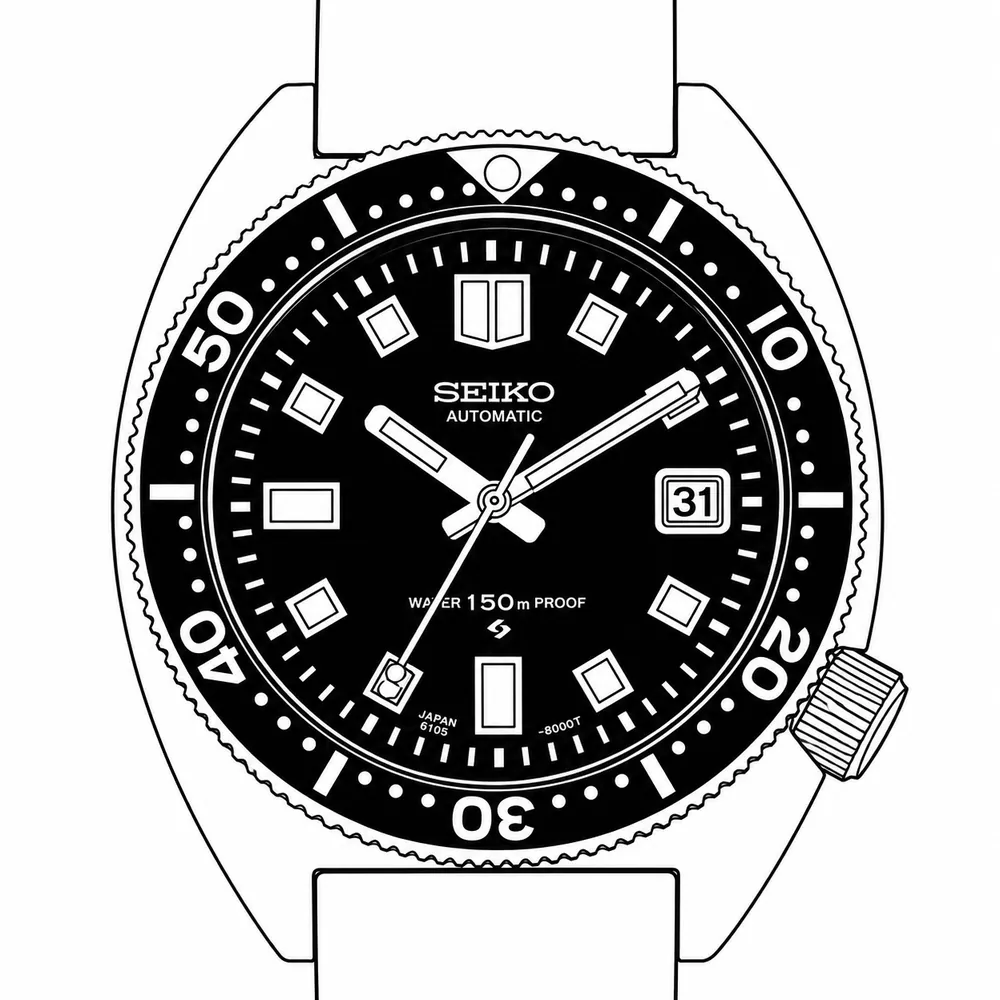
The 6105 is Seiko's 150 m automatic date diver of 1968 to the mid-1970s, the watch that took over from the 62MAS. It comes in two case generations: the 6105-8000 and 8009 with a 41 mm cushion case, and from about 1970 the 6105-8110 and 8119 with a 44 mm asymmetric case that wraps a guard around the crown at four o'clock. The second type carries a push-and-turn LOCK crown rather than a screw-down one. Both are black-dialled steel watches with a Hardlex crystal, a 17-jewel 21,600 bph calibre with quickset date, and a rotating bezel. Collectors look first at the dial print, the crown, the bezel insert and the hands, because worn examples are very often part-replaced.
- Made
- 1968–1977dates approximate
- Seen in the library
- 1968–1976by years sellers state
- Case
- 44 mm · steelas sellers state
- Movement
- Calibre 6105Bautomatic
- On record
- 108 listings111 photographs · 14 holders
Components
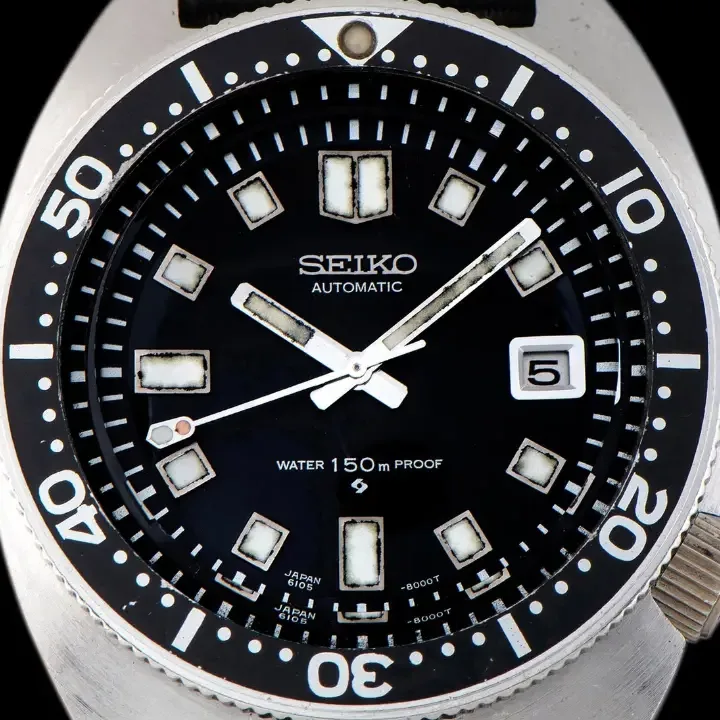
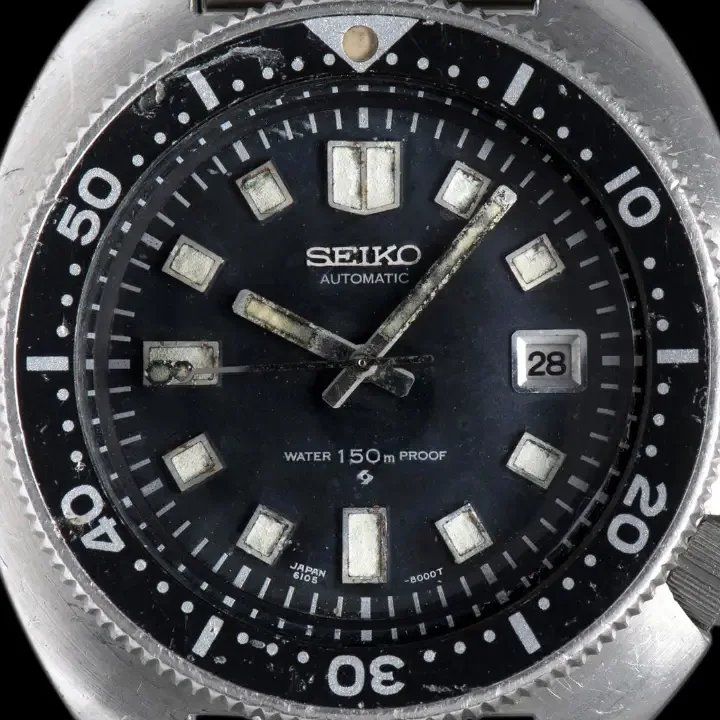
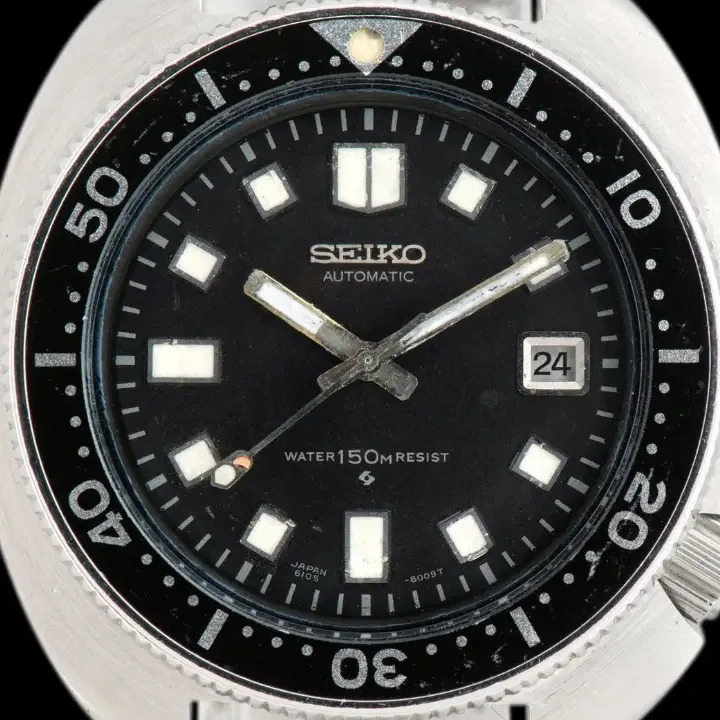
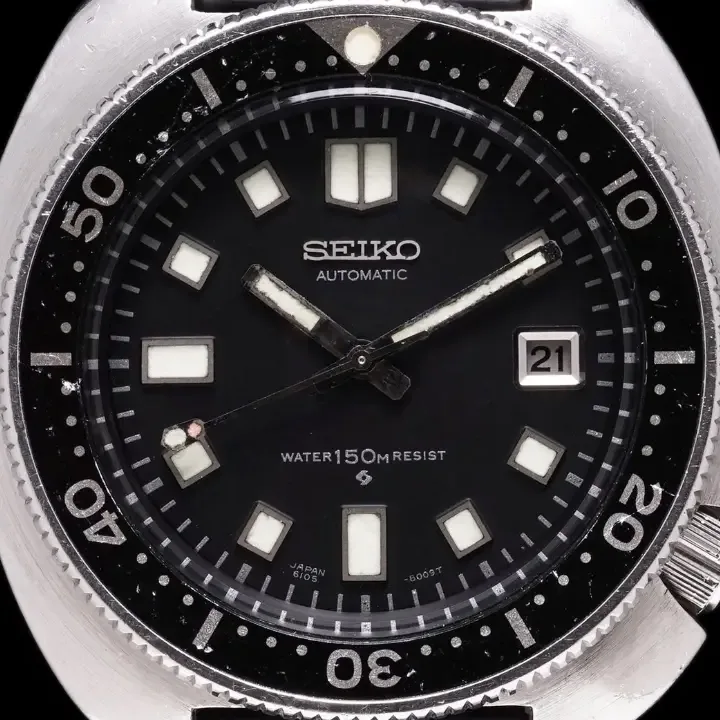
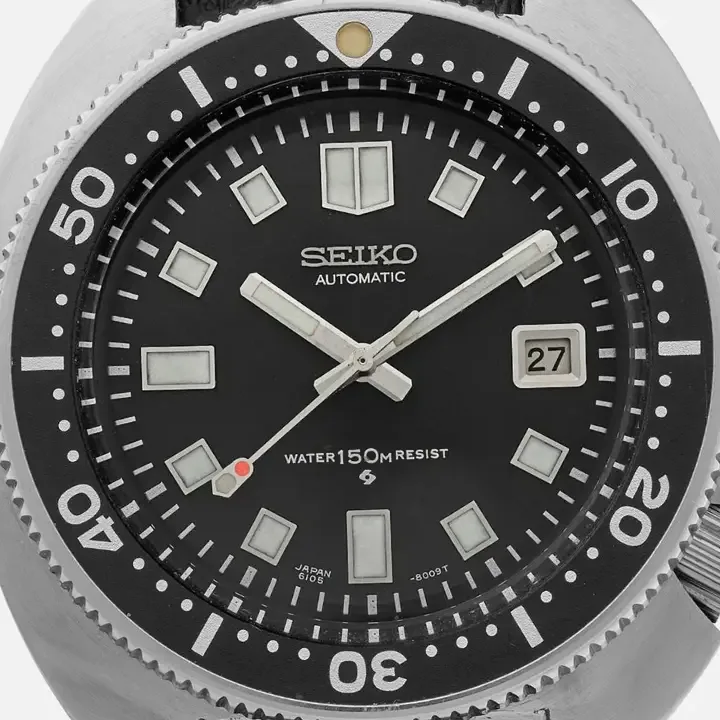
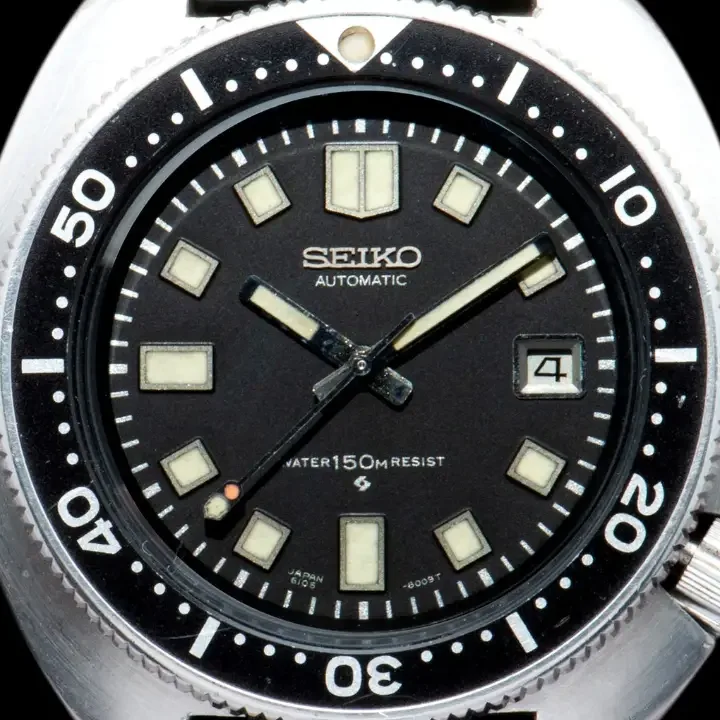
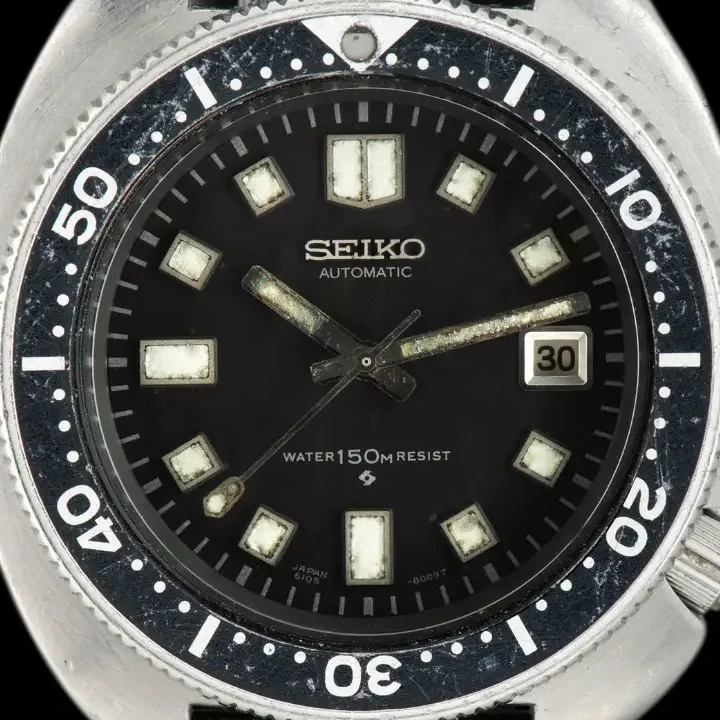
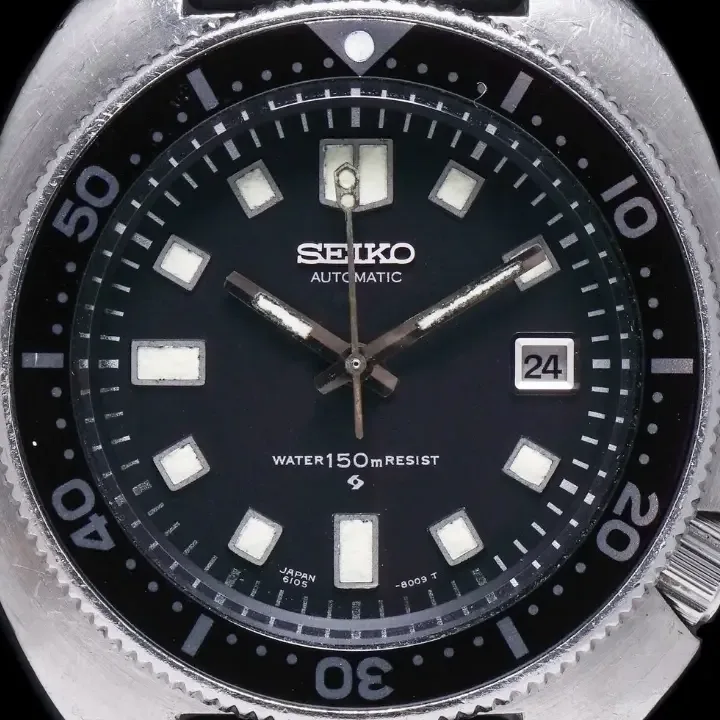
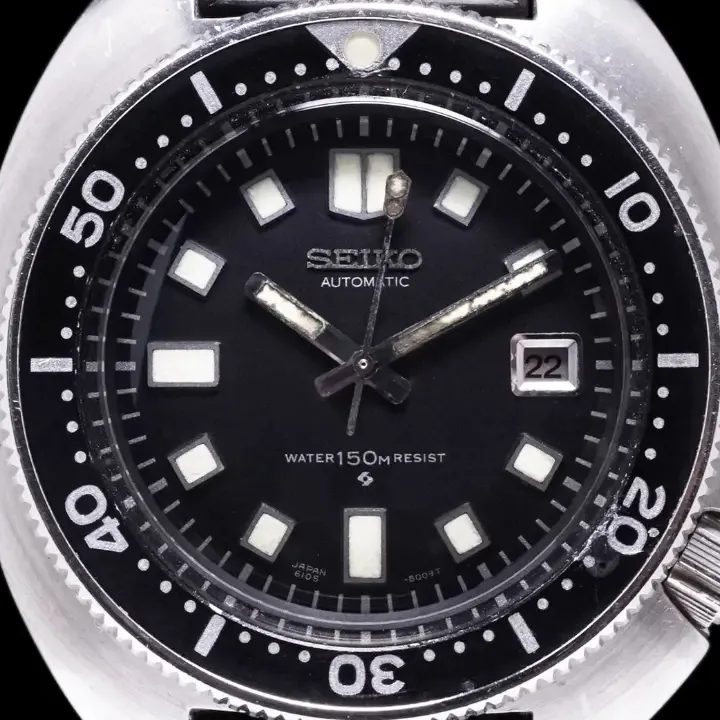
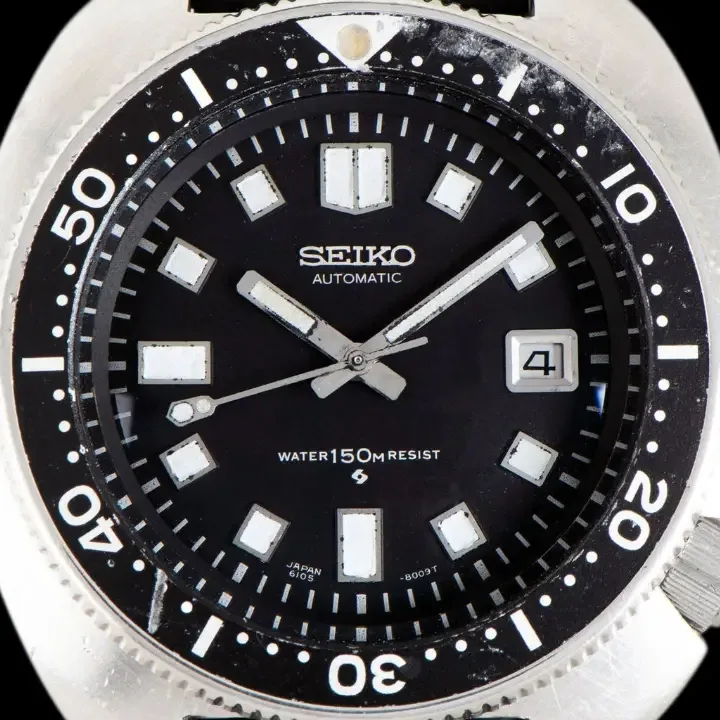
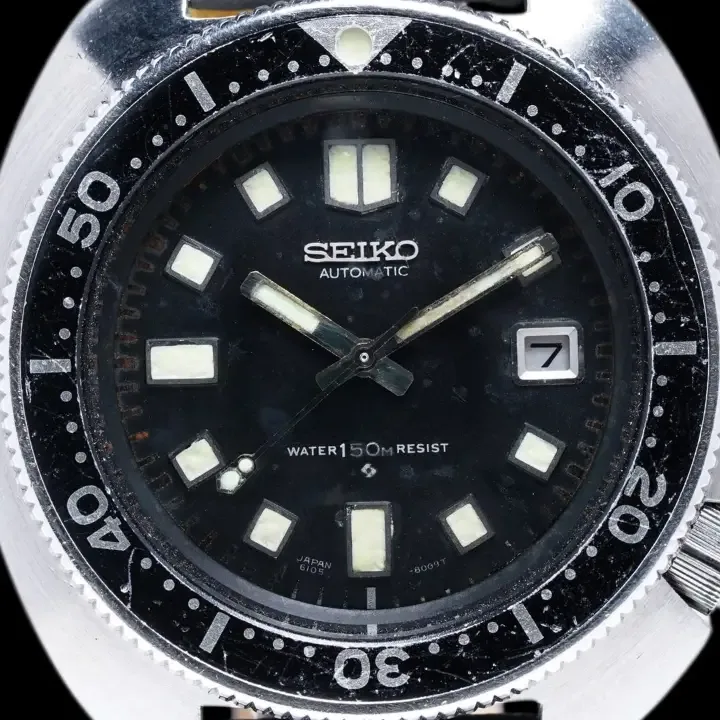
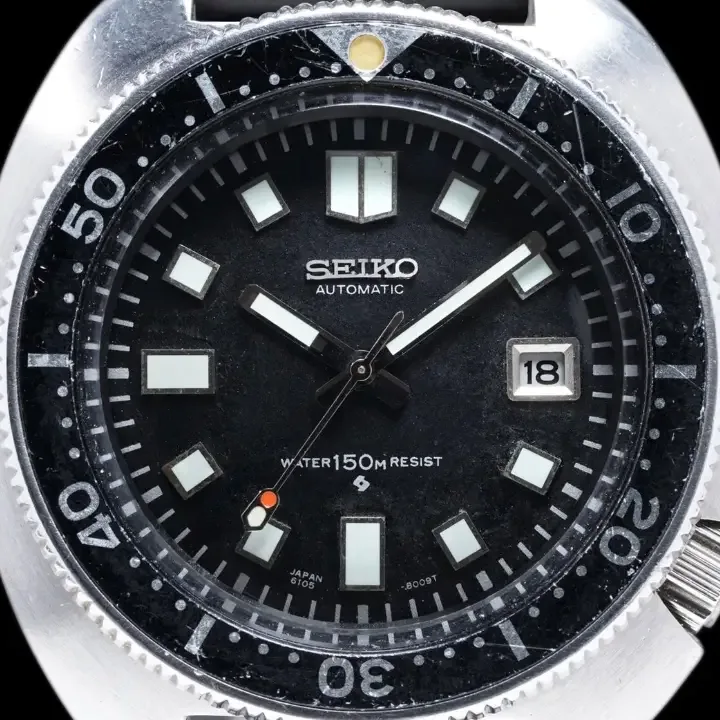
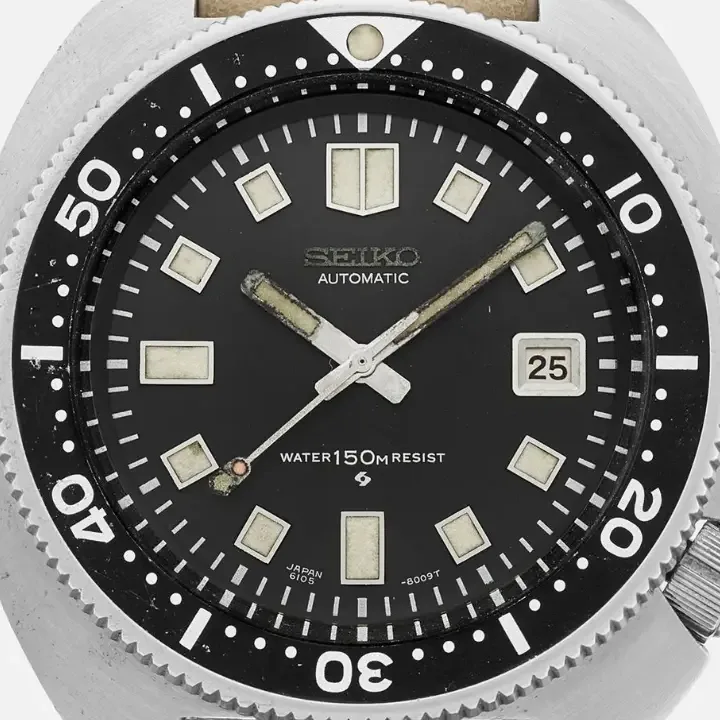
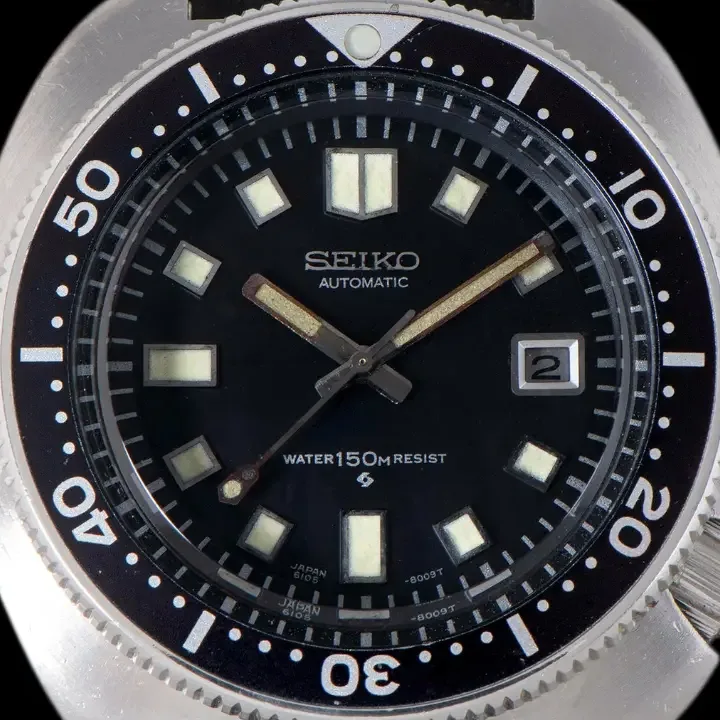
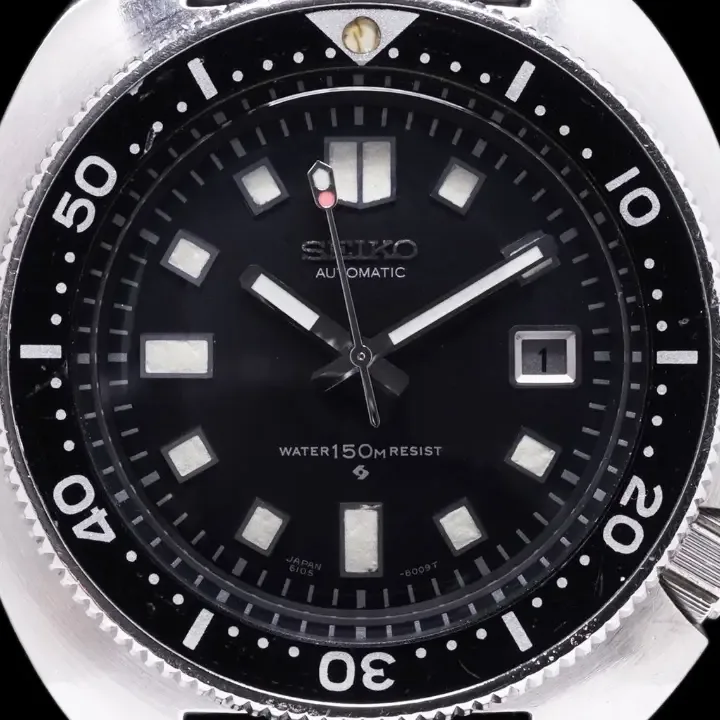
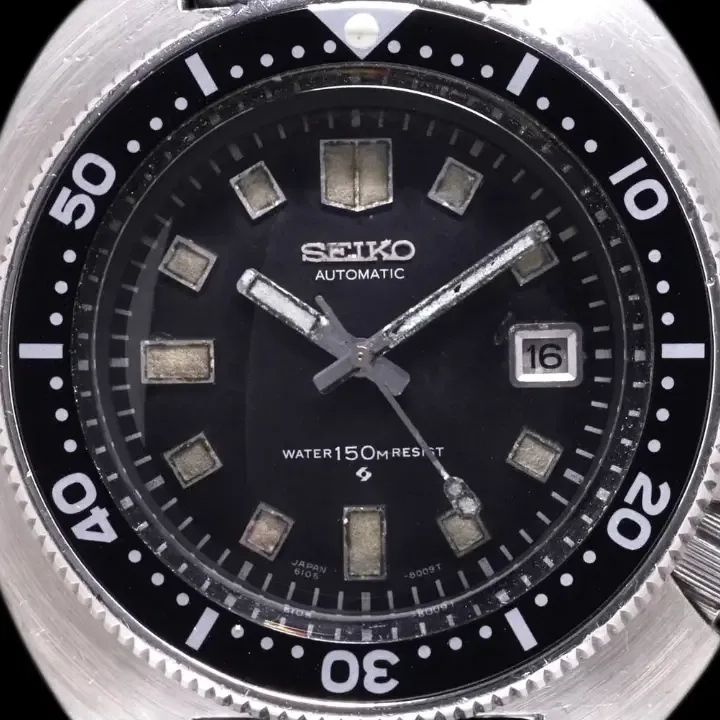
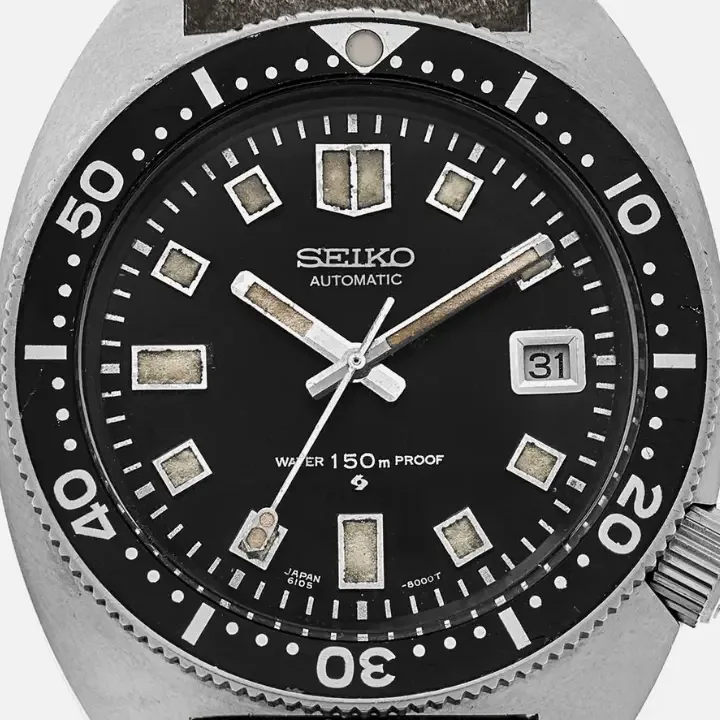
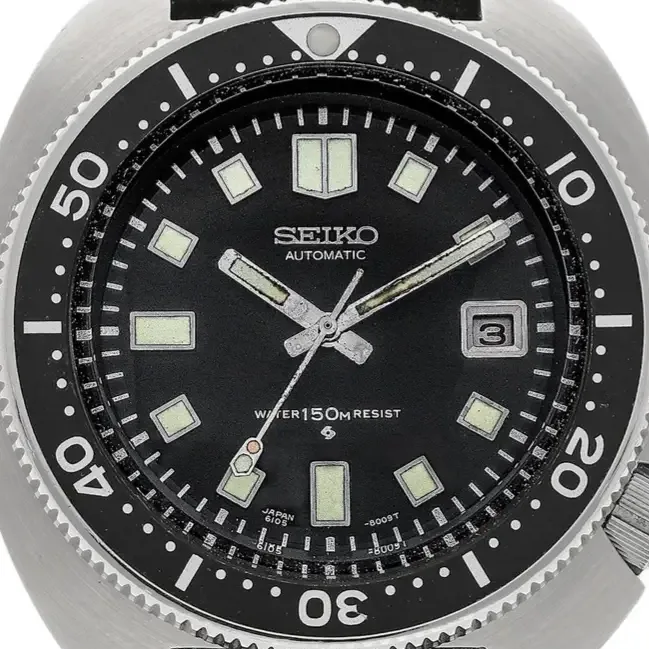
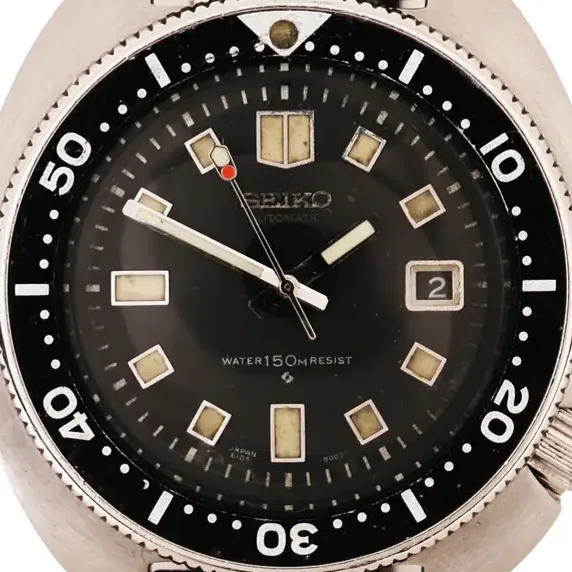
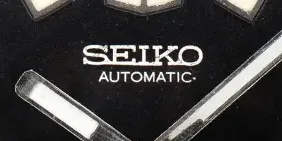
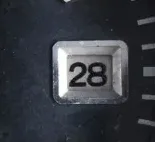
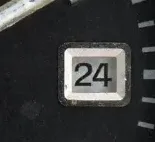
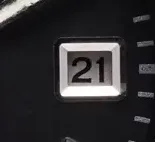
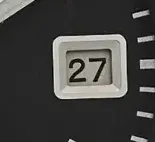
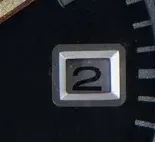
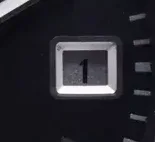
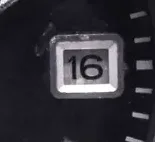
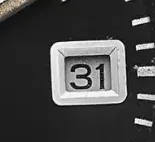
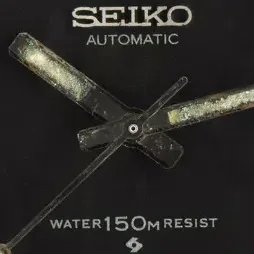
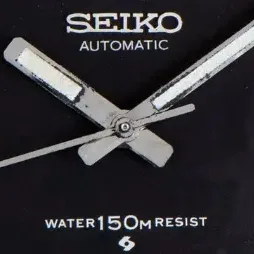
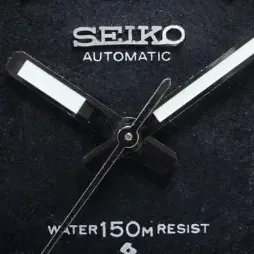
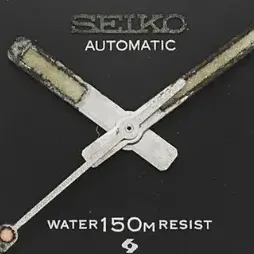
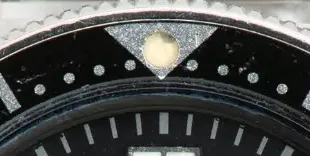
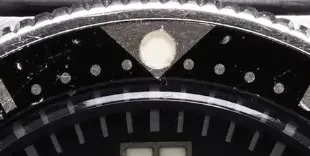
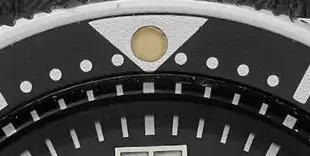
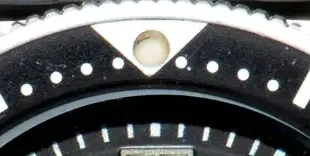
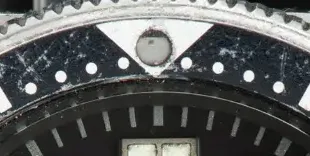
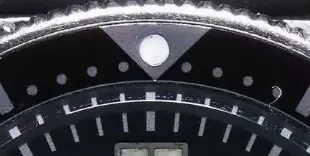
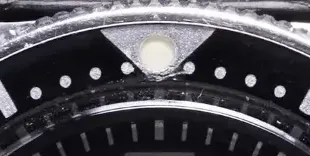
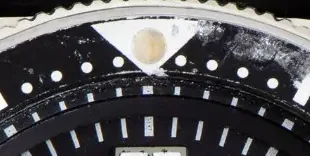
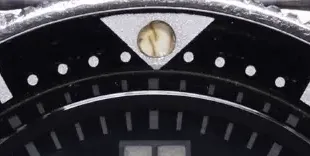
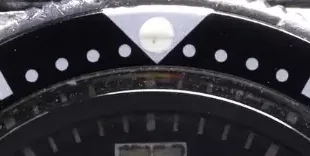
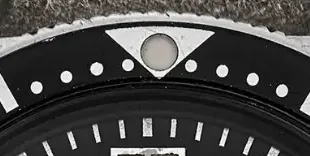
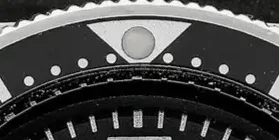
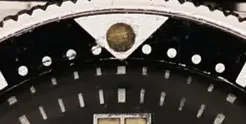
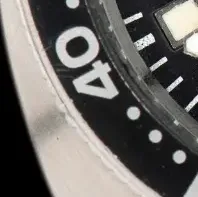
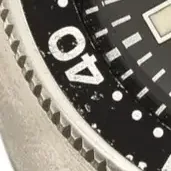
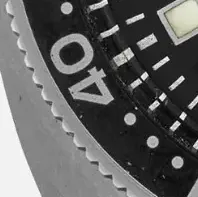
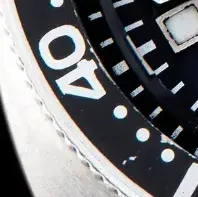
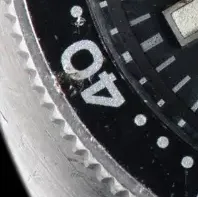
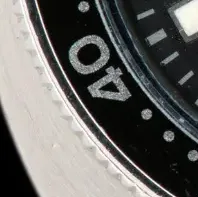
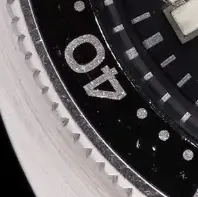
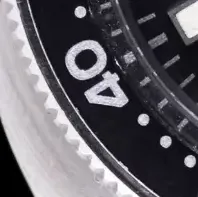
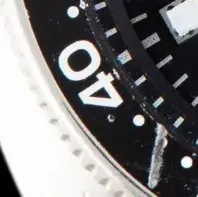
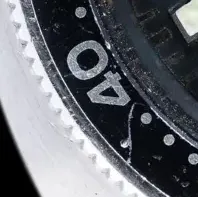
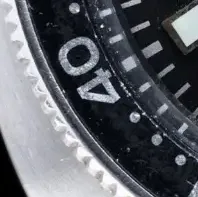
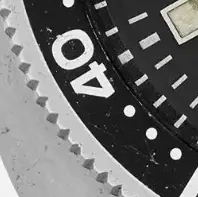
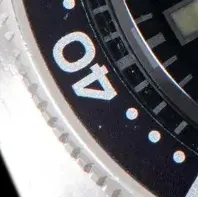
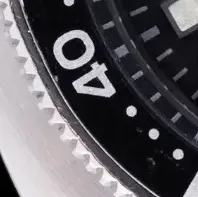
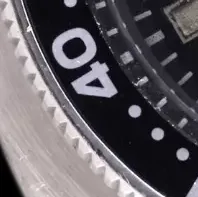
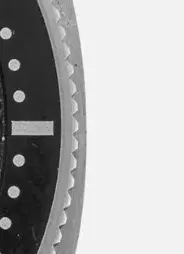
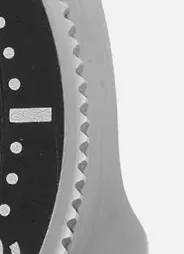
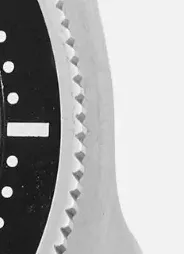
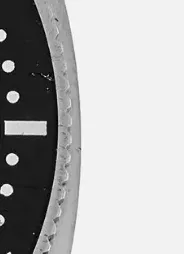
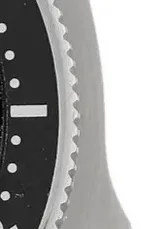
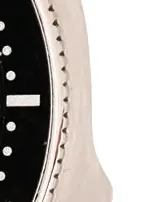
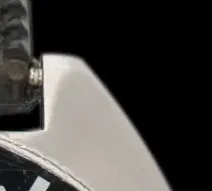
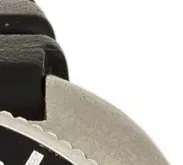
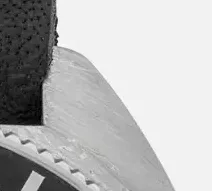
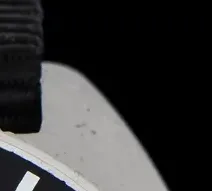
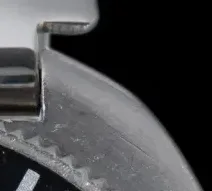
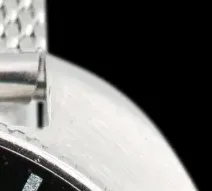
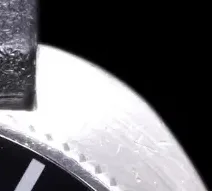
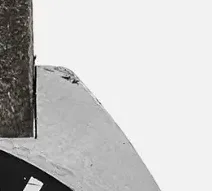
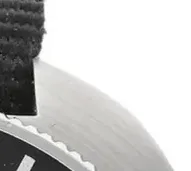
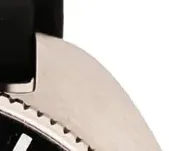
22 watches, oldest first, each straightened and cut the same way so that one row shows one component across them all. Chosen from 111 photographs on file for sharpness and for a face typical of the reference. A year marked c. is one its holder gives only roughly. Each picture is a detail cut from a listing photograph. Select the small mark in its corner for its year, its holder, a link to the listing it came from, and a way to report it.






































Chronology
The reference is dated 1968 to 1977 in the catalogues as the literature gives them, with the second case type from about 1970; the library's own listings state years from 1968 to 1976 and no later.
Every dated variant: what is written, and what the records show
For the reference the marks are every dated watch; for a variant, the watches a seller names as that variant, so a variant sellers do not name has none.
Specification
| Case | Stainless steel cushion case. 8000/8009: about 41 mm, symmetrical, crown offset to four o'clock. 8110/8119: about 44 mm wide and 47 mm long, asymmetric, with an integral crown guard |
| Thickness and lugs | 8000: 12.5 mm thick, 48 mm lug to lug. 8110: about 13 mm thick. Lug width 19 mm |
| Crystal | Hardlex mineral glass |
| Bezel | Bi-directional 60-minute rotating bezel with a lume pip at 12; unclicked on the 8000, with a click mechanism on the 8110 |
| Crown | Signed Seiko, not screw-down, on the 8000/8009; push-and-turn lock crown engraved LOCK with an arrow on the 8110/8119 |
| Caseback | Screw-down, steel, stamped with the case code, serial number and a water-resistance wording that changes over time |
| Movement | Calibre 6105A (no hacking) and later 6105B (hacking): automatic, 17 jewels, 21,600 bph, quickset date, no hand-winding, about 32 hours' reserve |
| Water resistance | 150 m as originally specified; dial reads Water Proof or Water Resist depending on the run |
| Strap | Black rubber waffle strap as supplied; 19 mm |
Dial 4 described
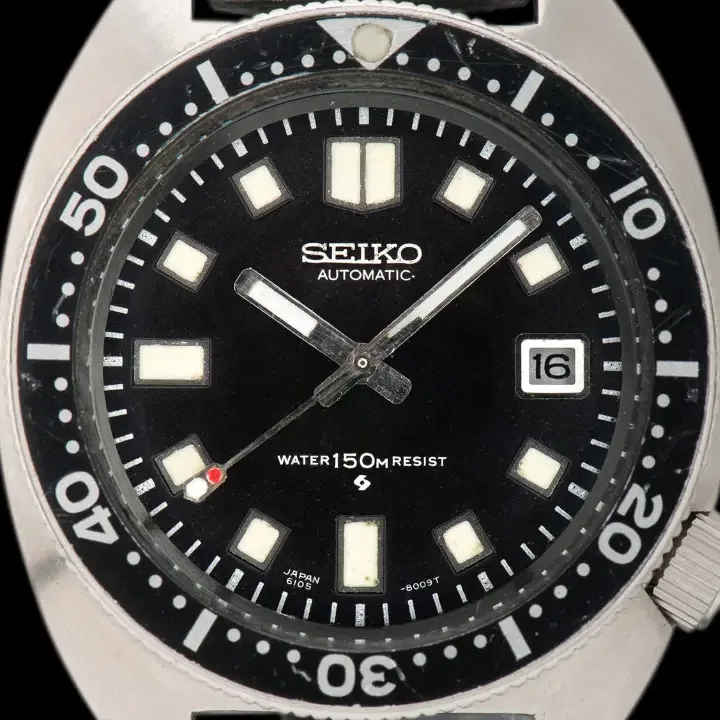
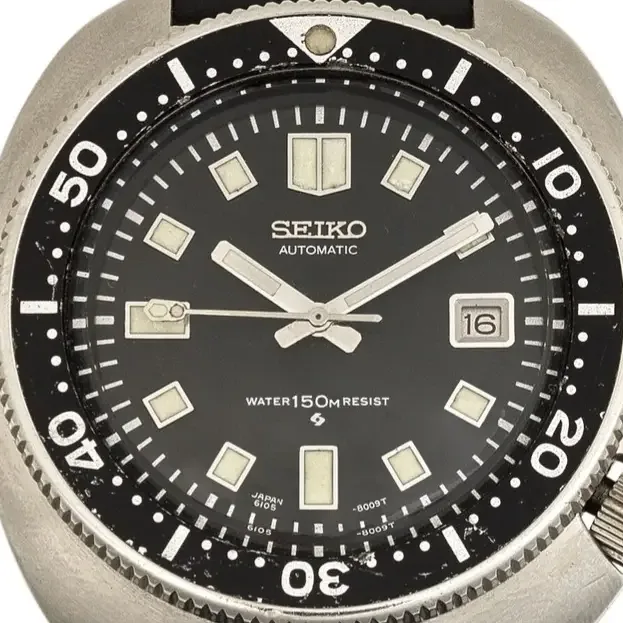
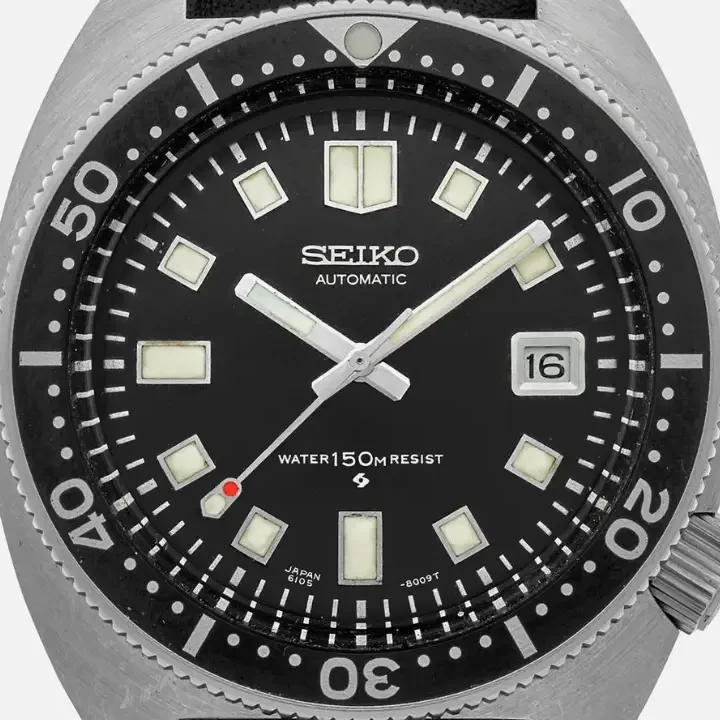
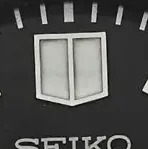
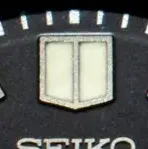
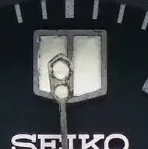
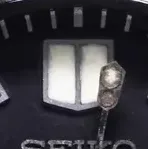
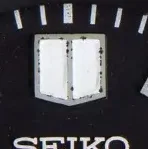
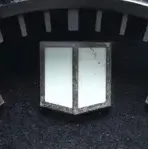
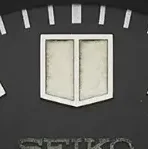
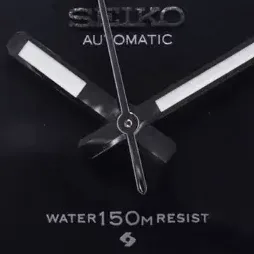
All 6105 dials are black with white print, chrome-framed applied-style markers filled with lume, and a framed date window at three. The layout is the same on both case generations and descends from the 62MAS. What changes is chiefly the wording of the water-resistance line.
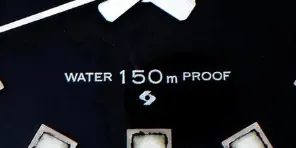
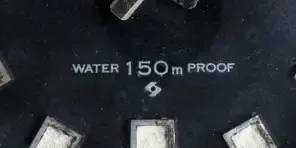
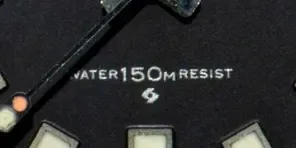
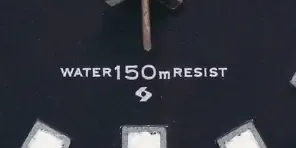
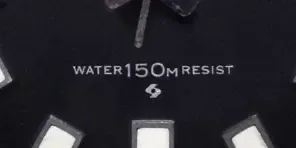
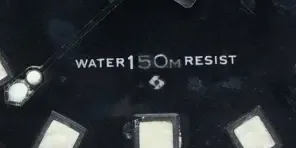
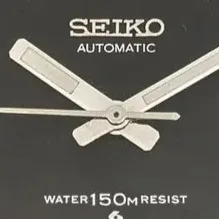
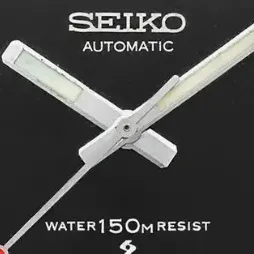
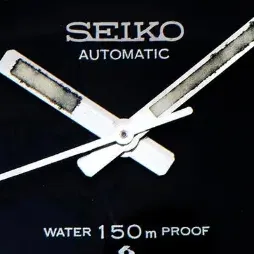
Water Proof dial
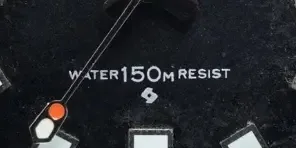
The earliest dials print Water Proof with the 150 m figure. These are found on the 8000 and 8009 and, by some accounts, on 8110s of the first year. How long they lasted is not agreed: some 8000s have Resist dials, and a Proof dial on an 8110 is possible.
- Water 150m Proof wording
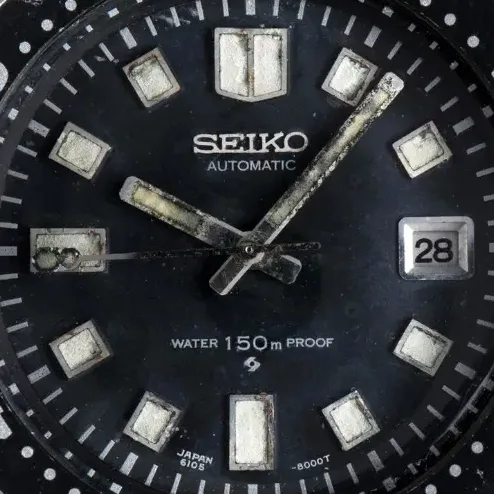


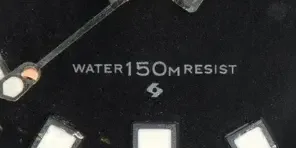
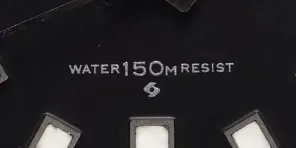
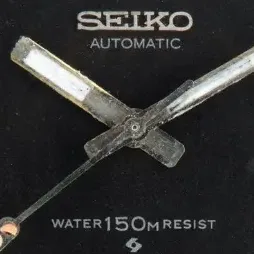
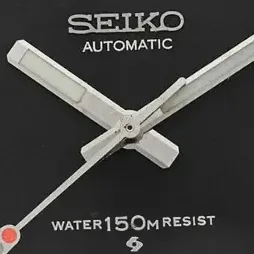
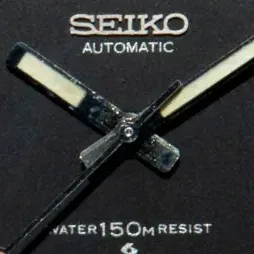
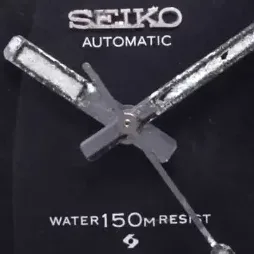
Water Resist dial
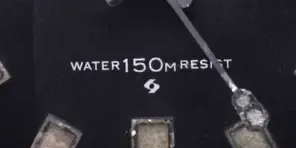
The later dial reads Water Resist, and on the matching caseback the same word appears, giving the Proof/Proof, Proof/Resist and Resist/Resist pairings of dial and back that sellers use. Dials of this type are the usual ones on the 8110 and 8119. Later 8000s are said to have carried it too; a new-old-stock 8000 built up on a case dated January 1969 has a Resist dial that its restorer thought early for that date.
- Water 150 Resist wording
- matching Resist caseback
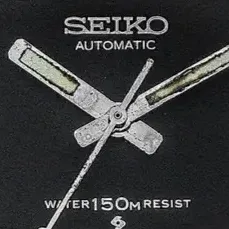
Printed dial text and code
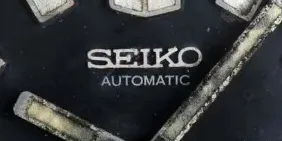
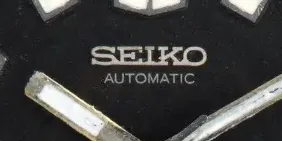
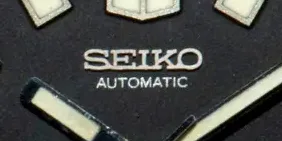
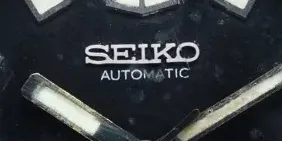
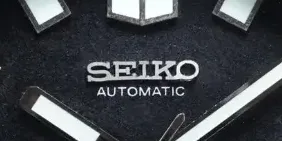
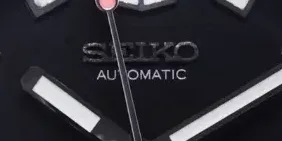
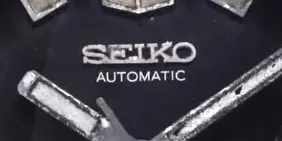
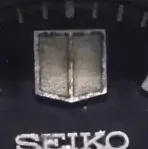
Beneath the Seiko name sit Automatic and the water-resistance line, with a model line of 6105 and Japan between six and seven o'clock; one example of a dial code beside it reads 6105-8009T. The print is white, in one plain face, while the Seiko name is applied in chrome and the Suwa symbol is printed just above six. Reprinted dials copy this layout, so type, position and the six o'clock code are what to compare.
- 6105 and Japan below the hour markers
- code at six o'clock
- applied chrome logo
- printed Suwa symbol
Embossed or flat-backed markers
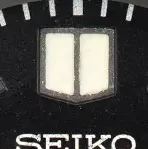
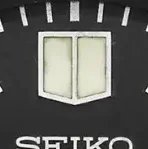
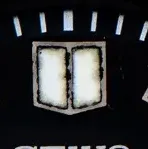
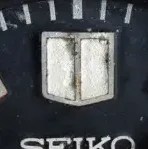
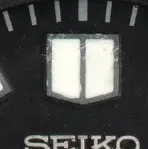
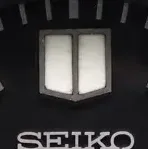
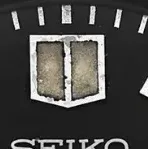
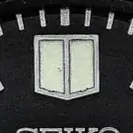
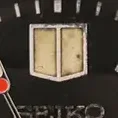
Looked at from the back, some dials have the hour markers punched through from behind, while others, perhaps later ones, are flat at the rear and so presumably have applied markers. From the front the two look the same: flat-topped silver frames filled with slightly off-white lume, with the markers rising cleanly out of the black. The twelve marker is the larger and is split into two lumed plots.
- punched-through indents on dial back
- twin-plot marker at 12
- flat-topped frames
Luminous material 1 described
The literature treats lume mainly as something that has aged or been redone. Original lume is described as white, going to cream with age.
Original lume
The dial markers, hands and bezel pip were originally filled with white compound, which ages to a cream or off-white. Moisture can destroy it and corrode the silver frames around it. Very green or yellow lume on the hands against greyer dial lume signals that parts do not belong together.
- cream-white ageing
- matching tone across hands and markers
- lume rot and silver loss in damaged dials
Hands 2 described
The handset is simple and the seconds hand is the one distinctive part. Replacement sets are common and often poorly finished.
Baton hour and minute hands
The hour and minute hands are rectangular lume-filled batons with bevelled edges and a silver surround, carried forward from the 62MAS.
- bevelled rectangular batons
- chromed frames
Stoplight seconds hand
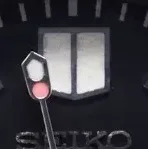
The seconds hand is a spear or arrowhead shape with two round fills near the tip, one inboard filled with pale red and one outer filled with lume. The red often fades until the two dots match, and a red that is too strong or too bright, next to the rest of the dial, is a sign the hand is a replacement.
- red dot inboard of lume dot
- over-bright red on replacements
Bezel 2 described
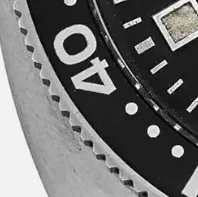
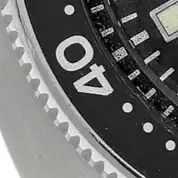
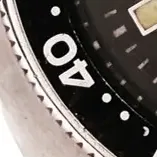
Both generations use a bi-directional 60-minute steel bezel with a lume pip at twelve; the second type is the heavier and clicks. Inserts are among the most replaced parts.
First-generation bezel (8000/8009)
A bi-directional bezel with no clicks, stiff to turn, held on by a C-shaped wire clip that locates it in only three places. The 62MAS used an octagonal clip with eight points of contact. A lume pip sits at twelve.
- no click when turned
- lume pip at 12
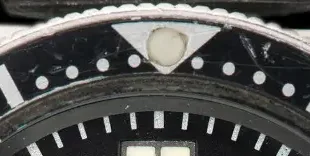
Second-generation bezel (8110/8119)
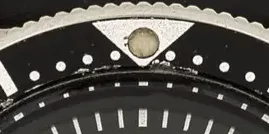
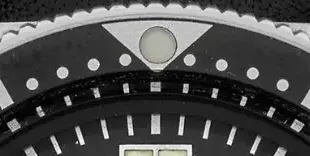
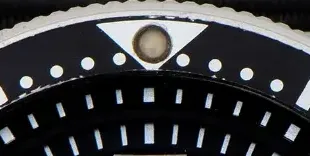
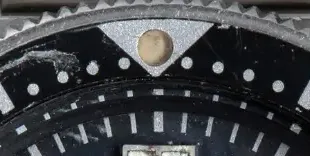
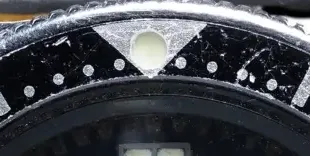
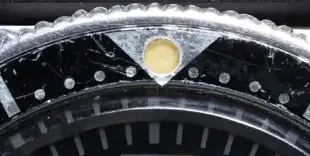
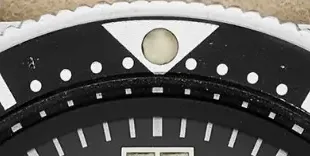
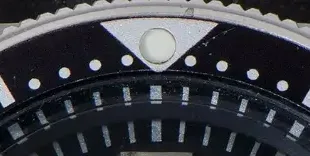
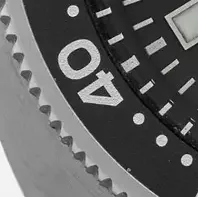
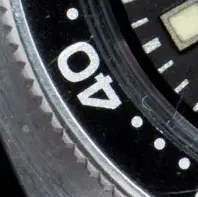
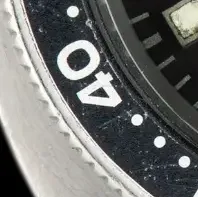
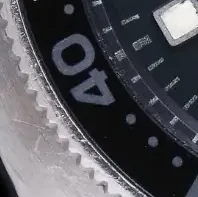
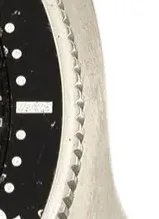
A coin-edge bezel with a click mechanism and a slightly grained black insert; the lume pip sits in an inverted triangle at twelve, covered by a small round acrylic window. Faded inserts turn grey; aftermarket inserts are common and are judged on font, triangle, pip and graduations.
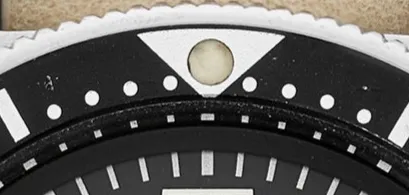

- coin edge
- acrylic pip window
- grey faded insert
33 listings on record under the name.
Case 3 described
The case is the clearest difference between the two types, and the change is the reason for the two sets of reference numbers.
Symmetrical cushion case (8000/8009)
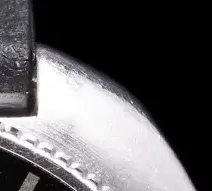
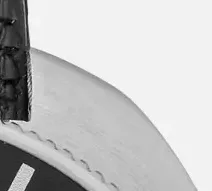
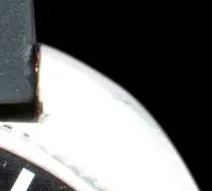
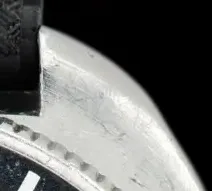
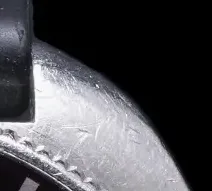
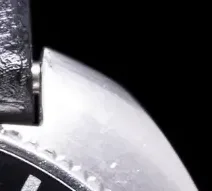
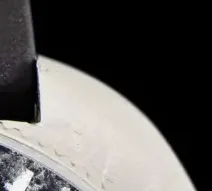
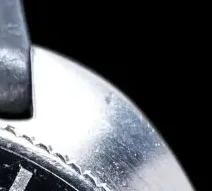
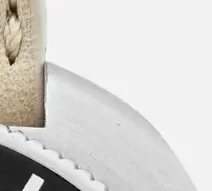
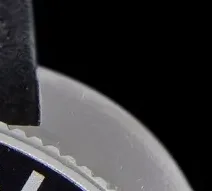
A cushion-shaped steel case of about 41 mm with the crown moved to four o'clock and described by Seiko as anti-snag. The top has a radial swirl finish and the sides are polished. It is 12.5 mm thick and 48 mm lug to lug, and wears more lightly than its successor. The 8009 is the export version and differs from the 8000 chiefly in the code on the back.
- 41 mm width
- radial swirl on top
- polished sides
- offset crown with no guard
Asymmetric case (8110/8119)
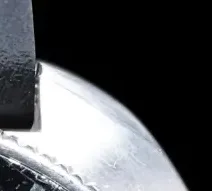
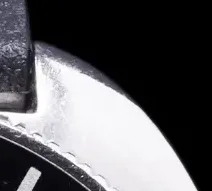
A cushion case of about 44 mm by 47 mm, about 13 mm thick, whose right side swells into a crown guard at four o'clock, the edge cutting back in just above it. It was Seiko's first asymmetric case with built-in crown protection. It has a matte top and polished sides; the case comes apart into eight components, and the crystal retaining ring has a slot to help its removal. The 8119 is the United States version and is otherwise identical.
- 44 mm asymmetric outline
- guard around the crown
- matte top, polished sides
- over-polishing softens the shape
Caseback stamp
The steel caseback screws down and is stamped with the case code, a serial number and the water-resistance wording. The first digit of the serial gives the year within the decade and the second the month, so dated examples have been read as December 1974 and June 1974. The first-generation back has no tsunami mark. Early backs may carry a protective coating and labels.
- code 6105-8000/8009/8110/8119
- serial year and month digits
- wording agrees with dial
Crown 2 described
The crown changes between the two generations and is one of the first things to check on the second.
Signed Seiko crown
The 8000 and 8009 carry a plain pull-out crown signed Seiko in distinctive lettering, not a screw-down, set into the side of the case. It is the last Seiko model with that signature on the crown.
- Seiko signature lettering
- no lock engraving
LOCK crown
The 8110 and 8119 use a crown of about 6.3 mm that is pushed in and turned to lock against a pin in the tube, rather than screwed down. It is engraved with the word LOCK and an arrow, and has six slots. The locking pin can wear, and a crown that no longer locks or has been replaced changes the watch.
- LOCK and arrow engraving
- six slots
- crown locks when pushed and turned
Crystal 1 described
The crystal is Seiko's own Hardlex mineral glass on all versions.
Original Hardlex crystal
The original crystal is a higher-domed mineral piece that stands proud enough to protect the bezel insert. It sits on a crystal gasket and is held by a retaining ring. Service replacements are lower, shallower double-domed crystals.
- high dome
- low dome means service replacement
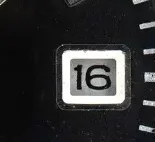
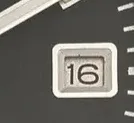
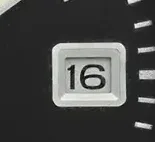
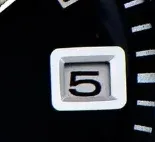
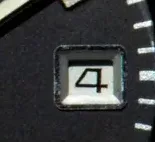
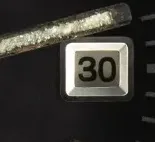
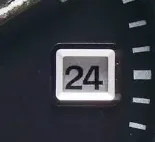
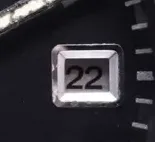
Date 1 described
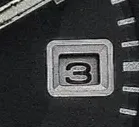
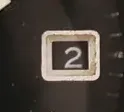
The date window is framed and sits at three o'clock in place of the marker.
Framed date window
A silver-framed window shows black figures on a silver wheel. The date is set by turning the crown at its first pulled-out position.
- silver frame
- black-on-silver date wheel
Movement 2 described
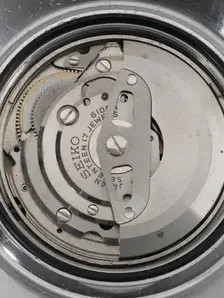
The calibre is Seiko's own 6105. Both A and B versions have 17 jewels and beat at 21,600 bph; neither can be wound by hand, so a worn watch is started by shaking it.
Calibre 6105A
The early version, with chamfered bridges, has no seconds-stop (hacking) feature and a quickset date. It is the correct movement for the first-generation watches, and was made by Dainiseikosha in one documented example.
- no hack
- chamfered bridges
Calibre 6105B
The later version adds a stop-seconds lever that acts on the balance, with a quickset date and a reserve of about 32 hours. It is the movement of the 8110 and 8119 and was also fitted to later first-generation watches, depending on the build date.
- hacking seconds
- 6105B on movement
Bracelet 1 described
The watch was supplied on rubber, and the original strap is now hard to find.
Waffle rubber strap
A black rubber strap with a waffle pattern, 19 mm at the lugs, was the standard fitting. Originals are rare, expensive and often damaged, and are commonly replaced by reproductions.
- black waffle pattern
- 19 mm
Originality
- Dials are the part most often replaced or reprinted, and a poor aftermarket dial is the main reason to pass on a watch.
- Hands are frequently replaced, and over-bright red on the seconds hand or shiny, poorly cut reproduction hands show it.
- Bezel inserts are commonly aftermarket; check typeface, triangle, pip and graduations.
- The crown should be the original LOCK pattern with arrow on an 8110 or 8119; a crown that no longer locks, or a replacement, lessens the watch.
- Reluming of dial, hands and bezel pip is common; the tone of the lume should match across all three.
- Over-polishing the case blunts the crown guard and flattens the asymmetric profile.
Names
- Captain Willard. A watch of this type is worn by a character of that name in a 1979 film, Apocalypse Now.
- Uemura. The Japanese market name, after an explorer who wore the watch on a long solo sledge journey from Greenland to Alaska.
- Pre-Willard and post-Willard. Sellers use these for the symmetrical 8000/8009 and for the asymmetric 8110/8119 respectively.
- Proof/Proof, Proof/Resist, Resist/Resist. Shorthand for the water-resistance wording on dial and caseback.
- Slim Willard. A seller's name for the 6105 within the Willard family.
Where accounts differ
Points on which the published literature and the library's own records do not agree, or on which the literature contradicts itself.
- Hacking on the 6105A and 6105B. Most accounts, and the movement work shown in them, say the 6105A does not hack and the 6105B does. One says neither version hacks, apart from a rumour of it in some very late watches; another gives hacking to the 6105A as well.
- Which case carries the Proof dial. One guide places Water Proof dials on the 8000/8009 and Water Resist on the 8110/8119. Another says Proof dials ran in the first year of the 8110. Seller titles in the library include 8110s marked Proof / Proof.
- Start of the 8110. The changeover is put in 1969 to 1970 in catalogues, in 1970 by other guides and 'later 1970' by another. The end is given as 1976 or 1977.
Movement
From listings of this reference, each confirmed by eye to show what it is filed under. A picture on which a person's name or a personal engraving can be read is not shown. From most holders a detail from the middle of the photograph is shown; the mark in its corner gives its holder and a link to the listing.
Movement

Catalogue versions 4 listed
The full numbers under which holders list this reference, with what their listings say of each. Each has a page of its own.
| Version | Metal | Dial | Years seen | Records |
|---|---|---|---|---|
| 6105-8110 | Steel | Black | 1970–1976 | 26 |
| 6105-8000 | Steel | Black | 1968–1970 | 14 |
| 6105-8119 | 1971–1976 | 12 | ||
| 6105-8009 thin | 1968 | 2 |
In the records
Counted from 108 listings at 14 holders between 26 July 2019 and 14 November 2026. These are what sellers and auction houses state, not measurements.
3 listings dated long after the reference ended are set aside and not counted here: a year that late belongs to a later watch sold under the old number, or to a listing filed under the wrong one.
Case metal
| Steel | 12 |
Dial colour
| Black | 11 |
Case size
| 44 mm | 12 | |
| 41 mm | 7 | |
| 42 mm | 1 |
Calibre named
| 6105B | 22 | |
| 6105 | 10 |
Bracelet or strap
| Rubber strap | 5 |
Each table counts the listings that state the thing, in the seller's own terms. A size, metal, colour or calibre that cannot belong to this reference is a seller's slip or a listing filed under the wrong number.