62MAS Diver (6217-8000 and 8001) and World Time (6217-7000/7010)
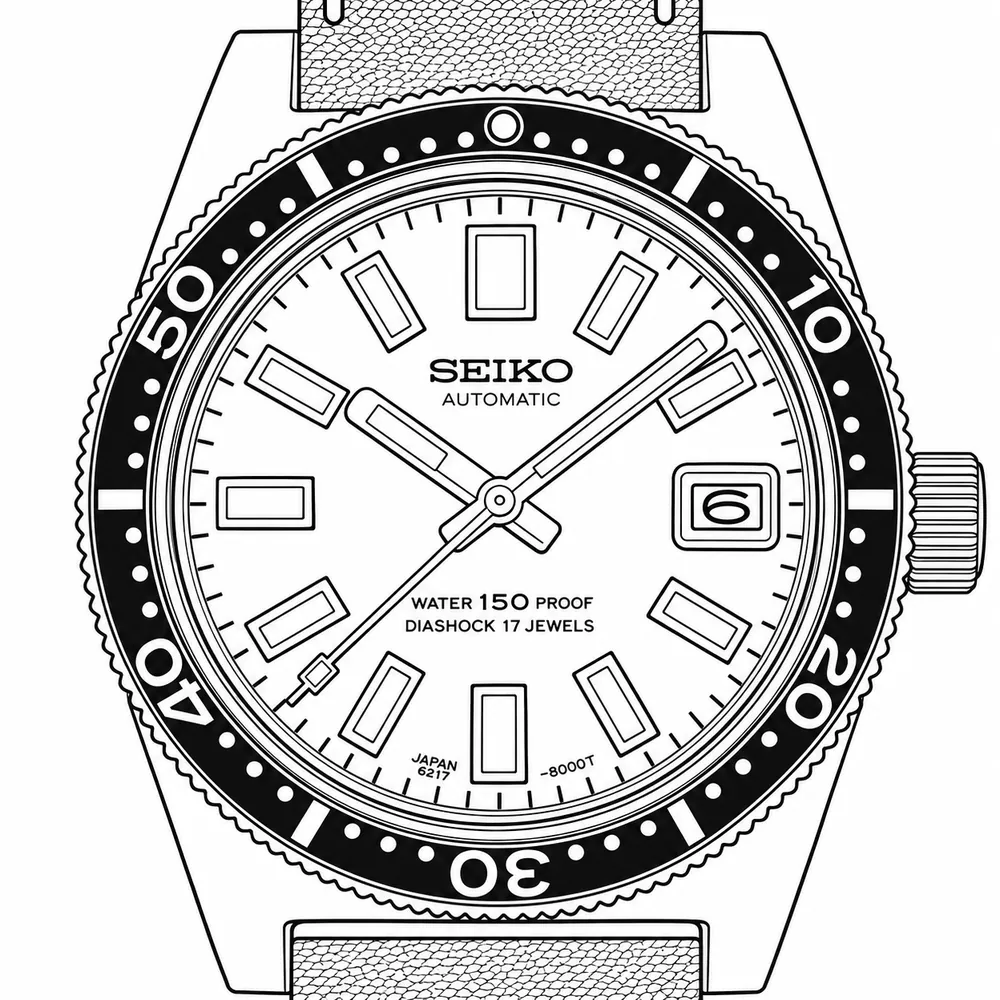
The 6217 is Seiko's first diver, the 62MAS, launched in 1965 with a 150 m rating, an automatic calibre 6217A and a date. The name is short for Seikomatic Selfdater. It is a 37 mm steel monobloc watch with a crown unguarded at three o'clock, a grey dial with chrome-framed lume markers, a clicking bi-directional bezel and a dolphin or plain caseback. It comes in two crown sizes, the small-crown 6217-8000 made for only a couple of months and the big-crown 6217-8001 that followed, which ran to early 1968 before the 6105 replaced it. The same movement also drives the first World Time watches, numbered 6217-7000 and 7010. Dial, crown, caseback and lume ageing are the usual points of identification.
- Made
- 1965–1968dates approximate
- Seen in the library
- 1964–1967by years sellers state
- Case
- 38 mm · steel (90%)as sellers state
- Movement
- Calibre 6217Aautomatic
- On record
- 44 listings109 photographs · 16 holders
Components
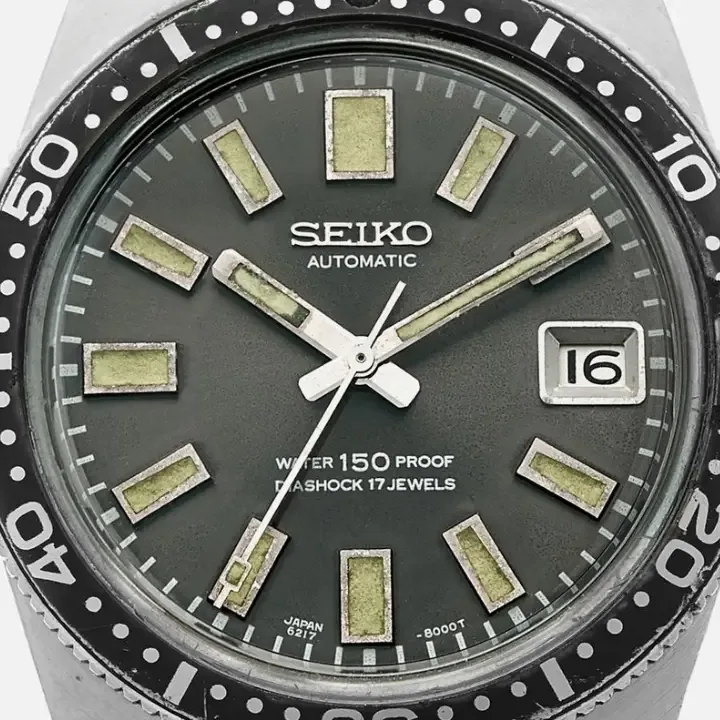
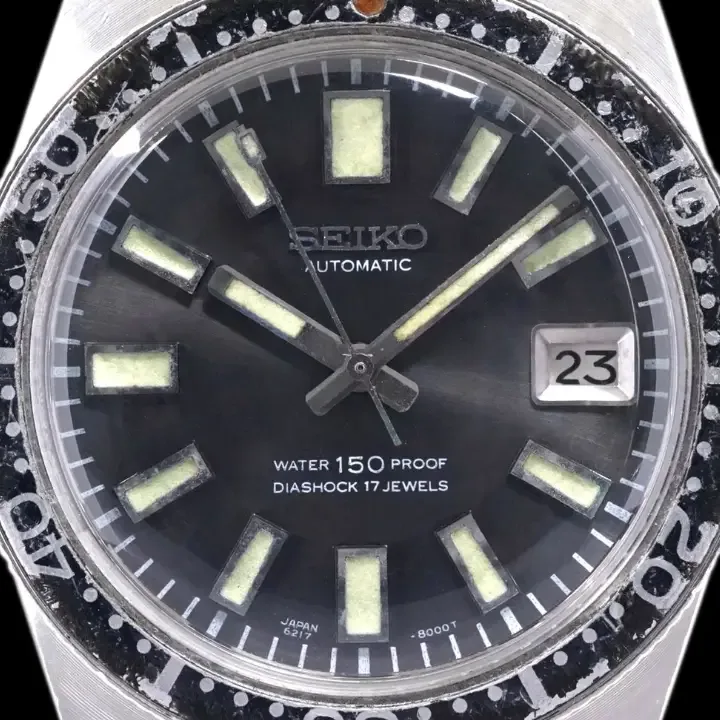
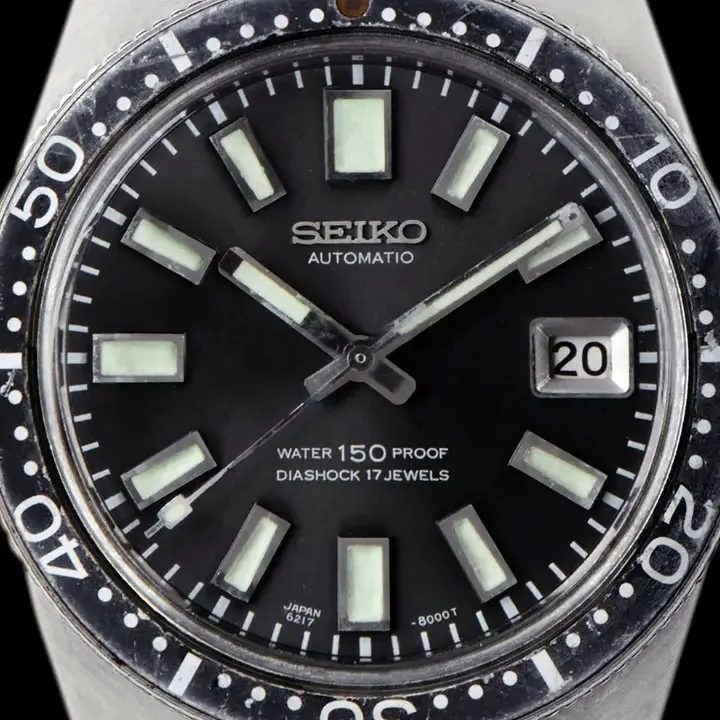
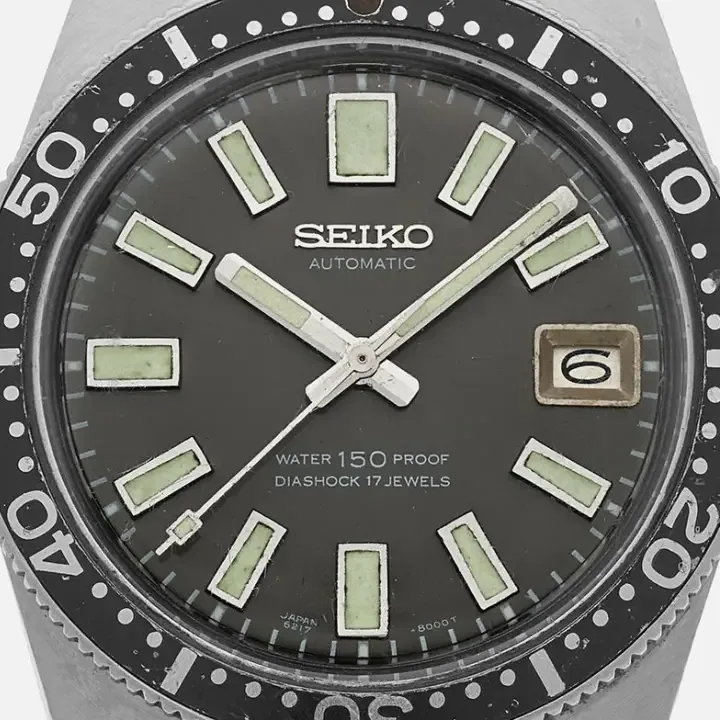
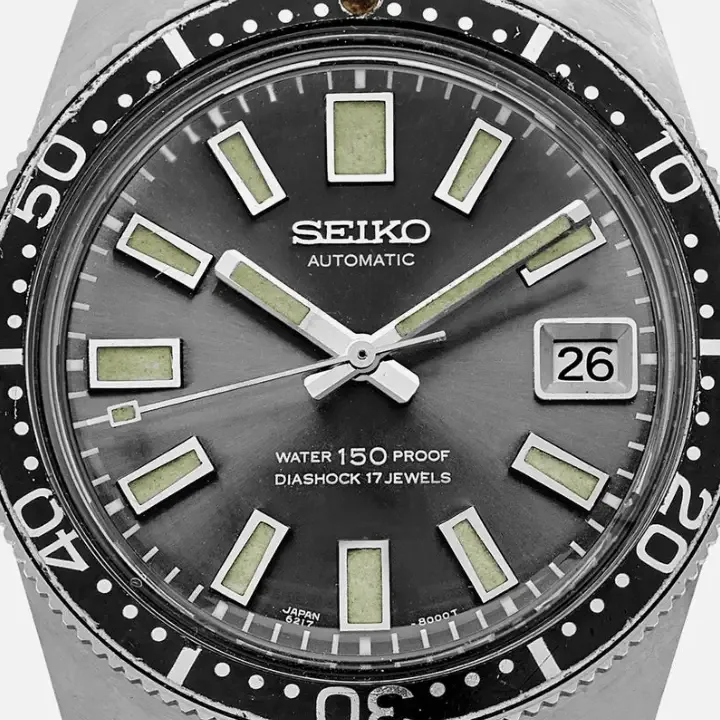
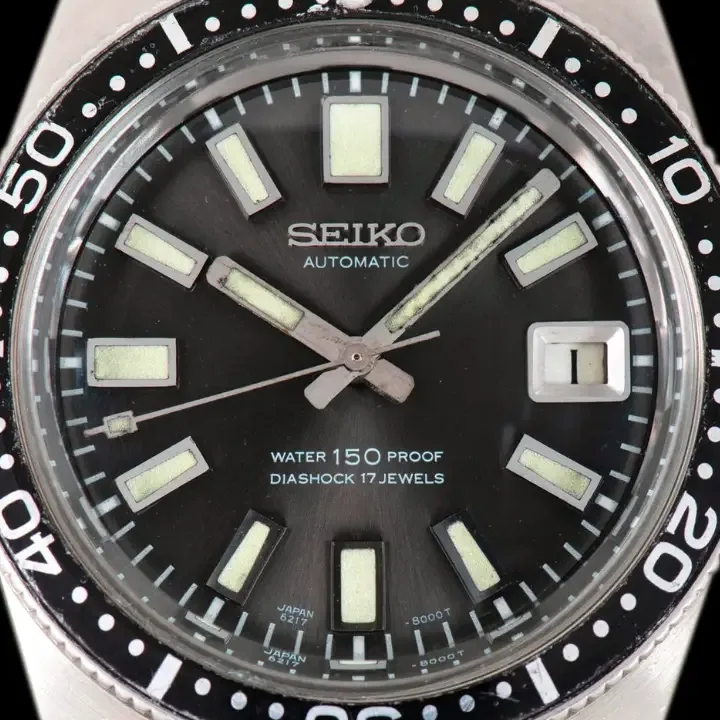
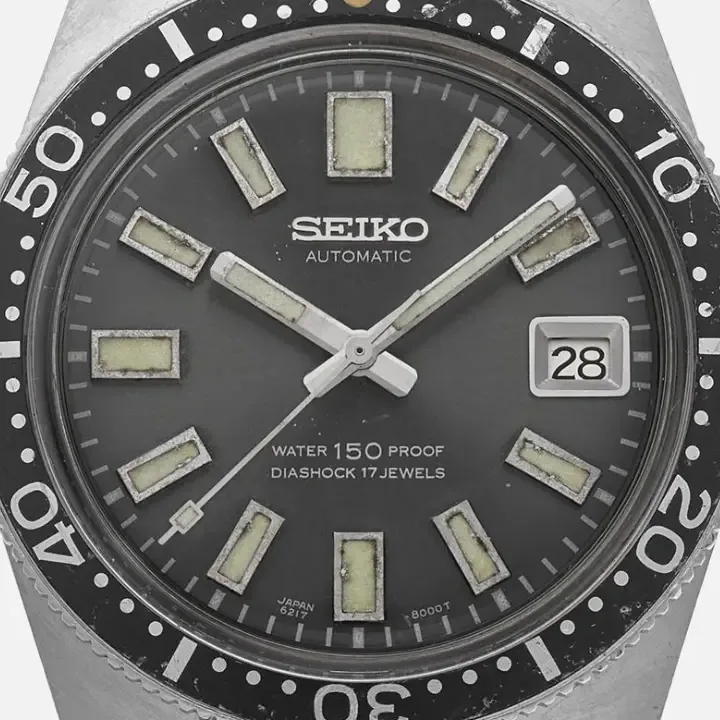
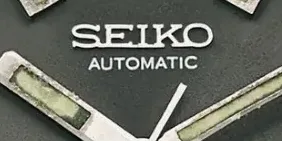
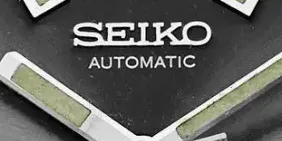
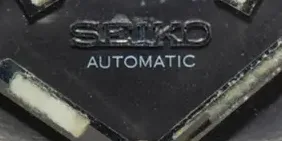
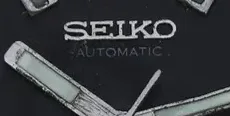
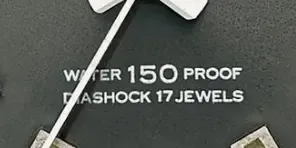
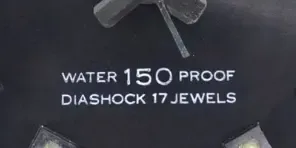
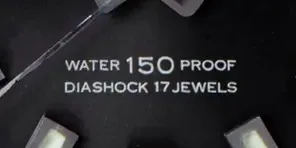
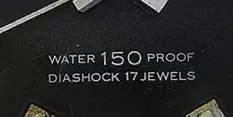
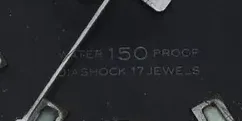
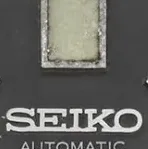
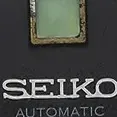
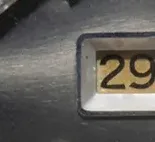
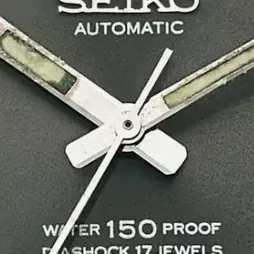
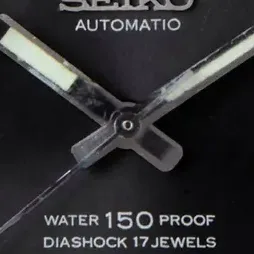
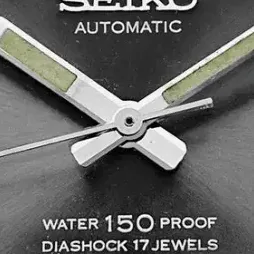
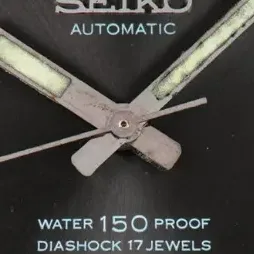
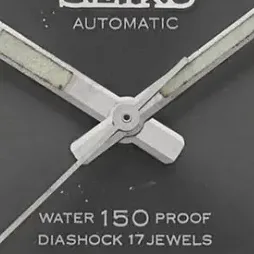
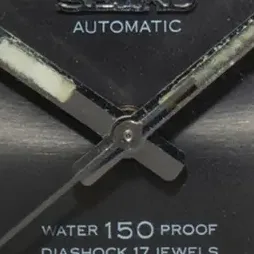
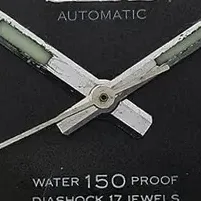
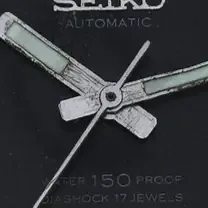
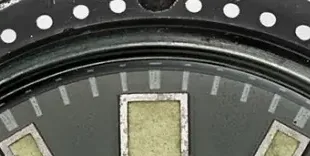
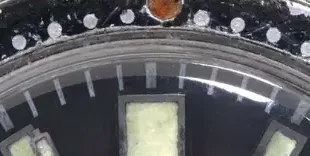
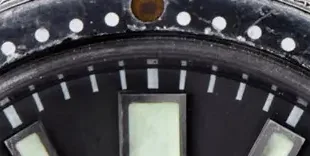
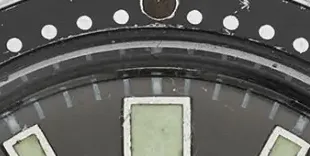
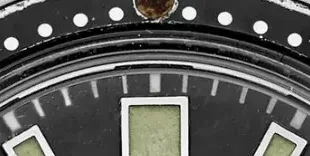
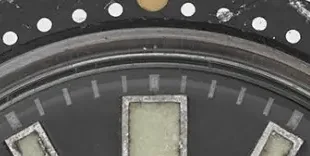
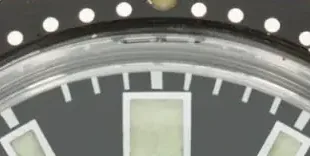
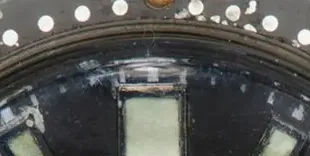
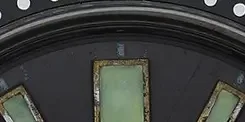
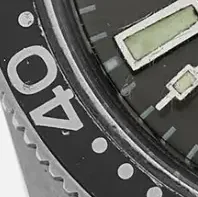
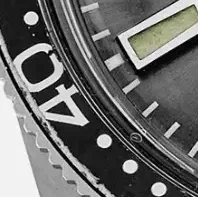
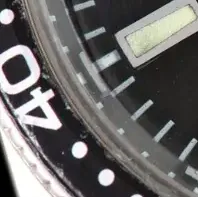
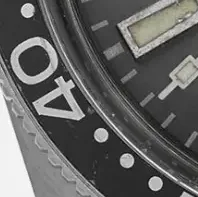
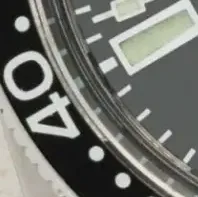
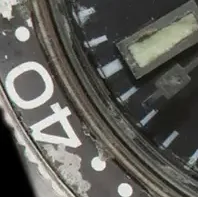
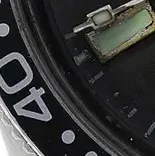
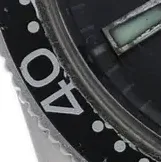
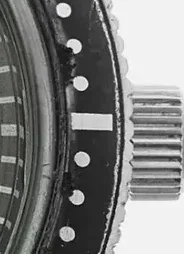
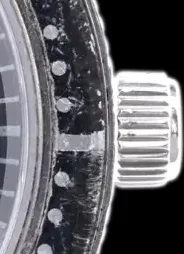
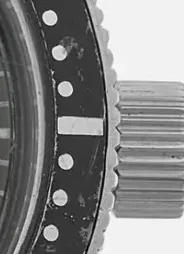
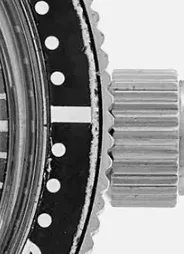
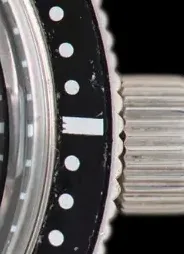
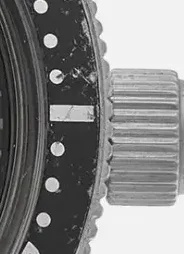
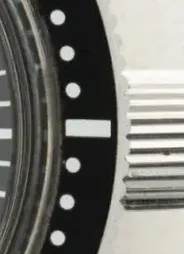
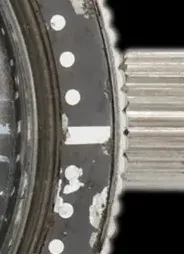
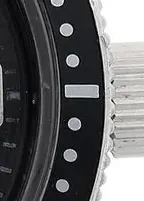
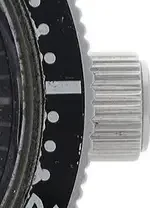
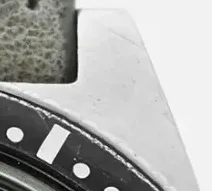
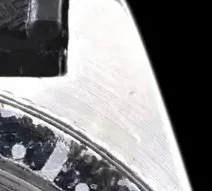
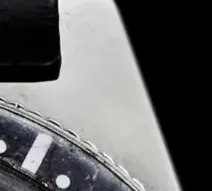
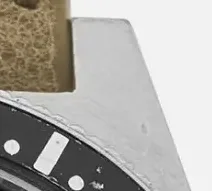
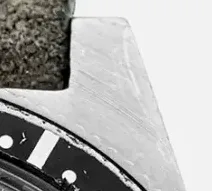
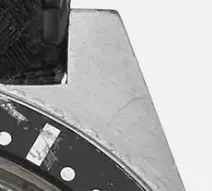
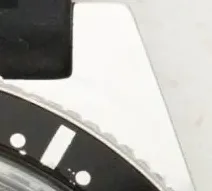
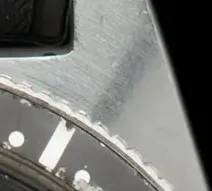
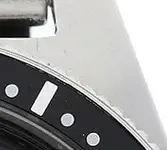
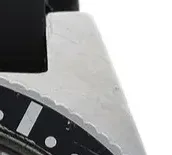
11 watches, oldest first, each straightened and cut the same way so that one row shows one component across them all. Chosen from 109 photographs on file for sharpness and for a face typical of the reference. A year marked c. is one its holder gives only roughly. Each picture is a detail cut from a listing photograph. Select the small mark in its corner for its year, its holder, a link to the listing it came from, and a way to report it.
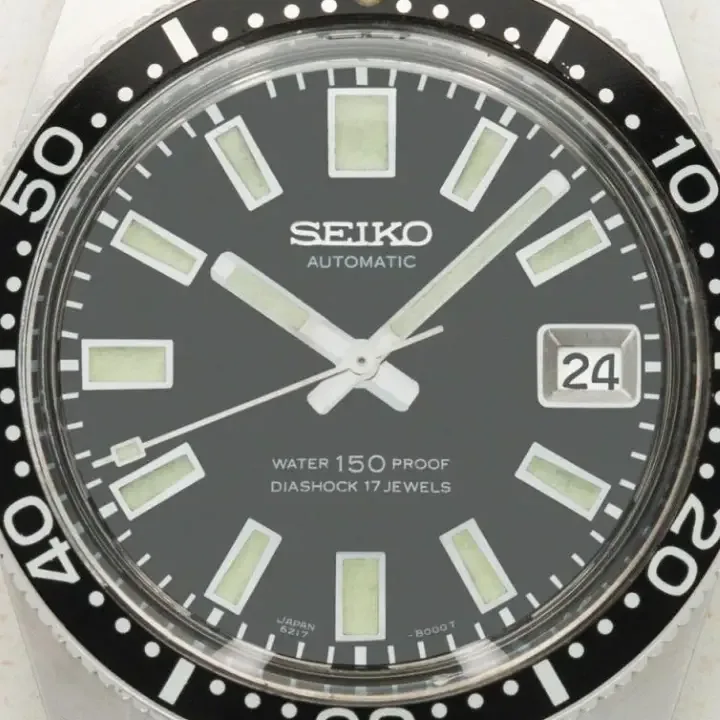
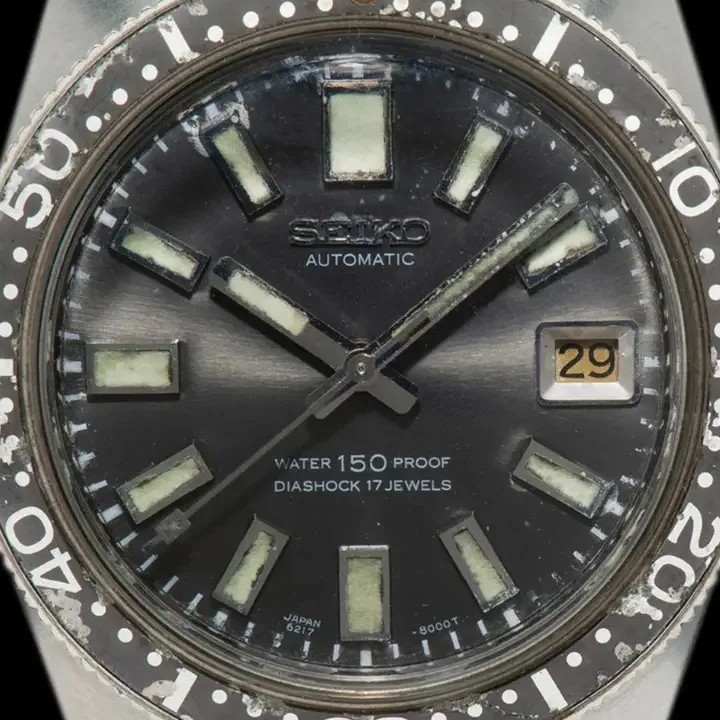
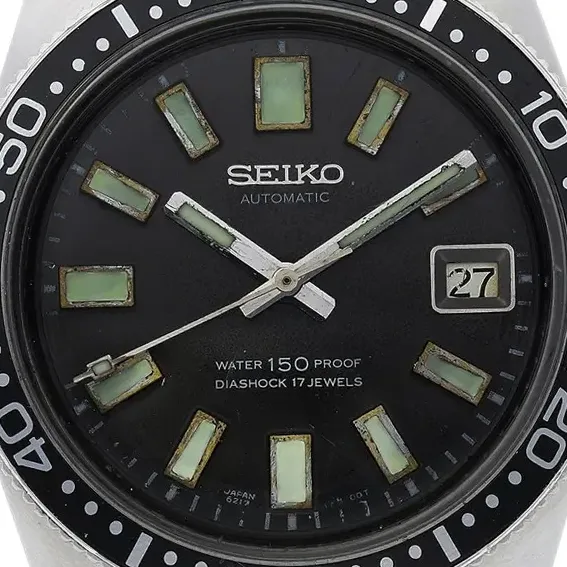
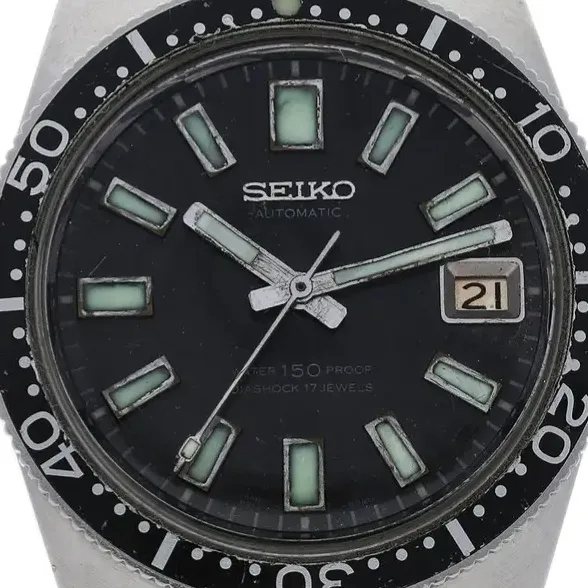






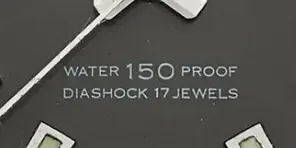
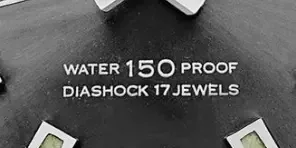
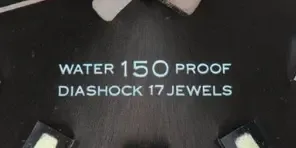


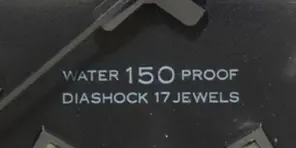















Chronology
The 62MAS runs from April 1965 to early 1968; the library's listings state years 1964 to 1967, the 1964 ones that name a model being World Time watches.
Every dated variant: what is written, and what the records show
For the reference the marks are every dated watch; for a variant, the watches a seller names as that variant, so a variant sellers do not name has none.
Specification
| Case | Stainless steel monobloc case with integral lugs, 37 mm (some measure 38 mm), about 13.5 mm thick; circular brushing on top |
| Crystal | Acrylic crystal held by a chromed tension ring |
| Bezel | Bi-directional, clicking, 60-minute insert with a lume dot at twelve; coin-edge steel ring |
| Crown | Signed Seiko, push-pull and not screw-down, at 3 o'clock with no guard |
| Caseback | Screw-down; engraved dolphin on early types, plain Seiko wording or a horseshoe type without a dolphin later |
| Movement | Calibre 6217A, automatic, 17 jewels, 18,000 bph, quickset date, no hacking, no hand-winding |
| Water resistance | 150 m as originally specified |
| Strap | Black rubber strap with diamond-shaped vent holes |
Reference 3 described
The 6217 number names the movement and the case together. Two diver cases share it and the World Time watches share its movement.
6217-8000, small crown
The first 62MAS, made for about two months from April 1965. The cases carry the 8000 code and a smaller crown. Their casebacks wear faster than any other, and a crisp one has rarely been seen. It is the scarcer of the two diver cases.
- 8000 case code
- small crown
- shallow dolphin on the back
- serial dated April or May 1965
6217-8001, big crown
The main production, with a larger crown on a longer tube and a recessed case, from about July 1965 to early 1968. The change from 8000 to 8001 concerns the crown and case, not a country or dial code. Examples are far more frequent than the 8000; one estimate is about ten to one.
- 8001 case code
- large crown with flange
- recess in case at the tube
World Time 6217-7000 and 7010
A World Time watch on the same movement, with an inner rotating bezel of city names set by the crown and a 24-hour arrow hand, issued for the 1964 Tokyo Olympics with a flaming torch on the caseback. One example dated June 1967 suggests the 7000 was made again in mid-1967, perhaps ahead of the next Olympics, and the 7010 followed as a later update. A black-dialled version is described, and sellers call some dials linen.
- city-name rotating bezel
- torch on caseback
- 24-hour arrow hand
Dial 2 described
The dial is a grey with a greenish cast, with applied chrome-framed markers filled with lume. It was the same on both crown sizes, with small differences noted by close comparison.
Grey dial
A grey to greenish-grey dial with a sunburst brightness, applied markers framed in chrome and filled with lume, and a framed, bevelled date window at three. The Seiko name is applied rather than printed. The surface turns greyer with age, and markers turn greenish.
- applied chrome-framed markers
- framed date window
- applied logo
Small-crown dial detail
A close comparison of applied-logo fixing holes and paint finish suggests that the dials of the earliest small-crown watches were differently made, with a better paint job. The finding is not set out in detail.
- logo fixing-hole size
- paint quality
Luminous material 2 described
The lume ages to a yellowish-green and often flakes or blackens, which is why relumes are common.
Suwa lume
Watches made at Suwa age to a green, often called the wabi patina, with markers turning greenish and the lume tending to flake and degrade. Dials have often been damaged in poor service.
- green ageing
- flaking lume
Daini lume
The lume used by Daini Seikosha is of a different mix and ages to cream or ivory rather than green. A cream-lumed 62MAS therefore points to a Daini watch, which will have a big crown and a horseshoe caseback.
- cream or ivory lume
- DAINI SEIKOSHA on rotor and caseback
Hands 1 described
The hands are lume-filled and match the dial, with a seconds hand that has a distinctive tip.
Original handset
Lume-filled hour and minute hands in the Seiko diver style, with a seconds hand ending in a rectangular lume-filled tip. Originals can be replaced by hands from other models.
- rectangular lume tip on seconds hand
Bezel 1 described
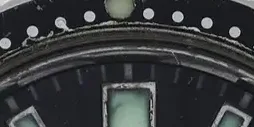
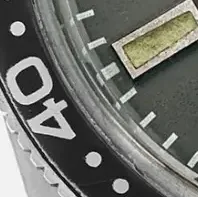
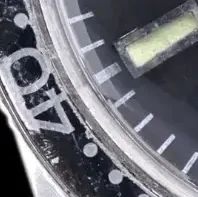
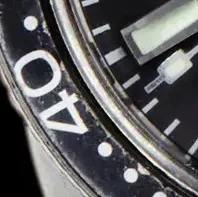
The bezel is Seiko's first rotating diver bezel: bi-directional, clicking, with a 60-minute scale and a lume dot at twelve. The typeface of the insert is carried on into later divers.
62MAS bezel
A bi-directional 60-minute insert, with graduations for almost every minute but no dots around the numerals, so some minutes are unmarked, and a lume dot at twelve. The coin edge comes in short, medium and long depths, and the depth does not follow the reference. The inserts and coin edges of small-crown and big-crown watches are thought by some to differ, but this is not confirmed. The bezel is held by a retaining spring and often seizes with dirt.
- 60-minute scale
- lume dot
- coin edge depth
Case 5 described
A monobloc case with large integral lugs, plain and unpolished, and a crown at three.
Monobloc case
A 37 mm case (some give 38 mm) with integral lugs that curve slightly away from the body, sharp angles and circular brushing on top. It is about 13.5 mm thick. The metal was not robust and wears under polish easily. Watches without polish still show brushing, and lugs are sometimes damaged by gripping.
- integral lugs
- circular brushing
- sharp edges
Caseback, dolphin, first type
The small-crown watch has a dolphin on the back, with such shallow relief that it is hardly visible once worn.
- near-invisible dolphin
Caseback, dolphin, second type
On big-crown watches the dolphin is etched more deeply. This type and the third are both authentic.
- deep dolphin relief
Caseback, dolphin, third type
The dolphin's drawing changes: pectoral flippers are shorter and rounder, and the rostrum is shorter.
- short rounded flippers
Caseback, horseshoe type
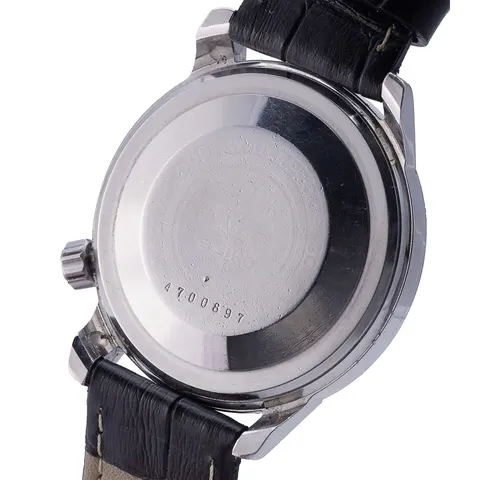
The last type has no dolphin. It is found on Daini watches, which have a DAINI SEIKOSHA engraving inside the back, and also on late Suwa watches. A plain SEIKO back is also described for the big-crown reference.
- no dolphin
- DAINI SEIKOSHA inside
Crown 2 described
The crown is signed and pushes and pulls rather than screwing down. It sits at three, the only Seiko diver to do so, with no guard.
Small crown
The smaller crown of the 8000 is signed Seiko. It was reported to be hard to grip with gloves. The part number is shared with the larger crown, so servicing may have replaced it with the large one.
- small signed crown
- short tube
Large crown
The larger signed crown has a longer tube with a flange, sitting in a recess in the case. Its gasket tends to harden and is not simple to replace, and owners have changed it.
- large signed Seiko crown
- recess at tube
Crystal 1 described
The crystal is acrylic.
Acrylic crystal
A domed acrylic crystal held by a chromed tension ring. It tends to crack or become crazed, and crystals with their gaskets were known to burst off in diving. The tension ring pits with age.
- domed acrylic crystal
- chromed tension ring
Movement 2 described
The calibre 6217A is the plain 17-jewel member of Seiko's 62 family, made by Suwa and, in a few watches, Daini.
Calibre 6217A (Suwa)
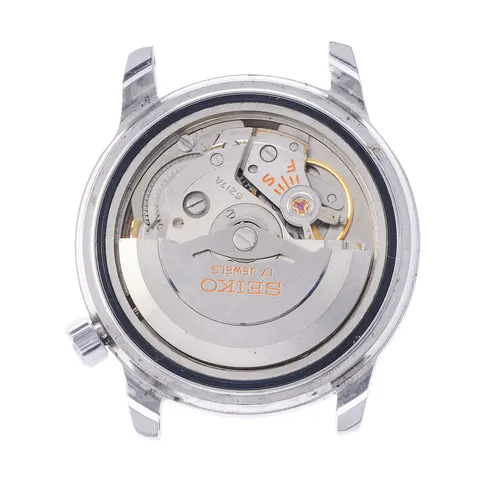
An automatic of 17 jewels beating at 18,000 bph with centre seconds and a quickset date. It has no hacking and cannot be wound by the crown. Common faults are a worn clutch or setting-wheel lever, which makes the quickset and time-setting slip.
- 17 jewels
- no hack
Daini-made movement
A few watches were made by Daini Seikosha, with the maker's name on the rotor as well as inside the caseback.
- DAINI SEIKOSHA on rotor
Bracelet 1 described
The original strap is a rubber one; a steel bracelet is not described for the diver in the literature.
Tropic strap
The original rubber strap has diamond-shaped vent holes: at the tail, three rows of three holes separated by a single hole, then two holes, then one more; the rows narrow from three holes to two as the strap tapers. Seven round sizing holes run along its length. Examples are hard to find.
- diamond vent holes
- seven round sizing holes
Originality
- Dials are often damaged or relumed, and many 62MAS watches carry replacement dials, bezels, crystals, hands and crowns.
- Lume flakes or blackens with age, and relume decisions divide collectors.
- Cases wear easily under polish, and caseback detail such as the dolphin is often worn smooth.
- Hands from other models are sometimes used in repairs.
- The crown gasket hardens and is hard to replace; a small-crown example may have been fitted with a large crown.
- Rubber straps of the original pattern are rare.
Names
- 62MAS. The 62 is the calibre family and MAS stands for Seikomatic Selfdater.
- Small Crown / Big Crown. The two case references 6217-8000 and 6217-8001.
- World Time. The 6217-7000 and 7010 watches with a city bezel and 24-hour hand.
Where accounts differ
Points on which the published literature and the library's own records do not agree, or on which the literature contradicts itself.
- Case size. Several guides give 37 mm; one gives 38 mm. Most sellers in the library's records state 38 mm.
- Caseback of the 8001. One guide says the 8000 has a dolphin and the 8001 simply states Seiko. Another says all small-crown watches have a dolphin and big-crown watches have two dolphin types before a final plain horseshoe type.
- Years of the 8000 and 8001. The 8000 is put at two months from April 1965 by one account, with the 8001 following from July 1965; another puts its last month at May 1965 from the examples seen; a third gives only 'a few months' and dates the launch in Japan to July 1965. The library's stated years are 1964 to 1967 (including World Time watches), with no 1968 date.
Back and movement
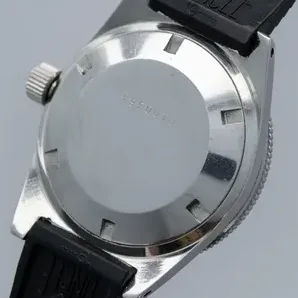
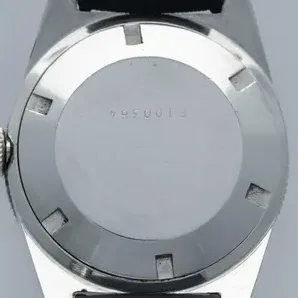
From listings of this reference, each confirmed by eye to show what it is filed under. A picture on which a person's name or a personal engraving can be read is not shown. From most holders a detail from the middle of the photograph is shown; the mark in its corner gives its holder and a link to the listing.
Caseback



Movement

Catalogue versions 3 listed
The full numbers under which holders list this reference, with what their listings say of each. Each has a page of its own.
| Version | Metal | Dial | Years seen | Records |
|---|---|---|---|---|
| 6217-8001 | Steel | Grey | 1965–1967 | 17 |
| 6217-7000 | Steel | Black | 1964–1967 | 10 |
| 6217-8000 | 1965 | 5 |
In the records
Counted from 44 listings at 16 holders between 26 December 2018 and 14 November 2026. These are what sellers and auction houses state, not measurements.
Case metal
| Steel | 9 | |
| Other | 1 |
Dial colour
| Grey | 5 | |
| Black | 2 |
Case size
| 38 mm | 10 | |
| 37 mm | 3 | |
| 39 mm | 1 |
Calibre named
| 6217A | 6 |
Bracelet or strap
| Rubber strap | 3 | |
| Metal bracelet, kind not stated | 2 | |
| Leather strap | 1 |
Each table counts the listings that state the thing, in the seller's own terms. A size, metal, colour or calibre that cannot belong to this reference is a seller's slip or a listing filed under the wrong number.