Part of the line Chronographs before the Daytona, where it is set beside the others of its kind.
Oyster Chronograph
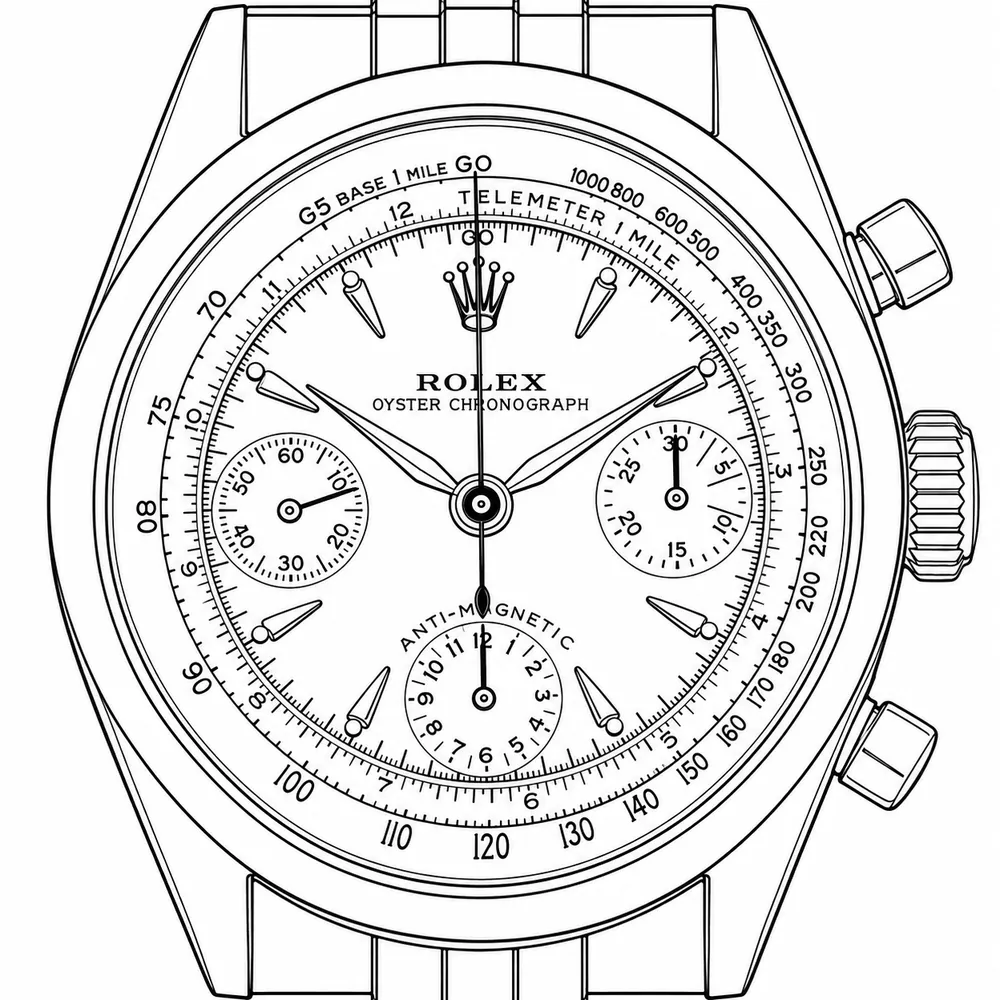
The 6234 is a 36 mm Oyster-cased, three-register, hand-wound chronograph made from about 1955 to about 1961, and one of the watches now grouped as the Pre-Daytona chronographs. It follows the 6034 and was followed by the 6238. The bezel is smooth: the tachymeter and telemeter scales are printed on the dial instead. Most were made in steel, with a small number in gold, and the movement is a Valjoux 72-family calibre. Published estimates of the total made run from about 2,000 to about 2,450. Collectors look first at the dial printing and finish, the colour and ageing of the luminous material, the case edges and whether the bezel is the correct smooth one.
- Made
- 1955–1961dates approximate
- Seen in the library
- 1955–1962by case numbers
- Case
- 36 mm · steel (80%), gold (17%)as sellers state
- Movement
- Calibre 72, 72Ahand-wound
- On record
- 137 listings409 photographs · 25 holders
Components
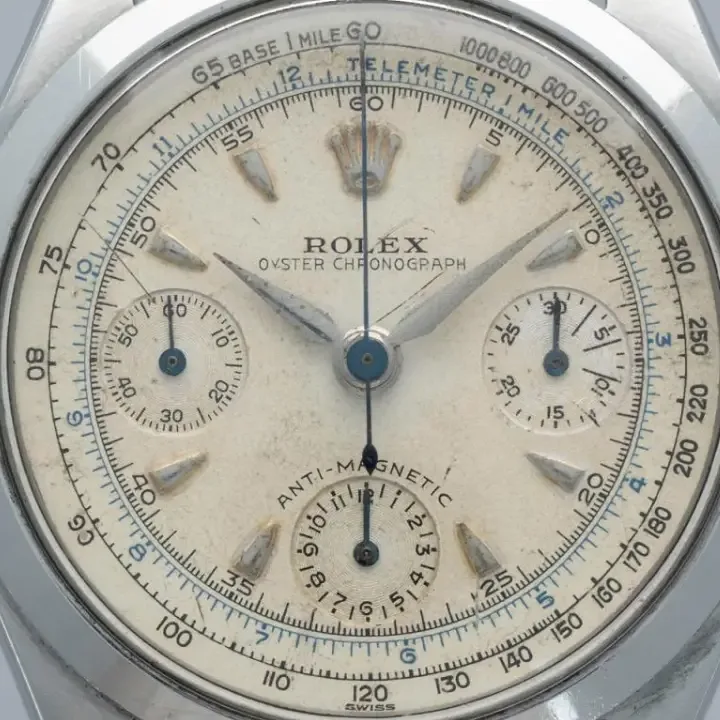
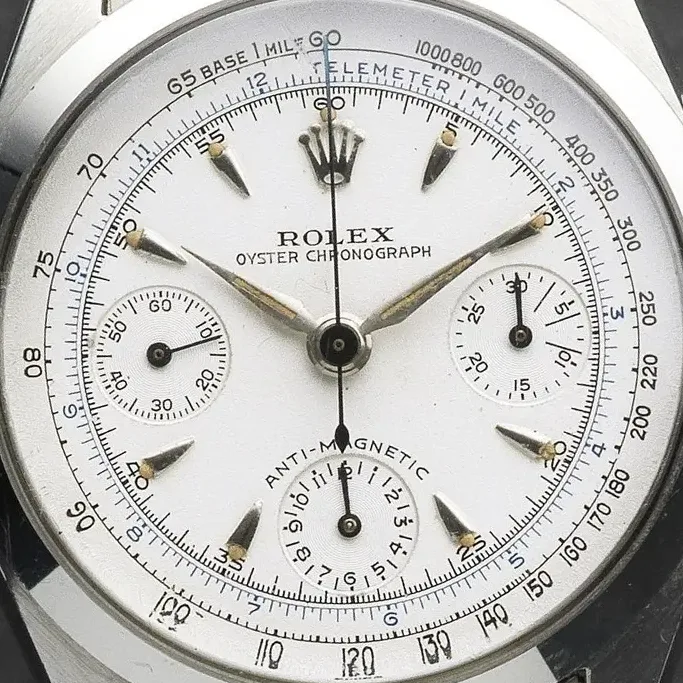
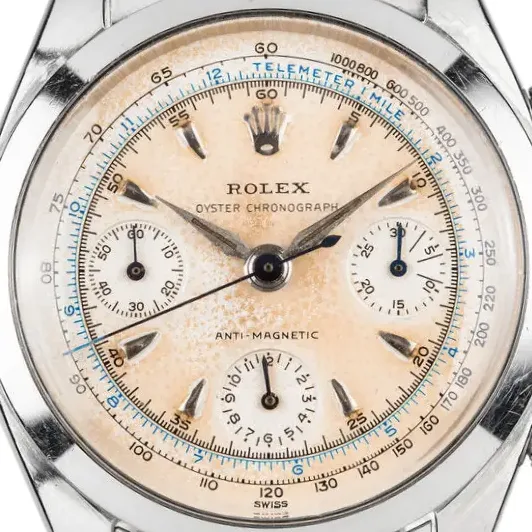
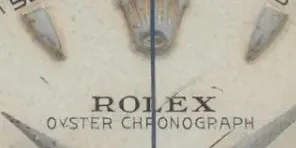
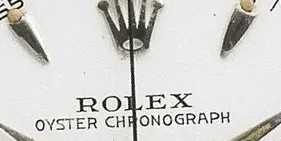
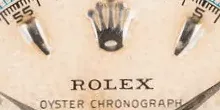
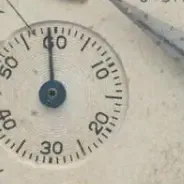
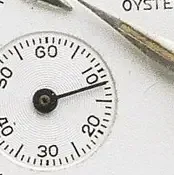
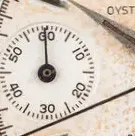
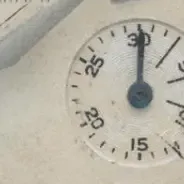
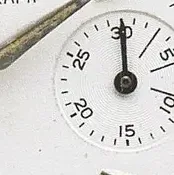
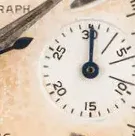
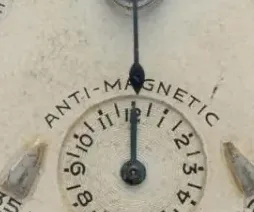
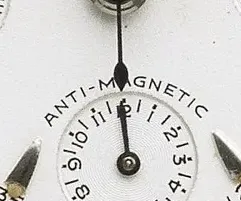
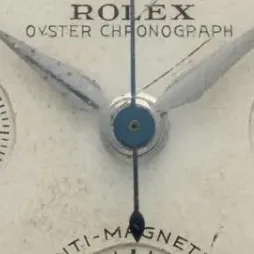
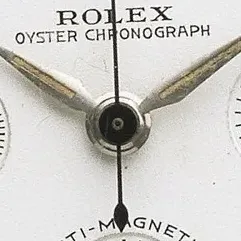
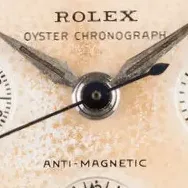
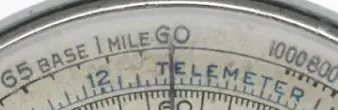
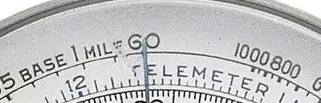
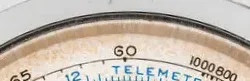
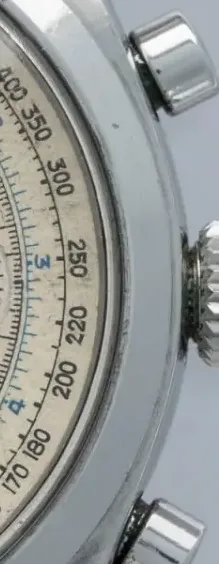
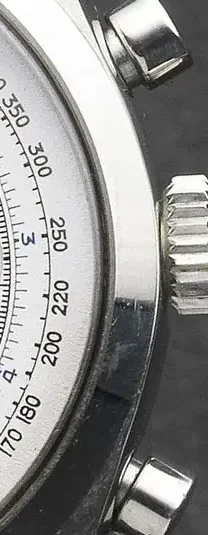
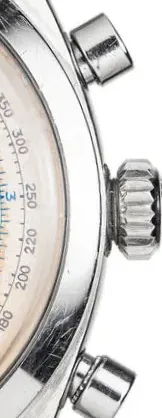
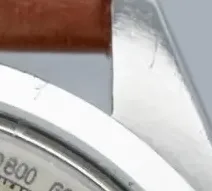
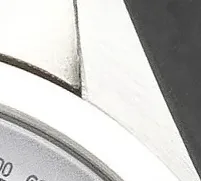
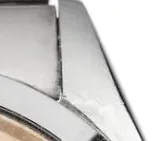
3 watches, oldest first, each straightened and cut the same way so that one row shows one component across them all. Chosen from 409 photographs on file for sharpness and for a face typical of the reference. A year marked c. is one its holder gives only roughly. Each picture is a detail cut from a listing photograph. Select the small mark in its corner for its year, its holder, a link to the listing it came from, and a way to report it.



Chronology
The literature gives about 1955 to 1961 and adds that the reference stayed in period catalogues until 1963; the case numbers on record run from 1955 to 1962.
Specification
| Case | 36 mm Oyster case in steel, or 14k or 18k gold; screw-down crown and back, three-body construction |
| Crystal | Plastic |
| Bezel | Smooth and polished, with no scale |
| Dial | Tachymeter and telemeter scales printed on the dial; three registers at 9, 3 and 6 o'clock; usually signed Anti-Magnetic |
| Movement | Valjoux 72 family, hand-wound, column-wheel, 17 jewels; recorded as 72, 72A or 72B |
| Pushers | Pump pushers, either side of the crown |
| Bracelet | Riveted Oyster bracelet is typical; leather strap, Jubilee and expansion bracelets also appear |
| Water resistance | Described as water resistant to 200 metres, and as anti-magnetic |
Reference 2 described
The reference sits between the 6034 and the 6238. Case numbers are the surest guide to the year, though the literature itself notes that a stated number can be mistyped, so the number should be checked against the other features of the watch.
Case numbers in the 130,000 range
case numbers about 130,000
A case number in this range is put at about 1956. Tritium lume is not expected on a watch of this date.
- radium lume on hands and dial plots
Case numbers near 530,000
case numbers about 530,000
A case number near 530,000 dates to about 1960, near the end of the reference, going by the serial charts and the date stamps inside case backs of that number; one published account puts it at 1961. Such a number is consistent with tritium lume and a T Swiss T line on the dial.
- tritium lume
- T Swiss T at the foot of the dial
Dial 8 described
The dial carries both a tachymeter and a telemeter scale, with dagger markers and small luminous plots; most accounts call the markers applied, and one says the steel dials had them stamped in relief. The literature stresses that the many small differences in printing, scale colour and finish overlap in time and do not follow a published sequence of marks, so a dial is judged for period coherence rather than matched to a single type.
Two-scale dial in silver or white
The standard dial has tachymeter and telemeter rings printed around three registers. Silver is the usual colour, with white and cream less often. Dated watches sold with silver dials fall mostly between 1961 and 1962.
- two fine printed rings
- dagger markers
- matte or glossy silver surface
Black dial
Black is described as the less common colour. Sellers describe some black dials as glossy, and a black lacquer dial with gilt print is recorded in its tropical form.
- glossy black surface
- gilt print
Tropical dial
A black lacquer dial that has aged to an even dark brown is called tropical. Only a handful are said to have reached the market, and one is noted with its dial in a 6238 case, so the match of dial and case should be checked.
- uniform brown colour
- lume plots intact and matching the hands
Tri-colour scales
Scales appear in single colour and in combinations. One recorded example has a red telemeter, a blue tachymeter and a black minute track; another pairs a blue telemeter with a darker tachymeter scale. The 3, 6 and 9 divisions on the minute counter are noted as marking three-minute call periods.
- red or blue telemeter ring
- blue tachymeter ring
- black minute track
Miles scale
Some United States market watches carry a telemeter graduated in miles. The literature says this belongs with a ROW marking on the movement, and that one without the other deserves doubt.
- miles on the telemeter scale
Underline Swiss marking
Sellers describe some dials with a line under the Swiss marking at the foot.
- line beneath SWISS at six o'clock
T Swiss T
The T Swiss T line marks a tritium dial. The literature points to the later years of the reference for such dials.
- T Swiss T at the foot of the dial
No-scale black dial
A black dial without printed scales, bearing a Stern marking, is recorded as an outlier among the dials of the reference.
- black dial with no tachymeter or telemeter ring
- Stern marking
Luminous material 2 described
The literature calls the reference a radium-era watch and records tritium on later dials. Hands and dial plots should age to the same shade.
Radium
Radium plots and hands age to warm yellows and brown. Dated watches so described fall mostly between 1958 and 1960.
- matching patina on plots and hands
Tritium
Tritium appears with the T Swiss T dial line.
- even patina across hands and plots
- T Swiss T
Hands 2 described
Hands are luminous and the literature records two styles. The baton hands of the 6238 are not found on this reference.
Dagger hands
The usual hands are dagger-shaped and luminous, matching the dagger hour markers.
- dagger-shaped luminous hands
Alpha hands
Alpha hands are documented on examples of the reference. The ageing of their lume should match the dial plots, since a visible mismatch usually points to later replacement.
- lume ageing matching the dial
Subregisters 2 described
Three registers: running seconds at nine o'clock, minutes at three and hours at six. Auction descriptions often call the recessed subsidiary dials engine-turned.
Small registers
The registers are smaller in proportion to the dial. The literature records this layout as overlapping in time with the larger one.
- small subdials with wide dial surface around them
Large registers
A larger-register style appears prominently on late-1950s watches. No hard year cutoff is published, so proportion and overall correctness decide.
- subdials filling more of the dial
Bezel 1 described
The correct bezel is smooth. A tachymeter-engraved bezel points to incorrect parts.
Smooth polished bezel
A smooth bezel, with timing scales left to the dial, is the defining feature of the reference. The bezel edge makes a clear line with the case, with a smaller gap than on the earlier 60xx references.
- no scale on the bezel
- clear line where bezel meets case
Case 3 described
The case is a 36 mm Oyster in three bodies. Steel is the usual metal, with 14k and 18k gold in small numbers. Over-polishing is common and changes the look of the case.
Steel Oyster case
The 62xx references use three-body cases, unlike the two-body 60xx before them. Thick lugs and strong edges mark an unpolished case.
- thick lugs
- sharp case edges
- readable hallmarks
Gold case
Gold cases in 14k and 18k are very scarce. One estimate gives under 150 in gold against about 2,300 in steel; another puts gold at perhaps five to ten per cent. Gold cases sold are described mostly as yellow gold.
- gold hallmarks
Pump pushers
The pushers are of the pump type, not screw-down. Dated watches so described fall mostly between 1958 and 1959.
- round pump pushers beside the crown
Crystal
The crystal is plastic.
Movement 4 described
A hand-wound Valjoux 72-family column-wheel chronograph with 17 jewels. The literature records three designations and gives no reason for the difference.
Calibre 72
The base calibre is the most often recorded designation.
- Rolex-signed movement
- column wheel
Calibre 72A
Named as the movement of one tropical example. Whether 72A and 72B follow 72 in time is not stated.
Calibre 72B
A further designation recorded in descriptions.
ROW movement marking
A ROW marking on the movement is read together with a miles-calibrated dial as a sign of United States market supply.
- ROW stamped on the movement
Bracelet 3 described
A riveted Oyster bracelet is typical, but strap, Jubilee and United States-made expansion bracelets are all recorded, and the bracelet is often a later addition.
Riveted Oyster bracelet
The usual bracelet. Sellers name reference 7205 for it; a 78350 bracelet also appears, described by sellers as a later fitting.
- riveted links
- reference number on the clasp
US-made expansion bracelet
One recorded example carried an expansion bracelet made in the United States, marked on the clasp.
- made-in-USA marking on the clasp
Jubilee bracelet
Recorded in a few descriptions.
- five-piece Jubilee links
Originality
- The dial is the part most often redone, and reprinting shows in uneven scale spacing, inconsistent lettering and a surface that looks too new.
- Replacement hands often show as lume that has aged differently from the dial plots.
- A bracelet is frequently a later addition, since the original may have been leather or another metal.
- Polishing is common and shows as softened lugs, a blurred bezel line and faint hallmarks.
- A bezel engraved with a tachymeter scale does not belong to this reference.
- A miles-scale dial without a ROW movement marking, or the reverse, calls for further checking.
Names
- Pre-Daytona. It is an Oyster-cased chronograph with a smooth bezel made before the Daytona, a name that came into use only in the mid-1960s.
- Grandfather of the Daytona. Published accounts use this description for the reference, which they set at the start of the line that led to the Daytona.
Where accounts differ
Points on which the published literature and the library's own records do not agree, or on which the literature contradicts itself.
- End of production. Published accounts end production in about 1961. Case numbers in the library's records date some watches to 1962, and some sellers' stated years are later still.
- Number made. Published estimates differ: about 2,000 in one account, about 2,300 steel plus under 150 gold in another, and 2,450 in a third.
- Dating of case numbers. One published account puts a case number near 530,000 at 1961. The serial charts in the library's records place it at about 1960, and inside-back date stamps on cases numbered near it read 1960. For the 130,000 range the same account gives 1956, which date stamps on cases of those numbers bear out, while the charts give 1955.
- Applied or stamped hour markers. Two accounts describe applied dagger markers on the dials. Another says the steel watches had dials stamped with the coronet and markers in relief, while gold watches had applied gold coronets and markers.
In the records
Counted from 137 listings at 25 holders between 12 April 2006 and 14 November 2026. These are what sellers and auction houses state, not measurements.
Case metal
| Steel | 91 | |
| Gold, any colour | 19 | |
| Yellow | 17 | |
| Colour not stated | 2 | |
| Silver | 3 |
A listing that says "gold" or "18K gold" names no colour: it is counted under "colour not stated", not as yellow gold.
Dial colour
| Silver | 22 | |
| White | 3 | |
| Cream | 3 | |
| Brown | 3 | |
| Black | 2 | |
| Champagne | 1 | |
| Red | 1 |
Case size
| 36 mm | 59 | |
| 37 mm | 8 | |
| 35 mm | 4 |
Calibre named
| 72 | 56 | |
| 72A | 13 | |
| 72B | 10 |
Bracelet or strap
| Leather strap | 30 | |
| Oyster bracelet | 23 | |
| Metal bracelet, kind not stated | 18 | |
| Jubilee bracelet | 1 |
Each table counts the listings that state the thing, in the seller's own terms. A size, metal, colour or calibre that cannot belong to this reference is a seller's slip or a listing filed under the wrong number.