Part of the line Chronographs before the Daytona, where it is set beside the others of its kind.
Oyster Chronograph Antimagnetic (Monoblocco)
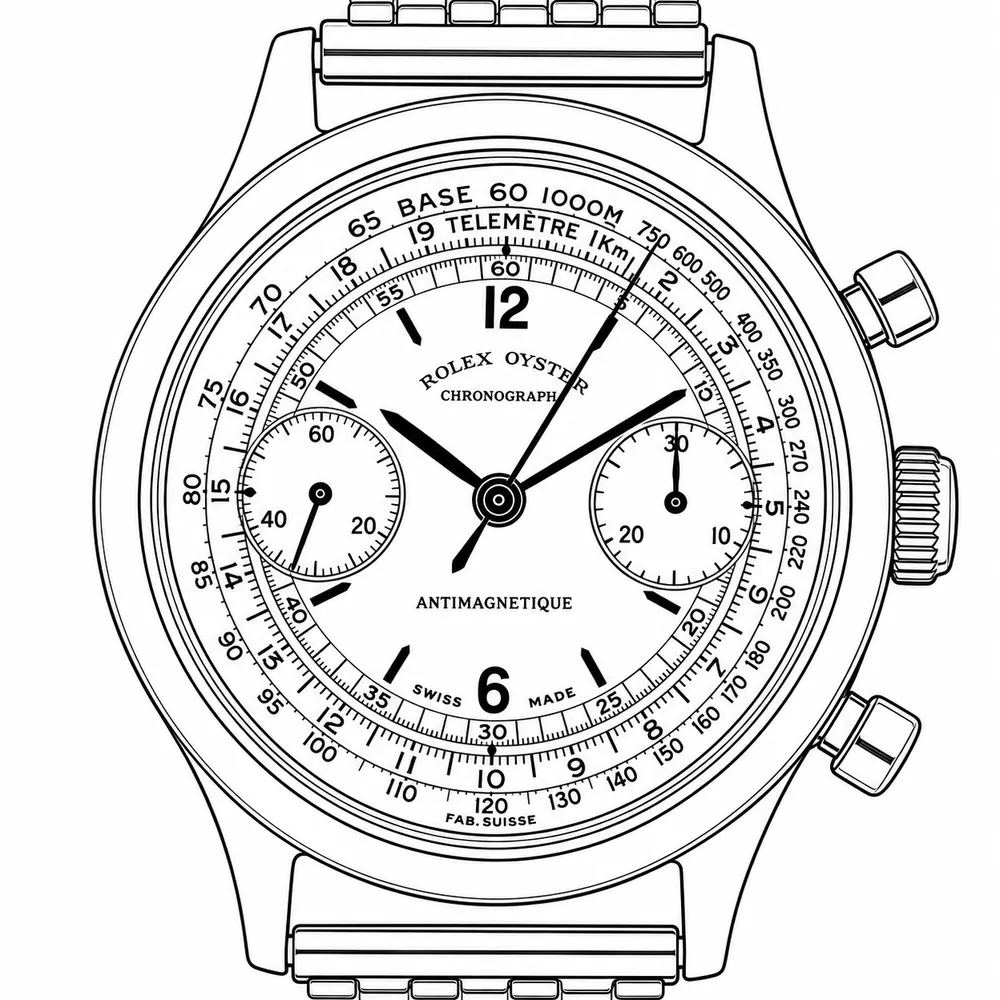
The 3525 is a 35 mm two-register manual-wind chronograph made in the years around the Second World War. It is usually taken as the first Rolex chronograph in an Oyster case, with a screw-down back and crown, and on the all-steel and all-gold watches the case, lugs and bezel are made as one piece, hence Monoblocco. It came in steel, steel with a pink or yellow gold bezel and crown, pink gold and yellow gold, with several dial layouts. It was supplied to captured Allied officers, which earned it the nickname POW. Production is put at 1938 or 1939 to 1945 or 1946 and was small. It was followed by the 4500, with a more modern case.

- Made
- 1939–1946dates approximate
- Seen in the library
- 1938–1947nine in ten in 1938–1946 · by case numbers
- Case
- 35 mm · steel (69%), gold (24%)as sellers state
- Movement
- Hand-wound
- On record
- 86 listings279 photographs · 15 holders
Components
1 watch, oldest first, each straightened and cut the same way so that one row shows one component across them all. Chosen from 279 photographs on file for sharpness and for a face typical of the reference. A year marked c. is one its holder gives only roughly. Each picture is a detail cut from a listing photograph. Select the small mark in its corner for its year, its holder, a link to the listing it came from, and a way to report it.
| c. 1946 | |
|---|---|
| Face | 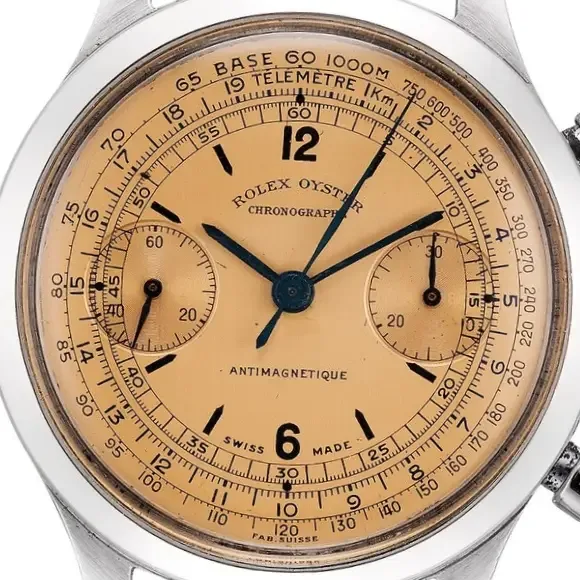 |
| Signature at twelve | 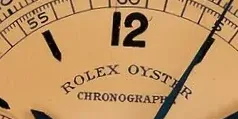 |
| Register at nine | 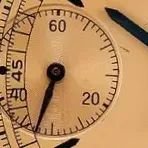 |
| Register at three | 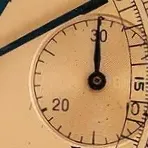 |
| Register at six | 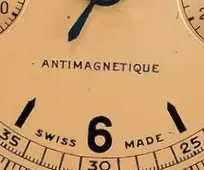 |
| Hands | 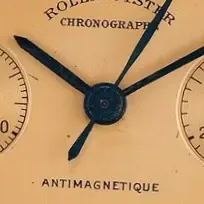 |
| Bezel at twelve | 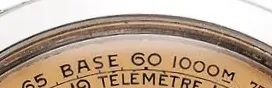 |
| Crown and pushers | 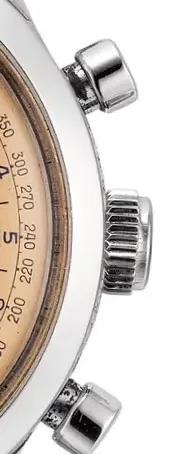 |
| Lug | 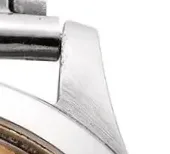 |


Chronology
Starting years of 1938 and 1939 and ending years of 1945 and 1946 are all given; 1939 and 1946 are the better supported. Dated case numbers in the library run from 1938 to 1947.
Every dated variant: what is written, and what the records show
For the reference the marks are every dated watch; for a variant, the watches a seller names as that variant, so a variant sellers do not name has none.
The reference's own marks are dated by case number. A variant's marks use the year each seller states, so a variant can show watches in a year where the row for the reference shows fewer, or none. 5 dated listings fall outside this scale and are not drawn.
Specification
| Case | 35 mm round transitional Oyster case; steel, steel and gold, pink gold or yellow gold; screw-down back |
| Crystal | Not described in the literature |
| Bezel | Made in one piece with the case on steel and gold models; a gold bezel on the two-tone watches |
| Crown | Screw-down crown; Brevet crown noted on several |
| Dial | Two registers (running seconds and minutes) with tachymeter and telemeter scales on most; simple 60-second dials also made |
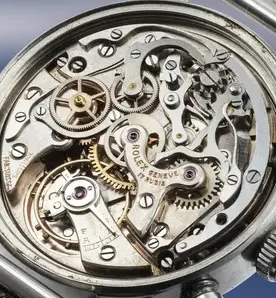
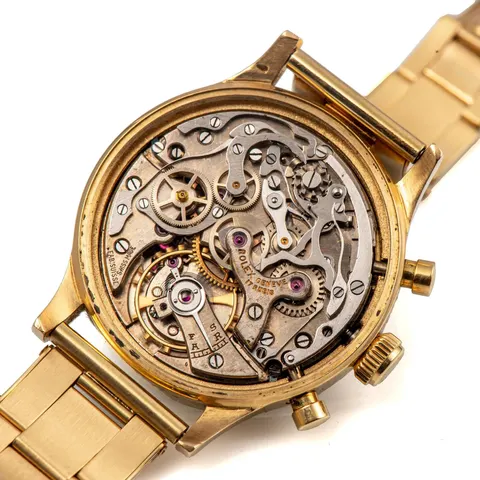
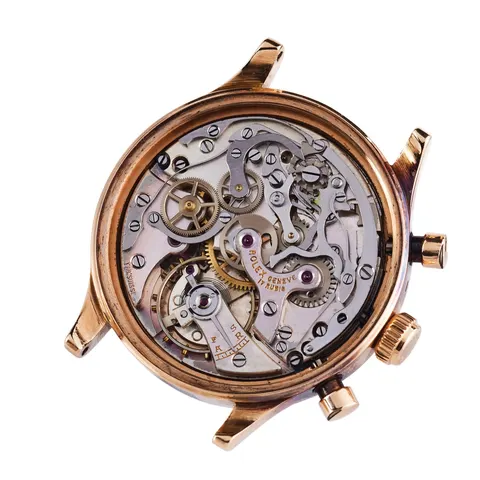
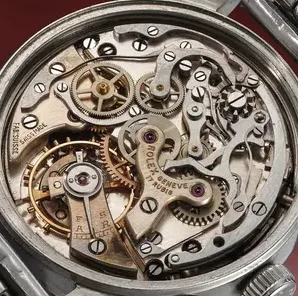
| Movement | Manual-wind Valjoux 23, a 13 ligne column-wheel chronograph, 18,000 beats an hour, 48 hours of reserve; one account says two calibres were used |
| Bracelet | Riveted Oyster bracelet on many; yellow gold bracelet on some; leather straps are common now |
| Water resistance | Screw-down back and crown, marked Oyster on the dial |
Reference 2 described
The 3525 is a transitional design between dressy chronographs and tool watches. Its supply to captured airmen gave it a second name.
Prisoner-of-war supply
The founder offered to replace watches confiscated from captured Allied officers, to be paid for after the war, on trust. Steel watches are the ones tied to the scheme; two-tone and gold 3525s were made but are not the POW watches. Delivery took months, and a request for a watch could be answered with several later shipments. Officers at a single camp are estimated to have ordered some three thousand Rolex watches of all kinds, most of them cheaper models than the chronograph. Provenance papers, mess cards and letters are part of what is found with such watches.
- service letters
- wartime paperwork
- mess card
- steel case
Production figure
Steel production has been estimated at about two hundred. Other published accounts find no documented figure for the reference and treat any total as a low floor.
Dial 6 described
Dials were made in several layouts and colours; many have aged to shades far from the original. Most carry Oyster and antimagnetic wording, and a few are signed by retailers.
Multi-scale dial
The common layout: a tachymeter and a telemeter scale ring the railroad minute track. On white dials the tachymeter is black and the telemeter blue. Black dials have gilt markers. Later production dials carry three lines of text.
- two scales round the edge
- blue telemeter on white dials
- gilt printing on black
Simple 60-second dial
A plainer two-register dial with only a 60-second or minute scale on the edge. It was made in silver and black.
- single minute scale
- two registers
Black dial
Black dials are often glossy lacquer with gilt or luminous numerals and hands. A black dial on a darkened gold case is among the best-regarded configurations. Black gilt prints are noted by several sellers, as are patinas that turn the dial brown.
- glossy black
- gilt markers
- brown patina
Salmon dial
Sellers and auction houses describe some watches with a salmon or pink-toned dial, with tachymeter and telemeter scales; some are called tropical. The literature names only white, silver and black dials.
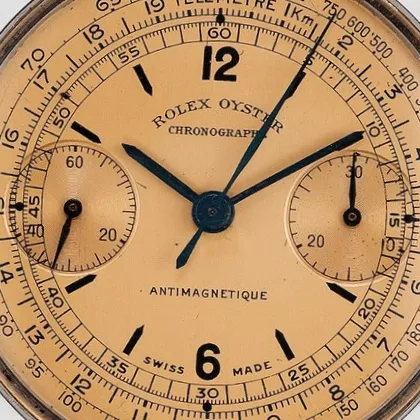

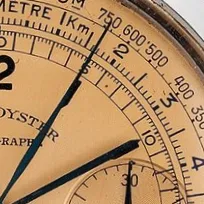

10 listings on record under the name.
White or silver dial
Steel and gold watches with white or silver dials, gilt hands and hour markers. A watch that never had radium shows no radium burn.
- gilt hands and markers
- no radium burn
Oyster and Antimagnetic signatures
Dials are signed Oyster Chronograph with anti-magnetic wording. A few watches are described as retailed by Monetti or Prouds.
- Oyster or anti-magnetic text
- retailer name on the dial or in the sale text
Luminous material 1 described
Luminous watches used radium, which burns marks into the dial over time.
Radium lume
Some dials and hands were finished with radium and show degradation and burn marks. Dials without lume show none.
- radium burn
- dark lume plots
Hands 2 described
Two hand styles are noted, depending on dial.
Blue steel hands
Blue steel hands are cited as one of the practical, unadorned details of the design.
- blue steel hands
Gilt and luminous hands
Gilt hands go with gilt markers on white and black dials, and luminous hands with luminous numerals.
- gilt hands
- luminous hands
Subregisters 1 described
Two registers, not three.
Two registers with central seconds
A running seconds register and a minute recorder, with a central chronograph seconds hand. The three-register 4048 came later and uses a different calibre.
- two registers
Bezel 2 described
On the steel and gold models the bezel is part of the case; the two-tone watches have a gold bezel.
Monoblocco one-piece bezel
Case, lugs and bezel are forged from a single piece of steel or gold. This was unusual then and still is. Two-tone watches have a separate gold bezel but are still called Monoblocco.
- case and bezel in one piece
Gold bezel
A pink or yellow gold bezel on a steel case, with a matching gold crown. The pairing is both conspicuous and discreet.
- pink gold bezel
- pink gold crown
Case 5 described
A round 35 mm case that is still classic in shape, with tapered lugs, not yet in the later Oyster style.
Barilotto case
The name means keg, after the overall case shape. Collectors also write Bariletto. The case is 35 mm; a few are given as 34 or 36 mm in sellers' records.
- keg shape
- tapered lugs
Steel
The usual metal. Steel watches carry the POW story.
Steel and gold
Steel body with a pink or yellow gold bezel and crown.
Pink gold and yellow gold
Solid gold cases, some with deep oxidation if never polished.
- oxidised case
- unpolished lugs
Transitional Oyster back
A screw-down back, while the case shape is not yet the classic Oyster style. The back and crown make the watch an Oyster.
- screw-down back
Crown and pushers 1 described
A screw-down crown makes the watch an Oyster.
Brevet crown
Some sellers name Brevet crowns; matching original crowns are valued on two-tone watches. Dated watches that sellers describe this way fall mostly between 1942 and 1946; those are the years of the watches so described, which is not a stated span of production.
- Brevet crown
Movement 1 described
Manual-wind Valjoux column-wheel chronographs. One account places the case numbers in three runs, from 40,000 to 50,000, in the middle 150,000s and in the middle 300,000s, but published sales and the library's records also show numbers outside them; see Where accounts differ.
Valjoux 23
The Valjoux 23, a 13 ligne column-wheel chronograph at 18,000 beats an hour with 48 hours of reserve. Sellers usually give it as calibre 13, and one watch is described with a Valjoux 13 27 VZ.
- column-wheel chronograph
Bracelet 2 described
Riveted Oyster bracelets are named often; at least one gold watch is recorded on its original gold bracelet.
Riveted Oyster bracelet
Some sellers name a riveted Oyster bracelet, on watches from across the production years.
- riveted links
Gold bracelet
A yellow gold bracelet is found on at least one gold watch, with the rest of the watch unaltered.
Box and papers 1 described
Boxes, papers and service records are found with some.
Box, guarantee and papers
Some come with a box, a guarantee or a mess card; one was returned to Rolex in 1984 for a service without charge.
- original box
- guarantee card
Originality
- Dials are the weak point: radium dials burn and darken over time.
- Polished cases lose the sharp edges of the one-piece case; unpolished lugs are noted as a quality sign.
- A correct matching crown is noted as a point in favour of a two-tone watch.
- Leather straps are common in the library's records; an original gold bracelet is recorded on at least one gold watch.
- A gold case may show deep oxidation that is lost if cleaned.
Names
- Monoblocco. Case, lugs and bezel are made in one block of metal.
- Barilotto. Italian for keg, from the case shape; also written Bariletto.
- POW. The model supplied to captured Allied officers in the Second World War.
Where accounts differ
Points on which the published literature and the library's own records do not agree, or on which the literature contradicts itself.
- Start and end of production. One account dates the debut to 1938 and the end to 1946. Two others give 1939 to 1945; another introduces it in 1939 within a group of transitional Oyster cases it dates 1939 to 1946, and a third gives 1939 as the debut. Case numbers in the library's records run from 1938 to 1947.
- Common dial colours. One account calls white and black the most common dials. Among the dial colours sellers state in the library's records, black comes first, then salmon and silver; white is rare.
- Case-number runs. One account places the case numbers in three runs: 40,000 to 50,000, the middle 150,000s and the middle 300,000s. Another records a 3525 with case number 262,191 of about 1943, a third a wartime watch numbered 185,983, and the library's records show numbers in the 140,000s to 180,000s and from about 360,000 to 400,000 as well.
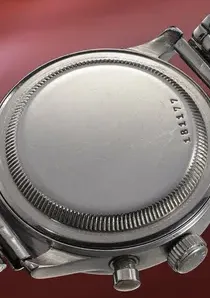
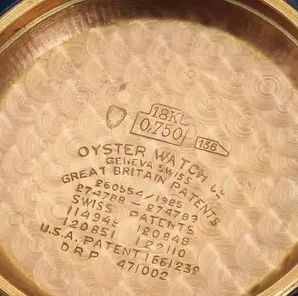
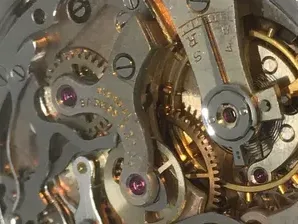
Back and movement
From listings of this reference, each confirmed by eye to show what it is filed under. A picture on which a person's name or a personal engraving can be read is not shown. From most holders a detail from the middle of the photograph is shown; the mark in its corner gives its holder and a link to the listing.
Caseback

Inside the caseback

Movement





In the records
Counted from 86 listings at 15 holders between 8 June 2011 and 14 November 2026. These are what sellers and auction houses state, not measurements.
Fainter bars are the 2 outside the main run of 1938–1946 (the middle nine-tenths): the latest is 1947. They are early and late examples, and now and then a number misread.
Case metal
| Steel | 49 | |
| Gold, any colour | 17 | |
| Pink | 8 | |
| Yellow | 6 | |
| Colour not stated | 3 | |
| Steel and gold | 5 |
A listing that says "gold" or "18K gold" names no colour: it is counted under "colour not stated", not as yellow gold.
Dial colour
| Black | 13 | |
| Salmon | 7 | |
| Silver | 4 | |
| Champagne | 3 | |
| Brown | 2 | |
| White | 1 | |
| Pink | 1 |
Case size
| 35 mm | 53 | |
| 36 mm | 5 | |
| 34 mm | 1 |
Bracelet or strap
| Leather strap | 27 | |
| Metal bracelet, kind not stated | 17 | |
| Oyster bracelet | 11 | |
| Strap, kind not stated | 1 | |
| Mesh bracelet | 1 |
Each table counts the listings that state the thing, in the seller's own terms. A size, metal, colour or calibre that cannot belong to this reference is a seller's slip or a listing filed under the wrong number.