Oyster Perpetual Triple Calendar Moon Phase
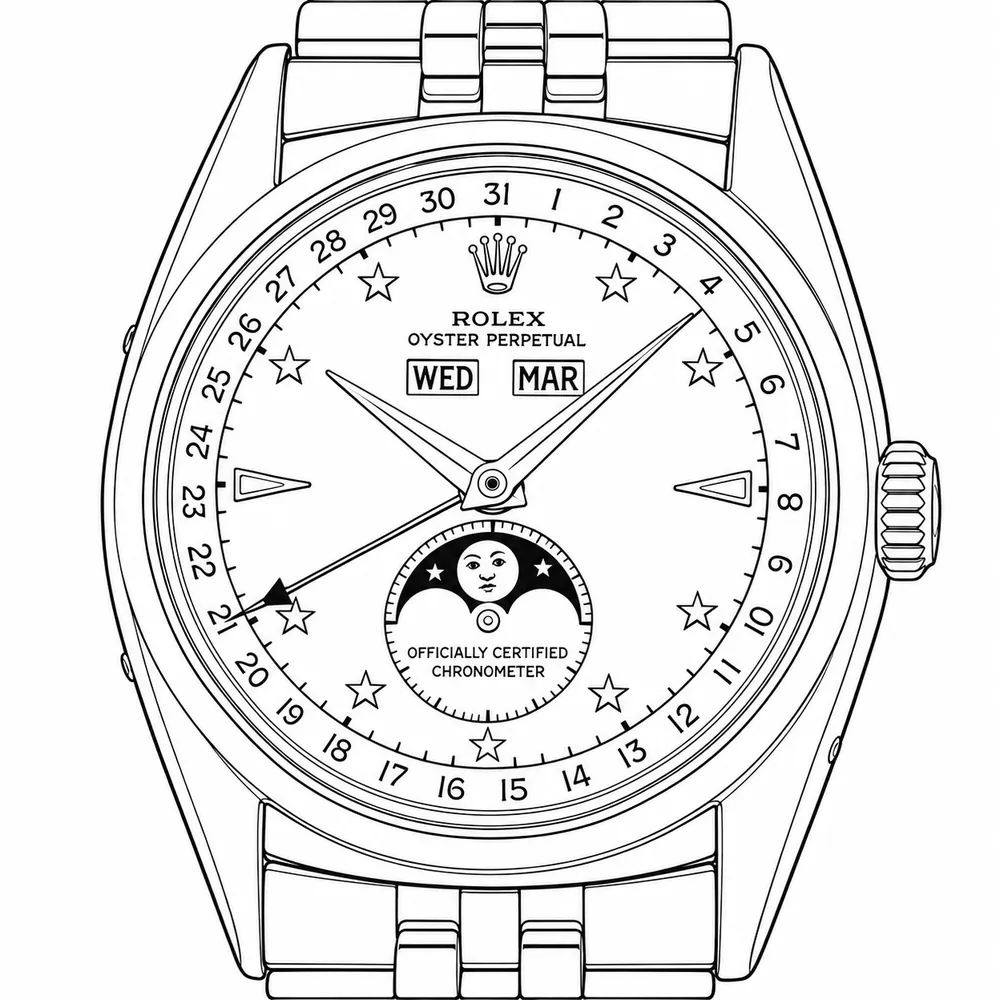
The 6062 is the only Rolex that combines a full calendar and moon phase with a screw-down Oyster case. It has a 36 mm case, an automatic calibre 655, day and month windows at twelve, a pointer date on an outer ring and a moon at six. It was shown in 1950 and made in yellow gold, pink gold and, rarely, steel until about 1953 or 1954. It followed the larger, non-Oyster 8171 and was not replaced; Rolex made no moon phase again until 2017. Collectors look first at the dial: the star-set Stelline, the steel two-tone dials, and the very few black dials with diamonds. After that come lume, crown and case condition.
- Made
- 1950–1953dates approximate
- Seen in the library
- 1950–1953by case numbers
- Case
- 36 mm · gold (80%), steel (20%)as sellers state
- Movement
- Calibre 655automatic
- On record
- 61 listings194 photographs · 11 holders
Components
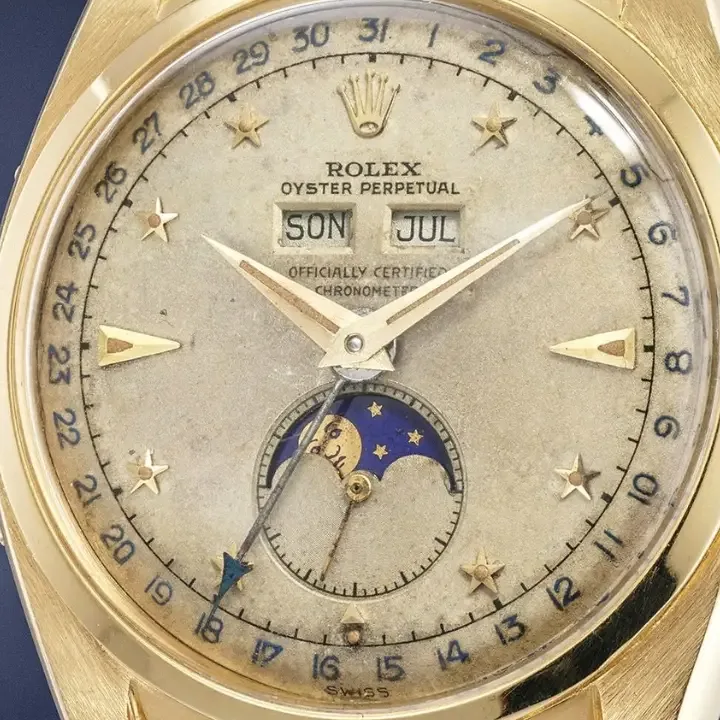
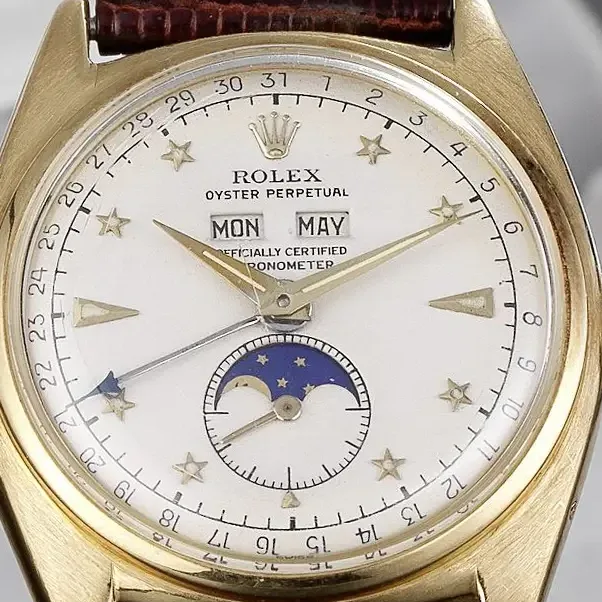
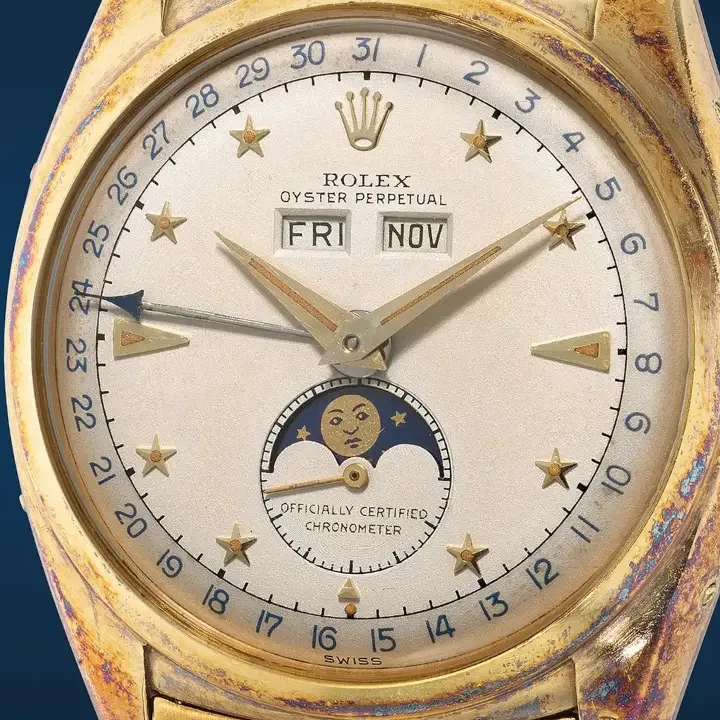
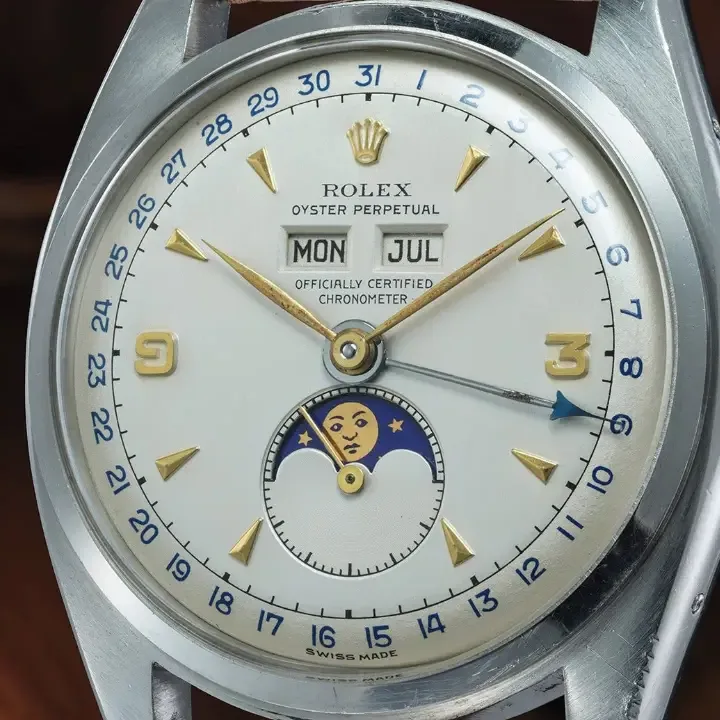
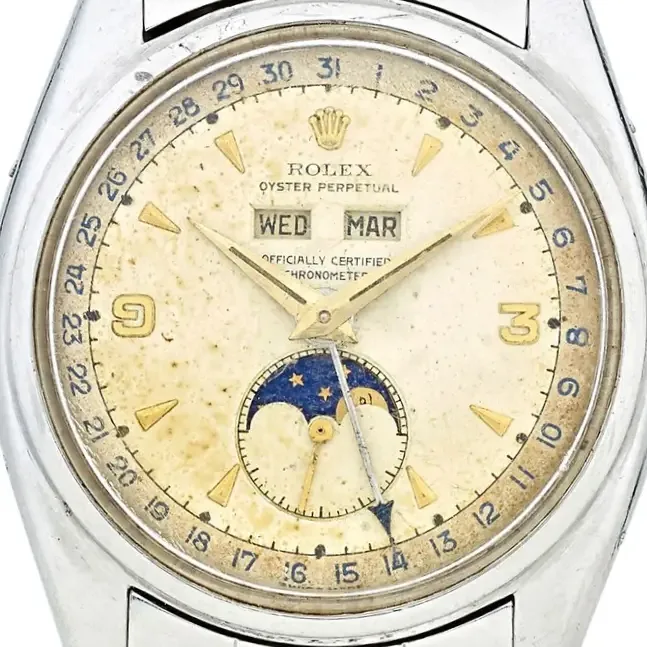
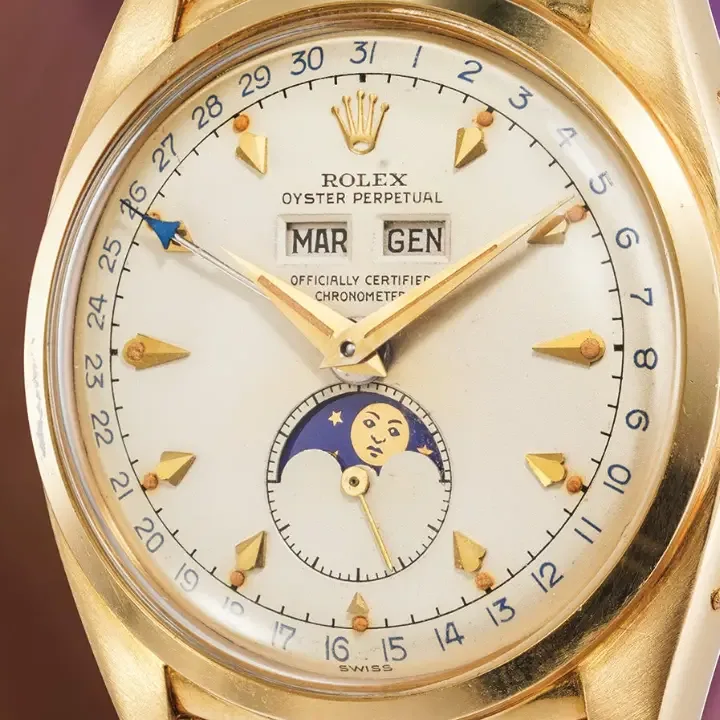
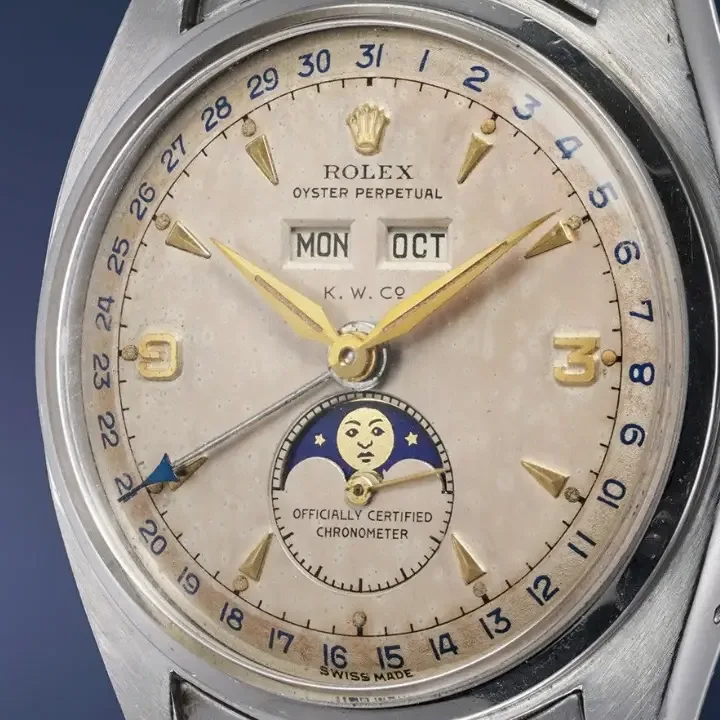
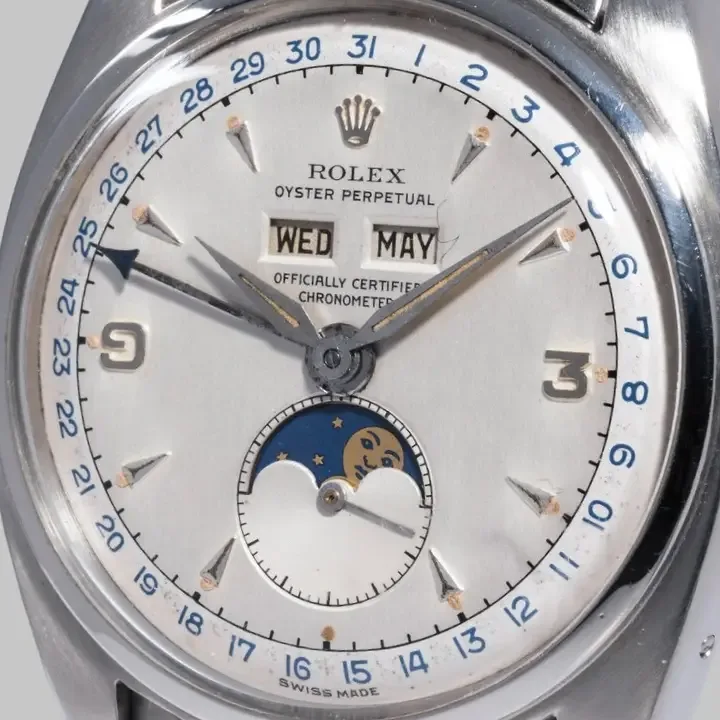
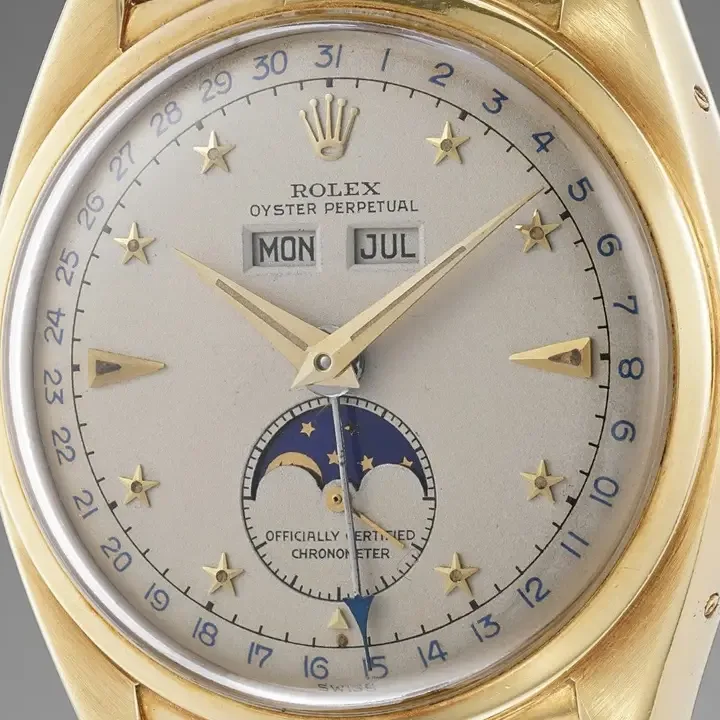
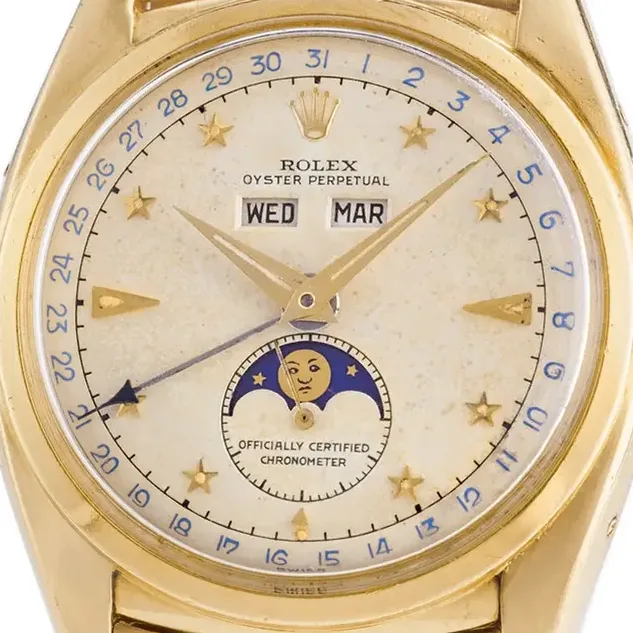
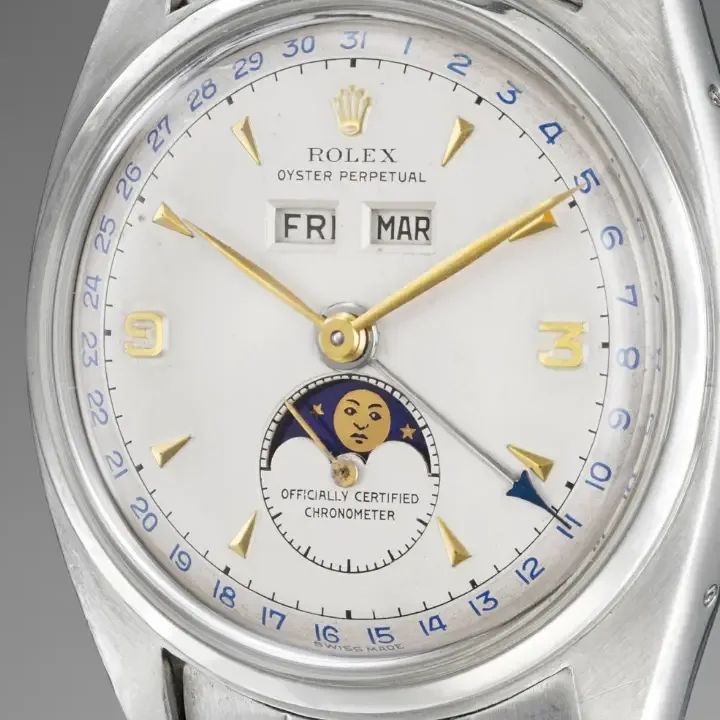
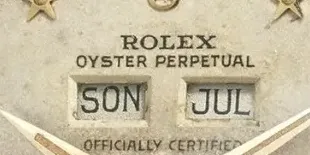
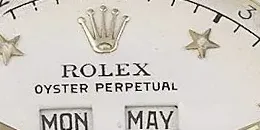
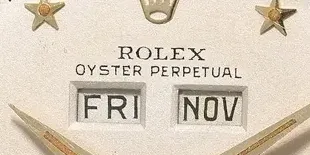
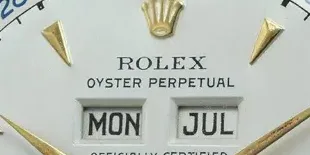
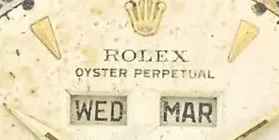
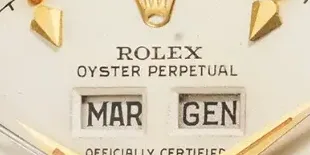
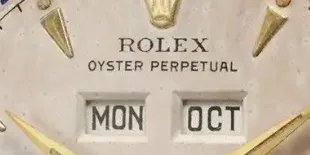
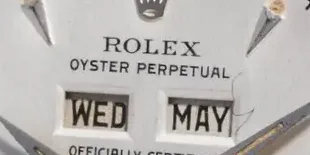
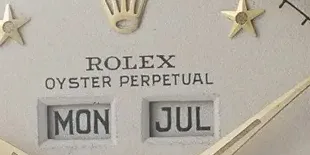
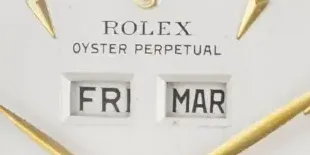
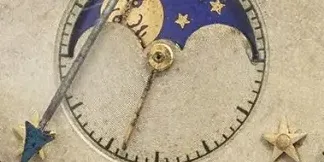
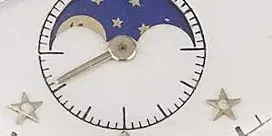
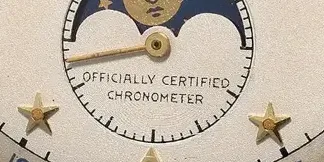
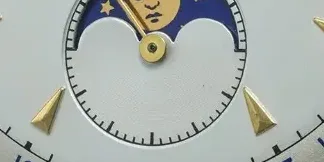
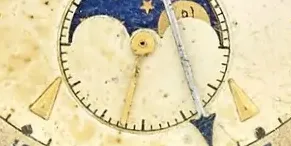
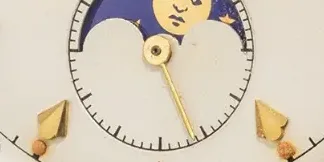
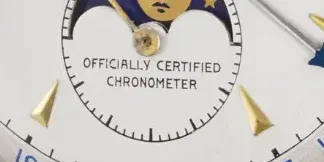
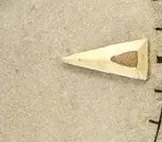
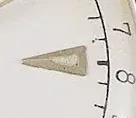
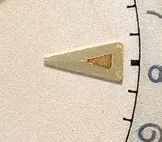
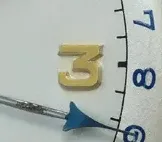
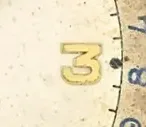
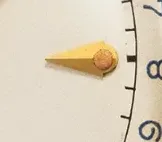
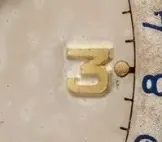
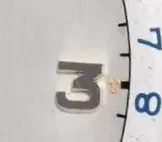
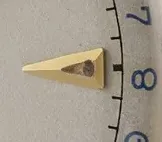
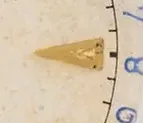
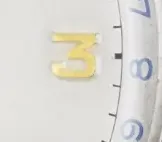
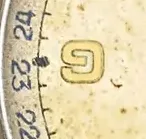
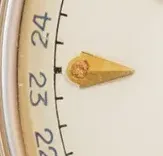
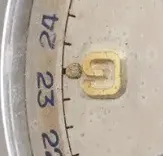
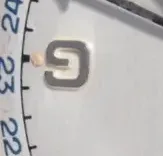
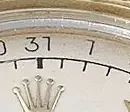
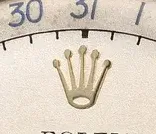
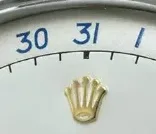
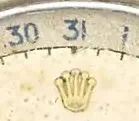
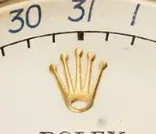
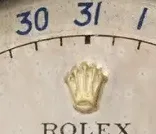
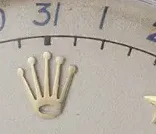
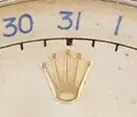
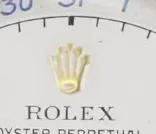
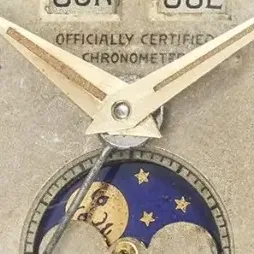
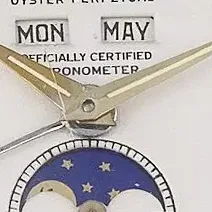
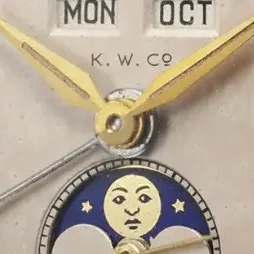
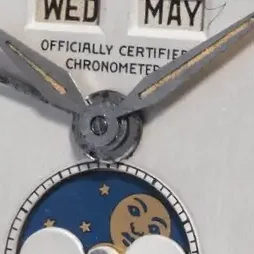
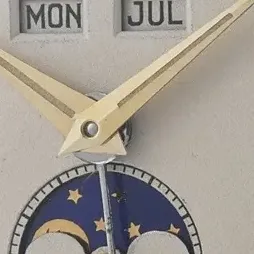
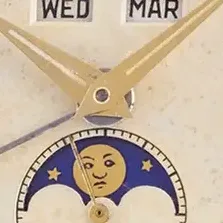
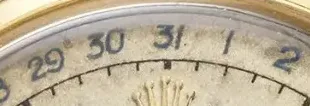
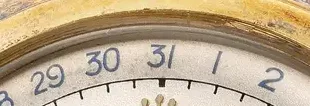
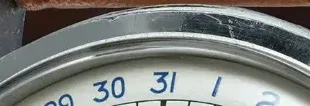
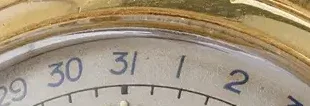
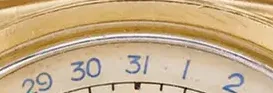
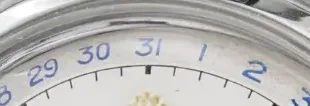
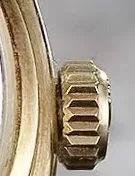
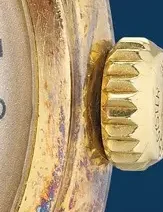
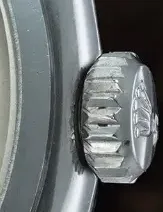
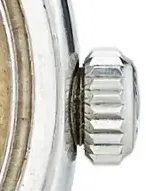
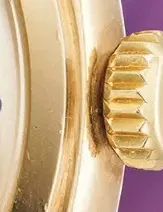
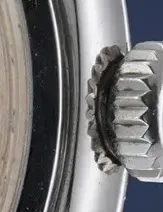
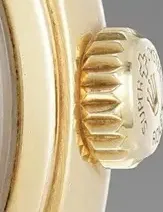
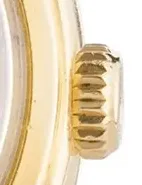
11 watches, oldest first, each straightened and cut the same way so that one row shows one component across them all. Chosen from 194 photographs on file for sharpness and for a face typical of the reference. A year marked c. is one its holder gives only roughly. Each picture is a detail cut from a listing photograph. Select the small mark in its corner for its year, its holder, a link to the listing it came from, and a way to report it.

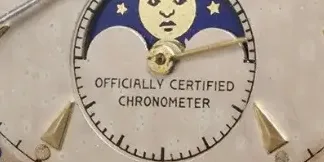
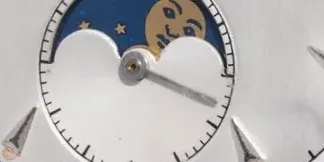
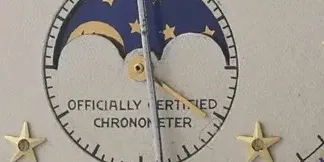
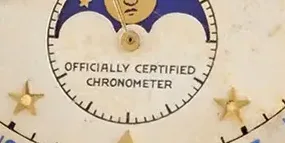
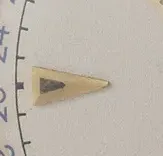
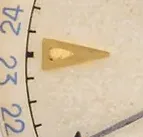
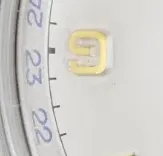
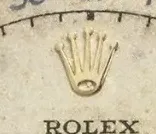
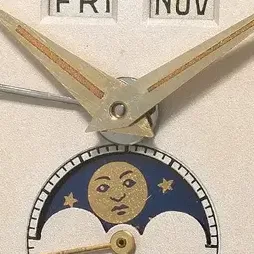
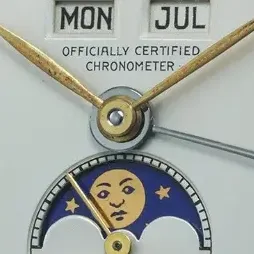
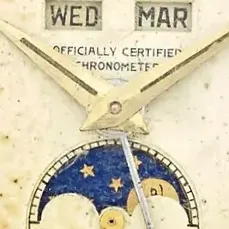
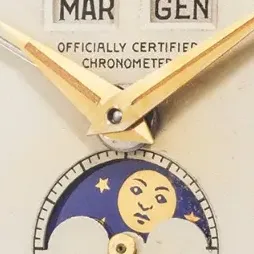

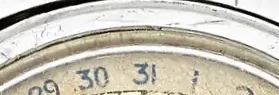
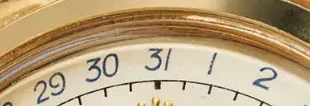
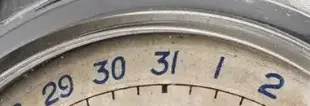
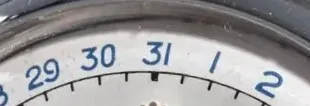

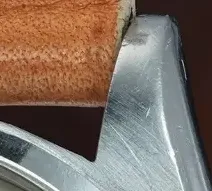
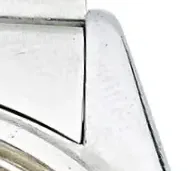
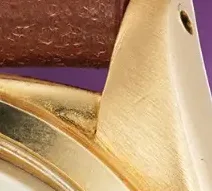


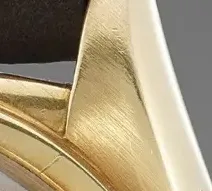

Chronology
Launch is put at the 1950 Basel fair and the end at 1953 or 1954.
Every dated variant: what is written, and what the records show
For the reference the marks are every dated watch; for a variant, the watches a seller names as that variant, so a variant sellers do not name has none.
The reference's own marks are dated by case number. A variant's marks use the year each seller states, so a variant can show watches in a year where the row for the reference shows fewer, or none. 7 dated listings fall outside this scale and are not drawn.
Specification
| Case | 36 mm Oyster case with screw-down back; yellow gold, pink gold or steel |
| Crystal | Acrylic |
| Bezel | Smooth |
| Crown | Super Oyster crown when new, which was not screw-down; screw-down crowns are found on watches later serviced |
| Dial | Day and month in two windows at twelve, pointer date on an outer ring, moon phase and small seconds in one register at six, chronometer text |
| Movement | Automatic calibre 655, 9 3/4 ligne, a smaller version of the larger calibre in the 8171 |
| Bracelet | Five-piece Jubilee bracelet; gold tile bracelets and, on a steel watch, a riveted Oyster bracelet also found |
| Water resistance | Oyster case, waterproof for its day |
Dial 9 described
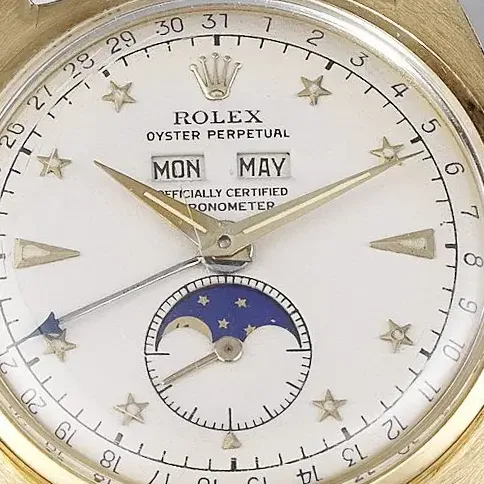
Dials were made by outside specialists and press-formed, with the hour marks either pressed in the dial or applied. Most are silvered or ivory, one-tone or two-tone, grained or brushed. Gold watches carry star, pyramid, dart, diamond or 3-9 layouts, while steel watches use two-tone dials with Arabic 3 and 9. Black dials are very rare.
Standard layout
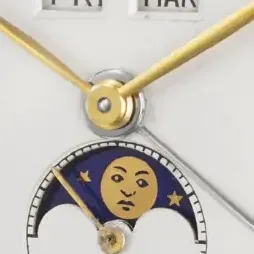
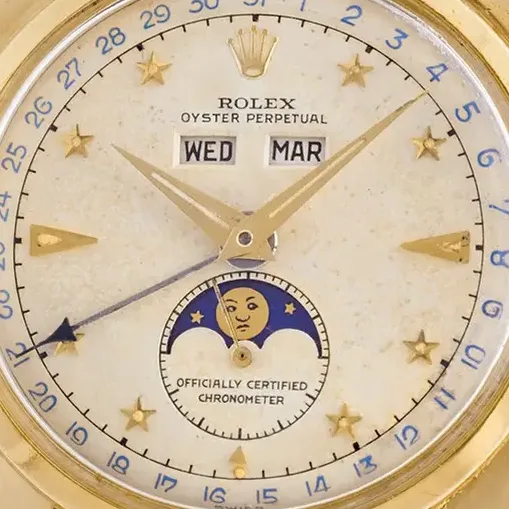
The usual dial has the five-point coronet at twelve with the Rolex Oyster Perpetual text above the day and month windows. The chronometer wording sits beneath the day and month; on a few dials it is moved into the moon register. A date track runs round the outside, printed in gold on many dials, with a central date hand. The moon disc is champlevé enamel with a face on the moon.
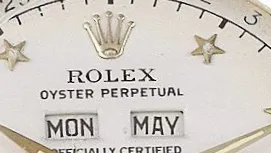
- chronometer text under day and month
- moon and small seconds in one register at six
- central date hand over an outer date ring
Stelline
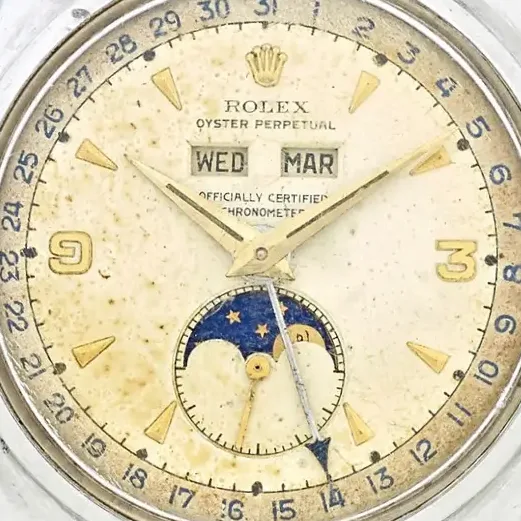
Faceted, star-shaped hour markers, applied in gold. Most known 6062s are gold watches with this dial, and the dial maker is named as Stern Frères. The name is Italian for small stars. Dial condition, lume and the original printing are what separate one from another.
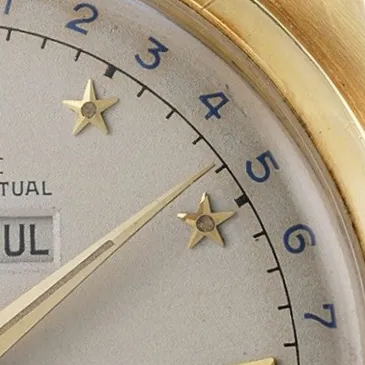
- small lume plots, often faded
Pyramid
Gold watches with triangular indexes at the quarter hours.
- triangular quarter-hour indexes
Dart
Gold watches with arrowhead-shaped indexes. Dart indexes also appear mixed with Arabic numerals on the steel dials.
- arrowhead indexes
Explorer 3-9 two-tone dial
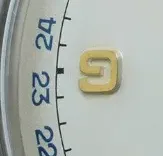
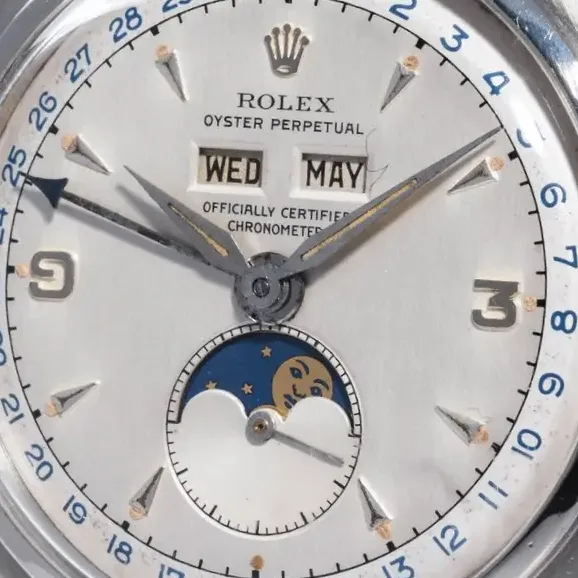
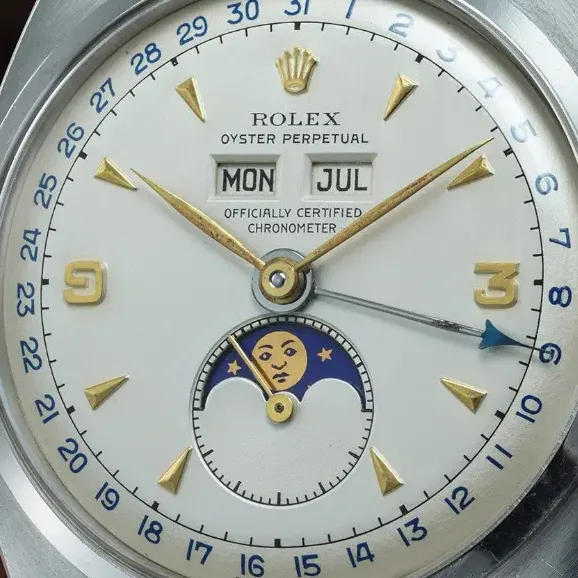
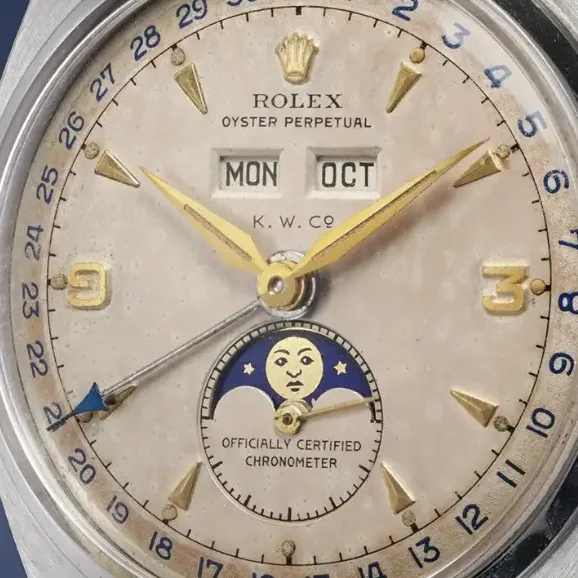
Used on the steel watches, the one known exception being a steel watch with a black lacquer dial: a two-tone silvered dial with Arabic numerals at 3 and 9, steel or yellow gold, and other markers in the same style. The numerals and indexes stand in relief; they are described both as pressed into the dial and as applied. Steel watches usually carry luminous alpha hands. Some gold watches also have a 3-9 layout. The steel watches are known only from 1950 to 1953.
- Arabic 3 and 9
- two-tone silvered dial
- steel or gold numerals
- raised numerals and indexes


Black dial with six diamonds on odd hours
One of three known black dials with diamonds. Six diamonds stand at 1, 3, 5, 7, 9 and 11, and the coronet keeps its place at twelve. Two of the three known watches are of this kind. On the one sold in 2006 and again in 2025 the date discs are gold, the black moon disc is enamel and the tip of the date hand is red; these are its differences from the Bao Dai.
- six diamond indexes at odd hours
- coronet at twelve
- black enamel moon disc
Bao Dai black dial
case numbers 916366
The only watch with diamonds on the even hours, five in all with none at six, where the moon is. Dart indexes stand at the odd hours, with the long ones at five and seven reaching nearly into the register. A diamond at twelve forced the coronet down, so the usual Rolex text above the day and month windows is gone. The chronometer text moved under the moon, into the register of small seconds and moon. It was sold new to the last emperor of Vietnam in Geneva in 1954.
- diamonds on even hours
- coronet moved below twelve
- chronometer line under the moon
Black lacquer dial, steel case
A single steel watch with a black lacquer dial, applied pink gold faceted markers, two dagger numerals with lume, and pink gold luminous hands. It has no outer second track, which suits an early 1960s layout rather than the early 1950s. It was bought new from a Vienna retailer in the early 1960s, after sitting unsold for years.
- black lacquer
- dagger numerals
- no outer minute track
Service or replacement dial
Some watches carry a dial fitted later in service, and sellers describe a few as service or re-done dials. Sunburst-finished dials are known, but it is not certain that any left the factory in a 6062; most original dials are grained or brushed. Re-luming is a separate fault (see lume).
- sunburst finish
Luminous material 2 described
Lume was applied as plots in the hour markers and on the hands. The old paint turns to a pale vanilla and the plots shrink and bruise with age.
Original aged lume
Small plots that have faded to a vanilla colour or have gone altogether. This is expected on a dial that has not been touched, and the lume keeps ageing slowly in the years after a sale.
- small faded plots
- vanilla colour
- bruised plots
Re-lumed
Oversized, round plots on a star dial show that new lume has been added. Collectors who look for original dials treat it as a serious fault.
- oversized plots
Hands 3 described
The date hand is central and points to the outer date ring. Steel watches have luminous alpha hands; some others have dauphine hands.
Alpha hands
Luminous alpha hands on the steel watches.
- luminous alpha hands
Dauphine hands
Sellers describe several watches, most of them gold, as having dauphine hands.
- dauphine hands
Date hand
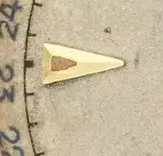
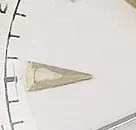
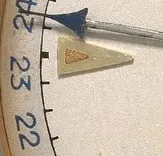
The date is shown by a central hand with an arrow tip. On the steel watch with a black lacquer dial it is pink gold, and on a black dial with six diamonds its tip is red; the Bao Dai watch has no red tip.
- arrow-tipped central date hand
- red tip on a six-diamond black dial
Subregisters 1 described
One register at six holds the moon phase and the small seconds.
Moon and seconds register
The moon disc is champlevé enamel with a stylised face. On some dials the chronometer wording is printed inside this register instead of under the day and month.
- moon disc at six
- chronometer text in the library

Bezel 1 described
A plain smooth bezel on all watches.
Smooth bezel
Smooth and rounded, as on the Oyster dress watches of the period.
- smooth bezel
Case 4 described
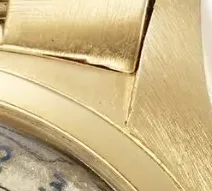
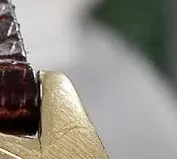
A 36 mm Oyster case with a screw-down back in three metals. A strong case keeps its engraved stamps and sharp edges.
Yellow gold
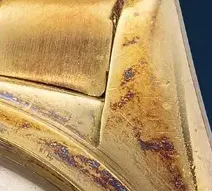
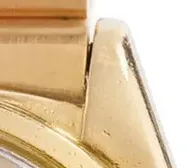
Most 6062s are in yellow gold, and sellers name it more often than any other metal. A solid case takes a patina in places that are hard to clean.
- yellow gold case
Pink gold
Few watches are in pink gold. Pink gold watches are found with Stelline dials and sometimes with a matching gold bracelet.
- pink gold case
Steel
Steel was made only in the years 1950 to 1953. Counts vary: fewer than a hundred is said, and about forty are known. Steel watches have the two-tone 3-9 dial and the luminous alpha hands, apart from one known steel watch with a black lacquer dial.
- steel with two-tone dial
Caseback stamps
Some watches show a date stamp such as III.53 inside the back, and several pink gold watches have 6063 stamped inside the back, struck through and amended to 6062. The engraving that remains is a guide to how much the case was polished.
- III.53 inside the back
- 6063 struck through
- deep engraving
Crown 2 described
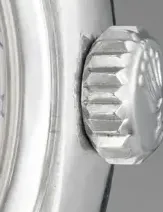
The crown is a Super Oyster type, which could not be screwed down. It sold poorly and was later replaced on many watches.
Super Oyster crown
The crown that came on the watch. It is a gold jacket over a brass or steel core, and the thin gold can peel. It stays bright when the gold case develops a patina.
- Super Oyster crown
- gold jacket, thin over a base metal
Screw-down crown
A screw-down crown on a watch of this reference indicates a replacement made in service.
- screw-down crown
Crystal 1 described
Acrylic crystals were used.
Acrylic crystal
An older-style acrylic crystal on a smooth bezel.
- acrylic
Date 1 described
The date is shown by a hand over an outer ring, with the day and month in two windows. The knobs used to set the date and moon were a weak point.
Date ring
The outer date ring is printed in gold on many dials, and sellers describe blue date rings or blue date numerals on both gold and steel watches. On one steel watch the blue ring has kept its colour, and its date ring reverses between 8 and 23. Black-dial watches are said to have ochre date discs and black enamel moon discs.
- gold printing on the outer ring
- blue date ring or numerals
- ochre disc on black dials
Movement 1 described
Automatic calibre 655, smaller than the movement of the 8171. The date and moon settings were weaker parts of the watch.
Calibre 655
An in-house automatic of 9 3/4 ligne, a shrunken version of the 10 1/2 ligne movement that drives the 8171. Rolex chose a different calibre for the Explorer, Submariner and GMT-Master range that followed. The chronometer certificate is printed on the dial.
- automatic winding
- chronometer certification
Bracelet 3 described
The bracelet is usually a five-piece Jubilee; other bracelets are found.
Jubilee bracelet
The usual bracelet, in steel on steel watches and gold on gold watches. Sellers name a Jubilee about as often as a leather strap.
- five-piece Jubilee links
Riveted Oyster bracelet
A riveted steel Oyster bracelet is shown on a steel watch in published accounts. Sellers also describe a steel Oyster bracelet on a steel watch with the 3-9 dial.
- riveted Oyster bracelet links
Gold tile bracelet
A yellow gold tile bracelet accompanies one yellow gold black-dial watch. Pink gold bracelets also appear, one added later.
- tile links
Box and papers 1 described
Little is said about boxes and papers.
Service certificate and setting pin
One pink gold watch is described with its service certificate, a setting pin and its box.
- setting pin
- service certificate
Originality
- Crowns are often replaced; the original Super Oyster crown is not screw-down, so a screw-down crown marks a service part.
- Lume plots are often renewed; large, round plots on a star dial show a re-lume, while small faded ones are normal.
- Black dials are rare and credible ones are very few; watches that left the factory with black dials are said to have black enamel moon discs and ochre date discs.
- Sunburst dials exist but may have been fitted later; most original dials are grained or brushed.
- Gold bracelets are sometimes added later, and a steel Jubilee bracelet of the period is correct for steel watches.
- Polishing weakens the case: look at the engraving inside the back and the sharpness of the lugs.
Names
- Stelline. Italian for small stars, from the star-shaped hour markers.
- Bao Dai. The watch bought in Geneva in 1954 by the last emperor of Vietnam.
- Dark Star. A Stelline gold watch with a case that has taken a dark, colourful patina.
- Time Capsule Stelline. A gold Stelline offered in unusually untouched state.
- Explorer dial. Arabic numerals at 3 and 9, as on later Explorer dials.
Where accounts differ
Points on which the published literature and the library's own records do not agree, or on which the literature contradicts itself.
- End of production. Published accounts put the end of production in 1953, or in 1954 together with the 8171; another dates the watch from about 1950 to 1953. The library's dated case numbers stop at 1953.
- Number made. Estimates of the number made vary: about 350, or under 1,000 across all metals. Another account says fewer than 200 of the two moon phase references have resurfaced, and under 100 steel watches is also given.
- Black dials. One account calls the steel black lacquer dial the only black dial brought to market, while others describe black diamond dials and say black dials are rare but exist in gold. The black lacquer dial is on a steel watch, the diamond dials on gold watches.
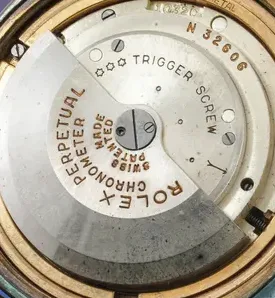
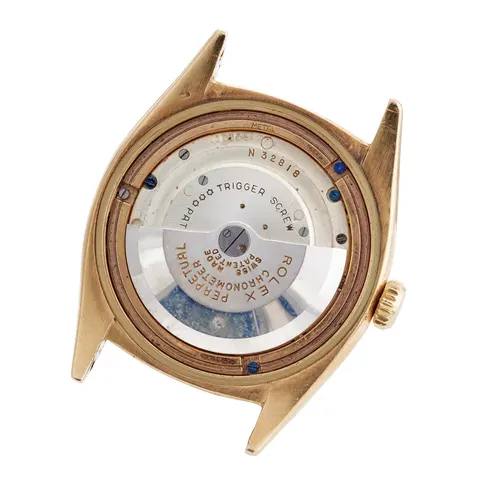
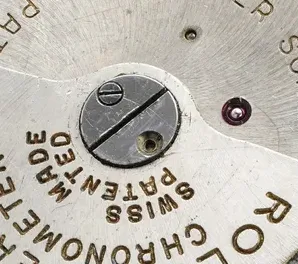
Back and movement
From listings of this reference, each confirmed by eye to show what it is filed under. A picture on which a person's name or a personal engraving can be read is not shown. From most holders a detail from the middle of the photograph is shown; the mark in its corner gives its holder and a link to the listing.
Caseback
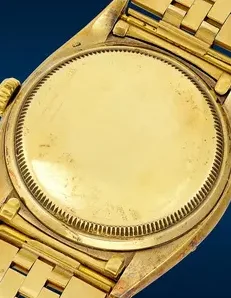

Inside the caseback
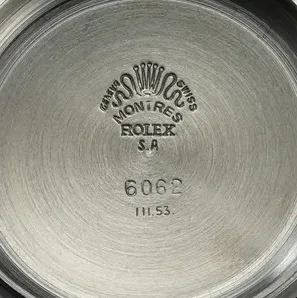

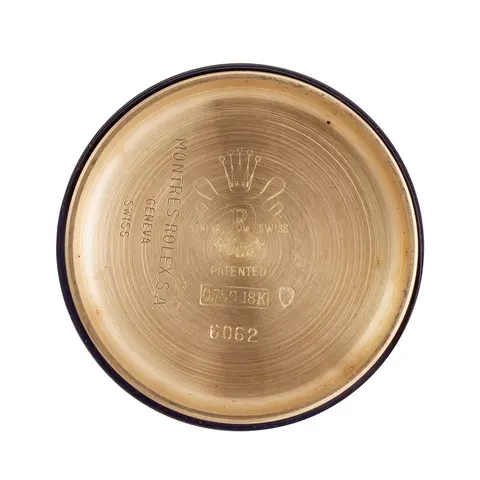

Movement



In the records
Counted from 61 listings at 11 holders between 10 June 2009 and 14 November 2026. These are what sellers and auction houses state, not measurements.
Case metal
| Gold, any colour | 45 | |
| Yellow | 21 | |
| Pink | 9 | |
| Colour not stated | 15 | |
| Steel | 11 |
A listing that says "gold" or "18K gold" names no colour: it is counted under "colour not stated", not as yellow gold.
Dial colour
| Silver | 12 | |
| Black | 2 | |
| Gold | 2 | |
| Brown | 1 | |
| Cream | 1 |
Case size
| 36 mm | 34 | |
| 35 mm | 6 | |
| 37 mm | 2 |
Calibre named
| 655 | 8 |
Bracelet or strap
| Leather strap | 14 | |
| Jubilee bracelet | 14 | |
| Metal bracelet, kind not stated | 5 | |
| Oyster bracelet | 1 | |
| Mesh bracelet | 1 |
Each table counts the listings that state the thing, in the seller's own terms. A size, metal, colour or calibre that cannot belong to this reference is a seller's slip or a listing filed under the wrong number.