Perpetual Triple Calendar Moonphase
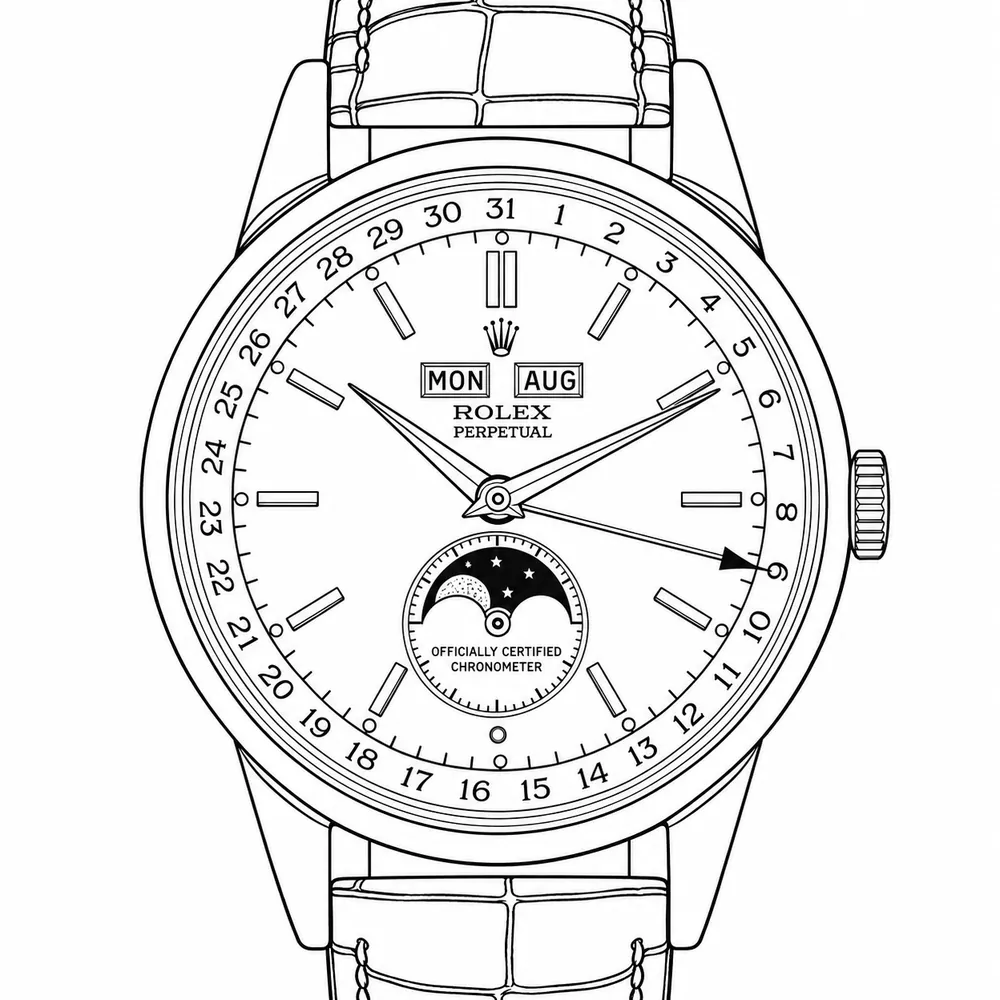
The 8171 is Rolex's large automatic triple-calendar watch with moon phase, introduced in 1949 by most accounts, one giving 1948, and made until about 1952; some accounts carry it into 1953. It has a 38 mm case, flat-sided and thin, with a snap-on back rather than the Oyster case, so it is not waterproof. Day and month show in two windows below 12, the date on a central pointer over an outer scale, and the moon disc at 6 inside the small seconds. Cases are steel, yellow gold or pink gold. Collectors call it the Padellone, Italian for frying pan. They look first at the dial, which is often refinished, and at the coronet engraved on the caseback, which shows how far the case has been polished.
- Made
- 1949–1952dates approximate
- Seen in the library
- 1948–1953nine in ten in 1949–1953 · by case numbers
- Case
- 38 mm · steel (59%), gold (38%)as sellers state
- Movement
- Calibre A295automatic
- On record
- 92 listings260 photographs · 13 holders
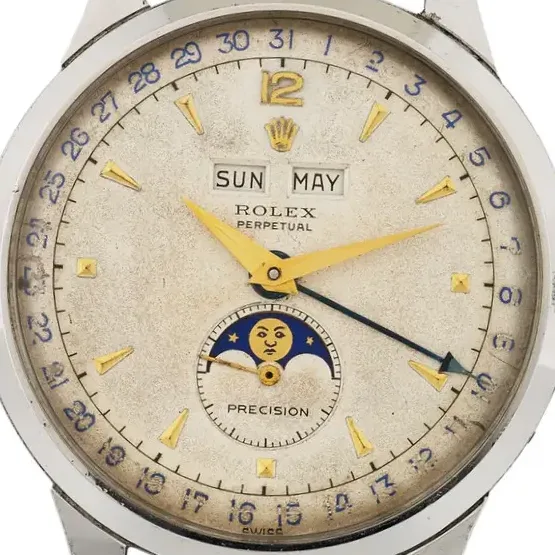
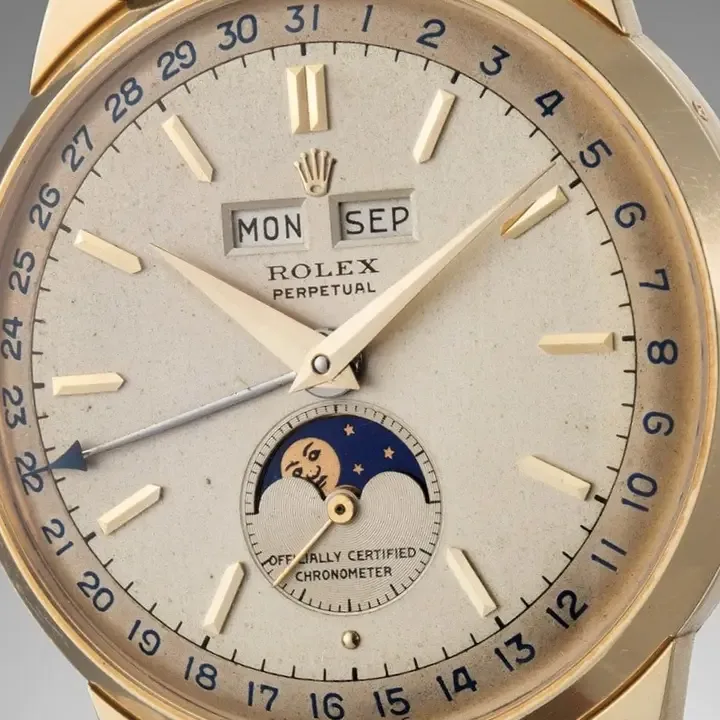
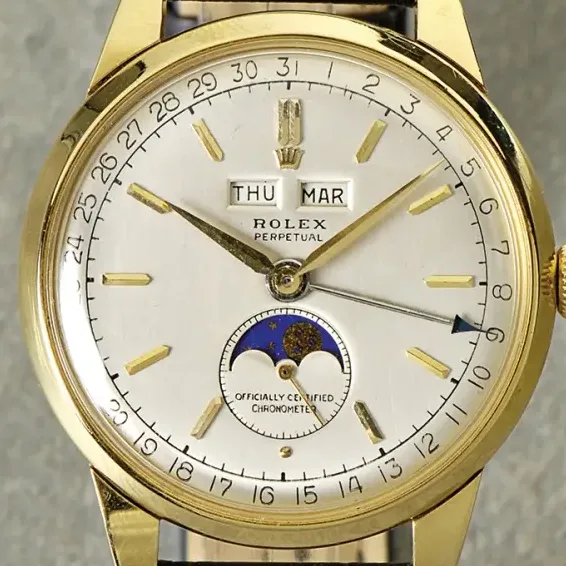
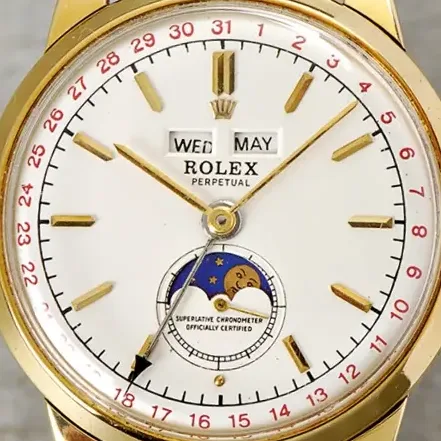
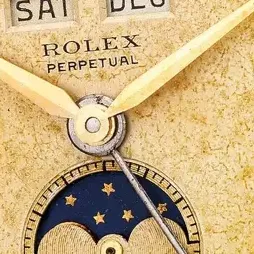
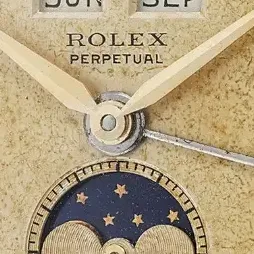
Components
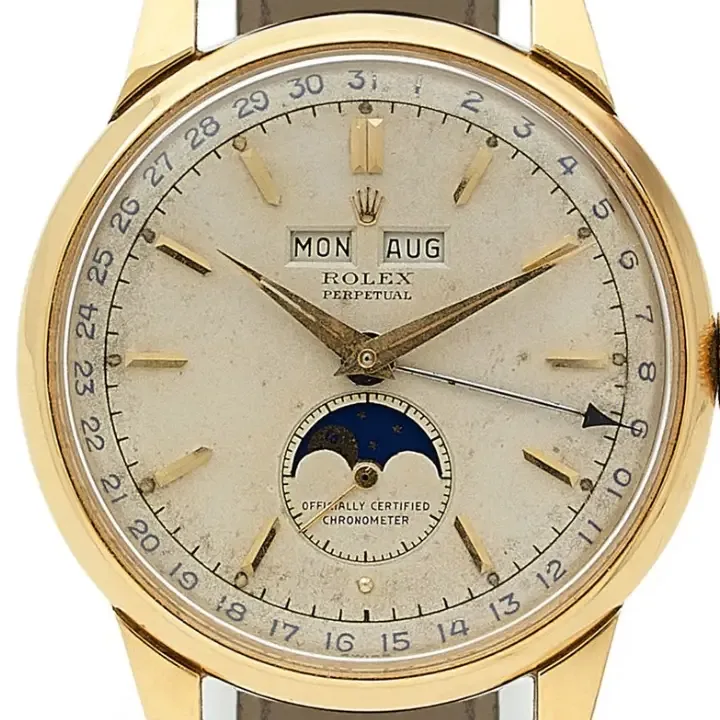
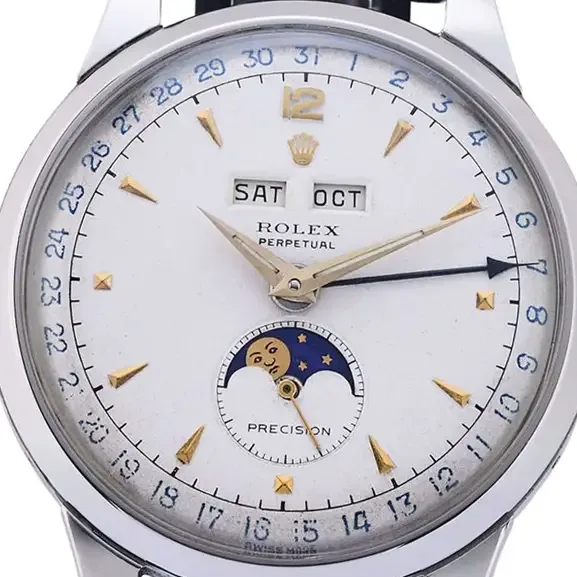
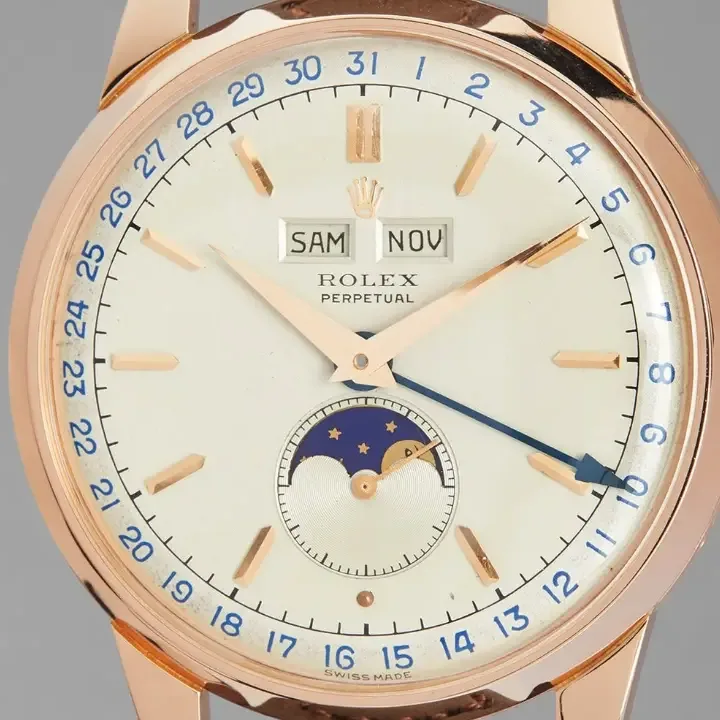
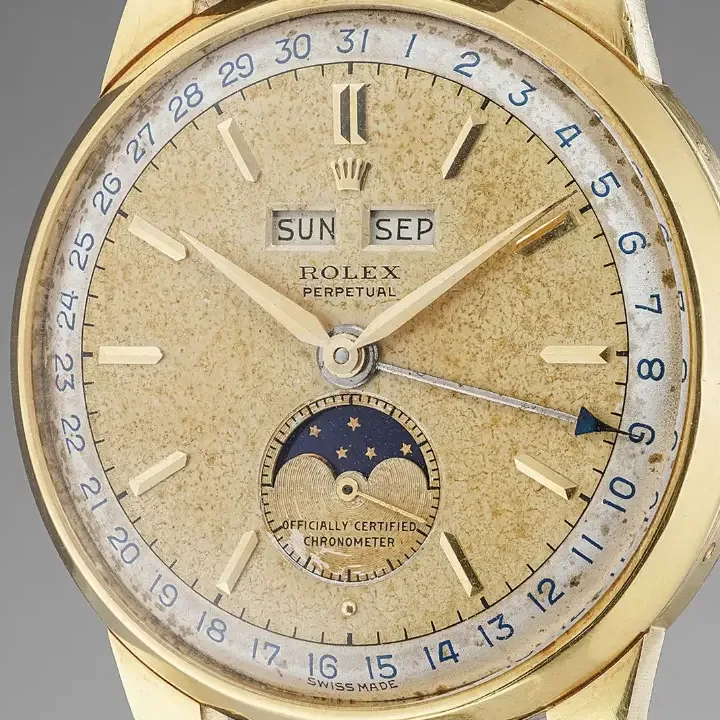
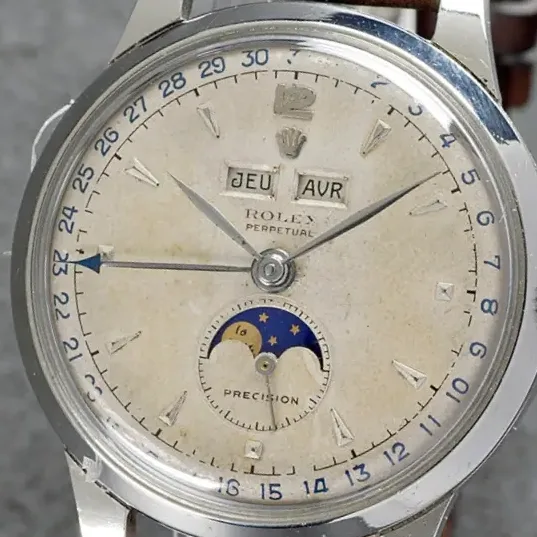
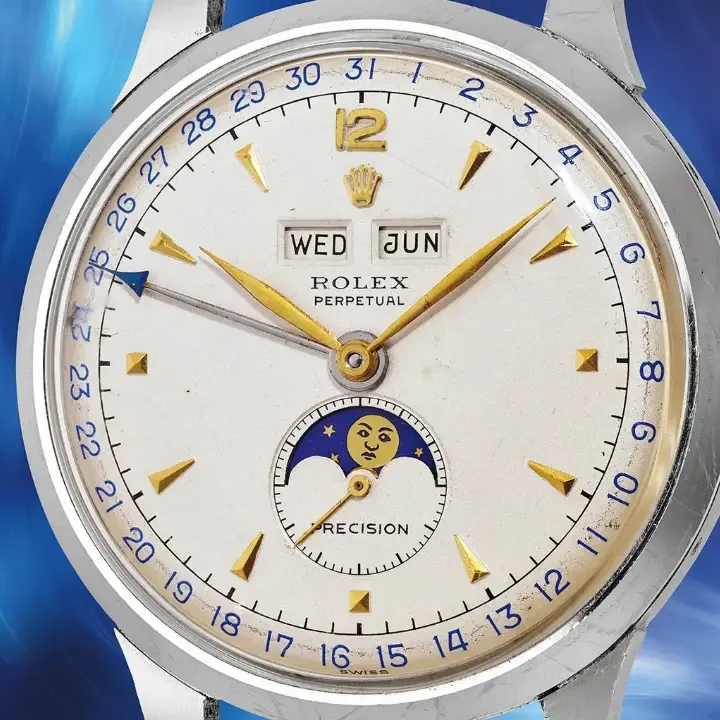
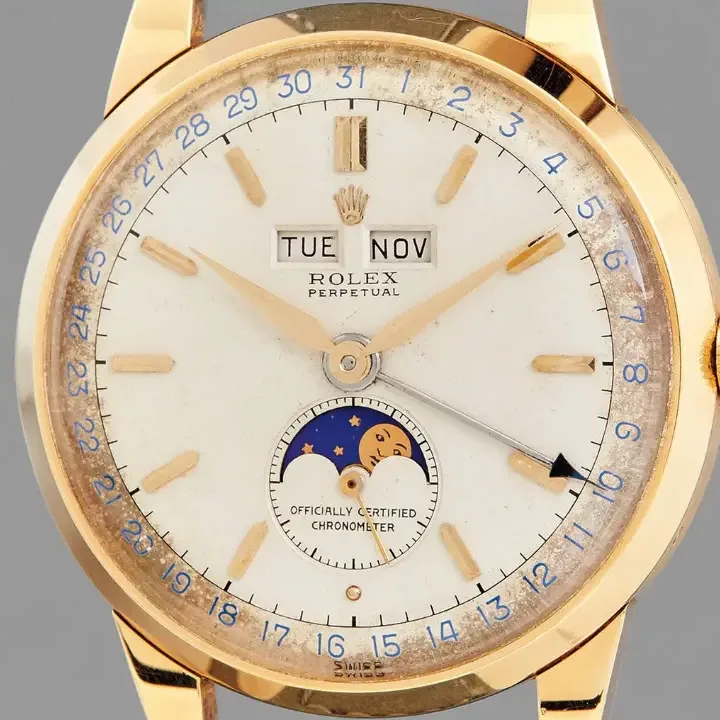
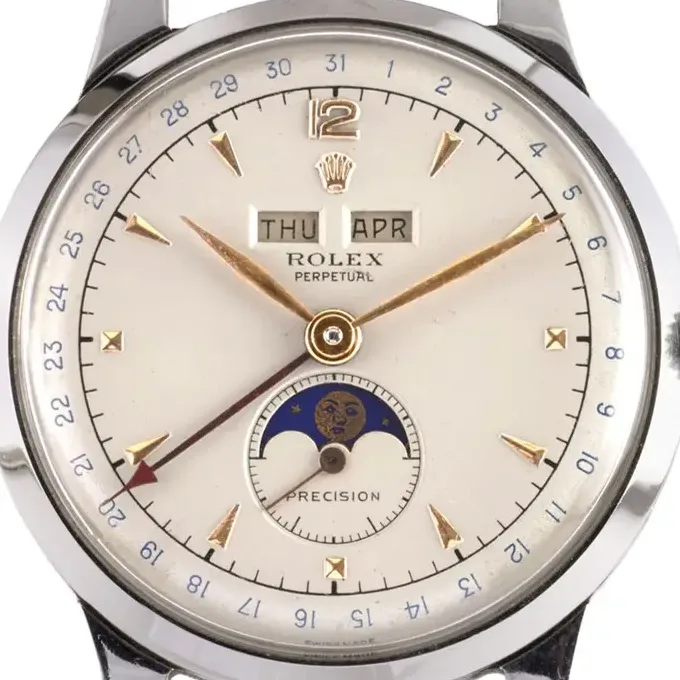
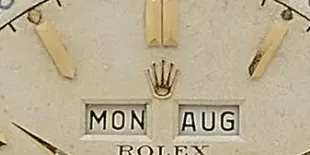
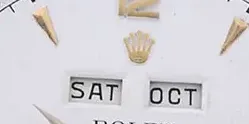
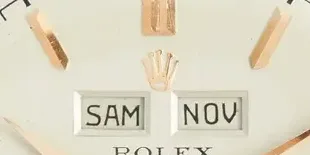
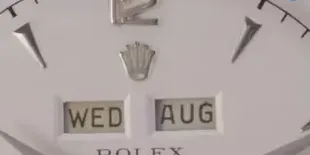
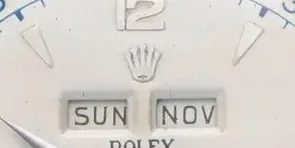
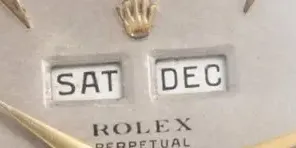
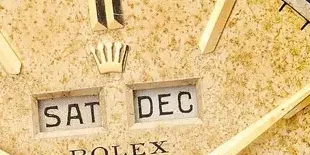
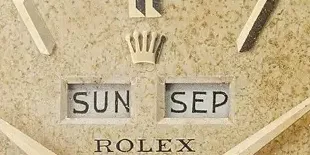
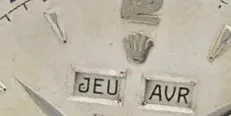
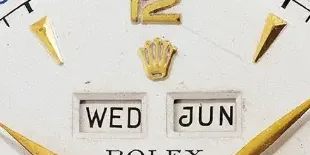
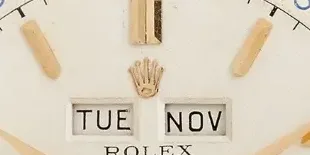
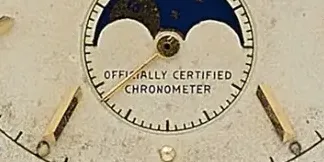
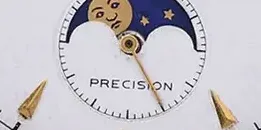
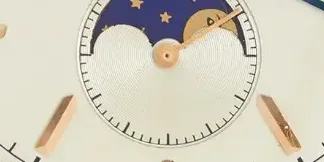
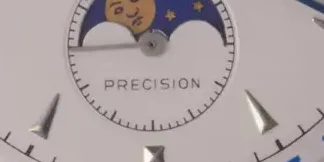
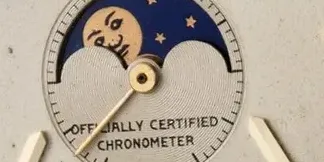
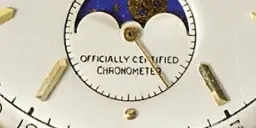
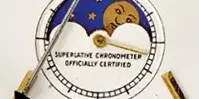
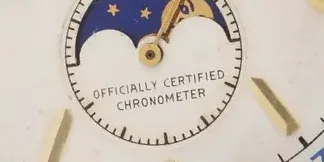
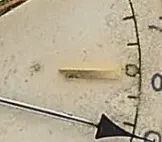
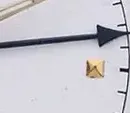
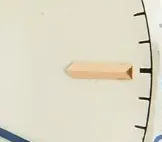
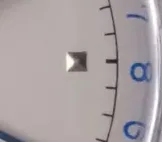
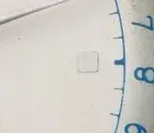
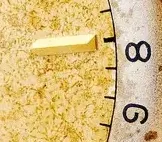
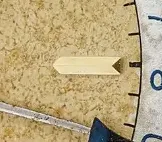
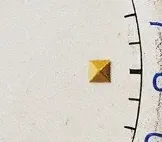
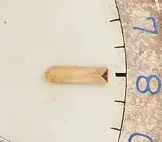
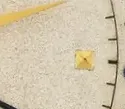
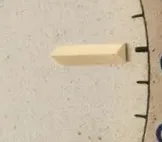
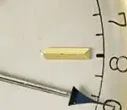
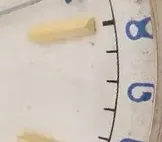
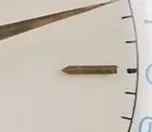
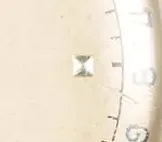
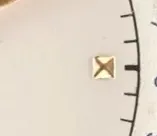
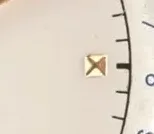
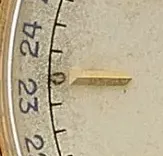
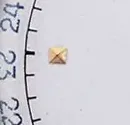
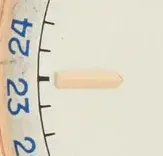
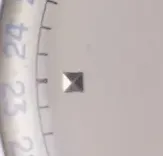
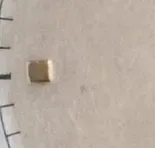
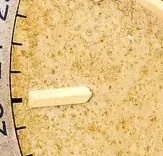
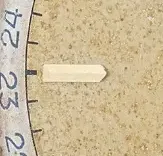
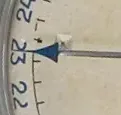
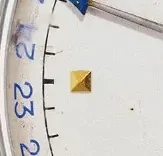
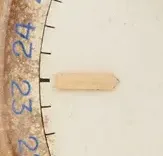
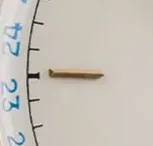
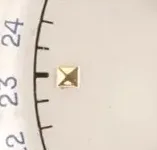
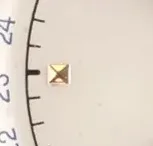
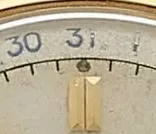
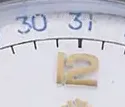
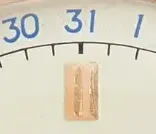
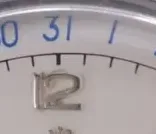
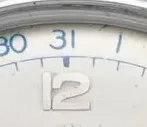
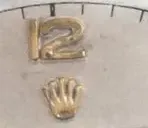
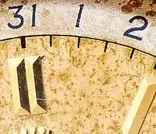
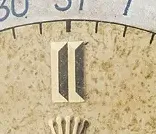
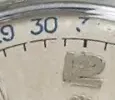
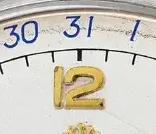
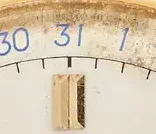
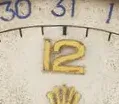
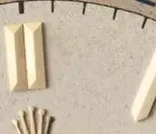
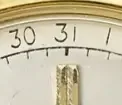
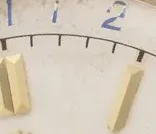
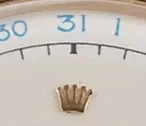
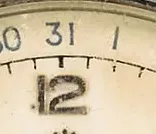
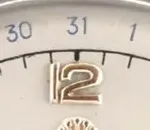
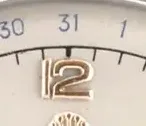
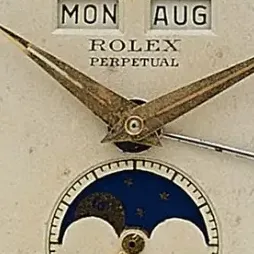
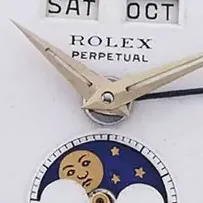
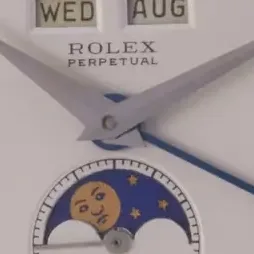
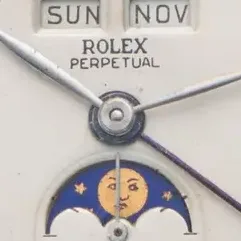
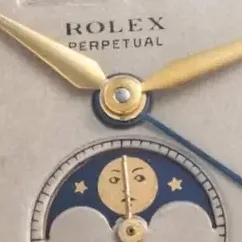
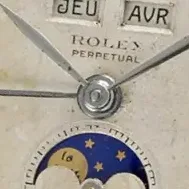
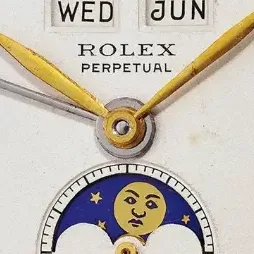
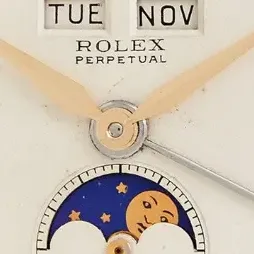
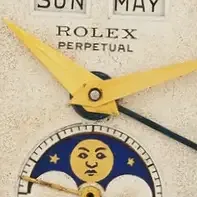
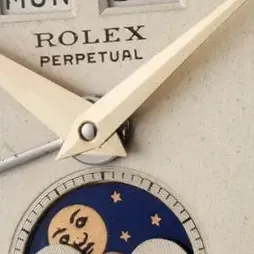
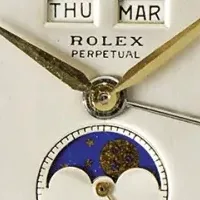
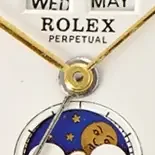
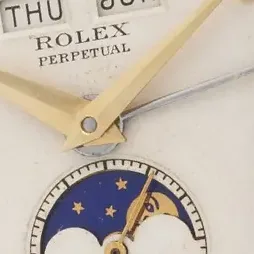
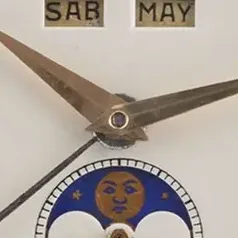
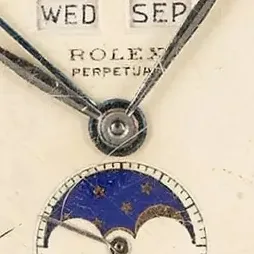
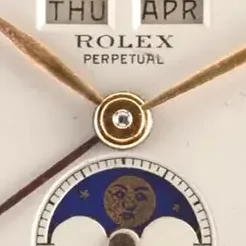
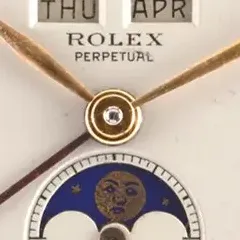
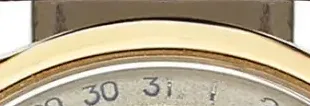
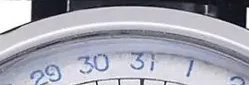
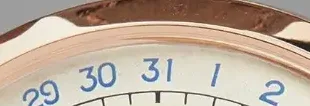
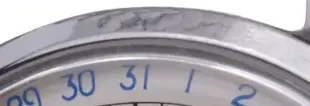
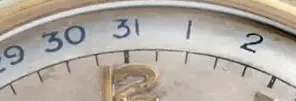
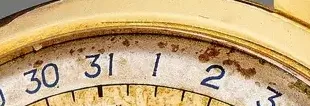
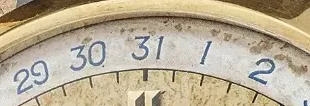
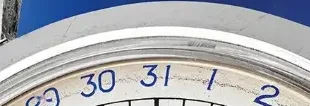
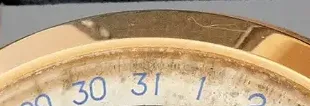
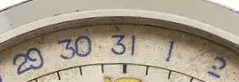
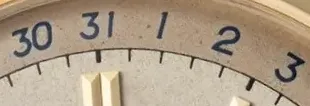
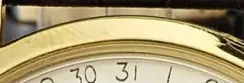
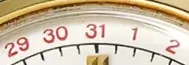
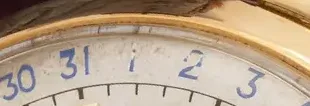
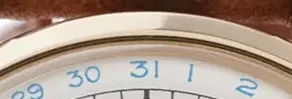
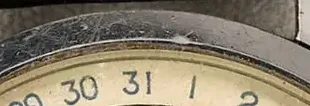
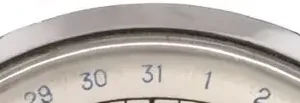
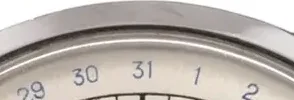
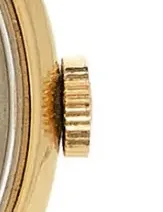
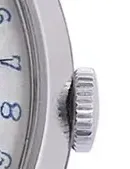
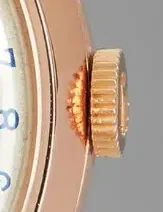
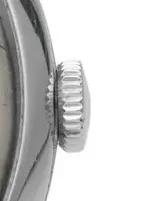
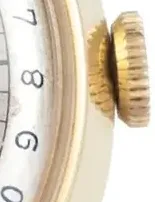
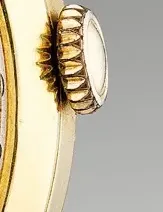
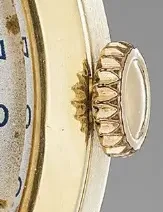
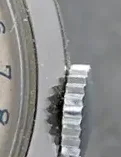
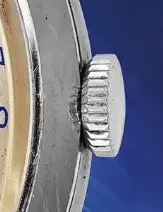
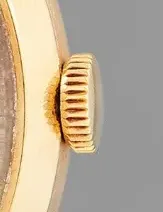
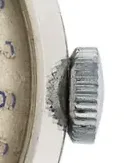
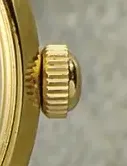
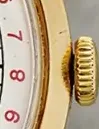
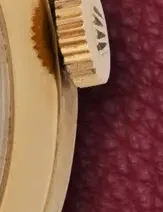
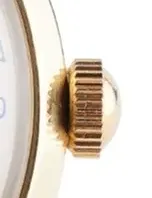
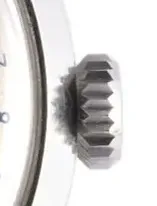
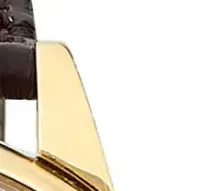
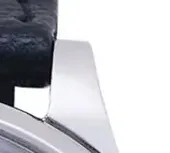
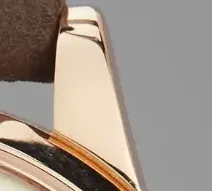
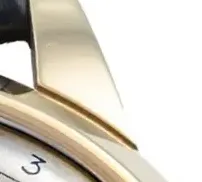
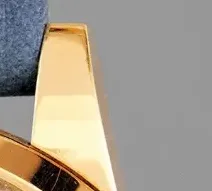
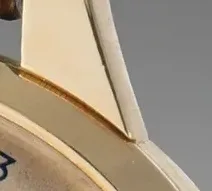
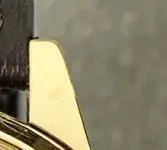
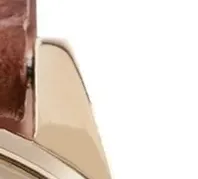
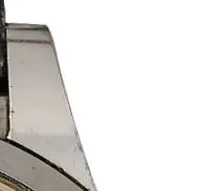
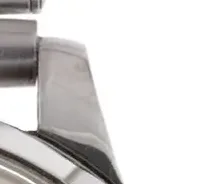
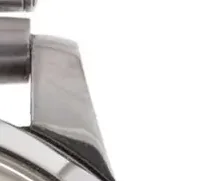
20 watches, oldest first, each straightened and cut the same way so that one row shows one component across them all. Chosen from 260 photographs on file for sharpness and for a face typical of the reference. A year marked c. is one its holder gives only roughly. Each picture is a detail cut from a listing photograph. Select the small mark in its corner for its year, its holder, a link to the listing it came from, and a way to report it.
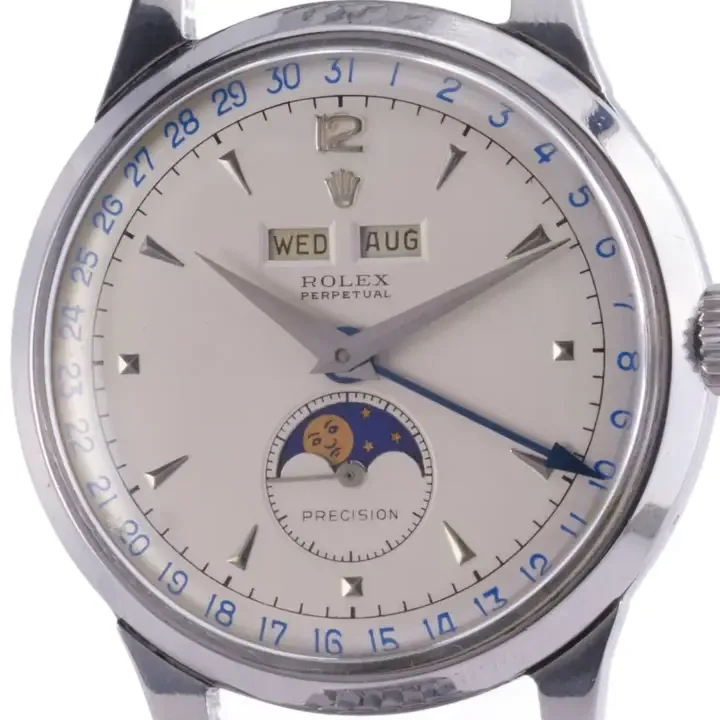
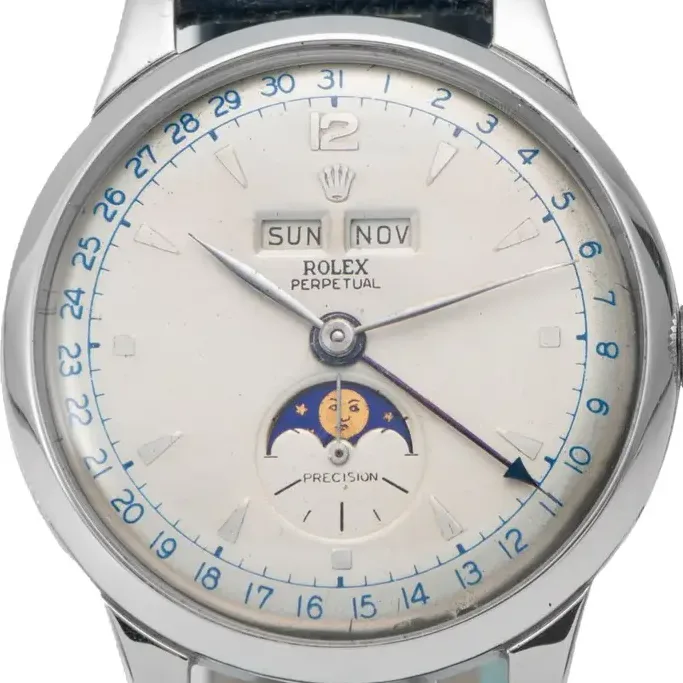
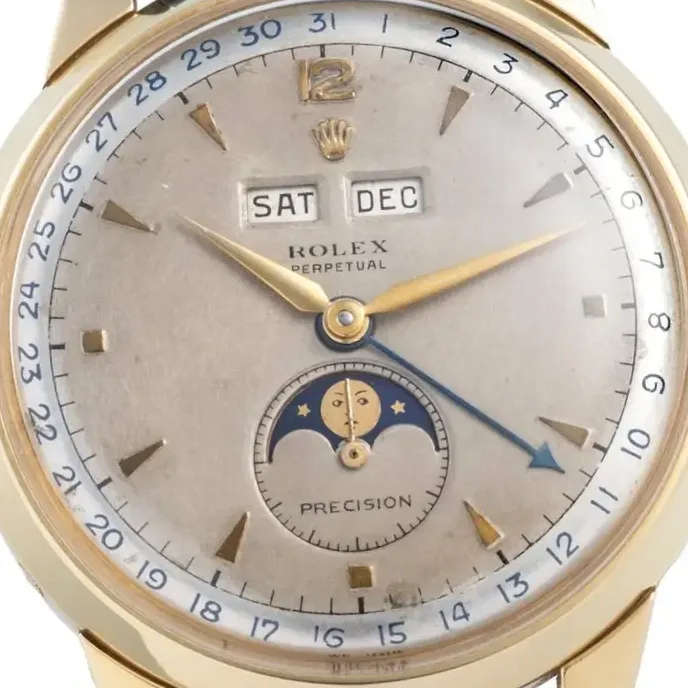
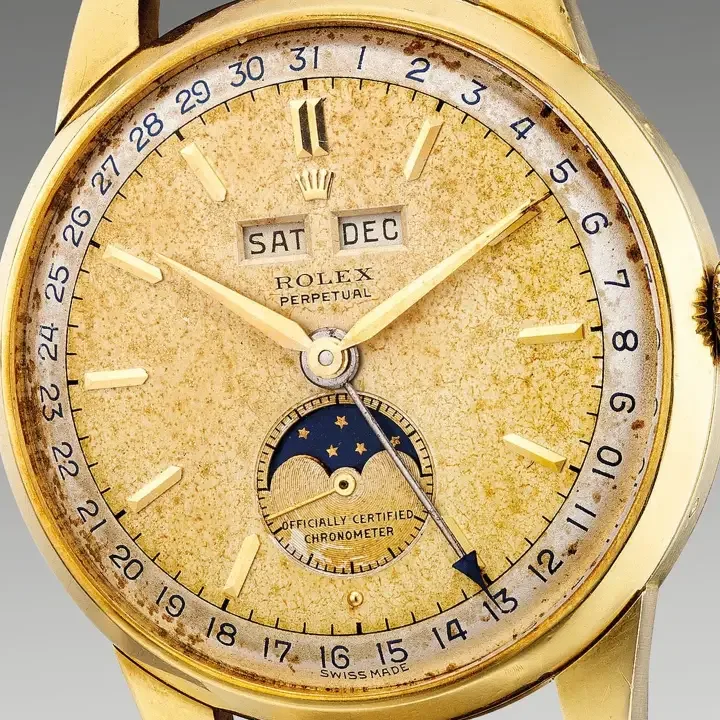
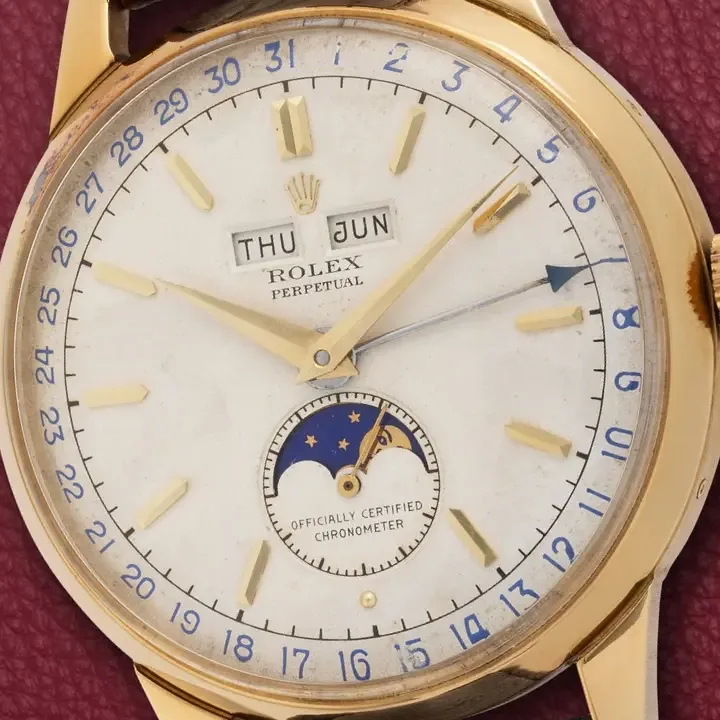
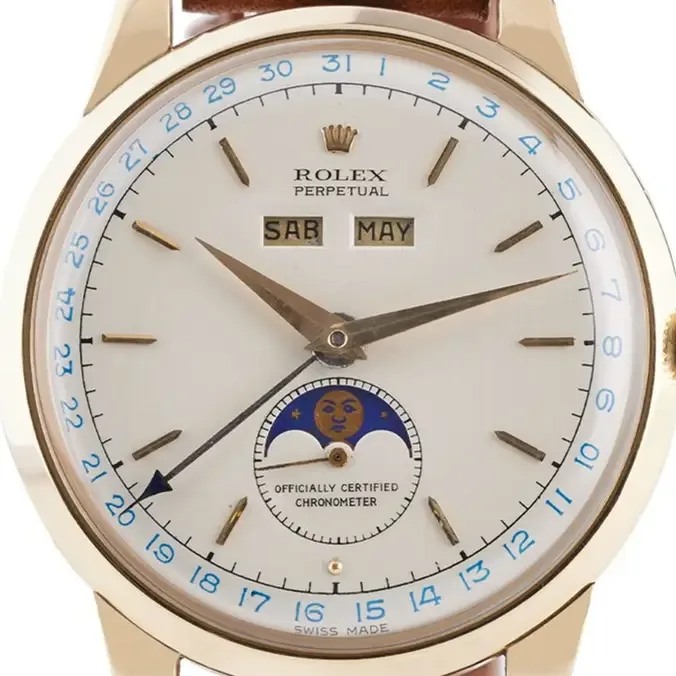
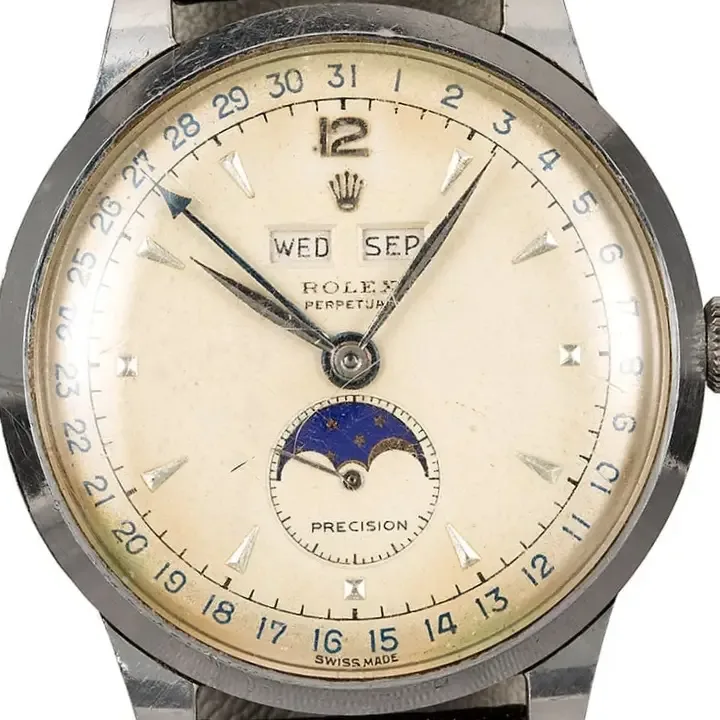
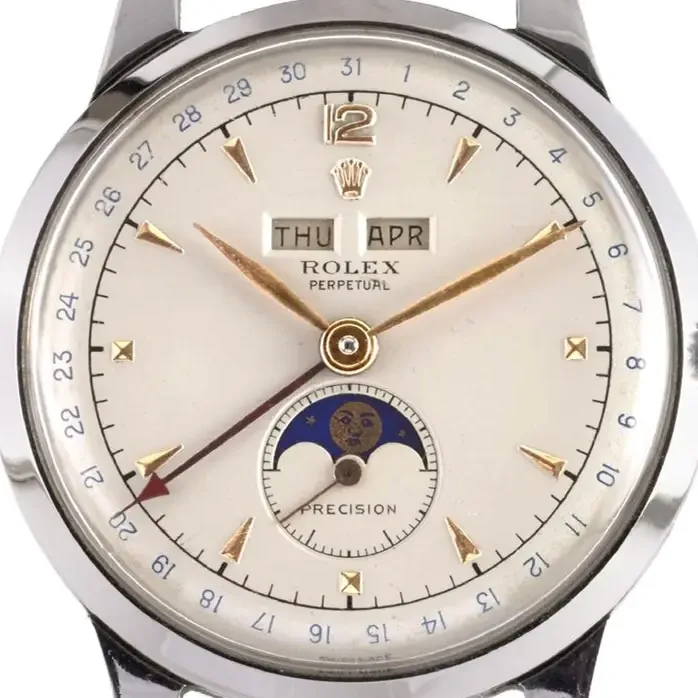

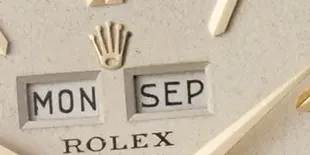
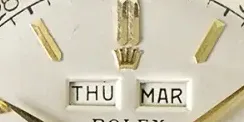
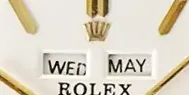
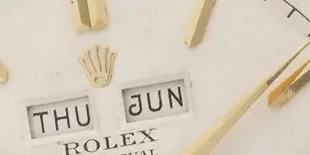
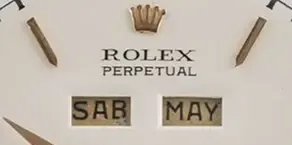
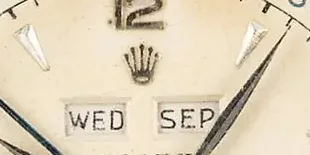
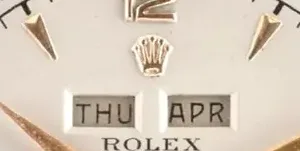
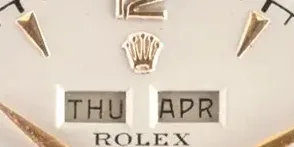



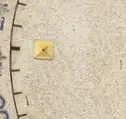
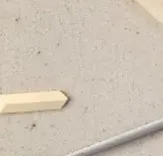
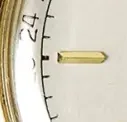

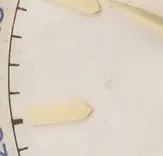















Chronology
Most written accounts give 1949 to 1952, one starts it in 1948 and some end it in 1953; in the records the earliest case numbers fall in a range read as 1948 to 1950, and the latest in 1953.
Every dated variant: what is written, and what the records show
For the reference the marks are every dated watch; for a variant, the watches a seller names as that variant, so a variant sellers do not name has none.
The reference's own marks are dated by case number. A variant's marks use the year each seller states, so a variant can show watches in a year where the row for the reference shows fewer, or none. 14 dated listings fall outside this scale and are not drawn.
Specification
| Case | 38 mm, about 47 mm lug to lug; flat-sided, thin case with a snap-on back and a polished, angular bezel; steel, yellow gold or pink gold |
| Crystal | Acrylic, held by a gold or metal bezel |
| Crown | Flat crown, unsigned on the example the literature describes; four small correctors in the case sides (two each side) for the calendar functions |
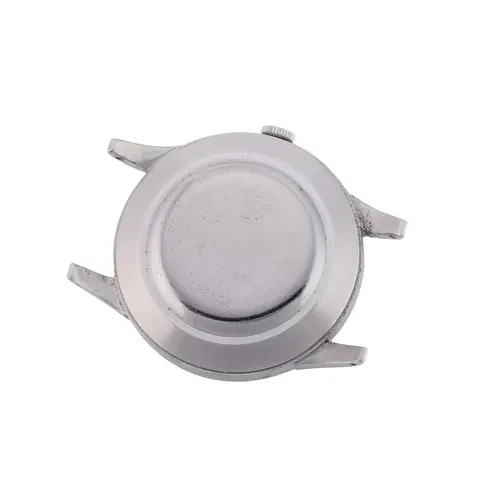
| Caseback | Snap-on back with the Rolex coronet and the case number engraved on the outside, where polishing wears them; some backs are stamped 8171 inside |
| Movement | Calibre A295 CPL, an 18-jewel automatic with rotor winding, chronometer certified, showing day, date, month and moon phase |
| Dial | Day and month apertures below 12, date on a central pointer reading an outer scale, moon-phase disc inside the small seconds at 6 |
| Water resistance | None; the case is not an Oyster |
| Strap | Leather strap in most listings, sometimes with a Rolex buckle; a few on period Oyster-style metal bracelets |
Dial 7 described
The dial is silver in almost every record, often two-tone, with applied gold or silver markers and blue date numerals. It carries a great deal of text and apertures, and the moon disc has a human face. Most dials have been reprinted because the case let water in, and the dials sold as original are few. Yellow gold watches alone are said to have turned up in about ten different configurations.
Two-tone silver dial
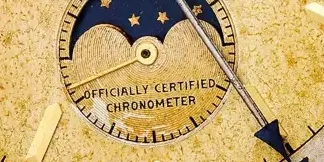
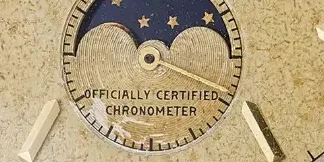
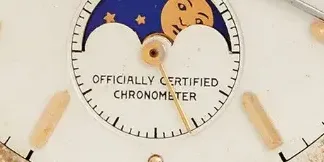
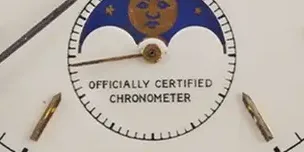
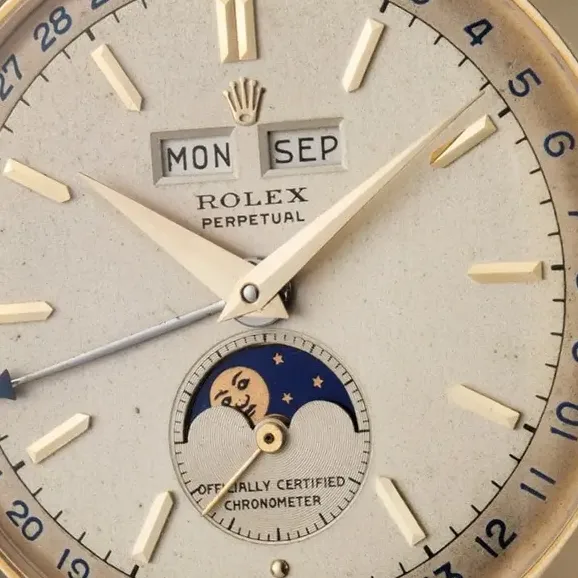
The usual dial: a silvered centre with a satin outer ring bearing the date scale, with blue date numerals and the day and month windows below 12. The Rolex logo is applied above the windows, and the word Rolex and Perpetual are printed below them. A line in the small seconds says officially certified chronometer. Nearly every listing that gives a colour says silver.
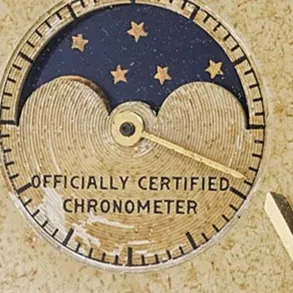

- applied logo above the day and month windows
- blue date numerals

Dagger and triangle markers
Hour markers are either pointed batons or faceted triangles, in silver or gold tone. Another account describes them as applied, faceted gold markers.
- pointed baton markers
- faceted triangular markers
Moon-phase disc
The moon aperture sits inside the small seconds at 6, with a blue background and gilt moon. The disc is hard enamel, hand-engraved, and each one is unique; the moon has a face, called the angry or stern moon. The disc was made by Stern Freres on at least one watch.
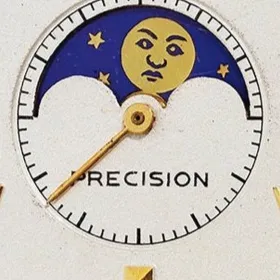

- blue enamel disc
13 listings on record under the name.
Date hand and hands
The date hand runs to an outer scale. One account describes it as steel with a blue triangular tip, another as gilt. Hour and minute hands are gilt daggers on some watches and Dauphine-style on others, and the small seconds hand is gilt.
- central pointer date hand
- dagger or Dauphine hour and minute hands
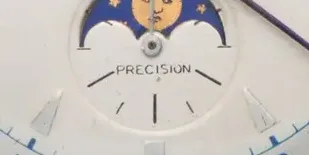
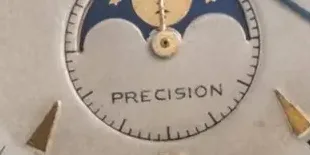
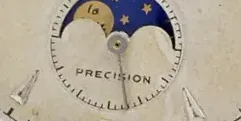
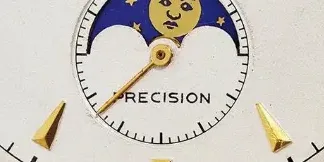
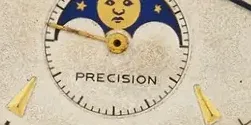
Precision dial
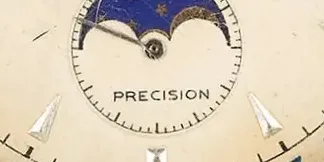
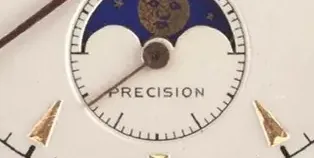
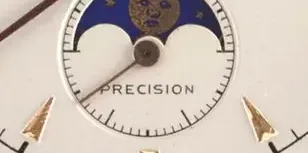
Many auction descriptions give the dial signature as Rolex Perpetual Precision. The literature describes dials with Perpetual below the windows and the chronometer wording in the small seconds, and does not discuss the Precision signature.
- Precision printed on the dial
French market dial
A dial marked Fab. Suisse with French day and month discs, made for the French market.
- Fab. Suisse on the dial
- French day and month names
Tropical, grené and diamond dials
Some dials have aged to a tropical tone, and some have a grené finish; others are set with diamond markers. Sellers describe patina on several, and one documented dial shows light spotting and a purple tone at the edge.
- spotting
- purple edge tone
Hands 2 described
The literature gives only a few notes on the hands.
Gilt dagger hands
Gilt dagger hour and minute hands, with a gilt small-seconds hand and a date hand pointing to the outer scale.
- gilt dagger hands
Dauphine hands
Dauphine-style hour and minute hands, which most watches are said to carry.
- Dauphine hands
Subregisters 1 described
There is one sub-dial, the small seconds at 6, and it holds the moon aperture.
Small seconds with moon aperture
The running seconds sub-dial at 6 contains the moon-phase aperture and carries the chronometer wording. The seconds hand is gilt.
- moon aperture inside the seconds sub-dial
Bezel 1 described
The bezel is thin and angular, in polished metal, and holds the acrylic crystal.
Thin polished bezel
A narrow, polished, angular bezel. A gold bezel is described on one watch.
- thin angular bezel
Case 4 described
The case is the reason for the nickname: 38 mm, flat-sided and large for the late 1940s, but not an Oyster. Sellers state steel for about three in five listings and gold in the rest.
Snap-back case, 38 mm
A large, thin, sharp-edged case with a snap-on back and fancy lugs. It is about 47 mm from lug to lug and not waterproof, which is why dials and cases have often been refinished.
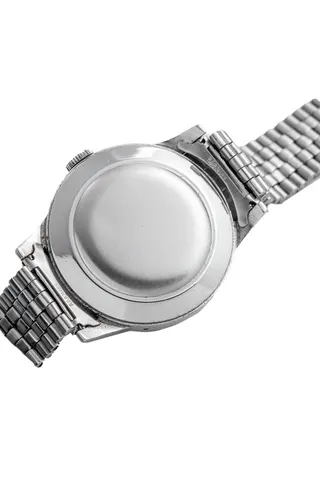
- snap-on back
- sharp lugs
Steel, yellow gold and pink gold
Steel was made most often, about half of production on one estimate, yellow gold in a large share, and pink gold least.
- steel, yellow gold or pink gold
Caseback engraving
The Rolex coronet and the case number are engraved on the outside of the back, and some backs are stamped with the reference 8171 inside. The coronet is a measure of polishing: when it is hard to read or missing the case has been polished many times. Many backs have been replaced.
- coronet engraved on the back
- case number on the outside of the back
Calendar correctors
Two small pushers on each side of the case set the calendar.
- four correctors in the case sides
Crown 1 described
The crown is flat; the one the literature describes is unsigned.
Flat crown
A flat crown, without a Rolex mark on the well-preserved example the literature describes, and not screwed down, since the case is not an Oyster. One auction description gives a Super Oyster crown.
- flat crown
Crystal 1 described
The crystal is acrylic, held in by a polished bezel.
Acrylic crystal
A plain acrylic crystal.
- acrylic
Date 1 described
The calendar is a full one: day and month in windows, date by a central pointer.
Triple calendar with pointer date
Day and month appear in two windows below 12, the date on a pointer reading a perimeter scale. The month advances at the end of the month, but the mechanism does not know which months have 30 days, so the owner must correct it after short months.
- pointer date
- two windows at 12
Movement 1 described
The movement is the A295 CPL, an in-house automatic with a full calendar.
Calibre A295 CPL
An 18-jewel self-winding movement with rotor, a certified chronometer. It shows day, date, month and moon phase, and has no fine decoration. Sellers often give its size, 10 1/2 lignes, in place of the calibre number, and a few call it manual-winding in error.
- industrial finish
- rotor winding
Bracelet 2 described
Two-thirds of the listings that state one are on a leather strap; a few are on period Oyster-style metal bracelets.
Alligator strap and signed buckle
A leather strap with a Rolex-signed gold-plated buckle.
- Rolex-signed buckle
Oyster-style bracelet
A few watches are offered on period Oyster-style bracelets, one described as a riveted Rolex Oyster bracelet and others as expanding Gay Frères bracelets. Sale notes show some were added later.
- Oyster-style links
Box and papers 1 described
Boxes and papers accompany some watches.
Box and papers
Some watches come with a box or papers; those described include a Bulletin de la Marche, a Rolex guarantee and an insurance valuation.
- box
- Bulletin de la Marche
Originality
- Dials: most have been reprinted or refinished because the case let water in, and original dials are few.
- Caseback: a missing or faint coronet shows heavy polishing, and many cases have a replaced back.
- Case: polishing blurs the sharp edges that the reference is known for.
Names
- Padellone. Italian for big frying pan, after the large, flat-sided case; Rolex took the name for a 2026 annual-calendar watch.
- Angry moon. The face on the moon disc looks stern.
Where accounts differ
Points on which the published literature and the library's own records do not agree, or on which the literature contradicts itself.
- End of production. Four accounts end production in 1952 or about 1952 (one allowing a few exceptions); two give 1953, the year they say the 6062 also went. The latest case numbers in the records fall in 1953.
- Metals. Two accounts say the 8171 was first offered in steel or yellow gold only; others list rose or pink gold as a third metal, and the library's records hold pink gold watches.
- Number made. Estimates are 1,000, 1,200 (half in steel) and fewer than 1,500 still existing.
- Date hand. One account describes the date hand as gilt and another as steel with a blue triangular tip.
- Start of production. Four accounts give 1949; another gives 1948 to 1952.
Back and movement
From listings of this reference, each confirmed by eye to show what it is filed under. A picture on which a person's name or a personal engraving can be read is not shown. From most holders a detail from the middle of the photograph is shown; the mark in its corner gives its holder and a link to the listing.
Caseback




In the records
Counted from 92 listings at 13 holders between 12 April 2006 and 14 November 2026. These are what sellers and auction houses state, not measurements.
The fainter bar is the one watch outside the main run of 1949–1953 (the middle nine-tenths): the earliest is 1948. It is an early or late example, or a number misread.
Case metal
| Steel | 47 | |
| Gold, any colour | 30 | |
| Yellow | 11 | |
| Pink | 6 | |
| Colour not stated | 13 | |
| Silver | 2 |
A listing that says "gold" or "18K gold" names no colour: it is counted under "colour not stated", not as yellow gold.
Dial colour
| Silver | 20 | |
| White | 2 | |
| Brown | 1 |
Case size
| 38 mm | 48 |
Calibre named
| A295 | 7 |
Bracelet or strap
| Leather strap | 32 | |
| Metal bracelet, kind not stated | 13 | |
| Oyster bracelet | 3 |
Each table counts the listings that state the thing, in the seller's own terms. A size, metal, colour or calibre that cannot belong to this reference is a seller's slip or a listing filed under the wrong number.