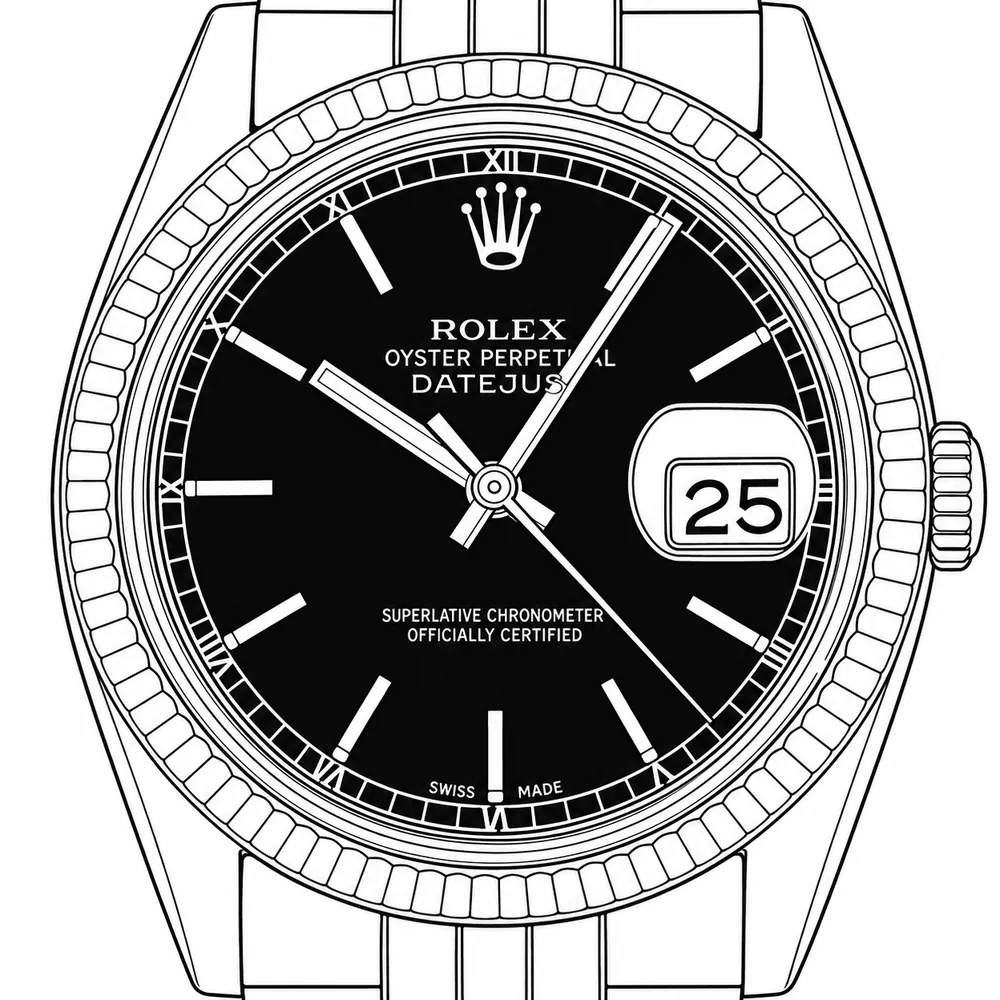
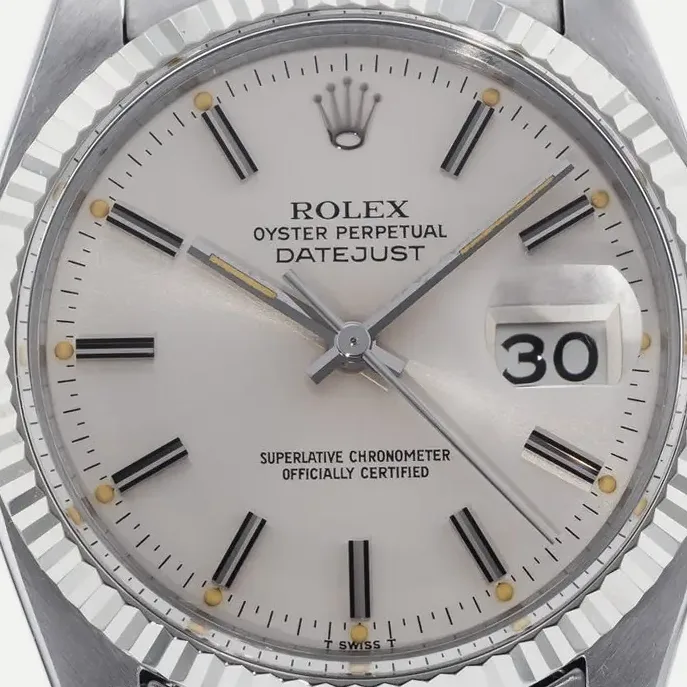
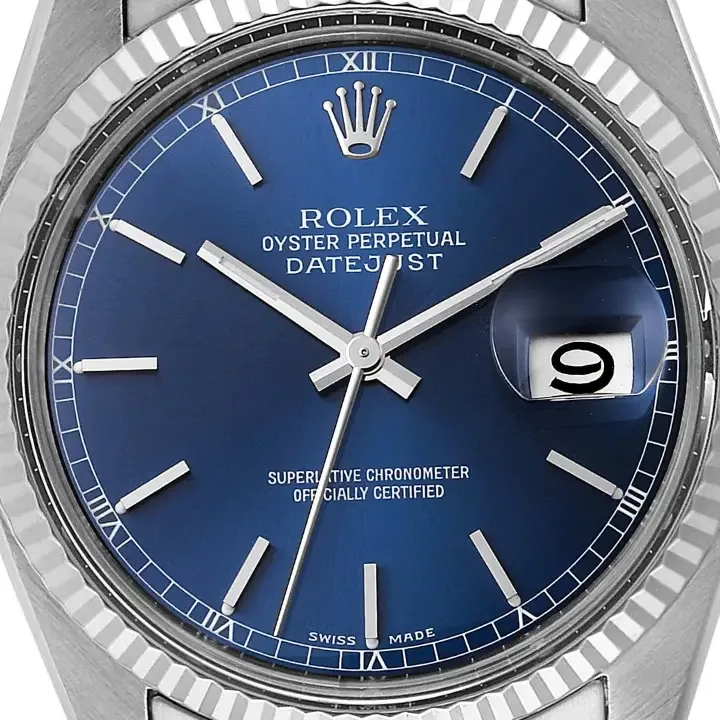
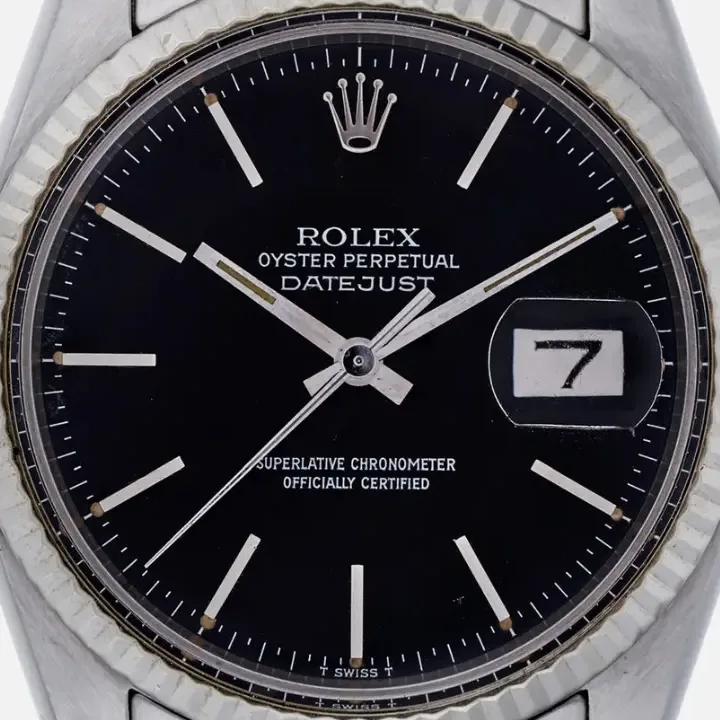
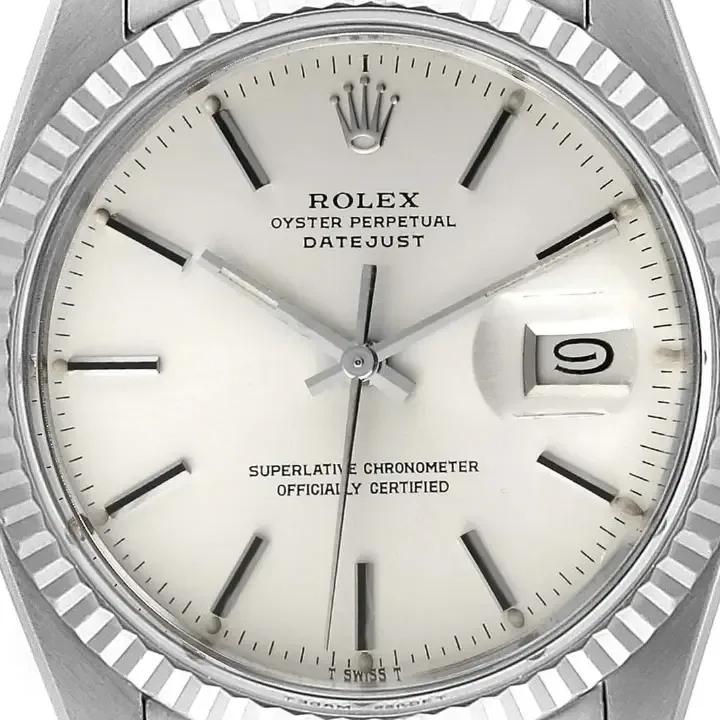
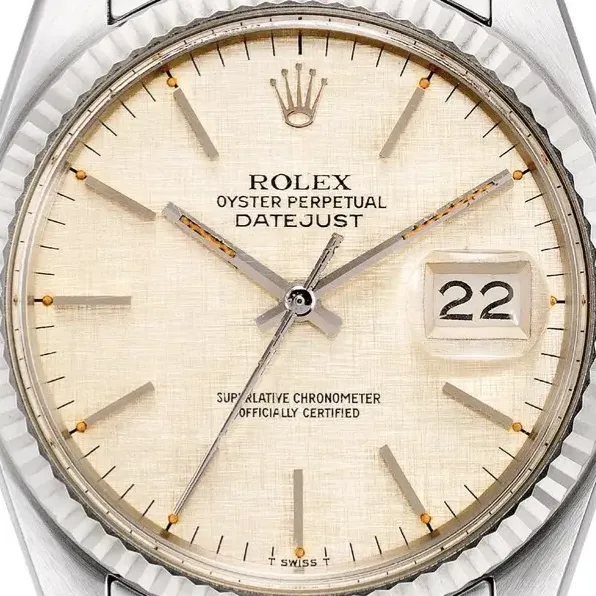
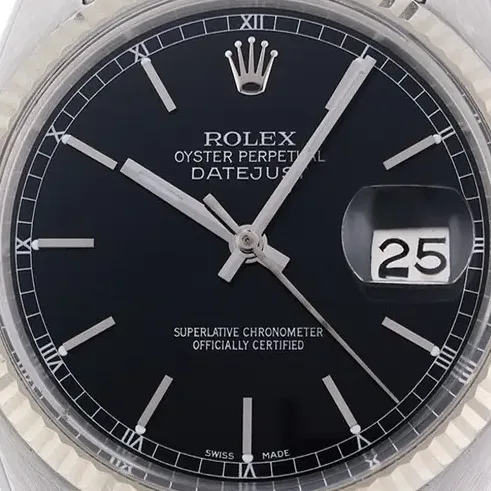
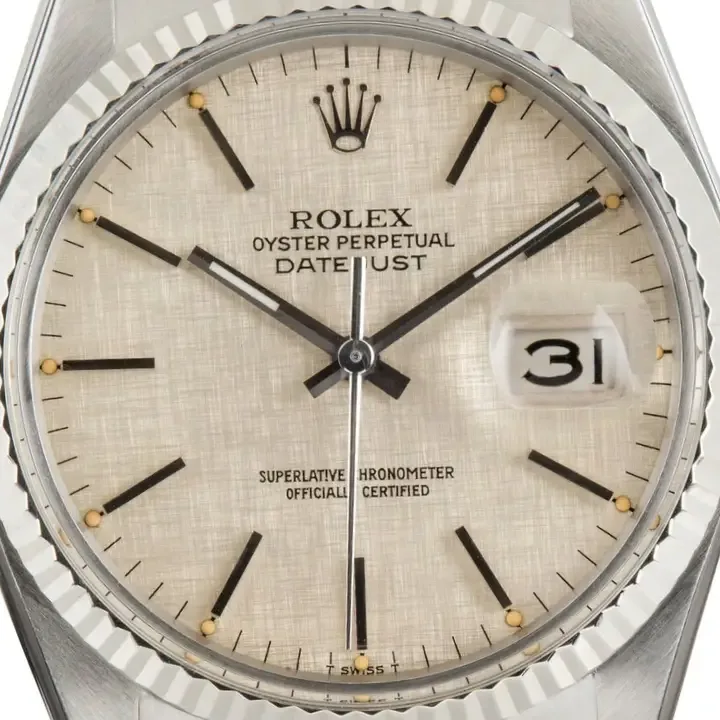
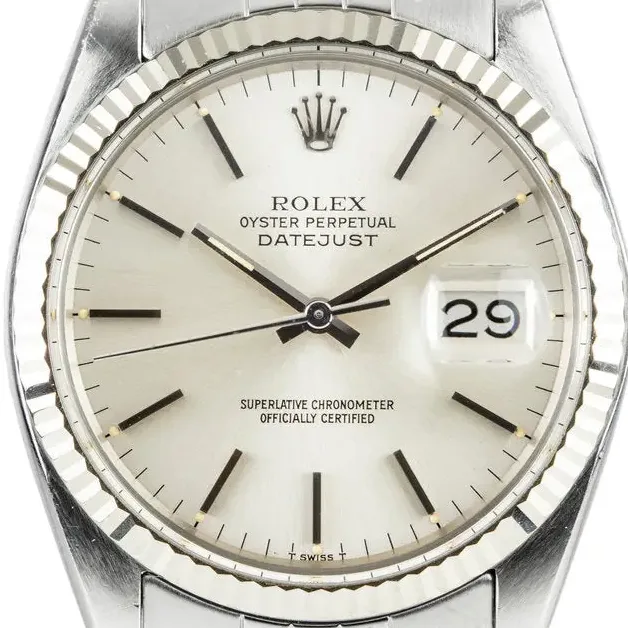
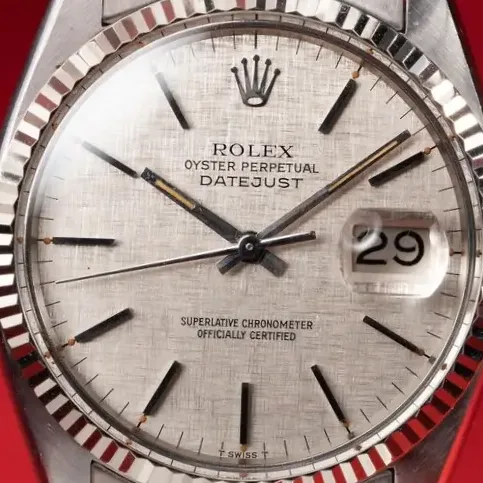
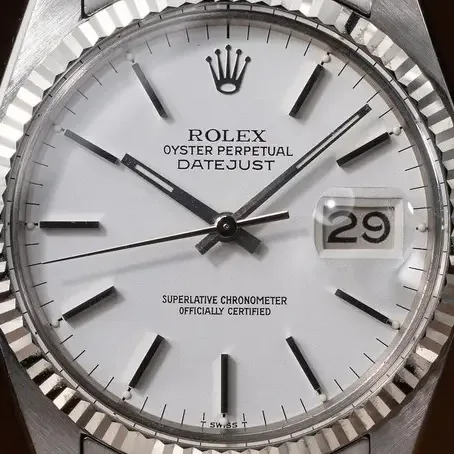
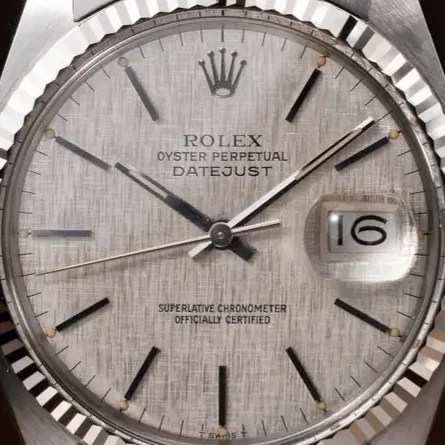
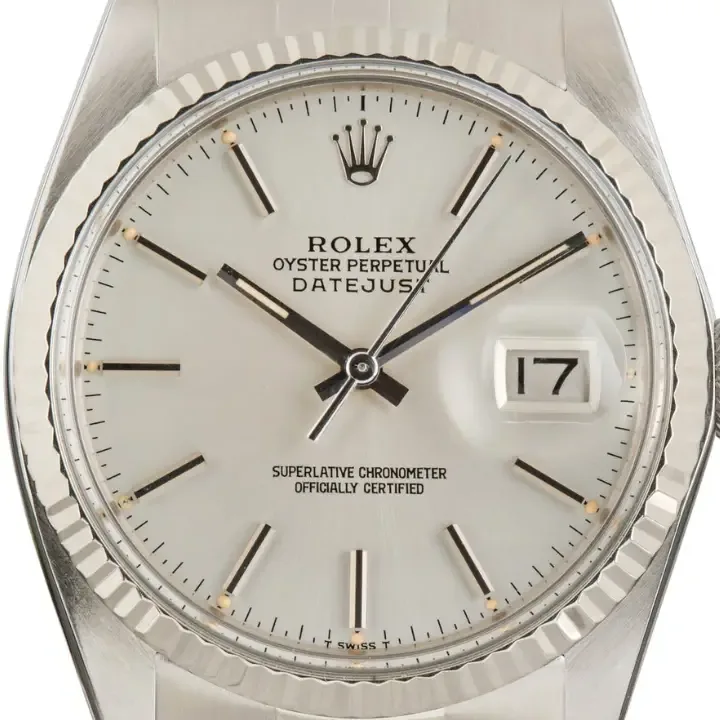
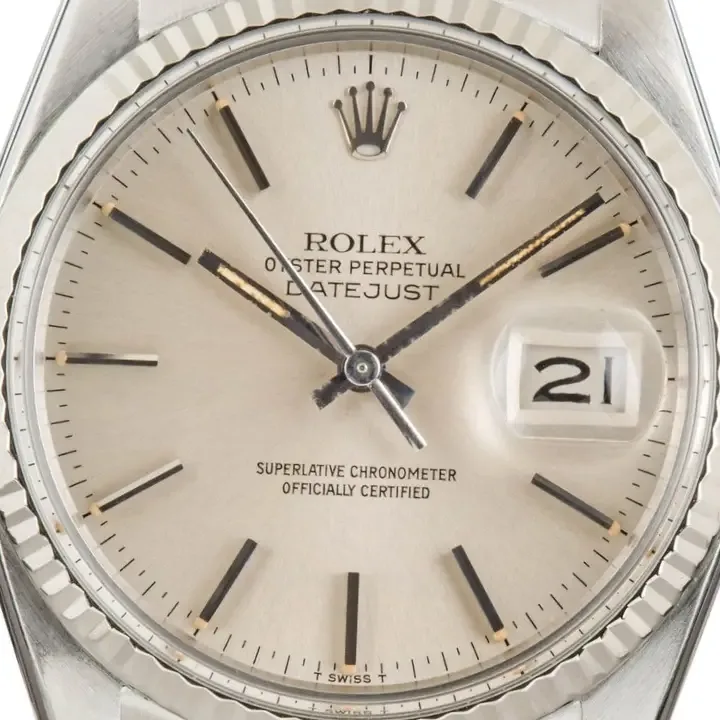
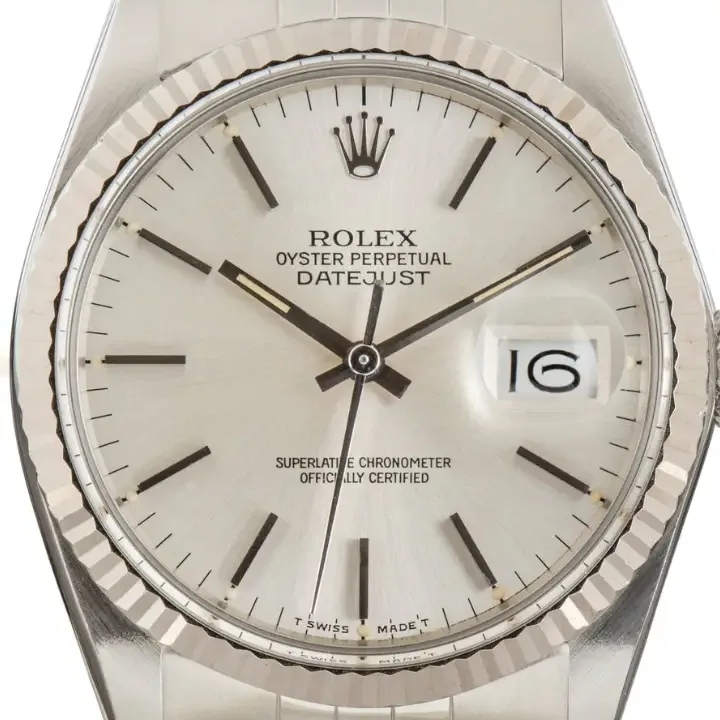
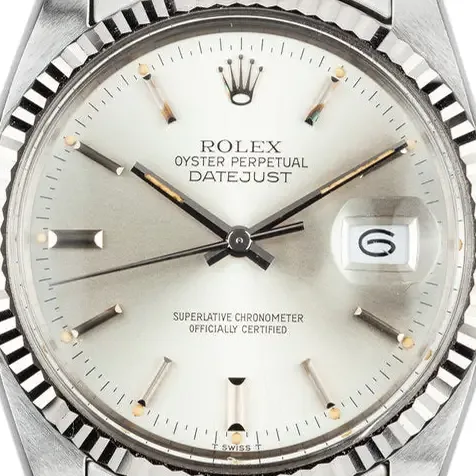
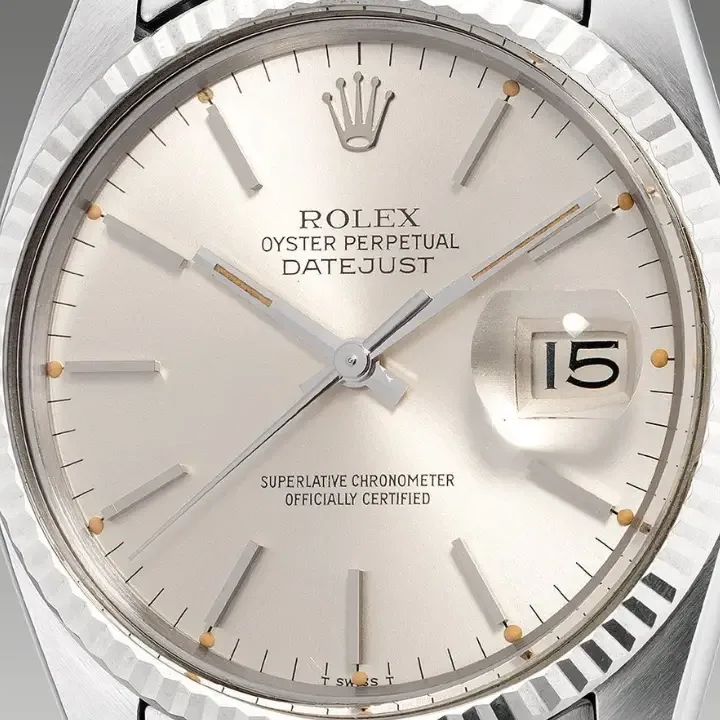
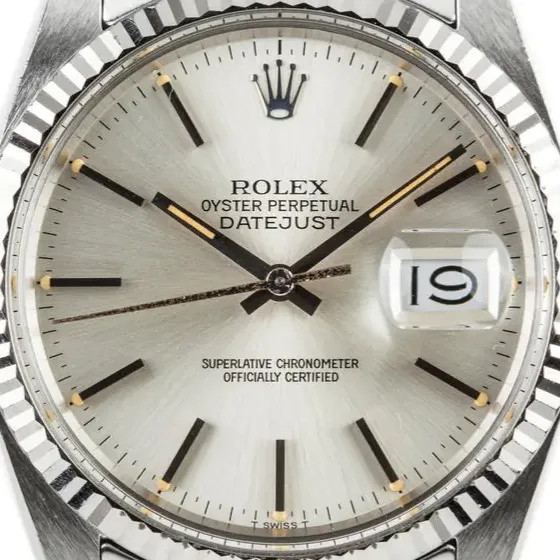
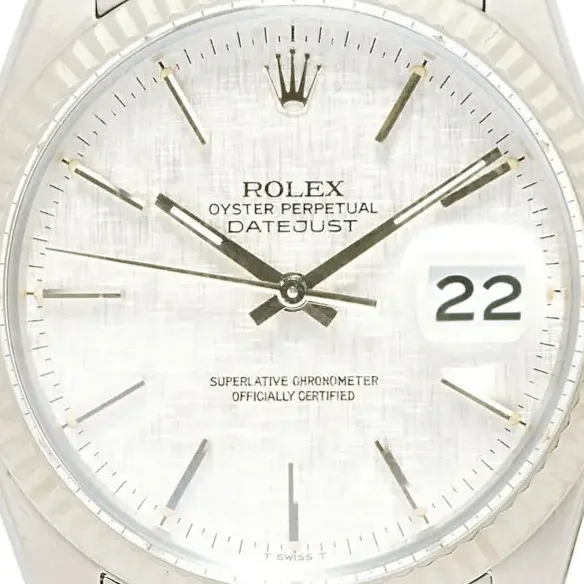
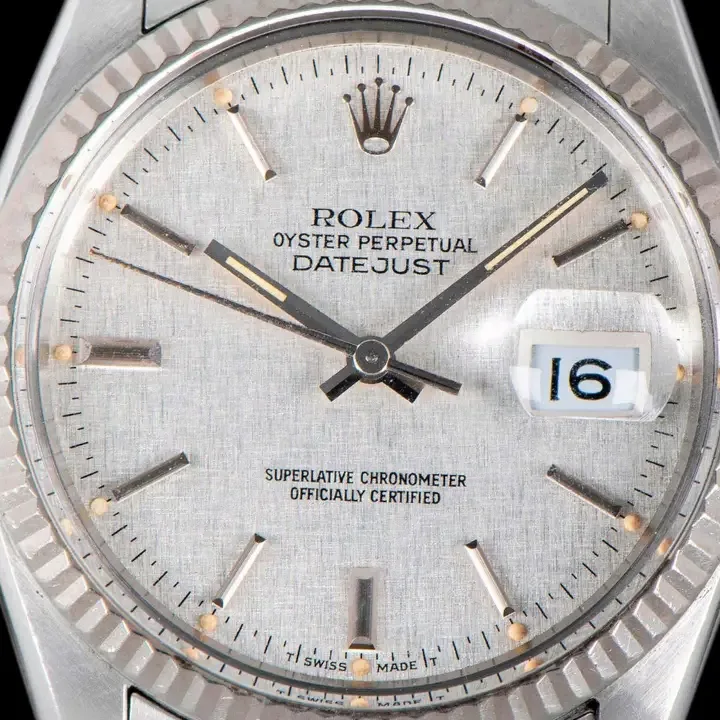
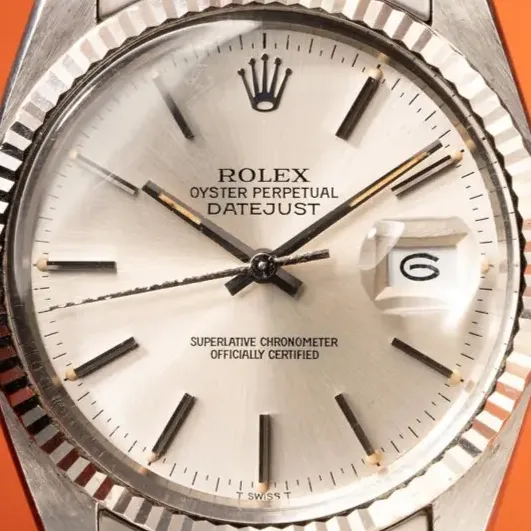
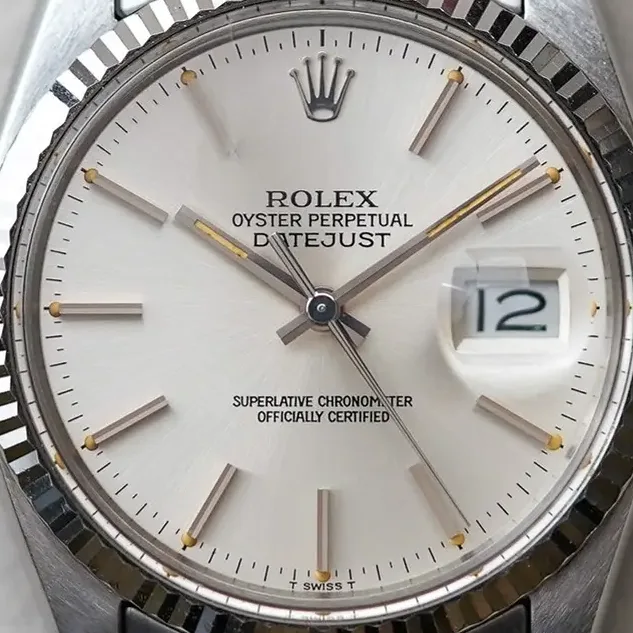
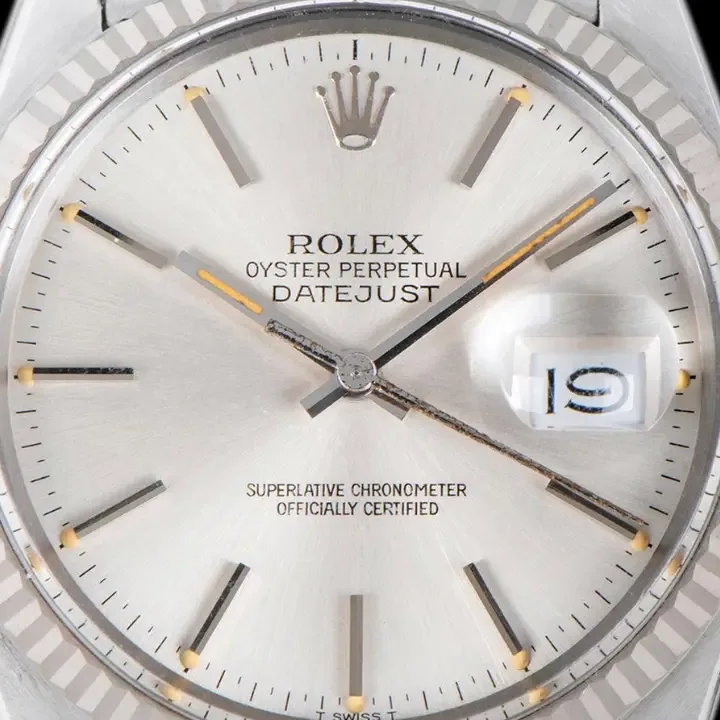
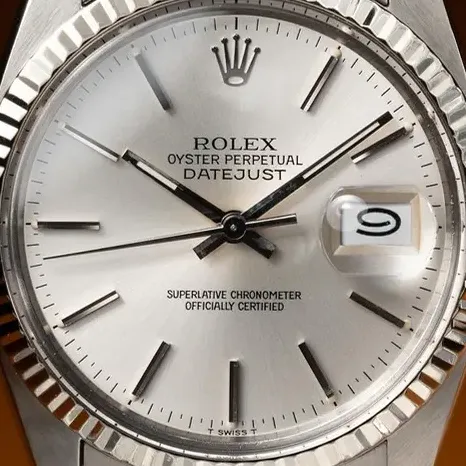
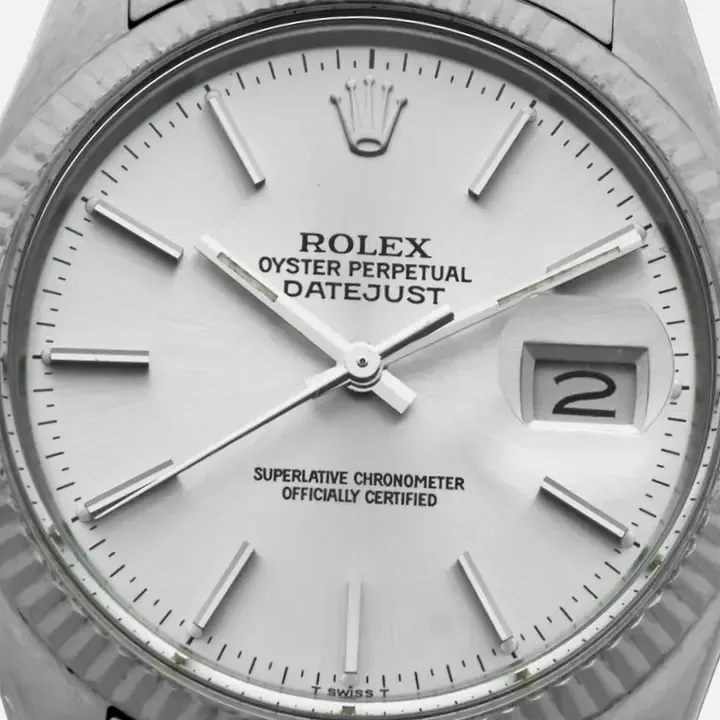
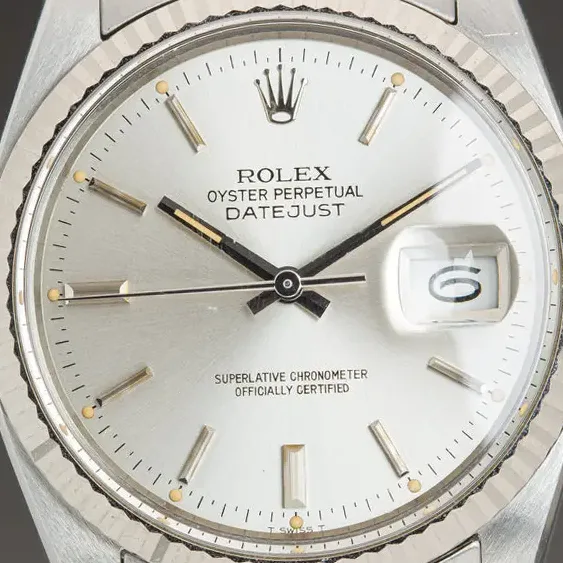
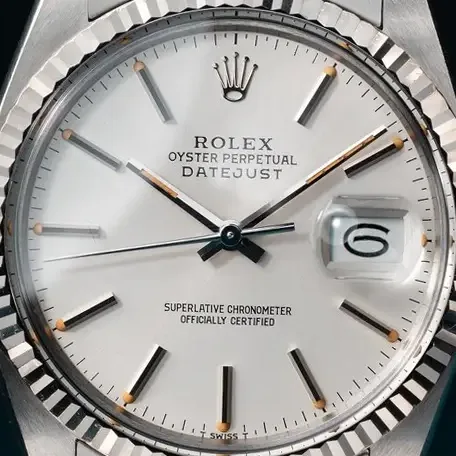
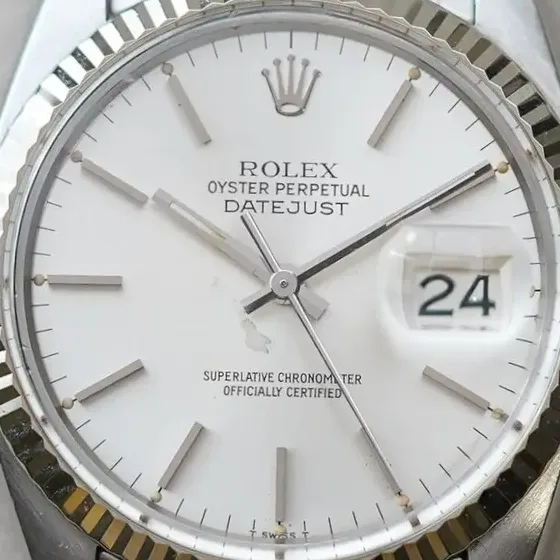
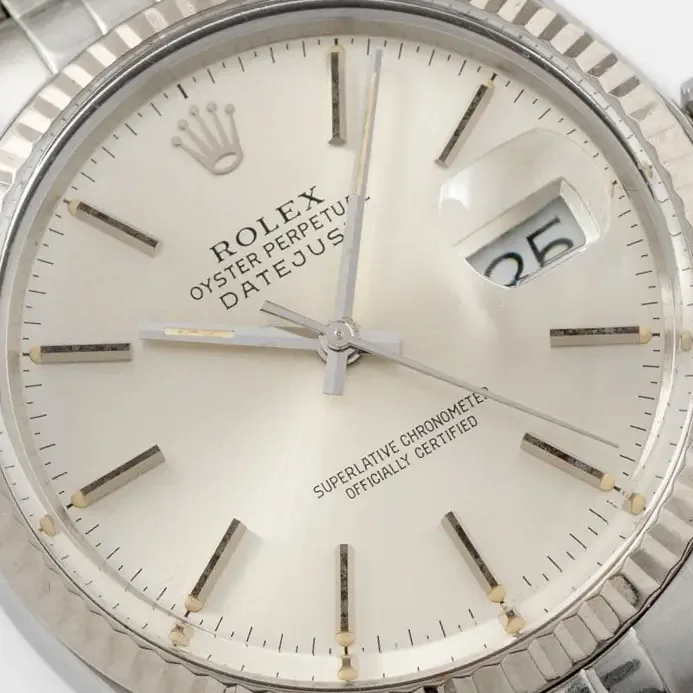
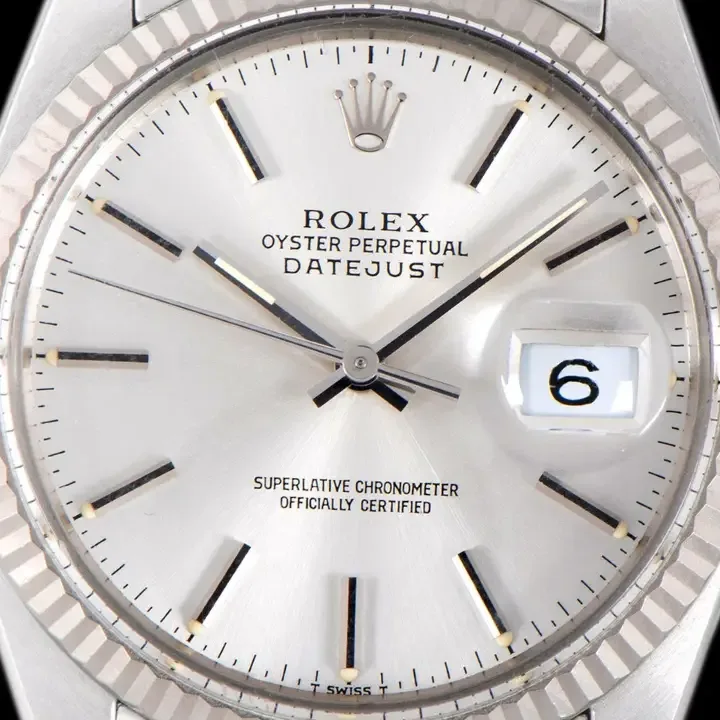
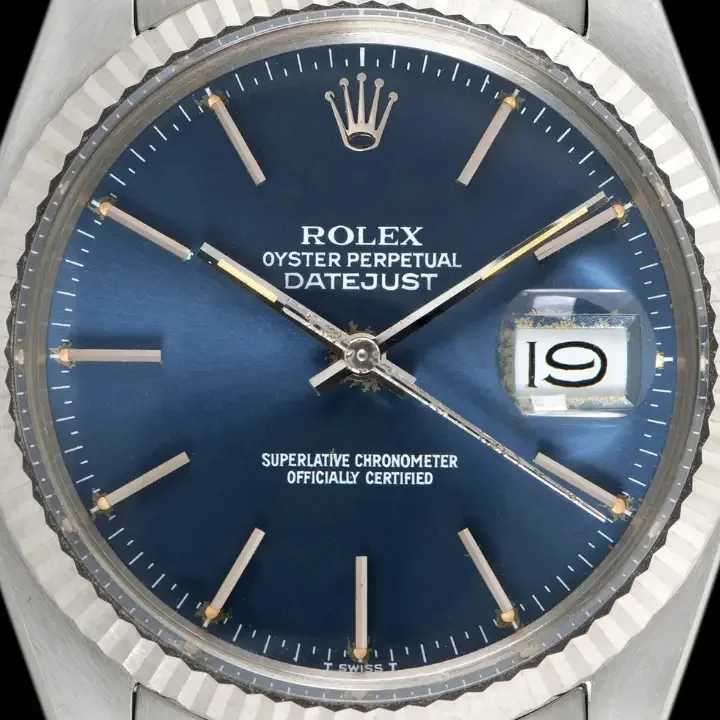
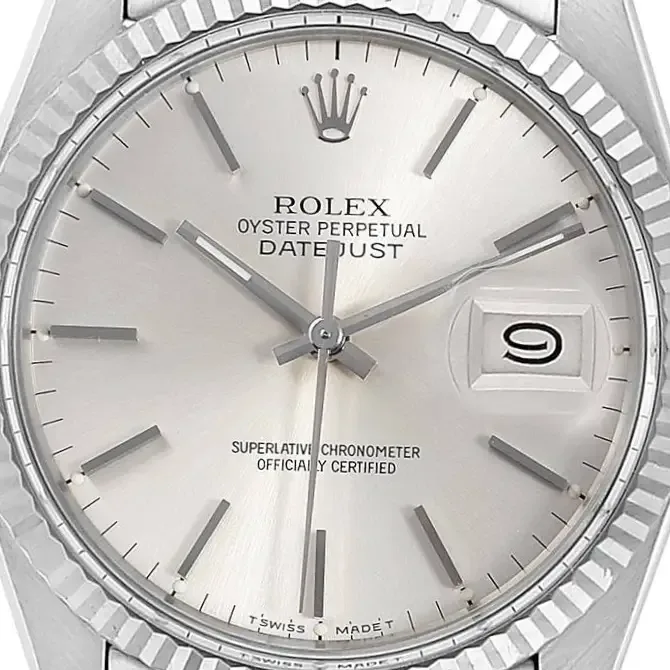
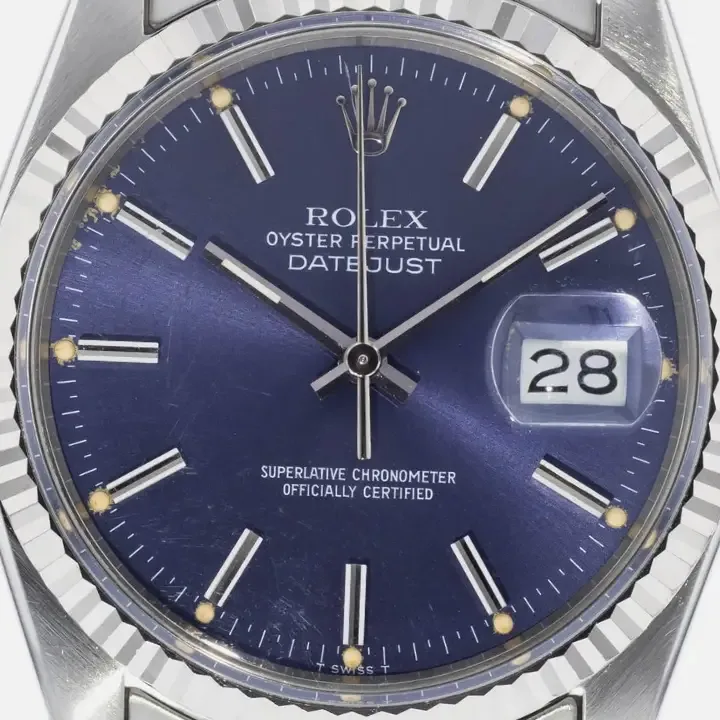
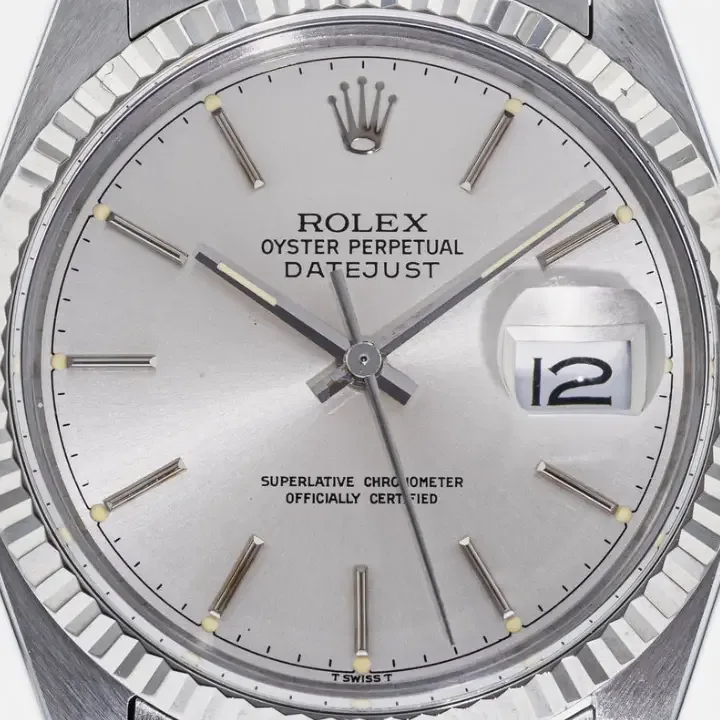
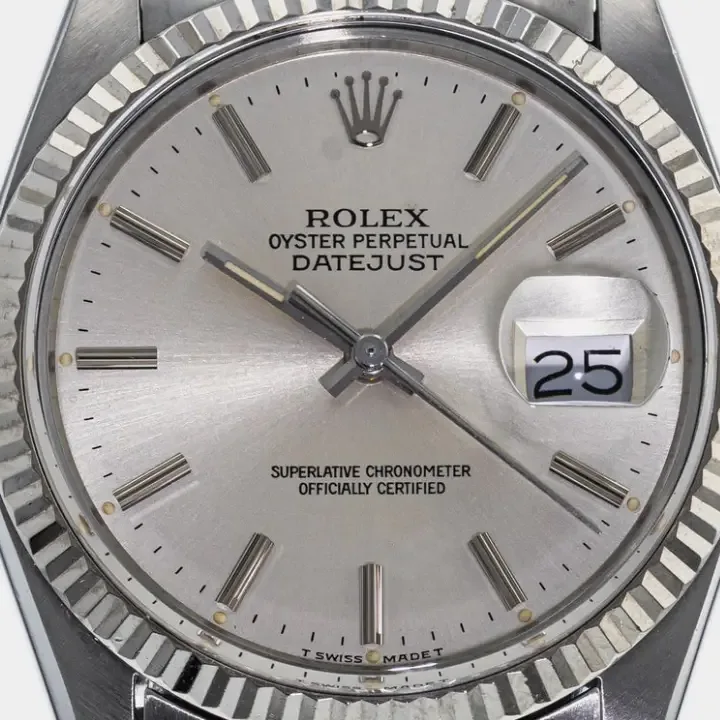
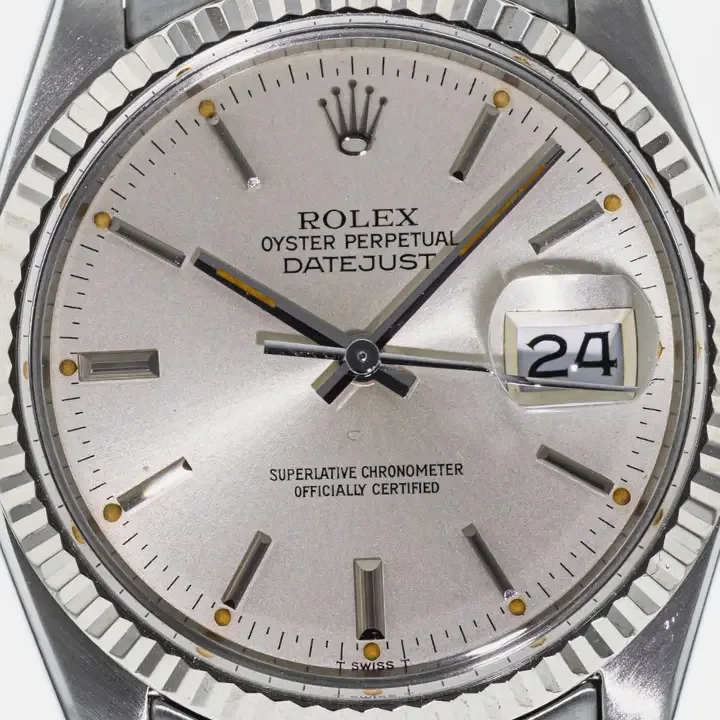
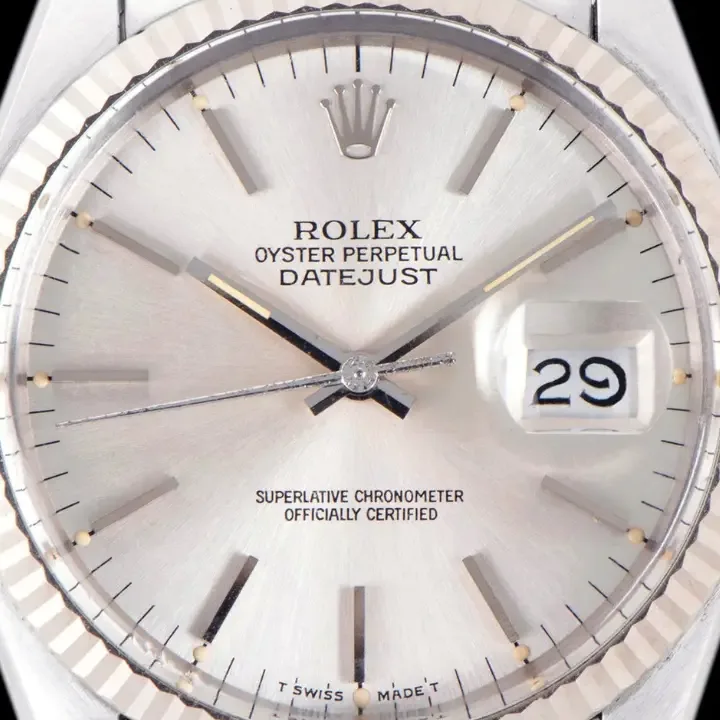
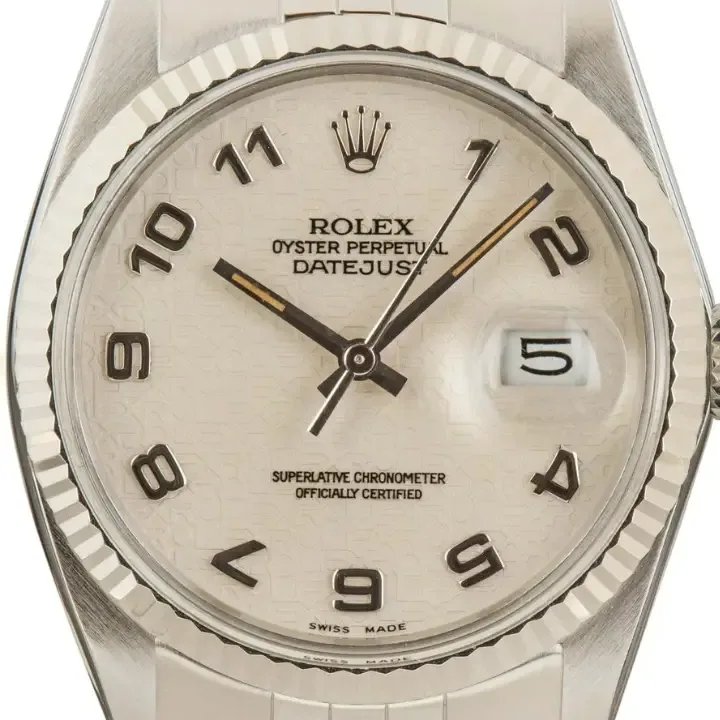
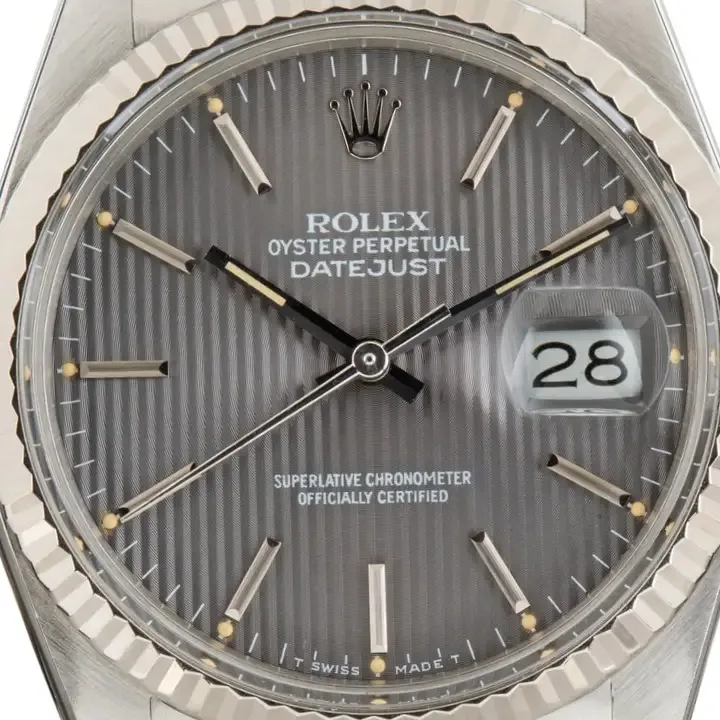
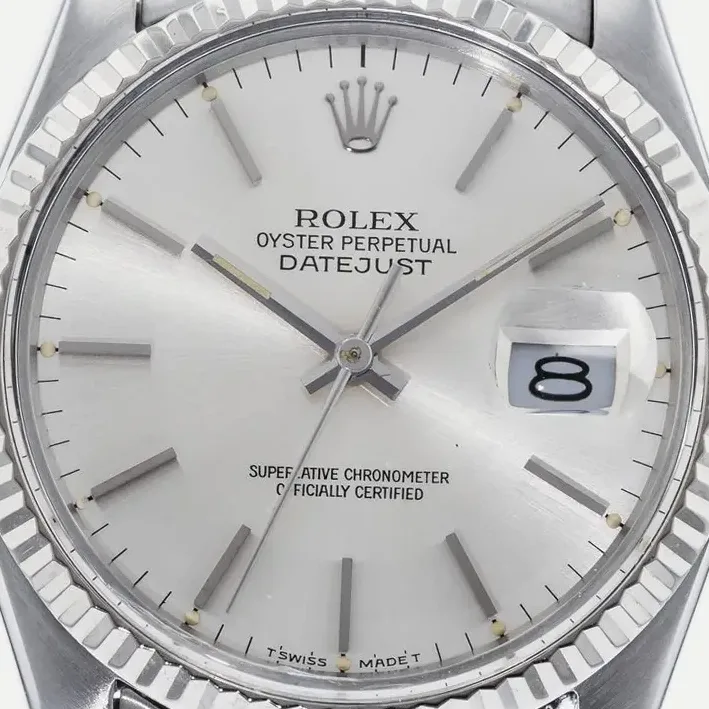
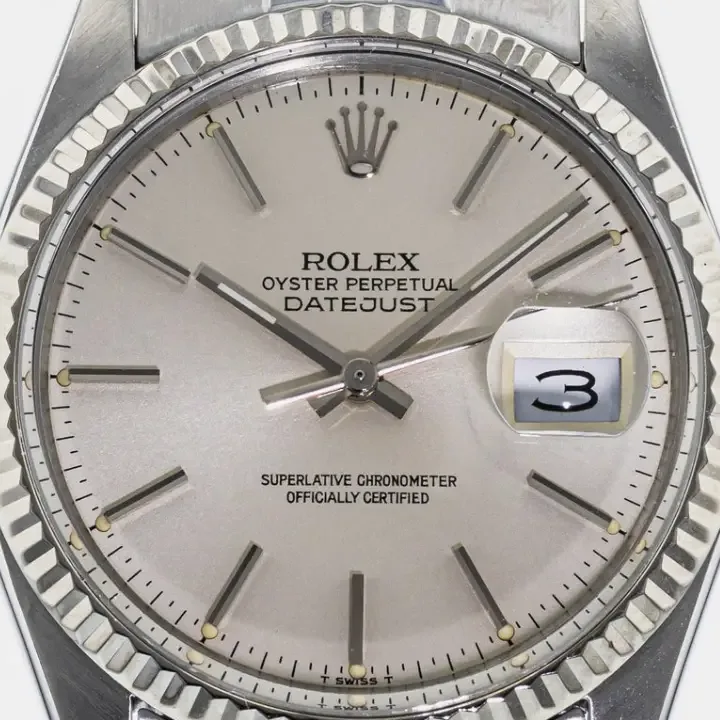
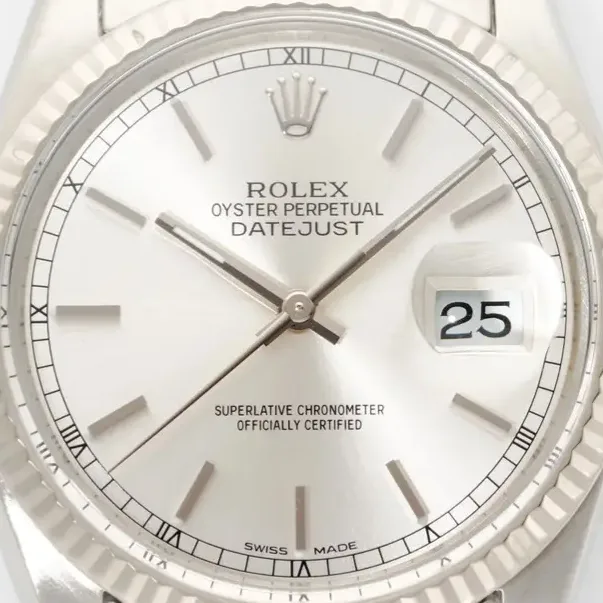
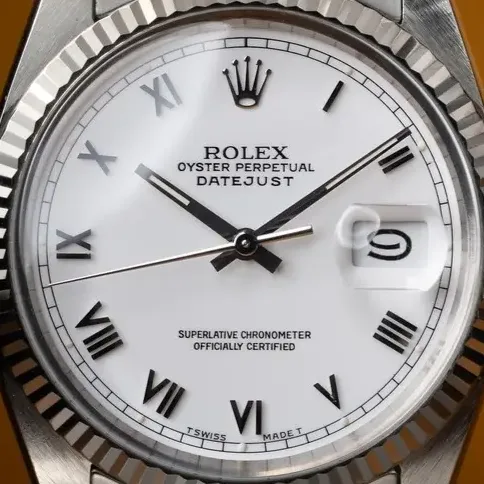
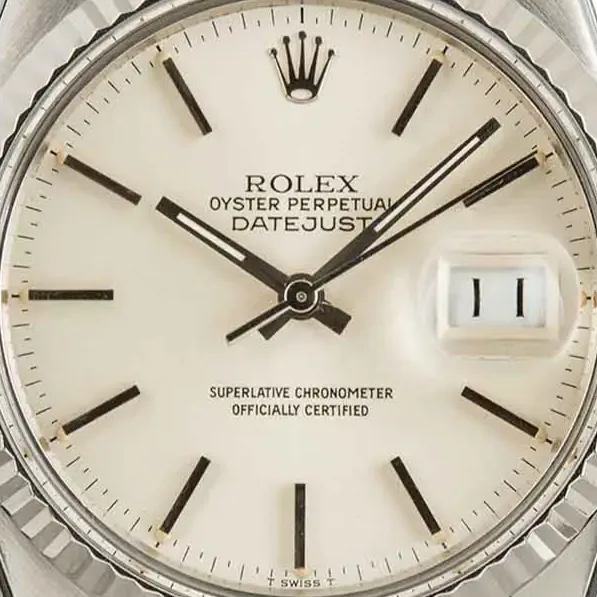
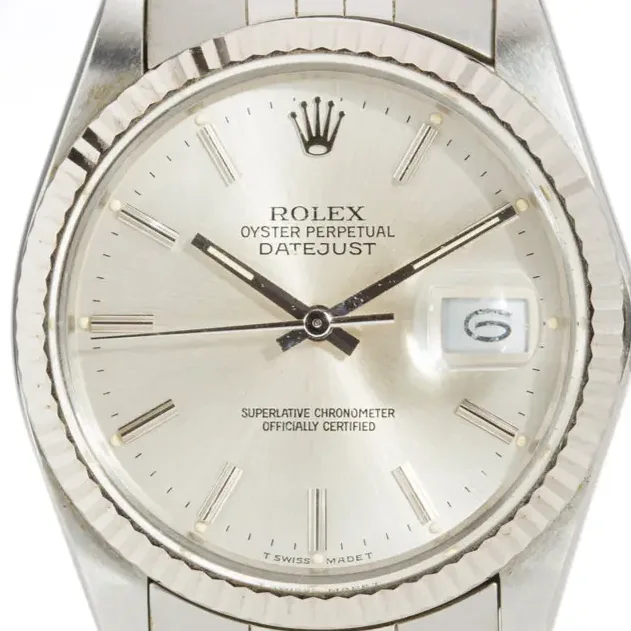
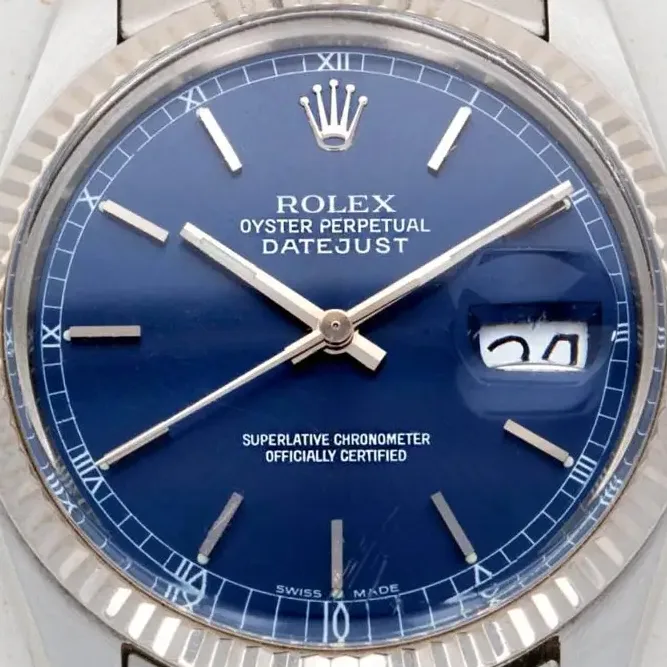
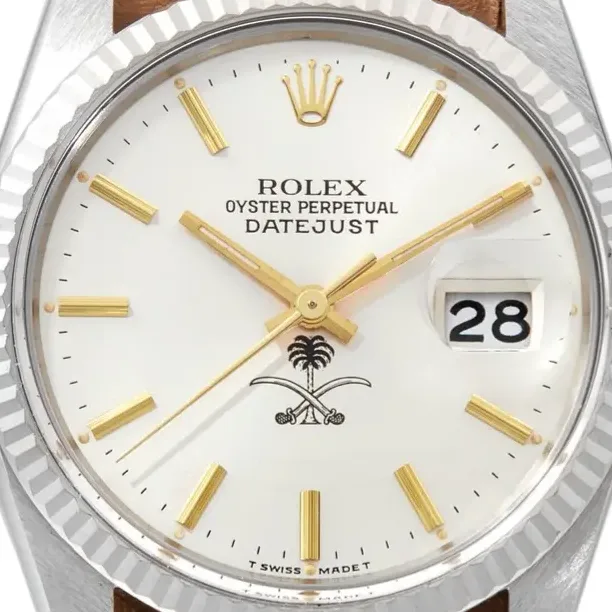
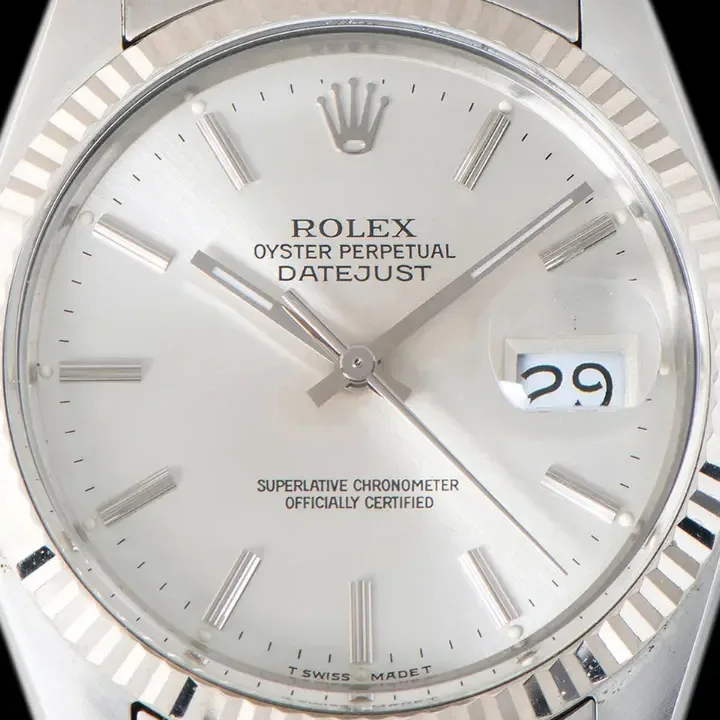
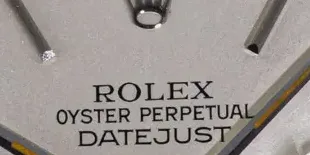
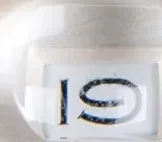
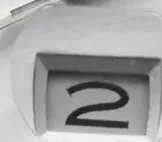
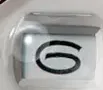
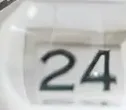
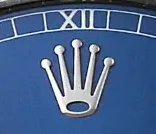
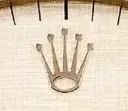
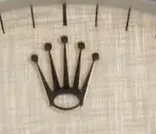
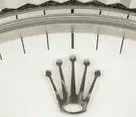
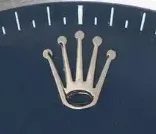
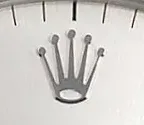
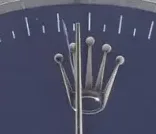
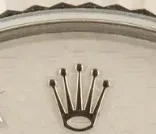
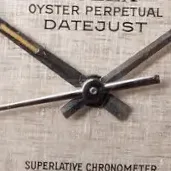
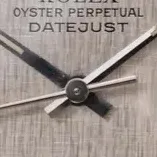
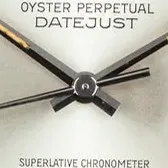
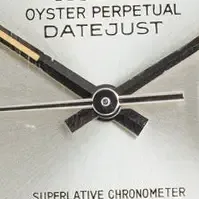
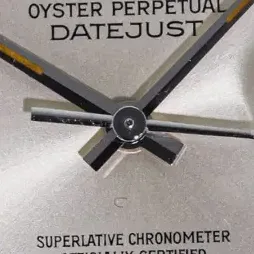
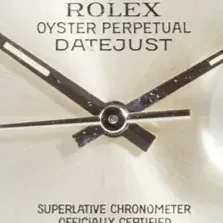
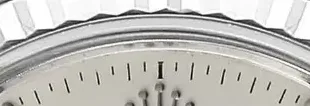
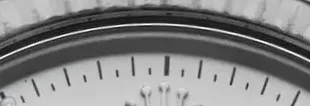
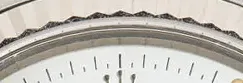
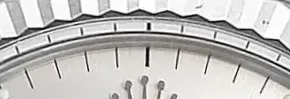
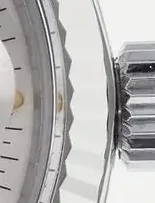
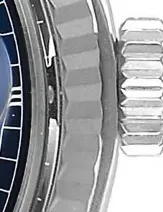
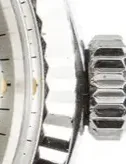
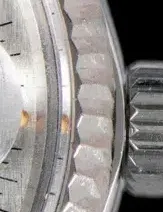
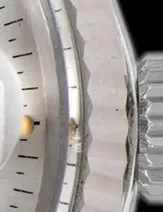
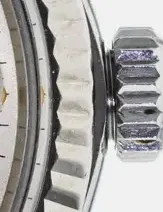
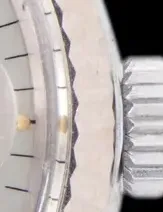
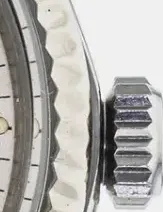
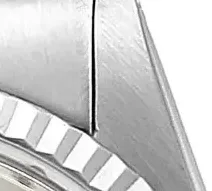
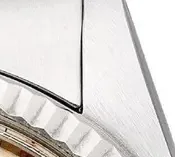
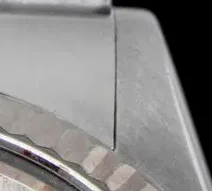
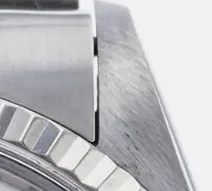
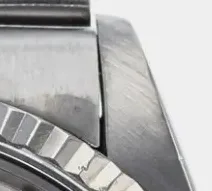
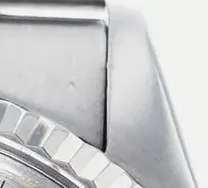
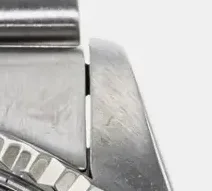
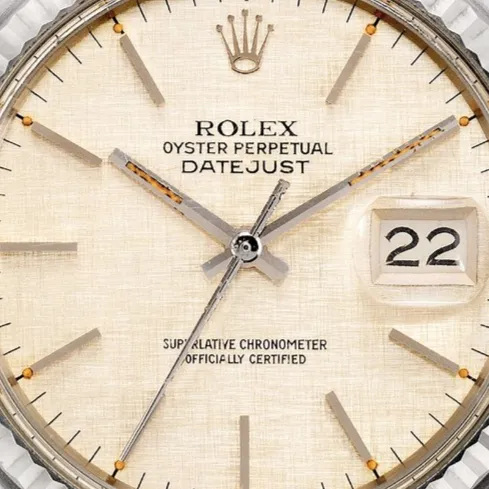
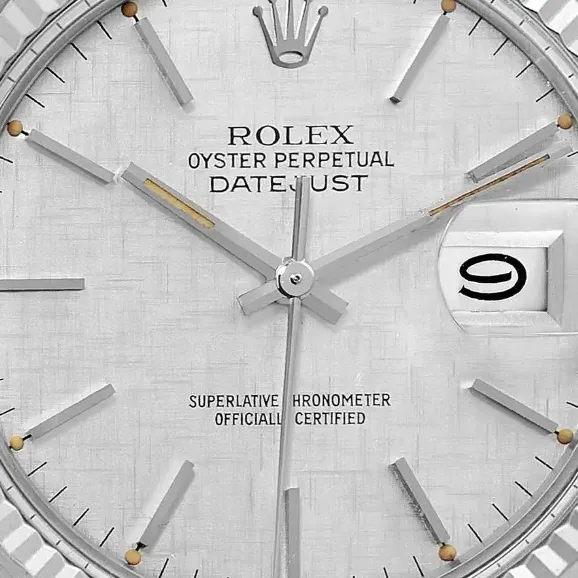
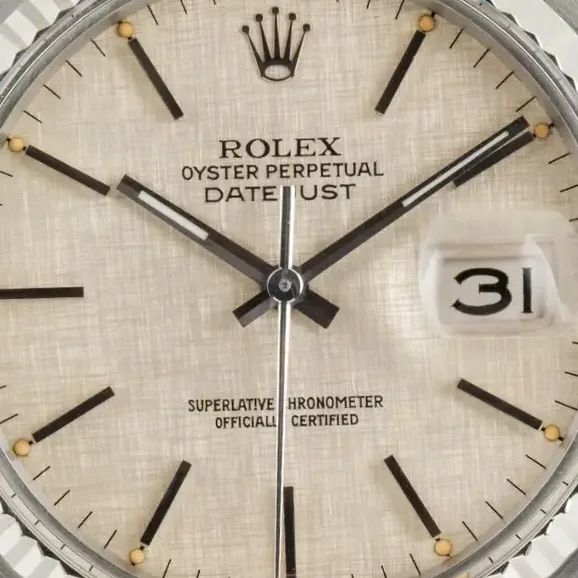
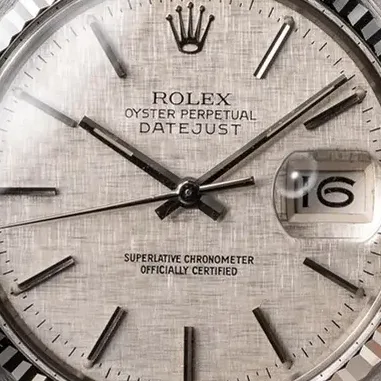
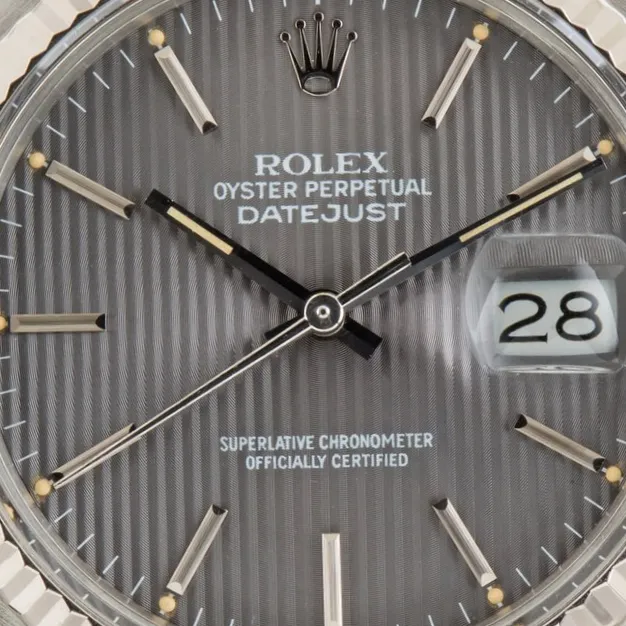
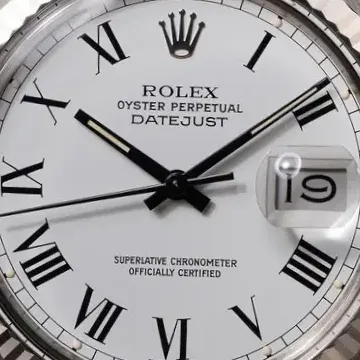
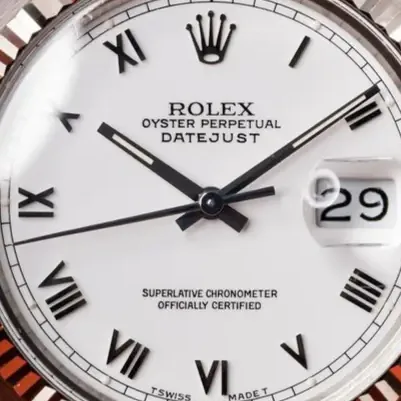
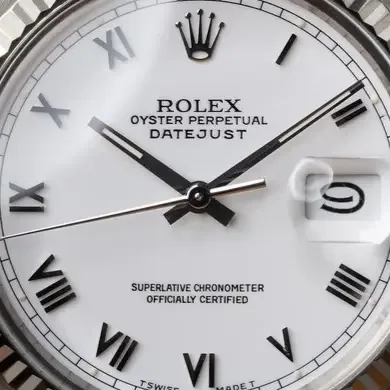
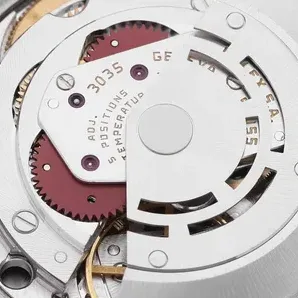
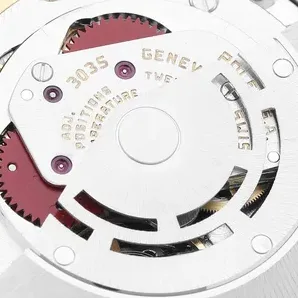
The steel Datejust in a 36 mm Oyster case with a fluted 18k white gold bezel, which makes it look all-steel at a glance. It was made from about 1977 to 1988 as the five-digit successor to the 1601 and carries the calibre 3035 with quickset date. Its dials are flat, the crystal is acrylic and the lume tritium, and the lugs are drilled. Silver is by far the commonest dial in the records, often with a linen texture. Collectors check the dial type, the stretch of the Jubilee bracelet and whether a dial or hands were replaced at service.
1976–1988nine in ten in 1978–1987 · by case numbers
Case
36 mm · steel (95%)as sellers state
Movement
Calibre 3035automatic
On record
733 listings1,576 photographs · 55 holders
Components
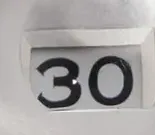
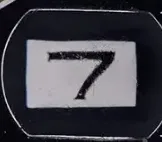
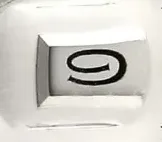
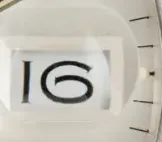
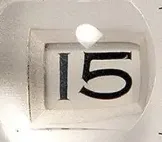
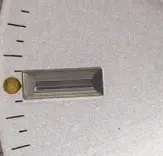
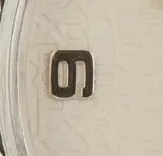
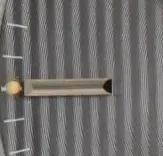
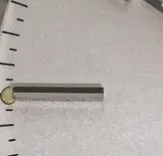
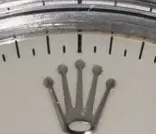
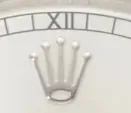
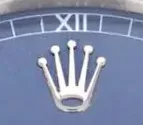
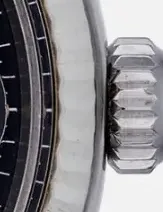
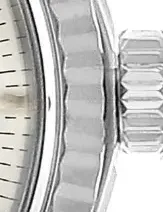
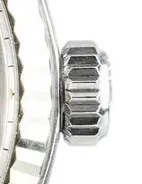
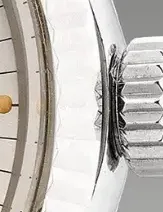
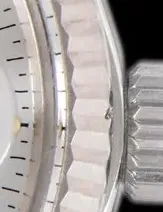
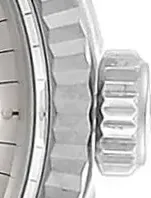
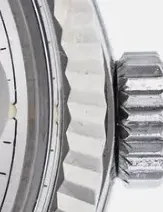
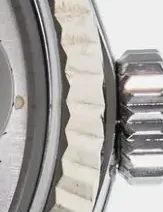
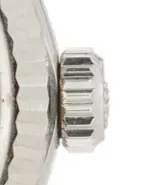
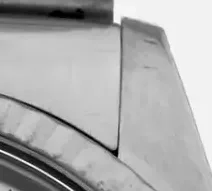
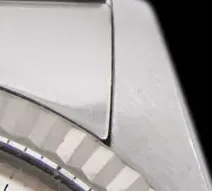
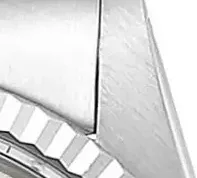
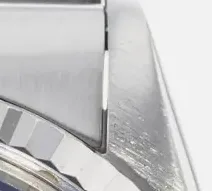
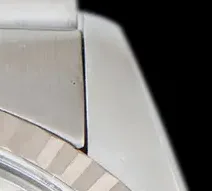
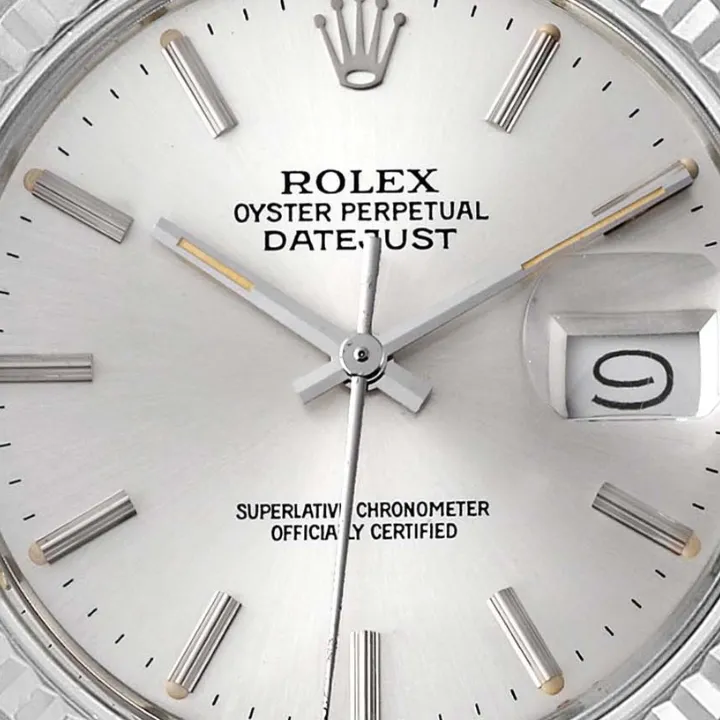
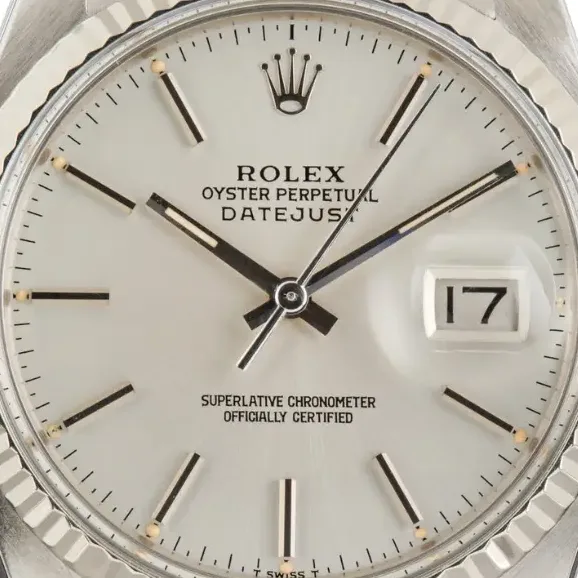
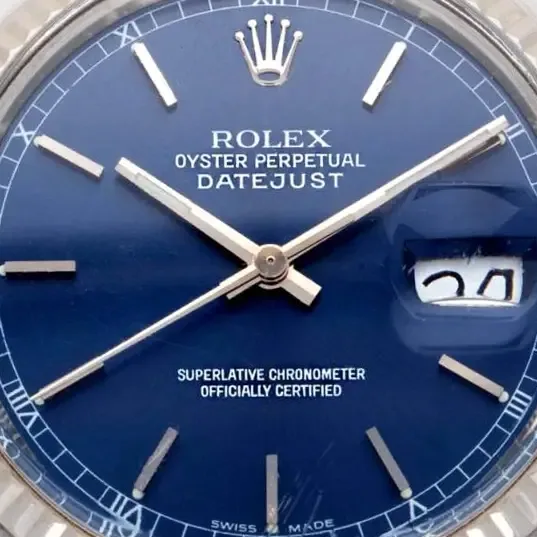
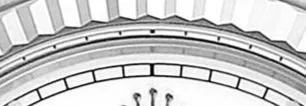
47 watches, oldest first, each straightened and cut the same way so that one row shows one component across them all. Chosen from 1,576 photographs on file for sharpness and for a face typical of the reference. A year marked c. is one its holder gives only roughly. Each picture is a detail cut from a listing photograph. Select the small mark in its corner for its year, its holder, a link to the listing it came from, and a way to report it.
Published accounts give 1977 to 1988, with the five-digit steel Datejusts overlapping the four-digit ones into the early 1980s.
1977
Reference
The 160XX family begins, with the 16014 replacing the 1601 in the late 1970s.
1977
Movement
The calibre 3035 brings quickset date and a 28,800 vph beat to the Datejust.
1977
Dial
The flat five-digit dial takes over from the pie-pan dial.
1978
Dial
A matte white Buckley dial with painted Roman numerals is seen on a 1978 watch.
1978
Reference
Steel five-digit Datejusts begin to replace four-digit ones, with overlap into the early 1980s.
1979
Dial
A silver soleil dial dated 1979 is found on its original bracelet.
1983
Bracelet
A bracelet with an H date code is dated about 1983.
1985
Dial
A blue dial and a linen dial are dated about 1985.
1987
Dial
A black dial is dated about 1987.
1988
Reference
The family is superseded after an eleven-year run; the 16234 follows.
Every dated variant: what is written, and what the records show
Upper line: what is writtendated spanapproximate datesonly a start or an end givena single year
Lower marks: watches on recordfew to many that yearoutside the written dates
For the reference the marks are every dated watch; for a variant, the watches a seller names as that variant, so a variant sellers do not name has none.
The reference's own marks are dated by case number. A variant's marks use the year each seller states, so a variant can show watches in a year where the row for the reference shows fewer, or none.
Specification
Case
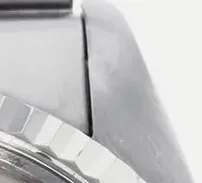
36 mm Oyster case in steel, 44 mm lug to lug (42 mm measured on some examples), about 12 mm thick without the Cyclops; 20 mm lug width, drilled lug holes
Bezel
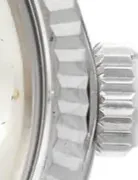
Fluted 18k white gold (White Rolesor)
Crystal
Box-shaped acrylic with Cyclops lens
Movement
Calibre 3035 automatic, 27 jewels, 28,800 vph, quickset date, Breguet overcoil; power reserve given as 42 hours in most accounts, 48 or 50 in others
Dial
Flat dial, tritium lume
Bracelet
Jubilee, far more often, or Oyster; hollow centre and end links, solid outer links, stamped fold-over clasp
Water resistance
Stated as 100 metres, though old gaskets may not hold it
Dial 7 described
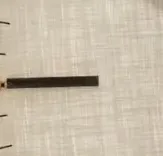
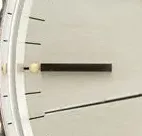
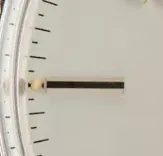
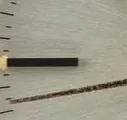
The pie-pan dial of the four-digit era gave way to a completely flat one. The 16014 suits neutral colours; silver dominates the records. Textured dials and several marker styles are found.
Silver
undated
The most common dial by a wide margin in the records, including a silver soleil (sunburst) finish dated 1979 and about 1986.
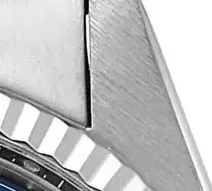
A 36 mm steel case with 20 mm lug width and holes drilled through the lugs.
White Rolesor
undated
Steel with only the bezel in white gold.
Lug holes
undated
All cases have them.
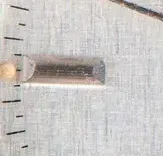
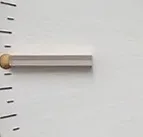
pin holes in lugs
Crown 1 described
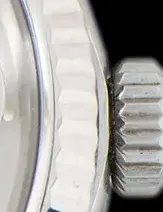
Time is set by turning the crown counterclockwise on the 3035; the later 3135 turns clockwise.
3035 crown action
undated
Counterclockwise time setting separates the 3035 from the 3135.
Crystal 1 described
An acrylic crystal throughout the run.
Box-shaped acrylic
1977–1988
With a Cyclops lens.
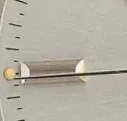
box-shaped crystal
Date 1 described
Quickset date: the crown is pulled to a second position and turned about one and a half turns per digit. The 1601 lacked it.
Quickset
from 1977
Introduced to the Datejust with the 3035.
Movement 1 described
The 3035 beats at 28,800 vph; the 1601 had the 1565 (18,000) or 1575 (19,800), both slower.
Calibre 3035
1977–1988
27 jewels, Breguet overcoil, free-sprung Microstella-regulated balance, quickset. Power reserve is given as 42 hours in most accounts, 48 or 50 in others.
28,800 vph
Bracelet 2 described
Jubilee, used far more often, or Oyster. Outer links are solid and centre links are hollow and folded; end links hollow. Solid end links do not appear until the 2000s.
Jubilee
undated
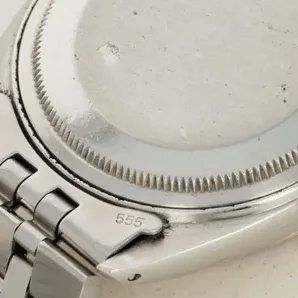
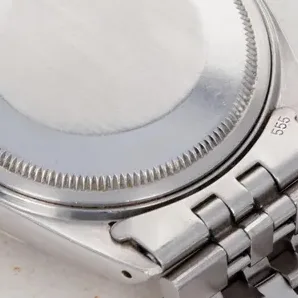
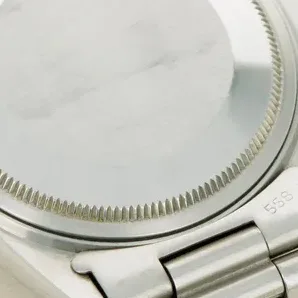
D-link style with hollow links and stamped fold-over clasp. Sellers name the bracelet references 62510 and 62510H, with 555 and 555B end links.
62510H
555
Oyster
undated
Three-piece links.
Originality
Dials and hands are replaced at service, and sellers describe some 16014 dials and hands as service replacements.
Gaskets age, so the stated 100 metre water resistance may not hold without fresh ones.
Stretched hollow-link bracelets are a common fault.
Where accounts differ
Points on which the published literature and the library's own records do not agree, or on which the literature contradicts itself.
Power reserve. Two accounts give 42 hours for the 3035; one of those accounts also says a fast-rotating barrel raised it to 50 hours from 48. Accounts of other references with the movement give about 48 hours for the 3035 itself.
Lug-to-lug length. One account gives 44 mm from lug to lug; another measures 42 mm on the examples it shows.
Back and movement
From listings of this reference, each confirmed by eye to show what it is filed under. A picture on which a person's name or a personal engraving can be read is not shown. From most holders a detail from the middle of the photograph is shown; the mark in its corner gives its holder and a link to the listing.
Counted from 733 listings at 55 holders between 14 September 2010 and 14 November 2026. These are what sellers and auction houses state, not measurements.
1974watches by year of manufacture, from case numbers; the tallest bar is 76, in 19841988
Fainter bars are the 20 outside the main run of 1978–1987 (the middle nine-tenths): the earliest is 1974 and the latest 1988. They are early and late examples, and now and then a number misread. The head of the page gives 1976–1988: the years that listings from two holders bear out.
At the holders that record papers on every watch, 12% of their 189 listings of this reference come with papers; at those that record the box on every watch, 62% of 221 come with a box. "Papers" is whatever the holder counts as papers, and can include service papers.
2 listings dated long after the reference ended are set aside and not counted here: a year that late belongs to a later watch sold under the old number, or to a listing filed under the wrong one.
Case metal
Steel
331
Steel and gold
12
Silver
2
Gold plated, filled or capped
1
Gold, colour not stated
1
A listing that says "gold" or "18K gold" names no colour: it is counted under "colour not stated", not as yellow gold.
Dial colour
Silver
249
White
37
Black
32
Blue
25
Grey
14
Cream
4
Champagne
2
Purple
1
Case size
36 mm
343
35 mm
6
34 mm
4
Calibre named
3035
147
Bracelet or strap
Jubilee bracelet
262
Metal bracelet, kind not stated
25
Oyster bracelet
8
Leather strap
8
Each table counts the listings that state the thing, in the seller's own terms. A size, metal, colour or calibre that cannot belong to this reference is a seller's slip or a listing filed under the wrong number.
Related references
1601: the four-digit counterpart sharing its white gold fluted bezel