Datejust
The 1601 is the 36 mm Datejust of the four-digit era, defined by a fixed fluted gold bezel, a pie-pan dial, a Cyclops over the date and a calibre without quickset. It was introduced about 1959 and replaced by the five-digit 16014 near case number 5.26M, with the date of the changeover given as 1977 or somewhat later. It came in steel with a white gold bezel, in steel and gold, and in yellow, white and pink gold. Calibre 1565 gave way to 1575 in 1965 and hacking followed about 1972. Collectors look first at the dial, which varies widely, and at the sharpness of the bezel flutes.
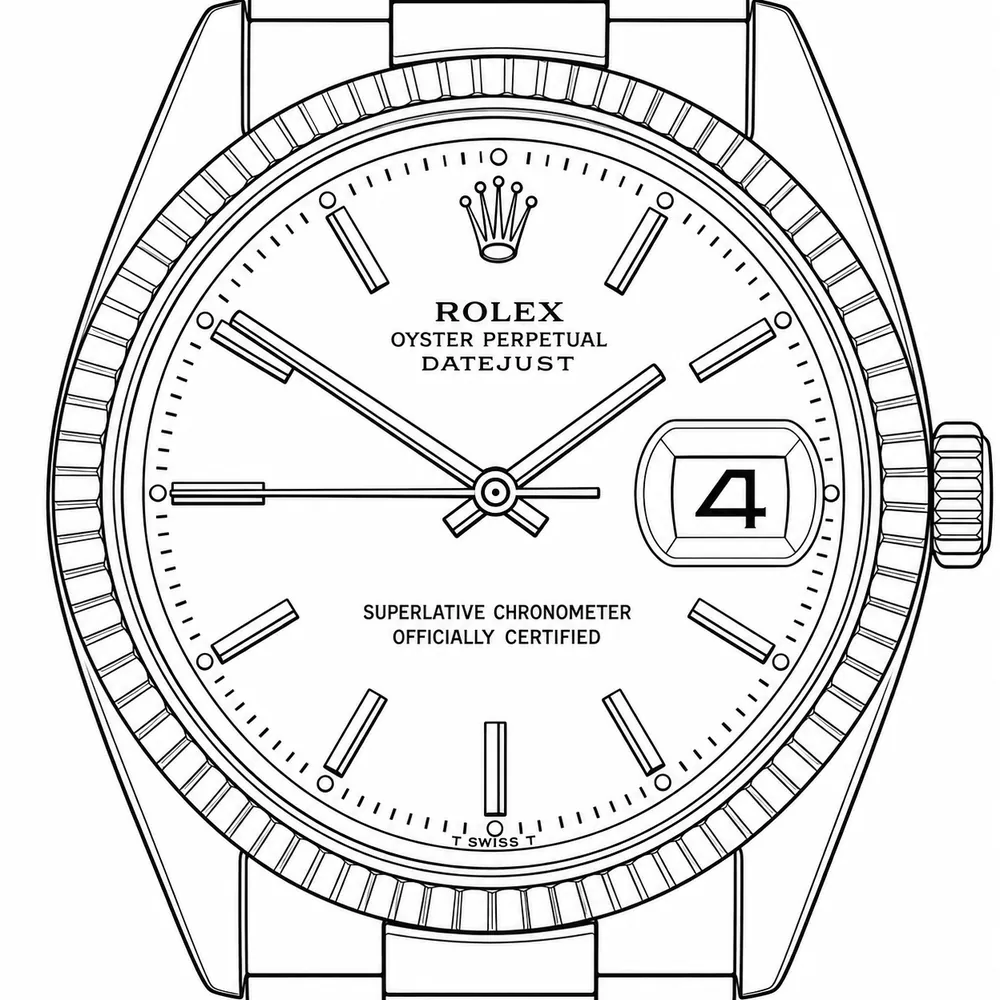
- Made
- 1959–1978dates approximate
- Seen in the library
- 1958–1980nine in ten in 1962–1977 · by case numbers
- Case
- 36 mm · steel (54%), gold (27%)as sellers state
- Movement
- Calibre 1575automatic
- On record
- 2,805 listings5,883 photographs · 72 holders
Components
30 watches, oldest first, each straightened and cut the same way so that one row shows one component across them all. Chosen from 5,883 photographs on file for sharpness and for a face typical of the reference. A year marked c. is one its holder gives only roughly. Each picture is a detail cut from a listing photograph. Select the small mark in its corner for its year, its holder, a link to the listing it came from, and a way to report it.
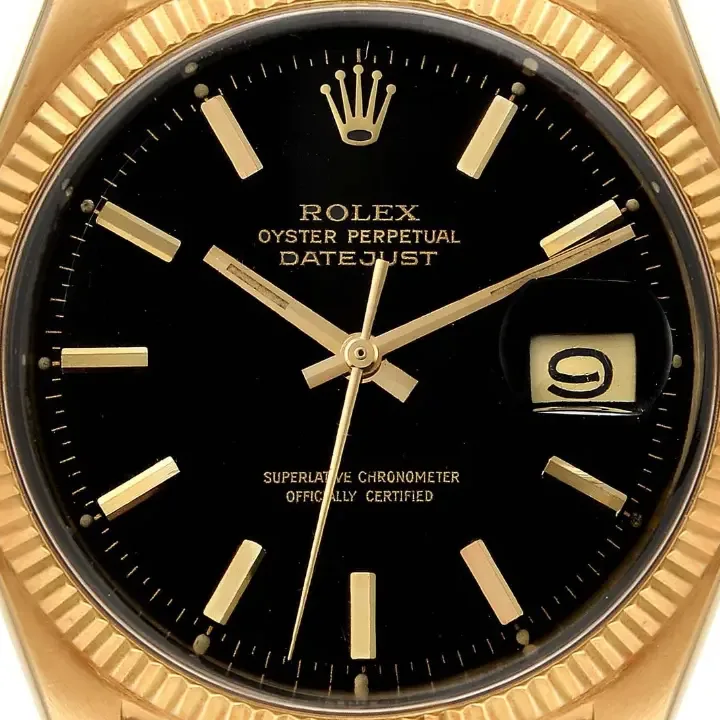
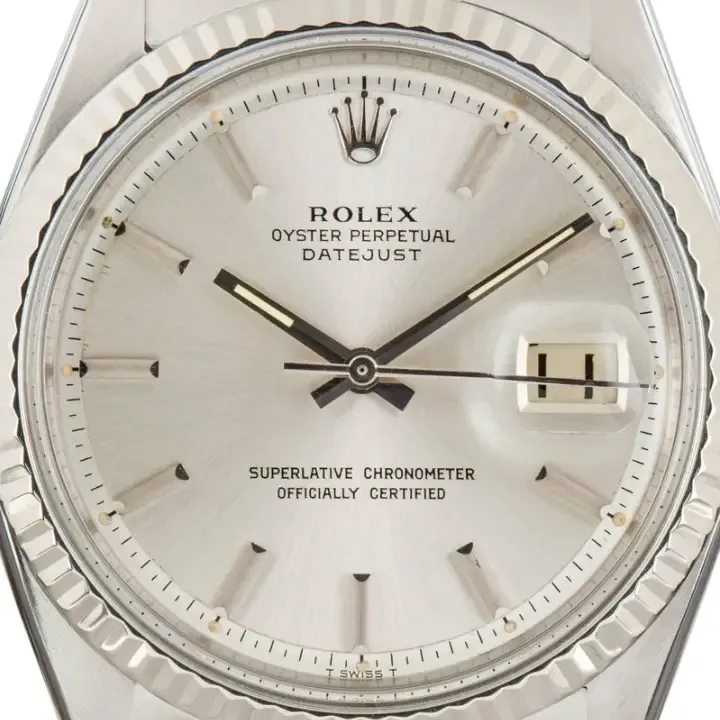
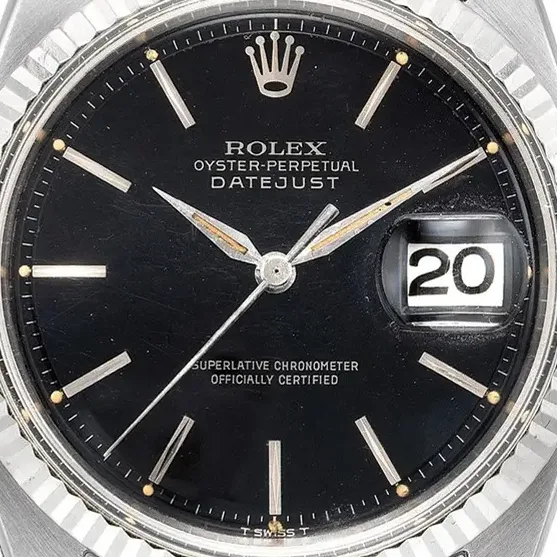
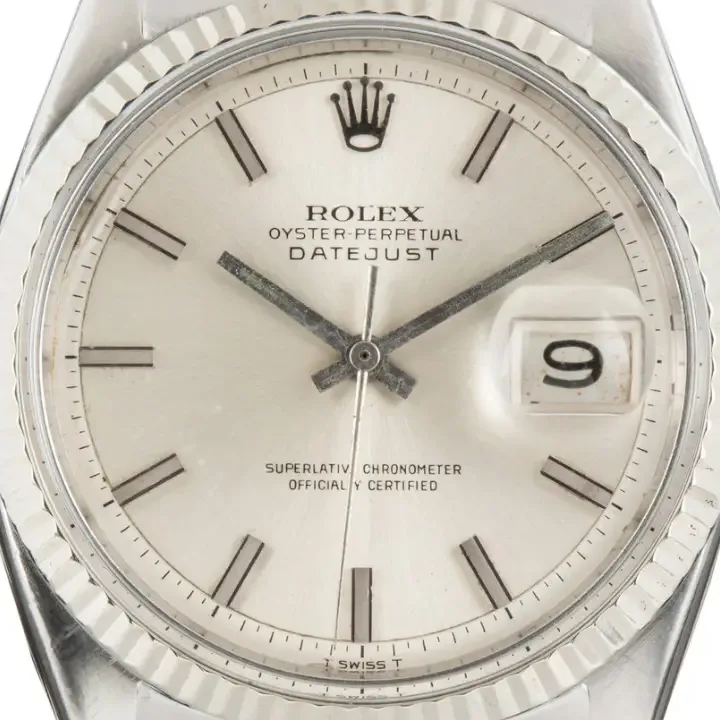
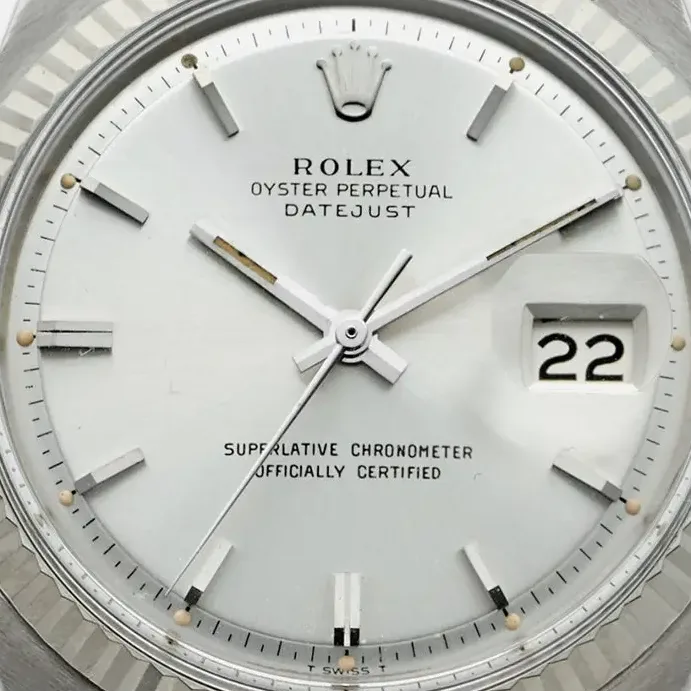
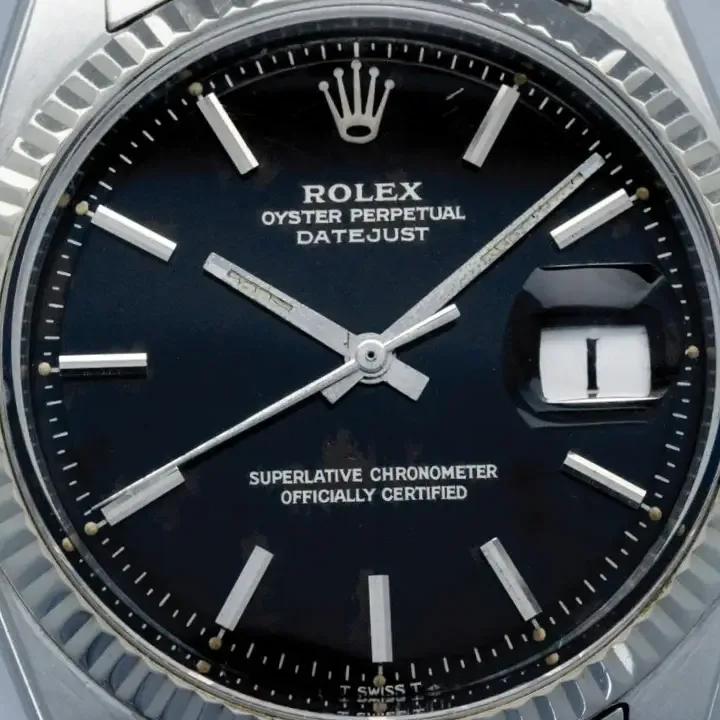
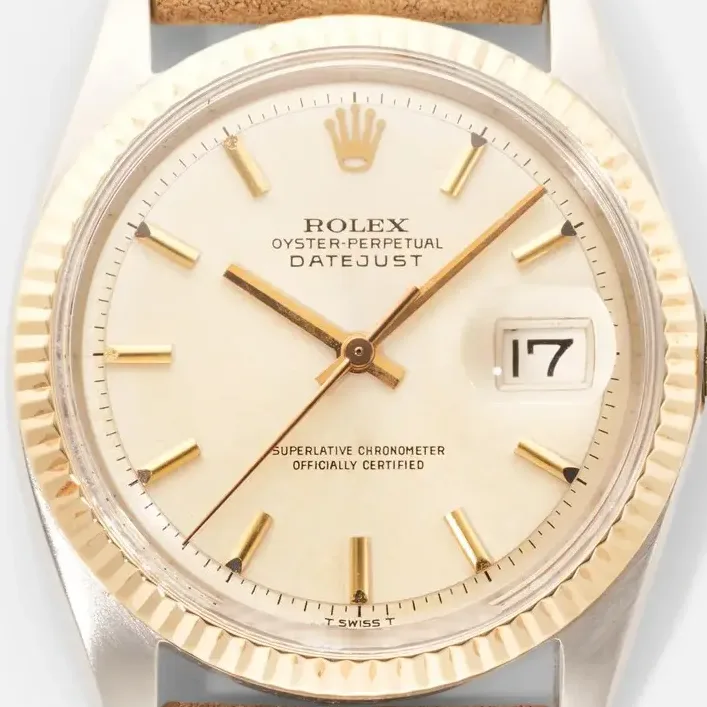
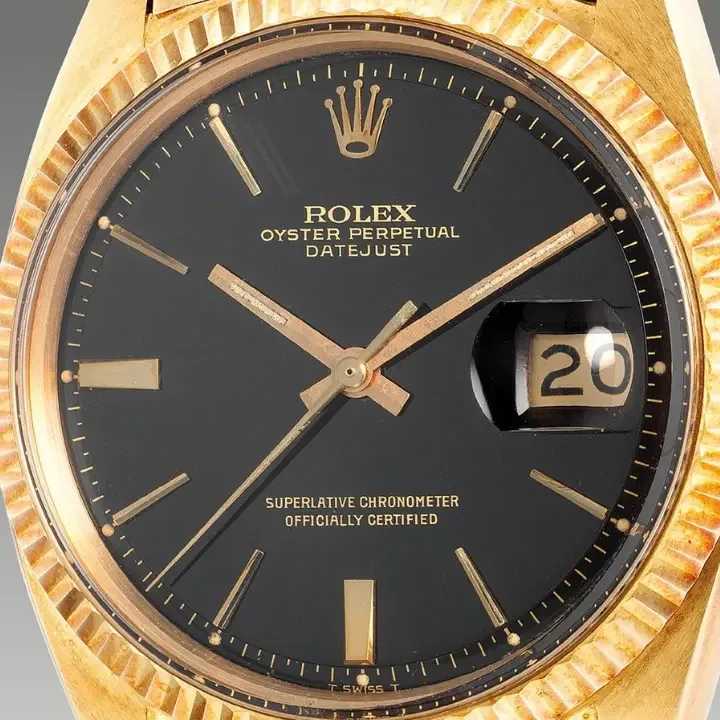
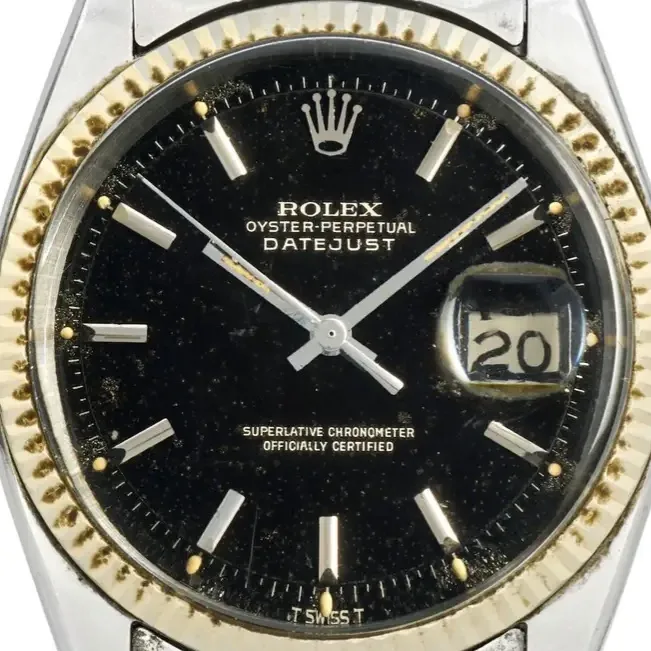
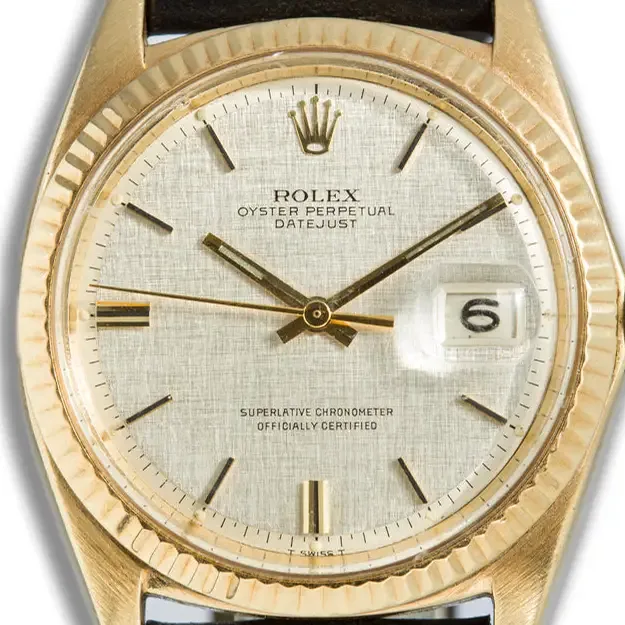
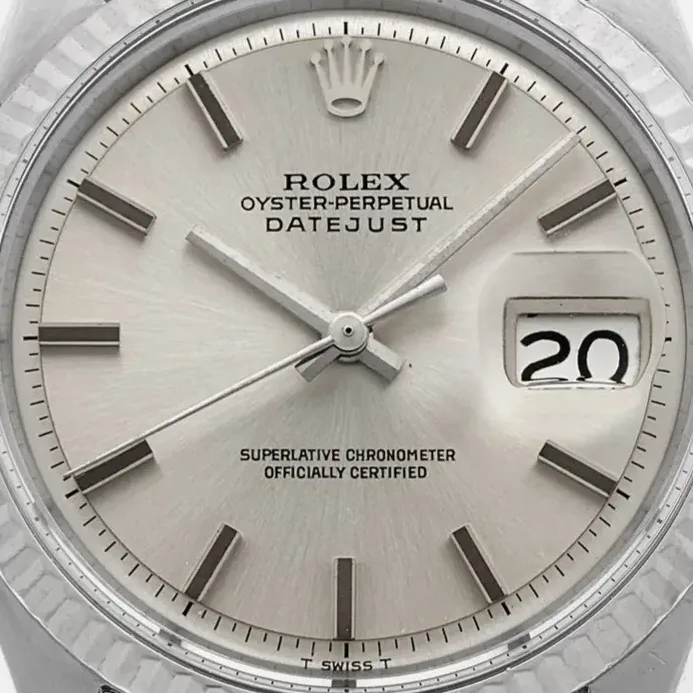
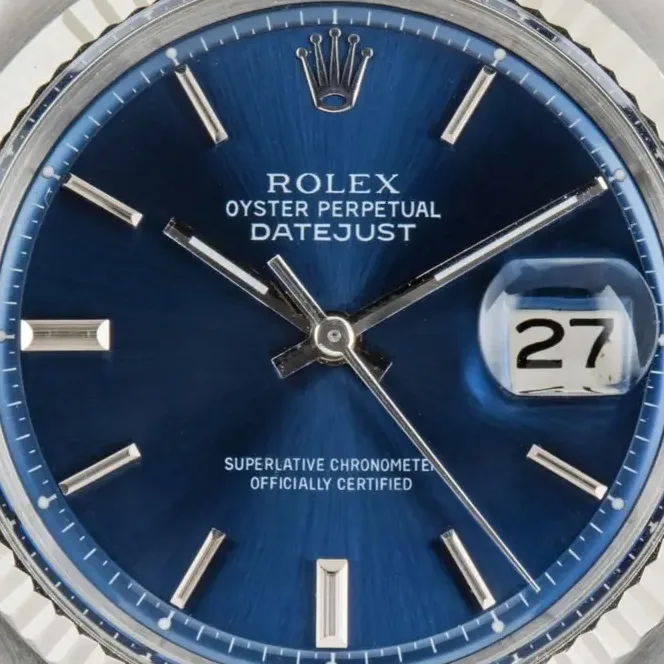
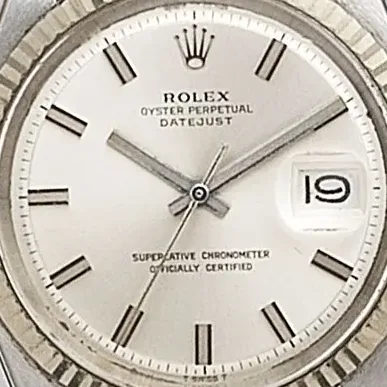
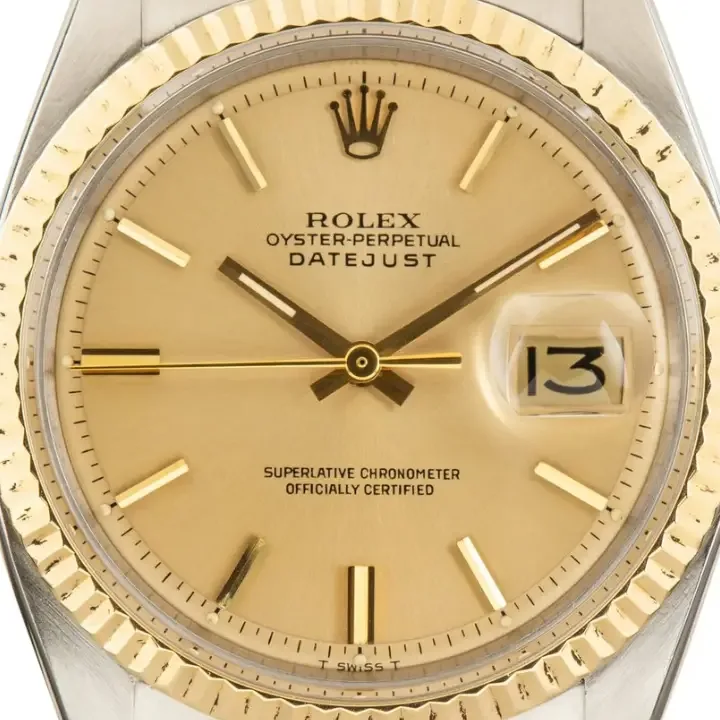
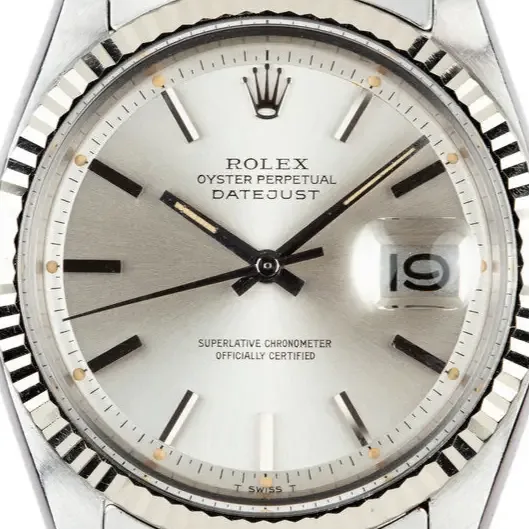
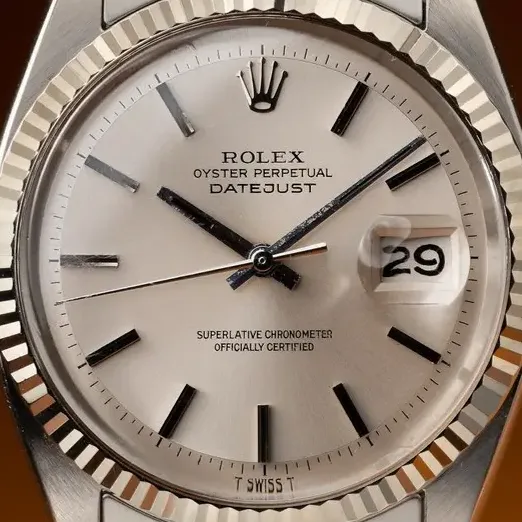
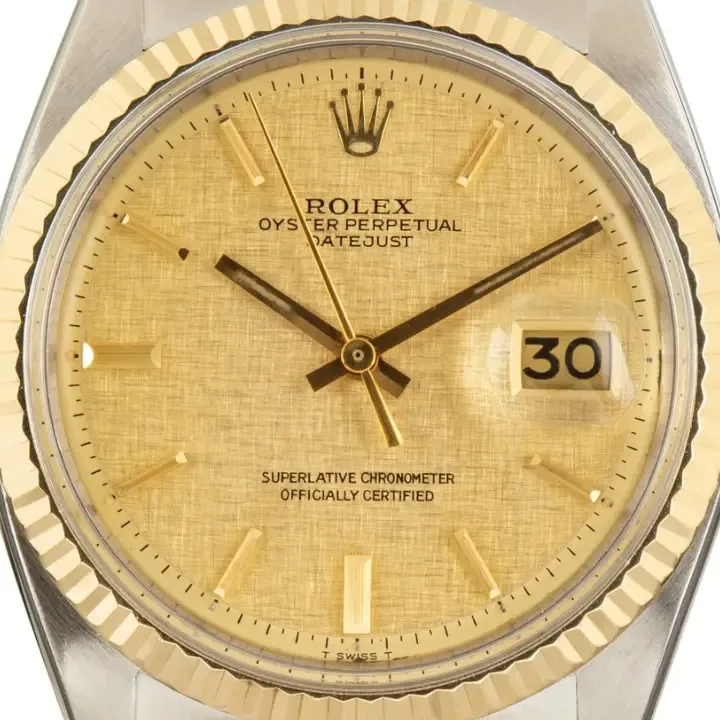
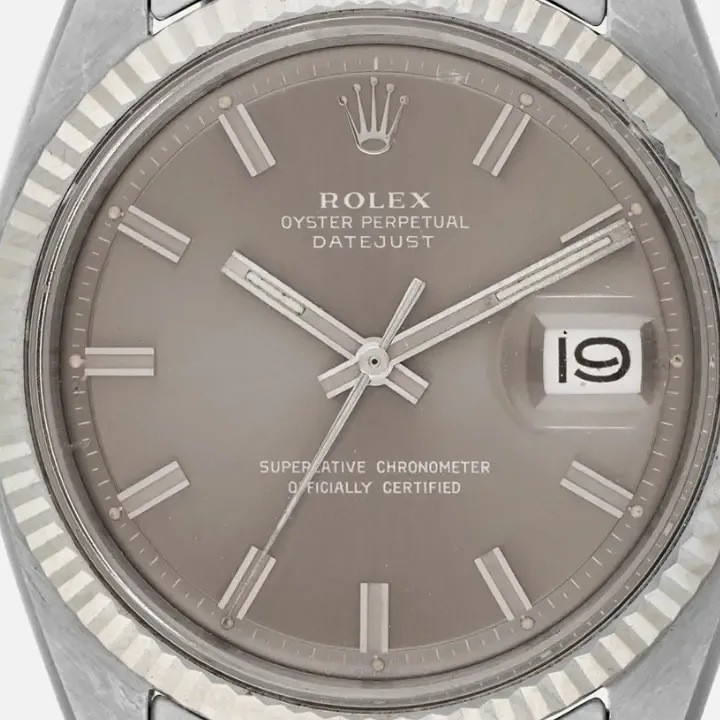
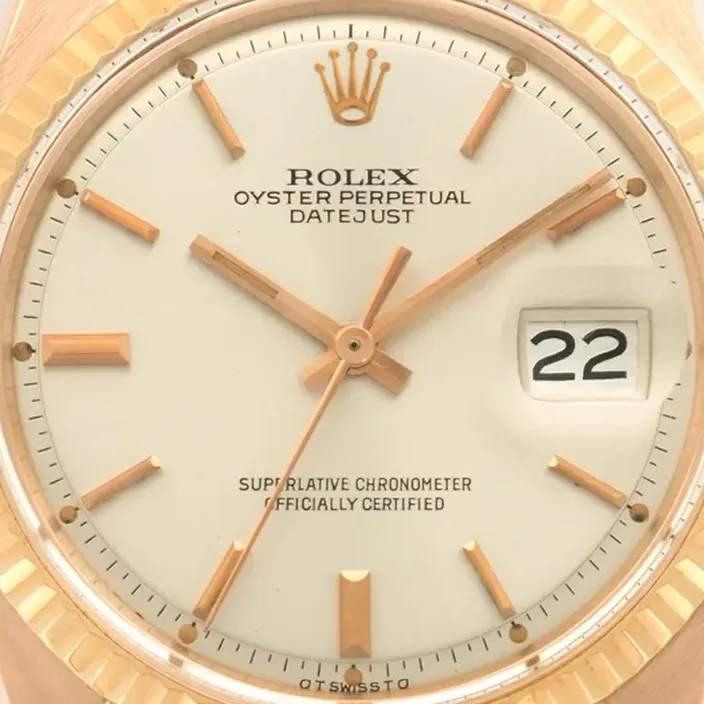
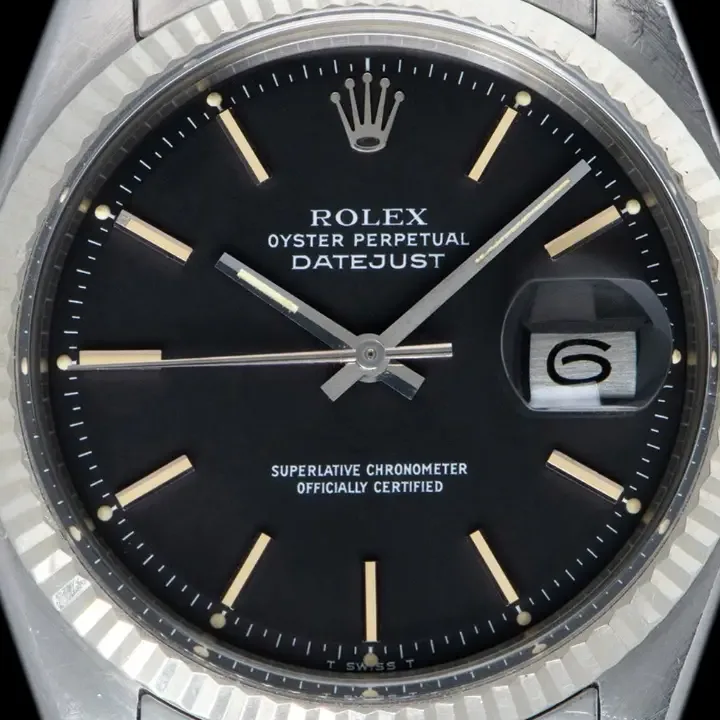
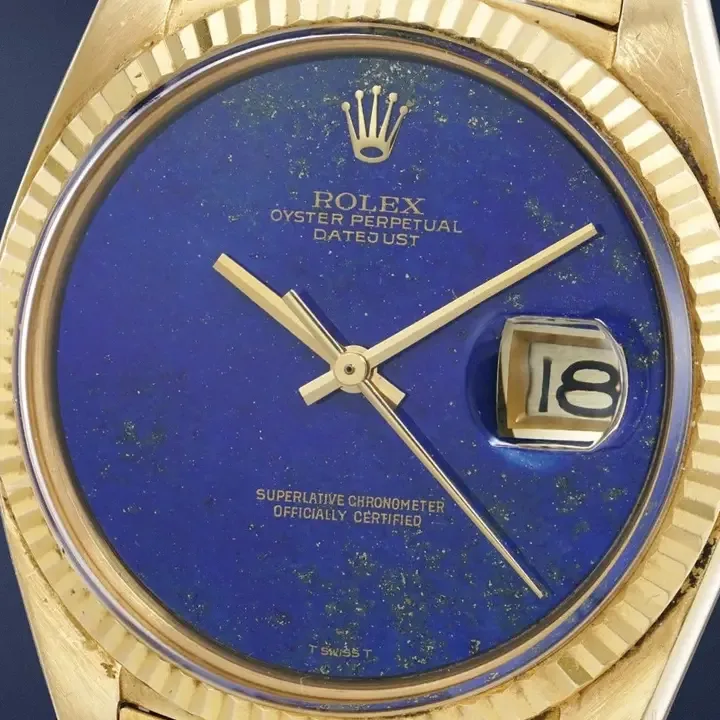
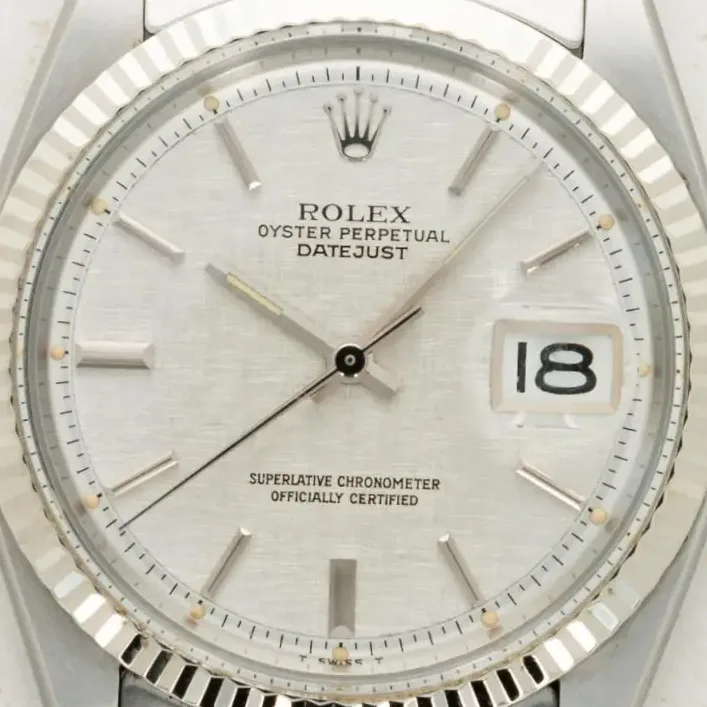
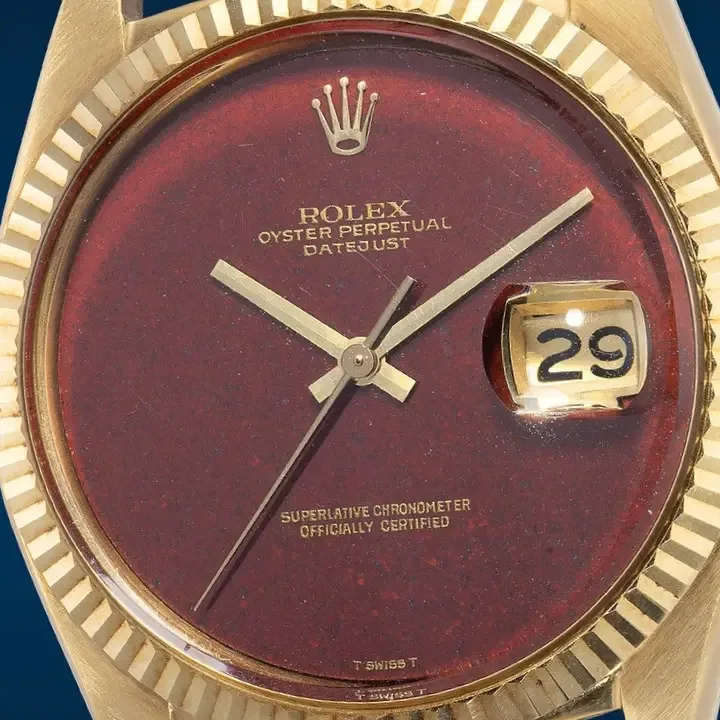
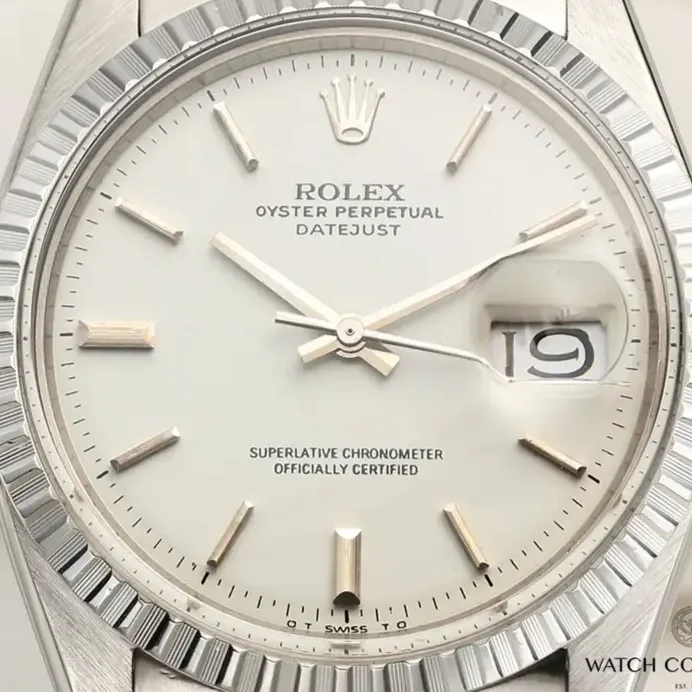
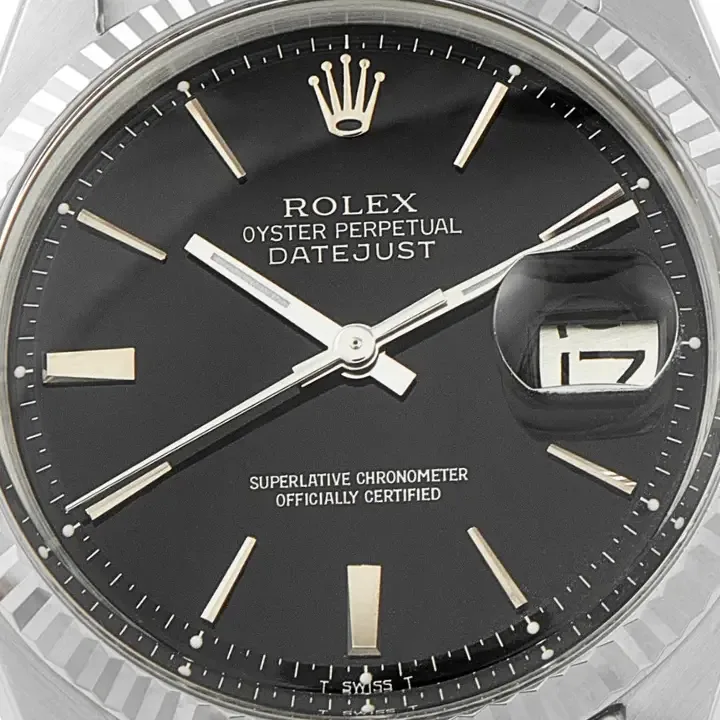
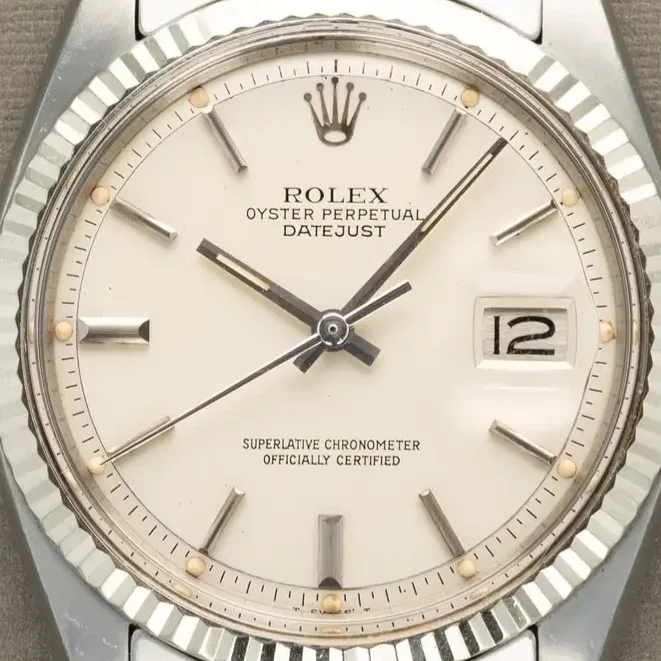
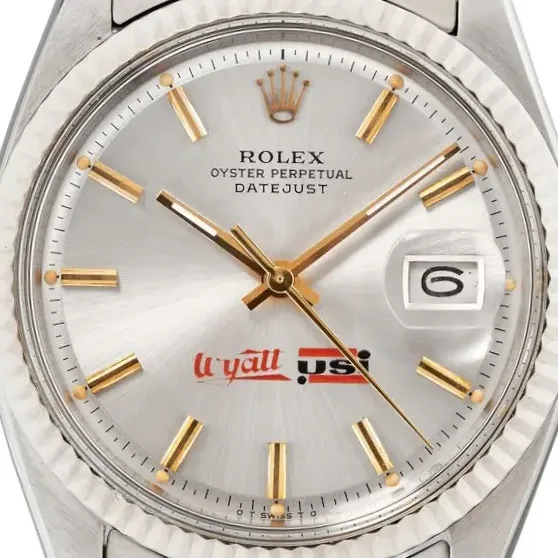
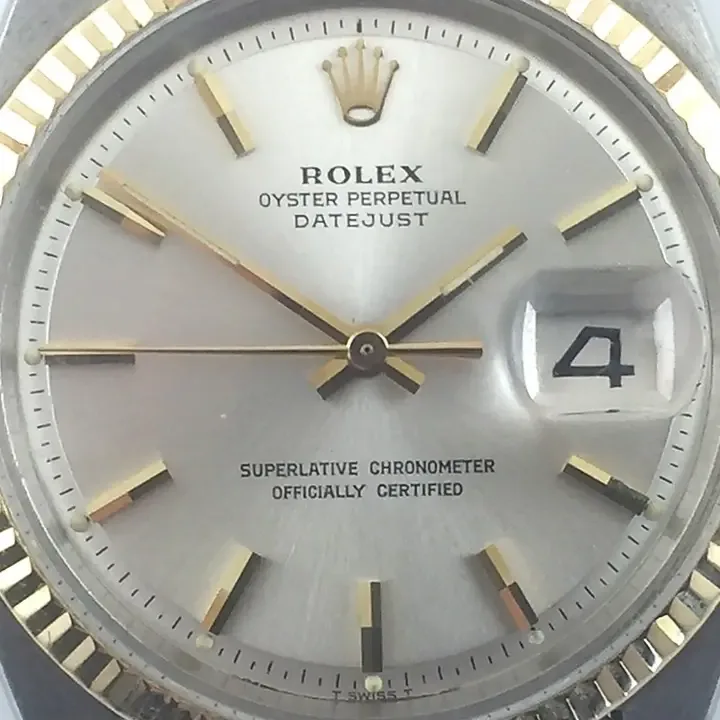
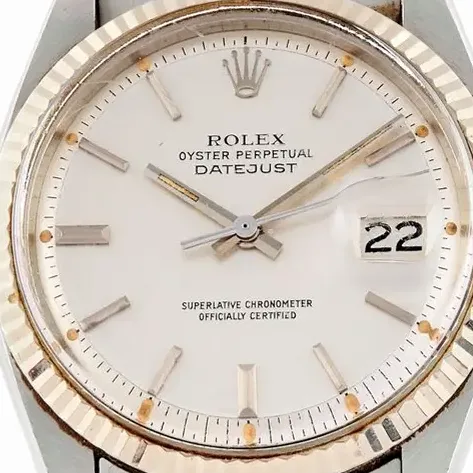
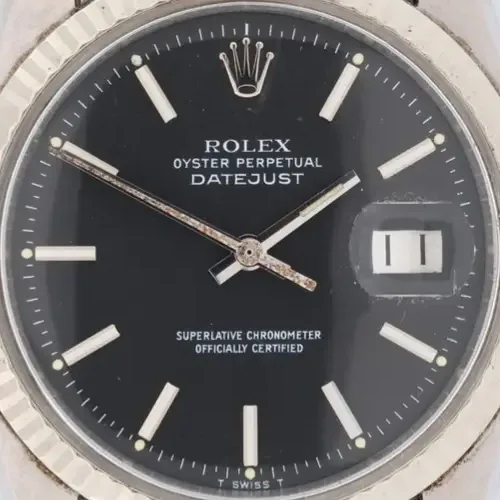








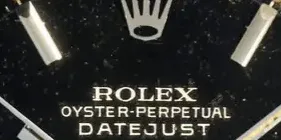












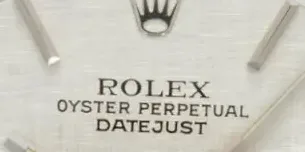

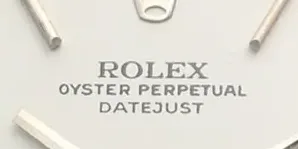
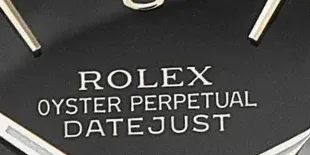



























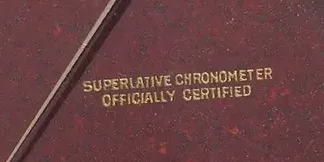








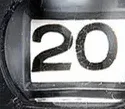
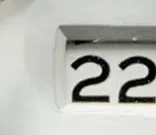

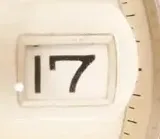
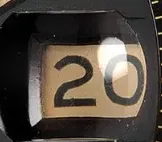
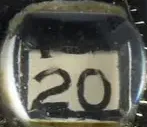
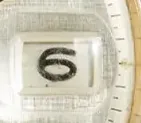
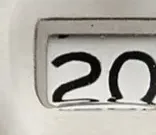
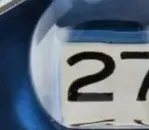

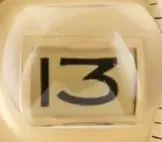
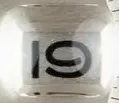
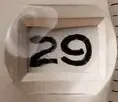
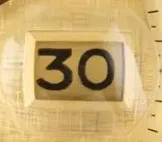
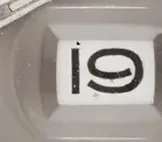
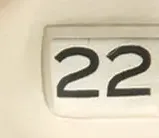
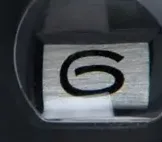
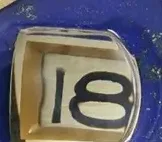
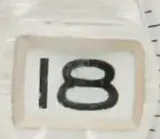
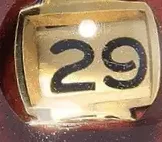
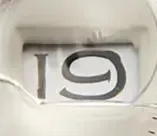
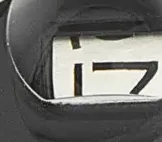
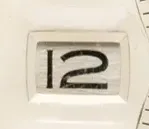
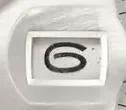





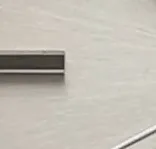


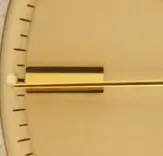
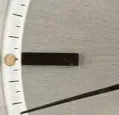

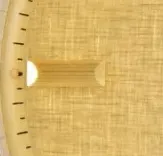




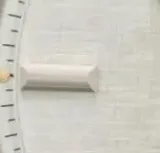
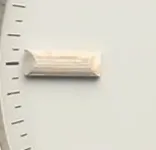
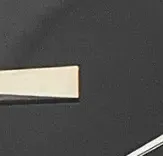
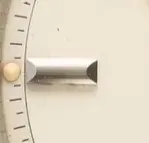
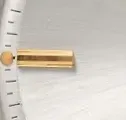



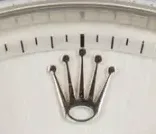
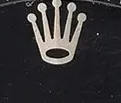
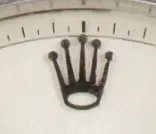
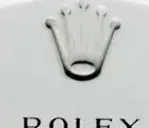

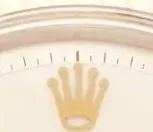
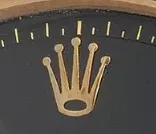
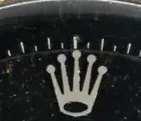
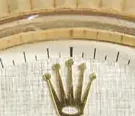









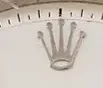
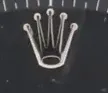


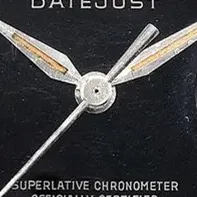
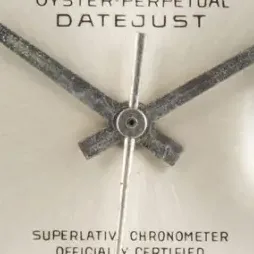

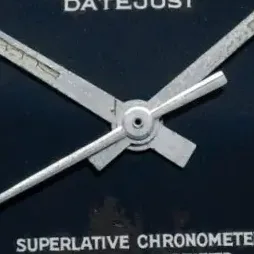



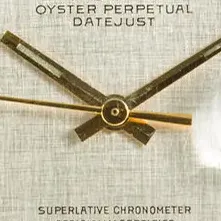



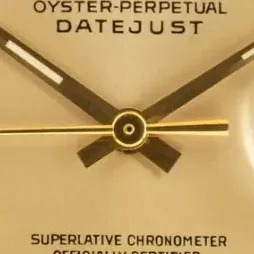


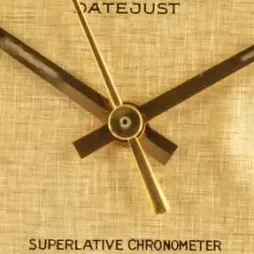





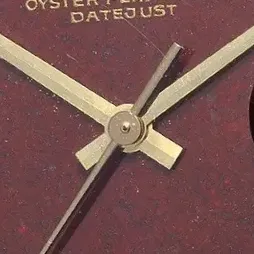



















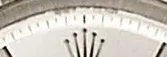

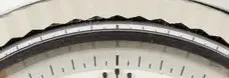
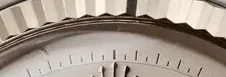








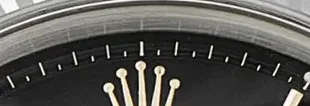



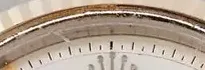

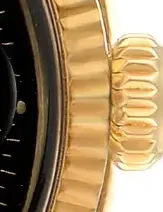
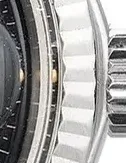
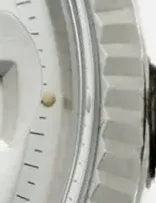

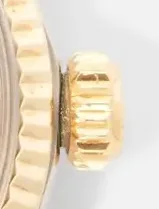
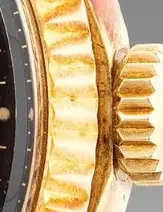
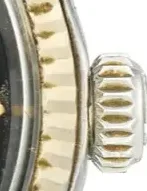
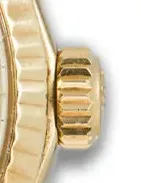


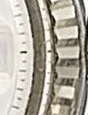




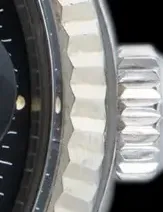
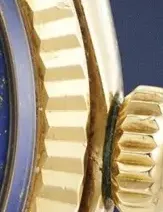

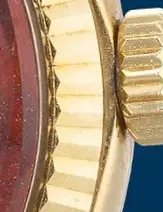

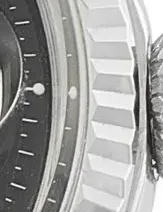




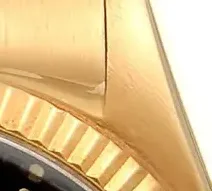
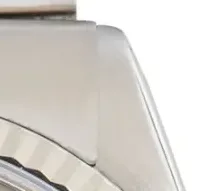
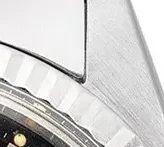
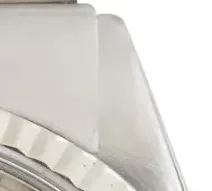



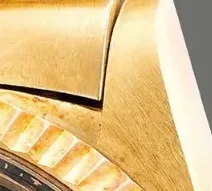

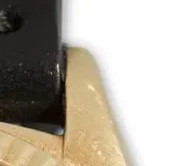
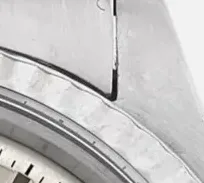


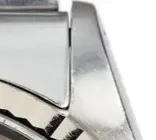

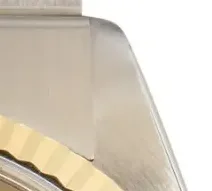



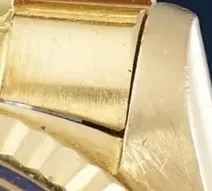


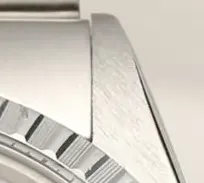
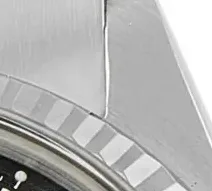

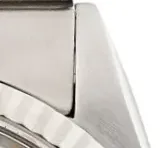



Illustrated history of the 1601: every change set out with close-up photographs of dated watches.
Chronology
The start is given as 1959 and the end as 1977 or 1981; case numbers in the library's records place most watches before 1978.
Every dated variant: what is written, and what the records show
For the reference the marks are every dated watch; for a variant, the watches a seller names as that variant, so a variant sellers do not name has none.
The reference's own marks are dated by case number. A variant's marks use the year each seller states, so a variant can show watches in a year where the row for the reference shows fewer, or none.
Specification
| Case | 36 mm Oyster case in steel, steel and gold, yellow, white or pink gold; screw-down Twinlock crown and solid screw-down back; drilled lug holes; 100 m water resistance when new |
| Crystal | Domed acrylic with a Cyclops magnifying the date about 2.5 times |
| Bezel | Fixed fluted bezel, in 14 or 18 carat gold: white or yellow gold on steel cases, never steel |
| Movement | Automatic with instant date, no quickset: calibre 1565 (26 jewels, 18,000 bph, 42-hour reserve, KIF shock protection), from 1965 calibre 1575 (19,800 bph), with hacking about 1972; bridge usually engraved 1560 or 1570 |
| Dial | Pie-pan dial, outer edge sloping to the minute track, applied baton indices with tritium plots; silver and champagne commonest |
| Bracelet | Five-link Jubilee most common, or three-link Oyster; folded links with hollow end links |
Dial 15 described
The pie-pan dial, with its outer edge sloping toward the minute track, is the most distinct feature of the 1601. Silver and champagne are commonest; blue, black, grey, linen and sigma dials also exist, and markers include sticks, luminous dots or Roman numerals. Most dials show strong lume-driven patina, so a clean one is the exception. A refinished dial greatly lowers a watch's standing.
Pie-pan
The outer edge drops toward the minute track, which sits on a recessed step, carrying tritium hour plots. Found mostly on four-digit Datejusts and the contemporary Day-Date; the five-digit generations went flat. Sellers name pie-pan more often than any other dial finish.
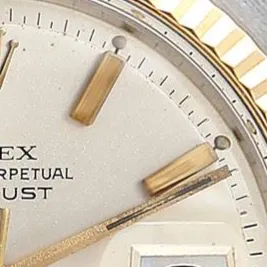
- stepped outer ring
94 listings on record under the name.
Gilt and glossy
Gilt print and glossy dials, recorded by sellers from 1964 to 1972. Dated watches that sellers describe this way fall mostly between 1964 and 1972; those are the years of the watches so described, which is not a stated span of production.
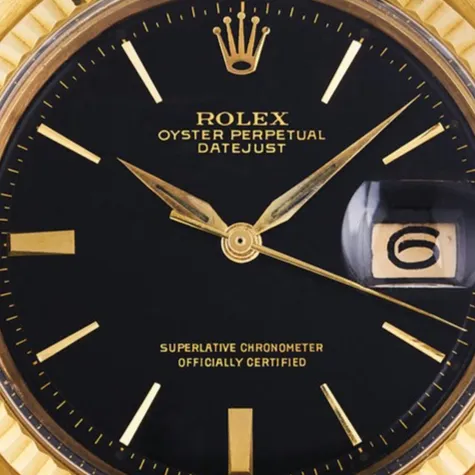
63 listings on record under the name.
SWISS only
Early dials printed with SWISS only, recorded for 1961 to 1963; an underline variant is stated for 1962 to 1964. Dated watches that sellers describe this way fall mostly between 1961 and 1963; those are the years of the watches so described, which is not a stated span of production.
- SWISS alone at six
T SWISS T
Tritium dials, stated for 1972 to 1974 in sellers' records. Dated watches that sellers describe this way fall mostly between 1972 and 1974; those are the years of the watches so described, which is not a stated span of production.
- T SWISS T at six
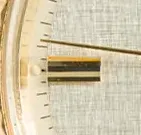
Linen
A crosshatch weave texture, mostly silver with a darker grey also made. Dated watches that sellers describe this way fall mostly between 1970 and 1973; those are the years of the watches so described, which is not a stated span of production.
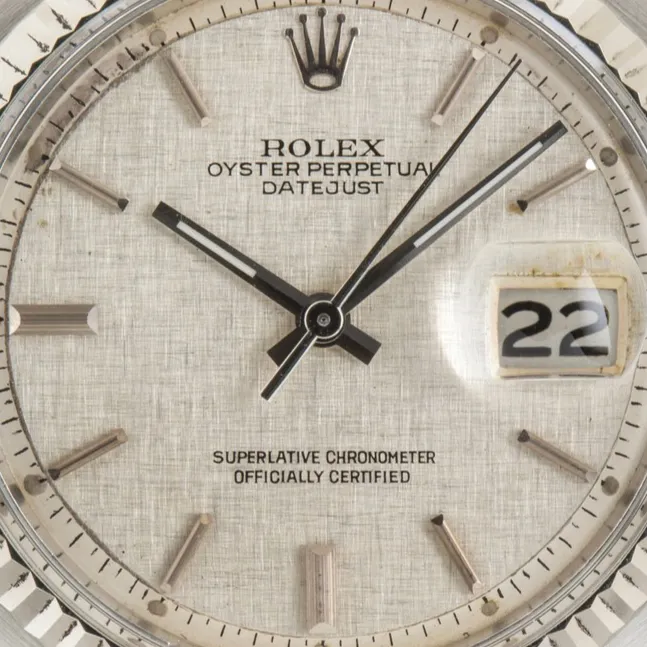
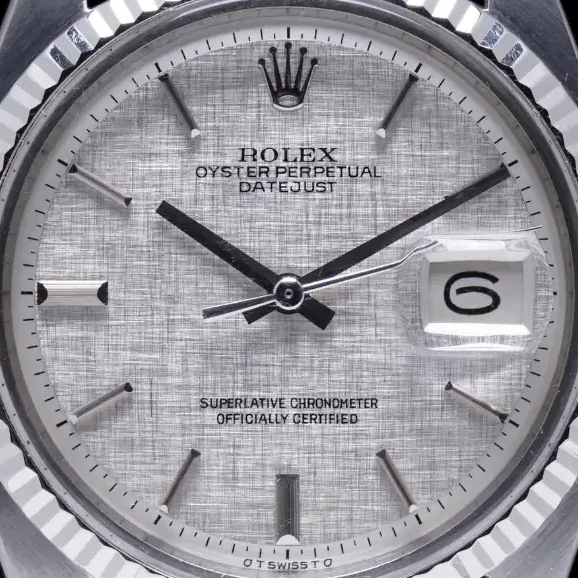
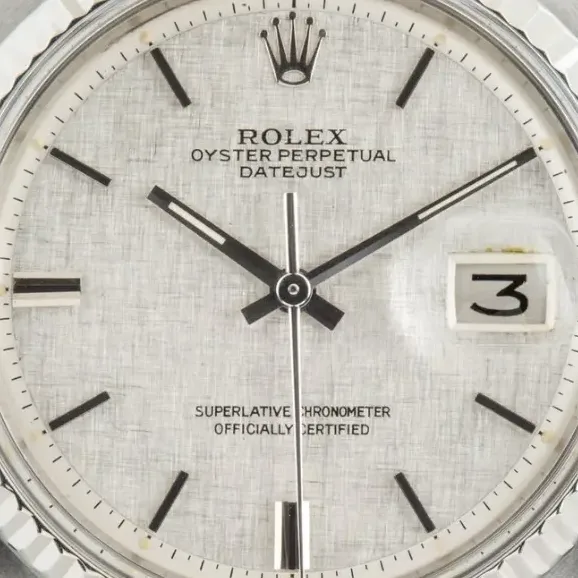
Non-luminous linen
A linen dial without lume, its hands painted black like those of the CERN-dial Milgauss; a 1970 example is recorded.
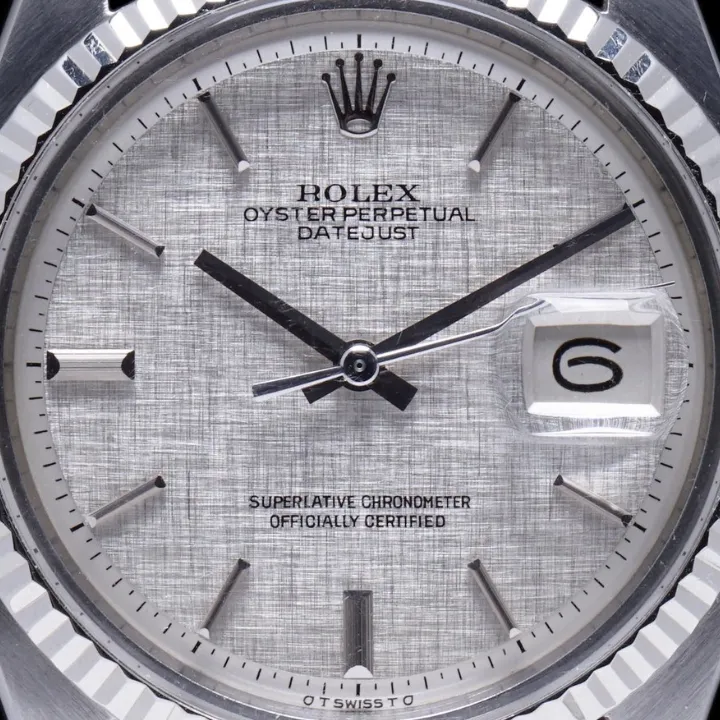
- black painted hands
49 listings on record under the name.
Sigma
Small Greek sigma letters flank SWISS at six, marking gold hands and markers, white gold on steel watches. On Rolex they are placed from about 1970 to the late 1970s, with a few earlier. Most white 1970s dials are described as reprints.
- sigma flanking SWISS
Tiger eye
A striped brown stone dial for the yellow gold 1601/8, carrying neither hour nor minute markers.
- striped brown stone
- no markers
Malachite
A green stone dial, found mostly on yellow gold 1601/8 watches of the 1970s, with neither hour markers nor minute track.
- green stone
- no markers
Japan dial
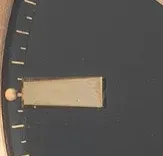
A dial still printed T SWISS T but with no tritium, fitted with closed, tapered baton hands, for markets where radioactive materials were banned. A 1967 example is recorded.
- T SWISS T with no lume
- closed tapered baton hands
Wide Boy
A dial name sellers use, mostly on watches of 1970 to 1973; those are the years of the watches so described, which is not a stated span of production. The literature does not describe it.
Khanjar and UAE
The earliest known Khanjar dials, for Oman, carry an applied gold Khanjar crest, and a rare 1601 with one is known. Sellers state Khanjar on watches of 1972 to 1974 and UAE on watches of 1968 to 1972; those are the years of the watches so described, not a span of production.
- applied gold Khanjar crest
Signed and logo dials
An XL Dubai Police logo dial whose emblem takes up the middle of the dial; a dial signed Mubarak Bin Mohammed Al Nahyan; and a circa 1968 dial signed Khalifa Bin Zayed Al Nahyan, made before the UAE existed. Sellers also state Tiffany & Co. on a few watches of 1971 to 1975 and Serpico y Laino on watches of 1964; those are the years of the watches so described, not a span of production.
- government or police logo
- retailer signature
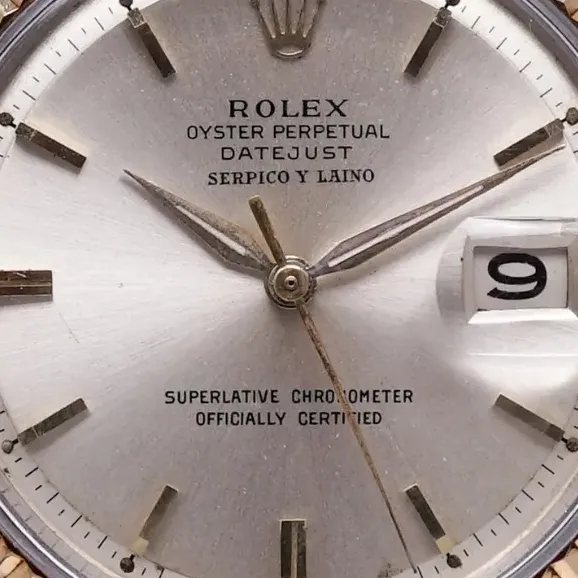


Tropical
Brown shift, stated by sellers on watches of 1963 to 1971; those are the years of the watches so described, which is not a stated span of production.
- brown dial
Exotic
Sellers also state Buckley and diamond-set dials, and lapis dials on watches of 1974 to 1978. Dated watches that sellers describe this way fall mostly between 1970 and 1976; those are the years of the watches so described, which is not a stated span of production.
Luminous material 1 described
The hour plots are tritium; on a clean original dial they have gone a creamy gold like the hands, though crumbled or missing plots are common. Radium is stated on a few early watches.
Tritium
Plots at the baton ends age to a golden tone.
- golden aged plots
Hands 2 described
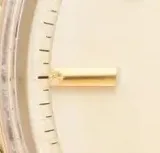
Alpha and dauphine hands on early watches, then batons.
Alpha
Early 16xx models; sellers describe alpha hands mostly on watches of 1962 to 1968. Those are the years of the watches so described, not a span of production.
- alpha hands
- arrow markers
Dauphine
Sellers describe dauphine hands on some early watches. Dated watches that sellers describe this way fall mostly between 1961 and 1963; those are the years of the watches so described, which is not a stated span of production.
- dauphine hands
Bezel 2 described
The 1601 is distinguished by a fixed fluted bezel in white or yellow gold, white gold on steel cases and yellow gold on the 1601/8. Over-polishing leaves it soft and rounded. The 1603 carries an engine-turned steel bezel and the 1600 a smooth steel bezel; some listings describe an engine-turned bezel on a 1601, but in the literature that bezel belongs to the 1603.
Fluted white gold
On steel cases, in 14 or 18 carat white gold; sellers state a fluted bezel on most watches.
- sharp fluting
Fluted yellow gold
On the yellow gold 1601/8.
Case 3 described
A 36 mm Oyster case in steel, steel and yellow gold, yellow gold, white gold and pink gold. Drilled lug holes ease strap changes and indicate an unpolished case.
Steel
Steel with a white gold fluted bezel; about half of the watches in the records.
Two-tone
Steel and yellow gold, Rolesor, 1601/3.
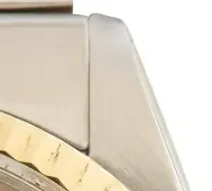


Gold
Yellow gold 1601/8, white and pink or rose gold.
Crown
The crown is a screw-down Twinlock.
Crystal
Domed acrylic with a Cyclops magnifying 2.5 times. Sapphire arrived with the second five-digit generation, though sellers state it on a few watches here.
Date 1 described
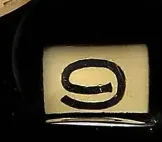
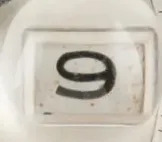
The date is advanced by cycling the hands past midnight; the 1500 series introduced the cam-and-jewel instant change. Quickset came only in 1977 with the five-digit references. Sellers state an open 6 and 9 date wheel on watches of 1970 to 1973.
Open 6 and 9 date wheel
Sellers state it for 1970 to 1973. Dated watches that sellers describe this way fall mostly between 1970 and 1973; those are the years of the watches so described, which is not a stated span of production.
- open sixes and nines
Movement 2 described
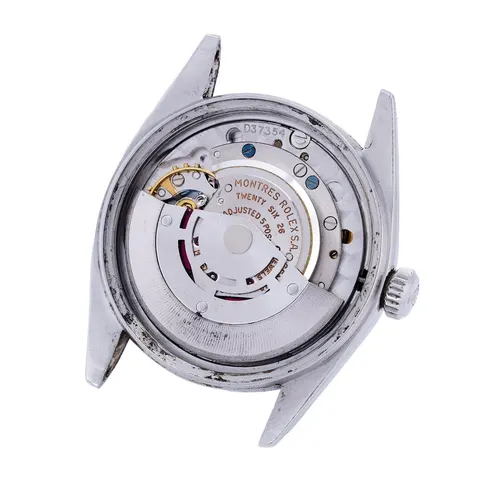
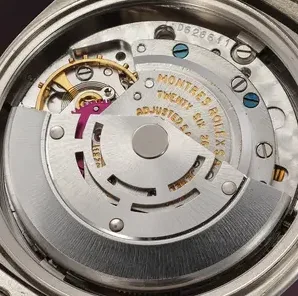
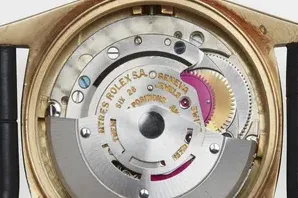
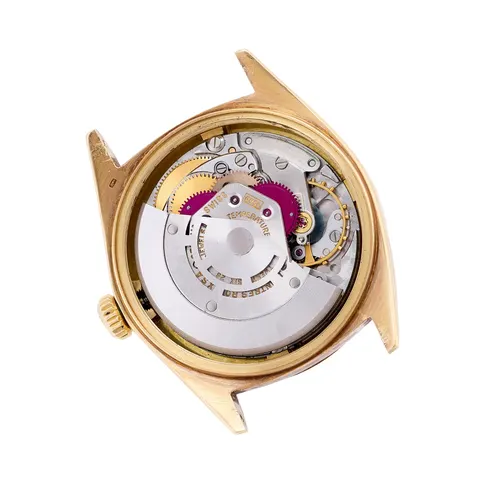
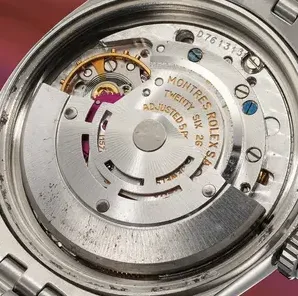
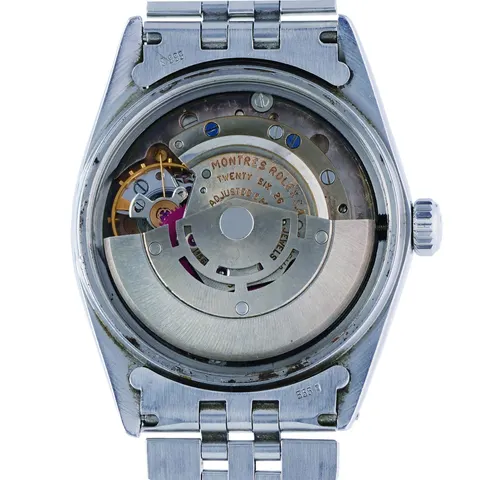
Calibre 1565 (by Aegler) debuted with the 16xx; calibre 1575 followed in 1965, the date version of the 1570. Bridges are usually engraved 1560 or 1570, because the plate is shared with the no-date calibres. The movement is basic, durable and easy to service. Calibre 3035 with quickset date belongs to the five-digit successors, not to the 1601.
Calibre 1565
26 jewels, 18,000 bph, 42-hour reserve, KIF shock protection, Microstella regulation, no quickset.
- 1560 on bridge
Calibre 1575
19,800 bph, from 1965; hacking added about 1972 without a change of name. Sellers name the 1570 most often.
- 1570 on bridge
Bracelet 3 described
The five-link Jubilee is most common, or the three-link Oyster, with Oysterclasp. The Jubilee is folded-link with hollow end links; a Jubilee with a crown overhanging the clasp is the US-market type.
Jubilee, 6251H
Rolled-link hollow Jubilee; sellers name the 6251H and 62510H, with 55 and 555 end links. A 1973 example wears the 6251H, and a 1966 watch has a Jubilee with 55 end links dated to the last quarter of 1965.
- rolled hollow links
- overhanging crown on clasp
Oyster
Three-link Oyster; sellers describe both riveted and folded versions. Dated watches that sellers describe this way fall mostly between 1961 and 1974; those are the years of the watches so described, which is not a stated span of production.
- folded or riveted links
President
Sellers state a President bracelet on some watches of 1970 to 1978; those are the years of the watches so described, not a production span.
- three-link semicircular
Originality
- A refinished dial lowers the watch greatly; check the lume is original tritium and not relumed.
- Gold bezels are often over-polished until the flutes are soft and rounded.
- A clean, unpatinated dial is unusual for this era.
- A non-luminous dial with luminous hands may mean replaced hands or dial.
Names
- Pie-pan. The dial edge slopes like a pie dish.
- Sigma dial. Greek sigma letters flank SWISS.
- Linen dial. Textured crosshatch weave.
- Wide Boy. A name sellers give to a dial; the literature gives no reason.
Where accounts differ
Points on which the published literature and the library's own records do not agree, or on which the literature contradicts itself.
- End of production. The 1601 is ended at 1977 by some accounts and about 1981 by another. Case numbers in the library's records place almost all 1601s below about 5.25M, where the 16014 begins.
- Start of production. One account places the start in the mid-1960s and another in the 1960s; others give 1959.
- Steel and bezel. One account says the 1601 is only the gold or Rolesor version, steel Datejusts being the 1603 or 1600. Other accounts describe steel 1601s with white gold bezels, and about half of the 1601s in the library's records are steel.
- Date of calibre 1575. Most accounts give 1965; one account gives 1971 and another the late 1960s. Sellers' descriptions in the library's records place the newer movement near case number 1.2M, about 1965 or 1966.
Back and movement
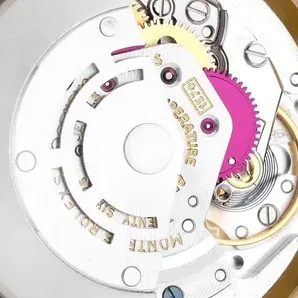
From listings of this reference, each confirmed by eye to show what it is filed under. A picture on which a person's name or a personal engraving can be read is not shown. From most holders a detail from the middle of the photograph is shown; the mark in its corner gives its holder and a link to the listing.
Caseback
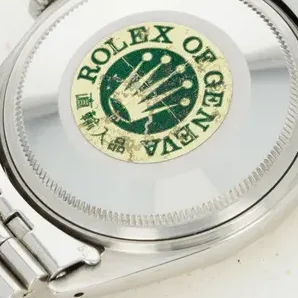

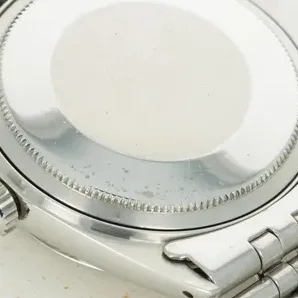

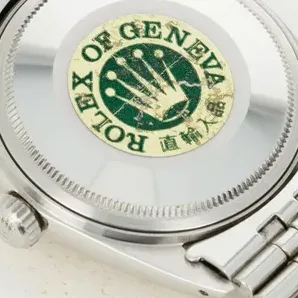

Inside the caseback
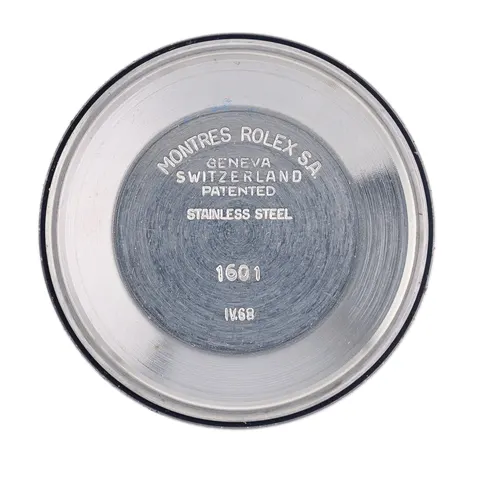

Movement







Catalogue versions 3 listed
The full numbers under which holders list this reference, with what their listings say of each. Each has a page of its own.
| Version | Metal | Dial | Years seen | Records |
|---|---|---|---|---|
| 1601/8 | Yellow gold | Silver or champagne | 1962–1980 | 21 |
| 1601/3 | Steel and gold or gold | Grey or champagne | 1961–1979 | 17 |
| 1601/4 | Steel | Champagne or grey | 1963–1974 | 5 |
In the records
Counted from 2,805 listings at 72 holders between 2 December 2009 and 14 November 2026. These are what sellers and auction houses state, not measurements.
Fainter bars are the 69 outside the main run of 1962–1977 (the middle nine-tenths): the earliest is 1956 and the latest 1980. They are early and late examples, and now and then a number misread. The head of the page gives 1958–1980: the years that listings from two holders bear out.
At the holders that record papers on every watch, 8% of their 313 listings of this reference come with papers; at those that record the box on every watch, 44% of 362 come with a box. "Papers" is whatever the holder counts as papers, and can include service papers.
4 listings dated long after the reference ended are set aside and not counted here: a year that late belongs to a later watch sold under the old number, or to a listing filed under the wrong one.
Case metal
| Steel | 524 | |
| Gold, any colour | 266 | |
| Yellow | 98 | |
| White | 40 | |
| Pink | 27 | |
| More than one colour | 1 | |
| Colour not stated | 100 | |
| Steel and gold | 177 | |
| Silver | 2 |
A listing that says "gold" or "18K gold" names no colour: it is counted under "colour not stated", not as yellow gold.
Dial colour
| Silver | 420 | |
| Champagne | 144 | |
| Grey | 125 | |
| Black | 112 | |
| Blue | 82 | |
| Brown | 39 | |
| White | 29 | |
| Red | 15 |
Case size
| 36 mm | 959 | |
| 34 mm | 45 | |
| 35 mm | 33 |
Calibre named
| 1570 | 657 | |
| 1560 | 99 | |
| 1575 | 30 | |
| 3035 | 6 |
Bracelet or strap
| Jubilee bracelet | 499 | |
| Leather strap | 138 | |
| Metal bracelet, kind not stated | 61 | |
| Oyster bracelet | 25 | |
| President bracelet | 24 |
Each table counts the listings that state the thing, in the seller's own terms. A size, metal, colour or calibre that cannot belong to this reference is a seller's slip or a listing filed under the wrong number.