Oyster Perpetual Tru-Beat
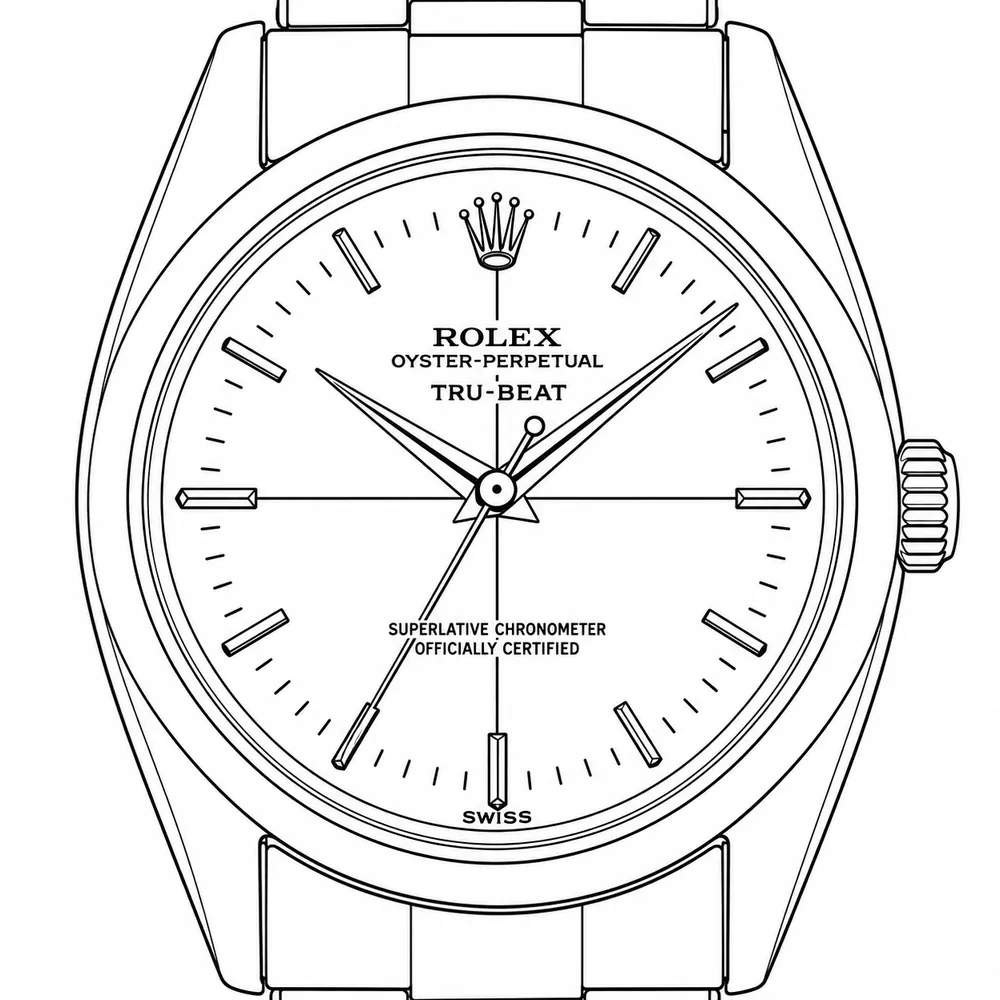
The Tru-Beat is a non-date Oyster Perpetual whose centre seconds hand jumps once a second instead of sweeping. The movement is calibre 1040, a modified 1030, and the watch was aimed at doctors who wanted to read a pulse. It was introduced in 1954 and withdrawn in 1959 without a successor. The case is small, about 34 mm, and the dial is usually a cross-hair type. Collectors first check whether the seconds hand still jumps, because many watches had the mechanism removed at service and run as an ordinary 1030.
- Made
- 1954–1959dates approximate
- Seen in the library
- 1956–1961by case numbers
- Case
- 35 mm · steel (79%), gold (21%)as sellers state
- Movement
- Calibre 1040automatic
- On record
- 39 listings122 photographs · 15 holders
Components
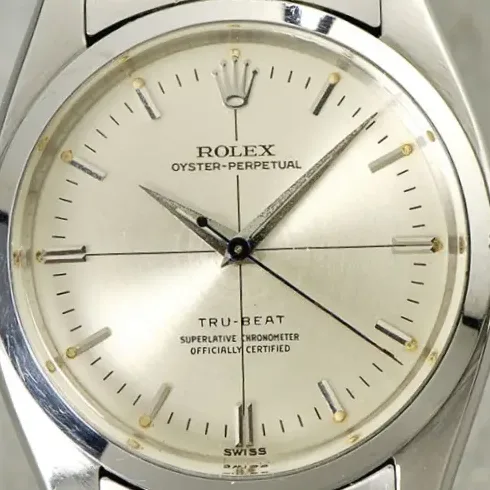
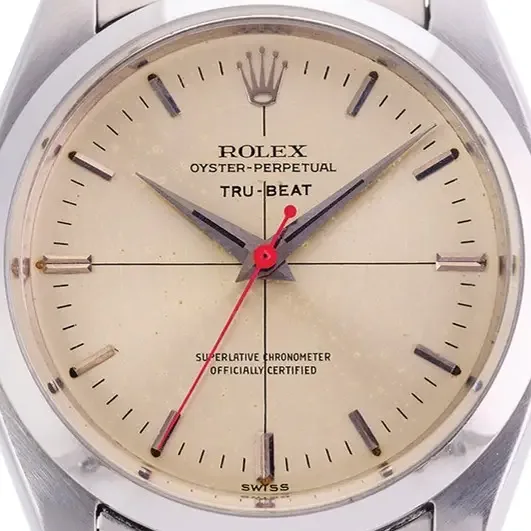
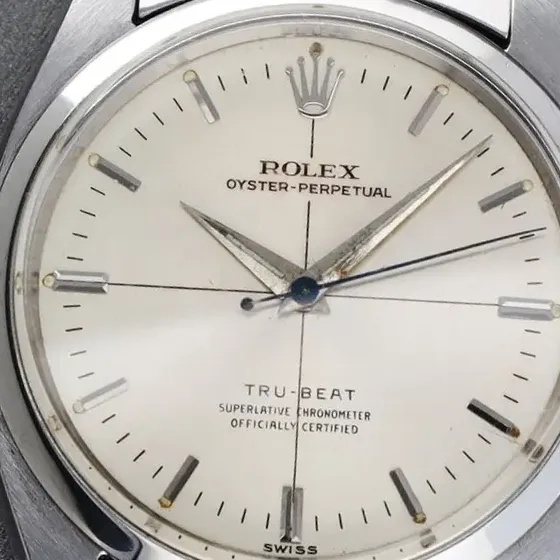
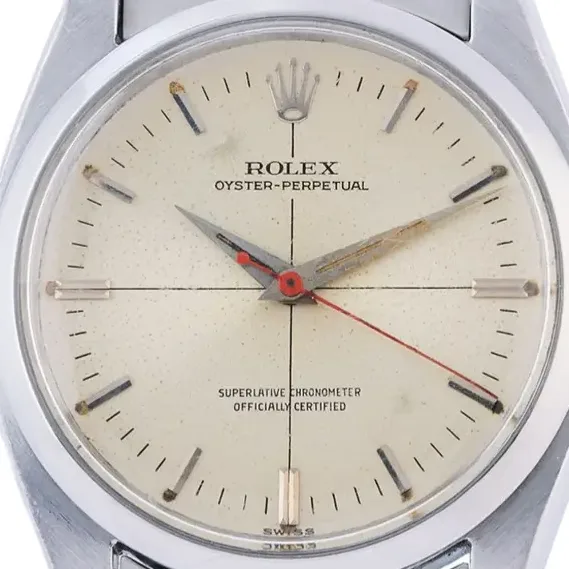
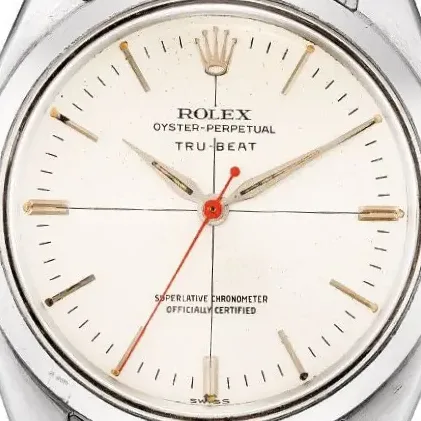
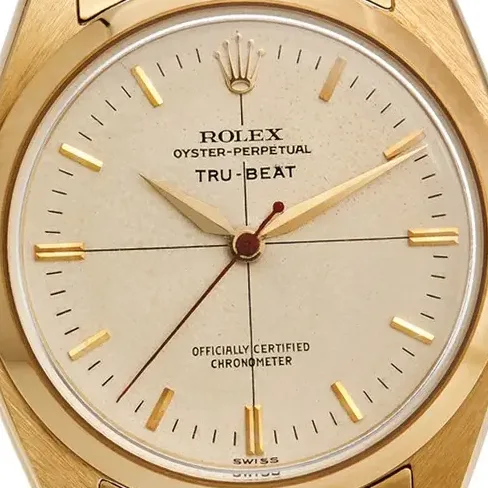
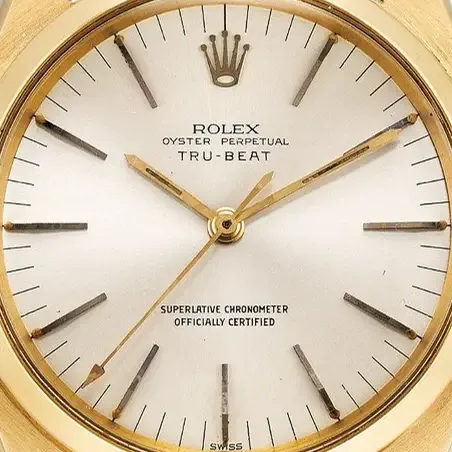
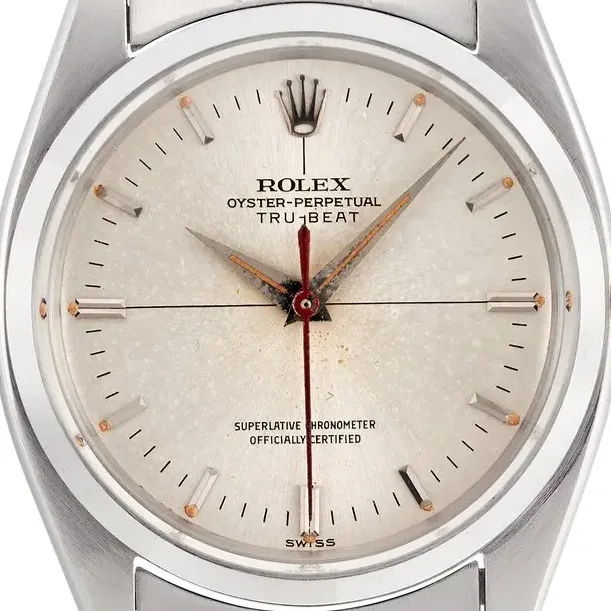
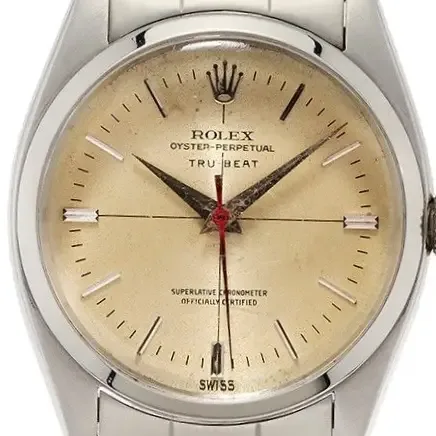
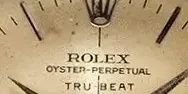
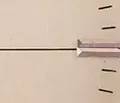
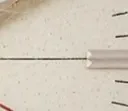
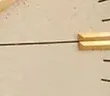
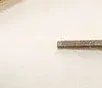
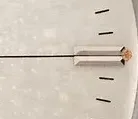
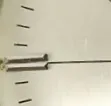
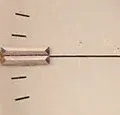
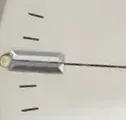
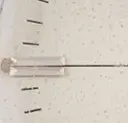
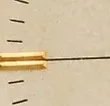
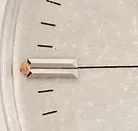
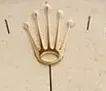
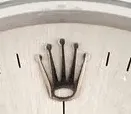
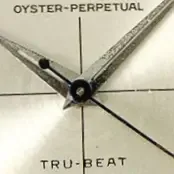
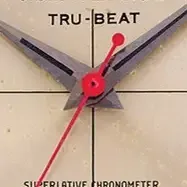
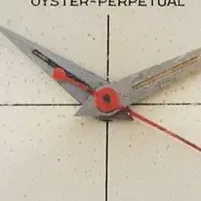
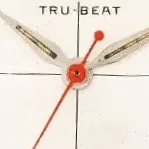
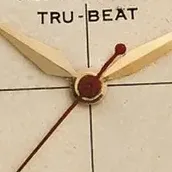
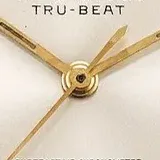
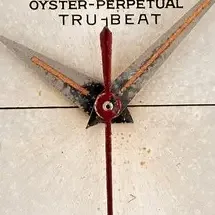
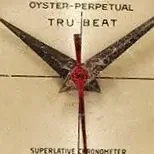
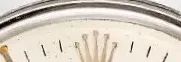
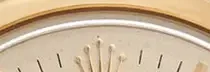
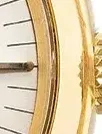
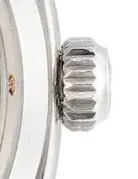
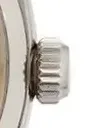
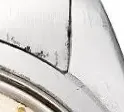
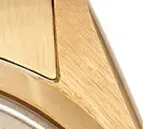
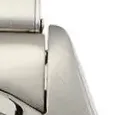
9 watches, oldest first, each straightened and cut the same way so that one row shows one component across them all. Chosen from 122 photographs on file for sharpness and for a face typical of the reference. A year marked c. is one its holder gives only roughly. Each picture is a detail cut from a listing photograph. Select the small mark in its corner for its year, its holder, a link to the listing it came from, and a way to report it.


































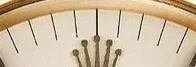


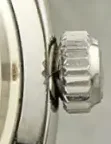



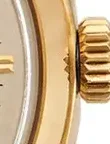








Chronology
Published accounts give introduction in 1954 and end of production in 1959; the library's case numbers run later, to about 1961.
Specification
| Case | Oyster case, about 34 mm; steel, or 18 ct yellow or rose gold |
| Movement | Calibre 1040, self-winding, a deadbeat-seconds derivative of calibre 1030 |
| Dial | Standard or cross-hair dial with dauphine hands; some with a red seconds hand |
| Bracelet | Riveted Oyster bracelet, also found on a mesh bracelet in gold |
| Function | Centre seconds hand that advances once per second |
Dial 2 described
The reference is best known for a cross-hair dial that divides the face into four quadrants. A standard dial and a Metropolitan dial are also recorded. Some watches carry a red seconds hand, which makes the jump easier to follow.
Cross-hair dial
The dial is divided into four quadrants by fine crossing lines, which suits the one-second jumps of the hand. Sellers also write "silver crosshair dial" in titles.
- fine crossing lines through the dial centre
- four legible quadrants
Standard or Metropolitan dial
A dial described as standard, or as Metropolitan, is also recorded for the reference.
Luminous material 1 described
The luminous material on watches of this age is radium.
Radium lume
A watch from 1956 described in the literature has radium lume, as expected for the period. Light spotting on the dial is consistent with its age.
Hands 2 described
Dauphine hands are standard. The seconds hand is the point of interest.
Dauphine hands
The hour and minute hands are dauphine in shape.
Red seconds hand
Only some watches have a red seconds hand. One reviewer could not tell whether a seconds hand on a watch he examined was original, as the reference came in several configurations.
- red centre seconds hand
Case 2 described
The case is a small Oyster case, about 34 mm across, in steel or in yellow or rose gold.
Steel
Steel is the usual metal. Of the watches in the library's records with a stated case metal, most are steel.
18 ct gold
Cases were also made in 18 ct yellow and in rose gold.
Movement 1 described
Calibre 1040 is a development of the 1030 automatic. It adds two gears on the seconds pinion with a spring between them, held and released by a small pallet fork, so that the hand makes one spring-loaded jump a second. The function was often removed at service, leaving a hand that sweeps.
Calibre 1040 with deadbeat seconds
The mechanism turns the continuous sweep into one jump per second, so the watch looks like a quartz watch. The extra mechanism works all the time and was hard to replace if it failed, so the movement needed frequent service.
- seconds hand that ticks once per second
- two extra gears with a spring on the seconds pinion
Bracelet 2 described
Riveted Oyster bracelets are the usual fitting, and a mesh bracelet is recorded on a gold example.
Riveted Oyster bracelet
Sellers most often describe a riveted Oyster bracelet, usually with reference 7205 and end links numbered 57. A watch described in the literature had end links wrong for the reference, leaving a visible gap at the 34 mm case.
- end links that sit flush with the case
Mesh bracelet
A mesh bracelet appears on a gold watch in the library's records.
Originality
- The deadbeat mechanism is the part most often altered at service; a watch that sweeps has lost its defining feature.
- A seconds hand may be a replacement or service part; the reference came in several configurations, so judging it is hard.
- End links that leave a gap against the case are not correct for this reference.
Names
- True-Beat. A common alternative spelling of the model name Tru-Beat.
- Doctor's watch. The jumping seconds hand was meant to help doctors measure a pulse.
Where accounts differ
Points on which the published literature and the library's own records do not agree, or on which the literature contradicts itself.
- End of production. Published accounts give 1954 to 1959 for the reference. The library's case numbers date several watches to 1961, after that end, and a few auction records describe watches as made in 1961 and 1962. Either the reference ran later than the published accounts say, or some watches were cased and sold after production ended.
In the records
Counted from 39 listings at 15 holders between 12 April 2006 and 14 November 2026. These are what sellers and auction houses state, not measurements.
Case metal
| Steel | 23 | |
| Gold, any colour | 6 | |
| Yellow | 4 | |
| Colour not stated | 2 |
A listing that says "gold" or "18K gold" names no colour: it is counted under "colour not stated", not as yellow gold.
Dial colour
| Silver | 5 | |
| Champagne | 1 | |
| Black | 1 |
Case size
| 35 mm | 13 | |
| 34 mm | 4 | |
| 36 mm | 1 |
Calibre named
| 1040 | 24 |
Bracelet or strap
| Oyster bracelet | 12 | |
| Metal bracelet, kind not stated | 5 | |
| Leather strap | 2 | |
| Mesh bracelet | 1 |
Each table counts the listings that state the thing, in the seller's own terms. A size, metal, colour or calibre that cannot belong to this reference is a seller's slip or a listing filed under the wrong number.