Explorer II
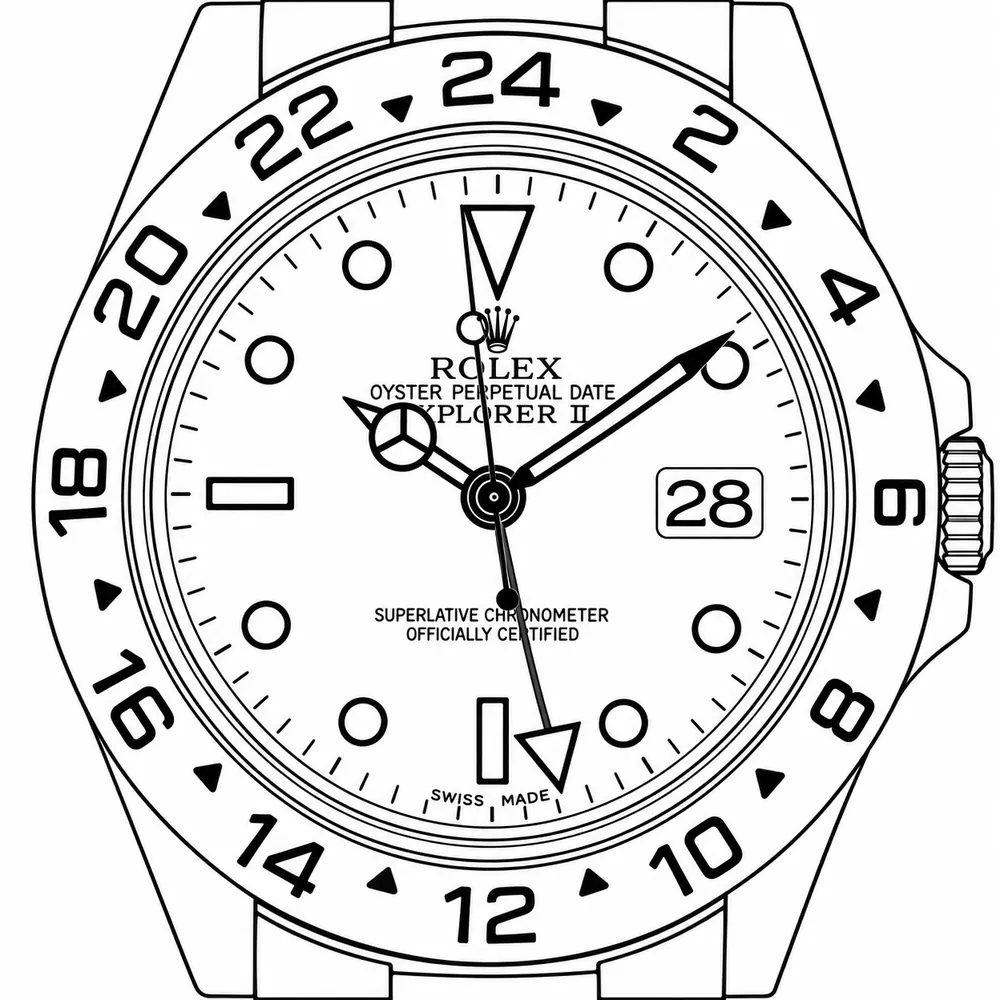
The 16570 is the third Explorer II, made from 1989 to 2011 in steel with a 40 mm case, a fixed 24-hour steel bezel, a sapphire crystal and an independently set red 24-hour hand, so it shows a second time zone. It followed the short-lived 16550 and was replaced by the 42 mm 216570. It came with a black dial or a white dial, the white one called Polar, and the Polar has black surrounds to its markers and hands. Over its long run the lume moved from tritium to Luminova and Super-LumiNova, the lug holes and hollow end links went, an engraved rehaut appeared and the movement changed from the 3185 to the 3186. Collectors look first at dial colour and text, lume, end links and the movement.
- Made
- 1989–2011dates approximate
- Seen in the library
- 1990–2012nine in ten in 1991–2008 · by case numbers
- Case
- 40 mm · steelas sellers state
- Movement
- Calibre 3185, 3186automatic
- On record
- 3,065 listings8,376 photographs · 66 holders
Components
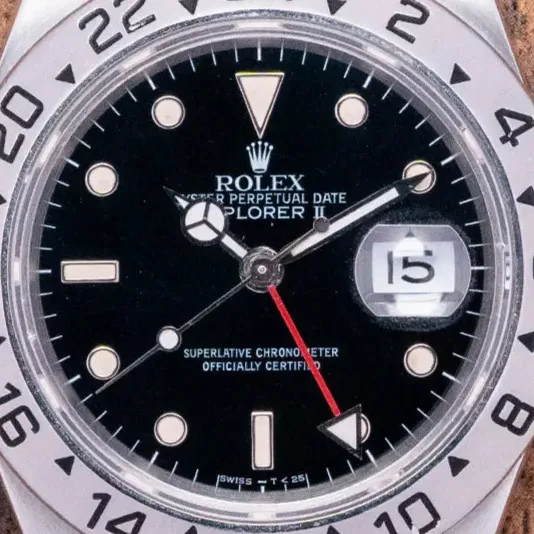
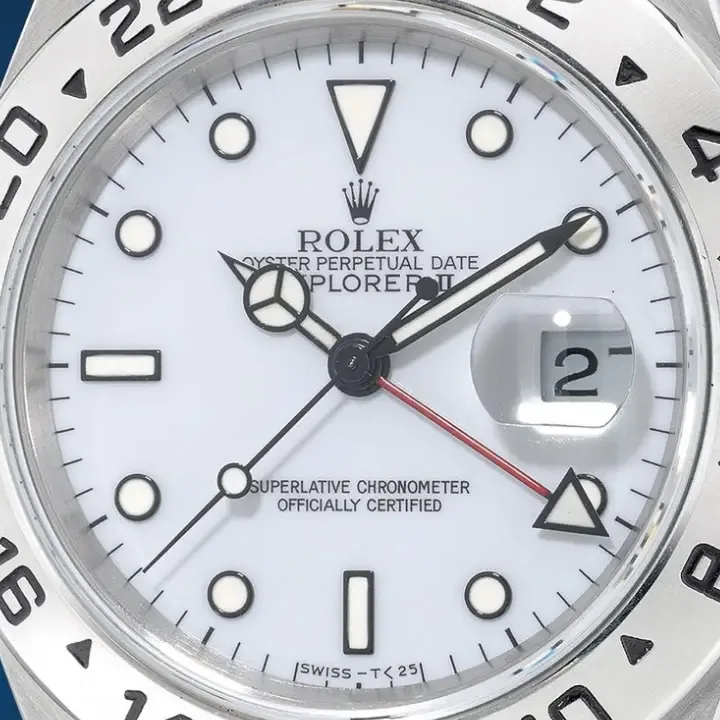
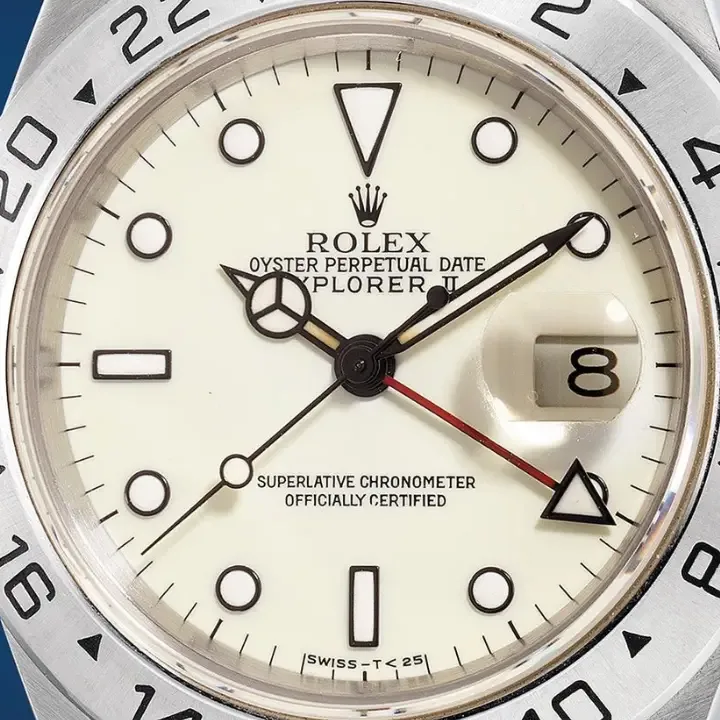
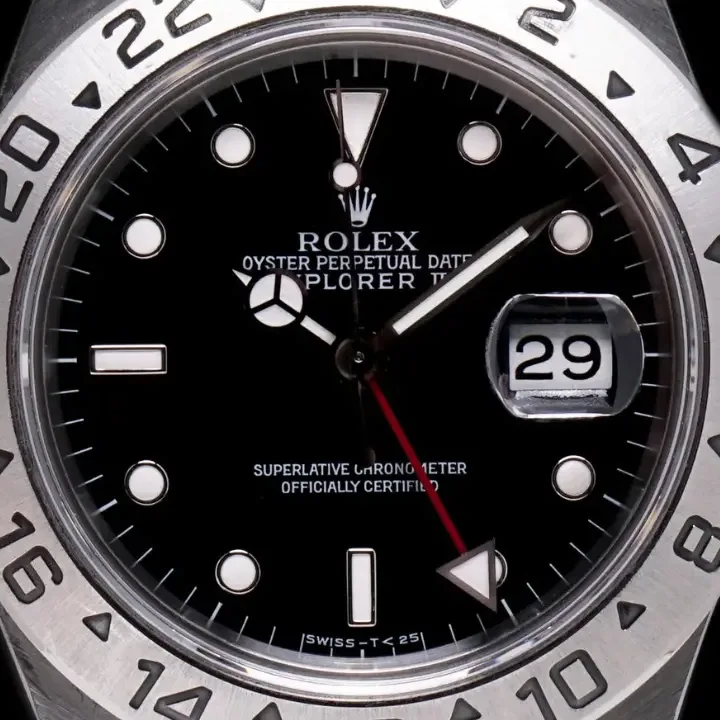
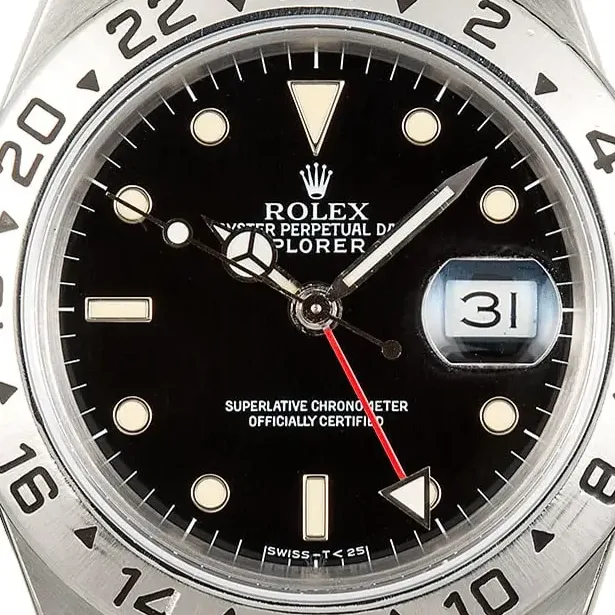
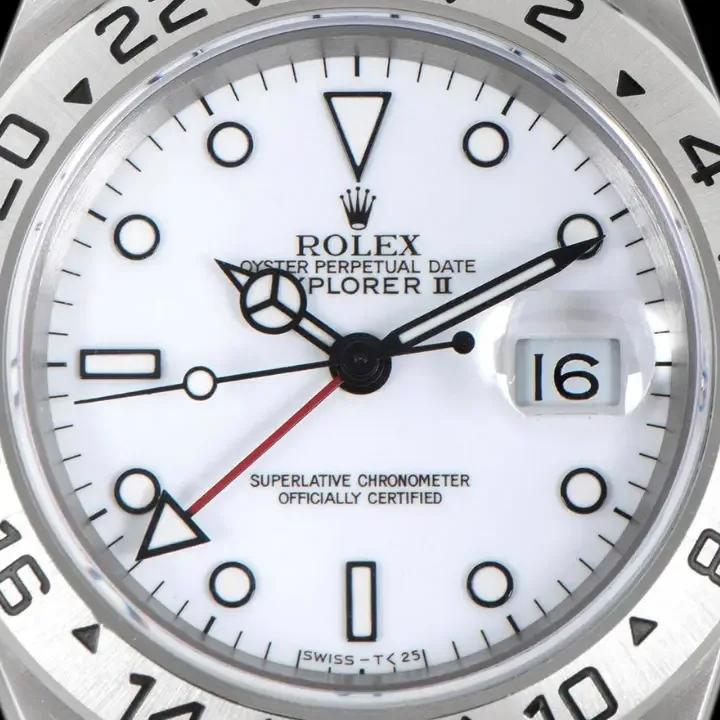
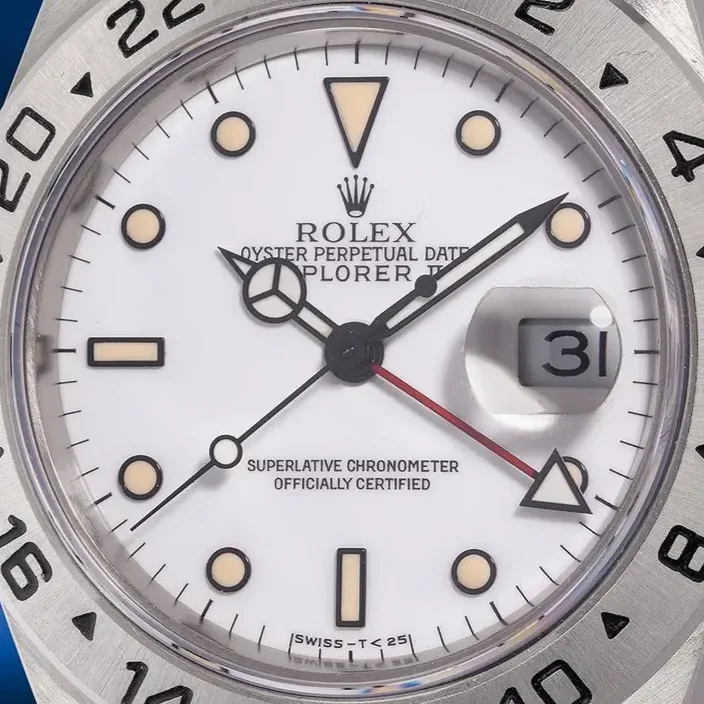
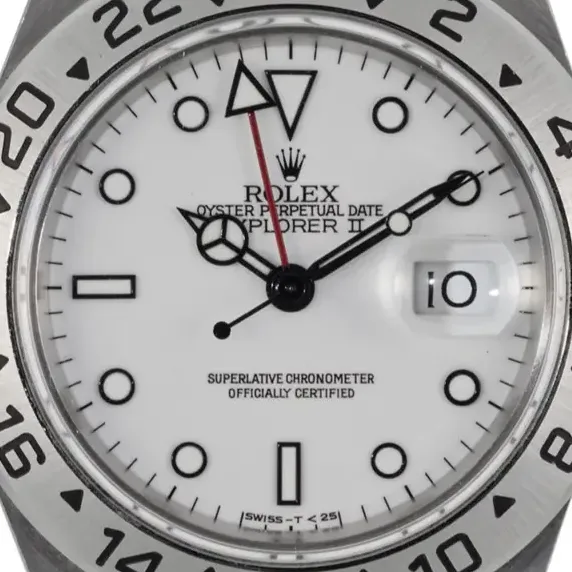
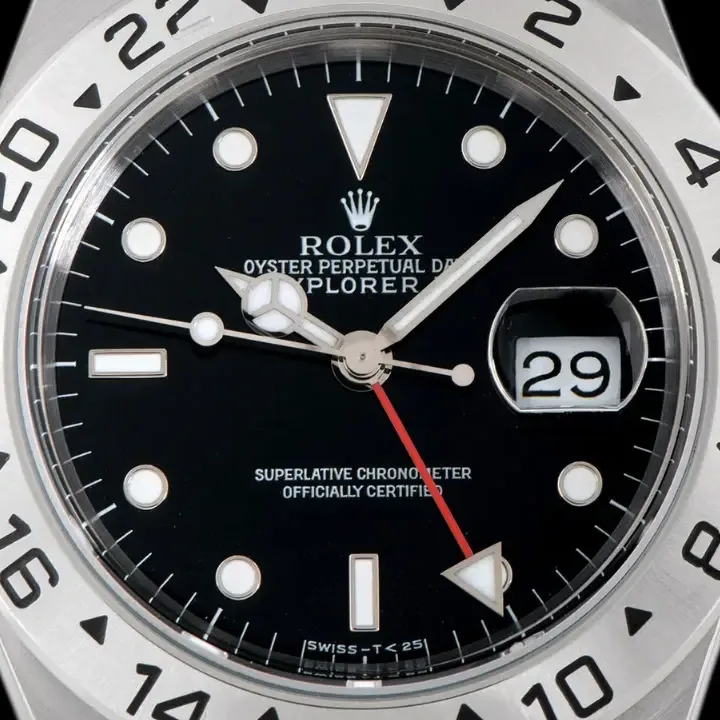
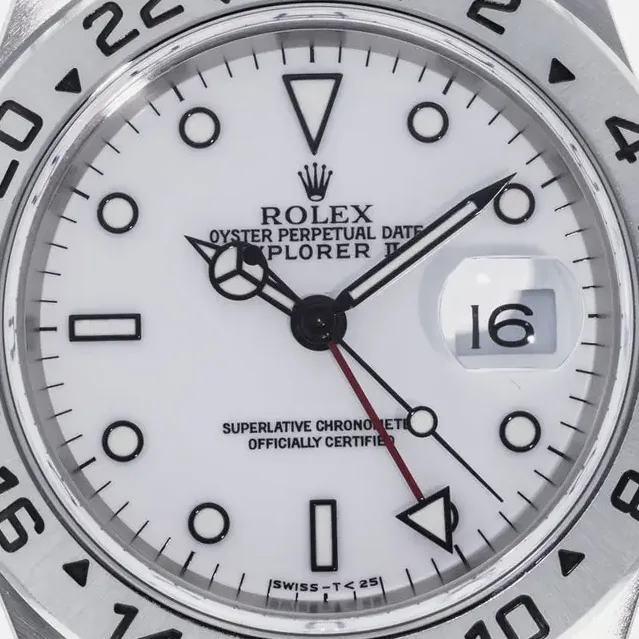
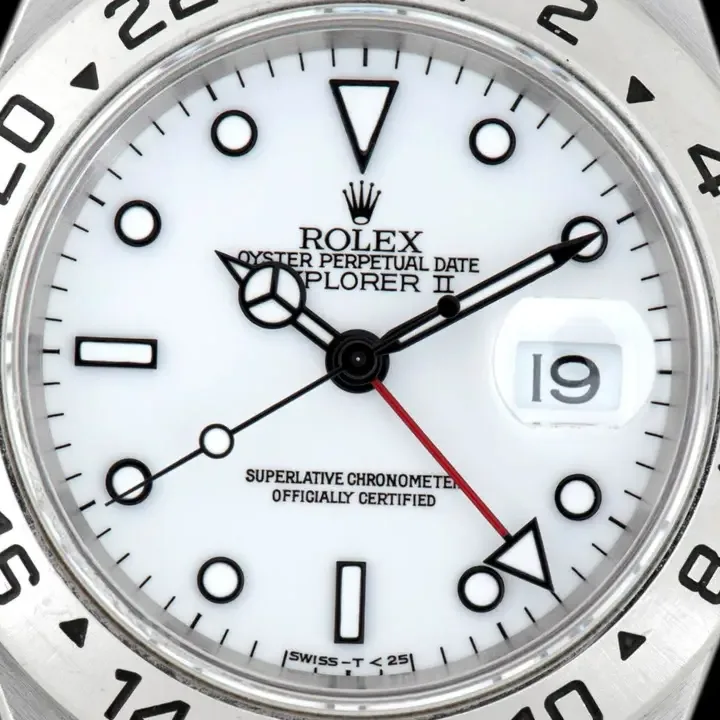
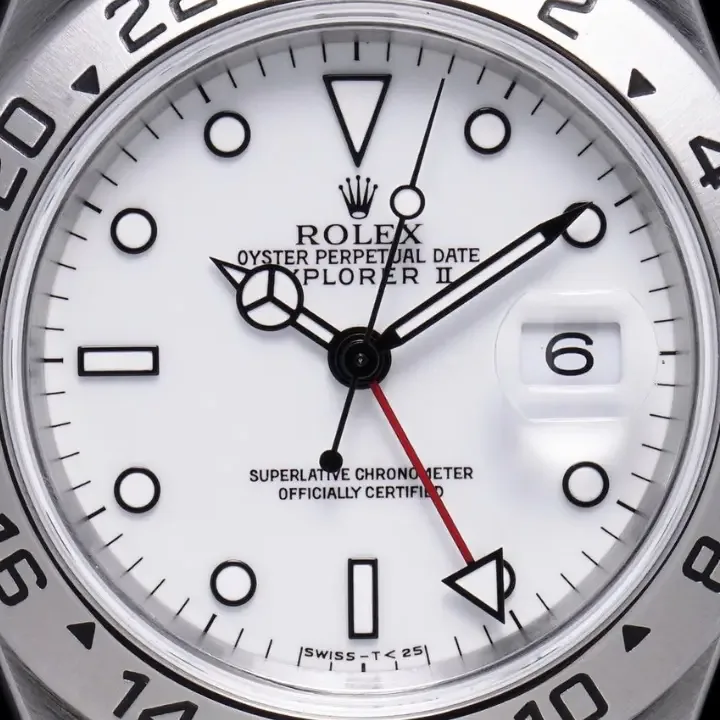
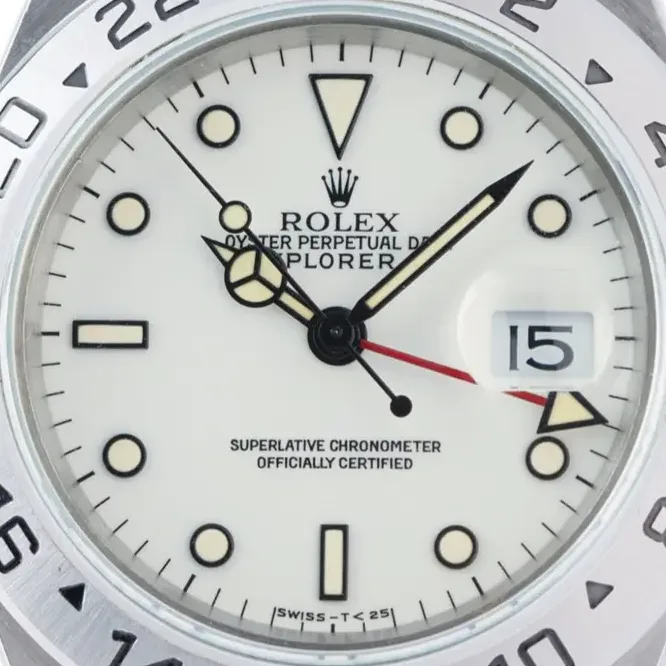
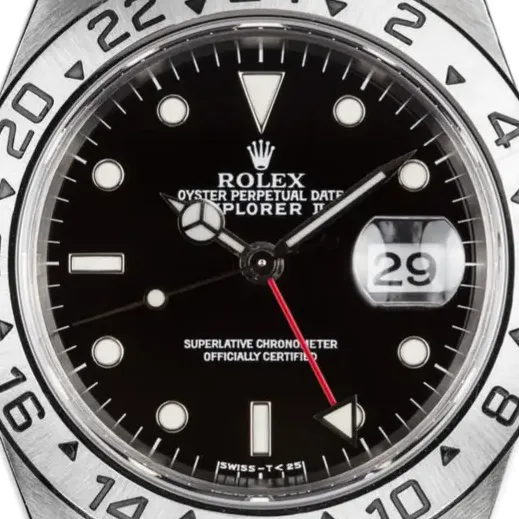
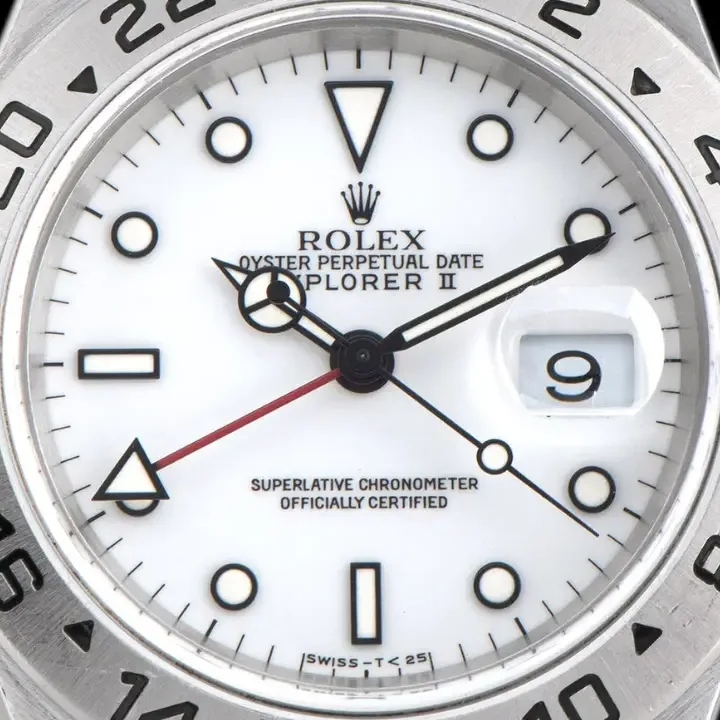
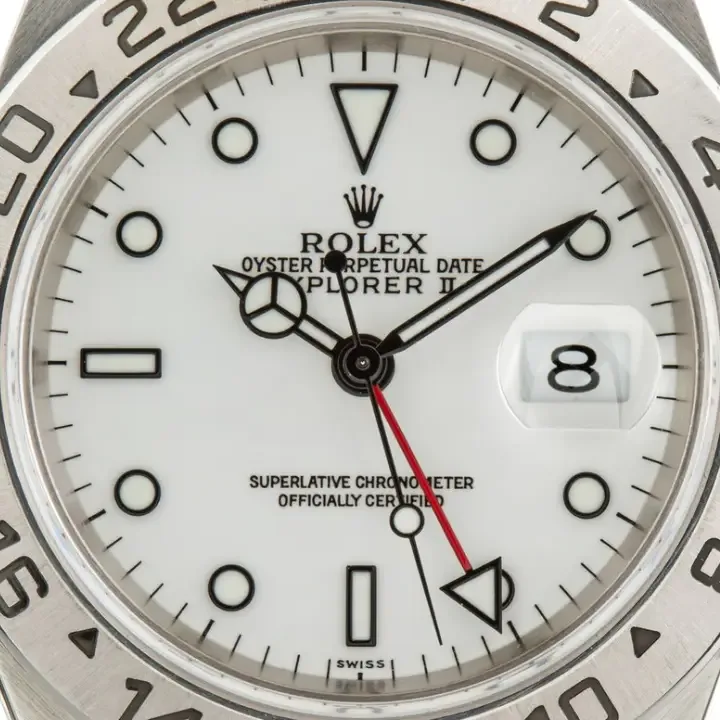
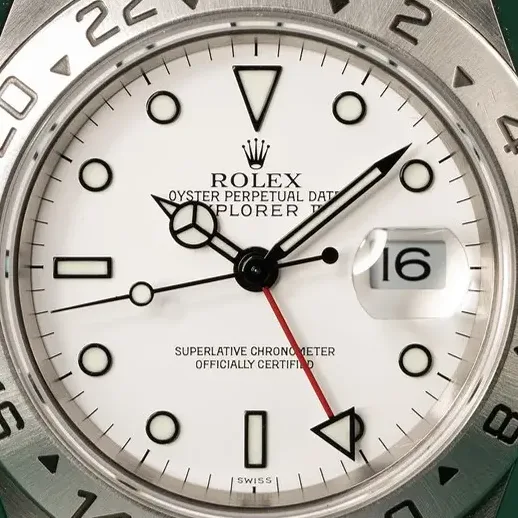
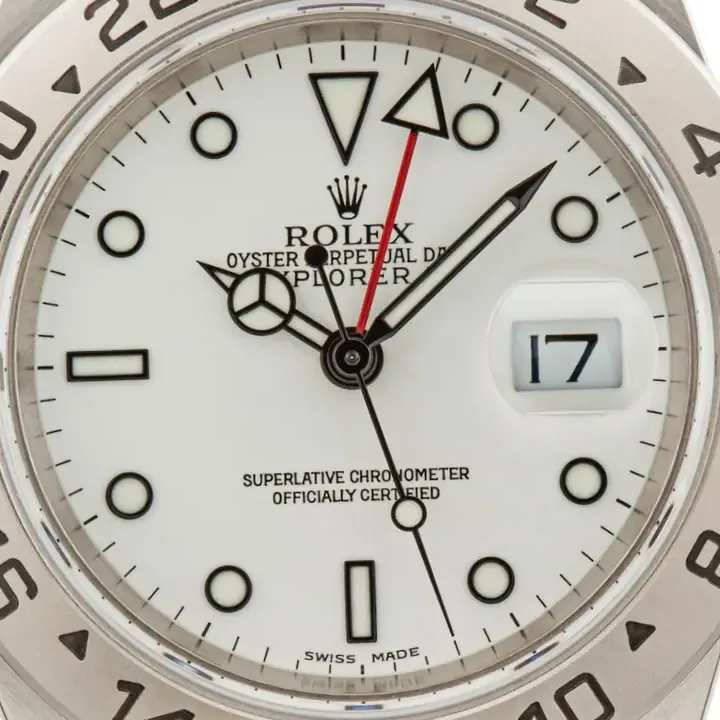
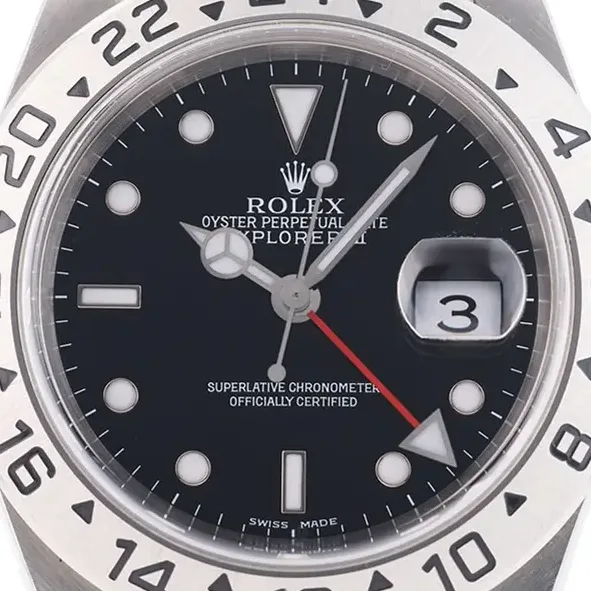
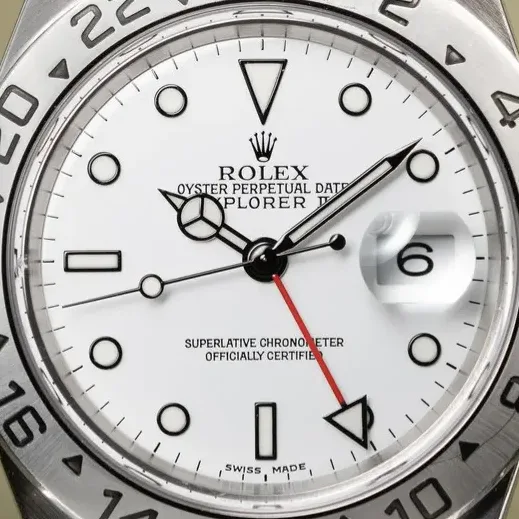
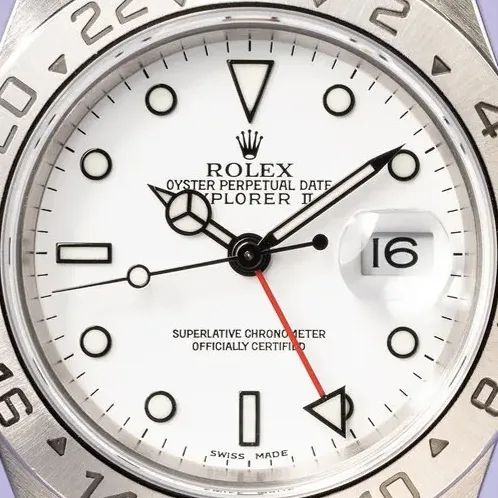
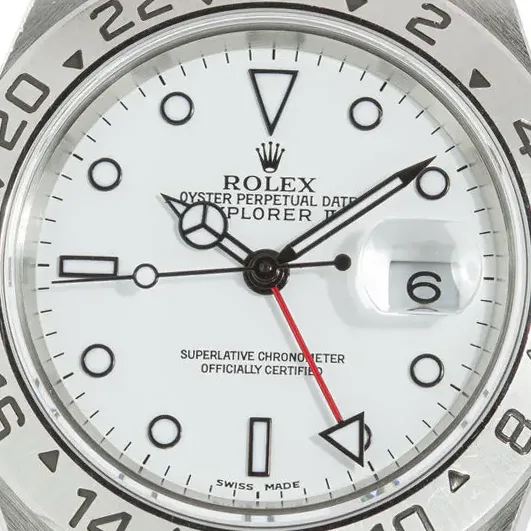
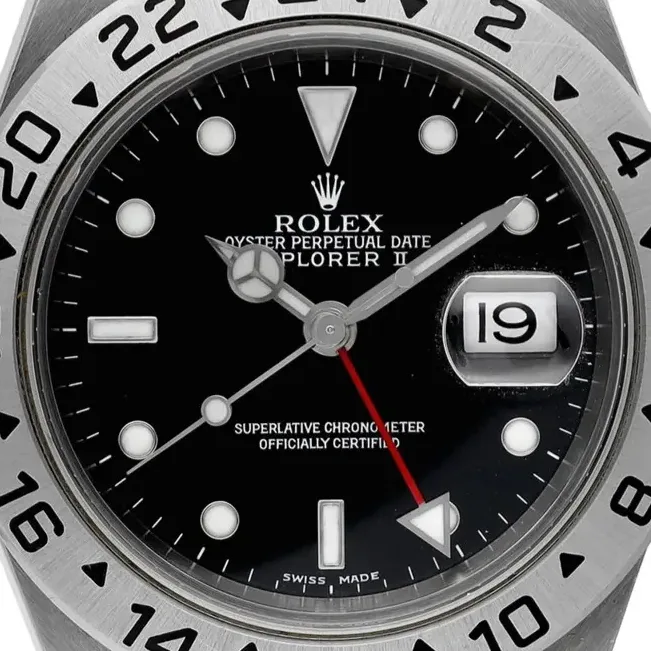
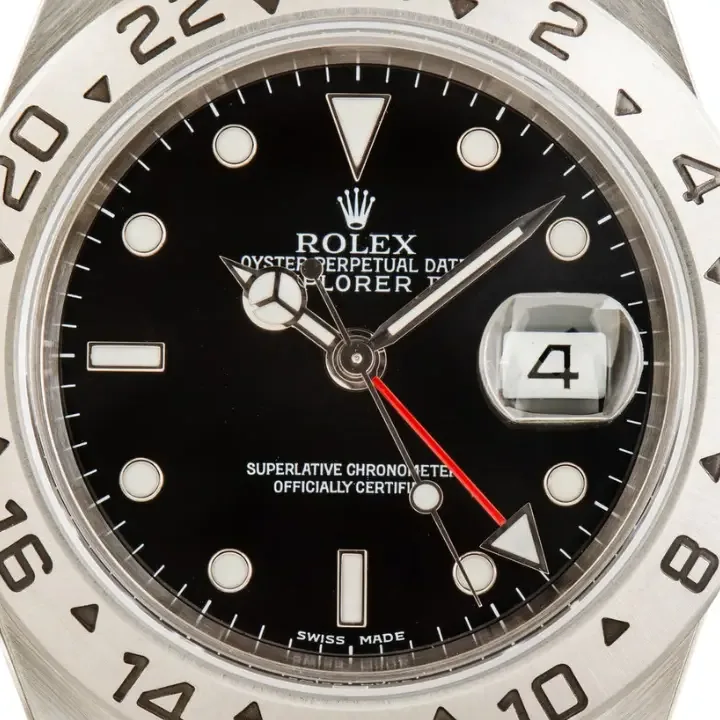
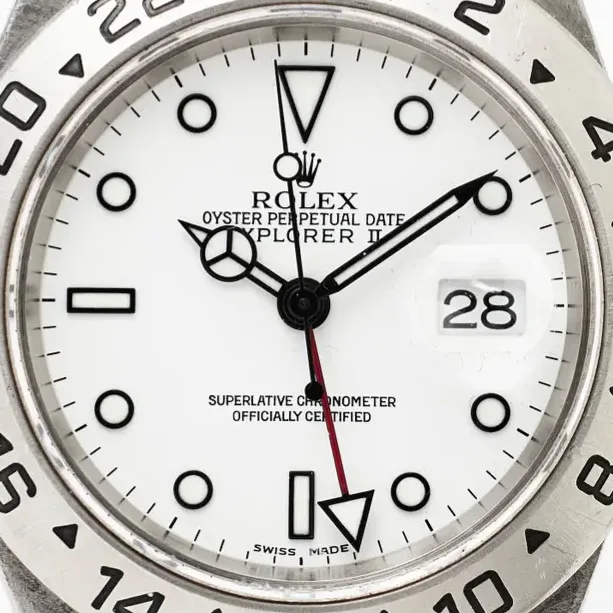
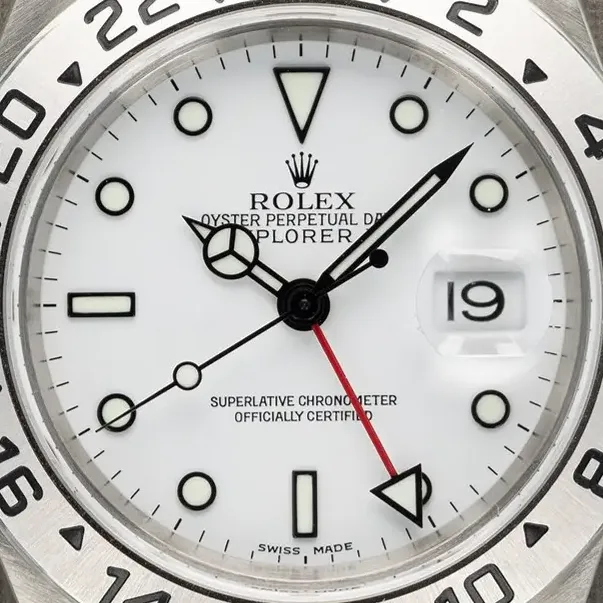
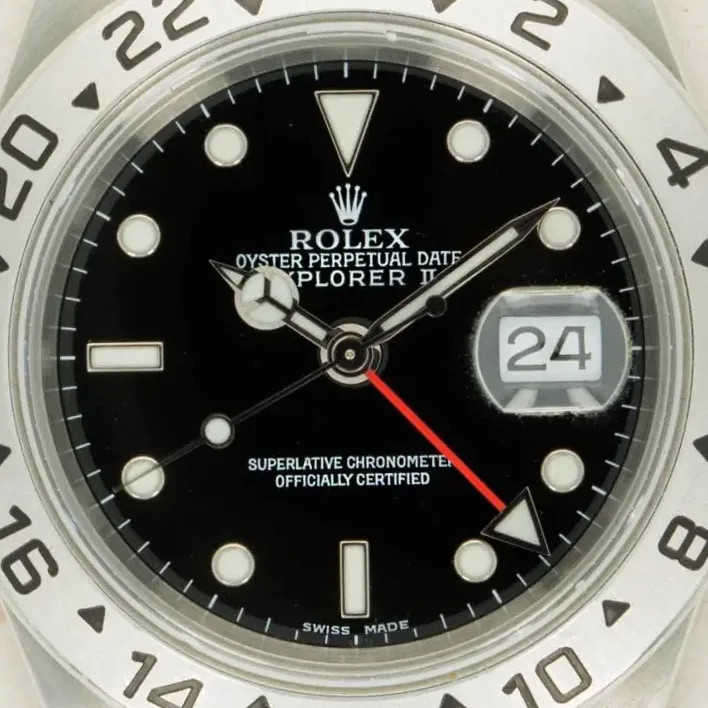
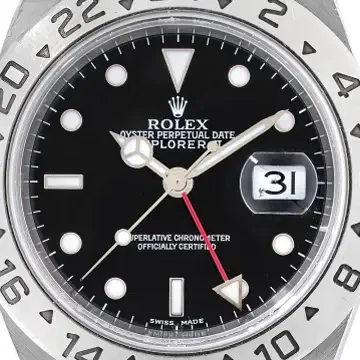
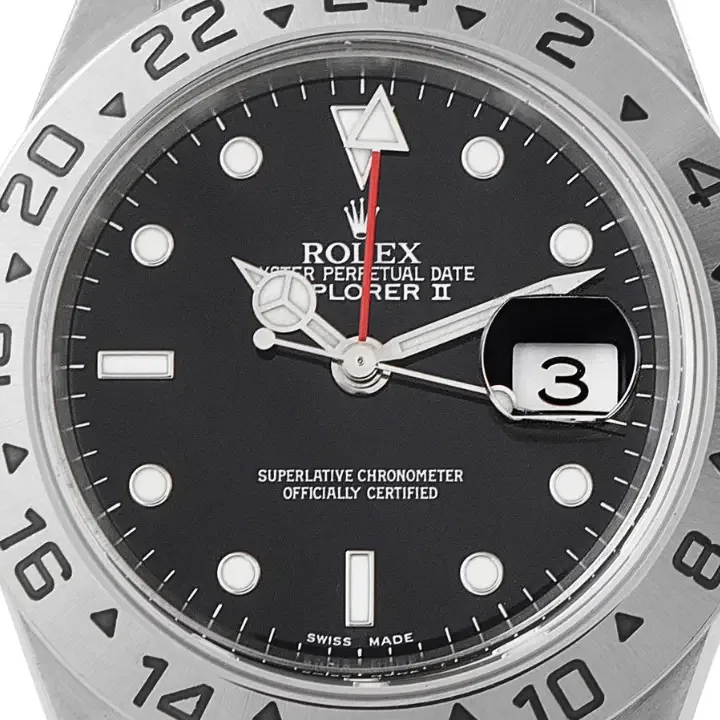
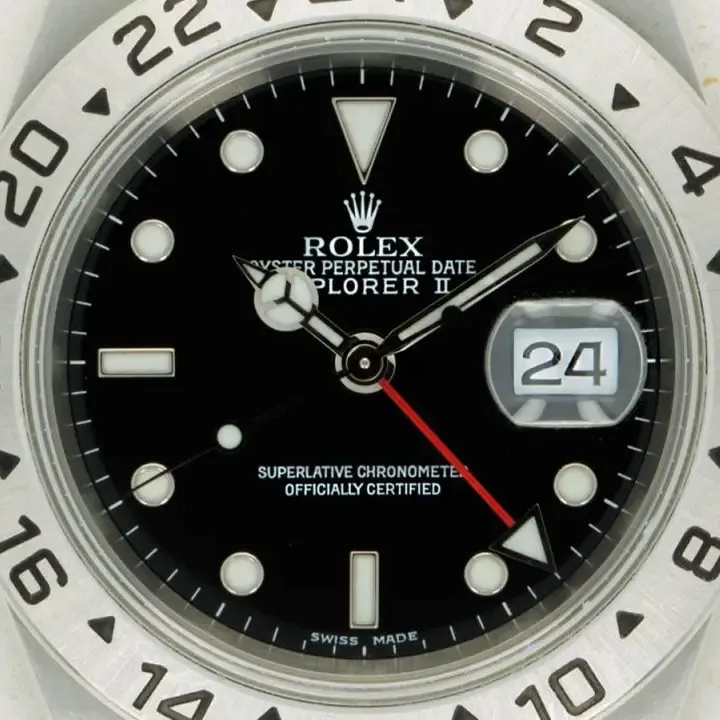
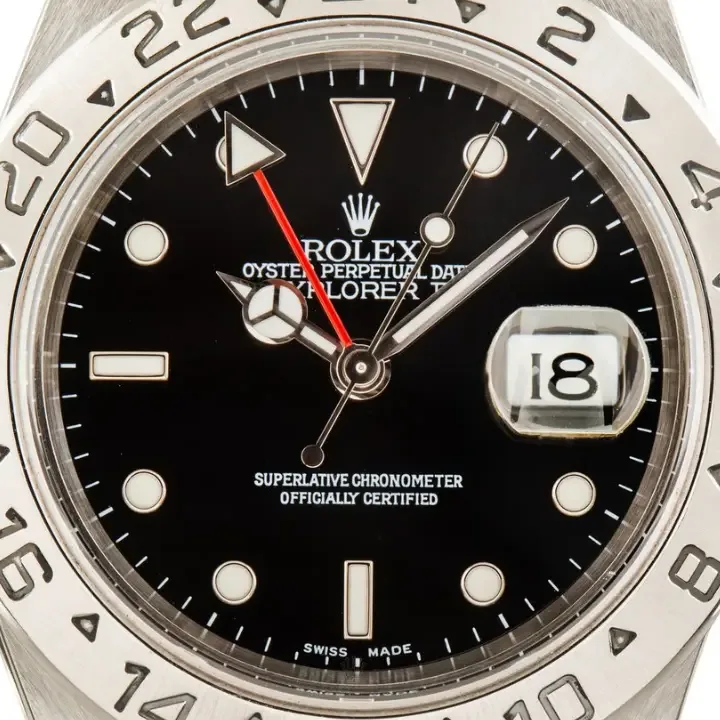
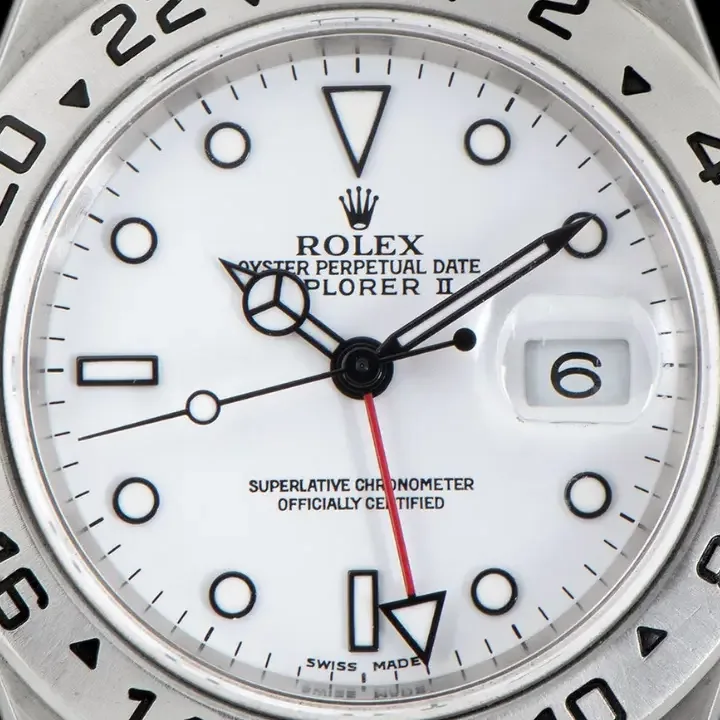
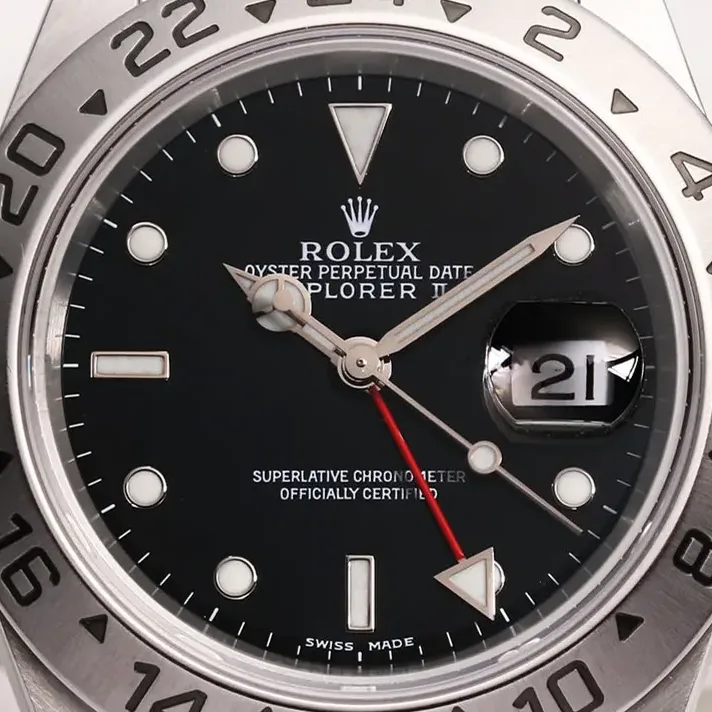
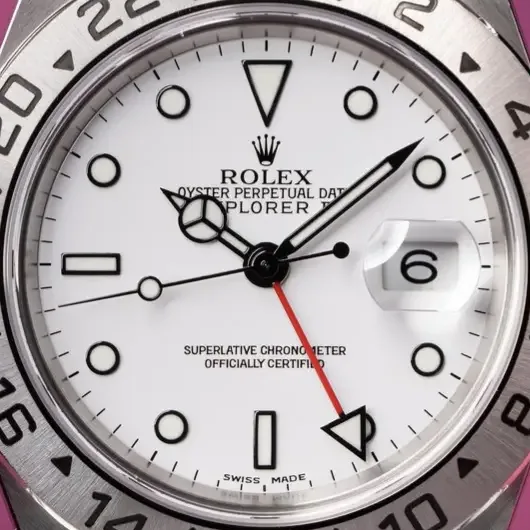
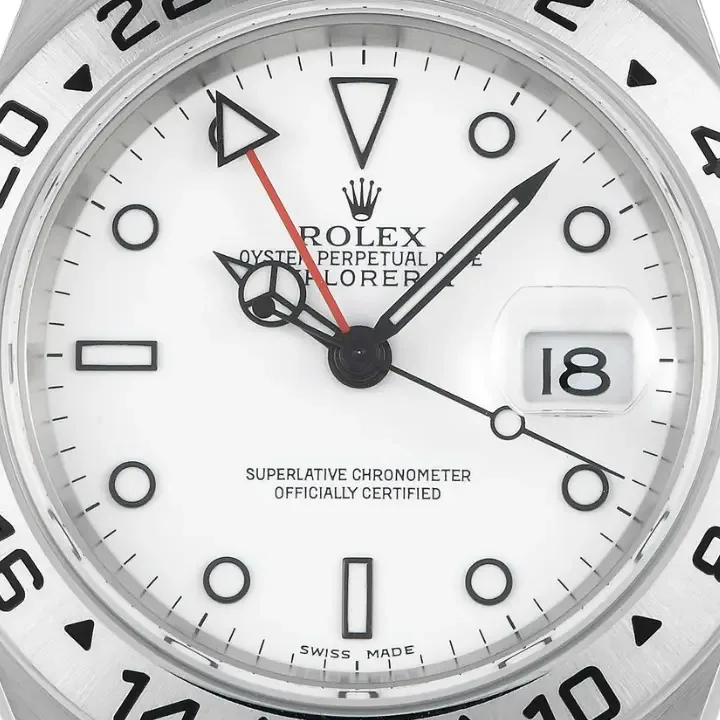
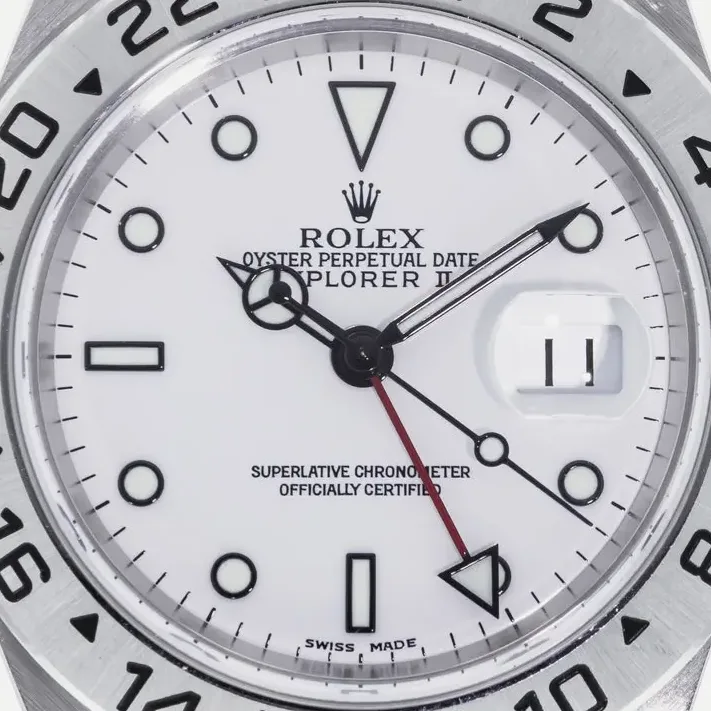
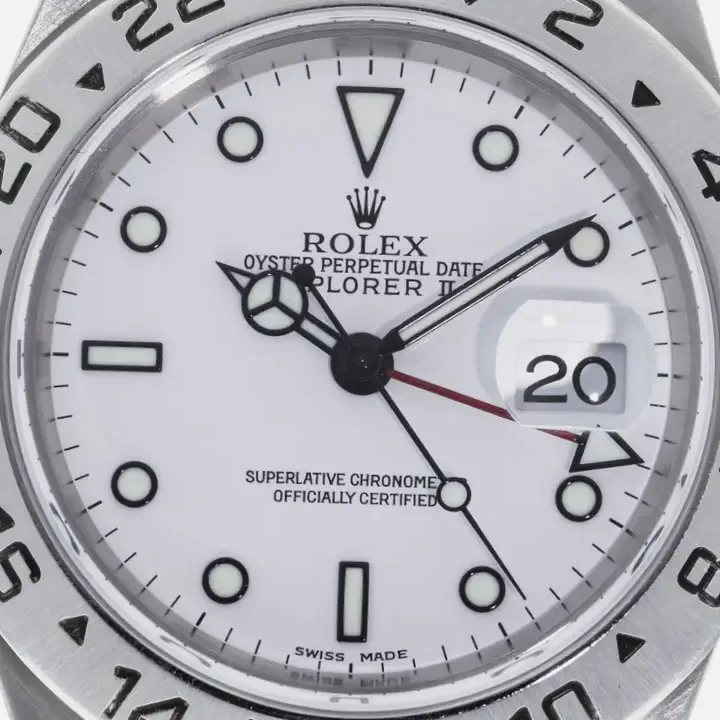
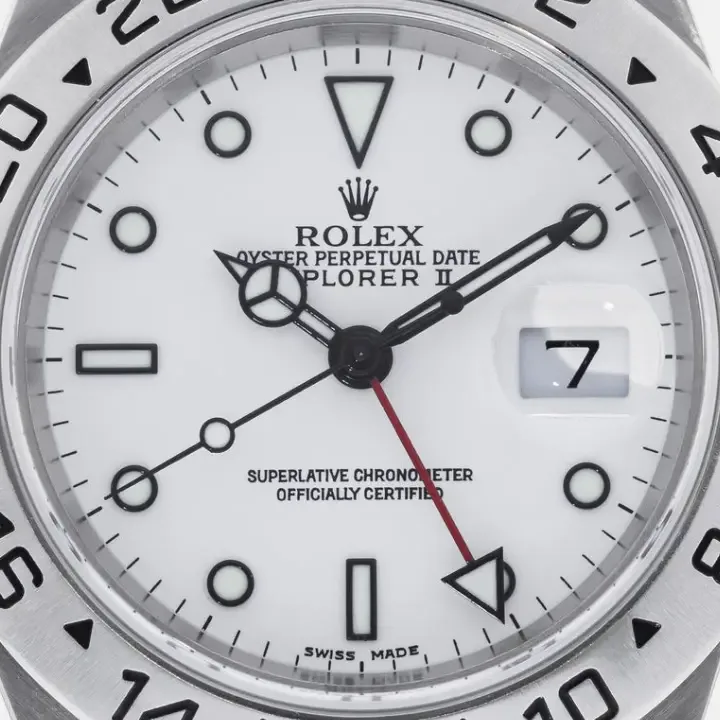
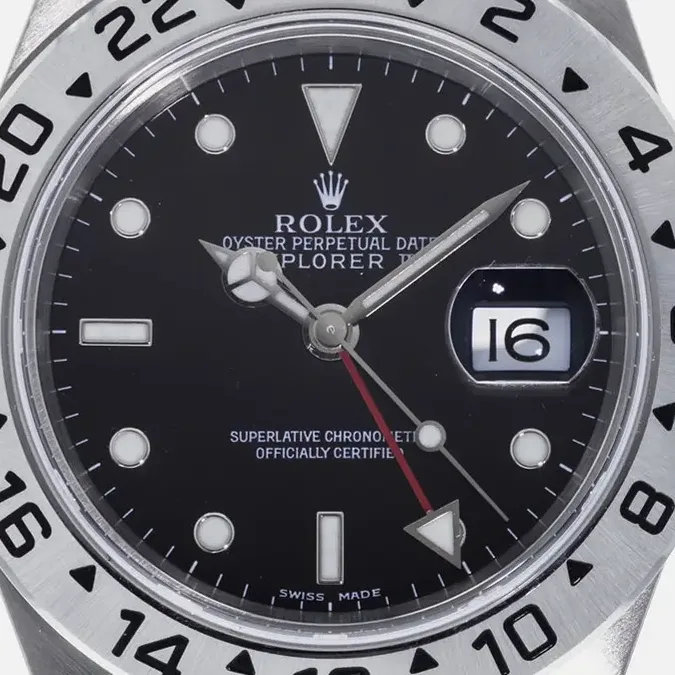
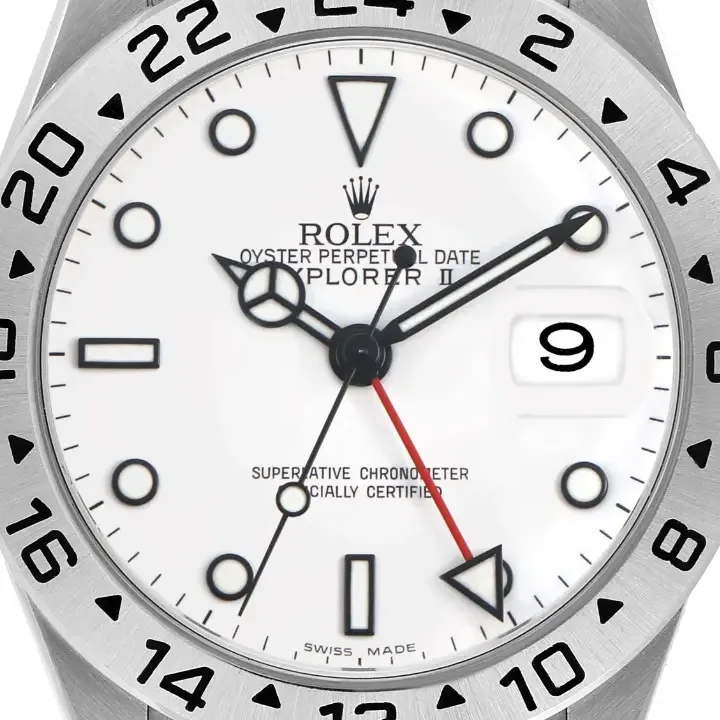
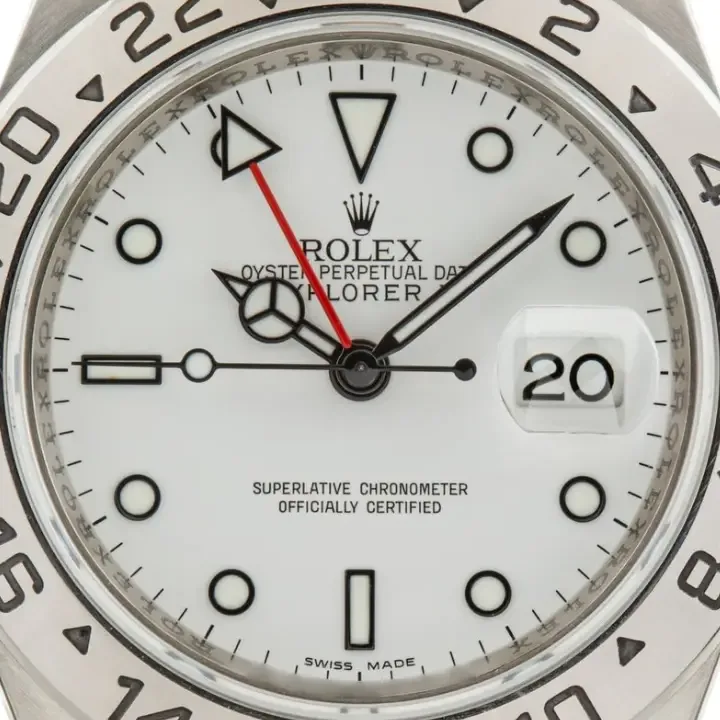
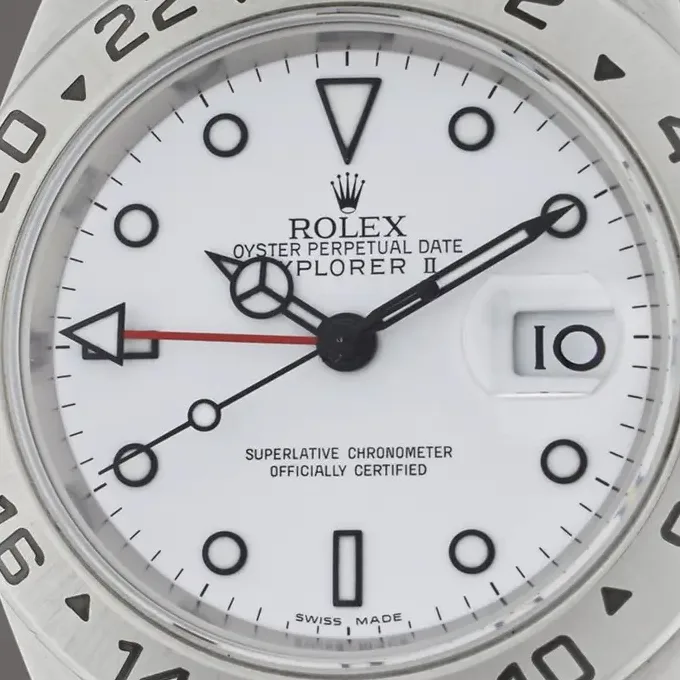
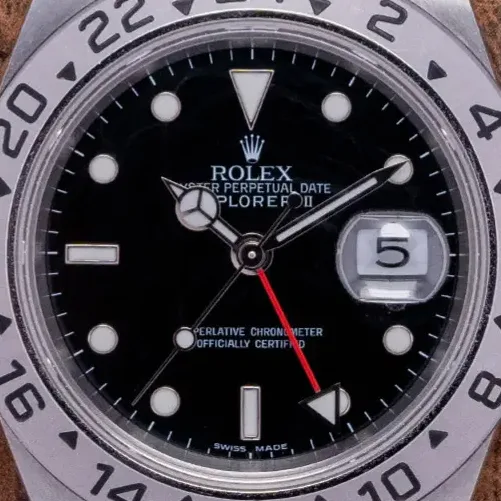
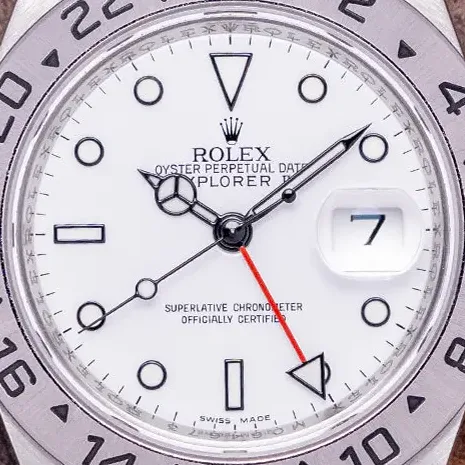
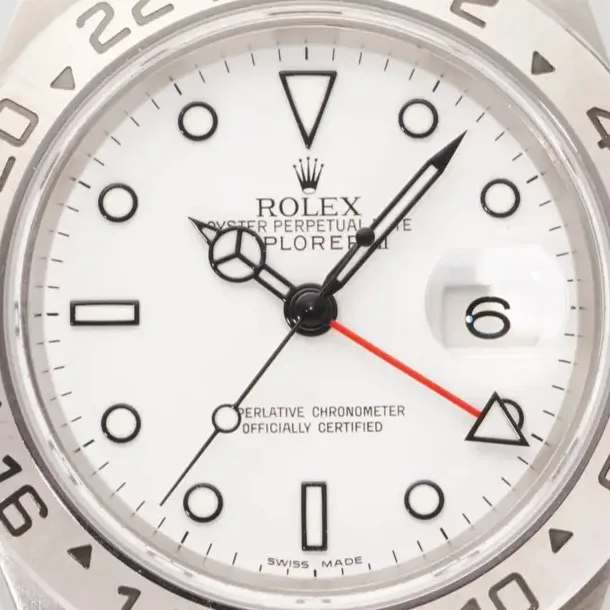
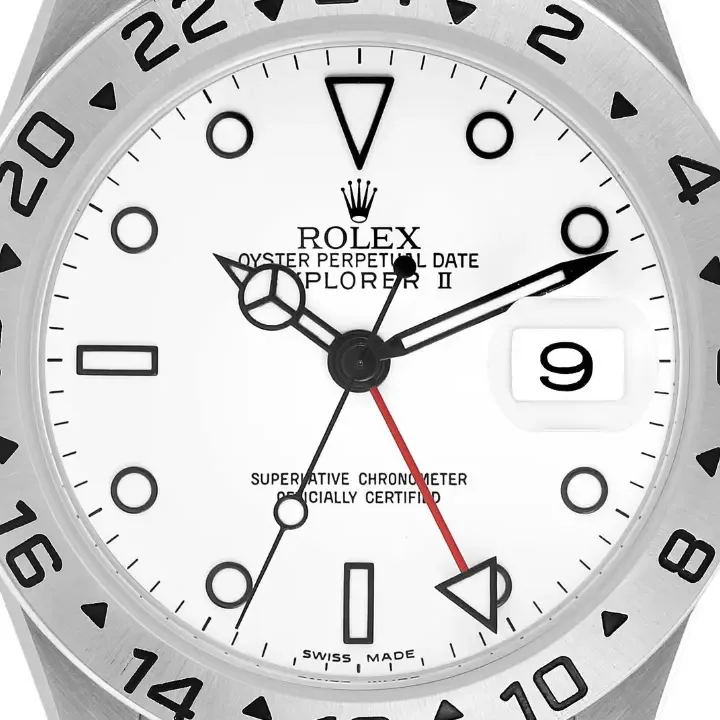
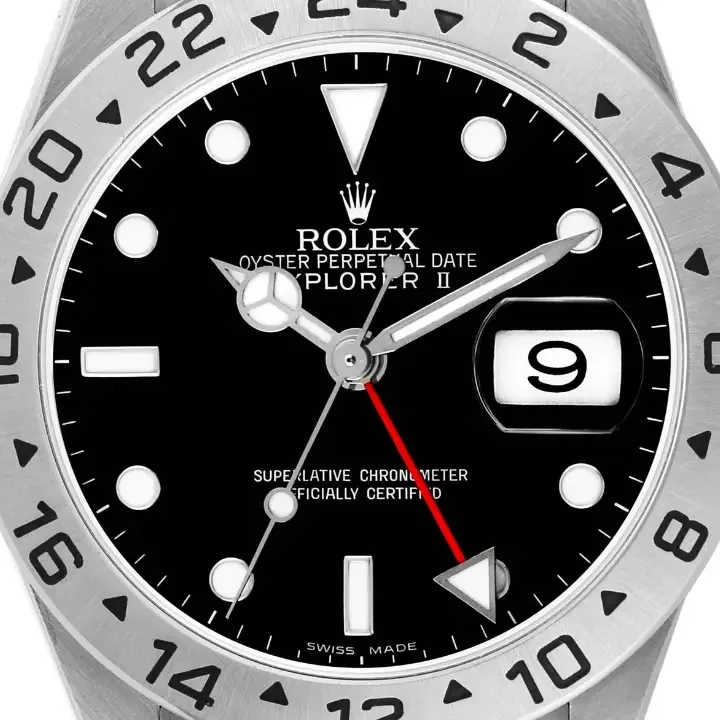
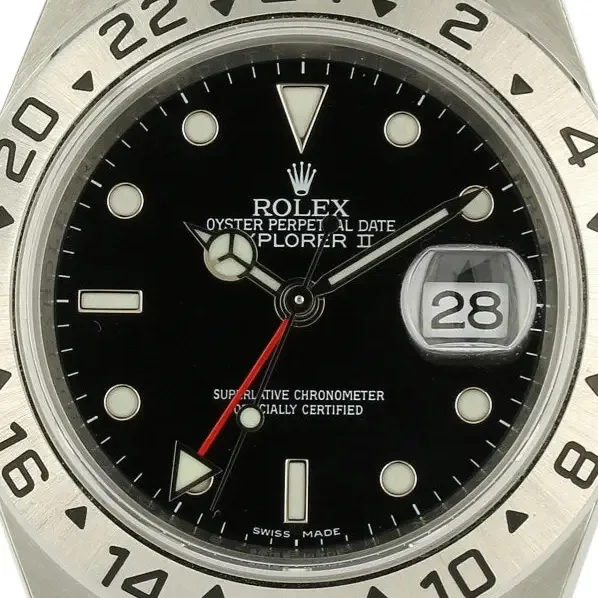
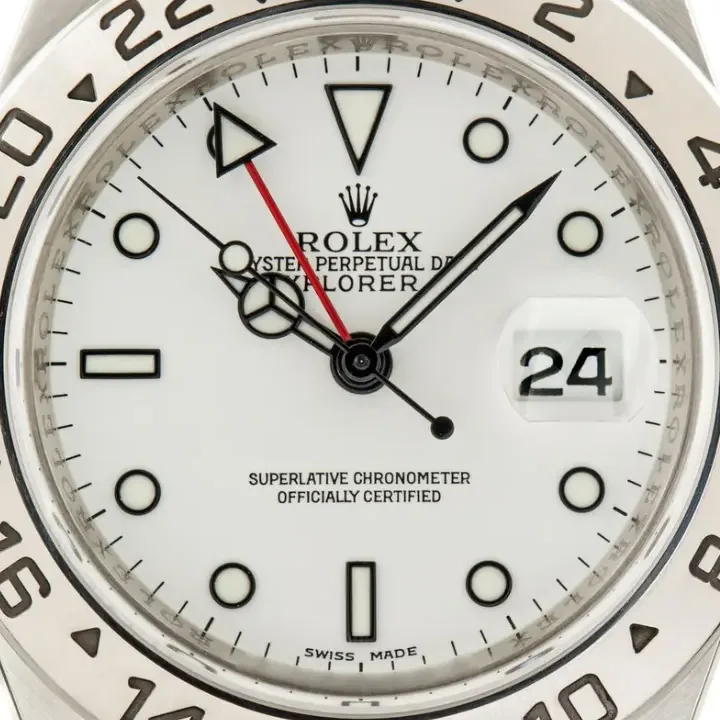
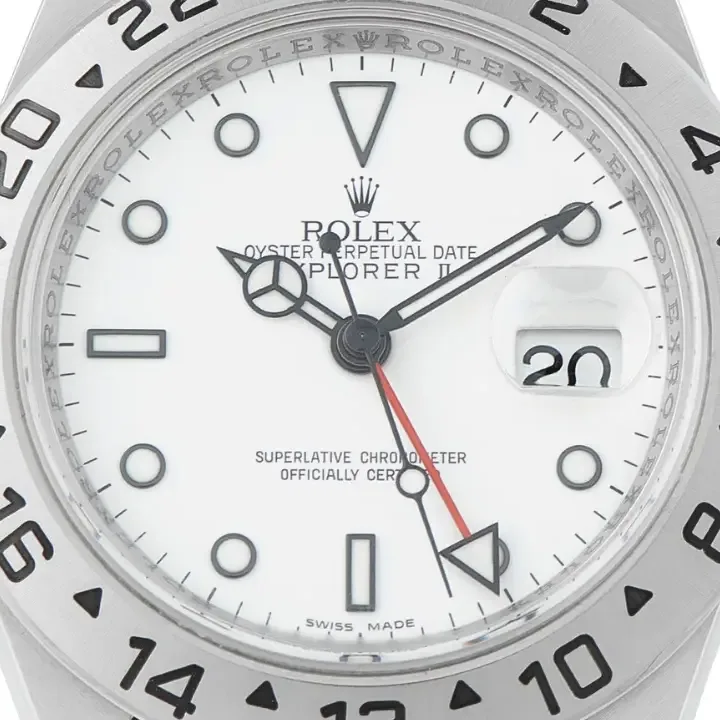
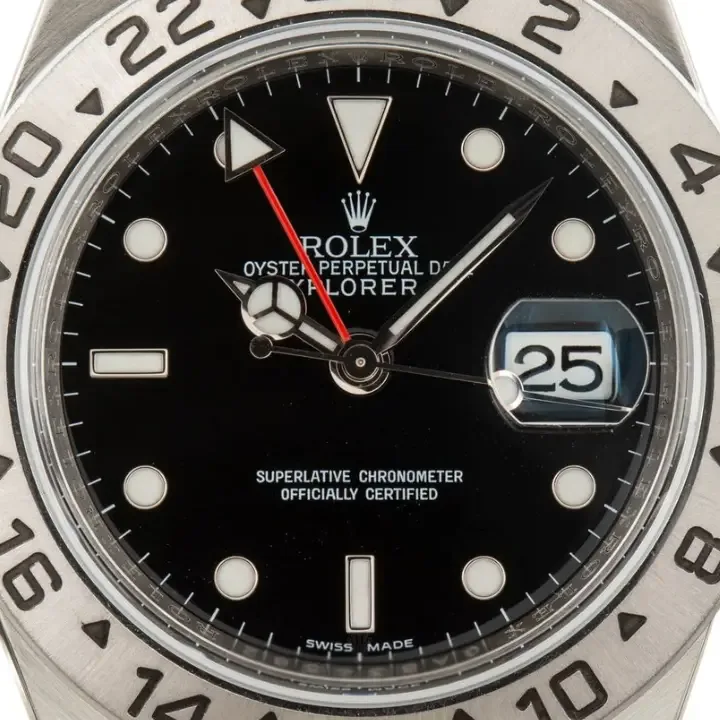
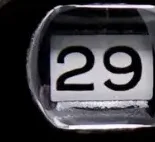
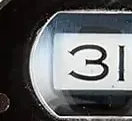
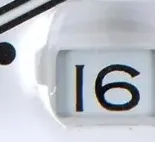
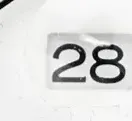
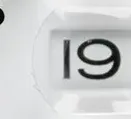
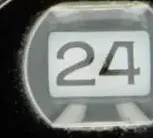
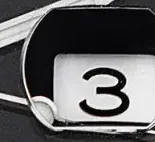
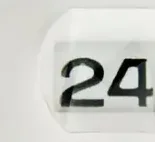
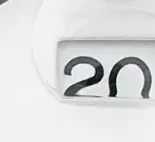
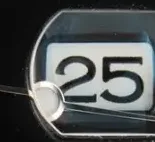
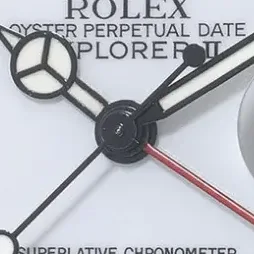
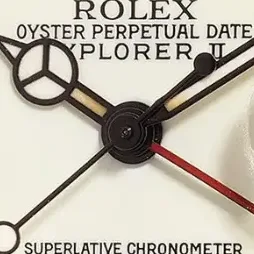
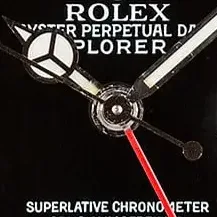
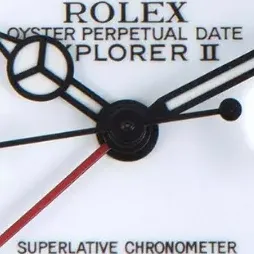
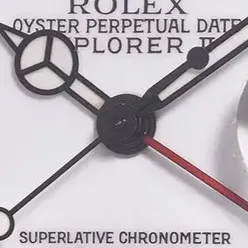
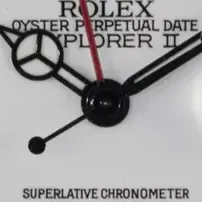
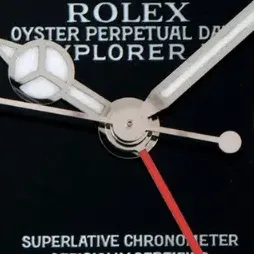
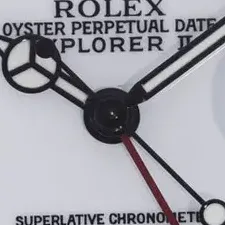
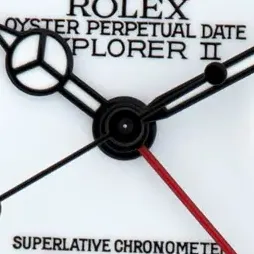
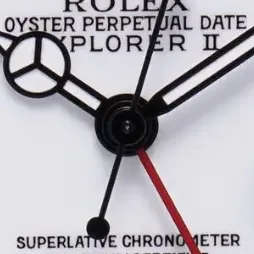
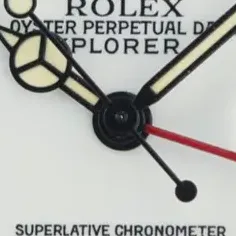
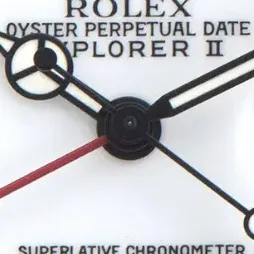
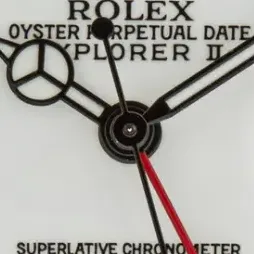
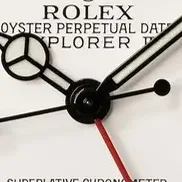
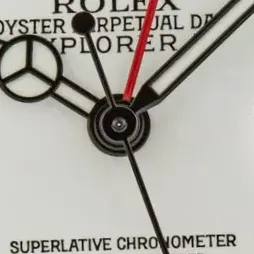
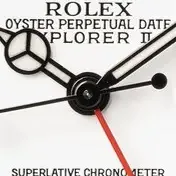
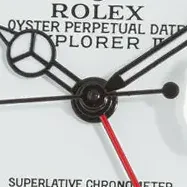
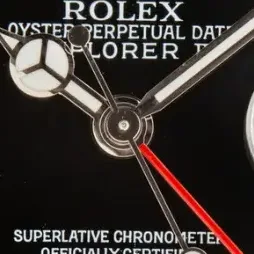
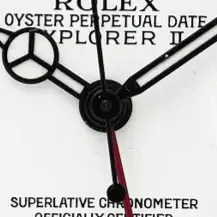
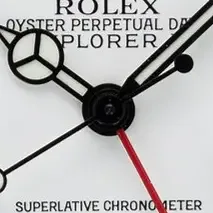
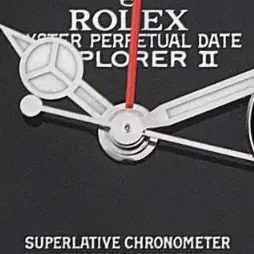
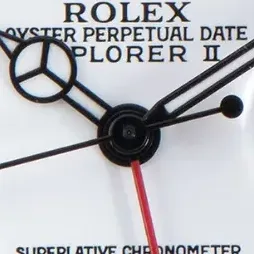
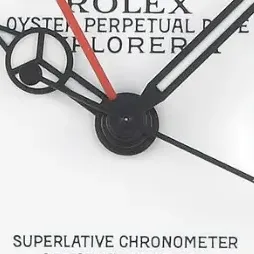
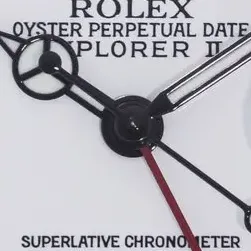
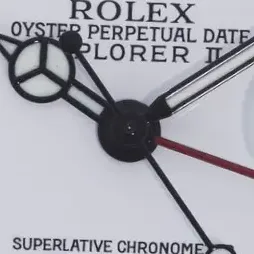
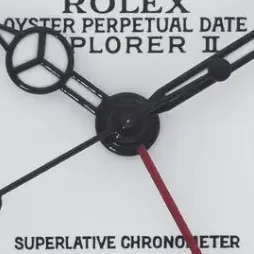
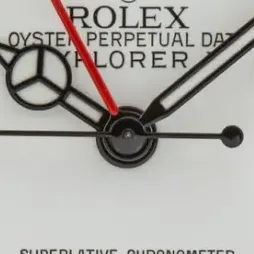
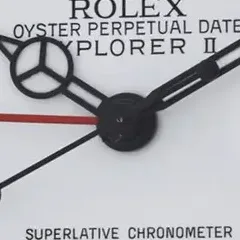
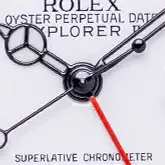
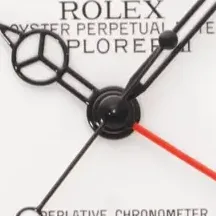
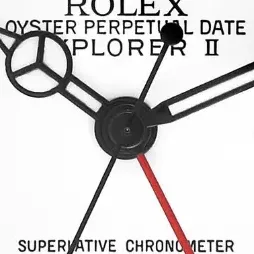
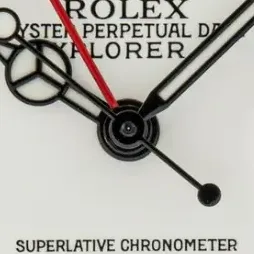
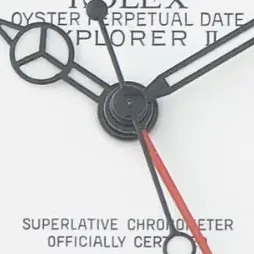
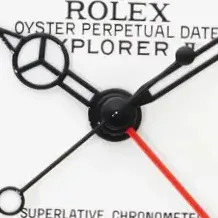
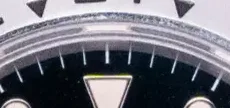
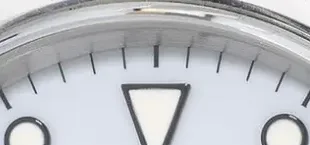
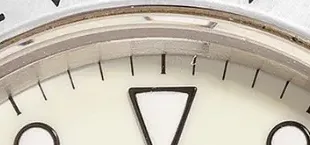
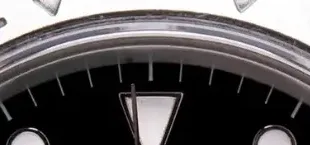
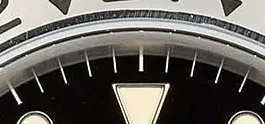
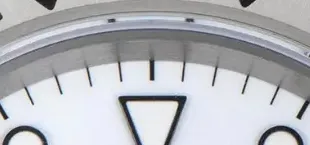
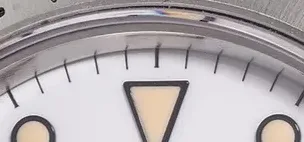
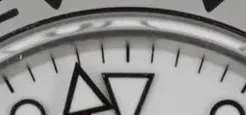
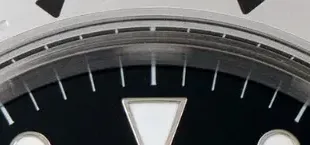
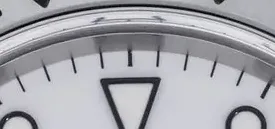
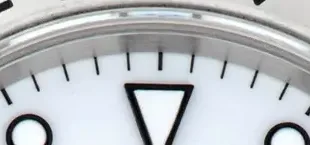
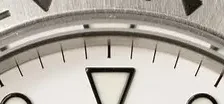
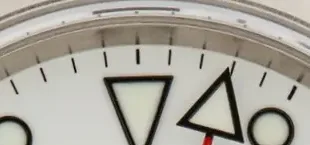
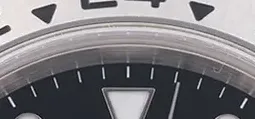
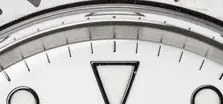
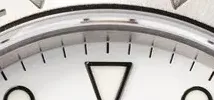
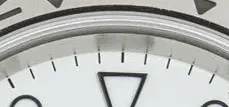
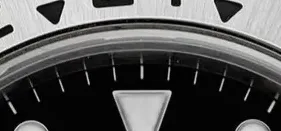
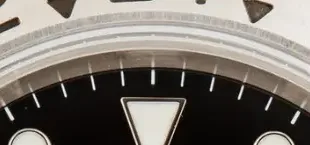
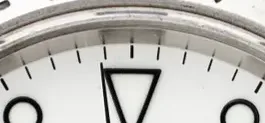
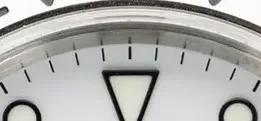
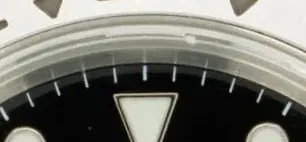
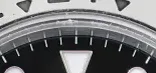
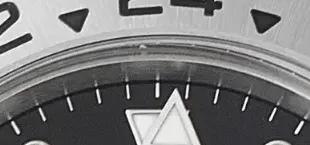
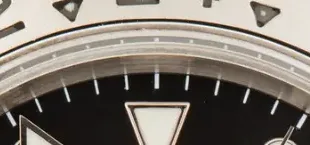
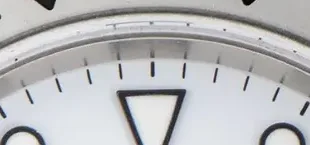
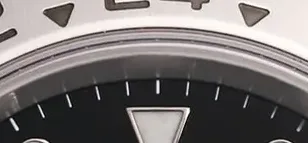
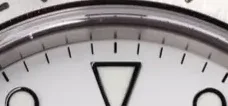
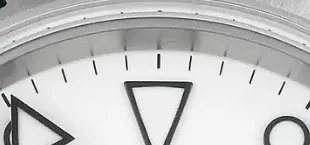
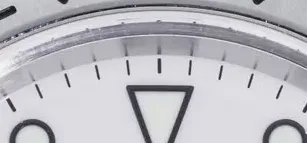
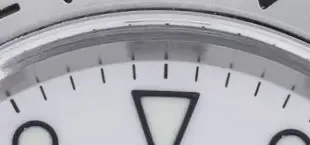
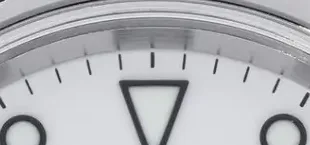
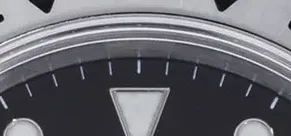
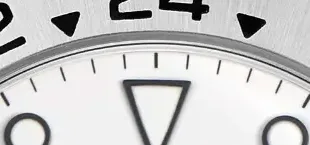
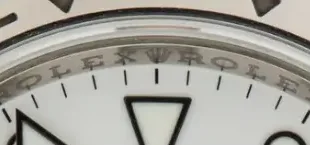
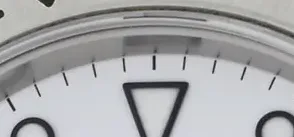
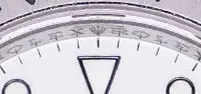
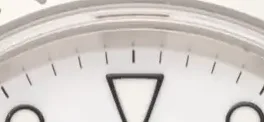
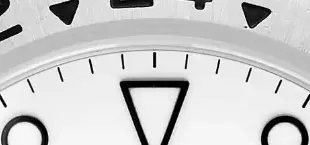
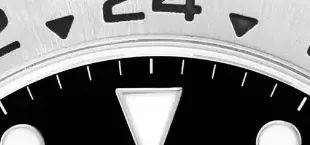
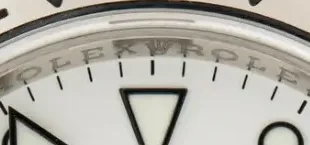
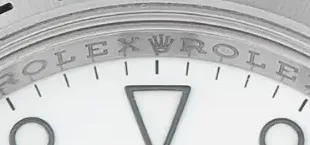
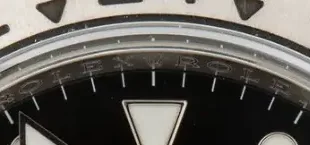
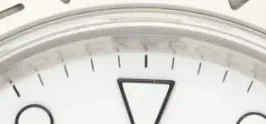
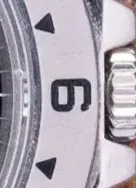
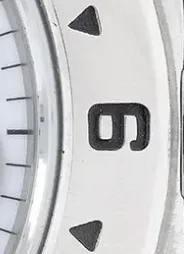
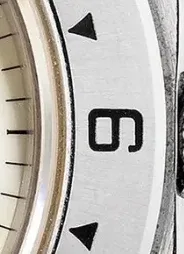
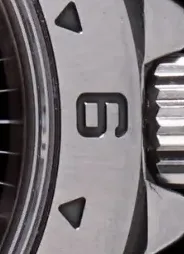
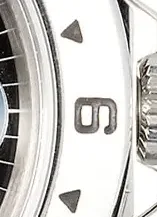
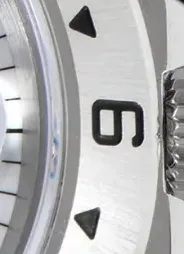
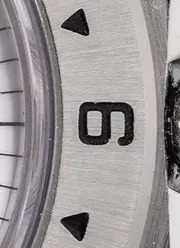
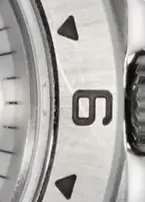
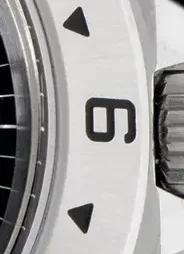
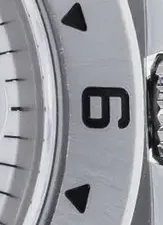
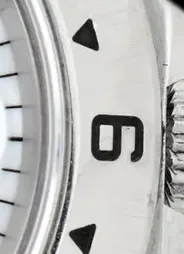
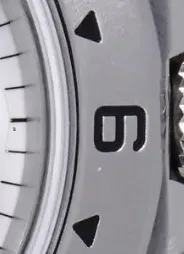
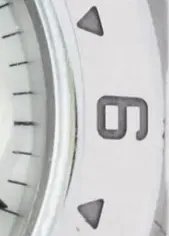
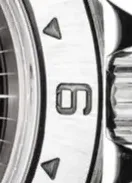
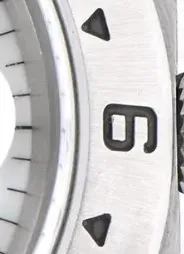
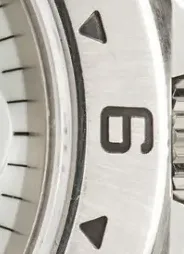
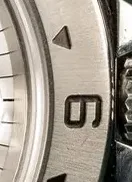
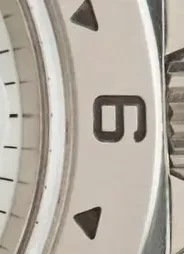
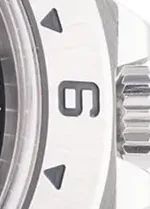
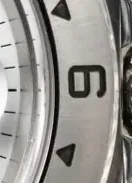
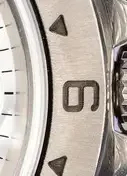
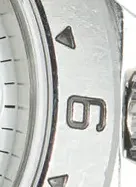
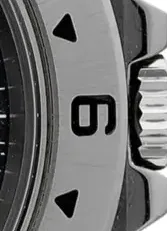
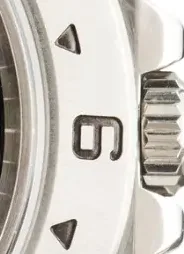
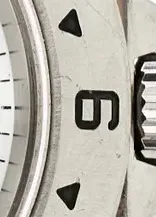
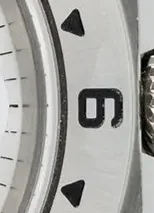
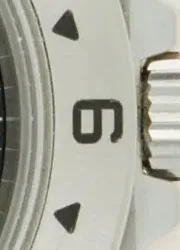
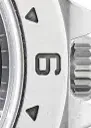
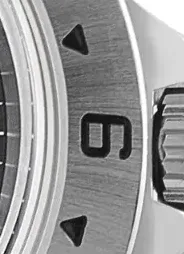
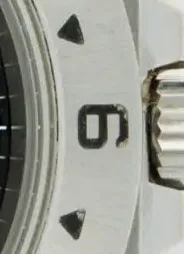
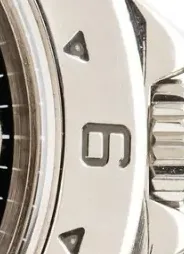
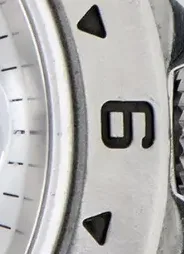
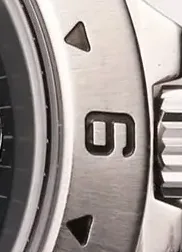
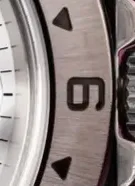
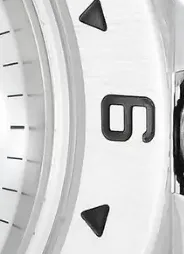
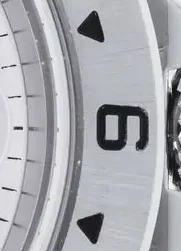
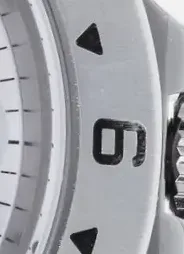
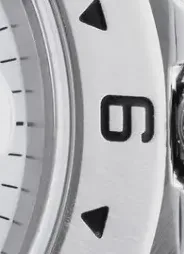
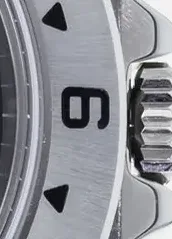
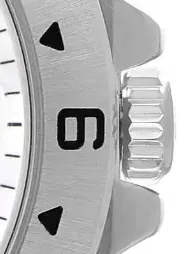
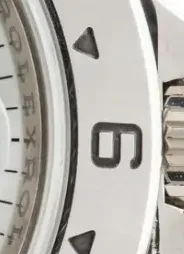
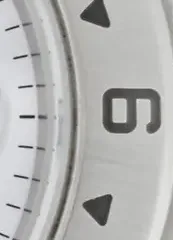
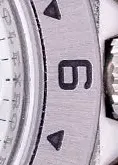
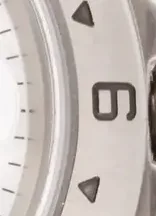
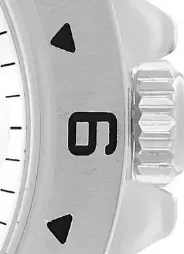
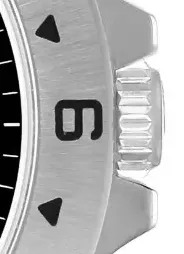
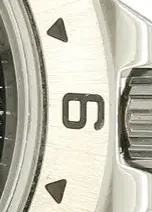
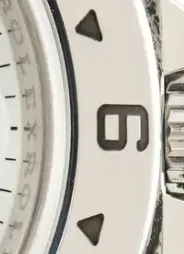
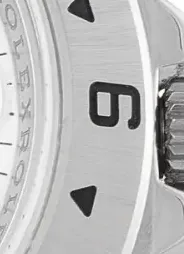
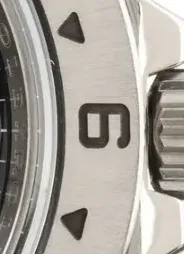
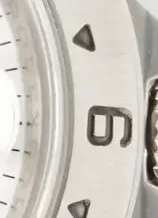
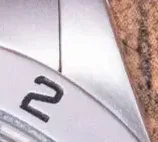
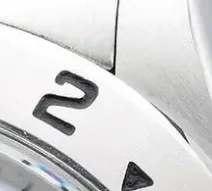
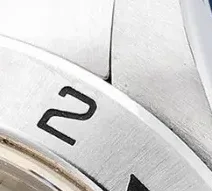
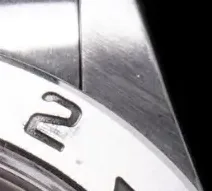
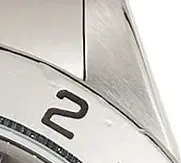
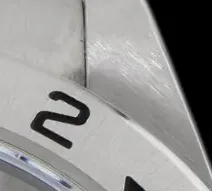
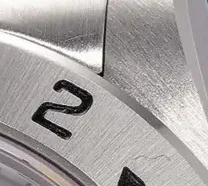
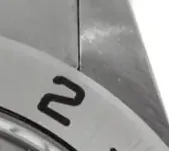
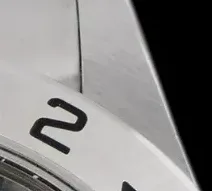
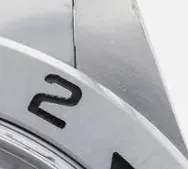
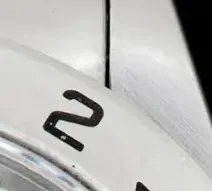
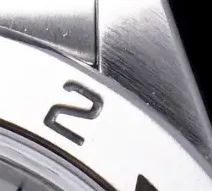
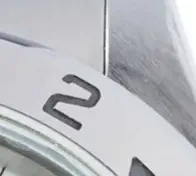
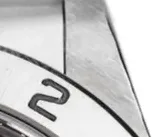
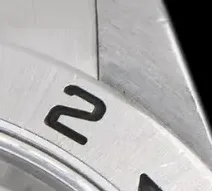
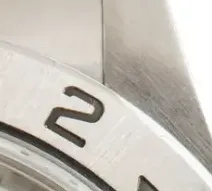
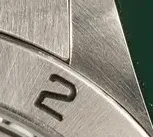
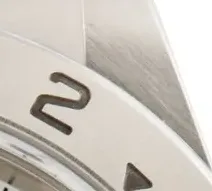
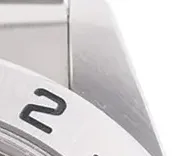
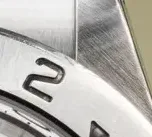
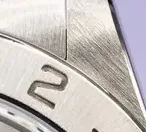
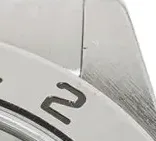
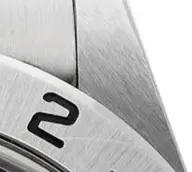
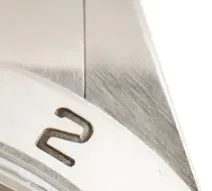
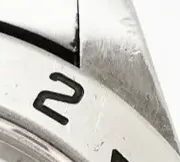
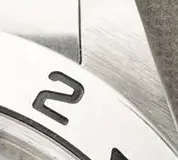
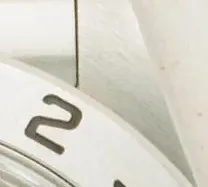
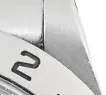
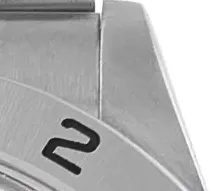
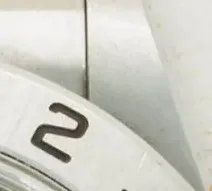
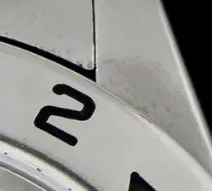
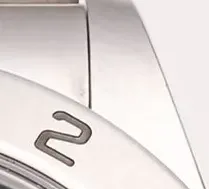
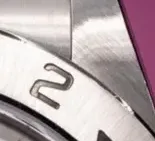
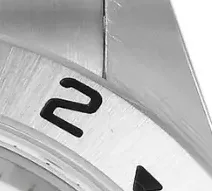
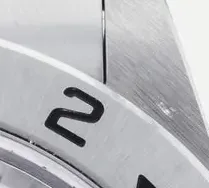
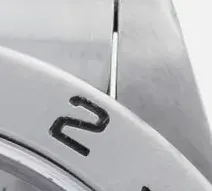
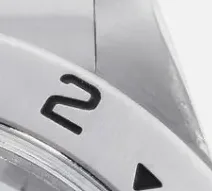
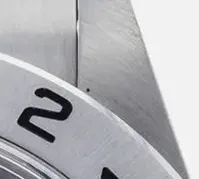
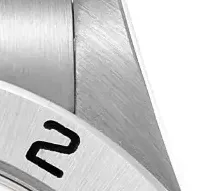
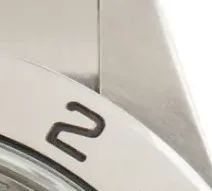
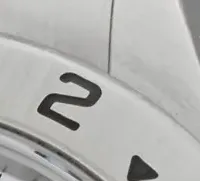
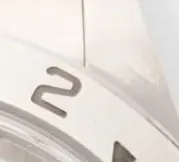
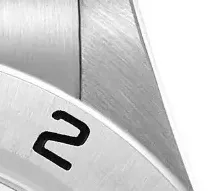
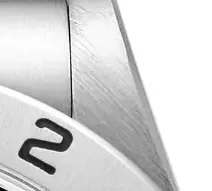
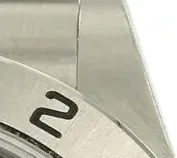
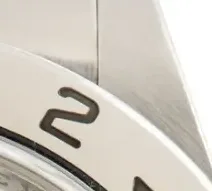
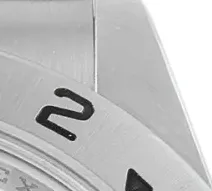
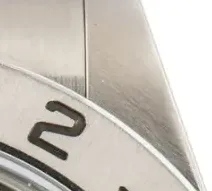
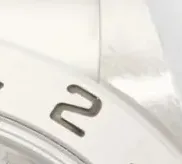
52 watches, oldest first, each straightened and cut the same way so that one row shows one component across them all. Chosen from 8,376 photographs on file for sharpness and for a face typical of the reference. A year marked c. is one its holder gives only roughly. Each picture is a detail cut from a listing photograph. Select the small mark in its corner for its year, its holder, a link to the listing it came from, and a way to report it.









































































































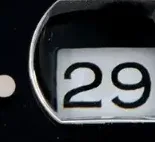
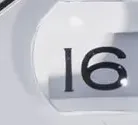
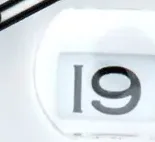
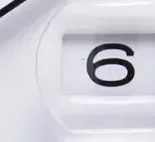
























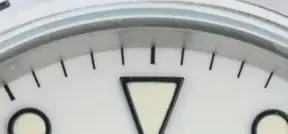
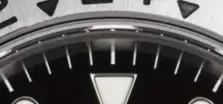
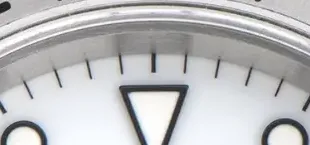
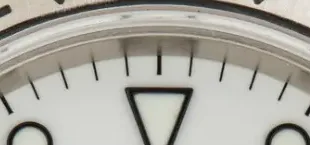




Chronology
The stated span is 1989 to 2011.
Every dated variant: what is written, and what the records show
For the reference the marks are every dated watch; for a variant, the watches a seller names as that variant, so a variant sellers do not name has none.
The reference's own marks are dated by case number. A variant's marks use the year each seller states, so a variant can show watches in a year where the row for the reference shows fewer, or none. 11 dated listings fall outside this scale and are not drawn.
Specification
| Case | 40 mm steel Oyster case, about 12 to 12.2 mm thick and 47 mm lug to lug, screw-down back; steel is given as 904L; angled brushing on the lugs with a thin polished bevel on the earlier cases |
| Crystal | Flat sapphire with a cyclops over the date, no anti-reflective coating; laser-etched coronet added in the mid-2000s |
| Bezel | Fixed, radially brushed steel with an engraved 24-hour scale and a thin polished edge |
| Dial | Black with white-gold surrounds, or white (Polar) with black surrounds; white printing on black, black printing on white; Mercedes hour hand and a thin red arrow-tipped 24-hour hand |
| Movement | Calibre 3185 from 1989, calibre 3186 from the mid-2000s; automatic, 31 jewels, 28,800 vibrations an hour, 48 to 50 hours' reserve, chronometer-certified, independently set 24-hour hand, no quickset date |
| Crown | Screw-down Twinlock crown with crown guards |
| Bracelet | Brushed Oyster: 78360 with hollow end links from 1989, 78790 with Fliplock from 1997, 78790A with solid end links from 2000; stamped folding clasp with a row of adjustment holes |
| Water resistance | 100 m |
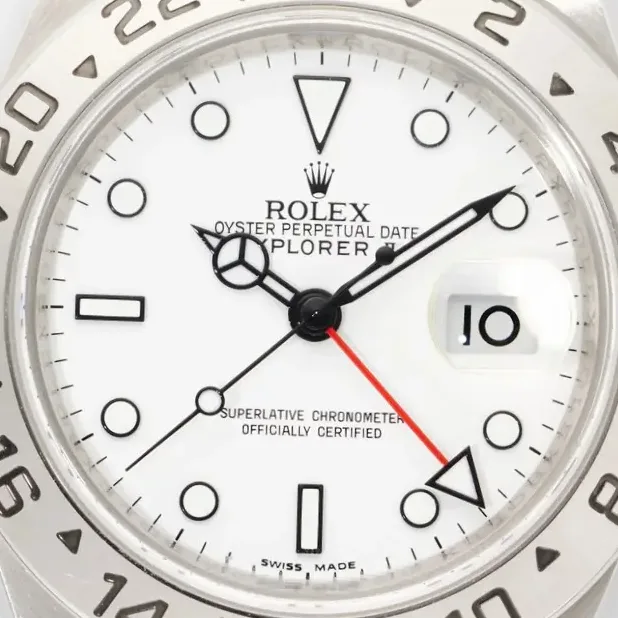
Dial 10 described
Dials come in black or white. The white Polar has black surrounds and black printing; the black dial has white-gold surrounds and white printing. The text at the foot changes with the lume, from SWISS - T<25 to SWISS to SWISS MADE, and the dates differ a little between accounts. Collectors also sort white dials by how they have aged, into porcelain, cream and Chicchi di Mais.
Tritium dial, SWISS - T<25
Tritium plots, with the foot of the dial reading SWISS - T<25. The plots and hands age to a cream or custard colour and the lume stops glowing. It runs from the start of the reference, to 1996 or 1997 by one account and to about 1998 by others.
- SWISS - T<25 at the foot
- creamy plots
Rail dial
On a rail dial the gap between Superlative and Chronometer lines up with the gap between Officially and Certified. It is seen only on the earliest watches and is fairly rare, and is said to affect value little.
- text gaps line up in the lower lines
Porcelain dial
White dials with a deep, milk-like sheen. They are generally placed in the first years, 1989 to 1991, though some may run as late as 1997, and they overlap with ordinary white dials.
- glossy milk-white sheen
Polar white dial
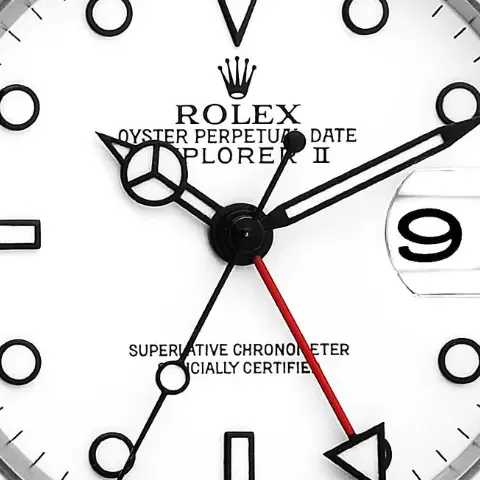
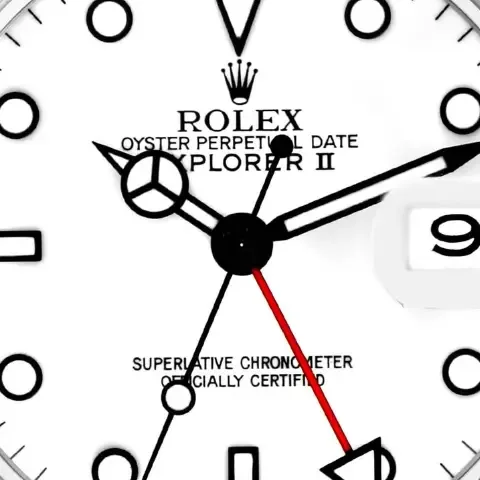
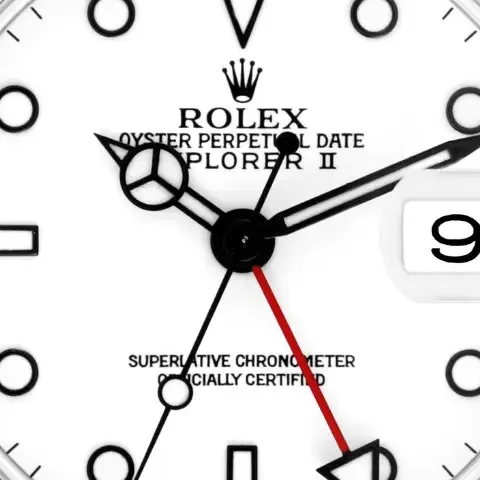
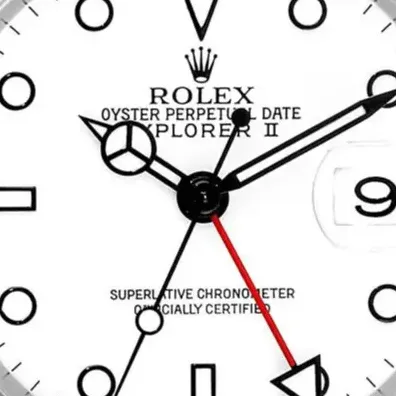
A lacquered, glossy white dial with black outlines to the hour markers and hands and black printing, the Explorer II text included. Black surrounds are what mark the 16570 from the 16550, whose white dials had white-gold ones; a late 16550 can carry black ones, but a Polar with white-gold surrounds is a 16550. The only colour is the dark red 24-hour hand.
- black surrounds on a white dial
- black printing
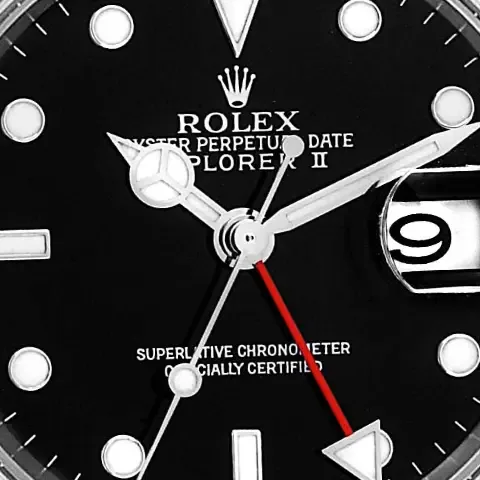
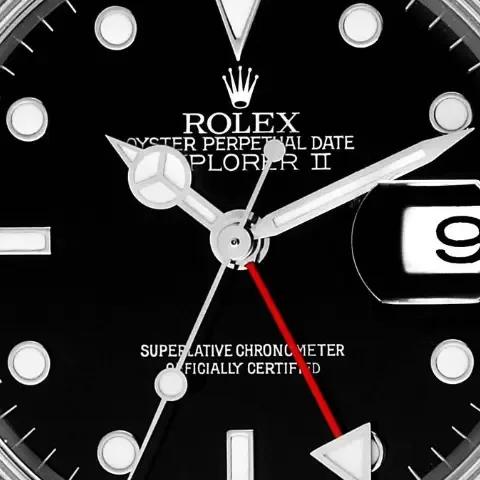
Black dial
Gloss black with applied hour markers outlined in white gold and white printing. The layout matches the Polar: a triangle at twelve, bars at six and nine, dots at the other hours and a date window at three. Black dials have not been given a nickname.
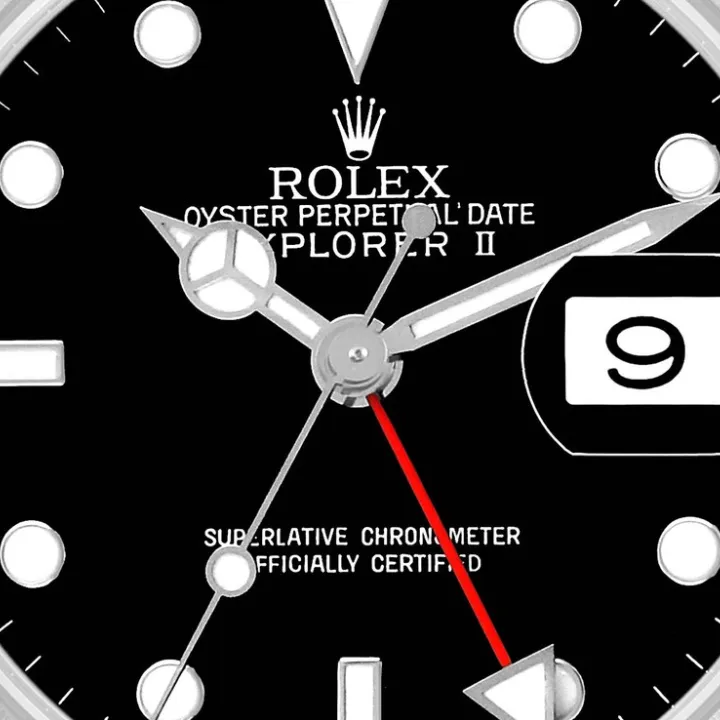
- white-gold surrounds

Tiffany & Co. dial
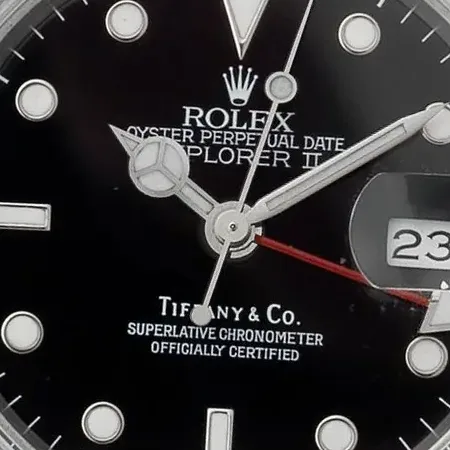
Black dials stamped Tiffany & Co. are known, and are priced apart from other black dials. In the library's records a few watches of the early 1990s are described as retailed by Tiffany & Co., not all of them with a signed dial.
- Tiffany & Co. on the dial
SWISS only dial
The foot of the dial reads SWISS alone, which goes with Luminova. It is placed from about 1998 to 1999 or 2000; one timeline instead puts it with the first Super-LumiNova dials, from 1999 to 2001. Some collectors call watches of this kind the second generation of the reference.
- SWISS alone at six o'clock
SWISS MADE dial
Super-LumiNova dials read SWISS MADE at the foot, from 2000 (1999 in some accounts, 2001 in one) to the end of the reference. One collector scheme calls the watches made from 1999 to 2005 the third generation and those with the engraved rehaut the fourth.
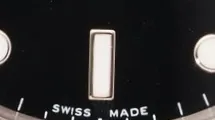
46 listings on record under the name.
Cream dial
Early dials with a paint defect that has aged to a rich cream. The range runs from near white to dark cream, and cream 16570 dials are usually lighter than the better-known cream 16550 dials.
- cream-white dial
Chicchi di Mais dial
A Polar whose hour plots have turned deep yellow or yellow-orange; the contrast with the white dial is the point. The term is often stretched by sellers to dials with only mild yellowing, which strictly is not the same.
- deep yellow plots on white
Luminous material 3 described
The lume went from tritium to Luminova to Super-LumiNova, each shown by the text at six o'clock, though one account goes straight from tritium to Super-LumiNova without naming a Luminova stage.
Tritium
Marked SWISS - T<25. The plots and hands age to cream or custard and, on old watches, no longer glow. Dated from 1989 to between 1996 and 1998.
- creamy lume
- T<25
Luminova
Marked SWISS under six o'clock, from about 1998 to 2000. Some collectors call these watches a second generation of the reference. One account moves straight from tritium to Super-LumiNova in 1999 and does not name a Luminova stage.
- SWISS alone at the foot
Super-LumiNova
Marked SWISS MADE; it glows green and carries a fair amount of lume on hands and markers. From 2000, or 1999 in some accounts, to the end of the reference; one account gives the first Super-LumiNova dials of 1999 to 2001 the SWISS-only signature.
46 listings on record under the name.
Hands 3 described
A Mercedes hour hand and a thin red arrow-tipped 24-hour hand, set independently of the local hour hand.
Thin red 24-hour hand
A narrow dark-red hand with a white arrow-shaped tip. It differs from the broad orange hand of the 1655 and the 216570, and is the quickest way to tell the 16570 from the 216570.
- thin red hand with a white arrow tip
Black-outlined hands (Polar)
On Polar watches the hands carry black surrounds, as the markers do.
- black outlines on hour and minute hands
Also sold under this name and confirmed by eye, the photograph not shown here: 2002 · the listing at swisswatchexpo.com, 2004 · the listing at swisswatchexpo.com, 2004 · the listing at swisswatchexpo.com, 2008 · the listing at swisswatchexpo.com.
Mercedes hour hand
The local hour hand is the Mercedes style, with lume fill, as on the Submariner and GMT-Master. A relumed or replaced hand shows against an original dial.




Bezel 1 described
The bezel is fixed brushed steel with a 24-hour scale engraved at the even numbers, with triangles between them. The scale is in a thinner, rounder type than on the 16550 and far less bold than on the 42 mm references.
Brushed 24-hour steel bezel
Radial brushing with a thin polished bevel on the edge; both are easily marked. The numerals are thin and round.
- radial brushing
- thin polished bevel
- thin rounded numerals
Case 5 described
The case has the slender profile of Rolex cases of the earlier decades, with a thin middle and most of the thickness in a domed back. The first cases have drilled lug holes and angled brushing with a thin polished bevel on the lugs; later cases have solid lugs. The rehaut was plain at first and engraved in the middle of the 2000s.
Drilled lug holes
Holes pass through the lugs, which changes how easily the bracelet is swapped. The end of drilled lugs is usually put at about 2003 and by some at roughly 2000; the change came in gradually, so some late drilled cases already have solid end links and Super-LumiNova.
- holes through the lug sides
No lug holes
Solid lugs, a cleaner look, from about 2003; some accounts put the change as early as roughly 2000.
- solid lug walls
Polished bevel on the lugs
Earlier cases combine angled brushing on the lugs with a thin polished bevel, which was later removed from the reference. The date of the change is not given.
- thin polished bevel on the lug edge
Plain rehaut
No engraving on the ring between dial and crystal. A watch with a plain rehaut has the 3185.
Engraved rehaut
ROLEX ROLEX ROLEX is engraved round the rehaut, as on other Rolex sports watches of the period, in the middle of the 2000s. It almost always has the 3186, though some of the first engraved watches (2005 to 2006) still have the 3185. Some collectors find the engraving too modern for a watch of this style.
- ROLEX engraved around the rehaut
Crown 1 described
A screw-down Twinlock crown with crown guards. It sets the local hour hand in one-hour steps, which is also how the date is advanced.
Twinlock crown
Screw-down, with pointed crown guards; used throughout the reference.
Crystal 1 described
The crystal is flat sapphire with a cyclops over the date and no anti-reflective coating. Whether the 16570 was the first Explorer II with sapphire is not agreed.
Laser-etched coronet
A tiny coronet is etched in the crystal, added in the middle of the 2000s with the engraved rehaut as a defence against counterfeits.
- tiny coronet etched in the crystal
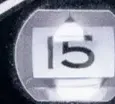
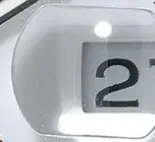
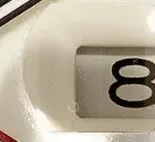
Date 1 described
The date has a cyclops at three o'clock and jumps at midnight, tied to the local hour hand.
No quickset date
Neither calibre has a quickset. The date is advanced by moving the local hour hand forward in one-hour steps with the crown, the same movement that sets a second time zone.
- no separate quickset position
Movement 2 described
The calibres 3185 and 3186 are built on the 3135 pattern with an independent 24-hour hand, and share a 28.5 mm diameter, 31 jewels and 4 Hz beat. They replaced the earlier calibre of the 16550, given as 3085 in most accounts and as 3035 in one.
Calibre 3185
A flyer-type GMT movement with a full balance bridge, Nivarox hairspring, KIF Elastor shock protection and Microstella regulation, 28.5 mm across and 6.45 mm thick, about 48 hours' reserve. The independently set hand wobbles a little during setting. On 30xx calibres the hands advance with the crown turned counter-clockwise and on 31xx clockwise, which tells a 16570 from a 16550 without opening the case.
- 3185 marked on the movement
- wobble of the 24-hour hand when set
Calibre 3186
The same movement with a blue Parachrom hairspring, changes to the date mechanism and a steadier 24-hour hand, about 50 hours' reserve. The start is dated to 2005 in two accounts and to 2007, or after 2006, in the others, and the engraved rehaut is the pointer: no engraving means a 3185.
- 3186 marked on the movement
Bracelet 4 described
The bracelet is a fully brushed three-link Oyster with a stamped clasp. A safety catch was added in 1997 and solid end links around 2000. Whether the centre links are hollow or solid is not agreed.
78360, hollow end links
End link code 501B, no safety catch, so the clasp opens with a single motion. The end of the bracelet seems to go into the end link. Earlier watches with hollow end links feel slightly looser.
- bracelet end seems to enter the end link
78790, hollow end links, Fliplock
The same 501B end links with a safety catch added to the clasp.
- safety catch on the clasp
78790A, solid end links
End link code 801, with the centre link running right up to the edge of the case. Centre links are said by some to stay hollow, and by others to turn solid all round on later watches.
- first centre link reaches the case edge
Stamped clasp
The last Explorer II clasp of this kind: stamped, with faux Oyster links on the face and a row of adjustment holes, the simplest micro-adjustment system.
- stamped clasp with faux links
- row of adjustment holes
Originality
- Dials are sometimes refinished or replaced at service, so the lume type and foot text on the dial should agree with the year of the case number.
- Hollow end links and the stamped clasp stretch with age, and bracelet stretch is the commonest flaw.
- An engraved rehaut should be crisp and aligned; a watch with a plain rehaut should have the 3185.
- A Polar with white-gold surrounds is a 16550; black surrounds usually mean a 16570 but can be a late 16550, and the movement separates the two (the crown sets the hands in opposite directions on the 30xx and 31xx calibres).
- Cases are often polished, softening the bevel on the lugs and the edge of the bezel, and the brushed bezel marks easily.
Names
- Polar. The white dial with black surrounds.
- Chicchi di Mais. Italian for kernels of corn, for deep yellow plots on a white dial.
- Porcelain. A white dial with a milk-like sheen.
- Rail dial. The gaps in the lines of text at the foot line up with each other.
Where accounts differ
Points on which the published literature and the library's own records do not agree, or on which the literature contradicts itself.
- Calibre 3186 date. Two guides date the change to the 3186 to 2005 or about 2005; three give 2007 and a fourth puts the 3186 after 2006. Watches with early engraved rehauts (2005 to 2006) are said still to carry the 3185. In the library's records, the watches whose sellers name the 3186 date mostly from 2007 to 2009.
- Luminova stage. Most guides place a Luminova period between tritium and Super-LumiNova, ending in 1999 or 2000; others go straight from tritium to Super-LumiNova in about 1999, and one of these keeps SWISS-only dials until 2001. Sellers in the library's records name Luminova and Super-LumiNova on many watches each.
- Sapphire crystal. Two guides call the 16570 the first Explorer II with a sapphire crystal, the 16550 having acrylic; two others give the 16550 a sapphire crystal already.
- Centre links. One guide says early bracelets have hollow centre links and later ones solid links all round; another describes the 16570 as having hollow centre links and a 2004 watch is described with solid end links but hollow centre links.
- Calibre of the 16550. Most guides give the 16550 the calibre 3085; one gives 3035. A few listings of this reference in the library's records name the 3085.
- Start and end of production. The guides give 1989 to 2011. The library's case numbers begin a year after the stated start, and a few carry years after 2011.
- End of drilled lugs. One account says drilled lugs are found on watches made before roughly 2000. Another page on the same account dates drilled 16570s to before roughly 2003, a third says the change was phased in between 2000 and 2003, and a fourth shows a Y-serial watch with drilled lugs. In the library's records sellers describe drilled lugs on watches as late as the Y serials.
Back and movement
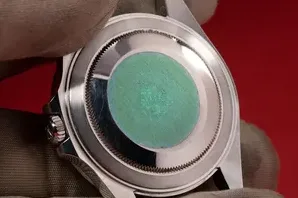
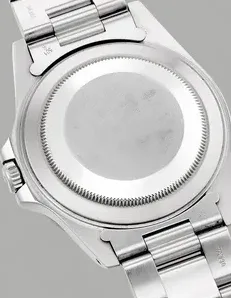
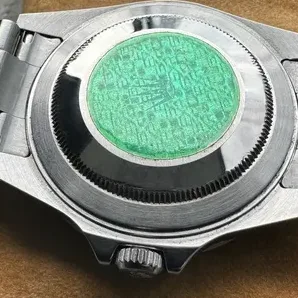
From listings of this reference, each confirmed by eye to show what it is filed under. A picture on which a person's name or a personal engraving can be read is not shown. From most holders a detail from the middle of the photograph is shown; the mark in its corner gives its holder and a link to the listing.
Caseback
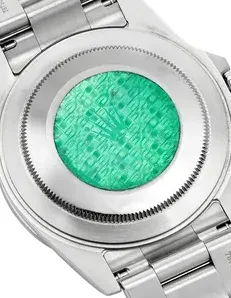
Movement
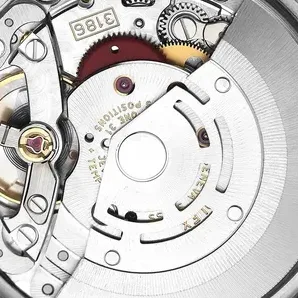
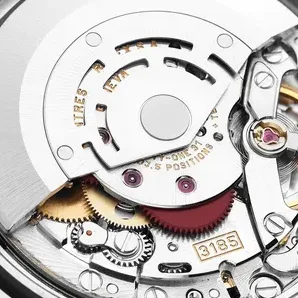
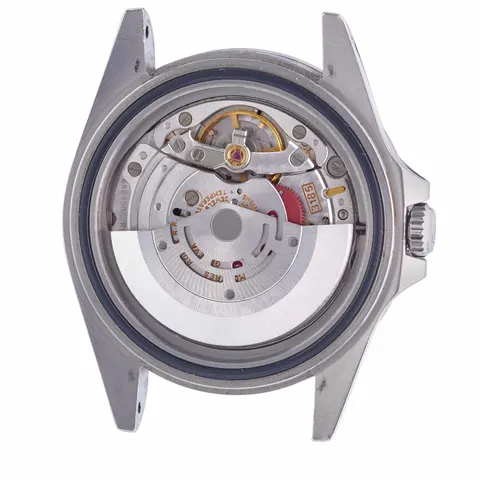


Catalogue versions 1 listed
The full numbers under which holders list this reference, with what their listings say of each. Each has a page of its own.
| Version | Metal | Dial | Years seen | Records |
|---|---|---|---|---|
| 16570T | Steel | Black | 2002–2010 | 70 |
In the records
Counted from 3,065 listings at 66 holders between 10 June 2009 and 14 November 2026. These are what sellers and auction houses state, not measurements.
Fainter bars are the 81 outside the main run of 1991–2008 (the middle nine-tenths): the earliest is 1990 and the latest 2019. They are early and late examples, and now and then a number misread. The head of the page gives 1990–2012: the years that listings from two holders bear out.
At the holders that record papers on every watch, 51% of their 684 listings of this reference come with papers; at those that record the box on every watch, 88% of 769 come with a box. "Papers" is whatever the holder counts as papers, and can include service papers.
Case metal
| Steel | 1,231 |
Dial colour
| White | 1,096 | |
| Black | 811 | |
| Cream | 9 | |
| Red | 1 | |
| Blue | 1 |
Case size
| 40 mm | 1,187 | |
| 39 mm | 87 | |
| 42 mm | 22 |
Calibre named
| 3185 | 383 | |
| 3186 | 34 | |
| 3085 | 3 | |
| 3135 | 2 |
Bracelet or strap
| Oyster bracelet | 1,336 | |
| Metal bracelet, kind not stated | 211 | |
| Leather strap | 6 | |
| Rubber strap | 1 | |
| Strap, kind not stated | 1 |
Each table counts the listings that state the thing, in the seller's own terms. A size, metal, colour or calibre that cannot belong to this reference is a seller's slip or a listing filed under the wrong number.