Royal Oak 'Jumbo' (first Royal Oak)
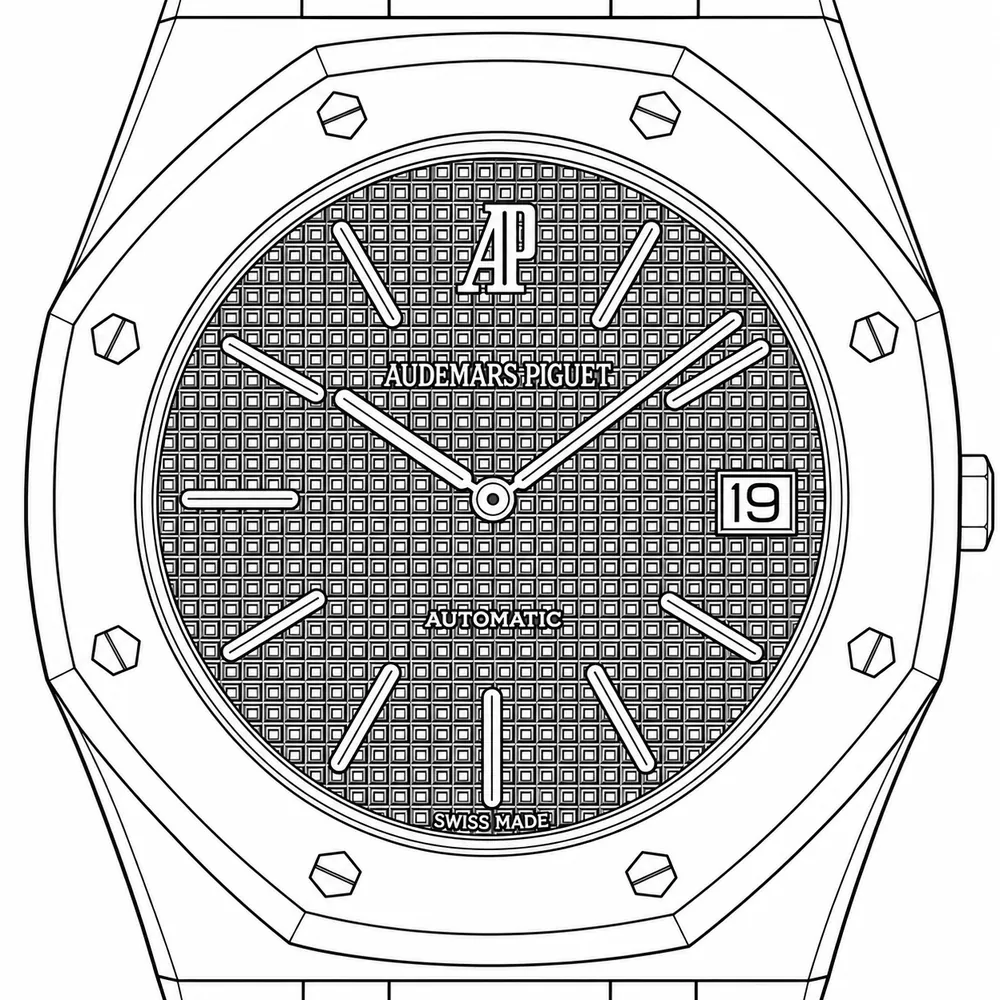
The 5402 is the first Royal Oak: a 39 mm automatic with date, shown at the Basel fair in 1972 and designed by Gérald Genta. It has a one-piece steel case, an octagonal bezel held by eight visible hexagonal screws, a Tapisserie dial and an integrated tapering bracelet. It was the only Royal Oak until 1976, and gold, white-gold and two-tone versions followed in 1977. The run was planned at 1,000 and reached 6,050 watches, sold from 1972 to 2002, though most were sold in the first decade. Collectors first look at the series letter in the case number, the dial colour and the position of the AP monogram.
- Made
- 1972–1990dates approximate
- Seen in the library
- 1972–1984nine in ten in 1972–1981 · by years sellers state
- Case
- 39 mm · steel (67%), gold (26%)as sellers state
- Movement
- Calibre 2121automatic
- On record
- 341 listings1,114 photographs · 37 holders
Components
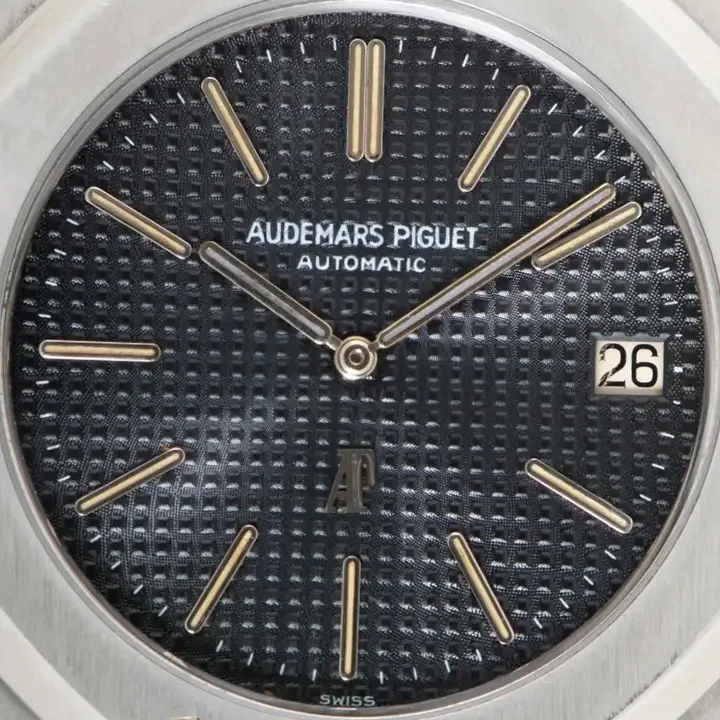
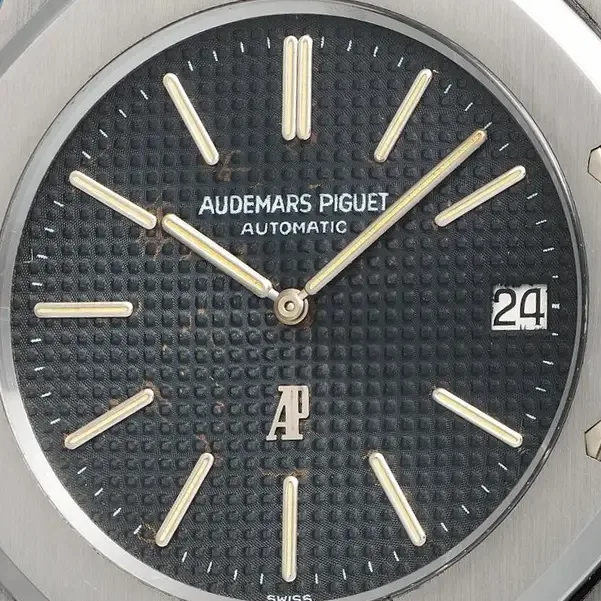
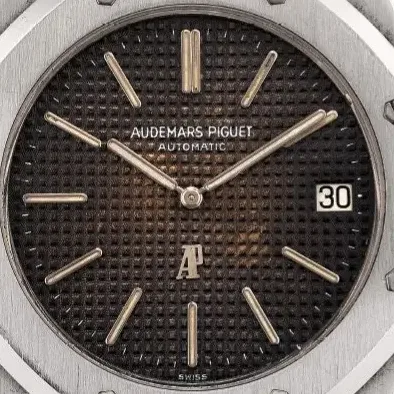
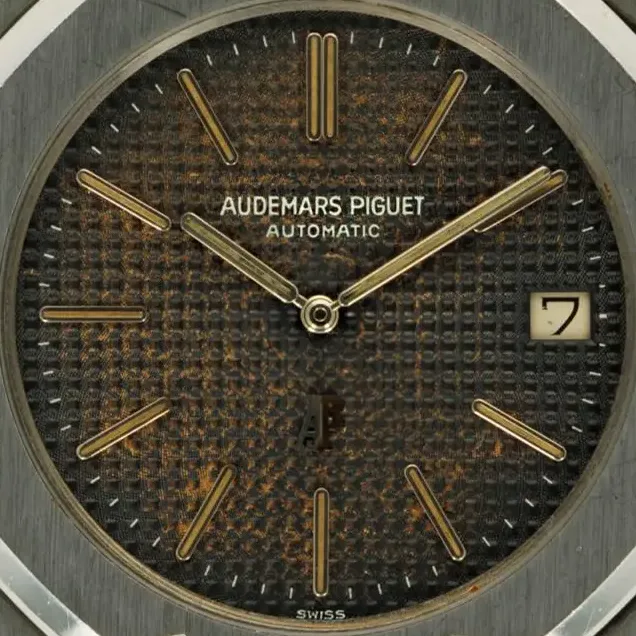
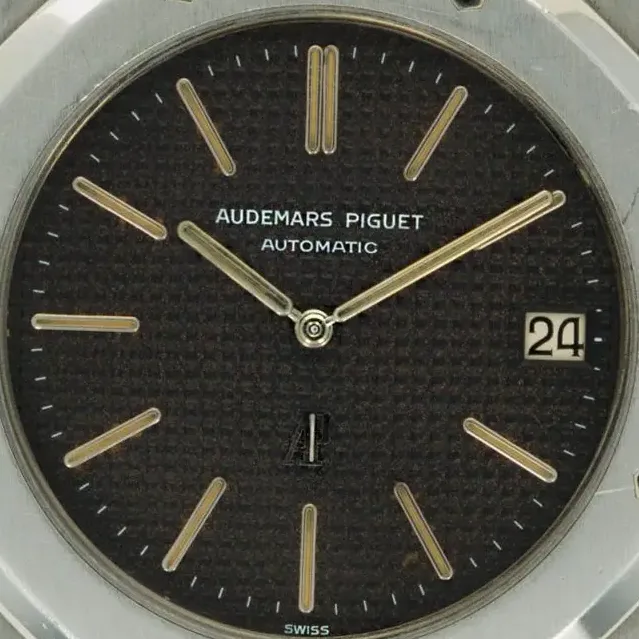
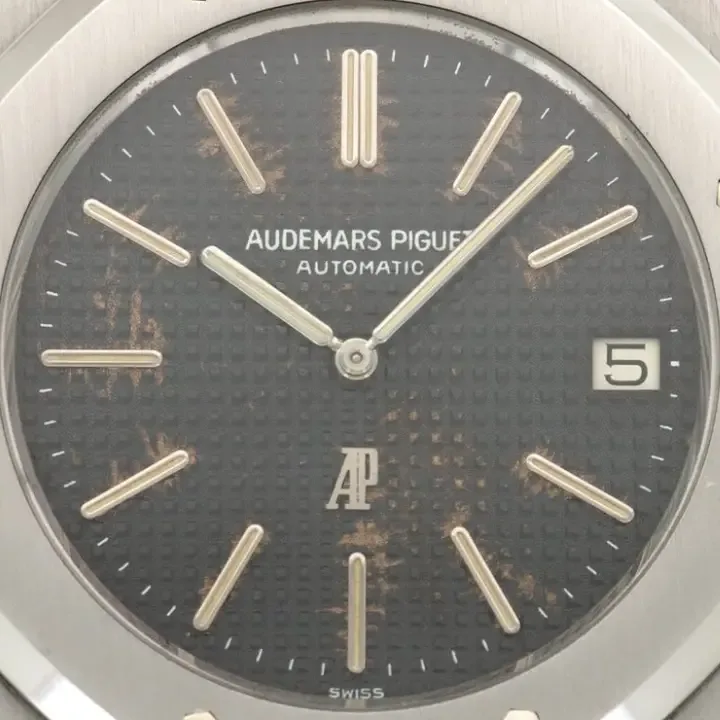
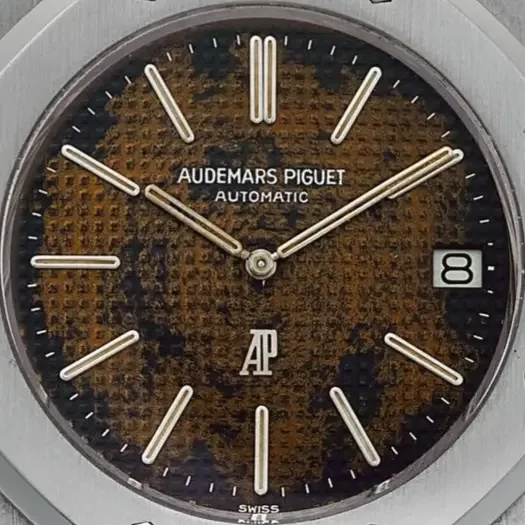
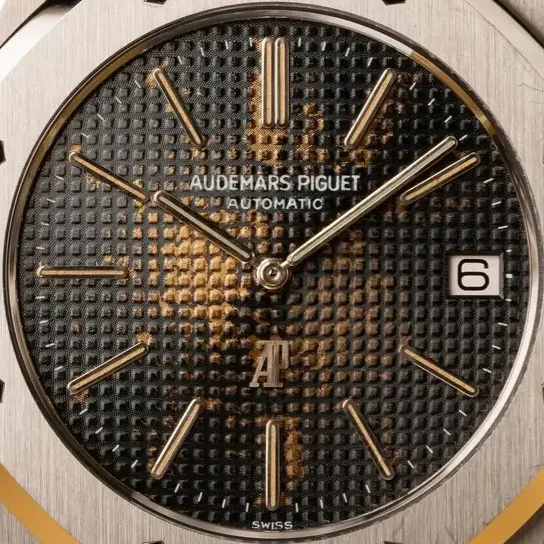
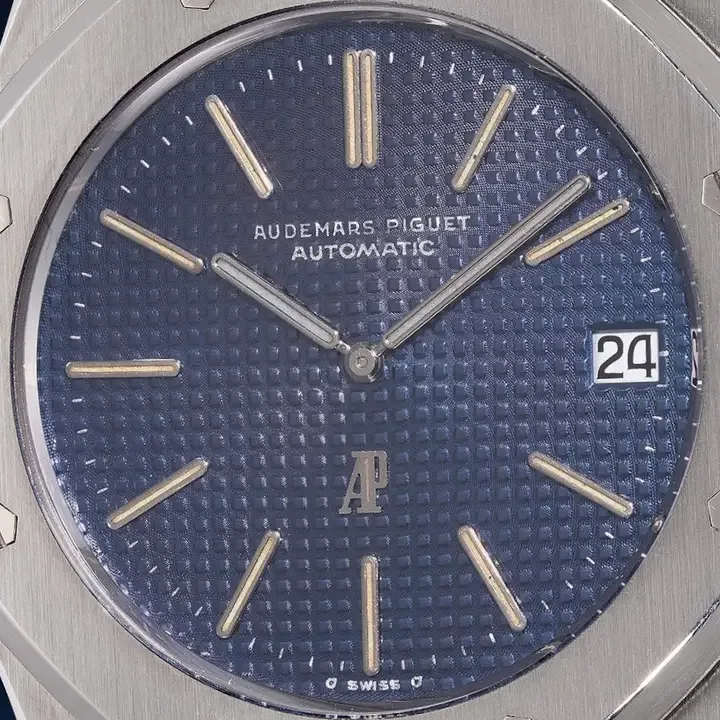
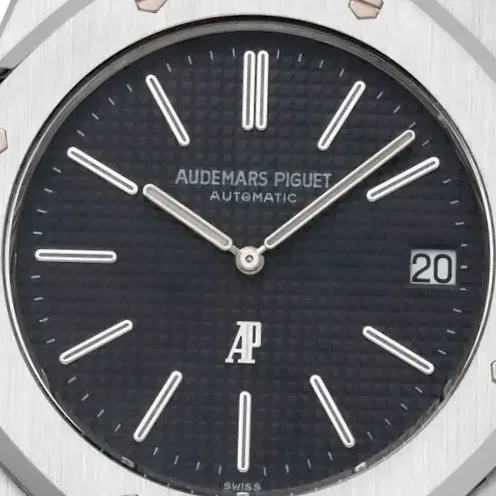
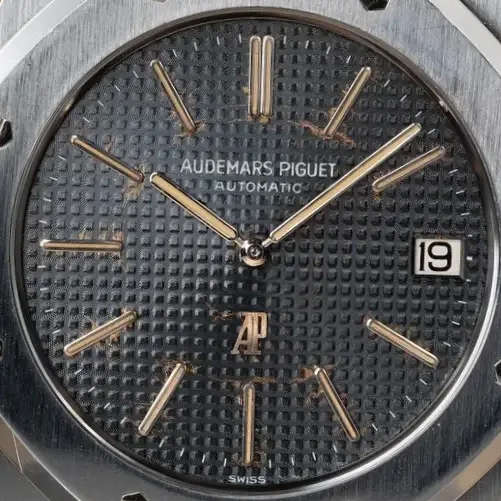
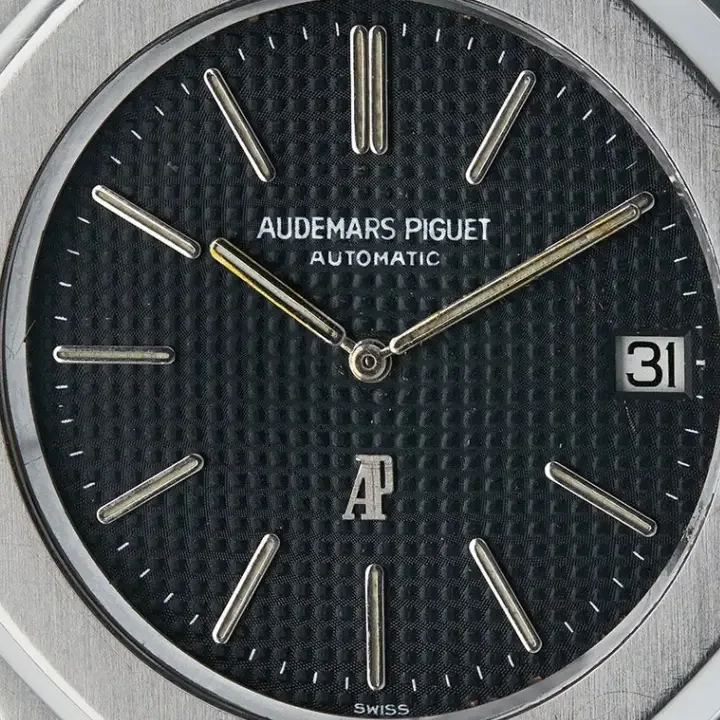
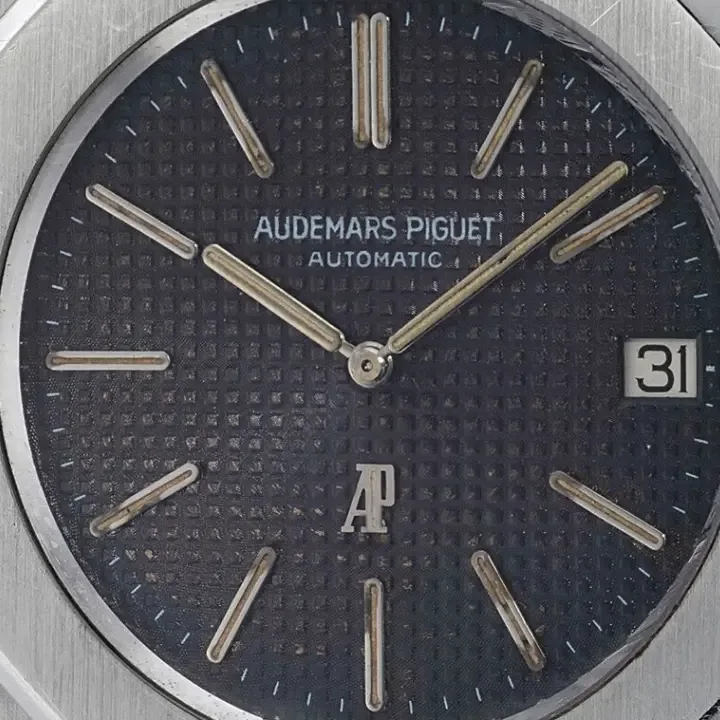
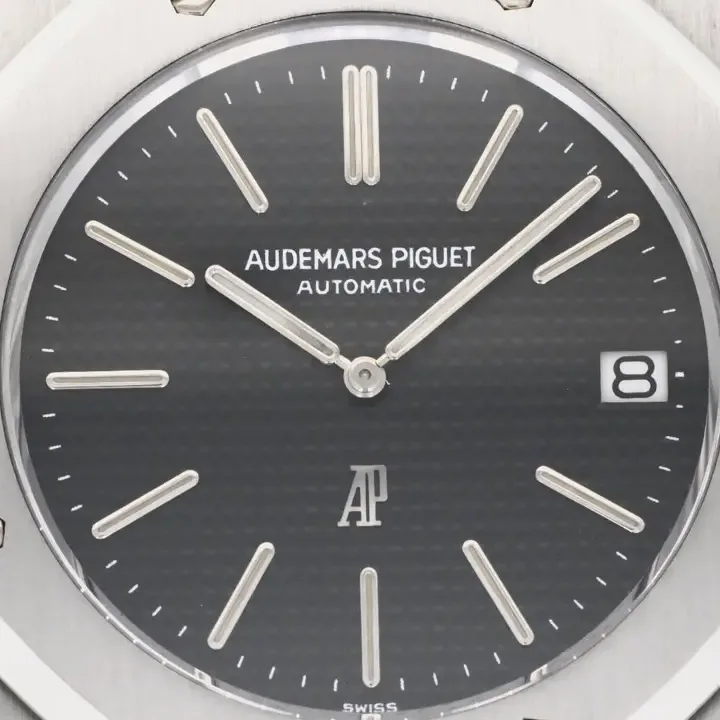
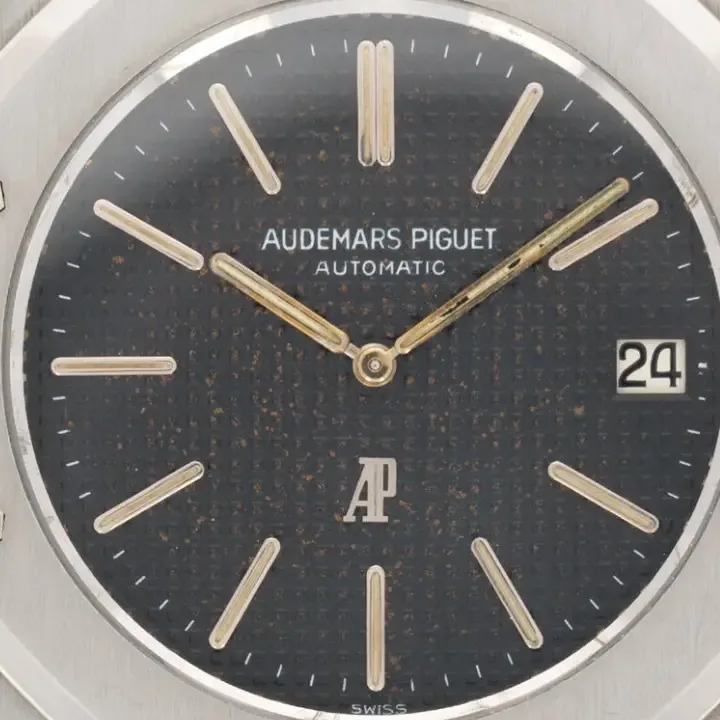
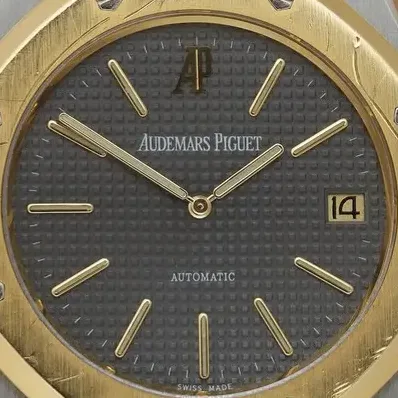
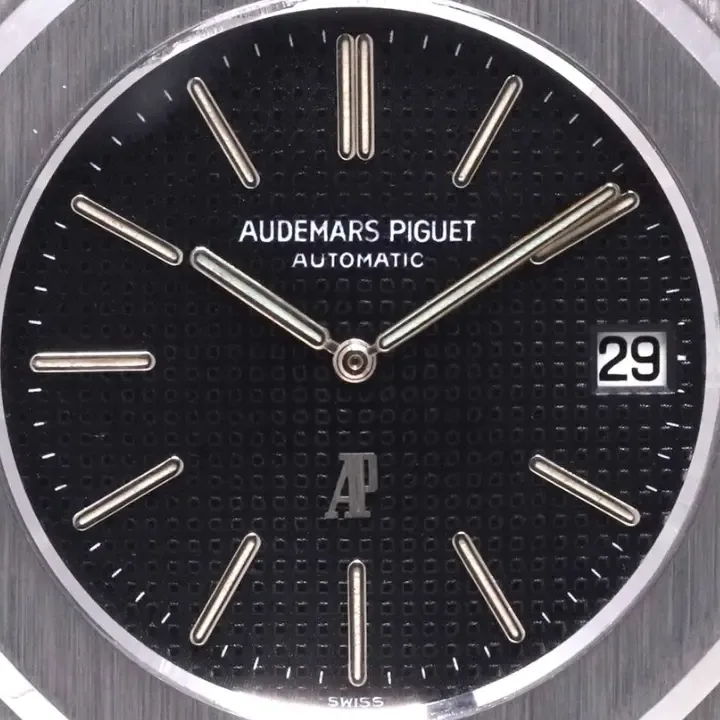
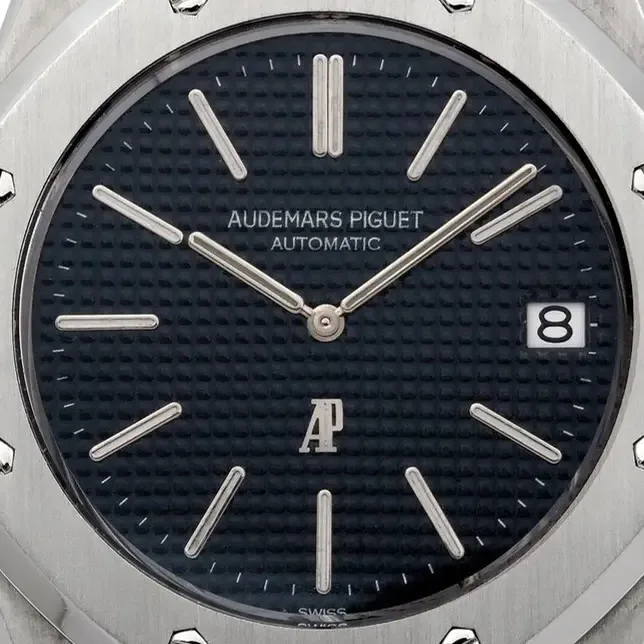
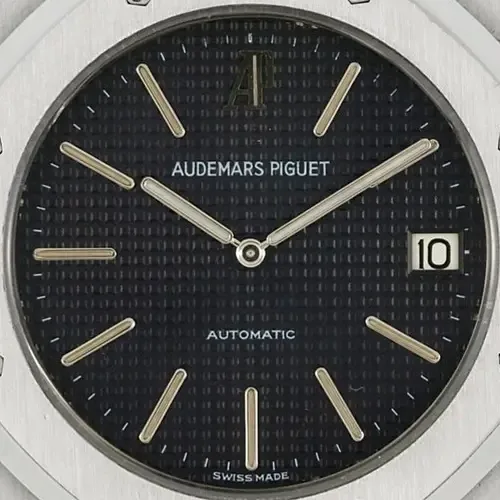
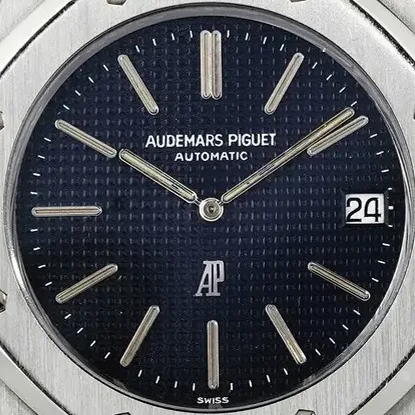
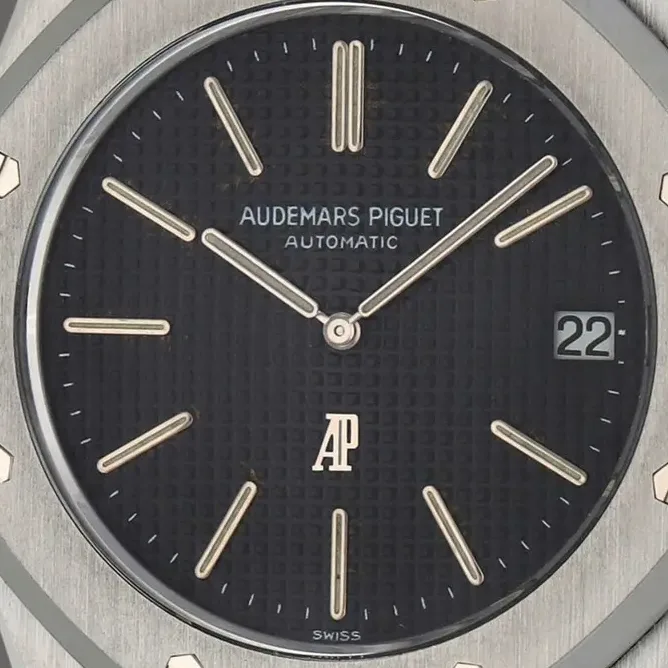
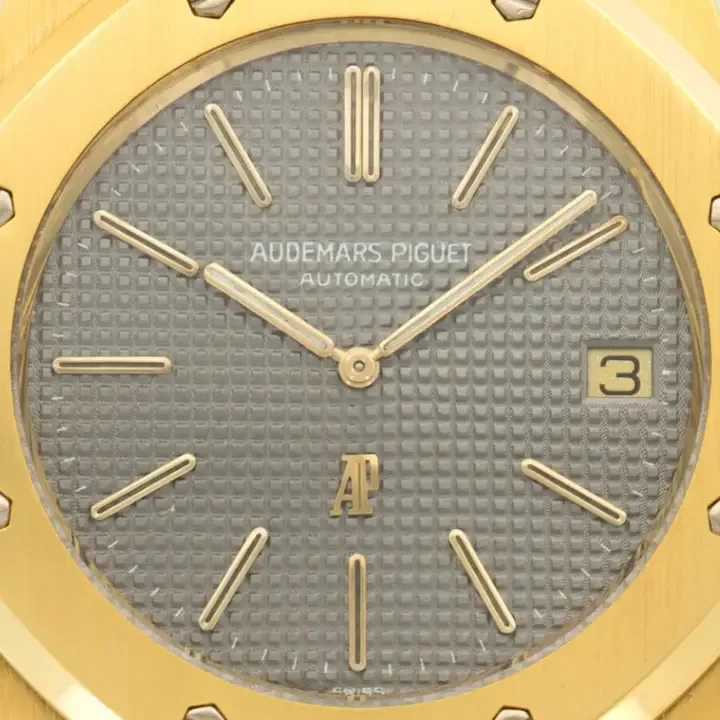
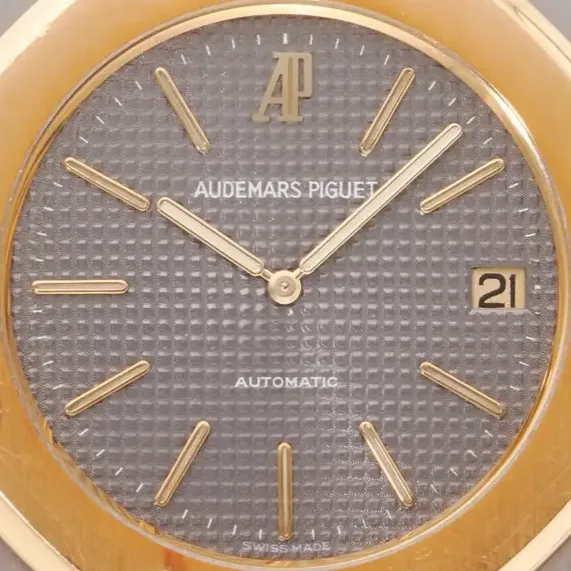
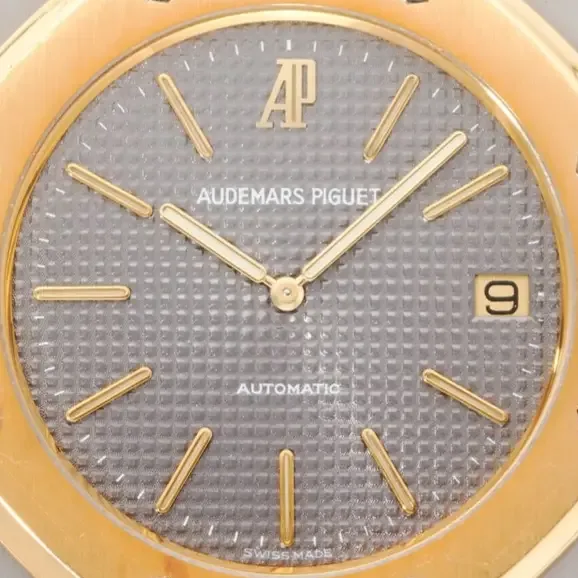
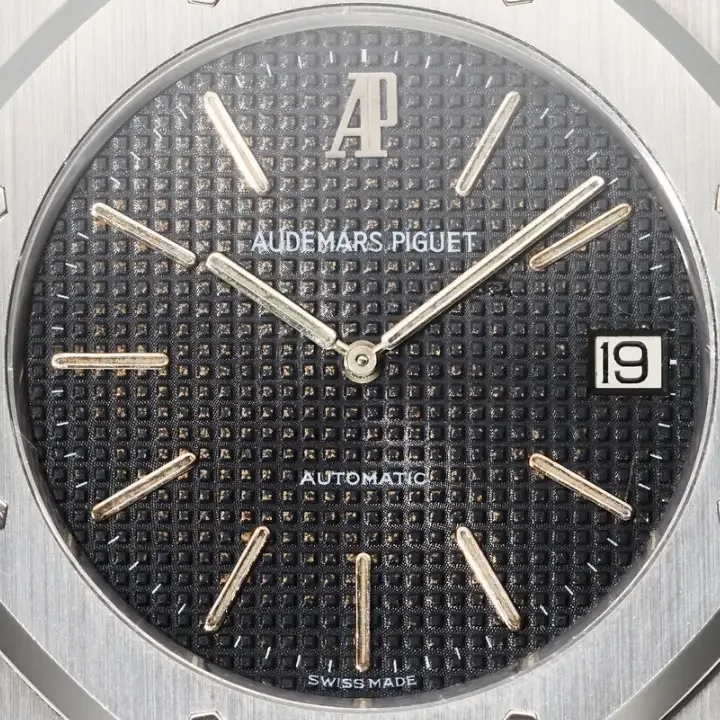
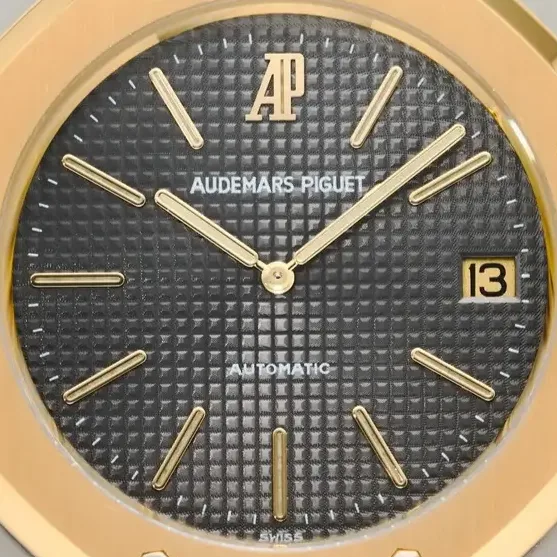
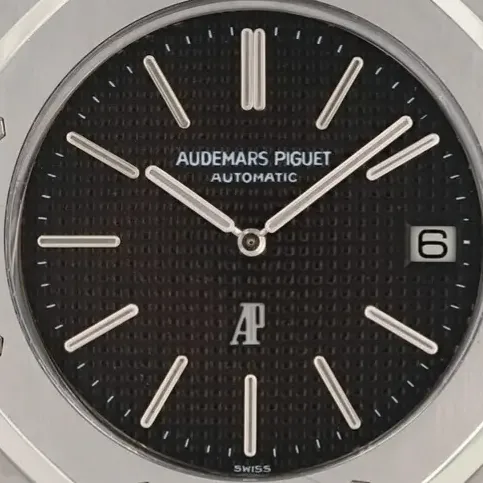
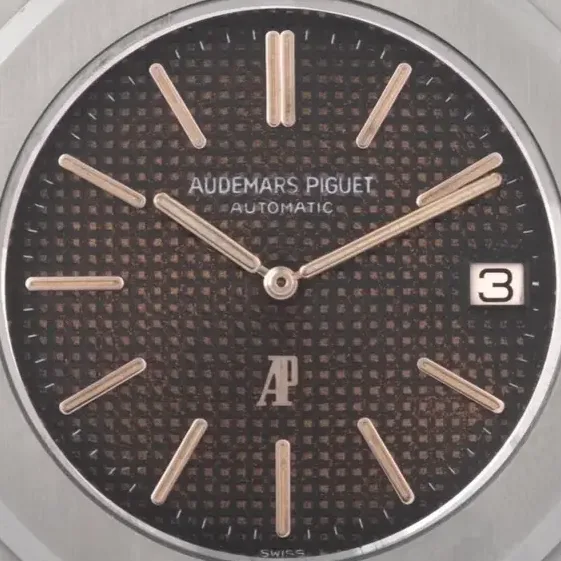
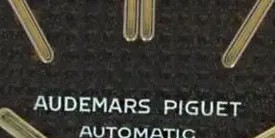
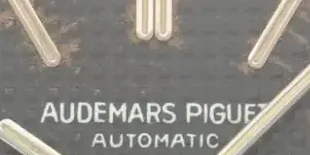
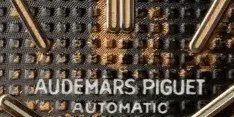
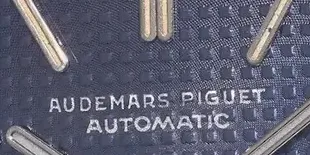
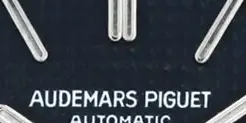
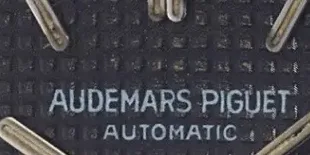
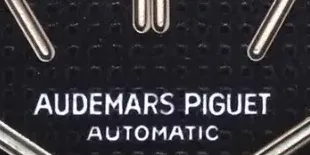
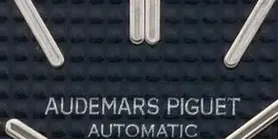
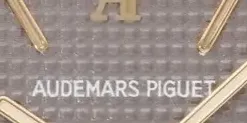
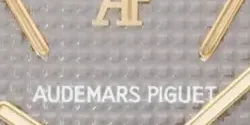
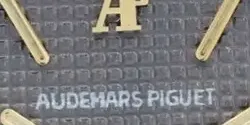
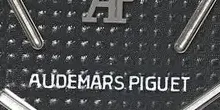
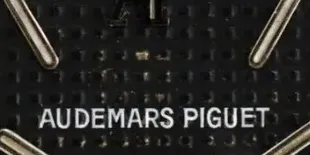
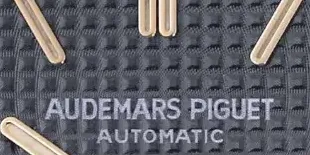
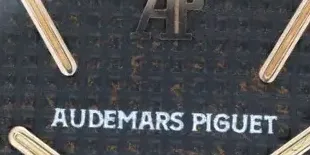
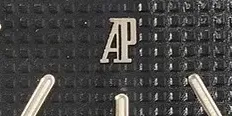
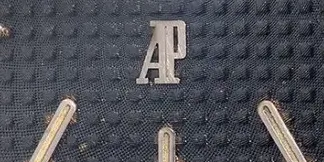
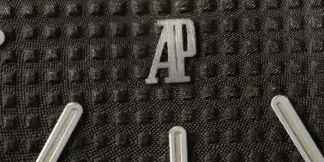
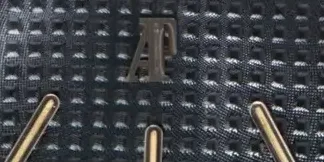
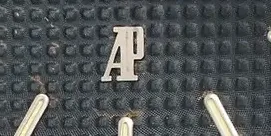
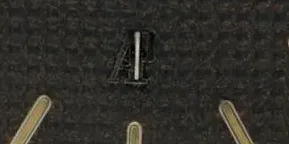
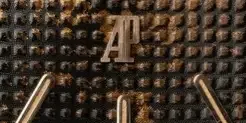
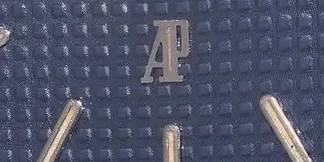
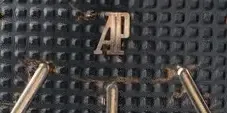
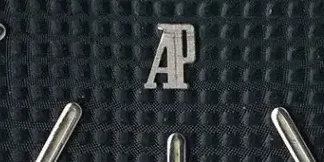
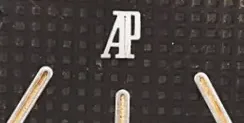
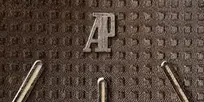
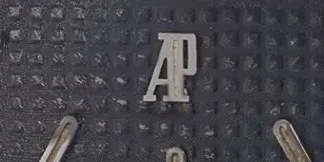
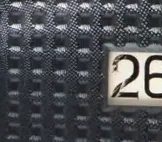
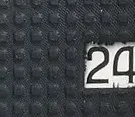
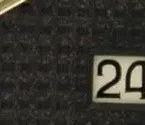
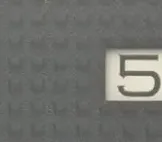
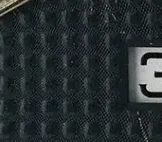
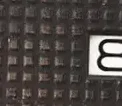
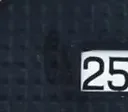
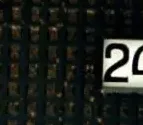
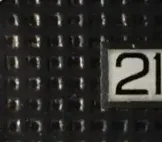
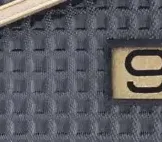
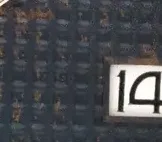
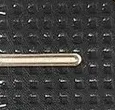
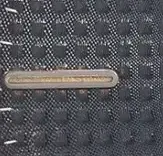
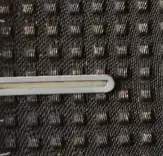
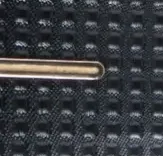
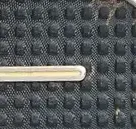
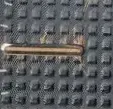
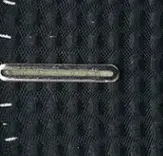
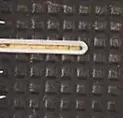
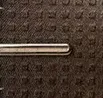
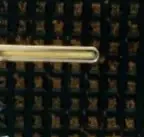
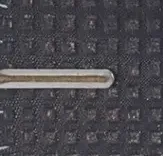
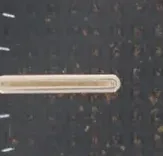
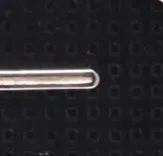
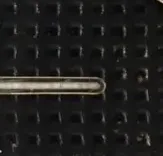
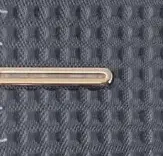
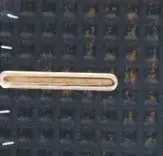
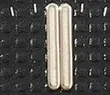
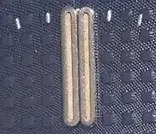
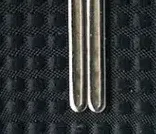
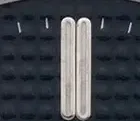
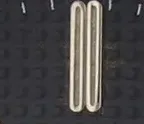
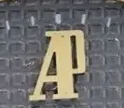
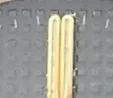
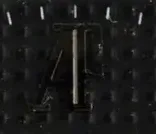
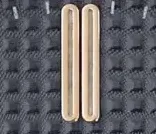
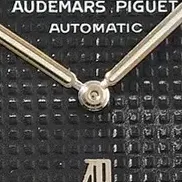
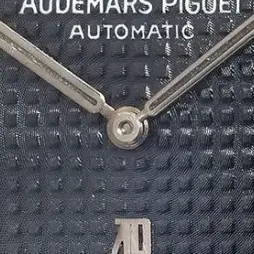
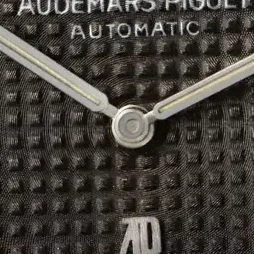
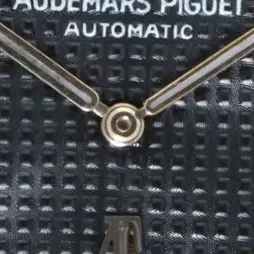
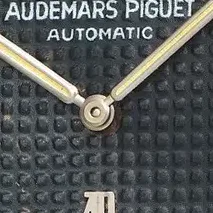
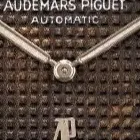
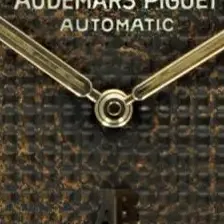
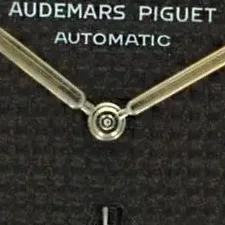
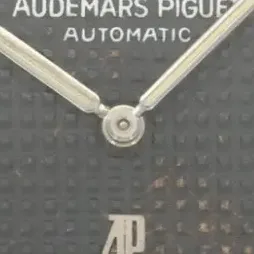
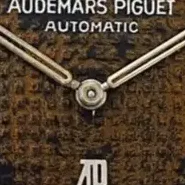
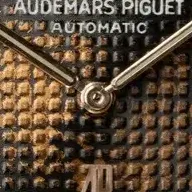
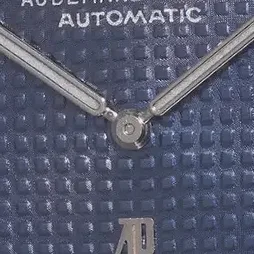
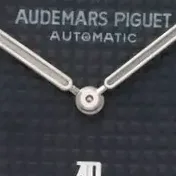
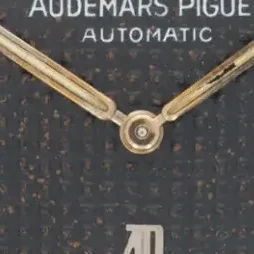
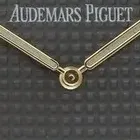
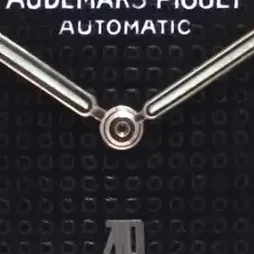
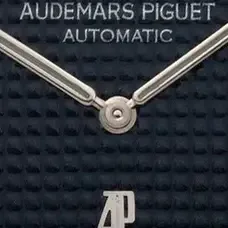
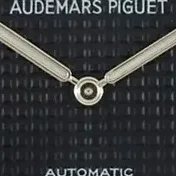
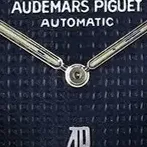
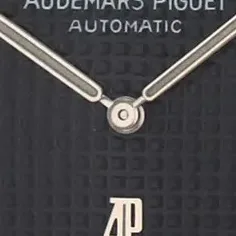
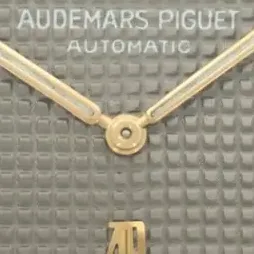
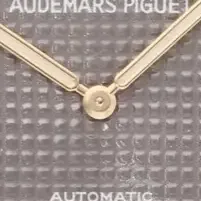
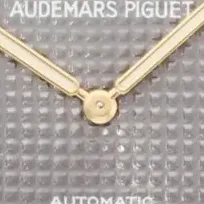
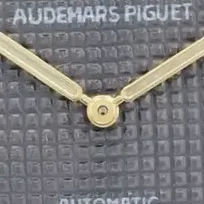
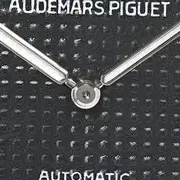
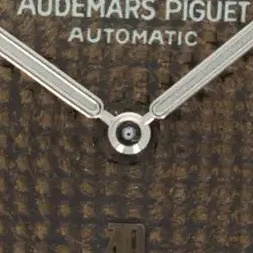
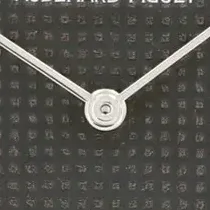
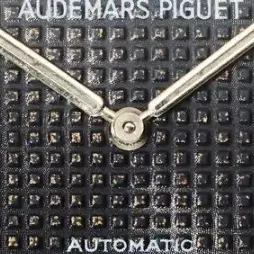
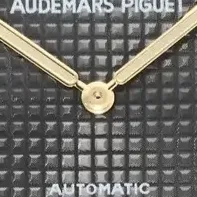
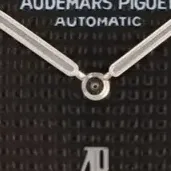
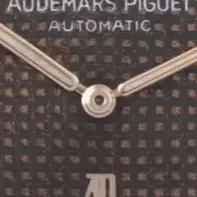
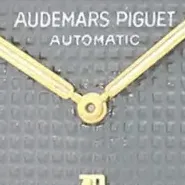
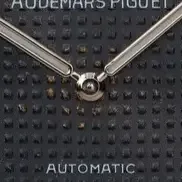
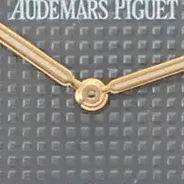
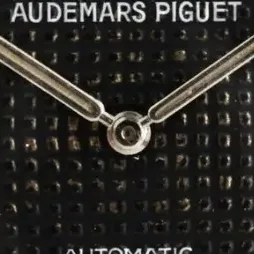
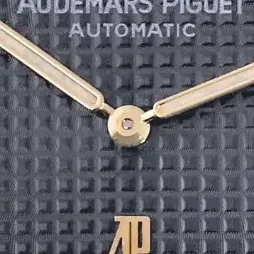
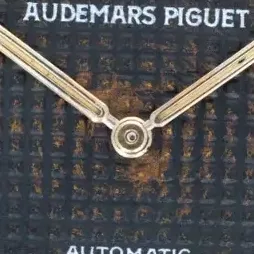
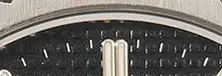
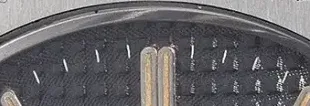
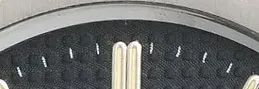
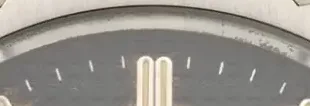
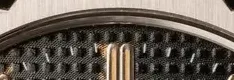
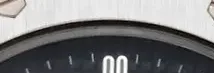
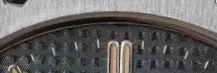
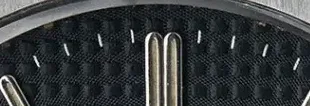
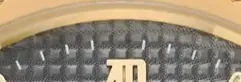
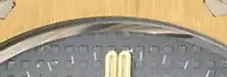
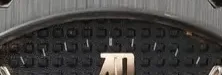
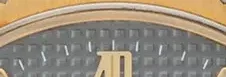
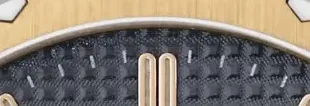
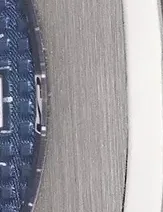
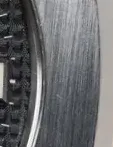
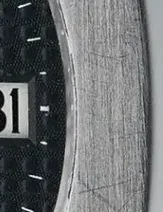
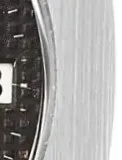
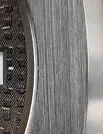
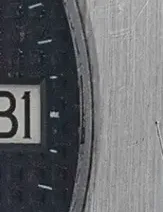
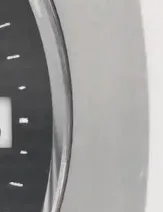
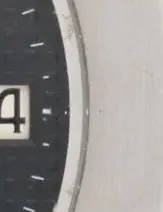
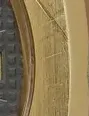
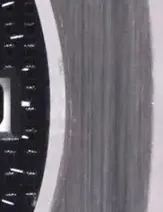
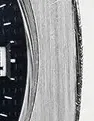
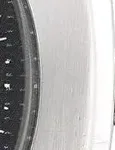
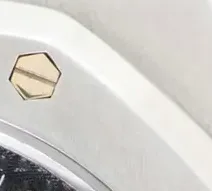
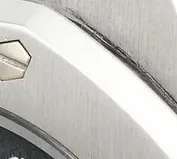
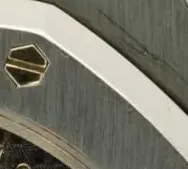
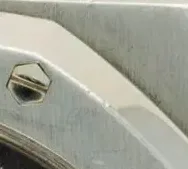
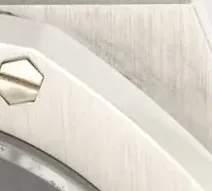
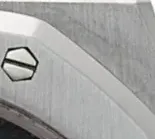
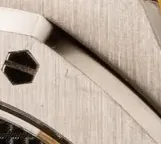
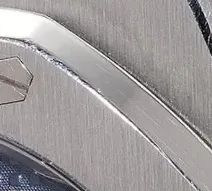
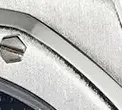
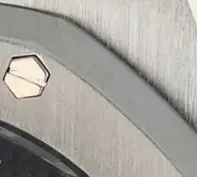
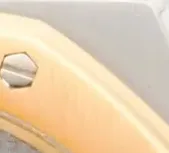
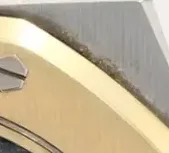
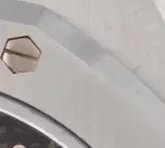
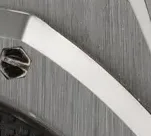
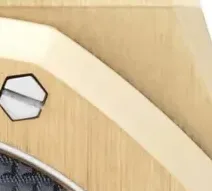
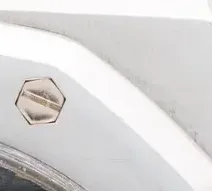
45 watches, oldest first, each straightened and cut the same way so that one row shows one component across them all. Chosen from 1,114 photographs on file for sharpness and for a face typical of the reference. A year marked c. is one its holder gives only roughly. Each picture is a detail cut from a listing photograph. Select the small mark in its corner for its year, its holder, a link to the listing it came from, and a way to report it.
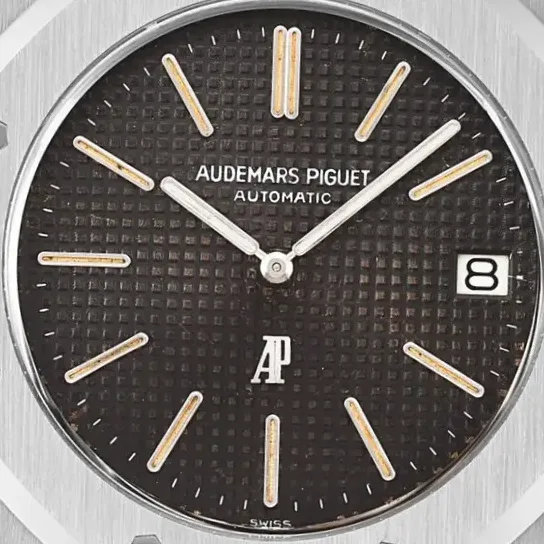
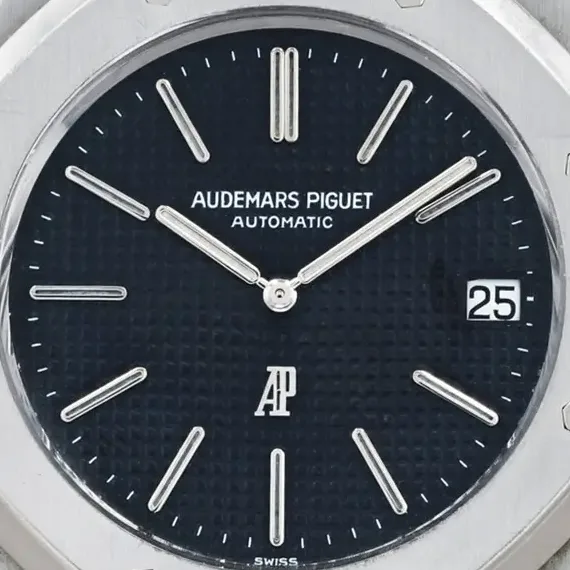
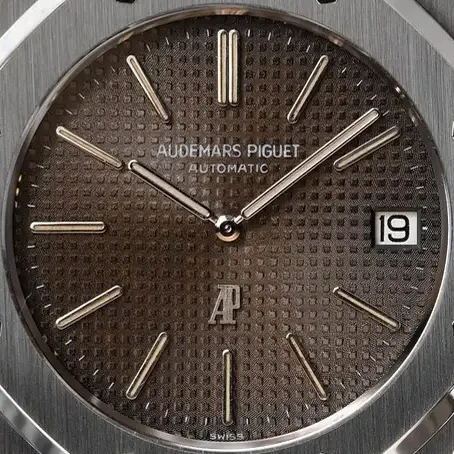
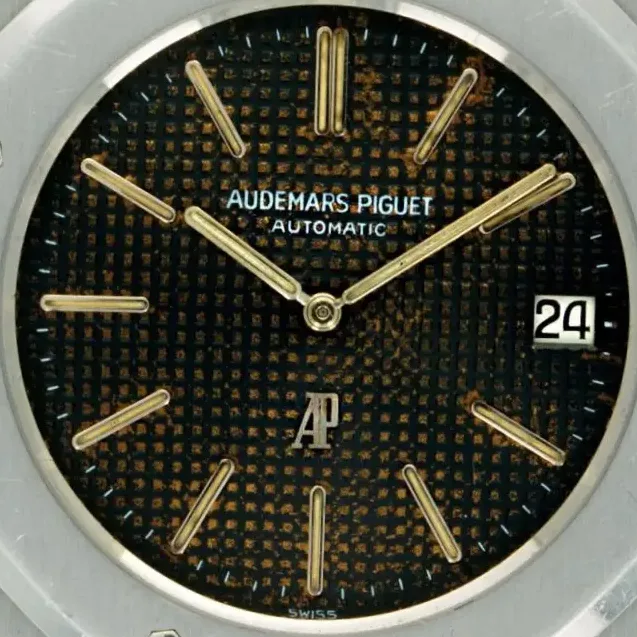
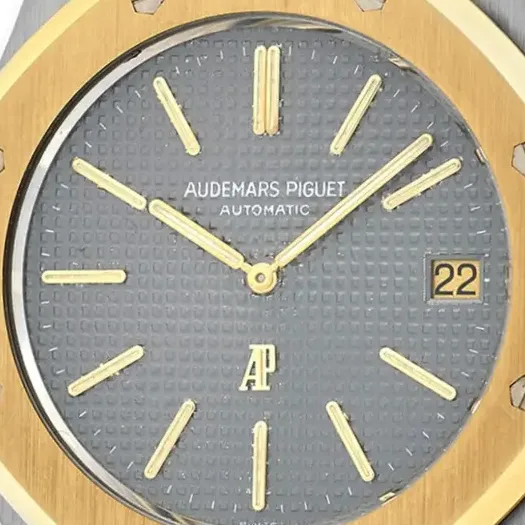
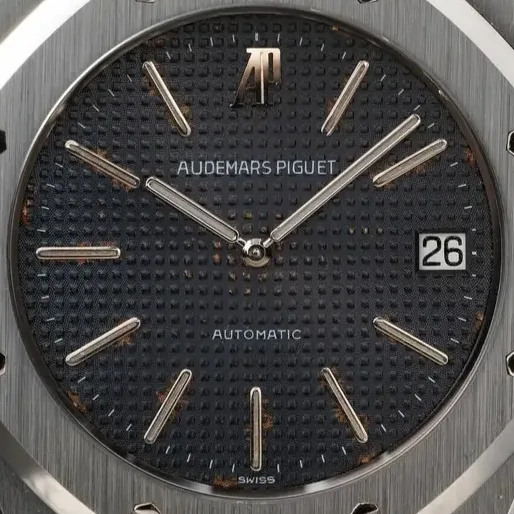
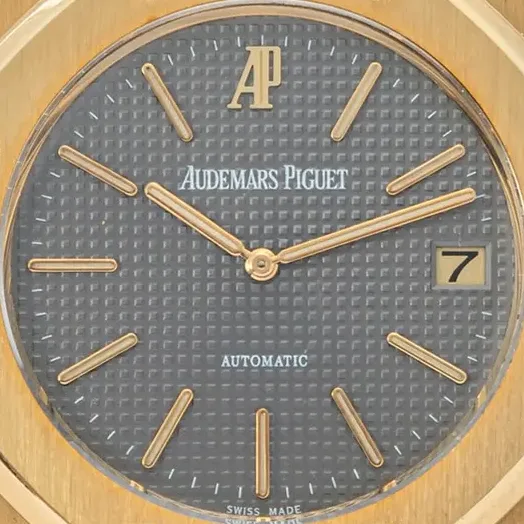
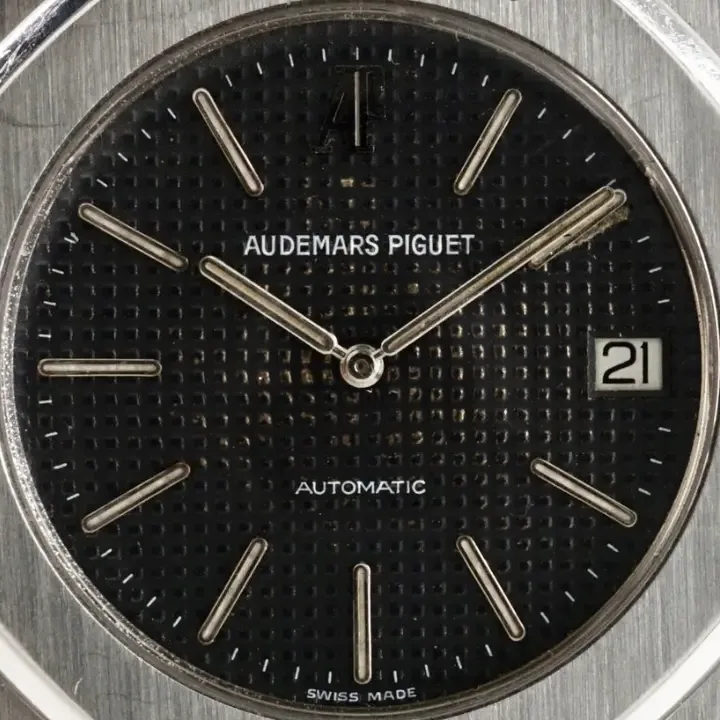



















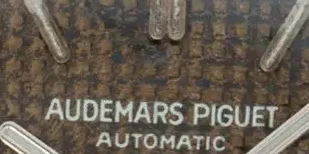

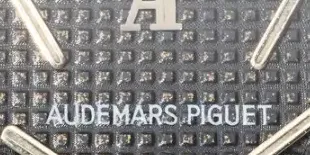

























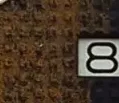

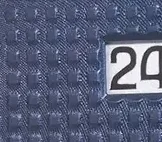
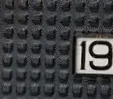



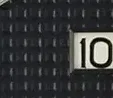

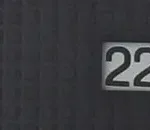
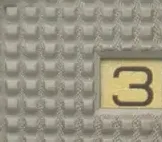
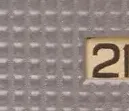

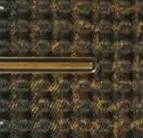
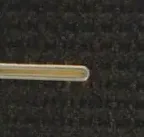


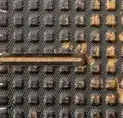
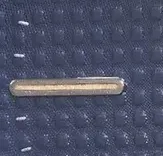




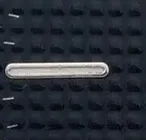
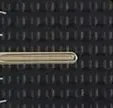

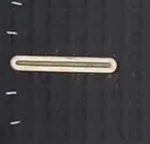
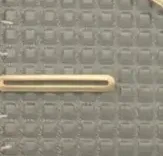
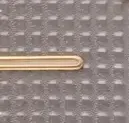
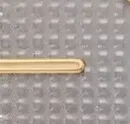
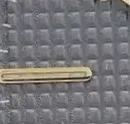
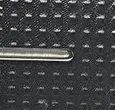
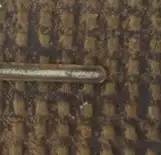
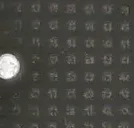
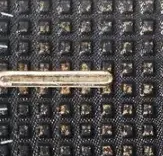
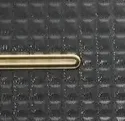

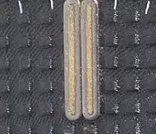
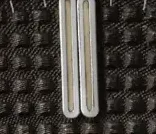
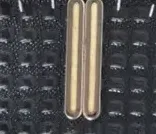
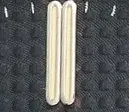

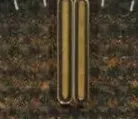
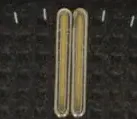
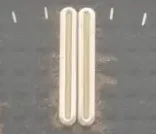

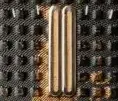

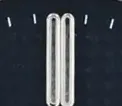

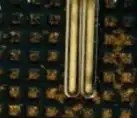
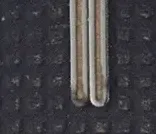



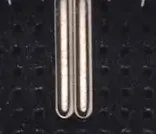





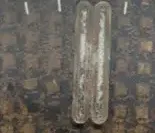

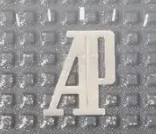




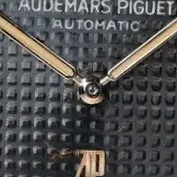
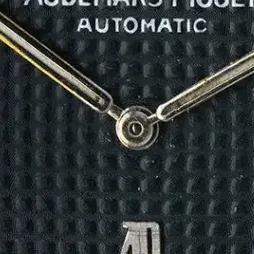
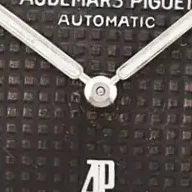
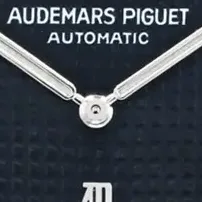







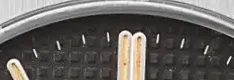
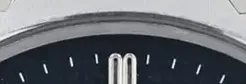
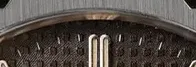




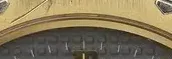



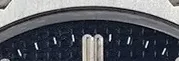




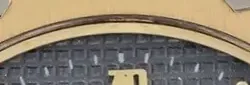
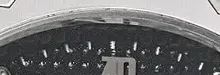

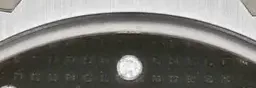




















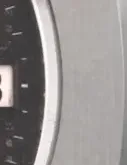

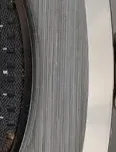
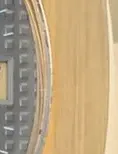
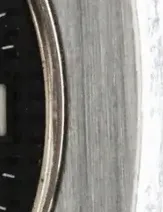
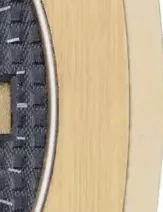

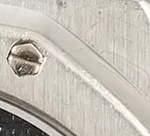
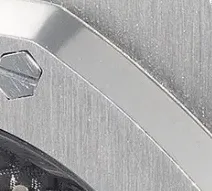
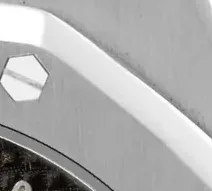
















Chronology
The maker's own sales records give 1972 for the first steel watch. They give no end of manufacture: dials were last ordered in 1990, the yellow-gold version and the last steel watches without a series letter were sold by 1990, and a handful of single watches followed, the last sale of any version being in 2002.
Every dated variant: what is written, and what the records show
For the reference the marks are every dated watch; for a variant, the watches a seller names as that variant, so a variant sellers do not name has none.
1 dated listing falls outside this scale and is not drawn.
Specification
| Case | 39 mm monocoque-style case (case middle and caseback in one piece with the lugs), steel in the ST, 18-carat yellow gold in the BA, white gold in the BC, steel and yellow gold in the SA |
| Bezel | Rounded octagon with eight hexagonal through-screws, no screw at 12 o'clock; thin black gasket line visible beneath it |
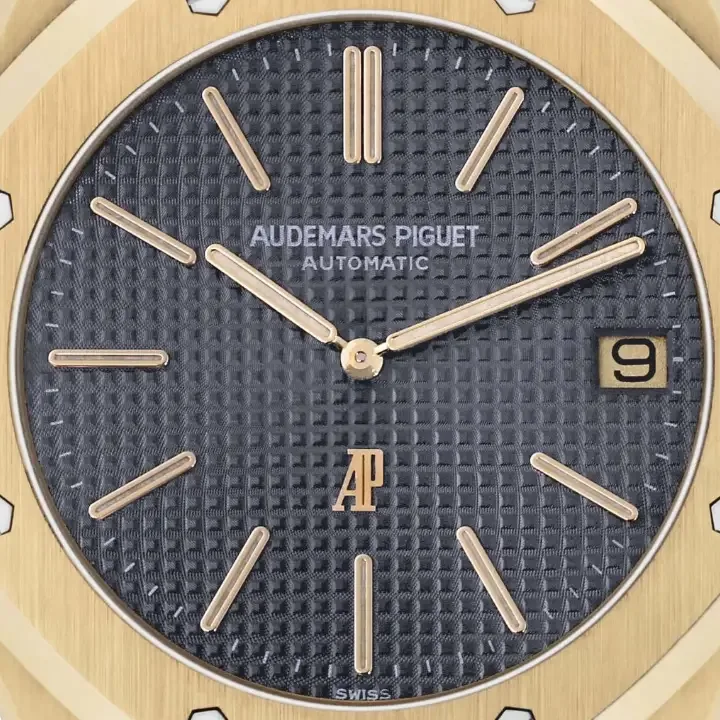
| Dial | T21 Tapisserie (later called Petite Tapisserie), made by Stern; Bleu Nuit, Nuage 50 on the ST, slate grey on the SA |
| Crystal | Sapphire |
| Crown | Hexagonal, hollowed, two rubber O-rings, two-piece stem; not screw-down |
| Movement | Calibre 2121, automatic, hours, minutes and date |
| Bracelet | Integrated tapering bracelet 344 |
| Water resistance | 100 m as stated by the maker |
| Lume | Tritium on hour-markers and hands |
Dial 9 described
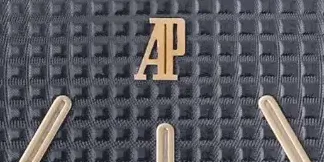
Every dial has the T21 Tapisserie of small truncated pyramids over a fine pattern of tens of thousands of diamond-shaped pricks, and applied hour-markers. The dial colour was blue on the steel watch and slate grey on the two-tone. Two printed details changed over time: the AP monogram moved from 6 to 12 o'clock and SWISS became SWISS MADE. No two dials are quite alike, because the pattern was cut by hand-set machines.
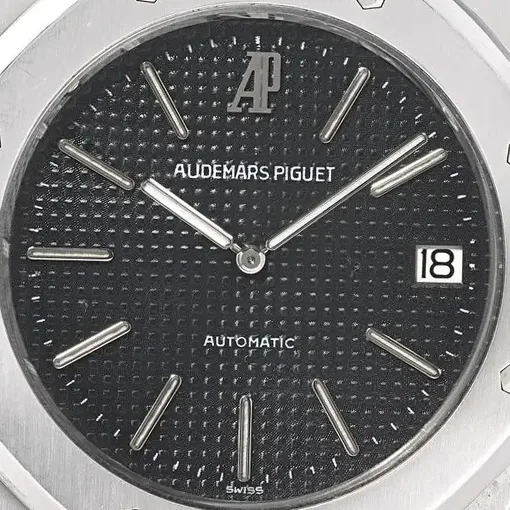
Bleu Nuit, Nuage 50
The dial of the steel 5402ST. The blue came from a galvanic bath and was fixed under a varnish with a drop of black added. It shifts with light and humidity, and the back of the dial keeps nearer the first colour, which in some cases looks slightly purple.
- white-gold hour-markers
- back of dial less faded than the front
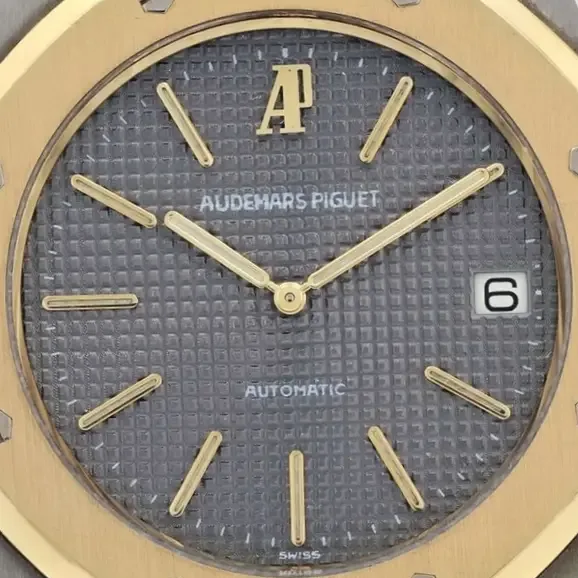
Slate grey with yellow-gold markers
The dial of the two-tone 5402SA, with markers and hands in yellow gold. Dials in the same grey also appear on gold versions.
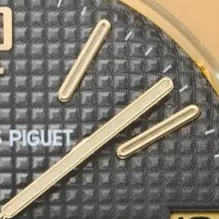

- slate grey
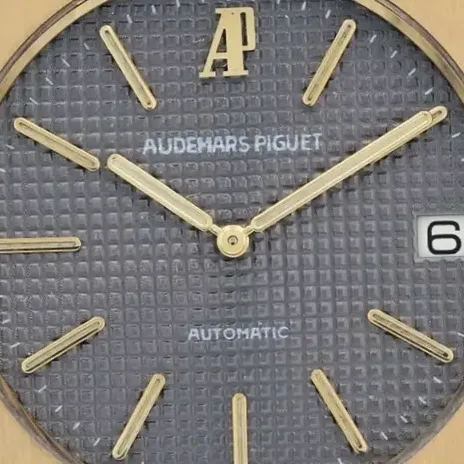

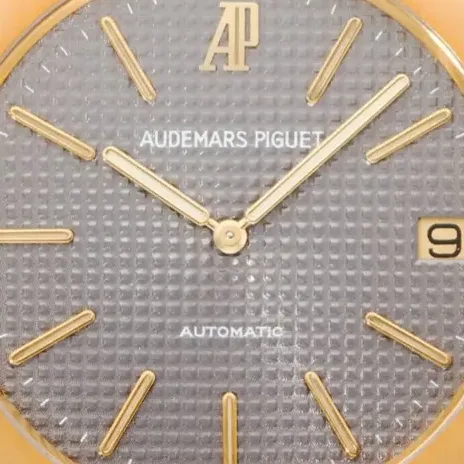

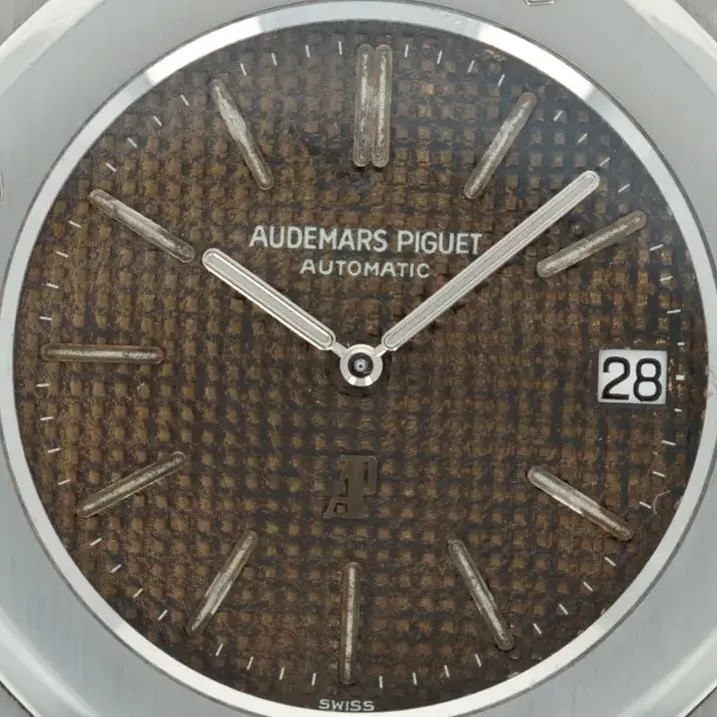
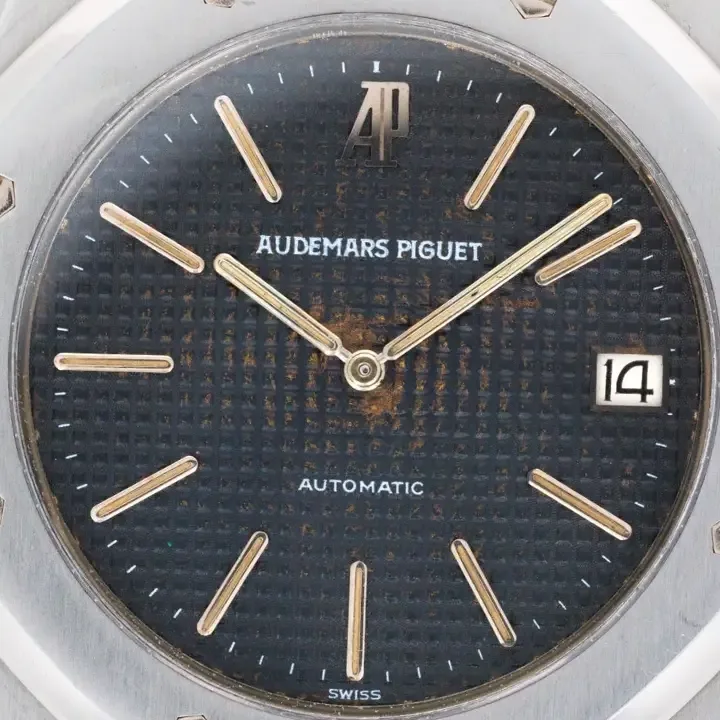
Gilt 'brown' dial
A gold-toned dial the maker's order records call brown; 246 were ordered between 1971 and 1990. Sellers also use 'tropical' for dials that have turned brown with age, which is a different thing.
- gold-toned or brown tapisserie dial
- back of dial shows whether the colour is original
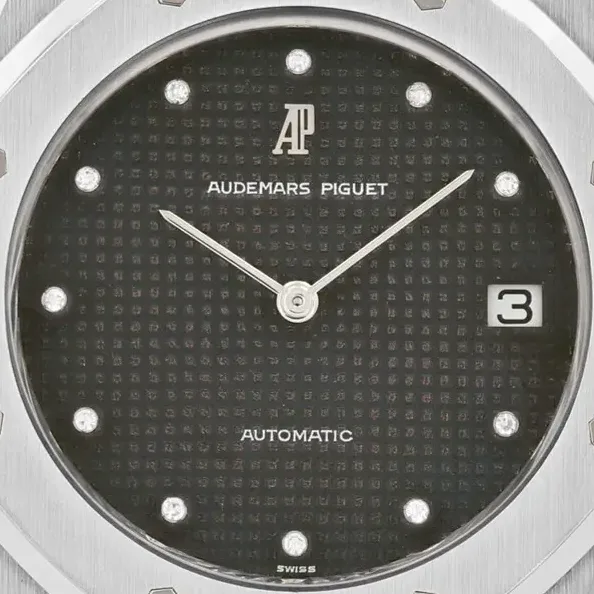
Diamond hour-markers
The white-gold 5402BC usually has eleven diamond markers, set in round or square white-gold bases. Gem-set dials go with baton hands that carry no tritium.
- 11 diamond markers
- round or square bases
- hands without lume
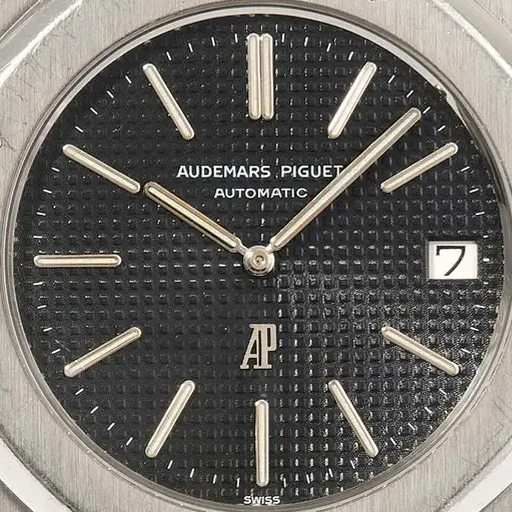
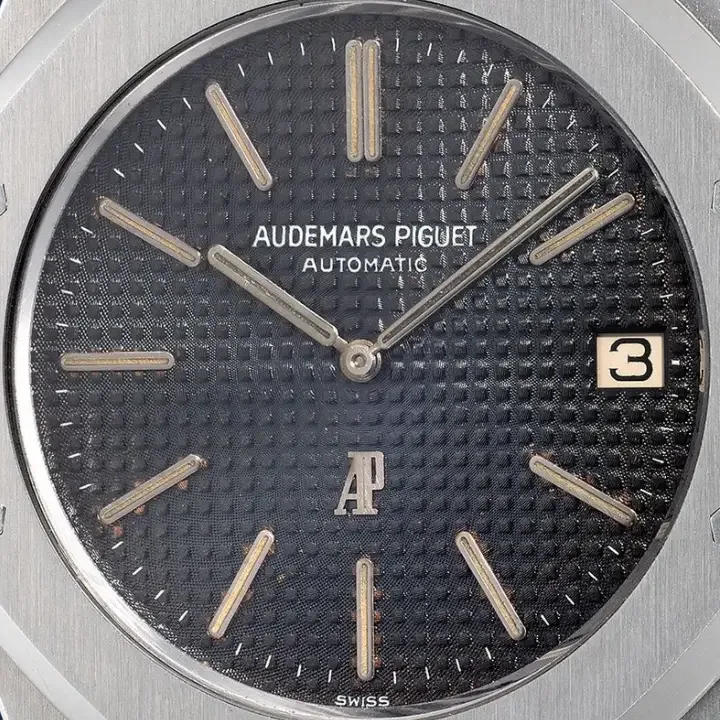
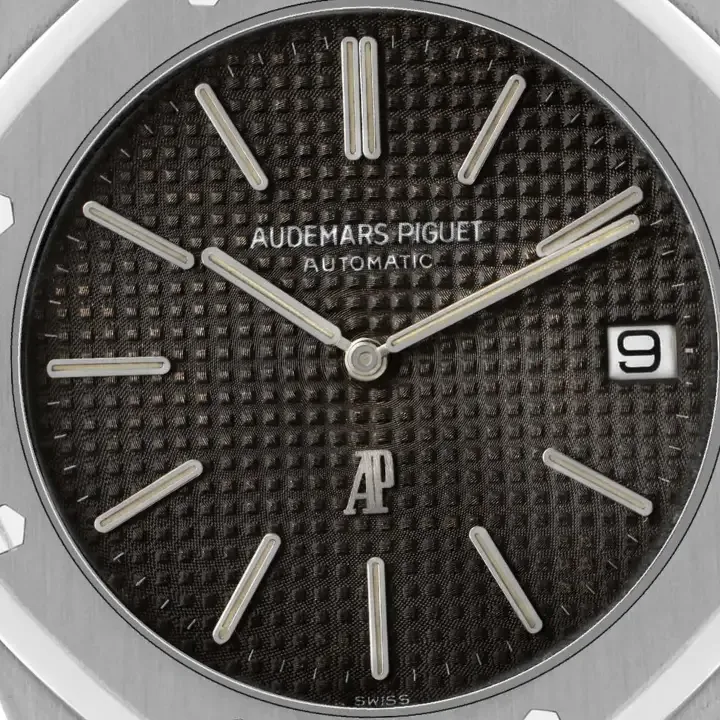
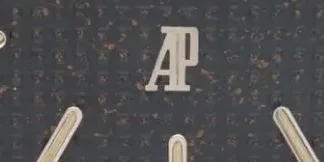
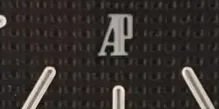
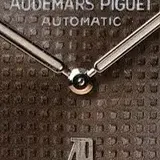
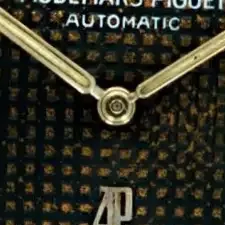
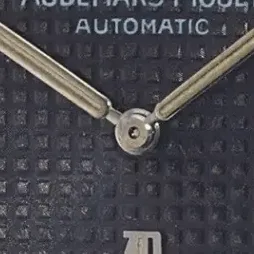
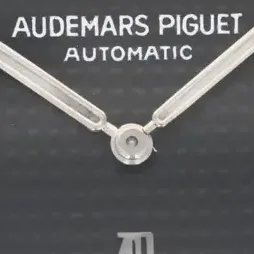
AP monogram at 6 o'clock
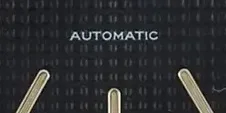
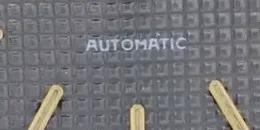
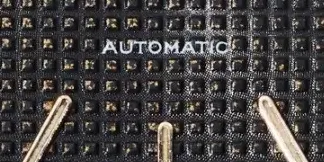
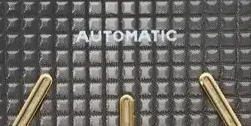
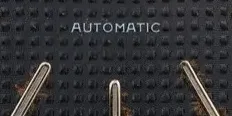
The first dials carry a very thin applied white-gold monogram (height limit 0.12 mm) just below the centre. The hour hand passes within a tenth of a millimetre of it and in time could rub or stop the watch. At least 62 per cent of the 5402 dials ordered had it here. The AUTOMATIC line sits slightly beneath the triangle formed by the markers at 10, 12 and 2.
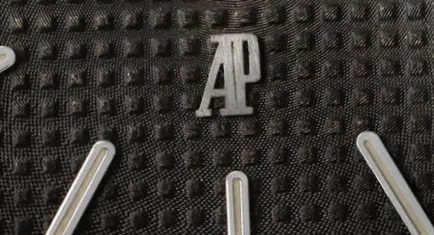

- double marker at 12
- AUTOMATIC line low
- monogram satin finished
53 listings on record under the name.
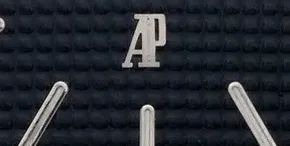
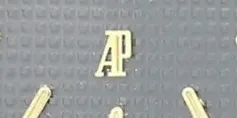
AP monogram at 12 o'clock
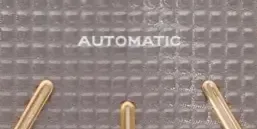
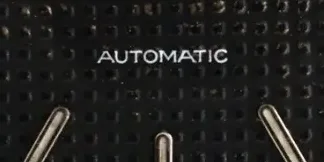
The new pattern replaced the double marker at 12 with the monogram and moved AUTOMATIC permanently to 6. The decision dates from February 1977, but old dials stayed in stock and some were used to replace worn ones, so both positions appear in watches of the late 1970s. A watch sold new with the 12 o'clock dial is probably from 1977 to 1981, and at most 16 per cent of steel watches have it.
- AP at 12
- single marker, no double at 12
- AUTOMATIC at 6
SWISS under signature
The first dials end with the single word SWISS.
- SWISS, not SWISS MADE, at the foot
SWISS MADE
From 1985 the foot of the dial reads SWISS MADE, changed for symmetry.
- SWISS MADE at the foot
Replacement 'classic parts' dial
Since 2021 the maker has cut new T21 dials from the surviving 1970s master for watches whose own dials were beyond saving.
- newer dial in an old case
Hands 2 described
Hands and markers were first filled with tritium. The maker changed the tritium-bearing hands when the dial is gem-set.
Tritium baton hands
Baton hands and markers with a tritium fill that has usually aged to cream or amber. On the steel watch the markers are white gold; on the two-tone, markers and hands are yellow gold. Hands were sometimes bent in service to clear the 6 o'clock monogram.
- even cream lume across hands and markers
- bent hands (two small Z-shaped bends)
Tritium-free hands on gem-set dials
Watches with diamond-set dials have baton hands without tritium.
- unfilled hands
Bezel 3 described
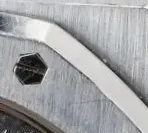
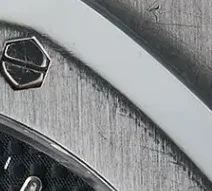
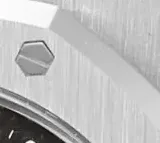
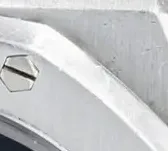
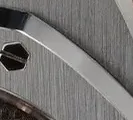
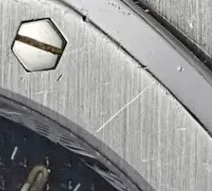
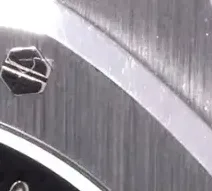
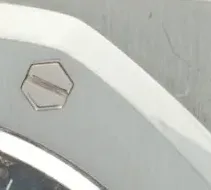
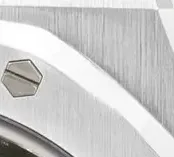
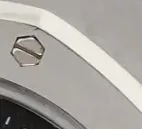
The bezel is a rounded octagon around a circle, with eight bevels and eight hexagonal holes, no screw at 12 o'clock.
Octagonal bezel, eight hex screws
A 40-degree polished bevel runs around a vertically satin top. The side measures about 0.7 mm. The screws sit in hexagonal openings and cannot turn; round nuts at the back close the watch.
- satin top, polished bevels
- slots aligned
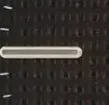
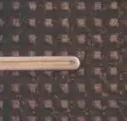
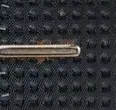
- gasket line under the bezel
Steel screws
The first 300 or so watches had steel screws; sea water corroded them and the nuts, and they were then made in white gold.
- screws that look steel on early A series watches
White-gold screws
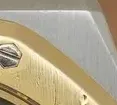
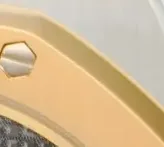
White-gold screws became standard after the corrosion problems. On gold watches yellow-gold replacements are a common repair.
- white-gold screws
Case 4 described
The case middle, caseback and lugs are cut as one piece, with the first bracelet links, and the bezel sits above a large black gasket. Sealing, finishing and dimensions are the same across metals.
Monocoque-style case
Forty-four machining operations, with satin top and sides, polished bevels and a circular-grained underside. The movement is taken out from the dial side. The gasket is 5.59 mm thick uncompressed and has nine holes: eight for the screws and one for the stem.
- sides satin, bevels polished
- octagon back
Rubber gasket
A black rubber gasket was used on some watches; it could soften or give off gases that harmed the oils.
- black line under bezel
Silicone gasket
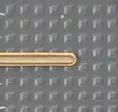
A translucent silicone gasket was fitted to others; it was steadier but could stick to the case and bezel.
- translucent line under bezel
Case-number series A, B, C, D
numbers A1-A1999; B1001-B2000; C1001-1973; D1000-1410
Steel cases carry a series letter and small number. These are the 5402's own production series, numbered within the reference, not the case-number letters the maker later used across its range. A (1,937 sold, 1972 on, mostly to 1975), B (845, mostly 1975-76), C (952, mostly 1977-79), D (404, from 1978, peak 1980). Another 129 steel watches have no small case number (mostly 1975) and 21 have no letter (1988-90). The gold versions were not given letters.
- letter and number on the caseback
- no small case number
Crown 1 described
The crown is hexagonal and unscrewed; it did not change in form.
Hexagonal push-pull crown
Hollowed out and fitted with two O-rings, with a two-part stem so it pulls off when the watch is opened. It is unsigned, lightly knurled, and was replaced at each service. Screw-down crowns did not suit calibre 2121.
- unsigned crown
- hexagon outline with circle head
Crystal
Sapphire, close to flush with the bezel.
Movement 1 described
Calibre 2121 powers every 5402. It is an ultra-thin automatic with peripheral rotor and date, 28 mm across and 3.05 mm thick.
Calibre 2121
Thirty-six jewels, free-sprung balance at 19,800 vibrations an hour and a 21-carat gold rotor on a peripheral track. There is no quick date change, so the date is moved by running the hands past midnight.
- movement number on the archive extract
- 2121 or 2121/1 in listings
Bracelet 1 described
The bracelet is integrated into the case, so cannot be swapped for a strap.
Bracelet 344
A tapering bracelet whose first links are part of the case. Steel on the ST, steel with yellow-gold centre links on the SA, gold on the BA and BC. Screws, not pins, hold the links; stretch is the usual fault, and a folding signed clasp closes it.
- taper from case to clasp
- gold centre links on SA
- folding clasp
Box and papers 1 described
Boxes and papers matter.
Archive extract
An extract from the maker's archives gives the case and movement numbers and the date and place of first sale, and shows whether the watch is complete.
- case number matches the extract
Originality
- Dials were often replaced or refinished; refitting leaves marks on the feet of the markers and logo, and a dial colour can be compared with the less-faded back.
- Hands were sometimes bent at service to clear the monogram at 6 o'clock.
- The crown, with its two O-rings, was replaced at each service, so a serviced watch rarely keeps its first crown.
- Gold watches with yellow-gold bezel screws have had them replaced.
- A watch in a steel case with a 12 o'clock dial may carry a later replacement dial; compare the series letter and sale year.
Names
- Jumbo. It is the large 39 mm Royal Oak, later applied to every 39 mm extra-thin Royal Oak.
- Tropical. Sellers' word for a dial that has aged to brown or copper.
Where accounts differ
Points on which the published literature and the library's own records do not agree, or on which the literature contradicts itself.
- Water resistance. The maker's own account gives 100 m for the 5402 case and its two-ring crown; a shop review of the 5402BA and 5402SA gives a period rating of 50 m.
- Case construction. The maker describes the case as a monocoque in which the middle, back and lugs are one piece and the bezel is separate; a shop review of the 5402BA calls it a three-part case.
Back and movement
From listings of this reference, each confirmed by eye to show what it is filed under. A picture on which a person's name or a personal engraving can be read is not shown. From most holders a detail from the middle of the photograph is shown; the mark in its corner gives its holder and a link to the listing.
Caseback
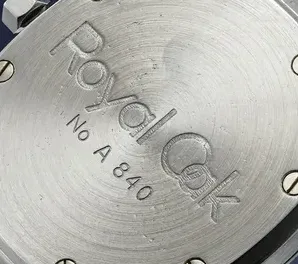

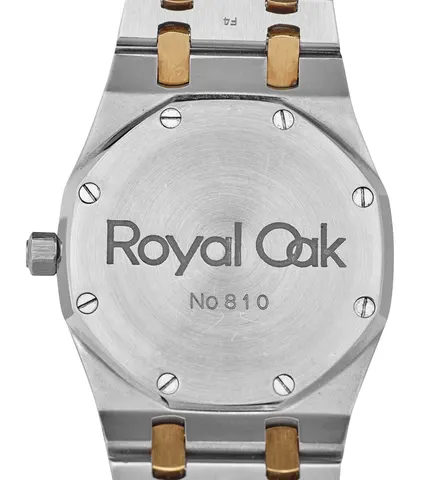

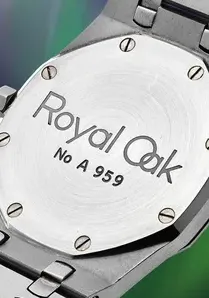

Catalogue versions 4 listed
The full numbers under which holders list this reference, with what their listings say of each. Each has a page of its own.
| Version | Metal | Dial | Years seen | Records |
|---|---|---|---|---|
| 5402ST | Steel | Brown or black | 1972–1980 | 113 |
| 5402BA | Yellow gold | Grey | 1975–1981 | 46 |
| 5402SA | Steel and gold or steel | Grey | 1975–1982 | 36 |
| 5402BC | White gold | Black or blue | 1977–1981 | 17 |
In the records
Counted from 341 listings at 37 holders between 17 December 2013 and 14 November 2026. These are what sellers and auction houses state, not measurements.
Fainter bars are the 10 outside the main run of 1972–1981 (the middle nine-tenths): the earliest is 1970 and the latest 1989. They are early and late examples, and now and then a seller's slip. The head of the page gives 1972–1984: the years that listings from two holders bear out. Not on the scale: 1915 (1), 1993 (1), 2001 (1). A year more than ten from all the rest is usually a model name or a founding date, not the year of the watch.
At the holders that record papers on every watch, 5% of their 21 listings of this reference come with papers; at those that record the box on every watch, 14% of 21 come with a box. "Papers" is whatever the holder counts as papers, and can include service papers.
Case metal
| Steel | 178 | |
| Gold, any colour | 68 | |
| Yellow | 39 | |
| White | 20 | |
| Colour not stated | 9 | |
| Steel and gold | 19 |
A listing that says "gold" or "18K gold" names no colour: it is counted under "colour not stated", not as yellow gold.
Dial colour
| Grey | 57 | |
| Brown | 38 | |
| Black | 33 | |
| Blue | 15 | |
| Champagne | 6 | |
| Red | 5 | |
| Salmon | 1 |
Case size
| 39 mm | 193 | |
| 40 mm | 9 | |
| 38 mm | 2 |
Calibre named
| 2121 | 114 | |
| 2121-1 | 15 | |
| K2121 | 5 | |
| 920 | 4 |
Bracelet or strap
| Metal bracelet, kind not stated | 255 |
Each table counts the listings that state the thing, in the seller's own terms. A size, metal, colour or calibre that cannot belong to this reference is a seller's slip or a listing filed under the wrong number.