Royal Oak Jubilee
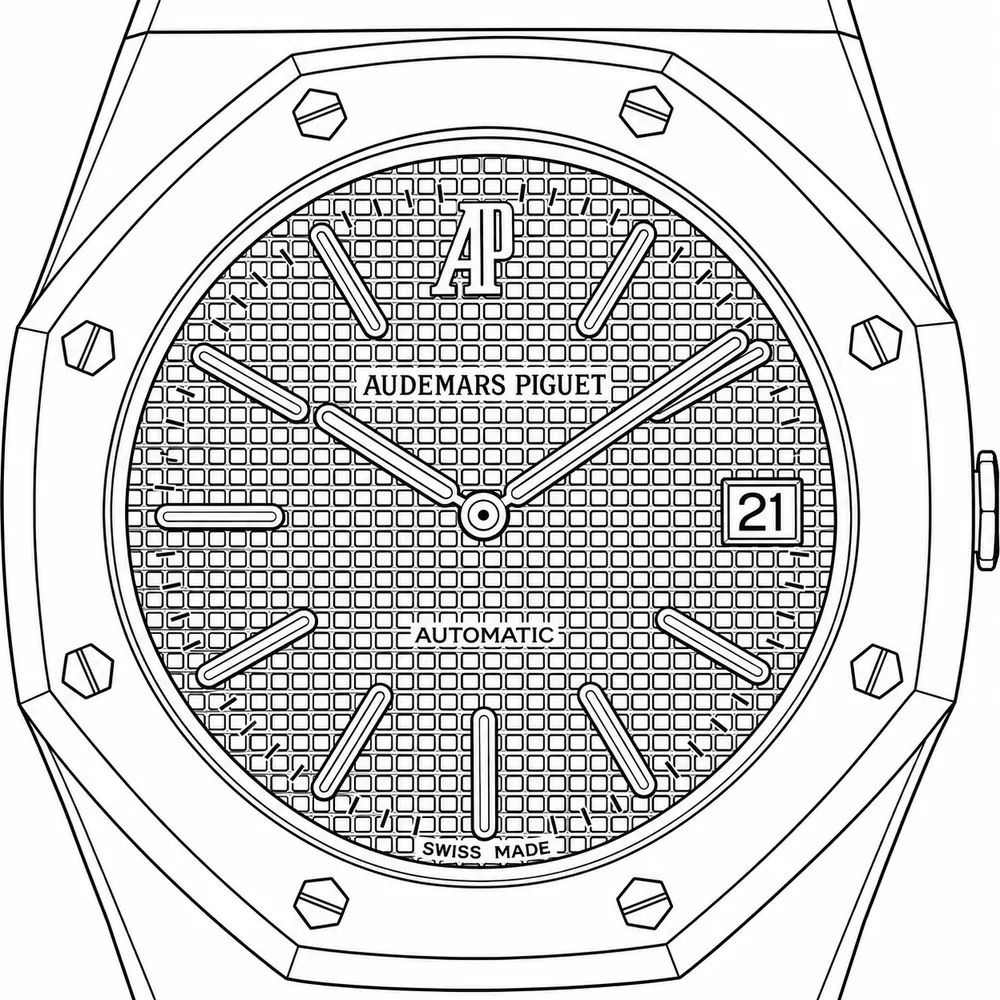
The Royal Oak Jubilee was made to mark twenty years of the Royal Oak. It is the second 39 mm ultra-thin 'Jumbo' after the 5402, and the first to have a three-part case with a sapphire back showing a special numbered oscillating weight. It was planned as 1,000 watches: 700 in steel, 280 in yellow gold and 20 in platinum. Sales began in 1992 and ran, with a long tail, to 2002. Dials carry a fine Tapisserie pattern with the AP monogram applied at 12 o'clock, and the movement is the dated Calibre 2121. Bracelet 944 with a new folding clasp replaced the 5402's bracelet 344. Collectors look first at the dial colour, the state of the bezel and bracelet, and whether the jubilee weight is present.
- Made
- 1992–2002
- Seen in the library
- 1992–2000nine in ten in 1992–1999 · by years sellers state
- Case
- 39 mm · steel (64%), gold (35%)as sellers state
- Movement
- Calibre 2121automatic
- On record
- 65 listings173 photographs · 20 holders
Components
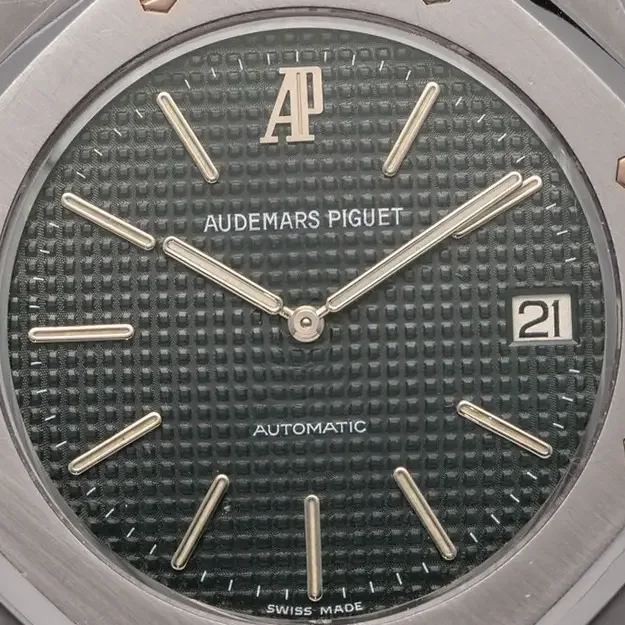
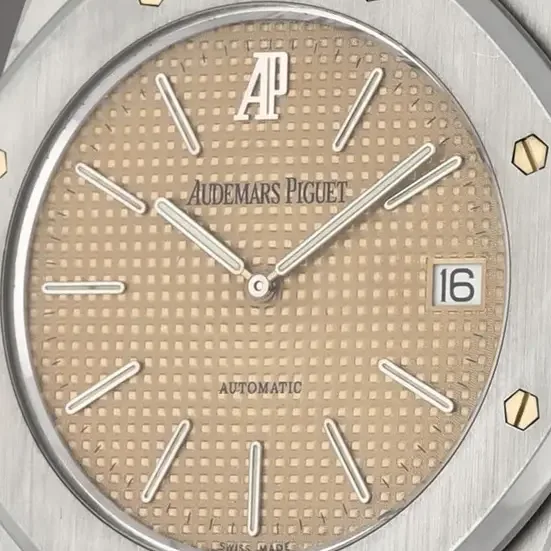
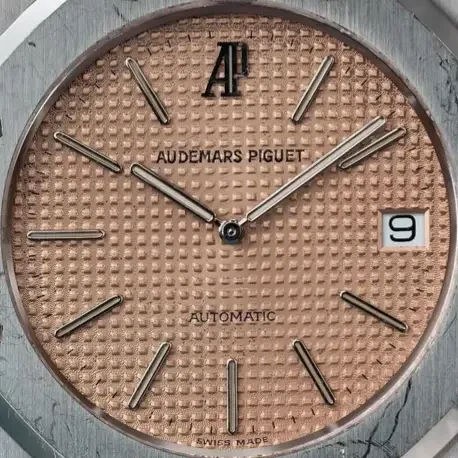
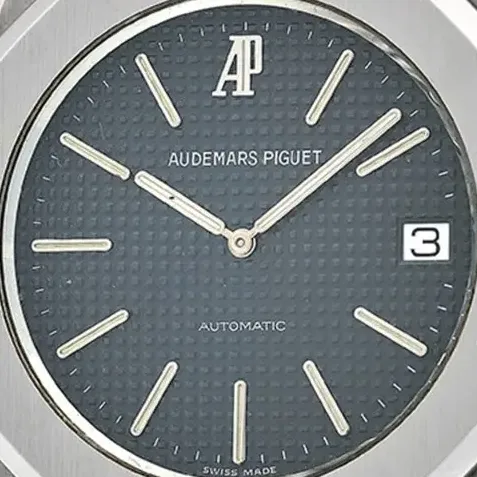
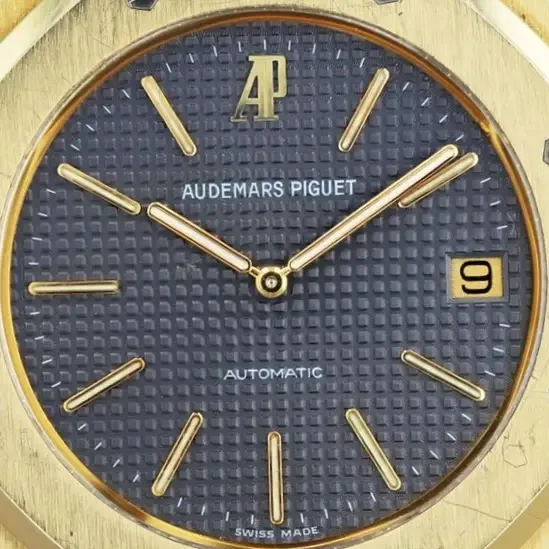
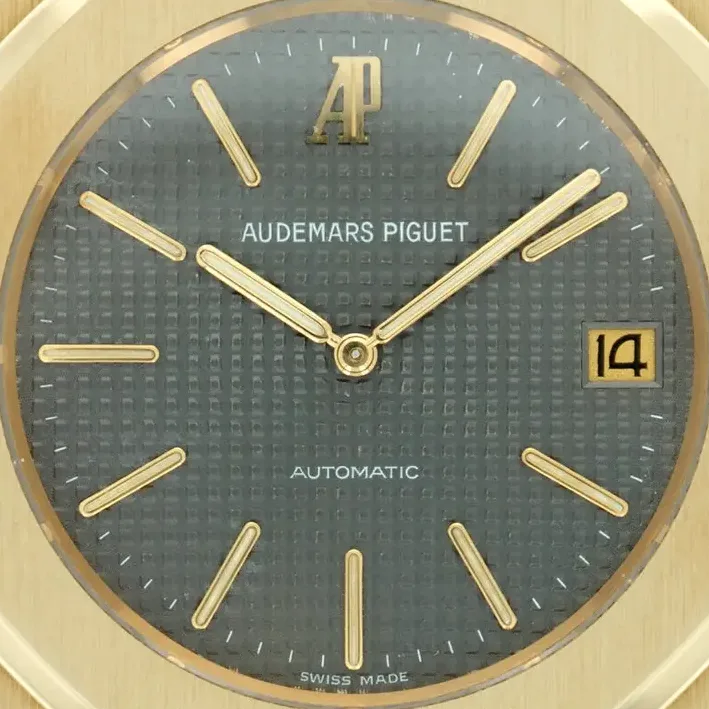
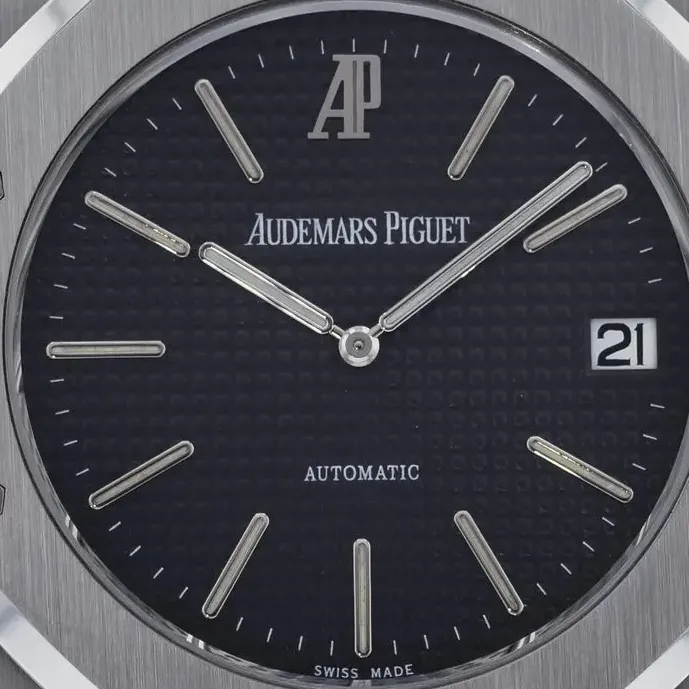
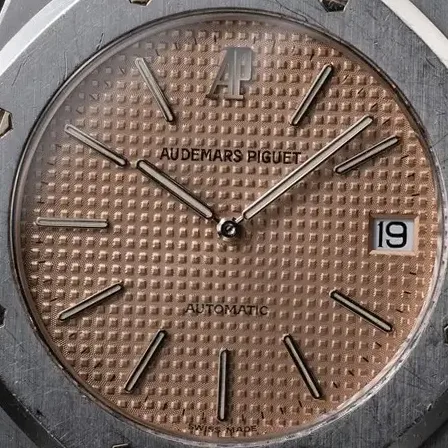
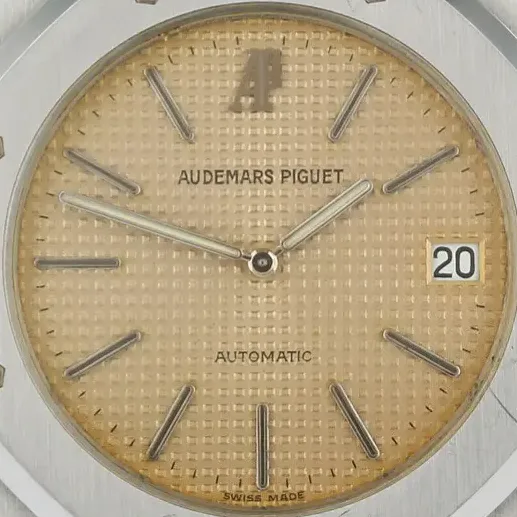
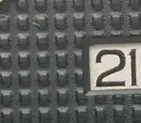
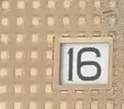
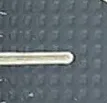
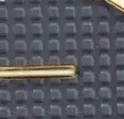
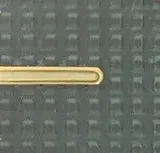
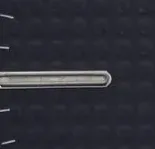
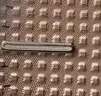
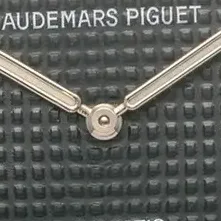
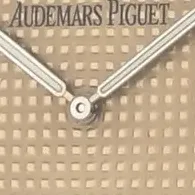
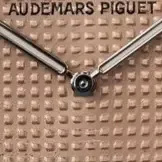
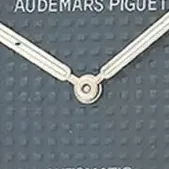
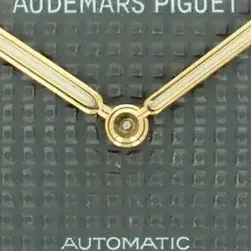
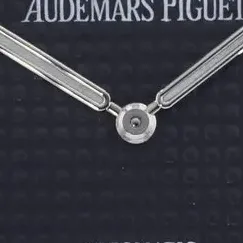
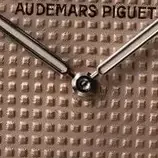
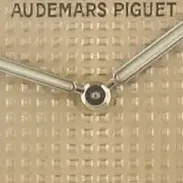
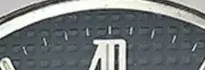
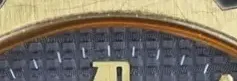
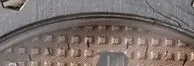
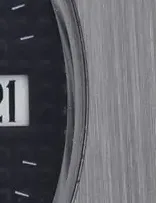
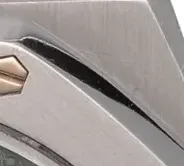
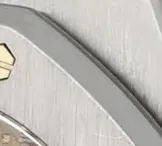
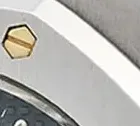
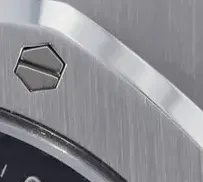
9 watches, oldest first, each straightened and cut the same way so that one row shows one component across them all. Chosen from 173 photographs on file for sharpness and for a face typical of the reference. A year marked c. is one its holder gives only roughly. Each picture is a detail cut from a listing photograph. Select the small mark in its corner for its year, its holder, a link to the listing it came from, and a way to report it.



















































Chronology
The maker's archive gives sales by year from 1992, with the platinum version starting in 1995 and the last watch completed in 2002; the sold total is 998 of the 1,000 planned.
Every dated variant: what is written, and what the records show
For the reference the marks are every dated watch; for a variant, the watches a seller names as that variant, so a variant sellers do not name has none.
Specification
| Case | 39 mm octagonal case in three parts (bezel, middle, back), about 8 mm thick; steel, 18 ct yellow gold or platinum |
| Bezel | Octagonal, held by eight hexagonal white gold screws; brushed top with polished chamfers |
| Crystal | Flat sapphire; sapphire display back secured by eight screws |
| Dial | Fine 'T21' Tapisserie guilloche, galvanically coloured; applied hour-markers and applied AP monogram at 12; date at 3; no seconds hand |
| Movement | Calibre 2121 (some marked 2121/3), ultra-thin automatic with date, 28 mm across and 3.05 mm thick, 19,800 vibrations per hour, about 40 hours of reserve, central rotor on ruby rollers |
| Bracelet | Integrated bracelet 944 in steel, yellow gold or platinum, with folding clasp |
| Water resistance | 50 metres |
Dial 8 described
All dials are a fine Tapisserie guilloche with the pattern coloured by galvanic treatment, applied hour-markers, an applied AP monogram at 12 o'clock and a date window at 3. The 5402 had its monogram at 6, so the move to 12 is one of the quickest ways to tell the two apart. There is no minute track and there is no seconds hand. The dial colours differ by metal; the archive describes two for each metal, and the literature mentions one or two more.
Steel, dark blue
The first of two steel dials in the technical data is described as dark blue, close to the 'Bleu Nuit, Nuage 50' of the 5402. In most lights it reads as grey to charcoal. It is the commoner of the two steel dials by a wide margin, judging by the watches in private hands.
- dark blue Tapisserie that reads grey to charcoal in most light
- applied AP monogram at 12
Steel, salmon pink
The second steel dial is described in the technical data as 'golden 4N', the classic pink gold shade, which collectors call salmon. It was shown in the maker's communications from 1992. The archive does not give how many were made, but far fewer survive than blue ones, and for a long time this went unnoticed.
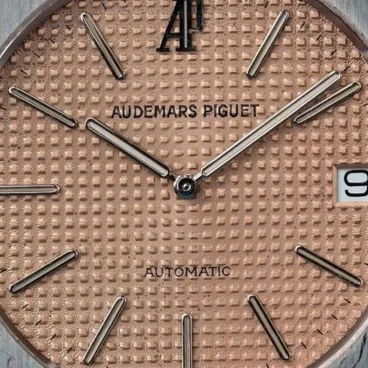

- applied markers and monogram as on the blue dial
14 listings on record under the name.
Steel, Tuscany blue (press text)
The maker's description of the model says some steel watches have a salmon pink or a 'Tuscany blue' dial. The technical data for the steel watch names only dark blue and golden 4N, so how this one relates to the two is left open.
Yellow gold, ivory
The first of two yellow gold dials in the technical data is ivory-coloured, with applied hour-markers and the AP monogram at 12. It is the rarer and warmer of the two.
- ivory or cream Tapisserie
- applied gold markers
Yellow gold, slate grey
The second gold dial is slate grey, the colour most people picture on the gold Jubilee. It cools the case and is the more usual one of the two.
- slate grey Tapisserie
- applied gold markers
Yellow gold, gold or white (late)
Some later gold watches may have been fitted with gold or white dials. The literature hedges this and gives no dates.
Platinum, Tuscany blue
The first platinum dial is finely chased and in blue No. 7, called Tuscany blue. The name had appeared at the maker on round platinum watches in the 1980s and on several Royal Oak models from the early 1990s. The last platinum watch, delivered in 2000, carries this dial.
- finely chased blue Tapisserie
Platinum, satin-brushed blue with diamonds
The second platinum dial is also blue but has a fine satin-brushed finish, with diamond hour-markers set on studs riveted into the dial plate. The sources do not say how the two platinum dials divide among the twenty watches.
- satin-brushed blue
- diamond markers on riveted studs
Luminous material 1 described
The literature says little about luminous material. The markers hold plots of tritium that has usually aged to a warm cream; some examples have minimal or no luminous material.
Tritium plots, aged cream
Tritium plots in the applied markers have typically aged to a warm cream and no longer glow, which makes the watch a daylight reader. On the gold watch lume is described as minimal or absent depending on the example.
- cream-aged plots in the markers
Hands 1 described
The hands are thin batons, like the original 5402.
Thin baton hour and minute hands
Hour and minute hands are slim batons in keeping with the thin applied markers. There is no seconds hand, because the calibre has no room for a centre seconds wheel; this is the quickest sign of a genuine Jumbo.
- only two hands
- thin baton shape
- no seconds hand
Bezel 1 described
The bezel is the octagon of the Royal Oak, and where an over-polished case shows first.
Octagonal bezel, eight hexagonal screws
A brushed top with eight polished angled flanks, held by eight hexagonal white gold screws which pass through the bezel and thread into the case from the front. The slots all sit at the same angle from the factory. Rounded corners or sunken screw heads mean the case has been polished.
- sharp facets where the flanks meet
- slots aligned
- screw heads not sunken
Case 3 described
The Jubilee uses a case in three parts, where the 5402 had a sealed two-part monocoque. This permits a display back but adds about a millimetre of height and lowers water resistance. The case is made in steel, yellow gold and platinum.
Steel case
The steel case is 39 mm, about 8 mm thick and about 46 mm lug to lug. Broad brushing on the top surfaces meets a polished chamfer along each flank. The archive records the case as D12288 on its example. Planned at 700; 692 were sold.
- brushed flank with single polished chamfer
- sapphire back with eight screws
Yellow gold case
The 18 ct yellow gold case has the same dimensions, with a thickness given as 8.1 mm, and weighs roughly twice as much as steel. The archive records its example as case D35513. Of 280 planned, 286 were sold.
- hallmarks struck deep
- bezel screws threading into gold nuts beneath
Platinum case
Twenty watches in platinum, first sold three years after the others. The archive records its last example as case D13791. Because they sold over five years, some do not carry the jubilee weight.
Crown 1 described
Plain push-pull crown
A small, flat, unsigned crown that is pulled and pushed rather than screwed down, with no guards. This is where the 50 metre rating comes from, which amounts to splash resistance only.
- unsigned flat crown
- no crown guards
Crystal 1 described
Flat sapphire front and display back
The front crystal is flat sapphire without modern anti-reflective treatment. The sapphire back is new to the Jumbo with this reference and is held by eight screws.
- flat crystal
- transparent back showing the jubilee weight
Date 1 described
Date at 3, unframed window
A small printed date seen through a cleanly cut window at 3 with no frame. On the steel watch the disc is described as matching the dial colour; an account of the gold watch implies its disc is not colour-matched. Spotting around the window is a point to check.
- unframed window at 3
Movement 3 described
The movement is the ultra-thin automatic Calibre 2121 derived from the 2120 of 1967, with its date added in 1970. Its regulating organ changed over time, and the Jubilee's hallmark is the special oscillating weight seen through the back.
Jubilee oscillating weight
A gold weight cut as three interlocking Royal Oak bezels with screw detail, engraved 'Royal Oak Jubilee' and the individual number out of 1000. Its metal is given as 22 ct in one account and 21 ct in another. Late watches sold a decade after the anniversary were sometimes fitted without it.
- engraved 'Royal Oak Jubilee' and a number out of 1000
- three overlapping bezel outline
- number matches the papers
Without jubilee weight (late)
Some of the last watches, the platinum ones among them, left with a standard weight because the anniversary had long passed. The maker's own archive notes this. It is not necessarily wrong, but it differs from the usual watch.
- plain weight through sapphire back
Calibre 2121 (variable inertia)
The 2120 family went from a variable-inertia balance (to about 1978) to an index-regulated three-part annular balance (about 1978 to about 1991) and back to variable inertia from about 1991, renamed 2120/3. Some Jubilee watches are marked 2121/3; sellers state plain 2121 more often. It has 247 parts and runs at 19,800 vibrations per hour; one account gives 36 jewels and a free-sprung balance.
- 2121 or 2121/3 on the movement
- rotor on a peripheral rail of ruby rollers
Bracelet 1 described
Bracelet 944
Bracelet 944 replaced the 5402's bracelet 344 and brought a new folding clasp. Links graduate in width, in seven sizes, from case to clasp. The clasp has no micro-adjustment and opens with an embossed AP slide. Stretch is the commonest fault; holding the watch flat shows gaps between links.
- tapered graduated links
- folding clasp with embossed AP slide
- tight links when held flat
Box and papers 1 described
Octagonal box and papers
Sold sets are described with an octagonal presentation box, a certificate of origin or authenticity and, later, an extract from the maker's archive. The caseback number and the weight number should match the papers.
- octagonal box
- certificate
- archive extract
Originality
- Bezels and cases are often polished; rounded bezel corners or sunken screw heads show it.
- The jubilee weight may have been swapped in service, so its number should match the caseback and papers.
- Bracelets stretch with wear, and replacement links are costly.
- Under a loupe, check the dial for spotting around the date window and for lifting at the applied monogram; an original dial in clean condition is the scarcest part of the watch.
- Luminous plots have aged to cream and no longer glow; on some watches there is little or none.
Names
- Jumbo. The 39 mm ultra-thin Royal Oak, a name shared with the 5402.
- Salmon. Collectors' name for the golden 4N steel dial.
- Tuscany blue. The maker's name for the blue No. 7 dial of the platinum version.
Where accounts differ
Points on which the published literature and the library's own records do not agree, or on which the literature contradicts itself.
- Gold quantity. One published account gives about 300 yellow gold and 700 steel watches. The maker's archive gives 280 gold planned, 20 in platinum, and 286 gold sold.
- Weight metal. One published account gives the jubilee weight as 22 ct gold; another gives 21 ct.
- End of production. The maker's archive has watches sold into 2002. Sellers' stated years in the library's records stop earlier.
- Date disc colour. The review of the steel watch describes the date disc as colour-matched to the dial. The same site's review of the yellow gold watch counts a colour-matched date disc among what the modern 15202 adds, which implies the gold Jubilee lacks one.
Catalogue versions 3 listed
The full numbers under which holders list this reference, with what their listings say of each. Each has a page of its own.
| Version | Metal | Dial | Years seen | Records |
|---|---|---|---|---|
| 14802ST | Steel | Salmon or blue | 1992–1995 | 34 |
| 14802BA | Yellow gold | Grey | 1992–2000 | 17 |
| 14802PT thin | Platinum | 2000 | 1 |
In the records
Counted from 65 listings at 20 holders between 21 October 2015 and 14 November 2026. These are what sellers and auction houses state, not measurements.
Fainter bars are the 2 outside the main run of 1992–1999 (the middle nine-tenths): the latest is 2000. They are early and late examples, and now and then a seller's slip.
Case metal
| Steel | 35 | |
| Gold, any colour | 19 | |
| Yellow | 17 | |
| Colour not stated | 2 | |
| Platinum | 1 |
A listing that says "gold" or "18K gold" names no colour: it is counted under "colour not stated", not as yellow gold.
Dial colour
| Grey | 14 | |
| Salmon | 11 | |
| Blue | 5 | |
| Pink | 4 | |
| Cream | 1 | |
| White | 1 |
Case size
| 39 mm | 37 | |
| 38 mm | 1 |
Calibre named
| 2121 | 19 | |
| 2121-3 | 4 |
Bracelet or strap
| Metal bracelet, kind not stated | 49 |
Each table counts the listings that state the thing, in the seller's own terms. A size, metal, colour or calibre that cannot belong to this reference is a seller's slip or a listing filed under the wrong number.