Tank Française
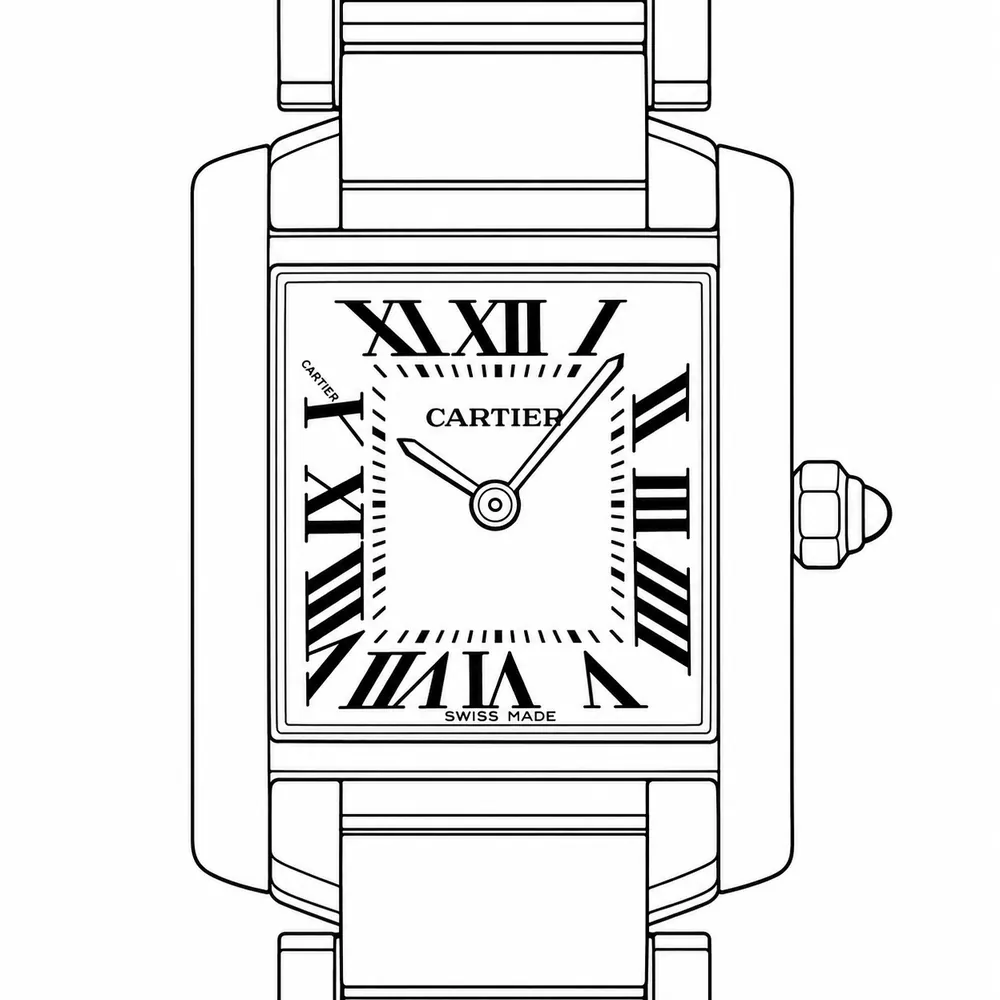
The Tank Française is the Tank that carries a metal bracelet drawn together with the case. It was shown in 1995 by some accounts, launched in 1996, and given a thorough redesign in 2023. The first generation has pointed brancards and lugs, pointed links, an octagonal crown set with a blue cabochon and blued sword hands. It was made in small and medium quartz sizes, a larger automatic and a quartz chronograph, in gold, two-tone and, from 1997, steel. The 2023 generation is mostly satin-finished, has a recessed crown and a closer-fitting bracelet, and adds a large automatic steel size. The literature says nothing of separate Paris, London or New York productions.
Cartier's entries are arranged by model, not by reference number, because its reference numbers are several systems at once and many of its watches carry none. The houses are set out in Paris, London and New York.
- Made
- from c. 1996The launch is usually put in 1996, with a first showing in Geneva reported for 1995, and the line is still in production in a redesigned form.
- On record
- 3,099 listings376 of them give no reference
- Reference numbers
- 26 described168 seen in listings
What to look for
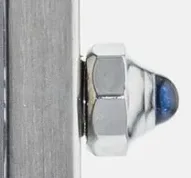
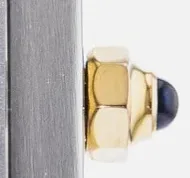
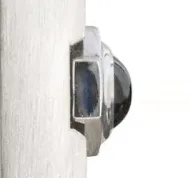
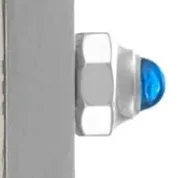
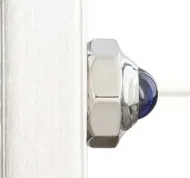
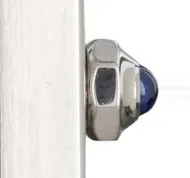
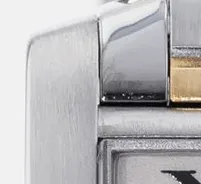
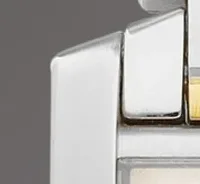
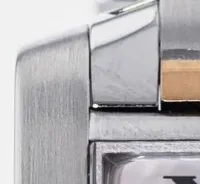
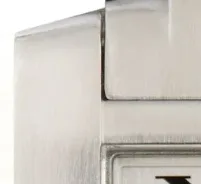
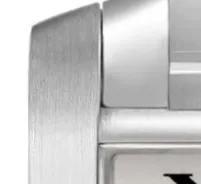
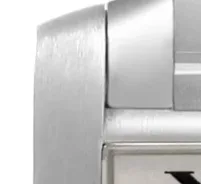
Details cut from photographs of watches of this line on record. Each was chosen by eye from a listing on the line and then checked again against the words beneath it. More sit beside the productions and parts they belong to, below. Select the small mark in a picture's corner for its holder and a link to its listing.
Components
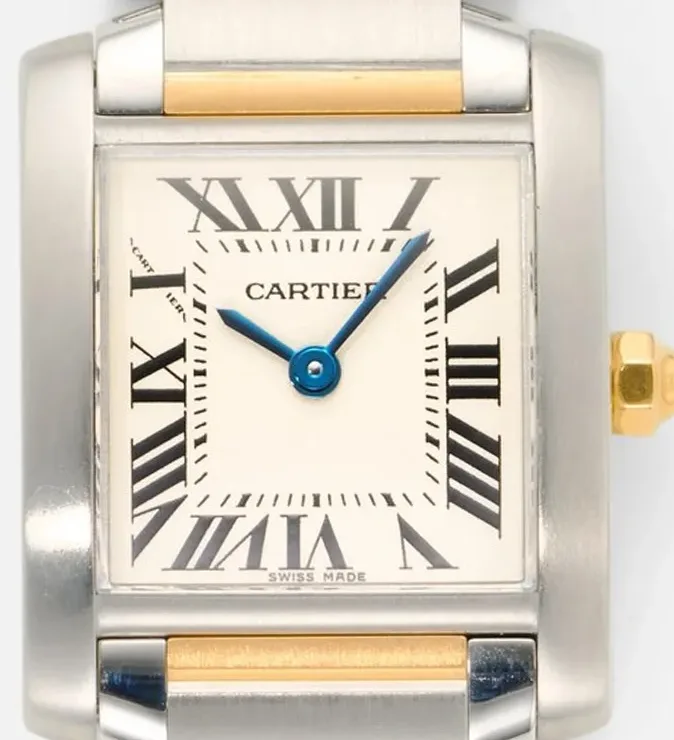
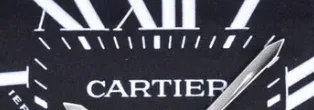
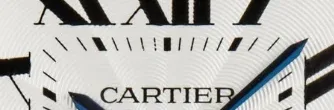
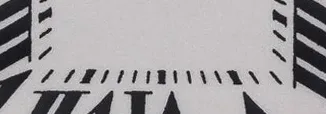
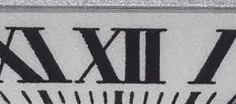
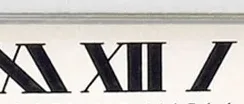
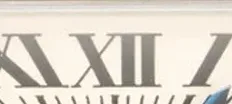
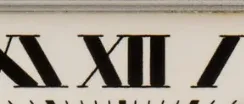
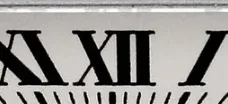
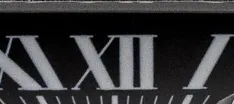
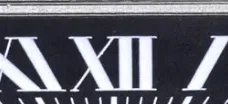
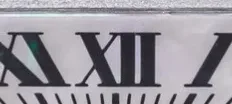
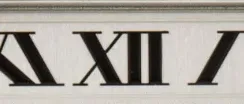
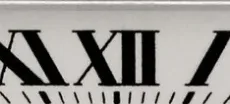
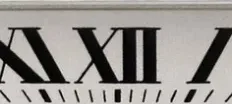
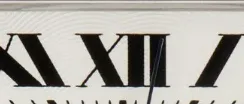
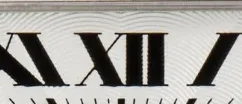
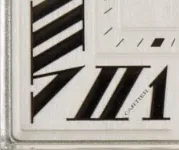
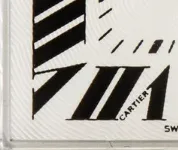
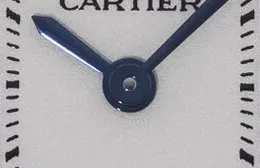
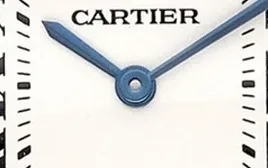
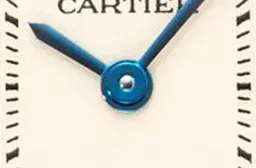
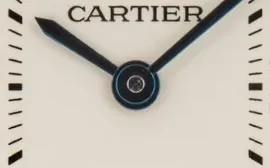
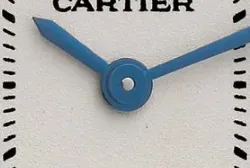
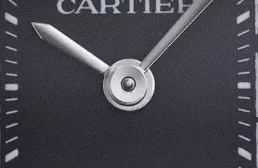
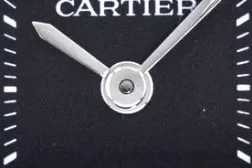
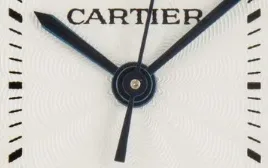
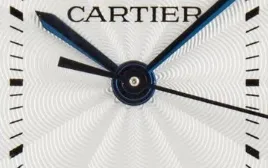
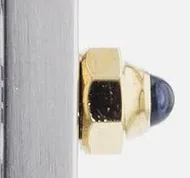
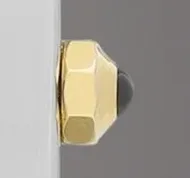
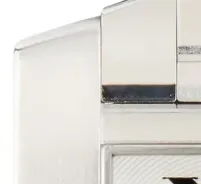
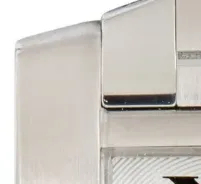
13 watches of this line, oldest first. Each photograph is turned upright and scaled so the dial is the same height, and every crop is cut from the same place on the dial, so one row shows one part across them all. A watch is shown only if its seller's title names the line and the picture has been checked by eye, twice, to show it. Years are as sellers give them. Each picture is a detail; select the small mark in its corner for its holder and a link to its listing; the whole watch is shown only for holders whose pictures may be shown whole.






















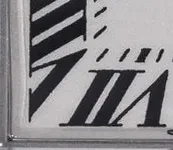
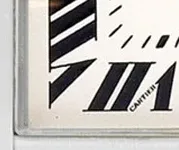

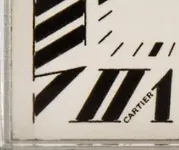

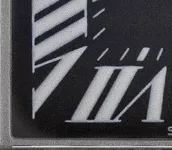




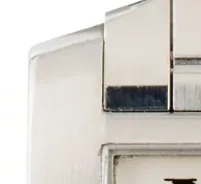
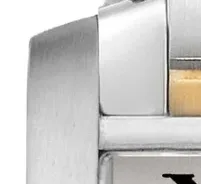
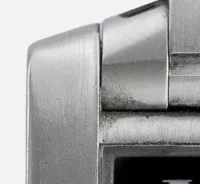
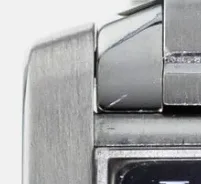


By house and period 3 described
First generation, from 1996
The first Française followed a Geneva showing reported for 1995 and was on sale in 1996. It was the first Tank with a metal bracelet drawn together with the case, and it kept the Tank's parallel brancards but ended them in pointed lugs, with pointed bracelet links and end links that carry on the lines of the lugs. At launch it came in four sizes: two small ladies' quartz sizes, a larger automatic with calibre 120, and a chronograph as the largest. All four were shown in yellow gold and in steel and gold; a steel line followed a year later. Strap versions, at first only small gold and gem-set watches, came after a gap of over a year. The collection later narrowed. The literature does not say who made the cases, and does not describe the watches by house.
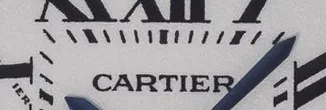
Signature and marks. The literature gives no case or movement stamps for this generation. Dials have black Roman numerals with a railway minute track. Published accounts say the hidden Cartier signature in the V of the VII was kept from these dials into the 2023 ones, and first-generation dials in the library's records show it there.
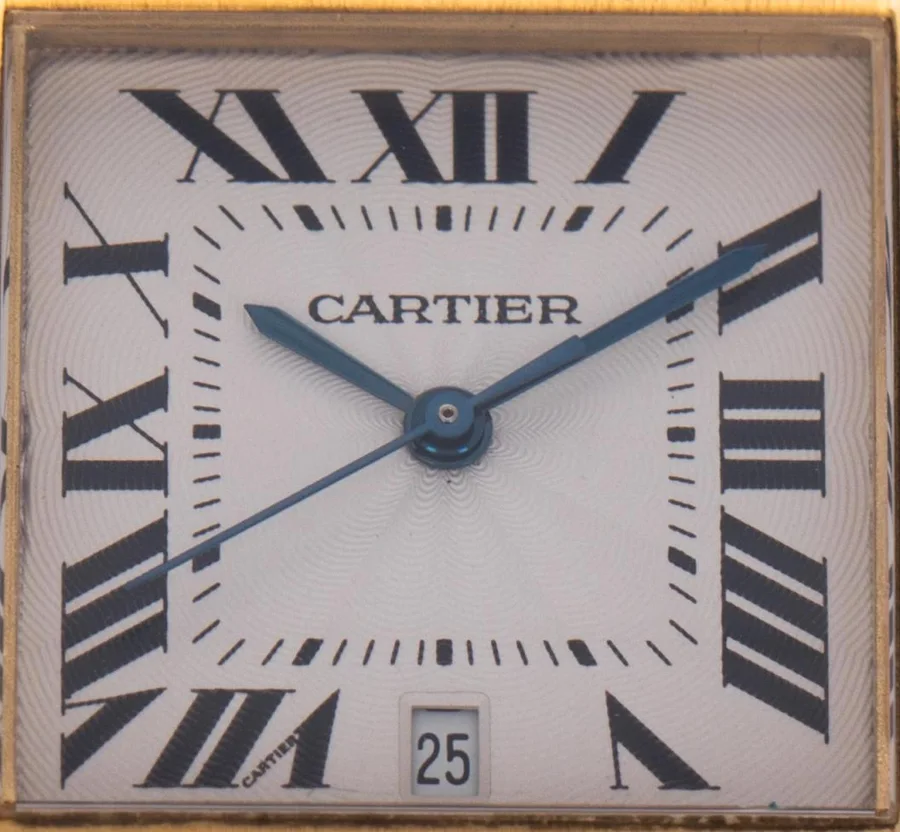

- pointed brancards and lugs on a rectangular case
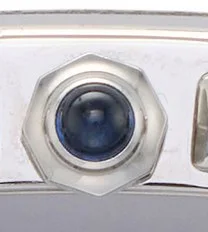
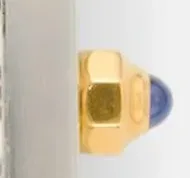
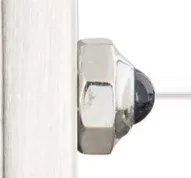
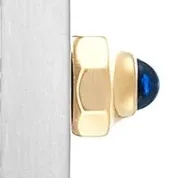
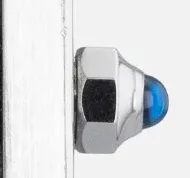
- octagonal crown with a blue cabochon
- H-shaped links with pointed tips
- case polished throughout or brushed and polished
References: 2302, 2384, 1840, 2653, W51008Q3, W51007Q4, W51011Q3, W51002Q3
Yearling series
A short run with an extra-wide bezel and an extra-large case, made in two forms: an XL time-and-date and an XXL chronograph, both on a leather strap. The chronograph has octagonal registers and a fan-shaped date window in place of three round subdials. It is dated only to the early 2000s, and the literature puts its production at about a year.
Signature and marks. The literature gives no signature; it describes the dial only as a standard silver one.
- extra-wide bezel
- octagonal chronograph registers
- fan-shaped date window
- leather strap
Redesign, 2023
Introduced in 2023 as seven references: small and medium in yellow gold, with or without diamonds, and small, medium and large in steel. The small and medium sizes have quartz movements; the large steel size is an automatic with a date. The brancards are rounder, the finish is mostly satin with only the arms of the H-links polished, the crown is recessed and cuts the right brancard, and the dial is sunray or brushed with numerals in relief. The bracelet is closer-fitting and the end link is a T shape with one satin surface. The large size is presented as new in this redesign, although the first generation already had a larger automatic with a date. The gold models come in two sizes only, and the rose gold and steel-and-gold models, and the steel or yellow gold models with diamond-set cases, are said to have carried on unchanged.
Signature and marks. Roman numerals in relief with a pinstripe round the numerals and minute track; the hidden Cartier signature is in the V of the VII; on the small model sellers place it in the X.
- recessed crown
- satin case and bracelet
- T-shaped end links
- relief Roman numerals on a silver or champagne sunray or brushed dial
- date at three o'clock cutting the minute track on the large size
References: WSTA0065, WSTA0074, WSTA0067, WGTA0114, WGTA0113, WJTA0039, WJTA0040
Chronology
Specification
| Case | Rectangular, with brancards that extend into pointed lugs; first generation in four sizes (SM and MM quartz, XL automatic, XXL chronograph), examples measuring about 26 x 20 mm and 32 x 28 mm; 2023 generation small 25.7 x 21.2 mm, medium 32 x 27 mm, large 36.7 x 30.5 mm |
| Materials | Yellow gold, steel, and steel and gold, with white gold, rose gold and gem-set versions; the 2023 collection is yellow gold or steel |
| Crystal | Sapphire |
| Crown | Octagonal on the first generation, set with a blue sapphire or spinel cabochon; from 2023 wider, flatter and recessed into the case, with a synthetic spinel cabochon on steel and a sapphire cabochon on gold |
| Dial | Roman numerals, railway minute track, blued sword hands; guilloché, flinqué or opaline surfaces before 2023, sunray or brushed surfaces with relief numerals from 2023 |
| Movement | Quartz in the small and medium sizes; automatic calibre 120 in the larger first-generation size; Piaget-made quartz chronograph calibre in the chronograph; Cartier 1853 MC (Sellita SW100 base) in the 2023 large steel model |
| Bracelet | Articulated H-link metal bracelet with end links that follow the lugs; strap versions, at first only in small gold and gem-set sizes |
| Water resistance | 3 bar (about 30 metres) as stated for the 2023 collection |
Dial 4 described
Dials keep Roman numerals, a railway minute track and blued sword hands throughout. The first generation used engraved or textured surfaces; in 2023 the dial changed to sunray or brushed finishes with numerals in relief. Special editions carry unusual dials.
Guilloché and flinqué dials
Before 2023 dials were commonly engraved: a scalloped guilloché pattern on the gold ref. 1840, a silvered flinqué dial on a small steel watch, a guilloché centre on the large automatic. The pattern recalls the dials of the Collection Privée Cartier Paris Tanks. None of these is dated to a year.
- scalloped or sunburst engraved pattern
- black printed Roman numerals
- railway track
Opaline dial with black numerals
The medium size made before 2023 had black numerals on an opaline surface; the 2023 dial replaced them with silver ones on a silvered surface.
- black printed numerals
- opaline surface
Sunray or brushed dial with relief numerals
The 2023 dials are radially or vertically brushed, silver on steel and light champagne on gold, with applied relief numerals, a pinstripe round numerals and minute track, and no guilloché option. The hidden signature sits in the VII; on the small model sellers place it in the X.


- relief numerals
- pinstripe round the minute track
Special-edition dials
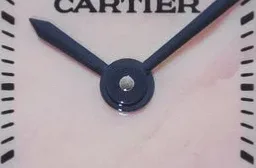
Several special editions are named: a pink mother-of-pearl dial with a pink spinel on the crown, a landscape motif made for a Cartier anniversary, a chequered pattern of the Cartier logo and diamonds, and gem-set dials. Sellers' titles also mention raspberry and pink double-C decor dials on steel. None is dated in the literature.
- pink mother-of-pearl
- pink spinel crown
- Cartier logo pattern
- raspberry or pink double-C decor
Hands 1 described
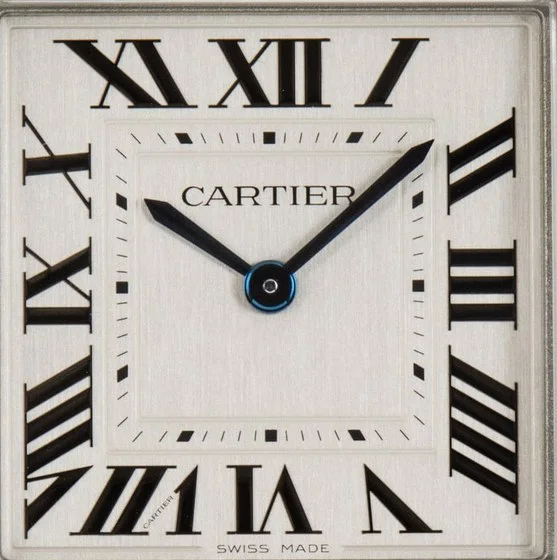
Blued sword hands run through the whole line.
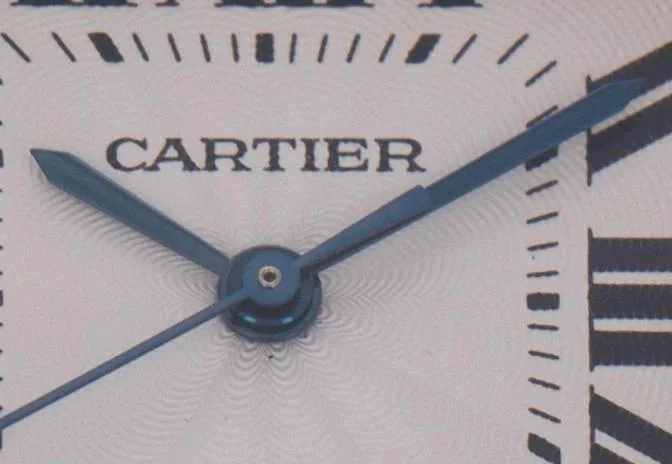
Blued sword hands
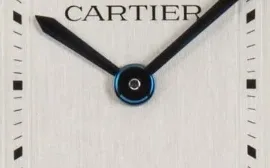
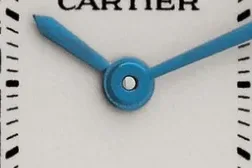
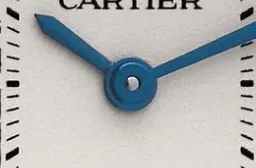
Steel hands blued in sword form are on the first generation and on the 2023 collection alike. On the gold ref. 1840 they are heat-blued and there are three of them; the 2023 medium quartz has no seconds hand.


Subregisters 2 described
Only the chronograph and the Yearling have registers.
Chronograph layout
The chronograph, the largest first-generation size, has two counters low on the dial and a date counter at twelve. Its quartz movement also carries a calendar and a split-seconds function. It is described as a Piaget calibre. The literature gives a date only for the model's presence at launch.
- two lower counters
- date at twelve
Yearling octagonal registers
The Yearling chronograph has octagonal registers and a fan-shaped date window in place of three round subdials.
- octagonal registers
- fan-shaped date
Case and sizes 4 described
The case keeps the parallel brancards of the Tank but ends them in pointed lugs, with a shorter, squarer proportion than the original Tank. The first generation was made in several sizes; Cartier's size names for it are small and medium (SM, MM), XL and XXL. In 2023 the names are small, medium and large.
First generation, pointed brancards
Slab-sided brancards with a highly polished flank, ending in lugs cut off to a point. Finish is all polished, or brushed with polished parts. The ref. 2384 quartz measures about 26 x 20 mm and the ref. 2302 automatic about 32 x 28 mm; the 2302 is also given as 28 mm wide, about 36 mm long with the brancards and about 7 mm thick.
- pointed lugs
- slab-sided flanks
- brushed bezel on some
Yearling case
An extra-wide bezel and extra-large case, in XL and XXL forms, made for about a year in the early 2000s.
- wide bezel
Gem-set cases
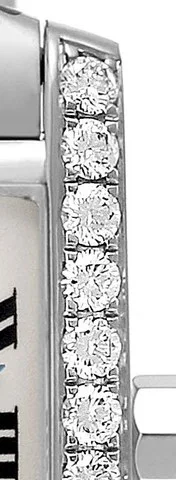
Some watches have stones set only in the bezel; others also in the dial or all over the case and bracelet, using diamonds or sapphires, some of them square-cut. A yellow gold watch with an orange sapphire bezel and champagne dial and a white gold one with a diamond bezel are among those named. None is dated.

- stone-set dial
2023 case
Rounder brancards, a flatter case, mostly satin surfaces. Small 25.7 x 21.2 x 6.8 mm, medium 32 x 27 x 7.1 mm, large 36.7 x 30.5 x 10.1 mm. The small width is also given as 21.7 mm. The large is steel only.
- satin finish
- rounded brancards
Crown 2 described
The first-generation crown is octagonal with a blue cabochon and stands proud of the case; in 2023 it was recessed into the case.
Octagonal crown with blue cabochon
A blue sapphire or spinel cabochon on an octagonal crown, standing proud of the case. A pink spinel appears on the pink mother-of-pearl special edition.
- octagonal crown
- blue cabochon
2023 recessed crown
Wider in diameter but flatter, set into the case line so that it breaks the right brancard. Steel versions carry a synthetic spinel cabochon, gold a sapphire one.
- crown interrupting the right brancard
Crystal 1 described
A sapphire crystal is stated for both generations.
Sapphire crystal
Sapphire on a 2001 steel example and on every 2023 reference.
Date 2 described
On the automatic, the position of the date separates the generations: at six before 2023, at three on the 2023 large size.
Date at six o'clock
On the earlier automatic the date replaces the numeral at six.

Date at three o'clock
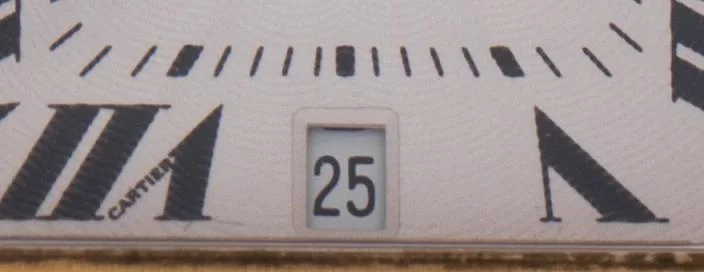
On the 2023 large steel size the date sits at three, cutting the minute track and half covering the III.
- date half hiding the III
Movement 4 described
The small and medium sizes have been quartz throughout. Mechanical movements appear only in the larger watches.
Quartz, small and medium sizes
Quartz from launch. Sellers give a 4-jewel calibre 057 for several of the small quartz references, among them 2384 and 2385. The 2023 small and medium use a long-life quartz said to last eight years.
Calibre 120 automatic
The larger first-generation time-only size. Built on an ETA 2000, a small-diameter relative of the ETA 2892: 19.4 mm by 3.6 mm, with date, hacking seconds and about 40 hours' reserve. The base is also given as ETA 2892-A2, with 21 jewels and 42 hours; see Where accounts differ. The ETA 2000 is thought to be no longer available to Cartier, and the 2023 automatic uses a different base.
- date at six
- central seconds
Piaget quartz chronograph
The chronograph calibre is a high-end quartz movement from Piaget, given as calibre 212P and called Chronoflex or Chronoreflex, with a perpetual calendar, a split-seconds function and a quick-set for the hour. It has an unusual layout.
- quick hour setting
Calibre 1853 MC
Automatic in the 2023 large steel size: 17.2 mm across, 4.8 mm high, 28,800 vibrations an hour, reserve stated as 37 or 38 hours.
- date at three
Bracelet and strap 3 described
The bracelet is the point of the line: an articulated metal bracelet with pointed links made as part of the watch, where earlier Tank bracelets were more general. Strap versions also exist.
First-generation H-link bracelet
Separately distinguished links with pointed tips and end links that continue the line of the lugs. The gaps between links are plain to see, and the end link has mixed finishes and an engraved line. The large automatic ref. 2302 has an invisible double deployant clasp.
- pointed links
- visible gaps between links
Strap versions
Alligator or silk straps with a folding clasp, at first only small gold and gold gem-set watches, and said to arrive more than a year after the launch.
- strap on a small gold watch
2023 compact bracelet
Tight links that move as one, almost no gaps, and a first link close to the case. T-shaped end link in one satin surface; before, the end link had mixed finishes and an engraved line. Widths: steel small 15.7, medium 19.5, large 22 mm.
- T-shaped end link
- polished arms on satin H-links
Reference numbers
A four-digit number is stamped on the case and covers a case; a code beginning W, or the newer letter codes, is a catalogue number for one version of it (metal, dial, strap). Many older watches carry neither. The last column is the listings on record under the number, as its own page counts them.
| Number | What it is | Listings |
|---|---|---|
| 2302 | The large automatic in steel with calibre 120 and a date at six; about 32 x 28 mm, also given as 28 mm wide and about 36 mm long; the records show the codes W51005Q4 and W51001Q3 beside it. Catalogue codes seen beside it in listings: W51005Q4, W51001Q3, W51002Q3 | 129 |
| 2384 | The quartz Française, about 26 x 20 mm, in steel as sellers describe it. Catalogue codes seen beside it in listings: W51008Q3, W51031Q3 | 197 |
| 1840 | A gold watch with an engraved dial, three heat-blued hands and an automatic calibre 120; the captions of one published account call it a medium size, while listing titles call it the large model, with a date and centre seconds. | 41 |
| 2653 | The chronograph in steel with calendar, as one auction title gives it, dated circa 2006 by the seller. | 4 |
| 2385 | 18 carat gold with a diamond bezel, as sellers describe it. | 58 |
| 2366 | White gold, as sellers describe it; the code WE1003S3 is seen beside it. Catalogue codes seen beside it in listings: WE1003S3 | 27 |
| 1820 | A 20 mm 18 carat yellow gold quartz watch, as a seller's title gives it. | 23 |
| W51004Q4 | Chronograph in steel and yellow gold, as sellers describe it; the records show it beside the case number 2303. | 22 |
| 2303 | Seen beside the code W51004Q4, which sellers describe as the steel and yellow gold chronograph. Catalogue codes seen beside it in listings: W51004Q4 | 66 |
| W51008Q3 | Small steel with a silver dial and blue hands, as sellers describe it. | 298 |
| W51007Q4 | Small steel and yellow gold, as sellers describe it. | 214 |
| W51011Q3 | Midsize steel quartz with a silver dial; one account gives 28 mm, and sellers mostly state 30 mm. | 152 |
| W51012Q4 | Midsize steel and yellow gold, as sellers describe it. | 91 |
| W51002Q3 | Large automatic in steel, as sellers describe it. | 135 |
| W51005Q4 | Large steel and yellow gold, as sellers describe it. | 119 |
| W50002N2 | Small yellow gold quartz, as sellers describe it. | 71 |
| W51028Q3 | Small steel with a mother-of-pearl dial, as sellers describe it. | 110 |
| WJTA0023 | 25 mm quartz in rose gold with an off-white dial, as one account states. | 3 |
| WE1010R8 | 28 mm automatic in yellow gold with an ivory dial, as one account states. | |
| WSTA0065 | 2023 small steel quartz, 25.7 x 21.2 mm. | 10 |
| WSTA0074 | 2023 medium steel quartz, 32 x 27 mm. | 6 |
| WSTA0067 | 2023 large steel automatic with calibre 1853 MC and a date, 36.7 x 30.5 mm. | 8 |
| WGTA0114 | 2023 small yellow gold quartz. | |
| WJTA0039 | 2023 small yellow gold quartz with 23 diamonds, 0.78 carat in all. | |
| WGTA0113 | 2023 medium yellow gold quartz. | 2 |
| WJTA0040 | 2023 medium yellow gold quartz with 27 diamonds, 1.22 carats in all. |
Originality
- The bracelet is part of the design, so a replacement bracelet changes the balance of the watch; links worn at the pins show as play and an uneven drape.
- Abrasive polishing takes metal from the edges and blurs the line between polished and satin surfaces on steel cases and bracelets.
- On the quartz sizes, a battery change alone does not show the state of the movement.
Where accounts differ
Points on which the published literature and the library's own records do not agree, or on which the literature contradicts itself.
- Year of launch. One published account places the release in 1995; the others give 1996, two of them noting a Geneva showing in 1995. The library's records carry sellers' stated years from 1990, before either date, and a few dozen in the 1820s to 1840s, which cannot be right for this line: the catalogue numbers 1820, 1821, 1830 and 1840 appear to have been read as years.
- Calibre 120 base. Two guides say calibre 120 is based on the ETA 2000, one giving about 40 hours; another says ETA 2892-A2, 21 jewels and 42 hours for the ref. 2302.
- Whether 2023 brought the first automatic. Several launch pages present the 2023 large size as new; another published account points out that the 2302 already had an automatic calibre 120 and a date.
- Size of W51011Q3. One account gives 28 mm for W51011Q3; most sellers in the library's records state 30 mm for the code, a few 25 mm.
- Metals at launch. Two accounts say the first Française came in yellow gold and in steel and gold, with all-steel models a year later; another says it was first offered in steel and in steel and gold, with gold and gem-set versions, while also dating the steel models from 1997.
- Date display of the chronograph. Published accounts give the chronograph a date counter at twelve, and several chronographs in the library's records show a date scale there. Listings of references 2653 and W51024Q3, and one titled Yearling under 2531, show the date in a window at twelve instead.
- Launch year of the Must de Cartier Tank. Three accounts of the Française date the Must de Cartier Tank to 1977, as most accounts of the Must do. One of those puts it on sale in 1976 and another gives 1976 to 1977.
In the records
Counted from 3,099 listings at dealers and auction houses whose title, or whose reference, places them on the line; 1,003 state a year. These are what sellers state, not measurements, and a count of listings is not a count of watches made.
Case metal
| Metal | Listings | Share |
|---|---|---|
| Steel | 1,366 | 55% |
| Gold, any colour | 594 | 24% |
| Yellow | 298 | 12% |
| White | 124 | 5% |
| Pink | 29 | 1% |
| Colour not stated | 143 | 6% |
| Steel and gold | 524 | 21% |
| Silver | 8 | under 1% |
As sellers state it. Shares are of the 2,492 listings that name a metal. A listing that says "gold" or "18K gold" names no colour: it is counted under "colour not stated", not as yellow gold. Carat, where a listing of gold gives one: 18k 186.
Case size
| Size | Listings | Share |
|---|---|---|
| 25 mm | 961 | 42% |
| 30 mm | 368 | 16% |
| 32 mm | 259 | 11% |
| 20 mm | 242 | 11% |
| 28 mm | 185 | 8% |
| 37 mm | 46 | 2% |
| 36 mm | 37 | 2% |
| 27 mm | 23 | 1% |
| Other sizes | 146 | 6% |
As sellers state it. Shares are of the 2,267 listings that give a size. On a watch that is not round some sellers give the width and some the length, so one watch can stand under two sizes. 1 more gives a figure outside 12 to 56 mm, which is a strap, a box or a slip, and is left out.
Movement
| Kind | Listings | Share |
|---|---|---|
| Quartz | 1,639 | 82% |
| Automatic | 357 | 18% |
Shares are of the 1,996 listings whose description says how the watch is driven.
Listings by decade the seller gives
| Decade | Listings |
|---|---|
| 1990s | 133 |
| 2000s | 588 |
| 2010s | 186 |
| 2020s | 79 |
17 more give a year outside the years the line was made (from 1996): a later watch sold under the name, or a slip. They are left out.