Tank Américaine
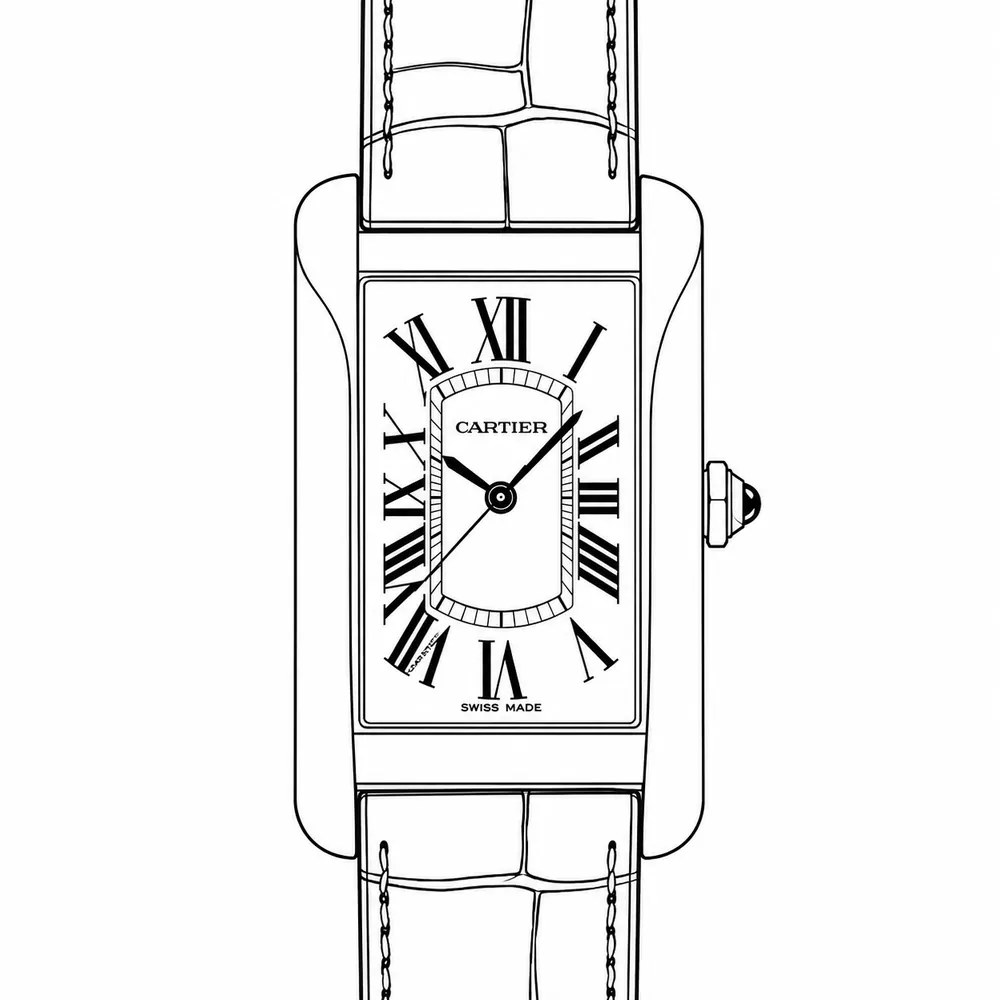
The Tank Américaine is a long, curved rectangular Tank launched in 1989, modelled on the Tank Cintrée of 1921 but wider, thicker and with a flatter case back. The first watches were quartz; the first mechanical one, a large hand-wound model, followed in 1993. Through the 1990s and 2000s it was made only in gold and platinum, with date, chronograph and tourbillon versions and several limited series. Steel arrived in 2017 and a renewed three-size range in 2023. Collectors look first at size name, metal, movement, whether the dial is guilloché, and whether a limited-series dial or certificate is present.
Cartier's entries are arranged by model, not by reference number, because its reference numbers are several systems at once and many of its watches carry none. The houses are set out in Paris, London and New York.
- Made
- from c. 1989Most of the literature puts the launch in 1989, one account gives 1988; the line is still made, in the 2023 form.
- On record
- 1,354 listings268 of them give no reference
- Reference numbers
- 35 described190 seen in listings
- House named in the title
- Paris 5, London 1the line is later than the three houses; a title naming one is quoting the dial
What to look for
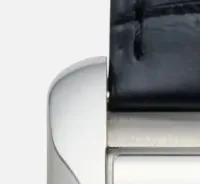
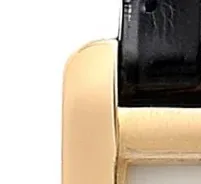
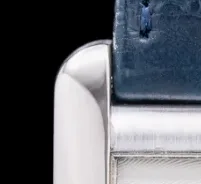
Details cut from photographs of watches of this line on record. Each was chosen by eye from a listing on the line and then checked again against the words beneath it. More sit beside the productions and parts they belong to, below. Select the small mark in a picture's corner for its holder and a link to its listing.
Components
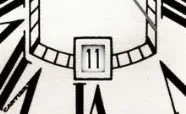
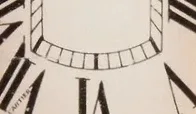
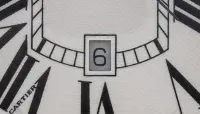
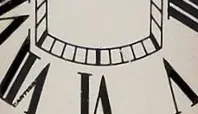
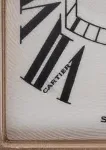
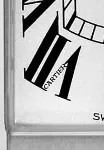
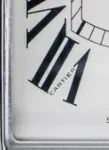
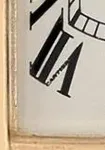
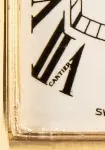
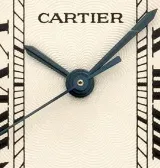
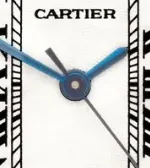
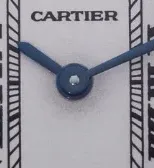
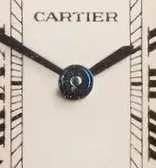
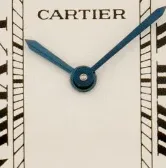
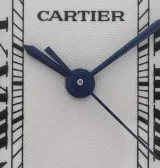
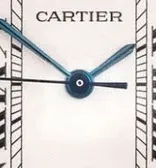
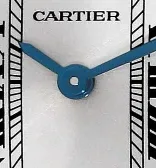
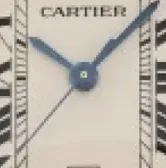
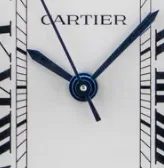
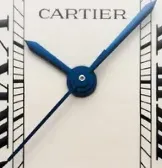
16 watches of this line, oldest first. Each photograph is turned upright and scaled so the dial is the same height, and every crop is cut from the same place on the dial, so one row shows one part across them all. A watch is shown only if its seller's title names the line and the picture has been checked by eye, twice, to show it. Years are as sellers give them. Each picture is a detail; select the small mark in its corner for its holder and a link to its listing; the whole watch is shown only for holders whose pictures may be shown whole.








































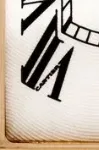

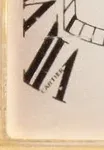
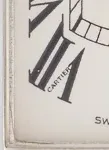
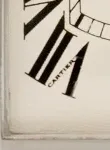
















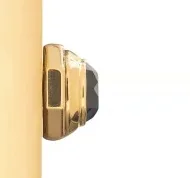


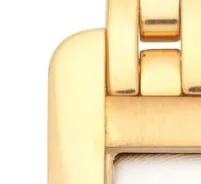
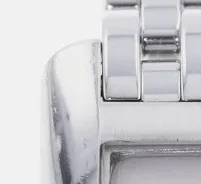
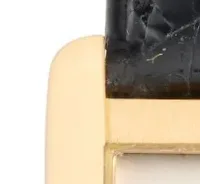

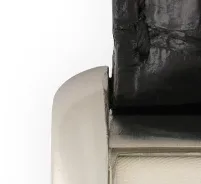


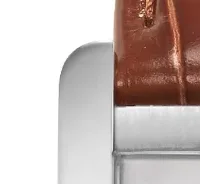
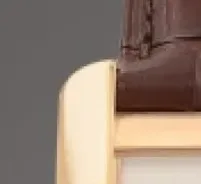
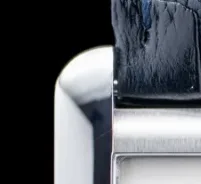




By house and period 11 described
First generation, quartz, from 1989
The launch watches were quartz, in gold (yellow and white gold by one account, yellow gold only by another), in cases about 42 mm lug to lug that read as small beside the later large model. Two references are named for the first generation: 811905 with small seconds and a date window at 3, and 819908 with pointer date and moonphase. The case has elongated lugs, brancards wider than the Cintrée's, an octagonal crown with a faceted spinel or sapphire cabochon, and a back fixed by eight screws, at first in two parallel lines along the flanks and later round the edge of the back. Neither dial layout sold strongly. The literature says nothing of a Paris, London or New York workshop for these watches.
Signature and marks. The literature gives no dial, case or movement markings specific to this generation.
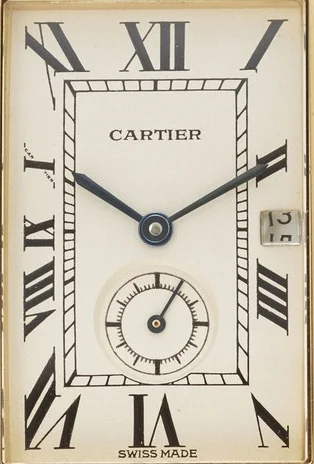

- eight case-back screws in two lines along the flanks
- quartz movement
Large hand-wound, from 1993
The large hand-wound watch, about 44 mm lug to lug and 26 or 27 mm across, was the first mechanical Américaine and the one that suited the move to bigger watches. It was made in yellow gold, with white gold dated to 1995 by some accounts, and in platinum; the literature does not date the platinum watch. Under the sapphire crystal the case is about 8 mm thick at the crown and 7 mm at the 12 o'clock edge. The movement is the Piaget-based 9P2, an ultra-thin 19,800 vph calibre of about 36 hours with Côtes de Genève bridges and a gold escapement, later replaced by the 430MC. The references are 1735 in yellow gold, 1736 in white gold and 1734 in platinum.
Signature and marks. Cartier on a silvered guilloché dial with the signature hidden in the VII; no seconds hand and no sub-registers.
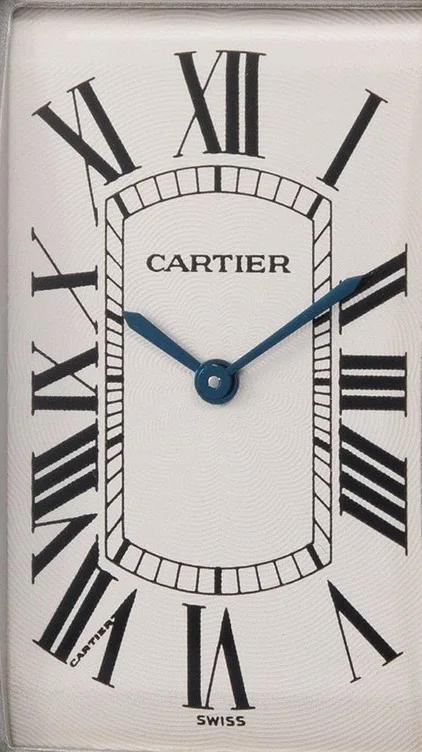

- billowing wave guilloché silvered dial with ink printed over the pattern
- flanks brushed, brancards polished, dial bars brushed vertically
- polished octagonal crown with a genuine sapphire cabochon
Medium automatic, from about 1995
A medium gold case, about 22.5 mm wide and 41.5 mm long, took a self-winding movement with centre seconds and a date at 6. Its dated examples are scattered from about 1995 to at least 2012, with no change of case or calibre recorded between them, so the watch is told apart by originality, strap or matching gold bracelet, and papers rather than by year. The literature does not establish why the medium case moved to automatic winding or the exact year it did; dealer dates of 1990 or 1991 fall before the first mechanical Américaine of 1993 and are likely estimates.
Signature and marks. The literature gives no dial or case markings for this watch; the standard movement is Cartier calibre 077 with 25 jewels.
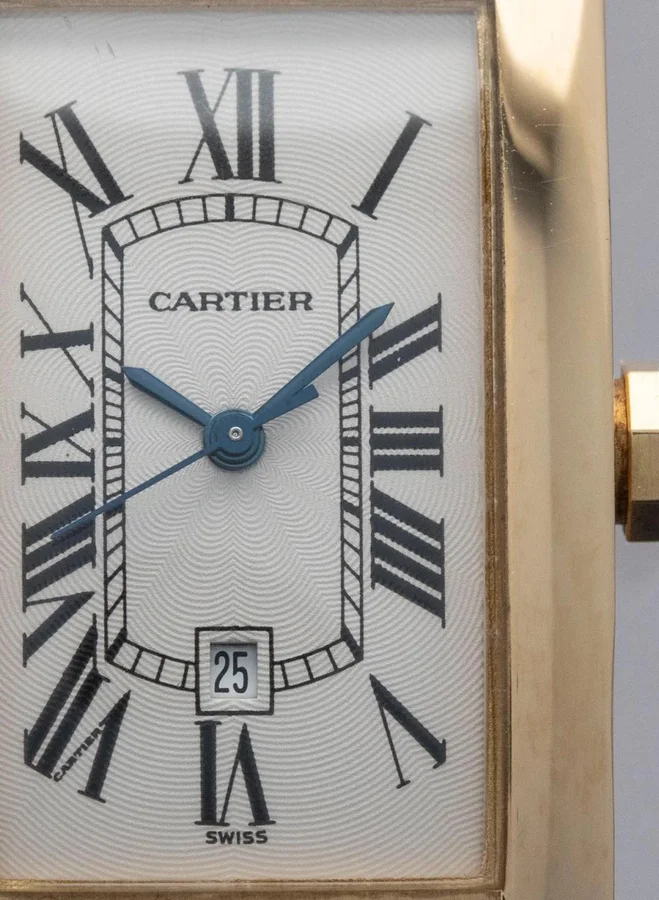

- silvered or cream Roman dial
- gold strap buckle or matching gold bracelet
References: 1725
India edition, 1997
A yellow gold automatic limited to 50 pieces marked the fiftieth anniversary of Indian independence and fell in the year of the firm's 150th. The case is about 22 mm wide and 42 mm long with 15 mm between the lugs, water resistant to 30 metres, with a curved sapphire crystal, polished screws and a faceted crown set with a blue sapphire cabochon. The strap is plain black leather with no holes, closed by an under-tuck deployant clasp. A numbered certificate, such as 36/50, is what turns the paperwork into identity for this series. The literature gives the reference both as W2604151 and as 1725.
Signature and marks. Dial in Hindi with the printed phrase and the years 1947-1997; mixed Roman and Arabic numerals; the 50-minute marker printed in gold.
- rosette guilloché dial
- Hindi inscription and 1947-1997
- gold 50-minute figure
- numbered certificate
References: W2604151, 1725
Hong Kong handover edition, 1997
A white gold watch with a salmon dial and Arabic numerals at 9 and 7 commemorated the handover of Hong Kong to China. It was made in a series of 97.
Signature and marks. Salmon dial with Arabic numerals at 9 and 7.
- salmon dial
- Arabic 9 and 7 among Roman numerals
Collection Privée Cartier Paris
The programme of limited mechanical re-editions is dated 1998 to 2008; the literature does not say in which of those years the Américaine was made. Its watches are the hand-wound 1734 in platinum, 1735 in yellow gold and 1736 in white gold. Unlike other models in the programme, with a deeply cut rose around the cannon pinion, the Américaine is marked only by the word Paris beneath the Cartier signature on the dial; otherwise the earlier hand-wound watch and the Collection Privée watch are identical. Sellers describe the platinum watch under 1734A and 1734B, the 1734B as a numbered limited edition, and the yellow gold under 1735B.
Signature and marks. The word Paris below the Cartier signature on the dial.
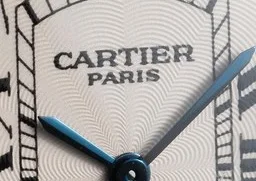



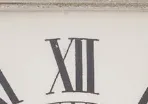
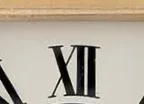
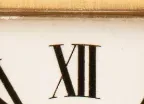
- hidden signature in the VII
Platinum for the Italian market, 2002
A platinum series of 30 for the Italian market has dark green numerals on the dial with a matching dark green crocodile strap. It is dated to 2002 by one account and described elsewhere as limited to thirty watches. Sellers give it as reference 1734D, with the hand-wound 430 MC.
Signature and marks. Dark green numerals.
- dark green numerals
- matching green crocodile strap
- platinum case
References: 1734D
Complications: date, chronograph, tourbillon
Unlike the Cintrée, which stayed time-only, the Américaine carried complications. The literature names a chronograph with pointer date as reference 1730 and a flying tourbillon as 3200; the tourbillon belongs to the Fine Watchmaking Collection and is dated to 2008 by one account and to 2009 by others. Date versions run from the first quartz reference, 811905, onwards and include the medium automatic; one account says that among the 1990s watches only the large size had a date.
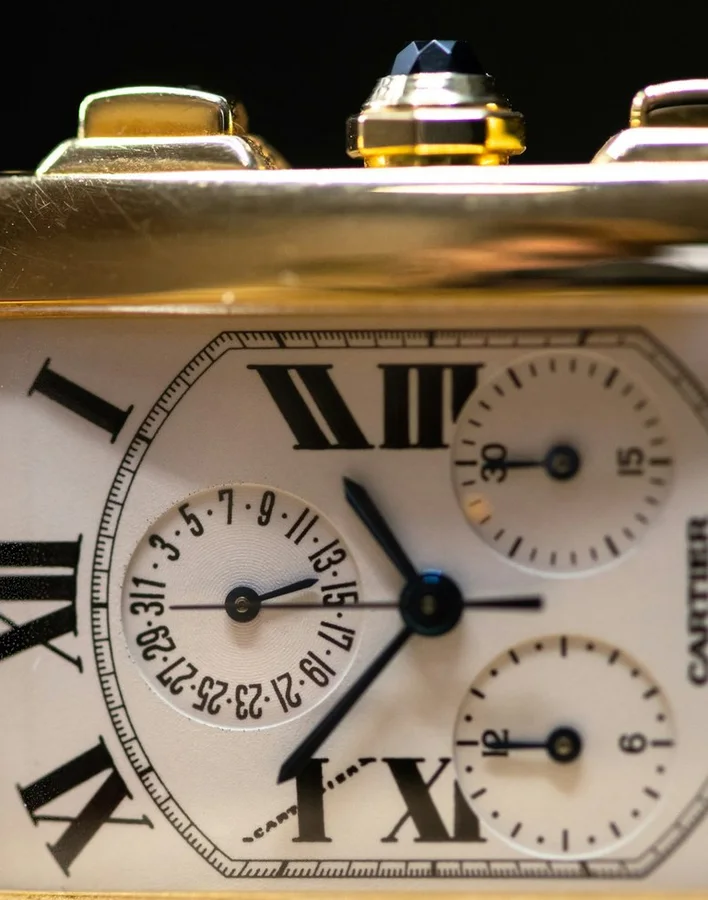

- flying tourbillon aperture
Steel centenary generation, 2017
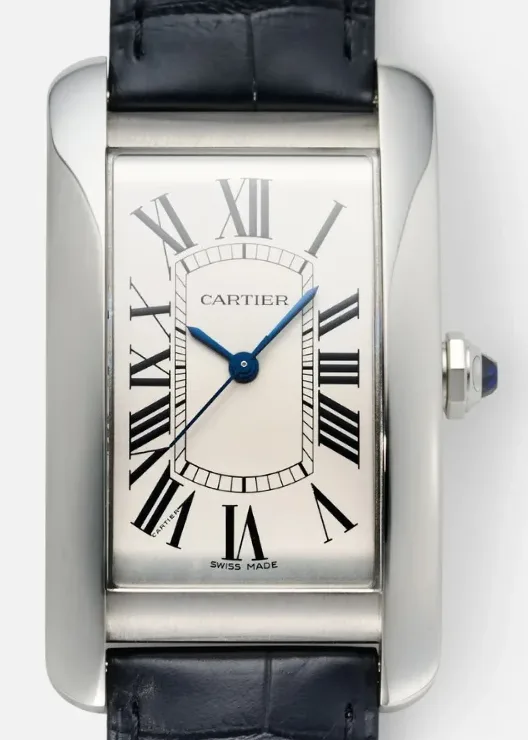
Issued for the hundredth year of the Tank, this was the first Américaine in steel. There are three sizes: small 34.8 x 19 mm with quartz (WSTA0016), medium 41.6 x 22.6 mm, 9.5 mm thick (WSTA0017), and large 45.1 x 26.6 mm (WSTA0018), the last two automatic. Sides are brushed and the rails polished. The dial has a uniform sunray finish without guilloché, the medium and large have a centre seconds hand, and the crown stone is given as a synthetic spinel by one review and as a sapphire by others. Water resistance is 3 bar. The strap is blue alligator without holes, closed with a steel folding buckle in the shape of the Cartier logo.
Signature and marks. Cartier hidden in the VII; folding buckle shaped as the Cartier logo.
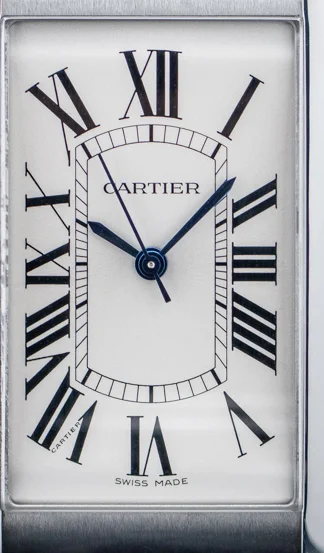

- uniform sunray silvered dial
- blue holeless alligator strap
- blue stone in the crown
Renewed range, 2023
The case was refined to look flatter and more curved, with a polished chamfer along the underside, and the strap fits better between the lugs. Three sizes are given: mini 28.0 x 15.2 mm, 6.5 mm thick; small 35.4 x 19.4 mm, 6.8 mm thick, both quartz; and large 44.4 x 24.4 mm, 8.6 mm thick, with the automatic manufacture calibre 1899 MC and only hour and minute hands. Metals are steel, rose gold and white gold, with diamond-set mini and small versions, and a large yellow gold watch is also described. The mini is dated to 2023 by one page and to 2024 by another.
Signature and marks. Cartier hidden in the VII; steel versions have a faceted synthetic blue spinel on the crown and gold versions a sapphire.
- mini, small or large sizes
- 1899 MC in the large model
- chamfer along the case underside
References: WSTA0081, WSTA0082, WSTA0083, WGTA0132, WGTA0133, WGTA0134, WJTA0041, WJTA0042, WJTA0043, WJTA0044, WJTA0045
European limited edition, platinum
A platinum Américaine limited to 120 pieces and sold only in Europe has the 44.4 x 24.4 x 8.6 mm large case, an octagonal crown set with a faceted ruby, and the automatic 1899 MC (28,800 vph, 23 jewels, 40 hours). The literature places it after a 2024 platinum Américaine with a salmon dial. The dial is blue PVD in several shades and textures from dark navy to icy grey, with only two Roman numerals in thick silver paint, matched by highly polished sword hands rather than blued ones.
Signature and marks. Cartier name and Swiss made on the dial; Limited Edition 120 pieces inscribed on the case back.
- blue dial in several textures
- only two Roman numerals
- ruby crown
- Limited Edition 120 pieces on the case back
References: WGTA0367
Chronology
Specification
| Case | Long curved rectangular case with brancards running into the lugs; front curved, case back flat or nearly flat with curved sides; sizes by name (mini, small, medium, large) and by millimetres, from about 28 x 15 mm to about 45 x 27 mm in the literature; sellers also list an extra-large size |
| Metals | Gold (yellow, pink, white) and platinum through the 1990s and 2000s; stainless steel from 2017 (one account says 1996) |
| Crystal | Curved sapphire |
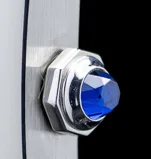
| Crown | Octagonal, set with a cabochon or faceted stone: sapphire, or synthetic spinel on steel; a ruby on the platinum European edition |
| Dial | Roman numerals with the Cartier signature hidden in the VII (in the X on the small sizes, as sellers describe them), curved railway-track minute ring, blued steel sword hands |
| Movement | Quartz, hand-wound (Piaget-based 9P2, later 430MC) and automatic (077, ETA 2671, 1899 MC), depending on version |
| Strap and bracelet | Alligator strap with pin or folding buckle; metal bracelet an option from 1995 |
| Water resistance | 30 metres (3 bar) on the versions the literature gives |
Dial 11 described
Standard dials have Roman numerals, a railway-track minute ring curved at top and bottom, and the Cartier signature hidden in the VII, or in the X on the small sizes as sellers describe them; limited series depart from this, with mixed Roman and Arabic numerals or only two numerals. Early hand-wound watches are silvered with a shallow guilloché; the 2017 and 2023 generations are plain sunray or satin. Numerals and tracks are slightly stretched to echo the long case.
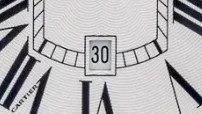
Small seconds, date at 3 (811905)
The first-generation quartz dial carries small seconds and a date window at 3. It is the layout of reference 811905.
- sub-dial for seconds
- date window at 3
Pointer date and moonphase (819908)
The other first-generation quartz dial combines a pointer date with a moonphase. It is reference 819908; sellers also write 819907 for a moonphase watch.
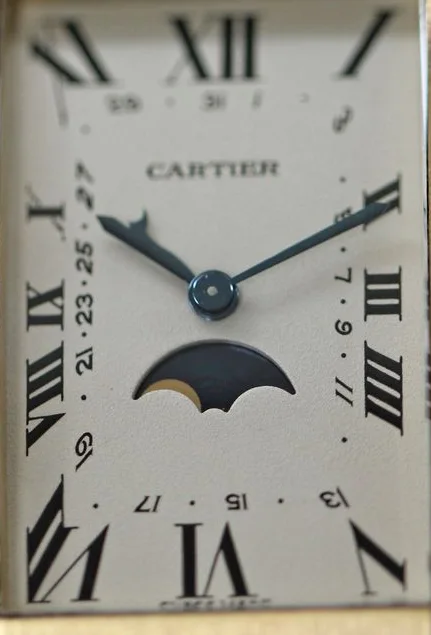

- pointer date hand
Billowing wave guilloché, hand-wound
The silvered dial of the hand-wound watch has a shallow billowing wave guilloché with thick transfer-printed numerals whose glossy ink lets the pattern show through. There is no seconds hand and no sub-register, and the serifs of the numerals follow the curve of the track.
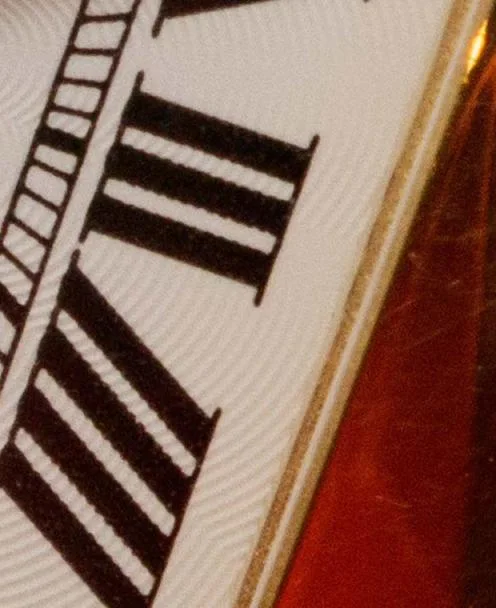

- no seconds hand
Date at 6 with centre seconds (1725)
The medium automatic dial is silvered or cream with the date at 6 and a centre seconds hand.
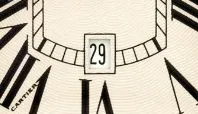
- date at 6
- centre seconds
India edition
A rosette guilloché dial with mixed Roman and Arabic numerals, the 50-minute figure in gold, a Hindi inscription and the years 1947-1997.
- Hindi lettering
- 1947-1997
- gold 50
Hong Kong salmon dial
A salmon dial with Arabic numerals at 9 and 7 on the white gold watch made in 97 pieces.
- salmon colour
- Arabic 9 and 7
Paris below Cartier
The Collection Privée watch is told from the earlier hand-wound watch only by the word Paris beneath the Cartier signature. The programme ran from 1998 to 2008; the literature does not say when the Américaine was part of it.
- Paris under Cartier
Dark green numerals, Italian market
Platinum, 30 pieces, with dark green numerals and a matching strap.
- dark green numerals
Uniform sunray, no guilloché
The 2017 steel dials have a single sunray finish on a silvery ground, with no guilloché centre or contrasting edge, black radiating numerals and, on medium and large, three hands.
- sunray without pattern
Satin or sunray, 2023
The mini has a silvered sunray dial; the small and large have a satin silver dial, on the large a subtle vertically brushed satin, with hours and minutes only.
- satin finish
- vertical brushing
Art Deco blue dial, European edition
A blue PVD dial of mixed shades and textures with only two Roman numerals in silver paint, on the 120-piece platinum edition.
- two numerals only
- blue shades
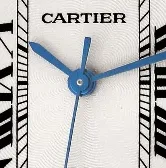
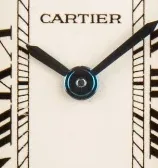
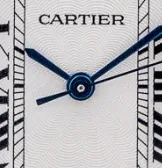
Hands 2 described
Hands are sword-shaped throughout and blued steel on the standard watches; the European edition has highly polished hands.
Two hands
The hand-wound watches and the 2023 large automatic carry hours and minutes only, with no seconds hand.
- no seconds hand
Centre seconds hand
The medium automatic 1725 and the 2017 medium and large steel automatics add a centre seconds hand, which signals the self-winding movement.
- third hand
Subregisters 1 described
The hand-wound watches have none; the literature names a sub-dial only on the first-generation small-seconds quartz watch.
Small seconds at the first generation
Reference 811905 has small seconds.
- small sub-dial
Case and sizes 5 described
The case copies the Cintrée in outline, with curved front and brancards running into the lugs, but is wider and thicker, and its back is flat or nearly flat with curved sides rather than crescent-shaped. Sizes run from the 28 mm mini to the 45 mm large steel; Cartier's size names are mini, small, medium and large, and sellers add extra large and jumbo. One account calls the case back curved, against the others, which describe it as flat or nearly flat.
First case, 42 mm
About 42 mm lug to lug, with elongated lugs, wide brancards and eight screws in two parallel lines along the flanks.
- two lines of screws on the back
Large, 44 mm
About 44 mm lug to lug and 26 or 27 mm across, 8 mm thick at the crown and 7 mm at the 12 o'clock edge. Flanks are brushed, brancards polished.
- 44 mm length
Medium gold
About 22.5 mm wide and 41.5 mm long; a medium quartz yellow gold sibling, reference 1720, is described at about 23 x 41 mm. A smaller gold quartz watch, 1710, is about 35 x 19 mm.
- 22 to 23 mm width
Steel, three sizes
Small 34.8 x 19 mm, medium 41.6 x 22.6 x 9.5 mm and large 45.1 x 26.6 mm. The caseback is flat with curved sides rising to the case, brushed sides and polished rails.
- brushed sides, polished rails
2023 refinement
Mini 28.0 x 15.2 x 6.5 mm, small 35.4 x 19.4 x 6.8 mm and large 44.4 x 24.4 x 8.6 mm. A polished chamfer runs along the underside and the strap sits closer between the lugs.
- chamfered underside
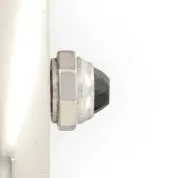
Crown 3 described
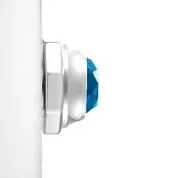
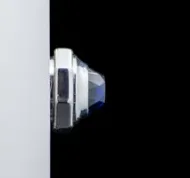
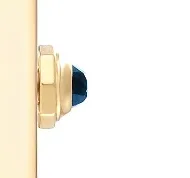
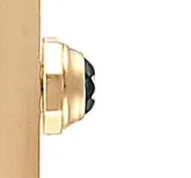
The crown is octagonal and polished, set with a stone that depends on metal and date.
Sapphire cabochon, all metals
The hand-wound watch has a genuine sapphire cabochon in every case metal.
- blue sapphire
Synthetic spinel on steel
The 2023 steel watches carry a faceted synthetic blue spinel and the 2023 gold ones a sapphire. For the 2017 steel watch one review gives a synthetic spinel and others a sapphire.
- faceted synthetic stone
Ruby on platinum
A faceted ruby on the platinum European edition, said to be standard on platinum Tanks; the hand-wound platinum 1734 is described with a sapphire.
- red stone
Date 2 described
Date is only on some versions.
Window at 3
Reference 811905 has a date window at 3.
- date at 3
Date at 6
The medium automatic carries its date at 6.
- date at 6
Movement 7 described
Quartz comes first, then hand-wound Piaget-based calibres, then automatics; quartz continues in the smaller sizes, including the 2017 small and the 2023 mini and small. Metal does not tell the movement.
Quartz
Used from the first references and in the 1990s medium, where calibre 690 with 8 jewels is given, the 2017 small and the 2023 mini and small.
- no rotor, battery
Calibre 9P2
Hand-wound, based on the 2 mm Piaget 9P of 1957; about 36 hours, 19,800 vph, Côtes de Genève, brushed wheels, engine-turned plate and a gold escapement.
- Côtes de Genève
Calibre 430MC
Succeeded the 9P2 and also sits in the Santos-Dumont; one account gives it as the 1993 large model's movement.
Calibre 077
Automatic with 25 jewels in the medium watch 1725; the same account gives calibre 2671 for the India edition.
Flying tourbillon (3200)
Reference 3200, of the Fine Watchmaking Collection, dated to 2009 by most accounts and to 2008 by one; see Where accounts differ.
ETA 2671 on the 2017 watches
Said, unconfirmed by Cartier, to power the medium and large steel automatics: 17.2 mm, 25 jewels, 38 hours.
Calibre 1899 MC
Automatic manufacture calibre, first used in 2019, for the large 2023 model and the European edition; 28,800 vph. Power reserve is given as 36 or 40 hours.
Bracelet and strap 2 described
Alligator straps are standard; clasps and bracelets vary with date.
Metal bracelet option
A metal bracelet is offered from 1995; a matching gold bracelet is also seen on the medium automatic.
- gold bracelet
Holeless strap with under-tuck clasp
The India edition has a black strap with no holes and an under-tuck deployant clasp of a 1909 design; the 2017 steel has a blue holeless alligator with a folding buckle and the 2023 large an interchangeable folding clasp, while the mini and small take a pin buckle.
- no strap holes
Box and papers 1 described
Papers matter mainly for the numbered series.
Numbered certificate
An India edition example carries a certificate dated July 1997 numbered 36/50 and a guarantee dated December 2002.
- numbered certificate
Reference numbers
A four-digit number is stamped on the case and covers a case; a code beginning W, or the newer letter codes, is a catalogue number for one version of it (metal, dial, strap). Many older watches carry neither. The last column is the listings on record under the number, as its own page counts them.
| Number | What it is | Listings |
|---|---|---|
| 811905 | First-generation quartz, small seconds, date at 3, yellow or white gold, from 1989; the literature gives this directly. | 10 |
| 819908 | First-generation quartz with pointer date and moonphase, from 1989; the literature gives this directly. | 4 |
| 1734 | Hand-wound large in platinum, made before and within the Collection Privée programme; the literature gives this directly. Sellers also write 1734A, 1734B and 1734D. | 13 |
| 1735 | Hand-wound large in yellow gold; the literature gives this directly, and sellers write 1735B and 1735/1. | 18 |
| 1736 | Hand-wound large in white gold; the literature gives this directly. | 5 |
| 1725 | Medium automatic, centre seconds, date at 6, 18k yellow gold, calibre 077, dated about 1995 to at least 2012; the literature also gives this for the India edition. | 28 |
| 1720 | Medium quartz in yellow gold, about 23 x 41 mm; dates not established. | 8 |
| 1710 | Gold quartz, about 35 x 19 mm. | 38 |
| 1730 | Chronograph with pointer date; sellers describe it as large, curved, 18k gold. | 31 |
| 3200 | Flying tourbillon in the Fine Watchmaking Collection. | 1 |
| 2312 | As sellers describe it, quartz calendar chronograph in 18k white gold; one is sold in a 45 mm case. Catalogue codes seen beside it in listings: W2603356 | 31 |
| 1740 | As sellers describe it, automatic with date in 18k yellow gold. | 51 |
| 2489 | 18k white gold, 19 mm, quartz; catalogue code WB706231 is seen beside it. Catalogue codes seen beside it in listings: WB706231 | 50 |
| 1741 | As sellers describe it, 18k white gold; codes W26032L1 and W2603256 are seen beside it. Catalogue codes seen beside it in listings: W26032L1, W2603256 | 40 |
| W2604151 | India edition, 1997, automatic, as the literature gives it. | |
| WSTA0016 | 2017 small steel, 34.8 x 19 mm, quartz. | 9 |
| WSTA0017 | 2017 medium steel, 41.6 x 22.6 mm, automatic. | 4 |
| WSTA0018 | 2017 large steel, 45.1 x 26.6 mm, automatic. | 16 |
| WSTA0081 | 2023 mini in steel, quartz, 28.0 x 15.2 mm. | 2 |
| WSTA0082 | 2023 small in steel, quartz, 35.4 x 19.4 mm. | |
| WSTA0083 | 2023 large in steel, automatic 1899 MC, 44.4 x 24.4 mm. | 10 |
| WGTA0132 | 2023 mini in rose gold on a strap, quartz. | |
| WGTA0133 | 2023 small in rose gold on a strap, quartz. | |
| WGTA0134 | 2023 large in rose gold, automatic 1899 MC. | |
| WJTA0041 | 2023 mini in rose gold, diamond-set, on a strap. | |
| WJTA0042 | 2023 small in rose gold, diamond-set, on a strap. | |
| WJTA0043 | 2023 mini in rose gold, diamond-set, on a gold bracelet. | 1 |
| WJTA0044 | 2023 small in rose gold, diamond-set, on a gold bracelet. | 1 |
| WJTA0045 | 2023 mini in white gold, diamond-set, on a diamond bracelet. | |
| WGTA0367 | Platinum European limited edition of 120. | 1 |
| W26009C9 | Yellow gold, as the literature shows, a shop example. | 1 |
| WB7026L1 | White gold with diamonds, as the literature shows. | 1 |
| W2603156 | Yellow gold automatic, which sellers mostly describe as a large men's watch; the literature shows one as a unisex watch of 1999. | 34 |
| W2609856 | As sellers describe it, XL rose gold automatic. | 9 |
| W2609756 | As sellers describe it, extra large yellow gold with centre seconds and date. | 5 |
Originality
- Crowns, crystals, hands and bracelets are commonly replaced on the medium automatic, and original parts with a factory bracelet and papers are what distinguish a good example.
- A reference does not fix the calibre; the movement, signatures and rotor should be checked by a watchmaker.
- Hand-wound watches of the Collection Privée and the earlier series are the same except for Paris on the dial.
Names
- Jumbo. Sellers use it for the large size, hand-wound (1734, 1735) and automatic (1740, 1741, 2505) alike.
- XL. Sellers use it for the largest automatic and chronograph watches, in gold and platinum.
Where accounts differ
Points on which the published literature and the library's own records do not agree, or on which the literature contradicts itself.
- Year of launch. The launch is put in 1989 almost everywhere; one account gives 1988, and another says the Américaine was first released in 2017, which is the steel model only.
- First white gold. One account says the first watches were in yellow and white gold; two others place white gold in 1995.
- First steel. One account says steel was added in 1996; another and others say steel came first in 2017, the Tank's centenary.
- Case back. One account calls the case back curved, and another speaks of the curved case back of the European edition; the other accounts describe it as flat or almost flat with curved sides.
- 2017 medium calibre. Two accounts give ETA 2671 (38 hours); another gives ETA 076, 4 Hz, 38 hours.
- 1899 MC power reserve. One account gives 36 hours; another gives 40 hours and 23 jewels.
- Year of the mini. One account dates the mini to 2023; another says 2024.
- House association. One account ties the Américaine to the New York boutique, with the Française to Paris and the Anglaise to London; no other account does, and the only house word on a dial in the literature is Paris on the Collection Privée watch.
- Earliest watches. The literature starts the line in 1988 or 1989. A few listings in the library's records state years in the 1970s and 1980s, one of them signed Cartier Paris, with two case numbers and dated circa 1975. Sellers' years are loose, but these are earlier than the stated start.
- Crown stone on the 2017 steel watch. One account says the 2017 steel watch has a synthetic spinel, not a sapphire; two others call it a sapphire cabochon.
- Seconds hand on the 2017 medium. One account describes three hands, with centre seconds, on the 2017 medium WSTA0017; another lists its functions as hours and minutes only.
- Year of the flying tourbillon. One account places the flying tourbillon Américaine in the Fine Watchmaking Collection of 2008; two others date the first Tank with the flying tourbillon calibre 9452 MC to 2009, and an auction listing in the library's records catalogues reference 3200 circa 2009.
- Cut of the crown stone on the 2017 steel watch. One account calls the stone a synthetic spinel cabochon, and two others a sapphire cabochon. Close photographs of the 2017 steel references in the library's records, from several dealers, show a faceted blue stone.
- Year of the Italian platinum series. One account dates the platinum run of 30 for the Italian market to 2002. Phillips catalogues a numbered example as circa 2000, and a dealer lists another as circa 1995; sellers' years are often estimates.
- Launch year of the Tank Française. Most accounts date the launch of the Tank Française to 1996, with a showing in Geneva reported for 1995; a few give 1995 as the year of release.
In the records
Counted from 1,354 listings at dealers and auction houses whose title, or whose reference, places them on the line; 595 state a year. These are what sellers state, not measurements, and a count of listings is not a count of watches made.
Case metal
| Metal | Listings | Share |
|---|---|---|
| Gold, any colour | 874 | 92% |
| White | 304 | 32% |
| Yellow | 248 | 26% |
| Pink | 139 | 15% |
| Colour not stated | 183 | 19% |
| Steel | 41 | 4% |
| Platinum | 28 | 3% |
| Silver | 3 | under 1% |
As sellers state it. Shares are of the 946 listings that name a metal. A listing that says "gold" or "18K gold" names no colour: it is counted under "colour not stated", not as yellow gold. Carat, where a listing of gold gives one: 18k 419.
Case size
| Size | Listings | Share |
|---|---|---|
| 35 mm | 119 | 16% |
| 19 mm | 103 | 14% |
| 45.1 mm | 67 | 9% |
| 26 mm | 43 | 6% |
| 27 mm | 40 | 5% |
| 45 mm | 27 | 4% |
| 22 mm | 26 | 4% |
| 26.5 mm | 25 | 3% |
| Other sizes | 282 | 39% |
As sellers state it. Shares are of the 732 listings that give a size. On a watch that is not round some sellers give the width and some the length, so one watch can stand under two sizes. 2 more give a figure outside 12 to 56 mm, which is a strap, a box or a slip, and are left out.
Movement
| Kind | Listings | Share |
|---|---|---|
| Quartz | 320 | 50% |
| Automatic | 266 | 41% |
| Hand-wound | 51 | 8% |
| Mechanical, winding not stated | 7 | 1% |
Shares are of the 644 listings whose description says how the watch is driven.
Listings by decade the seller gives
| Decade | Listings |
|---|---|
| 1980s | 2 |
| 1990s | 129 |
| 2000s | 322 |
| 2010s | 97 |
| 2020s | 37 |
8 more give a year outside the years the line was made (from 1989): a later watch sold under the name, or a slip. They are left out.