El Primero A3818 "Cover Girl"
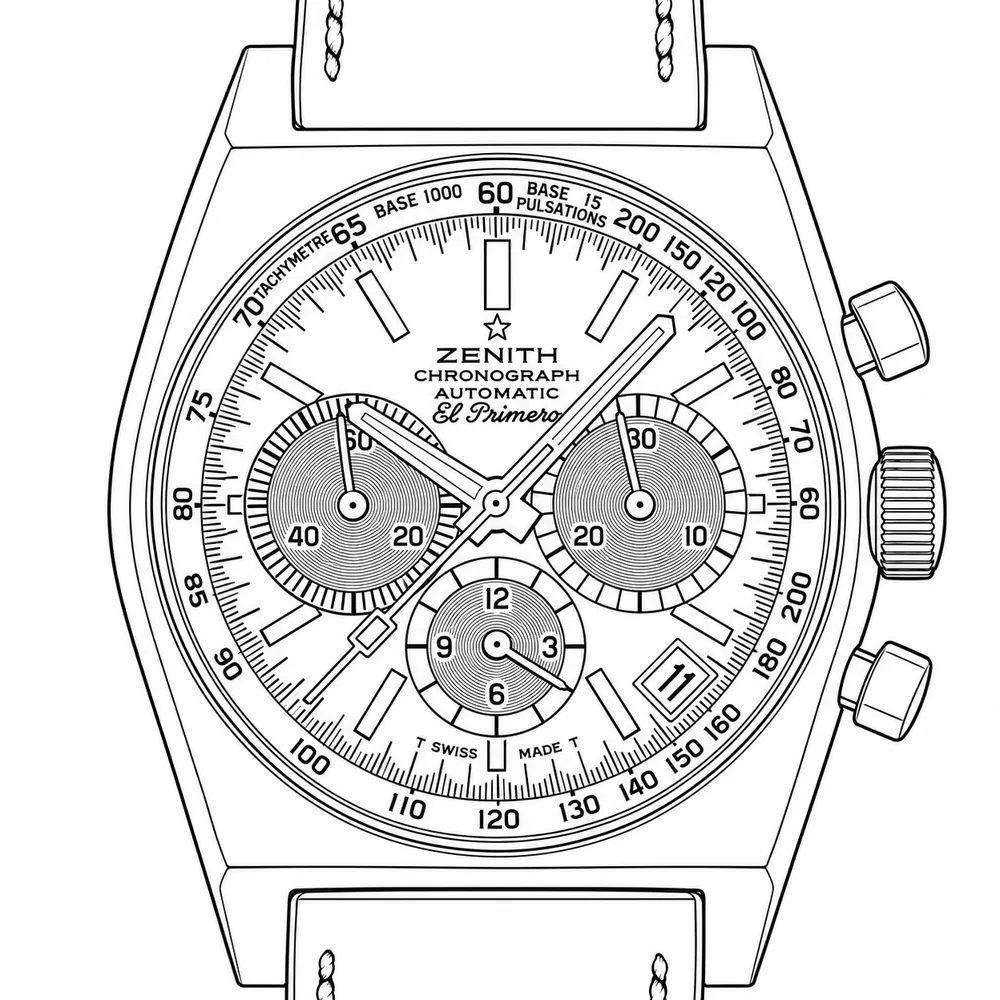
The A3818 is a blue-dial El Primero automatic chronograph introduced in 1971, in a steel tonneau case on an integrated ladder bracelet. About a thousand are thought to have been made, and some say fewer. Its blue registers set it apart from the tri-colour and panda El Primeros, while its pyramid-shaped seconds track and combined pulsation and tachymeter scale are shared with the tri-colour A3817 of the same year. The Cover Girl name came about four decades later, from its appearance on the cover of a 2009 book on the brand. Three limited reissues followed in 2020, 2022 and 2025.
- Made
- from 1971dates approximate
- Seen in the library
- 1971–1972by years sellers state
- Case
- 37 mm · steelas sellers state
- Movement
- Calibre 3019automatic
- On record
- 10 listings43 photographs · 6 holders
Components
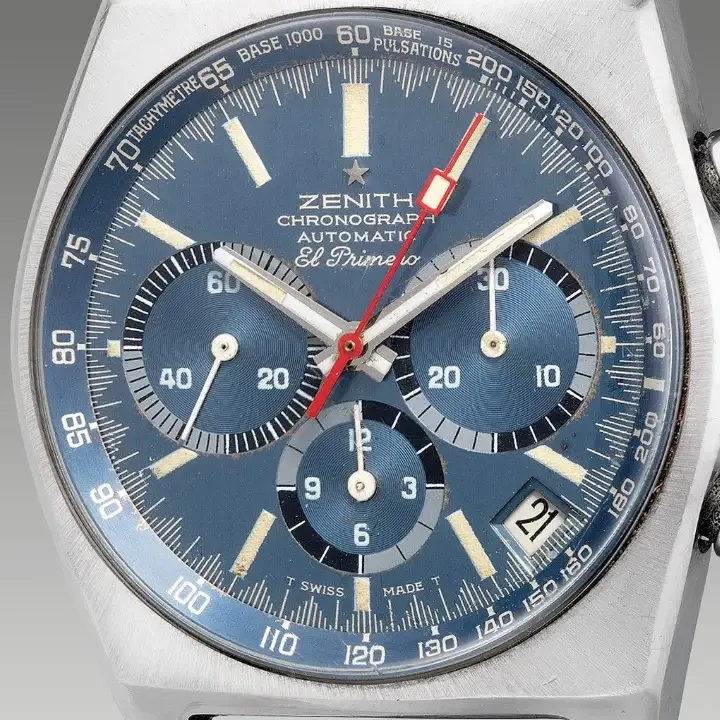
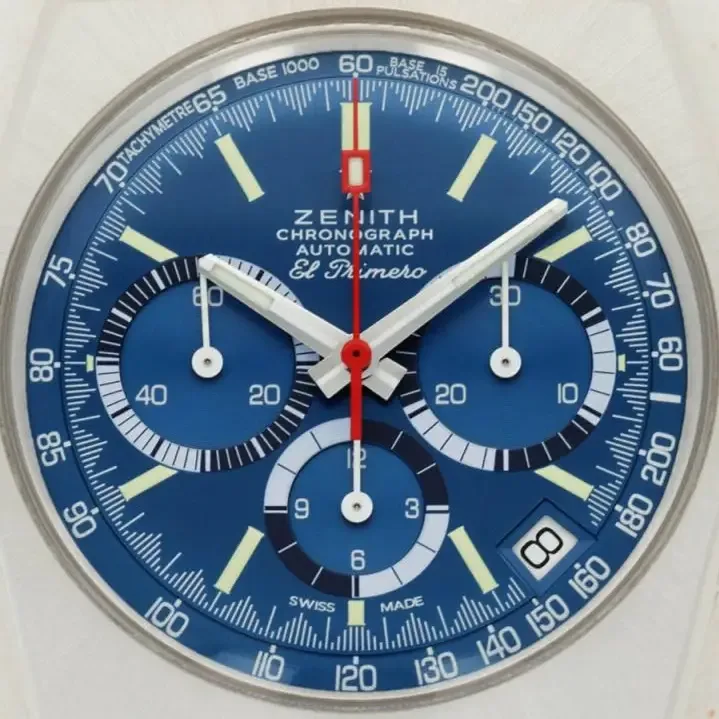
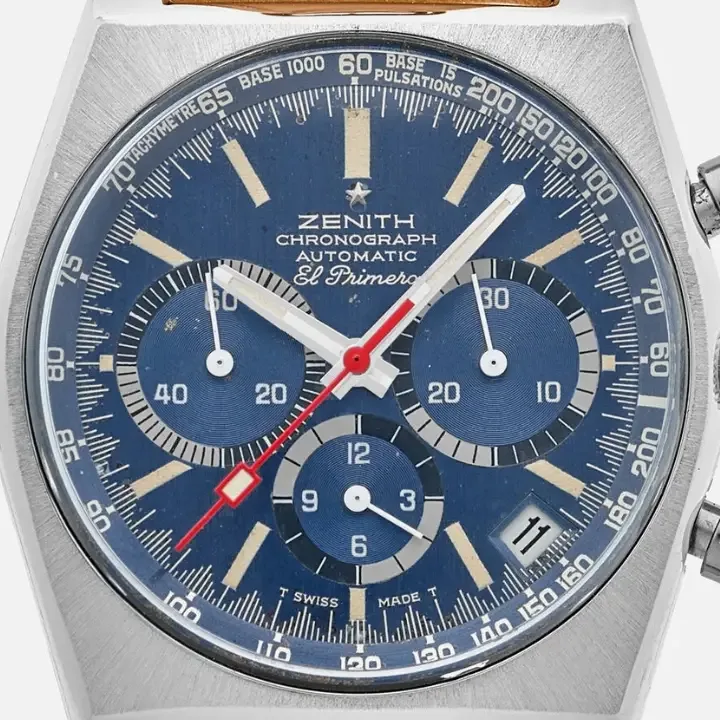
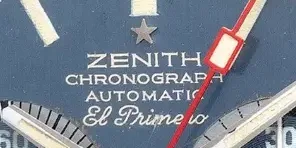
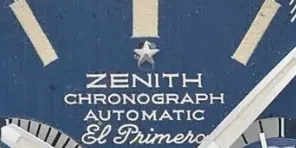
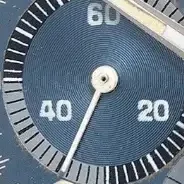
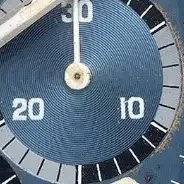
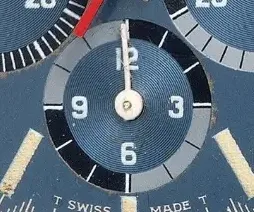
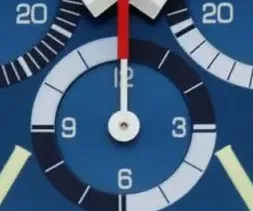
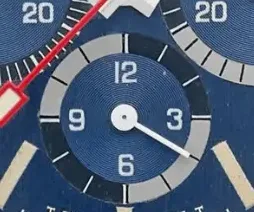
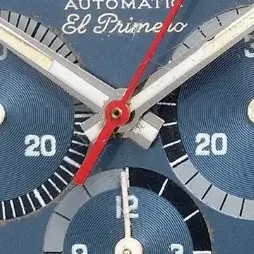
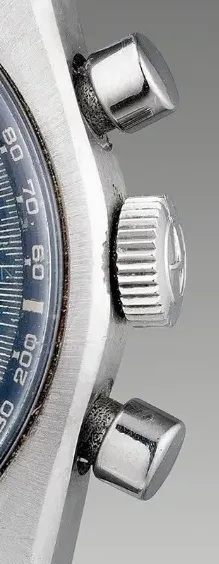
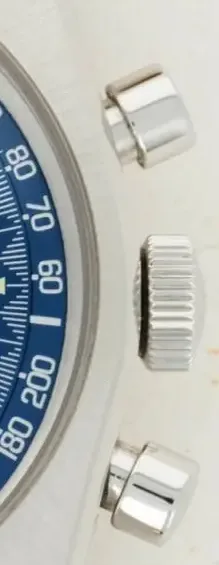
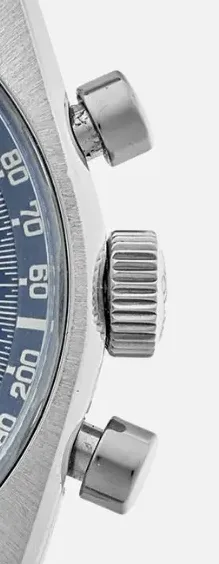
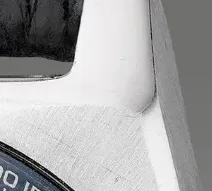
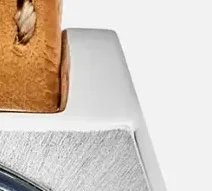
3 watches, oldest first, each straightened and cut the same way so that one row shows one component across them all. Chosen from 43 photographs on file for sharpness and for a face typical of the reference. A year marked c. is one its holder gives only roughly. Each picture is a detail cut from a listing photograph. Select the small mark in its corner for its year, its holder, a link to the listing it came from, and a way to report it.









Chronology
The literature gives 1971 as the introduction and about a thousand pieces; no end date is given.
Every dated variant: what is written, and what the records show
For the reference the marks are every dated watch; for a variant, the watches a seller names as that variant, so a variant sellers do not name has none.
Specification
| Case | 37 mm steel tonneau case, 47 mm lug to lug, faceted, with pump-style pushers |
| Dial | Blue, vertically brushed, with pyramid seconds track, pulsation and tachymeter scale, date at 4:30 |
| Movement | El Primero automatic chronograph, column wheel, 36,000 vibrations per hour (3019 in listings) |
| Bracelet | Integrated Gay Frères ladder bracelet, originally an expensive extra |
| Production | About 1,000 pieces |
Reference 4 described
One vintage watch and three limited reissues made with a watch magazine. The reissues are listed here only as short reference variants.
Original A3818
The 1971 watch, with a blue dial, steel tonneau case and integrated ladder bracelet. Production is given as about a thousand, with another estimate putting it below a thousand. Polished cases and peeling dial paint are common, and an example on its original bracelet is uncommon.

- ladder bracelet integrated with the case
- shark tooth seconds track
10 listings on record under the name.
Cover Girl Revival (steel, 2020)
A 100-piece steel reissue with the original 37 mm case and a satin-brushed blue dial. Every mark on the dial, the register hands and the printed text is luminous, a deliberate difference from the original, in a lume colour chosen to resemble aged tritium. It has a sapphire crystal and caseback and the El Primero 400, and weighs 110.6 g. The reference is 03.A3818.400/51.M3818.
- fully luminous dial
- sapphire back
Airweight Cover Girl (titanium, 2022)
A 250-piece grade 5 titanium version weighing 78.2 g (the weight is also given as 78.3 g). The case flanks are mirror polished and the first titanium ladder bracelet has polished centre links. The lume is pure white rather than aged in colour and the dial blue is slightly brighter. The reference is 95.A3818.400/51.M3818.
- polished centre links
- white lume
Cover Girl Carbon (2025)
A forged-carbon version with the case and dial in carbon and a caseback in black PVD-treated titanium with a sapphire window. Most accounts also make the pushers and crown of carbon; one puts them in PVD titanium like the caseback. It weighs 55 g on a strap and 59 or 60 g on a carbon bracelet. Three versions exist: 150 with baton indices on a strap, 50 with Eastern Arabic numerals made for the Middle East, and 10 with a carbon ladder bracelet. The dial is black, not blue.
- black carbon dial
- carbon bracelet on ten pieces
Dial 3 described
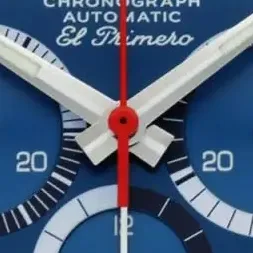
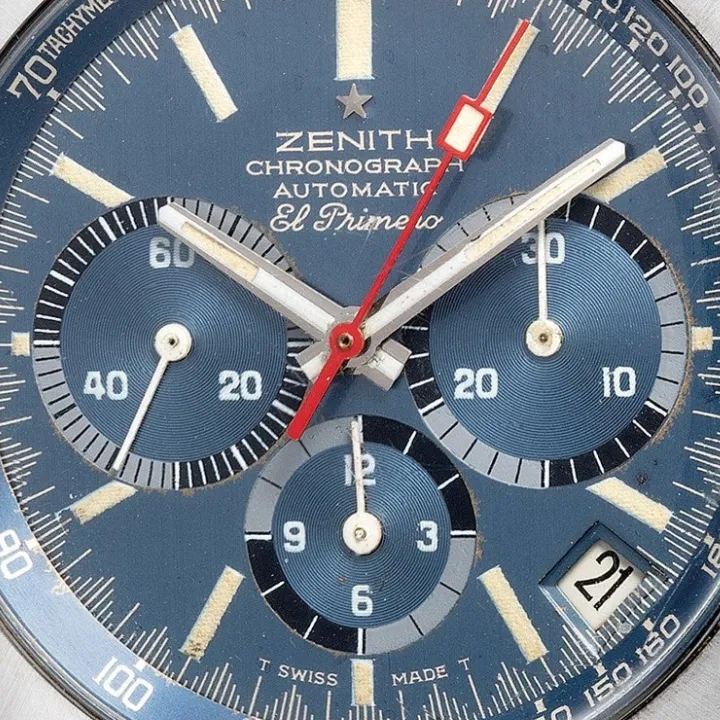
The original dial is blue, with the same blue in all three registers. It carries the outer scale and the minute track that make the reference recognisable.
Blue dial, original
Vertically brushed blue, sometimes called Superman Blue, with the registers in the same blue, unlike the contrasting registers of other El Primeros. Only the outer rings of the registers show alternating grey and black. The blue paint is metallic and is often seen peeling on surviving watches. Date at 4:30, black on white.
- registers in the same blue
- grey and black alternating register rings
- peeling metallic paint
Shark tooth seconds track
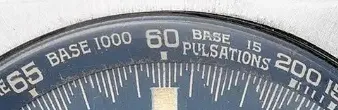
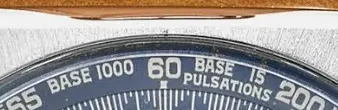
The seconds track is a stepped, pyramid-shaped ring of 300 thin white radial lines, which with the gaps between them give 600 divisions and tenth-second reading. Above it runs a combined scale: the first 15 seconds read as pulsations and the rest as a tachymeter.
- 300 fine white radial lines
- pulsation scale for the first 15 seconds
Eastern Arabic dial, 2025
On the 50 Middle East pieces of the carbon reissue, Eastern Arabic numerals replace Western ones at 12, in the register markings, on the chronograph scale and in the date window.
- Eastern Arabic numerals
Luminous material 2 described
The original had tritium; the reissues went further with modern lume on almost every dial mark.
Tritium, original
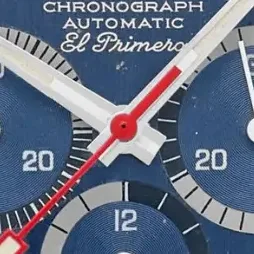
The original used tritium, and the lume colour of the 2020 reissue was chosen to echo its aged tone. The red chronograph hand carries a small luminous paddle.
- aged tritium
- luminous paddle on red hand
Luminous dial, reissues
In the 2020 steel reissue every index, scale mark, hand and register hand is lumed, in an aged colour. The titanium uses white lume, and the carbon version lumes every marker, even the logo text at 12, along with the hands.
- lume on tiny scale marks
- lume on register hands
Hands 1 described
The central chronograph seconds hand is bright red.
Red chronograph hand
A stoplight-red central seconds hand with a small luminous paddle; the reissues keep a bright red hand.
- red central seconds hand with paddle
Case 2 described
A faceted steel tonneau case of 37 mm. Which earlier reference it shares its case with is not agreed.
Tonneau case
The case is 37 mm across, 47 mm lug to lug, faceted, with pump-style pushers. It is stated to share the case of the A384 in some accounts and that of the A385 in others. Many surviving examples have been polished, which erases the sharp angular profile.
- sharp faceted edges
- polishing that rounds the facets
Reissue cases
The steel reissue is 37 mm with a sapphire caseback. The titanium version is 12.5 mm thick and the carbon versions the same, all 47 mm lug to lug and 50 m water resistant, with sapphire display backs.
Crystal 1 described
The reissues replace the original plexiglass with sapphire, keeping the dome.
Domed plexiglass
The original crystal is plexiglass and domed. Reissues have a domed sapphire with anti-reflective coating.
- domed crystal
Date 1 described
The date is at 4:30.
Date at 4:30
The date window sits at 4:30 in black on white, in the original and the reissues.
- date window at 4:30
Movement 2 described
The original uses the early high-beat El Primero; the reissues use its descendant, the calibre 400.
El Primero 3019 PHC
The original movement is an integrated automatic chronograph beating at 36,000 vibrations per hour, which times to a tenth of a second.
- tenth-second chronograph
El Primero 400
The reissue movement runs at 5 Hz with a 50-hour reserve and a column wheel, visible through the sapphire back. Its star-shaped open rotor is decorated; the carbon edition is described as having 278 parts and 31 jewels, but a French account gives 326 parts.
- skeletonised star rotor
Bracelet 1 described
The original was fitted with an integrated Gay Frères ladder bracelet.
Gay Frères ladder bracelet
The original bracelet was expensive when new, so an original one is now seen rarely. The reissues copy it in steel, titanium and, on ten carbon pieces, carbon, and also offer straps in beige or blue calf leather, blue suede or rubber, or carbon-print textile.
- ladder bracelet
- integrated with case
Originality
- The case is often polished, so check how much of the faceted profile remains.
- Metallic blue dial paint is commonly seen peeling.
- An original Gay Frères bracelet is uncommon because it was an expensive extra when new.
Names
- Cover Girl. It was shown on the cover of a 2009 book on Zenith history, chosen by its author for the blue colour; the name dates from about four decades after the watch was made.
Where accounts differ
Points on which the published literature and the library's own records do not agree, or on which the literature contradicts itself.
- Case family. Sources differ on which earlier reference's case the A3818 uses: some say the A384 and others the A385. The library's records offer no case numbers to settle it.
- Crown and pushers of the carbon edition. Two accounts make the crown and pushers of the carbon edition from carbon, with only the caseback in PVD-treated titanium. A third gives the crown, pushers and caseback all in black PVD titanium, though its own picture caption calls the pushers and crown carbon. The entry follows the first two.
In the records
Counted from 10 listings at 6 holders between 14 May 2016 and 3 March 2026. These are what sellers and auction houses state, not measurements.
The head of the page gives 1971–1972: the years that listings from two holders bear out.
Case metal
| Steel | 6 |
Dial colour
| Blue | 4 | |
| Red | 1 | |
| Pink | 1 |
Case size
| 37 mm | 5 |
Calibre named
| 3019 | 4 |
Bracelet or strap
| Metal bracelet, kind not stated | 3 | |
| Leather strap | 2 |
Each table counts the listings that state the thing, in the seller's own terms. A size, metal, colour or calibre that cannot belong to this reference is a seller's slip or a listing filed under the wrong number.