El Primero A385
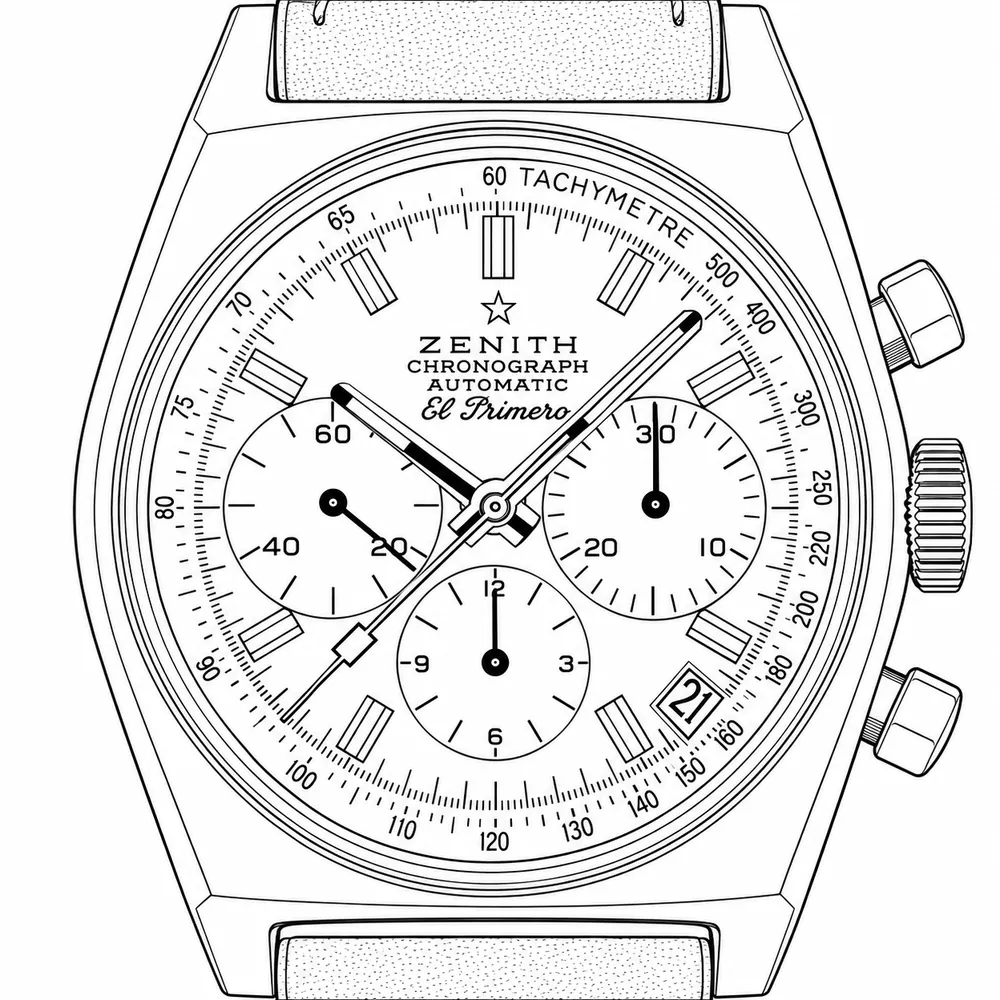
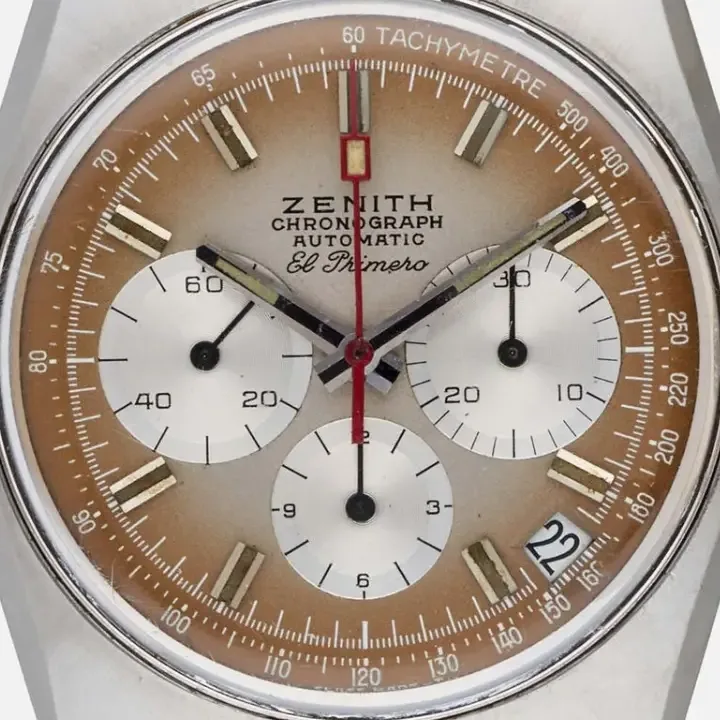
The A385 is one of three stainless steel chronographs with which Zenith launched its El Primero automatic chronograph calibre in 1969, alongside the A384 and A386. It shares the 37 mm cushion-shaped tonneau case of the A384 but is set apart by a brown smoked dial that darkens from a pale centre to near black at the rim, with white registers, a tachymeter ring, a red central seconds hand and a date window at 4:30. In 1970 an A385 was strapped to an airliner's landing gear for a Paris to New York flight as a durability test. A close reissue, the Chronomaster Revival A385, appeared in 2021 with a sapphire crystal and glazed caseback.
- Made
- from 1969dates approximate
- Seen in the library
- 1970–1971by years sellers state
- Case
- 37 mm · steelas sellers state
- Movement
- Calibre 3019automatic
- On record
- 12 listings42 photographs · 9 holders
Components
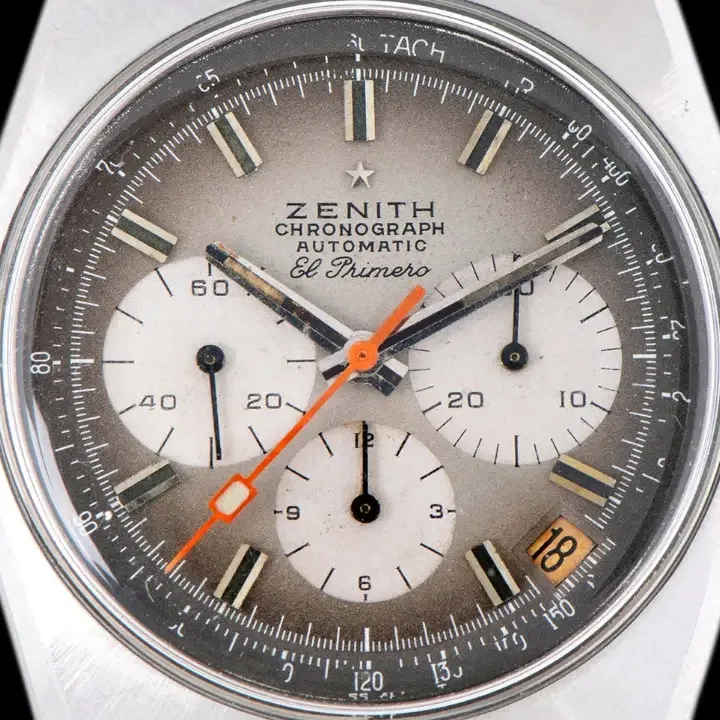
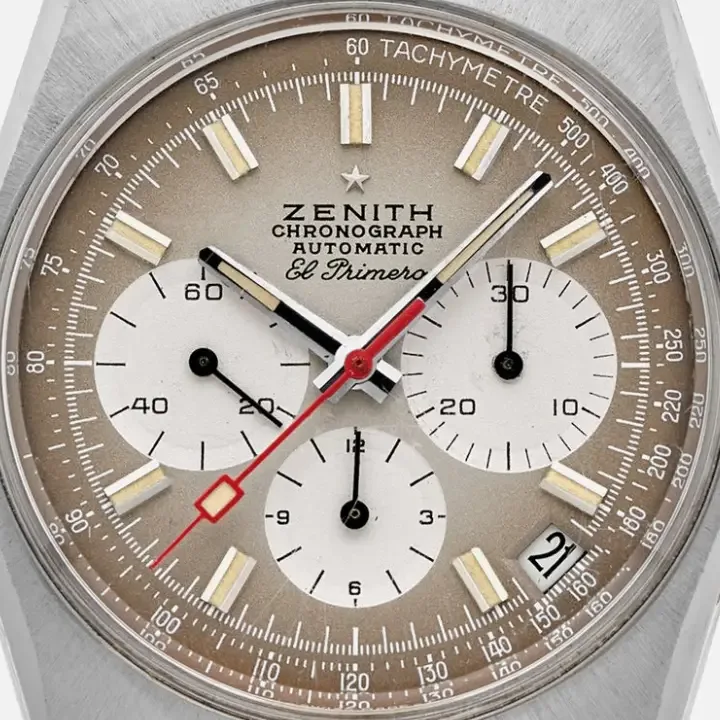
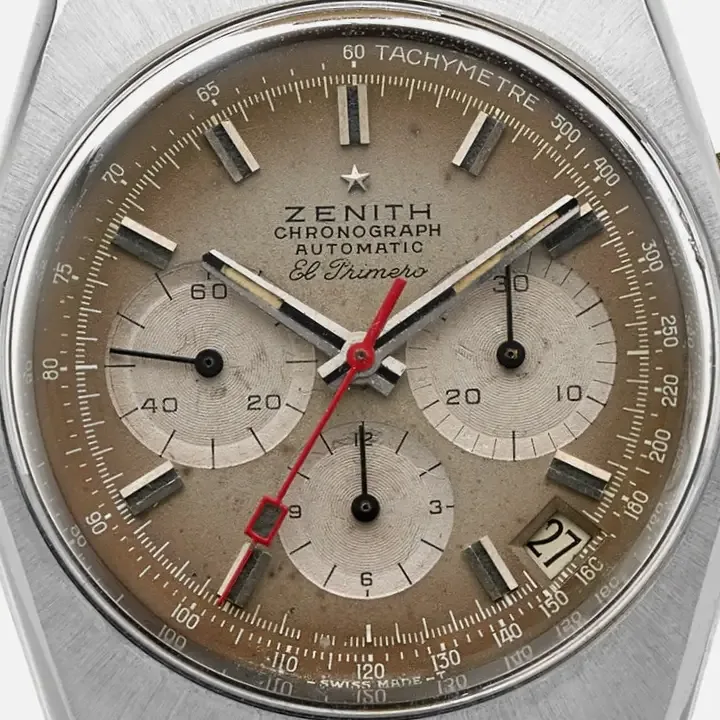
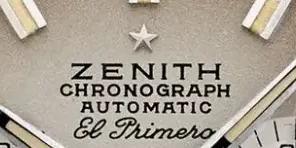
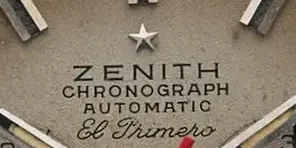
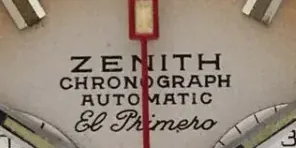
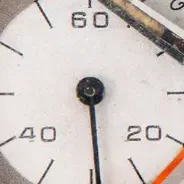
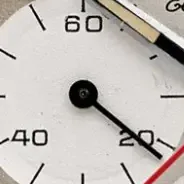
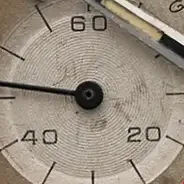
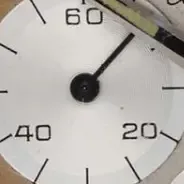
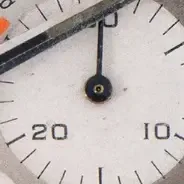
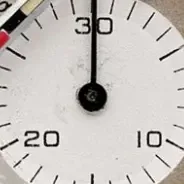
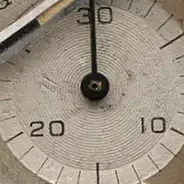
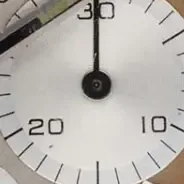
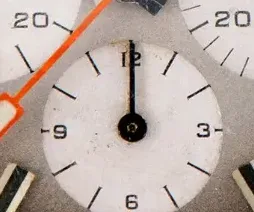
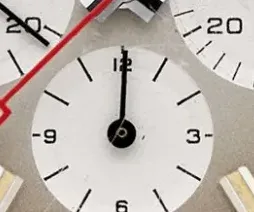
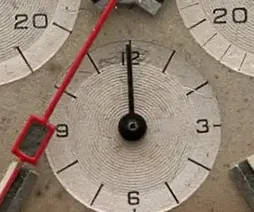
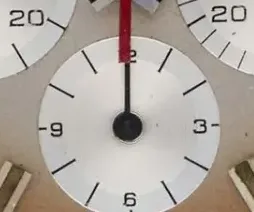
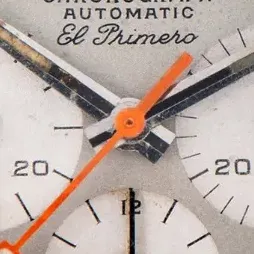
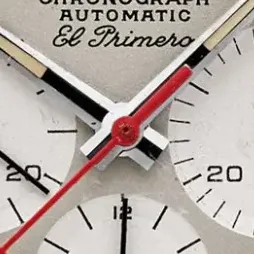
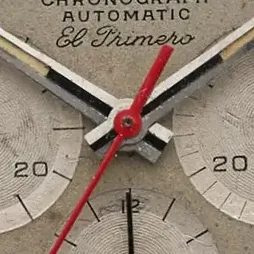
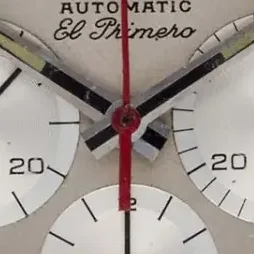
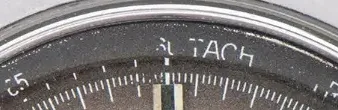
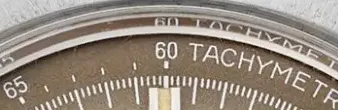
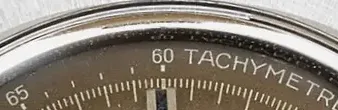
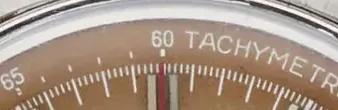
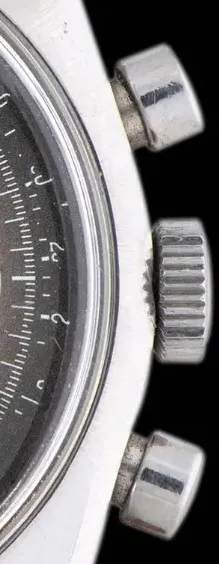
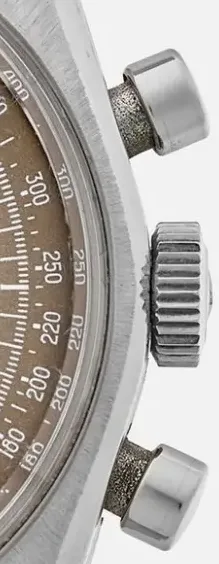
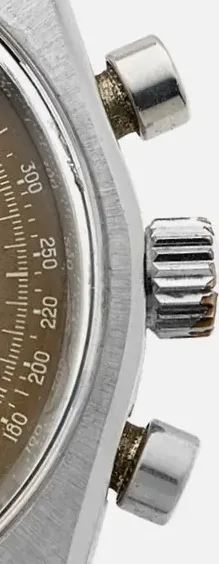
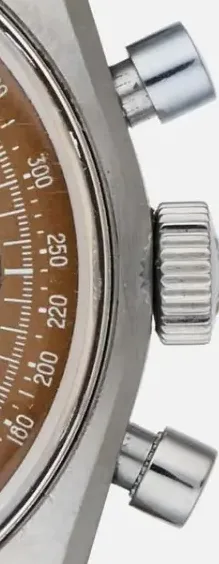
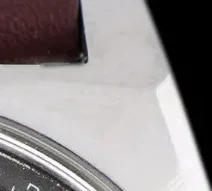
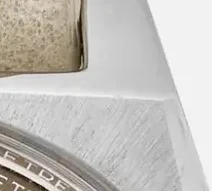
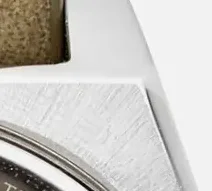
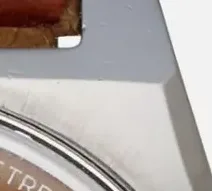
4 watches, oldest first, each straightened and cut the same way so that one row shows one component across them all. Chosen from 42 photographs on file for sharpness and for a face typical of the reference. A year marked c. is one its holder gives only roughly. Each picture is a detail cut from a listing photograph. Select the small mark in its corner for its year, its holder, a link to the listing it came from, and a way to report it.



Chronology
The launch year of 1969 is firm; the literature gives no end date.
Every dated variant: what is written, and what the records show
For the reference the marks are every dated watch; for a variant, the watches a seller names as that variant, so a variant sellers do not name has none.
Specification
| Case | 37 mm stainless steel tonneau (cushion-shaped) case, shared with the A384, with pump-style pushers and angled, polished lug surfaces |
| Dial | Brown smoked (dégradé) dial, pale in the centre and almost black at the edge, with white registers and a tachymeter scale |
| Crystal | Acrylic (Plexiglas) on the 1969 watch; domed sapphire on the 2021 Revival |
| Caseback | Solid steel on the 1969 watch; screwed sapphire display back on the Revival |
| Movement | El Primero automatic, column wheel, 36,000 vibrations per hour (5 Hz); calibre 3019 PHC in 1969, calibre 400 in the Revival (about 50 hours power reserve) |
| Functions | Hours, minutes, small seconds at 9, central chronograph seconds, 30-minute counter at 3, 12-hour counter at 6, date at 4:30 |
| Bracelet | Ladder-style steel bracelet with hollowed links (Gay Frères pattern); the Revival also comes on a light brown calf strap |
| Water resistance | 50 m on the Revival; no figure is given for the 1969 watch |
Reference 2 described
Within two years of the 1969 launch Zenith had been sold to an American owner; the A385 had to wait until 2021 for its Revival, after the A386 and the A384 (both 2019). The Revival has its own reference numbers.
Chronomaster Revival A385 references
The 2021 Revival carries 03.A384.400/385.C855 on the calf strap and 03.A384.400/385.M385 on the ladder bracelet. The A384 appears in the number because the Revival shares its case with that watch.
- reference ending C855 or M385
A385 (1969 original)
The original watch, launched in January 1969 with the A384 and A386 as one of the first three El Primero chronographs. It is a 37 mm stainless steel tonneau-cased chronograph with a brown smoked dial, a solid steel back and an acrylic crystal, and it uses calibre 3019 PHC. The literature gives no end year for it.
- brown smoked dial
- solid steel back
- tonneau case
Dial 2 described
The A385 is defined by its dial. A smoked finish shades from a light brown centre to a very dark rim, and the rest of the layout is a conventional three-register chronograph with a tachymeter ring. The 2021 Revival reproduces this closely.
Brown smoked dial (1969 original)
The original A385 dial is a brown dégradé that is pale beige-brown at the centre and almost black towards the edge, an effect that gives the flat dial an impression of depth. Against it sit white sub-dials, a tachymeter scale printed around the outside, faceted rhodium-plated hour markers and hands, and a red central chronograph seconds hand. The A384 beside it was a white panda dial and the A386 a tri-colour one, so the brown dial is what separates the A385 from the other two.
- brown gradient from pale centre to near-black rim
- white registers
- red central seconds hand
- tachymeter scale around the edge
- date window at 4:30
Chronomaster Revival dial (2021)
The Revival repeats the brown smoked finish, with the same strong vignette that blackens towards the edges and brightens at the centre. It keeps the white registers, the tachymeter frame, the faceted rhodium-plated markers and hands, the red central seconds hand and the period typefaces and logo. Under changing light the dial shows tones from beige and gold to dark mocha, and in dim light some khaki and grey-green.
- sapphire crystal over the dial
Luminous material 1 described
The literature describes the lume only on the Revival, where it is a deliberate nod to the aged look of the original.
Beige Super-LumiNova (Revival)
The hour markers and hands of the Revival are filled with beige Super-LumiNova, chosen to recall the patina of old tritium. The paint is non-radioactive. The lume on the hands looks noticeably darker than that on the markers, which is clear against the brown dial.
- cream lume on markers
- darker lume on hands
Hands 1 described
Hour and minute hands are faceted and rhodium-plated, and the chronograph seconds hand is red.
Faceted rhodium hands, red seconds
The hour and minute hands are faceted, polished and rhodium-plated, and the central chronograph seconds hand is bright red. On the Revival the red hand has no star-shaped counterweight, and that is described as true to the original.
- red central seconds hand without a star counterweight
- fine hand on the 12-hour counter
Subregisters 1 described
Three white registers sit in the 3, 6 and 9 arrangement of a smiling layout, each set apart from the others.
White three-register layout
Small seconds run at 9, the 30-minute counter is at 3 and the 12-hour counter at 6. The registers do not touch one another, and the hour counter is visibly smaller than the other two. Their flat white surfaces stand out strongly against the dark rim of the brown dial, which makes the elapsed time easy to read.
- white registers on brown dial
- 12-hour counter smaller than the others
Case 3 described
The A385 uses the angular tonneau case of the A384, sometimes called a cushion shape, and the Revival copies it from an original scanned by Zenith.
Tonneau case, 37 mm
The case is 37 mm of stainless steel with sharp angles and angled lug surfaces that are polished. On the Revival the top is radially brushed, the flanks are brushed horizontally and a polished bevel runs along the side. Pushers are the pump type. The case is shared with the A384, so the two differ chiefly by dial.
- 37 mm cushion/tonneau shape
- radial brushing on top
- polished bevel
- pump pushers
Solid steel caseback (1969)
The original watch has a closed back in stainless steel, so the movement cannot be seen.
- closed steel back
Screwed sapphire display back (Revival)
The Revival replaces the closed back with a screwed sapphire window onto the calibre 400, one of the two main departures from the 1969 watch.
- glazed caseback showing a star-shaped rotor
Crown and pushers 1 described
The crown and the dial carry Zenith's star.
Star on the crown
The crown bears the Zenith star, repeated in the logo on the dial. In the El Primero the first crown position sets the time and the second sets the date, which is the reverse of the usual order. The seconds do not stop when the crown is pulled.
- star on the crown
Crystal 2 described
The crystal is the plain difference between the 1969 watch and the Revival.
Acrylic crystal (1969)
Original watches have an acrylic (Plexiglas) crystal.
Domed sapphire crystal (Revival)
The Revival has a domed sapphire crystal in place of the acrylic.
Date 1 described
The date is shown in an unusual place between the hour markers.
Date at 4:30
A bevelled date window sits between the 4 and 5 o'clock positions, on the diagonal between two applied markers, so that neither marker has to be shortened. The 1969 watch has the same placement; on the Revival the window and disc are white, matching the registers.
- date window between 4 and 5
- white date disc
Movement 2 described
The A385 carries the El Primero, the first automatic chronograph calibre to beat at 36,000 vibrations per hour.
El Primero calibre 3019 PHC
The original movement has a column wheel, a horizontal clutch, a self-winding rotor and a frequency of 5 Hz (36,000 vibrations per hour). It is about 6.5 mm thick, and its chronograph seconds hand can jump slightly when the chronograph is started. Sellers who state a calibre for original A385s give 3019.
- calibre 3019 PHC
- El Primero name on the movement
El Primero 400 (Revival)
The Revival movement keeps the same architecture and 5 Hz beat but has updated parts, better chronometry and finishing, and a power reserve of about 50 hours. Its rotor is open-worked in a star shape and the plates have Côtes de Genève. The El Primero's production was halted and later resumed in the early 1980s after its tooling was hidden and saved by a Zenith watchmaker, and the calibre 400 descends from that line.
- open-worked star rotor
- Côtes de Genève on the movement
Bracelet 2 described
Early El Primero watches wore a ladder-style steel bracelet, and the Revival offers both it and a strap.
Gay Frères ladder bracelet
The A384 and A385 were fitted with a steel bracelet of hollowed ladder links made by Gay Frères. The Revival recreates it in light, flexible steel links; its folding clasp is stamped and has a cover on the outside, in a style also true to the period.
- ladder links
- stamped folding clasp
Light brown calf strap (Revival)
The Revival can instead be ordered on a light brown calfskin strap with a protective rubber lining and a steel pin buckle. In the library's records, most original examples are described as on a leather strap.
- light brown leather strap
- steel pin buckle
Originality
- On an original, a sapphire crystal or a display caseback is a later change; the 1969 watch has an acrylic crystal and a solid steel back.
Names
- Cappuccino. The smoked dial runs from a light creamy centre to dark brown at the edge, like the colours of the drink.
- Gradient or smoked dial. The dial shading from a pale centre to a dark rim is the A385's identifying feature.
Where accounts differ
Points on which the published literature and the library's own records do not agree, or on which the literature contradicts itself.
- Date position. One account, in its review of the Revival, places the date window at 3 o'clock, while the maker's specification reproduced by another gives 4:30 and other accounts describe the window between the 4 and 5 o'clock markers.
- Whether the Revival is limited. One account says the Revival A385 is not limited in production, while another says the Revival editions of the three 1969 watches have all been limited editions.
- Revival case height and lug-to-lug. Two accounts give the Revival a height of 12.6 mm and a lug-to-lug of 47 mm, while another gives 14.7 mm and 50.9 mm. The case diameter of 37 mm is agreed.
In the records
Counted from 12 listings at 9 holders between 18 October 2017 and 14 November 2026. These are what sellers and auction houses state, not measurements.
Case metal
| Steel | 7 |
Dial colour
| White | 2 | |
| Silver | 1 | |
| Grey | 1 | |
| Brown | 1 |
Case size
| 37 mm | 6 |
Calibre named
| 3019 | 5 |
Bracelet or strap
| Leather strap | 4 | |
| Metal bracelet, kind not stated | 1 |
Each table counts the listings that state the thing, in the seller's own terms. A size, metal, colour or calibre that cannot belong to this reference is a seller's slip or a listing filed under the wrong number.