Santos Galbée
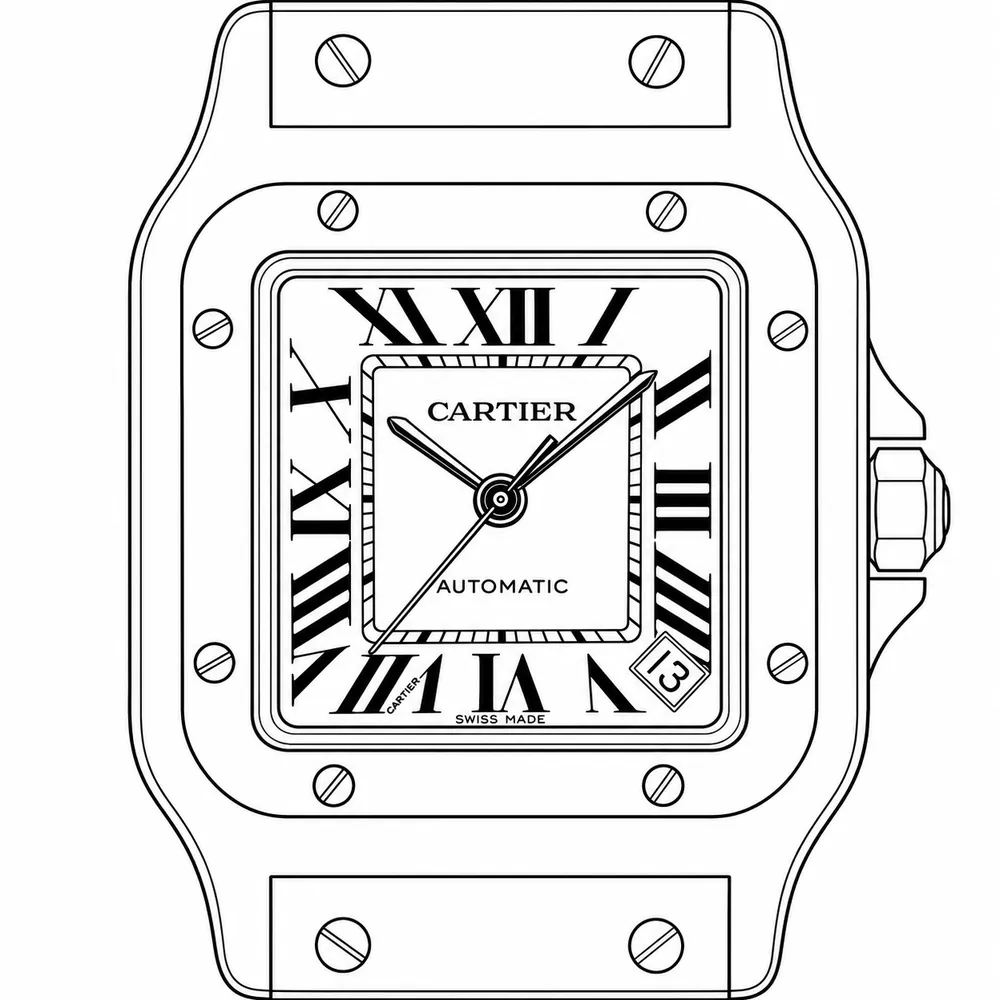
The Santos Galbée is the curved-case generation of the Cartier Santos, launched in 1987 to take over from the flat, sharp-cornered Santos of 1978. It keeps the square bezel with eight exposed screws, the Roman-numeral dial and the integrated bracelet, but the lugs, case sides and bracelet links are rounded, and on the dated quartz models the date moved to six o'clock. Most Galbées are quartz, in a Large Model of about 29 by 41 mm and a Small Model of about 24 by 35 mm, in steel, steel and gold, or gold, with moonphase and chronograph versions and, on one account, a Dual Time. The automatic Galbée XL of 2005, 32 by about 45 mm, was the largest. Published accounts disagree on when the line ended.
Cartier's entries are arranged by model, not by reference number, because its reference numbers are several systems at once and many of its watches carry none. The houses are set out in Paris, London and New York.
- Made
- from c. 1987The 1987 start is given by most accounts, though one places the Galbée some years later; accounts put the end at 2005, about 2006 (for the XL) or about 2016, so no end date is given.
- On record
- 1,153 listings138 of them give no reference
- Reference numbers
- 24 described79 seen in listings
What to look for
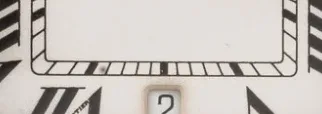
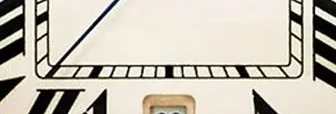
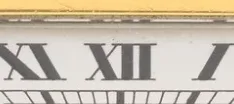
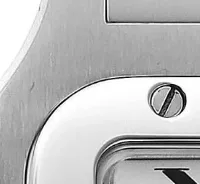
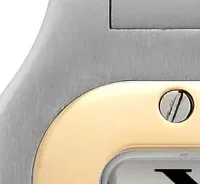
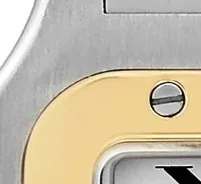
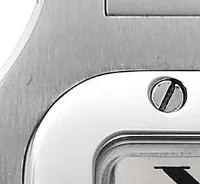
Details cut from photographs of watches of this line on record. Each was chosen by eye from a listing on the line and then checked again against the words beneath it. More sit beside the productions and parts they belong to, below. Select the small mark in a picture's corner for its holder and a link to its listing.
Components
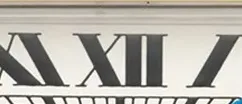
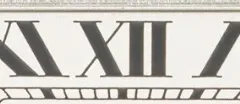
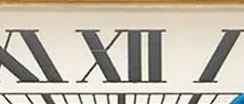
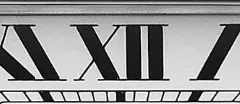
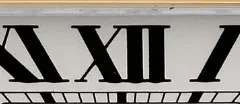
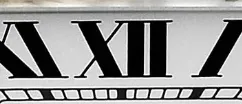
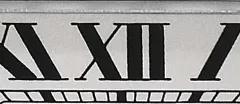
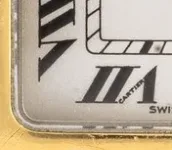
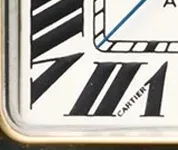
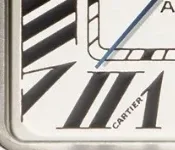
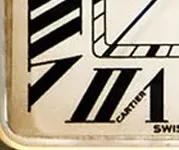
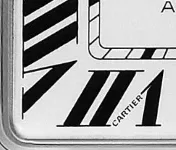
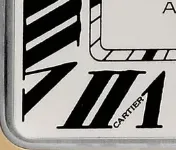
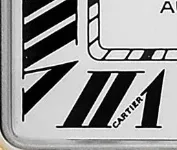
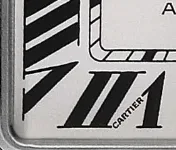
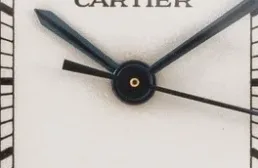
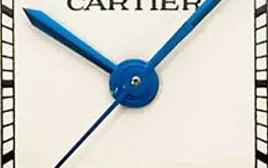
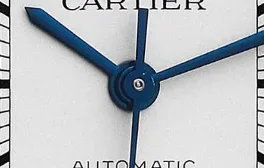
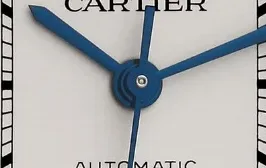
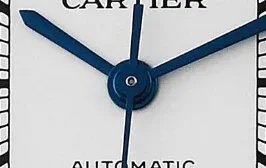
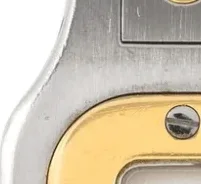
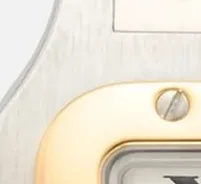
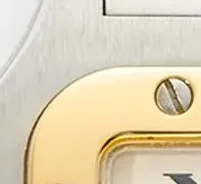
8 watches of this line, oldest first. Each photograph is turned upright and scaled so the dial is the same height, and every crop is cut from the same place on the dial, so one row shows one part across them all. A watch is shown only if its seller's title names the line and the picture has been checked by eye, twice, to show it. Years are as sellers give them. Each picture is a detail; select the small mark in its corner for its holder and a link to its listing; the whole watch is shown only for holders whose pictures may be shown whole.























By house and period 4 described
Galbée, quartz and automatic Large and Small Models, from 1987
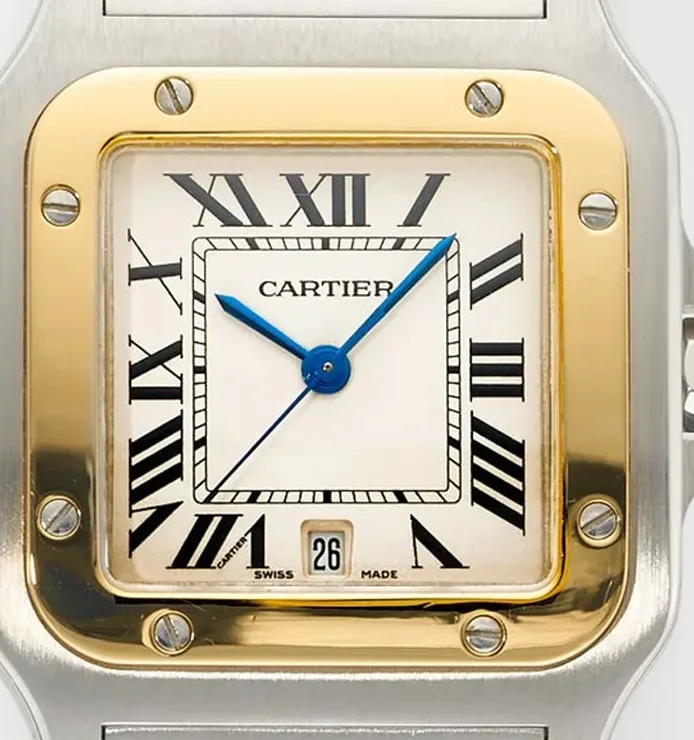
The Galbée was introduced in 1987 as a drastic revision of the 1978 Santos, whose case had sharp corners and whose bracelet links were flat. The case sides, bezel edges and lugs were curved to follow the wrist and the bracelet links were made convex, while the screws, the Roman numerals and the blue cabochon crown were kept. On the dated quartz watches the date sits at six o'clock rather than the three of the 1978 watch; the automatic 2319 has its date at three, and sellers describe the small automatic 2423 with a date between four and five. Most were quartz, with some mechanical models, among them the automatic 2319 and the small automatic 2423. The Large Model is about 29 x 41 mm and the Small Model about 24 x 35 mm; they were made in steel, in steel with an 18 ct yellow-gold bezel, and in yellow gold, and in white gold set with diamonds for women. The literature does not attribute the Galbée to Paris, London or New York, and no line of its text separates the houses, so none is assigned.
Signature and marks. Dial signed Cartier; on the small steel 1565 the signature is hidden in the numeral X, and sellers mostly place it in the VII on Large Models. The case back carries the reference and a serial; on the 1565 the serials recorded have letters before or after the digits, and on a two-tone 187901 the reference is followed by five further digits on the next line.
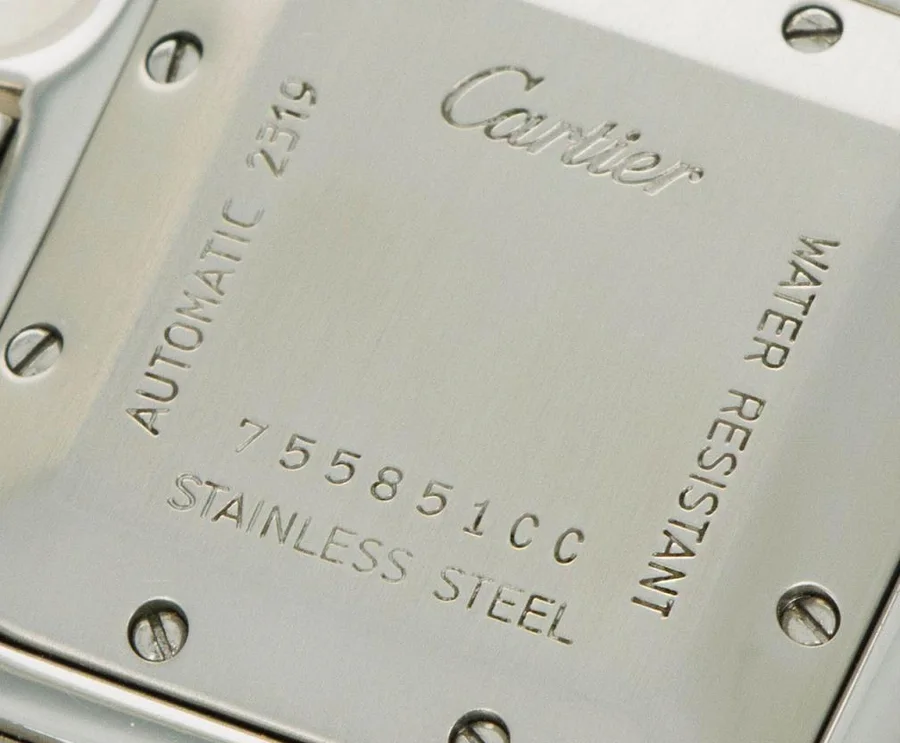

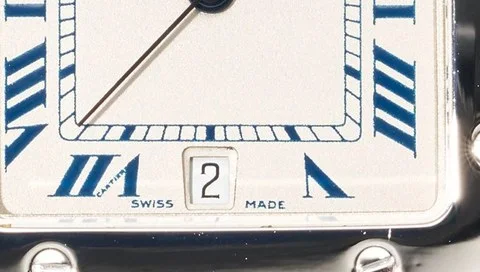

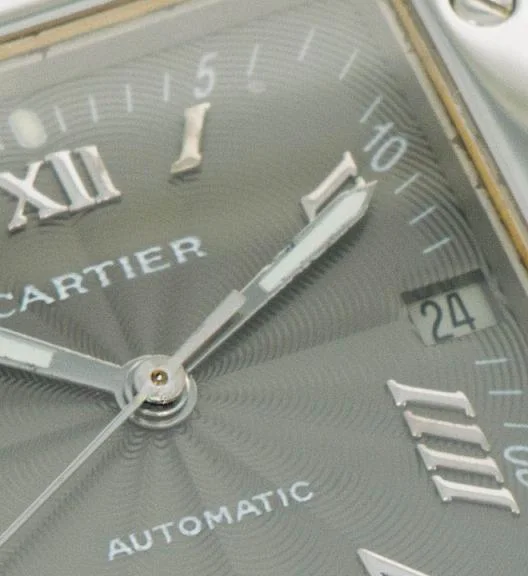

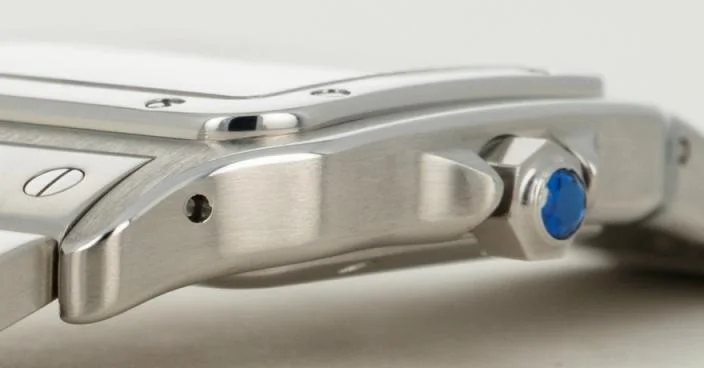

- eight bezel screws and a blue cabochon crown
References: 1564, 1565, 1566, 1567, 187901, 987901, 2319, 2423, W20011C4, W20012C4, W20060D6
Galbée with complications: moonphase, Dual Time, Chronoflex
The Galbée was also made with a quartz moonphase in a Large Model (119901) and a Small Model (119902) in steel and gold, and in full 18 ct yellow gold at 29 x 41 mm (819901). A listing of the small moonphase mentions a newer type of bracelet. One account describes a Dual Time version, said to date from 1994 and to have been made in very small numbers; it is recognised by two small pushers on the left side that advance the hour hand in one-hour steps, and by a second time zone shown on a small inner ring at twelve. That account gives the Dual Time the reference 2423, but another account and the library's records have 2423 as the small automatic in steel or steel and gold, with no second time zone, so the number of the Dual Time is not established. A quartz chronograph in steel and gold, the Chronoflex 2425, is also catalogued. Dates in the literature are given only as spans of years.
Signature and marks. Not given in the literature beyond the Cartier dial signature.
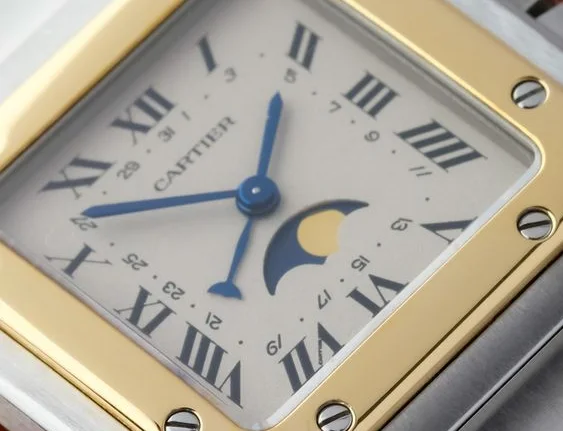

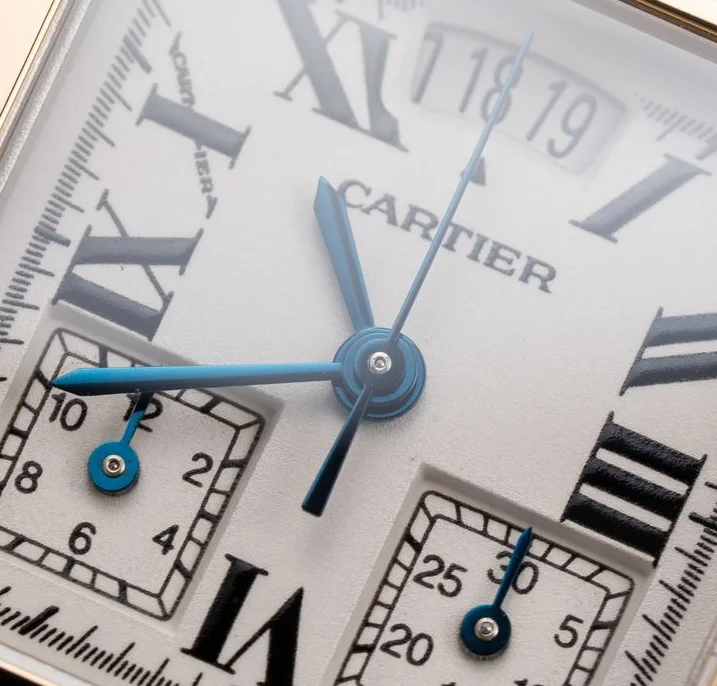

- blued three-hand set on the full-gold moonphase
- two pushers on the left of the case on the Dual Time
Limited edition, grey dial, 2002
In 2002 a limited edition of the Galbée was made in a run of 2,000 with a grey dial, with a further 2,000 in another dial colour. Accounts differ on the second run: one says light blue, another says women's watches with a sky-blue dial printed with a double-C monogram, and calls the whole an Asian edition. One account counts the grey-dial watch among the exceptions to the quartz rule and says it was fitted with what it calls the 2000 calibre. Sellers list the grey-dial edition under the automatic reference 2319, mostly without a date window and with luminous numerals and hands.
Signature and marks. Not given.
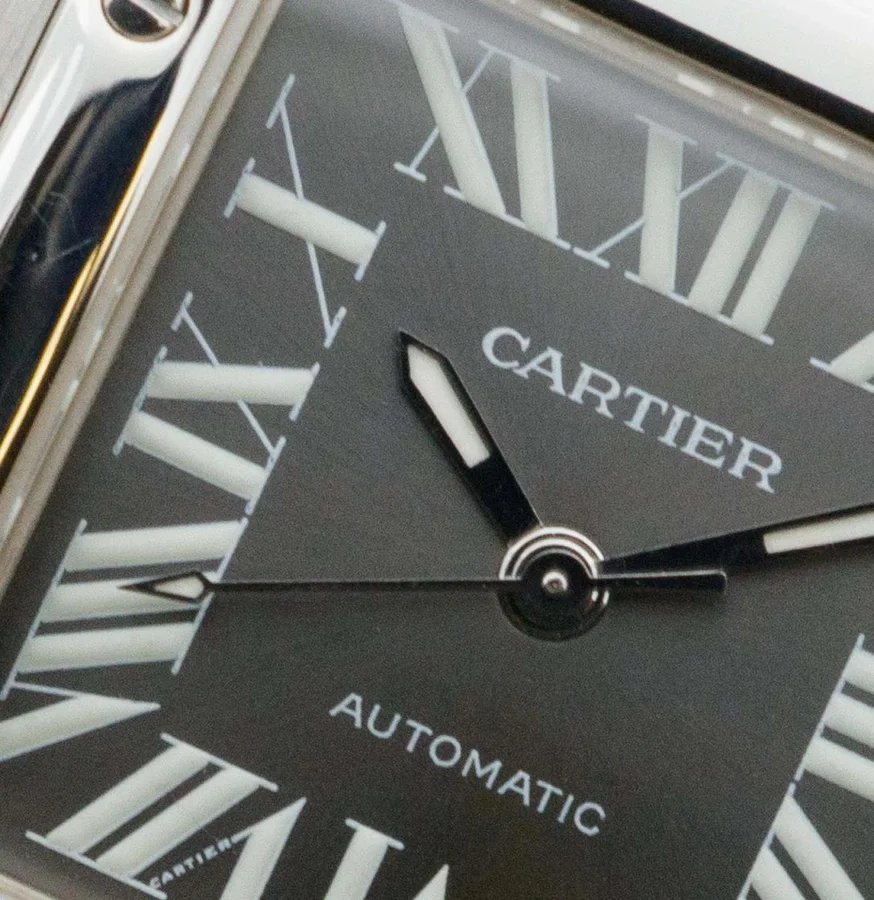

- monogrammed light-blue dial on the women's series
References: 2319
Galbée XL, 2005 onward
The XL, reference 2823, is described as the largest classic Santos, at about 32 mm wide and 45 to 45.5 mm lug to lug, and about 8.8 mm thick. It is an automatic with the Cartier 049, an ETA 2892-A2 base running at 28,800 vibrations an hour with 21 jewels and about 42 hours of reserve, and a date in the corner between four and five o'clock rather than at three or six. It was made in steel and, as sellers describe it, in steel and yellow gold, with a case back engraved Cartier Automatic 049. One account estimates the all-steel examples at a few thousand. Accounts disagree on when it ended: about 2006, or 2016.
Signature and marks. Steel case back, held by eight screws in sellers' descriptions, engraved Cartier Automatic 049, with the words Automatic, Stainless Steel, Swiss Made and Water Resistant; one example reads 150/801 LX 2823. Cartier gave no archive extracts for watches of this period, so the serial is the only identifier.
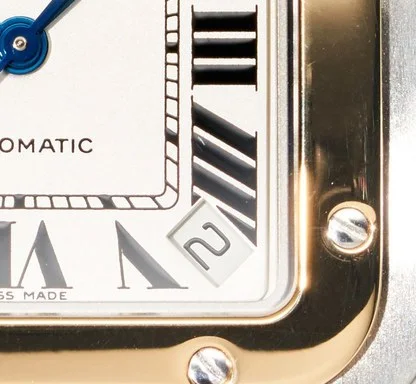

- case back engraved with the calibre name and 2823
- bezel screws with crisp slots
Chronology
Specification
| Case | Curved square case, steel, steel with an 18 ct yellow-gold bezel, or yellow gold. Large Model about 29 x 41 mm; Small Model about 24 x 35 mm; XL 32 x about 45 mm, about 8.8 mm thick |
| Bezel | Square, held by eight exposed screws; polished against a brushed case and bracelet on the steel XL |
| Dial | White or silvered, Roman numerals usually black (listings of large steel quartz watches also show them in blue), railroad minute track, blued sword hands; grey and other colours in limited runs |
| Crown | Faceted blue cabochon (described as synthetic spinel) |
| Crystal | Sapphire, as dealer listings state |
| Movement | Mostly quartz (Cal. 157 on the small steel 1565; Cal. 687 on the dated 1564); automatic Cartier 049 (an ETA 2892-A2 base) in the XL; some other automatics |
| Bracelet | Integrated, rounded links, two screws to a link, folding clasp |
Dial 4 described
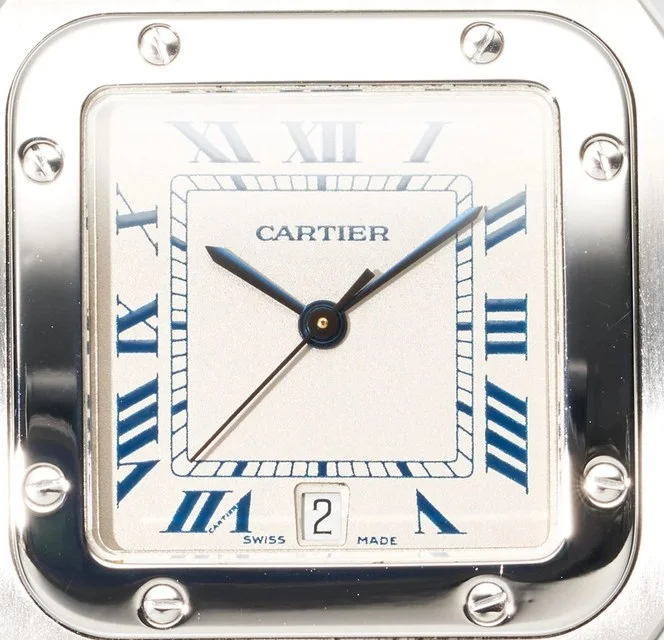
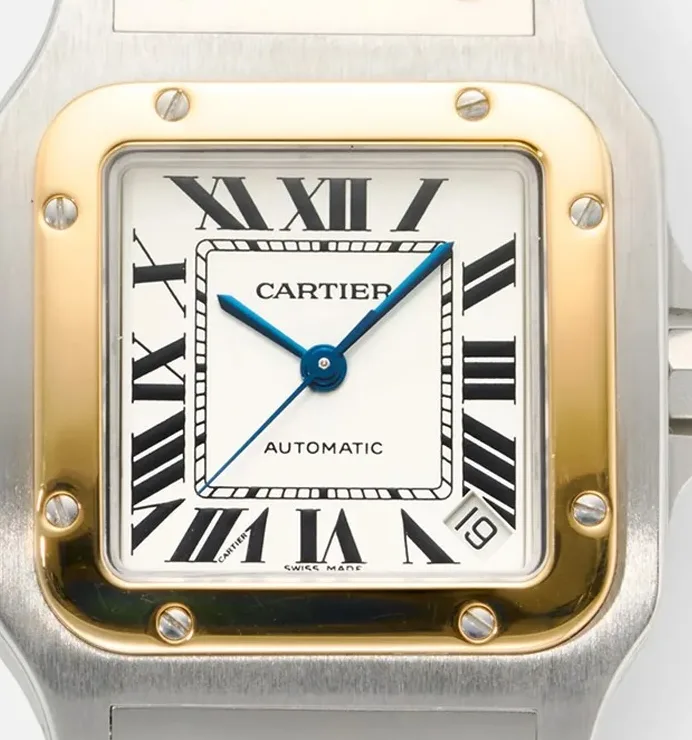
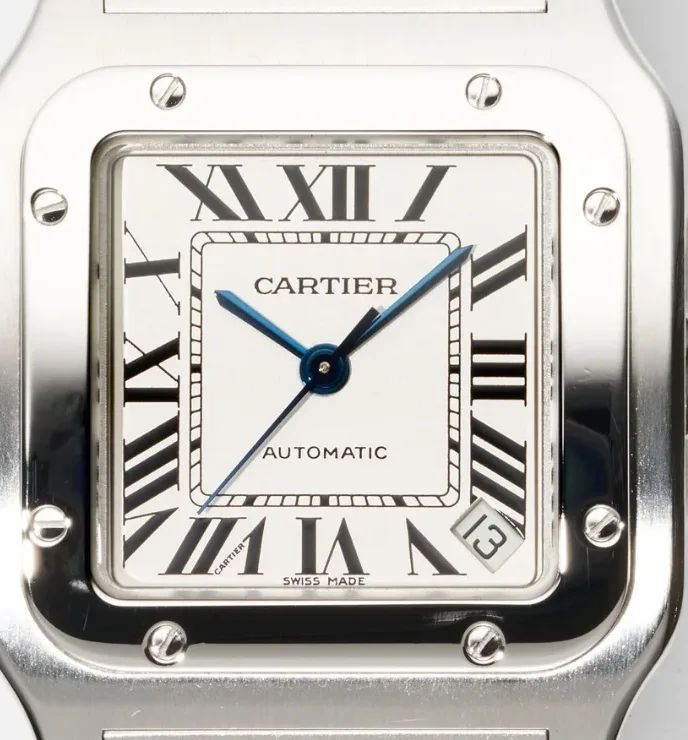
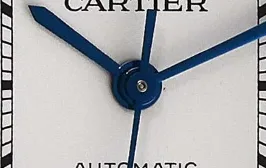
The Galbée dial is the Santos layout: Roman numerals, usually black, a railroad minute track and blued sword hands, usually on a white or silvered ground, and on the small steel 1565 the Cartier signature is hidden in the numeral X. Dials differ in ground colour, in whether numerals are printed, and in where the date window falls. Grey grounds appear in limited runs and a numeral-free dial is described on some two-tone watches.
White or silvered Roman dial
The standard dial: a pale ground with Roman numerals, usually black, a railroad track and blued sword hands. Listings of large steel quartz watches, among them the 1564, the 987901 and the W20060D6, also show the numerals in blue. Pale dials are catalogued as silver, white, cream or ivory for the same layout, and it is not settled whether silver and white are one finish or two. A pale ground can warm toward cream with age; one two-tone watch has an unusually dark, even cork tone. On the small steel 1565 the signature is hidden in the numeral X.
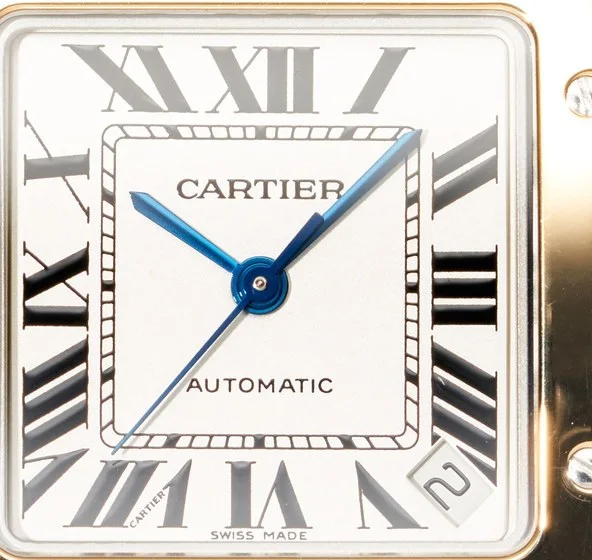

- signature hidden in the X on the small 1565
Grey (slate or anthracite) dial
A slate-grey sunray dial that shifts from light grey to dark anthracite in different light. It is described on small runs of the XL and on the 2002 limited edition, whose second series was a different colour. Sellers describe a 2319 as a grey-dial limited edition.
- grey sunray ground
- dark grey in shade, light grey in sun
Numeral-free dial
A grey dial with no numerals, only markers printed tone on tone, said to be called a ghost dial and found on some steel and gold watches of the mid-1990s. One caption dates its example to 1984, which is before the Galbée began in 1987.
- no numerals
- tone-on-tone markers
Monogram dial, women's limited series
A sky-blue dial printed with a double-C monogram, said to belong to the women's half of the 2002 limited edition of 2,000 pairs; the other account of that edition mentions only a light-blue dial.
- double-C monogram pattern
- light blue ground
Luminous material 2 described
One account says the XL's dials and hands were first filled with tritium and later with Luminova, but it dates the change to about 2000, before the XL was introduced in 2005, so it is not clear which Galbées carried tritium. The literature gives no wider history of lume for the line.
Tritium (Swiss T25)
Dials marked Swiss T25 at the foot carry tritium. The account that describes this says the mark was used until about the 2000s, after which dials read Swiss Made without tritium; it also puts the change to Luminova at about 2000, a date that sits oddly beside the XL's introduction in 2005, so treat it as approximate. Aged tritium yellows to a cream tone and no longer glows.
- Swiss T25 at the foot of the dial
- cream, aged lume that matches the hands
Luminova
A later fill that stays white with age, reported with the move to Swiss Made dials. A dial or hands badly re-lumed with modern luminous paint can show hour and minute hands that differ in tone, or markers whiter than the hands.
- Swiss Made without T25
- lume that stays white
Hands 1 described
Hands on the line are blued steel and sword-shaped.
Blued sword hands
The standard hands of the Galbée, in blued steel, matched to the lume on the dial. On the full-gold moonphase the blue three-hand set is noted as unusual for that watch.
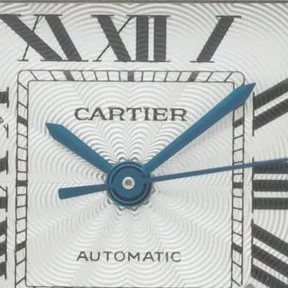

- blued steel
- colour matching the lume
Bezel 1 described
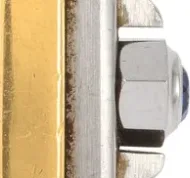
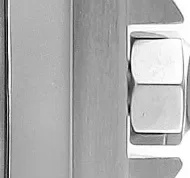
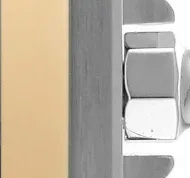
The bezel is square and held by eight exposed screws; on two-tone watches it is 18 ct yellow gold, and on the steel XL it is polished against a brushed case.
Polished square bezel, eight screws
On the steel XL a polished bezel stands against a satin case and bracelet. A badly scratched bezel can be replaced, so the bezel and its screws are worth checking against the rest of the case.
- eight screws with straight, crisp slots
- polished bezel against brushed case
Case and sizes 3 described
The sizes are a Large Model of about 29 x 41 mm and a Small Model of about 24 x 35 mm, then the XL of 2005. Sellers abbreviate these as LM, SM, GM and PM. The case is curved at the lugs and sides, in contrast to the flat case of the 1978 Santos. Metals are steel, steel and 18 ct yellow gold, yellow gold and, for women, white gold with diamonds.
Large Model, about 29 x 41 mm
The size given for the dated quartz 1564, the automatic 2319, the two-tone W20011C4 and the moonphase. The 1978 Santos has nearly the same footprint, so size alone does not separate the generations.
- about 29 mm wide
- about 41 mm long
Small Model, about 24 x 35 mm
The compact quartz size, given as about 24 x 35 mm for the steel 1565; sellers describe the 1567 and the small moonphase 119902 as small models. Some listings label a small two-tone watch as a 1565, which is steel only.
- about 24 mm wide
- about 35 mm long
XL, 32 x about 45 mm
The largest of the classic Santos cases: about 32 mm wide, 45 to 45.5 mm lug to lug and about 8.8 mm thick, in steel with a polished bezel; sellers also list two-tone XLs.
- 32 mm wide
- 45 mm or more lug to lug
- 8.8 mm thickness
Crown 1 described
The crown carries a faceted blue cabochon, described as synthetic spinel.
Blue cabochon crown
A faceted blue stone set in the crown; one caption calls the crown hexagonal and another on the same page seven-sided. One account says the stone on period examples is conical and sharply pointed, but does not date the change to the later shape.
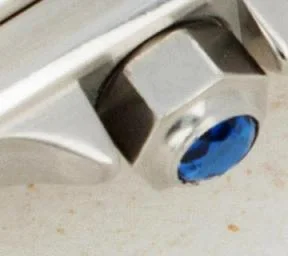

- faceted blue stone
- conical, pointed stone on period examples
Crystal 1 described
Sapphire is the only crystal the literature names for the line.
Sapphire
Sapphire crystals are stated for the 1565 and for the two-tone W20011C4, from dealer listings; the literature gives no earlier or other crystal.
- no deep marks, which suggest hard wear
Date 2 described
The date window changed place with the case and the movement. The flat 1978 watch has it at three o'clock; the dated quartz Galbée has it at six; the automatic 2319 keeps it at three; the XL, and in sellers' descriptions the small automatic 2423, put it in the corner between four and five. Some Galbées, such as the small steel 1565, have no date.
Date at six o'clock
On the dated quartz Galbées the window moved to six o'clock, a quick way to tell them from the 1978 Santos. The dated quartz 1564 is one example; the 1565 has no date. The automatic 2319 has its date at three on a curved case, so a date at three does not by itself mean a 1978 Santos; a watch listed as a Galbée with its date at three on a flat brushed case is one.
- date at 6 on a curved polished case
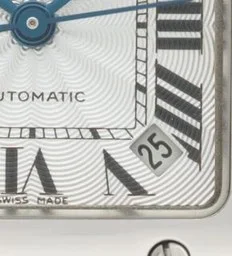
Date between four and five o'clock
On the XL the window sits in the corner and avoids both the three and the six, which one account counts as a visual improvement and as a first. Sellers describe the same position on the small automatic 2423, on watches they date from about 2000, so it is not peculiar to the XL.

Movement 3 described
Most Galbées are quartz, and the Cartier calibre numbers given are 157 and 687. Some were mechanical: sellers mostly catalogue the automatic 2319 with the Cal. 120 and the small automatic 2423 with the Cal. 077. The XL of 2005 has the Cartier 049, an ETA 2892 base, and in the library's records the 049 is named only on the XL. The in-house calibres of the 2018 Santos came after the line ended.
Cartier quartz Cal. 157
A signed quartz calibre named in three catalogued examples of the small steel 1565; one auction house gives only 'quartz'.
- quartz
- signed calibre on small steel watches
Cal. 687 (dated quartz)
The calibre given for the dated steel quartz 1564, with its date at six; no further detail is published.
- date at 6
Cartier 049 (ETA 2892-A2)
The XL's automatic: 21 jewels, 28,800 vibrations an hour, about 42 hours of reserve, 3.6 mm thick, bi-directional winding, and engraved on the case back as Cartier Automatic 049. The 049 is shared with the 2004 Santos 100 Large.
- Cartier Automatic 049 on the case back
Bracelet and strap 1 described
The bracelet is integrated, each link fixed with two screws, and closes on a folding clasp. The Galbée's links are convex, in contrast to the flat, rectangular links of the 1978 Santos.
Integrated screw bracelet, convex links
The full men's bracelet has about 23 links (the watch and 22). Many have been shortened, and the pins wear so that the bracelet stretches. The 1565 has a steel bracelet with a concealed double folding clasp; a listing of the small moonphase mentions a newer type of bracelet.
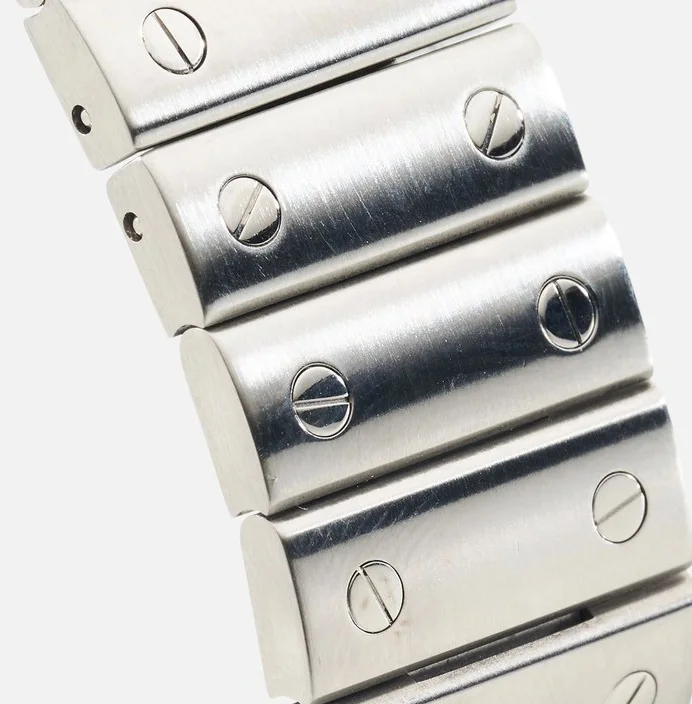

- tight articulation
Reference numbers
A four-digit number is stamped on the case and covers a case; a code beginning W, or the newer letter codes, is a catalogue number for one version of it (metal, dial, strap). Many older watches carry neither. The last column is the listings on record under the number, as its own page counts them.
| Number | What it is | Listings |
|---|---|---|
| 1564 | Large steel quartz Galbée, about 29 x 41 mm, with the date at six on the Cal. 687, from the 1990s into the 2000s. | 69 |
| 1565 | Small steel quartz Galbée, about 24 x 35 mm, no date, on Cal. 157 from about 1998 into the 2010s; also catalogued as W20017D6 and W20024D6, and sellers' records show W20017D6 beside it. Catalogue codes seen beside it in listings: W20017D6, W20056D6 | 60 |
| 1566 | Steel quartz with an 18 ct yellow-gold bezel, about 1996 to 2010; a seller's title describes one made to mark Cartier's 150th anniversary, about 1997. Catalogue codes seen beside it in listings: W20011C4 | 65 |
| 1567 | Small steel-and-gold quartz Galbée. One account dates it from about 1998, another from the late 1980s; sellers state it into the 2000s. Catalogue codes seen beside it in listings: W20012C4 | 63 |
| 187901 | Steel and gold quartz Large Model, about 1990 to 1997 on one account; listings call it the large size, and most that state a year give one in the 1990s. | 103 |
| 987901 | Steel quartz Galbée, from about 1989 into the 1990s. | 17 |
| 887901 | Yellow-gold case, as sellers describe it. | 9 |
| 2319 | Automatic Galbée in steel or steel and gold, about 29 x 41 mm, with its date at three, from the 1990s to 2005; sellers also list the grey-dial limited edition of 2002 under it. Catalogue codes seen beside it in listings: W20055D6, W20040D6 | 85 |
| 2423 | Small automatic in steel or steel and gold, about 24 x 35 mm, as sellers and one account give it; another account uses the number for a Dual Time said to date from 1994. | 55 |
| 2425 | Chronoflex quartz chronograph in steel and gold, about the 1990s to 2000. | 8 |
| 119901 | Moonphase quartz in steel and gold, Large Model, about 1987 to the mid-1990s. | 20 |
| 119902 | Moonphase quartz in steel and gold, Small Model, about 1990 to 1995. | 9 |
| 819901 | Full 18 ct yellow-gold quartz moonphase, 29 x 41 mm, with a blue three-hand set. | 3 |
| 2823 | The XL: 32 x about 45 mm automatic with the Cartier 049, introduced in 2005. | 54 |
| W20011C4 | Large steel-and-yellow-gold quartz watch with a silver dial, 29 x 41 mm and sapphire crystal, as a dealer listing gives it; a seller's title also names Les Must de Cartier. | 50 |
| W20012C4 | Small steel and yellow gold watch, as sellers describe it; one of the most often listed references in the library's records. | 75 |
| W20099C4 | XL in steel and yellow gold, as sellers describe it. | 62 |
| W20098D6 | XL automatic in steel, as sellers describe it. | 38 |
| W20060D6 | Large steel quartz watch of about 29 mm, as sellers list it; one account uses the code as its example of the XL. | 16 |
| W20044D6 | Small automatic in steel, which one seller pairs with the case number 2423; sellers' titles call it a ladies' watch, and one listing calls it a men's watch (W20054D6 is described as a ladies' automatic). | 18 |
| W20056D6 | Small steel quartz with a silver dial, as sellers describe it. | 47 |
| W20057C4 | Small automatic in steel and yellow gold, as sellers describe it. | 13 |
| 2961 | The 1978 flat Santos in steel and gold, which sellers often list as a Galbée although it is not one; the number is also said to be recorded on a curved watch, so check the case shape and the date position. | 191 |
| 0902 | The smaller steel-and-gold watch of the 1978 Santos, about 24 mm; not a Galbée. | 51 |
Originality
- A badly scratched bezel can be replaced by Cartier, so the bezel may be newer than the rest of the case; its screws should sit aligned, with clean slots.
- Screws on the bezel and bracelet are often damaged or refinished at service; accounts differ on whether the XL's should be brushed or polished, but crisp slots are wanted, and heavy polishing that rounds the case corners shows earlier work.
- Bracelets are often shortened, so links may be missing; the full men's bracelet has about 23 links and wear in the pins makes it stretch.
- Tritium dials and hands age together to cream; a re-lumed dial shows in hour and minute hands that differ in tone, markers whiter than the hands, and a glow that does not match a claim of old tritium.
- A pale dial that has turned cream is normal; gilt or applied numerals on a 1565 are unusual and should be checked against the case back and movement.
- A date at three on a flat, brushed case is a 1978 Santos listed as a Galbée (the automatic 2319 has its date at three, but on a curved case); a small two-tone watch is sometimes labelled 1565, which is steel only.
Names
- Ghost dial. A grey dial with no printed numerals, found on some two-tone watches.
- Galbée XL. The 32 x 45 mm automatic of 2005, called the Santos de Cartier Galbée XL in some accounts.
- Santos Galbée 2820. A name said to be given sometimes to the Dual Time version, which the same account numbers 2423.
- Galbée (loosely). The name is often used for every bracelet Santos, though only watches made from 1987 are Galbées.
Where accounts differ
Points on which the published literature and the library's own records do not agree, or on which the literature contradicts itself.
- End of the Galbée XL and the line. One guide says production of the XL stopped about 2006, making way for a Santos 100 it dates to 2007 (others date the Santos 100 to 2004). One account says Cartier discontinued the XL in 2016; another says the model disappeared from Cartier's websites around 2016; a third cites an auction catalogue dating the end of the Santos line to 2016. Another says the Ronde and the Galbée were discontinued in 2005. In the library's records most 2823 listings that state a year give one from 2005 into the 2010s, several of them sold with papers under years from 2008 to 2017, and one 2014 XL was sold with a service paper of 2018; a few sellers state 1995 or about 2000, before the XL was introduced.
- Start of the Galbée. One magazine places the Galbée and Octagon models in the 1970s, and one article says the Santos was revised in 1987 and the Galbée model introduced eight years later. The other guides date the Galbée to 1987. The library's records hold some listings with stated years before 1987; several of them carry numbers of the 1978 Santos (2961, 0902, 0901, 2960).
- Start of the 1567. One guide dates the small steel-and-gold 1567 from about 1998; another says late 1980s to at least 2008; a dealer listing states 1995. In the library's records sellers' stated years for the 1567 run from the 1990s to 2007, and one seller states 1976, before the Galbée existed.
- Reference 2423. One guide lists the 2423 as a small automatic in steel and gold, c. 1990s to 2005, with no mention of a second time zone; another describes it as the 1994 Dual Time. In the library's records sellers list the 2423 as a lady's or small automatic in steel or in steel and gold, with a date, and no listing of it mentions a second time zone.
- Reference 2961. One account states that the 2961 is the 1978 flat Santos and not a Galbée, though often listed as one; another guide reports the same site also recording the number on a curved watch.
- Finish of the XL's screws. One guide says the bezel and bracelet screws should show a straight satin grain and that polished screws are a sign of poor work; another advises finding an XL whose screws have not been brushed to match the bracelet.
- Date of the ghost dial. One guide dates a numeral-free two-tone watch to 1984 in a caption and to the mid-1990s in its text; the Galbée began in 1987.
- The 2002 limited edition. Both accounts give 2,000 grey-dial watches. One says the other 2,000 were women's watches with a monogrammed sky-blue dial, sold in Asia; the other says light blue and names a calibre 2000 for the grey watch.
- Reference W20060D6. One guide names W20060D6 as the XL. In the library's records sellers list W20060D6 as a 29 mm quartz watch in steel, and list the steel XL as W20098D6.
- Date between four and five. One magazine says the XL was the first Santos whose date window sat at neither three nor six. In the library's records sellers describe a window between four and five on the small automatic 2423 as well, on watches they date from about 2000, before the XL of 2005.
In the records
Counted from 1,153 listings at dealers and auction houses whose title, or whose reference, places them on the line; 472 state a year. These are what sellers state, not measurements, and a count of listings is not a count of watches made.
Case metal
| Metal | Listings | Share |
|---|---|---|
| Steel | 521 | 66% |
| Steel and gold | 204 | 26% |
| Gold, any colour | 57 | 7% |
| Yellow | 26 | 3% |
| Colour not stated | 31 | 4% |
| Silver | 3 | under 1% |
As sellers state it. Shares are of the 785 listings that name a metal. A listing that says "gold" or "18K gold" names no colour: it is counted under "colour not stated", not as yellow gold. Carat, where a listing of gold gives one: 18k 17.
Case size
| Size | Listings | Share |
|---|---|---|
| 29 mm | 258 | 33% |
| 24 mm | 202 | 26% |
| 32 mm | 73 | 9% |
| 34.7 mm | 33 | 4% |
| 45 mm | 33 | 4% |
| 23 mm | 23 | 3% |
| 26 mm | 22 | 3% |
| 41 mm | 19 | 2% |
| Other sizes | 111 | 14% |
As sellers state it. Shares are of the 774 listings that give a size. On a watch that is not round some sellers give the width and some the length, so one watch can stand under two sizes. 1 more gives a figure outside 12 to 56 mm, which is a strap, a box or a slip, and is left out.
Movement
| Kind | Listings | Share |
|---|---|---|
| Quartz | 290 | 55% |
| Automatic | 237 | 45% |
Shares are of the 527 listings whose description says how the watch is driven.
Listings by decade the seller gives
| Decade | Listings |
|---|---|
| 1980s | 17 |
| 1990s | 163 |
| 2000s | 211 |
| 2010s | 56 |
| 2020s | 12 |
13 more give a year outside the years the line was made (from 1987): a later watch sold under the name, or a slip. They are left out.