Santos Carrée
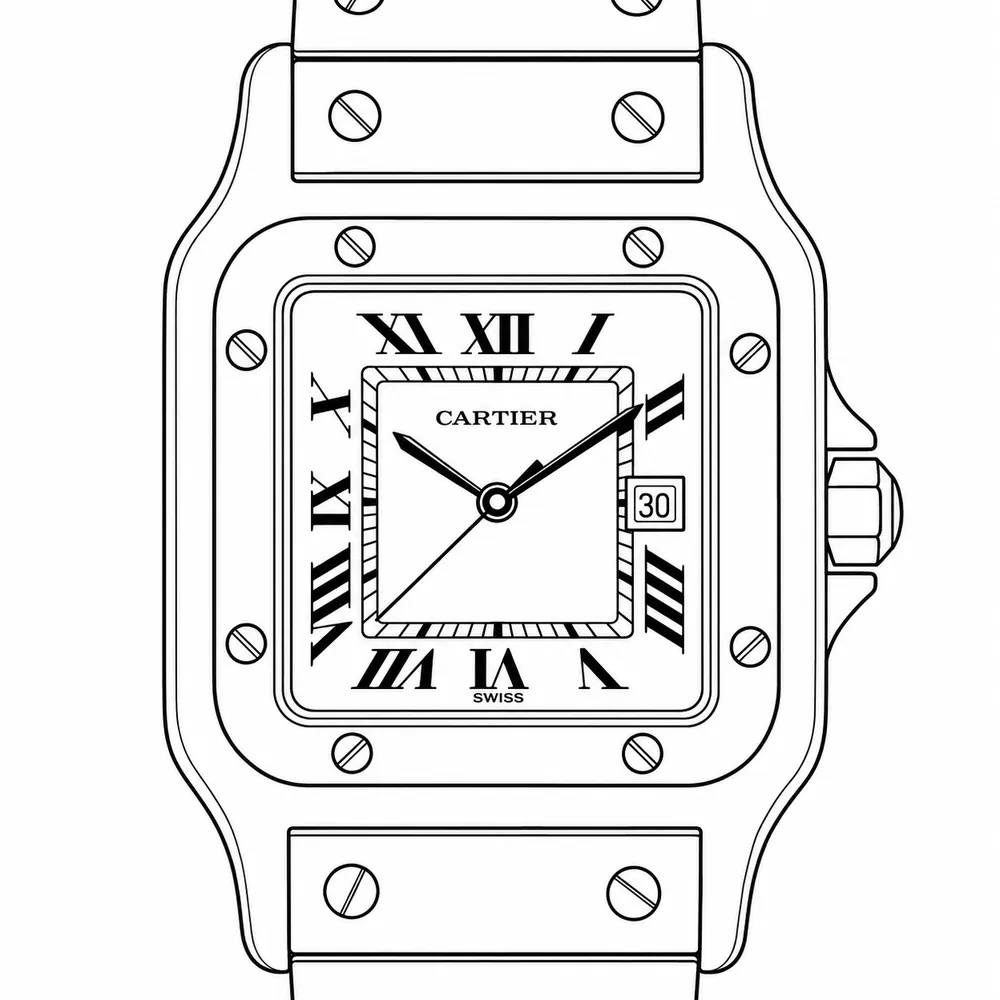
The Santos Carrée is the square-cased, bracelet-fitted Santos that Cartier presented in Paris in October 1978: a steel case and bracelet beneath a yellow-gold bezel held by eight visible screws. It was aimed at a younger buyer than an all-gold watch would reach, and it is generally treated as the first of the Santos de Cartier line. Its automatic references are 2960, usually steel, and 2961, usually two-tone, both with a date and a case of about 29 by 41 mm. The curved Santos Galbée of 1987 is usually named as its successor, though published accounts do not agree on a cut-off and watches numbered 2961 are recorded through the 1990s. Collectors look first at the dial type, the sharpness of the case edges and the bracelet.
Cartier's entries are arranged by model, not by reference number, because its reference numbers are several systems at once and many of its watches carry none. The houses are set out in Paris, London and New York.
- Made
- from c. 1978The relaunch is dated to 1978, but no end of production is documented; the Galbée of 1987 is usually named as the successor and flat-cased watches are recorded into the 1990s.
- On record
- 341 listings51 of them give no reference
- Reference numbers
- 5 described13 seen in listings
- House named in the title
- nonemost older watches are not labelled
What to look for
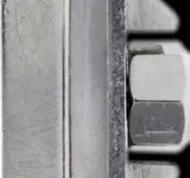
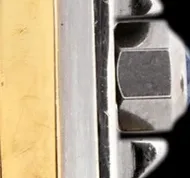
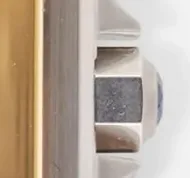
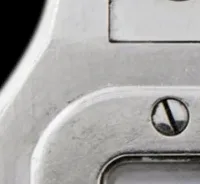
Details cut from photographs of watches of this line on record. Each was chosen by eye from a listing on the line and then checked again against the words beneath it. More sit beside the productions and parts they belong to, below. Select the small mark in a picture's corner for its holder and a link to its listing.
Components
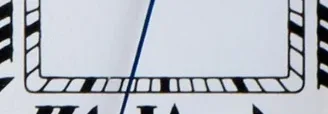
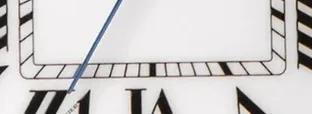
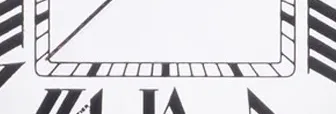
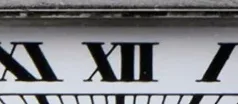
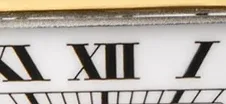
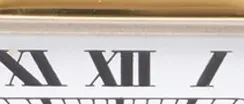
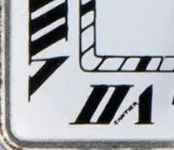
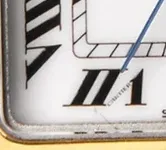
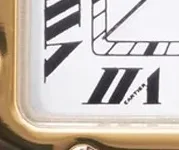
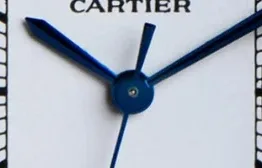
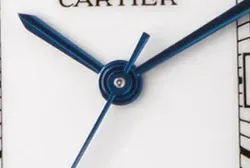
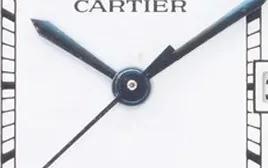
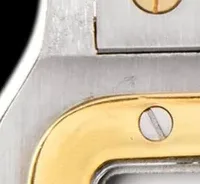
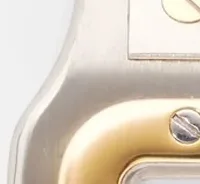
3 watches of this line, oldest first. Each photograph is turned upright and scaled so the dial is the same height, and every crop is cut from the same place on the dial, so one row shows one part across them all. A watch is shown only if its seller's title names the line and the picture has been checked by eye, twice, to show it. Years are as sellers give them. Each picture is a detail; select the small mark in its corner for its holder and a link to its listing; the whole watch is shown only for holders whose pictures may be shown whole.




By house and period 2 described
Carrée, 1978 onward
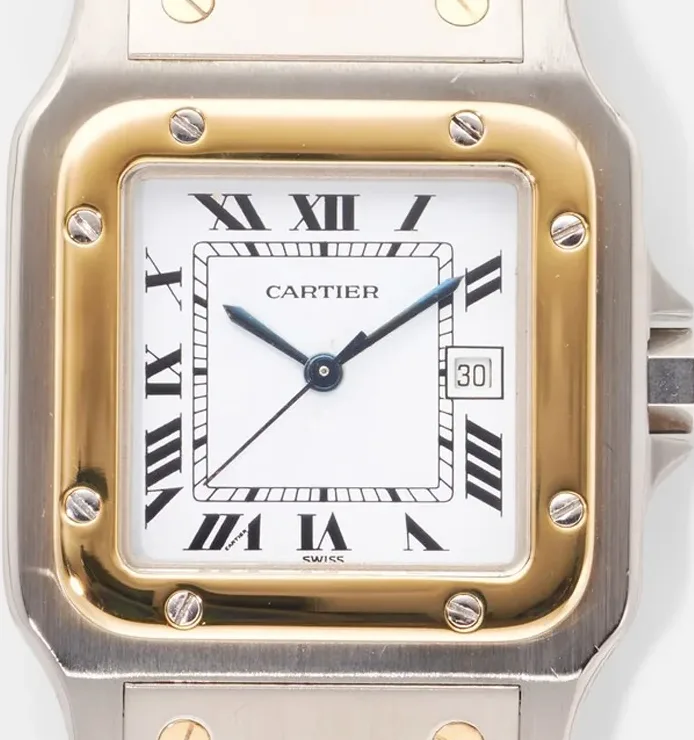
This is the flat Carrée of the 1978 relaunch: a square case with sharp planes, eight screws showing on the bezel, and a bracelet built into the case. It was meant to give Cartier a watch in steel or part steel for a younger buyer and for more casual, active wear. The automatic references are 2960, generally the steel watch, and 2961, generally the two-tone; the size most often given is about 29 x 41 mm. The literature does not say which workshop made the cases or movements and does not tie the watch to Paris, London or New York beyond the presentation of the line in Paris. Its bracelet is described as the first at Cartier to combine gold and steel, with an all-steel model following and gold later. Published accounts differ on the end: the Galbée is put at 1987 as its replacement, but no cut-off is documented and watches numbered 2961 are recorded through the 1990s.
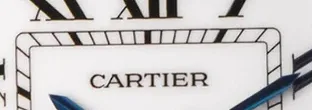
Signature and marks. The literature gives no signature or stamp for the line as a whole; it mentions only the Cartier signature at 12 on slate dials, 'SWISS' at 6 on some early white dials, and 'Swiss' rather than 'Swiss made' on original burgundy dials.
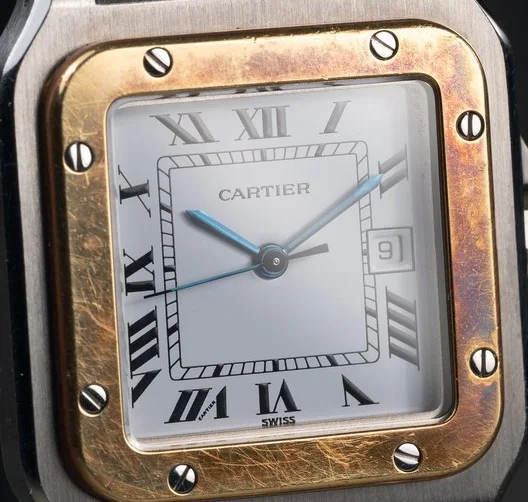

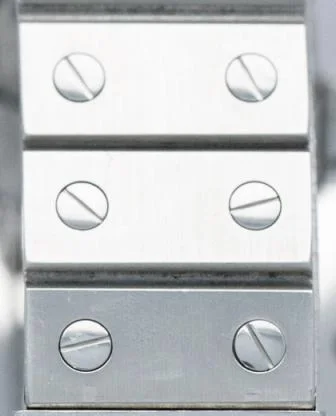

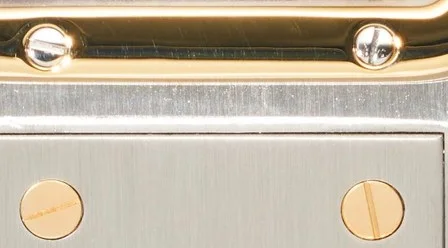
- sharp flat planes and crisp screw recesses on the case
- crown guards flanking a cabochon crown
- dial, hands and case ageing that match
Solid gold (Or Massif)
A full-gold Carrée sold in a Cartier box with a gold plaque reading 'Or Massif'. It is given as 27.5 x 38.5 mm and tied to the number 2964, in a passage that speaks both of its introduction in the 1980s and of Cartier growing audacious in the 1990s. A solid 18k yellow-gold 2960 is also placed at about 1978 to 1990, so the number of the gold watch is not settled.
Signature and marks. The box carries a gold plaque with 'Or Massif'. The literature gives nothing on the dial or case stamps.
- solid yellow-gold case and bracelet
- box with a gold plaque reading Or Massif
Chronology
Specification
| Case | Square, flat-planed case with a bezel held by eight visible screws; about 29 x 41 mm on the usual references |
| Metals | Steel, steel and yellow gold, and solid yellow gold |
| Crystal | Sapphire |
| Movement | Automatic with date; on the 2960 often given as Cartier cal. 2671, with at least one early steel watch described as cal. 077 |
| Bracelet | Integrated metal bracelet whose links repeat the screw heads |
| Water resistance | Often quoted as 3 ATM (about 25 to 30 m) |
Dial 3 described
The dial is white with Roman numerals as the baseline. Slate grey and burgundy lacquer dials are described as standard options running alongside it rather than forming a dated sequence, though the burgundy dial is also dated to 1979. The date is at 3 on the 2961.
White Roman dial
The white dial with Roman numerals is the baseline Carrée dial. Some early examples are described as having 'SWISS' at 6, but there is not enough published evidence to build a dated system out of 'SWISS' against 'SWISS MADE'. Condition matters most on this dial.
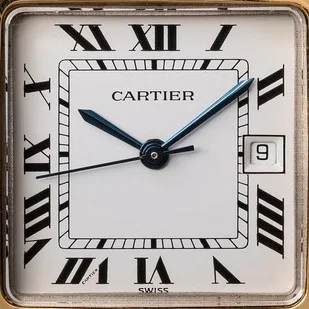

- SWISS at 6 on some early watches
Slate grey brushed dial (ghost)
A grey dial brushed in the vertical direction, on which the Cartier signature at 12 can fade until it is almost invisible. This fading is treated as natural ageing. It is not a separate reference and is not tied to a year. Listing titles in the library's records that describe this dial and state a year give years from about 1980 to the mid-1990s, on 2960, 2961, 0901 and 0902 watches.
- vertical brushing
- faint or vanished signature at 12
Burgundy lacquer dial
A lacquer dial in true burgundy, described as made to mark the seventy-fifth anniversary of the Santos in 1979, with the cabochon changed to match and no Roman numeral anywhere on the dial. It is paired with the brushed grey dial in the same passage. Elsewhere burgundy and slate are treated as standard options not reliably tied to year cut-offs, so the 1979 date is not agreed. The lacquer can craze into a spiderweb of cracks. An original dial reads 'Swiss'; 'Swiss made' marks a service dial. Watches with this dial were sold with either brushed or polished bezels.
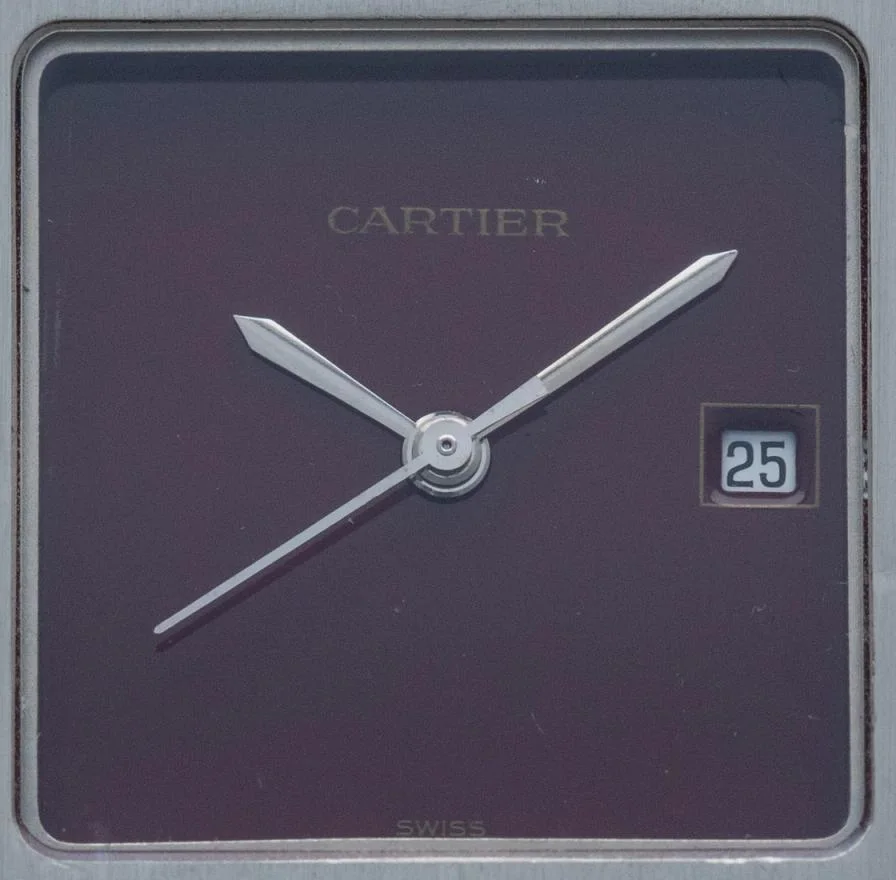

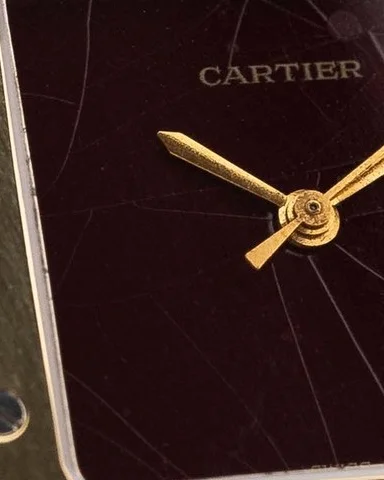

- burgundy lacquer
- cabochon matching the dial
- 'Swiss' rather than 'Swiss made'
Case and sizes 3 described
The Carrée case is flat and square, with sharp edges and a bezel fixed by screws, and it is the point on which the Galbée that followed differs most: that case is curved. Sizes in the literature run from the 29 x 41 mm usually given to a smaller solid-gold watch.
Standard Carrée, about 29 x 41 mm
Most often given as about 29 x 41 mm, in steel, two-tone or gold, with a sapphire crystal and water resistance often quoted as 3 ATM. The 2961 is described as about 8 mm thick. Widths of about 29 to 31 mm are also given for the Carrée generally. In the library's records the width stated most often is 29 mm.
- flat case planes
- crisp screw recesses
- eight bezel screws
- guards flanking the crown
Or Massif size, 27.5 x 38.5 mm
The solid-gold 2964 is given as 27.5 x 38.5 mm.
Polished or brushed bezel
Watches with the burgundy dial are described as leaving the maker with either a brushed or a polished bezel; the literature says this of no other dial. Heavy polishing later rounds the flat planes and screw recesses that define the case.
- brushed or polished bezel
- unrounded edges
Movement 1 described
On the 2960 the automatic movement with date is given as Cartier cal. 2671 in many listings, with at least one early steel watch described as cal. 077. The library's records show the same pairing, 'cal. 077 (ETA cal. 2671)', in a few listings. Treat the movement name in a listing with care and check the watch.
Automatic with date, cal. 2671 or 077
Described as automatic with date. A manual-wound Carrée in precious metal without the date is also mentioned, and the Carrée is elsewhere said to have typically used manual or early automatic calibres.
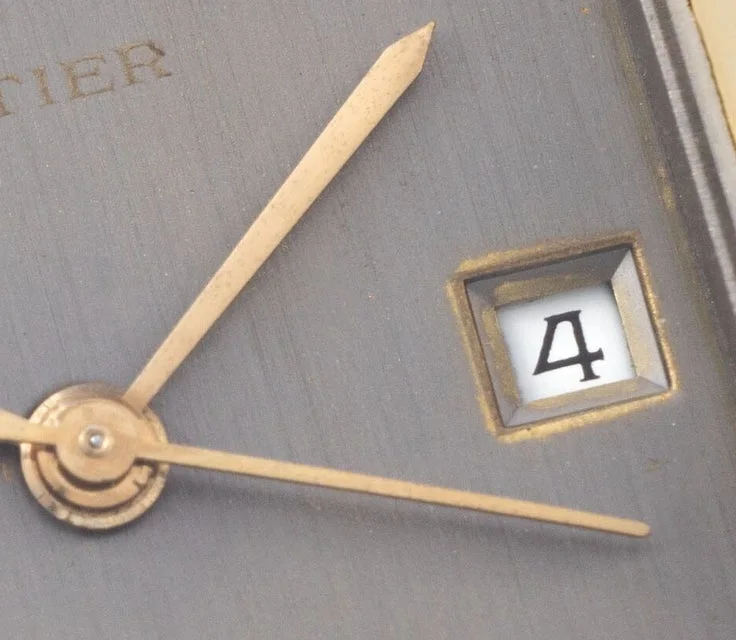

- movement name checked against the watch
Bracelet and strap 2 described
The bracelet is integrated into the case and its links repeat the screw heads of the bezel.
Integrated steel-and-gold bracelet
The Carrée bracelet is said to be the first in Cartier's history to combine gold with steel. An all-steel version followed before long, and a solid-gold one later.
- screw-head links
- original bracelet and clasp
Godron bracelet
A godron bracelet is described as a special-order option of the mid-1980s, though the claim that it was offered for one year only is not corroborated by Cartier documentation. Listing titles in the library's records use 'godron' mostly on 2961 watches, with a few on 2960, 0901 and 0902.
Box and papers 1 described
The one accessory the literature describes is the box of the solid-gold watch.
Or Massif box
The solid-gold watch is said to have come in a Cartier box with a gold plaque reading 'Or Massif'.
- gold plaque on the box
Reference numbers
A four-digit number is stamped on the case and covers a case; a code beginning W, or the newer letter codes, is a catalogue number for one version of it (metal, dial, strap). Many older watches carry neither. The last column is the listings on record under the number, as its own page counts them.
| Number | What it is | Listings |
|---|---|---|
| 2960 | The automatic Carrée, generally the steel watch with date, about 29 x 41 mm; sellers also apply it to gold and two-tone watches and to the solid-gold Or Massif. | 107 |
| 2961 | The automatic two-tone Carrée, steel and gold, with date at 3; the same number is also recorded on a curved Galbée, so the shape must be checked. | 191 |
| 2964 | The solid-gold Or Massif Carrée, 27.5 x 38.5 mm, as one published account gives it. | 2 |
| 0901 | As sellers describe it, a small automatic Carrée, about 24 mm in some titles and called a lady's watch in several, in steel or in 18-carat yellow gold; one title gives a burgundy 'Swiss' dial, others a slate dial. No catalogue code is recorded beside it. | 19 |
| 0902 | As sellers describe it, a steel-and-gold automatic, in one title on a godron bracelet. | 51 |
Originality
- Factory servicing can mean replacement dials or hands where Cartier judged the originals out of tolerance, so a recently serviced watch may not carry its first dial.
- A burgundy dial reading 'Swiss made' is described as a service dial; 'Swiss' alone is the form to look for.
- Crazing on a burgundy dial should look like aged lacquer; a dial that looks freshly painted may have been refinished, and conversions and refinishes are a concern on both the slate and the burgundy dials.
- Polishing softens the flat planes and screw recesses that define the Carrée case, and a late-dated 2961 may be a curved Galbée rather than a flat Carrée.
Names
- Or Massif. The solid-gold watch came in a box with a gold plaque reading 'Or Massif'.
- Ghost. A slate dial on which the signature fades until it is nearly invisible.
Where accounts differ
Points on which the published literature and the library's own records do not agree, or on which the literature contradicts itself.
- End of the Carrée and start of the Galbée. One account says the Carrée was replaced by the Galbée in 1987. The guide in one account says no cut-off is documented, records 2961 watches through the 1990s including one sold new in Paris in 1999, and says that the point where one replaced the other is not securely documented. In the library's records many listings of the line carry seller-stated years in the 1990s, which may include watches numbered 2961 with the curved case.
- Which number is the solid-gold watch. One account gives the Or Massif as 2964. The guide in one account places a solid 18k yellow-gold 2960 at about 1978 to 1990, and sellers in the library's records call 2960 watches 'massif' or 'or massif'.
- Whether the burgundy and slate dials are dated. One account ties the burgundy dial to the 1979 anniversary and pairs it with the grey dial. The guide in one account says the slate and burgundy dials are parallel production options not reliably tied to year cut-offs, and that overlap in period.
In the records
Counted from 341 listings at dealers and auction houses whose title, or whose reference, places them on the line; 176 state a year. These are what sellers state, not measurements, and a count of listings is not a count of watches made.
Case metal
| Metal | Listings | Share |
|---|---|---|
| Steel | 71 | 46% |
| Gold, any colour | 41 | 27% |
| Yellow | 23 | 15% |
| White | 1 | 1% |
| Colour not stated | 17 | 11% |
| Steel and gold | 40 | 26% |
| Platinum | 2 | 1% |
As sellers state it. Shares are of the 154 listings that name a metal. A listing that says "gold" or "18K gold" names no colour: it is counted under "colour not stated", not as yellow gold. Carat, where a listing of gold gives one: 18k 24.
Case size
| Size | Listings | Share |
|---|---|---|
| 29 mm | 83 | 73% |
| 24 mm | 10 | 9% |
| 41 mm | 6 | 5% |
| 23 mm | 3 | 3% |
| 30 mm | 2 | 2% |
| 23.5 mm | 1 | 1% |
| 25 mm | 1 | 1% |
| 27 mm | 1 | 1% |
| Other sizes | 7 | 6% |
As sellers state it. Shares are of the 114 listings that give a size. On a watch that is not round some sellers give the width and some the length, so one watch can stand under two sizes.
Movement
| Kind | Listings | Share |
|---|---|---|
| Automatic | 74 | 99% |
| Quartz | 1 | 1% |
Shares are of the 75 listings whose description says how the watch is driven.
Listings by decade the seller gives
| Decade | Listings |
|---|---|
| 1970s | 3 |
| 1980s | 120 |
| 1990s | 47 |
| 2000s | 1 |
| 2010s | 1 |
| 2020s | 2 |
2 more give a year outside the years the line was made (from 1978): a later watch sold under the name, or a slip. They are left out.