Day-Date
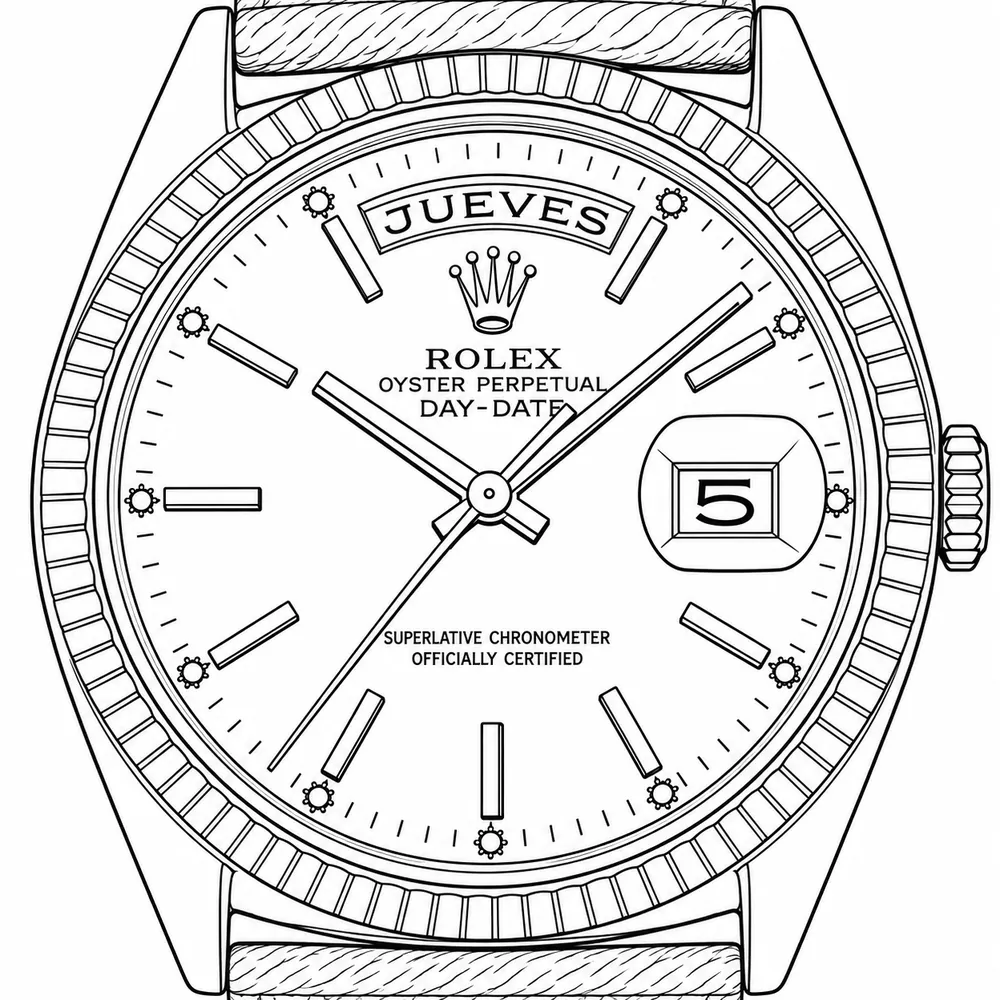
The 1803 is the third generation of the Day-Date, a 36 mm Oyster Perpetual in solid gold with a fluted bezel, made from the late 1950s to the late 1970s. It is the longest-running of the early Day-Dates and the last with an acrylic crystal and a pie-pan dial. It began with the 1555 and moved to the 1556 in the mid-1960s, and hacking was added about 1972. Neither movement has a quickset for day or date. It was replaced in 1978 by the 18038 with sapphire crystal and a quickset date. Dials ranged from champagne and silver to lacquered Stella colours, linen, wood and diamond-set versions. Collectors look first at the dial, the bezel flutes, and the bracelet's stretch.
- Made
- 1959–1978dates approximate
- Seen in the library
- 1959–1981nine in ten in 1962–1977 · by case numbers
- Case
- 36 mm · gold (99%)as sellers state
- Movement
- Calibre 1555, 1556automatic
- On record
- 2,162 listings5,623 photographs · 68 holders
Components
24 watches, oldest first, each straightened and cut the same way so that one row shows one component across them all. Chosen from 5,623 photographs on file for sharpness and for a face typical of the reference. A year marked c. is one its holder gives only roughly. Each picture is a detail cut from a listing photograph. Select the small mark in its corner for its year, its holder, a link to the listing it came from, and a way to report it.
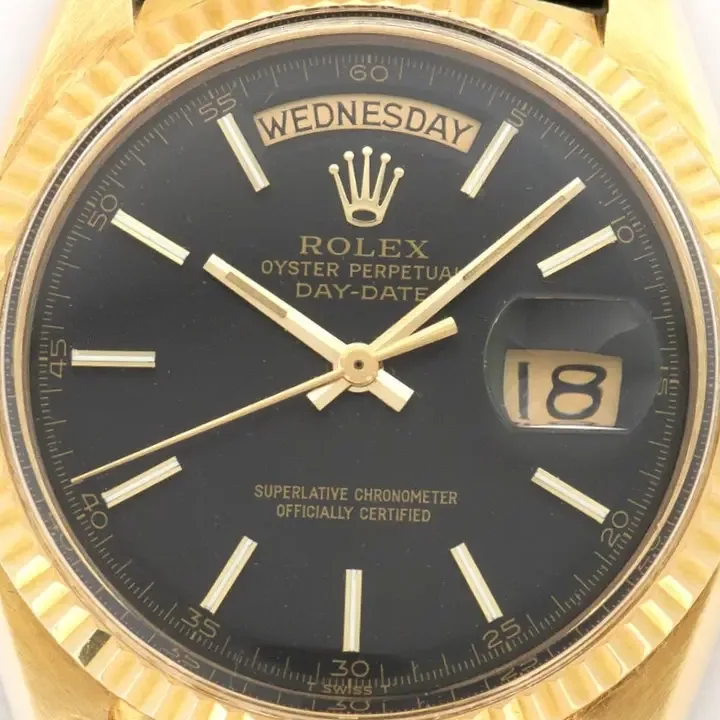
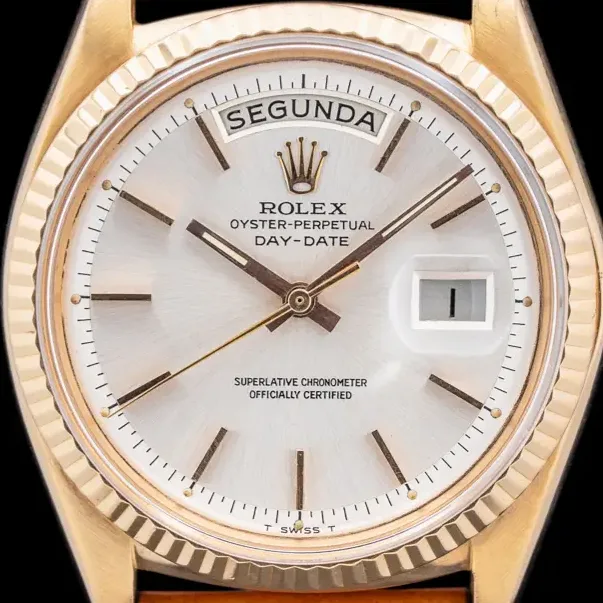
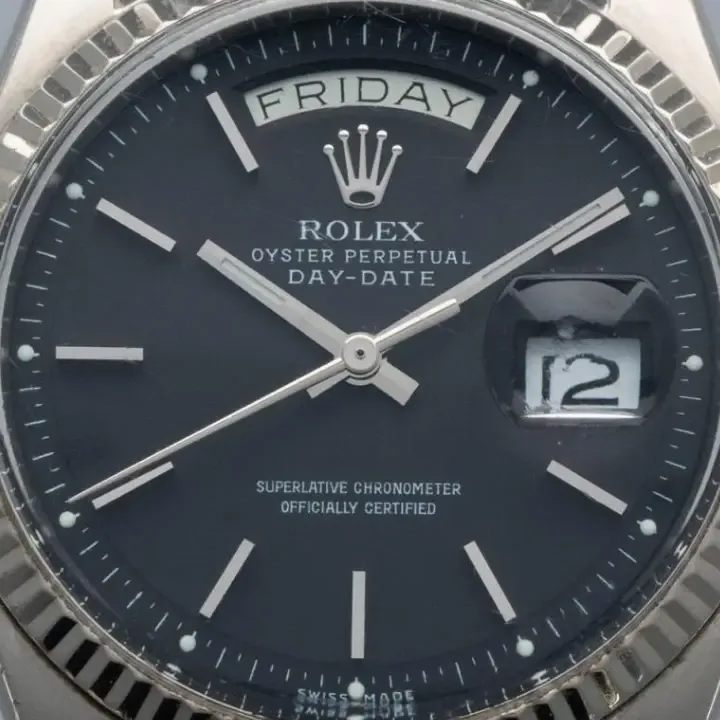
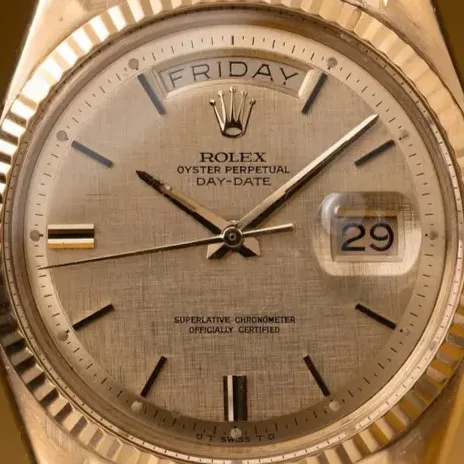
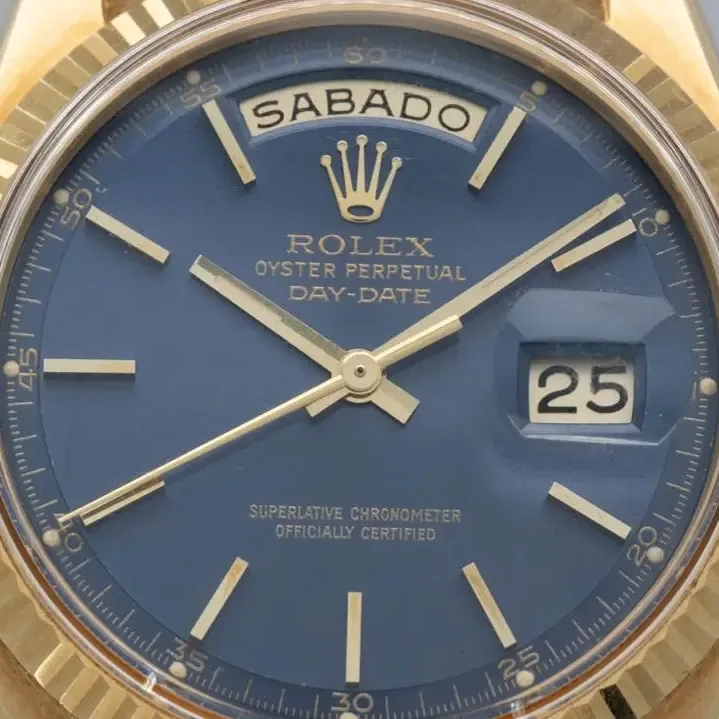
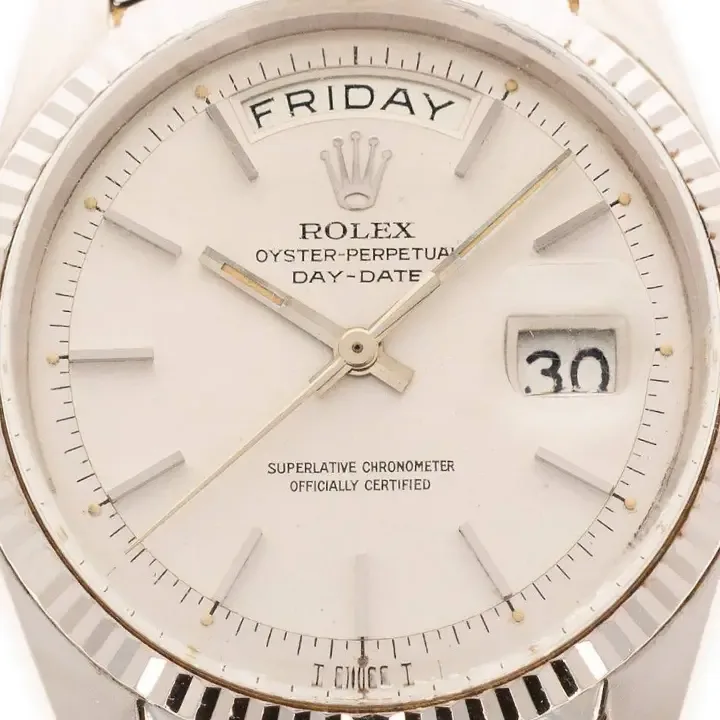
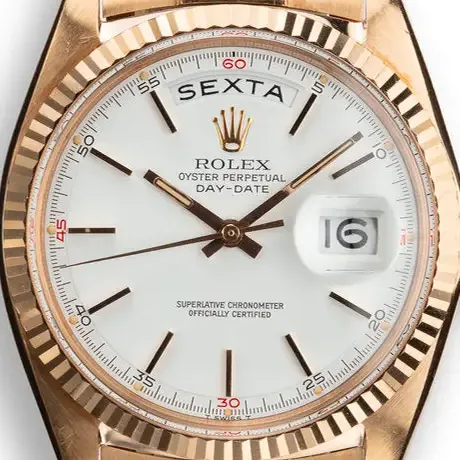
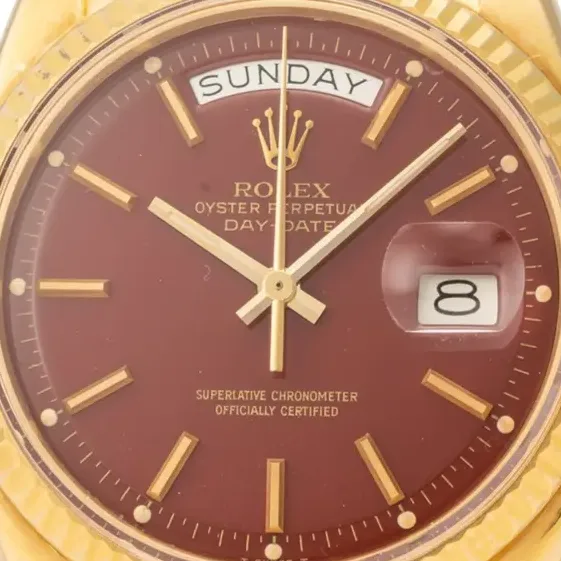
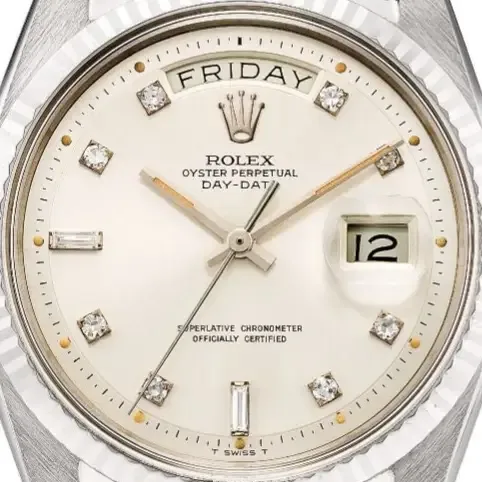
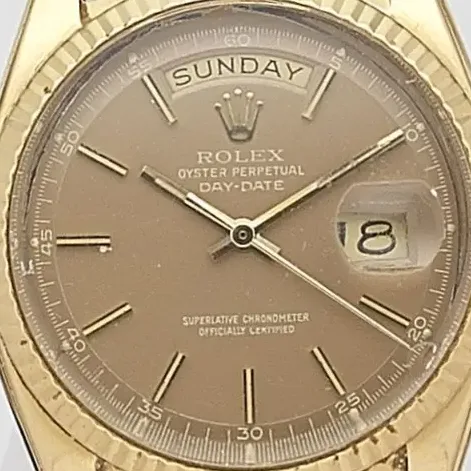
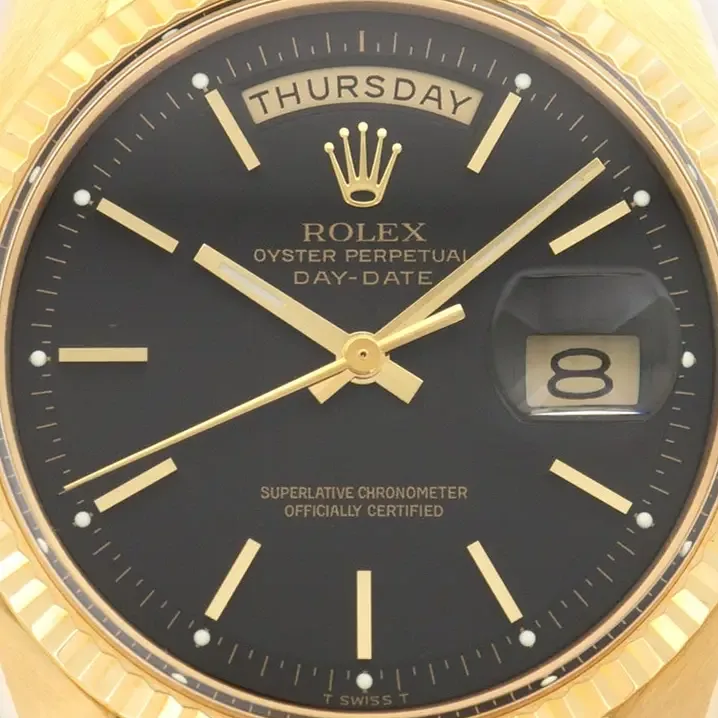
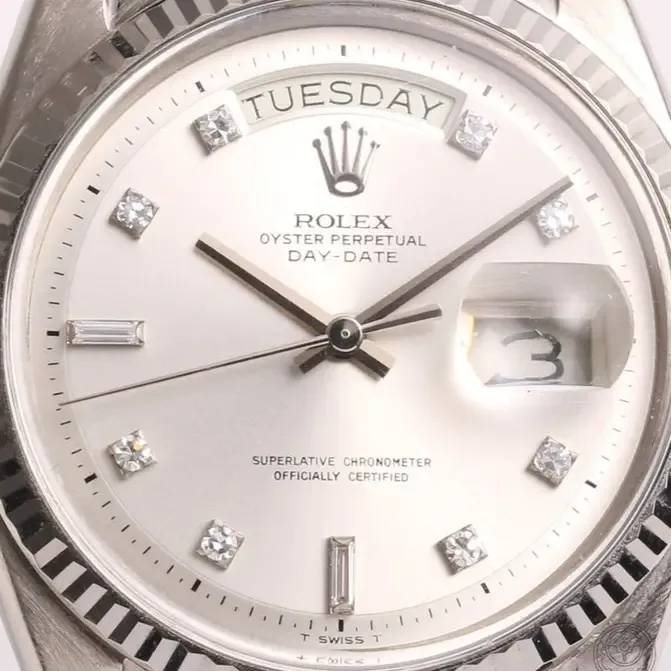
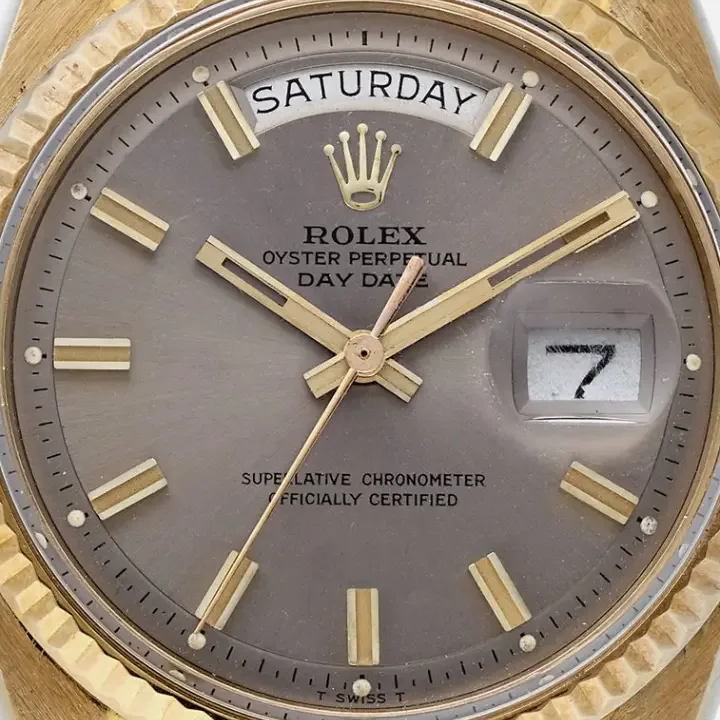
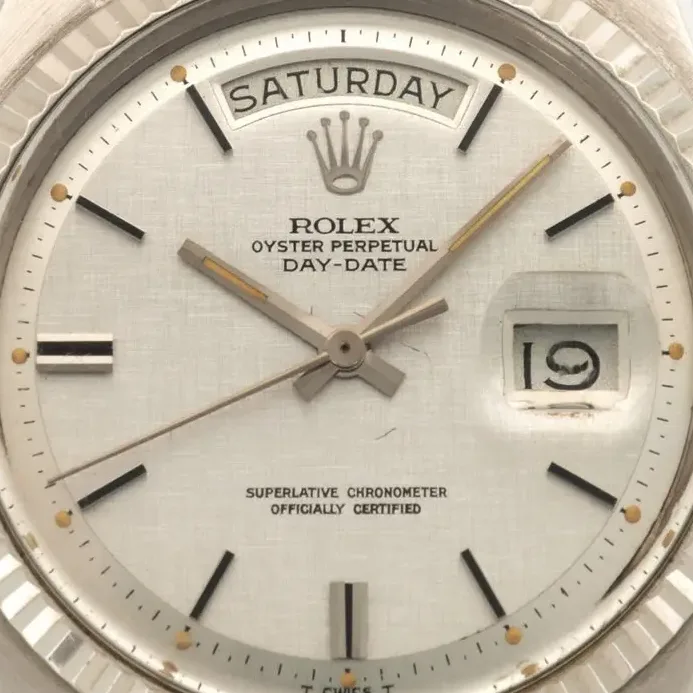
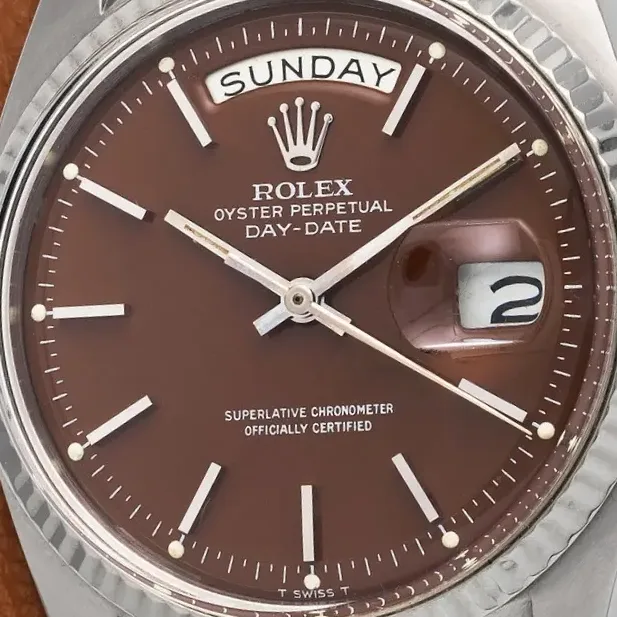
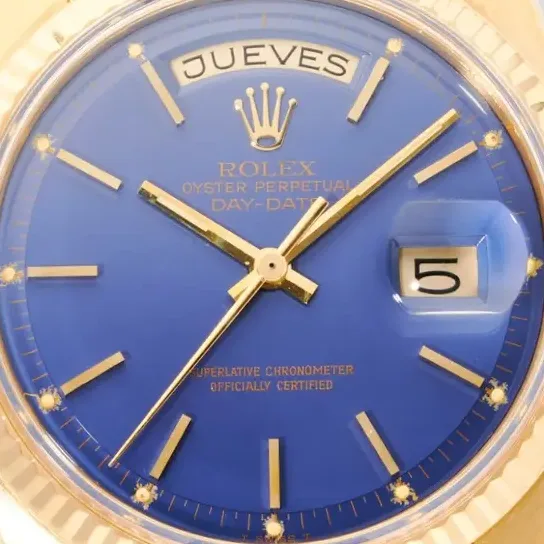
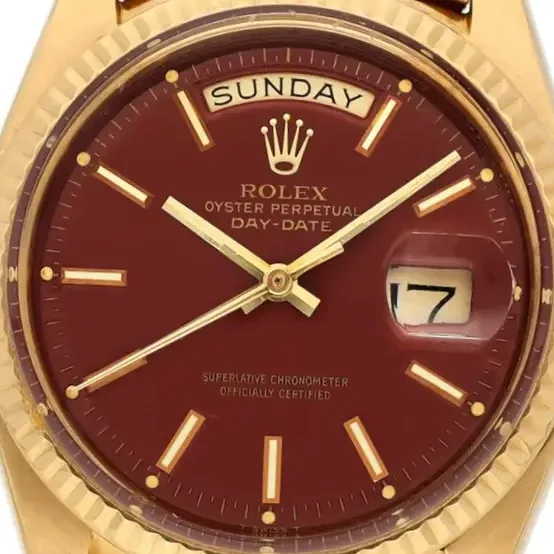
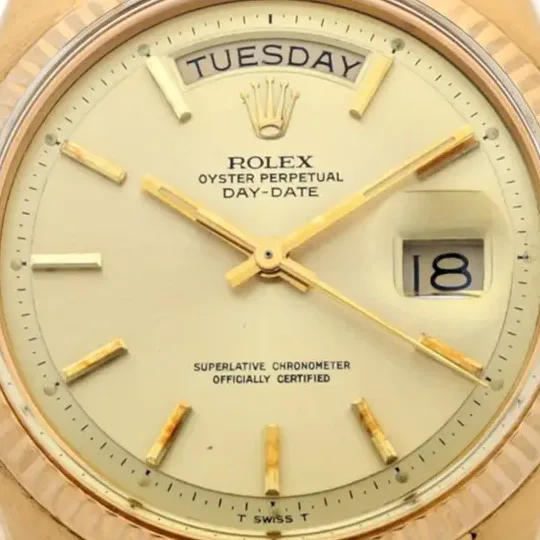
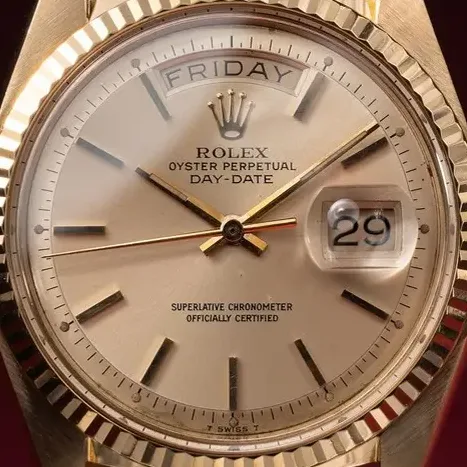
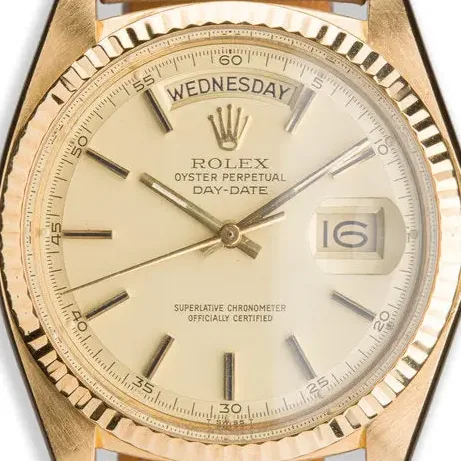
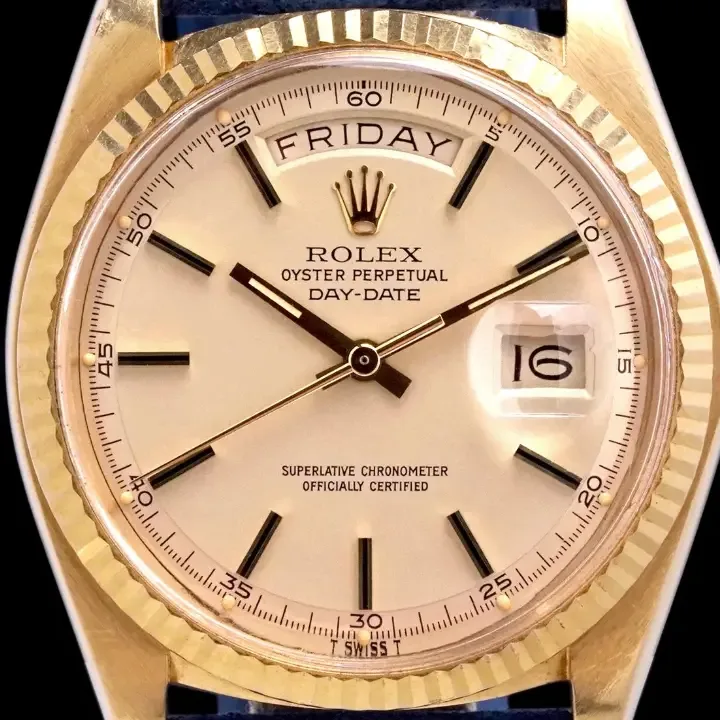
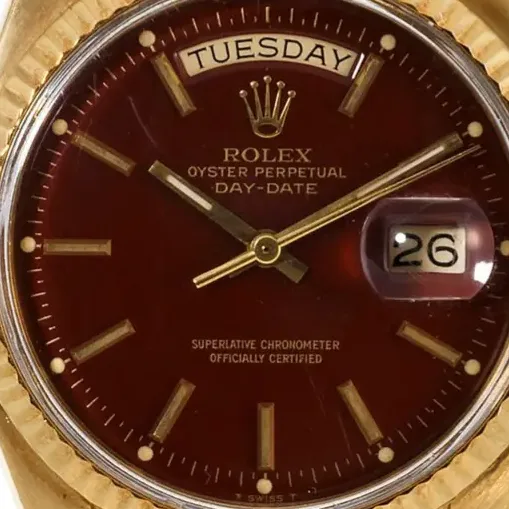
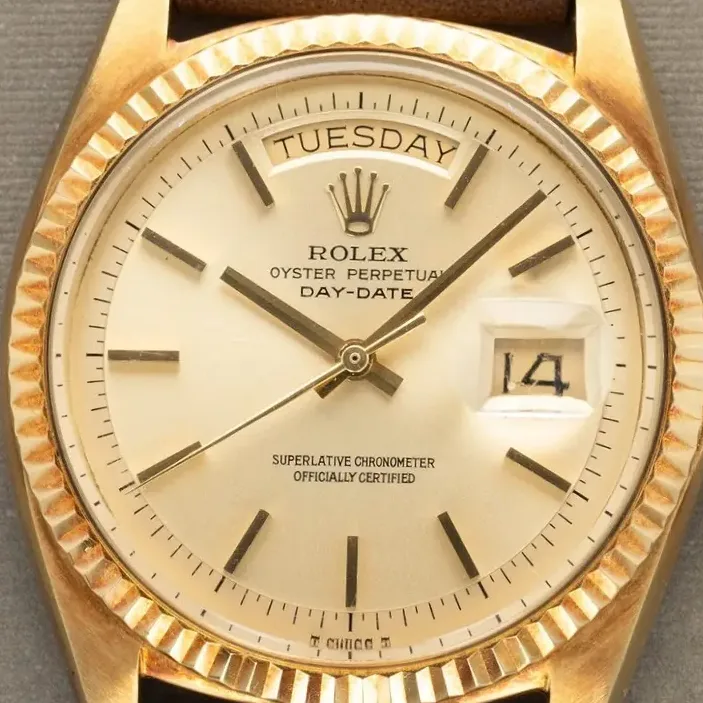
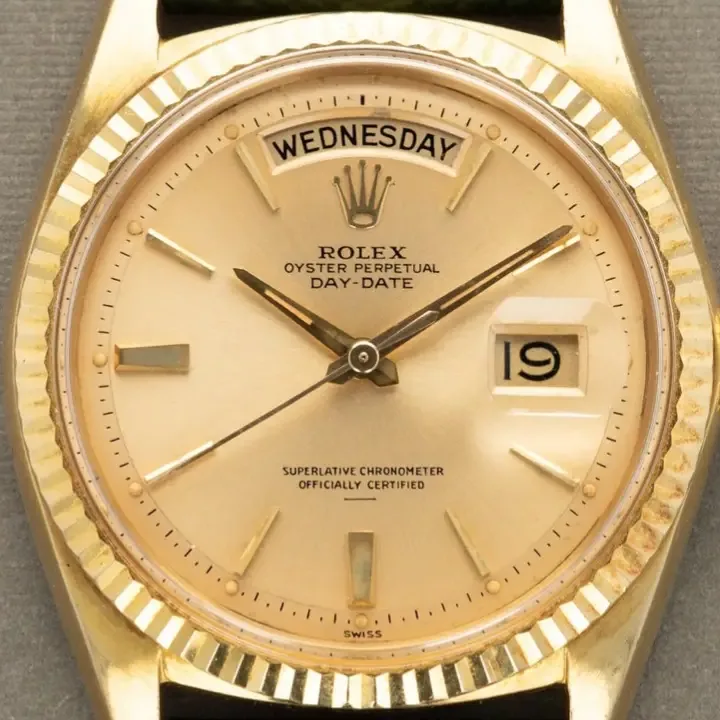

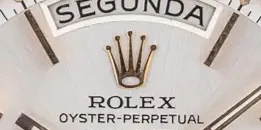
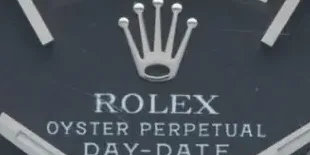

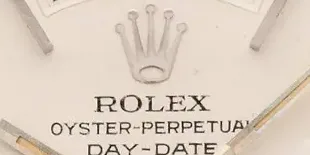
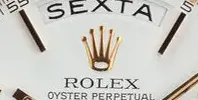

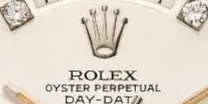

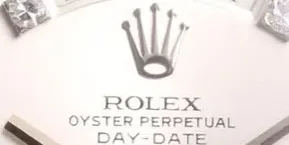
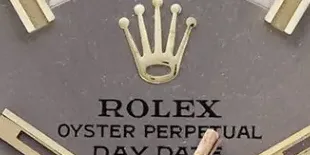


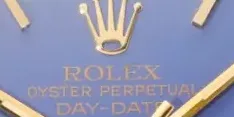


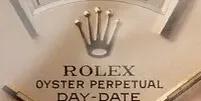
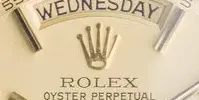
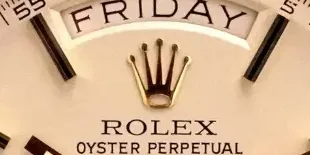
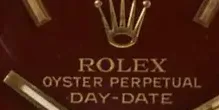
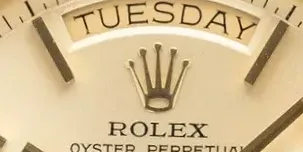
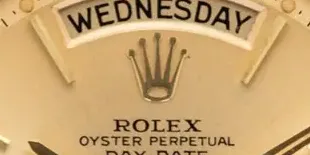









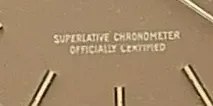










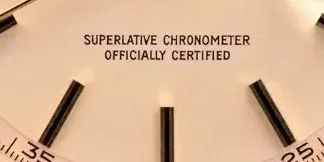

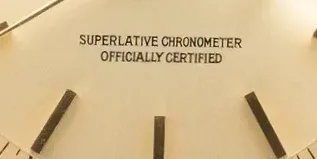

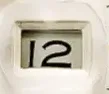
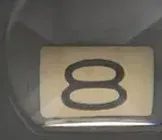

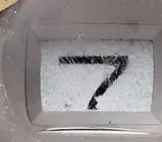

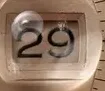
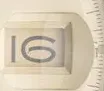
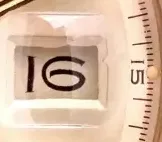
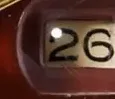
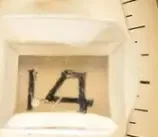
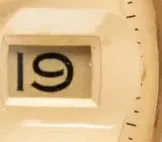
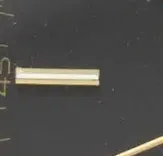
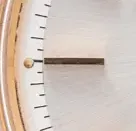

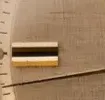
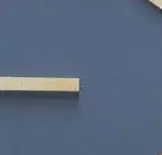
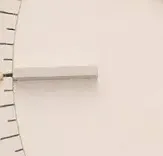
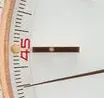

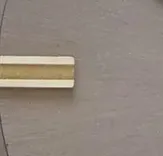
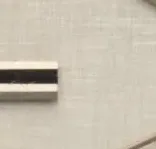
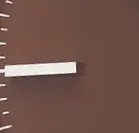
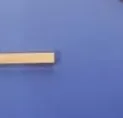
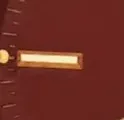
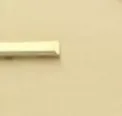
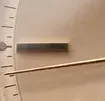
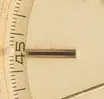
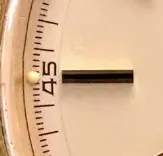
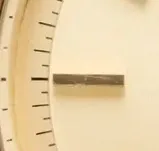
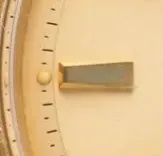

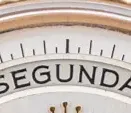
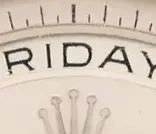

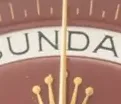
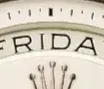
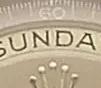


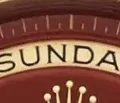
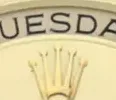
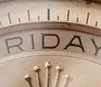

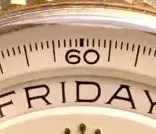



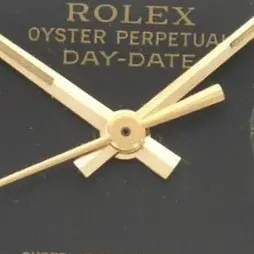




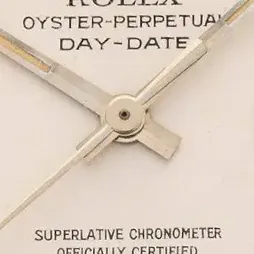

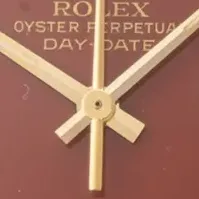

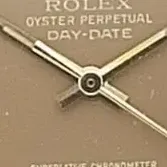
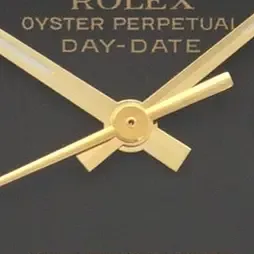

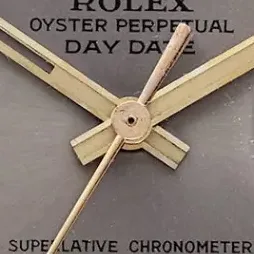





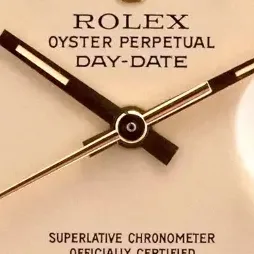

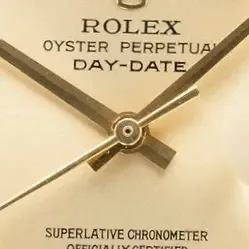
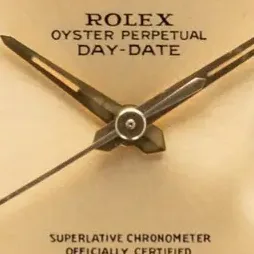

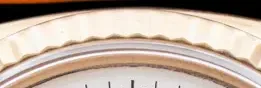
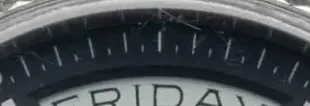



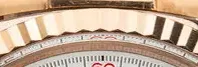
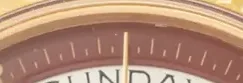

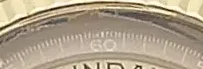
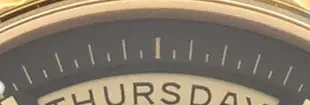

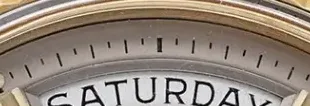
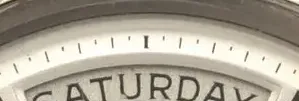
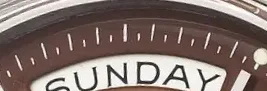


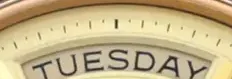
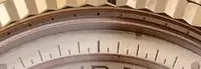
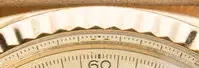
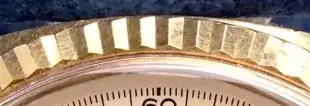
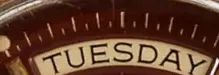
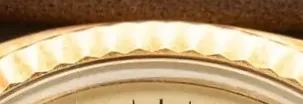
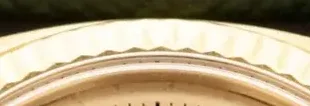
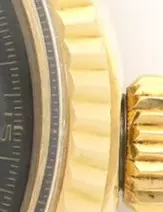
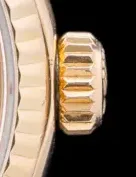

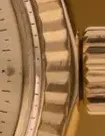
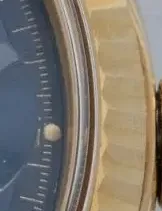
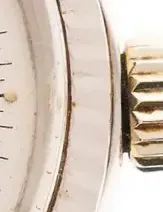
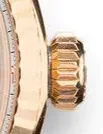
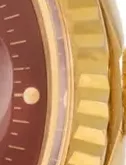
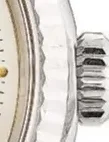
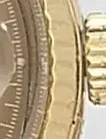
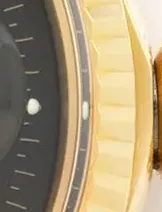
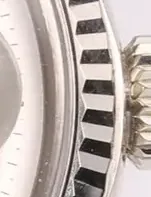
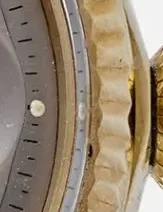



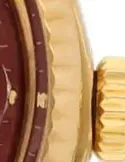
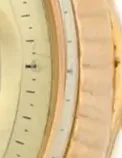
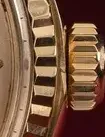
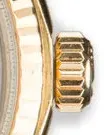
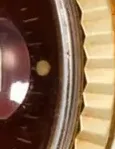


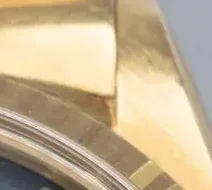

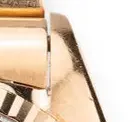

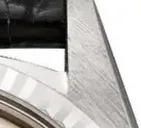



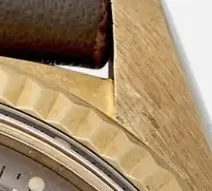

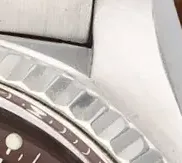

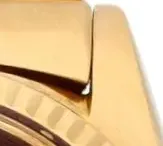


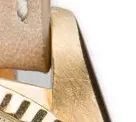
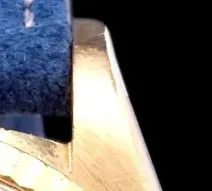
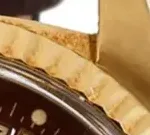

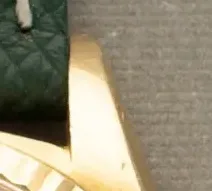
Illustrated history of the 1803: every change set out with close-up photographs of dated watches.
Chronology
Published starts run from 1958 to the early 1960s and ends from 1977 to 1978; case numbers in the library's records run mostly from 1959 to 1978, with a few earlier and later.
Every dated variant: what is written, and what the records show
For the reference the marks are every dated watch; for a variant, the watches a seller names as that variant, so a variant sellers do not name has none.
The reference's own marks are dated by case number. A variant's marks use the year each seller states, so a variant can show watches in a year where the row for the reference shows fewer, or none. 90 dated listings fall outside this scale and are not drawn.
Specification
| Case | 36 mm solid 18k gold case in yellow, white or pink gold, or rarely platinum; about 12 mm thick, slim lugs without drilled holes; fluted bezel; screw-down crown on a Twinlock or Oyster tube |
| Crystal | High-domed, box-type acrylic with cyclops |
| Dial | Pie-pan dial with applied markers, day window at 12 and date at 3; champagne, silver, black, white and lacquered colours |
| Movement | Calibre 1555 (18,000 bph), then 1556 (19,800 bph, 26 jewels) from the mid-1960s; Micro-Stella balance, Breguet overcoil; hacking from about 1972; no quickset |
| Bracelet | 18k gold President with three rows of semi-circular hollow links and a concealed Crownclasp; or a rivet Oyster in gold |
| Water resistance | Original rating given as about 50 m; not to be relied on after decades |
Dial 11 described
Almost all 1803 dials are pie-pan, with the outer edge sloping down, and the 1803 is the last Day-Date to have it. Champagne is the commonest colour, then silver; black, white and lacquered colours are scarcer. Applied baton markers with tritium plots are standard; Roman and Arabic numerals and diamond markers were made in small numbers.
Pie-pan dial
A dial whose outer zone slopes downward, giving depth and texture. Most 1803 dials are described this way, and some accounts say all of them; flat dials arrived with the five-digit references. On one dial the curve is confined to the minute track, which makes the slope slight.
- outer edge angled down
Champagne and silver
Champagne is the most plentiful; silver sunburst and champagne have applied baton markers, shaped like tapered faceted golf tees on a 1967 example.
- applied baton markers
Also sold under this name and confirmed by eye, the photograph not shown here: 1964 · the listing at swisswatchexpo.com.
Stella lacquer dial
Glossy lacquered enamel dials in red, blue, green, orange, pink and turquoise, mainly for the Middle East, with oxblood red and an ultra-rare lilac. Published accounts have them emerging in the 1970s and made only briefly.
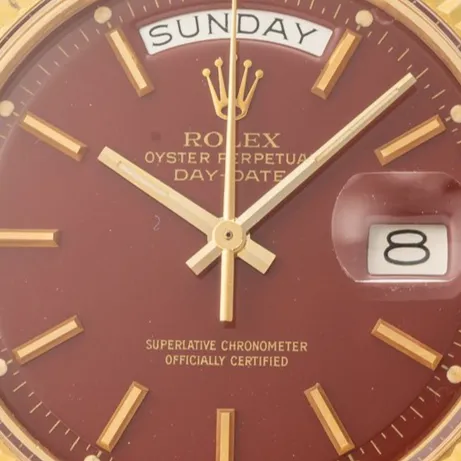
- glossy lacquer colour
- lilac
114 listings on record under the name.
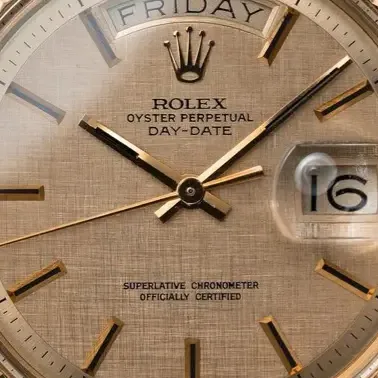
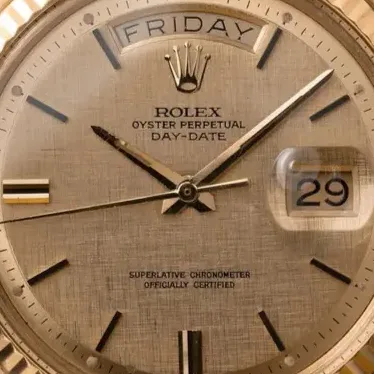
Linen dial
A gold or champagne dial with a linen texture.
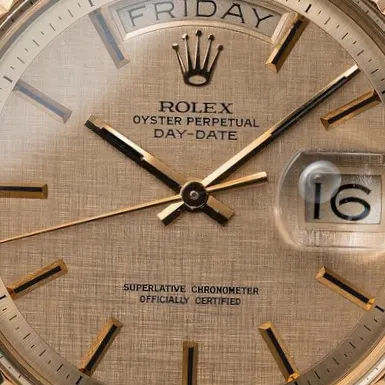


Wood and stone dials
Rare dials of wood or stone.
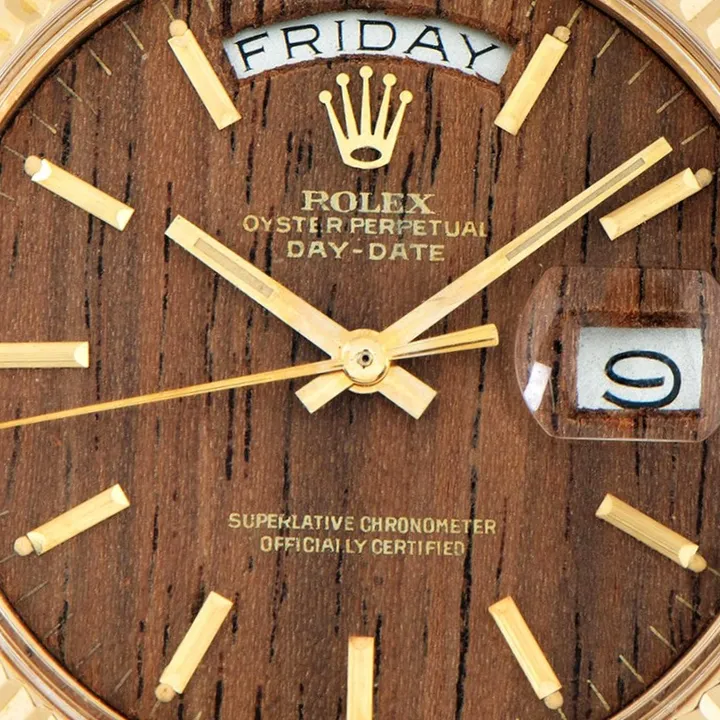

8 listings on record under the name.
Sigma dial
A marker detail that sellers name on a number of watches; the published accounts do not describe it.
Wide Boy and Buckley dials
Seller labels for dials, the Wide Boy more often than the Buckley; the published accounts do not describe them.
Cafe au lait dial
A light brown dial with white pad printing that looks faint or ghost-like at some angles; 1976 was the last year it was offered. Tritium dots can stain the dial around them, giving a fried-egg look.
- light brown
- white pad printing
- fried-egg lume halos
Diamond and numeral dials
Arabic or Roman numeral dials and diamond-accented markers were made in small numbers; Arabic day text is among the rarest, mostly on platinum watches for the Middle East.
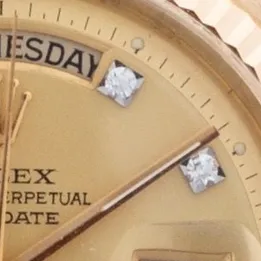

- Roman numerals
171 listings on record under the name.
Khanjar and other signatures
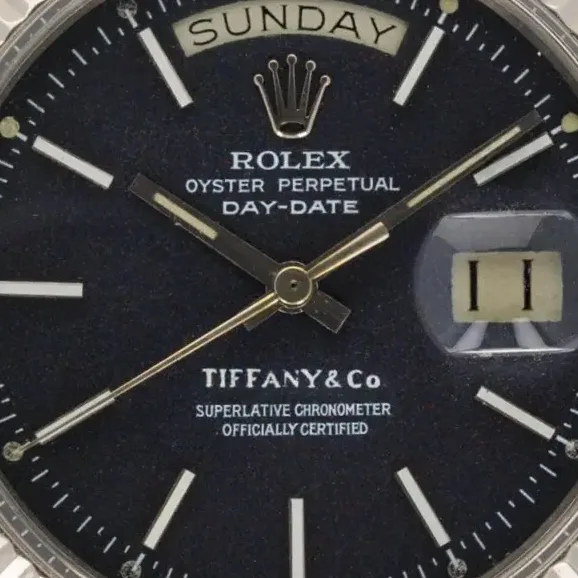
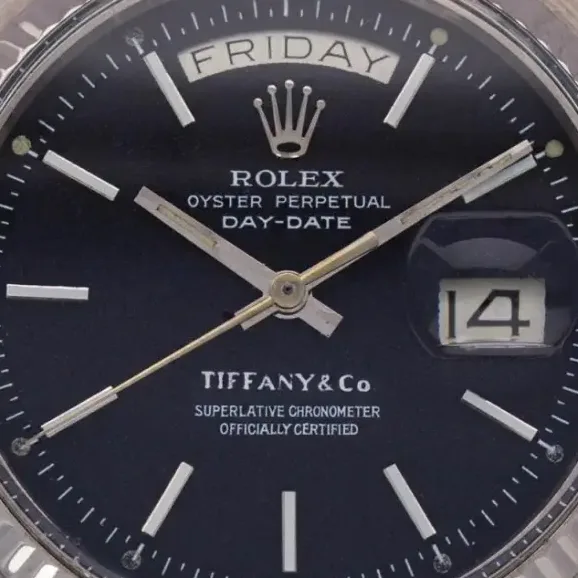
Dials signed with the Khanjar of Oman, Tiffany & Co. and UAE are described by sellers, the Khanjar most often.
- Khanjar emblem
- Tiffany signature


Swiss markings
Sellers describe some watches as having SWISS alone at six, others T SWISS T, and a few an underline version. The literature does not cover these markings, so nothing is said here about when each was used.
- SWISS or T SWISS T at six
Luminous material 1 described
Tritium, aged to cream.
Radium and tritium
The 1800 series is said to be the first to use tritium rather than radium, mostly on the hands; sellers still describe a few early watches as radium. Original lume is evenly aged and soft cream; a good original dial still has its tritium dots above the indexes.
- cream tritium
- matching hands and plots
Hands 2 described
Very early hands are alpha; baton hands soon replace them.
Alpha hands
Broad at the base, tapering to a point, and paired with faceted indexes in which the 6 and 9 are twice the usual width. Rolex soon changed to baton hands and baton indexes.
- wide alpha hands
- double-width 6 and 9
Baton hands
Simple baton hands with baton indexes replaced alpha hands in the 1800 series; sellers describe Dauphine hands on a few early watches.
- baton hands
Bezel 1 described
The last digit of the reference gives the bezel: 1802 smooth, 1803 fluted, 1804 diamond, 1806 linen-textured, 1807 bark, 1811 Florentine.
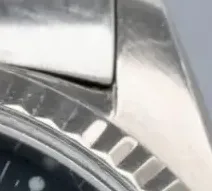
Fluted bezel
The signature of the 1803. Rounded flutes show heavy polishing; crisp facets mark an unpolished example.
- crisp flutes
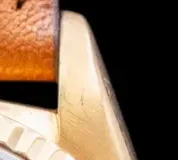
Case 1 described
The case is 36 mm in 18k yellow, white or pink gold, or very rarely platinum. Pink gold is scarcer, and a pink tint on older yellow gold is put down to a higher copper content. The lugs are slim and undrilled, making bracelet swaps harder.
Solid gold case
Genuine 1803s are solid gold or platinum throughout. Over-polished cases show thin lugs and soft flutes.
- slim undrilled lugs
- crisp bevels
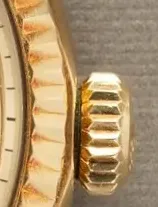
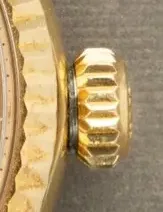
Crown 1 described
Screw-down crown on a vintage Twinlock or Oyster tube.
Twinlock crown
Sellers describe a Twinlock crown on a few watches.
- Twinlock crown
Crystal 1 described
Acrylic, the last Day-Date to use it.
High-domed acrylic
Tall, warm and slightly domed, with a cyclops over the date; scratches readily but can be polished out. Where a listing gives a sapphire crystal it is in stock wording; the 1803 was made with acrylic.
- box-type domed acrylic
Date 2 described
Day at 12 and date at 3, with no quickset.
No quickset
The calendar is changed by winding the hands through repeated 24-hour rotations past midnight. The 18038 added a quickset date and the 18238 quickset day and date.
- day at 12
- date at 3
Day wheel languages
Eleven day-wheel languages are offered, including Spanish, with full Arabic among the rarest.
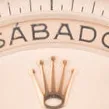

43 listings on record under the name.
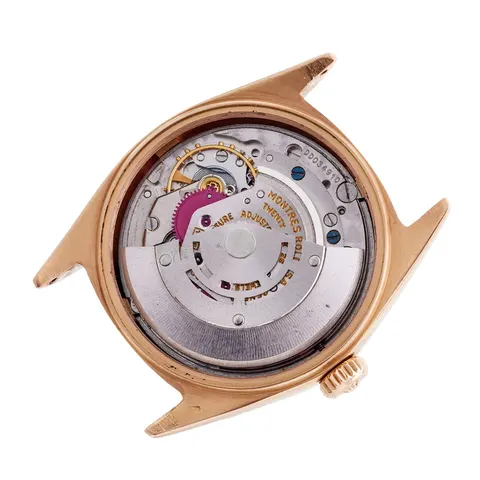
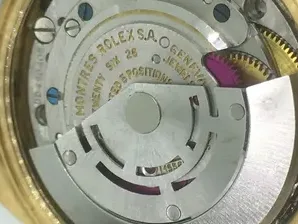
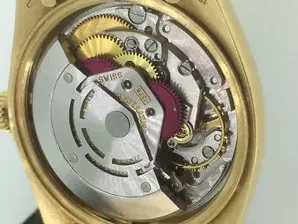
Movement 3 described
Two calibres, both 1500-series and without quickset.
Calibre 1555
Based on the 1530 and Day-Date only: 18,000 bph, free-sprung Micro-Stella balance, Breguet overcoil; thickest of the range but slimmer than its predecessor. Lacks hacking.
- 18,000 bph
Calibre 1556
Almost identical but at 19,800 bph with 26 jewels and better shock resistance; hacking added from about 1972. The date of change is given as 1965 to 1967, and some accounts call the new calibre 1565. Sellers name the 1556 on far more watches than the 1555, mostly at high case numbers.
- 19,800 bph
- 26 jewels
Hacking
Hacking seconds added across the 1500 family.
- seconds stop when crown pulled
Bracelet 3 described
The President bracelet is generally said to have arrived with the first Day-Date of 1956, though one account calls the 1803 the first Day-Date to wear it. Both gold bracelets of the 1803 have hollow links.
President bracelet
Three rows of semi-circular hollow links, light and prone to stretch; a hidden Crownclasp marked only by a small coronet. A 1967 clasp has an embossed crown and is stamped 8385.
- three semi-circular links
- coronet on clasp
- stamped 8385
Rivet Oyster
A rivet-style flat-link Oyster in 18k gold was also sold.
- flat riveted links
Jubilee and leather
Sellers describe Jubilee bracelets and many leather straps, a large share being replacements.
Box and papers 1 described
Papers that survive with these watches range from the original guarantee to later service papers.
Papers
Service papers, punched guarantees and chronometer certificates; the last new 1803s were sold by authorised dealers in the early 1980s.
Originality
- Dials are often refinished and hands, crystals and bracelets swapped for aftermarket parts.
- The hollow-link bracelet stretches, and many used watches have replacement bracelets.
- Rounded bezel flutes and thin lugs mean heavy polishing.
- The crystal should be acrylic; the 1803 was not made with sapphire.
- A non-gold case or bracelet points to a fake.
- On an original dial the tritium on plots and hands has aged alike; plots that look fresher than the hands, or print that is unusually sharp, point to a refinished dial.
Names
- Pie-pan. The outer edge of the dial slopes down.
- Stella. The lacquered coloured dials.
- President. The bracelet type.
Where accounts differ
Points on which the published literature and the library's own records do not agree, or on which the literature contradicts itself.
- Start of production. Starts are given as 1958, 1959 or the early 1960s. Case numbers in the archive begin in 1959 and 1960, with a handful in 1956 and 1957.
- Stella dial date. Published accounts place Stella dials in the 1970s, and most watches in the library's records described with them do date from then; a share of the 1803s numbered 1.50M to 1.75M, from 1966 and 1967, are also described with them.
- Calibre change. The move from 1555 to 1556 is dated 1965, the mid-1960s or 1967. Two accounts call the later calibre 1565; one of them gives it 19,600 vph and elsewhere puts a 1556 at 21,600 vph, where the other accounts give 19,800. The records show the change near case number 1.2M, in 1965 or 1966.
- Tritium before radium. One account says the 1800 series was the first to use tritium rather than radium; sellers describe a few watches of the early 1960s as radium.
- First Day-Date on the President bracelet. One account says the 1803 was the first Day-Date to wear the President bracelet; other published guides say the bracelet was introduced with the first Day-Date references, the 6510 and 6511, in 1956.
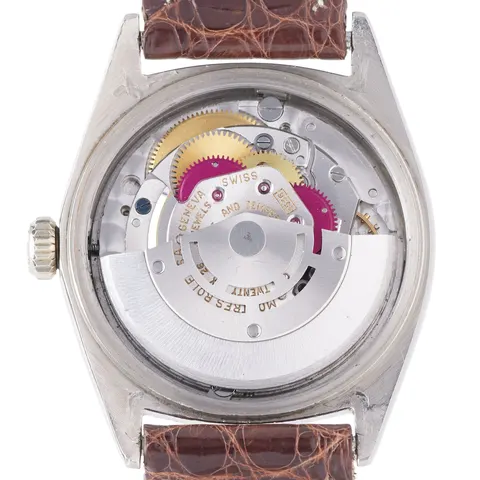
Back and movement
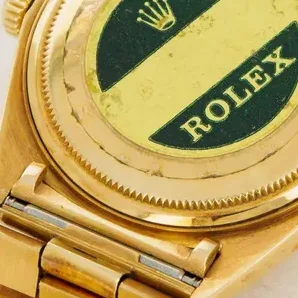
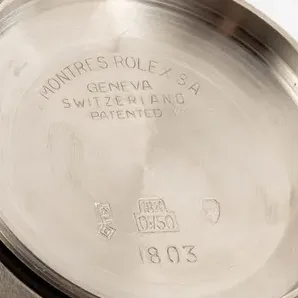
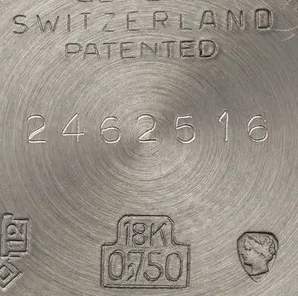
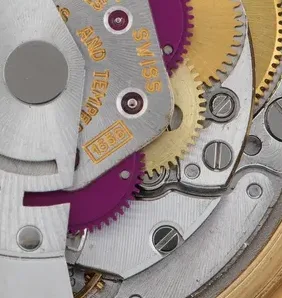
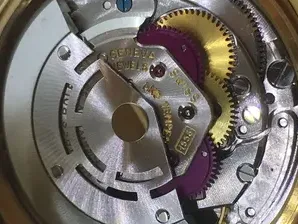
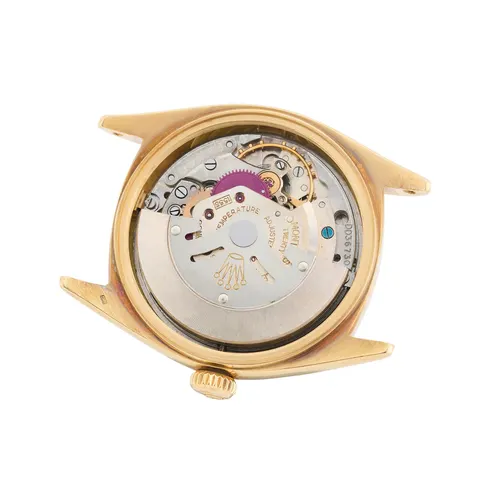
From listings of this reference, each confirmed by eye to show what it is filed under. A picture on which a person's name or a personal engraving can be read is not shown. From most holders a detail from the middle of the photograph is shown; the mark in its corner gives its holder and a link to the listing.
Caseback

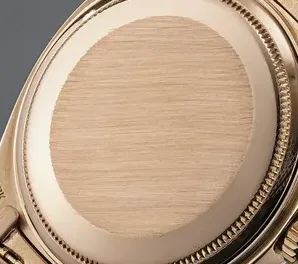

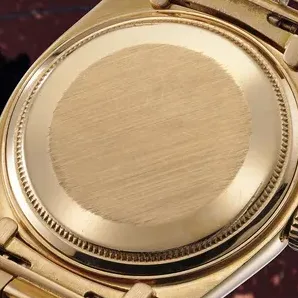

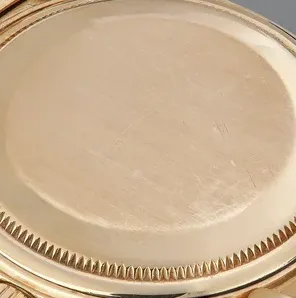

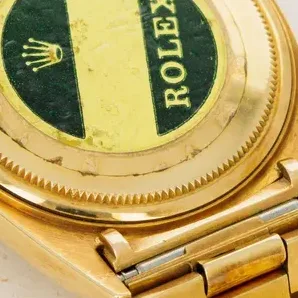

Inside the caseback


Movement







Catalogue versions 2 listed
The full numbers under which holders list this reference, with what their listings say of each. Each has a page of its own.
| Version | Metal | Dial | Years seen | Records |
|---|---|---|---|---|
| 1803/9 | White gold | Silver | 1963–1972 | 24 |
| 1803/8 | Gold or yellow gold | Champagne | 1963–1979 | 19 |
In the records
Counted from 2,162 listings at 68 holders between 16 October 2005 and 14 November 2026. These are what sellers and auction houses state, not measurements.
Fainter bars are the 54 outside the main run of 1962–1977 (the middle nine-tenths): the earliest is 1956 and the latest 1981. They are early and late examples, and now and then a number misread. The head of the page gives 1959–1981: the years that listings from two holders bear out.
At the holders that record papers on every watch, 6% of their 123 listings of this reference come with papers; at those that record the box on every watch, 29% of 260 come with a box. "Papers" is whatever the holder counts as papers, and can include service papers.
1 listing dated long after the reference ended is set aside and not counted here: a year that late belongs to a later watch sold under the old number, or to a listing filed under the wrong one.
Case metal
| Gold, any colour | 994 | |
| Yellow | 442 | |
| White | 162 | |
| Pink | 107 | |
| Colour not stated | 283 | |
| Silver | 4 | |
| Steel | 2 |
A listing that says "gold" or "18K gold" names no colour: it is counted under "colour not stated", not as yellow gold.
Dial colour
| Champagne | 360 | |
| Silver | 234 | |
| Black | 64 | |
| Red | 55 | |
| White | 52 | |
| Grey | 42 | |
| Blue | 36 | |
| Gold | 18 |
Case size
| 36 mm | 841 | |
| 35 mm | 21 | |
| 34 mm | 12 |
Calibre named
| 1556 | 461 | |
| 1555 | 120 | |
| 1565 | 7 | |
| 3055 | 5 |
Bracelet or strap
| President bracelet | 345 | |
| Leather strap | 281 | |
| Metal bracelet, kind not stated | 110 | |
| Strap, kind not stated | 32 | |
| Jubilee bracelet | 25 |
Each table counts the listings that state the thing, in the seller's own terms. A size, metal, colour or calibre that cannot belong to this reference is a seller's slip or a listing filed under the wrong number.