Must 21 and Chronoscaph
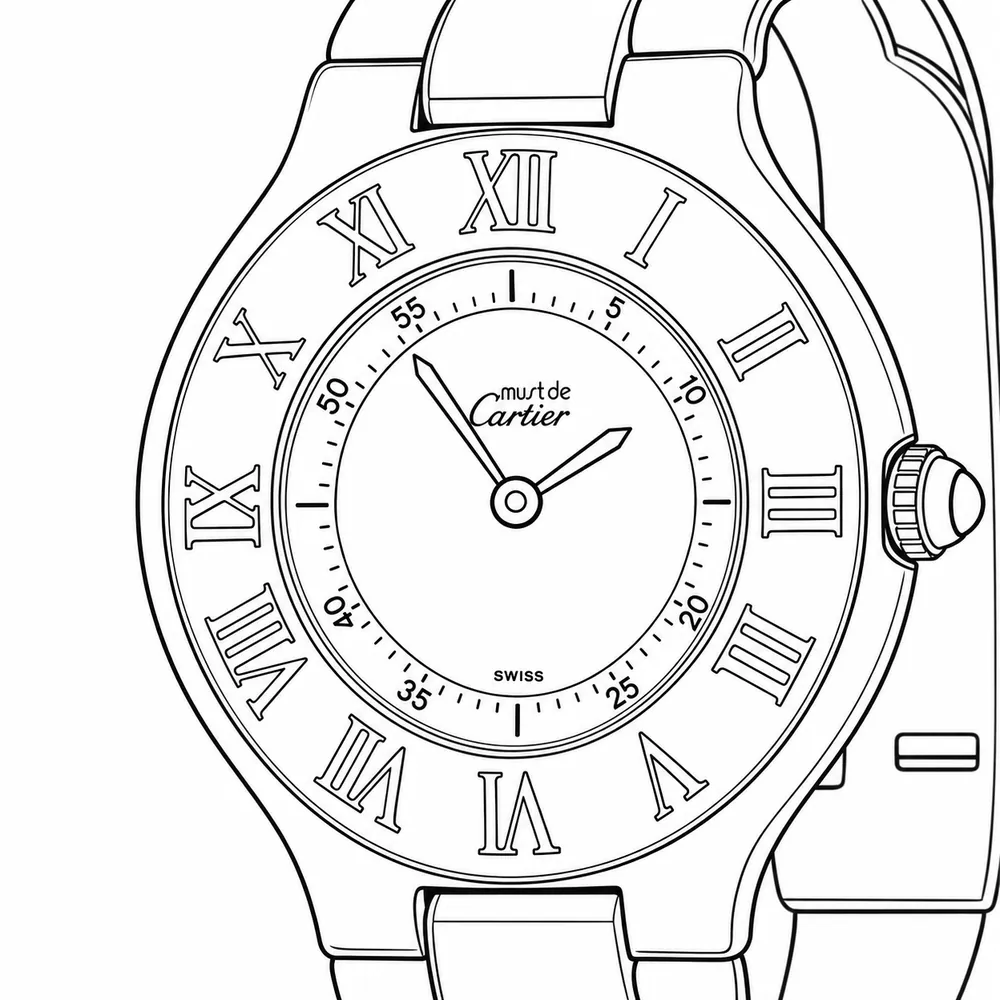
The Must 21 is the round steel quartz watch of Cartier's Must de Cartier range, with a wide bezel and a cabochon crown, made in steel and in steel with gold-coloured elements and in several sizes. Its introduction is put at 1989, the name looking ahead to the twenty-first century, and an early example is dated to about 1990. The earliest watches carry nine-digit case numbers beginning 9010 or 9011; later watches print a four-digit reference such as 1330 or 1340 beside a serial that begins with two letters. A sports-style branch, the Autoscaph and the Chronoscaph, is described with a fixed Roman-numeral bezel and a strap of rubber and steel. Few examples carry a firm date, so papers matter more than usual.
Cartier's entries are arranged by model, not by reference number, because its reference numbers are several systems at once and many of its watches carry none. The houses are set out in Paris, London and New York.

- Made
- from c. 1989Only one catalogue states an introduction year, and none gives a last year; a date of about 1980 given for one early watch is unsupported elsewhere.
- On record
- 400 listings168 of them give no reference
- Reference numbers
- 9 described27 seen in listings
What to look for
Details cut from photographs of watches of this line on record. Each was chosen by eye from a listing on the line and then checked again against the words beneath it. More sit beside the productions and parts they belong to, below. Select the small mark in a picture's corner for its holder and a link to its listing.

By house and period 3 described
Early Must 21, nine-digit case numbers
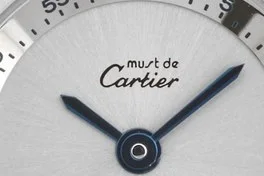
The earliest Must 21 watches carry nine-digit case numbers starting 9010 or 9011, and are recorded in steel and in steel with a gilt-metal or gold element. One early 31 mm example is described with a wide bezel engraved with Roman numerals, a railway minute track and a cabochon in the crown. The numbers cover more than one size: catalogues describe cases of 30 to 31 mm, a 35 mm watch on the Cal. 87.06, and a larger case of 38 x 36 mm with a date at 6 o'clock. The introduction is put at 1989 and an early example at about 1990; a date of about 1980 given to one steel and gold watch is supported nowhere else.
Signature and marks. Nine-digit case number beginning 9010 or 9011 on the case back; the literature gives no dial signature or stamp for this group.
- nine-digit case number beginning 9010 or 9011
- wide Roman-numeral bezel, which the later references share; railway minute track
- cabochon crown
- case number does not indicate the size
Four-digit references, 1330 and 1340
Later Must 21 watches print a four-digit reference on the case back with a separate serial that begins with two letters; on most Ref. 1340 watches described the letters are PL, though one listing gives a case number beginning NX. The Ref. 1330 is the 31 mm size, in steel or in steel and gold, with quartz movements recorded as Cal. 690 or Cal. 90.06. The Ref. 1340 is the mid-size, near 28 mm, in all steel or with a bi-colour chapter ring, bracelet or both. Both are described with a chapter ring bezel and a silvered dial. No first or last year is published for either; individual watches are dated by papers or sales, among them a 1340 with a guarantee booklet of November 1998, a 1340 catalogued at about 1990, and a 1330 sold new in April 2001.
Signature and marks. Reference and lettered serial on the case back (usually PL on the Ref. 1340); a signed Cartier quartz movement and signed bracelet are recorded on the Ref. 1340.
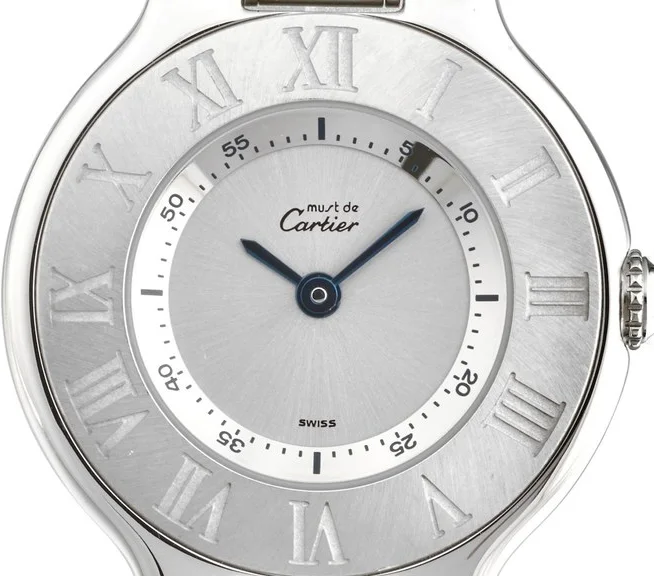

- four-digit reference printed separately from a lettered serial
- silvered dial
- 31 mm or about 28 mm case
Autoscaph and Chronoscaph
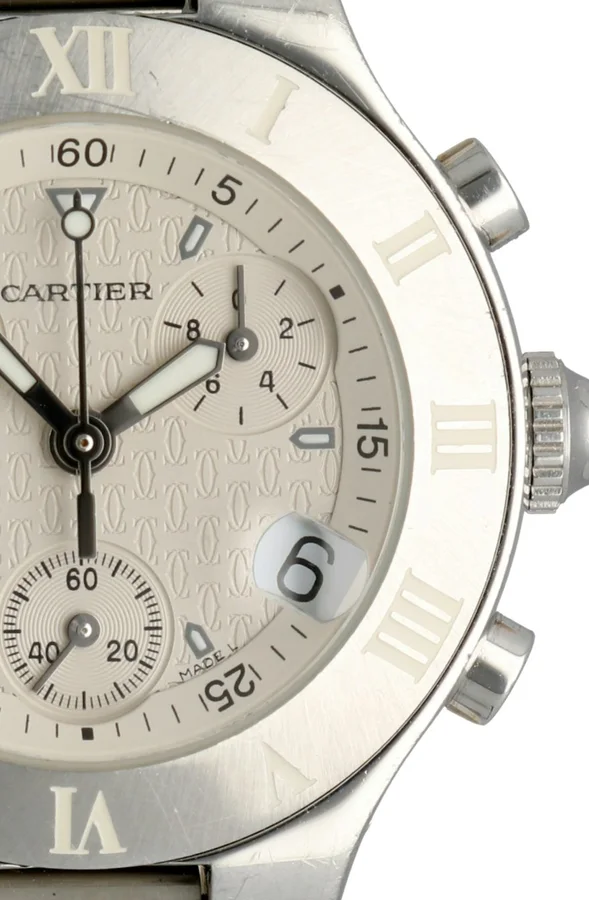
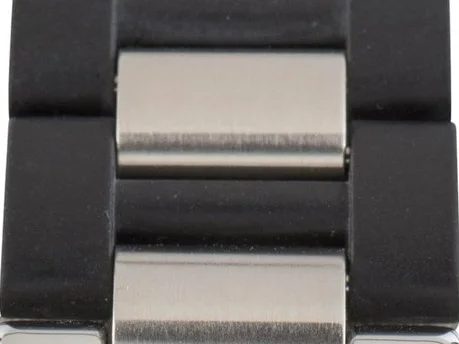
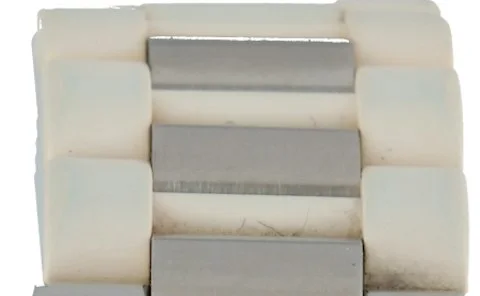
The Autoscaph and the Chronoscaph are the sports-style watches of the group. The Autoscaph is said to have come in the 1990s and is remembered for its fixed Roman-numeral bezel and a black rubber and steel strap; sellers give it an automatic movement, which the literature does not mention. A Chronoscaph is described with a 32 mm steel case whose bezel carries the Roman numerals, leaving room on the dial for its functions, a quartz movement with time, date and chronograph, and a white rubber strap with steel centre links in its upper part, turning to plain rubber towards the clasp. In the library's records most Chronoscaph listings, the Ref. 2424 among them, give a case of about 38 mm, and 32 mm is given for smaller ones such as the Ref. 2996 and W10197U2. The two listings in the literature concern single watches dated 2001 (Autoscaph) and 2009 (Chronoscaph); these are not dates of introduction.
Signature and marks. The literature gives no signature or stamp for these watches.


Chronology
Specification
| Case | Round stainless steel; two-tone examples add gold or gold-coloured elements, described variously as gilt metal, gold-plated metal or gold |
| Sizes | Early watches described from 30 to 35 mm, one larger case at 38 x 36 mm; Ref. 1330 31 mm; Ref. 1340 about 28 mm; Chronoscaph usually about 38 mm in listings, smaller ones 32 mm |
| Bezel | Wide bezel with Roman numerals; catalogues describe it as engraved with Roman numerals on an early 31 mm example and as a chapter ring bezel on Refs. 1330 and 1340, but watches in the library's records show the same bezel on the early and the later references; fixed Roman-numeral bezel on the Autoscaph and Chronoscaph |
| Crown | Set with a cabochon |
| Movement | Quartz on the Must 21 and Chronoscaph wherever a movement is described; sellers give the Autoscaph as automatic; calibres recorded include 87.06, 690, 90.06, 90 and 069 |
| Bracelet | Usually a signed steel or bi-colour bracelet, with a double folding clasp recorded on the Ref. 1340; rubber and steel strap on the Autoscaph and Chronoscaph examples described |
Bezel 3 described
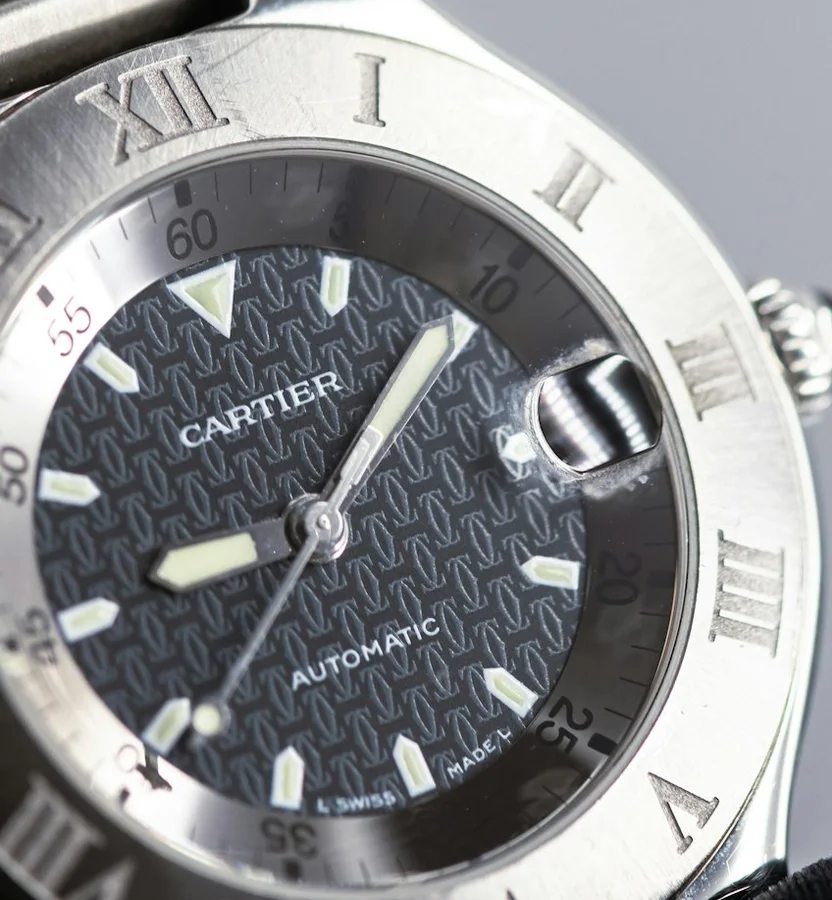
The bezel is wide and carries Roman numerals. Catalogues describe it as engraved with Roman numerals on an early 31 mm example and as a chapter ring bezel on the four-digit references, but on watches in the library's records the early and the later references show the same bezel. The sports watches have a fixed Roman-numeral bezel.
Wide Roman-numeral bezel
Recorded on an early 31 mm watch in steel with a gilt-metal element; it has a railway minute track. Watches of the Refs. 1330 and 1340 in the library's records show the same bezel.
- Roman numerals engraved on wide bezel
- railway minute track
Chapter ring bezel
The catalogue term for the bezel of the Ref. 1330 and Ref. 1340; some 1340 watches pair the steel case with a bi-colour chapter ring. On watches in the library's records it is the same wide Roman-numeral bezel as on the early watches.
- chapter ring
- bi-colour ring on some 1340
Fixed Roman-numeral bezel
Used on the Autoscaph and Chronoscaph; on the Chronoscaph described, the numerals on the bezel leave room on the dial for its functions.

Case and sizes 5 described
The case is stainless steel. The sizes described run from about 28 to 38 mm, and the nine-digit early case numbers do not tell the size.
Early cases, 30 to 35 mm
Catalogues describe 9010 and 9011 cases at 30 to 31 mm and one 35 mm example on the Cal. 87.06.
- nine-digit number
Larger early case, 38 x 36 mm
One catalogue measures a larger early case at 38 x 36 mm with a date at 6 o'clock.
- date at 6 o'clock
31 mm, Ref. 1330
The 31 mm size in steel or steel and gold.
Mid-size, Ref. 1340
About 28 mm. Auction catalogues give 28 mm for some examples and 27 mm for others; the more likely cause is how the case was measured, not two sizes, since the descriptions are otherwise alike.
Chronoscaph cases, 38 and 32 mm
One Chronoscaph in the literature has a 32 mm steel case; in the library's records most Chronoscaph listings give about 38 mm, and 32 mm appears on smaller references such as 2996 and W10197U2.
Crown 1 described
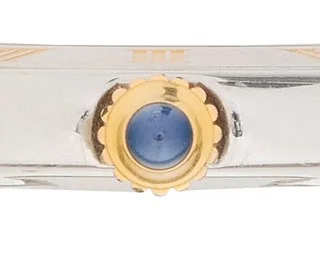
The crown is set with a cabochon. The literature describes it on the early watches and on the Must 21 as a whole, and watches of the Refs. 1330 and 1340 in the library's records show it as well.
Cabochon crown
Described for the early Must 21 and in the general account of the Must 21 as a whole.

Crystal 1 described
The literature says little of the crystal.
Sapphire crystal
One auction house lists a sapphire crystal on its Ref. 1340.
Movement 4 described
Every Must 21 and Chronoscaph movement described is quartz; the literature does not describe the Autoscaph's, which sellers give as automatic. The calibre is best read from the movement itself or the service record.
Cal. 87.06
Recorded on a 35 mm early example.
Cal. 690
Recorded on the Ref. 1330 and on two examples of the Ref. 1340.
Cal. 90.06
Recorded on the Ref. 1330 and on the Ref. 1340 with the November 1998 guarantee.
Cal. 90 and Cal. 069
The first is recorded on one Ref. 1340, the second printed by one auction house for its Ref. 1340.
Bracelet and strap 2 described
The Must 21 is usually found on a signed bracelet in steel or steel and gold; the sports watches described are on rubber and steel straps.
Steel or bi-colour bracelet, double folding clasp
Signed, in stainless steel or steel and gold; a double folding clasp is recorded on the Ref. 1340.
- signed bracelet
- double folding clasp
Rubber strap with steel links
On the Autoscaph, a black rubber and steel strap; on a Chronoscaph, a white rubber strap with steel centre links in its upper part, changing to full rubber towards the clasp.

Box and papers 1 described
Papers date the watch where the case does not.
Guarantee booklet and papers
Guarantee booklets date individual watches (November 1998 on a Ref. 1340).
- guarantee booklet
- box and papers
Reference numbers
A four-digit number is stamped on the case and covers a case; a code beginning W, or the newer letter codes, is a catalogue number for one version of it (metal, dial, strap). Many older watches carry neither. The last column is the listings on record under the number, as its own page counts them.
| Number | What it is | Listings |
|---|---|---|
| 9010 | Early Must 21 case number of nine digits beginning 9010; in steel and in steel and gold in the library's records. | 21 |
| 9011 | Early Must 21 case number of nine digits beginning 9011; in steel, and in steel with gilt metal, in listing titles. | 15 |
| 1330 | 31 mm Must 21, steel or steel and gold, quartz Cal. 690 or 90.06, with a chapter ring bezel. Catalogue codes seen beside it in listings: W10072F4 | 65 |
| 1340 | Mid-size Must 21, about 28 mm, steel with chapter ring bezel and silvered dial, serial usually beginning PL. | 93 |
| 2424 | Chronoscaph 21, a steel quartz calendar chronograph, as sellers describe it; some are on a rubber and steel strap. | 57 |
| W10172T2 | Chronoscaph with black dial in steel, as sellers describe it. | 8 |
| W10184U2 | Chronoscaph with white rubber strap in steel, as sellers describe it. | 11 |
| W10197U2 | Chronoscaph with white rubber strap, as sellers describe it. | 2 |
| W10147U2 | Autoscaph with black dial, as sellers describe it. | 10 |
Originality
- Bezel, crown and links of two-tone watches can show wear through the gold finish, which is variously described as gilt metal, gold-plated metal or gold.
- Stretched bracelet links were noted on several Ref. 1340 examples.
Where accounts differ
Points on which the published literature and the library's own records do not agree, or on which the literature contradicts itself.
- Date of the early Must 21. One account reports that La Souveraine's catalogue gives 1989 for the introduction and Battin Enchères dates an early example to about 1990, and that Antiquorum dated a steel and gold example, case 901038068, to about 1980, which it treats as a loose estimate. The library's records hold several listings with a stated year in the 1980s, among them Bonhams titles dated about 1980 and about 1985.
- Earliest Ref. 1340. One account says no source gives a first year for Ref. 1340 and that the earliest dated example has a guarantee of November 1998, yet the same account lists a Bonhams lot of Ref. 1340 catalogued about 1990. In the library's records the stated years of Ref. 1340 run from 1990 to 2004.
In the records
Counted from 400 listings at dealers and auction houses whose title, or whose reference, places them on the line; 133 state a year. These are what sellers state, not measurements, and a count of listings is not a count of watches made.
Case metal
| Metal | Listings | Share |
|---|---|---|
| Steel | 225 | 85% |
| Steel and gold | 20 | 8% |
| Gold, any colour | 16 | 6% |
| Yellow | 2 | 1% |
| Colour not stated | 14 | 5% |
| Silver | 2 | 1% |
| Gold plated | 1 | under 1% |
As sellers state it. Shares are of the 264 listings that name a metal. A listing that says "gold" or "18K gold" names no colour: it is counted under "colour not stated", not as yellow gold. Carat, where a listing of gold gives one: 18k 6.
Case size
| Size | Listings | Share |
|---|---|---|
| 28 mm | 88 | 29% |
| 31 mm | 68 | 23% |
| 38 mm | 56 | 19% |
| 27 mm | 17 | 6% |
| 35 mm | 15 | 5% |
| 32 mm | 14 | 5% |
| 30 mm | 10 | 3% |
| 36 mm | 5 | 2% |
| Other sizes | 26 | 9% |
As sellers state it. Shares are of the 299 listings that give a size. On a watch that is not round some sellers give the width and some the length, so one watch can stand under two sizes.
Movement
| Kind | Listings | Share |
|---|---|---|
| Quartz | 46 | 94% |
| Automatic | 3 | 6% |
Shares are of the 49 listings whose description says how the watch is driven.
Listings by decade the seller gives
| Decade | Listings |
|---|---|
| 1980s | 6 |
| 1990s | 59 |
| 2000s | 54 |
| 2010s | 1 |
| 2020s | 2 |
11 more give a year outside the years the line was made (from 1989): a later watch sold under the name, or a slip. They are left out.