Chronograph 'Tasti Tondi'
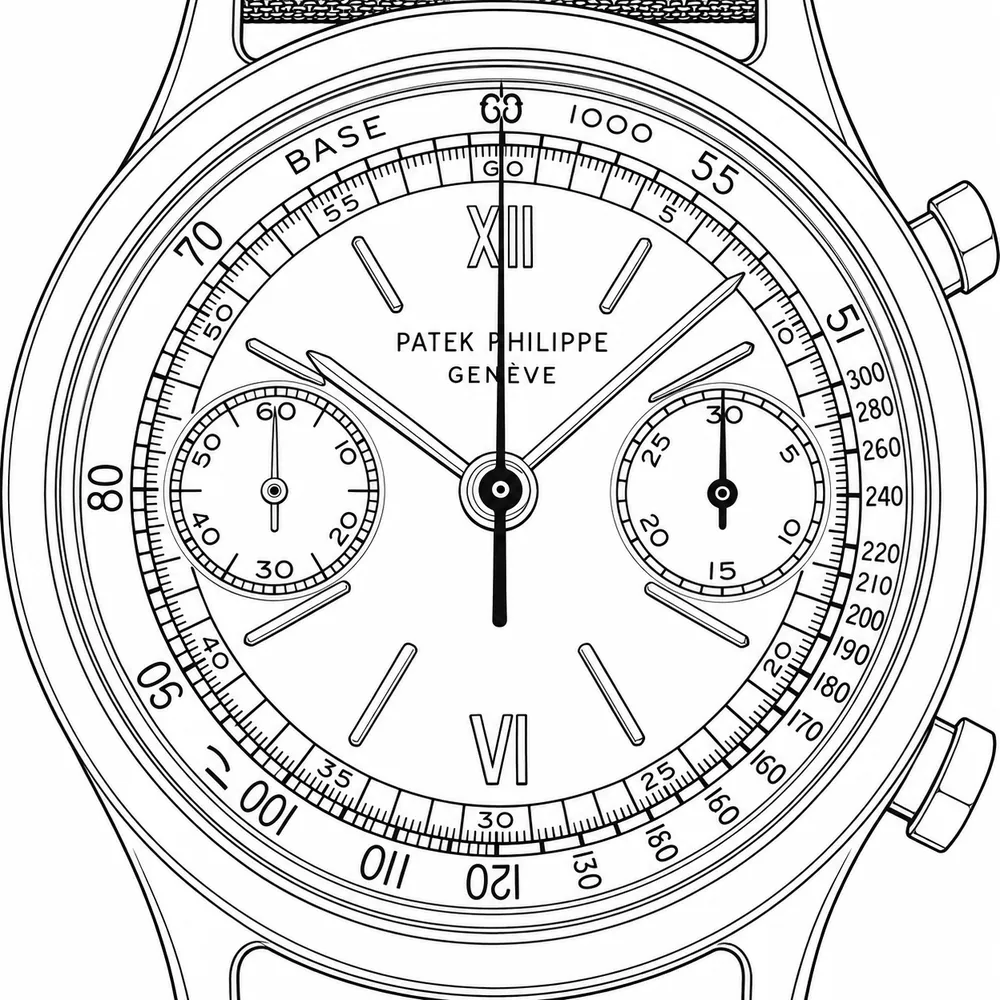
The 1463 is Patek Philippe's manually wound two-register chronograph in a waterproof case, introduced in 1940 and made for some twenty-five years. It followed the square-pushered 130 and 530, and took its Italian nickname, Tasti Tondi (round pushers), from the large round pump pushers that made the case water-resistant. It has a 35 mm case with a decagonal screw-down back and calibre 13-130. Roughly 750 were made, mostly in yellow gold, with steel and pink gold much scarcer. Dial layouts vary widely: Breguet numerals, Roman or Arabic numerals at 12 and 6, round dots, two-tone silvered dials, tachymeter, pulsometer and telemeter scales, and many retailer signatures.
- Made
- 1940–1965dates approximate
- Seen in the library
- 1942–1970nine in ten in 1942–1968 · by years sellers state
- Case
- 35 mm · gold (68%), steel (29%)as sellers state
- Movement
- Calibre 13-130hand-wound
- On record
- 134 listings332 photographs · 14 holders
Components
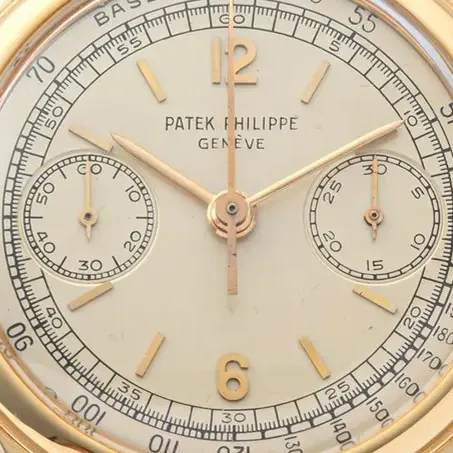
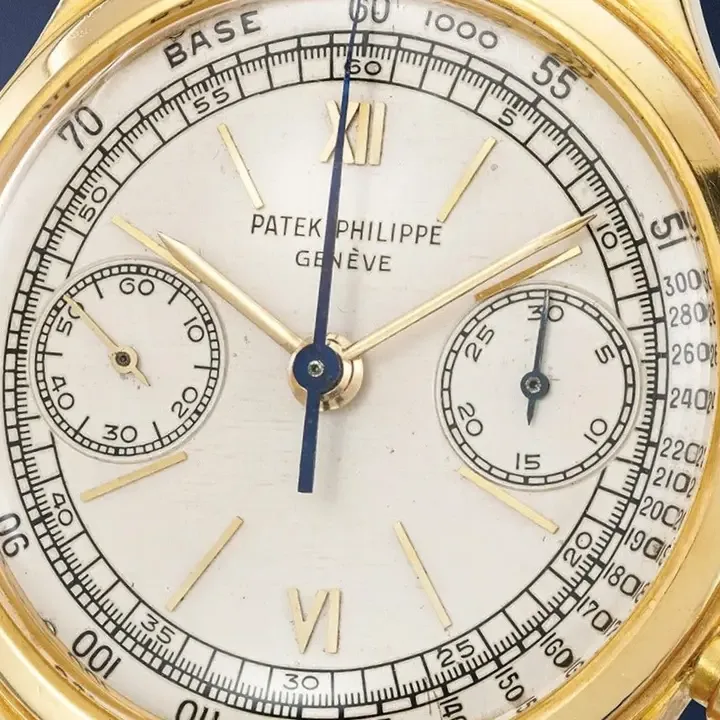
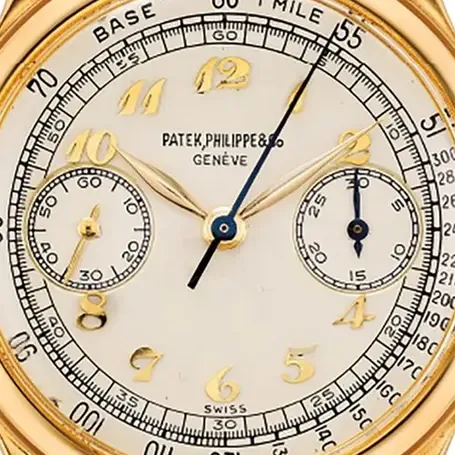
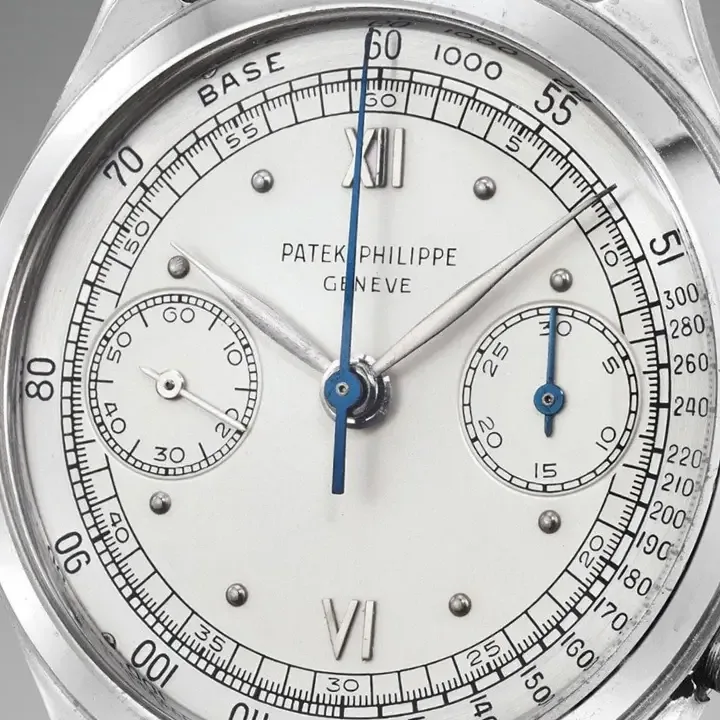
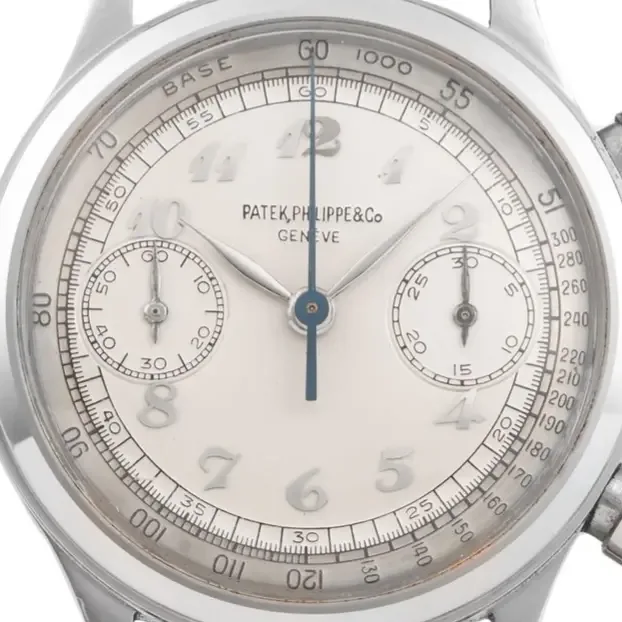
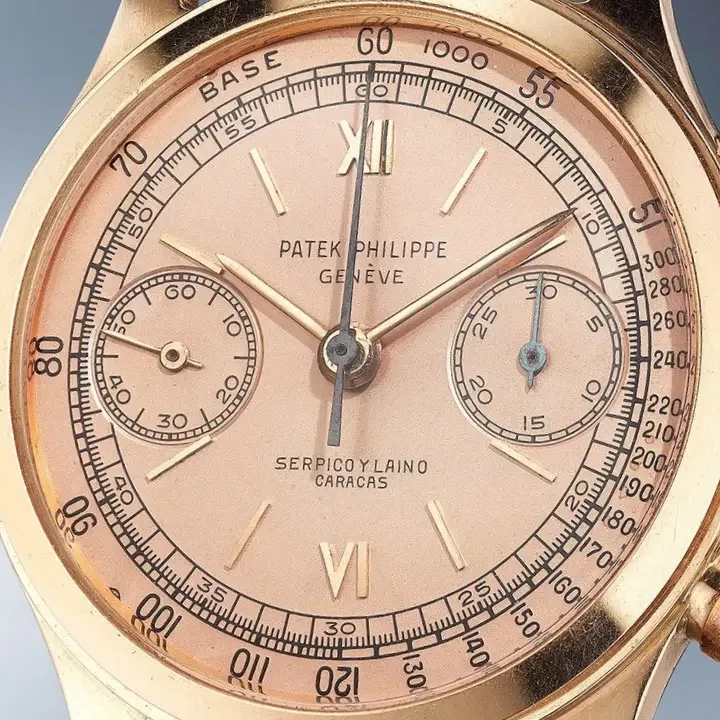
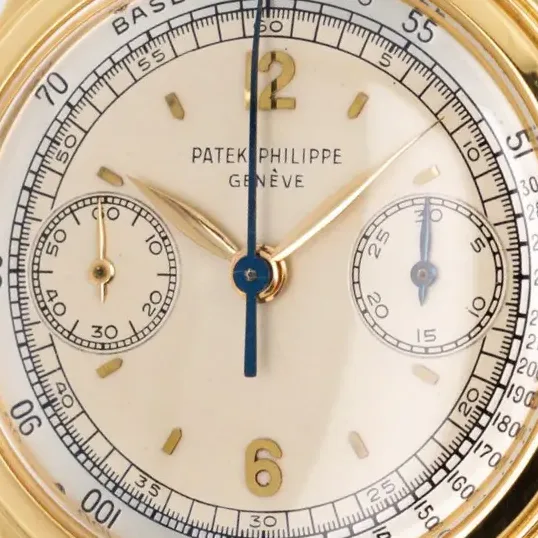
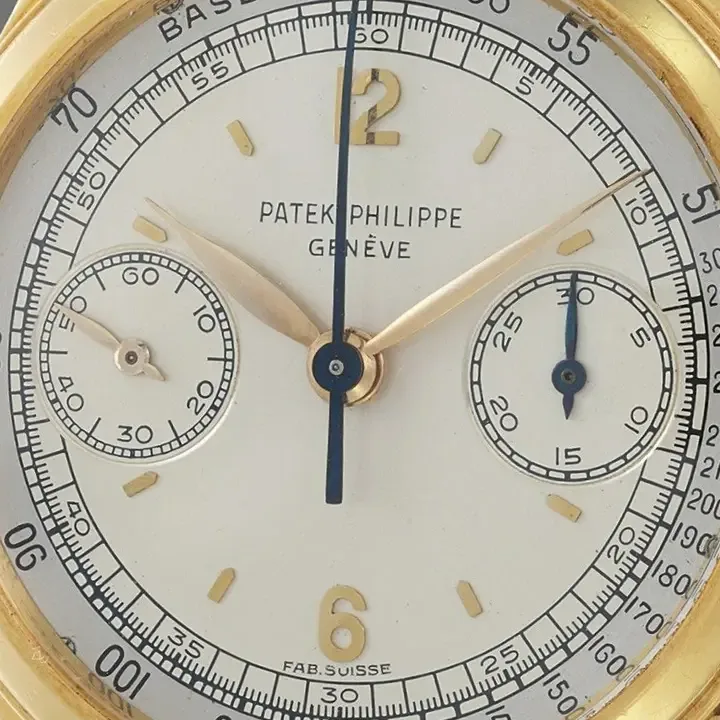
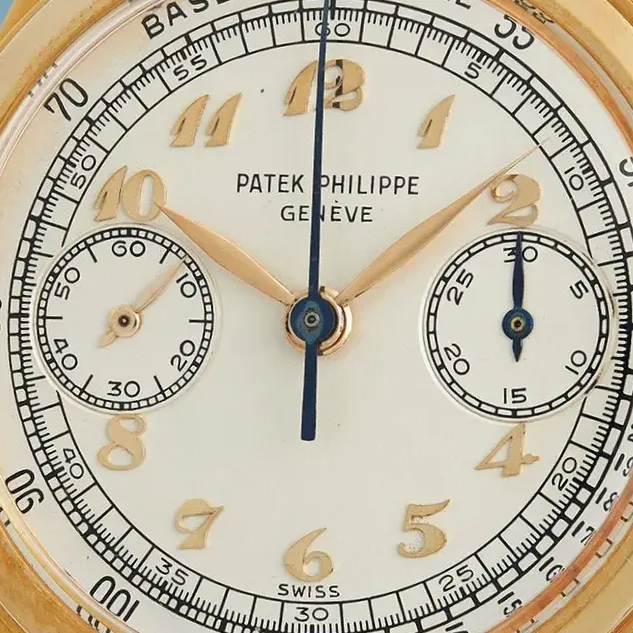
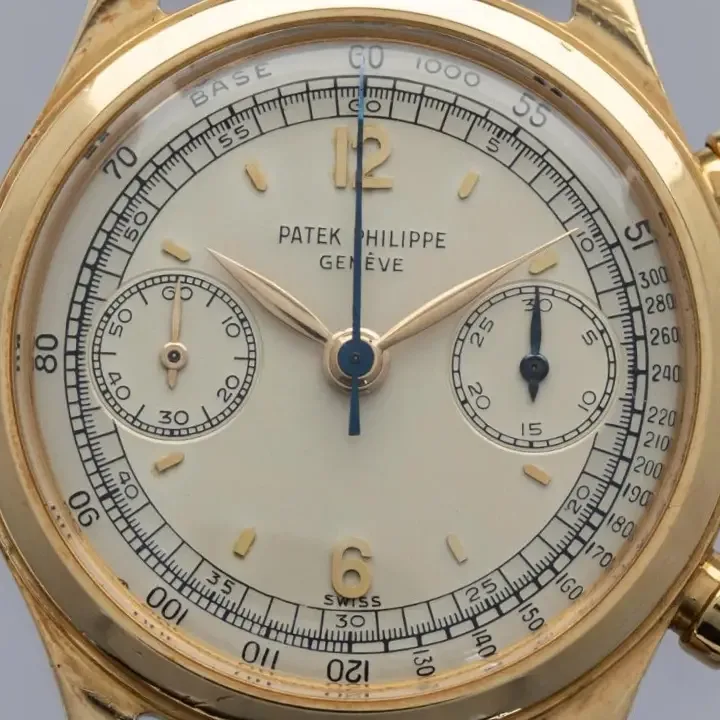
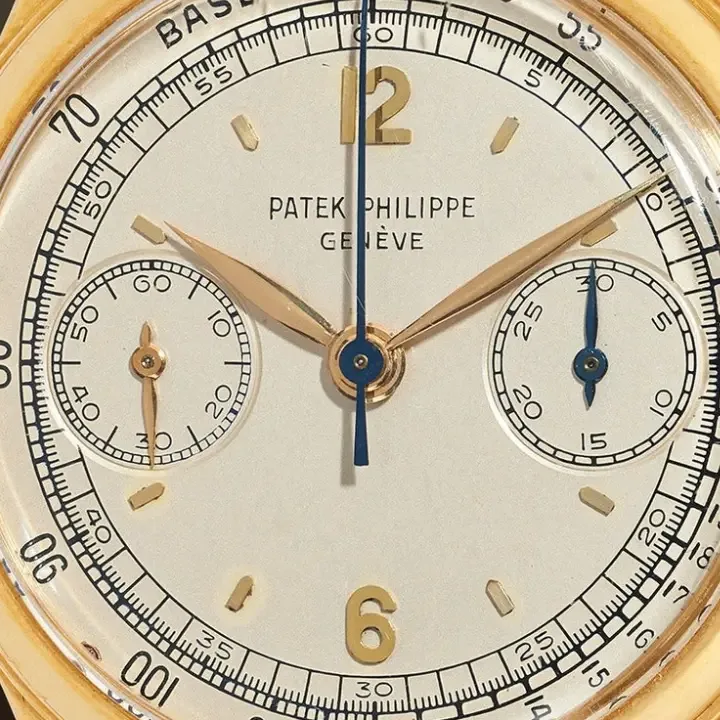
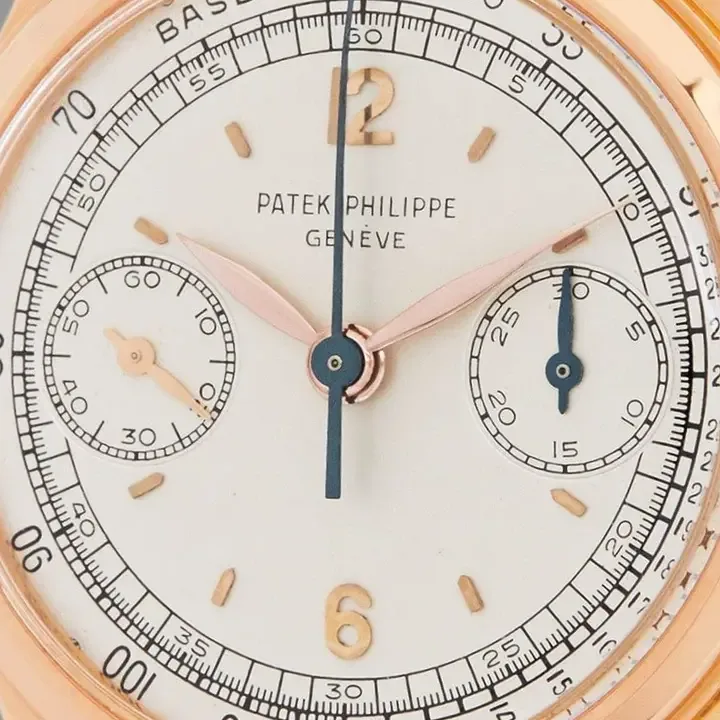
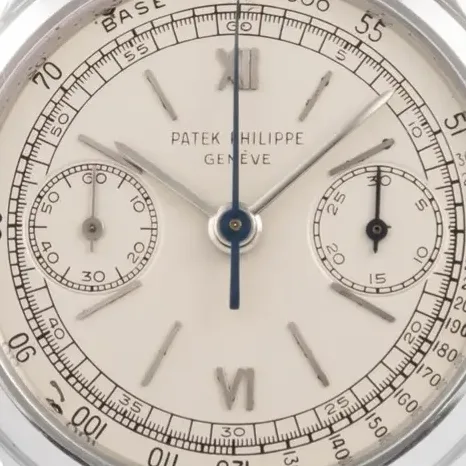
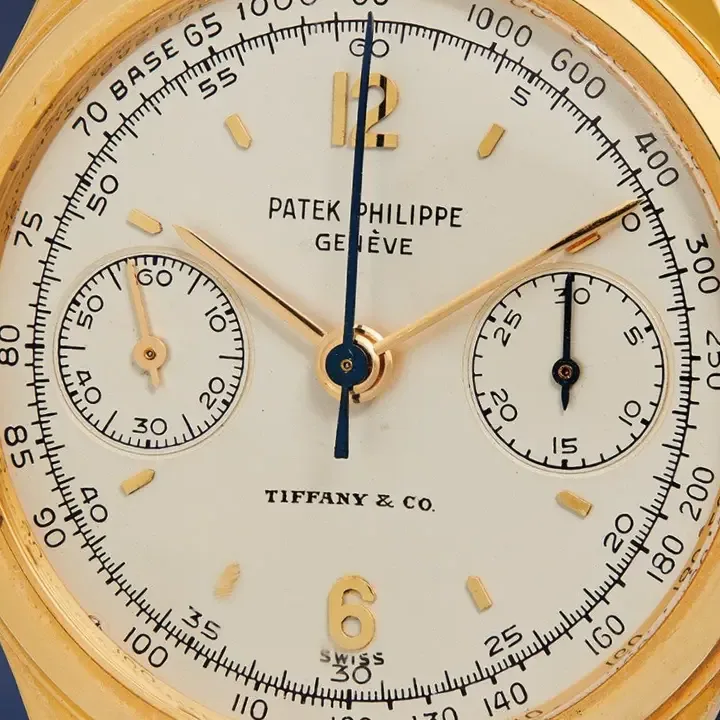
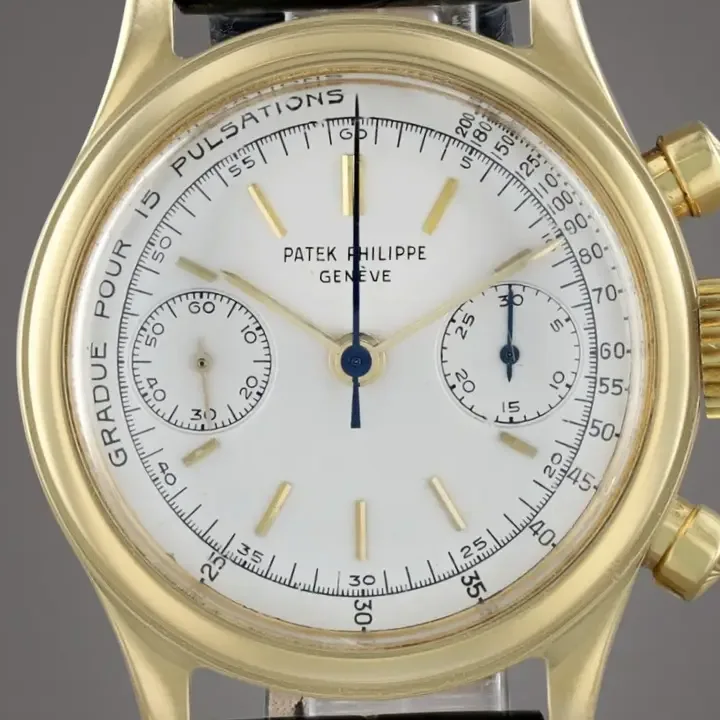
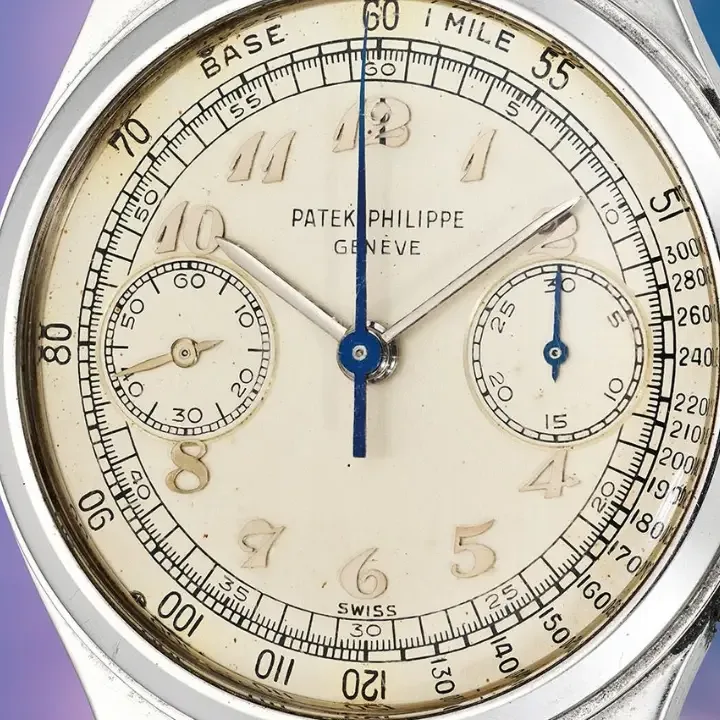
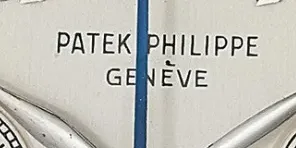
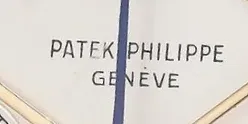
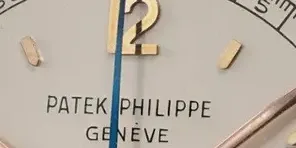
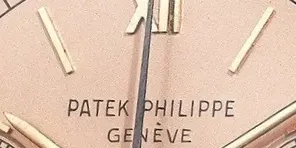
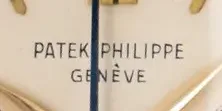
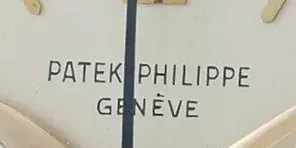
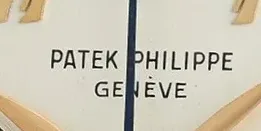
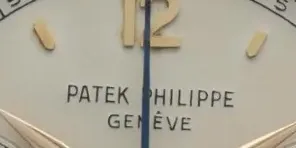
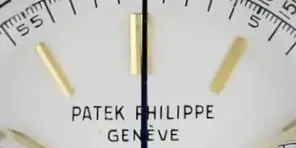
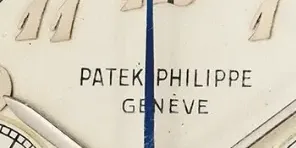
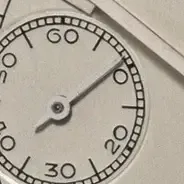
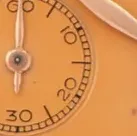
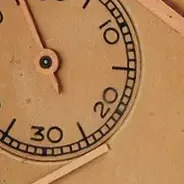
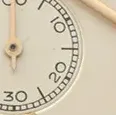
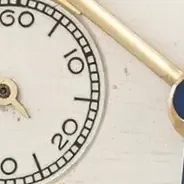
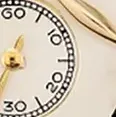
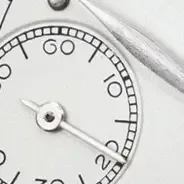
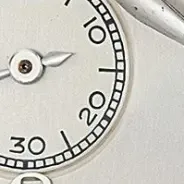
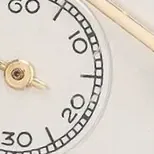
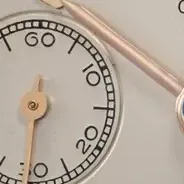
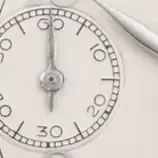
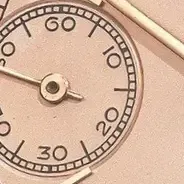
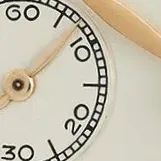
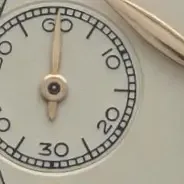
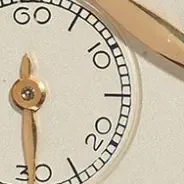
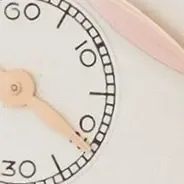
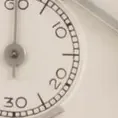
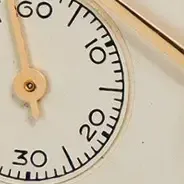
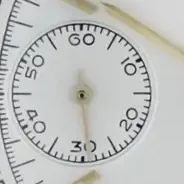
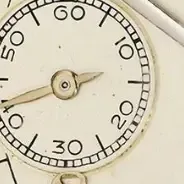
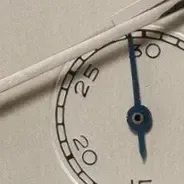
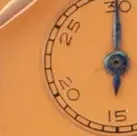
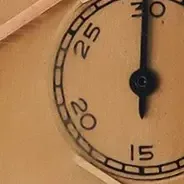
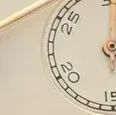
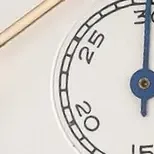
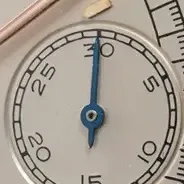
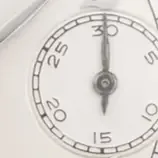
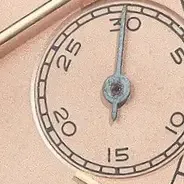
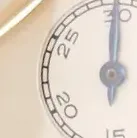
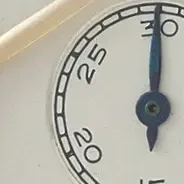
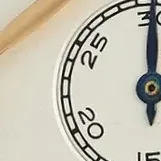
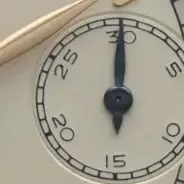
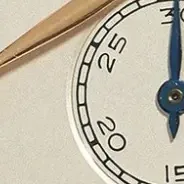
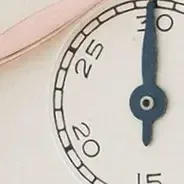
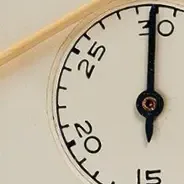
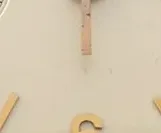
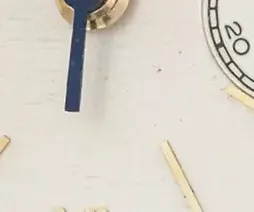
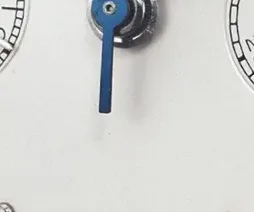
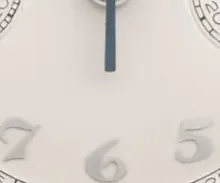
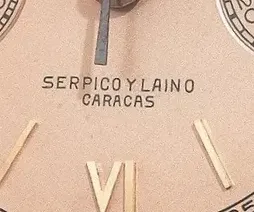
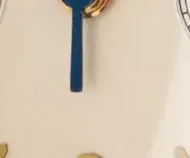
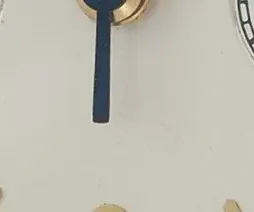
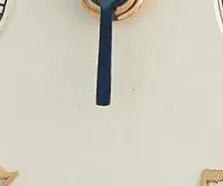
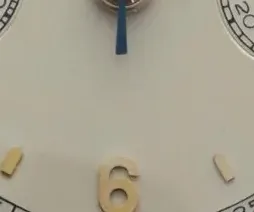
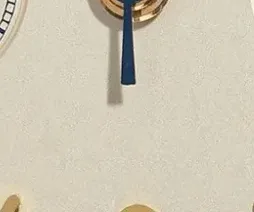
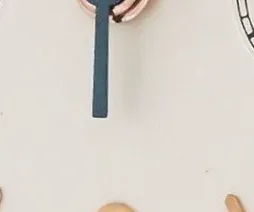
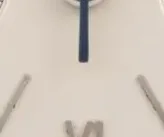
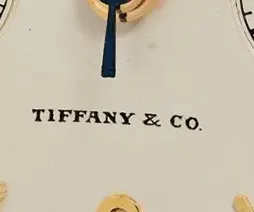
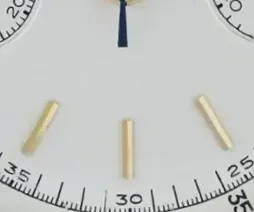
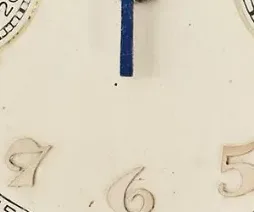
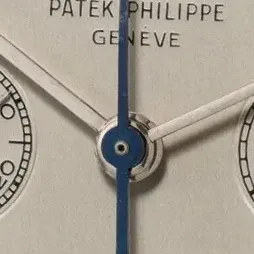
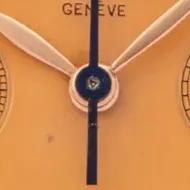
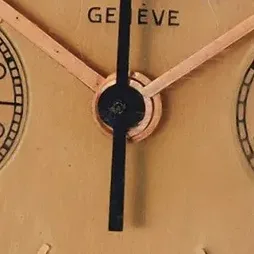
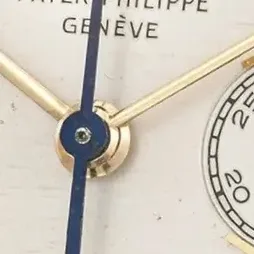
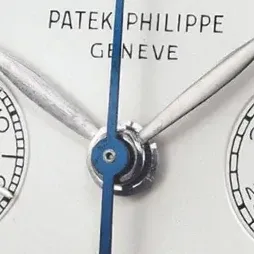
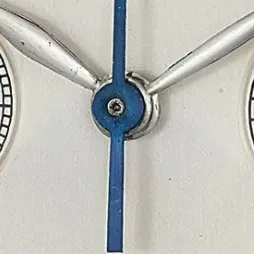
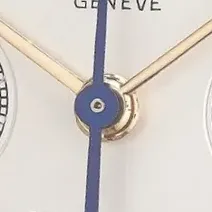
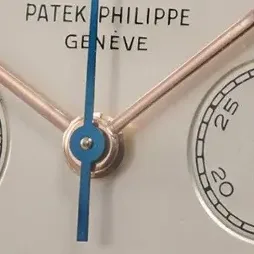
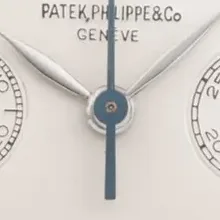
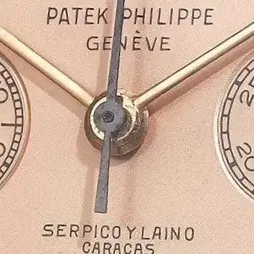
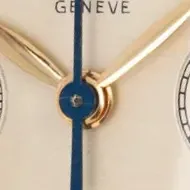
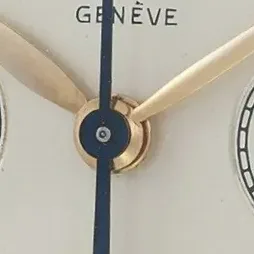
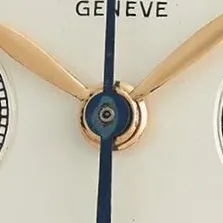
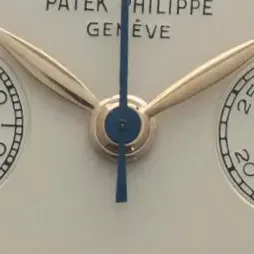
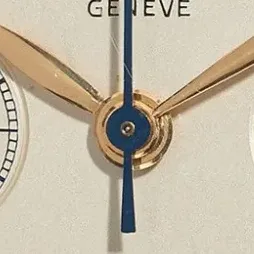
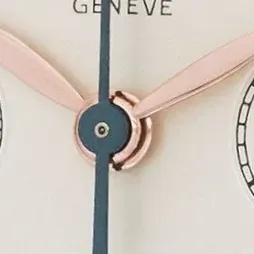
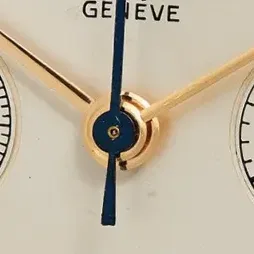
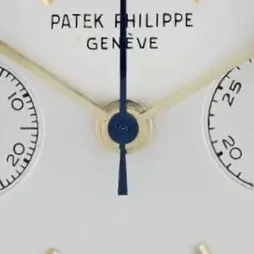
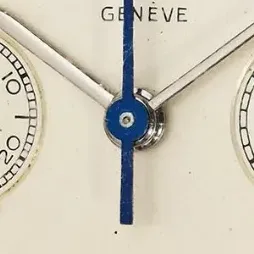
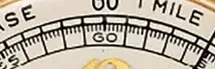
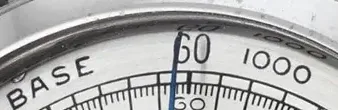
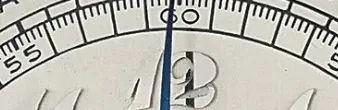
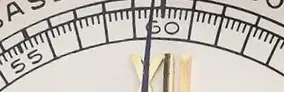
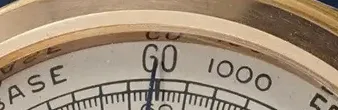
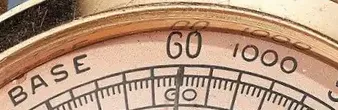
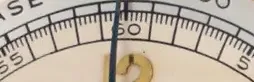
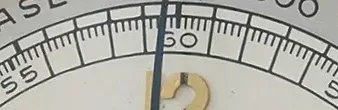
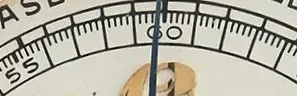
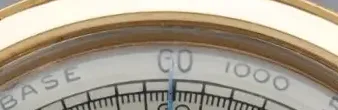
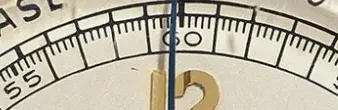
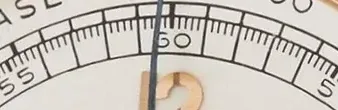
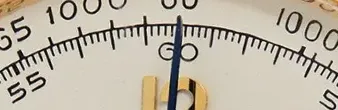
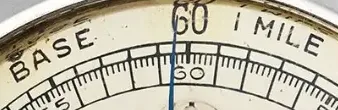
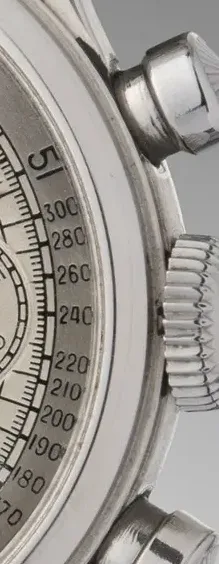
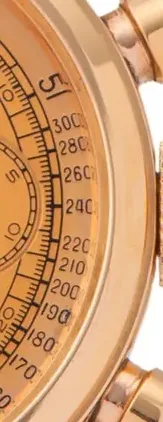
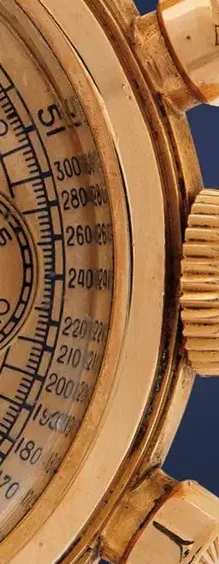
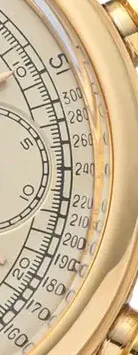
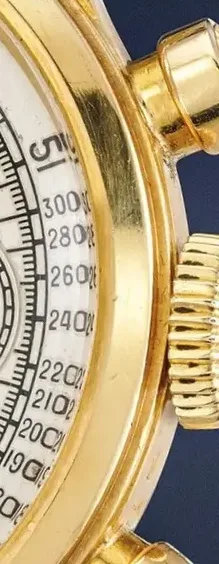
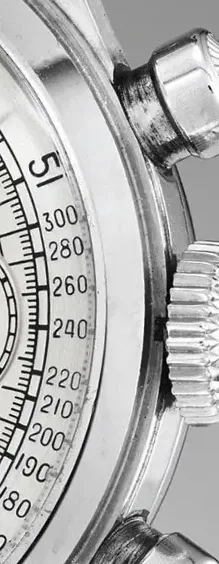
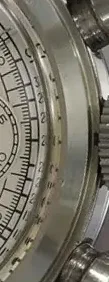
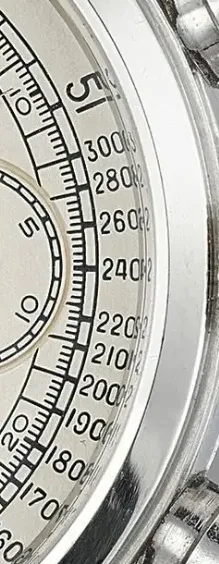
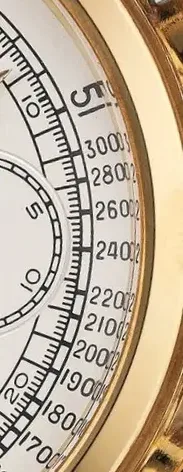
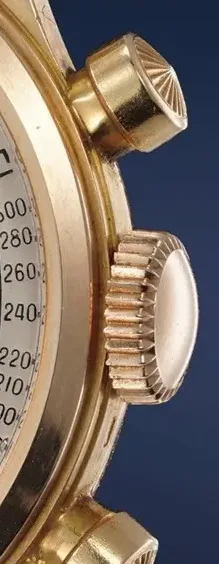
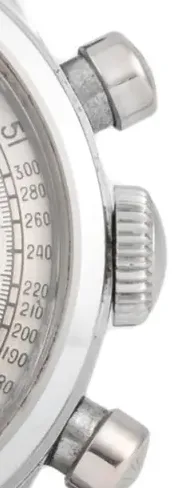
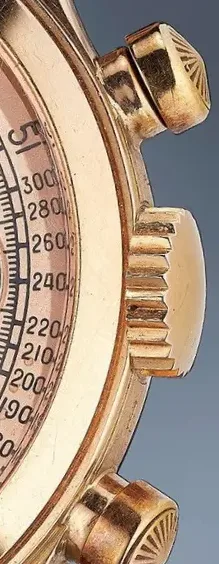
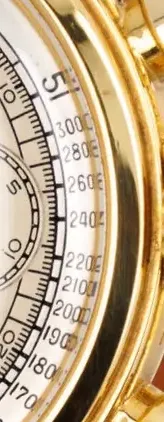
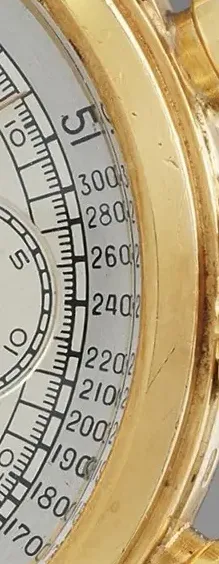
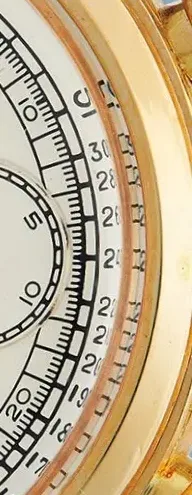
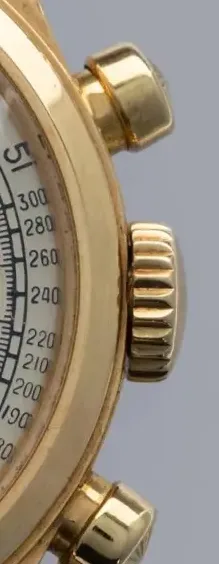
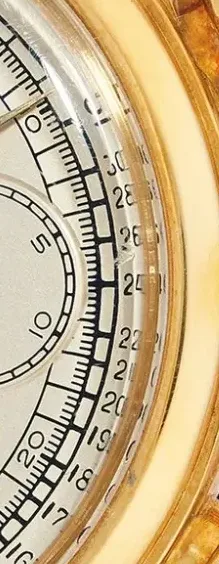
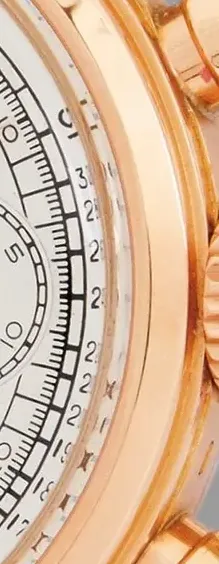
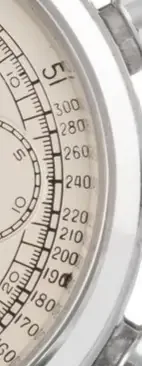
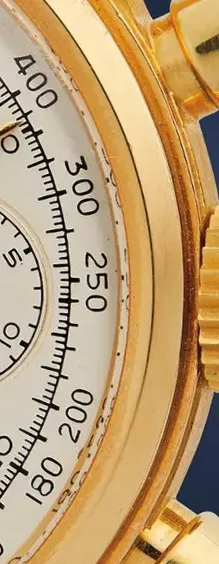
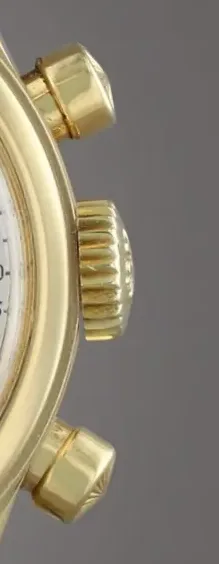
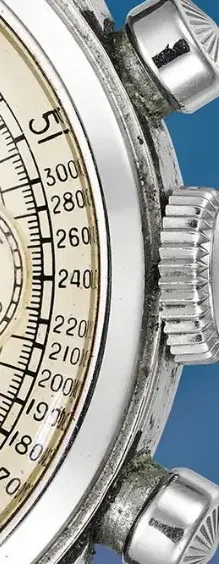
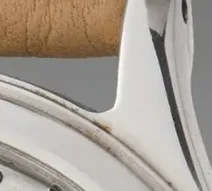
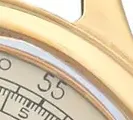
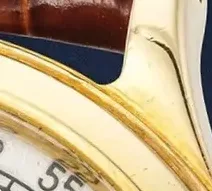
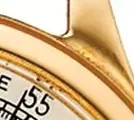
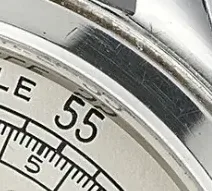
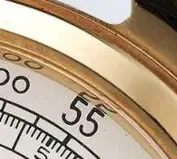
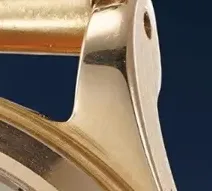
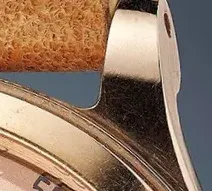
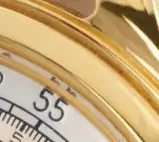
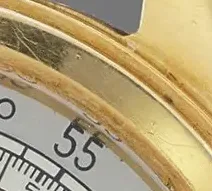
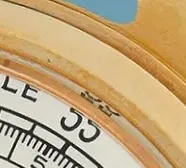
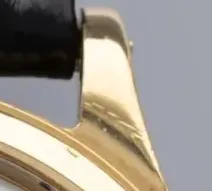
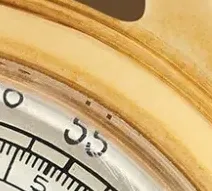
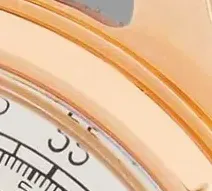
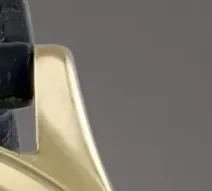
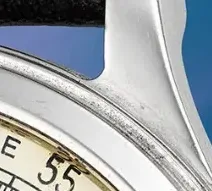
23 watches, oldest first, each straightened and cut the same way so that one row shows one component across them all. Chosen from 332 photographs on file for sharpness and for a face typical of the reference. A year marked c. is one its holder gives only roughly. Each picture is a detail cut from a listing photograph. Select the small mark in its corner for its year, its holder, a link to the listing it came from, and a way to report it.




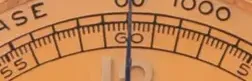
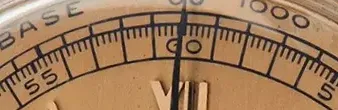
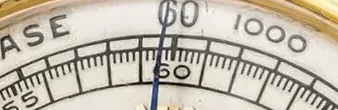









Chronology
Introduced in 1940 and regularly made to 1965; a few later watches, one dated 1968, are recorded.
Every dated variant: what is written, and what the records show
For the reference the marks are every dated watch; for a variant, the watches a seller names as that variant, so a variant sellers do not name has none.
Specification
| Case | 35 mm round waterproof case in steel, yellow gold or pink gold, with a decagonal screw-down case back, drilled lugs, a broad lug profile and block construction; cork gasket under the crown; the case is thought to come from a specialist waterproof-case maker |
| Dial | Enamel on silver or silvered dial with engraved and enamelled markings; long or short baton markers, dots or Breguet numerals; sometimes a tachymeter, pulsometer or telemeter scale |
| Pushers | Large round pump pushers with a sunburst engraving or knurled top |
| Crown | Oversized flat waterproof crown |
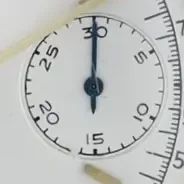
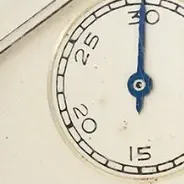
| Hands | Leaf hands with a blued centre chronograph seconds hand |
| Movement | Manually wound calibre 13-130, a reworked Valjoux-based chronograph calibre |
| Water resistance | Patek Philippe's first waterproof chronograph |
| Strap | Leather strap and buckle, or a gold or steel bracelet by Gay Frères |
Dial 15 described
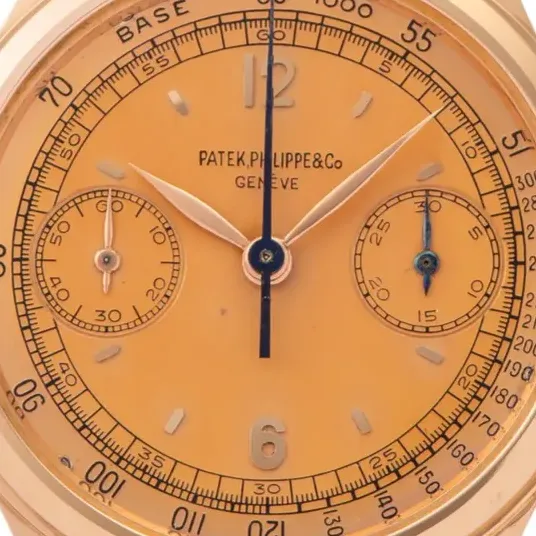
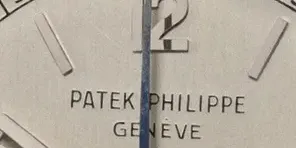
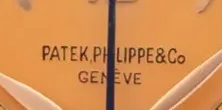
Dials were made in many layouts, mostly silvered, in enamel on silver or other forms with engraved and enamelled markings. The signature runs long (Patek Philippe & Co) up to about 1948 and short afterwards. Retailer names are common and valued. Dial condition and restoration need close checking.
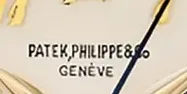
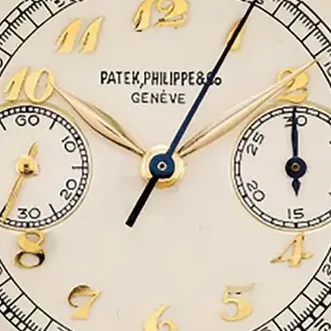
Long signature
The signature reads Patek, Philippe & Co in a long form, used on early watches. The change to the short form is usually put at 1948; sellers describe a few later watches with the long form, so 1948 is the usual rather than the exact limit.
- Patek, Philippe & Co signature
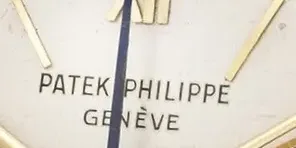
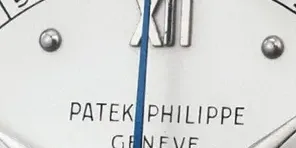
Short signature
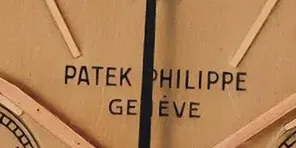
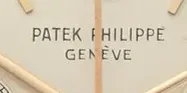
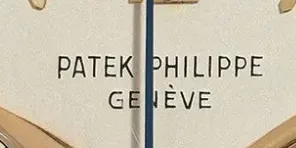
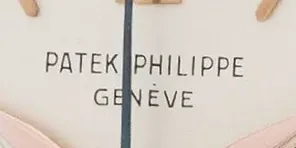
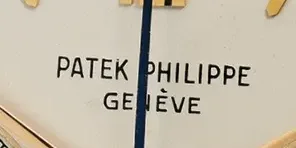
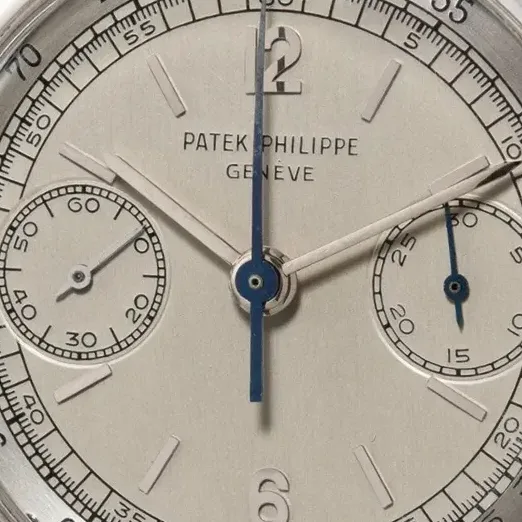
A shorter Patek Philippe signature from about 1948. The accent on Genève is a sign that a dial has not been touched up heavily.
- Patek Philippe signature without & Co
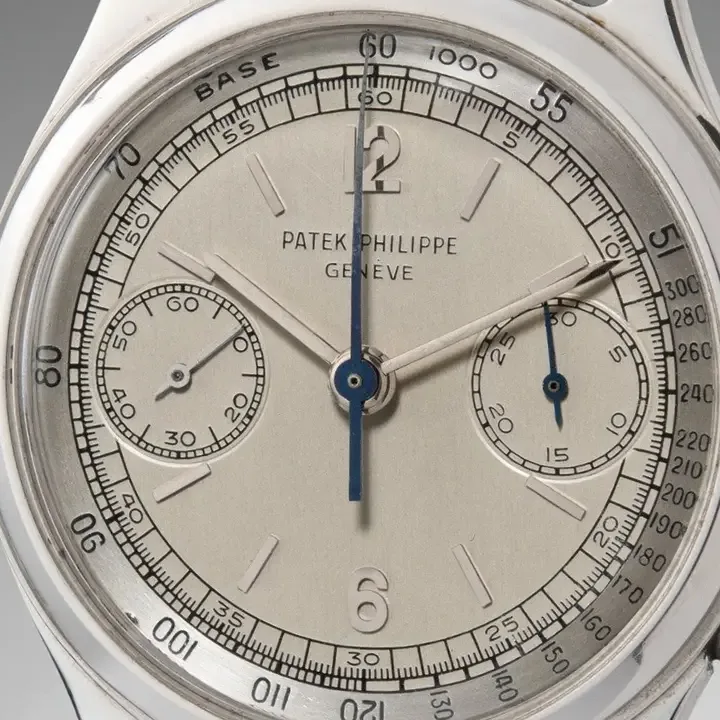
Silvered dial, long batons with 12 and 6
The commonest layout: a cream or silvered dial with long baton markers and numerals, Roman or Arabic, at 12 and 6. Variants have short batons with the numerals, or long batons with no numerals, and some have round gold dots.
- long baton markers
- numerals at 12 and 6

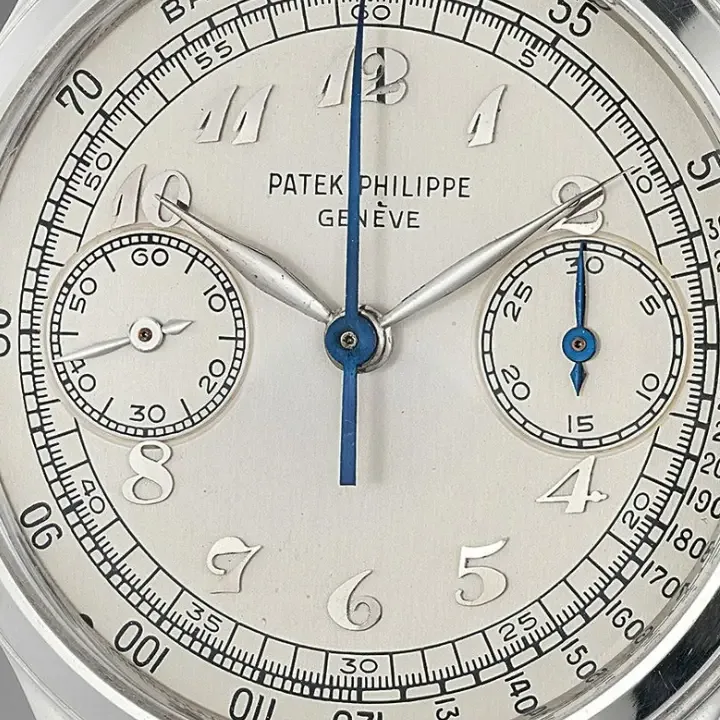
Breguet numerals
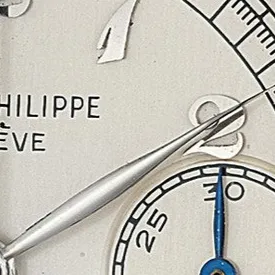
Applied Breguet numerals, in steel and yellow gold watches, sometimes with a long signature. Rare and prized. One steel watch with them was examined and its numerals were found to be remade, showing a different shape and finish in photographs taken years apart.


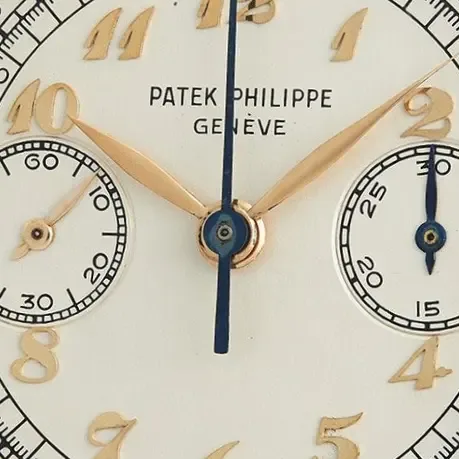

Two-tone silvered dial
A two-tone silvered dial, often with an outer tachymeter scale, in steel, yellow gold and pink gold watches.
- two-tone silvered dial
- outer tachymeter scale
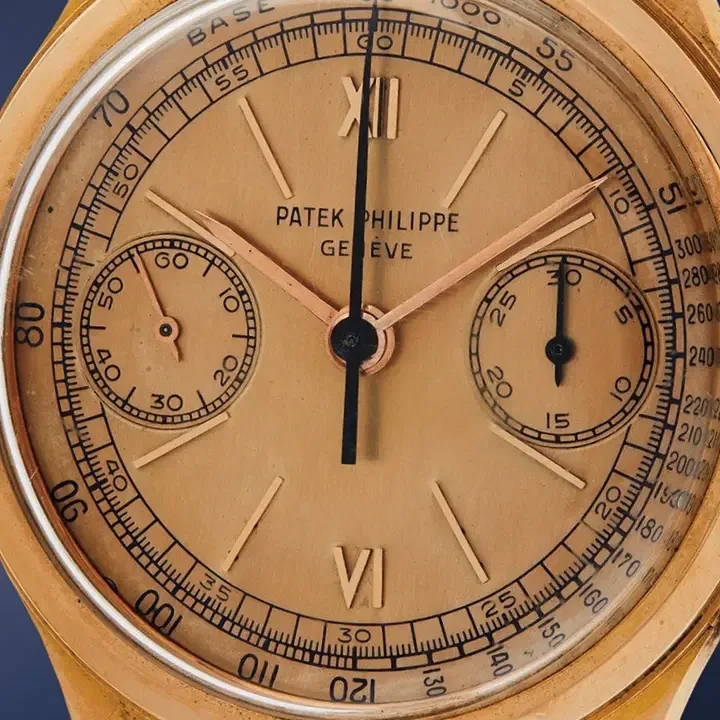
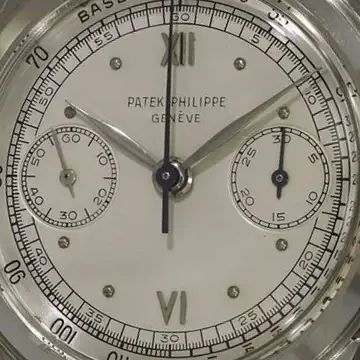
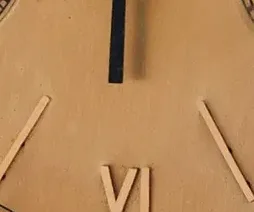
Gold dots and Roman numerals
Roman numerals at 12 and 6 with dot markers, seen on a steel watch of 1949 and on pink gold watches; only three pink gold watches with this dial are known, one of them of 1950 with an enamel-on-silver dial.
- Roman XII and VI with gold dots
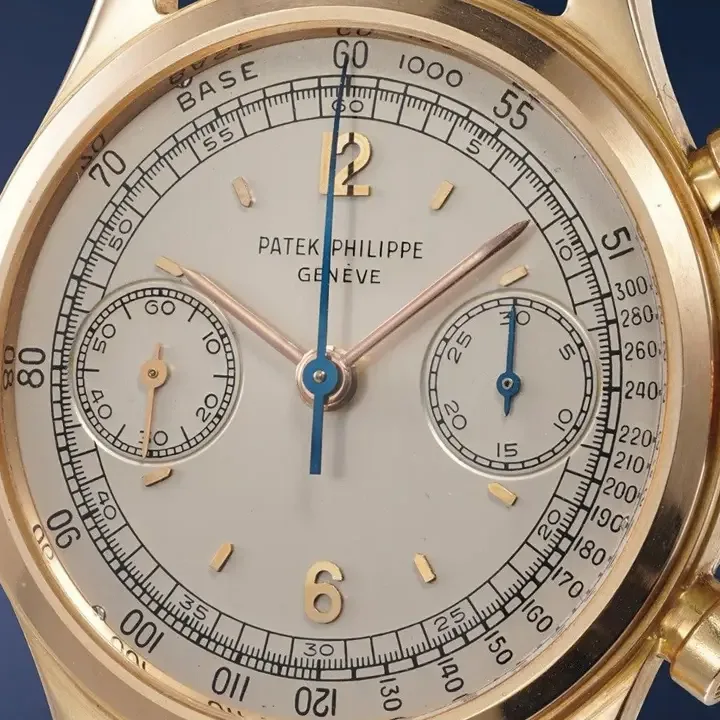
Pink or salmon dial
A pink gold watch with a pink or salmon dial, often with a tachymeter or pulsometer scale and Roman numerals; singled out as one of the most striking combinations.
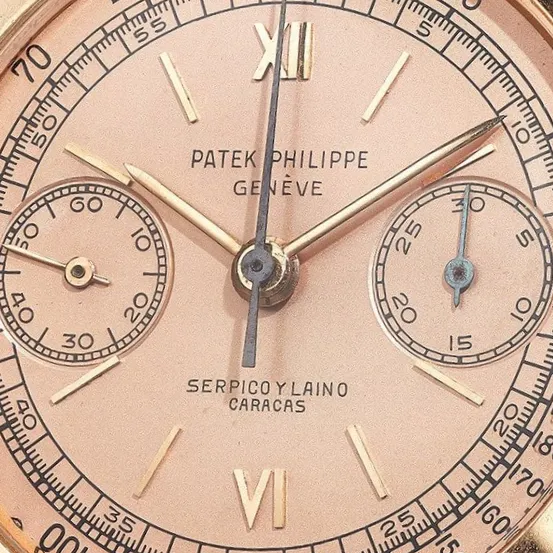

- Roman numerals
- pulsometer scale
4 listings on record under the name.
Black dial
Rare. Sellers describe a black dial on a watch signed by a Caracas retailer.
Scales: tachymeter, pulsometer, telemeter
Outer tachymeter or tachometer scales are the most common; pulsation (pulsometer) scales and telemeter scales are also recorded, in steel and gold.
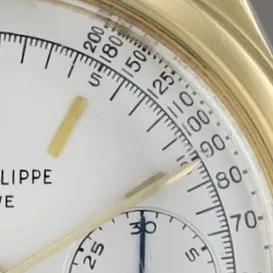

37 listings on record under the name.
Luminous hands and markers
Some watches have luminous material, described as tritium, on the hands or the markers, which was unusual at the time. A steel watch is recorded with steel hour markers on a silvered dial.
- luminous hands
- luminous markers
Engraved and enamelled dial
The markings are engraved into the plate and filled with black enamel fired at 800 to 900 degrees C, so they stand slightly proud of the surface; the silvered finish is galvanic, with a lacquer coat. No two dials are exactly alike. A watch of 1950 is described as an enamel-on-silver dial hand-made by Stern Frères.
- slightly raised enamelled lettering
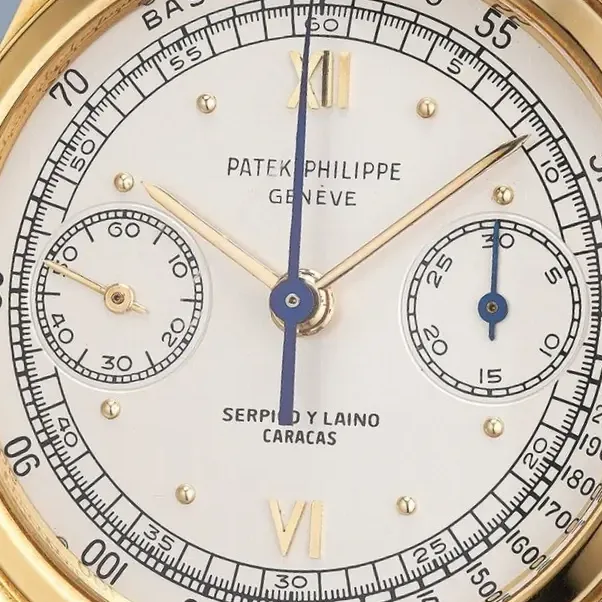
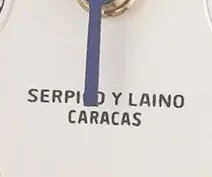
Serpico y Laino Caracas signature
Seven 1463s are signed by this Caracas retailer; one pink gold watch is the only one of its dial type, and a black dial is also recorded.
- retailer name on dial
Tiffany & Co. signature
Dials signed by the New York retailer are known, and sellers describe Tiffany-signed watches in yellow gold and in steel, some of them made after the end of regular production.
- Tiffany name on dial
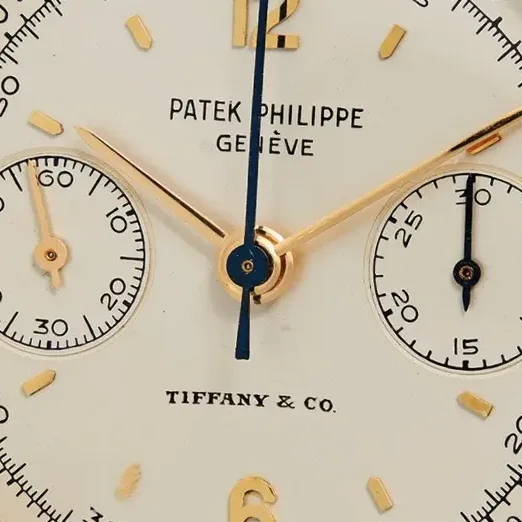

Other retailer signatures
Dials signed by Hausmann (Rome), Casa Welsch (Lima), Trucchi (Naples) and Freccero (Montevideo) are known.
Cartier signature
The only known watch retailed and signed by Cartier, yellow gold, from 1968 by case number and thought to be one of the last two made; the Cartier name is above 6 o'clock and the Swiss mark is raised above the 6 o'clock register. Its case back carries a 1987 gift inscription and it has a Cartier crocodile strap with a matching-number buckle.
- Cartier above 6
- raised Swiss mark
Hands 1 described
Leaf hands with a blued chronograph hand are standard.
Leaf hands and blued centre second
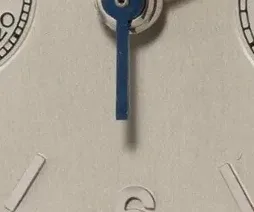
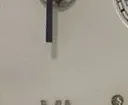
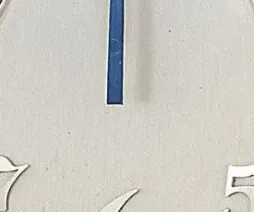
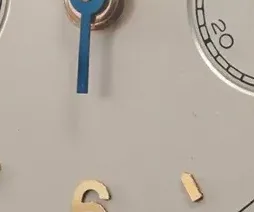
Leaf hour and minute hands and a blued centre chronograph seconds hand. The register hands are not blued and are thin, and the minute hand does not reach over the minute track. Swapped hands are a sign of a bad watch.
- blued chronograph seconds hand
- unblued register hands
Case 4 described
A waterproof case with round pushers, drilled lugs and a decagonal screw-down back. The case style is credited to a specialist waterproof-case maker, whose case was also used by other watch brands.
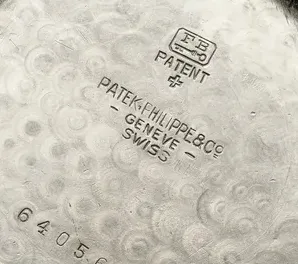
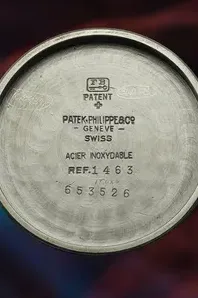
Decagonal screw-down case back
Ten sides, screwed into the mid-case. Engravings include a patent line with a cross below it and the reference number; the cross should be broad and the font specific.
- ten-sided back
- broad cross below patent line
Round pump pushers
The pushers are larger than on the 130 and 530, with a sunburst engraving or anti-slip knurling on the top; the nickname comes from them. The earlier references have small smooth rectangular pushers.
- large round pushers with sunburst top
Metals
Yellow gold in the majority; steel (about 190 by one account, 17 by another count) and pink gold (the rarest, 50 to 55 known). The gold hallmarks sit under the lugs and survive on unpolished cases.
- hallmarks under the lugs
Drilled lugs and broad profile
The lugs are drilled and broad, and the block construction makes the 35 mm case wear larger, like 37 to 39 mm.
- drilled lugs
Crown and pushers 1 described
The crown is large and flat.
Oversized flat waterproof crown
A larger profile with a bigger bump than a non-waterproof crown, with a cork gasket. The same crown style is found on a related waterproof chronograph from another brand using the same case.
- large flat crown
Movement 1 described
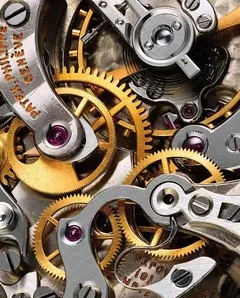
Calibre 13-130, a manually wound movement.
Calibre 13-130
A Valjoux-based chronograph calibre, reworked and refined by Patek Philippe; the reference's movement numbers in the records begin at about 863,000 for 1942 and reach about 869,000 for 1968.
- manual-wind movement
Bracelet 3 described
Most watches are on leather straps; metal bracelets are scarcer.
Gay Frères bracelet
Made by Gay Frères, in gold and also in steel; on a gold bracelet the clasp carries the 750 gold mark followed by the maker's G and F initials, the mark to look for on an original one. Brick-style gold bracelets are mentioned with the Breguet-numeral gold watch.
- G F initials after the 750 mark on the clasp
Gübelin bracelet
Watches retailed by Gübelin on Gübelin bracelets are recorded, one in gold and one in steel, both of 1958; the steel one's clasp is stamped GF for Gay Frères. These are individual watches, not a span in which the bracelet was supplied.
Wenger buckle
The usual supplier of buckles for Patek Philippe at this time; the one known Cartier-retailed watch has a Cartier buckle.
Originality
- Dial restoration shows in the signature and numerals; compare the A in Patek, the commas and the numeral edges with older photographs.
- A fake steel watch has been found using the reference and movement numbers of a real watch sold earlier; the dial signature, long or short, must fit the date given by the case number.
- Crown and pushers that do not match the engraved round pushers and oversized crown signal replacement.
- Hands are often wrong on fakes and replaced watches: check blued centre seconds hand, unblued register hands and the minute-hand length.
- The case back engraving should be compared with a known watch for the cross, the reference engraving and the number font.
- A case missing its drilled lugs is not right.
Names
- Tasti Tondi. Italian for round pushers, from the large round pump pushers.
Where accounts differ
Points on which the published literature and the library's own records do not agree, or on which the literature contradicts itself.
- Number of steel watches. One account puts steel at about 190 of roughly 750 watches. Another says only about 17 steel examples exist, the number recorded in a standard book on steel Patek Philippe watches; a third notes that 17 are described in that book and that many others have been sold at auction, so the true figure is higher. Steel is common among the watches in the library's records, though the same watch can be listed more than once.
- End of production. Published accounts give 1965 as the end of regular production and mention a Cartier-signed watch of 1968. Sellers state later years for a number of watches, running to about 1970.
- Total made and pink gold count. The total is given as about 750 in most places and about 740 in one; pink gold is put at about 50 examples in one account and 55 in another.
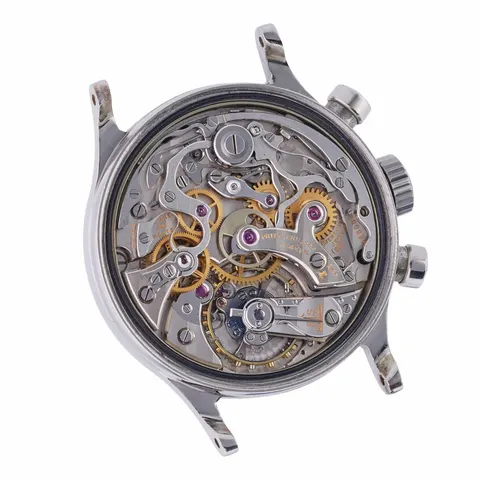
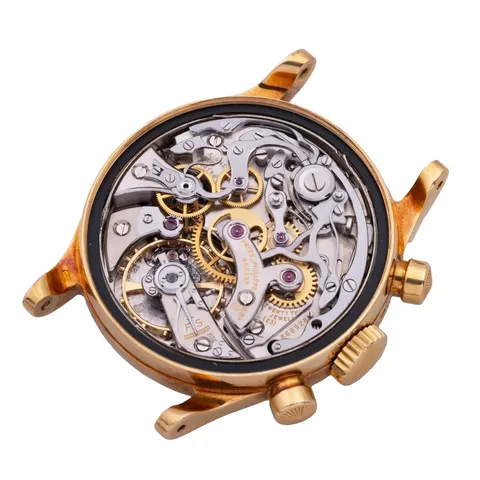
Back and movement
From listings of this reference, each confirmed by eye to show what it is filed under. A picture on which a person's name or a personal engraving can be read is not shown. From most holders a detail from the middle of the photograph is shown; the mark in its corner gives its holder and a link to the listing.
Caseback
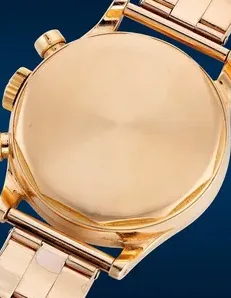

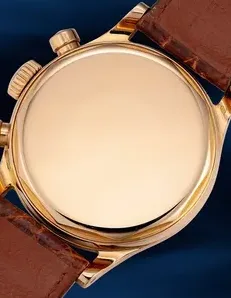

Inside the caseback


Movement



Catalogue versions 3 listed
The full numbers under which holders list this reference, with what their listings say of each. Each has a page of its own.
| Version | Metal | Dial | Years seen | Records |
|---|---|---|---|---|
| 1463A | Steel | Silver | 1942–1964 | 3 |
| 1463R thin | Pink gold | Pink or silver | 1950 | 2 |
| 1463J thin | 1 |
In the records
Counted from 134 listings at 14 holders between 12 April 2006 and 14 November 2026. These are what sellers and auction houses state, not measurements.
Fainter bars are the 3 outside the main run of 1942–1968 (the middle nine-tenths): the latest is 1970. They are early and late examples, and now and then a seller's slip.
Case metal
| Gold, any colour | 85 | |
| Yellow | 36 | |
| Pink | 23 | |
| Colour not stated | 26 | |
| Steel | 36 | |
| Silver | 3 |
A listing that says "gold" or "18K gold" names no colour: it is counted under "colour not stated", not as yellow gold.
Dial colour
| Silver | 33 | |
| Pink | 5 | |
| Brown | 1 | |
| Black | 1 | |
| Cream | 1 |
Case size
| 35 mm | 79 | |
| 34 mm | 2 | |
| 36 mm | 1 |
Calibre named
| 13-130 | 8 |
Bracelet or strap
| Leather strap | 53 | |
| Metal bracelet, kind not stated | 15 | |
| Strap, kind not stated | 2 | |
| Mesh bracelet | 1 |
Each table counts the listings that state the thing, in the seller's own terms. A size, metal, colour or calibre that cannot belong to this reference is a seller's slip or a listing filed under the wrong number.