45GS hand-wound Hi-Beat (calibre 4520 family)
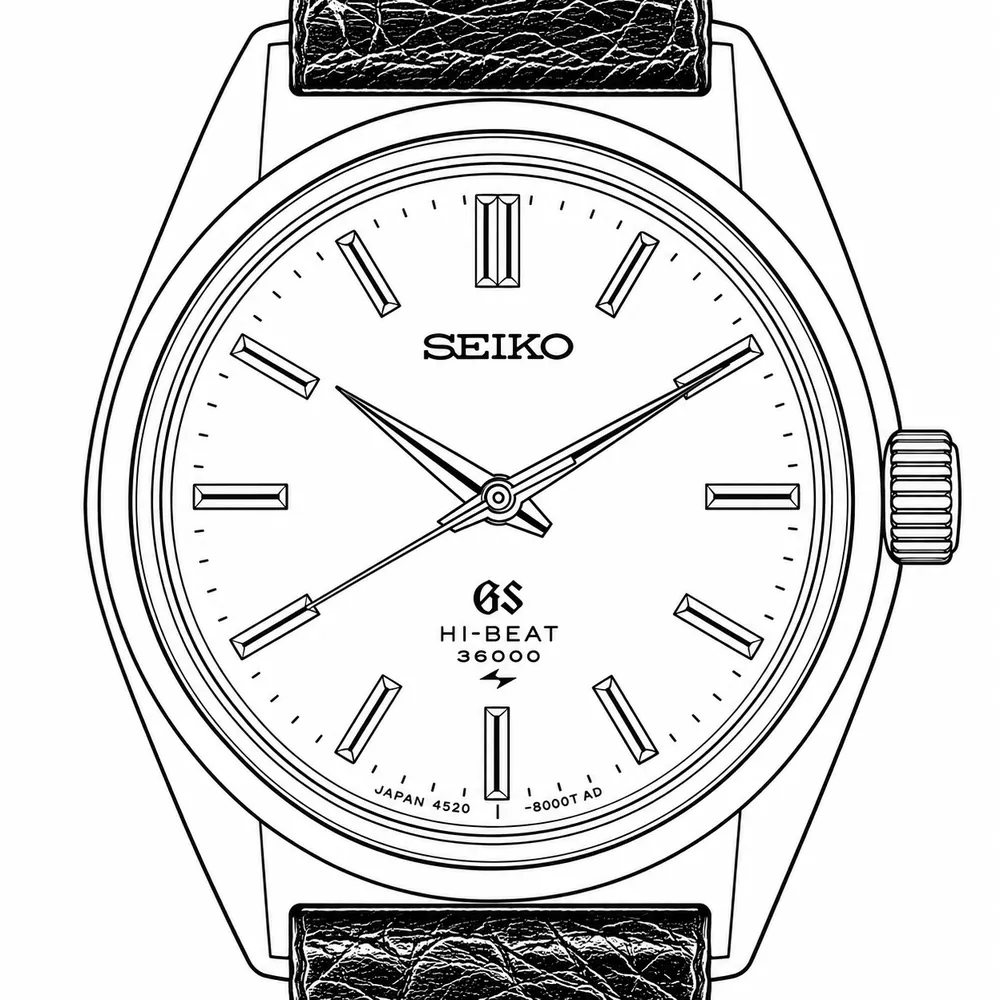
4520 is a calibre number, not a single watch: it is the manual-wind, no-date Hi-Beat movement of the 45GS, introduced by Daini Seikosha in 1968, and the watches that carry it have case references beginning 4520, chiefly 4520-8000 and 4520-7000, found in steel and in gold-capped steel. It beats at 36,000 an hour with 25 jewels and centre seconds that stop on setting. The date version is the 4522 in the same case. The case is about 36 mm across and about 10 mm thick, with sharp, Zaratsu-polished facets and a lion medallion on the back. Collectors look first at whether the case has kept its edges, whether the dial is original and whether the movement matches the case reference.

- Made
- 1968–1973dates approximate
- Seen in the library
- 1969–1970by years sellers state
- Movement
- Calibre 4520Ahand-wound
- On record
- 37 listings14 photographs · 4 holders
Components
1 watch, oldest first, each straightened and cut the same way so that one row shows one component across them all. Chosen from 14 photographs on file for sharpness and for a face typical of the reference. A year marked c. is one its holder gives only roughly. Each picture is a detail cut from a listing photograph. Select the small mark in its corner for its year, its holder, a link to the listing it came from, and a way to report it.
| c. 1970 | |
|---|---|
| Face | 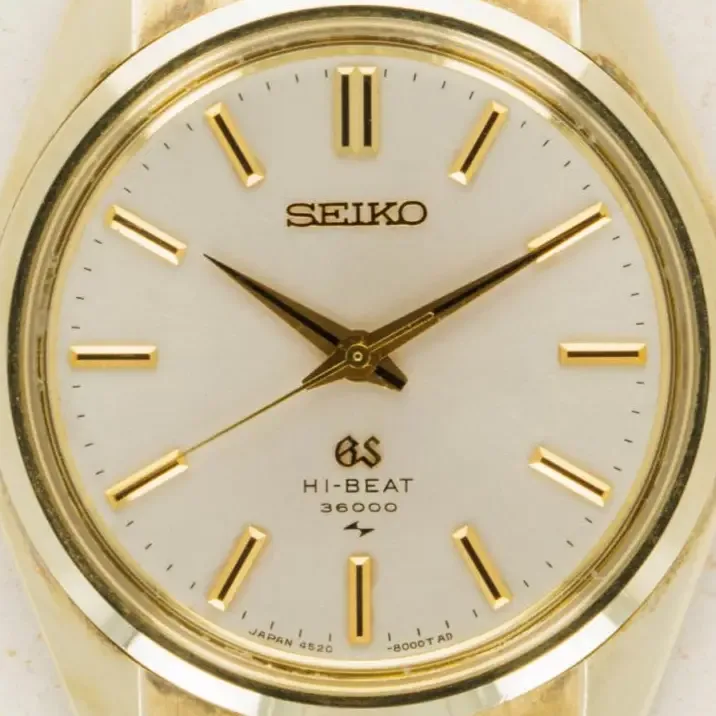 |
| Signature at twelve | 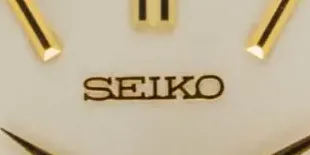 |
| Text at six | 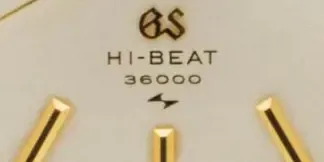 |
| At three | 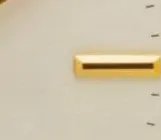 |
| At nine | 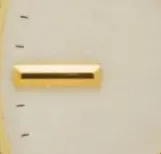 |
| At twelve | 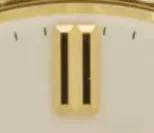 |
| Hands | 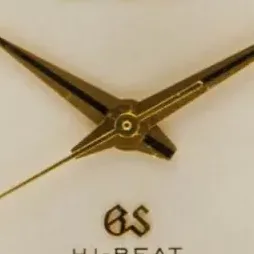 |
| Bezel at twelve | 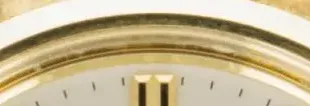 |
| Crown | 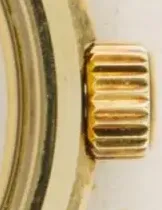 |
| Lug | 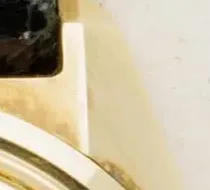 |


Chronology
The literature gives 1968 for the introduction and 1973 for the end of the 45GS as a whole; no source dates the 4520 alone.
Every dated variant: what is written, and what the records show
For the reference the marks are every dated watch; for a variant, the watches a seller names as that variant, so a variant sellers do not name has none.
Specification
| Case | About 36 to 36.5 mm across and 10 to 10.5 mm thick; steel or gold-capped steel under both -8000 and -7000 (a cap of about 80 microns, given as 14 ct on one example), with a plain steel -7000 listed with a dark blue dial; steel (-7010) or 18 ct gold (-8010); polished facets with Zaratsu polishing; lion medallion on the solid caseback |
| Crystal | Acrylic or Hardlex, depending on the account; the replacement part number given for it is 310T07AN |
| Dial | Silver or white, applied faceted markers, applied Seiko name at 12, Hi-Beat 36000 line at 6; no date |
| Hands | Polished faceted dauphine hands; centre seconds |
| Movement | Calibre 4520A, manual winding, 25 jewels, 36,000 vibrations an hour, seconds stop, hours, minutes and centre seconds; large bridge engraved with the maker's name and calibre; Diashock and Diafix shock protection |
| Crown | Signed GS crown with a captured rubber gasket |
| Strap | Leather strap or bracelet; separate 18 ct gold buckles are listed for the solid gold watches |
Reference 4 described
The number 4520 names a family. The calibre 4520 sits in watches whose case references begin 4520, and the second half of the code gives the case. Published accounts usually pair -8000 with steel and -7000 with gold cap, but gold-capped -8000 watches are recorded, and a catalogue list describes both codes alike as steel and gold cap and adds a plain steel -7000 with a dark blue dial; it gives -7010 in steel and -8010 in 18 ct gold. A list of watches using the movement gives seven codes, from the -7000 series to -8070.
4520-8000
The steel watch with a silver dial, the usual example of the family and the one most often described. Its case back carries the gold lion medallion. The literature also records gold-cap examples carrying this code, so the code alone does not show the metal.
- steel case
- silver sunburst dial
- Hi-Beat 36000 at 6
- lion medallion on the back
4520-7000 (cap gold)
Usually described as the gold-capped version of the watch, with a gold layer of about 80 microns on steel. It most often has a white or silvery dial, frequently with the same markings as the steel watch. The case wears and patinates, and examples with a fresh gold finish are the rarer. The literature dates it to about 1969 and says fewer were made than the steel version. The code is not proof of the metal: a catalogue list also gives a plain steel -7000 with a dark blue dial. A blue-dialled 4522-7000 with a King Seiko movement fitted is also on record, as a puzzle rather than a variant.
- yellow gold cap
- white dial that patinates
- gold wear at the corners
4520-8010 (gold)
A solid yellow gold watch with a linen-finished case, known to the library from an auction listing dated 1970 in the seller's words. Separate 18 ct gold buckles are recorded as fitting the 4520-8010 and 4522-8010.
- yellow gold cushion-shaped case
- linen-finished case sides
Other 4520 case codes
Other codes are listed for the calibre: -7010 as a steel case; -7020 as an Imperial 45GS with the emblem of the Japanese Imperial family on the dial, which appears in no official catalogue; -8020 as the Astronomical Observatory Chronometer in 18 ct yellow gold, one of the observatory-tested 45GS watches; and -8070 with no description. They are named here so that a watch carrying one is recognised as part of the family.
Dial 4 described
Dials are silver or white with a fine sunburst, applied faceted markers and an applied name at 12, with the Hi-Beat line at 6. The literature warns that dials from this period patinate in several directions and that coloured redials are common.
Silver sunburst dial, Seiko logo at 12
On the 4520-8000 the silver dial has applied faceted markers, an applied Seiko logo at 12 and the line GS Hi-Beat 36000 at 6. With no date aperture the layout is symmetrical. The 4522 date model has the same text.
- applied Seiko logo at 12
- GS Hi-Beat 36000 at 6
- no date window
AD and SD dial marks
Some dials carry a small mark near the bottom. AD is read as showing gold-plated markers rather than solid gold, and an SD sunburst-shaped logo above 6 as showing a Special Dial with solid gold markers. AD is also expanded as Applied Dial, and the SD logo is said not always to have been printed on later watches.
- AD or SD mark at the foot of the dial
White dial on cap gold watches
The 4520-7000 is usually found with a white or silvery dial. On this reference the dial is known to age in many different ways, and stains at the edge, near the hour markers, are seen on some examples.
- white dial with patina at the edge
Coloured dials
Brown dials are seen in sellers' listings, and the literature warns against coloured dials on vintage Grand Seiko, saying many are redone. Not every coloured dial is a redial: a catalogue list gives the -7000 and the 4522-7000 in plain steel with a dark blue dial, a blue dial is recorded on a 4522-7000 as an unusually clean example, and an original blue dial is called rare.
- colour other than silver or white
- print that looks too new or smudged
Hands 1 described
Polished dauphine hands
The 4520 watches take faceted polished dauphine hands, which are the main way to tell the hand-wind 45GS from the automatic 61GS in the same case design. The 4522-7010 is described with slimmer pencil hands, while the standard watches should have wide dauphine hands; any hand set that departs from the type suggests replacement.
- wide polished dauphine hands
Case 3 described
The 45GS keeps the Grammar of Design case of the 44GS: flat polished facets, sharp edges and a thin profile. The literature counts the case as half the beauty of the watch and the condition of its edges as a deciding factor in its value.
Zaratsu-polished faceted case
The case is about 36 mm across, with sharp facets and flanks that are brushed between polished planes. At about 10 mm it is thinner than the automatic 61GS, which holds a rotor. Polishing that rounds the arrises ruins the design, and the literature says watches with sharp, unpolished cases are rare and valued above ones that look new but have softened lines.
- sharp facet edges
- brushed flanks with polished planes
- thin profile
Lion medallion caseback
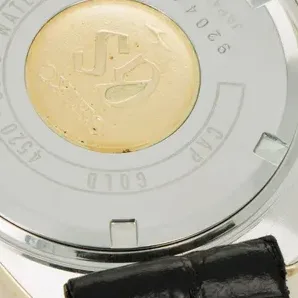
A solid caseback with a round relief medallion of a crowned lion, gold-plated on the steel watches, with the full reference (such as 4522-8000) and the case serial engraved. On the first Grand Seiko the medallion is often missing, and a replacement is a poor copy; the reference and serial should match the movement.
- round relief lion medallion
- engraved 45xx-xxxx reference and serial
Gold cap case
A gold cap over steel, given as about 80 microns thick and on one example as 14 ct, low enough in gold to patinate. The patina can be removed with jewellery cleaner without dulling the facets, but a growing number of buyers leave it.
- tarnish between the lugs
- gold worn through at the corners
Crown 1 described
GS crown with captured gasket
The original crown carries the GS logo in relief and has a captured rubber gasket, which is usually hardened and flat by now. Many have been lost or swapped for plain Seiko crowns.
- GS logo in relief on the crown
Crystal 1 described
Replacement crystal
Accounts differ on the material: Hardlex is given in one place, while a service fits an acrylic crystal numbered 310T07ANG. Crystals are often scratched, and third-party replacements of the right part number are easy to find.
- scratched crystal
Movement 4 described
The 4520 is the movement; the related calibres share its architecture. The literature is clear about this family and less consistent on the VFA.
Calibre 4520A
Daini Seikosha's first manual-wind Grand Seiko movement at 36,000 vibrations an hour, ten a second. It has 25 jewels, a seconds stop, a very large mainspring and large balance, and is thinner than the earlier 57 and 44 calibres. The gear train runs from the barrel through a centre minute pinion, an intermediate wheel and a large driving wheel before the third, fourth and escape wheels; only the escape wheel has a Diafix bearing. A large bridge is engraved with 25 JEWELS, SEIKO, the calibre number and JAPAN, and apart from that number the movement is visually almost identical to the King Seiko equivalent. Service every five years or so is recommended.
- large engraved bridge with 25 jewels and the calibre name
- hand-wind only
Calibre 4522
The date version with an instantaneous change, introduced at the same time in the same case style and usually described under the case code 4522-8000. It is a sibling, not the 4520.
- date at 3
- instant date change
Calibre 4580 (V.F.A.)
The Very Fine Adjusted movement of the 45GS V.F.A., added to the family in 1969. One account puts its adjustment at plus or minus one minute a month, another at plus or minus two seconds a day, with a different case and caseback; the literature does not settle the point.
- V.F.A. marking
Calibre 4500 and 4502 (King Seiko)
The King Seiko versions of the same family, without and with date. A 45GS case with a 4502 inside, as on one 4522-7000 on record, does not match its case and is either a one-off from the maker or a combination made later.
Bracelet 1 described
Strap and buckle
The 1970 domestic catalogue shows the gold-cap watch on a brown crocodile strap. Three types of 18 ct gold buckle are recorded; two of them fit the 4520-8010 and 4522-8010, and one of those two also fits some 61GS-era references.
- gold buckle on a crocodile strap
Box and papers 1 described
Certificate, box and tags
Certificates are numbered and specific to the watch. A box or hang tag that belongs to another line, such as a King Seiko box or a 56GS tag, is a sign that a set has been assembled.
- numbered certificate
Originality
- Cases are commonly polished, and rounded arrises and soft transitions between polished and brushed surfaces show it.
- The caseback medallion should be present, firmly fixed and crisp, and the engraved reference and serial should agree with the calibre on the movement bridge.
- Dials are frequently redone, and coloured dials in particular should be treated with caution; print should be crisp and aligned.
- Crowns are often swapped for plain Seiko crowns, and the original GS crown has the logo in relief.
- Hands that are too short, or a seconds hand of the wrong colour, suggest replacement.
- Crystals are usually scratched and are commonly replaced with new parts of the same number.
Names
- Cap Gold. The gold-capped version of the watch, a layer of gold over steel.
- Linear Beauty. A name used by some collectors for the 4522-7010, for its thin hands and clean look.
Where accounts differ
Points on which the published literature and the library's own records do not agree, or on which the literature contradicts itself.
- What the -8000 case code means. One guide describes the 4520-8000 as the steel watch and the 4520-7000 as the gold-capped one. Two other accounts describe a gold-cap 4520-8000, one dated December 1970 and one in auction coverage, and a catalogue list gives both codes as steel and gold cap and adds a plain steel 4520-7000 with a dark blue dial. Neither code therefore fixes the metal; the library's records list a 4520-8010 in solid gold.
- Accuracy of the 4580 V.F.A. calibre. One guide states the 4580 as adjusted to plus or minus one minute a month; another gives about plus or minus two seconds a day and describes a different case and caseback sunburst.
- Crystal material. One guide gives the crystal as Hardlex; a service account fits an acrylic crystal with the part number 310T07ANG, and the part number named in an auction review is similar. The two materials cannot both be original.
- Case serial length. One guide says the case serial has seven digits; the case numbers quoted elsewhere, such as 910001 on a 4522-7000 and 070459 on a 4520-8010 in the library's records, have six.
Back and movement
From listings of this reference, each confirmed by eye to show what it is filed under. A picture on which a person's name or a personal engraving can be read is not shown. From most holders a detail from the middle of the photograph is shown; the mark in its corner gives its holder and a link to the listing.
Caseback

Catalogue versions 2 listed
The full numbers under which holders list this reference, with what their listings say of each. Each has a page of its own.
| Version | Metal | Dial | Years seen | Records |
|---|---|---|---|---|
| 4520-8000 thin | Gold-plated or capped | Silver | 1970 | 1 |
| 4520-8010 thin | Yellow gold | 1970 | 1 |
In the records
Counted from 37 listings at 4 holders between 22 May 2023 and 13 November 2026. These are what sellers and auction houses state, not measurements.
The head of the page gives 1969–1970: the years that listings from two holders bear out.
Dial colour
| Brown | 3 | |
| Silver | 1 |
Calibre named
| 4520A | 5 |
Each table counts the listings that state the thing, in the seller's own terms. A size, metal, colour or calibre that cannot belong to this reference is a seller's slip or a listing filed under the wrong number.